Category: February – March 2016

  • Alzheimer’s Disease Awareness

    The toll on families and individuals caring for someone with Alzheimer’s disease can be life-changing. We often hear from family caregivers about the impact Alzheimer’s disease has on their lives and their need for support.

    More than five million people in the United States are living with Alzheimer’s disease. By 2025, it is estimated that there will be 35,000 patients in Hawai‘i older than 65 with Alzheimer’s and other related diseases (ADRD). With our rapidly aging senior population, more information and awareness about this chronic illness will be needed.

    “Increasing public awareness of Alzheimer’s disease is an important goal of care providers,” said Wesley Chang, chief administrative officer of Attention Plus Care. “Fear and stigma associated with Alzheimer’s disease can prevent individuals from seeking help. Information and education can change that and make a positive difference.”

    “By efficiently mobilizing clinical resources, family members can better assist those living with chronic diseases like Alzheimer’s to achieve and maintain a level of independence and quality of life,” Cynthia Baker, BSN, RN, recently explained in a workshop for seniors and caregivers. “Licensed home health agencies can provide skilled nursing and therapeutic services, helping ku¯puna to remain at home safely and avoid preventable hospitalizations.”

    With ongoing collaboration, experience in teaching and care coordination, home health providers are valuable team members in the care of ADRD, and especially helpful with transitions between care settings.

    “The Alzheimer’s Association Aloha Chapter exists to eliminate Alzheimer’s disease through the advancement of research, to provide and enhance care and support for all affected and to reduce the risk of dementia through the promotion of brain health,” said Pamela Ah-Nee, program specialist at the Alzheimer’s Association Aloha Chapter. “We are grateful to partner with care providers who provide safe and reliable care for our loved ones living with dementia-related illness.”

    To improve the management of ADRD, Hawai‘i care providers partner with support groups such as the Alzheimer’s Association Aloha Chapter. Together they work to conduct education and public awareness campaigns to focus on early and accurate diagnosis, risk factors, warning signs, brain health, difficult behaviors and the importance of advance care planning and caregiver coping strategies.

    “Age is a risk factor for Alzheimer’s disease, so the earlier we start understanding the illness, the better,” added Chang.


    ATTENTION PLUS CARE Accredited by The Joint Commission 1580 Makaloa St., Ste. #1060, Honolulu, HI 96814 808-739-2811 | www.attentionplus.com

    Available monthly:

    AGING IN HAWAII EDUCATIONAL OUTREACH PROGRAM by Attention Plus Care – a program to provide resources for seniors and their families, instructed by a registered nurse, who covers a different aging topic each month.

    For class information on Alzheimer’s disease and upcoming topics, contact 808-440-9372.

    The toll on families and individuals caring for someone with Alzheimer’s disease can be life-changing. We often hear from family caregivers about the impact Alzheimer’s disease has on their lives and their need for support. More than five million people in the United States are living with Alzheimer’s disease. By 2025, it is estimated that…

  • The Benefits of Walking: Happiness & Health

    Walking, a simple exercise that is good for nearly everyone, is one of the best forms of exercise for people
    with arthritis. Walking strengthens your heart, helps your lungs work more efficiently and helps maintain joint flexibility. For people with arthritis, joint flexibility and muscle strengthening are important because joints may become limited in mobility and muscles weaken with inactivity. Walking can help you gain all the added benefits of exercise, including weight loss and stress control. It is also an easily accessible exercise and doesn’t require gym membership, expensive equipment or special skills.

    Walking is one of the safest forms of exercise, as it puts less stress on the body than most other forms of aerobic exercise. Walking is considered a light intensity activity that builds stamina and boosts cardiovascular fitness. Many people who begin a walking program report feeling happier, more in shape, a renewed sense of energy and a reduced feeling of pain.

    Walking has many other benefits for your mind, body and spirit. You can walk with friends or family members, walk with your pet or start a walking program, such as the Arthritis Foundation’s Walk With Ease, at your workplace. You can listen to music or an audio book while walking, plan your walk routes around different neighborhood parks or sites, or participate in a fundraising walk.

    When you start walking, make sure you warm up and cool down for a few minutes before and after your walk. It is always good to include some gentle stretches to get your muscles moving. Walk at your own pace — one that is comfortable for you. It is also important to stay hydrated. You may want to bring a bottle of water or a sports drink with you.

    As always, before starting any exercise plan, it is suggested that you talk to your doctor or health professional
    to determine the best level of intensity and length of time for your walks. Make sure that you have the appropriate shoes for walking — shoes should have flexible soles, good arch support and cushions inside. Wear loose and comfortable clothing that keeps you cool while you walk. Always remember to walk in a safe area; let others know your route and when you plan to return, and carry your cell phone in case of any emergency.

    The Arthritis Foundation’s Walk With Ease Program is designed for people with arthritis. For more information on this or other programs, please visit www. arthritis.org/hawaii or call 808-596-2900


    ARTHRITIS FOUNDATION 2752 Woodlawn Drive, Honolulu, HI 96822 808-596-2900 | info@arthritis.org/hawaii www.arthritis.org/hawaii Information in this article is from the Arthritis Foundation’s Walk With Ease, Walking and Arthritis, and Exercise and Arthritis.

    Walking, a simple exercise that is good for nearly everyone, is one of the best forms of exercise for people with arthritis. Walking strengthens your heart, helps your lungs work more efficiently and helps maintain joint flexibility. For people with arthritis, joint flexibility and muscle strengthening are important because joints may become limited in mobility…

  • What is a POLST And Do I Need One?

    If you were to collapse unexpectedly, how aggressively would you want emergency medical personnel to act in trying to keep you alive? If you were a typical, healthy, individual, you would probably say, “do whatever it takes to keep me going, even if you have break a few ribs to do it!” (This can happen during CPR — cardiopulmonary resuscitation.) However, if you were in the end stage of a terminal disease, such as a cancer that had spread throughout your body, and you knew your death were imminent, you may say, “keep me comfortable, but if my heart should stop, please let me go. Don’t try to resuscitate me.” That is where a Provider Order regarding Life-Sustaining Treatment (POLST) comes in.

    A POLST is a special document that you and your doctor (or nurse practitioner) discuss, fill out, and sign to state your wishes about the measures that should be taken to keep you alive. It is different from an Advance Directive in that emergency personnel will follow it, provided that they are aware of its existence. Emergency medical technicians (EMTs) are required to do whatever they can do to restore and stabilize your heartbeat and breathing and take you to an appropriate facility for treatment. They will not take the time to read your Advance Directive and try to figure out how it might apply to your situation. But you can see how in some cases, resuscitation procedures may not be appropriate or wanted. A POLST, being a medical provider’s order, will be followed by the EMTs. Your Advance Directive will not come into play until you are in the hospital, and at that point, the EMTs may not have done you any favors by keeping your heart beating.

    Generations Magazine -What is a POLST And Do I Need One?  - Image 01
    Emergency first responders will follow a POLST from your doctor.

    Almost all 50 states have some version of the POLST, but some call it by other names. In New York, it is called MOLST, and in West Virginia, it is MOST. VA medical centers have their own term, SAPO, which stands for State Authorized Portable Order. Whatever the alphabet soup used to name the document, all of the orders generally work the same way.

    In Hawai‘i, if you have a POLST, we recommend that you print it on lime green paper so it will be recognizable immediately. The trick is to have your POLST nearby and in a conspicuous place in case you should need it. EMTs are trained to look for the green form and follow the POLST order. You can post a copy near your bed, and you can carry it with you when you leave the house. Just make sure your loved ones know where to find it if an emergency occurs.

    Note that the POLST does not have to say “don’t resuscitate me.” It can say the exact opposite if that is your wish. Either way, most people do not need a POLST. However, for someone whose death is imminent and who doesn’t want to risk being kept alive artificially against his or her wishes, a POLST is essential.


    SCOTT MAKUAKANE, COUNSELOR AT LAW Focusing exclusively on estate planning and trust law. Watch Scott’s TV show, Malama Kupuna Sundays at 8:30 pm on KWHE, Oceanic channel 11
    www.est8planning.com
    O‘ahu: 808-587-8227 | maku@est8planning.co

    If you were to collapse unexpectedly, how aggressively would you want emergency medical personnel to act in trying to keep you alive? If you were a typical, healthy, individual, you would probably say, “do whatever it takes to keep me going, even if you have break a few ribs to do it!” (This can happen…

  • Yes! A Memoir of Modern Hawai‘i

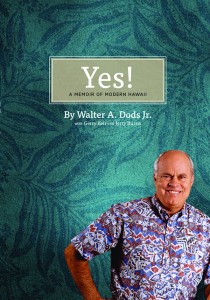
    Politicians must join ranks with leaders from business, labor and community groups to accomplish common goals. Crafting many of these alliances in modern Hawai‘i are public relations and marketing professionals like Walter A. Dods, Jr., former chairman of First Hawaiian Bank, Alexander & Baldwin and HawaiianTel, and a campaign organizer for governors and senators.

    Generations Magazine -Yes! A Memoir of Modern Hawai‘i - Image 01In Dodd’s new book, Yes! A Memoir of Modern Hawai‘i, he shows how dreams and schemes become a reality for corporations like First Hawaiian Bank, and state officials like governors Cayetano and Ariyoshi and U.S. Sen. Inouye. It’s a fascinating view of events we only know from the outside — the savings and loan disaster or Ariyoshi’s journey from, “who’s he?” to a household name. Dods’ candid account of the 2008 HawaiianTel bankruptcy and First Hawaiian’s debut venture in Japan define the high stakes he faced. Sober analysis and backing up his “Yes!” with results is an important lesson for all executives.

    Yes! is more than Dods’ personal account of his many accomplishments. Pull quotes reveal the deep relationships Dods forged with champions of Hawai‘i business, government and community service, proving again that all deals, are between people. Like his other achievements, this beautiful memoir is a collaboration with two Honolulu Advertiser journalists — Gerry Keir and Jeff Burris — who covered Hawai‘i politics and business for decades.


    Yes!, A Memoir of Modern Hawai‘i is available in local bookstores and directly from Watermark Publishing, 808-587 7766 or www.bookshawaii.com. The price is $19.95, and all proceeds go to Aloha United Way.

    Politicians must join ranks with leaders from business, labor and community groups to accomplish common goals. Crafting many of these alliances in modern Hawai‘i are public relations and marketing professionals like Walter A. Dods, Jr., former chairman of First Hawaiian Bank, Alexander & Baldwin and HawaiianTel, and a campaign organizer for governors and senators. In…

  • Insurance For Grown-Ups

    Generations Magazine -Insurance For Grown-Ups - Image 01
    Martha Khlopin and Merlita Compton joined a double centenarian birthday, Perpetua Amian, 102, and Maria Amian, 100.

    If you remember the term “grown-ups,” it is time to make sure your insurance coverage is aging as gracefully as you are. I volunteer at Kokua Kalihi Valley elderly community center in Honolulu and each month we celebrate birthdays. In December, I celebrated the birthdays of two centenarians who turned 102 and 100 years old and my own mother’s 90th! As I spoke to their family and friends, I learned that the adult children were slowing down and finding it harder to assist their parents. An individual’s needs, both emotional and physical, can grow with age. Those living beyond their 80s may have outlived their spouse, siblings, close friends and the relatives they counted on to look after them in later years. In some cases, their adult children may need assistance. In reality, few ever imagined they would need help with daily living—activities like cooking, bathing or walking. The centenarian’s children in their mid-70s have Medicare insurance as their primary coverage, just like their parents. Health needs are met, but no one had looked into the type of insurance that covers non-medical care. If your grandparents, parents, aunties and uncles, are heading into their 70s, whether you are a Generation X, Millennial or Boomer, it is time to be the “grown-up” and look into insurance coverage for non-medical services that help us age gracefully


    808-230-3379 | getmartha@aol.com
    www.Get2insurance.com
    Morning Drive With Martha
    A radio program with Martha Khlopin
    KNDI-1270AM: Weekdays, 4:30 am–6 am

    If you remember the term “grown-ups,” it is time to make sure your insurance coverage is aging as gracefully as you are. I volunteer at Kokua Kalihi Valley elderly community center in Honolulu and each month we celebrate birthdays. In December, I celebrated the birthdays of two centenarians who turned 102 and 100 years old…

  • The Most Difficult Conversation

    During the winter break, I read a book called Difficult Conversations, how to discuss what matters most. The authors teach ways to engage in conversations, maintain good relationships and convey and receive meaning and intentions without blame and defensiveness. They point out that the key to engaging in successful difficult conversations is to talk about feelings, intentions, underlying meaning and past experiences that shape who we are. Attempting a difficult conversation without sharing feelings and intentions is compared to throwing a live hand grenade. The results are usually destructive.

    Making your will or trust can be the most difficult conversation of all because it is often a one-way conversation. And sadly, when reading these trusts and wills, we find that they tell “what to do” and “how to do,” but leave out the author’s deepest meaning, intent and wishes. No wonder only 30 percent of people ever make a will or trust. Worse yet, 70 percent of wills and trusts do not go as intended because they omit the person’s intention and leave the heirs to guess.

    So, I encourage you to consider making your estate plan if you haven’t yet done so. If anxiety, fear and uncertainty are holding you back, this is where an attorney skilled in estate planning can guide you. When you do engage in this process, make sure that in this most difficult conversation, you relay not only the legal “how to,” but also work with your attorney to convey your deepest meaning, intentions and wishes.


    STEPHEN B. YIM, ATTORNEY AT LAW 2054 S. Beretania St., Honolulu 96826 808-524-0251 | stephenyimestateplanning.com

    During the winter break, I read a book called Difficult Conversations, how to discuss what matters most. The authors teach ways to engage in conversations, maintain good relationships and convey and receive meaning and intentions without blame and defensiveness. They point out that the key to engaging in successful difficult conversations is to talk about…

  • MEO is Rolling on Maui

    Maui Economic Opportunity, Inc. (MEO) is a hub for transportation throughout Maui County. It lives up to its motto: “Helping People… Changing Lives” by coordinating the services of over 20 different agencies and nonprofits, and providing low-cost specialized transportation with grant support from the county of Maui, Department of Transportation. These services are particularly important to seniors and persons with disabilities.

    The Maui County Department of Transportation contracts with Roberts Hawaii, Inc. to run the Maui Bus fixed route MEO starts the next sentence MEO runs the complementary paratransit service. Disabled riders must qualify for the paratransit service through Maui County Department of Transportation. Riders of the fixed route and paratransit may purchase daily or monthly bus passes on any Maui Bus or paratransit vehicle and at Maui Mall in Kahului at the County Business Resource Center or at the Wharf Cinema Center Management Office in Lahaina.

    MEO’s most recent collaboration with the Aging and Disability Resource Center (ADRC) created the One-Call, One-Click Transportation Resource Center to assist veterans and military families getting around Maui to take care of business. To use the service, veterans just have to register with the Maui County ADRC. For more information call 808-344-1703 (8am – 4pm) or visit www.Maui1Click.com anytime.

    MEO Human Service Transportation also offers rural shopping shuttles in Hana and on the islands of Molokai and Lanai. MEO is the only public transportation on these islands. Disabled riders living outside the 3/4-mile service area of paratransit may use the Ala Hou service.

    Ala Hou “On the Move Again” accessible vans serve persons with disabilities who have registered with MEO and live more than 3/4-mile from the fixed route. Reservations may be made 14 days in advance for scheduled service, daily from 8am to 4:30pm.

    Other human services transportation include Senior Services, Day Health, Nutrition, Leisure, Employment-to-Work for low-Income workers, Dialysis and after school Youth Transport. Upcountry Maui citizens may connect to local financial and medical offices on i-Shuttles. Through Maui County Department of Transportation, MEO offers fare discounts for individuals with verified disabilities who use the fixed-route Maui Bus Service. Low-income workers may also receive free rides to and from work.


    MAUI ECONOMIC OPPORTUNITY, INC
    99 Mahalani St., Wailuku, HI 96793 808.249.2990 | Transportation: 808-877-7651 www.meoinc.org
    FOR NEIGHBOR ISLAND SENIOR BUS TRANSPORTS:
    Kauai: www.tinyurl.com/KauaiCounty-SeniorBus 808-246-8110
    Hawaii: www.tinyurl.com/HawaiiCounty-SeniorBus East HI: 808-961-2681, West HI: 808-322-3429

    Maui Economic Opportunity, Inc. (MEO) is a hub for transportation throughout Maui County. It lives up to its motto: “Helping People… Changing Lives” by coordinating the services of over 20 different agencies and nonprofits, and providing low-cost specialized transportation with grant support from the county of Maui, Department of Transportation. These services are particularly important…

  • Hop On Da Bus!

    I greeted few ku¯puna at the bus stop in front of Nordstrom at Ala Moana Shopping Center with one question: “Why do you like riding the bus?” All agreed on a few things — the bus is convenient, a pleasant experience, and a great place to meet new and interesting people.

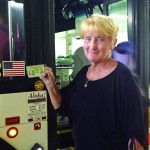
    Generations Magazine -Hop On Da Bus! - Image 01This is Debbie Taylor, who takes the same bus to Kailua after 25 years and likes that there is “no worry about parking.” Others like Mirsada Dumisic have been taking the bus for five years, and she and her husband have even sold their cars.



    Generations Magazine -Hop On Da Bus!  - Image 03Here is information on the senior fares:
    • One-way fare=$1 with proof-of-purchase of a $10 senior card or a valid U.S. Medicare Card. To purchase a senior card, you must go to TheBus Pass Office (at Kalihi Transit Center) and it entitles you to the reduced senior fare for four years. Bring your state identification card, birth certificate, passport or driver’s license for proof of age. The monthly pass can be purchased either at the TheBus Pass Office or the Satellite City Hall. Note that the Satellite City Hall only accepts cash
    • Unlimited rides, monthly or annually, are offered for seniors by the C&C of Honolulu:
      – $5 per month. A monthly pass sticker is given to affix to your senior card.
      – $30 per year. This annual bus pass allows you unlimited rides during the calendar year on regular or express service buses. A two calendaryear pass for $60. You must purchase their initial
      annual pass at TheBus Pass Office. Once you purchase a pass, you may renew your pass by mail. The Pass By Mail Program will mail you an application to renew the month before your annual pass will expire. Once TheBus receives your application and payment, the office will mail you a new sticker to put on your current pass card. If seniors do not wish to do this by mail, they can always go to the TheBus Pass Office and renew in person. Either way, TheBus is a great bargain.

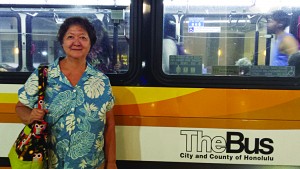
    Generations Magazine -Hop On Da Bus! - Image 02As I hurried to take her picture before May boarded the #17 for Makiki, she said, “Taking the bus is convenient because it stops right in front of my house and the bus drivers on #17 are friendly.” Dumisic chimed in, “The new buses are fantastic! The seats are clean and not too high.” You might enjoy getting out and around town without the hassels of driving, so get your senior card and pass today and hop on Da Bus!


    THEBUS — HONOLULU 808-848-5555 | www.thebus.org
    TheBus Pass Office: Kalihi Transit Center,Middle Street & Kamehameha Hwy. (808) 848-4444

    I greeted few ku¯puna at the bus stop in front of Nordstrom at Ala Moana Shopping Center with one question: “Why do you like riding the bus?” All agreed on a few things — the bus is convenient, a pleasant experience, and a great place to meet new and interesting people. This is Debbie Taylor,…

  • Don’t Let Falls Trip Us Up

    Falls become more common and more serious as we age. The good news is that there are steps you can take to help prevent them. First, identify the health factors that can increase your risk for falling: poor eyesight, reduced reaction time, reduced muscle strength and medications that affect alertness, blood pressure or balance. Whenever you feel unsteady, use a cane or walker and promptly replace worn rubber tips. Be careful around pets and don’t leave clothes or newspapers on the floor to trip you up.

    BATHROOM SAFETY CHECKLIST:

    • Grab bars for toilet, bathtub or shower
    • Slip-resistant rug next to the bathtub or shower
    • Mounted or suction liquid soap dispenser on the bathtub/shower wall
    • Nonskid strips on the bathtub/shower floor n Sturdy plastic shower chair
    • Raised toilet seat and toilet armrests to maintain balance getting up and down
    • An extra-long sink mirror, for use when sitting

    BEDROOM SAFETY CHECKLIST:

    • All clutter cleared away from all pathways
    • Lamp, flashlight and telephone are within easy reach of the bed
    • Night-light pathways — bedroom to bathroom
    • Raised mattress to ease getting in and out of bed

    Visit www.tinyurl.com/ReduceFalling for a copy of this Home Fall Preventions Checklist.


    INTERIM HEALTHCARE HONOLULU 1833 Kalakua Ave. #107, Honolulu, HI 96815
    808-951-0949, Santiago Rivera, C.O.O. www.interimhealthcare.com/honolulu

    Falls become more common and more serious as we age. The good news is that there are steps you can take to help prevent them. First, identify the health factors that can increase your risk for falling: poor eyesight, reduced reaction time, reduced muscle strength and medications that affect alertness, blood pressure or balance. Whenever…

  • Patient Transport is News

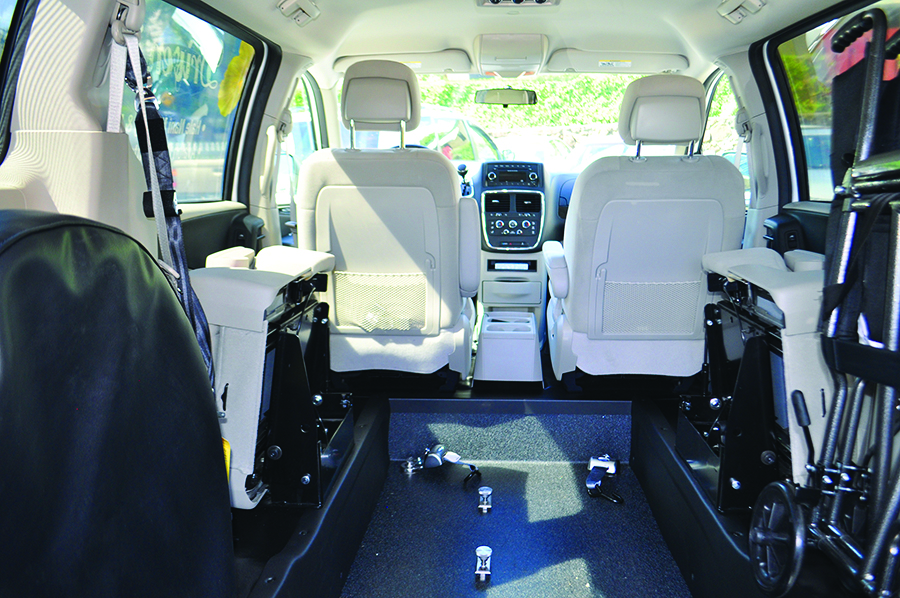
    For seniors who are frail or disabled, transportation in O‘ahu can be challenging. Doctor’s visits are not that simple — scheduling a care partner to ride along, long waits for pickup, and worrying if there will be a long line at the doctor’s office. Steps and elevators add to the fun, and sometimes one visit takes up the entire day! Don’t mention the cost.

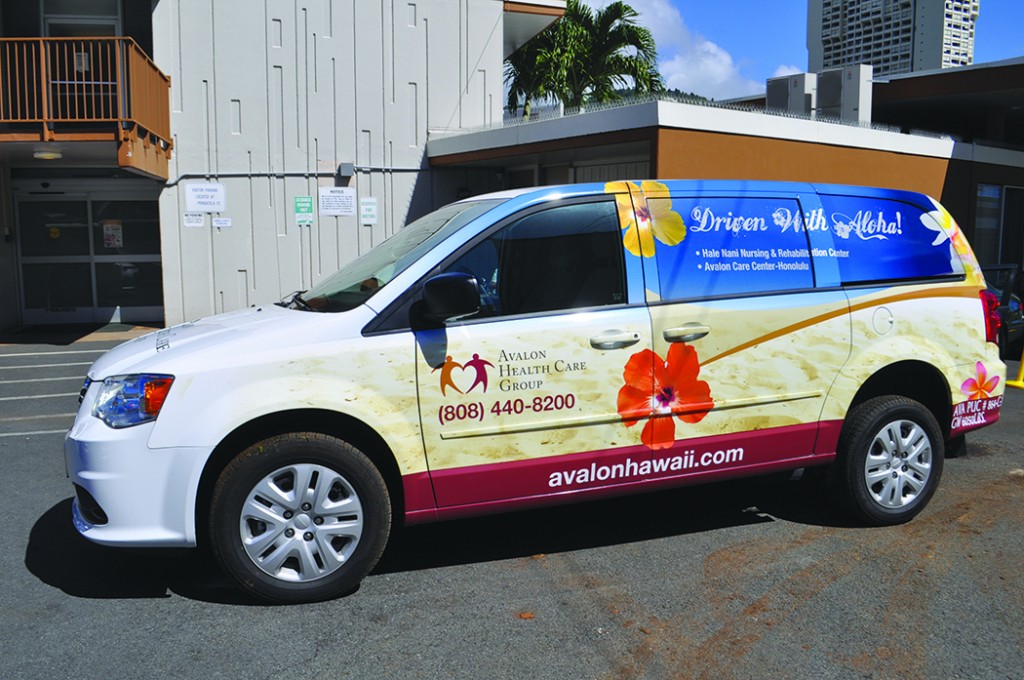
    Senior living and extended care facilities are growing and expanding services. One service is transporting residents and clients to and from their medical appointments. The move to providing transportation has some serious benefits for patients and their families. If a loved one visits dentist, eye doctor, podiatrist, their heart specialist and internist just once a year, that spends five vacation days. Hiring an aid and a private, accessible van to provide transport sounds good, but having new helpers is stressful on your loved one, and it is difficult to assess whether your loved one is safe and comfortable during transport.

    In September, the first large care provider on O‘ahu announced that they were forming a separate transportation division to provide reliable and accountable in-house transportation for clients who have to visit hospitals and medical appointments. Patients, families and staff documented transport issues and the obvious answer was to serve the patients. For routine outside therapies like dialysis, which already takes a toll on the patient, reliable transportation is crucial.

    Now in operation for three months, the transportation division is getting a good report card from patients, and staff. As the numbers of longterm care patients and assisted living residents increase in Hawai‘i, accessible patient transportation will become a greater need, and health care facilities that want to provide a quality experience for long-term patients will be obliged to consider expanded transportation services just to compete for clients.

    This transportation innovation is another indicator that Hawai‘i care providers are gearing up for the future when a large portion of our population will be 85 years old and older.

    Generations Magazine -Patient Transport is News  - Image 01

    Generations Magazine -Patient Transport is News  - Image 02


    HALE NANI REHABILITATION AND NURSING CENTER 1677 Pensacola St., Honolulu, HI 96222 808-537-3371

    For seniors who are frail or disabled, transportation in O‘ahu can be challenging. Doctor’s visits are not that simple — scheduling a care partner to ride along, long waits for pickup, and worrying if there will be a long line at the doctor’s office. Steps and elevators add to the fun, and sometimes one visit…

  • Beware the ‘Friendly’ Stranger

    I It’s difficult to believe that anyone would take advantage of our aloha spirit. Unfortunately, the Prosecutor’s Office has seen an increase in cases of friendly strangers who turn out to be con artists preying on seniors.

    Edith (not her real name) was walking through Kapi‘olani Park when Alexander Nebre approached her. He said that someone told him that she needed help. Coincidentally, Edith was having problems with her plumbing. Nebre said he was a licensed plumber and contractor and could help her out. When invited into her apartment, Nebre “found” extensive termite damage. “Luckily” for her, he could make these repairs for a fraction of the cost of a “big company with lots of overhead.”

    Edith fell for Nebre’s lies and paid him over $20,000 for repairs, which he never did. In December, Nebre was sentenced to 15 years in prison and ordered to pay back $100,000 he stole from Edith and five other seniors. The average amount court-ordered defendants return to their victims is $25 to $50 a month. By my calculations, Edith and the other victims will be paid back in 166 years!

    “Friendly” con artists can be found anywhere, but often target seniors in home repair stores, like The Home Depot and Lowes. They say they have some expertise that the overwhelmed homeowner needs, and they can do the job significantly cheaper than any competitor.

    A great many of these so-called “experts” are unlicensed and unqualified. They either ask for payment up front or ask the victim to purchase materials, but they take the receipt. They might produce a phony invoice for materials — an invoice they found and stamped “Paid” themselves. The victim accepts this as “proof” that their money was used to buy materials/tools for the job.

    “Cheap and cash-only” repairs are very tempting. If a “friendly” stranger wants to do work for you, ask not only for their license number but also for identification. A con artist will use a legitimate license number that belongs to someone else, so call the Consumer Resource Center (1-800-394-1902) to see if the license and name match. Also ask if there have been any complaints about that person. If this seems like too much humbug, remember, one simple phone call can save you thousands of dollars and keep you from having to call the police or meet with me.


    To report suspected elder abuse, contact the Elder Abuse
    Unit at: 808-768-7536 | ElderAbuse@honolulu.gov
    www.ElderJusticeHonolulu.com

    I It’s difficult to believe that anyone would take advantage of our aloha spirit. Unfortunately, the Prosecutor’s Office has seen an increase in cases of friendly strangers who turn out to be con artists preying on seniors. Edith (not her real name) was walking through Kapi‘olani Park when Alexander Nebre approached her. He said that…

  • Medicare and Alzheimer’s Disease

    The Hawaii SHIP is repeatedly asked this question, “Does Medicare cover Alzheimer’s Disease?” Medicare’s coverage is based on “medically necessary” procedures, not disease diagnosis. For example, if I go to my doctor and he orders blood to be drawn to see if my medication is at a therapeutic level, Medicare would pay for both the doctor’s visit and the visit to the lab. A doctor’s examination and laboratory tests are covered whether the patient has Alzheimer’s disease (AD), cancer, epilepsy or other diseases.

    Does Medicare cover…

    HOME HEALTHCARE? This benefit is based on a prescription from your physician for a medical reason and it is not for 24-hour care. If you just need someone to keep an eye on Mom while you are at work, it is not a medical need and it would not be covered by Medicare. If Mom fell and broke her leg and was in a non-weight bearing cast, she might need home care for a short time to assist with bathing or physical therapy in the home. These services would be covered whether Mom has AD or not.

    LONG-TERM CARE? Not covered by Medicare. Medicare has a “skilled nursing facility care” benefit, but it is again based on medical necessity. Eligible skilled care must follow a hopital stay of three or more days–that is admission to an inpatient hospital, and care must be at a skilled level. Your doctor must certify that you need the daily services that can only be provided by licensed nursing or therapy personnel.

    PRESCRIPTIONS? Medications that are needed to assist in the treatment of AD will be covered under Medicare Part D (or through your Medicare Health Plan if it includes Part D). We suggest that you always take your Part D plan formulary booklet with you to your physician visit to make sure that the drug that is prescribed is under your plan formulary. If the medication is not covered by the plan and your physician says that it is medically necessary, you and your physician can appeal to the plan and ask them to cover it for you. There are five levels of appeals (so “no” does not mean “no” until the fifth level).

    Medicare Health plans are required to cover all the Medicare A & B benefits, but may have different co-pays and added benefits. Be sure to study your “annual explanation of benefits” that you receive each fall from your plan.

    The answer is that Medicare covers medical needs and medication. Custodial care and longterm care sometimes required for AD and patients with other chronic diseases are not covered. Whenever you have questions on Medicare coverage, Hawaii SHIP has the answers


    HAWAI‘I SHIP (State Health Insurance Assistance Program) 1-888-875-9229 | 808-586-7299 help@hawaiiship.org | www.hawaiiship.org facebook.com: Hawaii SHIP

    This SHIP project was supported, in part, by grant number 90SA0004-02-00 from the U.S. Administration for Community Living, Department of Health and Human Services, Washington, D.C., 20201. Grantees undertaking projects under government sponsorship are encouraged to express freely their findings and conclusions. Points of view or opinions do not, therefore, necessarily represent official Administration for Community Living policy.

    The Hawaii SHIP is repeatedly asked this question, “Does Medicare cover Alzheimer’s Disease?” Medicare’s coverage is based on “medically necessary” procedures, not disease diagnosis. For example, if I go to my doctor and he orders blood to be drawn to see if my medication is at a therapeutic level, Medicare would pay for both the…