Category: Dec 2018 Jan 2019

  • Which Shoe is Right for You?

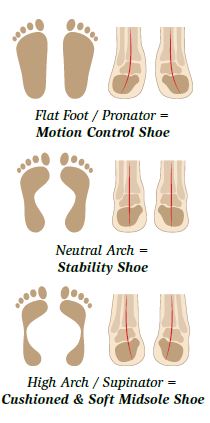
    Appropriate footwear is key to preventing injuries. So, knowing your foot type is crucial when choosing walking or running shoes. To find your best shoe type, stand in front of a mirror in bare feet and shift your weight, observing your inner arch.

    Flat Foot: A low or no arch, causing you to overpronate (excessive inward foot rolling). Choose a motion controlled shoe with maximum arch support and minimal cushioning.

    Neutral Arch: An even amount of contact of the outer and inner half of the foot. Look for a stability shoe, which provides minimal to moderate arch support and cushioning.

    High Arch: Only the outer edge of your foot contacts the floor. Your tendency to go into extreme supination (excessive outward rolling) makes a good cushioned shoe with soft mid-sole the best choice.


    MOON PHYSICAL THERAPY, LLC

    320 Ward Ave., Ste. 107, Honolulu
    95-1057 Ainamakua Dr. F-11, Mililani
    808-597-1005 | www.moonpt.com

    Appropriate footwear is key to preventing injuries. So, knowing your foot type is crucial when choosing walking or running shoes. To find your best shoe type, stand in front of a mirror in bare feet and shift your weight, observing your inner arch.

  • PAIN: Talk Like a Doc

    When speaking with your doctor about pain, be ready to answer a few important questions. To make the best of your visit, and have time for your own questions, note down the following:

    • Where is your pain? This is easiest to answer but don’t forget to tell your doctor if the pain moves to other areas.
    • Describe your pain. Is it sharp, dull, aching, burning, stabbing, throbbing or heaviness?
    • How long have you had the pain? Is it acute (<3 months) or chronic (>3 months)?
    • How bad is the pain? Doctors will usually ask on a scale from 0-10. This helps both quantify and track your pain over time. Do your best to judge this appropriately: 1 is a paper cut and 10 is “please shoot me now.”
    • What makes the pain better or worse? Include the time of day, sleep, activity, body position, medicines you are taking, stress or
      even meals.
    • Previous treatments? Make a list of medications with dosages and how long you used that medicine. List of therapies (physical therapy, chiropractor, steroid injections etc.) with number of visits, if they helped or not and for how long.

    TIP: Writing down at the end of each day when a pain occurred or how a therapy worked is the most accurate way to share with your doctor. Go prepared!


    NOVEL MEDICAL SOLUTIONS
    support@novelmedicalsolutions.com
    808-528-1111 | www.novelmedicalsolutions.com

    When speaking with your doctor about pain, be ready to answer a few important questions. To make the best of your visit, and have time for your own questions, note down the following…

  • The Fascial Self-care Revolution

    Fascia is the collagenous soft connective tissue that binds all of your body’s other structures. Defined as the largest organ system of the body in 2012 by the Federative Committee on Anatomic Terminology, it is now the most studied tissue in human movement science. Here is what current research is learning about this amazing tissue that, like the mesh on a garden hose, needs to withstand pressure from the inside  (by exerting pressure itself) and also stay flexible.

    The fascia:

    • holds four gallons of water in the average person
    • can exert up to 2000 pounds of tensile pressure per square inch on pain-sensitive structures — the equivalent of being 4613 feet under water
    • is the root cause of neuropathy (numbness of an unknown nature)
    • does not appear on X-rays, MRIs or CT scans. This might explain why you have numbness and tingling and the physicians don’t know why.
    • is made of collagen and water. If you do not drink at least half your bodyweight in ounces per day, your fascia may be suffering!
    • can prevent effective drainage of cellular waste products known to cause inflammation and ultimately cancer
    • can cause mechanical deformations in your bones and muscles that lead to poor mechanics resulting in musculoskeletal injuries

    Many medical conditions appear to be related to the health or otherwise of your fascia. For example, when you have tight fascia around your muscles, it applies excess tension to the structures within your muscles — arteries, veins, nerves, lymphatic vessels and things we call free nerve endings. It is this fascial tension, studies suggest, that may be the root cause of dozens and dozens of idiopathic (of unknown or uncertain cause) pathologies: vertigo, idiopathic cough, tinnitus, tennis elbow, golfers elbow, irritable bowel syndrome, frequent urination, patellofemoral tracking issues, hammer toes, peripheral neuropathy, and loss of grip strength.

    Achilles tendon rupture, plantar fasciitis, bone spur formations, trigger finger, carpal tunnel, golfer’s elbow, tennis elbow, frozen shoulder, sciatica, bulging discs, and degenerative disc disease may be the result of the fascia’s creation of mechanical deformations in your bones and muscles.

    The good news is that your fascia will respond to the stimulus you apply to it, whether you are 50 years old or 90! Fascia-based techniques for relieving pain, reducing inflammation, and regaining mobility and ease of motion have proven to be effective for many people, including seniors.


    THE FASCIANATOR

    808-227-6221   |  www.thefascianator.com

    Fascia is the collagenous soft connective tissue that binds all of your body’s other structures. Defined as the largest organ system of the body in 2012 by the Federative Committee on Anatomic Terminology, it is now the most studied tissue in human movement science. Here is what current research is learning about this amazing tissue…

  • Yoga: The ‘Ki’ to Mastership of Your Life

    Our daily lives are filled with so many distractions that it’s easy to feel scattered and stressed. When you are chronically stressed it becomes harder to function properly, increasing your stress even more and often inviting disease. To help manage their stress, many people have turned to yoga and mind-body training because its healthy effects on body and mind are now widely recognized.
    To manage your body’s energy, you have to know how to feel it. Learning how to feel and focus on your energy, known as ki, chi, qi, or prana in Asia, will enable you to clear your mind and calm your emotions. It will help you concentrate more deeply by quieting all of the thoughts in your head that distract you.
    One option for learning how to do this is the integrated mind-body training method, which combines deep stretching exercises, meditative breathing techniques, joint rotation, held postures, body tapping, vibration exercises and energy awareness training. Its objective is to help practitioners achieve their highest level of personal potential.
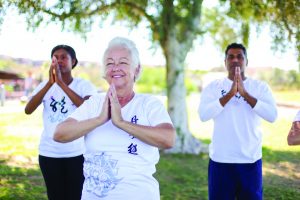
    They learn to use their ki for the purpose of personal self-development, and how to communicate with their bodies through energy. The body’s energy circulation is stimulated, activating its innate natural healing power. Through consistent practice, practitioners can lead themselves back to optimum health. Essentially, they regain true mastership over their bodies through the medium of energy.

    Three characteristics of mind-body training

    The mastery and use of energy: As one’s sense of energy gradually develops, formerly blocked energy channels open up, promoting circulation of energy throughout the body. Once able to control and command energy, practitioners experience natural healing in their bodies while gaining control of emotions and habits.

    Enhancing the body-brain connection:
    The brain is not simply an organ but is the center of the whole human body and its energy system. Through programs like Body & Brain, practitioners can learn to utilize their brain fully toward the creation of a better life for themselves and those around them.

    Self-managed, holistic health care: By learning techniques for improving emotional patterns, physical condition, quality of social interaction, communication skills, and correcting unhealthy habits, practitioners can become masters of their own lives.

    If you want to live a better life and gain flexibility and balance of body and mind, you should look into the various programs and benefits of yoga, especially mind-body training. It is easy and simple enough for anyone to learn — male or female, young or old — yet can be enjoyed by even the most advanced practitioner.


    BODY & BRAIN

    401 Kamakee St. #317, Honolulu |  808-596-9642
    99-080 Kauhale St. #C21, Aiea  |  808-486-9642
    3569 Harding Ave. #B, Kaimuki  |  808-738-5522
    2851 E Manoa Rd Ste 1-207, Manoa  |  808-691-9642
    www.bodynbrain.com

    Our daily lives are filled with so many distractions that it’s easy to feel scattered and stressed. When you are chronically stressed it becomes harder to function properly, increasing your stress even more and often inviting disease. To help manage their stress, many people have turned to yoga and mind-body training because its healthy effects…

  • ‘Life Stories’: A Spotlight on Our Kūpuna

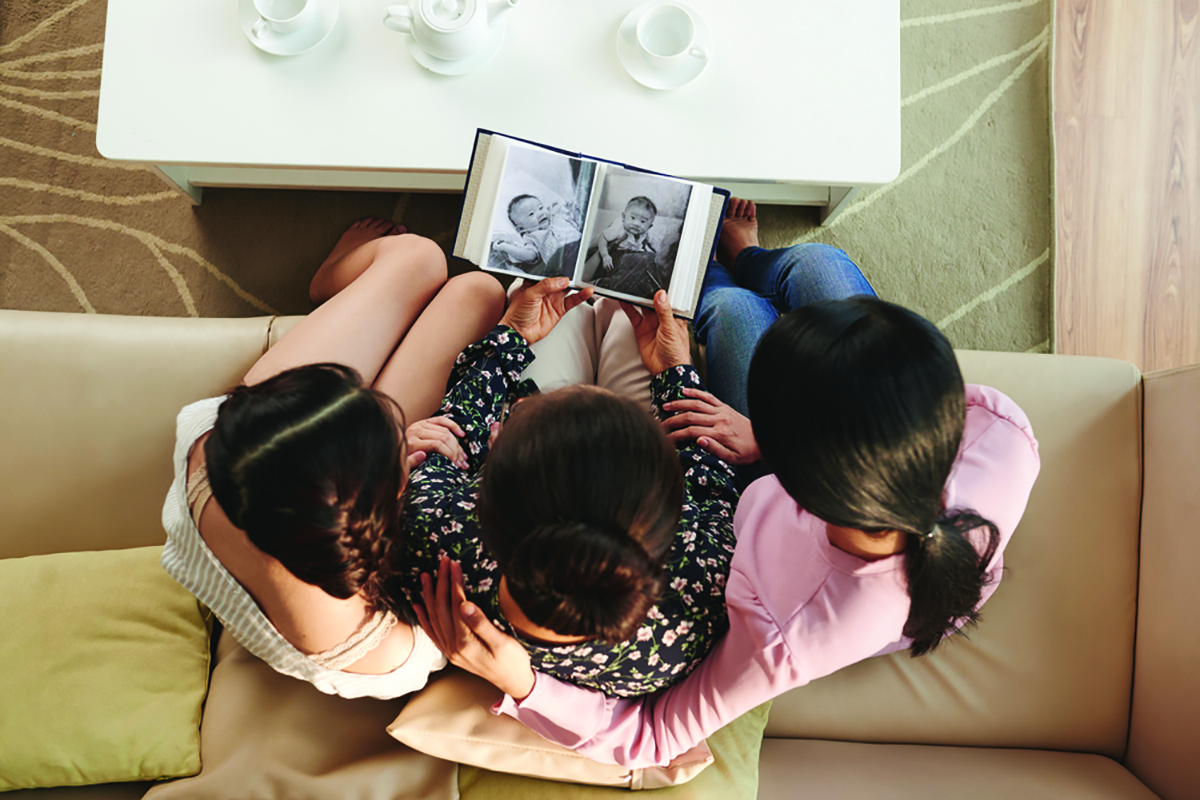
    With the holidays and the spirit of the season upon us, our energies turn toward the festivities with our friends and families. What better opportunity for us to shine the spotlight on our kūpuna than by tapping into their vast knowledge of life, wisdom and memories? A fun way to do this is through a day of “Life Stories,” where all the generations get together and share their fondest memories.

    Using photographs that each person brings to the gathering, you can create a collage to be displayed on your wall and enjoyed throughout the coming year. Being the center of this activity can give your kūpuna a sense of renewed purpose and of belonging. It may also enable those with dementia or Alzheimer’s to speak more cohesively as they become engaged in sharing their memories and experiences.

    Family and friends will have a fun, touching and enlightening time as the collage is pieced together. You can create your own “Life Stories” collage with just a few simple items: photos, card stock or poster board, glue sticks, markers, scissors (child-safe ones), and lots of smiles!

    May the joy of the holidays bring an extra special touch to your “Life Stories.”


    REGENERATIVE LIVING

    808-295-5585  |  info@regenliv.com
    www.regenliv.com

    With the holidays and the spirit of the season upon us, our energies turn toward the festivities with our friends and families. What better opportunity for us to shine the spotlight on our kūpuna than by tapping into their vast knowledge of life, wisdom and memories? A fun way to do this is through a…

  • 3 Tips to Help Discuss Aging in Place

    There is no perfect time to discuss end-of-life care. Most seniors would prefer to age in place at home, as independently as possible. But too few take the time to discuss their preferences with their family, leaving family caregivers
    stressed and scrambling. The most important thing any family can do to prepare for a loved one to live at home is to talk about it today.

    Here are three tips to keep in mind as you discuss and plan how to spend those precious golden years.

    Tip #1: Don’t wait for a perfect moment. Bring up the topic casually at family dinners and get-togethers, so everyone is present to hear your wish.

    Tip #2: Be alert for behavior and lifestyle changes. If you notice changes, have a conversation with a medical professional about what kind of caregiving support might be needed.

    Tip #3: Have the conversation by age 60, at the latest! This is a natural age when retirement, healthcare and financial planning conversations are happening. Include aging-in-place planning in that mix.

    Above all, consider working together with caring professionals to help your kūpuna live long, independent, and comfortable lives.


    HOME CARE BY ALTRES MEDICAL

    808-591-4930  |  homecare@altres.com
    www.altreshomecare.com

    There is no perfect time to discuss end-of-life care. Most seniors would prefer to age in place at home, as independently as possible. But too few take the time to discuss their preferences with their family, leaving family caregivers stressed and scrambling. The most important thing any family can do to prepare for a loved…

  • Making the Most of Retirement

    When I moved from Moloka‘i to Kapolei earlier this year, my goals for retirement were to spend time with my granddaughter, become involved
    in my new community by volunteering at the library and local school, and to continue what I enjoy doing — walking daily, reading, acrylic painting, gardening, cooking healthy meals, attending art shows and educational workshops, and hosting new students from Southeast Asian countries who are currently pursuing their degrees at UH-Mānoa.

    I also have the pleasure and great opportunity to attend the Intermediate Level Hawaiian Language class at UH-West O‘ahu this Fall semester. The class consists of regular students taking it for credit, and non-credit students, like myself, taking it through the Senior Citizen Visitor Program/Nā Kūpuna. The class meets three times a week in the afternoon and we also have the option of attending a conversation session on Wednesday mornings at the student lounge where we can communicate in Hawaiian with students from other classes.

    We have been learning some sentence patterns and new words, as well as familiarizing ourselves with Hawaiian websites and databases. We navigate the internet to read “old” Hawaiian newspapers to practice our reading, pronunciation and comprehension. In class, our instructor encourages his students to speak in Hawaiian and, every other week, we take written quizzes.


    To learn more about free enrollment in UH courses through the Senior Citizen Visitor Program/Nā Kūpuna, call 808-956-4642.

    https://generations808.com/never-late-learn/

    hawaii.edu/diversity/seed-programs/na-kupuna-program/

    When I moved from Moloka‘i to Kapolei earlier this year, my goals for retirement were to spend time with my granddaughter, become involved in my new community by volunteering at the library and local school, and to continue what I enjoy doing — walking daily, reading, acrylic painting, gardening, cooking healthy meals, attending art shows and educational…

  • Sharing a Love of Books

    One of the pleasures of being a grandparent is spending time with the grandkids, and reading books together is a wonderful way to do just that — whether introducing a toddler to the alphabet or helping a sixth-grader research a project. Here are some ideas for locally published books to share with your special keiki.

    Young children will delight in the newly redesigned second edition of A is for Aloha, now with bold color photographs. First published in 1980, the original edition used black-and-white photos showing familiar island experiences as a way for Hawai‘i’s children to learn their ABCs. Early-education experts Stephanie Feeney and Eva Moravcik, and photographer Jeff Reese have made this classic freshly appealing with full-color images of everyday activities: eating noodle soup, dancing hula, and watching birds and geckos. Ages 2 to 6. (University of Hawai‘i Press, 2018)

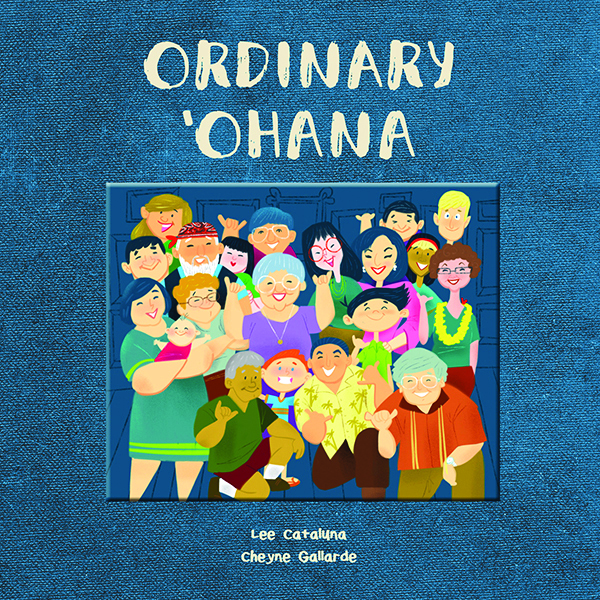
    Written by columnist Lee Cataluna, Ordinary ‘Ohana assures readers that a diverse family is a normal family. The story unfolds through the experiences of a young boy named Kainoa, who introduces the various members of his ‘ohana. With playful illustrations by Cheyne Gallarde, the book shows that one’s family is who you choose and there’s always room for more at Sunday dinner, even if it’s on Saturday night, or Wednesday night, or whenever. Ages 4 to 8. (Bess Press, 2016)

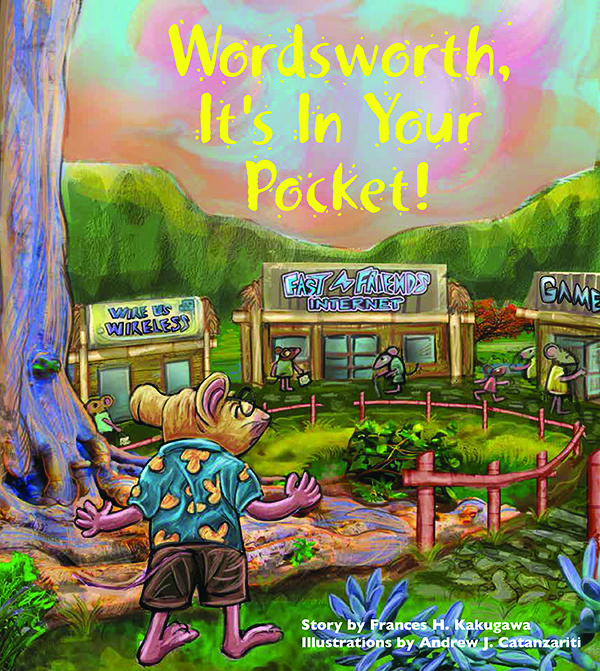
    By valuing creative play, imagination, and the fun of the outdoors over the allure of video games, computers, and cellular phones, Wordsworth, It’s In Your Pocket! by Frances Kakugawa is a gentle reminder that it’s important for young minds to unplug and enjoy real-world friends and activities. This entertaining, yet thought-provoking, Wordsworth adventure is the fourth book in the award-winning series featuring the poetry-loving mouse. Ages 8 to 12. (Watermark Publishing, 2015)

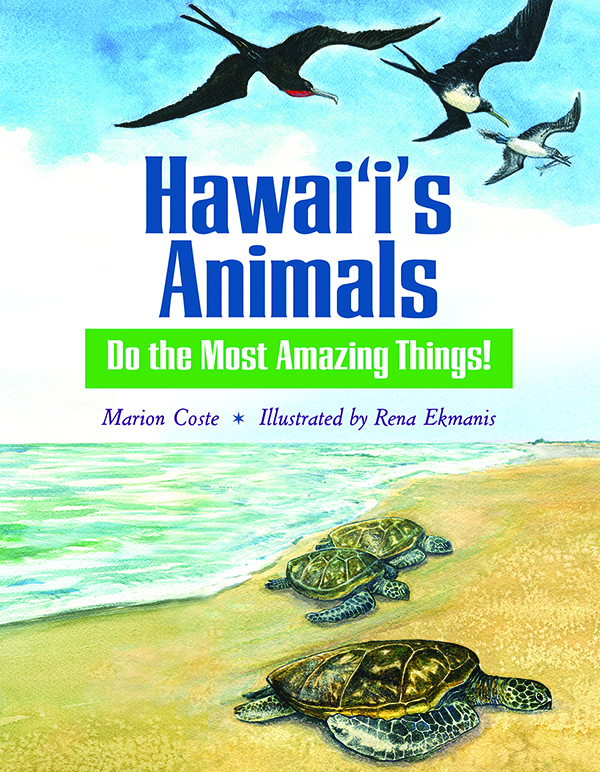
    Hawai‘i’s Animals Do the Most Amazing Things! by Marion Coste and illustrated by Rena Ekmanis is jam-packed with information about native species of our islands, including birds, insects, and sea creatures found nowhere else in the world. Older children — and adults as well — will enjoy the fascinating facts about the natural habitat and unusual animals of the Hawaiian Islands. The book would also be a useful resource for science reports. Ages 9 and up. (UH Press, 2015)

    Find these at your favorite bookstore or order directly from the publishers.


    University of Hawai‘i Press: www.uhpress.hawaii.edu

    Bess Press: www.besspress.com

    Watermark Publishing: www.bookshawaii.net

    One of the pleasures of being a grandparent is spending time with the grandkids, and reading books together is a wonderful way to do just that — whether introducing a toddler to the alphabet or helping a sixth-grader research a project. Here are some ideas for locally published books to share with your special keiki.

  • Molokai Arts Center

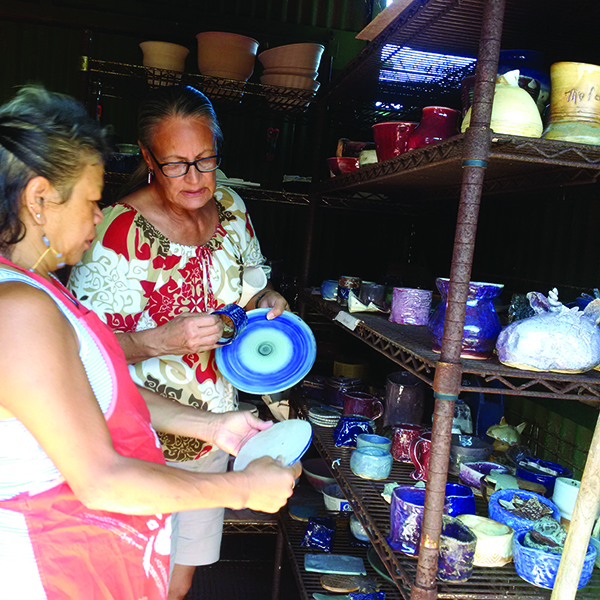
    The day I visit the Molokai Arts Center, Betty West is teaching a kūpuna ceramics class. Betty was one of the founders of the center, which grew from an idea discussed at the local pizza café by locals — mostly seniors — who felt the island needed a place to nurture the arts. Between 2010 and 2012, the group incorporated as a nonprofit, raised funds and applied for grants, and were offered a home on the property of Coffees of Hawaii in Kualapu‘u.

    The class in progress is one of the activities offered on Moloka‘i by Alu Like, a nonprofit whose mission is to help Hawaiian Natives achieve their full potential. One of the students, Darlene Johns, describes for me the process of taking the raw clay and fashioning it ready for the first firing to produce a bisque, which is then glazed and fired in the kiln again to create the finished item.

    Betty West
    Betty West
    L-R, Marshelle Castro and Darlene Johns
    L-R, Marshelle Castro and Darlene Johns
    2018 Member Art Show exhibits
    2018 Member Art Show exhibits

    Dan Bennett, also a co-founder, is quick to acknowledge the role volunteers play in the organization: “If we didn’t have volunteers, this place wouldn’t be here. Different people volunteer their different expertise and services.” The center is also very open to ideas for classes suggested by students or to anyone who would like to share their skills by teaching.

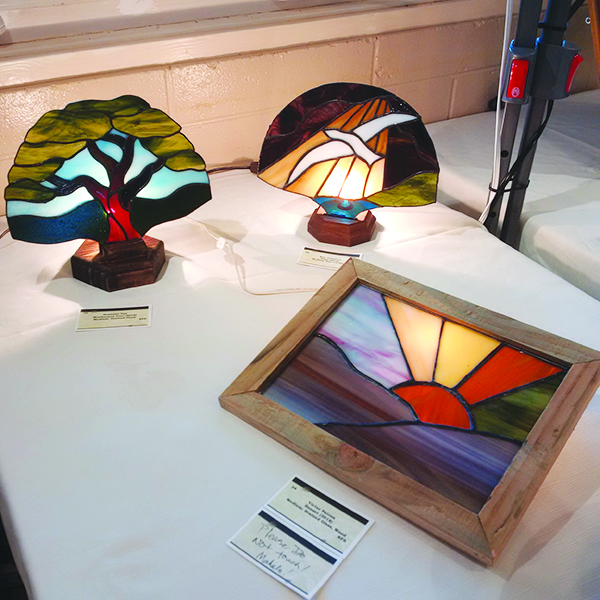
    A popular stained glass class came about in just that way — a student suggestion and the discovery that several people on the island had experience with that art form. Recently, the center was gifted a treasure trove of panes of colored glass. It’s the center’s connection to the community that enables it to flourish.

    Each year, a juried exhibition of members’ works is shown at a reception open to the local community. Of the 36 exhibits at the 2018 event, 22 were created by seniors, who can attend any of the center’s adult classes and its workshops.

    Board member Paula Scott feels that “retirement should not equal stagnant. Retirement should equal learning new things, seizing the opportunity.”

    “My philosophy is that people are infinitely creative,” Dan says. “It’s just a matter of jumping into it.”


    MOLOKAI ARTS CENTER

    808-567-9696  |  www.molokaiartscenter.com

    The day I visit the Molokai Arts Center, Betty West is teaching a kūpuna ceramics class. Betty was one of the founders of the center, which grew from an idea discussed at the local pizza café by locals — mostly seniors — who felt the island needed a place to nurture the arts. Between 2010 and 2012, the group…

  • Put Fine Art in Your Life

    Not all fine art is in museums or galleries. These two seniors found other ways to enjoy fine art up close. Both have a connection to the Maui Plein Air Painting Invitational art event on Maui — coming up Feb. 16–24, 2019.

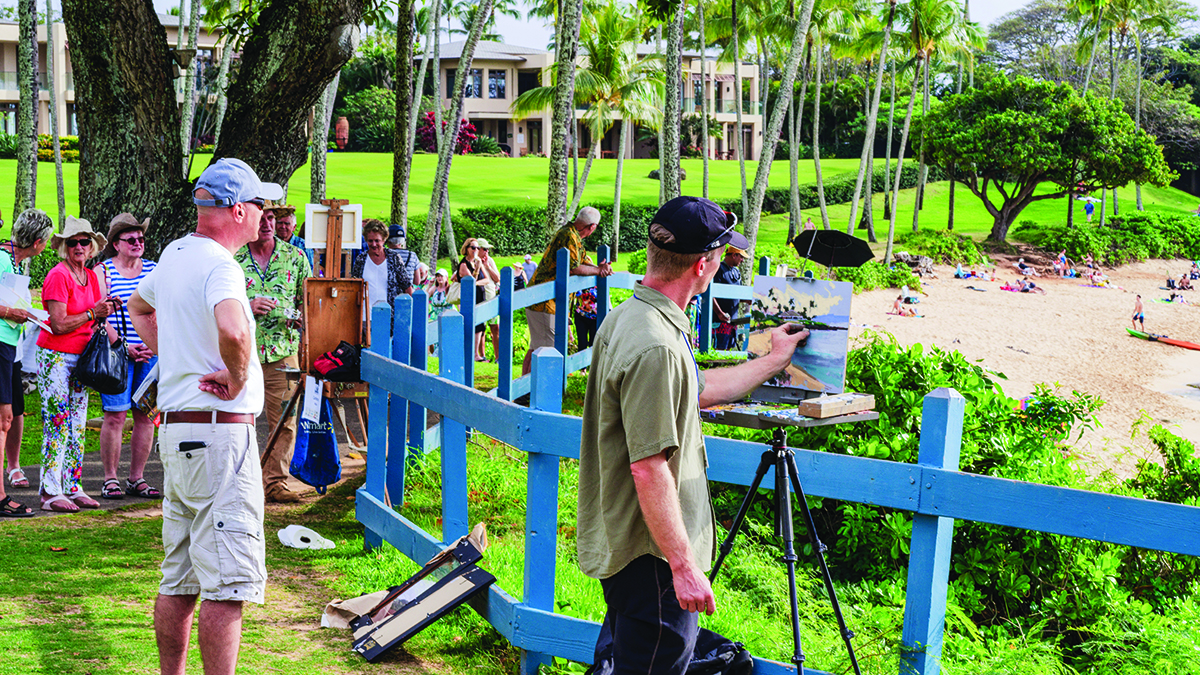
    Spectators gather to watch plein air artists create their magic.
    Spectators gather to watch plein air artists create their magic.

    Plein air is French for “outdoors.” Impressionist painters like Monet and Renoir attempted to capture the mood of a scene, including weather and time of day. Today, artists paint plein air landscapes in less than four hours, before the sun moves on. The paintings inspire  memories of breezes, sounds and fragrances. Every February, Maui Arts League assembles 25 award-winning plein air artists from Hawai‘i, the mainland and Australia to paint scenes of Maui and sell the fresh originals.

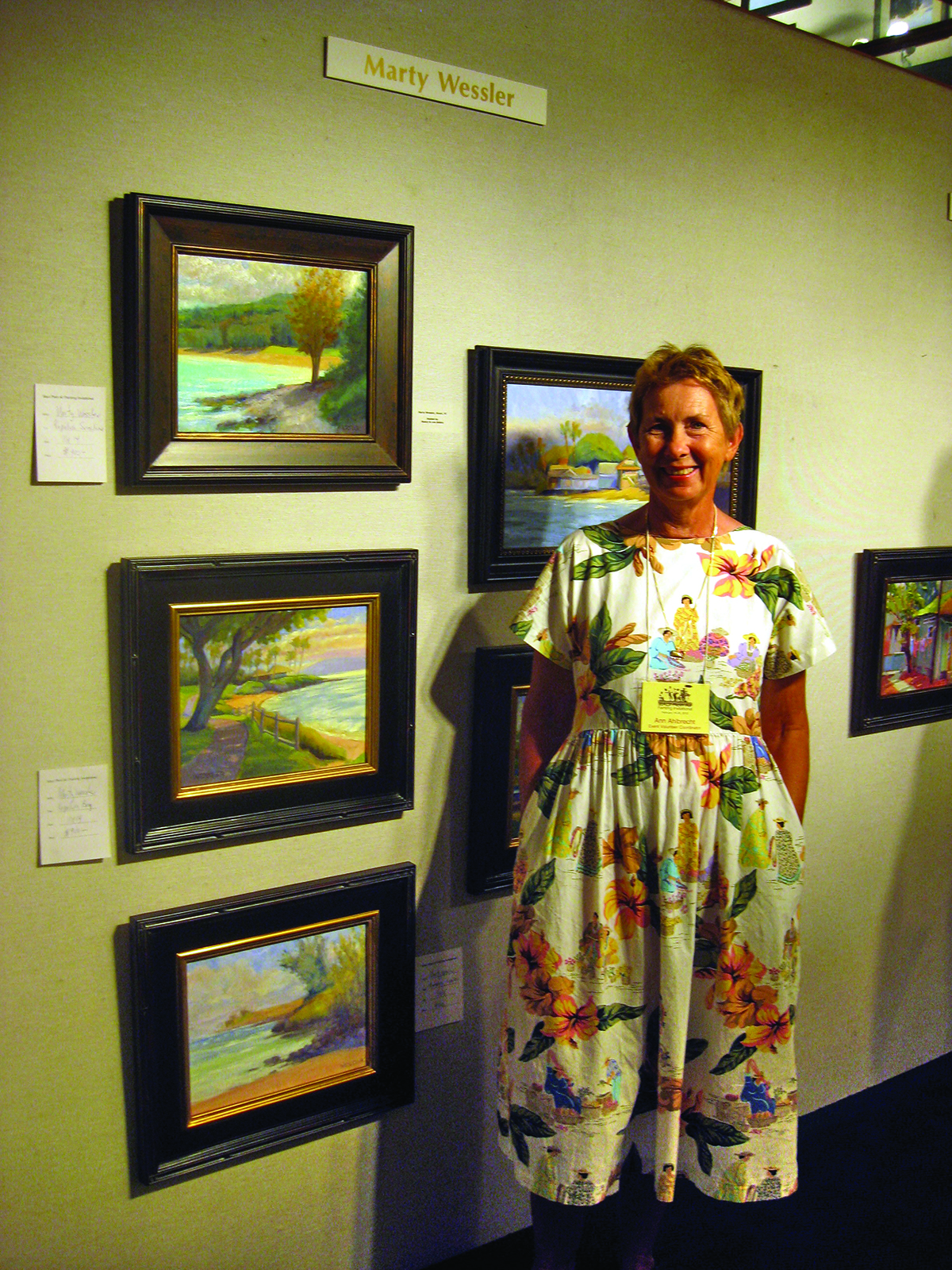
    Ann Ahlbrecht volunteering at one of the annual MPAPI gallery events.
    Ann Ahlbrecht volunteering at one of the annual MPAPI gallery events.

    Ann Ahlbrecht of Kā‘anapali volunteers at the art event. “I love watching people from our community enjoy the magnificent art created in their own backyard. Our events are outdoors, open and available
    to everyone,”  says Ann.

    Working the event allows her plenty of time to study and enjoy each painting and meet the artists. As an art lover, Ann wants every family to have the opportunity to experience fine art.

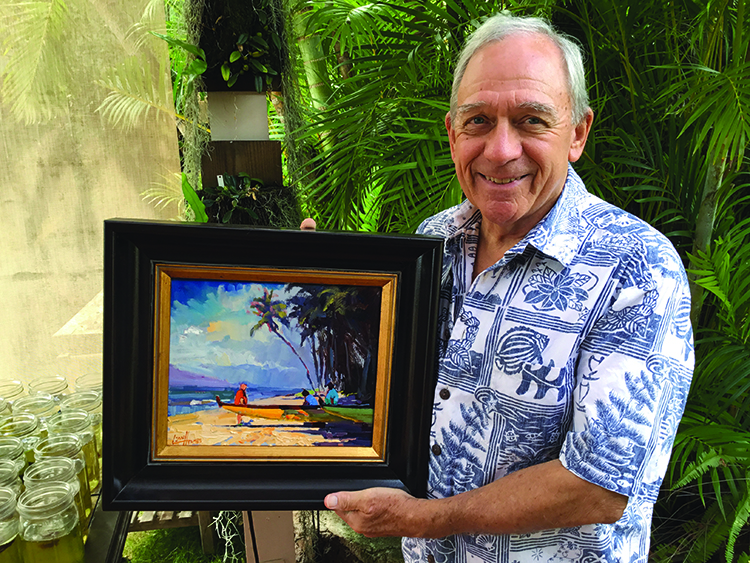
    Ed Bartholomew with one of his favorite paintings.
    Ed Bartholomew with one of his favorite paintings.

    Ed Bartholomew of Lahaina is a retired high school and UHMC biology teacher. These days he sells his own paintings at Lahaina Art Society Gallery and collects art. One of Ed’s favorites is “Man in the Boat” by Leon Holmes of Perth, Australia.

    “Wow!” says Ed as sunlight hits the canvas. “This painting still grabs me — that’s why I decided to buy it. It inspires me.

    I bought my first painting in the ’70s at the fence by the Waikiki Zoo. That picture of a sunset gave me pleasure every day. Now my eclectic art collection  brings me joy, and helps support artists raising their families. Good all around.”

    It’s Your Beach! by Ronaldo Macedo 2018
    It’s Your Beach! by Ronaldo Macedo 2018

    Ann and Ed discovered two ways to support their community through art, and enjoy the talent of our Hawai‘i artists. Visit an art museum, gallery or event — maybe invest in an original oil, watercolor or pastel that “grabs” you.


    MAUI PLEIN AIR PAINTING INVITATIONAL

    808-268-0787  |  katherine.pleinair@gmail.com
    www.CelebrateArtOnMaui.org

    Not all fine art is in museums or galleries. These two seniors found other ways to enjoy fine art up close. Both have a connection to the Maui Plein Air Painting Invitational art event on Maui — coming up Feb. 16–24, 2019.

  • Embracing Change

    Maggie threw her pen at the computer. “Oh no! I can’t find the email I just wrote to my grandson. I hate the computer! Why can’t we go back to the way things used to be before the technology monster took over, when we talked to each other in person or on the phone?” Remembering she has friends to call, she picked up the phone and dialed her 81-year-old friend Toni. Toni would understand.

    Maggie vented to Toni but heard only impassioned laughter. Finally, Toni gasped, “You know, Maggie, in the beginning I felt the same. I even thought to ignore my phone, let folks knock on my door like in the good old days. But then I saw a golden opportunity for us — brain exercises and memory boosters and unlimited learning we can do from home. Even better, the whole world is at our fingertips.”

    “But I don’t know how to…”

    Toni interrupted, “Hey, why don’t you come over this afternoon? My genius grandson taught me. He’d be happy to teach you, too.”

    Relieved, Maggie said, “Oh, what a divine offer! Having time with Jesse, who I adore, and learning to conquer this monster and train my brain all at the same time?”

    “Sure! Jesse loves you and feels so smart and important when he can help us!”

     “I’m in!” Maggie chimed in enthusiastically. “I’m so happy to have a private tutor to stretch my brain! Now I’ll be able to flow with the times. Can I bring my ‘smart’ phone and learn how to Instagram a photo to my grandson? I am looking forward to growing smarter and less confused.”

    “Sure.”

    Maggie hung up the phone before she remembered, “Now where is the message I was looking for? Where is the email I wrote? It disappeared.
    I’m so relieved I’m seeing Toni and Jesse this
    afternoon. I adore learning and new adventures. But it’s the personal touch that makes all the
    difference. Like talking to a neighbor or inviting
    a friend for tea.”

    “What if Toni and I created a new training for the young as a gratitude for Jesse’s generosity? We could teach them to slow down, greet the sun, and smell the roses. Maybe we can help change the whirlwind world stressing out the younger generations.”

    And so there you have it: my challenges of embracing change, which some wise person once said is the only constant. I wonder if the young will cross this bridge the same way.


    Pratibha Eastwood is a psychologist in private practice and a writer, currently preoccupied with the impact of aging. She loves taking life to the limit or beyond at any age.

    808-595-HOPE(4678)
    808-988-4JOY(569)

    Maggie threw her pen at the computer. “Oh no! I can’t find the email I just wrote to my grandson. I hate the computer! Why can’t we go back to the way things used to be before the technology monster took over, when we talked to each other in person or on the phone?” Remembering…

  • Ed Gayagas: ‘Don’t Give Up!’

    Find something you’re passionate about and stick with it! That’s the advice Ed Gayagas has followed for himself and the message he passes along to others.

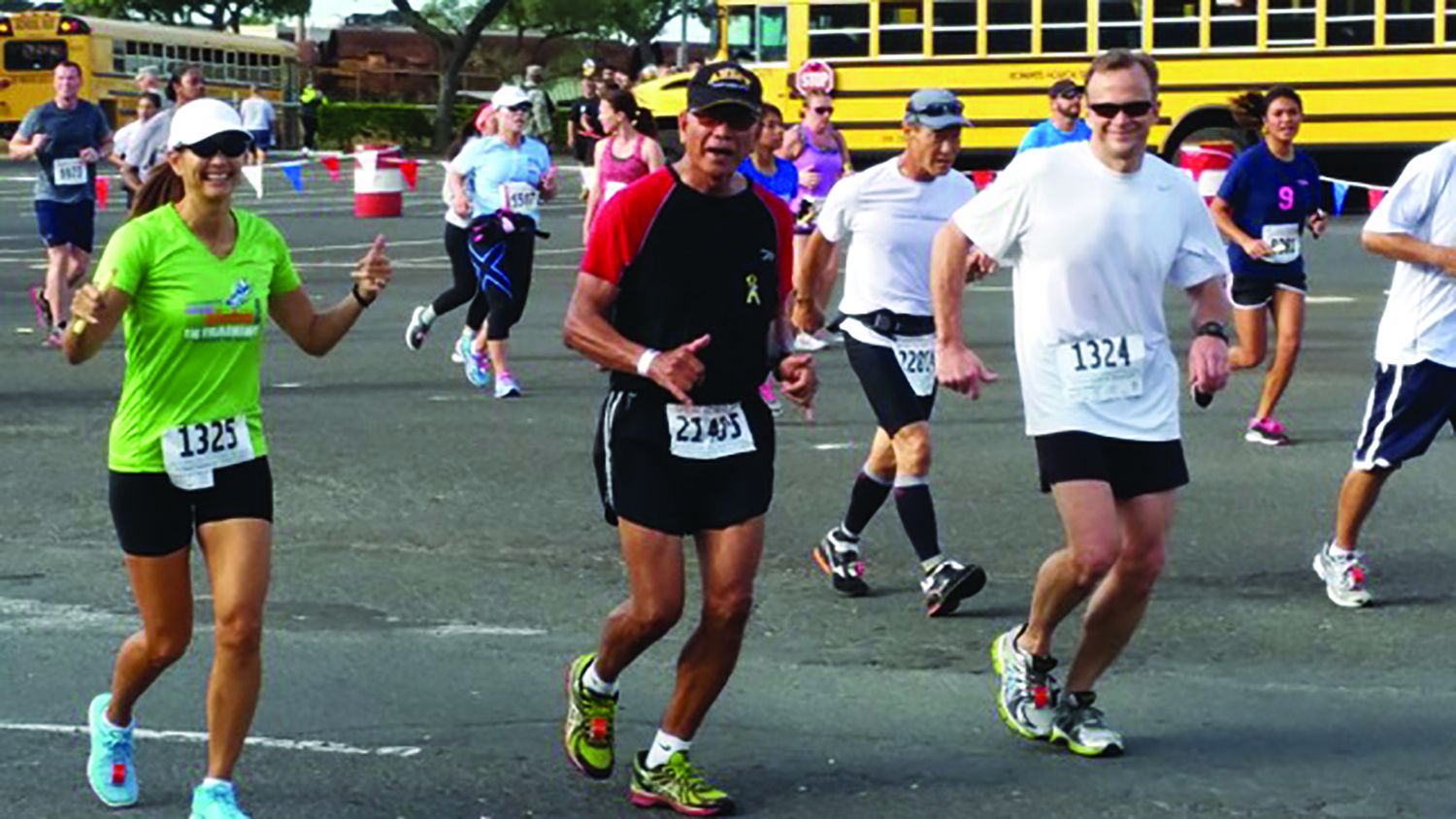
    Ed lives on O‘ahu with his wife Norma and for as long as he can remember his passion has been martial arts. Growing up on Kaua‘i, Ed was a scrawny kid who avoided fights but once, when confronted by a bully, Ed decided “enough is enough” and started turning his life around with judo, jujitsu and taekwondo and the meditation practices those disciplines offer.

    He also found a love for the military and began a 30-year career with the Army that lasted until he retired in 1989. Ed is now 79 and among his other accomplishments has participated in the Great Aloha Run every year since its inception in 1985. That perfect attendance record was nearly shattered last year, however, when Ed fell ill with a rare form of brain cancer, primary central nervous system lymphoma.

    Doctors at both Tripler and Queen’s confirmed the diagnosis and gave Ed only a four percent chance of survival if the inoperable tumor went untreated. So, Ed began months of chemotherapy that zapped him of his strength and energy.

    But with the help of an early morning routine of exercise, meditation and deep breathing, along with a strong desire to compete again, Ed was able to cope with the chemo treatments. When they were over, Ed’s strength returned, and he now plans to run again for real.

    In last year’s Great Aloha Run, Ed was unable to run the entire distance but ran as much as he could, then got in a wheelchair and was pushed along until he felt he had recovered enough to run some more. It took about three hours, but Ed was able to finish the race and chalk up another year.

    Ed is relentless in his pursuit to be healthy and fit but other aspects of his life are no different than any other man of his age. In matters of diet, Ed tries to eat lots of vegetables but says he’s no vegetarian. “Steak is my favorite, aside from sweets,” Ed admits.

    As for his meditation practices, Ed says he doesn’t subscribe to one specific type of meditation — but rather has cherry-picked aspects of different philosophies that work for him. He encourages others to develop their own “style” — not only of meditation but also of exercise.

    When asked if he ever thought that he would be diagnosed with a life-threatening disease, he replied emphatically, “No!” He always assumed he would be on a healthy path and always strove for optimum health.

    “Don’t give up!” Ed repeatedly advises. Advice that is certainly working for him.

    Find something you’re passionate about and stick with it! That’s the advice Ed Gayagas has followed for himself and the message he passes along to others.