WANT THIS ISSUE?
Download your own personal copy of this issue in PDF format. Click the button below:

WANT THIS ISSUE?
Download your own personal copy of this issue in PDF format. Click the button below:
As morning dawned on December 5, 1941, a fisherman cast his net along O‘ahu’s north shore. A college student helped his father open a new business. A volunteer took kids to the beach in Waimānalo. It was pretty much like most other days, for most people. But Sunday, December 7, 1941, would become known as…
Only one out of every 44 cases of financial abuse among the elderly ever gets reported and even fewer make it to trial. This is the true story of one of those cases.
This story starts with the death of a woman’s son in Afghanistan. Following his tragic passing, the government paid her more than $500,000 in death benefits. So, she took the money to a broker and told him that it was everything she had for retirement and, in addition, she wanted to access about half of it to buy a home with her daughter. The broker, after listening to her story, placed the money in securities called Real Estate Investment Trusts (REITS) and Limited Partnerships.
The securities paid a dividend for about two years. And then the dividends got smaller. And smaller. Finally, when she wanted to cash out half of her money, the investments that she was in prevented her from doing so.
Sensing something was seriously wrong, she sought out legal representation. Her situation was identified as textbook securities fraud, and after a settlement she won back her finances.
Before approaching an advisor to invest your money, you should check for any past disciplinary actions against them by calling the Department of Commerce and Consumer Affairs at 808-586-2744, or using the Financial Industry Regulatory Authority’s (FINRA) BrokerCheck website, http://brokercheck.finra.org/
If you suspect you are a victim of securities fraud, seek out a legal firm that includes a practice specializing in that area.
CLAY CHAPMAN IWAMURA PULICE & NERVELL
info@paclawteam.com
Scott Batterman: 535-8410 | Gerald Clay: 535-8405
www.PacLawTeam.com/securities-fraud
Only one out of every 44 cases of financial abuse among the elderly ever gets reported and even fewer make it to trial. This is the true story of one of those cases.
In the 1960s, there was a game show called “What’s My Line?” that featured a panel of four celebrities who would try to guess what line of work a guest on the show was in. This panel would ask Yes/No questions about the individual’s career and every time the answer was No, the guest would win a small amount of money. It was very entertaining watching the panelists guessing if someone was an airline pilot or a rocket scientist. Often their guesses hinged on how a particular person looked or their confidence when they gave an answer.
We often have these preconceived notions of who people are by how they dress or speak to us. I see this each time I give a presentation and ask the simple question, “What does a con artist look like?” The answers I receive are oftentimes humorous. Descriptions of used car salesmen and politicians are shouted out, with visuals of “shifty eyes,” bad toupees, rapid speech, and loud aloha shirts added in for effect. Audience members are confident they would be able to clearly spot a criminal if they were to meet one.
When I tell of the cases the Elder Abuse Unit has prosecuted over the years, and relate who the perpetrators of these crimes were, the audience becomes unsure of their scam artist radar. They sit in disbelief hearing of the daughter who took $200,000 from her mother, leaving her unable to pay the mortgage and facing foreclosure. Or the caregiver who stole all the wife’s jewelry when she was hired to care for the disabled husband. Or the pleasant woman who simply walked into the house of an elderly couple in ‘Aiea and pretended to know them, distracting the couple while her husband entered the home and took items from the bedroom.
Over and over, I hear from victims about how nice the criminal looked or how polite he sounded over the telephone. Or maybe they felt sorry for him because of the sob story he told. Con men do not wear black cowboy hats to signify they are the bad guys. Oftentimes they are only revealed to be dishonest after the crime has been completed.
It’s difficult, however, to go through life being paranoid, suspecting every stranger you meet as having criminal intent.
Here are some simple ways to safeguard yourself from being a victim:
• When hiring someone for a job, get a written contract and include any spoken promises in it.
• Hire a licensed worker and verify their license by calling 808-587-4272.
• Check references.
• Don’t rush into a deal; if they can’t wait 24 hours something is wrong.
• Be comfortable saying “no thank you” and hanging up the phone or shutting the door immediately. (You may feel this is being rude, but a common tactic for shysters is to make you feel guilty for asserting yourself).
To report suspected elder abuse, contact the Elder Abuse Unit at 808-768-7536 | ElderAbuse@honolulu.gov
“What does a con artist look like?” The answers I receive are oftentimes humorous. Descriptions of used car salesmen and politicians are shouted out, with visuals of “shifty eyes,” bad toupees, rapid speech, and loud aloha shirts added in for effect.
Ideally, estate planning is “by invitation only.” Most people misunderstand this to mean that we, as the lawyers, are the ones doing the inviting. In actuality, it’s you, the clients, who are doing the inviting, by inviting us into your unique and textured lives.
Each person has deep concerns they want to address based on their unique life stories. By inviting us into their lives, it helps us to understand them and their concerns, so that we can hopefully help to make things better for them and their family.
This is true even when it seems that people only want to talk about probate and taxes. Estate planning is so much more than that. When people start the conversation by saying they want to avoid probate or minimize taxes, what they are often saying is that they worked so hard to accumulate things and they want to leave as much as they can for their beneficiaries to make life easier for them.
Many people don’t feel comfortable with this foundational human element and stay safe in “content, worth and procedure,” and avoid “context, value, and process.” However, it is each client’s unique story that provides the context and builds the foundation for each estate plan. It is the value underlying the worth of assets that provides meaning. Because life is in constant change, estate planning is a process of self-reflection and conversation, rather than solely the making of a document or going through probate.
When you see your estate planning attorney, tell your story and write it down. It will make all the difference in the world.
Stephen B. Yim, Attorney at Law
2054 S. Beretania St., Honolulu HI 96826
808-524-0251 | www.stephenyimestateplanning.com
Ideally, estate planning is “by invitation only.” Most people misunderstand this to mean that we, as the lawyers, are the ones doing the inviting. In actuality, it’s you, the clients, who are doing the inviting, by inviting us into your unique and textured lives.
If philanthropy is part of your financial strategy, you may want to look for methods of giving that go beyond traditional monetary donations. Recent changes in the tax landscape may also be a reason to take another look at how you give financially. Here are four increasingly popular strategies that can work for you:
Gift highly appreciated stocks or other assets
If you hold stocks or other investments for more than one year that have gained value, liquidating the asset to make a charitable donation may result in a taxable long-term capital gain. One potentially more efficient way to maximize the value of your donation is to give appreciated stock directly to a charity. The charity would receive an asset it can continue to hold or immediately sell and you would not count the gift as taxable income. Additionally, the market value of the stock at the time the gift is made is generally deductible from your adjusted gross income if you itemize your deductions (subject to income-based limitations). Check to ensure the charity accepts this type of donation.
Establish a charitable trust
Another way to consider gifting assets is to set up a charitable trust. Trusts can help you manage highly appreciated assets in a more tax-efficient manner while, in some cases, allowing you to split assets among charitable and non-charitable beneficiaries. The timing of each gift and the flexibility you want dictates the type of trust that works best. With a Charitable Lead Trust, a charity is funded with income from assets placed in the trust for a specified time, after which, the remaining assets revert to other named beneficiaries, such as your heirs. In a Charitable Remainder Trust, the reverse occurs. The trust makes regular income payments back to you or another beneficiary. After a period of time specified in the trust, the remaining assets are directed to the named charities. These trusts have specific rules and are generally established through a professional. Another option is to choose a donor-advised fund, which allows you to make a large donation that may be immediately deductible from taxes, but gives you flexibility to recommend gifts to charities spread out over a period of years.
Maximize donations through your employer
Your employer may offer the convenience of making contributions through payroll deductions, allowing you to give systematically with each paycheck. In addition, your employer may match a certain donation amount, which can add to the impact your gift makes. If you have access to these or other workplace giving programs, check to see if the charities you care about are eligible to receive this type of donation.
Make a charitable individual retirement account (IRA) donation
If you have reached age 70-½, you are required to take distributions from your traditional IRA each year. If you don’t need the money to meet your essential and lifestyle expenses, you may prefer to avoid the resulting tax bill by taking advantage of the Qualified Charitable Distribution rule. It allows you to transfer funds directly from your IRA to a qualified charitable organization. This is a tax-efficient way to shift up to $100,000 out of an IRA each year. By doing so, you may avoid having to claim income (and subsequent tax liability) since you would not receive the required distribution.
As you consider these and other gifting strategies, consult with your financial advisor and tax advisor to ensure the gifts you make are most effective for your goals and consistent with your overall financial plan.
MICHAEL W. K. YEE, CFP
1585 Kapiolani Blvd., Ste. 1100, Honolulu HI 96814
808-952-1222, ext. 1240 | michael.w.yee@ampf.com
Michael W. K. Yee, CFP®, CFS®, CLTC, CRPC ®, is a Private Wealth Advisor, Certified Financial Planner ™ practitioner with Ameriprise Financial Services, Inc. in Honolulu, HI. He specializes in fee-based financial planning and asset management strategies and has been in practice for 30 years.
Ameriprise Financial, Inc. and its affiliates do not offer tax or legal advice. Consumers should consult with their tax advisor or attorney regarding their specific situation.
Investment advisory products and services are made available through Ameriprise Financial Services, Inc., a registered investment adviser.
Ameriprise Financial Services, Inc. Member FINRA and SIPC.
© 2018 Ameriprise Financial, Inc. All rights reserved. File #2089125.
Another way to consider gifting assets is to set up a charitable trust. Trusts can help you manage highly appreciated assets in a more tax-efficient manner while, in some cases, allowing you to split assets among charitable and non-charitable beneficiaries
There are three estate planning documents that every competent adult living in the State of Hawai‘i should have. Of course, “competency” can be an elusive quality, but once a Hawai‘i resident has turned 18, the law of our State presumes that person to be competent. So if you have children or grandchildren getting ready to leave Hawai‘i for college in the fall — or even
if they are staying in the Islands for the indefinite future — and if they are at least 18 years of age, they should have in place a durable power of attorney, an advance health care directive, and a HIPAA authorization. (HIPAA refers to the Health Insurance Portability and Accountability Act of 1996.)
Durable power of attorney
A durable power of attorney gives authority to other people to deal with one’s assets. The person who signs the power of attorney is called the principal, and the person appointed to act on the principal’s behalf is called the agent. Under Hawai‘i law, an agent owes fiduciary duties to the principal, and the agent can get in big trouble for failing to carry out those duties. Without a power of attorney in place, it might be necessary to institute an involved court proceeding if a person is absent or incapacitated at a time when something must be done with the person’s assets. This might be the case if the person is in an accident and cannot access his or her funds to pay for care or for regular obligations, such as rent.
Advance health care directive
You would use an advance health care directive to give authority to other people to make health care decisions for you if you are unable to communicate those decisions for yourself. If, for example, you were unconscious and you needed surgery, who would sign the consent forms for you? If you have an advance health care directive in place, your hand-picked health care agent could sign on your behalf. Your health care agent could also make other decisions for you, including end-of-life decisions. Without an advance health care directive in place, decision-making for you could be tricky, and your family could be forced into court in order to have a judge appoint someone to make decisions for you.
HIPAA authorization
Finally, a HIPAA authorization gives medical providers permission to talk to a person’s duly-appointed health care agents and anyone else the person wants to be privy to his or her health information. This permission is critical for actual decision-makers, because without it, a doctor can refuse to divulge anything about the person for whom decisions need to be made. Not a great position for the decision-makers to be in. They would have authority to make decisions, but no access to the specific information upon which decisions would be based. The patient may also want to give medical providers permission to talk with family members or others who do not have a decision-making role, but who the patient might nevertheless want to keep in the loop in the event of a hospitalization.
Talk with your trusted advisers about getting these documents in place for yourself and your loved ones.
SCOTT MAKUAKANE, Counselor at Law
Focusing exclusively on estate planning and trust law.
www.est8planning.com
808-587-8227 | maku@est8planning.com
There are three estate planning documents that every competent adult living in the State of Hawai‘i should have. Of course, “competency” can be an elusive quality, but once a Hawai‘i resident has turned 18, the law of our State presumes that person to be competent.
Back in 2014, when a lava flow threatened Pāhoa, Generations Magazine learned just how “hands on” emergency response needs to be. Katherine Kama‘ema‘e Smith, former associate editor, joined a team of community volunteers on an evacuation outreach mission to seniors living in the path of the lava flow. Using an address list generated from the Hawai‘i County Office on Aging (HCOA) database, the volunteers went by van to canvass seniors to learn their needs and check on their preparedness for evacuation, should that be required.
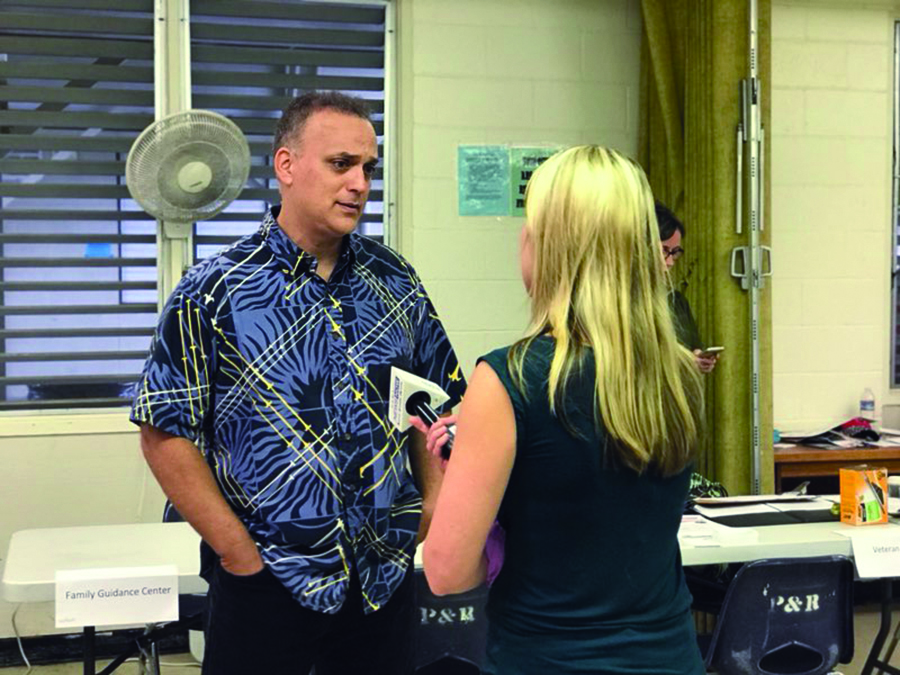
The Big Island again finds itself dealing with a large number of people displaced by a lava event. “The fast-moving lava flow from Kīlauea volcano on May 3, 2018, forced 1,500 residents out of their homes and in search of shelter,” says Kimo Alameda, County Executive on Aging.
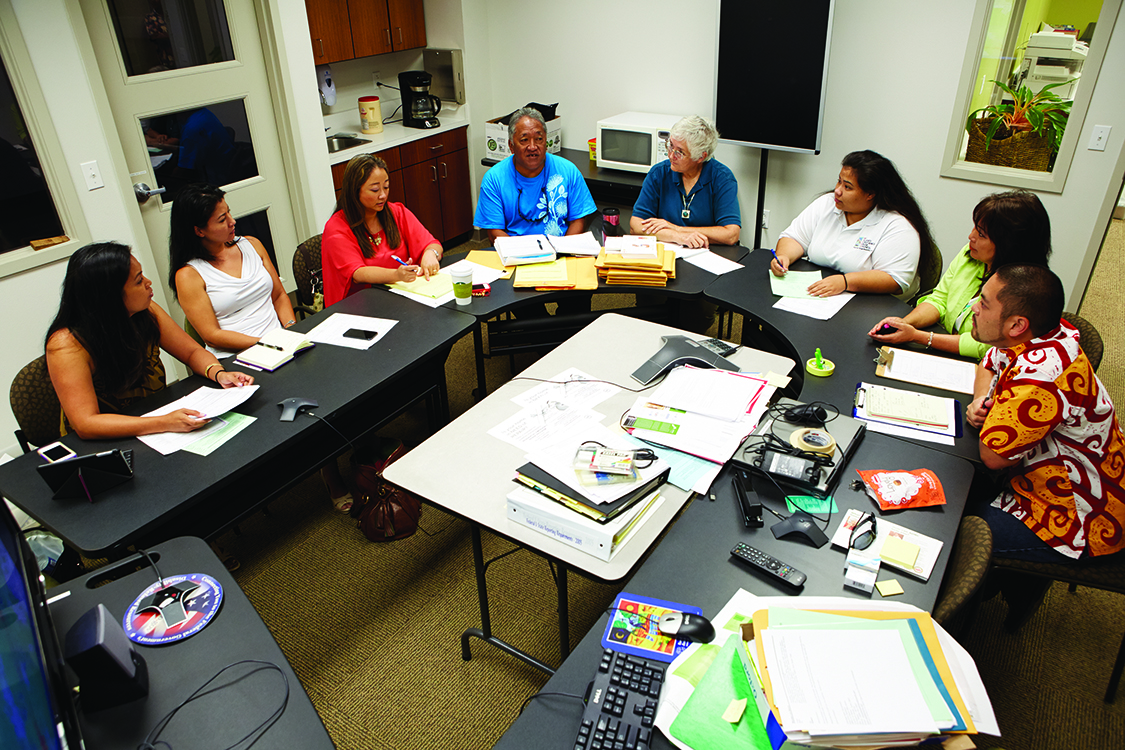
“The following day, two major earthquakes rocked Hawai‘i Island and the County of Hawai‘i needed an agency to take the lead in providing information, assistance, and referral. This is where government officials turned to the County’s Aging and Disability Resource Center (ADRC) in partnership with the County’s Housing Department. Together with a network of over thirty community providers, the Recovery, Information, and Assistance Center (RIAC) was set up to provide what the ADRC does best — provide accurate and timely information, assistance, referral, and options counseling.”
So, what is it about the ADRC that placed it on the front line right from the beginning of this ongoing disaster?
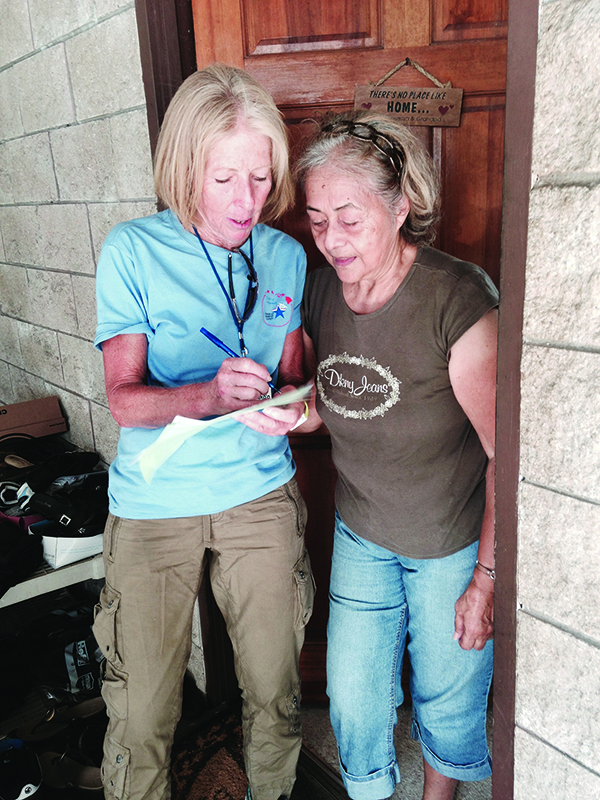
The Hawai‘i County Office of Aging was established in 1966 and today it works through the County, State Executive Office on Aging (EOA), and the Federal Administration on Aging to get its major funding to support its mission of providing a comprehensive and coordinated system of services that enable older people to live independently and with dignity. The ADRC’s role is to put that mission into practice. It is this long history of interaction with all three levels of government, as well as with community groups, that placed the county’s ADRC in an ideal position to coordinate a timely, effective response to the lava emergency.
The county’s battle plan
1) Anticipate. When the lava flow started on May 3, it was clear that people would lose their homes. Already tackling homelessness, the Community Alliance Homeless Partnership had a network of problem solvers already in place, and they quickly became the county’s Disaster Assistance and Recovery Team (DART).
2) Identify needs. An intake form was agreed upon to capture survivors’ specific needs so that the DART could help them resolve those problems.
3) Establish case management. Perhaps the most important step taken was to identify a case management agency to oversee the individuals and families displaced by the event. The Neighborhood Place of Puna was chosen for this role, and the DART partnered with Hawai‘i Community Foundation to pay for staffing for case management and a housing placement specialist.
4) Share information. A shared database is critical for tracking survivors and accountability. Every agency with resources to contribute to the intake follow-ups was given administrative access, allowing the DART to see how that process was going and ensure that services or resources like rental assistance weren’t duplicated.
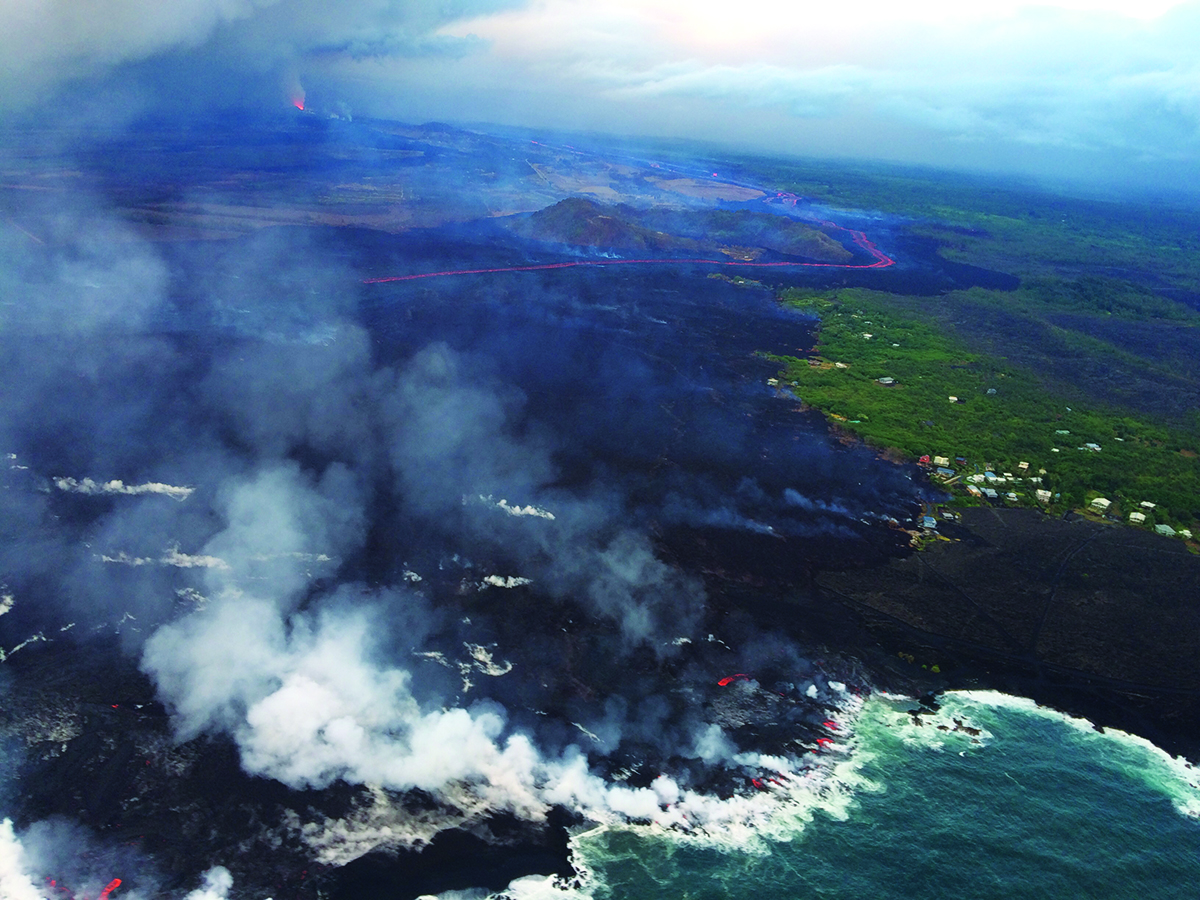
Kimo Alameda reports that, as at the end of June, “we have over 1,000 households in our database. Specifically, 477 households are seeking permanent housing, 139 airfare, 72 medical health, 66 food/water, 64 counseling, 46 legal counsel and 174 financial assistance. We also identified 231 elders, 164 disabled or medically fragile, 77 veterans, and 235 children. And, it’s important to note that these are conservative numbers because not all survivors have come to the DART for assistance. About 25 percent of the total households affected are seeking their own support from family and friends.”
AGING AND DISABILITY RESOURCE CENTER
808-643-2372 | TTY line 808-643-0889
www.hawaiiadrc.org
For more information on each island’s ADRC, go to
https://generations808.com/august-september-2015/
The Big Island again finds itself dealing with a large number of people displaced by a lava event. “The fast-moving lava flow from Kīlauea volcano on May 3, 2018, forced 1,500 residents out of their homes and in search of shelter,” says Kimo Alameda, County Executive on Aging.
When Tutu or Madame Pele creates, we are blessed with the growth of our ‘aīna. However, the gases she emits can be detrimental to many when our beautiful Hawaiian skies are filled with vog (volcanic smog).
I visited Kīlauea several years ago with my hula sisters for the Merrie Monarch Festival. Walking toward the crater to bear ho‘okupu (offering) for Tutu Pele, my lungs suddenly tightened up and I was literally gasping for air. I struggled back to our bus, where I used my rescue inhaler and did some deep breathing exercises. Just the tiny bit of sulfur emitted almost sent me to the hospital.
 What does vog mean for folks with respiratory problems? Above all, keep all your meds in an area that you can easily access, including within arm’s reach at your bedside. Keep extra rescue inhalers in your car, at work, and in your purse.
Take extra precautions to ensure you stay healthy, take your medications and drink lots of water. If you are a nebulizer user, be sure to have enough inhaler solution. Keep tubing and attachments clean and ready.
Be open with your family and loved ones about how important it is to be prepared. Tell them what you need if you are ever in respiratory distress. If traveling, research emergency rooms ahead of time.
And try to stay away from the vog!
CARE CENTER OF HONOLULU
1900 Bachelot Street, Honolulu HI 96817
808-531-5302 | www.ccoh.us
I visited Kīlauea several years ago with my hula sisters for the Merrie Monarch Festival. Walking toward the crater to bear ho‘okupu (offering) for Tutu Pele, my lungs suddenly tightened up and I was literally gasping for air.
I don’t know if anyone is really prepared for family caregiving — it all happens so suddenly,” says Terri Jorgensen of Maui. She became a family caregiver in 2016, when Maui Memorial Hospital discharged her 101-year-old Grandma. Two years later, Terri heads a family of five generations, works full time and manages two households — one with five homecare aides providing care for Grandma and Terri’s 83-year-old mother.
“Learning what kind of care is required is easy, but finding ways to provide it is very difficult. Since I have no bedside skills, I knew right away that I needed help. I am an outgoing sales professional, so servicing my clients and keeping in touch with the outside world makes me happy and healthy. Finding a balance among Mom’s, Grandma’s and my own needs was critical,” she says.
Terri’s Grandma was living independently in Wailuku when she suddenly became ill. She returned from the hospital disabled and bedridden, so Terri began to care for her. A social worker helped her find in-home caregivers to help Grandma.
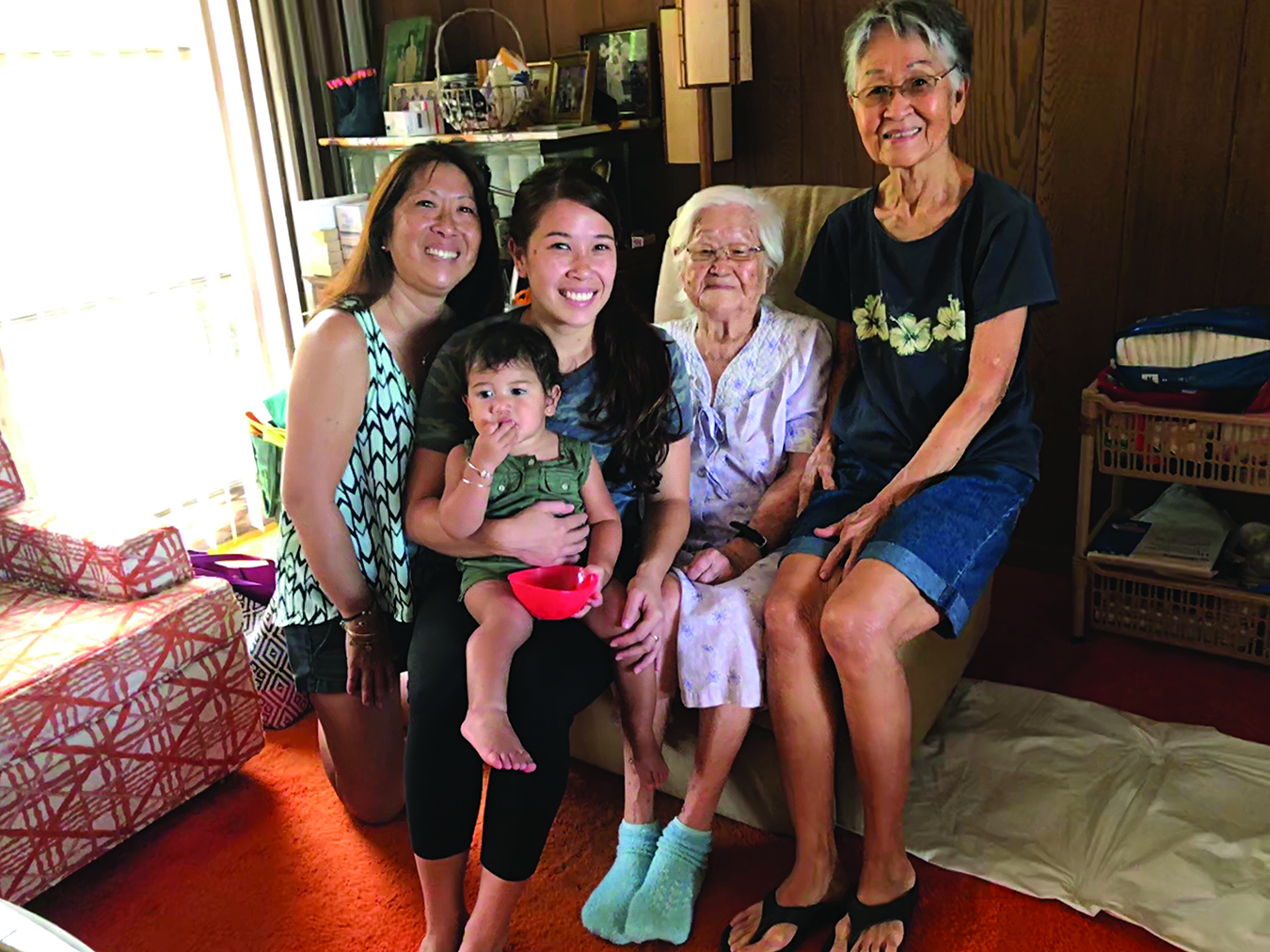
In 2017, Terri’s dad, who was suffering with Alzheimer’s disease, was diagnosed with terminal cancer and passed away on Moloka‘i. Her mom went into a deep depression. Terri brought her mother to Maui to recover at Grandma’s house, but soon it became clear that her condition was not going to improve.
Terri’s daughter also had come from O‘ahu to live with Terri after the birth of her baby. With so many loved ones to care for, Terri faced the financial and logistical issues of managing two households and a large team of homecare and service providers.
“Caregiving is a group activity; one family caregiver cannot do it alone. Maui County services for elderly and disabled persons are a very big help, but managing all the services, appointments and care duty for my family is a huge job. I do the management part, and one of our aides schedules all shifts. We now have five aides covering days and weekend nights. I cover weekday nights but take respite on the weekends.
“When Grandma got sick, a lot of people told me to take care of myself, but I didn’t get it. I wore myself out because I didn’t know what decisions to make, or where to get good information and assistance. There wasn’t enough time in the day to care for Grandma and Mom’s needs and maintain my strength. My auntie, who lives across the street, was good support and encouraged me to reach out for help. What I tell other caregivers now, is to reach out soon. Carefully assess your own physical and emotional needs — because if you get worn down or sick, your loved ones will suffer. My version of balance is to be a good businesswoman, and manage caregiving like a very important business project. This is my talent, and comfort zone. Family caregivers can find a personal balance that preserves who they are, and uses their talents.
“Some days are very hard, but caregiving can be its own joyful reward. It makes me happy to know that I can provide care and do what is good for everyone. I am creatively carrying out my kuleana of caregiving, and my family is safe.”
TERRI JORGENSEN, Independent Sales Rep
Tjsalesandservices@gmail.com
I don’t know if anyone is really prepared for family caregiving — it all happens so suddenly,” says Terri Jorgensen of Maui. She became a family caregiver in 2016, when Maui Memorial Hospital discharged her 101-year-old Grandma.
In home care, a question I often get is how to care for someone with Alzheimer’s who asks the same questions over and over again. To better understand and manage what’s going on, it helps to first know a bit on Alzheimer’s disease and dementia.
Alzheimer’s is a type of dementia that affects memory, thinking, and behavior. It’s a progressive disease, where brain cells deteriorate and eventually a person can’t make sense of the world. When short term memory is affected, it can lead to repetitive behaviors, like stating or asking about the same things over and over. In essence, your loved one can’t recall having already asked a question because of their memory loss. A person with Alzheimer’s may be unsure of what’s around them, where they are, the passage of time, or recognizing anyone. All together it’s very unsettling, and a source of discomfort for them. Understanding how they feel, or describing their own feelings and needs, can also be lost in a person with Alzheimer’s disease.
Affected by these conditions, your loved one isn’t trying to be annoying, or repeating questions because they need information. They’re really asking questions because of feeling lost, stressed and anxious, and need reassurance. As a caregiver, answering these questions can be difficult, and wear out your ability to care for a loved one. To help, caregivers should be prepared with some basic knowledge and awareness on how to respond:
Keep it simple. Use short and simple responses. Reassure with a calm voice and gentle touch. Avoid complex explanations with multiple ideas when asked a question.
 Physical. See if there is discomfort, pain, or something physical at the root of the cause. For example, infections or side effects from medications can also cause changes in behavior and awareness in older adults.
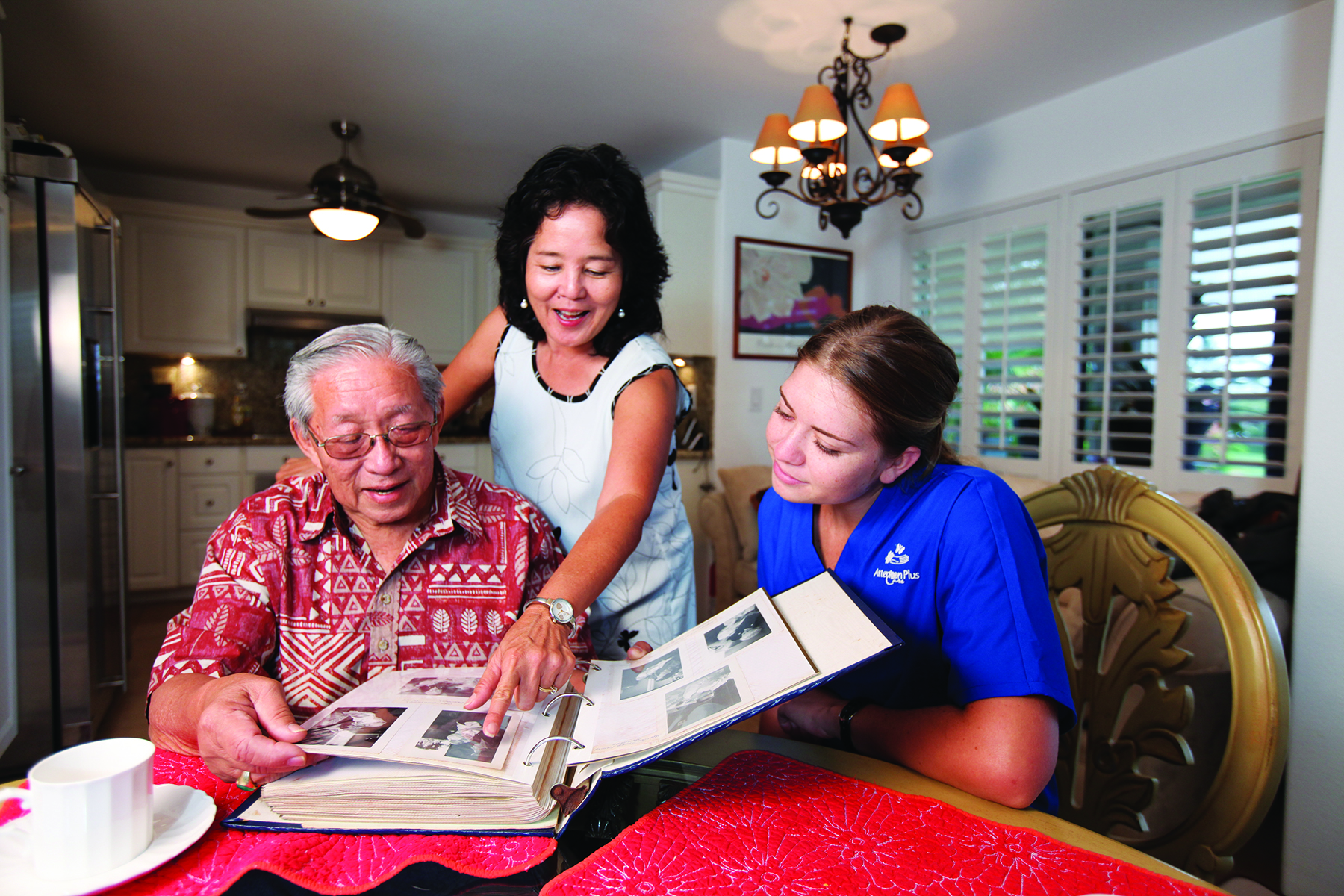
Realize it’s feelings. Know what triggers unpleasant feelings. For example, a lost sense of time can bring on anxious feelings. Try safe, repetitive, and soothing activities like sorting or folding familiar items, or dusting and wiping to keep hands and minds calmly occupied. Walks, listening to music, and looking at familiar photos or books can be pleasant diversions.
Change the subject. Sometimes changing the subject can shift one’s attention enough to have a calming effect. Asking a simple question can also shift a person’s focus in the same way.
Abilities. Check if you’re asking your loved one to do more than they’re able to. Accept your loved one as they are in the moment, and that they are doing the best they can.
Above all, take a deep breath, give your loved one a reassuring hug, and try to see behind the behavior and words repeated. It’s also vital to keep up your own health, and have a support system including the local Alzheimer’s Association chapter, family, friends, and faith groups. Addressing repetitive questioning in Alzheimer’s and dementia can be a trying experience. But with knowledge and awareness, these moments shared with your loved one can be the most precious of gifts.
ATTENTION PLUS CARE HOME HEALTH CARE
Accredited by The Joint Commission
1580 Makaloa St., Ste. #1060, Honolulu HI 96814
808-739-2811 | www.attentionplus.com
AGING IN HAWAII EDUCATIONAL OUTREACH PROGRAM by Attention Plus Care — a program providing resources for seniors and their families, covering different aging topics each month. For class information and upcoming topics, call 808-440-9356.
In home care, a question I often get is how to care for someone with Alzheimer’s who asks the same questions over and over again. To better understand and manage what’s going on, it helps to first know a bit on Alzheimer’s disease and dementia.
If you are one of the 100 million Americans who experience chronic pain, know that physical therapy can be a safer alternative to potentially addictive medications. Physical therapy plays a vital role in helping to manage and overcome chronic pain through proper strengthening and flexibility exercises, manual therapies, posture and body mechanics instruction.
Patients who have experienced extended periods of pain are often caught in a vicious cycle, where they move less because it’s painful, which leads to decreased strength, endurance, mobility and overall confidence. Their posture, muscle imbalances and emotional state all become worse.
Physical therapists understand that, to overcome chronic pain, you must break the pain cycle and one of the best ways, is to move! But how can you exercise if every time you move, it’s painful? The answer is Aquatic Physical Therapy.
When the water is at chest level, 80 percent of the body’s weight is reduced, which allows patients to strengthen in a comfortable environment where the body can heal faster. The warmth of the water relieves pain and increases relaxation — important aspects of controlling chronic pain. Aquatic therapy also provides psychological benefits improving feelings of self-worth and reducing stress and anxiety. If pain is limiting your mobility don’t give up, try aquatic therapy because freedom from pain is possible.
Moon Physical Therapy, LLC
320 Ward Ave., Ste. 107, Honolulu HI 96814
Aquatic, Land-based and Manual Therapy and
Cardiopulmonary Rehab Programs
808-597-1005 | www.moonpt.com
Like me on Facebook: Moon Physical Therapy, LLC
If you are one of the 100 million Americans who experience chronic pain, know that physical therapy can be a safer alternative to potentially addictive medications. Physical therapy plays a vital role in helping to manage and overcome chronic pain through proper strengthening and flexibility exercises, manual therapies, posture and body mechanics instruction.