When it comes to legal matters, there’s a whole set of terminology that may leave your head spinning. Picking apart the legalese may prove such a daunting task that we may even put off tending to important matters, which can be risky.
With so many details to take into consideration, it’s only natural to have questions. When it comes to Medicare, social security and veterans’ benefits; resident and patient rights; or income, estate and gift taxes; consultation with a qualified attorney, particularly an elder law specialist, may be advisable or even necessary.
The legal guidance that an attorney can provide helps ensure that you get the most out of your benefits and that your financial affairs continue to go smoothly in future years.
However, this type of legal advice can be expensive. The cost of the answers may exceed what you can realistically cover.
Accommodating for Free Legal Help
In cases like these, it’s important to know that relief is in sight. The Hawaii Online Pro Bono (HOP) is a nonprofit, web-based legal service hosted by the American Bar Association. HOP is an online version of a walk-in legal advice clinic where clients request advice and counsel about a specific legal issue from a volunteer attorney. The service is available to low- to moderate- income families and can be accessed by searching for “Hawaii Online Pro Bono” via web browser.
You must first answer a few questions that will determine whether or not you qualify: You must be an adult whose income and assets are low for your family size, you can’t already have access to a lawyer, your legal problem cannot be related to a criminal charge and you must not currently be incarcerated.
If you qualify, you can ask your legal question confidentially through the site. A volunteer attorney will email a response directly to you.
HOP helps to make legal advice more accessible, but before using this service, it is important to be aware of its limitations. They are laid out in detail in the online user agreement you must read before answering the first qualification question.
The main limitation — you can ask only three separate questions within a calendar year.
Questions involving criminal cases or charges cannot be answered through this service.
The service is meant only to provide answers to your legal questions; the volunteer lawyers cannot call or represent you in any way.
If further legal action is required for your situation, you will need to pursue your own attorney; however, the website includes a link that leads to contact information for other resources, including the Legal Aid Society of Hawaii, Volunteer Legal Services Hawaii and the American Bar Association’s Lawyer Referral Service for Hawaii.
When it comes to legal matters, there’s a whole set of terminology that may leave your head spinning. Picking apart the legalese may prove such a daunting task that we may even put off tending to important matters, which can be risky. With so many details to take into consideration, it’s only natural to have…
It’s not too late to align your spending with your priorities. If charitable giving is an important part of your budget, take a step back and reevaluate your giving strategy.
There are a myriad of causes and organizations you can support, which can leave even the bestintentioned philanthropist confused, frustrated and overwhelmed.
The following steps can help ensure that your money is being used effectively and efficiently by the organizations you choose to support.
STEP 1: Clarify your values and preferences.
Before you reach for your checkbook, ask yourself a few questions. What causes are important to you? Is there a particular demographic or group of people you would like to support? Would you prefer to give to a local, regional, national or global organization? As a donor, what do you hope to see in the organization’s leadership or structure?
The answers to these questions can help you make a list of charities that will allow you to align your financial resources with your personal values, making your donation even more meaningful.
STEP 2: Consider each organization’s mission.
Once you have determined which organizations meet your criteria, research each charity to make sure their programs, mission and goals match your expectations.
Consider meeting with an executive or local leader to hear about the charity’s strategy and its impact on the community first-hand. During the meeting, ask about the organization’s short- and long-term goals, as well as how it measures success. You want to be sure that the charity is making progress toward achieving its goals.
STEP 3: Investigate each charitable organization’s financial health.
Look into how each donation is used and what percentage of the money goes directly to the cause. Fundraising and administrative expenses help the charity do its work; however, you should be cautious about organizations with higher overhead costs. Ask the charity for a copy of its most recent annual report and Internal Revenue Service (IRS) Form 990. These forms outline the charity’s budget allocation and financial plans, and can provide you with insight into how your money is used to make the intended impact.
If you’d like an objective perspective on a charity’s financial health, fundraising practices, day-to-day efficiency and accountability standards, look at how watchdog groups evaluate the organization.
As you figure out your donation strategy, consider meeting with a financial planner or tax advisor who can help you select the most appropriate donation method for your financial situation. These professionals can also work with you to create a strategy for ongoing contributions or to make giving part of your legacy.
Keep in mind that there may be legal or tax considerations, depending on the amount and form of your donation (i.e., check, investment donation, etc.).
By taking the time to thoroughly evaluate charitable organizations, you’ll give yourself the peace of mind that your money is being used wisely, effectively and for the purposes you intended.
MICHAEL W. K. YEE, CFP
1585 Kapiolani Blvd., Ste. 1100, Honolulu HI 96814 808-952-1222, ext. 1240 | michael.w.yee@ampf.com
Michael W. K. Yee, CFP®, CFS®, CLTC, CRPC®, is a Financial Advisor,
Certified Financial Planner ™ practitioner with Ameriprise Financial Services Inc. in
Honolulu, Hawai‘i, with Na Ho’okele Financial Advisory Team, a financial advisory
practice of Ameriprise Financial Services Inc. He offers fee-based financial planning
and asset management strategies and has been in practice for 29 years.
It’s not too late to align your spending with your priorities. If charitable giving is an important part of your budget, take a step back and reevaluate your giving strategy. There are a myriad of causes and organizations you can support, which can leave even the bestintentioned philanthropist confused, frustrated and overwhelmed. The following steps…
The Social Security Administration (SSA) helps spread the word about the importance of kidney health and what you should do if you think you or a loved one has a kidney-related disability.
Kidney disease prevents kidneys from cleansing your blood to their full potential. Did you know that one out of three Americans is currently at high risk for developing kidney disease? According to the Centers for Disease Control and Prevention, 20 million Americans have chronic kidney disease and most of them don’t even know it.
Ebie is a prime example. Ebie was an emergency room worker with an active life at work, home and in his community. He had no idea he’d developed a kidney condition until one day he felt ill while driving to work and had to call a coworker for help.
SSA’s “Faces and Facts of Disability” website features Ebie’s story. He says people who receive Social Security (SS) disability benefits “can provide for themselves better and have a high quality of life.” As Ebie explained, many people with kidney diseases can greatly improve their lives with SS benefits. Learn more about Ebie’s story at www.socialsecurity.gov/disabilityfacts.
If a kidney disease, such as end-stage renal disease (known as ESRD), requires chronic dialysis and prevents you from working, the SSA may be able to help. If you’re undergoing dialysis, have had a kidney transplant, have persistent low creatinine clearance levels or have persistent high serum creatinine levels, you may qualify for disability and/or Medicare benefits. You can find more information about eligibility based on kidney disease and the benefits available to you by reading SSA’s “Disability Benefits” and “Medicare” publications at www.socialsecurity.gov/pubs.
Listed as one of SSA’s Compassionate Allowance conditions, kidney cancer is another disease that may qualify you for disability and Medicare benefits. The program assists those with severe medical conditions that meet SSA’s disability standards, allowing quick application processing and benefit payment. You can find more information about the Compassionate Allowance program by visiting www.socialsecurity.gov/compassionateallowances.
Drink plenty of water, go for checkups and if you think you may have a kidney disease, take action right away! As Ebie says, “quality of life is everything.”
For questions, online applications or to make an appointment to visit a SSA
office, call from 7am–7pm, Mon–Fri: 1-800-772-1213 (toll free) | 1-800-325-0778 (TTY) www.socialsecurity.gov
The Social Security Administration (SSA) helps spread the word about the importance of kidney health and what you should do if you think you or a loved one has a kidney-related disability. Kidney disease prevents kidneys from cleansing your blood to their full potential. Did you know that one out of three Americans is currently…
In your younger years, you may have been active in community affairs. But now you don’t get out so much. Maybe your caregiving duties keep you at home more. The good news is, you can still be involved in community affairs from the comfort of your own computer.
In the first few months of 2017 alone, much has happened in the political arena. People who avoided politics before may now be keeping an eye out for changes being made or proposed that are hit close to home. Regardless of political stance, no one wants to be caught off guard.
Some of the legislation being debated is very relevant to senior citizen communities. One of the biggest issues is healthcare, which will affect affordability and availability of medical care.
With the Meals on Wheels program and many other services expecting to see reduced budgets — or in jeaopady of being cut altogether — it’s important to keep apprised of what’s going on.
Common Cause is a nonprofit grassroots organization founded in 1970 with over 700,000 members. On its website, you can find articles about recent legislation, advocacy campaigns and other areas of interest to you.
Of course, Common Cause is only one source out of many. The important issue is staying informed. It’s the first step to ensuring the happiness and well-being of ourselves and our loved ones continues into the future.
In your younger years, you may have been active in community affairs. But now you don’t get out so much. Maybe your caregiving duties keep you at home more. The good news is, you can still be involved in community affairs from the comfort of your own computer. In the first few months of 2017…
The executive director at the The Mediation Center of the Pacific shared important information about the nonprofit’s Kupuna Pono program in Generations Margazine’s June/July 2016 issue.
Every family eventually has disagreements regarding elder care and support. In short, Kupuna Pono is a program designed to help family members talk about difficult issues and develop plans to support elderly family members.
However, the center also offers a wide range of other mediation services that may be of value to elders, and their families and caregivers.
TYPES OF MEDIATION
CIVIL RIGHTS MEDIATION: The center receives referrals from the Hawai‘i Civil Rights Commission (HCRC) involving various types of workplace, housing and merchant discrimination complaints. Mediation is offered by HCRC as an alternative to the traditional investigative and litigation processes.
CONDOMINIUM MEDIATION: The center can mediate a broad range of issues arising between owners, board members, property managers, resident managers, vendors and others relating to condominium or homeowner associations.
CUSTODY MEDIATION: The least costly, less stressful approach to reaching agreements about where children will live and how time-sharing and co-parenting will work, is through mediation.
DIVORCE MEDIATION: At the center, impartial mediators help couples talk and negotiate agreements on all of the issues that are required to finalize their divorce.
EMPLOYMENT MEDIATION: From co-worker disputes to disagreements between supervisors and employees, mediation offers a confidential, safe forum to discuss the issues, gain perspective and work through differences.
LANDLORD/TENANT MEDIATION: With the assistance of a mediator, tenants and landlords can agree on payment plans, repairs and more. If the tenant is not able to keep up with the rent, mediation can help parties to agree on a move-out date, rather than going to court.
SPECIAL EDUCATION: The Individuals with Disabilities Education Act (IDEA) encourages parents and schools to collaborate as a united support for each student. When differences arise, mediation provides parents and schools with the opportunity to work out solutions to meet the individual needs of the student.
No matter what type is required, mediation enables and empowers the parties involved to reach an agreement that they all can live with.
The executive director at the The Mediation Center of the Pacific shared important information about the nonprofit’s Kupuna Pono program in Generations Margazine’s June/July 2016 issue. Every family eventually has disagreements regarding elder care and support. In short, Kupuna Pono is a program designed to help family members talk about difficult issues and develop plans…
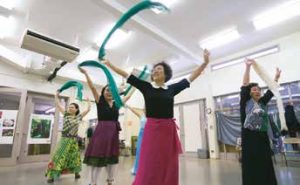
It’s 7:30 a.m. and volunteers are already preparing for a day of fun classes, club activities and good conversation. The Lanakila Multi- Purpose Senior Center (LMPSC) is the place to be for active seniors.
LMPSC is filled with great energy, caring people, and active seniors, volunteers and staff.
It is amazing to learn about and be with so many accomplished people, 60 years and older, who still contribute so much to the quality of life on our island home.
Each day, there is wonderful history to learn, inspirational life stories to discover, hardships worth sharing that teach valuable life lessons, and people who truly care about Hawai‘i and continue to contribute to the character, charm, strength and diversity of our state.
Center members come from an array of careers fields: teachers, principals, business owners, engineers, architects, fashion designers, administrators for public and private organizations, nurses and others in the health field, visitor industry managers and employees, military personnel, law enforcement officers, attorneys, construction workers, legislators, artists, insurance and financial service providers, homemakers, mothers, fathers, grandpas and grandmas, and just good people.
Lanakila’s 1,500 members focus on keeping healthy and mentally alert through tai chi, Sahm Bo Dahn, yoga, Zumba, hula, taisho koto, singing, enka, mah jong, line dancing, karate, tap dancing, cultural dances, sewing, quilt making, arts and crafts, ‘ukulele, walking, gardening, community excursions, public performances, and by being with friends and talking story.
Center members are independent. They enjoy team and group activities, too. They plan and coordinate events and activities that promote lifelong learning, and bring joy to others through community service, music, song and dance. They look out for one another.
The Lanakila Senior Center is comfortable, friendly and caring.
It’s 7:30 a.m. and volunteers are already preparing for a day of fun classes, club activities and good conversation. The Lanakila Multi- Purpose Senior Center (LMPSC) is the place to be for active seniors. LMPSC is filled with great energy, caring people, and active seniors, volunteers and staff. It is amazing to learn about and…
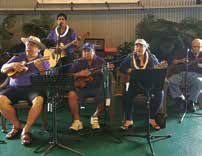
Kanikapila and good times with plenty of aloha and smiles are ever-present in KOPP’s activities and evident in the lei and entertainment shared with cruise ship guests.ALU LIKE Inc.’s Ke Ola Pono No Na¯ Ku¯ puna Program (KOPP) provides nutrition and support services to Native Hawaiians aged 60 and older at 12 program sites statewide plus home delivered meals to those not able to get to a site. Aging is never easy, especially when you have to go through it alone, as many of our ku¯ puna do, watching their spouses, relatives or friends pass away— mourning over these losses and never really recovering. Ku¯ puna greatly appreciate the KOPP program. Some of them identify it as one of the factors that has given them a reason to live and thrive. They come to learn about health and nutrition while creating bonds with new friends.
One significant aspect of the KOPP program is to promote and instill Hawaiian cultural traditions. Many ku¯ puna lived through an era when the Hawaiian culture was shamed. Some cultural traditions and oral history disappeared over time. With the rejuvenation of the Hawaiian language and culture, KOPP has been able to help revive this integral part of their lives by providing cultural activities such as hula, dance and cultural expertise through talented ku¯ puna, and community practitioners who give of their time.
During the past year, KOPP has become involved in two win-win community partnerships that have allowed ku¯ puna to share their talents and give back to the community. At the same time, these partnerships have given community groups a chance to give back to ku¯puna.
Rayce Bento, KOPP’s Big Island manager, worked with Linda Nako, a sales representative for Castle Resorts Hilo Hawaiian Hotel, to provide ku¯puna an opportunity to share cultural activities. Hotel guests meet ku¯ puna in the hotel lobby where they learn hula, ‘ukulele, fresh flower lei making, la‘i or ti-leaf lei making, floral hair pin making, and coconut and lauhala weaving, plus many other culturally related arts and crafts that guests are able to take home.
They get a first-hand experience of the aloha spirit as no one else can provide but our lovely and gracious ku¯puna. Our ku¯puna enjoy sharing their expertise with the guests of the resort and appreciate what the resort is able to do in giving back to them and supporting ALU LIKE. Mahalo to Linda Nako and Hilo Hawaiian Hotel!
ALU LIKE staff Shirley Simbre- Medeiros and John Mahi worked with Nalani Brun from the County of Kaua‘i Office of Economic Development, Kaua‘i Visitors Bureau, to initiate a project for ku¯puna to greet passengers from all over the world with music, dance and lei as they disembark from cruise ships in Nawiliwili Harbor. Ku¯ puna are having a blast showing who they are and are full of the aloha spirit and Hawaiian culture. We all truly appreciate Kaua‘i County’s effort to give back to ku¯ puna!
ALU LIKE INC.
Let Us Work Together, Natives of Hawai‘i 808-535-6700 | www.alulike.org
We are honored to perpetuate our mission to ko¯kua Native
Hawaiians who are committed to achieving their potential
for themselves, their families and communities.
Mahalo to ALU LIKE’s Ke Ola Pono No Na¯ Ku¯puna program
staff for contributing to this article:
Sarah Chandler, O‘ahu Program Specialist III
Rayce Bento, Hawai‘i Island Program Manager I
Shirley Simbre-Medeiros, Kaua‘i Program Specialist III
John Mahi, Kaua‘i Program Specialist III
Elizabeth Meahl, Director
ALU LIKE Inc.’s Ke Ola Pono No Na¯ Ku¯ puna Program (KOPP) provides nutrition and support services to Native Hawaiians aged 60 and older at 12 program sites statewide plus home delivered meals to those not able to get to a site. Aging is never easy, especially when you have to go through it alone,…
When a loved one shows the first signs of dementia or is diagnosed with Alzheimer’s disease, it can feel overwhelming. Getting early, quality care is crucial for maximizing their well-being, but knowing where to start is a challenge for many families.
A support system is an important first step. Senior living communities often embrace neighborhood outreach services and resources. Working together with organizations such as the Alzheimer’s Association of Hawai‘i provides a supportive network for local families through open community meetings. A nearby group can help navigate the emotional journey ahead.
The next step is having an understanding that almost all ku¯ puna with memory loss will eventually need continuous care. Memory Care is a specialized service. Not all senior living communities are able to offer it, but it is important to find one that is licensed to do so. Studies show that staff trained specifically in dementia care can provide better quality of life for residents.
What to Look for in a Memory Care Home
Spectrum of Support: When researching senior living communities, find out if there’s a supportive bridge to Memory Care available for earlystage patients. Minimizing disruption is beneficial to those requiring memory support.
Body & Mind: A connection between physical and mental well-being is well documented. Make sure the community offers physical activities that can be tailored to the individual to keep them vital.
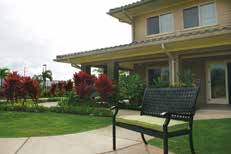
An overview of ‘Ilima at Leihano and their Memory Garden.Nutritional Needs: It’s common for memory care residents to have special dietary needs. Many become forgetful about eating and uninterested in foods they used to love. Providing nutritious meals and an inviting variety of fresh options is needed to support brain health.
Security & Serenity: Secure grounds are paramount to the safety of residents and the peace of mind for ‘ohana. As wandering is a common occurrence in seniors with memory loss, ask about the safety measures in place. A protected natural setting is also an ideal addition, such as a place offering stimulation in a reassuring space.
Making “Connections:” An important part of the memory support for residents is a program encouraging social interaction. Seek a community that provides daily programs that engage residents. Music therapy can also be a powerful enhancement. People process music with almost every part of their brain and music that has personal significance can garner responses even in seniors with later stages of dementia.
Care with Compassion: In addition to quality training and good staff-to-resident ratios, there should be a philosophy of service delivered with dignity. Great memory care engages ku¯ puna, gives them space to be active and promotes a complete package of physical and emotional support.
When a loved one shows the first signs of dementia or is diagnosed with Alzheimer’s disease, it can feel overwhelming. Getting early, quality care is crucial for maximizing their well-being, but knowing where to start is a challenge for many families. A support system is an important first step. Senior living communities often embrace neighborhood…
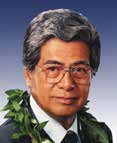
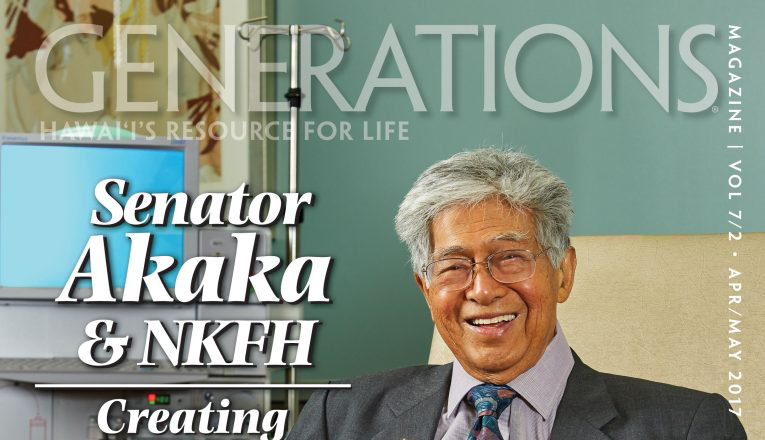
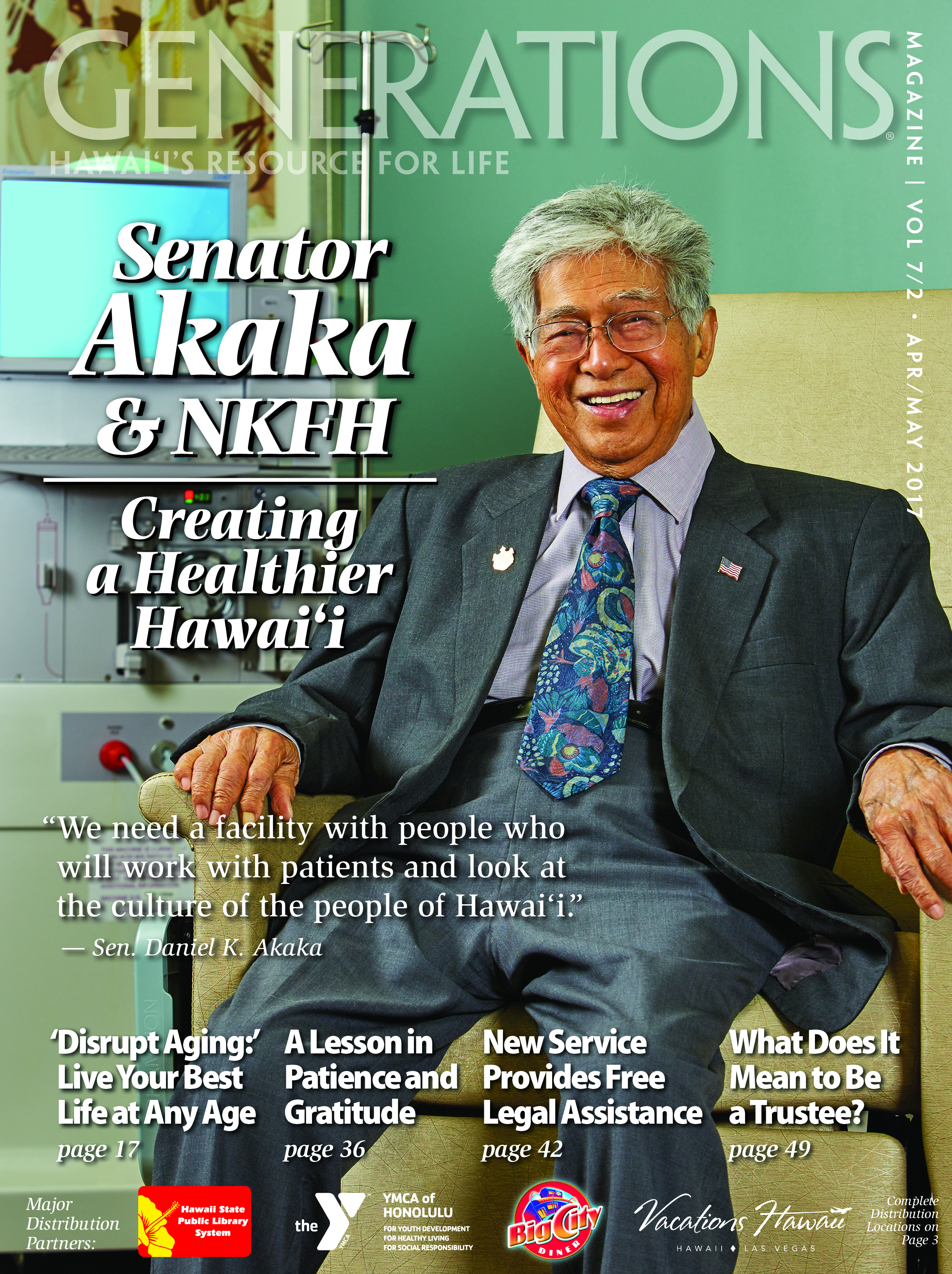
The National Kidney Foundation of Hawaii (NKFH) is aiming high with a new clinical community resource center. It broke ground in July and Sen. Daniel Kahikina Akaka wants all of us to support the last bit of fundraising. The new center in Kapolei will house many clinical community programs to help people at risk of chronic kidney disease get early screening and teach them how to stay healthy.
At 92, Sen. Akaka is still working to help the people of Hawai‘i. His warm, sunny smile continues to encourages us to celebrate goodness with gratitude for all we have. He retired several years ago, but while in Washington, he learned how many persons in Hawai‘i suffer from chronic kidney disease (CKD). Since he came home, he has been helping NKFH tackle this disease.
“I was astounded that kidney disease was such a big problem for us,” Sen. Akaka said. “Hawai‘i has 30 percent more kidney disease than other states; Native Hawaiian, Pacific Islanders, Filipino and Japanese communities are most affected — a major segment of our community. When I retired from public service, I made the Kidney Foundation of Hawaii the focus of my continuing community work. The need is so great and NKFH has many successful programs that help people stay healthy. If we can help get the word out, they can help more people at risk for kidney disease.” One person can’t solve such a big problem alone, so Sen. Akaka is asking all of us to learn more about CKD. We can help involve our families and mo‘opuna in healthy habits that protect our kidneys. We can encourage them to get screened for early signs of diabetes and high blood pressure — the two disorders that often lead to CKD. Currently, NKFH offers free educational materials, health programs and community screening events at various locations throughout the state every year.
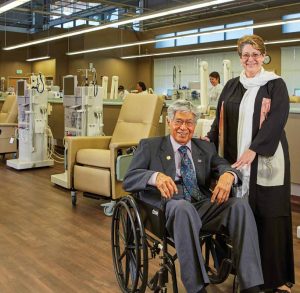
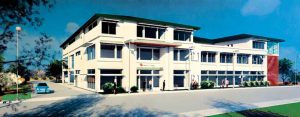
Above: An artist’s rendering of the Sen. Daniel K. Akaka Community Center in Kapolei. Left: Sen. Akaka with NKFH Senior Director Diana Benningfield at U.S. Renal Care West Oahu Dialysis.
Chronic Kidney Disease
The chronic or long-term decline of kidney function may start after a urinary tract infection or occur as a result of other disorders. Because kidney disease often starts “silently,” persons losing kidney function will not notice any symptoms until it is too late to save their kidneys.
The best way to know if your kidneys are healthy is to undergo simple urine and blood tests. Patients who already have mild chronic kidney disease may be able to slow the progress by testing their “numbers” regularly and adopting lifestyle habits that are healthy for their kidneys.
We met up with Sen. Akaka and NKFH Senior Director Diana Benningfield at the U.S. Renal Dialysis facility in Kapolei, which provides dialysis services for people whose kidneys no longer function. Here’s what we learned: Most dialysis patients have had diabetes or high blood pressure for some time. Eventually, these disorders damage the tiny filters inside the kidney called glomerular units that transfer waste products and toxins from the bloodstream to the urine. Eventually, the kidneys stop funtioning, causing toxins and am monia buildup in the blood and patients develop the symptoms of end-stage kidney disease.
Early detection with simple screening tests can help slow down the advance of chronic kidney disease.
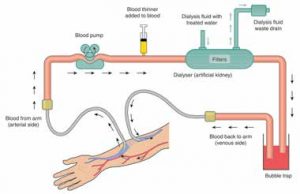
Without treatment, persons in kidney failure will die. Dialysis machines can keep patients alive, but the treatments may be very challenging for patients and their families. Dialysis machines pump a patient’s blood over membrane filters to remove waste products and ammonia, and return clean, filtered blood back into the patient. Each treatment may take several hours and may have to be repeated up to three times a week. A dialysis treatment schedule requires a lot of energy, and between treatments patients have to watch what they eat and how much fluid they drink.
Another option for patients with kidney failure is organ transplant. However, not all patients are candidates for a kidney transplant, and those who do qualify must join a waiting list until a healthy kidney donor with a good immunological “match” may be located. in Hawai‘i, patients may not have dialysis units nearby their homes and may have to face a long waiting list to receive dialysis treatment.
Sen. Akaka Community Center Promotes CKD Prevention
“Finding a cure for diabetes or high blood pressure goes on,” said Sen. Akaka, “but until then, we need to prevent diseases, not just find cures.”
To this end, the senator is raising funds to build the Daniel K. Akaka Community and Kidney Clinical Resource Center that will also house a new array of NKFH programs and services at Kapolei. The center will invite the community to a place where they can participate in health and wellness programs that support the prevention of chronic kidney disease.
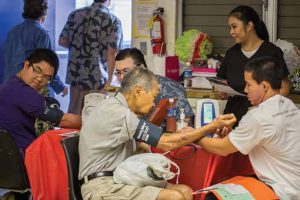
Creating awareness for regular screening has been a major outreach project for NKFH for many years. The goal of the foundation’s publicity and innovative clinical programs is to screen as many adults and keiki as possible in order to detect kidney disease before dialysis is required. With early detection and health skills management, patients can work with their doctors and NKFH to control and slow the progression of CKD. Screening and education allow many people with kidney disease to maintain a robust quality of life and avoid going on dialysis.
The new clinical community resource center will also offer the public and patients with CKD a hub where all may learn and master new habits that will keep their kidneys healthy—such as cooking classes. Families can come to the center for screening tests, attend health classes, participate in healthy exercise and learn how to manage life with CKD. Nonprofits will be invited to the center to use its meeting rooms for gatherings and special activities.
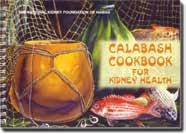
“Aside from the teaching kitchen, where people learn how to cook healthy meals, we also plan to have a commercial kitchen for creating new healthy food products,” said Glen Hayashida, president and CEO of NKFH. “When people ask us, ‘What can I eat now?’ we want to provide useful resources. Our cookbooks are popular and great for homemakers, but many new patients don’t know how to cook. We want the center to be a vital health resource.”
Everyone should seek education about kidney disease, regardless of gender or age.
Health Maintenance Skills Are a Necessity
Sen. Akaka supports the NKFH’s programs because he knows that a healthy lifestyle has positive benefits for ku¯ puna.
“The body needs exercise,” he said. These days, he goes to the gym every day, usually using the weight machines. Although he uses a cane to assist in walking, gym equipment allows him to exercise his upper body, lower body and core muscles.
With the help of his family, he began choosing healthier foods about 15 years ago, when he was 77. His wife, Millie, and daughter, Millanne Akaka Matson, started buying foods without preservatives. They said it used to be difficult to eat out because they could not be sure menu items were appropriate or healthy. Most of their food had to be homemade. But now, more restaurants offer healthy choices.
Earlier this year, the senator started a no-salt diet to reduce water retention.
Other health maintenance programs slated for the new center will be diabetes training classes, high blood pressure classes and fun, outcomebased physical fitness programs.
Right Kind of Learning for Hawai‘i’s People
“We need a facility with people who will work with patients and look at the culture of the people of Hawai‘i,” says Sen. Akaka. “There are many ways to deliver information and care. People receive guidance in different ways based on their upbringing and beliefs.”
Pukui, Haurtig and Lee researched the powerful connection between cultural traditions in Hawai‘i and how patients relate to healthcare in Na¯na¯ I ke Kumu: Look to the Source. The book is the basis for Sen. Akaka’s comment. He understands that resource center professionals must provide services to the community with cultural sensitivity and in a way that is acceptible to patients and their families. Getting individuals to accept their disease, comply with treatment and modify their lifestyles to achieve better health requires a comfortable “conversation.” Talk story takes time. We live in a land where the sitting down for a chat requires getting to know each other sharing a snack and telling stories of our past. The community center can draw people in and create an environment that encourages the way we learn in Hawai‘i.
A Little More Fundraising for the Clinical Community Resource Center
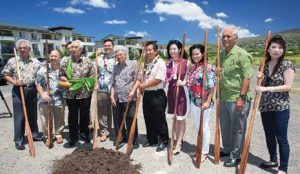
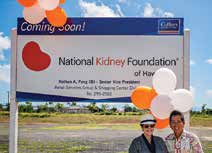
In July 2016, community leaders ceremonially broke ground for the new NKFH headquarters, a prime location to serve more than 40,000 West O‘ahu residents suffering from kidney disease. The ground floor of the $12 million, three-story building will house the Senator Daniel K. Akaka Community and Kidney Clinical Resource Center, including a library of his papers and books. The upper floors will have room for NKFH’s clinical and educational programs and services. Any additional space will be available for lease.
“I look forward to this kidney wellness center minimizing the impact of CKD for people who now suffer from the disease. It will be the source that eliminates the disease for future genertions,” said Sen. Akaka. “We have raised three-quarters of the funds already. Our grand opening is slated for January 2018.” Humble as ever, he said that he’s just playing a small role: It’s coming together because so many hardworking people are attached to it. “I’m just here to help,” he said.
L–R: Ray Soon, Ernie Soon, Steve Kelly, Danny Kaleikini, Ty Cullen, Glen Hayashida, Sharon Har, Kim Marcos Pine, Mike Gabbard and Lois Mitsunaga at the NKFH groundbreaking in Kapolei.
“You can help, too, in a number of ways,” he said. “Just visit our website at www.kidneyhi. org to see how you can get involved — we always appreciate your kind support and kokua.”
Human and Financial Costs of CKD
The statistics for CKD in Hawai‘i are a big concern for our state. More than 168,000 people are already diagnosed with CKD and another 100,000 are at risk for kidney disease because they have diabetes or high blood pressure.
Of the 450 patients on the organ transplant waiting list, over 90 percent are waiting for kidneys. Most will die before they have the opportunity to get into a dialysis treatment program or to receive a kidney transplant operation. End-stage kidney failure is heartbreaking and reinforces the need for prevention and health maintenance.
For Sen. Akaka, funding the very high healthcare costs of dialysis and kidney transplants is a big concern for our state. NKFH programs are the best option for reducing the costs of CKD in Hawai‘i.
Sen. Akaka remembers his third-grade teacher at Pauoa Elementary engaging her students in mathematics with a piggy bank. She used it for several lessons, “teaching us math by counting the money,” he said. Then the teacher asked them to write down what they would buy with the money. “That was our composition lesson,” he said. For young Daniel, the practical application of mathematics to accounting would serve him well in life.
Many years later, he applied the piggy bank lessons to his work in Congress. While serving on the Senate Committee on Banking, he developed the consumer advocacy portion of the Dodd-Frank Wall Street Reform and Consumer Protection Act. The legislation was created in response to the financial crisis of 2008 and ensuing Great Recession. It brought new regulations and consumer protection initiatives to the financial industry.
A Matter of Hawaiian Values
Sen. Akaka frames his work with NKFH in terms of Hawaiian cultural values, which some call “plantation values.” He grew up farming taro on kuleana land in Pauoa Valley, the youngest of eight children. Working the land in a side valley up Nu‘uanu and managing the chores of a large family encouraged cooperation, shared responsibility, reciprocity and peacekeeping. “I was the niele (questioning) one,” he said, “I always wanted to know things.” Akaka, a Chinese name, came from his father, Kahikina Akaka, who was hapa Hawaiian and Chinese. His mother, Annie, was fullblooded Hawaiian.
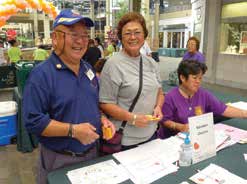
Volunteers are an essential part of CKD awareness programs.
“Spirituality and faith carried our family,” he said. The Akaka family way of life was daily prayer, with daily morning and evening devotions and Sunday services at Kawaiaha‘o Church. Righteousness was expected. Doing things “pono”— justly, with integrity and for the common good — was Daniel’s way of honoring the deeply held values that his parents taught him.
After attending Kamehameha Schools, he joined the Army Corps of Engineers during World War II from 1943 to 1947, first training at Schofield Barracks and then serving in the Central Pacific at Eniwetok in the Marshall Islands, and Guam and Saipan in the Marianas. After the war, he graduated from UH Ma¯noa to become a high school social studies and music teacher. He went into school administration and became the chief program planner for the state.
After winning his first congressional election in 1976, Daniel K. Akaka served 13 years as a U.S. Representative and then another 19 as a U.S. Senator. He always lived by the rule of “pono” righteousness, saying, “the just things [you accomplish] will remain constant through the times.” He is most famous for the Akaka Bill, which would have established a process for federal recognition of Native Hawaiians. Although the bill never passed, his vision is still part of every discussion and action that furthers self-governance for Native Hawaiians.
Another cultural principle that guides all his work is aloha. “I think the mission for Hawai‘i is to help the world know aloha,” he said. “If the world could live and have relationships like the people of Hawai‘i, the world would be a much better place.”
The Future Looks Bright
This community center approach to prevention has strong support. There is a good probability that community access to lifestyle training and support will help a large number of patients and their families at risk for CKD. Hawai‘i’s people will have a better opportunity to maintain their health and slow the onset and progression of the disease.
Every day is a new day of progress, education and hope for families struggling with CKD. Let’s help Sen. Akaka and NKFH find a cure, and also support our families and neighbors until the time when a cure is found.
The National Kidney Foundation of Hawaii (NKFH) is aiming high with a new clinical community resource center. It broke ground in July and Sen. Daniel Kahikina Akaka wants all of us to support the last bit of fundraising. The new center in Kapolei will house many clinical community programs to help people at risk of…

 When it comes to legal matters, there’s a whole set of terminology that may leave your head spinning. Picking apart the legalese may prove such a daunting task that we may even put off tending to important matters, which can be risky.
 The Social Security Administration (SSA) helps spread the word about the importance of kidney health and what you should do if you think you or a loved one has a kidney-related disability.
 CIVIL RIGHTS MEDIATION: The center receives referrals from the Hawai‘i Civil Rights Commission (HCRC) involving various types of workplace, housing and merchant discrimination complaints. Mediation is offered by HCRC as an alternative to the traditional investigative and litigation processes.
 EMPLOYMENT MEDIATION: From co-worker disputes to disagreements between supervisors and employees, mediation offers a confidential, safe forum to discuss the issues, gain perspective and work through differences.
 It’s 7:30 a.m. and volunteers are already preparing for a day of fun classes, club activities and good conversation. The Lanakila Multi- Purpose Senior Center (LMPSC) is the place to be for active seniors.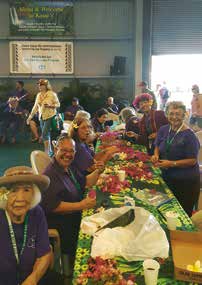
 Rayce Bento, KOPP’s Big Island manager, worked with Linda Nako, a sales representative for Castle Resorts Hilo Hawaiian Hotel, to provide ku¯puna an opportunity to share cultural activities. Hotel guests meet ku¯ puna in the hotel lobby where they learn hula, ‘ukulele, fresh flower lei making, la‘i or ti-leaf lei making, floral hair pin making, and coconut and lauhala weaving, plus many other culturally related arts and crafts that guests are able to take home.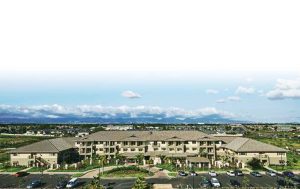

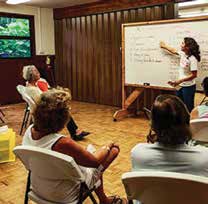 Everyone should seek education about kidney disease, regardless of gender or age.