Category: April – May 2016

  • Increase Your Retirement Funds

    If you are like many people, you are looking for a way to create funds and security for your future. If you own low-interest CDs or underperforming stocks, one idea is to transfer these assets to a qualified nonprofit organization in exchange for a charitable gift annuity. In return, the charity agrees to make payments for life to you, you and a loved one, or another person. Each payment is fixed, and the amount of each payment will depend on the age of the recipient. Payments can begin in the year the gift is made, be deferred until you retire or until a later age, depending on your personal goals. As a donor, you also receive a tax deduction for the net value of the gift.

    The nonprofit charity benefits from any funds that remain after the donors’ lifetime. A charitable gift annuity is a way to leverage your generosity by helping a charity that is important to you, while producing tax savings and supplementing other retirement assets you may have, such as income-producing real estate, a 401(k) or an IRA.

    Not every charitable organization is qualified to issue charitable gift annuities. Each state sets requirements, which must be met in order to issue them, along with requirements for annual public filings by the charity.

    To learn more, check with a knowledgeable financial adviser. You can also call us to discuss how a charitable gift annuity may be appropriate for you and to receive more information, including an illustration.


    NATIONAL KIDNEY FOUNDATION OF HAWAII
    808-589-5976 | jeff@kidneyhi.org
    For Planned Giving: www.kidneyhawaii.org
    Main: www.kidneyhi.org | www.kidney.org

    If you are like many people, you are looking for a way to create funds and security for your future. If you own low-interest CDs or underperforming stocks, one idea is to transfer these assets to a qualified nonprofit organization in exchange for a charitable gift annuity. In return, the charity agrees to make payments…

  • Who Should Think About Medicaid?

    An unpleasant fact of life is the prospect of needing long-term care someday. Statistics tell us that 70 percent of Americans will need long-term care for some period of time before death. So it is not just possible, but very likely that you or someone close to you will need long-term care.

    In Hawai‘i, the average monthly cost of care in a skilled nursing facility is $8,850. At least, that is the figure used by MedQUEST, the office that administers Medicaid benefits in the State of Hawai‘i. If you have researched nursing home costs, you know that the MedQUEST figure is low. In private-pay situations, the cost easily reaches $12,000 per month. The cost of receiving skilled nursing care at home is even higher.

    If you do need nursing home care, how long will you need it? The average stay in a nursing home is between two and three years, but that figure is misleading. Many people pass within 
the first six months of moving into a nursing home, but those who make it past six months tend to last about six years. Thus, at $12,000 per month for six years, you could easily be looking at $864,000 in nursing home bills for yourself or a loved one. How will you pay those bills?

    If you are fortunate, you have $1,000,000 set aside for yourself, and another $1,000,000 for your spouse, if you are married. An alternative would be having long-term care insurance that would cover your (and your spouse’s) expenses for life. But what if you are not so fortunate?

    Our government has established a safety net called Medicaid that works alongside Medicare and private health insurance to provide the funds to pay for long-term care for those who qualify. To receive Medicaid benefits, a single individual can own very little in the way of assets, but a married couple can own enough to give the “well” spouse a shot at never having to try to qualify for Medicaid. However, in order for you to maximize the overall benefits for yourself (and your spouse), a good plan can make a world of difference.

    If you are going to save for nursing home expenses, the sooner you start, the better. If you are going to buy long-term care insurance, the sooner you do so, the better. In the same way, if Medicaid will be your family’s only viable option for paying for long-term care, the sooner you plan, the better. The longer you wait, the more opportunities will go by the wayside.

    So sit down and take stock of your resources. Do you have enough socked away to pay for long-term care? If not, do you have long-term care insurance, or could you qualify for it and afford the premiums? If you have not answered “yes” yet, you might wish to talk with an estate planning attorney who can guide you through setting up a plan to qualify for Medicaid benefits without having to impoverish yourself and leave nothing behind to your descendants.


    SCOTT MAKUAKANE, Counselor at Law
Focusing exclusively on estate planning and trust law.
    Watch Scott’s TV show, Malama Kupuna
Sundays at 8:30 pm on KWHE, Oceanic channel 11
    
O‘ahu: 808-587-8227  |  maku@est8planning.com  |  www.est8planning.com

    An unpleasant fact of life is the prospect of needing long-term care someday. Statistics tell us that 70 percent of Americans will need long-term care for some period of time before death. So it is not just possible, but very likely that you or someone close to you will need long-term care. In Hawai‘i, the…

  • Making Our Souls Blossom

    Generations Magazine - April-May 2016 - Making Our Souls Blossom - image 01
    Ella Moncrief with Bella Campos and her grandmother on Kūpuna Day.

    Assets School makes a difference in the lives of gifted and dyslexic students through a strengths-based learning environment. We place a strong emphasis on the importance of family support to help to build confidence and resilience in each child.

    “Let us be grateful to people who make us happy; they are the charming gardeners who make our souls blossom.” — Marcel Proust

    I remembered this quote on Kūpuna Day, one of my favorite days on the school calendar. This year, we welcomed 150 guests to campus: grandparents, parents, grand aunts and uncles, as well as aunties, uncles and family friends. We are excited to meet the many different adults and elders who make a positive impact on our students’ lives. As we shared breakfast together, two classes greeted us with a song and dance. Then, we had fun making arts-and-crafts and moved to the classrooms where children and ku¯puna engaged in all kinds of fun activities. As I listened to ku¯puna sharing stories about their school-aged years, I couldn’t help but wonder who had more fun, the children or the adults?

    “I was thoroughly entertained and so glad I made the effort to attend on both days for both of my grandchildren,“ said Susan Lee, grandmother of Zak Campos, grade 3 and Bella Campos, grade 5. “Visiting Assets gives me a unique perspective on Zak and Bella’s world and brings us closer together.”


    ASSETS SCHOOL
    1 Ohana Nui Way, Honolulu, HI, 96818
    808-432-1356  |  www.assets-school.net

    Assets School makes a difference in the lives of gifted and dyslexic students through a strengths-based learning environment. We place a strong emphasis on the importance of family support to help to build confidence and resilience in each child. “Let us be grateful to people who make us happy; they are the charming gardeners who…

  • Baby Boomer: New to Social Security?

    Generations Magazine - Social Security - LogoIf retirement is on your horizon, we can answer your questions about Social Security benefits. Here are some common questions:
    Q: What can Social Security do to help me plan for my retirement?

    A: We have two online financial planning tools you can use to make informed decisions about your retirement: Retirement Planner at www.socialsecurity.gov/retire2, and Retirement Estimator at www.socialsecurity.gov/estimator. They compute estimates of your future Social Security retirement benefits, including military service, household earnings and federal employment.

    Q: I applied for a replacement Social Security card. When should I receive my new card?

    A: You’ll usually receive your replacement card in about 10 days. We work hard to protect you, to prevent identity theft, and to ensure the integrity of your Social Security number. To do that, we have to verify documents you present as proof of identity. In some cases, documents must be certified before we can issue the card. For more information about your Social Security card and number, visit www.socialsecurity.gov/ssnumber.

    Q: How do I schedule, reschedule, or cancel an appointment with Social Security?

    A: Many transactions can be made online, like filing for Retirement, Medicare, Spouses’ and Disabiliy benefits. If you need to call us or apply for benefiuts in person, we are here to assist.


    For questions, online applications or to make an appointment to visit a Social Security office,
    contact us between 7am–5pm, Monday–Friday:
    1-800-772-1213 (toll free)  |  1-800-325-0778 (TTY)
  |  www.socialsecurity.gov

    If retirement is on your horizon, we can answer your questions about Social Security benefits. Here are some common questions: Q: What can Social Security do to help me plan for my retirement? A: We have two online financial planning tools you can use to make informed decisions about your retirement: Retirement Planner at www.socialsecurity.gov/retire2,…

  • Consider Memory Care Options

    Generations Magazine - April-May 2016 - Consider Memory Care Options - image 01Independence is a matter of choice and circumstances. And as we age, we naturally become more dependent on others. Living “independently” may mean that you own a home with a yard or a condo, you rent an apartment, or you rent a room in a senior living community. Most people who live a long life can expect to move from one level of independent living to another as yard work, driving and housekeeping become impossible tasks. The newest senior living communities now offer several options in one living complex: independent living, assisted living, short-term respite care for rehabilitation, a memory care neighborhood, and skilled nursing facility. This broad array of services allows clients to easily transition to a higher level of assistance and care within their new home.

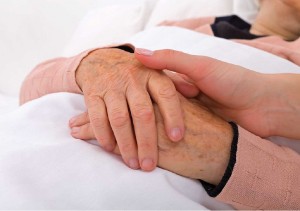
    Many seniors worry about how they might be cared for if they lose their memory or develop dementia. Memory care prescribes a specialized program of personal care and services designed for individuals with Alzheimer’s disease or other forms of dementia. Some individuals with memory loss continue to live at home with their families, under the care of their family doctor and supported by adult day care for socialization. Other individuals with dementia live in memory care communities staffed with aides who are uniquely qualified to provide comfort, safety and support for residents, and to provide opportunity for social interaction.

    Memory care “neighborhoods” designed for dementia and other memory impairments, blend a home-like environment with holistic-centered programs and services under the supervision of highly-trained compassionate care managers. A team of professional care specialists deliver an individualized care program for each resident, based on confidential assessments or his/her cognitive abilities. Regularly scheduled follow up assessments and ongoing monitoring ensure that each resident is properly treated and supported through every stage of his/her disease.

    It’s inevitable that aging seniors will need care and assistance at some time. Instead of worrying about it, educate yourself on all the options and plan ahead.


    KALĀKAUA GARDENS — 
A Senior Assisted Living Community
    1723 Kalakaua Ave. Honolulu HI 96826
    808-518-2273  |  www.kalakauagardens.com

    Independence is a matter of choice and circumstances. And as we age, we naturally become more dependent on others. Living “independently” may mean that you own a home with a yard or a condo, you rent an apartment, or you rent a room in a senior living community. Most people who live a long life…

  • Why Drink More Water?

    Generations Magazine - April-May 2016 - Why Drink More Water - image 01
    … because it puts a smile on your face, and a more positive outlook on life.

    It is amazing that normal activities of the human body result in a loss of two to three quarts of water daily. This water needs to be replenished to maintain an optimum health profile. Just a two percent drop in body water can trigger fuzzy short-term memory, trouble with basic math and reading skills and difficulty staying focused.

    The more we age, the less we feel thirsty, and the less water we drink. Confusion between hunger and thirst may cause us to eat instead of drink. To maintain health in our elder years, it is very important to build good habits that keep our bodies properly hydrated — drinking the right amount of ionized water will keep our bodies healthy.

    How do we lose water?

    We lose the most water through urination. Healthy kidneys filter our blood and excrete by-products as liquid urine. Diuretic medications cause the body to purge more fluid. If you have kidney disease or take “water pills,” your doctor will give you special instructions on how much water you may drink every day.

    Warm weather in Hawai‘i causes us to perspire and lose water. Some chronic disease conditions also cause us to sweat more.

    Dry, climate-controlled environments dehydrate skin, nasal passages and mouths. Every time we breathe out, our lungs lose moisture.

    A smaller but important source of dehydration comes with the use of laxatives and other remedies for constipation. Increasing fiber for regularity and to keep our gut healthy requires increasing water intake at the same time. When we have bouts of diarrhea it is very important to drink water to replace lost fluid.

    A properly hydrated body can maintain proper blood and tissue composition. Joints are lubricated, body temperature is regulated and lungs and airway are moistened for proper breathing. Over time, inadequate hydration or dehydration may lead to arthritic conditions, sore muscles, labored breathing and increased body temperatures.

    Symptoms of dehydration:

    Confusion
    Chronic fatigue and lethargy
    Drowsiness
    Labored Speech
    Chronic pain
    Dry Mouth
    Sunken Eyeballs
    Passing only small amounts of dark, deep yellow odorous urine

    Other Complaints with dehydration:

    Loss of muscle tone
    Excess weight gain
    Slowing of the metabolism
    Organ failure
    Arthritis
    Dry skin
    Migraines
    Vertigo
    Hypertension
    Digestive complications
    Persistent constipation

    Seniors may get dehydrated without knowing it, and experience chronic physical and mental problems that could be easily corrected by drinking adequate amounts of the right kind of water. Unless your doctor has asked you to restrict your water intake, drink two to three quarts of ionized water every day — it takes a little practice, so start now. Here’s to your health!


    Enagic USA INDEPENDENT DISTRIBUTOR
    Alan Matsushima, Health and Wellness Consultant

    808-384-7354  |  trader_808@yahoo.com

    It is amazing that normal activities of the human body result in a loss of two to three quarts of water daily. This water needs to be replenished to maintain an optimum health profile. Just a two percent drop in body water can trigger fuzzy short-term memory, trouble with basic math and reading skills and…

  • The Good Daughter

    Generations Magazine - April-May 2016 - The Good Daughter - image 01Arlene’s mother’s last breath was soft and peaceful. Arlene welled up and sobbed — not entirely from sadness, but also from release. She had done all she could do. She had honored mom’s wishes and here they were, alone at Arlene’s home on O‘ahu; Mom’s pain and frustration were over.

    Arlene texted her family. They were all here last week, so there wasn’t much to say. The last family gathering was part of mom’s plan for peace and no regrets. Everyone said what they needed to say. Now the nurse from Islands Hospice was gently preparing mom for transport to the mortuary. It was surreal, but Arlene was at peace too.

    Over twenty years ago, Janet had instructed her children in her belief that people do not have to suffer at the end of their lives. Every couple of years she would bring up the conversation. Arlene could hear her now, “We don’t let our pets suffer at the end of their lives; I want you to show me that same compassion. Help me die with dignity, in my own bed.” Janet told her daughter that her greatest fear was the burden of being dependent on others for her personal care. As Arlene got older she understood that if her mom got sick and could not get better, she would choose when to die, and Arlene would help her pass peacefully.

    Janet was living a full life as professional educator, living independently and serving on her church board when the stroke came. Suddenly, she was paraplegic, incontinent, aphasic and very dependent. She tried rehabilitation, but after three months, all she recovered was control of her facial muscles. She still could not say what she was thinking, but with great difficulty, she spelled out a message to Arlene, by feebly pointing to one letter at a time. Janet had the financial means to pay for her continued care, but she was done suffering and being completely dependent.

    Arlene would never have been able to guess her mother’s wishes. But Janet had trained her for this moment. Without breaking any laws, Janet would purposely refuse nourishment, and Arlene would not intervene, but honor her decision and keep her comfortable at home. Years ago, the whole family agreed to Janet’s “compassionate choice,” if she became bedridden and dependent.

    After Janet was transported to Arlene’s home, the family came together for their farewells. It was a peaceful time and with its own joys. When Janet indicated that she was done “entertaining,” the family left. Her focus turned to passing. Our bodies can live for months without food, but only a few days without liquids. Paralyzed parts of Janet’s body were in pain, and hospice treated the pain to keep her comfortable. In a few days, Janet was done being “conscious” and gave in to sleep. Her resolve never waivered. Arlene was able to be a good daughter and support her mother’s plan: to die peacefully at home, with dignity.

    Arlene’s mother’s last breath was soft and peaceful. Arlene welled up and sobbed — not entirely from sadness, but also from release. She had done all she could do. She had honored mom’s wishes and here they were, alone at Arlene’s home on O‘ahu; Mom’s pain and frustration were over. Arlene texted her family. They were all here…

  • April – May 2016

    April – May 2016

    WANT THIS ISSUE?

    Download your own personal copy of this issue in PDF format. Click the button below:

    DOWNLOAD IT NOW

    A time to grow at Lanakila Senior Center