For almost every American worker, Social Security is “part of the plan” for a secure retirement. Here’s a primer on retirement coverage.
When you work and pay Social Security taxes, you earn “credits” toward Social Security benefits. If you were born in 1929 or later, you need 40 credits or 10 years of work to qualify for retirement benefits. No retirement benefits can be paid until you have the required number of credits. If you stop working before you have enough credits to qualify for benefits, the credits will remain on your record. If you return to work later, you can add more credits so that you qualify.
Your benefit amount is based on how much you earned during your working career. Higher lifetime earnings result in higher benefits. A worker with average earnings can expect a retirement benefit that replaces about 40 percent of his or her average lifetime earnings. Social Security was never intended to be your only source of income when you retire. You also will need other savings, investments, pensions or retirement accounts to make sure you have enough money to live comfortably when you retire.
Your benefit payment also is affected by the age at which you decide to retire and begin receiving benefits. If you were born in 1942 or earlier, you’re already eligible for your full Social Security benefit. If you were born from 1943 to 1960, the age at which full retirement benefits are payable increases gradually to age 67.
You can get Social Security retirement benefits as early as age 62, but if you retire before your full retirement age, your benefits will be reduced, based on your age. If you retire at age 62, your benefit would be about 25 percent lower than what it would be if you waited until you reach full retirement age. You may choose to keep working even beyond your full retirement age. If you do, you can increase your future Social Security benefits — up until age 70.
Choosing when to retire is an important decision, but it’s also a personal choice and one you should carefully consider. When’s the best time? There is no one-size-fits-all answer. There are many factors to consider. Look into Social Security’s publication When to Start Receiving Retirement Benefits at www.socialsecurity.gov/pubs/10147.html.
In addition, Social Security provides an online Retirement Estimator to get immediate and personalized retirement benefit estimates to help you plan for your retirement. The Retirement Estimator is a convenient and secure financial planning tool, allowing you to create “what if” scenarios. For instance, you can change your “stop work” dates or expected future earnings to create and compare different retirement options. Check it out at www.socialsecurity.gov/estimator.
To apply online or make an appointment to visit Social Security office, contact:
For almost every American worker, Social Security is “part of the plan” for a secure retirement. Here’s a primer on retirement coverage. When you work and pay Social Security taxes, you earn “credits” toward Social Security benefits. If you were born in 1929 or later, you need 40 credits or 10 years of work to…
For many people, a pet is their best friend and loyal confidant. Losing a loved one is never easy, especially when you have to make the difficult decision of saying good-bye because your pet is suffering, or no longer enjoying a good quality of life. The Hawaiian Humane Society offers euthanasia and cremation services for pets who are ready to cross the Rainbow Bridge.
In the emotional period following your pet’s death, it’s important to know that no two people grieve the same. Recovering from grief often involves finding positive ways to fill the void created by the loss.
There are many ways to celebrate your pet’s life to help you during the grieving process:
Record happy memories in a journal or a letter.
Make a photo album or collage.
Plan a memorial service.
Volunteer to help animals.
Make a donation in memory of your pet to the Humane Society.
Your pet’s name will be listed in the Society’s community newsletter.
Grieving the loss of a pet is natural and anyone struggling can attend the Pet Loss Support Group. The group meets the first Tuesday of each month, from 6 p.m. to 7 p.m.at the Hawaiian Humane Society. Meetings are facilitated by counselor Rosemarie Grigg.
While a pet may be gone, their memory lives on with the people who loved them.
For many people, a pet is their best friend and loyal confidant. Losing a loved one is never easy, especially when you have to make the difficult decision of saying good-bye because your pet is suffering, or no longer enjoying a good quality of life. The Hawaiian Humane Society offers euthanasia and cremation services for…
One in three adults in the U.S. has high blood pressure. Blood pressure is the force of the blood pushing against the walls of the arteries as the heart pumps blood. If pressure stays high over time it will damage the body. Hypertension is the persistent elevation of blood pressure. Blood pressure rises with age and is a common health problem in seniors. The only way to tell whether you have high blood pressure is to have your blood pressure measured with a blood pressure cuff (sphygmomanometer). This is usually done in a doctor’s office. It is important to know your blood pressure numbers. “Systolic” (the top number) refers to blood pressure when the heart beats while pumping blood. “Diastolic” (the bottom number) refers to blood pressure when the heart is at rest between beats.
What are the symptoms of high blood pressure?
Most people do not have any symptoms. Rarely headaches may occur. Often seniors find out too late that they have high blood pressure after damage has occurred to the heart, brain or kidneys.
What are the complications of untreated high blood pressure?
High blood pressure is a silent killer. It causes stroke, heart attack, heart failure, kidney failure and may even lead to blindness. High blood pressure and its complications are a common cause of disability in seniors.
What are the causes of high blood pressure?
Genetics
Family history of high blood pressure
Older age
Lifestyle factors, such as obesity, lack of physical activity, increased alcohol use, high salt diet, smoking
Illicit drugs, such as cocaine or ice
Medications, such as steroids, hormone replacement therapy
Chronic kidney disease
Thyroid and adrenal gland disorders
Sleep apnea
What are the treatment approaches to high blood pressure?
Blood pressure lowering medications are often needed for life, and once blood pressure is under control it is important to continue to take the prescribed medications
Aspirin to be taken daily to prevent heart attack and stroke
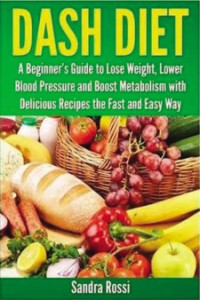
What is the DASH diet?
Dietary Approaches to Stop Hypertension (DASH) is a flexible and balanced eating plan.
Low in saturated fat, cholesterol and total fat
Low in salt
Focuses on fruits, vegetables and fat-free or low-fat dairy products
Rich in whole grains, fish, poultry, beans, seeds and nuts
Contains fewer sweets, added sugars and sugary beverages and red meats than the typical American diet
One in three adults in the U.S. has high blood pressure. Blood pressure is the force of the blood pushing against the walls of the arteries as the heart pumps blood. If pressure stays high over time it will damage the body. Hypertension is the persistent elevation of blood pressure. Blood pressure rises with age…
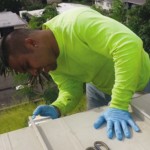
If your goal is to age in place, don’t let your roof age with you. Consider getting a roof inspection to determine its structural integrity and lifespan. Regular inspections — approximately every three years — can detect problems or issues before they have a chance to cause major damage.
Do not attempt to climb a ladder or inspect the roof yourself. Hire a licensed, professional roofer who can examine your roof’s structure, checking it for hazards such as:
Leaks that can cause mold to grow and lead to major health problems, especially for asthmatics and people with allergies. Mold is often devastating for furniture, carpets and curtains. Precious books, photos, artwork, video and audiotapes can also be ruined by the fungus.
Gradual breakdown of rafters and flashing can provide an inviting environment for pests, such as rats, centipedes, roaches and ground termites.
An old roof provides little protection against the most unwanted visitor of all — a hurricane. Even Hawai‘’ seasonal tropical storms can generate destructive winds, especially in neighborhoods on high ridges.
What’s a homeowner to do?
Know your roof’ history and keep track of replacement and repair dates so you’l know when it’ nearing the end of its lifecycle.
Notice signs of deterioration, such as pieces of shingle in the yard or granulated finish from shingles in the drain spout.
Keep gutters clean and hire help to trim back overhanging vegetation regularly. Maintenance is critical to a roof’ health
If your goal is to age in place, don’t let your roof age with you. Consider getting a roof inspection to determine its structural integrity and lifespan. Regular inspections — approximately every three years — can detect problems or issues before they have a chance to cause major damage. Do not attempt to climb a…
There’s nothing like a lazy weekend morning to enjoy a family breakfast together. This take on pancakes is healthier in many aspects, but the flavors will overcome any fear of “healthy” eating.
Ingredients:
2 cups of lowfat buttermilk, divided
1 cup buckwheat flour
1 cup all-purpose flour
1-1/2 tsp. baking powder
1/2 tsp. salt
1/4 tsp. baking soda
2 eggs, lightly beaten
2 Tbsp. canola oil
2 bananas, thinly sliced
Cooking spray for pan or griddle
Sweetened, shredded coconut
1/2 cup macadamia nut, chopped
Syrup (maple or coconut)
Directions:
Combine the dry ingredients in a bowl and set aside. In another bowl, whisk together the buttermilk, eggs, canola oil and 1 Tbsp. of syrup. Stir the dry ingredients into the buttermilk mixture and add half of the sliced banana. Heat pan or griddle on medium heat, prepare with cooking spray and pour 2 – 3 tablespoons of batter per pancake onto the heated surface. Cook for 2 minutes or until batter starts to bubble, then flip and cook another two minutes.
To serve, top each stack of pancakes with sliced banana, coconut and chopped macadamia nut. Then let everyone drizzle on their own syrup and enjoy!
There’s nothing like a lazy weekend morning to enjoy a family breakfast together. This take on pancakes is healthier in many aspects, but the flavors will overcome any fear of “healthy” eating. Ingredients: 2 cups of lowfat buttermilk, divided 1 cup buckwheat flour 1 cup all-purpose flour 1-1/2 tsp. baking powder 1/2 tsp. salt 1/4…
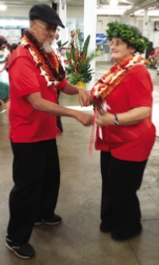
“Sweethearts” Sharon and Larry Tulba dancing up a storm at the Dept. of Parks and Recreation’s Annual Senior Valentine’s Dance at the Blaisdell.
I love reading and writing. And, so do you probably or you wouldn’t be reading this issue of Generations Magazine. There are times though when words on a page cannot convey what is going on around us. I recently traveled to the Lanakila Senior Center for a KHON Elderhood Project story. Dozens of seniors were involved in all kinds of classes. They were learning how to play the ‘ukulele, how to prepare tax returns, learning how to hula.
I watched the kumu of the hula class who was about the same age as some of her students. She would face the class, raise her left arm and give instructions, “Raise your right arm.” She was the mirror image for her students. Her left was their right. Can you imagine the skill and practice that it takes?
Day after day I see that kind of dedication and passion on the part of and in behalf of our seniors. It could be with Lanakila or with any of the dozens of City & County Parks and Recreation programs or other community groups.
When I saw the smiles of the seniors in the hula class, the ongoing learning curve of those playing ‘ukulele, the grins of satisfaction of those completing their taxes preparation class, I realized how important these activities are — not just for the seniors but for all generations.
I love reading and writing. And, so do you probably or you wouldn’t be reading this issue of Generations Magazine. There are times though when words on a page cannot convey what is going on around us. I recently traveled to the Lanakila Senior Center for a KHON Elderhood Project story. Dozens of seniors were…
In today’s information age we are inundated with material on what to eat and what not to eat. This can be confusing for seniors with changing dietary needs due to advancing age or illness. As we age, many changes to our bodies occur that can impact our nutritional status.
Here are some suggestions to help you eat better and live happier:
The Modified Food Pyramid for Older Adults suggests regular daily exercise is crucial to maintain a healthy body and mind.
Drink 6-8 glasses of water a day. Note: Caffeinated drinks can increase urination, requiring you to drink more water to stay hydrated.
Consume five ounces of lean protein a day. An increase in protein may be necessary if you are sick or healing from wounds.
Eat a wide variety of fruits and veggies of every color three times a day.
Low-fat dairy and low-saturated oils are great for a healthy heart.
In today’s information age we are inundated with material on what to eat and what not to eat. This can be confusing for seniors with changing dietary needs due to advancing age or illness. As we age, many changes to our bodies occur that can impact our nutritional status. Here are some suggestions to help…
Tom Coffman’s portrait of Supreme Court justice Edward Nakamura is both an insightful biography and an engrossing political history of Hawai‘i. The Nisei life-story may sound familiar: born to immigrant parents, graduated from McKinley High, veteran of the 442nd Regimental Combat Team, attended University of Hawai‘i under the GI Bill, active during Statehood years; but it is strewn with surprise, resulting from Nakamura’s unshakable creed and unique angle of vision.
By working from the political gains of the ILWU, Justice Nakamura played a central role — unpublicized — in devising arguably the most progressive program of legislation in an American state: universal health care, temporary disability insurance, collective bargaining rights for public workers — all of which forever changed the Hawai‘i worker’s landscape.
Vaulted from relative anonymity onto the Hawai‘I Supreme Court, Nakamura was acclaimed for his powerful intellect, his writing, and, most of all, his iron will and integrity. In retirement, he became a dissenting moral force. He fought mismanagement in the State Retirement System, helped to block a highly controversial Supreme Court appointment, and agitated for separating the high court from the Bishop Estate. Nakamura in many ways acted as the public conscience and he left an inspiring legacy of far-reaching social legislation.
The book won the 2013 Ka Palapala Po‘okela Award of Excellence in nonfiction, presented by the Hawai‘i Book Publishers Association. (University of Hawai‘i Press, paperback, $14.99)
Tom Coffman’s portrait of Supreme Court justice Edward Nakamura is both an insightful biography and an engrossing political history of Hawai‘i. The Nisei life-story may sound familiar: born to immigrant parents, graduated from McKinley High, veteran of the 442nd Regimental Combat Team, attended University of Hawai‘i under the GI Bill, active during Statehood years; but…
“We are developing more livable communities where people of all ages and physical abilities can get safely where they want to go.” — Stanton
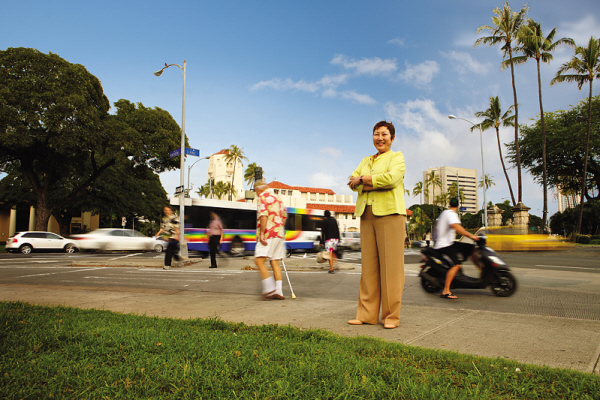
In a split second your life can change dramatically,” says Barbara Kim Stanton, AARP Hawai‘i state director, of a lifethreatening pedestrian crash in 2003. The accident left her with multiple fractures, requiring extensive rehabilitation and a six-month recovery at home. The debilitating incident provided her with unique insight into what it must be like for seniors who have limited mobility and/or depend on home care — as she did for nearly half a year. Ultimately, the experience shaped her view of some of the significant challenges facing our aging community and continued to affect her in 2005 as she assumed leadership of AARP, the influential member organization for people 50-plus.
In this issue, Stanton sits down to talk with Generations about the social changes seniors are facing today — from redefining retirement to the national and local movement toward creating walkable and safe age-friendly communities.
GM: In what ways did the pedestrian crash influence your view of aging?
BKS: The injuries I had were so severe it was like being fast-forwarded into old age. I couldn’t do anything for myself. I couldn’t dress or feed myself. I couldn’t even brush my own teeth. When something like this happens you learn very quickly what life is like for frail, elderly residents who are dependent on friends and family for their basic needs. You start looking at your surroundings and reassessing your ability to age in the home you’re in. It wasn’t long before I realized that the ‘Aiea home, which my husband and I built in 1982, was inadequate for growing old in. It’s a single-level home on a level lot with extra-wide doors that make it easy to navigate from the yard into the house. Still, many of the things I had taken for granted — door handles, window latches, access to the bathroom — took on a new significance because I didn’t have the strength to perform even simple tasks.
Memories of this experience shaped my belief that everyone needs to plan for how to best meet their needs when they can no longer live without the help of others.
GM: What is it like to not be able to take care of basic daily tasks — dressing, eating, personal grooming — that most of us take for granted?
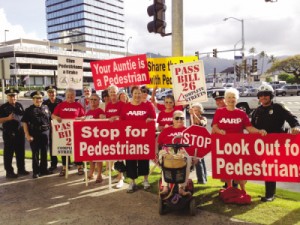
AARP supported the Honolulu City Council’s 2012 Complete Streets ordinance, making it safer for all residents.
BKS: I was discharged from the hospital after about three weeks and needed around-the-clock assistance for half a year, and several months of rehabilitation services before I was able to return to work. I needed total care. My husband helped me in the morning before he went to work. During the day, I had a physical therapist, an occupational therapist and a nurse. In the afternoon when the last medical person left, my neighbors came in. They took shifts. Fortunately, I had a network of family and friends to cook meals and help in any way they could. Even Mainland friends from college used their vacation to fly over and lend a hand. I’m indebted to a lot of people for helping me recover at home.
Through this experience I learned how unpaid caregivers are the backbone of Hawai‘i’s longterm care system. They are the ones who make it possible for the elders they love to age at home, which is where most Hawai‘i residents say they want to be rather than an expensive care facility.
Of course, the main difference between my situation and the seniors who I met at the rehabilitation hospital was that I eventually started to recover. I was getting better, while the frail, elderly folks I got to know said it was a “good day” if their condition stayed the same.
GM: How important are family caregivers to helping elders with activities of daily life?
BKS: In Hawai‘i today most of the day-to-day care for the elderly is provided by family members, often women, who juggle this responsibility with their jobs. This isn’t talked about much and is rarely viewed as a public issue. That’s beginning to change, especially as the percentage of elderly residents needing home care grows. Hawai‘I residents are beginning to realize that caregiving affects just about everyone. At some point in your life, you will either be a caregiver or you’ll need a caregiver — maybe both.
Stanton’s husband and kids were a large part of her daily caregiving network.
I’ve experienced both sides of the caregiver experience, and it’s given me valuable perspective. I, along with other family members, cared for both of my parents at their home in Honolulu. I used to stay with them while my husband watched over the kids at our place. After Mom passed, Dad moved in with us for about a year until he went into hospice. Many adult couples with children are juggling similar situations.
AARP research indicates that there are 247,000 family caregivers in Hawai‘i throughout the year, and the value of the unpaid care they provide to loved ones is estimated at $2 billion a year. However, trends show that the number of potential caregivers (aged 45 to 64 for every person aged 80 and older in Hawai‘i) is declining rapidly. In 2010 there were about six potential caregivers available for every older person. By 2030 there will be fewer than three caregivers available. That’s a red flag. Family support is one of the keys to being able to stay in your home and community as you age.
GM: In what ways do family caregivers contribute to keeping health care costs in check?
BKS: The range of services family caregivers provide is very broad. Many take care of all of the basic daily needs such as personal care, bathing, dressing and cooking. Increasingly, they’re also being called on to perform medical tasks that would make a first-year nursing student tremble — such as wound care and tube feedings — often without adequate training.
Caregivers also play a critical role as unofficial “care coordinators” when family members transition from a health facility back to the home. In that respect they’re on the front lines of keeping their loved ones out of costly institutions and preventing readmissions to the hospital. At the State Legislature this year, AARP Hawaii is supporting legislation that will help caregivers in their role as care coordinators. The CARE Act (SB2264) requires hospitals to provide caregivers with instruction on how to provide the care that’s needed when their loved ones return home.
GM: What steps can people take to increase their chances of staying in their homes as they age?
BKS: The most important thing family members can do is talk with each other about the kind of care they want in the future. For adult children watching their parents grow older, it’s normal to feel anxious. But “The Conversation,” as we call it, has to occur — and better sooner than later. The worst thing to do is to wait until a catastrophic health incident occurs in the family. Then you’re scrambling for answers under stress.
We recommend that people become familiar with public and private health care services available in our communities. A good place to start is the office of aging in each of the counties. They have case workers who can sit down and discuss your family’s needs.
Families may also qualify to receive in-home services through Kupuna Care, a state-funded program that offers a safety net for residents who don’t qualify for Medicaid and can’t afford to pay for services.
The state also provides information about caregiving and long-term care options on its Aging and Disability Resources Center website. It’s a one-stop shop for information about what services are available and how much they cost.
GM: Are Hawai‘i residents prepared to cope with the rising cost of long-term care?
BKS: The cost of long-term care in Hawai‘i is among the highest in the country, and few of us are prepared. The median cost of private nursing home care in Hawai‘i is about $145,000 for just one year, and the average stay is about three years. Unless you have private long-term care insurance or make other financing arrangements, that’s an out-of-pocket expense that not many people can afford. Only about 12 percent of residents age 40 and older are covered by private long-term care insurance.
People are generally uninformed about their options when it comes to planning and paying for care, and a tremendous amount of misinformation exists about what programs such as Medicare pay for. We surveyed our members a few years ago and found that 29 percent believe that Medicare covers the cost of long-term care. Actually, it’s Medicaid that pays for the bulk of long-term care in the U.S., but only for the very poor.
GM: What is AARP doing to help raise awareness of the public’s need to plan for their long-term care?
BKS: AARP helped establish the Hawai‘i Long-Term Care Commission, which studied the state’s long-term care system and recommended reforms (click to see Generations, March 2011). One of the Commission’s top proposals to the Legislature was for the state to launch an education and awareness campaign to help Hawai‘i residents understand long-term care and available options to pay for it.
The idea is to help people live independently at home for as long as possible rather than moving to more costly nursing homes. AARP is working with legislators this session to get $500,000 appropriated for this purpose.
Another recommendation was for the state to consider a public, long-term care insurance program for our working population. We are waiting for the results of a financial and actuarial study, due this summer. Depending on what the report finds, legislation establishing the financing program could be introduced as early as 2015.
GM: As you look at the physical layout of our communities, do you think we’re prepared for the aging boom that’s already begun?
BKS: Our communities have been designed with the automobile in mind, which doesn’t support the ability of older residents to age in place. When large numbers of people and cars come together in urbanized areas built primarily for automobiles, the results can be tragic. There have been unacceptably high numbers of pedestrian crashes in Honolulu over the past decade, and the threat to public safety will rise as the percentage of residents age 65 and older increases to 20 percent over the next two decades.
AARP is working to develop more livable communities where people of all ages and physical abilities have multiple transit options to get safely where they want to go — whether driving, walking, cycling or taking public transportation. What’s really exciting is the new Age-Friendly Cities initiative just announced with the City and County of Honolulu that will transform Honolulu into a place that is livable for everyone — kupuna to keiki.
GM: Can you share some details of the Age-Friendly Cities initiative?
BKS: Mayor Kirk Caldwell announced his commitment to prepare Honolulu to be more age friendly and has partnered with the AARP Network of Livable Cities and the World Health Organization’s Global Network of Age-Friendly Cities and Communities. The WHO Network is part of an international effort to get cities and towns around the world prepared for rapid population aging and increased urbanization.
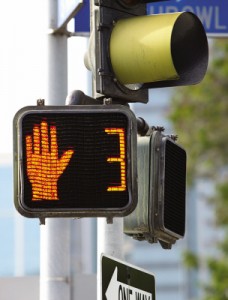
AARP lobbied for countdown signals with adequate time to cross for the disabled and the elderly. It also joined residents in a planning session for Complete Streets in Kakaako.
Over the next five years Honolulu city officials will work with AARP and residents of all ages to improve physical and social environments on O‘ahu that will help older residents remain healthy, active and engaged. This will be a local, community-driven initiative to transform our island into a livable community that’s safe and secure, including affordable housing and adequate transportation. Once in place, these resources will enhance personal independence, allow residents to age in place and foster engagement in civic, economic and social life.
In April a citizens advisory committee will be convened. This group is responsible for developing an action plan that will promote public safety and provide seamless access to shopping, recreational sites, housing and transportation services.
GM: What are your members saying they want to do with their retirement years?
BKS: The Baby Boomers are rewriting traditional definitions of what it means to retire. The first of the Boomers reached age 65 in 2011 and more of them are taking advantage of the extra longevity years their parents and grandparents didn’t have. Regardless of income and whether or not they continue working, they’re reflecting on the meaning and purpose of their lives, overcoming fears, achieving aspirations and building a greater sense of community. Boomers are creating this new life phase and rejecting the notion that their possibilities are shrinking as they get older. They’re using their years of experience not to wind down but to reach even higher.
GM: Are you optimistic about the next 20 years as the boomers move into their 80s and beyond?
BKS: Older adults today are living in a new age of possibilities. For those who prepare for the future, it will be good. Hawai‘i is a great community, we respect our kupuna, and our people know how to pull together. But the challenges with health care are formidable. That’s why I’m concerned about people who may not have enough resources.
My goal with AARP is to help seniors stay connected to their communities and enhance the quality of their lives as they get older.
About AARP Hawaii AARP is a membership organization for people age 50 and older, with nearly 150,000 members in Hawai‘i. We champion access to affordable, quality health care and deliver a strong message to our elected officials: No cuts to Medicare or Social Security benefits. We also provide the tools needed to save for retirement, and serve as a reliable information source on critical issues that help older Americans navigate the “what’s next” in their lives. Drive to End Hunger. Life Reimagined. Financial Freedom Campaign. Fraud Watch Network. Driver Safety. Tax-Aide. Life@50+ Expo. Consumer Advocacy. Volunteering. Toll-Free: 1-866-295-7282 Website: www.aarp.org/hi| Facebook: /AARPHawaii | Twitter: @AARPHawaii Published with the assistance of Bruce Bottorff, director of communications of AARP Hawaii.
In a split second your life can change dramatically,” says Barbara Kim Stanton, AARP Hawai‘i state director, of a lifethreatening pedestrian crash in 2003. The accident left her with multiple fractures, requiring extensive rehabilitation and a six-month recovery at home. The debilitating incident provided her with unique insight into what it must be like for…
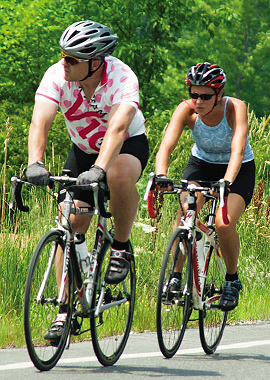
In these Boomer days of taking care of my bodily vessel, I’ve taken up riding my bicycle 4 to 5 times a week. In doing so, I have made some observations that I would like share with my fellow riders.
First, a few tips on bike safety. Before doing anything, get down on your one good knee and ask the Biking Gods for protection ‘cause you’re going to need it. While you’re down there, check the tires and make sure they are pumped up. Tighten all levers and check the seat and chain. Make sure you have a rear view mirror, reflectors and a horn or bell. Wear a helmet.
Why be so vigilant while riding around this city? Because it seems that drivers look at “bike riders” as moving targets! Paying attention is of the utmost importance. Ride defensively. Take nothing for granted. Don’t ever think drivers of cars know where you are. They don’t! When riding passed parked cars, beware that someone could always open his/her door. Because when that happens, you’ll be hurled head first onto the pavement. And, believe me … it hurts.
Despite an ideal climate for bicyclists — consistent weather, a flat, dense urban center and an extensive bus system — Honolulu has struggled to create a bike-friendly environment. However, organizations such as the Hawai‘i Bicycling League (HBL) continue to work to turn O‘ahu into a more biker-friendly island. HBL is a 38-year-old nonprofit organization that works to get more people riding bikes for health, recreation and transport. It also works toward by making Hawai‘i’s roads safer through education, events and advocacy. HBL is the organization behind BikeEd for 4th graders all around O‘ahu and also the biggest cycling event in the state, the Honolulu Century Ride.
Recently HBL launched its Senior Cycling Program, which is the newest addition to the range of adult education programs. Through a grant from the City & County of Honolulu, HBL purchased several recumbent tricycles and provides rides and workshops to the public for free.
Because of the way the trikes are made, nearly anyone of any age is able to use them. HBL brings the trikes to off-road paths around Hawai‘i and invites anyone 55 or better to ride (helmets available). The rides are led by certified cycling instructors from the League of American Bicyclists.
Also, HBL has a 30-minute presentation that shows seniors ways they can incorporate cycling into their lives, along with the health benefits that can come from riding. For more information, visit www.hbl.org/seniors.
More about bike safety and approaching a cross-walk next time. Happy bike riding!
In these Boomer days of taking care of my bodily vessel, I’ve taken up riding my bicycle 4 to 5 times a week. In doing so, I have made some observations that I would like share with my fellow riders. First, a few tips on bike safety. Before doing anything, get down on your one…
Momi and Roland are a retired couple living in Central O‘ahu. Last year Roland learned he has incurable lung cancer and has been in the hospital several times. The couple has had many conversations together and with the doctors. Because of his short life expectancy and desire for quality of life, he has decided to forgo aggressive life-prolonging treatments although he still wants hospitalization if needed. His doctor recommended that he put his wish to let nature take its course in writing in a document called POLST (Physicians Orders for Life-Sustaining Treatment). This form, signed by his doctor, will ensure that his healthcare wishes be carried out if he is not able to speak for himself at anytime. It also helps put Momi at ease, since she is the one who will be called on to make decisions for Roland if he is unable.
One night, Roland has problems breathing. Momi calls 911 and the paramedics arrive. Knowing her husband’s wishes, Momi wants to be sure that if her husband’s heart or breathing stop en route to the hospital, he can have the natural death he desires. She runs to the kitchen, grabs the completed and signed POLST form hanging on their refrigerator, and hands it to the paramedics. Momi can now feel a sense of relief that her husband’s treatment wishes will be followed, even if she’s not around to tell his medical providers.
So, what is a POLST, and how does it work? A POLST is a portable doctor’s order that makes you or your loved one’s wishes for treatment known. Portable means that it is valid wherever the patient is, whether it is at home, in an ambulance, in an emergency department or anywhere in the hospital or a nursing home. It is for people with a chronic debilitating illness or a life-limiting disease, such as end-stage lung or heart disease, a terminal cancer or anyone who may be approaching the end of their life.
How is the POLST different from an Advance Healthcare Directive (AD)? POLST is completed by you and your doctor and turns your healthcare wishes into orders for healthcare providers and ambulance personnel to follow. An AD is a form that you and everyone over 18 should have to document your values and future wishes for healthcare, and allows you to appoint an agent to act as your health care power of attorney in the event you are unable to speak for yourself. The combination of the POLST and AD will help make sure your wishes are known even if you cannot speak for yourself.
Be just as prepared as Momi and Roland! By talking about these issues ahead of time, you can prevent crisis, relieve stress and ensure that your family’s healthcare wishes are honored. Take action and start the conversations today. To learn more about the POLST and AD or to download forms, visit www.kokuamau.org.
Momi and Roland are a retired couple living in Central O‘ahu. Last year Roland learned he has incurable lung cancer and has been in the hospital several times. The couple has had many conversations together and with the doctors. Because of his short life expectancy and desire for quality of life, he has decided to…
The Chinese call healing energy Qi — the life force, or vital energy, that flows through all things in the universe. In Japan, the life force is termed Ki, while yoga practitioners refer to the body’s life force as prana or pranic energy. These terms all relate to the same universal healing energy, which exists in our environment and links us to all forms of life. It’s the primordial force of nature.
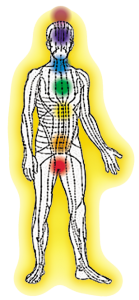
The movement of the life force can be seen in molecules, elements, the landscape — and within our bodies through channels called meridians. The flow of human energy nourishes and governs all of the systems of the body and gives us the ability to concentrate; it’s the basis of creativity and healing.
Within all living animals are meridian energy pathways. The way energy flows through the meridians dictates wellness, disease and imbalances. Our energy flow reflects our state of mind, how we feel and how we think. As such, negative thoughts can block the meridians from flowing and cause numbness, pressure, spasm and many kinds of aches and pains. An energy blockage affects our stress, the way we eat food and how well it gets digested. Sleep patterns and disorders are also a result of how the meridians flow.
However, positive thoughts can build healing energy and help the life force flow through the meridians in a balanced way, leading to various forms of health and happiness.
For example, the foundations of both martial arts and the healing arts focus on the interplay of two polar opposites — yin and yang — to create a vibratory movement and build healing energy to strengthen their practices.
Martial artists move the life force externally in the form of self-dense and physical power, while the healing arts channel the life force internally for therapeutic purposes.
Both practices benefit from the cultivation of Qi through exercise, diet, and creative and positive visualizations. Once a martial artist masters how to use the life force for self-defense, a skilled warrior will also learn how to use his/her energy to heal an opponent.
Likewise, some of the most powerful massage and energy work rely on the principles of Qi to remove harmful energy blocks. During massage, acupressure points are often used because they have a high electrical conductivity at the surface of the skin and effectively conduct the body’s energy.
Acupressure is an ancient healing art that developed in Asia more than 5,000 years ago. Using the power and sensitivity of the hand, acupressure can relieve stress-related ailments such as depression, anxiety, headaches, backache, insomnia, nausea and carpel tunnel. It can also release tension, reduce pain, increase circulation and help develop vibrant health.
Building human energy, developing its healing potential, and strengthening the flow of the life force have been priorities in the Chinese culture since ancient times. Using special Qi healing exercises and meditations today can help you build healing energy, cultivate the life force and channel it throughout your body. By heightening the life force within your body — through martial art exercises and healing arts — you can help treat yourself and others.
The Chinese call healing energy Qi — the life force, or vital energy, that flows through all things in the universe. In Japan, the life force is termed Ki, while yoga practitioners refer to the body’s life force as prana or pranic energy. These terms all relate to the same universal healing energy, which exists…

 For many people, a pet is their best friend and loyal confidant. Losing a loved one is never easy, especially when you have to make the difficult decision of saying good-bye because your pet is suffering, or no longer enjoying a good quality of life. The Hawaiian Humane Society offers euthanasia and cremation services for pets who are ready to cross the Rainbow Bridge.
 One in three adults in the U.S. has high blood pressure. Blood pressure is the force of the blood pushing against the walls of the arteries as the heart pumps blood. If pressure stays high over time it will damage the body. Hypertension is the persistent elevation of blood pressure. Blood pressure rises with age and is a common health problem in seniors. The only way to tell whether you have high blood pressure is to have your blood pressure measured with a blood pressure cuff (sphygmomanometer). This is usually done in a doctor’s office. It is important to know your blood pressure numbers. “Systolic” (the top number) refers to blood pressure when the heart beats while pumping blood. “Diastolic” (the bottom number) refers to blood pressure when the heart is at rest between beats.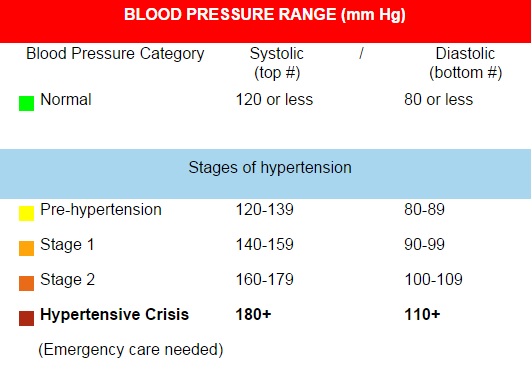
 Low in saturated fat, cholesterol and total fat
 If your goal is to age in place, don’t let your roof age with you. Consider getting a roof inspection to determine its structural integrity and lifespan. Regular inspections — approximately every three years — can detect problems or issues before they have a chance to cause major damage.
 Do not attempt to climb a ladder or inspect the roof yourself. Hire a licensed, professional roofer who can examine your roof’s structure, checking it for hazards such as:

 Tom Coffman’s portrait of Supreme Court justice Edward Nakamura is both an insightful biography and an engrossing political history of Hawai‘i. The Nisei life-story may sound familiar: born to immigrant parents, graduated from McKinley High, veteran of the 442nd Regimental Combat Team, attended University of Hawai‘i under the GI Bill, active during Statehood years; but it is strewn with surprise, resulting from Nakamura’s unshakable creed and unique angle of vision.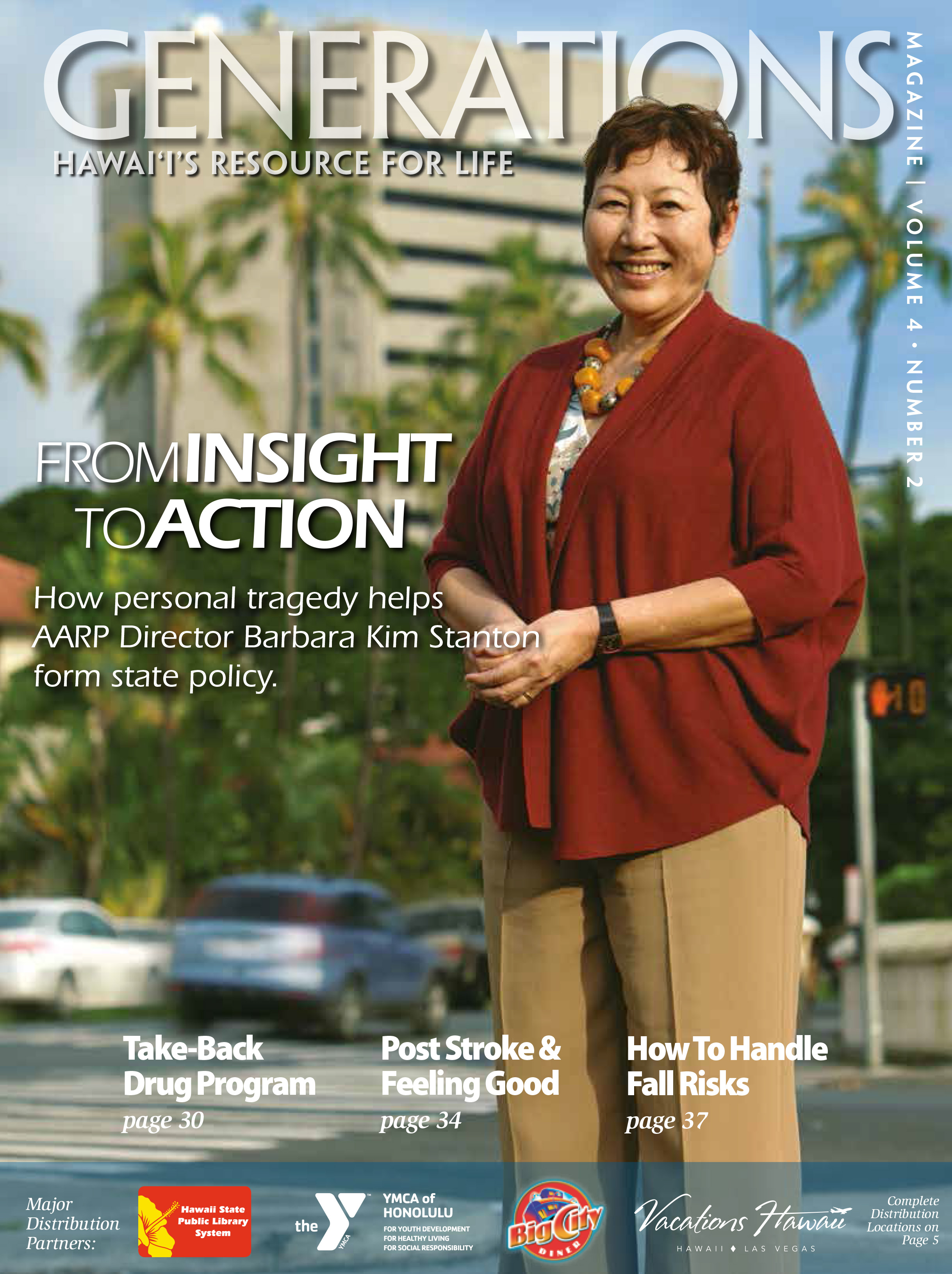
 AARP is working to develop more livable communities where people of all ages and physical abilities have multiple transit options to get safely where they want to go — whether driving, walking, cycling or taking public transportation. What’s really exciting is the new Age-Friendly Cities initiative just announced with the City and County of Honolulu that will transform Honolulu into a place that is livable for everyone — kupuna to keiki.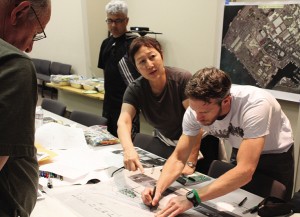
 In these Boomer days of taking care of my bodily vessel, I’ve taken up riding my bicycle 4 to 5 times a week. In doing so, I have made some observations that I would like share with my fellow riders.
 Also, HBL has a 30-minute presentation that shows seniors ways they can incorporate cycling into their lives, along with the health benefits that can come from riding. For more information, visit
  The Chinese call healing energy Qi — the life force, or vital energy, that flows through all things in the universe. In Japan, the life force is termed Ki, while yoga practitioners refer to the body’s life force as prana or pranic energy. These terms all relate to the same universal healing energy, which exists in our environment and links us to all forms of life. It’s the primordial force of nature.