
 Many veterans believe that they have to have suffered an in-service disability to qualify for U.S. Department of Veterans Affairs’ monetary benefits. This is a common misconception.
Depending on their health status, income and assets, many senior veterans and their dependents or surviving spouse can qualify for not only basic “Improved Pensions” based on low income, but also for supplemental benefits. The supplemental benefits are called “Housebound Benefits” and “Aid & Attendance Benefits.”
PENSION BENEFITS
To qualify for any of these pension benefits, the veteran (or surviving spouse, based on the veteran’s military service record) must satisfy the following general criteria:
• The veteran must have served at least 90 days of active duty.
• At least one of the 90 days of active duty must have been during wartime. Dates have been officially defined for the beginning and end of World War II, the Korean War and the Vietnam conflict. The Gulf War, which began Aug. 2, 1990, is not concluded yet.
• The veteran must have received a discharge other than dishonorable.
• The claimant and household must have limited income and assets.
• The claimant must have a permanent and total disability at the time of application (note that a surviving spouse can qualify for a basic low-income pension without being disabled, but the veteran must be disabled — although the disability does not have to be related to wartime or military service).
• The disability must have been caused without the willful misconduct of the claimant and must not have been due to alcohol or drug abuse.
HOUSEBOUND & A&A BENEFITS
As the name implies, Housebound Benefits are payable when the claimant is substantially confined to his or her home because of permanent disability. To qualify for Aid & Attendance Benefits, the claimant must:
• Require the aid of another person in order to perform personal functions for everyday living (such as bathing, eating, dressing, toileting, transferring from bed to a wheelchair or dealing with incontinence), OR
• Be bedridden, in that he or she must remain in bed apart from any prescribed course of convalescence or treatment, OR
• Be a patient in a nursing home due to mental or physical incapacity, OR
• Be blind or have very poor vision.
Applying for these supplemental benefits is not a quick or simple process, and you may want to enlist the help of a veterans’ assistance organization or a specially-trained individual. Note that whoever assists with the application cannot charge a fee for that service. However, if the individual or organization performs other services, fees may be incurred.
SCOTT MAKUAKANE, Counselor at Law
Focusing exclusively on estate planning and trust law.
www.est8planning.com
O‘ahu: 808-587-8227 | maku@est8planning.com



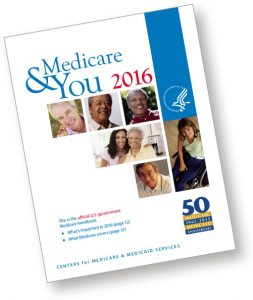 More than 50 years ago, the federal government established programs designed to help Americans afford healthcare services called Medicare and Medicaid. Since both of these programs involve many variables, they require some study. To provide insight into how the coverage works, here are some facts you might not know about Medicare:
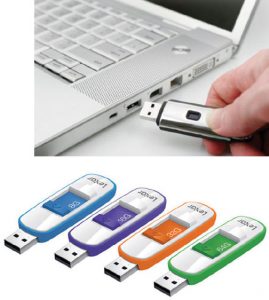 One substitute for that great big binder is a USB, “thumb” or “jump” drive. It is a thumb-sized piece of hardware that plugs into almost any computer (iPads excepted) that will store more electronic documents than you will ever need it to hold. At a bare minimum, you will want store a copy of your advance directive and your HIPAA authorization (the document that gives medical providers your permission to talk to your decision maker), but you might also want other documents, such as your durable power of attorney. The downside to this technology is that it is a piece of non-waterproof hardware that can be lost, or stolen and misused.
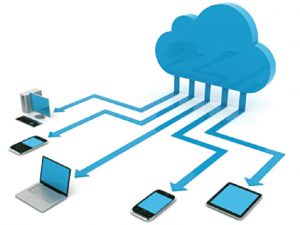 Yet another option is Internet technology that allows you to store your estate planning documents in the “cloud” and access them from any computer or laptop (including your iPad) whenever you need to, and from wherever you happen to be at the time. One example is called Cubby (www.cubby.com), but there are others on the market. When you are a Cubby subscriber, you can create a secure link that you (or your kids or your financial planner) can use to access your estate planning documents 24/7. This can be a very helpful solution in a variety of contexts — not just medical emergencies.
 Medicare Identity Theft is a serious and growing problem that impacts the lives of millions of seniors every year. A variety of reasons, including the expansion of technology and the Internet, allow personal information to be stolen and sold worldwide. Furthermore, the sheer magnitude of Medicare provides both incentive and opportunity for thieves to take advantage of the program. Medicare serves 46 million beneficiaries, who are primarily seniors, and expends $375 billion annually. Because it is so large and complex, with thousands of health care providers submitting millions of claims daily, Medicare is difficult to oversee. As a result, $68 billion is estimated to be lost to fraud annually.
 Giving is a tradition in Hawai‘i, extending as far back as the original ancestors and including the many people and cultures that have since arrived on our shores. Chances are, you or someone you know has been a beneficiary of the generosity of others; chances are you also have given to people and causes that are important to you. And because of giving, our community thrives, lives are made better and a sense of ‘ohana is nurtured.