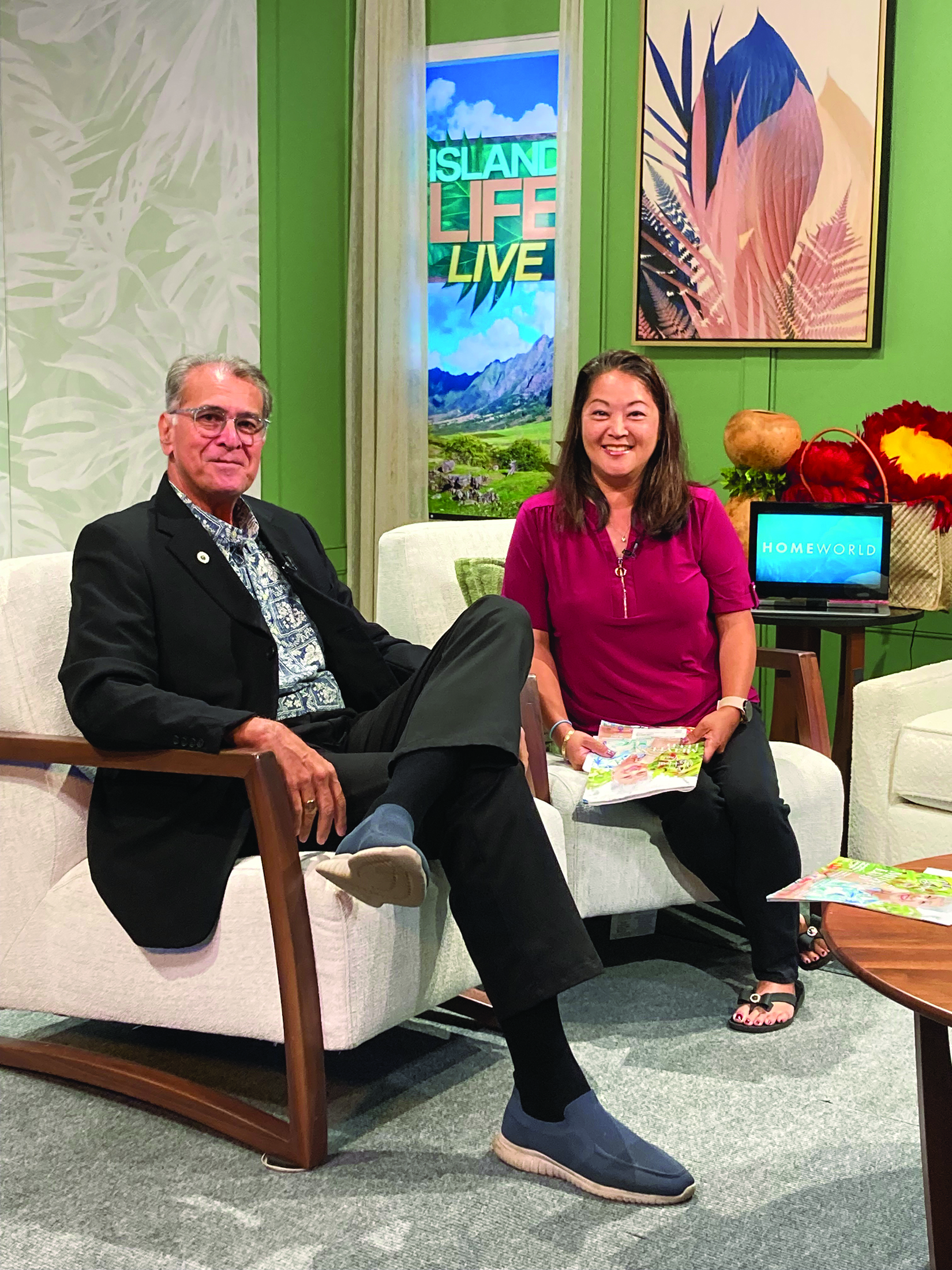
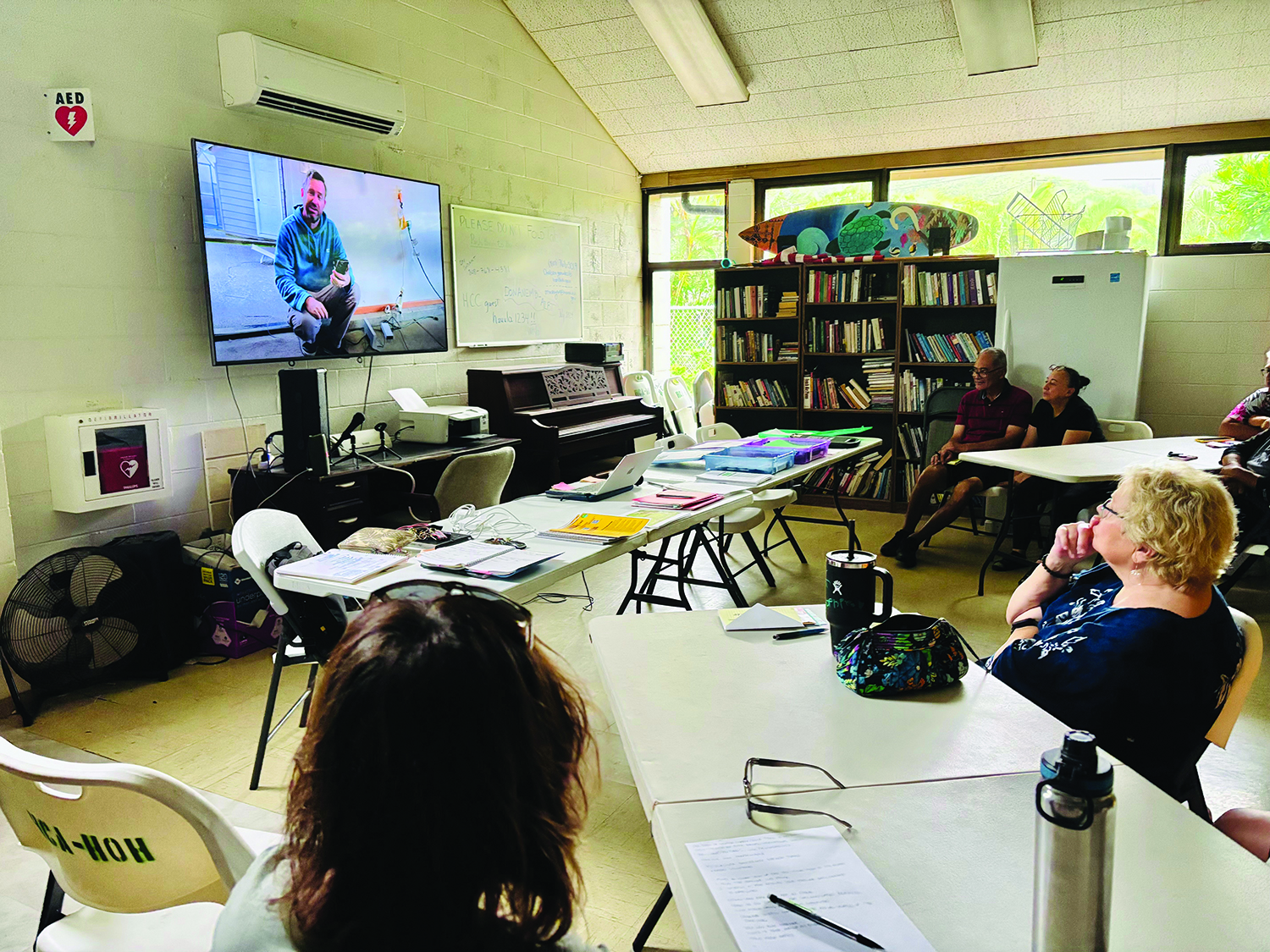
Kūpuna Power, a platform that seeks to educate and empower Hawai‘i’s elderly, is both a movement and a mindset—a reminder that Hawai‘i’s elders carry not only our history, but our momentum. Born out of an immediate response to a church family member being scammed, I launched the initiative after witnessing firsthand how vulnerable Kūpuna can be when clear, reliable information is hard to find—or when a kupuna is too embarrassed to reveal such a situation. The experience exposed an urgent need for information to accessible resources at the federal, state, county and private levels—and the spark that ignited Kūpuna Power.
Kūpuna Power is about helping them tap into resources that enable them to live their golden years the way they want to, as independently as possible and without worries. Kūpuna Power helps restore dignity, visibility and agency to the people who built the foundations we stand on today.
At its core, the initiative insists that kūpuna are cultural anchors and political stabilizers whose lived experiences—from plantation life to the Hawaiian Renaissance—give them a clarity that Hawai‘i still depends on. When elders speak, they bring generations of insight.
Kūpuna Power channels that wisdom into present-day action by encouraging kūpuna to stay informed, vote, testify, organize and guide the lāhui (people) with the same steady hands that raised families and communities.
The movement also strengthens intergenerational connection, creating joyful, dignified spaces where young people learn directly from elders through stories, mele and lived truth. That exchange fuels coherence, unity and disciplined civic participation.
KŪPUNA POWER 808-768-7700 | info@wearekupuna.com wearekupuna.com
Kūpuna Power, a platform that seeks to educate and empower Hawai‘i’s elderly, is both a movement and a mindset—a reminder that Hawai‘i’s elders carry not only our history, but our momentum. Born out of an immediate response to a church family member being scammed, I launched the initiative after witnessing firsthand how vulnerable Kūpuna can…
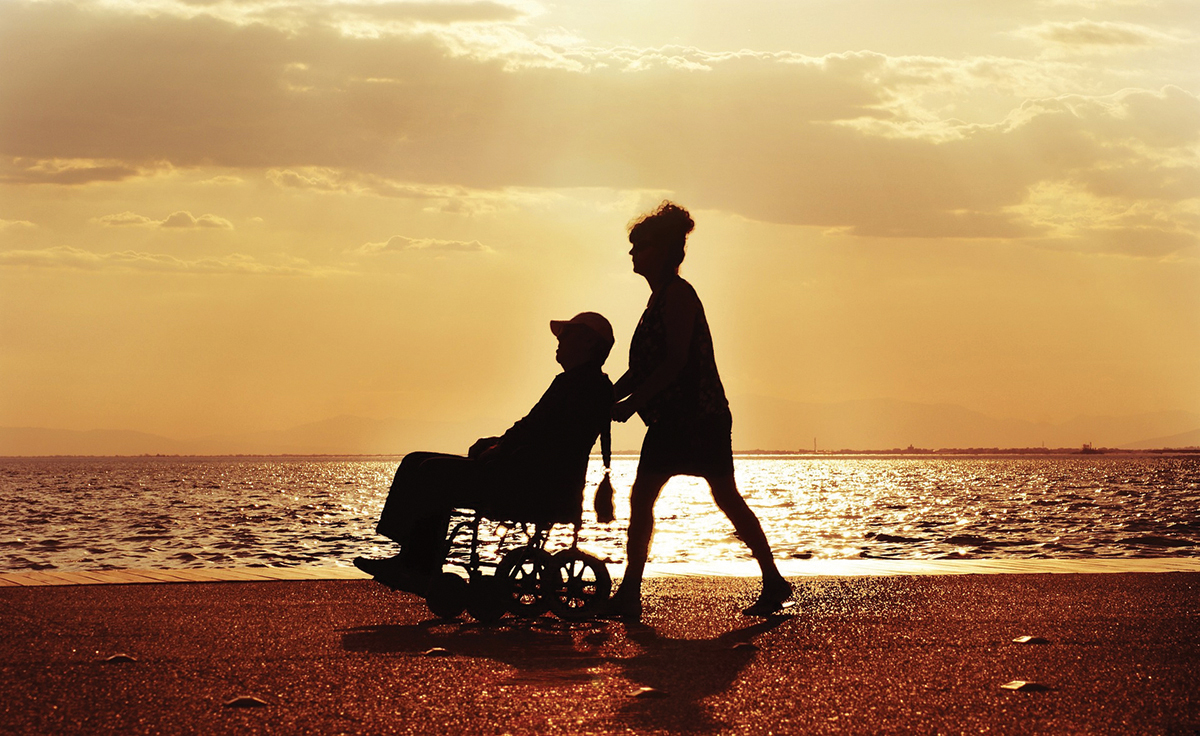
The findings of a recent Columbia University study—that Hawai‘i is a high-risk state for a family caregiver shortage—should come as no surprise to the estimated 154,000 family caregivers who reside here.
AARP estimates that Hawai‘i’s family caregivers put in 144 million hours of unpaid care a year to loved ones in Hawai‘i. If they were paid, the value of what they do for others would be $2.6 billion.
Without family caregivers, our long-term care system in Hawai‘i would collapse; we wouldn’t be able to take care of our kūpuna.
The study looked at demographics. Hawai‘i’s older population is increasing faster than other states. As more of our population ages, there will be fewer younger residents who can take care of kūpuna who need care.
The study also looked at the need for workers who can provide paid services in-home and the availability of nursing home or adult residential care home services.
Family caregivers, especially those who live in rural areas, know those services are in short supply. There are not enough workers now and the need will grow unless we can increase the paid caregiving workforce.
The cost of living and the cost of caregiving are other factors. Caregiving isn’t cheap. Family caregivers spend about $7,200 of their own money on average—about 26% of their income—on out-of-pocket caregiving expenses. Add in Hawai‘i’s high cost of living and that some caregivers may retire early or quit work to care for loved ones, the financial sacrifices family caregivers make can be overwhelming.
The Hawai‘i Legislature has taken some steps to increase Medicaid payments for companies providing paid caregiving services. But other policies that can help, like paid family leave and a tax credit for family caregivers, were not passed.
If you’re a family caregiver, know that you are not alone.
Help is available and AARP is advocating for you. If we all make our voices heard, there are too many of us for lawmakers to continue to ignore. Hawai‘i must do better for family caregivers and avert the crisis that is clearly ahead of us.
Join us in fighting for caregivers through the state legislature by contacting Advocacy Director Audrey Suga-Nakagawa at hiaaarp@aarp.org.
The findings of a recent Columbia University study—that Hawai‘i is a high-risk state for a family caregiver shortage—should come as no surprise to the estimated 154,000 family caregivers who reside here. AARP estimates that Hawai‘i’s family caregivers put in 144 million hours of unpaid care a year to loved ones in Hawai‘i. If they were…
During National Older Americans Month each May, Hawai‘i’s four county Area Agencies on Aging receive nominations from the public for Outstanding Older Americans known for their volunteer accomplishments. A man and a woman from each county are chosen to be honored. This year’s theme, Flip the Script on Aging, focused on transforming how society perceives, talks about and approaches aging. The following volunteers were honored on June 13, 2025, on O‘ahu.
Dotty Kelly-Paddock (Honolulu County) is an educator and community leader with a lifelong commitment to disability advocacy and resilience planning. She helped develop inclusive education services in U.S.-affiliated Pacific jurisdictions at UH Mānoa’s Center on Disability Studies. She is a Neighborhood Board member in Hau‘ula, president of the Hau‘ula Community Association and Executive Director of Hui O Hau‘ula. She co-founded the Hau‘ula Emergency Leadership Preparedness team and authored strategy that lead to the creation of O‘ahu’s first resilience hub. Her leadership strengthens disaster preparedness and cultural revitalization in Ko‘olauloa and beyond.
Charlene Dorsey (Kaua‘ i County), a Vietnam veteran and retired DOH clerk, is a passionate advocate for veterans. For over a decade, she’s helped lead the Kaua‘i Veterans Council and Miss Kaua‘i Veteran Scholarship Program. She has served with the Kaua‘i Veterans Museum for 15 years, sharing Kaua‘i’s military history and caring for hundreds of artifacts. She co-founded local chapters of Vietnam Veterans of America and AMVETS. She also volunteers with RSVP, Kaua‘i Veterans Memorial Hospital Auxiliary, Hanapēpē Library and her church. Her strength, optimism and unwavering dedication uplift the veteran community and inspire all who serve alongside her.
Ronald Ebert (Hawai‘i County) of Ka‘ū is a lifelong public servant focused on safety and community resilience. He served as captain of two volunteer fire departments and has led ‘O Ka‘ū Kakou since 2006, supporting health, safety and local events. Ron also serves on the Ka‘ū Hospital Charitable Foundation board, and raises funds with Red Hatters and Ka Lae Quilters. The Ocean View Church of Christ minister supports community safety and outreach, sending $10,000 for Lahaina wildfire recovery. With his wife Nadine and the Pāhala Senior Club, Ron brings heartfelt care and steadfast leadership to every endeavor.
Ed Tagawa (Honolulu County), of Kea‘au is a retired teacher and Army veteran dedicated to lifelong service. After serving in a record-breaking training unit with fellow Hawai‘i soldiers, Ed pursued higher education and then taught at He‘eia Elementary School. Since retiring, Ed has volunteered at Nalo Farms, Ho‘ola Aina Pilipili and Hawai‘i Meals on Wheels. Whether preparing Thanksgiving meals, mentoring new volunteers or assisting at outreach events, Ed embodies the meaning of aloha. As a DMV concierge and neighborhood helper, he brings kindness to every interaction. Known for his friendly nature and tireless service, he touches lives through acts of care and connection.
Gary Smith (Kaua‘ i County) spent his life enriching the Kīlauea community through leadership, historical preservation and civic service. He served on many boards focused on local agriculture and heritage. He’s a passionate historian and educator, working with the Kaua‘i Historical Society and the DOE Kupuna Program to preserve Kilauea’s stories and landscapes. He leads cultural hikes, volunteers with local cemeteries and plays key roles in community events like Kīlauea Kalikimaka. He’s an advocate for safe roads, parks and land stewardship. Known as a storyteller, singer, builder and problem-solver, Gary is a community cornerstone whose energy and dedication span generations.
Patricia Dunn (Hawai‘i County) of Hilo is a model of volunteerism and community spirit. A retired public servant, she fills her days with service—from gardening and ceramics to Meals on Wheels and Lions Club projects. She has helped organize vision screenings, food drives, zoo painting projects and educational events. A member of the Order of the Eastern Star, she has supported scholarships and charitable causes. She’s deeply involved with the Hilo Orchid Society, YMCA tree sales, AARP tax support and the Papaikou Senior Club. Her joy and energy are contagious. She inspires others to get involved, building a sense of belonging.
Bishop Pahia (Maui County) of Waiehu has transformed lives through his work in reentry and prison ministry. A former correctional officer turned MEO Being Empowered and Safe Together specialist, he guided hundreds of formerly incarcerated individuals toward productive lives. He’s helped clients obtain housing, jobs and stability, offering dignity and second chances without judgment. Now retired, he continues volunteering with MEO and co-leads a prison ministry. He’s also MEO’s 2023 Volunteer of the Year. Whether offering support or simply believing in someone, Bishop embodies compassion, humility and the transformative power of care.
Patricia K. Niibu (Lāna‘i City, Maui County) spent decades uplifting her community through education and service. A retired teacher, she now devotes her time to caring for kūpuna—visiting homes, delivering meals and providing companionship with aloha. She volunteers with the Lāna‘i Food Bank and her church, aiding over 100 older adults. She mentors teachers, helps local businesses and contributes to social connection across generations. Whether checking in with elders, volunteering at the school or filling staffing gaps at shops, Patricia meets every need with grace and humility. Her quiet leadership weaves strength, resilience and compassion into the fabric of island life.
During National Older Americans Month each May, Hawai‘i’s four county Area Agencies on Aging receive nominations from the public for Outstanding Older Americans known for their volunteer accomplishments. A man and a woman from each county are chosen to be honored. This year’s theme, Flip the Script on Aging, focused on transforming how society perceives,…
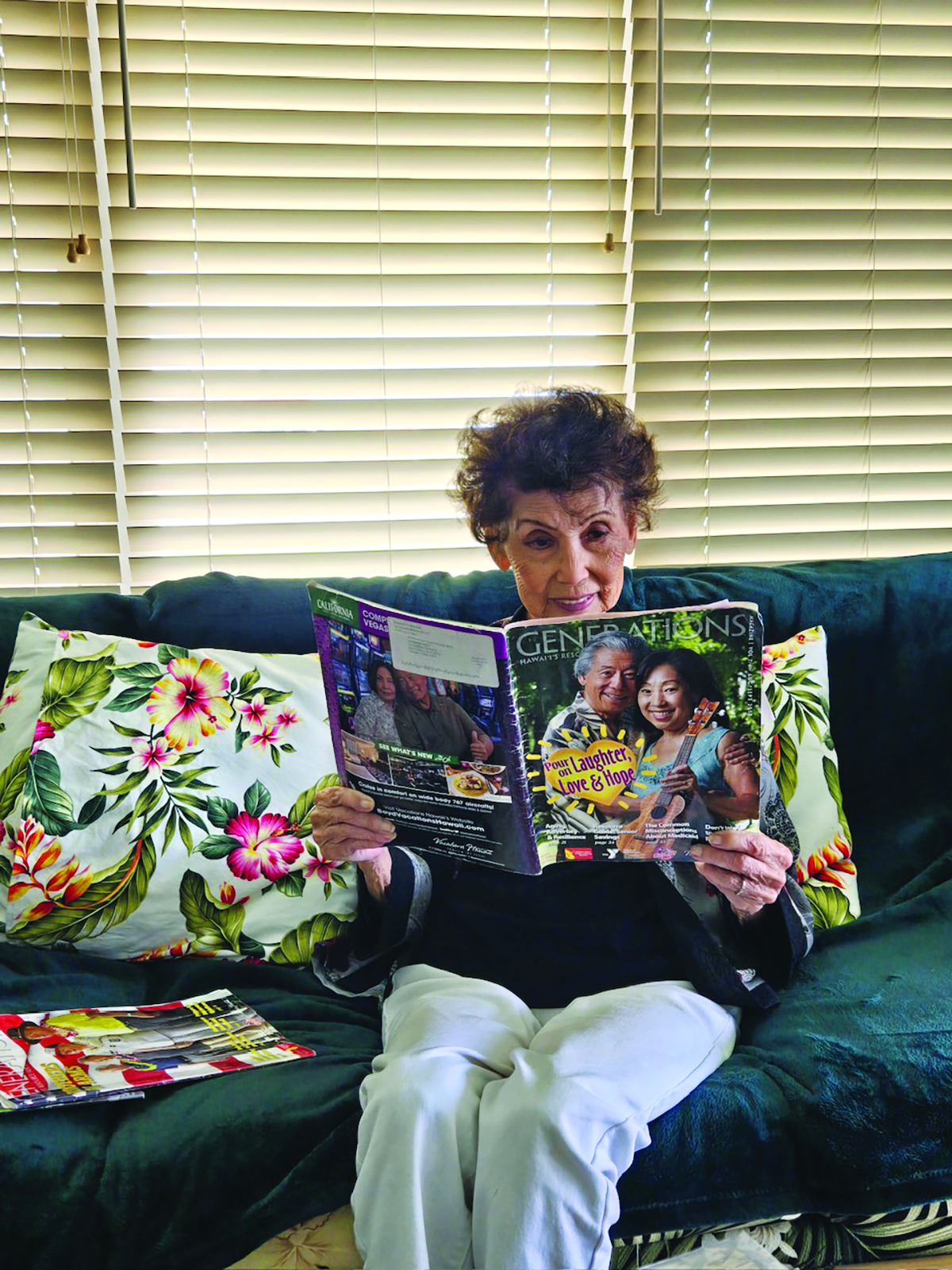
Setsuko “Bess” Matsuoka, age 92, has been a devoted Generations Magazine (GM) reader since the beginning. We at Generations have come to know her well from the many calls she’s made to us, and through her article and recipe submissions. She calls us with holiday greetings and never misses the opportunity to show her appreciation of each and every issue.
“I am very much a fan of Generations,” she told me over the phone. “I love everything about it. I think it is the perfect, perfect magazine. Every one is informative. I look forward to each issue!”
Bess lives independently in a townhouse in Wailuku, Maui. She was born on March 3, 1933, 3-3-33. Her affinity for numerology and appreciation of kismet are in complete harmony with her faith in God and His divine plan. Her spiritual side has always been very strong, she says.
“Everybody I have met, especially those connected with Generations, was orchestrated by divine power,” she says. “There are no coincidences; no accidents,” she says. “Everything happens for a reason.” That includes meeting former GM Editor Katherine Smith. “I was fortunate to become friends with her. Before she left Hawai‘i, she gave me her collection of Generations Magazines. “And I have the very first issue,” she said in a way that convinced me it was very dear to her. “I have read every article in every magazine and every one is precious, so I share them with others, so they can be blessed by reading them, too.”
The issue that really inspired her was “Brothers in Arms” written by Katherine. She said she had the good fortune to get to know Bo Mahoe, one of the subjects of the story. “I also became friends with Sherry Goya, the publisher’s mother. Even though I no longer have a subscription, Sherry sends me complimentary copies. I am thrilled to see them in my mailbox!”
She said she speaks often to GM Art Director Wilson Angel, who she just calls “Angel.” “She has positive comments about each issue,” he says.
Bess retired from the State of Hawai‘i Department of Social Services and now spends her time writing uplifting stories for seniors that capture the wisdom and humor of the old days.
Bess attended the Methodist church for 30 years. But recently, she felt compelled to “go out there with people.” So she began attending Maui Intersection Church, where she helps the unsheltered population by sharing her testimonies, saying “whatever the Lord puts in her heart.”
With appreciation and love, Bess continued to talk about her late husband, her family, and others, including the Generations staff. “The Generations staff puts us, the readers, at the top!”
“No wonder the staff talks about you all the time!” I tell her. “You are so kind!” Bess replies, “What you see in me is actually what is in your heart — like a mirror. I feel blessed to have the Generations staff in my journey through life.”
Setsuko “Bess” Matsuoka, GM’s No. 1 fan, is not just like family—she is family.
We, too, are blessed.
Setsuko “Bess” Matsuoka, age 92, has been a devoted Generations Magazine (GM) reader since the beginning. We at Generations have come to know her well from the many calls she’s made to us, and through her article and recipe submissions. She calls us with holiday greetings and never misses the opportunity to show her appreciation…
Every year, thousands of Hawai‘i residents come together to honor loved ones, caregivers and others who are impacted by Alzheimer’s disease or another form of dementia. The Walk to End Alzheimer’s is more than an event. It is a movement. And here in Hawai‘i, it is a reflection and reminder of who we are, a community that shows up!
In 2025, we invite you to join us on Kaua‘i, O‘ahu, Maui and Hawai‘i Island. Whether you are walking for a parent, grandparent, sibling, spouse, neighbor, friend or yourself, your participation matters, because behind every colorful flower in our Promise Garden is a story and behind every step is hope.
New treatments for Alzheimer’s are now available and offer hope for those in the early stages of the disease. That’s why early detection is critical. We have made progress and will continue to work hard to make it a statewide priority, so individuals can be screened, diagnosed early and given access to these promising treatments.
Across Hawai‘i, caregivers are also finding strength through support groups, education and connection with others. But there is still more to be done.
My grandfather lives with Alzheimer’s. As someone whose family has been touched by this disease, I know the burden, the fear and the deep desire to make a difference. The walk gives us that chance. It brings us together to fund the exciting science happening across the field, sustain and expand programs and remind those impacted that they are not alone.
So lace up, show up and walk with us until we can call our walk “the Walk That Ended Alzheimer’s!”
Every year, thousands of Hawai‘i residents come together to honor loved ones, caregivers and others who are impacted by Alzheimer’s disease or another form of dementia. The Walk to End Alzheimer’s is more than an event. It is a movement. And here in Hawai‘i, it is a reflection and reminder of who we are, a…
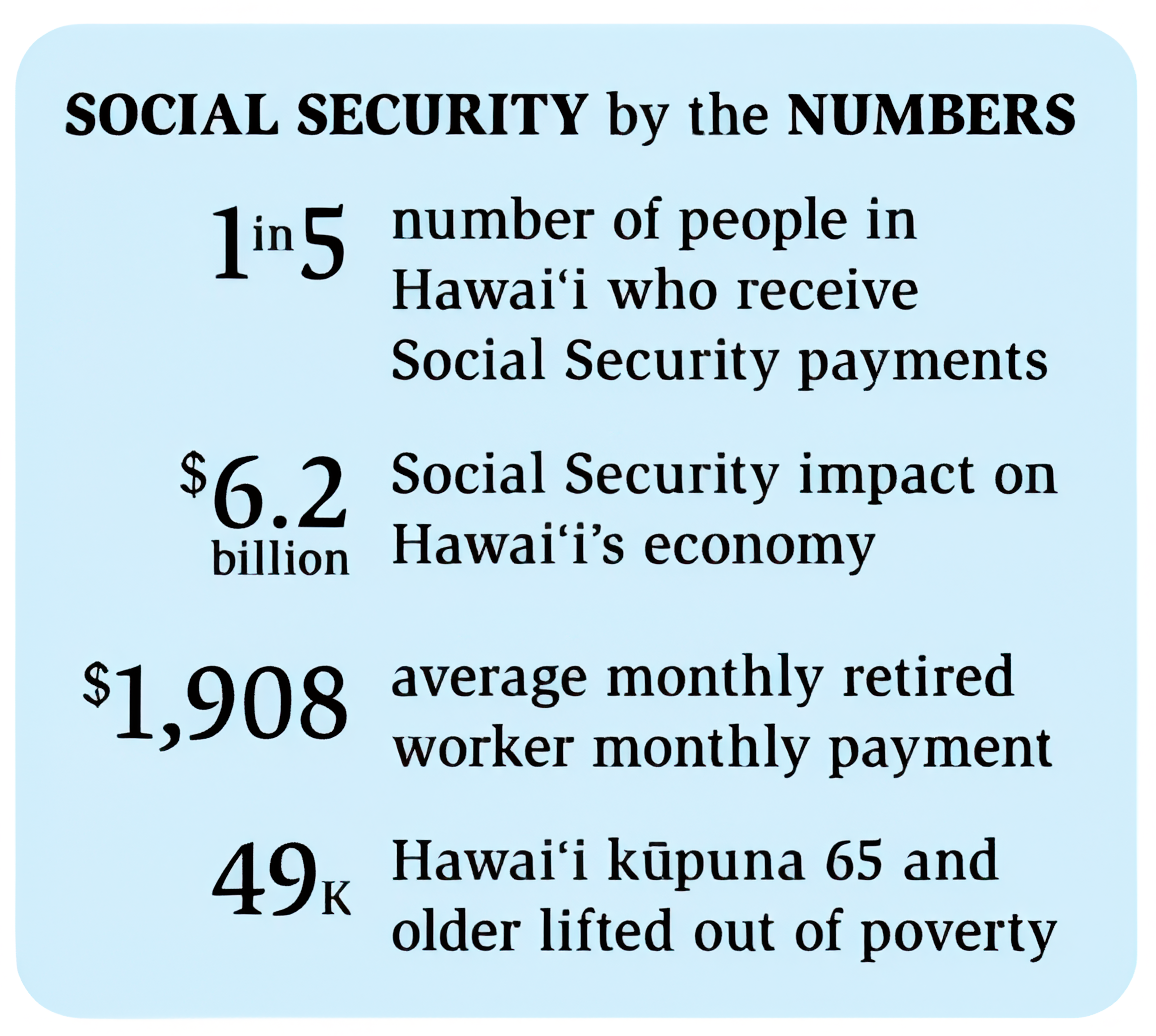
Social Security (SS) will celebrate its 90th anniversary this summer.
On Aug. 14, 1935, President Franklin D. Roosevelt signed it into law, and over the years it has arguably become the most successful and popular government program in history.
As we mark the anniversary of Social Security, we note that the program is experiencing problems with customer service and that Congress has still not addressed the looming deadline in 2035—when Social Security turns 100—the year when payments will be reduced by about 20% because the SS surplus runs out of money.
Let’s be clear that Social Security will continue past 2035 as long as working Americans pay into the system. But the surplus funds that Baby Boomers and others paid will run out as more Baby Boomers and Gen Xers retire and start collecting unless Congress acts and approves changes to increase revenues and/or change benefits.
AARP is urging Congress to act sooner rather than wait until the deadline so there are more options for solutions. We also want Congress to be transparent about the changes they are considering so the public can have input.
More immediately, Congress needs to provide oversight to the Social Security Administration (SSA) to prioritize improving customer service. In the last year, AARP has received thousands of calls and messages from ku¯ puna concerned about their Social Security, including complaints about website crashes and outages, and long waits at overwhelmed field offices.
The good news is that people are passionate about SS. A proposal to end phone service for benefit applications generated more than two million messages to Congress. The SSA listened and allowed phone service to continue. We paid into Social Security during our working lives. It’s our money and we must be able to access it in a timely manner without having to wait on hold, without having to make multiple calls, and without websites crashing and inconsistent service at field offices.
AARP Hawai‘i will give an update on Social Security at the Generations Magazine Aging in Place conference at the Ala Moana hotel on Aug. 2.
AARP Hawai‘i is also holding Social Security events across the state. You can also go online to learn more about what’s happening to Social Security and add your voice to the millions calling for improved customer service at aarp.org/socialsecurity.
One last note of caution—the confusion and changes at Social Security may lead to government imposter scams—callers who pretend to be from Social Security and prey on fear. They’ll try to get bank and other personal information. Don’t fall for it. The Social Security Administration will never call you first. They will never threaten you or pressure you. If action is needed on your account, you’ll receive an official letter in the mail from the Social Security Administration.
Social Security (SS) will celebrate its 90th anniversary this summer. On Aug. 14, 1935, President Franklin D. Roosevelt signed it into law, and over the years it has arguably become the most successful and popular government program in history. As we mark the anniversary of Social Security, we note that the program is experiencing problems…
I found my perfect niche when I met Director Kimberly Itagaki, who launched her “RSVP Newsletter” in 2020. The Retired and Senior Volunteer Program (RSVP) is a nationwide volunteer program for people ages 55 and over who are passionate about sharing their time and talents with their community. For me, RSVP opened a whole new world of service.
I work alongside exceptional individuals who have taught me what service involves — time, helping others one-on-one, maintaining a garden and other special projects that promote different cultures and customs.
Two volunteers I work with are distinguished for their outstanding service. Linda Dyer, a stage designer at church functions, shared Japanese customs, diverse perspectives and critical thinking with Leeward students.
Ed Tagawa, on his bent knees and with his bare hands, pulls weeds weekly to keep the Ho‘ola ‘Aina Pilipili Garden (UH College of Education) green and flourishing for the community.
Linda and Ed exemplify true volunteerism — service starting from the heart along with time, effort and a spirit of selflessness.
Blessed with fellowship and friendships, I have found purpose as an RSVP volunteer.
RETIRED AND SENIOR VOLUNTEER PROGRAM (RSVP) 925 Dillingham Blvd., #200, Honolulu, HI 96817 eadrsvp@honolulu.gov
I found my perfect niche when I met Director Kimberly Itagaki, who launched her “RSVP Newsletter” in 2020. The Retired and Senior Volunteer Program (RSVP) is a nationwide volunteer program for people ages 55 and over who are passionate about sharing their time and talents with their community. For me, RSVP opened a whole new…
Project Dana proudly welcomes Maria Raiza Morales as its new executive director. Honored to uphold the organization’s mission, she builds on the vision of its founders, Shimeji Kanazawa and Rose Nakamura. With gratitude for the mentorship of Rose and former Executive Director Cyndi Osajima, Maria steps into this role with a strong commitment to their legacy, supported by a dedicated team and community.
Project Dana continues to serve Hawai‘i’s kūpuna and caregivers by providing companionship, transportation, errands and respite support. Its Caring for the Caregiver program offers public presentations, training, support groups and counseling. To enhance these efforts, Project Dana recently introduced Mon Ami, a software platform improving volunteer coordination and client services. With Hawai‘i’s aging population growing, these services are more critical than ever.
Together, Project Dana and our community ensure that kūpuna and caregivers receive the support they need. We invite you to join us in this mission — through service, volunteerism and community connection.
To learn more, visit our website, or contact us by phone or email if you are interested in volunteering or need assistance.
Project Dana proudly welcomes Maria Raiza Morales as its new executive director. Honored to uphold the organization’s mission, she builds on the vision of its founders, Shimeji Kanazawa and Rose Nakamura. With gratitude for the mentorship of Rose and former Executive Director Cyndi Osajima, Maria steps into this role with a strong commitment to their…
Even before the Lahaina fire of August, 2023, Evelyn Lane, 67, was concerned about what would happen if a natural disaster struck the Kahuku Elderly Hauoli Hale senior and disabled low-income housing project that she lives in.
Who will help them if a fire broke out in the forested area near the complex? What if there’s a tsunami? Who would help residents in wheelchairs and those who have difficulty walking?
“All of these people could be left behind and I worried that would include me,” Evelyn said.
The complex is developing an emergency plan with help from neighbors, local community groups and an AARP Community Challenge grant.
The grant helped the neighboring Hui O Hau‘ula community organization purchase satellite internet system communication devices that provide internet to populations with little or no connectivity. The grant also provided training on emergency preparedness, and the use of Wi-Fi and the internet during a disaster to the Hau‘ula community and neighboring valleys in Northwest O‘ahu.
Hui O Hau‘ula President Dotty Kelly-Paddock notes that the communities between Ka‘a‘awa and Kahuku could be cut off if Kamehameha Highway is damaged in a disaster. She used the AARP grant to buy three internet devices. She used a grant from the Castle Foundation to buy two more devices for all of the Ko‘olauloa communities in Northeast O‘ahu, and helped Lane and other community activists get training so they could help organize their neighbors to become disaster resilient and prepare for emergencies.
Lane is organizing meetings with residents, the Kahuku Community Association, churches and other neighbors.
“You have to be really resilient to live on the North Shore of O‘ahu,” Evelyn says, adding that internet system and the disaster resilience plan “are going to be a real benefit to our community.”
As hurricane season approaches in June, AARP Hawai‘i encourages you and your family to have a personal disaster plan in place — especially if you are a kupuna or a caregiver for one. AARP also encourages community leaders to talk to neighbors about creating a disaster resilience plan so everyone can know what to do before the next one strikes. For more information, search online: “AARP How to Prepare for Natural Disasters” and “AARP Disaster Resilience Tool Kit.”
Even before the Lahaina fire of August, 2023, Evelyn Lane, 67, was concerned about what would happen if a natural disaster struck the Kahuku Elderly Hauoli Hale senior and disabled low-income housing project that she lives in. Who will help them if a fire broke out in the forested area near the complex? What if…
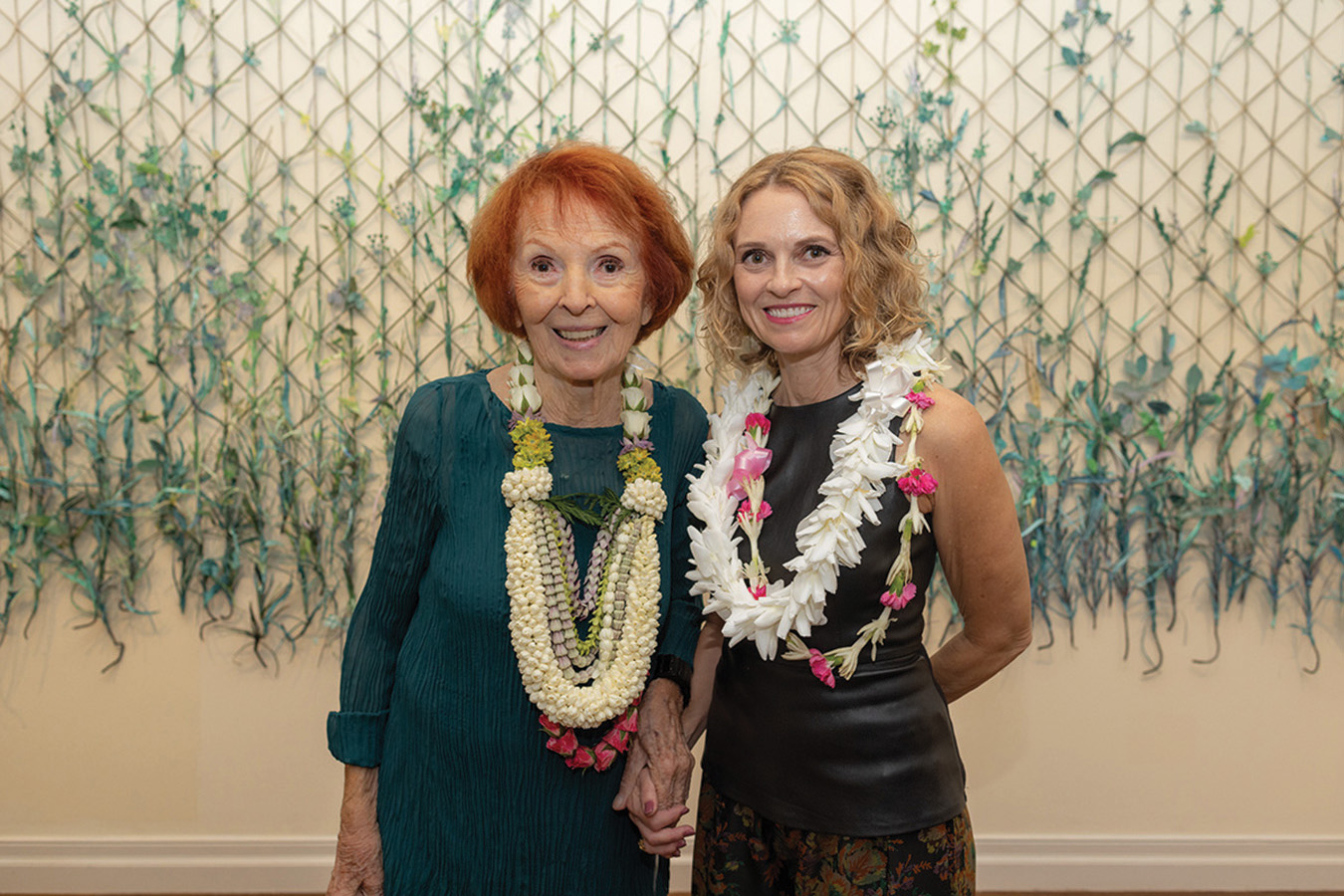
Artist Allyn Bromley met with Honolulu Museum of Art Curator Katherine Love at the opening of her Allyn Bromley: At the Edge of Forever exhibition in January. The exhibition is on view at HoMA through June 15, 2025.
Artist Allyn Bromley is an inspiration. At 96, she continues to go to her Nu‘uanu studio to create every week. An influential figure in Hawai‘i arts, she taught generations of students at Leeward Community College and at the University of Hawai‘i at Mānoa, where she was director of the printmaking department. She retired in 2000 as professor emeritus.
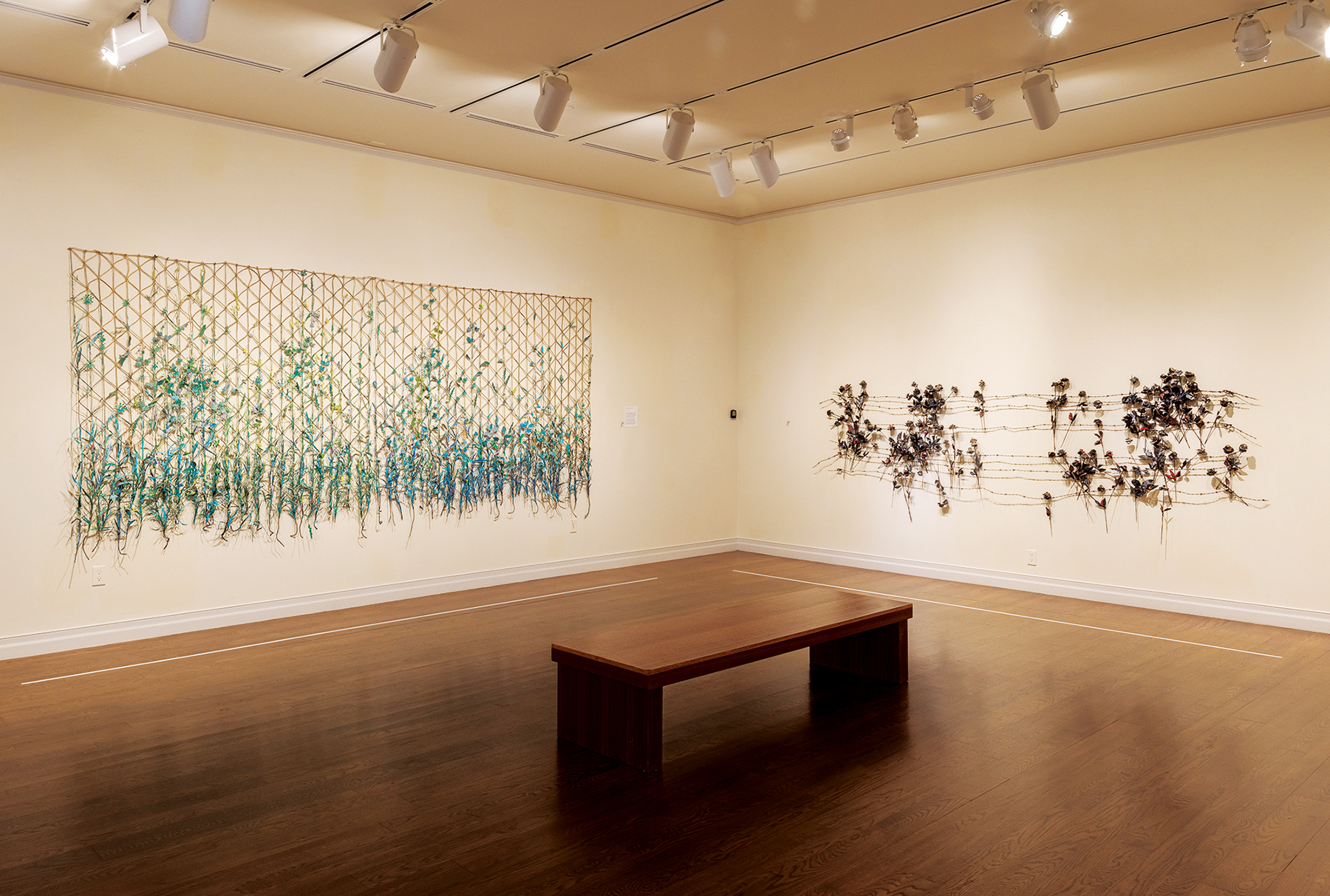
Now on view at the Honolulu Museum of Art through June 15 is work she created over the past eight years. The exhibition, Allyn Bromley: At the Edge of Forever, features mixed-media print-based works that are intricately assembled from hundreds of hand-printed paper elements (many were torn down or cut from previous prints), as well as components such as plastic boxes, wire, wood and cord. These works explore themes such as memory, loss and the environment. The show also includes a work comprised of charred pieces of wood fencing, a grim reminder of the power of natural forces as well as the hope that resilience brings.
Just as Bromley gives new life to used materials, she is also inspired to find fresh meaning in familiar subjects. “I like to see if I can take something as trite as a flower and turn it into a provocative, more universal or larger idea,” she says.
She is also a great supporter of the arts community. She recently used some of her assets to create an endowment for a visiting artist program at the Honolulu Museum of Art. In the 1970s, she attended workshops at the museum with two well-known visiting printmakers. The experience was so gratifying and impactful that she wanted to make a gift that would enable future generations of Hawai‘i artists to have similar opportunities.
Artist Allyn Bromley is an inspiration. At 96, she continues to go to her Nu‘uanu studio to create every week. An influential figure in Hawai‘i arts, she taught generations of students at Leeward Community College and at the University of Hawai‘i at Mānoa, where she was director of the printmaking department. She retired in2000 as…
Lenore from Kāne‘ohe fears that one day she must choose between caring for her mother and her job and financial security. “There will come a time when Mom needs more care and supervision and it is costly to hire help,” she told us.
Unfortunately, this is a corner that many Hawai‘i residents are backed into. That’s why AARP Hawai‘i is fighting to improve paid family leave policies in our state.
Older voters overwhelmingly support paid family leave. An AARP Hawai‘i poll found 88% of voters 50 and older support paid family leave and more than half would vote for a candidate who supported paid family leave.
The poll also found strong support for other programs to help family caregivers: 56% do not believe government is doing enough to help family caregivers; 84% support increased funding for home-and-community-based services to help families keep loved ones at home as they age; and 89% support a limited state income tax credit to offset the expenses of family caregivers.
Family caregivers are the front line of defense in keeping their older loved ones living at home — where most seniors want to be — and not in costly nursing homes.
Across Hawai‘i, unpaid family caregivers provide critical assistance to help their older parents, spouses and other loved ones live independently in their homes. Most of these caregivers also juggle full- or part-time jobs.
Paid family leave not only benefits those who take care of kūpuna, but also benefits parents caring for keiki and a growing segment of the population who care for both children and parents. Those “sandwich generation” caregivers are under enough stress without the fear of losing their job or their wages.
An estimated 154,000 family caregivers in Hawai‘i contribute more than 144 million hours of unpaid care each year, valued at approximately $2.6 billion. They help older loved ones with medications and medical care, bathing and dressing, meals, chores and much more, saving the state and taxpayers in Medicaid expenditures if loved ones were in expensive nursing homes.
Paid family leave would also benefit employers because it increases employee loyalty and retention, and saves money by avoiding the cost of separation, recruiting, hiring and training. AARP Hawai‘i and other pro-family organizations are pushing for paid family leave and other bills to help caregivers.
If you want to lend your voice to help, contact AARP Hawai‘i Advocacy Director Audrey Suga-Nakagawa at asuganakagawa@aarp.org.
AARP HAWAI‘I (nonprofit) 1001 Bishop St., #625, Honolulu, HI 96813 808-545-6000 | hiaarp@aarp.org | aarp.org/hi AARP is a non-partisan organization dedicated to empowering Americans 50 and older to choose how they live as they age.
Lenore from Kāne‘ohe fears that one day she must choose between caring for her mother and her job and financial security. “There will come a time when Mom needs more care and supervision and it is costly to hire help,” she told us. Unfortunately, this is a corner that many Hawai‘i residents are backed into.…
Social Security (SS) benefits and Supplemental Security Income (SSI) payments for more than 72.5 million Americans will increase 2.5% in 2025. On average, Social Security retirement benefits will increase by about $50 per month for single recipients, $75 for couples.
Nearly 68 million SS beneficiaries will see the 2.5% Cost of Living Adjustment (COLA) increase beginning in January 2025. Increased payments to nearly 7.5 million people receiving SSI began on Dec. 31, 2024 (some receive both SS and SSI).
Other adjustments that take effect in January of each year are based on the increase in average wages. Based on that increase, the maximum amount of earnings subject to the Social Security tax (taxable maximum) is slated to increase from $168,600 to $176,100.
“Social Security benefits and SSI payments will increase in 2025, helping tens of millions of people keep up with expenses even as inflation has started to cool,” says Social Security Commissioner Martin O’Malley.
Over the last decade, the COLA increase has averaged about 2.6%. The COLA was 3.2% in 2024 and at a record high at 8.7% in 2023, due to high inflation following the pandemic.
Annual inflation rose 3.2% in October 2024 (when the Bureau of Labor Statistics calculates the Consumer Price Index (CPI) — actually, a subset CPI called the consumer price index for urban wage earners and clerical workers (CPI-W), which measures the price changes for a particular set of goods, which is used to calculate the COLA.
Although the COLA is designed to keep payments in line with inflation, Medicare costs are not included in the CPI-W used to determine the COLA. Therefore, Medicare Part B premiums have been rising faster than COLA for years, including 2025, according to the Centers for Medicare and Medicaid Services, with premiums outpacing both the Social Security COLA and inflation. From 2005 to 2024, Part B premiums increased by an average of 5.5% per year, while COLAs averaged less than half that rate at just 2.6%.
In 2025, the monthly Part B premium for enrollees will rise by $10.30 (a 5.9% increase), while the COLA adjustment increase is only 2.5%, eroding away a part of the $50 SS increase. This conundrum continues to affect seniors who are concerned about how they’ll survive if SS continues to fail to keep up with the cost of living.
For more SSA information, call 7am–5pm, Mon–Fri: 1-800-772-1213 (toll free) | socialsecurity.gov Your COLA Notice Individuals who have a personal my Social Security account can view their COLA notice online, which is secure and faster than receiving a letter in the mail. Users can also receive text or email alerts when there is a new message waiting for them, including a COLA notice. Set up a my Social Security account at ssa.gov/myaccount.
Social Security (SS) benefits and Supplemental Security Income (SSI) payments for more than 72.5 million Americans will increase 2.5% in 2025. On average, Social Security retirement benefits will increase by about $50 per month for single recipients, $75 for couples. Nearly 68 million SS beneficiaries will see the 2.5% Cost of Living Adjustment (COLA) increase…