Category: Programs & Services

  • Caregivers Need Support, Too

    by Jerry Correa, President & CEO

    Many of these supporters dutifully provide care without complaint. Yet, demands may start to take a toll and their own health may be compromised.t’s estimated there are more than 150,000 unpaid family caregivers in Hawai‘i. These valuable helpers are typically women in their early 60s who are caring for their husbands or elderly parents while still working. And that doesn’t take into account those who may occasionally care for their grandchildren, as well.

    Professionals can provide solutions to a variety of situations. Local programs are available in Hawai‘i ensure everyone feels comfortable and confident about their caregiver role. One option is the AUW Active Aging Initiative, which strives to keep active seniors healthy and maintain strong family caregivers.

    There are also practical, hands-on caregiver training classes that covers bathing an elder, proper nutrition, wheelchair-bed transfers and more.

    Home care services also offer respite for caregivers who need a break or a helping hand, including light housekeeping, meal preparation, transportation…

    Find a local program that fits your needs.

    ST. FRANCIS HEALTHCARE SYSTEM
    PO Box 29700, Honolulu HI 96820

    808-547-6500  |  info@ stfrancishawaii.org
    www.stfrancishawaii.org
     

    Many of these supporters dutifully provide care without complaint. Yet, demands may start to take a toll and their own health may be compromised.t’s estimated there are more than 150,000 unpaid family caregivers in Hawai‘i. These valuable helpers are typically women in their early 60s who are caring for their husbands or elderly parents while…

  • Real Property Tax Credit For Homeowners

    by Fusao Nishibun, Tax Relief Supervisor, City and County of Honolulu Property Tax Office

    The City and County of Honolulu offers a real property tax credit to property owners who meet certain eligibility requirements. If you qualify, you are entitled to a tax credit equal to the amount of taxes owed for the current tax year that exceed 3 percent of the titleholders’ combined gross income.

    What are the eligibility requirements?

    • Homeowner must have a home exemption in
      effect at the time of application and for the subsequent tax year.
    • Any of the titleholders do not own any other property anywhere.
    • The combined income of all titleholders does not exceed $60,000.

    How do I apply for the tax credit program?

    Applications are available at the following locations beginning July 1, 2017, up to the deadline date of Oct. 2, 2017. And, importantly, you must file annually for this credit.

    • All Satellite City Hall locations
    • Treasury Division at 530 S. King St., Honolulu
    • Tax Relief Section at 715 S. Kings St., Honolulu
    • Online at www.honolulupropertytax.com

    When will the tax credit be applied to my real property taxes?

    If approved, the tax credit will be applied to the July 1, 2018, to June 30, 2019, tax year.

    TAX RELIEF OFFICE

    808-768-3205  |  www.honolulupropertytax.com

    *Information subject to change without notice.For more information or assistance, contact the Real Property Tax Relief Office.


    The City and County of Honolulu offers a real property tax credit to property owners who meet certain eligibility requirements. If you qualify, you are entitled to a tax credit equal to the amount of taxes owed for the current tax year that exceed 3 percent of the titleholders’ combined gross income.

  • It’s Never Too Late to Learn

    by Shayna Fujimoto, Generations Magazine Intern

    Henry Ford once said, “Anyone who stops learning is old, whether at 20 or 80; anyone who keeps learning stays young.”

    Na Kupuna is a program that provides seniors an opportunity to do just that. As a part of the University of Hawaii’s Student Equity Excellence Diversity (SEED) initiative, Na Kupuna opens up college courses to seniors age 60 and older, which they can attend for free. About 650 senior citizens take advantage of this program every semester!

    Although no credit is awarded and no records are kept, seniors can learn more about subjects of their choice, discuss topics with their professors and ask them questions. Up to two courses can be chosen per semester.

    Both “regular” students as well as other seniors attend these classes, providing a way to meet, connect and network with students of all ages who share your interests.

    Because this program is free of charge, the only requirement is an email address, which the university will use to keep in contact with you throughout the semester.

    Check online for the class availability for the upcoming Fall 2017 semester (August through December), as well as the description of courses:

    www.tinyurl.com/UHclassesFall2017
    www.tinyurl.com/UHcourseDescription

    If you are interested in enrolling, contact
    Dr. Patricia Masters for deadline information or for more details on how to sign up.

    NA KUPUNA — SENIOR CITIZEN VISITOR PROGRAM
    Queen Lili‘uokalani Center for Student Services 413

    Dr. Patricia Masters
    808-956-4642  |  nakupuna@hawaii.edu

    www.tinyurl.com/NaKupuna-SCVP

    Henry Ford once said, “Anyone who stops learning is old, whether at 20 or 80; anyone who keeps learning stays young.” Na Kupuna is a program that provides seniors an opportunity to do just that. As a part of the University of Hawaii’s Student Equity Excellence Diversity (SEED) initiative, Na Kupuna opens up college courses…

  • 11th Annual Aging In Place Workshop

    The 11th Annual Aging in Place Workshop takes place on Saturday, August 19

    8:30 am – 2:30 pm
    Ala Moana Hotel *No Reservations Required

    Click image to enlarge

    The 11th Annual Aging in Place Workshop takes place on Saturday, August 19 8:30 am – 2:30 pm Ala Moana Hotel *No Reservations Required Click image to enlarge

  • New Service Provides Free Legal Assistance

    When it comes to legal matters, there’s a whole set of terminology that may leave your head spinning. Picking apart the legalese may prove such a daunting task that we may even put off tending to important matters, which can be risky.

    With so many details to take into consideration, it’s only natural to have questions. When it comes to Medicare, social security and veterans’ benefits; resident and patient rights; or income, estate and gift taxes; consultation with a qualified attorney, particularly an elder law specialist, may be advisable or even necessary.

    The legal guidance that an attorney can provide helps ensure that you get the most out of your benefits and that your financial affairs continue to go smoothly in future years.

    However, this type of legal advice can be expensive. The cost of the answers may exceed what you can realistically cover.

    Accommodating for Free Legal Help

    In cases like these, it’s important to know that relief is in sight. The Hawaii Online Pro Bono (HOP) is a nonprofit, web-based legal service hosted by the American Bar Association. HOP is an online version of a walk-in legal advice clinic where clients request advice and counsel about a specific legal issue from a volunteer attorney. The service is available to low- to moderate- income families and can be accessed by searching for “Hawaii Online Pro Bono” via web browser.

    You must first answer a few questions that will determine whether or not you qualify: You must be an adult whose income and assets are low for your family size, you can’t already have access to a lawyer, your legal problem cannot be related to a criminal charge and you must not currently be incarcerated.

    If you qualify, you can ask your legal question confidentially through the site. A volunteer attorney will email a response directly to you.

    HOP helps to make legal advice more accessible, but before using this service, it is important to be aware of its limitations. They are laid out in detail in the online user agreement you must read before answering the first qualification question.

    The main limitation — you can ask only three separate questions within a calendar year.

    Questions involving criminal cases or charges cannot be answered through this service.

    The service is meant only to provide answers to your legal questions; the volunteer lawyers cannot call or represent you in any way.

    If further legal action is required for your situation, you will need to pursue your own attorney; however, the website includes a link that leads to contact information for other resources, including the Legal Aid Society of Hawaii, Volunteer Legal Services Hawaii and the American Bar Association’s Lawyer Referral Service for Hawaii.


    www.hawaii.freelegalanswers.org

    When it comes to legal matters, there’s a whole set of terminology that may leave your head spinning. Picking apart the legalese may prove such a daunting task that we may even put off tending to important matters, which can be risky. With so many details to take into consideration, it’s only natural to have…

  • SSA Kidney Disease Benefits

    The Social Security Administration (SSA) helps spread the word about the importance of kidney health and what you should do if you think you or a loved one has a kidney-related disability.


    Kidney disease prevents kidneys from cleansing your blood to their full potential. Did you know that one out of three Americans is currently at high risk for developing kidney disease? According to the Centers for Disease Control and Prevention, 20 million Americans have chronic kidney disease and most of them don’t even know it.

    Ebie is a prime example. Ebie was an emergency room worker with an active life at work, home and in his community. He had no idea he’d developed a kidney condition until one day he felt ill while driving to work and had to call a coworker for help.

    SSA’s “Faces and Facts of Disability” website features Ebie’s story. He says people who receive Social Security (SS) disability benefits “can provide for themselves better and have a high quality of life.” As Ebie explained, many people with kidney diseases can greatly improve their lives with SS benefits. Learn more about Ebie’s story at www.socialsecurity.gov/disabilityfacts.

    If a kidney disease, such as end-stage renal disease (known as ESRD), requires chronic dialysis and prevents you from working, the SSA may be able to help. If you’re undergoing dialysis, have had a kidney transplant, have persistent low creatinine clearance levels or have persistent high serum creatinine levels, you may qualify for disability and/or Medicare benefits. You can find more information about eligibility based on kidney disease and the benefits available to you by reading SSA’s “Disability Benefits” and “Medicare” publications at www.socialsecurity.gov/pubs.

    Listed as one of SSA’s Compassionate Allowance conditions, kidney cancer is another disease that may qualify you for disability and Medicare benefits. The program assists those with severe medical conditions that meet SSA’s disability standards, allowing quick application processing and benefit payment. You can find more information about the Compassionate Allowance program by visiting www.socialsecurity.gov/compassionateallowances.

    Drink plenty of water, go for checkups and if you think you may have a kidney disease, take action right away! As Ebie says, “quality of life is everything.”


    For questions, online applications or to make an appointment to visit a SSA
    office, call from 7am–7pm, Mon–Fri:
    1-800-772-1213 (toll free) | 1-800-325-0778 (TTY)
    www.socialsecurity.gov

    The Social Security Administration (SSA) helps spread the word about the importance of kidney health and what you should do if you think you or a loved one has a kidney-related disability. Kidney disease prevents kidneys from cleansing your blood to their full potential. Did you know that one out of three Americans is currently…

  • Staying in the Know

    In your younger years, you may have been active in community affairs. But now you don’t get out so much. Maybe your caregiving duties keep you at home more. The good news is, you can still be involved in community affairs from the comfort of your own computer.

    In the first few months of 2017 alone, much has happened in the political arena. People who avoided politics before may now be keeping an eye out for changes being made or proposed that are hit close to home. Regardless of political stance, no one wants to be caught off guard.

    Some of the legislation being debated is very relevant to senior citizen communities. One of the biggest issues is healthcare, which will affect affordability and availability of medical care.

    With the Meals on Wheels program and many other services expecting to see reduced budgets — or in jeaopady of being cut altogether — it’s important to keep apprised of what’s going on.

    Common Cause is a nonprofit grassroots organization founded in 1970 with over 700,000 members. On its website, you can find articles about recent legislation, advocacy campaigns and other areas of interest to you.

    Of course, Common Cause is only one source out of many. The important issue is staying informed. It’s the first step to ensuring the happiness and well-being of ourselves and our loved ones continues into the future.


    www.commoncause.org

    In your younger years, you may have been active in community affairs. But now you don’t get out so much. Maybe your caregiving duties keep you at home more. The good news is, you can still be involved in community affairs from the comfort of your own computer. In the first few months of 2017…

  • Resolving Conflicts Through Mediation

    The executive director at the The Mediation Center of the Pacific shared important information about the nonprofit’s Kupuna Pono program in Generations Margazine’s June/July 2016 issue.

    Every family eventually has disagreements regarding elder care and support. In short, Kupuna Pono is a program designed to help family members talk about difficult issues and develop plans to support elderly family members.

    However, the center also offers a wide range of other mediation services that may be of value to elders, and their families and caregivers.

    TYPES OF MEDIATION

    CIVIL RIGHTS MEDIATION: The center receives referrals from the Hawai‘i Civil Rights Commission (HCRC) involving various types of workplace, housing and merchant discrimination complaints. Mediation is offered by HCRC as an alternative to the traditional investigative and litigation processes.

    CONDOMINIUM MEDIATION: The center can mediate a broad range of issues arising between owners, board members, property managers, resident managers, vendors and others relating to condominium or homeowner associations.

    CUSTODY MEDIATION: The least costly, less stressful approach to reaching agreements about where children will live and how time-sharing and co-parenting will work, is through mediation.

    DIVORCE MEDIATION: At the center, impartial mediators help couples talk and negotiate agreements on all of the issues that are required to finalize their divorce.

    EMPLOYMENT MEDIATION: From co-worker disputes to disagreements between supervisors and employees, mediation offers a confidential, safe forum to discuss the issues, gain perspective and work through differences.
    LANDLORD/TENANT MEDIATION: With the assistance of a mediator, tenants and landlords can agree on payment plans, repairs and more. If the tenant is not able to keep up with the rent, mediation can help parties to agree on a move-out date, rather than going to court.

    SPECIAL EDUCATION: The Individuals with Disabilities Education Act (IDEA) encourages parents and schools to collaborate as a united support for each student. When differences arise, mediation provides parents and schools with the opportunity to work out solutions to meet the individual needs of the student.

    No matter what type is required, mediation enables and empowers the parties involved to reach an agreement that they all can live with.


    THE MEDIATION CENTER OF THE PACIFIC
    245 N. Kukui Street, Ste. 206, Honolulu HI 96817
    808-521-6767 | mcp@mediatehawaii.org
    www.mediatehawaii.org

    The executive director at the The Mediation Center of the Pacific shared important information about the nonprofit’s Kupuna Pono program in Generations Margazine’s June/July 2016 issue. Every family eventually has disagreements regarding elder care and support. In short, Kupuna Pono is a program designed to help family members talk about difficult issues and develop plans…

  • ‘An Amazing Place To Be…’

    It’s 7:30 a.m. and volunteers are already preparing for a day of fun classes, club activities and good conversation. The Lanakila Multi- Purpose Senior Center (LMPSC) is the place to be for active seniors.
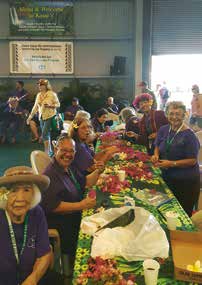
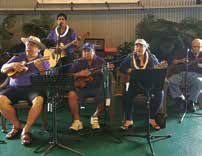
    LMPSC is filled with great energy, caring people, and active seniors, volunteers and staff.

    It is amazing to learn about and be with so many accomplished people, 60 years and older, who still contribute so much to the quality of life on our island home.

    Each day, there is wonderful history to learn, inspirational life stories to discover, hardships worth sharing that teach valuable life lessons, and people who truly care about Hawai‘i and continue to contribute to the character, charm, strength and diversity of our state.

    Center members come from an array of careers fields: teachers, principals, business owners, engineers, architects, fashion designers, administrators for public and private organizations, nurses and others in the health field, visitor industry managers and employees, military personnel, law enforcement officers, attorneys, construction workers, legislators, artists, insurance and financial service providers, homemakers, mothers, fathers, grandpas and grandmas, and just good people.

    Lanakila’s 1,500 members focus on keeping healthy and mentally alert through tai chi, Sahm Bo Dahn, yoga, Zumba, hula, taisho koto, singing, enka, mah jong, line dancing, karate, tap dancing, cultural dances, sewing, quilt making, arts and crafts, ‘ukulele, walking, gardening, community excursions, public performances, and by being with friends and talking story.

    Center members are independent. They enjoy team and group activities, too. They plan and coordinate events and activities that promote lifelong learning, and bring joy to others through community service, music, song and dance. They look out for one another.

    The Lanakila Senior Center is comfortable, friendly and caring.

    I love being part of this special place.


    LANAKILA MULTI PURPOSE SENIOR CENTER
    1640 Lanakila Ave., Honolulu HI 96817
    808-847-1322 | www.catholiccharitieshawaii.org/about/locations/lanakila-senior-center

    It’s 7:30 a.m. and volunteers are already preparing for a day of fun classes, club activities and good conversation. The Lanakila Multi- Purpose Senior Center (LMPSC) is the place to be for active seniors. LMPSC is filled with great energy, caring people, and active seniors, volunteers and staff. It is amazing to learn about and…

  • Rewarding Activities for Our Ku¯puna

    Kanikapila and good times with plenty of aloha and smiles are ever-present in KOPP’s activities and evident in the lei and entertainment shared with cruise ship guests.
    ALU LIKE Inc.’s Ke Ola Pono No Na¯ Ku¯ puna Program (KOPP) provides nutrition and support services to Native Hawaiians aged 60 and older at 12 program sites statewide plus home delivered meals to those not able to get to a site. Aging is never easy, especially when you have to go through it alone, as many of our ku¯ puna do, watching their spouses, relatives or friends pass away— mourning over these losses and never really recovering. Ku¯ puna greatly appreciate the KOPP program. Some of them identify it as one of the factors that has given them a reason to live and thrive. They come to learn about health and nutrition while creating bonds with new friends.

    One significant aspect of the KOPP program is to promote and instill Hawaiian cultural traditions. Many ku¯ puna lived through an era when the Hawaiian culture was shamed. Some cultural traditions and oral history disappeared over time. With the rejuvenation of the Hawaiian language and culture, KOPP has been able to help revive this integral part of their lives by providing cultural activities such as hula, dance and cultural expertise through talented ku¯ puna, and community practitioners who give of their time.

    During the past year, KOPP has become involved in two win-win community partnerships that have allowed ku¯ puna to share their talents and give back to the community. At the same time, these partnerships have given community groups a chance to give back to ku¯puna.

    Rayce Bento, KOPP’s Big Island manager, worked with Linda Nako, a sales representative for Castle Resorts Hilo Hawaiian Hotel, to provide ku¯puna an opportunity to share cultural activities. Hotel guests meet ku¯ puna in the hotel lobby where they learn hula, ‘ukulele, fresh flower lei making, la‘i or ti-leaf lei making, floral hair pin making, and coconut and lauhala weaving, plus many other culturally related arts and crafts that guests are able to take home.
    They get a first-hand experience of the aloha spirit as no one else can provide but our lovely and gracious ku¯puna. Our ku¯puna enjoy sharing their expertise with the guests of the resort and appreciate what the resort is able to do in giving back to them and supporting ALU LIKE. Mahalo to Linda Nako and Hilo Hawaiian Hotel!

    ALU LIKE staff Shirley Simbre- Medeiros and John Mahi worked with Nalani Brun from the County of Kaua‘i Office of Economic Development, Kaua‘i Visitors Bureau, to initiate a project for ku¯puna to greet passengers from all over the world with music, dance and lei as they disembark from cruise ships in Nawiliwili Harbor. Ku¯ puna are having a blast showing who they are and are full of the aloha spirit and Hawaiian culture. We all truly appreciate Kaua‘i County’s effort to give back to ku¯ puna!


    ALU LIKE INC.
    Let Us Work Together, Natives of Hawai‘i
    808-535-6700 | www.alulike.org

    We are honored to perpetuate our mission to ko¯kua Native
    Hawaiians who are committed to achieving their potential
    for themselves, their families and communities.

    Mahalo to ALU LIKE’s Ke Ola Pono No Na¯ Ku¯puna program
    staff for contributing to this article:

    Sarah Chandler, O‘ahu Program Specialist III
    Rayce Bento, Hawai‘i Island Program Manager I
    Shirley Simbre-Medeiros, Kaua‘i Program Specialist III
    John Mahi, Kaua‘i Program Specialist III
    Elizabeth Meahl, Director

    ALU LIKE Inc.’s Ke Ola Pono No Na¯ Ku¯ puna Program (KOPP) provides nutrition and support services to Native Hawaiians aged 60 and older at 12 program sites statewide plus home delivered meals to those not able to get to a site. Aging is never easy, especially when you have to go through it alone,…

  • Priority No. 1: The Welfare of Our Seniors

    priorityKokua Council, one of the oldest senior citizen advocacy groups in Hawai‘i, plays an important role in a complex web of community organizations. Kokua’s main focus is on the informational, advocacy and educational needs of seniors.

    Kokua complements and supplements the agendas and actions of national and local agencies, and coalitions such as AARP, HGEA retirees, Kupuna Caucus, the Caregivers Coalition and the Center on Aging, just to name a few. Kokua’s niche and strengths are the experience and wisdom of a board of directors who individually and collectively have been engaged and respected voices for seniors for some 40 years. Among our leaders and advisors are long-time advocates such as Laura Manis, Sam Cox, Tony Lenzer, Larry Geller, Marilyn Seely, T.J. Davies, Barbara Service and Lyn Moku.

    The Kokua Council are government watchdogs, taking care that the laws are well-written and most importantly, enforced in ways that serve their intended purpose and benefit. Kokua believes that no government, no matter how well intended, can see the whole picture, or can fully understand the impacts of its actions or inactions.

    Kokua also believes in stimulating, facilitating and sponsoring an ongoing public dialogue regarding issues of importance.

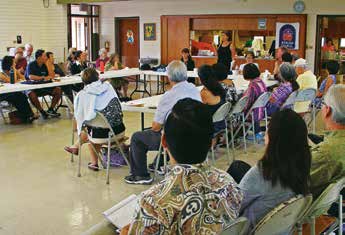
    For many years, Kokua Council has sponsored monthly public meetings, where movers, shakers, experts and leaders come to explain, discuss and make cases for policy positions. When there is a new state or city administration, Kokua invites new administrators to address its members.

    Recently, Kokua established a Windward Chapter, where retirees on Windward O‘ahu can engage seniors and, their elected representatives in informational and educational meetings.

    In the last several years, Kokua Council has sponsored debates among mayoral and congressional candidates. Its annual Community Priority Setting Forum draws participation from a wide range of community organizations, each sharing their agendas and seeing collaborative support.

    Over 50 individuals, including members of the Legislature, joined the council’s 2016 forum.

    Of particular interest and concern are the most vulnerable among us: the physically, financially, emotionally, mentally and politically frail. As Hawai‘i’s aging population grows and its needs intensify, Kokua Council recognizes that many cannot effectively express or advocate for their personal and family needs. Too often, government hearings are held in places and at times that are challenging for seniors. Federal and state health and human services systems are layered with complex and often befuddling eligibility rules and barriers. Services are not always available at times and in areas where there is need.

    This year, Kokua Council filed suit against the state Department of Health over its failure to follow the law and post timely and complete inspection reports.

    Seniors and their family members are encouraged to attend Kokua Council’s monthly meetings (fourth Monday of each month), become members and even serve on its board of directors.


    c/o Harris United Methodist Church
    20 South Vineyard Blvd., Honolulu HI 96813
    Larry Geller, Kokua Council President | 808-540-1928
    Meetings are held on the fourth Monday of each month.
    At each meeting, topical issues are presented for discussion
    and possible action. View the details online at
    www.kokuacouncil.blogspot.com/

    Kokua Council, one of the oldest senior citizen advocacy groups in Hawai‘i, plays an important role in a complex web of community organizations. Kokua’s main focus is on the informational, advocacy and educational needs of seniors. Kokua complements and supplements the agendas and actions of national and local agencies, and coalitions such as AARP, HGEA…

  • Meals at the Kupuna Wellness Centers

    The Kupuna Wellness Centers provide free lifestyle and wellness programs for older adults (60 years and over) operated by Lanakila Meals on Wheels. The centers provide a wide range of activities to support the physical fitness, cognition and emotional well-being of its participants. Activities include fitness classes, nutritional education, crafts, guest speakers and outings. The centers also provide a daily, nutritionally balanced meal. The goal is to create thriving communities where older adults can make friends and engage in stimulating activities that enrich their lives. Five Kupuna Wellness Centers throughout O‘ahu serve the community.
     

    Kupuna Wellness Center Locations Phone Number Hours of Operation Address
    SNI Jisso Center 808-352-0286 Mon.– Fri.
    8:30 am – 12:30 pm
    47-451 Hui Aeko Place
    Kaneohe HI 96744
    Pohulani Elderly Apartments 808-352-0294 Mon.– Fri.
    9 am – 1 pm
    626 Coral St.
    Honolulu HI 96813
    West Loch Elderly Village 808-220-9941 Mon.– Fri.
    8:30 am – 12:30 pm
    91-1472 Renton Road
    Ewa Beach HI 96706
    Waianae District Park 808-220-6681 Mon.– Fri.
    9 am – 1 pm
    85-601 Farrington Hwy.
    Waianae HI 96792
    Waianae District Park 808-227-9623 Mon.– Fri.
    8 am – noon
    1139A Kilani Ave.
    Wahiawa HI 96786

    Lanakila Meals on Wheels also provides free meals for older adults (60 years and over) at partner service provider locations*. Older adults can enjoy a free, nutritionally balanced meal, as well as other activities provided by partner services at six group sites on O‘ahu.


    Partner Service Provider Locations Phone Number Hours of Operation Address
    Kokua Kalihi Valley*
    Kuhio Park Terrace
    808-791-9466 Call to verify or check
    www.kkv.net
    1545 Linapuni St.
    Honolulu HI 96819
    Kokua Kalihi Valley* 808-791-9465 Call to verify or check
    www.kkv.net
    1846 Gulick Ave.
    Honolulu HI 96819
    Catholic Charities*
    Lanakila Multi Purpose Senior Ctr.
    808-847-1322 Call to verify or check
    www.catholiccharities.org
    1640 Lanakila Ave.,
    Honolulu HI 96817
    Moili‘ili Community Center* 808-955-1555 Call to verify or check
    www.moiliilicc.org
    2535 S. King St.
    Honolulu HI 96826
    Unity House*
    Pauahi Recreation Center
    808-360-5886 Call to verify or check
    www.unityhousehawaii.org
    171 N. Pauahi St.
    Honolulu HI 96817
    Waimanalo District Park*
    Waimanalo Senior Club
    808-348-4262 Call to verify 41-415 Hihimanu St.
    Waimanalo HI 96795


    For more info on Lanakila Meals on Wheels, call 808-356-8519 or email cr@lanakilapacific.org.

    The Kupuna Wellness Centers provide free lifestyle and wellness programs for older adults (60 years and over) operated by Lanakila Meals on Wheels. The centers provide a wide range of activities to support the physical fitness, cognition and emotional well-being of its participants. Activities include fitness classes, nutritional education, crafts, guest speakers and outings. The…