Category: Articles

  • Repetitive Questioning in Alzheimer’s

    In home care, a question I often get asked is how to care for someone with Alzheimer’s who asks the same questions over and over again. To better understand and manage what’s going on, it helps to first know a bit about Alzheimer’s disease and dementia.

    Alzheimer’s is a type of dementia that affects memory, thinking and behavior. It’s a progressive disease, where brain cells deteriorate and eventually a person can’t make sense of the world. When short-term memory is affected, it can lead to repetitive behaviors, like talking or asking about the same things over and over. In essence, your loved one can’t recall having already asked a question because of their memory loss. People with Alzheimer’s may be unsure of what’s around them, where they are or the passage of time, and may not recognize anyone. Altogether, it’s very unsettling and a source of discomfort for them. Understanding how they feel, or describing their own feelings and needs, can also be lost in a person with Alzheimer’s disease.
    Affected by these conditions, your loved one isn’t trying to be annoying or repeating questions because they need information. They’re really asking questions because they feel lost, stressed and anxious, and need reassurance. As a caregiver, answering these questions can be difficult and wear out your ability to care for a loved one. To help, caregivers should be prepared with some basic knowledge and awareness of how to respond:

    ♥ Keep it simple. Use short and simple responses. Reassure with a calm voice and gentle touch. Avoid complex explanations with multiple ideas when asked a question.

    ♥ Physical. See if there is discomfort, pain or something physical at the root of the cause. For example, infections or side effects from medications can also cause changes in behavior and awareness in older adults.

    ♥ Be aware of feelings. Know what triggers unpleasant feelings. For example, a lost sense of time can bring on anxious feelings. Try safe, repetitive and soothing activities like sorting or folding familiar items, or dusting and wiping to keep hands and minds calmly occupied. Walks, listening to music and looking at familiar photos or books can be pleasant diversions.

    ♥ Change the subject. Sometimes changing the subject can shift one’s attention enough to have a calming effect. Asking a simple question can also shift a person’s focus in the same way.

    ♥ Abilities. Check if you’re asking your loved one to do more than they’re able to. Accept your loved one as they are in the moment and that they are doing the best they can.

    Above all, take a deep breath, give your loved one a reassuring hug, and try to see behind the behavior and words repeated. It’s also vital to keep up your own health, and have a support system, including the local Alzheimer’s Association chapter, family, friends and faith groups. Addressing repetitive questioning in Alzheimer’s and dementia can be a trying experience. But with knowledge and awareness, these moments shared with your loved one can be the most precious of gifts.


    ATTENTION PLUS CARE HOME HEALTHCARE
    Accredited by The Joint Commission
    1580 Makaloa St., Ste. 1060, Honolulu, HI 96814
    808-739-2811 | www.attentionplus.com
    AGING IN HAWAII EDUCATIONAL OUTREACH PROGRAM by Attention Plus Care — a program providing resources for seniors and their families, covering different aging topics each month. For class information and upcoming topics, call 808-440-9356.

    In home care, a question I often get asked is how to care for someone with Alzheimer’s who asks the same questions over and over again. To better understand and manage what’s going on, it helps to first know a bit about Alzheimer’s disease and dementia. Alzheimer’s is a type of dementia that affects memory,…

  • Protect Yourself With a Flu Vaccination

    Due to the weakening of the immune system, people 65 years and older are at high risk of getting seriously ill from the flu.

    During most flu seasons, adults 65 years and older experience the greatest burden of severe flu and complications. Between about 70 and 85 percent of flu-related deaths in the United States occur among people 65 years and older. And people 65 and older account for between about 50 and 70 percent of the flu-related hospitalizations.

    Vaccination is highly effective in preventing flu and its potential complications.

    Flu vaccination has been shown to reduce flu illness and serious complications that can result in hospitalizations or even death in older people. A 2017 study showed that flu vaccination reduced deaths, intensive care unit admissions and overall duration of hospitalization for patients 65 years and older.

    Take control of your health. Get a flu shot this winter. For more information about the flu or the vaccine, contact your primary care physician.


    MDX HAWAI‘I
    500 Ala Moana Blvd., Ste. 2200, Honolulu, HI 96813-4993
    808-522-7500 | www.mdxhawaii.com
    Office hours: Mon.– Fri., 8am–5pm Headquartered in Honolulu, MDX Hawai‘i has over 34 years of experience serving the people of Hawai‘i. Our physician network represents over 630 primary care physicians, and more than 2,200 specialists, hospitals, and ancillary providers statewide. MDX Hawai‘i contracts with Humana HMO, Humana PPO, and AARP/ UnitedHealthcare PPO Medicare Advantage Plans on O‘ahu, Maui, and Kauai.

    Due to the weakening of the immune system, people 65 years and older are at high risk of getting seriously ill from the flu. During most flu seasons, adults 65 years and older experience the greatest burden of severe flu and complications. Between about 70 and 85 percent of flu-related deaths in the United States…

  • Healthy Aging & Hearing Loss

    As we age, our hearing often loses its edge. Clinical research suggests that hearing loss can have a negative effect on some key measures of healthy aging as cognitive, physical and social functioning decline. A study by the National Institute on Aging indicates that people with untreated hearing loss are significantly more at risk of developing Alzheimer’s and dementia.

    Hearing loss gradually sneaks up on us. Over time, we adjust and adapt, but even a mild hearing loss can be a source of misunderstanding and failed communication, leading to stress, fatigue and self-imposed isolation.

    Modern hearing devices are virtually invisible, comfortable and easy to use. As a result, those with hearing loss are no longer prevented from enjoying the activities that make life more enjoyable, like dining out with friends at their favorite restaurant or being present with family.

    The first step in correcting a hearing problem is to have the amount and type of loss measured by a hearing specialist. A professionally fitted hearing aid may be the key to enjoying a better tomorrow!


    OHANA HEARING CARE
    1296 S Beretania St., #102, Honolulu, HI 96814
    808-593-2137 | www.ohanahearingcare.com

    As we age, our hearing often loses its edge. Clinical research suggests that hearing loss can have a negative effect on some key measures of healthy aging as cognitive, physical and social functioning decline. A study by the National Institute on Aging indicates that people with untreated hearing loss are significantly more at risk of…

  • Engage Your Abs for a Strong Core

    Whether your goal is to reduce low back pain or slim your waist, adding exercises to your workout that engage your core can make a significant difference.

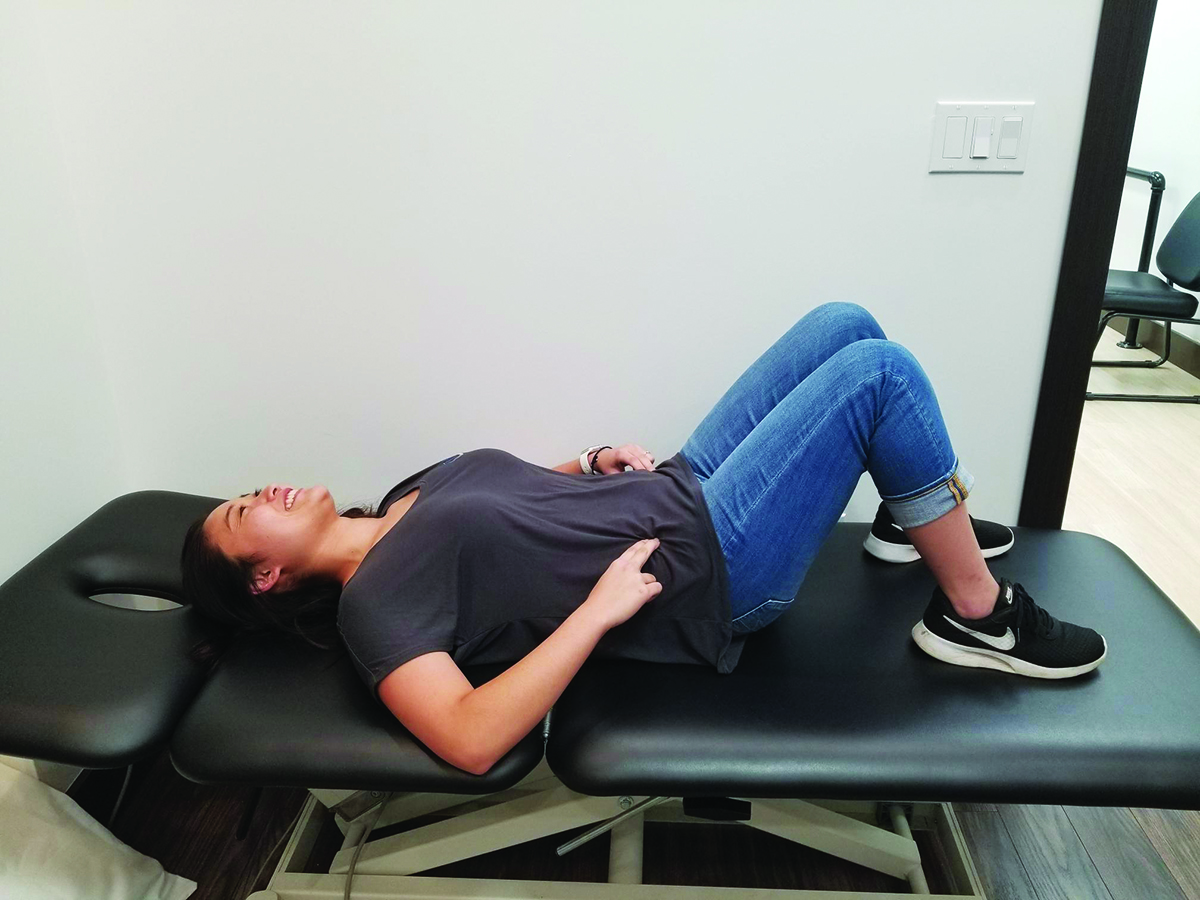
    The most important, yet often overlooked muscle that must be strengthened, is the transverse abdominis (TA) which is the deep, inner abdominal muscle that begins at the spine and wraps around your waist. This incredible muscle acts as a corset or internal brace stabilizing the spine and pelvis. It can reduce low back pain, prevent future back injuries and best of all, flatten your stomach.

    To find and activate your TA, lie on your back, maintaining the natural curve of your spine with knees bent. Place two fingers at the bony areas of your pelvis, then slide the fingers in about an inch and down about an inch. A little cough will engage the TA and you should feel it tighten under your fingers. Take a deep breath in and exhale slowly as you gently tighten the muscle under the belly button without moving the shoulders or hips, or rounding your back. Imagine pulling your zipper up to your belly button as you tighten the muscle. Practice while sitting, standing or lifting.

    Learning how to draw in your TA takes some practice, but once you master it, you will see the results — a stronger core, improved posture and a much tighter tummy.


    MOON PHYSICAL THERAPY, LLC
    320 Ward Ave., Ste. 107, Honolulu, HI 96814
    95-1057 Ainamakua Dr., F-11, Mililani HI 96789
    808-597-1005 | www.moonpt.com

    Whether your goal is to reduce low back pain or slim your waist, adding exercises to your workout that engage your core can make a significant difference. The most important, yet often overlooked muscle that must be strengthened, is the transverse abdominis (TA) which is the deep, inner abdominal muscle that begins at the spine…

  • The Art of Falling

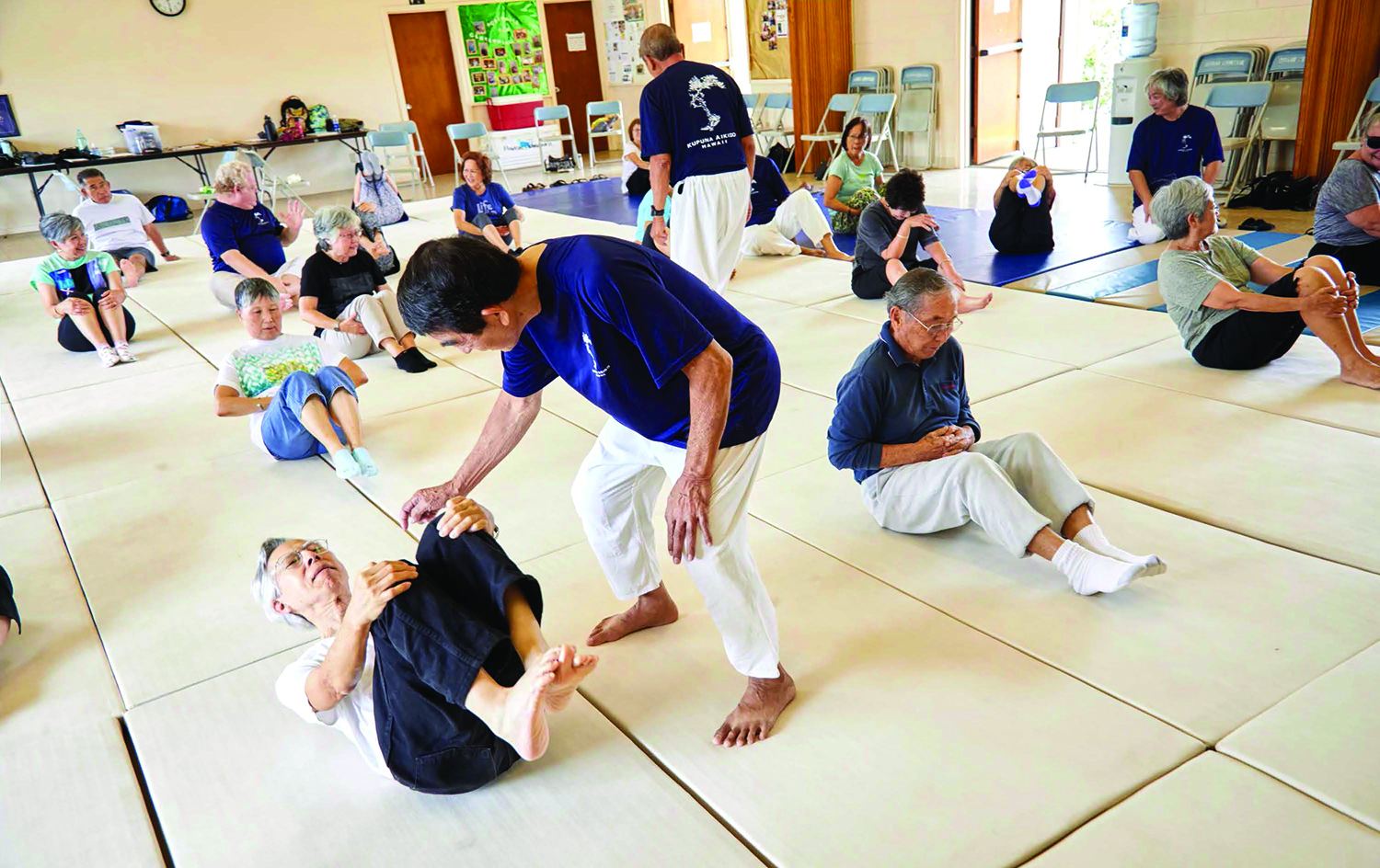
    Falling can become a major threat to our quality of life. According to Hawai‘i’s Department of Health, it is the No. 1 cause of fatal injuries in seniors. The DOH reports that one in three people over 65 will fall this year. While there are a number of precautions you can take, you can also protect yourself by learning how to fall safely.

    What does falling safely mean? It means falling in a way that helps to protect your head and body from injury. Learning how to fall is one of the skills being taught at the nonprofit Kupuna Aikido Hawaii. Its mission is “to empower Hawai‘i’s kūpuna with aikido-based philosophies to preserve and protect their mobile independence.” The techniques are based on the Japanese martial art aikido, which often translates to “the way of the harmonious spirit.” This marital art is a method of defending yourself while displacing the energy of your attacker so no one gets injured.

    The Safe Falling classes consist of two eight-week sessions — the Foundation Course and the Continuation Course.

    The Foundation Course teaches safe falling techniques and an introduction to low-impact aikido. Attendees will also learn about the importance of stretching, different breathing techniques and understanding balance.

    The Continuation Course is more advanced and includes an introduction to defense techniques, such as escaping the grasp of an attacker.

    Each course is $25 for those 65 years and older. The courses are held a few times a year at the Higashi Hongwanji Mission in the Liliha neighborhood of Honolulu and at Mililani District Park.

    Kupuna Aikido Hawai‘i recommends using the ABC prevention method:

    A for awareness. Look where you are going, walk heel to toe, and lift your feet and legs as you walk. Always pay attention and do not be distracted by smartphones or conversation as you are walking.

    B for balance. Exercise regularly to develop strength and flexibility. Tai chi and yoga are other good activities that can help build muscle and brain connection.

    C for control. Take the safest path — even if it’s longer. Use handrails. Install handrails and add grab bars in your bathroom.

    Contact Kupuna Aikido Hawaii for class registration information and schedules.


    KUPUNA AIKIDO (501(c) 3 nonprofit)
    Two locations:
    ♦ Higashi Hongwanji 1685 Alaneo St., Honolulu, HI 96817
    ♦ Mililani District Park 94-1150 Lanikuhana Ave., Mililani, HI 96789
    www.kupunaaikido.org/contact

    Falling can become a major threat to our quality of life. According to Hawai‘i’s Department of Health, it is the No. 1 cause of fatal injuries in seniors. The DOH reports that one in three people over 65 will fall this year. While there are a number of precautions you can take, you can also…

  • Understanding Whole-Body Donation

    Choosing end-of-life arrangements can be one of those tough decisions as a senior. However, these are very important decisions to make. With so many options available, how can anyone decide what the most cost-effective and responsible way to proceed would be? According to the National Funeral Directors Association, the trend of having an expensive burial is on the decline (down 16 percent since 2005). Cremation rates, however, are on the rise nationally (55 percent) and locally (75 percent). In recent years, a new option has become available — whole-body donation in which you donate your body to science.

    You may have heard someone say they want to donate their body to science after they pass. Many people are interested for a variety of reasons, including philanthropic, wanting to give back, covering the cost of cremation or aiding in education, research and the development of new medical interventions.

    According to Associated Press reports, whole-body donation is becoming a more popular option. However, in Hawai‘i, information about the process and its benefits are not well understood. For example, did you know that the decision to donate your body to science can be made in advance or can be made by a family member after one’s passing? And, you can pledge to be both an organ donor and a whole-body donor.

    The decision to donate your body to science is an extremely important one and it is an opportunity to make a difference in your community.

    One benefit of whole-body donation is that the cost of cremation is covered, but the benefits go far beyond just cost savings.Whole-body donor tissues are used by universities, orthopedic device developers, researchers and hospitals all over the world in order to aid in the advancement of medicine and treatment. Surgeons use donated tissue in order to learn new surgical techniques, for example. A single donor has the potential to help thousands of people all over the world.

    Whole-body donation organizations are a fairly new development. Until recently, there were no alternate options in Hawai‘i until now, through Ke Ola ‘Uhane (pledges can be made on its website).

    This is an important and needed service for residents of Hawai‘i, since it will directly benefit research and medical education in the state.

    What is the impact of my donation?

    Beyond education and research, there are also significant benefits for medical innovation. For example, Zion Harvey is the first child in the world to receive a double hand transplant. At age 2, Zion’s hands and feet were surgically amputated due to an infection. Due in part to whole-body donor organizations, Zion was able to undergo a life-changing 10-hour surgery at just 8 years old. One year later, he is able to write his name and grip a baseball bat.


    KE OLA ‘UHANE (501(c) 3 nonprofit)
    905 Kalanianaole Hwy., #4504, Kailua, HI 96734
    808-391-6041 | F: 808-261-0245
    www.keolauhane.org

    Choosing end-of-life arrangements can be one of those tough decisions as a senior. However, these are very important decisions to make. With so many options available, how can anyone decide what the most cost-effective and responsible way to proceed would be? According to the National Funeral Directors Association, the trend of having an expensive burial…

  • Life in a Retirement Community

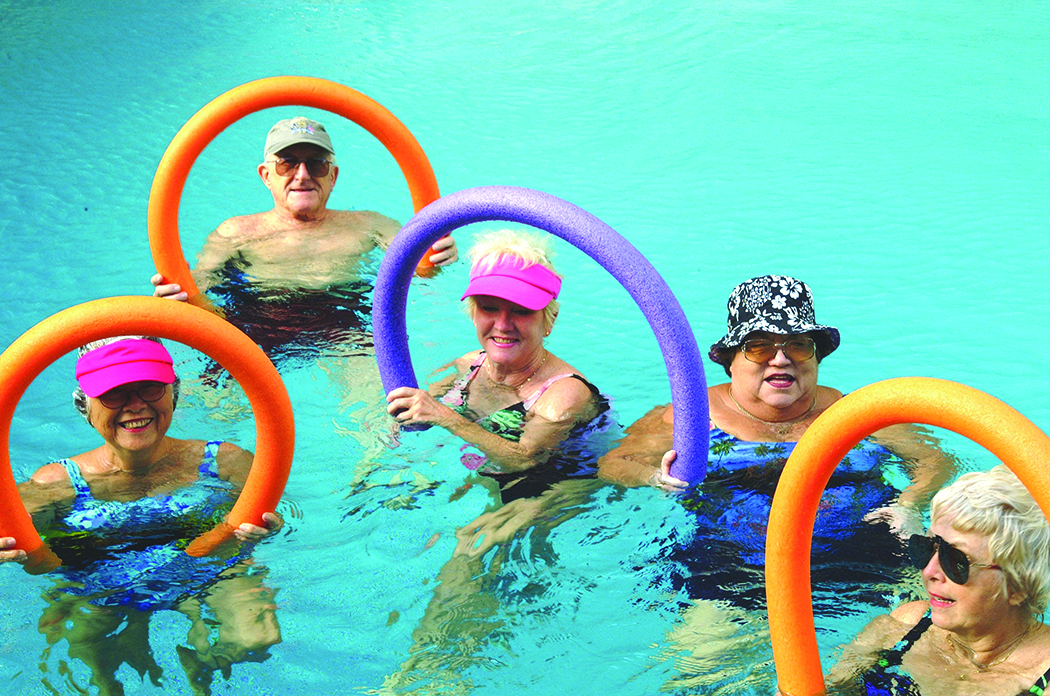
    Retirement communities are a lot like cruise ships. There’s a lot of excitement and options to choose from, including delicious cuisine, opportunities to relax, read and watch movies. There’s also time to talk story with neighbors and participate in activities such as hula and art classes, tai chi, water aerobics and more.

    You’ve worked hard all your life. Now it’s your time to be pampered and not worry about cooking, cleaning, yard and house work, grocery shopping or finding parking at the doctor’s office. Don’t let life pass you by. Don’t wait until you can’t enjoy the fun and excitement that retirement living can offer. At a retirement community, you will never even have to worry about what you’re going to do on any given day!

    Aging is a natural process that no one wants to face alone. Many seniors battle silent depression, a lack of healthy meals and rapid decline of health. Start your search now for a retirement community that will support your needs. Don’t wait too long and end up saying “I should of but I didn’t!”

    Many retirement communities have a full continuum of care options that allow residents to stay within one campus as they age. And as a resident in a retirement community, you become part of the ‘ohana. Explore your options now and see how your quality of life can be enhanced by living in a retirement community.


    GOOD SAMARITAN SOCIETY – POHAI NANI
    45-090 Namoku St., Kaneohe, HI 96744
    808-247-6211 | www.good-sam.com/locations/pohai-nani

    Retirement communities are a lot like cruise ships. There’s a lot of excitement and options to choose from, including delicious cuisine, opportunities to relax, read and watch movies. There’s also time to talk story with neighbors and participate in activities such as hula and art classes, tai chi, water aerobics and more. You’ve worked hard…

  • Friendship Through Flowers

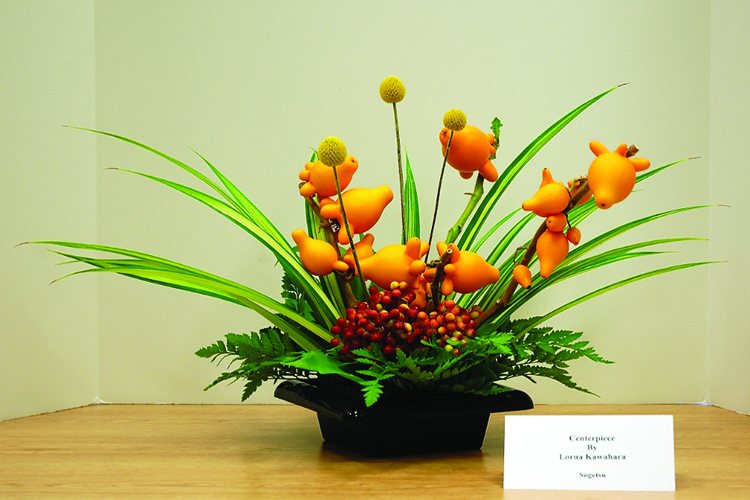
    Sogetsu centerpiece

    Ikebana, the Japanese art of flower arranging, is also known as kadō — the way of the flowers. Based on an ancient Buddhist ritual of using flowers to honor the spirits of the dead, kadō is one of the three Japanese arts of refinement.

    More than 600 years later, this ancient art form is celebrated by more than 8,500 people in more than 60 countries through Ikebana International. Started in 1956 by Ellen Gordon Allen, a U.S. general’s wife who was stationed in Japan, this international organization was founded to unite people and create a worldwide “Friendship of Flowers.”

    Make & Take

    Hawai‘i’s chapter began in 1961, when a friend of Ellen’s, Pearl Jensen, met local arrangers from Enshu, Ikenobo, Koryu, Ohara and Sogetsu schools while attending an exhibit at the Shirokiya Department Store. Since then, the Honolulu Chapter, known as Hawai‘i’s Ikebana International Honolulu Chapter 56, has been promoting cultural understanding and appreciation of this craft through exhibitions, demonstrations, workshops and community service projects.

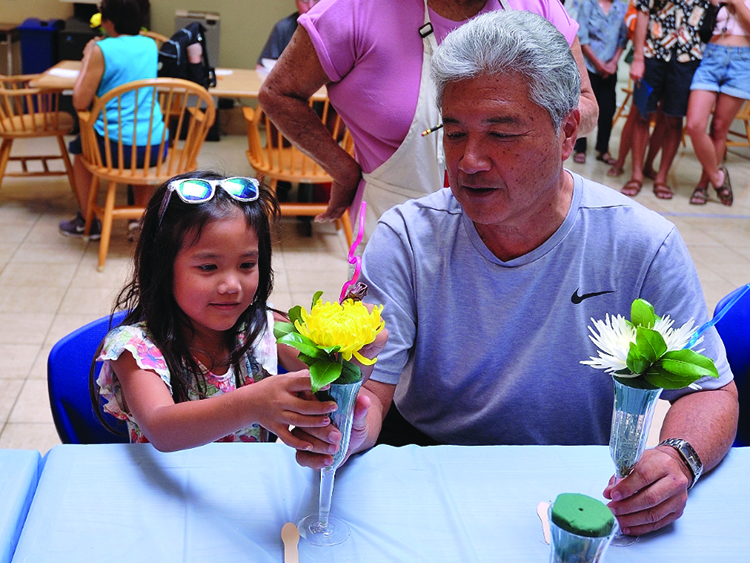
    The biggest exhibit is the Splendors of Ikebana held every summer in Honolulu. This year’s event brought thousands of people to the Hawai‘i State Library, with some even trying their hand at ikebana in the make-and-take workshop. While the elegant and restrained creations may seem simple, they are anything but. This delicate art form can take decades to master.

    Look for other ikebana workshops and classes throughout the year at the Mo‘ili‘ili Community Center, the University of Hawai‘i at Mānoa, Honolulu Museum of Art, Honolulu Hale, and various other schools and nonprofits.


    IKEBANA INTERNATIONAL – CHAPTER 56 (501(c) 3 nonprofit)
    P.O. Box 61306, Honolulu, HI 96839-1306
    information@ikebana-hawaii.org
    www.ikebana-hawaii.org
    Facebook: @ikebanainternationalhonolulu

    Ikebana, the Japanese art of flower arranging, is also known as kadō — the way of the flowers. Based on an ancient Buddhist ritual of using flowers to honor the spirits of the dead, kadō is one of the three Japanese arts of refinement.

  • Enjoy Life More With a Furry Best Friend

    It’s always comforting to have a best friend to share in the journey of life every step of the way. For seniors, while the idea of caring for a furry friend can seem overwhelming, the benefits are highly rewarding; pets can provide a whole new experience of joy and purpose. Here are just five of the many benefits you can look forward to with a pet in your life:

    Companionship

    Navigating new adventures in senior life can feel lonely. What better solution than to have the unconditional love from a pet to support you through it! You may even prefer the company of your pet over people!

    Routine

    Caring for a pet can give new meaning to the same old routine. Caring for a pet requires responsibility that benefits you by creating and maintaining a solid routine. Never fear, Fido won’t let you forget breakfast, lunch or dinner (and a few fun snacks in between). What better way to organize and find purpose in each day than by spending time with your pet?

    Exercise

    Just like humans, all pets need exercise to stay healthy and happy. Caring for a pet can provide great motivation to get up and move around, whether taking your pet for a stroll or simply walking around your house with them. The more active time you can spend with your pet, the better you will both feel.

    Socialization

    Just like humans, pets need pet friends, too. Spending time with your pet, whether going for a walk around your neighborhood or even shopping for groceries, will give you both the chance to meet others and strike up fun interactions. You can even find local opportunities to go on group walks with your pets, giving you and your pal the chance to make more friends and enjoy all of life’s precious moments.

    Stress, Worry and Pain Reliever

    When the stresses of everyday life reach an overwhelming level, having a pet you love can make all the difference. Scientific studies have shown that caring for a pet can lower one’s blood pressure, reduce stress and tension, and even help to alleviate chronic pain.

    As seniors navigate new changes in their lives, deciding to bring a pet companion along for the journey can bring many benefits and happiness.

    Not ready to commit to a pet, but want to try it out? Think about foster parenting.

    The Hawaiian Humane Society’s Foster Care program is always looking for good foster parents to temporarily shelter animals in need. Go to www.hawaiianhumane.org/fostercare to find out more about the program.


    KALĀKAUA GARDENS
    1723 Kalakaua Ave., Honolulu, HI 96826
    808-518-2273 | www.kalakauagardens.com

    It’s always comforting to have a best friend to share in the journey of life every step of the way. For seniors, while the idea of caring for a furry friend can seem overwhelming, the benefits are highly rewarding; pets can provide a whole new experience of joy and purpose.

  • Beyond the World of Full-Time Jobs

    Over 30 percent of the people who work don’t have full-time jobs. In a few years, that will increase to almost 50 percent.

    Working even one day a week will provide psycho-social advantages to an engaged senior.

    There are plenty of options. Here are just a few:

    Pet sitting. Learn more at www.Rover.com. This is a fast-growing business as residents travel and vacation on the mainland and elsewhere.

    Caretaking and caregiving of the old, the young and the challenged. Learn more at www.wilsoncare.com and by doing further research.

    Tourism and hospitality. There are options that do not require standing for eight hours a day. Some of these options may even include working from home; for example, proposal writing to prospective buyers and/or website maintenance.

    Grant writers. Grant writing is an in-demand skill and talent and a viable option if you are already a capable writer. Look for free, easy classes at a community college.

    Board members and paid/unpaid mentors. Membership and mentoring are sometimes seen as voluntary missions. But often, there are gratuities offered. Go to www.mentoring.com.

    Health and life coaches. These skill- and knowledge-based options are in high demand for struggling youth and older populations. The rewards may often be financial, but always meaningful. For ideas, go to www.flexjobs.com.

    Adjuncts and subject matter experts. More than half of U.S. university/college faculty are adjuncts. They are compensated and doing something that matters. Subject matter experts are adjuncts in the private, nonprofit and public sectors who offer unique value.

    Interim professionals. Organizations now engage interim professionals as an integral part of their staffing management plans as a key to maintaining a flexible and nimble workforce.

    Stipend workers are paid a flat sum for work done on behalf of an organization in any sector. There are strict rules governing stipend pay but they are worth exploring. Explore your options.


    NEW WORKFORCE HAWAII
    Carleen MacKay 916-316-0143 | carleenmackayhi@gmail.com
    www.newworkforcehawaii.com
    Contact Carleen via her website and receive New Ways to Work, a free PDF book co-written with Phyllis Horner.

    Over 30 percent of the people who work don’t have full-time jobs. In a few years, that will increase to almost 50 percent. Working even one day a week will provide psycho-social advantages to an engaged senior. There are plenty of options.

  • The Journey Continues

    Yes, the journey of life continues even after we retire!

    How long our journey on Earth will be is one of the unknowns we must live with. In my earlier article, entitled, “I’ve Never Been Old Before,” I wrote about how lost I was when I retired from my career in the federal government. It took me quite a while to find purpose and meaning during the empty days that kept coming at me. Thankfully, I realized how rewarding it is to give back in whatever way you can.

    For the past 11 years, our church has offered a men’s class called “The Journey Continues.” We have witnessed how helpful it’s been for many working and retired men who attend this class.

    The men of The Journey Continues. Steven Kawamura (R, top row) says he has been blessed to be a part of this great, supportive group of men.
    The men of The Journey Continues. Steven Kawamura (R, top row) says he has been blessed to be a part of this great, supportive group of men.

    While studying the Bible is what brings us all together each Sunday morning, we value building relationships and seek to encourage one another in whatever ways we can. It is not easy in today’s world to find balance in one’s life and sometimes just getting through a week can seem almost impossible. That’s been the value of having a weekly class where you can come and be refreshed and completely renewed.

    My life experiences have shown me that many men are living very lonely lives. Unless they are able to address this early, they risk coming to the finish line without anyone cheering for them.

    If you see yourself in this article, it’s not too late to bounce back. Just look around you to see if there is anything you can try right away. You’ll be amazed at how many doors will begin to open to you if you do this. That’s been my experience.

    Another surprisingly easy thing to do is just ask people you interact with on a regular basis. You’ll be amazed at how helpful their responses will be. Then just go for it.

    Some Thoughts to Think On

    “If you aim for nothing, you will probably hit it.” So why not try aiming for something and see what happens.

    “My whole life has been preparation for now.” So make the most of what’s ahead by using what you’ve gained so far.

    A final thought: “Not all who wander are lost”

    If you feel like you are wandering aimlessly, remember that it is not too late — there is still time to avoid becoming “lost.”

    Yes, the journey of life continues even after we retire! How long our journey on Earth will be is one of the unknowns we must live with. In my earlier article, entitled, “I’ve Never Been Old Before,” I wrote about how lost I was when I retired from my career in the federal government. It…

  • Tips for Traveling With the Grandkids

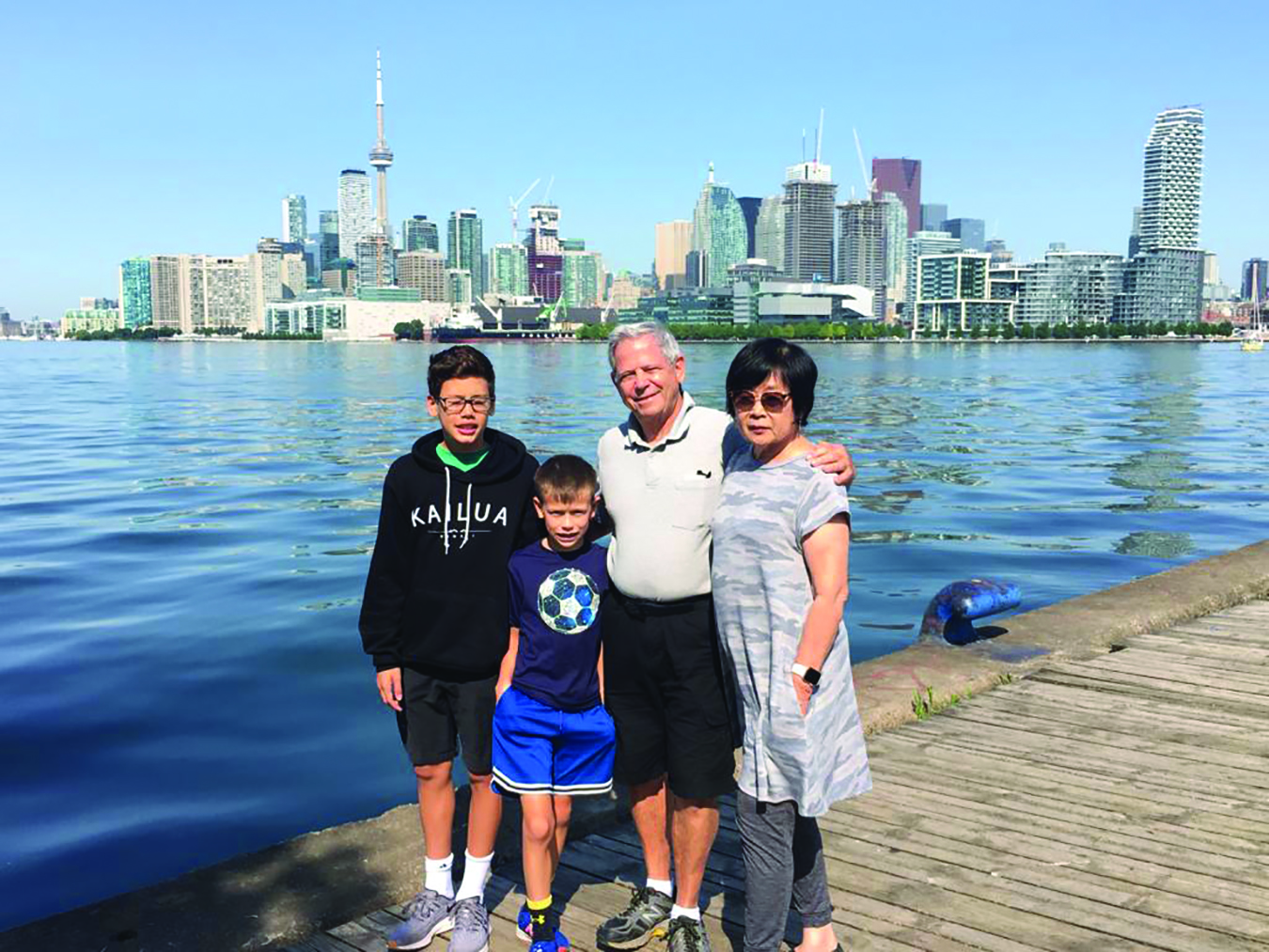
    Mae and Gil Mendelson invited their grandchildren to join them on vacation, continuing a family tradition started by Mae’s grandparents.
    Mae and Gil Mendelson invited their grandchildren to join them on vacation, continuing a family tradition started by Mae’s grandparents.

    The grandsons, ages 11 and 13, were in agreement: no museum visits on our week-long trip to Toronto and Niagara Falls. Sad words for a grandmother who spends her days as a docent. However, sharing the itinerary with the grandkids before we go is one of the lessons my husband and I learned. After expressing their concerns about being bored, they agreed to visit one natural history museum with us.

    We started taking our grandkids on trips without their parents to create shared memories and to get to know each other in a more personal way. It is somewhat of a tradition in our family. My mother took our children to Japan without us. These trips remain cherished memories. In a way, we are continuing her legacy.

    For the Toronto trip with our grandsons, we designed a shared agenda that included something for everyone — we saw a baseball game and went to an amusement park.

    Traveling also means eating out. Even though I am just as addicted to my devices as my grandsons are, we created one rule for all of us: When we go out for dinner, the electronics stay home.

    Taking our granddaughters to London taught us a different lesson: the value of being flexible. As planned, the girls visited the National Gallery, sketched in Trafalgar Square and went on a scavenger hunt. Our itinerary changed abruptly when the girls discovered that an online video festival was in town. So we skipped our planned trip to St. Paul’s Cathedral and joined a YouTube event in which thousands of young people were queuing for a meet-and-greet with their favorite YouTube celebrities. We had suddenly crossed a generational divide. It was awesome. Letting them lead the way was an extraordinary experience and taught us so much.

    If you are thinking about traveling with your grandkids, it helps to purchase tickets online for your daily activities. And you always want to be prepared. The benefits can include quick entry, access to special exhibits, and discounts to gift shops and cafes. Bringing their passports, medical cards and written parental permission gives you the right to make decisions on their behalf.

    Traveling with your grandkids can be a rewarding experience. Trust your judgement and theirs, and have fun making memories together

    We started taking our grandkids on trips without their parents to create shared memories and to get to know each other in a more personal way. It is somewhat of a tradition in our family. My mother took our children to Japan without us. These trips remain cherished memories. In a way, we are continuing…