Category: Articles

  • Retirement Plans for Small Businesses

    If you are among the nation’s more than 31 million small businesses owners, you likely spend much of your time juggling day-to-day business activities and put off planning for the future.

    If retirement planning has fallen on your back burner, now is the time to bring it to the forefront. As a small business owner, you deal with a different world of retirement plans than somebody who is an employee, making it all the more important to closely explore your options when deciding what’s right for you.

    Elderly female baker wearing protective medical face mask working at her shop during coronavirus pandemicPlan options to consider

    Self-employed individuals or business owners should be sure to fund IRAs as much as possible. The annual limit for 2021 is $6,000 ($7,000 for those aged 50 and up). Funding IRAs is only a starting point. A few other options for the self-employed and business owners to consider:

    Solo 401(k)s — This offshoot of the traditional 401(k) plan can be established if you(or you and your spouse) are the only employees of your business. It offers the ability to direct the largest potential contribution annually. As much as $58,000 can be set aside in 2021 ($62,500 for those age 50 and older). This comes from a combination of employer and employee contributions. There are initial costs and efforts needed to start and maintain the plan, as it requires a plan administrator. Earnings grow on a tax-deferred basis and contributions made by an incorporated business can be deducted from business expenses. For non-incorporated businesses, the owner can deduct contributions from their personal income. For those with employees, a full 401(k) plan can be established, though different rules will apply.

    SEP IRAs — A SEP IRA is very similar in structure to a Solo 401(k), with two main exceptions. Costs are minimal, as it does not require the support of a plan administrator and it can cover employees. In this plan, all contributions are made by the employer equal to no more than 25 percent of compensation (a maximum of $58,000 in 2021). The employer can determine what percentage of compensation to set aside each year, but it must be consistent for all employees, including the owner.

    SIMPLE Plans — These plans allow businesses with fewer than 100 employees to establish either a SIMPLE IRA or  SIMPLE 401(k) for each employee. Employees can make salary deferral contributions of up to $13,500 ($16,500 for those 50 and older) in 2021. Employers are obligated to provide a matching contribution in SIMPLE 401(k)s of 3 percent of compensation for employees who elected to defer or 2 percent for employees who did not elect to make contributions.

    Your business as a retirement asset

    Of course, monetizing the value of your business may be another way you fund your retirement. If your business can continue to operate successfully without you, it should have value when you retire. Selling your business to a current  employee may be an option or you may want to look for potential outside buyers.

    As a business owner, you have unique challenges and opportunities when it comes to planning for a successful retirement. Talk to a financial advisor about how to put a strategy in place to assure your long-term financial security.


    MICHAEL W. K. YEE, CFP,® CFS,® CLTC, CRPC®
    1585 Kapiolani Blvd., Ste. 1100, Honolulu, HI 96814
    808-952-1222, ext. 1240 | michael.w.yee@ampf.com
    https://www.ameripriseadvisors.com/michael.w.yee
    Michael W. K. Yee, CFP®, CFS®, CLTC, CRPC®, is a Private Wealth Advisor, Certified Financial Planner™ practitioner with Ameriprise Financial Services LLC in Honolulu, HI. Specializing in fee-based financial planning and asset  management strategies, he has been in practice for 37 years. Ameriprise Financial cannot guarantee future financial results. Investment products are not federally or FDIC-insured, are not deposits or obligations of, or guaranteed by any financial institution, and involve investment risks including possible loss of principal and fluctuation in value. Investment advisory products and services are made available through Ameriprise Financial Services LLC, a registered investment adviser. Ameriprise Financial Services, LLC. Member FINRA and SIPC. 1 U.S. Small Business Administration, “2020 Small Business Profile.” © 2022 Ameriprise Financial Inc. All rights reserved.


    If you are among the nation’s more than 31 million small businesses owners1, you likely spend much of your time juggling day-to-day business activities and put off planning for the future. If retirement planning has fallen on your back burner, now is the time to bring it to the forefront.

  • Paving the Way for a Healthy, Secure Future

    One year ago, I made a lifestyle change. I went from a vegan diet to pescatarian diet. After adding fish over a year ago, I lost a few pounds. Then my wife and I decided to go on the keto diet together. I also started an exercise program. Seniors must exercise to stay physically and mentally fit to help prevent Alzheimer’s and other forms of dementia.

    Seniors also need to prepare financially. In the past, retirement money didn’t have to last that long. In 1965, men had a life expectancy of 68 years and women lived an average of 71 years. Men lived only three years in retirement; women, six years. Healthier lifestyles and advancements in science and medicine have now enabled retirees to live well into their 90s. So now our money has to last 20 to 30 years after we stop working.

    Social Security, regular investments (stocks, mutual funds) and retirement plans (401(k)s, IRAs) must take into account this extended life span.

    I will be 73 years old soon. My father is 97 years old. My mother passed away four years ago at age 93. I have three children, 10 grandchildren and 15 greatgrandchildren. I would like to spend many more years with them. I am ready.

    Are you ready? Look at your options. Don’t spend your golden years in illness and poverty. Make plans now for a healthy, secure future.


    FINANCIAL BENEFITS INSURANCE INC.
    1311 Kapiolani Blvd., Ste. 504, Honolulu, HI 96814
    808-792-5194 | emotosue@fbihi.com
    www.fbihi.com | FB: Financial Benefits Insurance

    One year ago, I made a lifestyle change. I went from a vegan diet to pescatarian diet. After adding fish over a year ago, I lost a few pounds. Then my wife and I decided to go on the keto diet together. I also started an exercise program. Seniors must exercise to stay physically and…

  • SSA Supports Small Businesses

    Running a small business is often a 24/7 endeavor. Managing employees, inventory, scheduling, services and marketing can be challenging for small business owners — even in normal times. Although the COVID-19 pandemic has been testing all of us, it has been especially challenging for small business owners.

    Smiling Vietnamese florists checking bills and sales receipts and keeping bookkeeping neatIf you’re a small business owner or you work for one, the Social Security Administration’s (SSA) online suite of services can help make life easier. Our business services allow you to file W-2/W-2Cs online and verify your employees’ names and SS numbers against our records.

    Our online services at www.ssa.gov/employer will save you valuable time when you need information on filing electronic W-2s and verifying Social Security numbers. Small business owners can also take advantage of the SSA’s Business Services Online at www.ssa.gov/bso/bsowelcome.htm.

    Small business owners must register to use this free service, which also offers fast and secure online W-2 filing options to Certified Public Accountants, enrolled agents and individuals who process W-2s and W-2Cs.

    For more information about electronic wage reporting, visit www.ssa.gov/pubs/EN-05-10034.pdf to download and read our publication.


    800-772-1213 (TTY 800-325-0778) M–F, 8:30am–3:30pm
    SSA Office Locator: www.socialsecurity.gov
    Advance Designation FAQ: www.ssa.gov/faq (Other Topics)
    Representative Payees Information: blog.ssa.gov

    Running a small business is often a 24/7 endeavor. Managing employees, inventory, scheduling, services and marketing can be challenging for small business owners — even in normal times. Although the COVID-19 pandemic has been testing all of us, it has been especially challenging for small business owners.

  • Medicare Payment Help is Available

    Having trouble paying for Medicare or other health costs? Medicare Savings Programs (MSP) are available to help older adults pay their monthly Part A/B premiums, annual deductibles, or copayments for visits and services. MSPs are administered by the Hawaii Med-Quest Division.

    Qualified Medicare Beneficiary (QMB) Program pays Medicare Parts A and B premiums, deductibles, copayments and coinsurance.
    Specified Low-Income Medicare Beneficiary (SLMB) Program pays Part B premiums.
    Qualifying Individual (QI) Program pays Part B premiums.
    Qualified Disabled and Working Individuals (QDWI) Program pays Part A premiums for working beneficiaries under 65 with disabilities. QMB, SLMB and QI Programs also eliminate lifetime penalties if you enrolled late for Medicare.
    Extra Help is a low-income subsidy program that helps 1) pay for prescription drug (Part D) premiums/deductibles, 2) lowers copays for covered medications and 3) provides full coverage during the Coverage Gap. Extra Help is administered by the Social Security Administration.

    Contact Hawaii SHIP for an appointment.


    HAWAII SHIP
    Free, local, one-on-one Medicare counseling is provided by the Hawai‘i State Health Insurance Assistance Program.
    250 South Hotel St., Ste. 406, Honolulu, HI 96813
    Oahu: 808-586-7299 | Toll free: 888-875-9229
    www.hawaiiship.org

    Having trouble paying for Medicare or other health costs? Medicare Savings Programs (MSP) are available to help older adults pay their monthly Part A/B premiums, annual deductibles, or copayments for visits and services. MSPs are administered by the Hawaii Med-Quest Division.

  • Detecting Financial Incapacity in Seniors

    This is a blurred image taken through window of old man with gray hair on trainRecently, the SEC, NASAA and FINRA published a report to help advise financial professionals in detecting signs of diminished capacity among older investors. Some red flags:

    • The senior seems unable to process even the simplest concepts.
    • The senior appears to have memory loss.
    • The senior appears to have difficulty speaking and/or communicating.
    • The senior appears to be unable to appreciate the consequences of his or her decisions.
    • The senior makes decisions that are inconsistent with his or her current long-term goals or ongoing commitments.
    • The senior’s behavior is erratic.
    • The senior refuses to follow appropriate financial advice.
    • The senior appears to be confused about “missing funds,” even though reviews show no signs of unauthorized money movements.
    • The senior is unaware of or does not comprehend recent financial or legal transactions.
    • The senior appears to be disoriented in his or her surroundings or social settings.
    • The senior appears uncharacteristically unkempt or lacking in personal hygiene.
    • The senior appears uneasy around family or friends who are helping with finances.

    Reacting appropriately to these signs requires compassion and a complete understanding of the financial, social and physical environment surrounding the senior.

    Seniors with no responsible family support should be referred to the proper government agency, such as the Adult Protective Service or the Office of Public Guardian.

    If seniors do have responsible family support, financial professionals need to discuss their observations with them and recommend steps to protect the financial well-being of the senior — always applying both compassion and wisdom.

    A senior will often turn to a trusted person to help preserve their financial independence and personal dignity. In many cases, involving the professional services of a daily money manager is the wisest and most prudent action to take.


    THE CAREGIVER FOUNDATION (501(c) 3 nonprofit)
    926 3rd St., Pearl City, HI 96782
    For Daily Money Manager information:
    808-625-3782 | info@thecaregiverfoundation.org
    www.thecaregiverfoundation.org
    ADULT PROTECTIVE SERVICES HAWAII
    Oahu: 808-832-5115
    Kauai: 808-241-3337
    Maui/Molokai/Lanai: 808-243-5151
    E. Hawaii (Hilo/Hamakua/Puna): 808-933-8820
    W. Hawaii (Kau/Kona/Kohala/Kamuela): 808-327-6280
    PUBLIC GUARDIAN
    Honolulu: 808-534-6100

    Recently, the SEC, NASAA and FINRA published a report to help advise financial professionals in detecting signs of diminished capacity among older investors. Some red flags: The senior seems unable to process even the simplest concepts. The senior appears to have memory loss. More…

  • Hospice is About Living Fully

    Grandmother and her family play together on the beach, Phuket beach, ThailandIn Hawai‘i, it is common that some kūpuna will remain at home under the care of younger family members, even as their health declines. Aging at home can work well for some ‘ohana, but care becomes more complicated if your loved one is facing a serious or terminal illness and experiencing symptoms that are challenging to manage at home. Managing medications, medical equipment and supplies, and personal needs can be overwhelming, especially on top of the stress, fear and sadness which often comes with a difficult diagnosis, and the anticipatory grief of loss.

    Hospice can help alleviate the burden on caregivers and allow everyone to be present and enjoy time with their loved ones while skilled hospice professionals help to ensure the patient’s physical, emotional and spiritual needs are being met. Hospice provides structure and support, and other benefits for patients and their families.

    Three benefits of hospice care

    ■ Care at home. Many people think that hospice is a place, but hospice services extend to wherever the patient calls home — a private residence, assisted living community or nursing home.

    ■ Regain quality of life. An experienced team of professionals, including a physician, chaplain, nurse, nurse aide and social worker, help support patients and their families with physical comfort, and spiritual and emotional support as they deal with end-of-life challenges. Hospice workers also help patients and families maintain dignity by assisting with day-to-day tasks, personal care and end-of-life planning.

    ■ Ease financial burden. Hospice care is 100 percent covered by Medicare, Medicaid and most private insurance plans. This means services are generally provided at no cost to the patient or their family. It can lessen the financial burden by helping to avoid unnecessary and costly hospital visits, or outpatient care and services.

    Starting the discussion about hospice can be difficult — some think hospice is “giving up.” But, in reality, those who turn to hospice find peace, support, satisfaction, dignity and improved quality of life. Approach the possibility of hospice care with an open mind by looking at the benefits it provides for both the patient and the family.


    ISLANDS HOSPICE
    820 Mililani St., Ste. 400, Honolulu, HI 96813
    808-550-2552 | islandshospice.com

    In Hawai‘i, it is common that some kūpuna will remain at home under the care of younger family members, even as their health declines. Aging at home can work well for some ‘ohana, but care becomes more complicated if your loved one is facing a serious or terminal illness and experiencing symptoms that are challenging…

  • Humility Meets Compassion

    Twenty years ago, I was hired as the assisted living director for a Jewish community, where I learned about their culture, faith and life experiences. Some of the residents I cared for were Holocaust survivors and I listened to their stories.

    One survivor, who I will call “LL,” lost his mother and sister during this horrific time in history. He showed me a photo of his mother and sister, as well as the number tattooed on his forearm that served as a constant reminder.

    Although he went on to become successful in his career, he continued to miss his family tremendously throughout his entire life.

    To this day, I cherish the story and memory of LL that has humbled me forever. I learned a lesson about empathy the day he told me his story. I’ll never forget the emotion in his eyes and I’ll never forget all the special residents of this community who touched my heart.

    LL also shared a lesson with me that I feel is much-needed now. Despite the trauma he and his family experienced, he emphasized that we are still all one — we are more alike than we are different. In each of our lives, we will experience our own journey of strength and forgiveness. And during our journey, we must remember to value the gift of life!


    ROSELANI PLACE (501(c) 3 nonprofit)
    88 South Papa Ave., Kahului, Maui, HI 96732
    808-871-7720 | Toll Free: 800-554-9853
    info@roselaniplace.com | www.roselaniplace.com

    Twenty years ago, I was hired as the assisted living director for a Jewish community, where I learned about their culture, faith and life experiences. Some of the residents I cared for were Holocaust survivors and I listened to their stories. One survivor, who I will call “LL,” lost his mother and sister during this…

  • Create a Safe Home Care Environment

    When planning for the in-home care of  their kupuna, family caregivers may have difficulty looking at the home environment and adapting it to provide proper care. For example, a room layout that worked well when the loved one was mobile may not be ideal when circumstances change and bed-bound care is required. Back injuries, sprains and  preventable falls can have significant consequences that can adversely affect quality-of-life. Here are some tips to ensure the care environment is safe:

    ■ Choose the right location in the home to provide care. A carpeted bedroom with space limitations will make transfers to and from bed harder if medical equipment with wheels needs to be used. Consider an alternate room with hard flooring surfaces (wood or tile).

    ■ Consider bed options. Options include a normal bed and a range of hospital beds. A hospital bed offers distinct advantages for care for bedbound individuals. Height adjustments will make transfers in and out of bed easier. The head and foot of the bed can be raised with the press of a button for comfort and to assist in repositioning. (Tip: Hospital beds come in both full electric and semi-electric styles. Unless variable height adjustment is not a main requirement, a full electric bed is strongly recommended.)

    ■ Consider bed location. Locate the bed so that there is good access from all sides when bedbound care is required. Often, larger furniture such as beds are placed alongside walls. However, this makes changing linens and providing care more challenging because of the restricted access. Headboards that are flush against a wall will make it hard for bedbound family members to be moved up in bed and increase the chances of caregivers developing back issues. (Tip: A folded top sheet placed underneath the individual can then be used as a “draw sheet” to reposition them by pulling on the sheet.)

    ■ Install grab bars. Install grab bars in bathrooms and other places where a secure handhold is required. Suction-style grab-bars should be avoided due to the risk of the handle detaching from the surface without warning. If bars are installed onto a tile surface, make sure there is a supporting stud behind the wall to secure the bar. Do not attach the bar just to the tiles themselves.

    ■ Assess bathroom accessibility. Is there enough {Play} space in the bathroom to safely assist with toileting and bathing? If not, a commode and/or bed baths should be considered.

    ■ Organize care supplies. A cluttered environment makes providing care harder and more time consuming. By storing all care supplies in such a way that they are easy to reach when needed will also allow for better inventory monitoring.

    ■ Post clear instructions and to-do lists. When different family members rotate to provide care for an individual, a whiteboard and erasable markers placed on the wall will allow family caregivers to make notes on the daily routine, medication and other important reminders.

    By taking into consideration the above points, families can create a care environment for loved ones that optimizes their quality of living and minimizes their risk of injury. Sometimes the changes required will seem strange at first (moving a family member’s bed to another room, for example), but the advantages this yields from a care perspective will quickly become apparent and the care of your loved one will become easier for all.


    ATTENTION PLUS CARE HOME HEALTHCARE
    Accredited by The Joint Commission
    1580 Makaloa St., Ste. 1060, Honolulu, HI 96814
    808-739-2811 | www.attentionplus.com
    AGING IN HAWAII EDUCATIONAL OUTREACH PROGRAM
    by Attention Plus Care — a program providing resources for seniors and their families, covering different aging topics each month. For class information and upcoming topics, call 808-440-9356.

    When planning for the in-home care of  their kupuna, family caregivers may have difficulty looking at the home environment and adapting it to provide proper care. For example, a room layout that worked well when the loved one was mobile may not be ideal when circumstances change and bed-bound care is required. Back injuries, sprains…

  • Common Misconceptions About Hospice

    Despite hospice care’s increasing popularity, there are still widely held misconceptions regarding end-of-life care. This article by members of the Society of Certified Senior Advisors (www.csa.us) seeks to dispel many myths about hospice care and to present accurate information on this growing segment of our healthcare system. By doing so, it is hoped that hospice benefits will be accessed more widely.

    MYTH: Hospice care is appropriate only in the last few days of the life of a terminally ill.

    A common misconception is that hospice care is a comfort measure only in the last few days of life of a terminally ill patient. The hospice benefit is actually for patients who have a terminal illness with a life expectancy of six months or less. Hospice care helps people with life-limiting illnesses to live their final months in comfort and with dignity. Two physicians — the attending physician and the hospice physician — must certify the primary terminal illness, as well as agree that  following the natural course of the illness, the patient’s life expectancy is six months or less. Patients are eligible for hospice care after this physician certification. If at this time, a person is not yet ready to proceed with hospice care, a hospice referral can be placed at a later time. Given that no one can accurately predict the time of death for a terminally ill patient, the hospice benefit allows patients to remain in the program as long as they continue to meet the criteria.

    When deciding on whether or not to proceed with hospice care, it is important for the patient and family to have a conversation with their medical team regarding goals of their care. Also, patients and families need to know what medical care is available to them, as well as the risks and benefits associated with that care. For example, if there is a curative treatment option the patient is interested in trying, then the goal of care would not be in line with the hospice/palliative care approach. Discussion related to goals of care can assist patients and their families in naming what is important to them, both medically and in relation to their quality of life at that time.

    MYTH: Mostly cancer patients go into hospice.

    The Centers for Medicare and Medicaid Services has reported relatively fewer cancer patients and relatively more non-cancer patients as a percentage of total hospice patients. In 2006, non-Alzheimer’s dementia became the most common diagnosis among Medicare hospice patients. Alzheimer’s disease accounts for 70 percent of dementia cases. Over half of all those who live past 85 develop some form of dementia. Over five million Americans are currently living with Alzheimer’s disease, and by 2050, that number will rise to 13.5 million. At the final phase of the dementia patient’s life, hospice care provides timely and compassionate support for the patient and family.

    MYTH: Hospice care shortens lifespan.

    How could we experience dying — our own and that of our loved ones — with less anxiety and and with greater openness, and peace of mind? Research suggests that hospice holds a key. There is evidence that care aimed at comfort and quality of life actually extends life rather than shortens it, and enables a more comfortable death, as well.

    MYTH: Having early family conversations about end-of-life care is “giving up” on living.

    Often, patients and families feel like they are giving up when deciding to enroll into hospice care. It’s true that the highest percentage of hospice patients, 27.9 percent, are on hospice care for only seven days or less. But hospice admission  criteria reveal that the benefit is intended to provide care for much longer than a few days — up to six months. Patients and family members indicate that they would like to receive information about hospice care soon after the terminal diagnosis. Learning about the hospice philosophy and the services provided can be beneficial for patients and families while they decide how to proceed with their medical care after a terminal diagnosis. With an early hospice consultation, along with early discussion on end-of-life care, families can take advantage of benefits of hospice care more fully, enjoying a much better quality of time together during the patient’s remaining time.

    MYTH: Pain medication will make patients overly sedated and addicted to opioids.

    Up to 80 percent of people will experience some sort of pain during the dying process. But patients seem apprehensive about pain management and medication use at the end of life.

    Patients and their families often fear addiction and side effects such as over-sedation. However, if a patient is in severe pain, opioid-based pain medications are the gold standard treatment.

    Opioids relieve both pain and shortness of breath. The morphine dose can be slowly increased for comfort, and often, patients are able to self-administer the drug in amounts that fit their individual pain or breathing needs.

    Patients and their families may also delay the use of opioids out of fear that use of pain medication indicates that death is imminent. This is not true. Opioids can be increased, as tolerated, to manage pain. Dose adjustment, and appropriate monitoring and management of adverse reactions continue for all patients who use any sort of opioid in order to ensure patient safety.

    MYTH: Hospice must provide the patient food and fluids until the moment of death.

    At the end of life, hunger tends to be absent. When people can no longer eat or drink independently, body systems are shutting down; they have become unable to use the calories in food. Family understandably may be concerned that if the  patient is not being fed, he or she is being starved to death. But when people become too weak to swallow, they will cough or choke on what they try to eat or drink. This can lead to fluids and food entering the lungs, and possible infection. Providing food and fluids at this point usually requires a feeding tube placed surgically through a hole in the abdomen to the stomach. So it is critical for patients to appoint a healthcare decision-maker and discuss their preferences regarding artificial nutrition and hydration.

    MYTH: Hospice care is an expensive burden.

    Misunderstood aspects of hospice care include payment and the services covered under the hospice care benefit.

    Medicare is the primary source of payment for the hospice benefit. If a patient is on a Medicare Advantage plan, it reverts to original Medicare for payment of hospice care. In order to utilize payment by Medicare for the hospice benefit, patients must be eligible for Medicare Part A, choose a Medicare-certified hospice agency, and have a terminal illness with a life expectancy of six months or less as certified by two physicians. The Medicare benefit then covers hospice services at a 100 percent per diem rate. Hospice can take place in a private home, nursing home, assisted living or residential hospice home. Medicare is not the only payment source for the hospice benefit. Many private insurance companies cover it, as well.

    Important Conversations

    As a patient approaches death, treatments intended to cure a disease may no longer serve his or her goals or best interest. The decision to stop, withhold or forgo curative treatments to focus on comfort measures and quality of life is difficult for all involved. So it is vital to have detailed conversations with your healthcare decision-maker before these choices become imminent.

    The hospice benefit allows patients to die peacefully, but more importantly, to live their life according to their own goals. Education and discussions among family members can provide clarity regarding end-of-life and hospice care, preparing loved ones to make informed decisions.

    Will your loved ones know what you value at the end of your life? Talk to them today.


    This edited article is shared courtesy of the
    SOCIETY OF CERTIFIED SENIOR ADVISORS®
    800-653-1785 | Society@csa.us
    www.csa.us

    Despite hospice care’s increasing popularity, there are still widely held misconceptions regarding end-of-life care. This article by members of the Society of Certified Senior Advisors (www.csa.us) seeks to dispel many myths about hospice care and to present accurate information on this growing segment of our healthcare system. By doing so, it is hoped that hospice…

  • How to Make the Most of Your Doctor Visits

    General practitioner and her aged patient talking about heart diseasesMost people visit the doctor only  a few times a year, so it’s important to get the most out of each appointment. The more information you share, the better your doctor can take care of you.

    Bring a List to Your Appointment

    Before you go to the doctor, make a list of the questions. When you’re not feeling your best, write down your symptoms. Talking with your doctor can help pinpoint and address potential issues, enabling you to get better quickly.

    Write Down the Answers

    Take notes. Doctors are accustomed to discussing complex medical topics and simplifying them for easier understanding by their patients. Don’t be shy. Ask questions for better understanding.

    Follow Through

    Keep the notes from the doctor’s visit and follow through. Write down the changes you see during treatment so your doctor can see what’s working the next time you talk.

    Your doctor’s goal is to provide you with the care you deserve at every visit. You are a key component of your wellness, so it is important that you and your doctor work as a team to achieve your optimal health.


    MDX HAWAI‘I
    A statewide network of physicians, specialists, hospitals and ancillary providers (Humana HMO, Humana PPO, and AARP/UnitedHealthcare PPO Medicare Advantage Plans).
    500 Ala Moana Blvd., Ste. 2200, Honolulu, HI 96813-4993
    808-522-7500 | www.MDXHawaii.com

    Most people visit the doctor only  a few times a year, so it’s important to get the most out of each appointment. The more information you share, the better your doctor can take care of you.

  • Model Good Oral Health Habits for Keiki

    Smiling grandfather in bathroom kneeling beside grandson brushing teeth. staying at home in isolation during quarantine lockdown.Hawai‘i’s sandwich generation is confronted with both unique challenges and great opportunities as baby boomers care for their elderly parents, while also supporting their adult children and grandchildren. Multi-generational homes are very  common in Hawai‘i.

    Interdependence can strengthen families and provide valuable intergenerational opportunities to meet each other’s needs. February, which is National Children’s Oral Health Month, is the perfect time to put this into practice.

    Hawai‘i’s children have the highest prevalence of tooth decay in the nation. Tooth decay can affect their overall health and well-being, including their ability to concentrate in school. But grandparents can help their grandchildren and great-grandchildren maintain their oral health from an early age by showing — by example — the importance of properly brushing and flossing, and visiting a dentist on a regular basis for checkups. Children need to know a visit to the dentist is not scary!

    Millennial adult children can also share their knowledge about oral healthcare with their grandparents who may have diabetes or are taking medications that may make their mouth feel dry and affect their gums.

    Visit our website for more oral health tips.


    HAWAII DENTAL SERVICE (501(c) 4 nonprofit)
    Kahala Howser, Wellness & Events Manager
    808-521-1431 | khowser@hawaiidentalservice.com
    www.HawaiiDentalService.com

    Hawai‘i’s sandwich generation is confronted with both unique challenges and great opportunities as baby boomers care for their elderly parents, while also supporting their adult children and grandchildren. Multi-generational homes are very  common in Hawai‘i.

  • Massage: Good for the Body & Soul

    A common misconception is that massage is a luxury. Massage is becoming recognized as complementary medicine, along with other modalities, such as chiropractic care and acupuncture. An increasing amount of research is being conducted that demonstrates the scientific and medical benefits of massage.

    The most common types of massage are Swedish/ relaxation massage, lymphatic massage and reflexology. Seniors can benefit from them all.

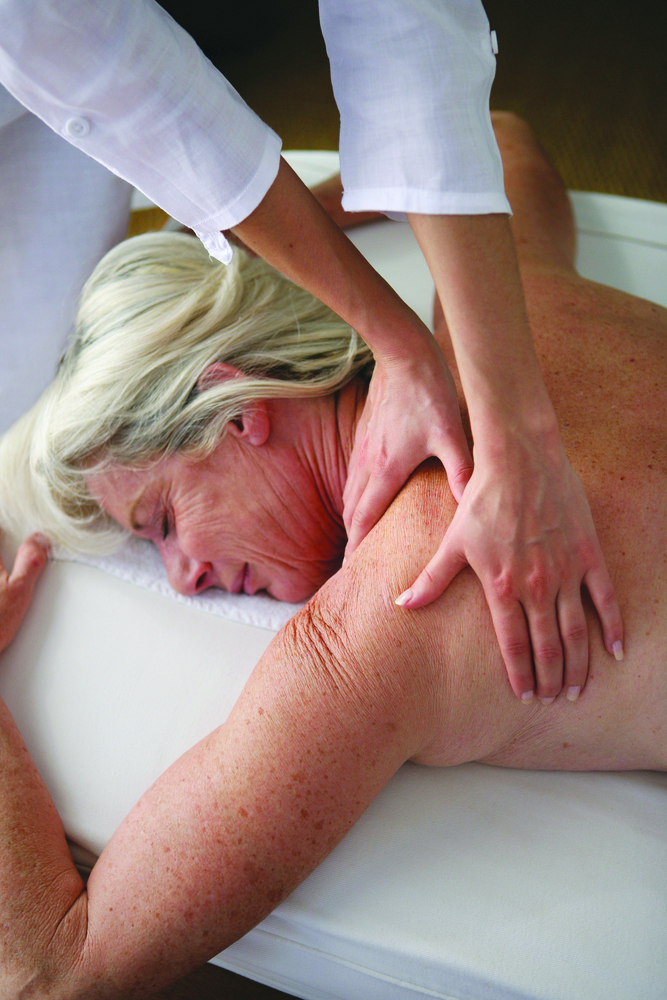
    Senior woman having a massageSWEDISH/RELAXATION MASSAGE increases circulation and eases tension. As we age, our circulation may become less efficient due to inactivity. Poor circulation may lead to muscle cramps, pain and more. Think of Swedish massage as passive exercise, where the massage therapist is doing all the work for you! Another benefit of this type of massage is that it helps seniors retain muscle tone. As we age, we naturally lose muscle mass and strength. Massage helps maintain balance, which helps decrease the risk of falling. Maintaining muscle tone also increases an overall sense of well-being and vitality.

    LYMPHATIC MASSAGE is a very gentle massage that increases lymphatic system function. Our lymphatic and circulatory systems work together to function as our immune system. The lymph system may become stagnant due to lack of physical activity. One of the most common symptoms of a poorly functioning lymphatic system is swelling, also called “edema.”  Lymphatic massage aids the lymphatic system by helping to move the fluid that causes that swelling. Lymphatic massage benefits include better circulation and reduced swelling in the legs and ankles.

    REFLEXOLOGY focuses on the the feet, hands and ears. Traditional Chinese medicine tells us there are pressure points on your feet, hands and ears that correspond to other body parts. If you look straight down at your feet, you will see a reflection of your entire body. The outside of your pinky toes correlates with your shoulders and the inside of your feet with your spine. Reflexology can be relaxing and reduce pain. Reflexology also helps reduce joint pain and stiffness, improves joint mobility and function, and last but not least, promotes relaxation.

    Taking care of a loved one or your grandchildren may take a toll on your body. Maybe you have previous injuries or various health conditions that cause aches and pains in your body and may lead to arthritis. If you don’t address these issues, they may just get worse. Invest in a body tune-up — talk to your massage therapist about the type of massage that may benefit you the most.


    REJUVENATE WITH ARLENE
    92-695 Makakilo Dr., Kapolei, HI 96707
    808-888-8169 | arlene@rejuvenatewitharlene.com

    A common misconception is that massage is a luxury. Massage is becoming recognized as complementary medicine, along with other modalities, such as chiropractic care and acupuncture. An increasing amount of research is being conducted that demonstrates the scientific and medical benefits of massage.