Category: Articles

  • How to Reduce Your Investment Risk

    During times of market volatility like we’ve seen since the start of 2022, it’s natural to feel a bit skittish about the stock market. It’s a potent reminder that there are risks to stock ownership. Individual stocks are not guaranteed to grow and may lose value. The good news is that the stock market has historically delivered a higher rate of return than other forms of investment in the same timeframe. With this in mind, there are strategies you can deploy to help insulate your portfolio from the natural up-and-down swings of the market, while staying invested for the long term.

    Buy and hold. There will always be day-today fluctuations in the stock market. Plunging stocks can cause panic  selling. Rising stocks can inspire over {Play}ly optimistic purchasing. A buy-and-hold investment strategy takes a long-term view to investing. It discourages buying or selling stocks in response to market dips and surges. Over time, portfolios
    governed by this strategy tend to deliver more robust long-term results than ones guided by emotional decisions.

    Asset allocation. This strategy involves holding investments across different asset classes to meet your investment objectives. Asset classes include stocks, bonds, cash and alternatives. Each asset class has a different risk profile and upside potential. How much you assign to each asset class will depend on individual circumstances such as your time horizon, tolerance for risk, need for liquidity, tax situation and your financial goals. Investors with a longer time horizon usually can tolerate more risk, so will hold a larger percentage of stocks within their portfolio. Investors with a shorter time horizon may hold more bonds or similar instruments that offer greater security, with lower yields.

    Portfolio diversification. It is another strategy designed to help you spread risk across your portfolio. It involves selecting a variety of investments within each asset class to help minimize risk. For example, by putting your “growth stock” money into several companies that meet growth criteria, you are protected in the event one of those companies fails.

    Dollar-cost averaging. This investment strategy takes a disciplined approach to purchasing investments. The idea is to purchase more shares of stocks, bonds and/or mutual funds when prices are low and purchase fewer shares when prices are high. The principal here is to be systematic in your purchasing. Dollar-cost averaging over time usually
    results in lower average cost of shares in your portfolio, creating greater opportunity for profit as share values rise.

    Find an ally for smart investing. Talk with your financial advisor to learn how to implement these and other investment strategies to help grow your investment portfolio. As with all investments, past performance does not guarantee future results. No investment strategy is guaranteed to be profitable or help you avoid losses. Common sense and a balanced approach tend to win the day.


    MICHAEL W. K. YEE, CFP,® CFS,® CLTC, CRPC®
    1585 Kapiolani Blvd., Ste. 1100, Honolulu, HI 96814
    808-952-1240 | michael.w.yee@ampf.com
    ameripriseadvisors.com/michael.w.yee
    Michael W. K. Yee, CFP®, CFS®, CLTC, CRPC®, is a Private Wealth Advisor, Certified Financial Planner™ practitioner with Ameriprise Financial Services, LLC in Honolulu, HI. He specializes in fee-based financial planning and asset management strategies and has been in practice for 38 years.


    During times of market volatility like we’ve seen since the start of 2022, it’s natural to feel a bit skittish about the stock market. It’s a potent reminder that there are risks to stock ownership. Individual stocks are not guaranteed to grow and may lose value. The good news is that the stock market has…

  • How To Choose an Assisted Living Facility or Nursing Home

    Finding the right place for Mom or Dad is both an art and a science. You have to do your research and trust your gut.

    Assisted living facilities are widely available to help take care of older adults who need help with bathing, dressing or other daily activities. When that is no longer enough, a nursing home can provide 24/7 healthcare. Either way, it is important to research facilities to determine which one seems to give the best care.

    COST

    Before deciding on a live-in facility, make sure that is the option you want to pursue. Include the older adult when considering other care options. A major factor can be cost. In 2020, the Genworth Cost of Care Survey documented median annual costs for five options. (These numbers are not reflective of higher costs in more expensive areas.)

    • Nursing home (private room) $105,852
    • Nursing home (semi-private room) $93,072
    • Assisted living $51,600
    • Home health aide (full time) $54,912
    • Adult day care $19,236

    Check if your parent has long-term care insurance. Generally, it will cover assisted living, but most health insurance plans, including Medicare, do not. It may not cover the full cost of care, either. Read the policy carefully. Medicaid may be an option for those with limited assets or your state may offer some other assistance. Contact Hawai‘i’s Medicaid agency through medicaid.gov to find out more.

    Veterans may be able to get help through the Aid and Attendance benefit (va.gov/pension/aid-attendance-housebound). Check with Hawai‘i’s VA pension management center at benefits.va.gov/stpaul. Learn about VA pension benefits at va.gov/pension.

    SIZE

    Facilities may have just a few patients, or house more than a hundred residents. Each has benefits and drawbacks. A small group home can have a great staff-to-patient ratio where caregivers know every person’s preferences well. They are often located in neighborhoods.

    WHERE TO GET A LIST OF FACILITIES

    Trying to determine what your options are can be daunting. Here are options you can check out to locate facilities in your area:

    • Area Agency on Aging: usaging.org
    • Yellow Pages website: yellowpages.com
    • Aging Services Directory: leadingage.org/find-member
    • Find Senior Housing: directory.alfa.org
    • Ask neighbors, friends, doctors and other professionals for recommendations.

    SERVICES

    Larger facilities can offer more amenities such as libraries, music rooms, gyms, and swimming pools. They are sometimes set up to care for residents who start off in independent living and then transition to assisted living and/or memory care units that specialize in people with advanced dementia. They may also provide transport to stores or to obtain health care. Some may have doctors who make house calls and an in-house hair and nail salon.

    Basic services usually include housekeeping, laundry, medication management support, wellness programs and meals. Some facilities may even offer specialized care for those with health conditions.

    Consider your mother or father and what activities she or he may be interested in doing. Does the facility offer gardening, art programs, musical outlets, church services or reading material? What about activities for those with impaired sight or hearing? Is assistance available for those who need help eating? Is hospice care available?

    Also, check to make sure that the facility will provide additional help to your parent as their needs increase over time.

    THE FACILITY

    AARP has developed a comprehensive, printable checklist of what to look for in a care facility:(assets.aarp.org/external_sites/caregiving/checklists/checklist_assistedLiving.html). Here is a modified list of the basics to ask about and verify when you visit:

    • Cleanliness
    • An emergency generator or alternative power source in case of an outage
    • Enough common areas, such as living rooms
    • A floor plan that is logical and easy to follow
    • Rooms adequate for your loved one’s needs
    • Rooms/bathrooms with handrails, call buttons
    • Safety locks on doors and windows
    • Security and fire safety systems
    • Services such as banking, a beauty salon, a café
    • Well-lit stairs, hallways with well-marked exits

    You will want to visit prospective facilities several times before making a final decision. Visit on the weekend when it is likely to be busier. Join Mom/Dad for meals to see if they like the food. Do residents in the dining room appear happy?

    TIPS FROM A CAREGIVER

    A former caregiver recommends finding out the average salary of the certified nursing assistants (CNAs) and comparing it to other places you are considering. The higher the salary, the happier the help and the better care the residents receive. Ask how many residents are they usually caring for on a shift and if they like working for the facility. You may have to talk to CNAs without any supervisors around to get honest answers.

    THE CONTRACT

    Don’t sign anything without taking it home and giving the contract a close review. You can hire an elder law attorney (naela.org) to review it. Have other family members go over the document, as well. Check for an arbitration clause
    (consumerreports.org/elder-care/putting-the-assisted-living-facility-contract-under-a-microscope), which requires you to give up your right to sue.

    Do your research, visit, ask questions and make your decision based on the answers and your gut feeling. Do residents and staff seem happy? Does it smell good? What does your parent think? Can you afford it? The answers will help you find the best facility for your loved one.


    CSA (Society of Certified Senior Advisors)
    We support specialist in aging dedicated to improving lives of older adults.
    1-800-653-1875 | csa.us
    Blog posting provided by Society of Certified Senior Advisors, July 17, 2022

    Finding the right place for Mom or Dad is both an art and a science. You have to do your research and trust your gut. Assisted living facilities are widely available to help take care of older adults who need help with bathing, dressing or other daily activities. When that is no longer enough, a…

  • Think Ahead About Future Health Costs

    Thanks to ongoing advances in medical care, people are living longer than ever before. But that longevity comes with a cost.

    According to the US Department of Health and Human Services, roughly 70 percent of Americans over age 65 will require some type of long-term care services in their lives — costing potentially hundreds of thousands of dollars. And as healthcare costs continue to rise, unforeseen medical needs can easily derail a family’s retirement plans if there is not a smart financial planning strategy in place.

    Whether you’re planning for your parents or thinking about your own retirement, it’s important to consider how you’ll fund a post-retirement lifestyle — including paying for healthcare. How much will you need to save? How much should you be prepared to spend on insurance premiums and the care itself?

    To help manage healthcare expenses in retirement, many people consider options like these:

    Long-term care insurance (LTCI): This may be the logical choice for many older Americans, as the funds can be used in a variety of ways — from assistance with daily activities to skilled care provided by medical professionals. But with LTCI, premiums increase with age. And each year after age 60, it becomes less likely that you or a loved one will medically qualify for coverage. LTCI often works best when purchased in your mid-50s.

    A traditional home equity line of credit: While this popular option can provide access to funds as needed to help cover medical costs, it requires a minimum monthly payment on any funds taken — which in time could become burdensome.

    Reverse mortgage loan: This is an often-overlooked option. A reverse mortgage can give you access to a new source of funds without the time-sensitive restraints of long-term care insurance, or the limitations of a conventional home equity-based loan. It’s very similar to a traditional home equity loan or home equity line of credit, but it’s designed with the needs of older adults in mind and offers much more flexibility — read on to learn more.

    The benefits of a reverse mortgage line of credit

    A reverse mortgage can support your healthcare needs and much more. Similar to a traditional home equity loan or home equity line of credit, a reverse mortgage provides access to funds that can be used as needed to cover retirement healthcare costs:

    • Costly prescriptions
    • Care not covered by major medical insurance
    • Medical and non-medical in-home care, such as a physical therapist or home health aide
    • An alternative or supplement to your long-term care policy
    • Home modifications that can make your home safer and more comfortable

    Healthcare needs often arise from unexpected events, such as a heart attack or fall. A reverse mortgage line of credit can help you build a more comprehensive financial defense. One big advantage of a reverse mortgage is its flexible repayment feature: No principal and interest payments are required until the last surviving borrower passes away or moves out. However, you can opt to pay down your principal and interest if and when you choose; no prepayment penalties apply. As with any mortgage, you must meet your loan obligations, keeping current with property taxes, insurance and maintenance.


    REVERSE MORTGAGE FUNDING LLC
    1585 Kapiolani Blvd., #1100, Honolulu, HI 96814
    808-234-3117 | pihara@reversefunding.com
    reversefunding.com
    Borrowers who elect a fixed rate loan will receive a single disbursement lump sum payment. Other payment options are available only for adjustable rate mortgages. This material has not been reviewed, approved or issued by HUD, FHA or any government agency. The company is not affiliated with or acting on behalf of or at the direction of HUD/FHA or any other government agency. © 2019 Reverse Mortgage Funding LLC, 1455 Broad St., 2nd Floor, Bloomfield, NJ 07003, 1-888-494-0882. Company NMLS ID # 1019941. For licensing information, go to www.nmlsconsumeraccess.org. Not all products and options are available in all states. Terms subject to change without notice. Certain conditions and fees apply. This is not a loan commitment. All loans subject to approval.

    Thanks to ongoing advances in medical care, people are living longer than ever before. But that longevity comes with a cost. According to the US Department of Health and Human Services, roughly 70 percent of Americans over age 65 will require some type of long-term care services in their lives — costing potentially hundreds of…

  • Can Sugar Substitutes Harm Your Teeth?

    photo of creamer, sugar and spicesIf you’re watching your sugar intake, but need to satisfy a sweet tooth, using a sugar substitute can be less harmful to your teeth and body. Here’s a breakdown of substitutes and how they can affect your oral and overall health.

    Artificial sweeteners and sugar alcohols: These can be a hundred times sweeter than sugar and can include saccharin, aspartame and sucralose. They contain little to no sugar, so they don’t contribute to tooth decay. But they potentially trick the body into craving sweets on a regular basis, which exposes you to the risks of sugar intake again.

    Plant and fruit-based sweeteners: Stevia and monk fruit extract have no calories or carbohydrates. While these are generally safe, some studies have found that stevia disrupts your natural gut microbiome, which can disturb oral and overall health.

    Natural sugars: Honey, coconut sugar, agave, molasses and dates have anti-inflammatory and antioxidant benefits, but they still contain sucrose and can contribute to tooth decay.

    These substitutes should be consumed in moderation. Remember, drinking water immediately after eating is recommended to help wash sugars and acids from teeth.


    HAWAII DENTAL SERVICE (501(c) 4 nonprofit)
    Kahala Howser, Wellness & Events Manager
    808-521-1431 | khowser@hawaiidentalservice.com
    HawaiiDentalService.com


    If you’re watching your sugar intake, but need to satisfy a sweet tooth, using a sugar substitute can be less harmful to your teeth and body. Here’s a breakdown of substitutes and how they can affect your oral and overall health.

  • Trust Basics

    Businessman and lawyer discuss the contract document. Treaty of the law. Sign a contract business.A trust is created when a person transfers “stuff” to a trustee with the understanding that the trustee will manage it for the benefit of one or more beneficiaries.

    “Stuff” includes any kind of property you can own: real property, such as land and buildings (including timeshares) and personal property, such as bank accounts, stocks and bonds, and personal effects.

    The person who transfers the stuff to the trustee is called a “trustmaker” (also known as a settlor, grantor or trustor). Usually, the trustmaker is also the trustee (or perhaps co-trustee) and the initial beneficiary of the trust.

    It is common for couples to create two separate trusts and to be the co-trustees of both of their trusts during their joint lifetimes. When one spouse dies, the other can either be sole trustee or co-trustee with one or more individuals or a trust company.

    Once assets are transferred to the trustee, the trustmaker no longer holds legal title to them — even if the trustmaker and the trustee are the same person. Thus, if the trustmaker dies or becomes incapacitated, the trust continues and the successor trustee (who is named in the controlling document) takes over administering the stuff in the trust.

    A trust is controlled by a “rulebook” called the “trust agreement.” The trust agreement sets out the rules about how the trust will be run. If the rulebook says that the trustmaker can revoke it or change it, the trust is what we call a “revocable trust.” People create revocable living trusts so that their stuff will not go through probate after they are gone, or through conservatorship if they become incapacitated during their lifetimes, as well as to protect the assets that their loved ones will inherit.

    If the rulebook does not allow the trustmaker to change or revoke it, we have what is called an “irrevocable trust.” Irrevocable trusts are used in many estate plans. They allow trustmakers to make gifts but keep the recipients from having complete control over the gifted assets. They can help provide tax savings, creditor protection and expert management of assets.

    Trusts are often the building blocks of effective estate plans. They provide simplicity, flexibility and predictability in dealing with your assets. They also give you the peace of mind of knowing that you have arranged your affairs to ensure that your wishes will be carried out and that future transitions (such as your incapacity or death) will be much easier on your loved ones.


    SCOTT MAKUAKANE, Counselor at Law
    Focusing exclusively on estate planning and trust law.
    est8planning.com
    808-587-8227 | maku@est8planning.com

    A trust is created when a person transfers “stuff” to a trustee with the understanding that the trustee will manage it for the benefit of one or more beneficiaries. “Stuff” includes any kind of property you can own: real property, such as land and buildings (including timeshares) and personal property, such as bank accounts, stocks…

  • Does Dad Need More Help?

    How do family members prepare for the day their senior needs more help — the kind of help that requires loved ones to re-prioritize their lives? If only there were a date set aside for this change in everyone’s life. Planning on change at this level has never been easy because a plan may not be in place. A sudden fall or illness could change everything and it could happen anytime.

    Our seniors can have active lives up until the day they don’t. So family members may have to change directions suddenly. This may involve taking time off work and moving other commitments to the back burner. But there are some signs that show us our senior may be needing a bit more help. Here are a few to look out for:

    AGE: The older your senior is, the closer they will be to needing help, especially if they are slowing down physically.
    MEMORY: Forgetfulness could be a sign of illness affecting the brain or other systems and it generates worry for family members who leave their senior alone for long periods of time.
    DRIVING: If your senior is not driving anymore because it is not “safe” due to visual problems, mobility issues or cognitive concerns, this may be a sign that other tasks may not be as easy for them, as well.
    WEIGHT LOSS OR DEHYDRATION: These are real concerns that indicate they are not eating or drinking enough. Frequent urinary tract infections may indicate not enough fluid intake or poor personal hygiene in the bathroom.
    UNPAID BILLS/UNOPENED MAIL: Our seniors like to have control over their finances until there comes a day when they stop opening their mail. This is a clue they are either forgetting or its not a priority for them anymore.
     FREQUENT PHONE CALLS WHILE FAMILY IS AT WORK: If family members are receiving frequent calls during the day from their senior, it may mean things are about to change. This can indicate loneliness, forgetting that they just called or anxiety about something they cannot control.
    FALLS: This could be the “last straw,” especially if there is an injury. Family members may have to find outside help to monitor their senior for safe mobility while they are away at work.

    Just like planning ahead for disasters, planning for the day your senior needs help should be a priority. Life can be busy and noticing some of the scenarios listed above should be on your radar. Of course, your senior will deny they need help and may say something like, “I don’t want you to worry about me. I can take care of myself.” If you feel that twinge in your gut telling you that what you are seeing is not consistent with what they are saying, don’t ignore it! Now may be the time to move into a different role for your senior or ask for help.


    ATTENTION PLUS CARE HOME HEALTHCARE
    Accredited by The Joint Commission
    1580 Makaloa St., Ste. 1060, Honolulu HI 96814
    808-739-2811 | attentionplus.com
    AGING IN HAWAII EDUCATIONAL OUTREACH PROGRAM
    by Attention Plus Care — a program providing resources for seniors and their families, covering different aging topics each month. For class information and upcoming topics, call 808-440-9356.

    How do family members prepare for the day their senior needs more help — the kind of help that requires loved ones to re-prioritize their lives? If only there were a date set aside for this change in everyone’s life. Planning on change at this level has never been easy because a plan may not…

  • The Benefits of Medicare Advantage

    A recent study concluded that beneficiaries enrolled in Medicare Advantage Prescription Drug plans (also known as MAPD) spend almost $2,000 less per year on their healthcare costs when compared to those with Original Medicare (Parts A and B) and a stand-alone Medicare Prescription Drug plan (Part D). Maybe the savings are because of the valuable extras that MAPD plans offer their members.

    Medicare Advantage plans are required by law to cover everything that Parts A and B cover, but typically, these MAPD plans add numerous benefits that Original Medicare doesn’t offer. These might include vision, hearing and dental coverage as well as discounted chiropractic and acupuncture. Sometimes they offer free transportation, over-the-counter (OTC) products, gym membership and even a complimentary fitness tracker. Some Medicare Advantage plans value healthy activities to the extent that they are willing to reward members with gift cards for completing preventive screenings or exercising. Also, many MAPD plans charge a lower drug deductible than a stand-alone prescription drug plan. The truly surprising part is that these Medicare Advantage plans often have $0 monthly premiums.

    Check with an expert to see if one of these plans might be beneficial to you.


    THE MEDICARE GEEK
    1221 Victoria St., #3103, Honolulu, HI 96814
    808-724-4993 | robin@themedicaregeek.com
    themedicaregeek.com

    A recent study concluded that beneficiaries enrolled in Medicare Advantage Prescription Drug plans spend almost $2,000 less per year on their healthcare costs when compared to those with Original Medicare (Parts A and B) and a stand-alone Medicare Prescription Drug plan (Part D).

  • Grief & Bereavement — Part I

    Grief is a natural response to the loss of someone special. The process of grieving allows the griever to adapt to a new world of existence without the loved one. If allowed to proceed through the grieving process with minimal guilt, anxiety, stress, unresolved issues and conflict, we can help each griever experience their grief fully and allow the griever to validate and honor the life of the deceased, and affirm and strengthen relationships with survivors.

    When one thinks of making an estate plan, visions of rolling-hill estates and large brokerage accounts may come to mind. Clients often say that they want to establish an estate plan “to minimize tax and avoid probate.” Attorneys spend a great deal of time in post-graduate law school to learn the complex tax and probate laws to help clients with these goals. When we examine these goals in more depth, we find that they often represent unmet human needs which are expressed by avoiding probate and minimizing taxes. Clients experience these needs with emotions and feelings.

    In realizing that each one of us will die one day, to different degrees, we experience fear, anxiety and anticipatory grief, because unlike any other living species existing on the planet, we humans share an acute awareness of our ultimate demise.


    STEPHEN B. YIM, ATTORNEY AT LAW
    2054 S. Beretania St., Honolulu, HI 96826
    808-524-0251 | www.stephenyimestateplanning.com

    Grief is a natural response to the loss of someone special. The process of grieving allows the griever to adapt to a new world of existence without the loved one. If allowed to proceed through the grieving process with minimal guilt, anxiety, stress, unresolved issues and conflict, we can help each griever experience their grief…

  • Choosing a Dignified Death

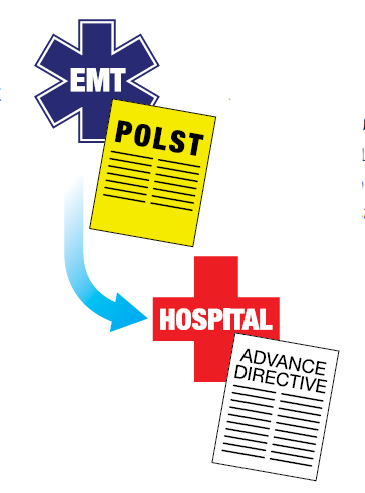
    A Provider Order regarding Life Sustaining Treatment (POLST) says what measures should be used to keep you alive in a medical emergency. It is different from an Advance Directive in that it will be followed by emergency personnel, provided that they are aware of its existence. If you don’t have a POLST, emergency medical technicians (EMTs) are required to do whatever they can to restore and stabilize your heartbeat and breathing and take you to an appropriate facility for treatment. They will not read your Advance Directive and try to figure out how it might apply to your situation.

    In some cases, resuscitation is not appropriate or wanted. A POLST, being a medical provider’s order, will be followed by the EMTs. Your Advance Directive will not come into play until you are in the hospital. At that point, the EMTs may not have done you any favors by keeping you alive. If you would not want to be  resuscitated, talk with your doctor about having a POLST. If you would want the EMTs to follow normal lifesaving procedures, you do not need a POLST.

    Your POLST should be printed on lime green paper so it is immediately recognizable. Post a copy by your bed and carry one with you when you leave home. Make sure loved ones know where to find it in an emergency.


    SCOTT MAKUAKANE, Counselor at Law
    Focusing exclusively on estate planning and trust law.
    www.est8planning.com
    808-587-8227 | maku@est8planning.com

    A Provider Order regarding Life Sustaining Treatment (POLST) says what measures should be used to keep you alive in a medical emergency. It is different from an Advance Directive in that it will be followed by emergency personnel, provided that they are aware of its existence. If you don’t have a POLST, emergency medical technicians…

  • How Will Rising Interest Rates Affect You?

    The Federal Reserve (the Fed) has begun what it says will be a series of interest rate increases in an effort to slow the economy and temper the current surge in the inflation rate. At the start of 2022, the federal funds rate stood at near zero percent. By May, the Fed moved the federal funds rate 75 basis points (0.75 percent) higher.

    What does this mean for you and your money? While Fed actions directly impact large financial institutions, they also resonate throughout the financial markets. In indirect ways, your personal finances can be affected by Fed policy.

    Four ways the Fed’s rate hikes in 2022 could impact your bottom line:

    1. HIGHER BORROWING COSTS

    While the Fed’s rate hikes don’t directly affect most types of consumer loans, the direction the Fed sets on interest rates tends to carry over throughout debt  markets. This could include:

    Home mortgages: Adjustable-rate mortgages will be the most directly affected, as they change in conjunction with general interest rate trends in the market. If you have a fixed rate mortgage, you won’t see any change.

    Automobile loans: While a variety of factors affect how interest rates are set on vehicle loans, you can expect these rates to increase as well.

    Student loans: Federal student loan rates are set and will not be directly affected. However, borrowers working with private lenders will likely see rates move higher as they are tied to the Fed funds rate.

    2. MODESTLY HIGHER SAVINGS RATES

    Investors have not earned much in terms of interest on bank savings accounts, money market accounts or certificates of deposit in recent memory. While it seems reasonable to expect that yields may improve modestly, the change may not be dramatic. Even with historically low interest rates, investors have directed significant sums to these types of vehicles. In the current market environment, some investors still have a desire for such “safe haven,” high liquidity investments regardless of the interest rate earned.

    3. THE BOND MARKET

    Fed interest rates strategies don’t impact the bond market directly, but Fed policy is watched closely by bond investors. This year, along with raising short-term rates, the Fed has also begun reducing the role it plays as a buyer in the broader bond market. That action could lessen demand for longer-term bonds, which can drive up interest rates. Even before the Fed initiated its new policies, the bond market already anticipated the change and interest rates began moving higher on  most types of bonds.

    4. THE STOCK MARKET

    The stock market also tends to react to the Fed’s news, and with the central bank taking steps to slow the economy, investors anticipated the potential negative effects on publicly-traded companies. As a result of this and other factors, stocks lost value at the start of the year. It may be a good time to talk with your financial advisor about whether any of the changes mentioned above require you to update your financial plan.


    MICHAEL W. K. YEE, CFP,® CFS,® CLTC, CRPC®
    1585 Kapiolani Blvd., Ste. 1100, Honolulu, HI 96814
    808-952-1222, ext. 1240 | michael.w.yee@ampf.com
    www.ameripriseadvisors.com/michael.w.yee
    Michael W. K. Yee, CFP®, CFS®, CLTC, CRPC®, is a Private Wealth Advisor, Certified Financial Planner™ practitioner with Ameriprise Financial Services, LLC in Honolulu, HI. He specializes in fee-based financial planning and asset management strategies and has been in practice for 37 years. Investment advisory products and services are made available through Ameriprise Financial Services, LLC, a registered investment adviser. Investment products are not insured by the FDIC, NCUA or any federal agency, are not deposits or obligations of, or guaranteed by any financial institution, and involve investment risks including possible loss of principal and fluctuation in value. Ameriprise Financial Services, LLC. Member FINRA and SIPC. ©2021 Ameriprise Financial, Inc. All rights reserved.

    The Federal Reserve (the Fed) has begun what it says will be a series of interest rate increases in an effort to slow the economy and temper the current surge in the inflation rate. At the start of 2022, the federal funds rate stood at near zero percent. By May, the Fed moved the federal…