When I got the save-the-date card for my 50th high school reunion, I was shocked! Hey, 50th reunions are for old people! Then I realized I must be one!
So I volunteered to be our Class of 1975 reunion secretary and sent out emails asking for life updates and attendance plans. As I sifted through the replies, I began getting information about classmates who had passed away. A girl I had dated died of cancer. Another I had a crush on had died the year before. I received a heart-breaking email from the widow of a wrestling team buddy saying he had passed. All told, I found out a dozen classmates had passed on.
Those sad responses convinced me that I must go to the reunion to reconnect with people with whom I had spent four important years.
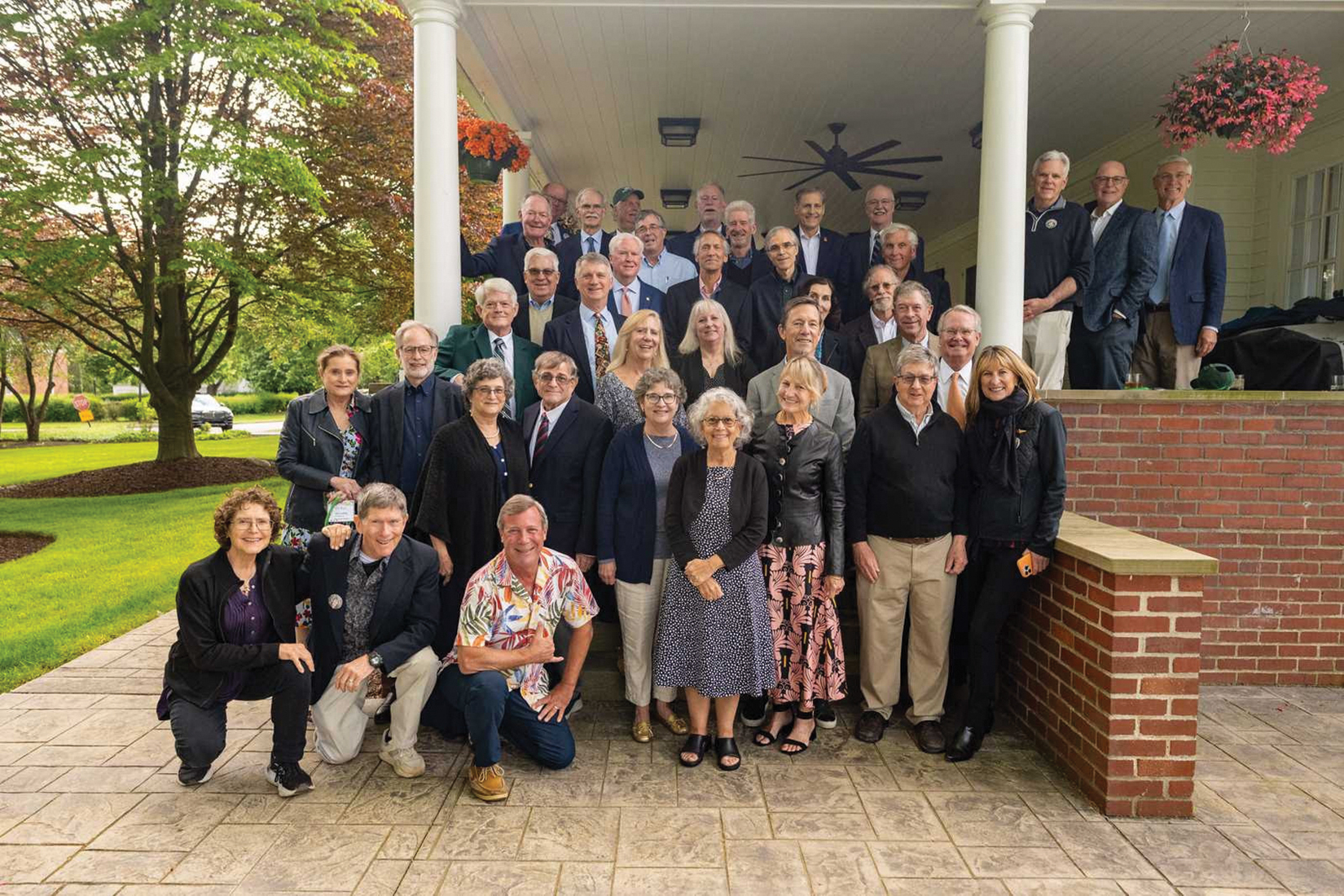
The 50th reunion of Western Reserve Academy’s Class of 1975 was well-attended. Following “the road less traveled,” Rob paved his own path to a permanent home on Maui, where he enjoys life with wife Kelly
When my wife and I arrived in my hometown for the reunion, we went for a long walk around the school grounds. Memories came flooding back. The next evening, we dined with our 50th reunion group. I was pleased that 36 classmates of the 100 (about) in our graduating class attended. Everyone looked great! Granted, now in our late 60s, our definition of “looking great” is far more forgiving than it used to be!
During dinner, we didn’t compare accomplishments, cars or careers—we honored the past as we reminisced about our classmates who are no longer with us. We remembered a classmate I had known since we went to preschool together. After I shared precious memories of her, others who were close to her shared theirs. We remembered another friend—a funny, well-liked, brilliant and athletic student who became a leading brain surgeon at Johns Hopkins. His widow joined us; we all cried with her. And so it went through the list, with shared recollections triggering tears and eliciting laughs. I was pleasantly surprised that as we all told our stories, old friends recalled things that I had forgotten and I was able to jog their memories, as well.
As we talked, my classmates transformed in my mind’s eye to how they looked in our school days. Grey hair turned brown again and bald heads regrew shoulder-length locks. Guys shuffling painfully to their tables were once again fleet-footed soccer jocks and track stars. Grandmothers with etched laugh lines and crow’s feet transformed into gorgeous young girls again.
Saying goodbye at the end of the reunion was bittersweet. I hugged it out with everyone.
I had viewed reunion group photos of the older classes above us, hanging in the hallways. Seeing fewer people in each five-year grouping, I realize that at our next reunion, I may not be seeing some of these dear friends again.
So I’m glad I went back for the Big Five-O and I’m going to attend all of my class reunions for as long as I am able, God willing.
ROB MELDRUM was born and raised in Hudson, Ohio, and graduated from Middlebury College in Vt. summa cum laude, with high honors for his senior thesis. After a 20-year career with AT&T, he started a telecomm software company and is a patent-holder. He and his wife, Kelly, moved from Seattle to Maui in 2019. In retirement Rob enjoys playing guitar, writing songs, playing pickleball and baking sourdough bread.
If you have a story to share, email the editor: debra@generations808.com.
When I got the save-the-date card for my 50th high school reunion, I was shocked! Hey, 50th reunions are for old people! Then I realized I must be one! So I volunteered to be our Class of 1975 reunion secretary and sent out emails asking for life updates and attendance plans. As I sifted through…
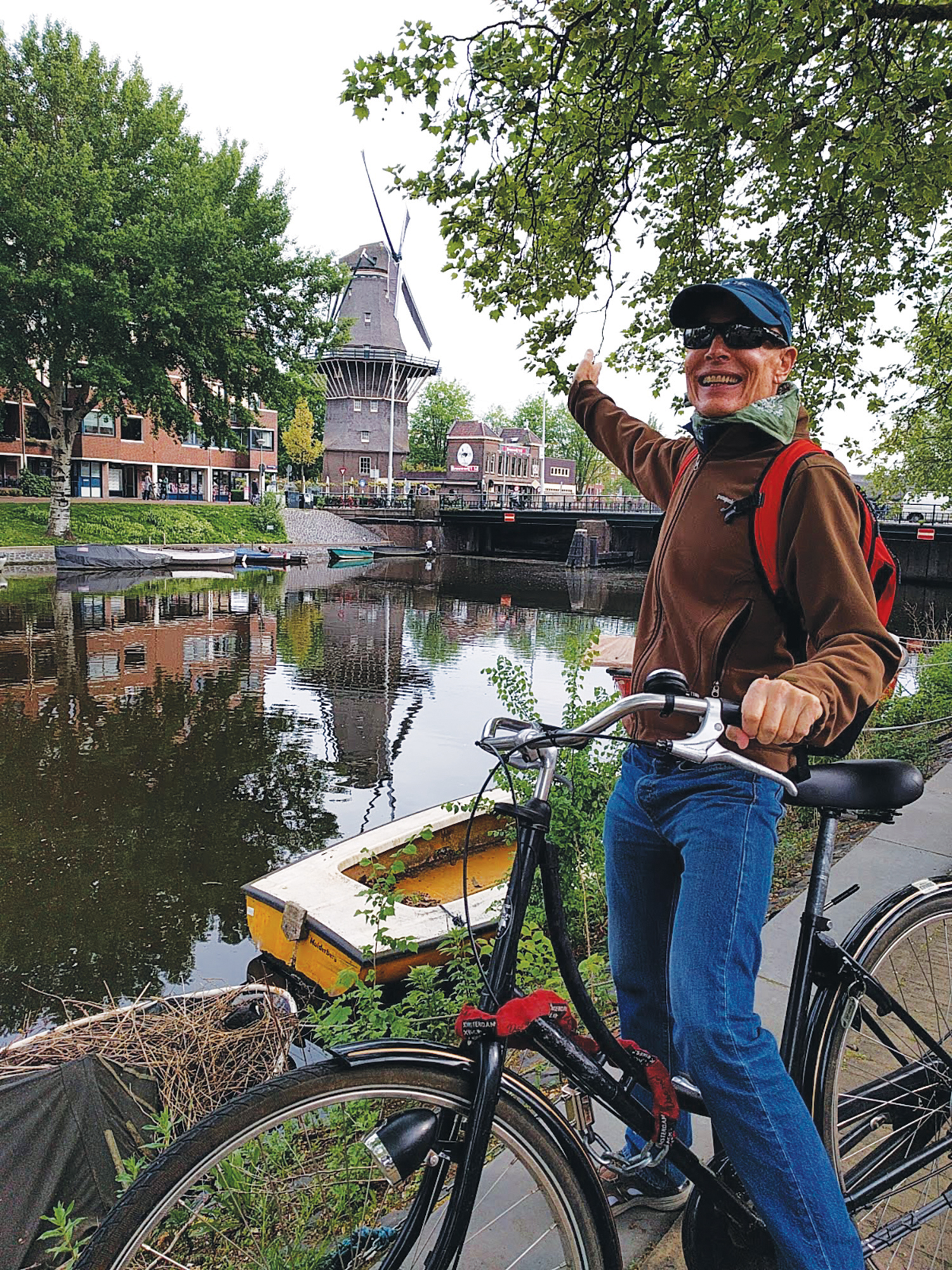
r. Steve L. Chaplin, a 64-year-old Honolulu psychiatrist, has seen the world from a unique perspective. He has ridden his bicycle through South America, Asia and Europe, cycled through 39 countries, including Morocco, Myanmar, India, Chile and Vietnam, and most recently, biked through Iceland and Greenland.
What inspired him to see the world this way? Dr. Chaplin’s father taught him to ride at age 6, but initial lessons didn’t include how to stop by using his brakes, which caused him some scrapes. His interest in bicycling blossomed while biking with a friend in San Francisco. The bicycling bug really took hold of him as he navigated the city’s highly textured topography. By then, of course, he had learned how to brake.
Today, adhering to the hypothesis “safety in numbers,” his excursions always include a friend or a group. He says he has never experienced a bad bike trip. To the contrary, friendly foreigners often approach him, asking about the details of and reasons for his international bicycle trek. He says that riding a bicycle has proven to be an easy way to make friends in a foreign country, as natives are always eager to give him advice and share information about their country.
Dr. Chaplin says that the most interesting country he visited was Vietnam in 1995. The Vietnamese were very welcoming, saying, “America number one.” And, of course, Dr. Chaplin fit naturally into the culture, as most Vietnamese rode bicycles as their primary transportation.
Riding his bicycle in a foreign country also gave Dr. Chaplin an opportunity to appreciate the culture and natural beauty at a pace that could not be accomplished in motorized travel mode, yielding time and space for contemplation and reflection, in addition to social interaction.
Dr. Chaplin says, “Somehow, foreign residents and I succeed in communicating. English seems to be an international language and there is always someone who can speak it to some extent. In the remote parts of a country, where English is barely spoken, we use hand motions and somehow we manage. We smile, we laugh and catch on to what each is saying.
“For example, when a foreign resident points at my bicycle, I know from experience that they are asking me why I am traveling in their country on a bicycle, especially in a far-off region. Traveling to a foreign country is always an experience. It depends on your attitude of why you are there. So I tell them that riding a bicycle abroad is a priceless experience if your aim is to learn, have fun and meet the people. The bottom line is to be pleasant and patient.”
Dr. Chaplin believes in exercise and encourages his patients to do so, because studies have shown that such activity promotes mental alertness, stamina and positive interactions. Such being the case, bicycling in a foreign country with his interest focused on a new environment stimulates his mind and memories of people and places.
Studies have shown that a human on a bicycle is more efficient than a swimming salmon or flying seagull and jet plane. Dr. Chaplin concurs that it reduces global warming and conserves natural resources as well as introduces the bicyclist to different cultures, cuisine, history and people—up close and personal. “There is no doubt that bicycling is good for the health, for the preservation of our Earth and if you travel to a foreign country, I like to believe that in some ways it leads to international understanding, friendship and world peace.”
His philosophy of life is simple—“enjoy the moment. Enjoy the ride.”
r. Steve L. Chaplin, a 64-year-old Honolulu psychiatrist, has seen the world from a unique perspective. He has ridden his bicycle through South America, Asia and Europe, cycled through 39 countries, including Morocco, Myanmar, India, Chile and Vietnam, and most recently, biked through Iceland and Greenland. What inspired him to see the world this way?…
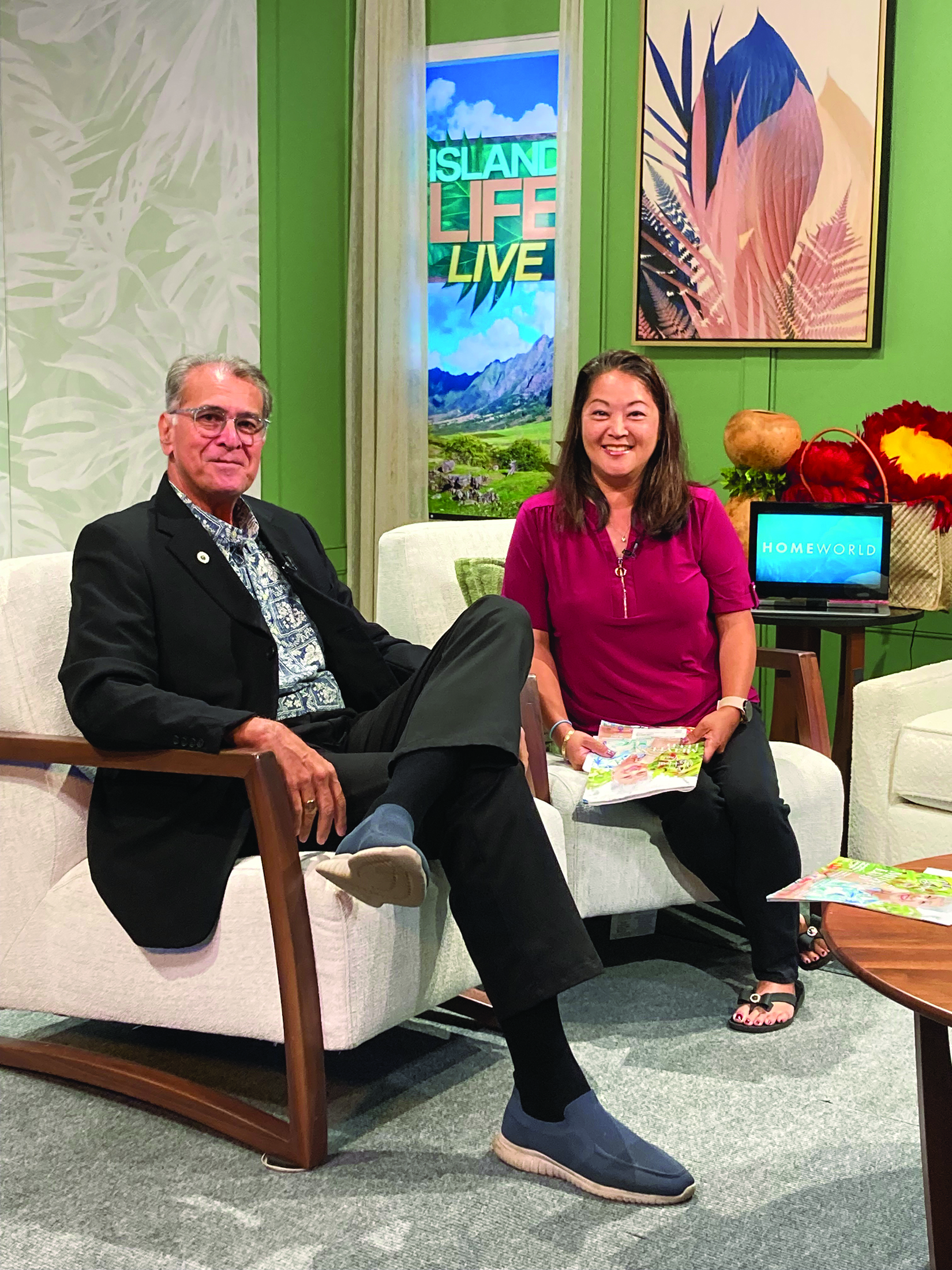
Kūpuna Power, a platform that seeks to educate and empower Hawai‘i’s elderly, is both a movement and a mindset—a reminder that Hawai‘i’s elders carry not only our history, but our momentum. Born out of an immediate response to a church family member being scammed, I launched the initiative after witnessing firsthand how vulnerable Kūpuna can be when clear, reliable information is hard to find—or when a kupuna is too embarrassed to reveal such a situation. The experience exposed an urgent need for information to accessible resources at the federal, state, county and private levels—and the spark that ignited Kūpuna Power.
Kūpuna Power is about helping them tap into resources that enable them to live their golden years the way they want to, as independently as possible and without worries. Kūpuna Power helps restore dignity, visibility and agency to the people who built the foundations we stand on today.
At its core, the initiative insists that kūpuna are cultural anchors and political stabilizers whose lived experiences—from plantation life to the Hawaiian Renaissance—give them a clarity that Hawai‘i still depends on. When elders speak, they bring generations of insight.
Kūpuna Power channels that wisdom into present-day action by encouraging kūpuna to stay informed, vote, testify, organize and guide the lāhui (people) with the same steady hands that raised families and communities.
The movement also strengthens intergenerational connection, creating joyful, dignified spaces where young people learn directly from elders through stories, mele and lived truth. That exchange fuels coherence, unity and disciplined civic participation.
KŪPUNA POWER 808-768-7700 | info@wearekupuna.com wearekupuna.com
Kūpuna Power, a platform that seeks to educate and empower Hawai‘i’s elderly, is both a movement and a mindset—a reminder that Hawai‘i’s elders carry not only our history, but our momentum. Born out of an immediate response to a church family member being scammed, I launched the initiative after witnessing firsthand how vulnerable Kūpuna can…
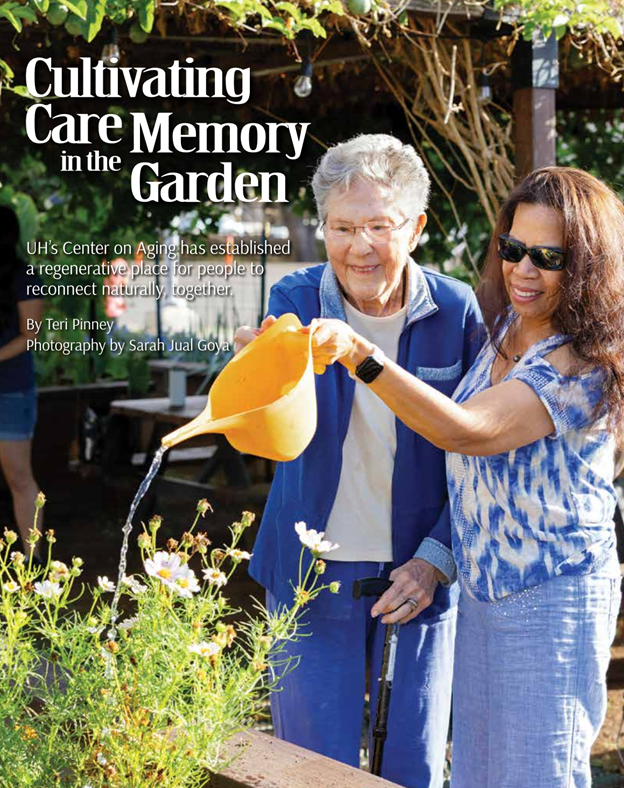
Tucked between campus classrooms near the College of Education, the leafy paths of the University of Hawai‘i’s (UH) Ho‘ōla ‘Āina Pilipili garden come alive every third Thursday afternoon. Soft laughter blends with the rustling of leaves and the hum of gentle conversation. Under the shelter of liliko‘i shade tents, a kūpuna presses seeds into the soil, a caregiver smiles from across the table and a UH student leads a memory-based activity. It’s a quiet, powerful moment when generations meet, stories resurface and healing takes root. This is the Memory Café and its garden in action. But it’s much more than a soothing gathering place. It’s what the UH Center on Aging (COA) was created to do — bring research, community and compassion into one space.
A Vision Grows into a Vital Hub
The UH COA was formally established in July 1988 after years of planning by educators and community advocates who saw Hawai‘i’s shifting demographics as both a challenge and an opportunity. By the late 1980s, the islands were already home to one of the fastest-growing senior populations in the nation.
About 311,000 seniors (aged 65 and over) live in Hawai‘i today—roughly 21.5% of the state’s 1.4 million residents, according to Hawai‘i Department of Business, Economic Development & Tourism’s summary of the US Census 2024 population characteristics.
Since its founding, COA shifted through reorganizational umbrellas and now finds its current home within the Thompson School of Social Work & Public Health at UH Mānoa. This signaled a larger vision. Aging isn’t just about health. It is social, emotional, environmental and deeply human.
Its mission remains steady: to enhance the well-being of older adults through collaboration, applied research, education and service.
In addition to measuring success by journal citations, the center quantifies its accomplishments in smiles, independence and community strength.
COA has become a hub for interdisciplinary research and hands-on community engagement that touches nearly every aspect of aging in Hawai‘i. Today, it supports dozens of projects that address issues such as dementia awareness, caregiver education, intergenerational connection and public policy for elder care. COA’s faculty and students collaborate with health systems, schools, state agencies and nonprofits to turn research into action, improving how Hawai‘i understands and supports its kūpuna.
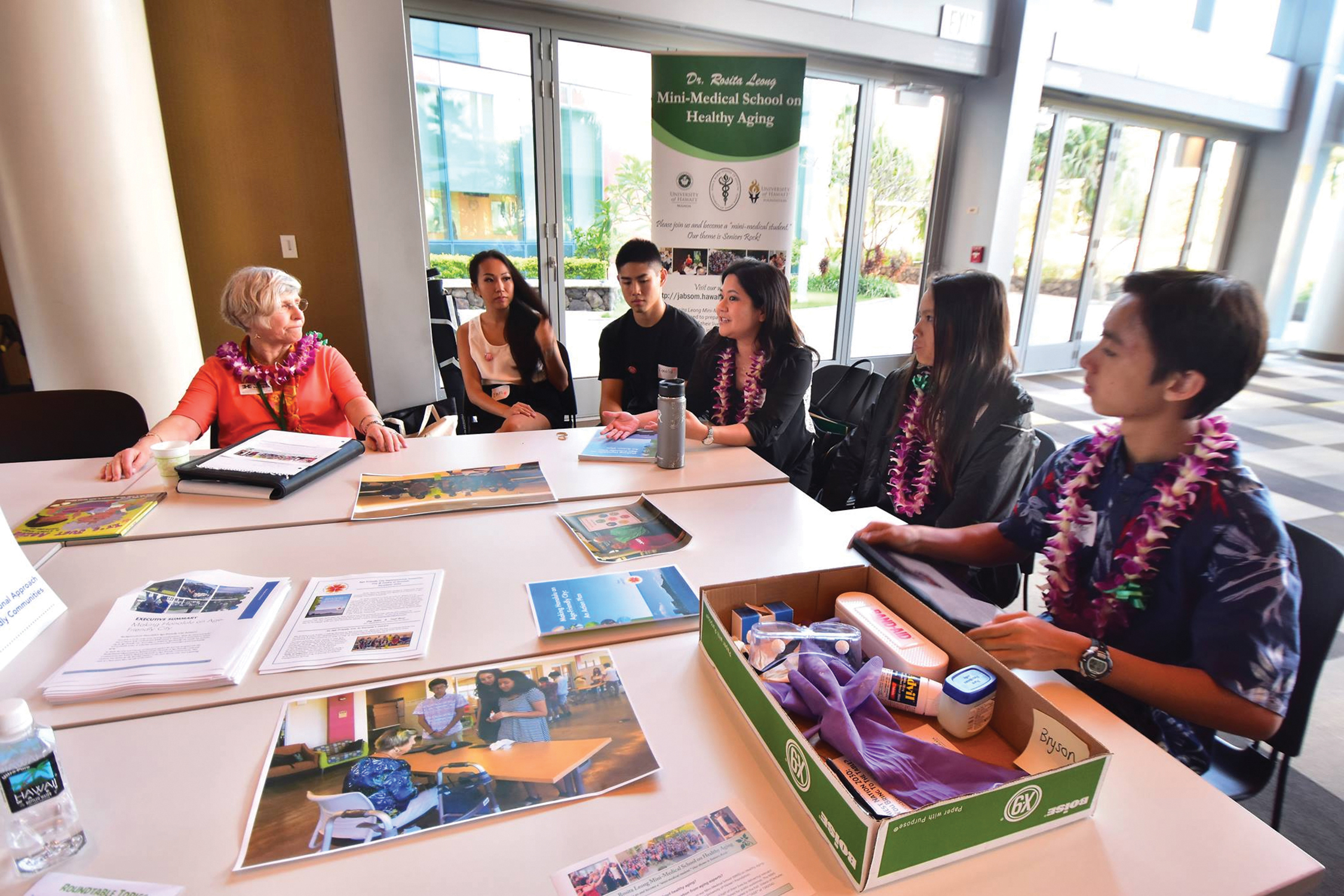
Right now, the UH Center on Aging is behind some remarkable efforts to make life better for Hawai‘i’s older adults. Through Age-Friendly Honolulu and the Kūpuna Collective, a statewide network co-founded by the Hawai‘i Public Health Institute, they’re shaping how our cities grow—pushing for engaged and inclusive communities that welcome everyone. And with the CARE Registry (Collaborative Approach for Asian Americans, Native Hawaiians and Pacific Islanders Research and Education), they’re helping ensure that island and Pacific voices are finally represented in national studies on aging and dementia.
COA helps ensure that local voices and cultural perspectives are included in studies that shape future healthcare policies. The center also partners with the state’s Executive Office on Aging, the City and County of Honolulu’s Elderly Affairs Division and supports the Pacific Islands Geriatric Workforce Enhancement Program’s efforts to train healthcare and social service professionals across the state.
Together, these efforts reflect COA’s mission—to not just study aging, but to improve what aging looks and feels like in the islands.
Hawai‘i residents were living longer, often healthier lives, and the cultural tradition of multi-generational homes meant new kinds of caregiving needs were emerging. Families wanted to keep their elders close to home and not necessarily in institutions. COA became a bridge, linking university research to real families and real challenges.
Early COA projects explored caregiving education, senior employment and aging-in-place initiatives. As the population aged, the center expanded to address Alzheimer’s disease, dementia, and the emotional well-being of kūpuna and their families. That early foundation has grown into today’s blend of community programming, applied science and hands-on service.
Nurturing Lives Touched by Dementia
More than 30,000 people in Hawai‘i live with dementia today. It’s a group of symptoms. The most familiar and common is memory loss, which is caused by brain disease. Alzheimer’s disease is one type of dementia and accounts for approximately 60% to 80% of dementia cases.
“A dementia diagnosis is scary and overwhelming,” says Christy Nishita, PhD, a gerontologist at UH COA and the Memory Café program lead. “Unfortunately, there is a lot of stigma regarding dementia. It can make people afraid or embarrassed to go outside and engage in our community.”
Life with dementia calls for more than medical care. It thrives on connection. Both those experiencing memory loss and their caregivers benefit from strong circles of support that keep each day meaningful and full of purpose.
Staying socially active, moving the body and keeping the mind engaged through activities like conversation, gardening, music or puzzles can help lift the spirit and preserve a sense of joy, even as memory and thinking evolve.
Recently, the Alzheimer’s Association reported that Hawai‘i faces one of the most rapid increases in the number of dementia cases in the nation. With people living longer and kūpuna making up a growing share of the population, families across the islands are feeling the impact of Alzheimer’s disease and other types of dementia. Apparently, tens of thousands of Hawai‘i residents are currently living with dementia and nearly twice that number serve as unpaid caregivers.
The challenge isn’t just medical; it’s emotional, cultural and social. Many caregivers juggle full-time jobs while tending to loved ones, and families often struggle to find culturally appropriate resources that fit local ways of living and caring.
That’s where UH’s COA plays a vital role. Through community-based programs, caregiver training and research partnerships, COA helps families navigate the complexities of dementia with compassion and knowledge.
The center is also a partner in the Hawai‘i Dementia Initiative (HDI), which promotes public awareness, professional training and memory support services statewide. And through projects like the Memory Café and garden, COA offers a model of social connection that restores dignity and joy to those living with memory loss.
Together, these efforts help make Hawai‘i not just a place where people live longer, but where they can live better, surrounded by care, understanding and aloha.
Ground Preparation: Establishing Partnerships With Purpose
COA is built on connection. Faculty, students and local leaders work hand-in-hand with city agencies, nonprofits and health systems. Their goal is simple but profound—to make Hawai‘i a place where aging feels supported, not feared.
One of the most impactful collaborations is with Age-Friendly Honolulu, a long-term partnership with the City and County of Honolulu that reimagines how the city supports residents as they grow older. This initiative brings together City and County of Honolulu departments and community organizations to create neighborhoods where seniors can stay active, connected and independent.
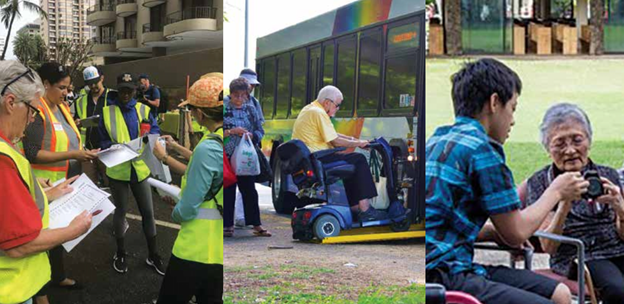
Through surveys, walk audits and community trainings, the project has promoted more accessible spaces and engagement of kūpuna in community life. What began as a pilot has now become part of Honolulu’s citywide strategy for livable, age-friendly communities, shaping how the islands plan for accessibility and inclusion for years to come.
Age-Friendly Honolulu’s mission is to change mindsets about aging by empowering kūpuna, promoting intergenerational engagement, and supporting accessibility and inclusion for all. It’s a community endeavor.
Planting a Dementia-Friendly Garden
The dementia-friendly garden and Memory Cafe are UH COA initiatives. Research by Melody Halzel, PhD candidate in Public Health, under the direction of Dr. Nishita, complements these initiatives by examining how outdoor spaces like the Ho‘ōla ‘Āina Pilipili Garden at UH Mānoa—can be designed to support people living with dementia and their caregivers. Melody’s research evaluates how accessible, safe and engaging these environments are, aiming to create practical guidelines for developing dementia-friendly gardens that nurture memory, comfort and social connection across Hawai‘i’s diverse communities.
Dementia Friends Hawai‘i is part of the Age-Friendly Honolulu initiative, which is also coordinated by UH COA in partnership with the state’s Executive Office on Aging and other community organizations. The center trains volunteers and community partners—healthcare workers, students, local businesses and faith groups—to host Dementia Friends Hawai‘i sessions across the islands.
The Retired and Senior Volunteer Program (RSVP) plays a meaningful role in extending the reach of UH COA’s community work. RSVP volunteers—many of them kūpuna themselves—bring decades of experience, empathy and local knowledge to the center’s initiatives. They assist with events like the Memory Café and garden, and support outreach activities that connect older adults and caregivers with resources.
Their participation adds a powerful layer of peer-to-peer connection. When RSVP volunteers share their time and stories, it helps build trust and encourages other seniors to stay active, engaged and informed.
For COA, it’s a win-win. The program gains capable, community-minded helpers, and volunteers gain renewed purpose by giving back in ways that directly improve the lives of fellow kūpuna across Hawai‘i.
Another key initiative is the CARE Registry, which invites Asian American, Native Hawaiian and Pacific Islander residents to participate in national aging studies. Historically, these groups have been underrepresented in research. CARE 2.0 helps close that gap and ensures local families see themselves reflected in data and solutions.
The COA is involved in dozens of projects and partnerships—too many to list or fully explain here—all designed to improve the lives of Hawai‘i’s seniors and their caregivers. From statewide policy work to neighborhood-based initiatives, each effort reflects the center’s deep commitment to community well-being.
Among its many programs, one in particular has captured the heart of that mission—the Memory Café and garden, where connection, compassion and learning come together in the most down-to-earth way.
Research Meets Heart at the Memory Café & Garden
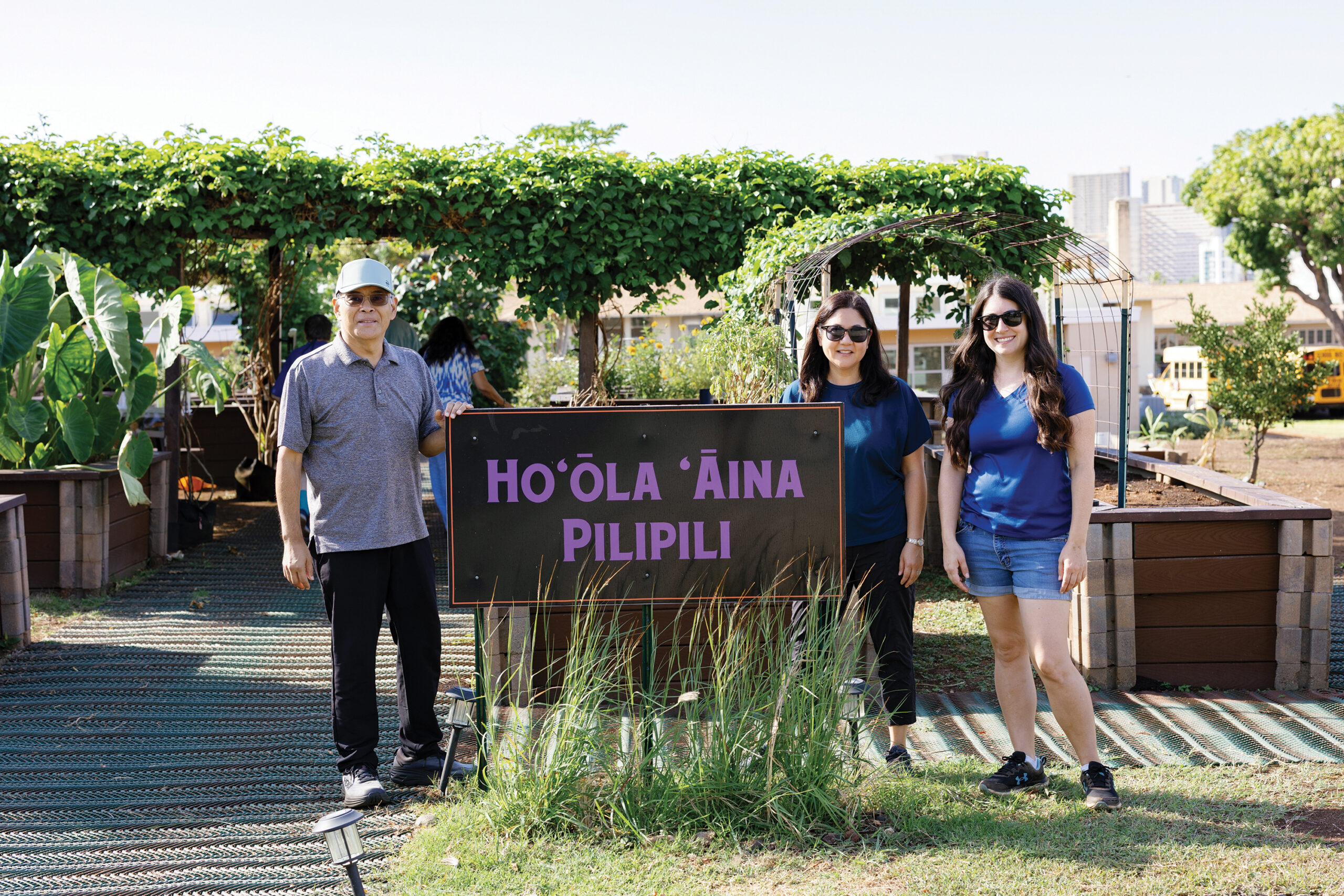
A dementia-friendly garden, situated on an underutilized space within the UH campus off Metcalf Street, now flourishes with plants like mamaki (a Native Hawaiian tea plant), kalo, ‘ōlena, rosemary, liliko‘i, cherry tomatoes, basil and more. It features elevated planter boxes, resting areas and wide pathways, all designed with accessibility in mind.
Monthly gatherings at the garden welcome people of all ages and abilities, including those living with dementia, along with their caregivers and friends. Supported by COA staff and student volunteers, participants connect through shared, nature-based activities that nurture both body and spirit. The space is thoughtfully designed for comfort and inclusion, featuring shaded seating, raised garden beds and nearby restrooms—ensuring everyone can take part and feel at ease.
“ ‘ Ho‘ōla ‘Āina Pilipili’ translates as ‘restore/regenerate, to bring life back,’ to ‘āina—the land which feeds,” says Melody, the garden’s co-founder and Memory Café program coordinator. “And ‘pilipili’ refers to the name of the smaller land division (ili), where the garden is located. Together, it means ‘to restore and bring life back to the land.’ ‘Pili,’ such as ‘pilina,’ is for close relationship between people and connection to nature.”
Often called the person with “the heart behind the project,” Melody finds it deeply rewarding to see how much it’s grown. “It’s wonderful to bring back to life and regenerate unused land,” Melody says. “The garden has become a place for people to reconnect—with nature, with each other and sometimes with themselves.”
Last April, the garden and its caretakers welcomed dozens of visitors who helped pilot a new Dementia-Friendly Garden Checklist, developed by Melody as part of her dissertation research. The project evaluated how outdoor spaces could better support people of all ages and abilities.
The garden also serves as a living classroom for ‘āina-based learning and community connection.
Summer Maunakea, garden co-founder and associate professor of curriculum studies in the College of Education, incorporates it into ‘āina-based education courses, while the COA continues to guide its growth as a model that supports engagement of older adults, particularly persons with memory loss and caregivers.
The Memory Café and garden have grown into the living heart of the UH COA’s mission—where research meets compassion. “The program has a lot more engagement now… digging right in and maturing nicely,” says regular garden visitor Gary Simon, state volunteer president of AARP Hawai‘i. The garden’s steady growth mirrors the café itself—vibrant, welcoming and deeply rooted in community connection.
It’s not therapy in the traditional sense, but it is healing. Under shaded tents, laughter drifts through the air as kūpuna and students plant seedlings, paint stones or simply talk story. On one recent afternoon, 100-year-old Doris Inouye attended her first session with her 77-year-old daughter, Kathy Umemura. “They enjoyed being outdoors and intermingling with other people of all ages,” a volunteer shared. Moments like these show that joy and connection don’t fade with age, they just take new forms.
The garden itself was designed for inclusion. Wide paths, shaded seating and adaptive tools make it easy for anyone to join. Everything is provided, from gloves to refreshments, so participants can simply show up and fellowship together. Each session ends with quiet reflection and feedback that helps COA keep improving what matters most—that human connection.
“The café is like a family gathering,” one participant said. “We come, we talk, we plant and we leave feeling lighter.”
Ongoing discussions regarding how Honolulu can be more age- and dementia-friendly that began years ago resulted in the creation of UH COA’s Memory Café. The project is just one example of many efforts to improve quality of life for island kūpuna.
Planting the Next Generation
If the seniors are the roots, the youth are new shoots. At the COA, youth involvement is guided in part by Kevin Y. Kawamoto, PhD, a gerontological social worker, whose work bridges students and kūpuna through shared learning and service. Dr. Kawamoto describes COA as giving young people a chance to learn by doing—to sit beside elders, listen and serve with empathy.
Students who volunteer at the Memory Café and garden gain firsthand experience working with older adults and caregivers. Through conversation, gardening and shared laughter, they build the kind of intergenerational understanding that strengthens both community and workplace relationships. These connections go beyond volunteer hours—they nurture compassion and respect across generations.
Among those students is Brayden Jadulang, an 18-year-old UH biology major. “I’m interested in healthcare and sustainability,” he says, crediting his parents for inspiring his volunteerism. Students like Brayden show up at the garden to volunteer and cultivate not only plants, but empathy, the kind of insight that will shape Hawai‘i’s future caregiving workforce. And he does this without any expectation of college credit.
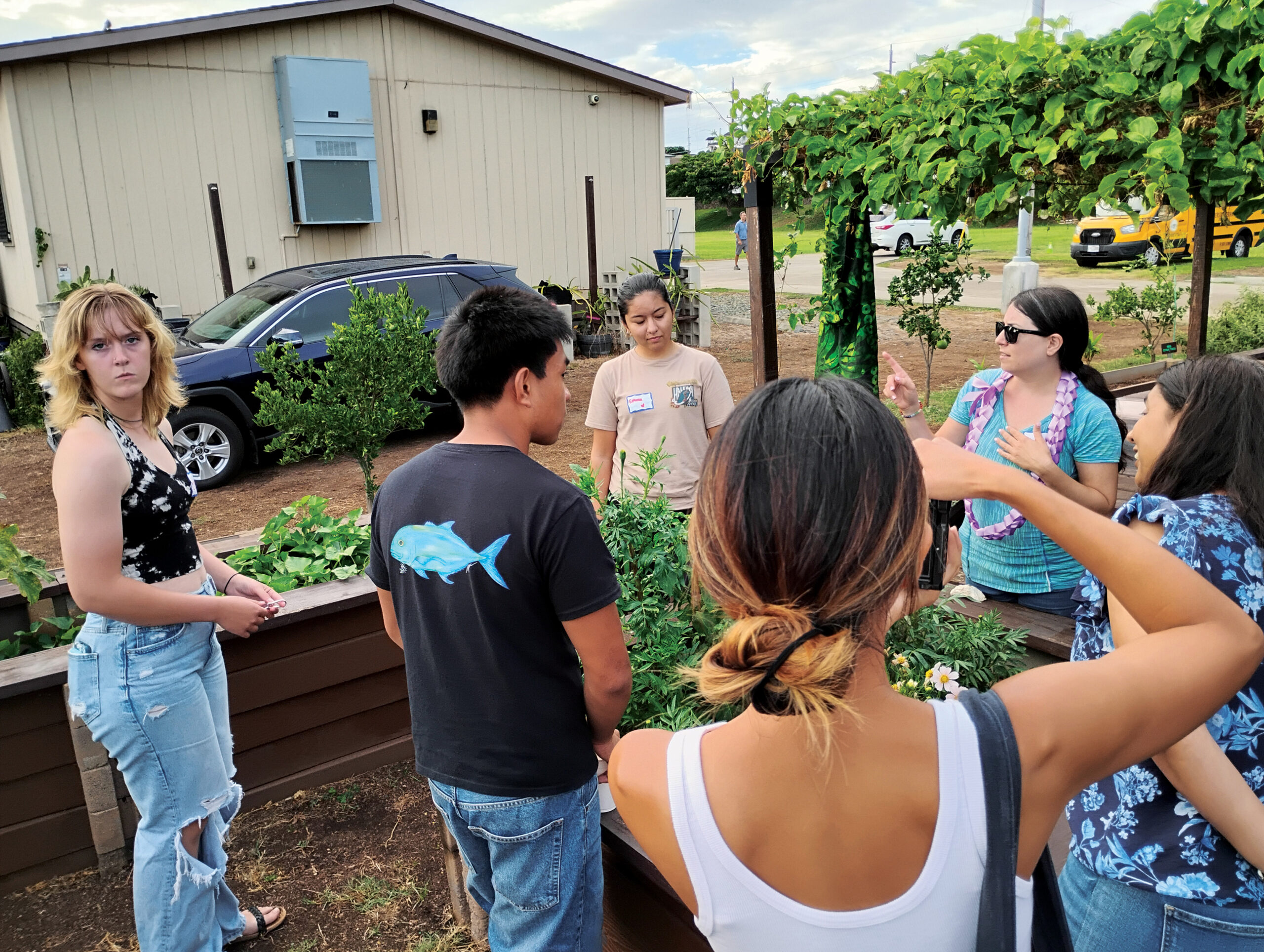
Melody Halzel (with lei) and student volunteers evaluate how accessible, safe and engaging dementia-friendly gardens and environments such as UH COA’s Memory Café are. Supported by COA staff and student volunteers, participants connect through shared, nature-based activities that nurture both body and spirit.
“Many students volunteer simply to help kūpuna, but its also a wonderful educational opportunity that will ideally drive more students to careers in aging.” She goes on to state that the café thrives because of the sincerity of those volunteer youth who show up. Their kindness turns research into relationships and classrooms into communities. “Our youth need to learn about aging,” she adds. “When generations connect, they build bridges of understanding and find common ground.”
Through the CARE Registry, students also serve as ambassadors, helping to recruit participants and share information across island communities. Others lend their voices to social media campaigns promoting brain health or storytelling projects that connect generations. To promote careers in eldercare, Dr. Nishita has partnered with ‘Iolani School and other public high schools to promote awareness, foster empathy and provide intergenerational programming. This approach reflects one of COA’s long-held goals, which is to develop a workforce that values and understands aging. The Memory Café is where that vision takes root—students learning the human side of healthcare, while seniors rediscover purpose through mentorship and friendship.
The Memory Café and garden at Ho‘ōla ‘Āina Pilipili. Under the guidance of (L–R) Kevin Y. Kawamoto, PhD, a gerontological social worker; Christy Nishita, PhD, UH COA project lead; and Memory Garden cofounder Melody Halzel, a PhD student in Public Health; young people are given the opportunity to learn by doing and build inter-generational understanding by sitting beside elders, listening with full attention and serving them with empathy.
Deepening Community Roots
What happens when a university research center steps off campus and into the heart of neighborhoods? For the COA, it means transformation on both sides. The university learns from lived experience and the community gains access to knowledge, tools and relationships once tucked away in academic buildings.
Because the center is based in Hawai‘i, it naturally embraces the islands’ cultural mix—Native Hawaiian, Asian, Pacific Islander and immigrant families—all with a deep respect for elders. That cultural awareness makes every project more personal, more local and more grounded in aloha. From neighborhood workshops to ‘āina-based gatherings, COA’s work reaches people where they live, work and talk story.
Programs like Dementia Friends Hawai‘i and the CARE Registry open doors to understanding and inclusion, helping residents learn how to better support those living with memory loss, while encouraging participation in research that reflects Hawai‘i’s diverse voices. The CARE Registry, in particular, helps researchers across the nation understand how culture, language and community shape the aging experience—insights that may one day influence how healthcare, caregiving and mental wellness are approached across the Pacific.
These community partnerships don’t just educate—they strengthen ‘ohana connections and restore confidence in aging with grace. They give kūpuna opportunities to share wisdom and remind younger generations what compassion and continuity look like in everyday life.
But numbers and studies tell only part of the story. At the heart of it all is something that can’t be measured—dignity. Whether through an awareness session, a volunteer’s kind word or a quiet chat in the garden, the goal is always to remind seniors that they matter, that their stories still shape Hawai‘i’s future and how every generation has something to give and something to gain.
Cultivating a Successful Future
While the laughter in the garden is real and immediate, COA’s leaders are also thinking about the future. The center hopes to expand Memory Café gatherings to neighboring islands and to develop partnerships with local hospitals and nonprofits to reach more caregivers. There’s also talk of blending technology with tradition—perhaps introducing virtual garden sessions for those unable to travel.
Dr. Nishita envisions Hawai‘i becoming a model for aging in place—where kūpuna can live independently, surrounded by support, culture and community. “Aging is something we all share,” she often says. “It’s a journey we take together.”
COA’s ongoing research on dementia-friendly design is another seed for the future. As cities across the Pacific look for ways to make public spaces more inclusive, UH’s work may help guide how communities everywhere design for dignity.
The story of the UH COA isn’t about numbers or programs. It’s about people. It’s about kūpuna like Doris, students like Brayden and visionaries like Melody, who see potential where others see wilderness. It’s about finding joy in the soil and meaning in the shared act of caring.
Growing Together for a Bountiful Harvest
As a kūpuna myself, I visited the garden and spoke with those who gathered there. What I witnessed was more than a program—I saw and experienced a sense of belonging.
Students laughed alongside elders, caregivers shared stories and the simple acts of planting and conversation bloomed into connection. For this kūpuna-writer, it was a reminder that aging is not about slowing down. It’s about staying rooted in purpose, community and aloha.
Each seed planted in the garden reflects the center’s larger mission, to cultivate a community where learning, service and compassion thrive side by side. Here, research blossoms into relationships and the wisdom of one generation nurtures the promise of the next.
In every way, UH COA continues to prove that the best kind of growth happens when generations work together—listening, laughing and helping life take root in the spirit of aloha.
If you would like more information about the University of Hawai‘i Center on Aging, the Memory Café and garden or for inquiries about volunteering, visit manoa.hawaii.edu/aging.
Tucked between campus classrooms near the College of Education, the leafy paths of the University of Hawai‘i’s (UH) Ho‘ōla ‘Āina Pilipili garden come alive every third Thursday afternoon. Soft laughter blends with the rustling of leaves and the hum of gentle conversation. Under the shelter of liliko‘i shade tents, a kūpuna presses seeds into the…
Selling real estate is one of the most impactful financial decisions you make. Understanding taxes, especially capital gains, can make the difference between simply selling a property and creating a lasting legacy.
When you sell your property for more than you paid for it, the profit is called a “capital gain.” If the property was owned for less than a year, the capital gain amount is taxed as ordinary income. If held longer, it’s taxed at a lower federal rate (0%, 15% or 20%), plus state taxes. But there are ways to minimize these taxes.
The primary residence exclusion benefit allows eligible homeowners to exclude up to $250,000 of capital gains for a single owner and $500,000 for married owners filing jointly, if they’ve lived in the property two of the last five years.
For investment properties, a 1031 exchange lets you sell and reinvest in another like-kind property, deferring capital gains and keeping more equity working for you.
A 1031 exchange can improve cash flow, diversify your portfolio and strengthen your real estate plan by passing on property with a stepped-up cost basis. By planning early and always seeking advice from a tax professional and real estate wealth advisor, you can prevent family disputes and create strategies to build, protect, preserve and transfer wealth for future generations.
Selling real estate is one of the most impactful financial decisions you make. Understanding taxes, especially capital gains, can make the difference between simply selling a property and creating a lasting legacy. When you sell your property for more than you paid for it, the profit is called a “capital gain.” If the property was…
Hawai‘i’s estate tax exclusion remains at $5,490,000 per person, with tax rates as high as 20%. While this may seem like a high threshold, many Hawai‘i residents can exceed it quickly—especially when factoring in the value of a primary residence, inherited assets, life insurance proceeds, retirement accounts and investment portfolios.
Minimizing exposure to Hawai‘i’s estate tax should be a key part of your estate planning strategy. One of the most effective yet often over-looked tools is estate tax portability. This allows a surviving spouse to use the unused portion of the deceased spouse’s estate tax exclusion—potentially doubling the exclusion to $10,980,000. However, portability is not automatic. You must file a timely Hawai‘i estate tax return after the first spouse passes away, even if no tax is due at that time. Unfortunately, many families miss this opportunity because their advisors whether attorneys or CPAs—are unfamiliar or uncomfortable with the process and simply don’t file the return.
Failing to claim portability can result in a significant and unnecessary estate tax burden when the surviving spouse dies.
If you or your spouse have a combined estate nearing or exceeding Hawai‘i’s exclusion amount, now is the time to plan ahead and take full advantage of the available estate tax strategies.
Hawai‘i’s estate tax exclusion remains at $5,490,000 per person, with tax rates as high as 20%. While this may seem like a high threshold, many Hawai‘i residents can exceed it quickly—especially when factoring in the value of a primary residence, inherited assets, life insurance proceeds, retirement accounts and investment portfolios. Minimizing exposure to Hawai‘i’s estate…
One of the great benefits of retirement is having the freedom to pursue new interests and hobbies at your leisure. For many, travel is at the top of their retirement bucket list. The key question is how to make sure your retirement savings can keep up with your travel ambitions. The following considerations can help you determine your answer:
Make travel a part of your retirement budget. Without the funds to pursue travel, you likely won’t get too far. As you plan for your living expenses, include travel as a line item in your retirement budget. Identify a portion of your monthly income to cover travel expenses before you hit the road.
Consider travel timing. Most retirees plan their biggest travel excursions in the early years of retirement, when health challenges may be fewer and stamina is greater. Therefore, your travel budget may represent a larger portion of your overall expenses in the first years of retirement. If this aligns with your travel vision, factor it into your retirement budgeting strategy.
Determine your travel style. To come up with a reasonable cost estimate, identify the types of traveling you would like to do. Are you more interested in short trips to nearby locations, mostly traveling by car? Do you plan to explore the country in an RV? Are you looking to visit foreign destinations on a regular basis? Your travel goals will tell you a lot about how much you are likely to spend, which should be reflected in your retirement plan.
Find ways to cut costs. It’s easy to face “sticker shock” when you travel. Expenses like food (usually eating out), lodging and transportation can add up quickly. If you plan to stay in one place for an extended period, look into renting a home or apartment rather than “hotel-ing” it. Try to eat like the locals by buying food at grocery stores and markets. Take the time to look for flight deals or make your automobile travel routes as efficient as possible. One of the perks of being retired is that you may have more flexibility than working people to lock in deals by traveling off-season or at other unpopular times.
Don’t overlook insurance needs. Travel insurance may be appropriate if you get sick or lose luggage on a trip. Medicare is not accepted outside the US, and even within the US, you want to be sure your health insurance has you covered in the states you’re visiting.
Look for discounts and rewards. Costs for some activities are reduced for seniors. Although discounts may be modest, every dollar counts. Check to see what discounted options are available through AAA, AARP or others. Pursue smart credit card strategies that help you earn rewards: free travel or cash back on purchases. If travel is in your plans when you leave the workforce, it’s key to go beyond dreaming and do some significant preparation. Use the time you have now to set specific goals and build savings that will help make your dreams a reality
Michael W. K. Yee, CFP®, CFS®, CLTC®, CRPCTM, is a Private Wealth Advisor/Financial Advisor with Ameriprise Financial Services, LLC in Honolulu, Hawaii. He specializes in fee-based financial planning and asset management strategies and has been in practice for 41 years. Certified Financial Planner Board of Standards Inc. owns the certification marks CFP®, CERTIFIED FINANCIAL PLANNER™ and CFP certification mark (with plaque design) in the U.S. Investment products are not insured by the FDIC, NCUA or any federal agency, are not deposits or obligations of, or guaranteed by any financial institution, and involve investment risks including possible loss of principal and fluctuation in value.
Ameriprise Financial Services, LLC. Member FINRA and SIPC.
One of the great benefits of retirement is having the freedom to pursue new interests and hobbies at your leisure. For many, travel is at the top of their retirement bucket list. The key question is how to make sure your retirement savings can keep up with your travel ambitions. The following considerations can help…
“Something bad will happen if I am not there.” It’s the familiar fear of caregivers everywhere. Caregivers often live under the constant pressure that their presence alone keeps disaster from striking. This deeply human belief can trap us in emotional chains and lead to exhaustion.
Many caregivers feel indispensable. “No one else helps. I’m the only one who really cares.” That conviction brings both pride and pain. It can create burnout and isolation. While some caregivers may be more attentive than others, awareness is not the same as control.
Professionals—nurses, aides and physicians—are taught an essential truth: Even with the best care, decline still happens. Family caregivers must learn the same lesson. Old age is fatal. Our role is not to save lives, but to make lives as safe, comfortable and anxiety-free as possible.
Accepting this truth eases guilt. The work, the stress and even the emotional strain remains, but perspective allows us to let go of the belief that everything depends on us.
Understanding ‘Guilt’
Real guilt results from knowingly doing harm. Most caregivers don’t do that. What we often feel is anxiety, sadness or regret , not guilt. Worrying about what happens when we take a break makes us human, not guilty. Unless you wear a cape, you cannot prevent every fall, illness or misstep.
Of course, there are times when guilt is appropriate—if we lose control, ignore a need or fail to act. But even then, guilt should lead to change: Seek help; share the load; adjust your caregiving plan. For most, guilt is misplaced and undeserved.
The Power of Respite
The cure for caregiver fatigue and misplaced guilt is respite—planned time away from caregiving. National caregiving organizations recognize it as essential to caregiver health. While paid respite care can be expensive, options exist, including professional in-home aides, short-term nursing home stays, trained volunteers, or trusted friends and family.
Tech tools such as lotsahelpinghands.com can help coordinate schedules and share responsibilities among your caregiving “team.” Even small breaks restore balance and perspective.
You cannot pour from an empty cup. Think of the man holding a bucket of water but dying of thirst because he’s afraid to set it down and take a drink. Don’t let misplaced guilt stop you from caring for yourself. Taking care of yourself is part of caring for your loved one.
Recognize what you can control, prepare for what you cannot and give yourself permission to rest. When you care for yourself, you return stronger, more patient and better able to continue giving care—with hope and without guilt.
“Something bad will happen if I am not there.” It’s the familiar fear of caregivers everywhere. Caregivers often live under the constant pressure that their presence alone keeps disaster from striking. This deeply human belief can trap us in emotional chains and lead to exhaustion. Many caregivers feel indispensable. “No one else helps. I’m the…
Namaste Care is a sensory-focused program for people with dementia living in a care home. It’s especially helpful for those in the later stages of dementia who may not be able to join in traditional activities due to a loss of abilities.
Facilities with a dedicated space that includes elements like mood lighting, fish tanks, lava lamps, essential oil diffusers and relaxing music have anecdotally been found helpful in creating a sense of calm and reducing agitation. Namaste Care guests may also receive a hand or foot massage, hydration and a snack.
The attention given to the sensory experience of the guest is what allows this modality to be accessible, even in later stages of dementia. Though more research is needed, many case studies have shown a reduction in anxiety after dementia patients attend a Namaste Care session. Sometimes the relaxation and calm may last well beyond their time in the Namaste Care room. As care home residents are often at risk for isolation, the Namaste Care program provides them an opportunity to experience a soothing touch and physical connection while engaging them in a meaningful activity.
Namaste Care is a sensory-focused program for people with dementia living in a care home. It’s especially helpful for those in the later stages of dementia who may not be able to join in traditional activities due to a loss of abilities. Facilities with a dedicated space that includes elements like mood lighting, fish tanks,…
Maria no longer felt doubtful after her warm welcome at the pau hana gathering. Her dad recently moved into a care home, but she and her siblings had second thoughts about the move when he pleaded to go home. She spoke softly then smiled after other attendees shared their own stories. By the end of the hour together, Maria’s eyes sparkled with relief. She wasn’t alone after all. Relaxed, regular talk-story gatherings with caregiving team members are like a warm blanket for families who receive empathy, guidance and friendship to help cope with aging decisions, burnout or strained family relationships. These types of group meetings provide an opportunity for families to learn from each other so no one feels lost or alone when making life decisions.
Caregiving professionals can also offer support and valuable information. Storytelling and reflection can unify gathering attendees and remind us all to honor each other as energizers who lead their families’ rites of passage. Whether or not you are able to regularly attend structured meetings with your inner circle, we encourage you to follow through on your bucket lists for your own rest and relief, and share your stories with trusted people you can rely on for support.
Maria no longer felt doubtful after her warm welcome at the pau hana gathering. Her dad recently moved into a care home, but she and her siblings had second thoughts about the move when he pleaded to go home. She spoke softly then smiled after other attendees shared their own stories. By the end of…
In this ongoing column, Kaiser Permanente doctors will answer commonly asked questions.
When a new year rolls around, it always feels like a fresh start. So it’s the perfect opportunity to turn that positive energy into simple, healthy habits that keep you strong, steady and feeling good.
What are the best exercises for strength without overdoing it?
When we talk about “strength,” we mean staying strong and steady for everyday life—from getting up from a chair to playing with the grandkids. The best exercises are functional movements that help you stay strong and help ensure your independence.
The good news? You don’t need a gym or fancy equipment. Try simple moves such as chair squats, wall push-ups or standing leg lifts. Resistance bands work your muscles without putting pressure on your joints.
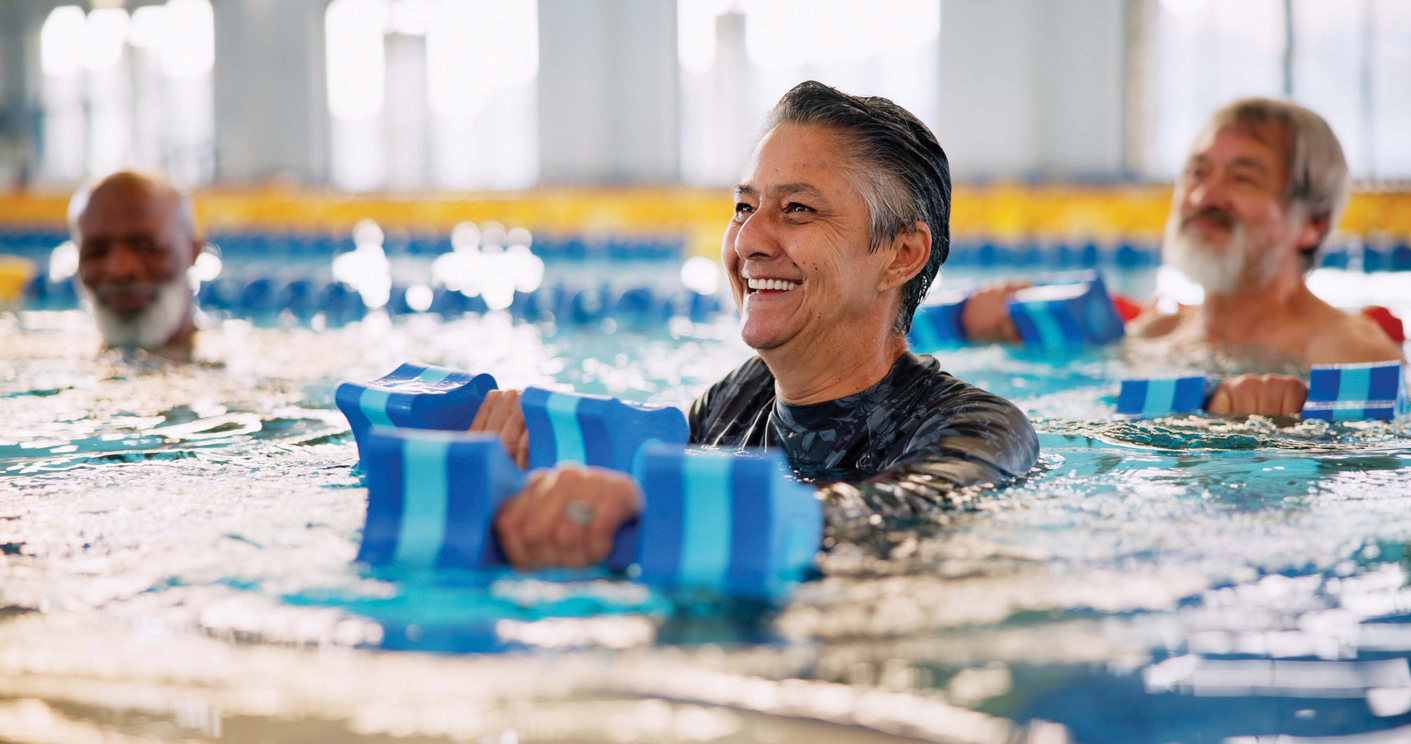
Living in Hawai‘i, there are plenty of fun ways to stay active. Dance hula to keep your core strong and your posture proud. Go for a walk at the beach or around the park with friends. Join a tai chi class or try water aerobics at your local pool.
Aim for two days a week of light strength training—using small weights (2 lbs. or less), resistance bands or wall push-ups—and mix in walking, jogging or swimming for heart health. Move a little every day and you’ll soon feel stronger and more balanced. Even a five-minute walk before or after meals makes a difference.
How do I know if I’m pushing too hard — or not enough?
Finding your balance with exercise is like paddling a canoe: Find your rhythm. Don’t sprint the whole way. The easiest way to check your effort is the talk test. If you can talk story with a friend while you’re walking, but can’t quite sing along with the radio, you’re in the sweet spot. If you’re gasping and can’t talk, it’s time to ease up. Pay attention to what your body’s telling you.
Feeling lightheaded, dizzy or having chest pain are red flags to stop and rest—or check in with your doctor. Even soreness that lasts for more than a couple of days is your body’s way of asking for a break. Take a day of rest and come back the next day when you’re feeling better. If you’re sore, try ice, topical creams or patches first—or acetaminophen. Check with your doctor before taking other types of pain relievers.
Think of exercise as a friendly conversation with your body. The goal is to find that steady rhythm.
The Bottom Line
New year health goals don’t mean reinventing your life—it’s about finding small, joyful ways to move more. Everyday activities can give you a solid workout. Sweeping the lānai and even cooking a big family meal keep your body moving. Go as slowly as you need to prevent falls and don’t lift objects heavier than you can handle.
Get your family and friends involved and it becomes an even healthier way to connect with others. When you share these moments with the people you love, you’re not only keeping your body active, you’re also strengthening those meaningful connections for the new year and all the years to come.
DR. SERENA LO, a Honolulu native, combines her love of science and helping others through medicine. She earned her medical degree from the University of Hawai‘i, John A. Burns School of Medicine and completed her residency in internal medicine at Virginia Mason Medical Center in Seattle. Board certified in geriatric and internal medicine, Dr. Lo values teamwork and compassionate care—and enjoys mentoring students interested in becoming physicians. Kaiser Permanente will cover kidney health/diabetes in the next issue. If you have a medical question for the doctor, email: cynthia@generations808.com.
In this ongoing column, Kaiser Permanente doctors will answer commonly asked questions. When a new year rolls around, it always feels like a fresh start. So it’s the perfect opportunity to turn that positive energy into simple, healthy habits that keep you strong, steady and feeling good. What are the best exercises for strength without…
As we welcome a new year, it’s the perfect time to focus on balance, building strength, stability and confidence through movement. For seniors, fitness isn’t just about exercise, it’s about maintaining independence, living fully and preventing falls. Nearly every senior worries about falling, and for good reason. Falls are a leading cause of injury, so maintaining good balance is important for older adults.
Test Your Balance
A quick self-test can highlight where you stand: Try balancing on one leg for 10 seconds. If it feels difficult, it may be time to add balance training into your routine. Simple activities, such as marching in place with knees lifted high, performing gentle step taps to the side (shift your weight onto one leg and tap the floor lightly with the other before returning it next to your planted foot) or standing on one leg while brushing your teeth can improve coordination, posture and core strength over time.
Build Up Your Strength
Brisk walking is great for the heart, but equally important is strength training to build muscle tone and bone density. Chair squats are a great practical exercise that strengthen the legs, hips and core while improving everyday functions like getting out of bed or on and off the toilet.
The Fear Factor
Fear of falling itself is a risk factor, often leading seniors to shorten their stride or avoid activities altogether. Over time, this restrictive behavior reduces both mobility and confidence. Instead of holding back, it’s important to keep challenging yourself safely with balance and strength activities designed to make you feel grounded and secure.
Consistency is Key
Consistency matters more than intensity. By weaving these exercises into daily routines, seniors can stay active, confident and independent in the year ahead.
As we welcome a new year, it’s the perfect time to focus on balance, building strength, stability and confidence through movement. For seniors, fitness isn’t just about exercise, it’s about maintaining independence, living fully and preventing falls. Nearly every senior worries about falling, and for good reason. Falls are a leading cause of injury, so…