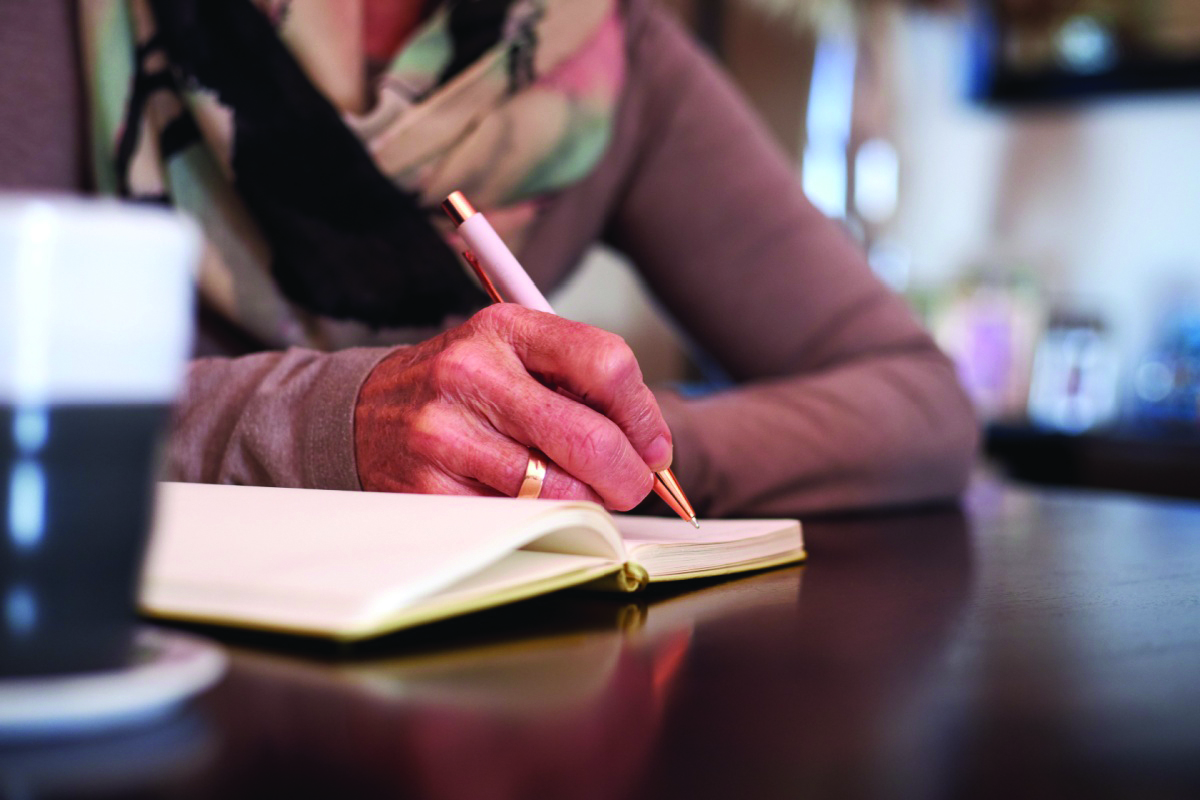
Why is grief journaling good for us? Journaling is an effective coping mechanism for our grief. The journal becomes a companion as we navigate grief and serves as a safe, nonjudgmental healing outlet.
Many of us may already keep journals , but if we haven’t explored this avenue, let’s track our grief journey on paper. How do we start? ♥ Let’s pick our journal. Do we like blank or lined books? Composition books are the cheapest. We can also gather recyclable materials, like paper bags and envelopes in different colors and shapes. Staple or bind them to make a book. ♥ Let’s pick our writing elements. Do we prefer using gel or fountain pens? Pencils, crayons, markers and paints work, too. ♥ Let’s choose a time to write for at least five minutes on a daily basis. Is it morning, afternoon, evening or at bedtime? Use a timer. Start with a minute and gradually write for five minutes. Taking small steps is key when we plan to journal on a daily basis. ♥ What do we write about? What you write can range from lists of things we need, want and dream of doing to random thoughts that pop into our minds. We may choose to write letters to our loved ones. Maybe write a delicate haiku, describing something in nature. The variety of topics is virtually endless. You can write about anything. But it is also perfectly fine to start with, “I am not sure what to write about…”
Write daily for 30 days to establish a habit.
♥ Before we begin writing in our grief journal, let’s take deep breaths, be mindful, put our hands on our book and bless the pages. Next, let’s tell our inner critics to leave the room during our daily writing sessions. And let’s not worry about grammar and spelling. Now release and let it flow. ♥ After a month of journaling, let’s reflect on our words. If we don’t want to share our writings, draw or paint over the words or tear up the pages and make a collage out of them.
Why is grief journaling good for us? Journaling is an effective coping mechanism for our grief. The journal becomes a companion as we navigate grief and serves as a safe, nonjudgmental healing outlet. Many of us may already keep journals , but if we haven’t explored this avenue, let’s track our grief journey on paper.…
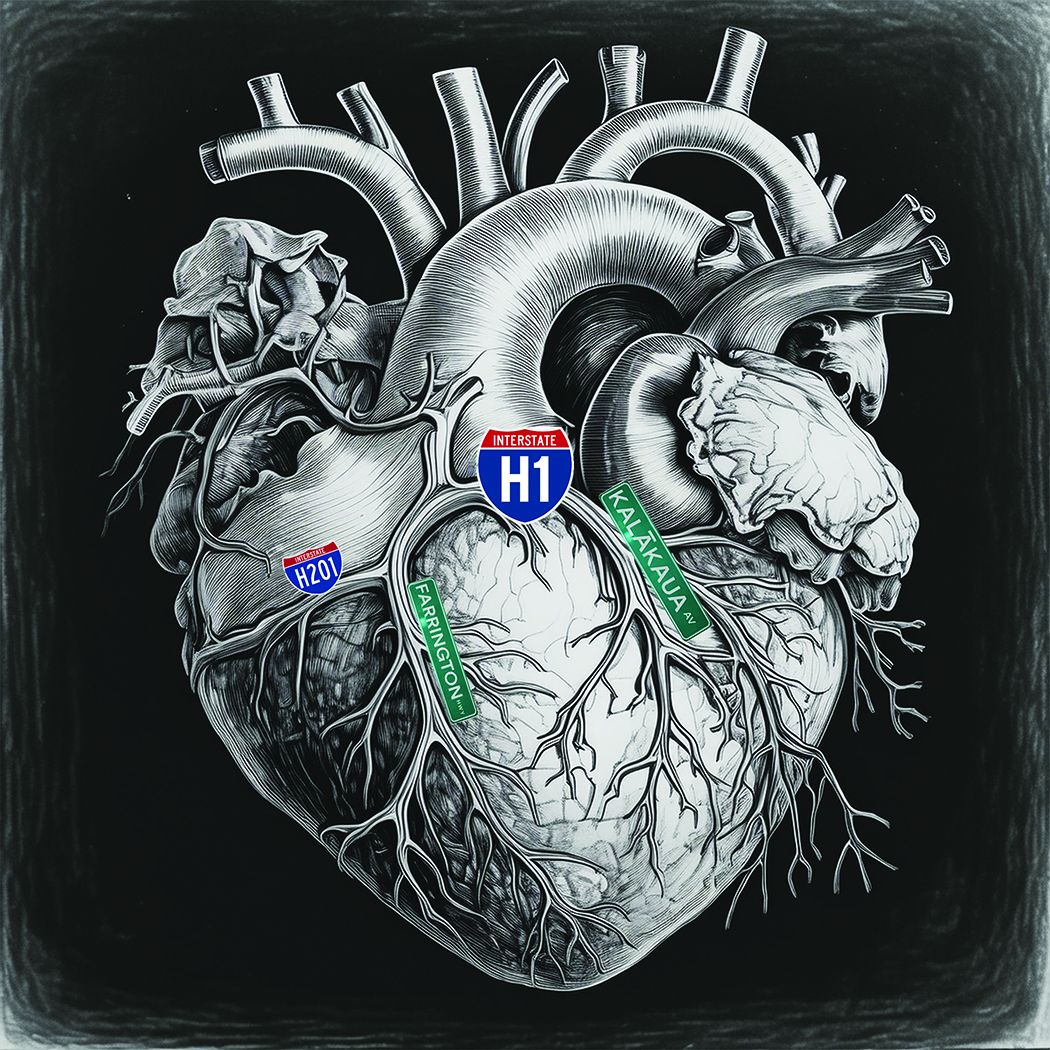
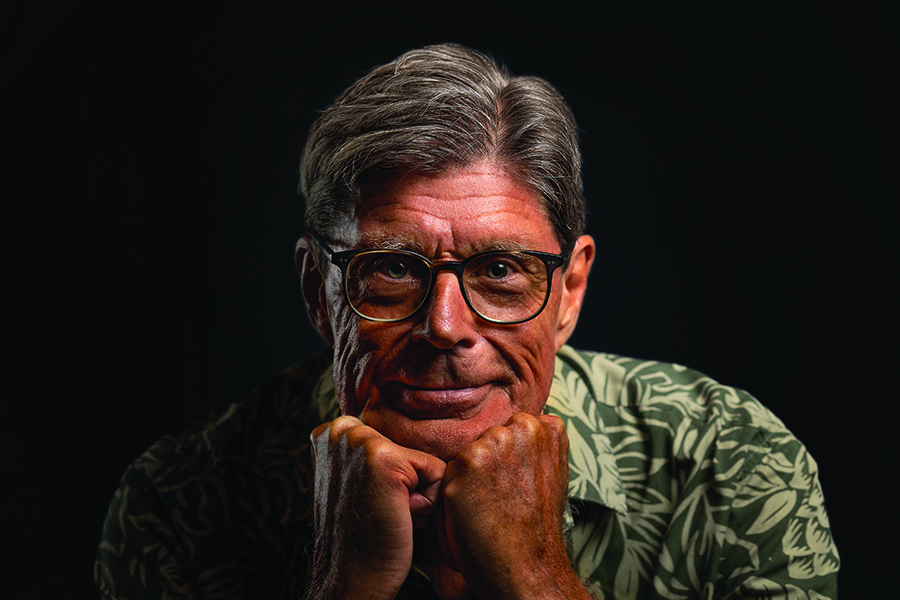
If you had told me a year ago that I would be experiencing the Granddaddy of Major Surgeries in 2024, I wouldn’t have believed you. But that’s what happened. And I was scared.
Last year, my cardiologist found a blocked artery. It was not partially blocked — which might have been fixed by a stent or a teeny-tiny Roto-Rooter — it would require major open heart surgery.
After months of tests and procedures, surgery was scheduled. Reality set in: I was not just going under the knife — I was having my chest opened up like a cheap can of tuna and a crew of scrubs-wearing spelunkers taking an expedition into my chest.
The planning began: My sister was flying in from the Mainland, I cleared my calendar and prepped frozen dinners. But these practical preparatory measures didn’t mitigate my fears. I’m a grown man, I’ve been through surgeries before — but the thought of having my ticker worked on was extremely frightening.
So I did some investigating and found this type of surgery is incredibly common. Over 700 of these surgeries are performed each year at the major O‘ahu hospitals. My procedure was at Straub, which alone performs over 160 of these procedures annually.
My surgeon explained everything — before, during and after. Although I would advise people to do their homework, I would also suggest avoiding a deep dive into the rabbit hole of details available online. Those facts won’t matter — you are not doing the surgery — and they’ll just drive you nuts.
Your hospital stay: What should you bring to the hospital? Well, think of it as packing for a vacation. Necessities include your “Boarding Pass” (driver’s license and credit card). Bring a warm robe (hospitals keep the AC at Reykjavik levels). Pack your phone, laptop, chargers, cables and toiletries. Books and magazines are very important because the TV only picks up the major channels. Don’t expect to stream Netflix or Hulu. The new season of “Only Murders in the Building” will just have to wait.
You won’t get much sleep. Staff will be entering your room at intervals of 3.5 seconds to take your vitals, provide meds and take an inventory of supplies. You can throw your privacy out the window. There is none in the hospital.
Friends and relatives will make the trip to the hospital, sit on cold metal folding chairs in your room and make small talk while trying not to stare at the tubes, wires and bags hanging from your body. So when they call, let them know that you’d love to see them but you will only have 10 minutes to visit because of some procedure (that you made up). That way, you will spare your visitor from having to make up a “I have to go now” story.
Home sweet home: You probably won’t be allowed to drive, so make arrangements for meals and grocery delivery.
In my case, my wonderful sister had everything under control: My necessities were all within reach and the new season of “Murders in the Building” was queued up. After she left a couple weeks later, my pre-prepared frozen meals certainly came in handy.
Major surgery is scary: That can’t be avoided — but with a little preparation, knowledge and help from friends and family, surgery may not be quite as bad as you thought it would be. Although daytime TV is…
If you had told me a year ago that I would be experiencing the Granddaddy of Major Surgeries in 2024, I wouldn’t have believed you. But that’s what happened. And I was scared. Last year, my cardiologist found a blocked artery. It was not partially blocked — which might have been fixed by a stent…
When I turned 55, my daughter asked me to go to Ross Dress for Less to do some clothes shopping. I told her that I didn’t need clothes and didn’t want to shop. Well, the truth came out. “But mom, you can get their 10% discount when you buy my birthday present.” That was the first time I really knew about “senior discounts” and from then on, I didn’t mind stores or restaurants asking me if I would like a senior discount.
I’m sure many of you like discounts, too, and may make a choice on where to shop or eat because they offer a senior discount or senior menu. I know that Big City Diner has a senior menu that is delicious and also a Senior Citizen Tuesday discount with 10% off dine-in food for customers 60 years or older. And on Thursday, take a grandchild 10 years or younger to get their “Kids Eat Free” meal.
Some stores and restaurants have special menus or have a notice on the window about their senior discounts. The minimum age also varies from company to company. I think 55 is the youngest; however, some make you wait until you’re 60. No matter the age, we will all get to the point where a senior discount is appreciated.
Generations Magazine will have a list of senior discounts in its November/December 2024 issue. If you know of companies that offer a senior discounts, call me at 808-722-8487 and I will contact that company to confirm the discount before we print it for our bargain-seeking readers.
If you have a story you’d like to share or know of someone celebrating their centenarian year, contact Sherry Goya at 808-722-8487 or email sgoyallc@aol.com.
When I turned 55, my daughter asked me to go to Ross Dress for Less to do some clothes shopping. I told her that I didn’t need clothes and didn’t want to shop. Well, the truth came out. “But mom, you can get their 10% discount when you buy my birthday present.” That was the…
My legs are a bit wobbly. My balance is off. My thinking was hazy, so I just took a nap. And now I must tell you, I’m still feeling lazy and that makes me cross.
I still move with ease. When told to touch toes, I flatten my hands on the floor. While others may groan, I try for one more. But when told to stand on one foot with eyes firmly closed, I find I now look for something to hold.
It’s also my eyes. Things look a bit fuzzy, but still not that bad. Doc says, “20/30, you’re really quite lucky.”
So here’s what I do.
A tool threads my needle. Drops clear my eyes. I use larger print and turn up the light. It’s not really a problem, so far I’m alright.
Now all of a sudden I really must pee. I thought I could hold it, I thought I could wait. Oh, how can I manage this problem I so hate.
Sorry, what did you say? Please tell me again. My hearing aids are new, yet sounds seem to blend. Repeat it now loudly. I didn’t quite hear.
My hands have a tremor. My feet, how to say, either they feel crawly or else they’re asleep.
In two years I’ll be 90. Oh my God, can it be? A number so ancient I never did count it. But now I can see that I dare not discount it.
I’ve now lost my keys. I’ve forgotten your name. Oh well, who hasn’t? I’m hardly to blame. Now I pocket my keys, jot down your name. But my writing’s a scribble. At times I can’t read it — so I talk into my phone. Now there’s a solution. I really do need it.
They say, “You’re so young for your years.” It’s always been so. I answer, “I have good fortune, good genes.” And although it is true, my legs are still flighty. I still lose my keys. My eyes still see fuzzy. I’m not sure what to do.
Will exercise delay this endgame that looms? Experts do say so. I certainly hope so.
But today is my problem. I feel a bit wobbly. And I’ve forgotten your name.
“It was on the Big Island while watching the fiery Kīlauea Iki eruption that I first saw her,” Glenn says about his wife, Mary, who are both Kāhala Nui retirement community residents. “She was riding her Vespa, her blond ponytail flying.” They married and have had adventurous lives together living around the world. Mary has been a Girl Scout professional, a manuscript editor, an Austrian tour guide, a Victorian dressmaker, a potter and a literacy tutor. For years, she edited the text books Glenn wrote. “I’ve been after her to start writing for herself. This is a recent piece she wrote for Generations Magazine.”
My legs are a bit wobbly.My balance is off.My thinking was hazy,so I just took a nap.And now I must tell you,I’m still feeling lazyand that makes me cross. I still move with ease.When told to touch toes,I flatten my hands on the floor.While others may groan,I try for one more.But when told to stand…
The Social Security Administration (SSA) announced two of several updates to its Supplemental Security Income (SSI) regulations that will help people receiving and applying for benefits offered through this federal program.
SSI provides monthly payments to adults and children with a disability or blindness, and to adults aged 65 and older who have limited income and resources. SSI benefits help pay for basic needs like rent, food, clothing and medicine.
To receive SSI benefits, applicants must meet eligibility requirements, including income and resource limits.
Under SSA’s old rules, food and shelter were counted as unearned income, which may affect a person’s eligibility or reduce their payment.
Under one of the new rulings, “Omitting Food from In-Kind Support and Maintenance (ISM) Calculations,” the agency will no longer include food in ISM calculations beginning on Sept. 30.
The new policy removes a critical barrier for SSI eligibility due to an applicant’s or recipient’s receipt of informal food assistance from friends, family and community support networks.
The new policy is also easier to understand and use, reduces month-to-month variability in payment amounts and will improve payment accuracy. SSA will see savings because less time will be spent administering food ISM.
The SSA also announced “Expansion of the Rental Subsidy Policy for Supplemental Security Income (SSI) Applicants and Recipients.” Beginning Sept. 30, the agency will expand its SSI rental subsidy policy, which was only in place for SSI applicants and recipients residing in seven states (Conn., Ill., Ind., NY, Texas, Vt. and Wis.). In those states, rental assistance (renting at a discounted rate) is less likely to affect a person’s SSI eligibility or payment amount.
This new rule will extend this policy to all SSI applicants and recipients nationwide. This may increase the benefit amount some people are eligible to receive and will allow more people to qualify for critical SSI payments.
For more information on the SSI program, including who is eligible and how to apply, visit ssa.gov/ssi. To make an appointment, call between 7am and 5pm, Mon–Fri: 800-772-1213 (toll free) | socialsecurity.gov
The Social Security Administration (SSA) announced two of several updates to its Supplemental Security Income (SSI) regulations that will help people receiving and applying for benefits offered through this federal program. SSI provides monthly payments to adults and children with a disability or blindness, and to adults aged 65 and older who have limited income…
It was another great year for kūpuna. Gov. Josh Green signed into law bills that both enhance healthy aging and improve care for the frail. With support from the Council of State Governments Interagency Task Force on Sustainable Long-Term Care, the Kupuna Caucus convened a long-term care summit of 64 organizations in February 2024, with a focus on a person-centered long-term care continuum of services. Forty-three organizations committed to champion long-term care; addressing workforce shortage; cost and sustainable financing of long-term care and models of a continuum of quality long-term care services. The bills signed by the governor that support programs and services for kūpuna are: ■ Long-term Care Master Plan: HB2224/Act 159 directs the Executive Office on Aging (EOA) to develop a comprehensive long-term care master plan and provides funding for a full-time long-term care planner. ■ Adult Residential Care Homes: HB2216/Act 20 increases adult residential care home payments. ■ Personal Needs Allowance: HB1974/Act 18 increases care home residents’ monthly personal needs allowance from $50 to $75. It had not been raised since 2007. ■ Silver Alert Program: SB2305/Act 158 directs the Department of Law Enforcement to establish a silver alert program to help locate missing persons 65 or older, cognitively impaired or developmentally disabled. ■ General Excise Tax Exemption: SB1035/Act 47 exempts medical and dental care providers treating patients on Medicaid, Medicare and Tricare from the GET, making providers more available to serve the vulnerable. ■ In the State Budget: HB1800 funds two programs to support community kūpuna: 1) increases fee reimbursement rates for Adult Day Care and Adult Day Health community-based programs and 2) funds $400,000 for Healthy Aging Partnership’s “Better Choices, Better Health” and “Enhance Fitness” programs on Kaua‘i, Maui, Hawai‘i and Honolulu counties.
WHAT’S NEXT:
During the interim (between now and next session), we can review the bills left on the table or others from previous sessions. What were the concerns raised? Can we amend the bill to address those concerns or return with more data and experience to show why the bill is needed? Work during the interim will also focus on long-term care. The last long-term care plan was adopted in 1988. It’s time to plan forward, and with the 43 champions and others, to come up with a plan and priorities to ensure our kūpuna live quality lives in the community or in institutions.
If you want to work on these or other kūpuna issues, contact Kupuna Caucus Co-chairs: Sen. Sharon Moriwaki (senmoriwaki@capitol.hawaii .gov) or Rep. Cory Chun (repchun@capitol.hawaii .gov); or State EOA Director Caroline Cadirao (caroline.cadirao@doh.hawaii.gov).
It was another great year for kūpuna. Gov. Josh Green signed into law bills that both enhance healthy aging and improve care for the frail. With support from the Council of State Governments Interagency Task Force on Sustainable Long-Term Care, the Kupuna Caucus convened a long-termcare summit of 64 organizations in February 2024, with a…
The 2024 Hawaii Pacific Gerontological Society (HPGS) honoree is Dorothy Colby. Dorothy is a highly regarded dementia care specialist with more than 25 years of professional and personal experience in caring for people living with dementia. She is a Certified Positive Approach to Care trainer and mentor, as well as a Hawai‘i Alzheimer’s Disease Initiative Memory Care Navigator, Dementia Friends Master Trainer and Champion, and Roslyn Carter Institute Dealing with Dementia Trainer.
Dorothy was born in Kailua and raised in Hau‘ula on O‘ahu. After graduating from St. Andrew’s Priory School in 1981, she attended Bryn Mawr College, where she earned her master’s degree in 2023. She went back to school and graduated from the Culinary Institute of the Pacific at Kapi‘olani Community College. She joined Hale Ku‘ike in 2005 and is now its community relations director.
An advocate for so many individuals, families and organizations, Dorothy says, “My mission is to bring care partners together to learn how to better support those living with dementia.”
This year’s HPGS student scholarship fundraiser will be held on Friday, Nov. 8, at 5:30 pm at the Arcadia. The registration form can be found at http://hpgs.org/scholarships.html. Donations will be accepted through Nov. 30.
HAWAII PACIFIC GERONTOLOGICAL SOCIETY (nonprofit) P.O. Box 3714, Honolulu, HI 96812 Sherry Goya, HPGS Executive Director 808-722-8487 | sgoyallc@aol.com | hpgs.org
The 2024 Hawaii Pacific Gerontological Society (HPGS) honoree is Dorothy Colby. Dorothy is a highly regarded dementia care specialist with more than 25 years of professional and personal experiencein caring for people living with dementia. She is a Certified Positive Approach to Care trainer and mentor, as well as a Hawai‘i Alzheimer’s Disease Initiative Memory…
When my position as the vice president of operations for a large real estate franchise was eliminated, I created my own business consulting company in August 1993. It was also in 1993 that I took over the ownership of a real estate referral company. I have enjoyed over 30 years of being self-employed. All of this has been with the enormous support of my husband of 47 years.
All of my clients are like family to me, and I take great satisfaction knowing that some have been with me for as long as 20 years. I offer a variety of services to keep their clients, friends and family thinking of them, while saving money with bulk mail postage. I also do marketing for a shopping center and am the executive director for three nonprofit associations.
Generations Magazine’s art director and I have worked together since its inception in 2010. Now I’m happy to be working for my daughter. The staff respects each other’s talents, enjoys working together and takes pride in what we do for Hawai‘i’s kūpuna. We look forward to many important issues that are enjoyed, appreciated, and shared with family and friends. Our readers live in Hawai‘i and on the Mainland.
As you can see, I like keeping busy because it makes me happy. Hope you are also enjoying your life, no matter what you’re doing.
Mahalo for being a valued reader of Generations Magazine, some of you since 2010 and some who are new readers. It is my pleasure to be a part of this informative magazine.
When my position as the vice president of operations for a large real estate franchise was eliminated, I created my own business consulting company in August 1993. It was also in 1993 that I took over the ownership of a real estate referral company. I have enjoyed over 30 years of being self-employed. All of…
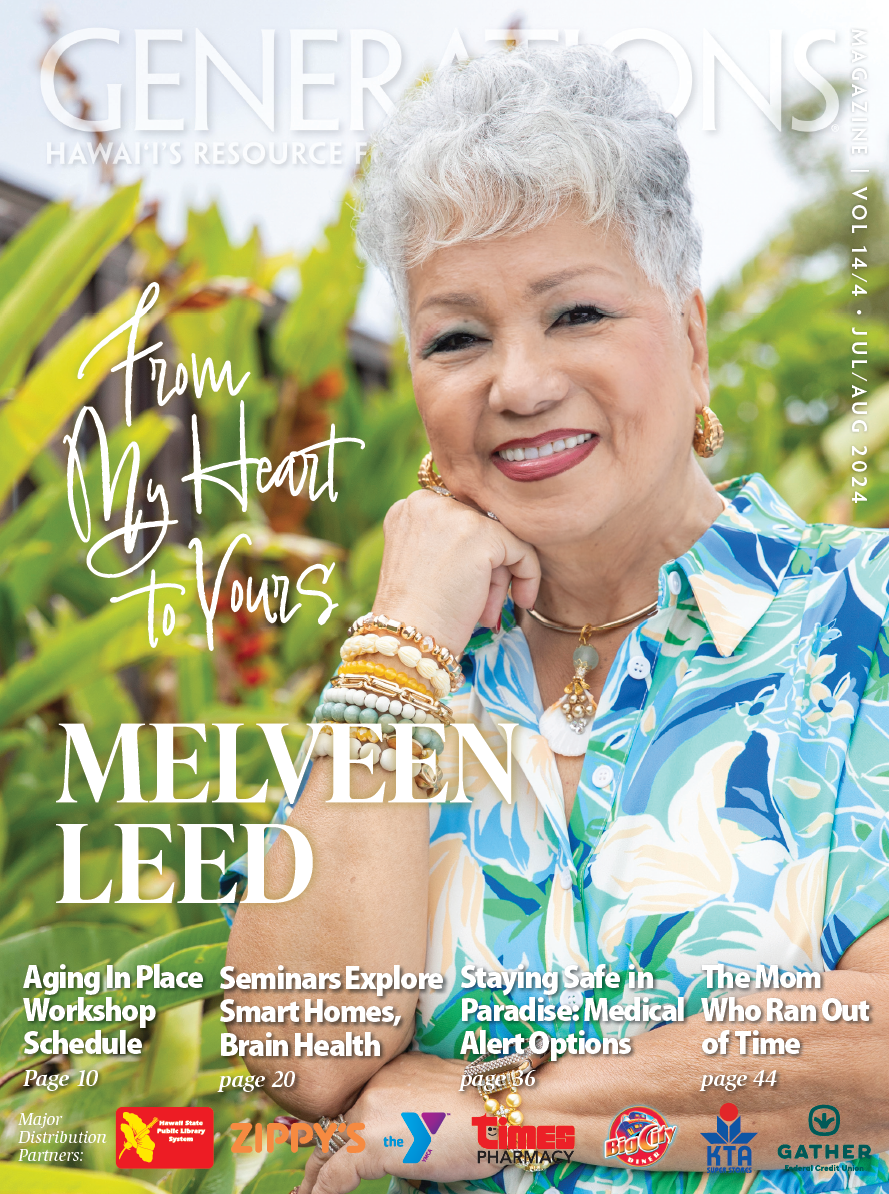
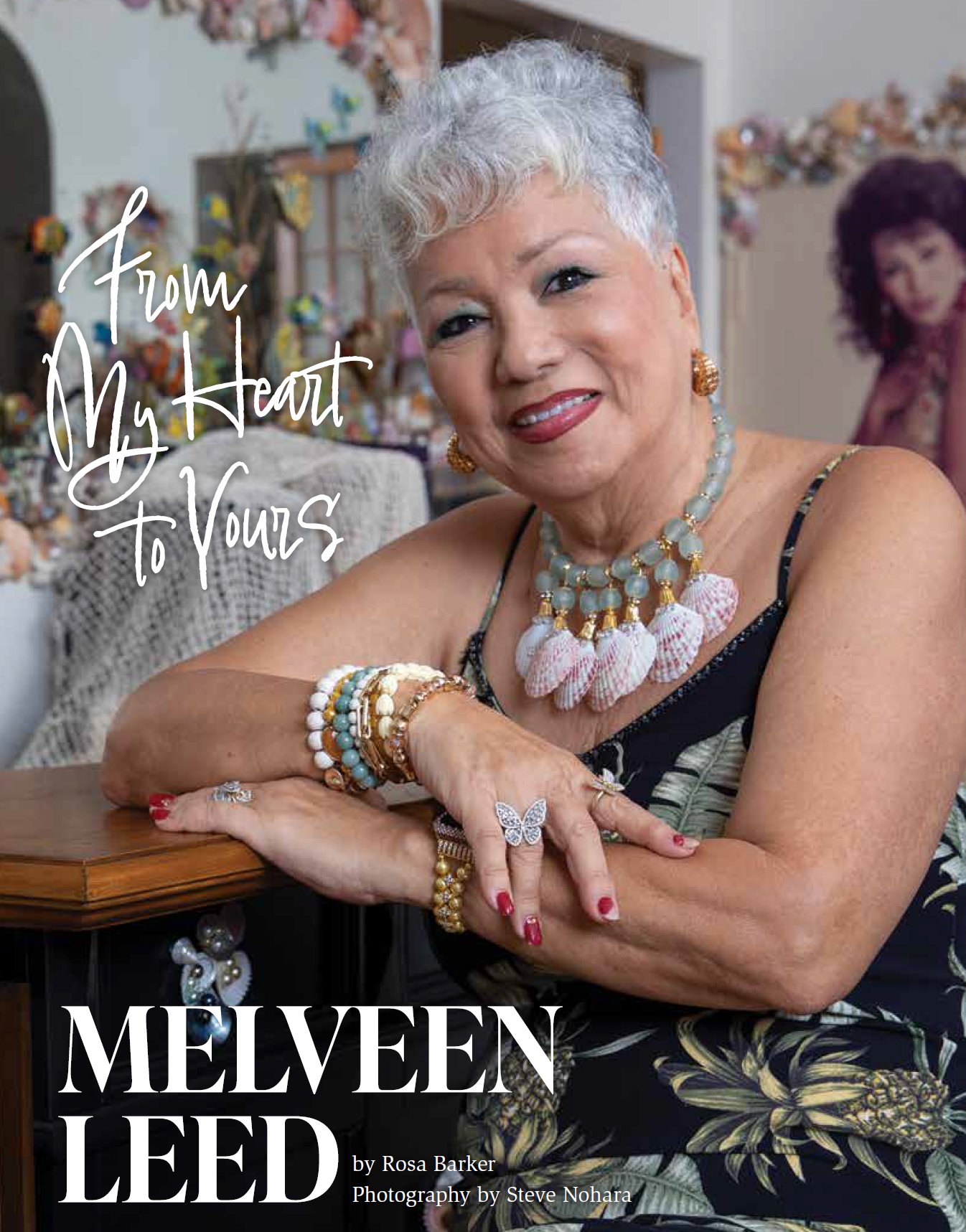
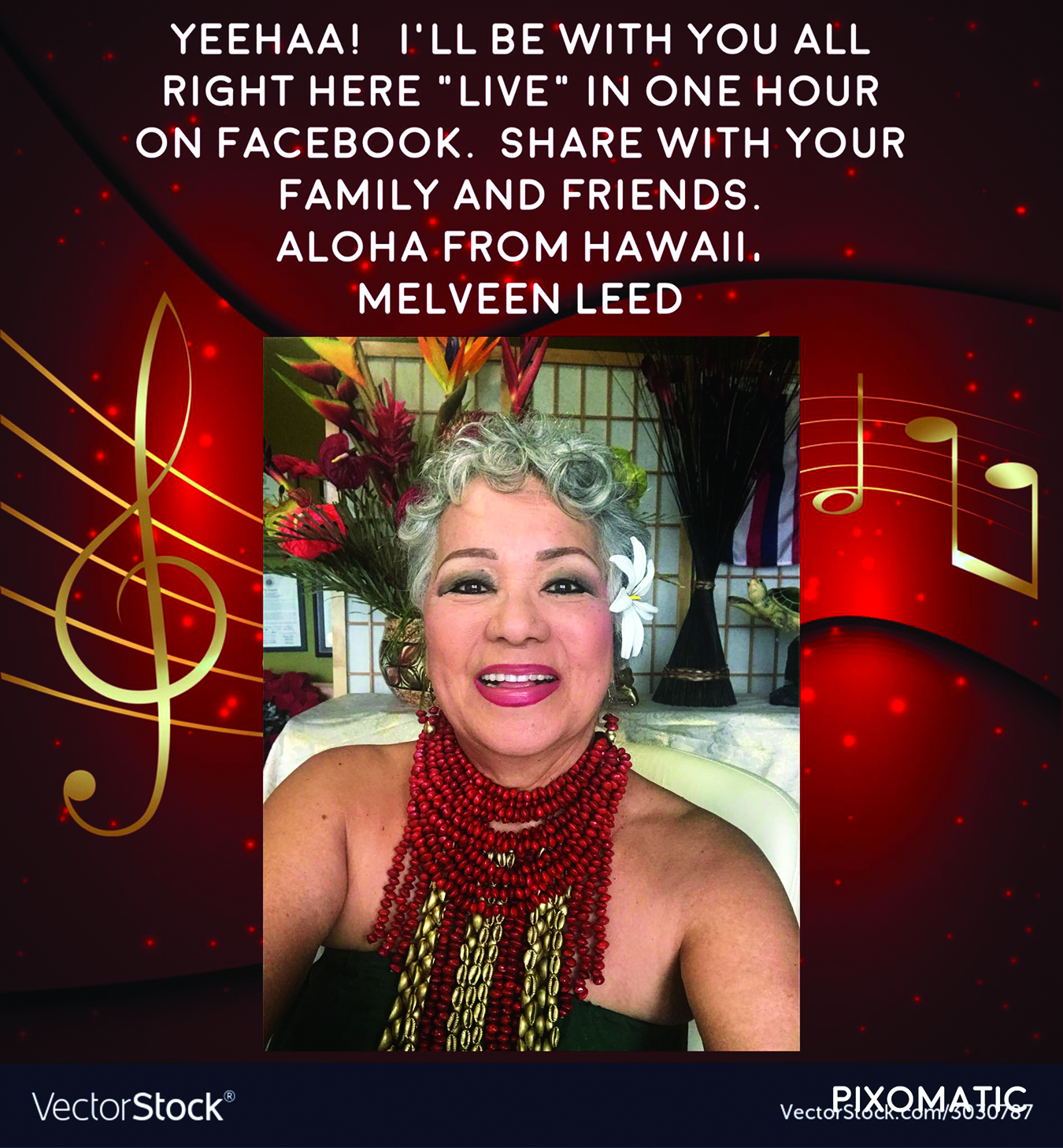
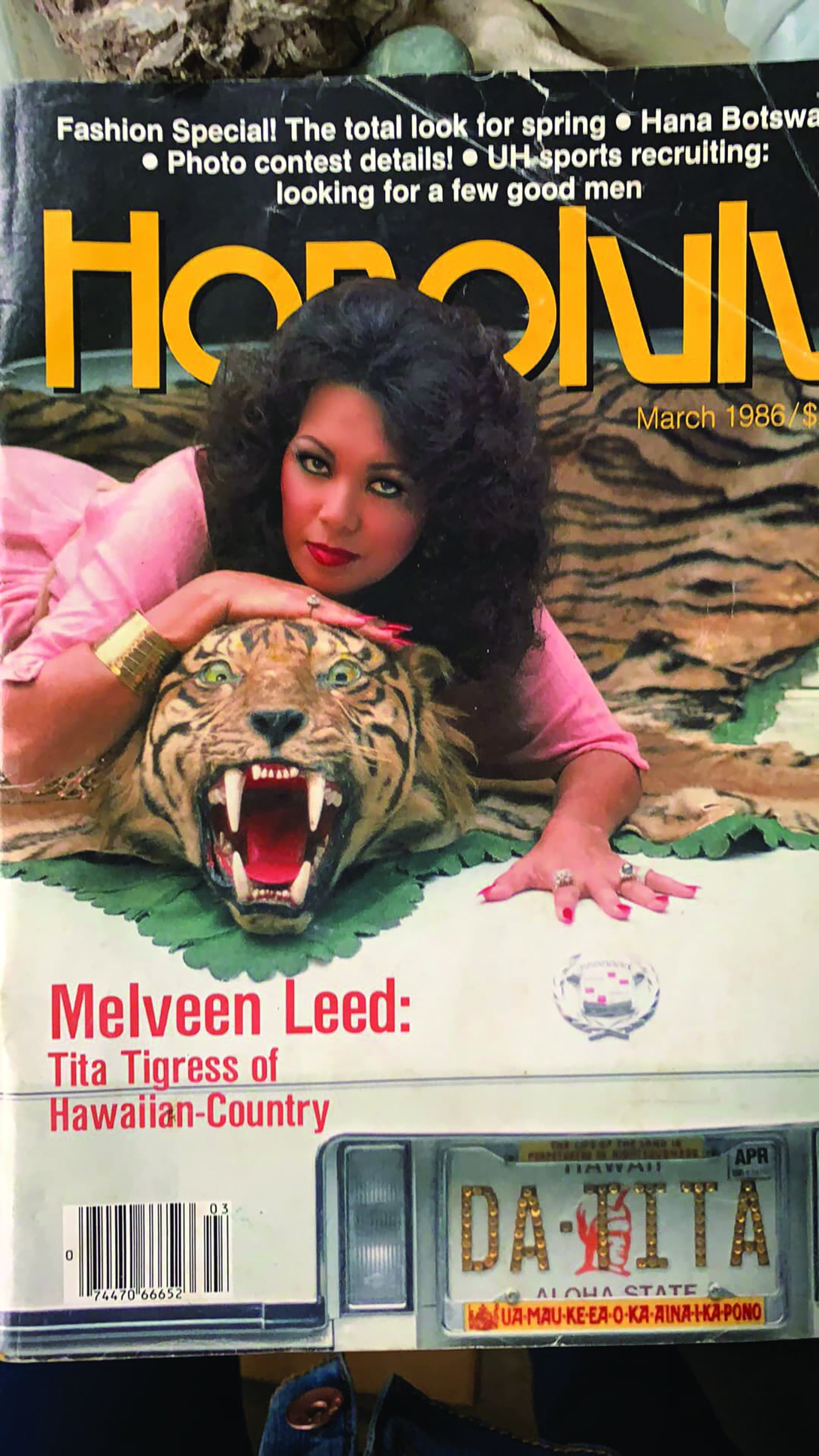
Every Sunday from 11am until 1pm HST, viewers from across the islands, the nation and the world join Melveen Leed’s Facebook livestream. Leaving their daily cares behind, they are uplifted by the singer’s distinctive voice and her words of wisdom, spiced up with humor and “Moloka‘i Tita” sass.
By casting her throw net worldwide, Melveen offers the opportunity to recall earlier, simpler times; or the glamorous era of hotel and Matson cruise ship showbands, revues and show rooms, and the beginnings of Hawaii Five-0, where she appeared regularly as guest. Younger generations get the chance to see and hear the artist whose albums their parents and grandparents cherish.
All are caught up in the magic, fun and — most importantly — the healing power of music.
Standing on a rock
Melveen learned how to make, mend and throw nets from her maternal grandfather on Moloka‘i. To this day, she packs her shorts and a net she made herself on visits to the Friendly Isle. The strong foundation in life that her grandparents gave her is the rock she has stood upon through good times and bad, with her eyes on a sea of possibilities stretching to the horizon and beyond.
Melvina, as she was named by her grandmother, was born in 1943. Because my mother was only 17 years old and too young to raise me, my grandmother arranged a marriage for her to give me a name. He was from Tacoma, Wash., in the Navy, but she didn’t love him.” Hazel (“Didi”) was hiding herself and her child at different family member’s homes in Honolulu, “so my grandparents came and took me off her bed and straight to Moloka‘i and raised me. And I’m glad they did that, because if I were living with my mother, I would have lived a different life. Very different. She was too young to raise a child.”
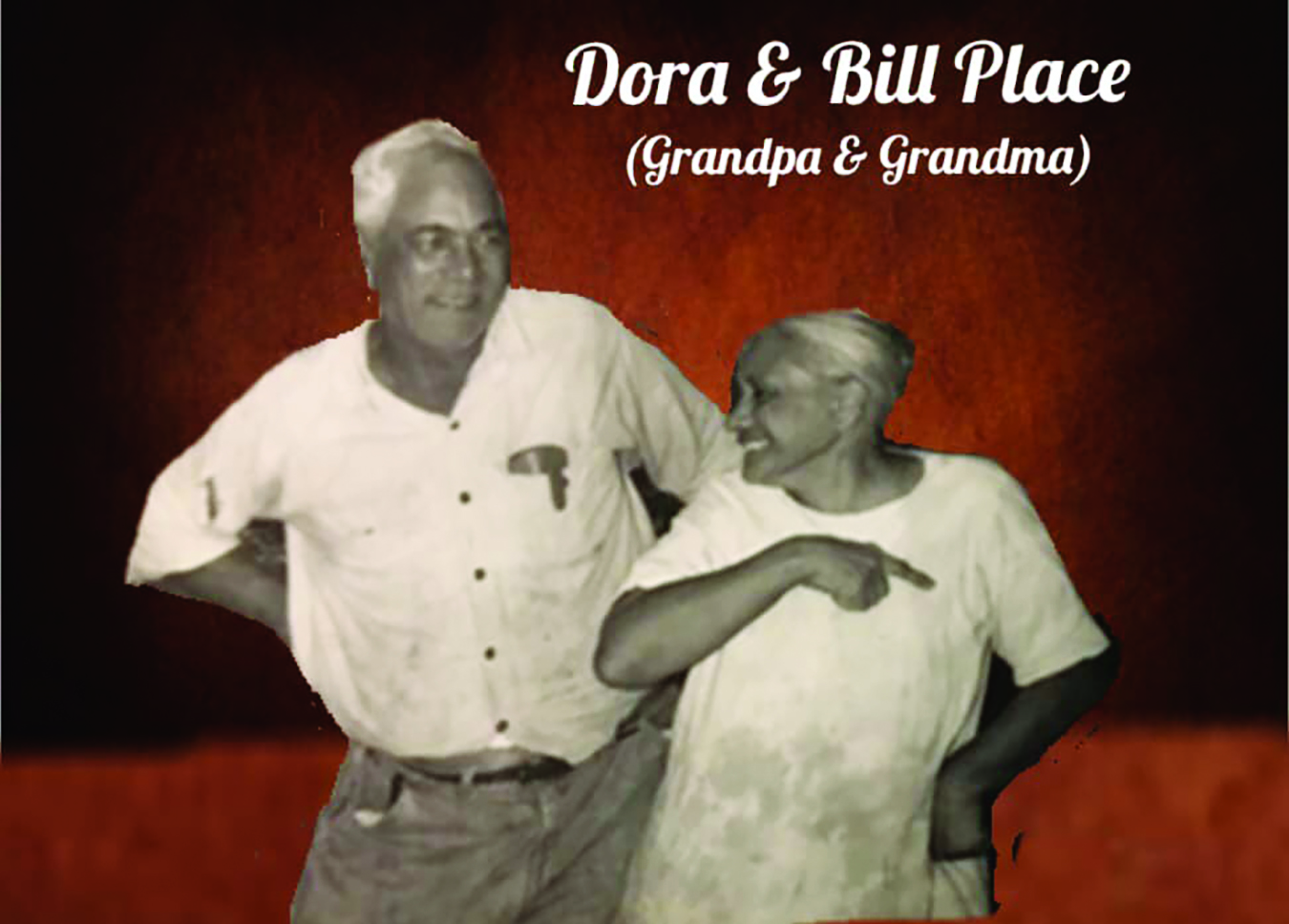
Her grandparents, William and Dora Place, lived at the East End of Moloka‘i and had 11 children. William was the breadwinner, working for Maui County as a mechanic. He was self-taught, but considered one of the top mechanics on the island. Dora was a homemaker. “She taught me housekeeping. She taught me how to cook. She taught me how to be neat. She taught me how to fend for myself. My grandfather taught me how to fend for myself, too. He taught me how to clean yard; how to garden.” Melveen’s aunts and uncles were like siblings to her. Aunt Rhoda became especially pivotal in her life.
Childhood on the Friendly Isle
Melveen grew up in a time when children were expected to do chores. But in their free time “we went outside a lot to play, ride bikes, run with friends, and play hide and seek and chase master. We climbed trees like monkeys with ease,” she wrote in a recent Facebook post. They played marbles, tic tac toe, steal the flag, hopscotch and even “stuck cans to our feet with glue that was a sticky bean from a bush.”
Melveen graduated from Kilohana School in 1959. “I had an award — American Legion Award, which is a very high award. I was an A-student. And I was valedictorian for my graduating class.” Her time at Kilohana was another formative experience in her life because it provided opportunities to perform for people other than her family and the friends who visited her grandparents.
She had been entertaining them since the age of three, when William made her a “tiny little ‘ukulele,” says Melveen. “He played the key of C. I looked at his hands, he passed me the ‘ukulele; I played C. He played G7, then put my little, tiny fingers on my uke and I played G7. Then I started singing. That’s how it all started.” By ear, Melveen taught herself how to play piano on the one at the school. To this day, she favors the key that her grandfather first taught her — the key of C.
In a 1984 interview archived on the Hawaiian Music Heritage Series website, she recounts the advice given her by Mr. James Lee, the principal of Kilohana School: “Melvina, if it’s from the heart, it reaches the heart.” That advice still resonates as she does her Facebook livestream. “I like music. That’s why on my show I do music that is pleasing to the ear; that is healing to the heart. That is why I’m doing this.”
Adrift in Honolulu
Melveen’s grandparents always sent her to Honolulu to spend holidays and summers with her mother and stepfather. She lived with them while attending Radford High. It was an unhappy time — so much so, that she couldn’t study and got bad grades. “I barely made it. However, I did graduate. The only thing I had good grades in was shorthand and English class.”
When she turned 18, Melveen moved out of their house and went to live with her aunt in Honolulu for a short while. Then she returned to Moloka’i, adrift in a sea of low self-esteem and not knowing what to do next. Her grandfather would have none of that attitude. “I didn’t raise you to be like that. You better know what you’re gonna do, he told me, because it’s your future. You’re going to get a good job, so you need a good education. I’m sending you to Honolulu to stay with your Aunt Rhoda and you’re going to go to Honolulu Business College (HBC) and take accounting. You can do it; I know you can.”
The singing secretary
At HBC, she did well in typing and shorthand. “And they liked me because I sang for their programs,” says Melveen. When her uncle and aunt moved to Maui, she transferred to Maui Technical School — the predecessor of the University of Hawai‘i Maui College. She sang and entertained at college events, got a student council award and graduated with an associate’s degree in secretarial science.
Due to her top-notch skills, strong work ethic and effervescent personality, she had no trouble getting work as an executive secretary at enterprises as diverse as the pineapple canning industry on Maui and the newly opened Kahala Hotel (which celebrates its 60th anniversary this year) and the developer Jimmy Wong at Paradise Park on O‘ahu. While working for him, she also began singing with the Berne’ Hal-Mann Dance Band at the Hilton Hawaiian Village Garden Bar.
Able to support herself from her Garden Bar gig, Melveen quit her day job. Toki Anzai, who owned Makaha Records, soon took notice of her. Makaha released “Melveen Leed at the Garden Bar” in 1966, “Give Me Tomorrow” (1968) and “Melveen Leed Sings Today’s Hits” (1969). Billboard said she was “strictly pop, with tunes like ‘Yesterday’ and ‘The Shadow of Your Smile’,” but that Anzai was also developing “Hawaiian songs with a modern beat to appeal to local patrons. Melveen Leed has great promise… as she is a strong performer who works well with chart songs and native material.”
“The Hawaiian Country Girl”
By the mid-’70s, she was working with Bud Dant, a former producer for Decca-Coral Records, who had succeeded Webley Edwards as host of the radio show “Hawaii Calls.” Through his connections with Owen Bradley, legendary Nashville producer for singers like Patsy Cline and Brenda Lee, Melveen made 12 albums on the Lehua label with Bradley’s famed session musicians, the Super Pickers. She was the first Hawaiian to perform at the Grand Ole Opry in Nashville. “I like to be different,” Melveen chuckles. The liner notes for “Melveen: The Hawaiian Country Girl,” released in 1976, describe her as “a beautiful, intelligent and witty entertainer” and “one of Hawaii’s hottest recording artists.”
The stand-out song from her time with Lehua, “Morning Dew,” has a fascinating backstory — and it includes shorthand! Eddie and Myrna Kamae asked her if she would include their expanded English-language version of Larry Kimura’s Hawaiian-only lyrics for “E Ku‘u Morning Dew” on the album she was about to record in Nashville. She’d left the song sheet at home, so she quickly transcribed in shorthand the lyrics from the cassette recording Eddie had given her. In her 1984 interview on the Hawaiian Music Heritage Series website, Melveen recounts, “I read it off of my shorthand notes and it was a one-take. At that time, I was so homesick, so I sang it with all my heart and soul. You could hear a pin drop after. All the guys said together, ‘Beautiful!’” At the inaugural Nā Hōkū Hanohano Awards in 1978, “Melveen: The Hawaiian Country Girl” album and “E Ku‘u Morning Dew” won Best Female Vocalist, Best Hapa-Haole Album, Best Single and Best Song. Melveen’s other albums include three recorded in Tahiti and two recorded with Hawai‘i’s Local Divas. In 2012, she released “I Wish You Love” on her own label, ML Records. It was her first jazz album and won the Nā Hōkū Hanohano Award for Best Jazz Album of the Year.
Pacific voyager
In 1995, Melveen was living in Tahiti. She was married to the boss of a pearl farm and lived on Aratika atoll in the Tuamotu Islands. Skills she’d been taught by her uncles on Moloka‘i came into play once again, as she free dived and spearfished. The breath control she’d built up as a singer enabled her to dive 60 feet. Her sheer determination to prove her husband wrong — he thought she wouldn’t be able to do it — helped!
During the 1980s, Melveen had started making jewelry to give as gifts, and Tahitian shells remain a key part of her artistry. The necklace she wore on the day of our interview “is a history of my life,” she said. Pointing to each component, Melveen explained, “This is from Moloka‘i and this is from Tahiti. I went to Samoa and Tonga — the Philippines. These all mean a lot to me.” Besides her Native Hawaiian and German ancestry, Melveen has identified Portuguese, Korean, Japanese, Tahitian and Marquesan forebears in her genealogy.
In 2018, the Pan Pacific & South East Asia Women’s Association of Hawai‘i honored her with a Lifetime Achievement Award. “Leed has made her marks in myriad of ways in education, television, entertainment, indigenous issues; her philanthropic charity work in the past 50 years; as well as being a positive role model for young people in the Pacific and the USA.”
Other horizons
Melveen’s favorite performance venue isn’t one of the big ones, like the Grand Ole Opry, Carnegie Hall or the Mariinksky Theatre in St. Petersburg, but a small community theatre in Hastings, A¯ otearoa/New Zealand. The Hawkes Bay Opera House was originally built in 1915 but was newly restored in 2006 when Melveen performed there. A “lyric theatre” in a mix of Spanish Mission and Art Nouveau architectural and decorative styles, it has perfect acoustics. “It’s a beautiful theatre,” Melveen says. “I made a whole pageantry there in honor of my very close friend Tommy Taurima.” She brought with her Waipahu’s Ha¯lau Hula ‘O Hokulani. “I had the dancers chant and dance with sticks and spears. They were very good.”
The much-beloved Ma¯ori composer Tommy Taurima had a long association with the Polynesian Cultural Center on O‘ahu, beginning in 1963. His most famous show, “Horizons: Where the sea meets the sky,” ran from 1995 until the end of the 2009 season. For her 2006 show, Melveen wrote a song for him in Ma¯ori. “It’s a song about saying goodbye. Don’t go away. Just stay. I had this book of all the different composers of Ma¯ori music. So I got a line from him and a line from her, and I put the whole song together. It’s a beautiful song called “E Noho Ra.” I had him sit on stage and I sang it to him.” In 2013, Taurima was presented with The Lei Pulama Aloha Living Treasure Award by the PCC. Sadly, he passed away in 2019.
Going with the ‘current’
In 1973, when The Congress of the Hawaiian People and Don Ho produced a concert designed to develop new talent in music and dance, Melveen presented young Little Anthony, as Tony Conjugacion was then known. The recording of their duet, “Iesu¯ Me Ke Kanaka Waiwai,” was one of KCNN1420 radio’s most loved songs through the ’70s and ’80s. Five years earlier, Conjugacion’s mother had brought her 8-year-old to one of Melveen’s rehearsals at the Queen Kapi‘olani Hotel and asked if she would hear him sing. “I invited him to my show that night and featured him to give him a start. The rest is history!”
James Dela Cruz, who formed his Na Opio O Ko‘olau hula ha¯lau in 1981, is another mentee. He sometimes joins her on her Sunday livestream. “He’s like a son to me — calls me ‘Mama Melveen.’ He teaches the tu¯ tu¯ and the young ones at his studio in Ka¯ne‘ohe, and he also has a studio in Japan. In his show at the ‘Alohilani hotel, he teaches the history of Hawai’i.”
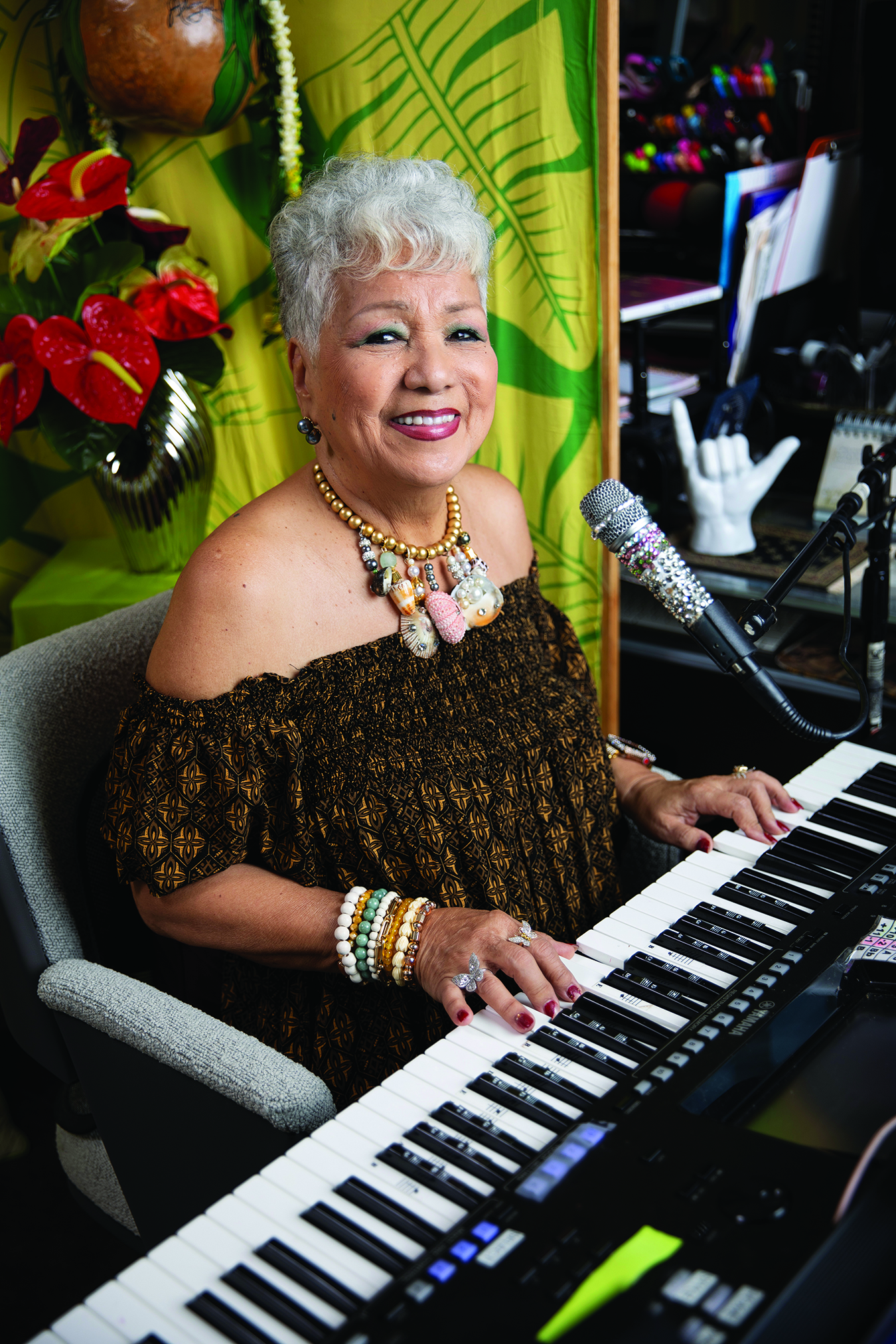
The 1973 concert was during the height of the “Hawaiian Renaissance,” a time of controversy about traditional vs. modern forms of Hawaiian performing arts. Asked about today’s music, Melveen says, “One thing I know is you cannot stop progress. Every generation has their own music. Now we have different instruments. The sound is enhanced because of changes to the instruments . I can play slack key on my keyboard!”
The idea to use Facebook Live came to her in 2016, when she was thinking of cutting back on live performances. “If I go on Facebook, I can go worldwide.” She’s been doing her Sunday livestream ever since, and those who join in are indeed from all over the world. The enthusiasm with which she has embraced new technology is no surprise. Enthusiastically adapting to what is available in her current environment, Melveen has transitioned to modern technology both musically and as an artist.
Her living room is a showcase of her wonderfully crafted decorative shell art, but she has also created many drawings and watercolor paintings on her iPad. All of them display a love of detail and balance, color, light and shade that would be at home in an art gallery anywhere in the world. “I cannot keep still,” Melveen says.
Healing in the key of M
In her tiny home-based studio on Sundays, Melveen uses her keyboard and voice for one purpose: “I don’t do it for stardom. I do it because I know there’s so many people out there who need it. Music is healing.” In her living room is a special area where she lights a candle and prays for people who are sick. Her prayer garden just outside her front door is filled with small, smooth rocks that she decorates with colored felt-tip pens. On each rock, she writes the name of the person she is praying for.
During her 12-year residency performing at the Ala Moana Hotel, Melveen had a phone installed on stage so she could sing to terminally ill patients. Every morning, she would call hospitals to find patients to sing to at that night’s show. The next morning, she’d visit the patient and bring them an autographed copy of “I Love You Hawai‘i.” “I would leave in a shambles knowing I’d never see them again,” Melveen says. Now she takes calls from caregivers and performs their request in her home studio so they can share it with their loved one. Melveen is a Christian, deeply grateful for all the blessings Ke Akua has given her and for the healing that He brings. She believes He has given her this healing mission.
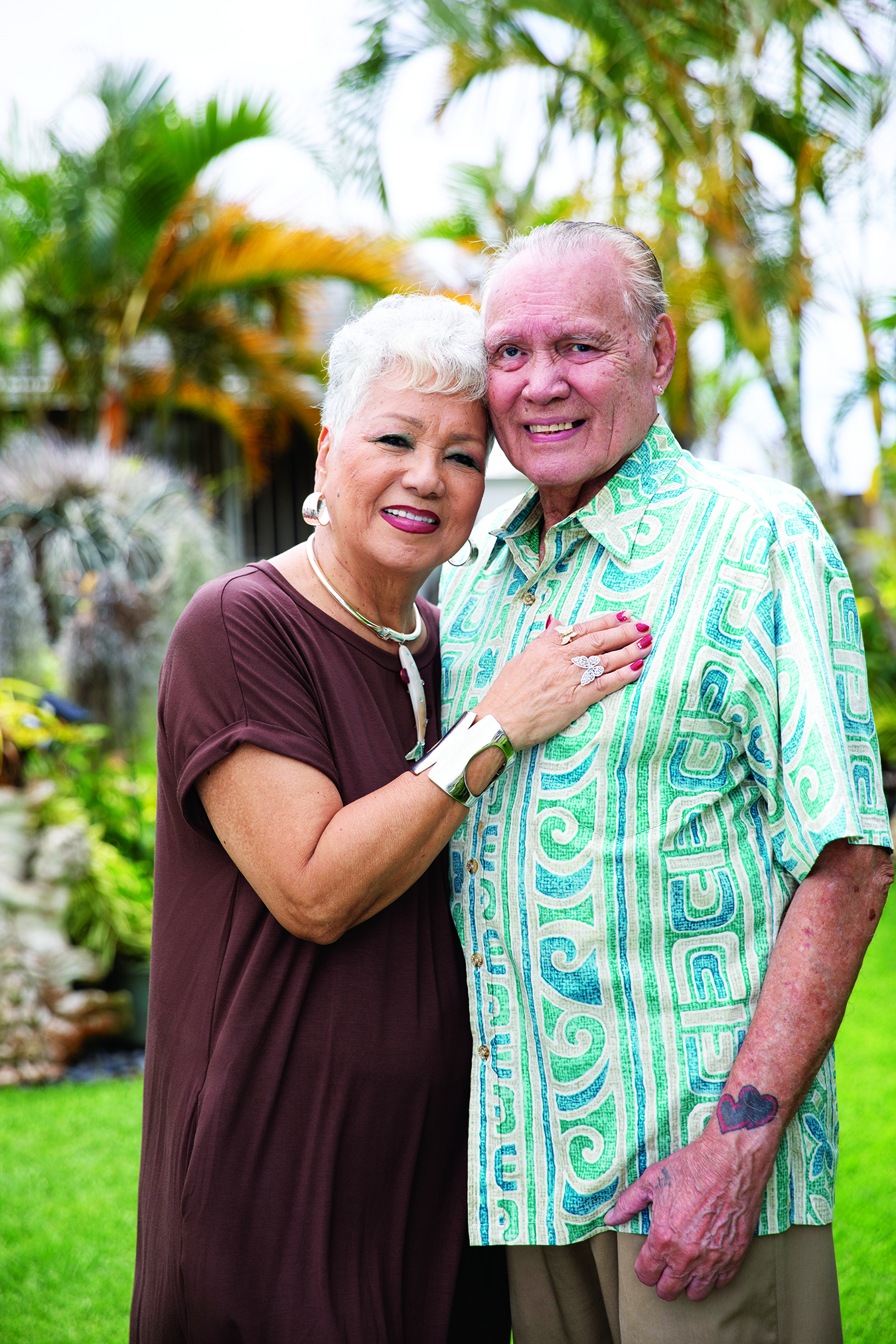
No stranger to health issues, herself, as a teenager, she had rheumatic fever and her Aunt Rhoda watched over her as she lay in a bed of ice. Melveen was diagnosed with leukemia several years ago. “I’ve never experienced anything that brutal in all my life. My poor husband! He took good care of me.” Her illness is not something she shares with her Facebook audience. “I’m not here to tell them about my woes. I want them to heal.” Melveen has been married to Miguel “Mike” Reyes, Jr. for 13 years. “I knew him when I was 15.
He’s a real gentleman and very good looking!” Mike manages many aspects of Melveen Leed Productions, including the YouTube channel, her keyboard and studio equipment, and merchandise.
Closing the circle
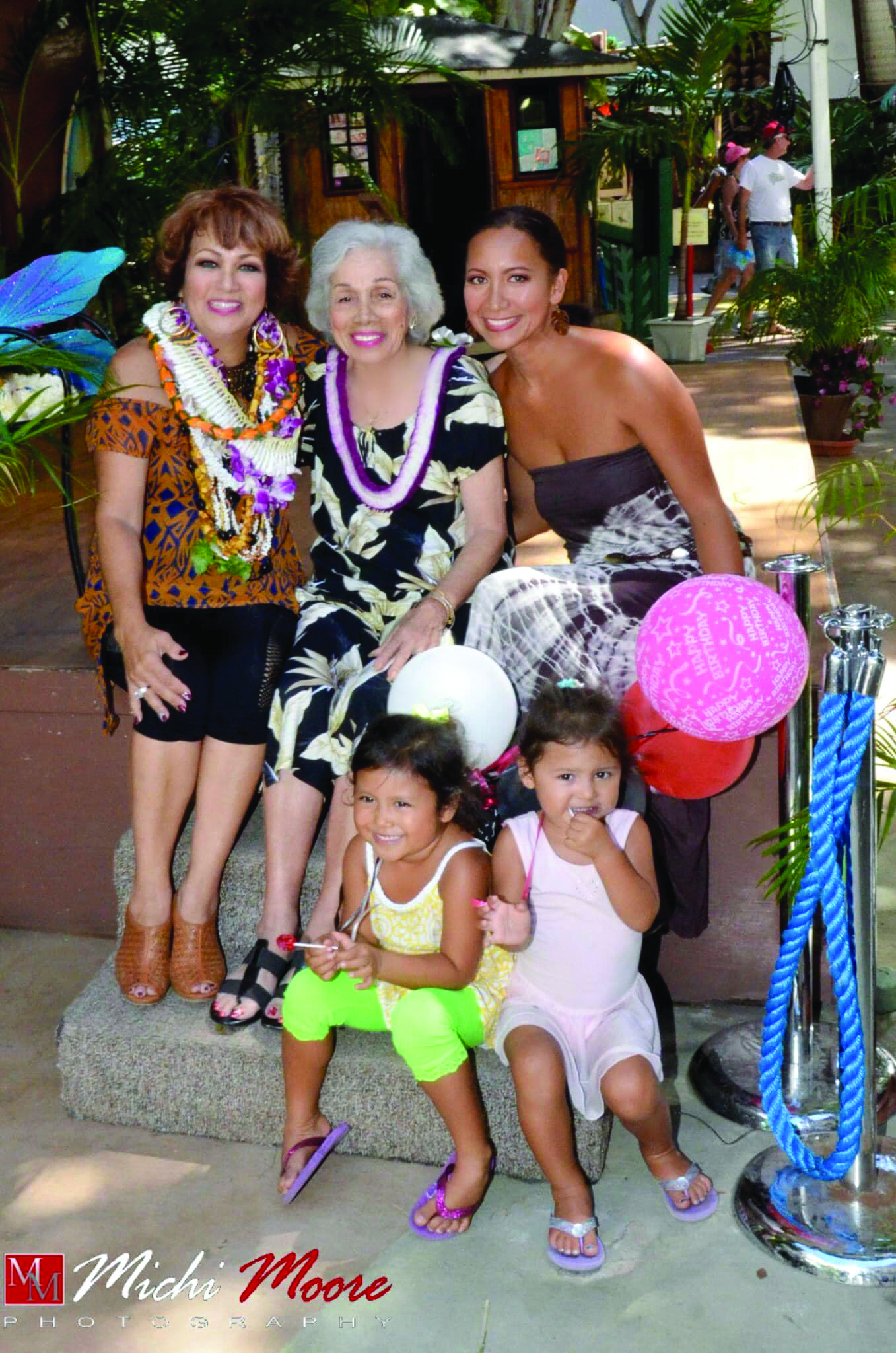
Turning 81 in July, Melveen is pulling in her net full of wonderful memories. “Now I just want to relax and enjoy my life — do what I want to do. We stay at home and watch TV or travel. I do an event once in a while. I do my jewelry, and draw and paint. I love to cook. I’ve been married six times, so I learned different recipes from all the mothers.” In turn, she’s taught her daughter and two granddaughters to cook, starting them off the same way her grandmother did when she was a baby — sitting her on the kitchen countertop with her feet in the sink, washing a pot of rice.
Every Sunday from 11am until 1pm HST, viewers from across the islands, the nation and the world join Melveen Leed’s Facebook livestream. Leaving their daily cares behind, they are uplifted by the singer’s distinctive voice and her words of wisdom, spiced up with humor and “Moloka‘i Tita” sass. By casting her throw net worldwide, Melveen…
According to a Federal Reserve System report on the Economic Well-Being of U.S. Households in 2022–May 2023 in 2023, “3/4 of non-retired adults had at least some retirement savings, about 28% did not have any. This share who did not report any retirement savings was up from 25% in 2021. While most non-retired adults had some type of retirement savings, only 31% of non-retirees thought their retirement savings were on track, down from 40% in 2021.”
In 2019, the SECURE (Setting Every Community Up for Retirement Enhancement) Act was signed into law, and in 2022, SECURE Act 2.0 passed and amended its predecessor. The purpose of the SECURE Act was to assist Americans in saving for retirement by increasing access and encouraging contributions.
How does the new law affect estate plans? Prior to 2019, most retirement plan beneficiaries had the option to stretch taxable distributions and allow the assets to grow tax-free over the beneficiary’s life. The SECURE Act 2.0 changed the stretch rules to apply to only a limited group — Eligible Designated Beneficiaries. So most beneficiaries will have to take distributions within 10 years.
Contact your estate planning attorney and financial advisor to review your financial and estate planning goals, and to ensure your retirement accounts name the proper beneficiaries.
According to a Federal Reserve System report on the Economic Well-Being of U.S. Households in 2022–May 2023 in 2023, “3/4 of non-retired adults had at least some retirement savings, about 28% did not have any. This share who did not report any retirement savings was up from 25% in 2021. While most non-retired adults had…
Having spent over 14 years handling elder issues, the one thing I have seen seniors do repeatedly is not plan for their passing because they think there will be time do it later. This naïve mindset causes so much frustration and anger that instead of leaving behind a legacy of love and fond memories, ill will, anxiety and stress become the fallout.
Two months ago I met Lea, age 23. Her mother, Mary, died a couple of months prior. Mary was in poor health for years and did not think of what would happen to Lea after she passed. Mary was a single parent in her 60s with no other family. Although her home was mortgage-free, it was still in her deceased parents’ name. Mary’s only source of income was Social Security, which was directly deposited into her bank account for paying household bills, utilities and grocery delivery.
Mary did not have any life insurance and only a few thousand dollars in savings. She did not make a will or any type of trust for her assets.
Lea dropped out of high school, spending the next four years as Mary’s caregiver. Lea never had a paying job.
When Mary passed away, Social Security stopped depositing money and the bank froze the account. Only Mary’s name was on it; Lea could not access it. Because utilities were paid from that account, notices from the utilities began arriving in the mail. Hospital bills and notices from collection agents also appeared. Additionally, the property taxes on the house Lea lived in that was in her grandparent’s name had to be paid. Lastly, her cell phone was disconnected.
It was at this time that I met Lea. She was a young woman with nothing in her name, no job or other source of income, no access to her mother’s monies, no transportation, no telephone and living in a house that the state assumed still belonged to her grandparents.
With no family and having lost contact with her friends from high school because of caring for her mother all these years, she was truly alone. She feared she would be homeless.
During the course of helping Lea out of this abyss, one thought echoed in my mind: “If only Mary had taken a few hours to plan for the day she would leave Lea alone, this could have been avoided.” Now, instead of grieving for her mother, Lea was cast into a life of uncertainty and fear.
It could be that Mary didn’t plan ahead because she was ill for years. But none of us should assume we will have sufficient time in the future to take care of our affairs and cause our loved ones to live the life of Lea. Do it now.
HAWAI‘I STATE BAR ASSOCIATION Senior Counsel Division Alakea Corporate Tower, 1100 Alakea St., Ste. 1000 Honolulu, HI 96813 808-537-1868 | SCD@HSBA.org | HSBA.org
Having spent over 14 years handling elder issues, the one thing I have seen seniors do repeatedly is not plan for their passing because they think there will be time do it later. This naïve mindset causes so much frustration and anger that instead of leaving behind a legacy of love and fond memories, ill…
You own your body after you die and you can say what happens to it. If you say nothing, it will be up to your next of kin, such as your spouse, your children and then more distant relatives. By planning your funeral in advance, you can spare your loved ones stress and conflict.
Your remains can be buried on your own land, but think about how that could affect the property value. The preparation for burial need not include embalming and may not require a casket. Many outside-the-box possibilities exist.
Burial and cremation are not the only choices. Google “disposition of human remains” for ideas. Do you want your remains blasted into space or disposed of via alkaline hydrolysis? Do you want your ashes turned into diamonds for jewelry for your loved ones? The options might surprise you.
Many people recoil at the idea of donating their bodies to the local medical school, but medical professionals will tell you that the most valuable resource for learning about a human body is, well, a human body. A medical student could learn a lesson from dissecting your body that would enable them to save one of your loved ones…
Finally, will there be some kind of service or celebration of life for you? You can have a say in those festivities. A funeral service planned by you might be one of the most loving gifts you can give the people who will mourn your loss.
You own your body after you die and you can say what happens to it. If you say nothing, it will be up to your next of kin, such as your spouse, your children and then more distant relatives. By planning your funeral in advance, you can spare your loved ones stress and conflict. Your…