Category: Articles

  • Celebrating the Hawaiian Culture

    Kānaka Maoli (Native Hawaiians) have welcomed immigrants from every corner of the globe for over 1,500 years, cultivating and perpetuating a tapestry of diverse cultures. In this second article in our series about the many cultures that comprise Hawai‘i, we will focus on how the Kānaka Maoli got here and from where, their culture and one event that epitomizes the Hawaiian culture, the Merrie Monarch Festival.
    The Early Hawaiians

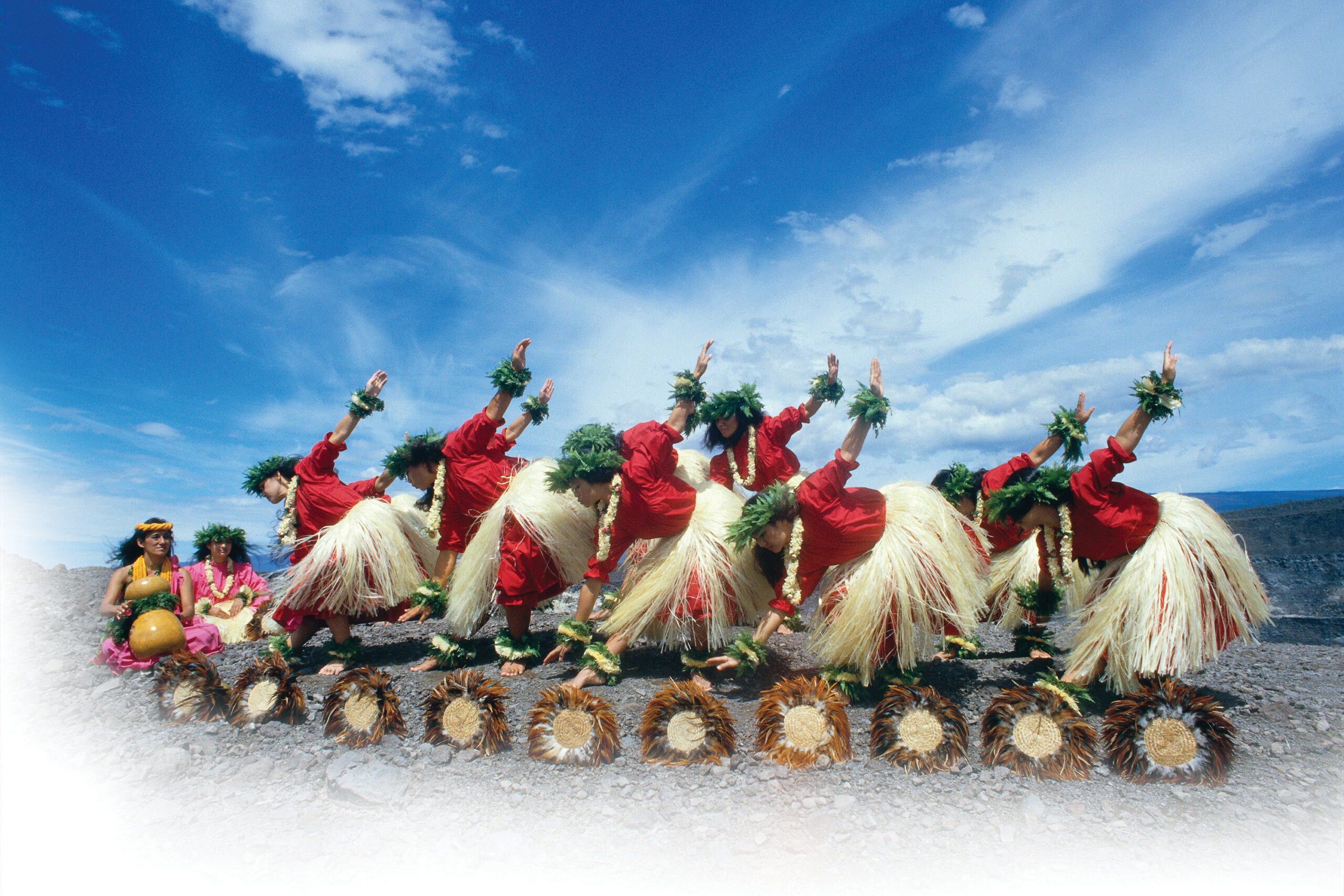
    Sailing on wa‘a kaulua (double-hulled canoes), Polynesians primarily from the Marquesas Islands in the South Pacific navigated 2,000 miles, landing upon the shores of Hawai‘i over 1,500 years ago. The population was well-established when, about 800 years ago, Polynesians from the Society Islands arrived. Contact with southern Polynesia then ceased for about 400 years and a distinctive Hawaiian culture developed.

    Culture and Tradition

    Kānaka Maoli worshipped akua (gods) such as Pele and Haumea and passed down historical mo‘olelo (stories). Mo‘olelo were told through mele (song), oli (chant) and hula (dance). Mo‘olelo are insights about how the world came to be, and how relationships between people and ‘āina (the land) should be honored. These traditions hold strong today. In the early to mid-20th century, Kānaka Maoli adopted the ‘ukulele and guitar from Portuguese, Spanish and Mexican settlers, creating their own unique musical styles and instruments — the ki¯ hō‘alu (slack-key guitar) and kīkākila (steel guitar). Kānaka Maoli communicate with the world through oli, stressing the significance of voice/community. Hula, originating in Hawai‘i, derives from Polynesian dance forms. The two forms of hula today are kahiko (traditional) and ‘auana (contemporary).

    The Merrie Monarch Festival

    The Merrie Monarch Festival (MMF), a weeklong celebration held every year in Hilo on Hawai‘i Island, honors the legacy of the Merrie Monarch, King David Kalākaua — his love for his people and his vision for perpetuation of all things Hawaiian.

    The MMF was conceived in 1963 after the collapse of the sugar industry. George Na‘ope, Gene Wilhelm and Helene Hale organized the first MMF in 1964. This first incarnation included a King Kalākaua beard look-alike contest, a relay race and a ball. In 1968, when festival popularity was declining, Dottie Thompson became executive director and focused the MMF around hula. Three years later, Dottie and George hosted a hula competition. Events included Miss Aloha Hula, group hula kahiko and group hula ‘auana. Today, the Merrie Monarch Festival is internationally renowned for its historical and cultural significance. In 2025, it takes place from April 20 to 26.

    Visit MMF’s website at merriemonarch.com as well as Generations Magazine’s FaceBook page (facebook.com/genmag808) and website calendar (generations808.com/calendar) for community events and opportunities.


    The next article in this series will feature the influences of Japanese culture in the Aloha State.
    Kānaka Maoli (Native Hawaiians) have welcomed immigrants from every corner of the globe for over 1,500 years, cultivating and perpetuating a tapestry of diverse cultures. In this second article in our series about the many cultures that comprise Hawai‘i, we will focus on how the Kānaka Maoli got here and from where, their culture and…

  • Remember Our Veterans

    I’m honored to write a column about “veterans,” a word that brings tears to my eyes. My brother, Capt. Edwin Hayashi, was killed in a C-130 plane crash during the Vietnam era. He didn’t make it back to be a “veteran.” Veterans are survivors.

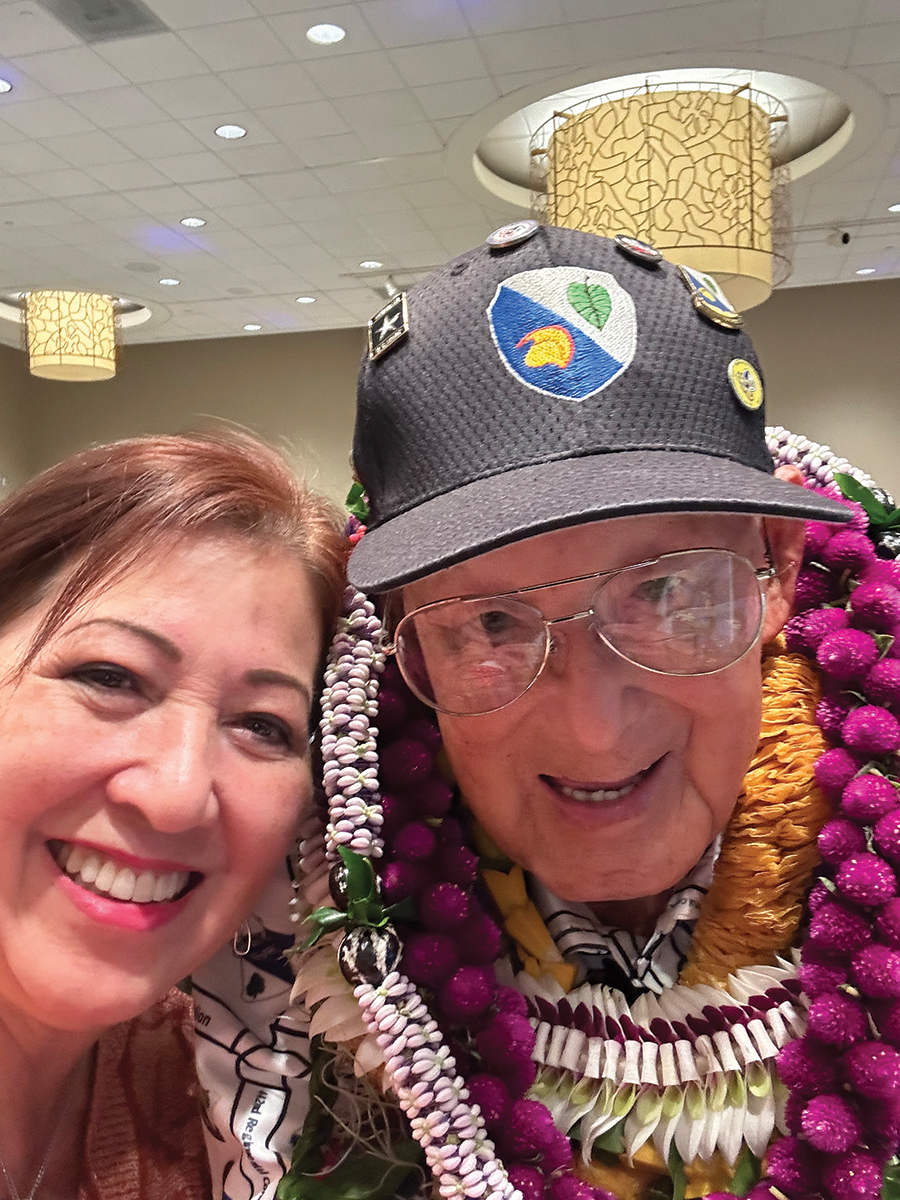
    Kathleen Hayashi and Dr. Takashi Manago, a
    WWII veteran, celebrated his 101st birthday.

    When I spoke to the Vietnam Veterans of America – Chapter 858 recently, they sobbed as I shared how villagers in Italy and France still remember, after more than 80 years, how the Japanese American units of the 100th Infantry Battalion/442nd Regimental Combat Team liberated them during WWII. These heroes were a segregated army unit comprised of second-generation Japanese Americans, mostly from Hawai‘i.

    Vietnam veterans say all they want is to be remembered with honor, as well. Veterans from every war ask to be remembered for the sacrifices they made — for themselves, and for those left behind.

    My father was a member of the 100th Infantry Battalion Veterans from Hawai‘i. It’s our organization’s mission to keep their legacy alive and honor the few still living — like 101-year-old Dr. Takashi Manago, one of only six known living veterans of the 100th Infantry Battalion. My next column will honor him.


    100th INFANTRY BATTALION VETERANS
    520 Kamoku St. Honolulu, HI 96826
    For more information:
    info@100thbattalion.org | 808-946-0272

    I’m honored to write a column about “veterans,” a word that brings tears to my eyes. My brother, Capt. Edwin Hayashi, was killed in a C-130 plane crash during the Vietnam era. He didn’t make it back to be a “veteran.” Veterans are survivors. When I spoke to the Vietnam Veterans of America – Chapter…

  • Allyn Bromley On the Edge

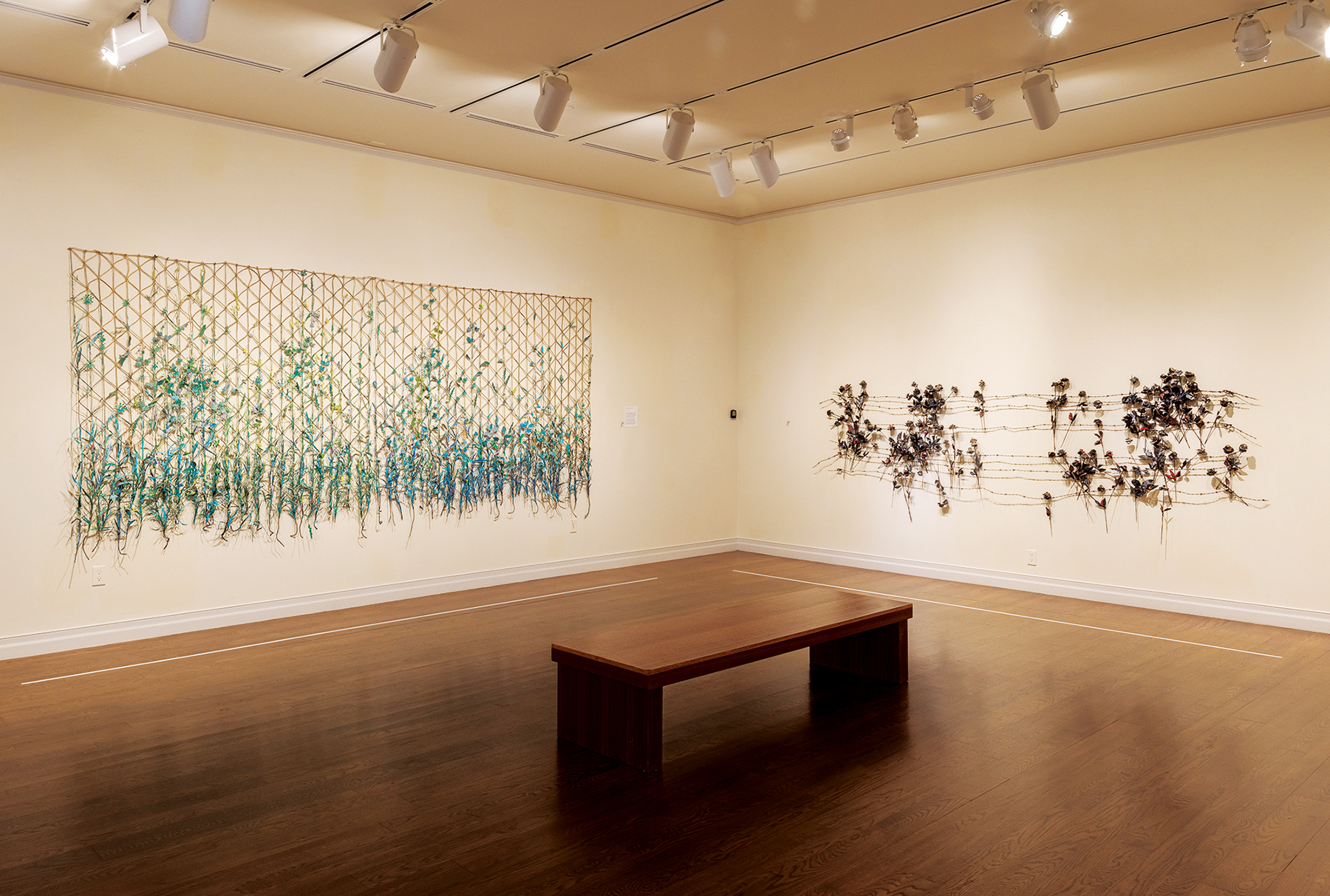
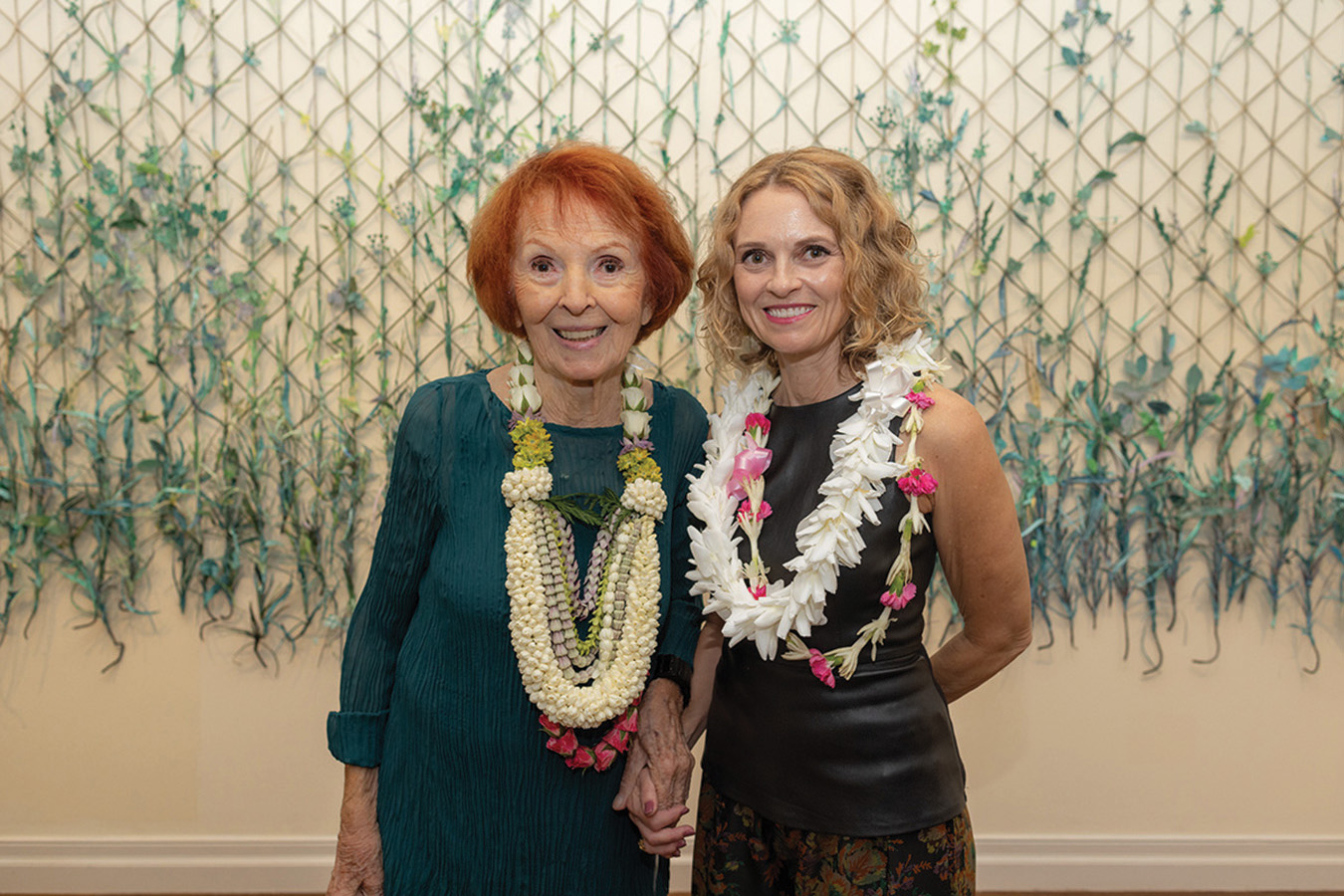
    Artist Allyn Bromley met with Honolulu Museum of Art Curator Katherine Love at the opening of her Allyn Bromley: At the Edge of Forever exhibition in January. The exhibition is on view at HoMA through June 15, 2025.
    Artist Allyn Bromley met with Honolulu Museum of Art
    Curator Katherine Love at the opening of her Allyn
    Bromley: At the Edge of Forever exhibition in January.
    The exhibition is on view at HoMA through June 15, 2025.

    Artist Allyn Bromley is an inspiration. At 96, she continues to go to her Nu‘uanu studio to create every week. An influential figure in Hawai‘i arts, she taught generations of students at Leeward Community College and at the University of Hawai‘i at Mānoa, where she was director of the printmaking department. She retired in
    2000 as professor emeritus.

    Now on view at the Honolulu Museum of Art through June 15 is work she created over the past eight years. The exhibition, Allyn Bromley: At the Edge of Forever, features mixed-media print-based works that are intricately assembled from hundreds of hand-printed paper elements (many were torn down or cut from previous prints), as well as components such as plastic boxes, wire, wood and cord. These works explore themes such as memory, loss and the environment. The show also includes a work comprised of charred pieces of wood fencing, a grim reminder of the power of natural forces as well as the hope that resilience brings.

    Just as Bromley gives new life to used materials, she is also inspired to find fresh meaning in familiar subjects. “I like to see if I can take something as trite as a flower and turn it into a provocative, more universal or larger idea,” she says.

    She is also a great supporter of the arts community. She recently used some of her assets to create an endowment for a visiting artist program at the Honolulu Museum of Art. In the 1970s, she attended workshops at the museum with two well-known visiting printmakers. The experience was so gratifying and impactful that she wanted to make a gift that would enable future generations of Hawai‘i artists to have similar opportunities.


    HONOLULU MUSEUM OF ART
    900 S. Beretania St., Honolulu, HI 96814
    808-532-8700 | honolulumuseum.org

    Artist Allyn Bromley is an inspiration. At 96, she continues to go to her Nu‘uanu studio to create every week. An influential figure in Hawai‘i arts, she taught generations of students at Leeward Community College and at the University of Hawai‘i at Mānoa, where she was director of the printmaking department. She retired in2000 as…

  • Remember Your College Days?

    When we talk with family and friends, we often think back when we were younger! It’s not too hard for our immediate family to keep in touch; but it is my hope that friendships with those you met in school are still alive and vibrant. In my November/December 2024 issue, I wrote about my Tennis Ohana, sharing a photo of the women.

    My college girlfriends of over 50 years have spent birthdays with a dinner and movie three times a year. When we were younger, we would play games at Dave & Buster’s, have fun at Glow Putt, go shopping in a mall, and we even shared a hotel room to celebrate one of our milestones. When there wasn’t a good movie playing, we just spent hours eating, talking and laughing. I’m sure many Generations’ readers can remember their “Happy Days” with classmates too.

    After a dinner and movie last September, we were walking back to our cars when one of my girlfriends forgot that we didn’t take a picture. She took out her phone and tried to take a selfie of the three of us. We just kept laughing while trying to get a good photo. A group of young women stopped to help us take a photo; and I said “stay together so when you’re 71, you’ll have as much fun as us!”


    If you have a story you’d like to share or a topic you’d like to read, contact Sherry Goya.
    808-722-8487 | sgoyallc@aol.com

    When we talk with family and friends, we often think back when we were younger! It’s not too hard for our immediate family to keep in touch; but it is my hope that friendships with those you met in school are still alive and vibrant. In my November/December 2024 issue, I wrote about my Tennis…

  • Estate and Gift Tax Exemption Changes

    Hau‘oli Makahiki Hou! We hope 2025 is filled with prosperity, vitality and good health for you and your loved ones!

    If Congress doesn’t act, the federal lifetime estate tax and gift tax exemption is due to sunset at the end of 2025 and will revert back to the 2017 exemption amount of approximately $5.6 million per individual, adjusted for inflation. This would result in a significant increase in the number of estates subject to federal estate tax and a higher estate tax liability for estates already subject to the tax.

    Currently per person, the Hawai‘i estate and gift tax exemption is $5.49 million and the federal lifetime estate and gift tax exemption is $13.61 million (or $27.22 million per married couple). If you are married, under the current estate tax exemption and have separate trusts, it may be a good time to explore a joint trust. A joint trust can significantly reduce or even eliminate capital gains tax for your children, should they sell inherited real estate or other appreciating assets.

    If you are hedging up to the current estate tax exemption or you exceed the estate tax exemption, contact your estate planning attorney to see how possible changes to the estate and gift tax exemption may affect you.

    YIM & YEMPUKU LAW FIRM
    2054 S. Beretania St., Honolulu, HI 96826
    808-524-0251 | yimandyempukulaw.com

    Hau‘oli Makahiki Hou! We hope 2025 is filled with prosperity, vitality and good health for you and your loved ones! If Congress doesn’t act, the federal lifetime estate tax and gift tax exemption is due to sunset at the end of 2025 and will revert back to the 2017 exemption amount of approximately $5.6 million…

  • Some Final Considerations

    Donating your body to the local medical school is a way to both dispose of your remains and benefit your community. The most valuable resource for learning about a human body is, well, a human body. Many medical schools will have your body picked up (at no charge to your family) and delivered to the school to be used for educational purposes. After a time, your remains will be cremated and the ashes can be returned to your family for disposition.

    Yet another set of considerations is whether there will be some kind of public or private celebration of life or religious service after your demise. You can have some say in what those festivities might include. Of course, even if you direct that there be no observance of your death, that may not stop the people who love you from indulging in an event that will help them deal with their grief. If you want to be proactive, you can write your own funeral service, including such things as what musical selections will be shared, who will deliver your eulogy and whether you will ask for donations to your favorite charity in lieu of enriching a local florist. Frankly, most people leave all these details to their loved ones, but a funeral service planned and written by you might be one of the most loving things you can do for the people who will mourn your loss.

    EST8PLANNING COUNSEL LLLC
    Scott Makuakane, Counselor at Law
    808-587-8227 | maku@est8planning.com
    Est8planning.com

    Donating your body to the local medical school is a way to both dispose of your remains and benefit your community. The most valuable resource for learning about a human body is, well, a human body. Many medical schools will have your body picked up (at no charge to your family) and delivered to the…

  • Maximize Your Charitable Giving

    Many investors give back to their communities through traditional monetary gifts. But other gifting strategies may help maximize the value of your generosity and provide tax advantages. Four strategies that may be worth exploring:

    1. Gift highly appreciated stocks or other assets

      If you hold stocks or other investments for more than one year that have gained value, you may consider liquidating the asset to make a charitable donation with the proceeds. However, doing so may result in a taxable long-term capital gain. Giving appreciated stock directly to a qualified charity may be a more efficient way to maximize the value of your donation. Ensure that the charity accepts this type of donation before exploring it as a financial strategy.

    2. Establish a charitable trust

      Another way to consider gifting assets is to set up a charitable trust. Trusts can help you manage highly appreciated assets in a more tax-efficient manner, in some cases, allowing you to split assets among charitable and non-charitable beneficiaries. The timing of each gift and the flexibility you want dictates the type of trust that works best. With a Charitable Lead Trust, a charity is funded with income from assets placed in the trust for a specified time period. After that time, the remaining assets revert to other named beneficiaries. In a Charitable Remainder Trust, the reverse occurs. The trust makes regular payments back to you or another beneficiary. After a period of time specified in the trust, the remaining assets are directed to the named charities. A donor-advised fund allows you to make a large donation that may be immediately deductible from taxes, but gives you flexibility to recommend gifts to charities spread out over the years.

    3. Maximize donations through your employer

      Your employer may offer the convenience of making contributions through payroll deductions, allowing you to give systematically with each paycheck. In addition, your employer may match a certain donation amount, which can add to the impact your gift makes. Check to see if the charities you care about are eligible for this type of donation.

    4. Make a charitable individual retirement account (IRA) donation

      If you have reached the age at which you are required to take distributions from your traditional IRA each year, but you don’t need the money to meet your essential and lifestyle expenses, you may prefer to avoid the resulting tax bill. The Qualified Charitable Distribution rule allows you to transfer funds directly from your IRA to a qualified charitable organization. By doing so, you may avoid having to claim income (and subsequent tax liability) since you would not receive the required distribution. To determine when required distributions will start for you (based on your birth year), visit IRS.gov.

    As you consider these strategies, consult with your financial advisor and tax advisor, who can help you evaluate the choices to ensure the gifts you make are most effective for your goals and consistent with your overall financial plan.

    MICHAEL W. K. YEE, CFP,® CFS,® CLTC, CRPC®
    1585 Kapiolani Blvd., Ste. 1100, Honolulu, HI 96814
    808-952-1240 | michael.w.yee@ampf.com
    ameripriseadvisors.com/michael.w.yee
    Michael W. K. Yee, CFP®, CFS®, CLTC, CRPC®, is a Private Wealth Advisor, Certified Financial Planner™ practitioner, with Ameriprise Financial Services, LLC ,in Honolulu, HI. He specializes in fee-based financial planning and asset management strategies and has been in practice for 40 years. Certified Financial Planner Board of Standards, Inc. (CFP Board) owns the CFP® certification mark, the CERTIFIED FINANCIAL PLANNER™ certification mark, and the CFP® certification mark (with plaque design) logo in the United States, which it authorizes use of by individuals who successfully complete CFP Board’s initial and ongoing certification requirements. Ameriprise Financial, Inc. and its affiliates do not offer tax or legal advice. Consumers should consult with their tax advisor or attorney regarding their specific situation. Investment products are not insured by the FDIC, NCUA or any federal agency, are not deposits or obligations of, or guaranteed by any financial institution, and involve investment risks including possible loss of principal and fluctuation in value. Investment advisory products and services are made available through Ameriprise Financial Services, LLC, a registered investment adviser. Securities offered by Ameriprise Financial Services, LLC. Member FINRA and SIPC. ©2025 Ameriprise Financial, Inc. All rights reserved.

    Many investors give back to their communities through traditional monetary gifts. But other gifting strategies may help maximize the value of your generosity and provide tax advantages. Four strategies that may be worth exploring: As you consider these strategies, consult with your financial advisor and tax advisor, who can help you evaluate the choices to…

  • Legacy2Action Bridges Students & Kūpuna

    The 100th Infantry Battalion was a unit of second-generation Americans of Japanese ancestry men, nisei, who were born in Hawai‘i and achieved worldwide recognition as fierce fighters and loyal Americans. They achieved these accomplishments despite initial, unfounded suspicion and discrimination because they looked like the Japanese enemy who attacked Pearl Harbor on Dec. 7, 1941. Together with the 442nd Regimental Combat Team, the 100th earned recognition as the most decorated in US military history for its size and length of service. There are only seven known living veterans remaining from the 100th.

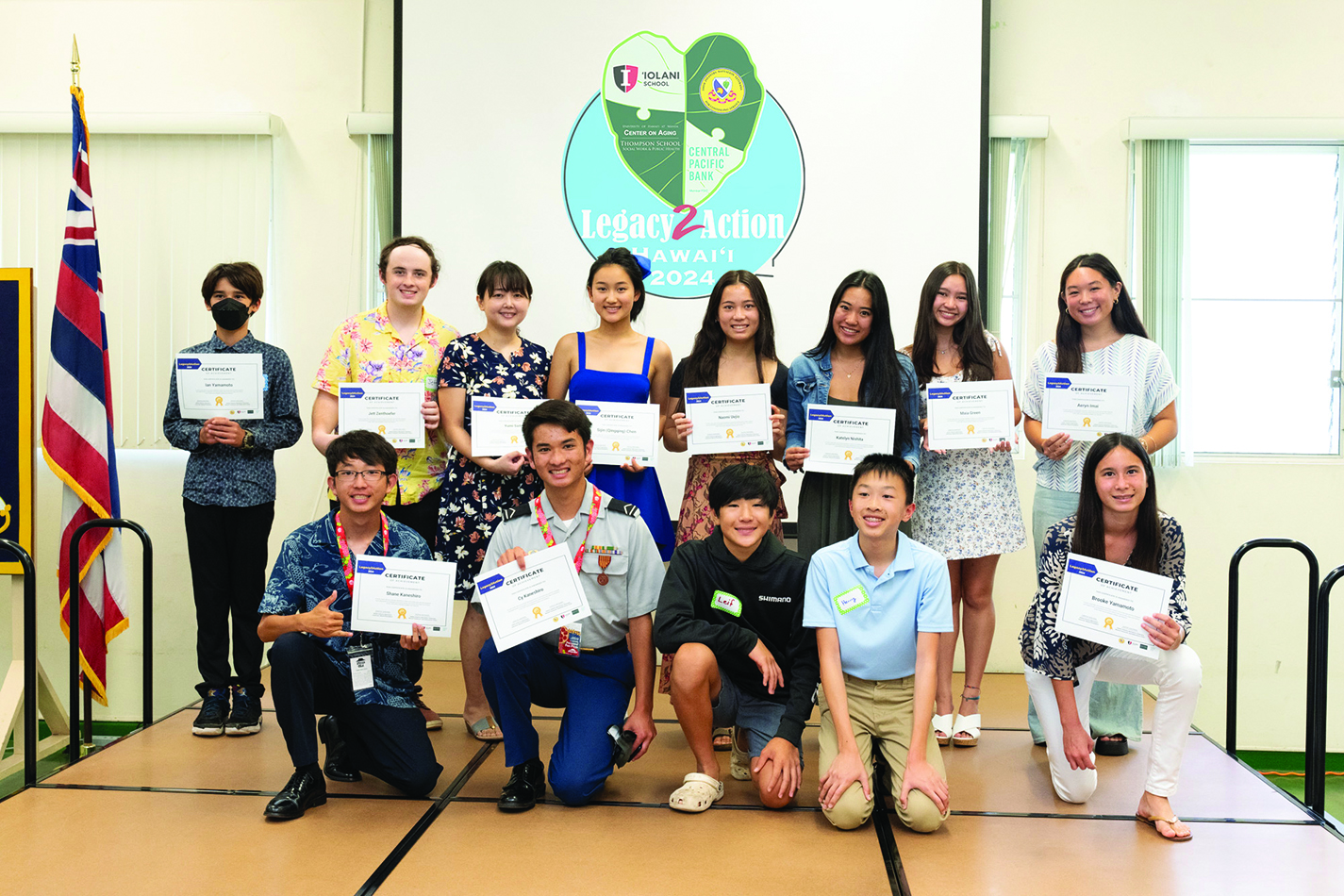
    Club 100 (primarily descendants) and its partners — ‘Iolani School, the University of Hawai‘i Center on Aging and Central Pacific Bank — are passionate about sharing the values of the 100th with youth, so they can apply these leadership characteristics to community service projects. They call this initiative “Legacy2Action.”

    The concept was piloted in 2022 with four students. In 2024, over 100 students participated and shared creative solutions. Their foci included inspiring students to learn about their grandparents’ history and culture, providing hygiene supplies for the Women’s Correctional Center, providing more ethnic/diverse books for schools, promoting peace, containing fire ants and more. The students shared leadership values, such as gaman (quiet endurance), ganbari (perseverance) and giri (obligation), that made the nisei so successful, despite being small in stature — on average 5-feet 4-inches tall, weighing 125 pounds.

    Organizers also welcomed kūpuna to help by sharing their knowledge. A few months ago, internationally acclaimed gerontologist Dr. Emi Kiyota visited the 100th Infantry Battalion Clubhouse and shared her thoughts on healthy aging, living with independence and purpose. Her studies show seniors enjoy giving to others and making a difference in their community. The organizers encourage kūpuna to share their skills and interests to help students develop their community service projects. Please share your interests by using the contact information below.

    100th INFANTRY BATTALION VETERANS
    520 Kamoku St. Honolulu, HI 96826
    For more information:
    info@100thbattalion.org | 808-946-0272
    Written in collaboration with the UH Center on Aging and ’Iolani School

    The 100th Infantry Battalion was a unit of second-generation Americans of Japanese ancestry men, nisei, who were born in Hawai‘i and achieved worldwide recognition as fierce fighters and loyal Americans. They achieved these accomplishments despite initial, unfounded suspicion and discrimination because they looked like the Japanese enemy who attacked Pearl Harbor on Dec. 7, 1941.…

  • Save More on Prescriptions

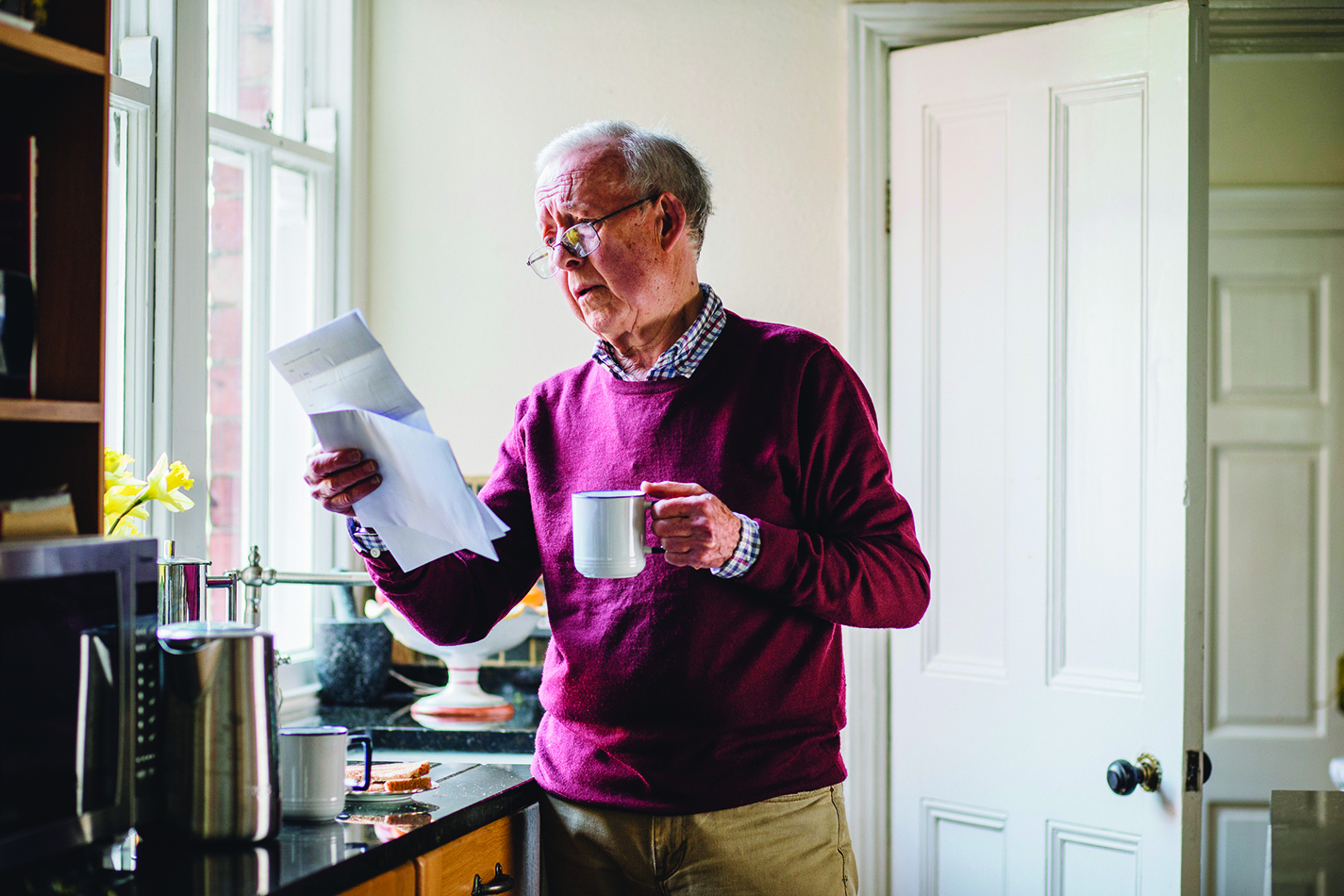
    On Aug. 16, 2022, the Inflation Reduction Act became law, bringing relief for many Medicare beneficiaries who pay a lot for their prescription drugs. New benefits begin each year to lower your copays and out-of-pocket costs.

    2023: The law caps copay at $35/month for certain insulin medications. Medicare covers 100% of Part D vaccinations, such as for shingles.

    2024: Medicare Part D covers 100% of drug costs once you meet $8,000 out-of-pocket limit per calendar year. More people qualified for Extra Help to offset drug plan copays and deductibles.

    2025: Payment plan spreads out prescription drug copays through the calendar year. Maximum out-of-pocket limit drops from $8,000 to $2,000 per calendar year.

    2026: It significantly reduces costs of 10 lifesaving drugs. For a comprehensive list of drugs and their newly negotiated prices, visit hawaiiship.org.

    The Inflation Reduction Act is a major step toward improving Medicare coverage. Beneficiaries can expect more enhancements soon to lessen financial strain and increase access to needed medications to support health and well-being.

    If you have questions regarding Medicare or how these benefits may affect you, contact Hawai‘i SHIP using the information below.

    HAWAI‘I SHIP
    250 South Hotel St., Ste. 406, Honolulu, HI 96813
    O‘ahu: 808-586-7299 | Toll free: 888-875-9229
    hawaiiship.org
    Free, local, one-on-one Medicare counseling is provided by the Hawai‘i State Health Insurance Assistance Program.

    On Aug. 16, 2022, the Inflation Reduction Act became law, bringing relief for many Medicare beneficiaries who pay a lot for their prescription drugs. New benefits begin each year to lower your copays and out-of-pocket costs. 2023: The law caps copay at $35/month for certain insulin medications. Medicare covers 100% of Part D vaccinations, such…

  • SMART911 Helps First Responders Help You

    In emergencies, quick, informed responses can make the difference between life and death. Whether it’s responding to a 911 call of an individual experiencing a medical crisis at home or or an impending natural disaster, access to critical information can empower first responders to act appropriately and effectively in saving lives.

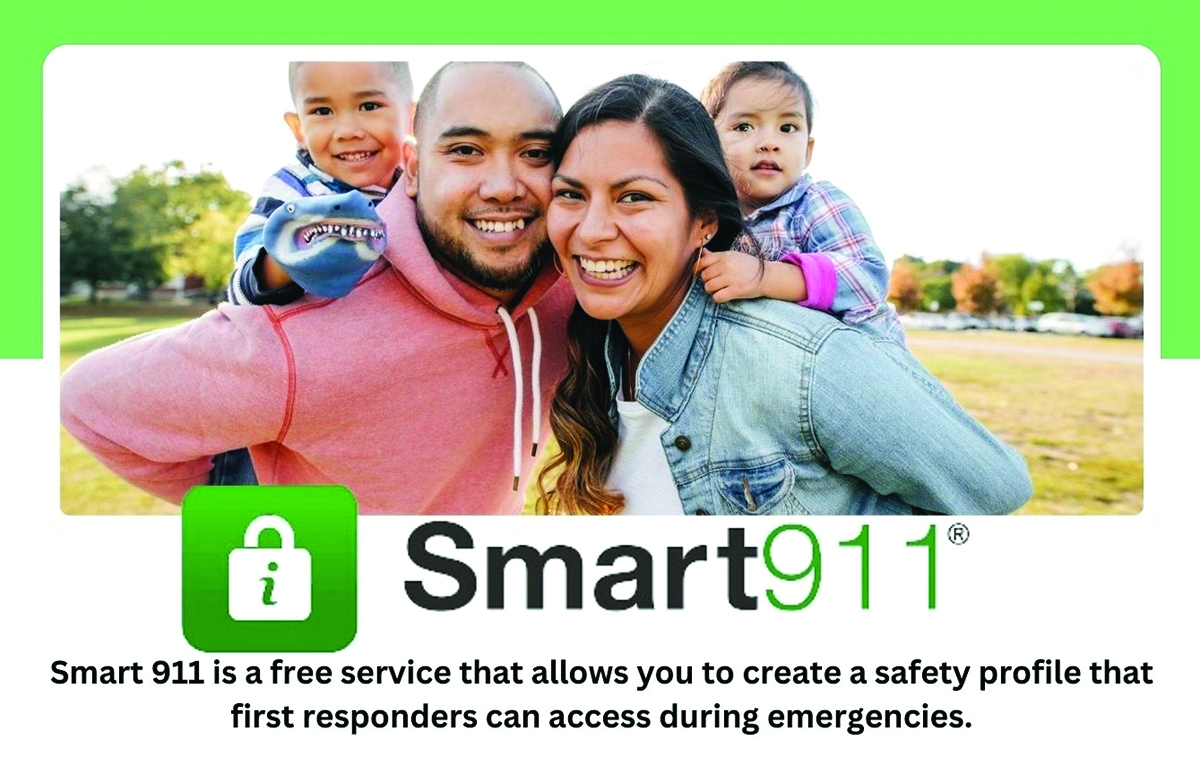
    The SMART911 service helps protect your family by providing this vital information to first responders. The public safety service enables individuals to create secure profiles with crucial information that first responders can access during emergencies. The core purpose is to enhance safety and response time by providing responders with important context about a person’s medical conditions, disabilities, care needs, personal preferences and other factors that could impact how they approach and assist in a crisis. This system is particularly valuable for people with disabilities or dementia, and older adults who may have specific access and functional needs.

    Smart911 profiles can highlight health conditions, communication preferences, mobility constraints, cognitive impairment, medications, behavioral triggers, sensory sensitivities and more, giving first responders the context needed to respond safely and compassionately.

    Instructions and emergency contacts can also be added. And incorporating an Advance Healthcare Directive and Power of Attorney document alongside SMART911 ensures that your wishes are clear. SMART911 allows these individuals or their caregivers to proactively share this information in a secure system, bridging communication gaps that can arise during stressful situations. This will enhance emergency response effectiveness, reduce distress, avoid escalation and promote dignified, informed care.

    Set up a SMART911 profile at smart911.com. Join SMART911 and empower first responders with the information that could save lives when seconds matter. Together, we can contribute to a safer, more inclusive community, where first responders have the tools to help anyone in crisis — particularly our most vulnerable members.

    HAWAI‘I STATE COUNCIL ON DEVELOPMENTAL DISABILITIES
    1010 Richards St., Room 122, Honolulu, HI 96813
    808-586-8100 | hiddcouncil.org

    In emergencies, quick, informed responses can make the difference between life and death. Whether it’s responding to a 911 call of an individual experiencing a medical crisis at home or or an impending natural disaster, access to critical information can empower first responders to act appropriately and effectively in saving lives. The SMART911 service helps…

  • Palliative Care vs. Hospice Care

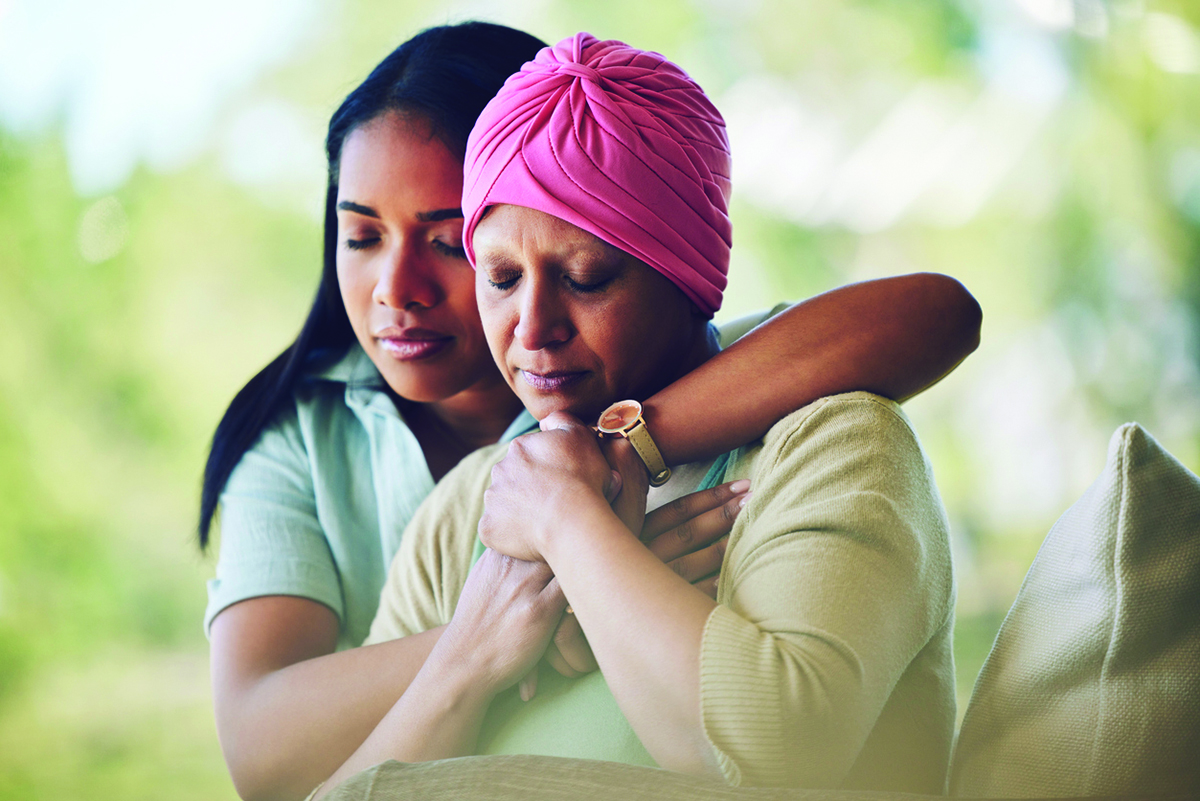
    When facing a loved one’s serious illness, family members rarely know how to reduce his or her suffering or where to turn. Ask your doctor about available options.

    Palliative care is specialized medical care for people with a serious illness. Care is focused on providing relief of symptoms and stress, helping to improve the patient and family’s quality of life. A team of doctors, nurses and specialists provide care by working together with a patient’s other doctors for an extra layer of support. Care is not based on the patient’s prognosis and it can be provided alongside curative treatment.

    BEREAVEMENT NETWORK OF HAWAI‘I
    Facilitated by KOKUA MAU (nonprofit)
    808-585-9977 | kokuamau.org
    kokuamau.org/grief-and-bereavement
    Learn more about grief and the healing process: Help For The Bereaved — The Healing Journey
    kokuamau.org/wp-content/uploads/CtrOnAging-Booklet-5-REV_6-30-11.pdf

    When facing a loved one’s serious illness, family members rarely know how to reduce his or her suffering or where to turn. Ask your doctor about available options. Palliative care is specialized medical care for people with a serious illness. Care is focused on providing relief of symptoms and stress, helping to improve the patient…

  • Community & Private Case Management

    Case managers help clients navigate the social service system. Community case managers help clients with housing, benefits and other resources. Private case managers work with clients in a variety of settings, including healthcare and mental health care.

    ■ Community case managers work for healthcare institutions and insurance companies. They manage large patient loads and support patient care transitions to the appropriate level. They are accessible to the consumer. They aim to keep the patient out of the hospital setting and safely cared for in a minimally restricted environment that supports optimum health. A case manager follows high-risk populations and identifies problems early to keep the patient in optimum health.

    ■ Private case managers are hired privately and often partner with local hospitals, clinics, home health and hospice agencies. They have close relationships with these providers as they ensure that all partners are aligned with the client’s plan of care, enhancing their quality of life.

    By hiring a private case manager, patients can benefit from dedicated support, ultimately leading to improved health outcomes and a higher quality of life. Investing in a private case manager can significantly enhance a patient’s healthcare experience. Private case managers focus on personalized care and deliver tailored health plans that cater to the patient’s unique needs. Their increased availability means patients can expect prompt responses to concerns and frequent communication, fostering a supportive environment for the patient’s health journey.

    Moreover, they excel in coordinating with various healthcare professionals, ensuring seamless communication and alignment throughout treatment. As a dedicated advocate, a private case manager empowers a patient to navigate the complexities of the healthcare system, confidently prioritizing his or her needs and preferences.

    By monitoring a patient’s health closely, they identify potential issues early, helping to prevent costly hospitalizations and maintaining optimal well-being. Their holistic approach addresses medical needs and the social and emotional factors that influence a patient’s overall health.

    A private case manager provides continuity of care, ensuring consistent oversight, especially for chronic conditions. Their flexible scheduling and personalized services help enhance a patient’s overall
    quality of life.

    ALOHA COMPLEX CARE LLC
    808-269-5463 | alohacomplexcare@outlook.com
    alohacomplexcare.com
    Aloha Complex Care LLC is a case-management and care company, networking island-wide, servicing all levels and stages of care, from the initial stages and on through hospice and bereavement.

    Case managers help clients navigate the social service system. Community case managers help clients with housing, benefits and other resources. Private case managers work with clients in a variety of settings, including healthcare and mental health care. ■ Community case managers work for healthcare institutions and insurance companies. They manage large patient loads and support…