Category: Giving Care

  • Nonprofit Hospice Care Offers Help, Hope and Guidance Through Uncertain Times

    “You have 10 days to live,” the doctor told John. What do you do with only 10 days? John picked up his phone and called his little brother, Stan. His kidneys were failing. The next morning Stan was on a plane to Hawai‘i to be with his brother. Back in their younger days, John and Stan would spend time at the beach. Stan thought it would be wonderful to relive those brotherly memories. Navian Hawaii helped to make this possible.
    “You have 10 days to live,” the doctor told John. What do you do with only 10 days? John picked up his phone and called his little brother, Stan. His kidneys were failing. The next morning Stan was on a plane to Hawai‘i to be with his brother. Back in their younger days, John and Stan would spend time at the beach. Stan thought it would be wonderful to relive those brotherly memories. Navian Hawaii helped to make this possible.

    Navian Hawaii’s comprehensive, interdisciplinary program of care is designed to provide patient-centered care for every life journey, offering relief from suffering, support for the entire family, and hope, compassion and love.

    Navian focuses on patients’ and their families’ physical, psychosocial, emotional and spiritual well-being. United as Navian Hawaii, we are on a journey to improve the lives of Hawai‘i’s people, to celebrate every one of life’s  moments and to navigate always in the direction of hope.

    Originally founded as Hospice Hawaii in 1979, Navian has built a strong reputation for providing quality hospice care on O‘ahu, Molokai and Lāna‘i. In 2019, Navian expanded its services to include Integrated Care.

    With this expanded model of care came the new name. “Navian,” formed from the words “navigator” and “guardian,” is a modern take on the critical roles each staff member performs. As navigators, the Navian ‘ohana provides clarity and guidance through times of uncertainty. As guardians, they provide care for people and protect their wishes.

    John was provided with a special chair to keep him comfortable during outings. It was a perfect day as Stan eased John into Waikiki’s inviting waters. John felt the warm sunshine on his face, he felt the cool ocean water caress his skin and he also felt something he hadn’t felt in a while — hope — hope that his last days didn’t have to be filled with pain, but could be infused with love and wonderful memories. John surpassed his initial diagnosis and lived three additional months.
    John was provided with a special chair to keep him comfortable during outings. It was a perfect day as Stan eased John into Waikiki’s inviting waters. John felt the warm sunshine on his face, he felt the cool ocean water caress his skin and he also felt something he hadn’t felt in a while — hope — hope that his last days didn’t have to be filled with pain, but could be infused with love and wonderful memories. John surpassed his initial diagnosis and lived three additional months.

    Navian continues to bring hope, reduce fear and impact lives as a trusted, local nonprofit organization, fulfilling needs in Hawai‘i by providing education, cultivating acceptance, and guiding patients and families through their journey.

    Hospice Means Hope

    Hospice is really about hope. Navian’s caregivers are dedicated to helping patients and their families face this transition without fear, but with hope and unconditional love.

    The care Navian provides allows individuals to remain at home or in their chosen setting and to live life to the fullest with their loved ones. Navian cares for the whole family by providing relief from physical, emotional and mental suffering.

    Many patients who go through our hospice care program continue to live very productive and rewarding lives — without pain and anxiety.

    Many people think that hospice is only for cancer patients or the elderly, but more than half of our hospice patients are diagnosed with conditions such as heart failure, dementia or chronic lung disease. Navian also has the state’s first pediatric hospice care program that offers comprehensive care for children and their families.

    Bob was diagnosed with prostate cancer and stage three kidney disease. It was difficult news for a farmer who was used to working the land and nurturing the trees. A dedicated team from Hospice Hawaii ensured that Bob was comfortable.
    Bob was diagnosed with prostate cancer and stage three kidney disease. It was difficult news for a farmer who was used to working the land and nurturing the trees. A dedicated team from Hospice Hawaii ensured that Bob was comfortable.

    Navian Hawaii’s Hospice Care program provides support to enhance comfort and promote the quality of life for individuals with life-limiting conditions. Typically, hospice services are available to patients who have six months or less to live, should the disease run its course. A patient can self-refer or be referred by a physician, family member or other loved one at any time.

    Hospice care is fully covered by most health insurance programs, including Medicare, Medicaid and most private insurance providers. No one who is medically eligible will be turned away if they are unable to pay for the services.

    Integrated Care Offers Specialized Support

    People living with serious illness who aren’t ready for hospice care, but require support services to improve their quality of life can receive Integrated Care, which provides specialized medical and emotional support for patients living with serious, but treatable illness.
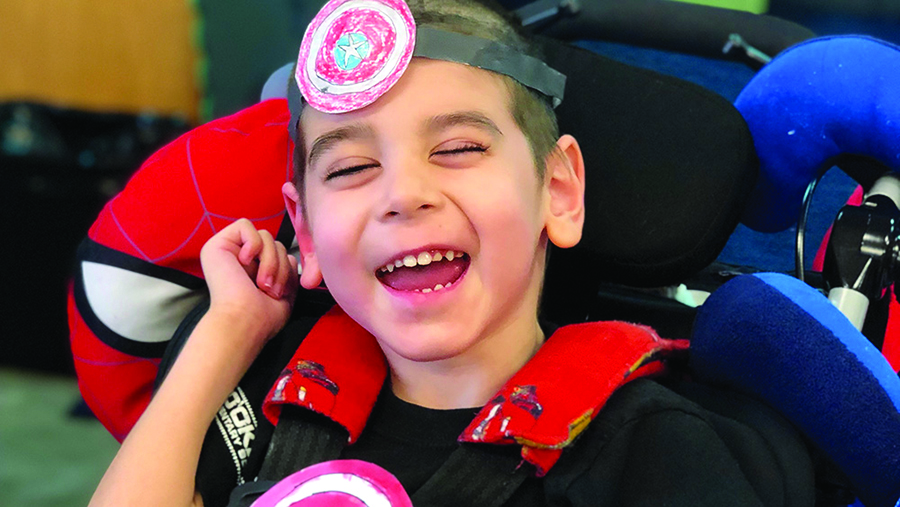
    Meet Aaron. “He’s such a goofball,” says Tamra, when asked to describe her 5-yearold son. He has metachromatic leukodystrophy, a rare disease that attacks the nervous system. Through Navian Hawaii’s Little Things, Big Differences program, Aaron was provided assistance and care to help him breathe easier.
    Meet Aaron. “He’s such a goofball,” says Tamra, when asked to describe her 5-yearold son. He has metachromatic leukodystrophy, a rare disease that attacks the nervous system. Through Navian Hawaii’s Little Things, Big Differences program, Aaron was provided assistance and care to help him breathe easier.

    Seriously ill patients who live alone, and have limited resources and caregiver support may find it difficult to navigate the healthcare system. The Integrated Care program alleviates those challenges and helps end the vicious cycle of unmet care needs that often leads to hospitalization.

    Anyone can refer a patient to Integrated Care and there are no time limitations on this service. Care settings may include a patient’s home, skilled nursing facility or residential care home.

    How to Get Involved

    • Make a Donation: Contributions directly help patients and their families. Navian raises funds throughout the year to ensure that eligible patients are never turned away.

    • Volunteer: There are no words that can express the impact a regular volunteer can have on the well-being of a terminally-ill patient. New volunteers are accepted on an ongoing basis. Navian strives to align volunteers with their interests. There is a role for everyone.

    • Attend Navian’s Community Connect Educational Series: This monthly series of one-hour webinars connects caregivers with community partners and resources.

    • Join an Adult Grief Support Group: Navian offers ongoing support groups to help those who have lost a loved one move through the healing process. Virtual group sessions are held monthly.

    • Participate in one of Navian’s Annual Events: Each year, Navian hosts A Night To Remember memorial service and a gala.

    If you or a loved one are in need of hospice care or Integrated Care, contact Navian using the information below.


    NAVIAN HAWAII (501(c) 3 nonprofit)
    808-924-9255 | www.navianhawaii.org
    Navian Hawaii’s comprehensive, interdisciplinary program of care is designed to provide patient-centered care for every life journey, offering relief from suffering, support for the entire family, and hope, compassion and love.

  • Adult Day Care Supports Aging in Place

    Adult day care services offer professional care for seniors and adults living with dementia and other disabilities. They receive therapeutic, social and health services during the day. Adult day care is also a great solution if the senior needs supervision for safety reasons, is expressing depression or isolation, needs socialization and engaging activities, or if the caregiver simply needs respite. Adult day care gives caregivers the opportunity to work while their loved one is safe.

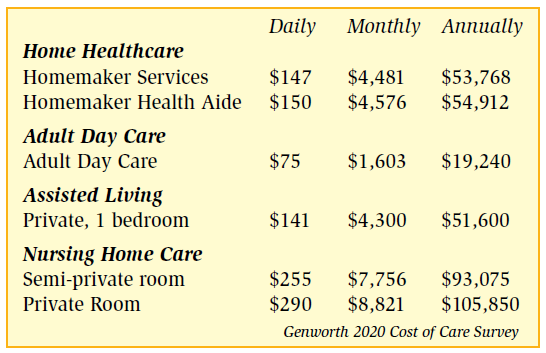
    If Mom and Dad want to age in place at home, adult day care offers an affordable solution for working caregivers (see table). The figures are based on national averages — Hawai‘i’s figures are generally higher.

    Adult day services information can be found at adultdaycentershawaii.org.


    HALE HAU’OLI HAWAII (501(c) 3 nonprofit)
    98-1247 Kaahumanu St., Ste. 207, Aiea, HI 96701
    808-798-8706 | Kwyatt01@aol.com
    www.halehauolihawaii.org

    Adult day care services offer professional care for seniors and adults living with dementia and other disabilities.

  • Activities & Dementia

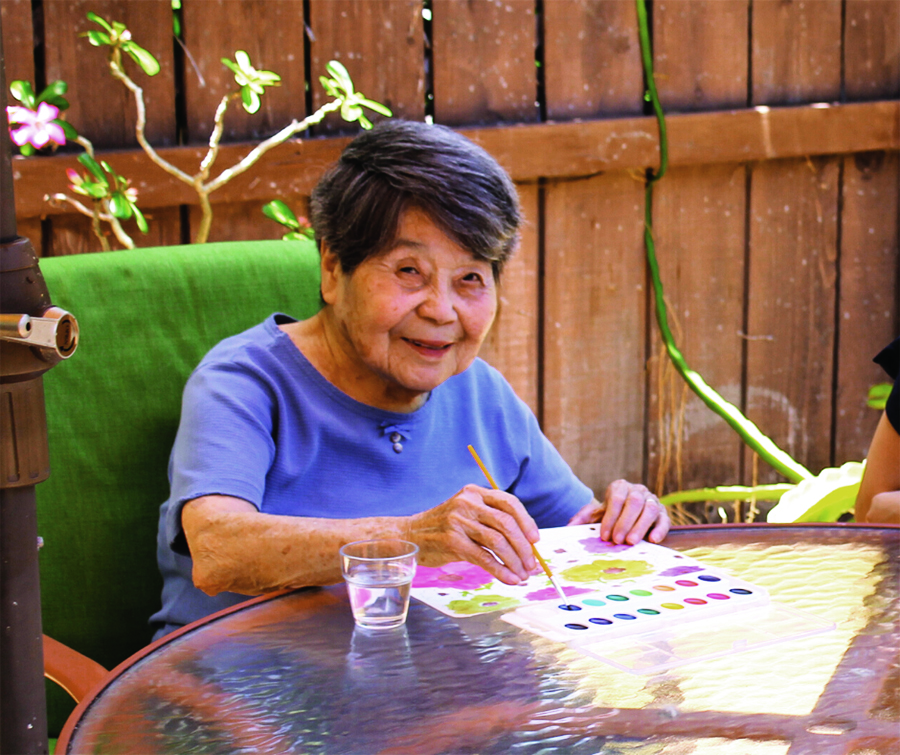
    Providing meaningful activities for your loved one with dementia is very possible. Activities can add meaning, boost quality of life, and provide beautiful opportunities for connection.

    Here are some tips:

    Consider past interests: Activities that bring up memories and past skills are more likely to be successful and meaningful. So try choosing an activity that is familiar and provides opportunities to reminiscence.
    Approach with ease: Make your loved one feel safe — speak in a calm tone of voice and explain in simple words what is happening before you begin the activity together.
    Sneak in physical activity: Gardening, assisting with dishes and going shopping all involve being active, and may be able to fit more naturally into the day than formal exercise.
    Engage the senses: Your loved one may not be able to “do” an activity but can still “experience” an activity. Things like light-touch massage, music and sitting outdoors can provide calm engagement.
    Share love: Emotion still holds meaning for those with dementia, and sharing kind or loving words can bring joy.

    Caregiving for someone with dementia is challenging. Keep in mind that your loved one lives in moments, so aim to provide moments of joy throughout the day to boost their quality of life.


    MANOA COTTAGE KAIMUKI
    748 Olokele Ave., Honolulu, HI 96816
    808-800-4089 | info@manoacottage.com
    www.manoacottage.com

    Providing meaningful activities for your loved one with dementia is very possible. Activities can add meaning, boost quality of life, and provide beautiful opportunities for connection. Here are some tips…

  • Booklets Offer Help Amidst Life’s Crises

    A valuable resource to help us cope effectively during our most trying times is available through Kōkua Mau. Hawaiian for “continuous care,” the statewide network supports and assists people who may be facing serious illness, as well as their loved ones.

    Kōkua Mau provides information that helps to relieve the symptoms and stress of illness. It also includes information about hospice care, in order to provide the best care possible at the end of life.

    A set of five, 20-page booklets developed by the Center on Aging at the University of Hawai‘i are practical, pragmatic and easy-to-use guides available at no charge from Kōkua Mau’s website.

    Booklet 1: Advance Care Planning — Making Choices Known is a workbook for documenting the kind of care you want if you are unable to make decisions for yourself. Knowing your wishes will help your family and loved ones if they have to make medical decisions on your behalf. In this booklet, you will learn about the types of decisions you can make ahead of time and how to let others know what you want.

    Booklet 2: Planning Ahead — Funeral and Memorial Services offers options for funerals, memorials and burial. Which plans should you make now? Making plans ahead of time will help reduce the stress on surviving family members and loved ones when death occurs. Planning your funeral or memorial service with mindfulness is a gift you share with those you love. This booklet will help you make and document those decisions for the events following your death.

    Booklet 3: Preparing To Say Good-Bye — Care for the Dying describes common symptoms  experienced by dying people and how to best provide comfort. Those with a terminal illness will show a steady decline. Those with a serious chronic illness may have peaks and valleys. Learn to  anticipate and manage changes that may occur.

    Booklet 4: When Death Occurs — What to Do When a Loved One Dies is a guide to help you immediately following the death of a loved one. Honoring family and cultural rituals allows you to acknowledge the reality of the death and begin the healing journey. At the same time, you have much to do after a loved one passes. The document includes a checklist and practical help.

    Booklet 5: Help For The Bereaved — The Healing Journey outlines what experts feel is normal grieving and what is abnormal or complicated grieving. Expressions of grief are as individual as fingerprints. There is no “right” way or specific length of time required.

    Download the free updated PDFs from www.kokuamau.org/five-booklets.


    KŌKUA MAU (501(c) 3 nonprofit)
    PO Box 62155, Honolulu, HI 96939
    808-585-9977 | info@kokuamau.org
    www.kokuamau.org

    A valuable resource to help us cope effectively during our most trying times is available through Kōkua Mau. Hawaiian for “continuous care,” the statewide network supports and assists people who may be facing serious illness, as well as their loved ones.

  • ARCHs : A Home-Like Setting for Seniors

    What do you think of when you hear the word ARCH? A vertical, curved structure or perhaps those golden ones that McDonald’s is famous for? Or do you think of a cathedral arch typically used in bridge architecture? Did you know that in senior care, the acronym “ARCH” means adult residential care home?

    ARCHs are homes that are licensed and regulated by the Hawai‘i State Department of Health, Office of Health Care Assurance. They provide room and board, as well as 24-hour oversight by a licensed nurse for anywhere from five to 45 kūpuna. They focus on socialization, nutrition and healthcare. Much like your own home, residents can either share a room or have their own, but they partake in meals and activities together as a group. Residents are rarely just sitting in their room!

    ARCHS also can take you to doctor appointments or bring in specialists, such as podiatrists, or physical/occupational therapists.

    Hawai‘i has over 200 of them! So, if you are looking for residential care, but are not quite ready for a nursing home, an ARCH may work best for you.

    For more  information go to, https://health.hawaii.gov/ohca/state-licensing-section.


    LUNALILO HOME
    Adult Residential Care Home located in Hawaii Kai
    501 Kekauluohi St., Honolulu, HI 96825
    808-395-1000 | www.Lunalilo.org

    What do you think of when you hear the word ARCH? A vertical, curved structure or perhaps those golden ones that McDonald’s is famous for? Or do you think of a cathedral arch typically used in bridge architecture? Did you know that in senior care, the acronym “ARCH” means adult residential care home?

  • Preparing Yourself for Caregiving Needs

    When our loved one with dementia cannot clearly express their own wishes, it becomes a guessing game. When you stumble across an unanswered question in your role as caregiver, just think of the difference guidance from your loved one would have made! So it is clearly important that we do our own preparation for our own potential caregiving needs. Documenting your wishes for your future will be a much-appreciated tool for your own loved ones.

    A Personal Care Planning Notebook can be an invaluable tool. It should include:

    • A Physicians Orders for Life Sustaining Treatment (POLST) form (update it regularly)
    • An Advanced Health Care Directive
    • A Power of Attorney document that goes into effect only when you become incapacitated
    • A copy of your birth certificate, wedding certificate and the birth certificates of your children
    • A will including a nomination for personal representative
    • Location of your trust document
    • Your health insurance, dental insurance and Medicare cards
    • A list of the doctors you normally see
    • A Quality of Life Statement

    A Quality of Life Statement is a document for your family that describes the care you want:

    • Where would you like to receive that care? Get as specific as you like.
    • Who would you permit to bathe you, etc.?
    • If your finances are depleted, what are other finance options for your continued care?
    • Include details about life support or physical conditions you would find acceptable.
    • What treatment or loss of physical ability would you not accept?
    • A topic that also needs to be addressed is what you consider to be a “good death.” Do you want to be left alone or be surrounded by family? You will lessen stress for your loved ones by providing this important information in advance.

    Start on your Personal Care Planning Notebook today and update it at least once a year — your
    family will be eternally grateful to you.


    THE CAREGIVER FOUNDATION (501(c) 3 nonprofit)
    926 3rd St, Pearl City, HI 96782
    808-625-3782 | gary@thecaregiverfoundation.org
    www.thecaregiverfoundation.org
    Contact Gary for a more complete notebook list.

    When our loved one with dementia cannot clearly express their own wishes, it becomes a guessing game. When you stumble across an unanswered question in your role as caregiver, just think of the difference guidance from your loved one would have made!

  • Caregiver Tips for Coping with Stress

    Caring for a loved one can be stressful, even for the most resilient people. Over time, this can harm your health. Consider these four caregiver tips to help preserve your health and well-being:

    ■ Accept your limitations. It’s normal to feel guilty sometimes, but understand that no one is a perfect caregiver. Believe that you are doing the best you can at any given time.

    ■ Seek help. Be prepared with a list of ways others can help you. Let friends and family members choose what they would like to do. Some may offer to take your loved one on a walk a couple of times a week. Others may be able to run an errand or cook for you.

    ■ Set personal health goals. For example, set goals to establish a good sleep routine, find time to be physically active on most days of the week, eat a healthy diet and drink plenty of water.

    ■ Get connected.

    Find out about caregiving resources in your community. St. Francis Healthcare System has free caregiver education and wellness classes that offer practical tips to help you avoid burnout. Connecting with other caregivers can be a source of inspiration and a reminder that you aren’t alone.


    ST. FRANCIS HEALTHCARE SYSTEM (501(c) 3 nonprofit)
    2228 Liliha St., Honolulu, HI 96817
    808-547-6500 | info@stfrancishawaii.org
    www.stfrancishawaii.org

    Caring for a loved one can be stressful, even for the most resilient people. Over time, this can harm your health. Consider these four caregiver tips to help preserve your health and well-being.

  • Nutritional Supplements & COVID-19

    Facing the potential that the COVID-19 variants may keep this virus around, it makes sense that practitioners are looking for other treatments to slow the spread of the disease. The results of a clinical trial in India using two natural supplements to treat COVID-infected individuals showed that these herbal products can speed up recovery time from the disease. On average, after five days, 88 percent of those treated tested negative for the virus, compared with 72 percent of those receiving hospital-standard anti-viral medications. By day 10, the ratios rose to 100 percent versus 88 percent. This begs the question, how can nutritional supplements assist the body in fighting the virus?

    When considering specific supplements such as vitamins, it should be noted that the real issue is not the amount of vitamin that is ingested, since the body can only utilize so much of it before expelling it. A person’s “nutritional profile” is what really matters. Someone who lacks vitamins and minerals needed for proper immune system function will benefit from adding certain supplements to their diet. A German study indicates that vitamins D, K and A could bind to the viral spike protein of the COVID-19 virus and reduce its effect. This is already being used in hospitals as part of an integrative approach to COVID-19.

    Other individuals have a lack of vitamins and nutrients because of poor nutrition, and will need to develop healthier eating habits before any boost from supplements will help. Adopting a healthier nutritional attitude can be as easy as adding specific foods to your diet. Another study found the natural compounds in green tea, muscadine grapes, cacao and dark chocolate interact with the COVID virus to make it harder for it to propagate in humans. On the other hand, cholesterol was found to have the opposite effect, making COVID-19 more severe by interacting with the spike to increase concentrations of the virus. This supports evidence of more severe cases of the disease among overweight individuals.

    This confirms what we have known all along — the overall quality and balance of nutrition has a strong influence on our immune system’s ability to fight infection. Once the system is out of balance, it is vulnerable and more likely to result in a longer, more severe illness from the disease. Making up for lack of nutrition by taking lots of vitamins does little to restore the needed nutritional balance. It comes down to these basics:

    ❶ Eat a variety of fresh, raw produce
    ❷ Strictly limit processed foods and sugar
    ❸ Get regular exercise, preferably outdoors
    ❹ Maintain a healthy physical and mental equilibrium in your daily routine

    The goal here is not to load up on 1,000 percent of any particular supplement, most of which will be flushed out of the system, but to establish a good nutritional foundation, eat regular meals of the right size, and build on this base with natural supplements as recommended by your physician or naturopath.

    And of course, COVID-19 vaccines are now available to all age groups to give your immune system a head start in warding off the virus.


    ATTENTION PLUS CARE HOME HEALTHCARE
    Accredited by The Joint Commission
    1580 Makaloa St., Ste. 1060, Honolulu, HI 96814
    808-739-2811 | www.attentionplus.com
    AGING IN HAWAII EDUCATIONAL OUTREACH PROGRAM by Attention Plus Care — a program providing resources for seniors and their families, covering different aging topics each month. For class information and upcoming topics, call 808-440-9356.

    Facing the potential that the COVID-19 variants may keep this virus around, it makes sense that practitioners are looking for other treatments to slow the spread of the disease. The results of a clinical trial in India using two natural supplements to treat COVID-infected individuals showed that these herbal products can speed up recovery time…

  • Care Lessons Learned from COVID-19

    Beginning in March 2020, recreation therapists, activity directors and staff were faced with the daunting task of making their activities safe for their residents. Groups were cancelled; family members, volunteers and outside entertainment were no longer allowed inside of nursing homes. Much more time was devoted to cleaning and social distancing.

    Now it’s been almost a year and the new normal has provided insights that will stick with us even as we (hopefully) get to return to some semblance of pre-pandemic normalcy. Here are some things we’ve learned:\

    Senior woman with caregiver or healthcare worker indoors, using tablet. Coronavirus concept.

    Video Chat Apps Will Stay

    As staff have become experts at using FaceTime, Zoom and Skype, residents will continue to enjoy getting to call their family members and see them face-to-face. For example, one resident was able to connect with family off-island and talked to them even more than he did pre-pandemic. These regularly scheduled calls allow for connections to continue with friends and family near and far, despite the inability to travel.

    Don’t Underestimate Virtual Offerings

    Virtual classes have allowed activity staff to provide kūpuna with more ways to stay engaged and feel part of the community. High school students in California performing jazz via Zoom, a virtual art class with supplies and assistance from staff and getting to see famous symphonies performing free online holiday concerts all offer great possibilities for future programs.

    Compassion is Still No.1

    Lastly, though this is not new, the pandemic has shown the importance of human connection. Staff working in nursing homes have provided the love and attention that family members would normally be able to give, while simultaneously keeping those outside connected and assured that those inside are being well-cared-for. It has been a heart-wrenching balancing act, but for many of us working in this setting, our ability to love and care for kūpuna has increased and the attention to detail we have learned will stick with us even as we overcome and move past COVID-19.


    MANOA COTTAGE KAIMUKI
    748 Olokele Ave., Honolulu, HI 96816
    808-426-7850 | info@manoacottage.com
    www.manoacottage.com

    Beginning in March 2020, recreation therapists, activity directors and staff were faced with the daunting task of making their activities safe for their residents. Groups were cancelled; family members, volunteers and outside entertainment were no longer allowed inside of nursing homes. Much more time was devoted to cleaning and social distancing.

  • Home Cleaning Help for the Elderly

    Photo of Family cleaning house or new apartment together and having fun. Moving and start up, Cleaning House, residence, living, health conceptHome cleaning might be a simple activity for some of us. However, this could be the opposite to our elderly family  members and friends. Even daily upkeep might require tremendous effort on their part. That is why, as ‘ohana, it is our duty to help and share the spirit of aloha. If you are involved in your elderly family’s home’s upkeep, these four tips could save you time, effort and money.

    1. Declutter the fridge.

    This task can be quite overwhelming even for younger people. However, a simple decluttering could save your elderly family member the time and effort to look for their food and snacks inside the fridge. You can even try using organizing trays for soda, condiments and fruits.

    2. Clean your microwave regularly.

    The microwave could be the next best thing since television for our seniors. However, frequent use could lead to a mixed smell of all the foods we heat and eat. A simple kitchen hack to remove smells from your microwave is to heat a mixture of one tablespoon of lemon juice with a half-cup of water in a microwave-safe bowl for three minutes. Let it stand for a minute or two, and voila! Just wipe it clean with a paper towel and your microwave is as good as new!

    3. Throw away expired medication.

    This is very important, as seniors tend to take numerous medications over time. They might mix up old and expired medication with new ones. This is potentially dangerous if not overseen. The good thing is that most drugs can be placed in the household trash with proper handling. You can always call your pharmacist if you have questions about disposal for a particular drug.

    4. Hire a caregiver or make it a family activity.

    Sometimes, we don’t have the time to do everything for our elderly family and friends. That is why we should make it into a family activity so we get to regularly check on them and make them feel cared for. If your schedules are tight, hiring caregivers or a senior-friendly cleaning company may be a great your choice for your family.


    MALAMA NUI HOME CARE LLC
    500 Ala Moana Blvd., Bldg. 7, Honolulu, HI 96813
    808-439-4058 | malamanuillc@gmail.com
    malamanui.com

    Home cleaning might be a simple activity for some of us. However, this could be the opposite to our elderly family  members and friends. Even daily upkeep might require tremendous effort on their part. That is why, as ‘ohana, it is our duty to help and share the spirit of aloha. If you are involved…

  • To Place or Not to Place, That is the Question

    The decision to move to senior living involves a variety of factors based on several circumstances, including finances.

    Professionals across the country have different answers to the question of whether “to place or not to place” a loved one in senior living. Some feel that older adults should stay in their home with paid caregivers. Others think that older adults would receive enhanced care and retain a higher quality of life if they were with others their own age, with more activities and socialization.

    The dilemma of why someone should move into assisted living can be mutually exclusive to making the actual decision in the first place. Family members can have all the reasons in the world their loved one should make a move, but that doesn’t mean they make the decision to place their loved one. Family members must find a balance between safety, finances, and common sense to make the decision that is right for them.

    FOUR STYLES

    One study concluded that there were four distinct decision-making styles when it comes to deciding to place a loved one. These categories included Scramblers, Reluctant Consenters, Wake-Up Callers, and Advance Planners.

    Families who utilize the expertise of a placement agent usually populate the Scramblers and Reluctant Consenters category types.

    ■ Scramblers are usually in a crisis situation resulting from a serious injury or a quick onset of an illness or disease. A sudden fall, stroke, or worsening of a pre-existing condition, along with the added pressure of a pending hospital discharge, can make the family feel the need to quickly find a senior living environment.

    ■ Reluctant Consenters are older adults who are “pushed” to make the decisions due to a noticed decline in their ability to function independently — perhaps because of a health condition. These older adults may not have been victim to an acute onset of issues, but a more constant decline of functioning from conditions like emphysema, heart conditions, dementia, or Alzheimer’s disease The family and the older adult may have noticed the decline for some time before any intervention was discussed.

    ■ Wake-Up Callers are usually victims of a “near-miss” situation. A severe fall may have kept the older adult on the floor  for hours, even without a fracture, for example. He or she may have suffered from dehydration or mild confusion resulting from the fall itself. This group tends to wait until several “wake-up calls” are received before making the final decision to move into senior living. This group is usually the target group for in-home caregiving services.

    ■ Advance Planners are those who have researched long-term care options for many years while they were very healthy. They have strategies for “if ” scenarios and are ready and committed to making the needed changes on the fly.

    MORE CHOOSE GROUP LIVING

    It is essential to know how today’s older adults feel about where they prefer to live as they age. A 2019 Harris Poll  concluded that attitudes have changed regarding senior housing over the years. Back then, an AARP study (2012) revealed that nine out of 10 older adults wanted to stay in their own home as they age. The recent Harris Poll showed that the percentage feeling the same way now about aging in place has dropped significantly.

    Twenty-four percent of those polled reported that they prefer to move into an assisted living community at some point, rather than continue living in their own home. A startling finding was that only 5 percent indicated wanting to live with a family member. The lowest findings (1 percent) preferred a nursing home or the services of an adult daycare center.

    Fifty-eight percent of respondents reported the reason for choosing assisted living was due to the professional care services offered. Other reasons published included not being a burden on families, wanting a familiar, consistent surrounding and the affordability of the care received.

    Understanding the differences in decision-makers and older adults’ preferences is essential. Finances living due to medical reasons require at least eight to 24 hours of supervised or hands-on care daily.

    FINANCES

    At eight hours of private duty services at $25 to $28 per hour, families can expect to pay $200 to $250 per day, or about $6,000 to $7,500 monthly, to maintain a safe and somewhat independent environment at home. The 2019 Genworth Assisted Living Cost study (2019) showed that the average cost of assisted living nationwide was $4,051 per month. In-home caregiving services can cost 33 percent higher in cases that need more hours of supervision.

    While some older adults have long-term care insurance that pays for private-duty caregiving services, many of these  policies have lifetime caps. This means that once the capitation lifetime rate is achieved, the long-term care insurance coverage stops, and actual private pay begins. It’s also true that depending where the older adult lives, care can cost much more than the insurance policy covers from the get-go. A policy may cover as little as a third of costs.

    WHEN TO MOVE

    Understanding the finances behind senior living compared to staying at home is important when comparing dollars; the next dilemma is considering when a move makes sense. The most common reasons to make a move to senior living rather than staying at home with a paid caregiver are:

    • Living alone and needing supervision and hands-on assistance with everyday activities, like showering, getting dressed, personal care and housekeeping.
    • Meal preparation and proper nutrition is crucial to maintain an older adult’s health. When someone has difficulty cooking, preparing, or making healthy choices when it comes to nutrition, it could be a wake-up call.
    • Medication management is vital, especially the more medications an older adult takes. Older adults who are hypertensive, diabetic or have other conditions can have serious health complications if their medications are forgotten or not taken on a timely basis.
    • Loneliness and depression should be taken seriously. The recent death of a spouse can cause loneliness, depression and a need for companionship. Even if a spouse passed away years ago, depression could be caused by regretting plans that never happened. Assisted living holds with it the opportunity for a variety of activities and socialization.
    • Health-related issues are the reasons for a move for Scramblers and Reluctant Consenters. Arthritis, failing eyesight, and a whole host of health-related deficits can make living at home a potential crisis.\

    Referral and placement agents with the CSA® and CPRS credentials are overwhelmingly qualified to help families during their decision-making process. Their knowledge of local community care options makes their expert guidance invaluable. Referral and placement agents work with no cost to family members and are available nationwide. Families, as well as professionals, can find qualified and certified agents at www.CSA.us and www.NPRAlliance.org.

    In conclusion, the question “to place or not to place” is a significant decision for families and older adults to make. In a perfect world, families have time and will include their loved ones on all decision-making. However, life doesn’t always go as planned. Knowing the signs that extended care is needed, as well as the cost, can make the journey of long-term care easier. Getting advice from a qualified placement agent with professional credentials can make the transition into senior living a safer and easier route to take.


    This article has been provided courtesy of the
    SOCIETY OF CERTIFIED SENIOR ADVISORS®
    800-653-1785 | Society@csa.us
    www.csa.us

    The decision to move to senior living involves a variety of factors based on several circumstances, including finances. Professionals across the country have different answers to the question of whether “to place or not to place” a loved one in senior living. Some feel that older adults should stay in their home with paid caregivers.…

  • Engage With Kūpuna During COVID-19

    Kūpuna who are staying at home or limiting interaction with loved ones may start to experience loneliness. Integrating a variety of activities while caring for kūpuna — both personally and professionally — can provide enjoyment for everyone.

    Get virtually connected.
    Teaching kūpuna how to use FaceTime, Zoom or Google Meet to connect with relatives, friends and their community will help them to socialize without leaving the safety of home. Some community centers offer online classes, enabling kūpuna to participate in virtual hula or ‘ukulele lessons.
    Try a cooking project or a DIY craft.
    Plan a project with kūpuna. For instance, my grandmother loves barbecued short ribs. I grocery shop, then we prepare the dish together. Engaging kūpuna in activities gives them needed structure and something to look forward to doing.
    Go through family photos.
    Help digitize or organize photo albums and spend time discussing the captured memories. It’s a great cognitive exercise and can bring joy to your kupuna’s day.

    Although there is no playbook for caring for kūpuna during a pandemic, it is essential that we support their social and emotional needs.

    During these challenging times, they need us more than ever.


    HOME CARE BY ALTRES MEDICAL
    808-591-4930 | homecare@altres.com
    www.altreshomecare.com

    Kūpuna who are staying at home or limiting interaction with loved ones may start to experience loneliness. Integrating a variety of activities while caring for kūpuna — both personally and professionally — can provide enjoyment for everyone.