Category: Column

  • Where Did All the Toilet Paper Go?

    Shoppers across the county and around the globe cleaned out shelves of toilet tissue, disinfectant sprays/wipes, rubbing alcohol and hand  sanitizers during the beginning of the outbreak of COVID-19 pandemic.

    Stores were overwhelmed due to fears of supply chain disruptions, although none occurred.

    Even though items that were scarce during the initial phase of the pandemic have been restocked in most stores, some of us must still fight the urge to hoard in preparation for what may come this fall and beyond. Keep in mind, the impact of over-acquiring affects the entire community.

    Pharmacies have even been dealing with people hoarding certain medications in hopes that they may be used as treatment in the future. Buying up existing medications puts people who truly need them at risk if they are forced to go without.

    There are some strategies to quell the natural impulse to acquire more than is needed. Start by taking stock of the items you already have at home and and assess how long they will last. Make a pragmatic list of what and how many supplies you will need to tide you over to your next shopping trip — not the next decade.

    When shopping, stick to the items on your list. Then, you’ll be less likely to succumb to anxiety-driven purchases triggered by the sight of empty shelves or thoughts of supermarkets closing.

    If shopping is “your thing,” expand your experience by helping people in your community who may need it. Add their list to yours and enjoy!

    Making sure you are doing all you can to manage stress is also helpful. Why not try 30 minutes of daily, moderate cardiovascular activity, muscle relaxation, mindfulness meditation exercises and other enjoyable activities.
    Shoppers across the county and around the globe cleaned out shelves of toilet tissue, disinfectant sprays/wipes, rubbing alcohol and hand  sanitizers during the beginning of the outbreak of COVID-19 pandemic. Stores were overwhelmed due to fears of supply chain disruptions, although none occurred.

  • Overcoming Depression Through Faith

    I’d like to introduce you to a friend of mine. His name is Depression. I didn’t like being around him, but he dropped in whenever he felt like it.

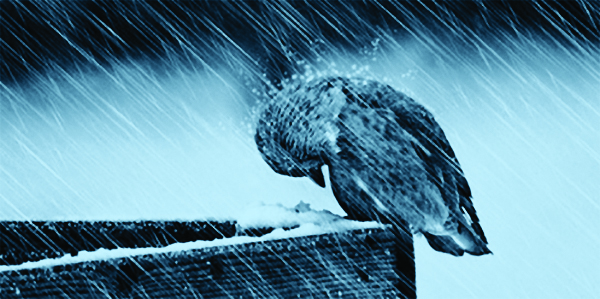
    Over time, I began feeling like the little bird in this picture. I was barely keeping my balance and felt very alone even when I wasn’t. Depression made it difficult for me to see clearly; my eyes were closed.

    But I didn’t give up. My belief in God gave me hope. I can see now that it is hope for the future that moved me onto the road to recovery. I also began following the advice of a friend who told me to just “take one day at a time.”

    I also learned this: “A major depression is the membership fee to an exclusive club. It enables one to move freely among the other members.”

    You might be amazed to learn how many people struggle with depression. It’s very likely that one day you’ll meet someone who is also going through a tough time. Because you‘ve “been there,” you’ll be able to encourage this person and give them hope for the future, too.

    You are probably wondering why I called Depression my friend. It’s because being able to help someone through something you have gone through is a true blessing. God has given you the opportunity to be a part of His response to someone’s prayer.

    Jesus said, “Love one another. As I have loved you, so you must love one another.” So please take care and be kind when an opportunity to be a blessing to someone presents itself. And don’t forget to make your family and friends a priority in your life. You will not regret it.

    I’d like to introduce you to a friend of mine. His name is Depression. I didn’t like being around him, but he dropped in whenever he felt like it.

  • Community Living Centers

    As a veteran who is “getting up there,” how to live out my last years comfortably without being a burden is more than a passing thought. Fortunately, there are 100 Veterans Affairs Community Living Centers (CLCs) across the country. Their mission is to restore the veteran to his or her highest level of physical and/or psychological well-being before being discharged to their own home.” CLCs also provide nursing home-level care.

    Tripler Army Medical Center is a 60-bed CLC facility that offers the comforts of home as much as possible. It provides convalescent care, rehabilitation, geriatric and geri-psychiatric assessment to eligible veterans in an inpatient setting.

    Veterans must be enrolled in the VA Health Care System to receive this care.

    CLCs provide activities for veterans of all ages in a family-friendly setting for visitors. Pets are also allowed to visit or live in the CLC. Organizations visit to host games, sing and hold barbecues, giving veterans an opportunity to talk story.

    Veterans may also receive nursing home-level care, which includes help with activities of daily living, as well as nursing and medical care.

    This level of care helps prevent declines in health and provides comfort at the end of life.


    VFW DEPARTMENT OF HAWAII
    438 Hobron Lane, Ste. 407, Honolulu, HI 96815
    808-946-7250 | adj@vfw-dept-hi.org
    www.vfw-dept-hi.org

    As a veteran who is “getting up there,” how to live out my last years comfortably without being a burden is more than a passing thought. Fortunately, there are 100 Veterans Affairs Community Living Centers (CLCs) across the country. Their mission is to restore the veteran to his or her highest level of physical and/or…

  • Work Longer — Brain Smarter

    There is plenty of evidence revealing that work boosts cognitive health. Delaying full-time retirement means mitigating the risk of several types of dementia, including Alzheimer’s.

    Evidence shows that:

    • Work gives us purpose and a social environment (online or in person) that creates community.
    • Work requires learning, unlearning and relearning — solid reasons to continue to learn new ways to work.

    Almost 30 percent of us are over 60. But the flexible workforce favors those prepared at any age. What better time to learn? Community colleges, adult learning schools and four-year universities are awash with learning opportunities that you can take advantage of from your home.

    Online learning also reduces social isolation without having to leave the comfort and safety of your home. Check out ThirdAge.com, Senior-Net.com and AARP.org. Many other sites are just an internet search away.

    If you need support to attain the help you need, reach out to me at carleenmackayhi@gmail.com and this 81-year-old worker will do her best to help get you started in your pursuit of a rejuvenated career.


    NEW WORKFORCE HAWAII
    Carleen MacKay
    916-316-0143 | carleenmackayhi@gmail.com
    www.newworkforcehawaii.com
    Contact Carleen via her website and receive New Ways to Work, a free PDF book co-written with Phyllis Horner.

    There is plenty of evidence revealing that work boosts cognitive health. Delaying full-time retirement means mitigating the risk of several types of dementia, including Alzheimer’s.

  • The Right to Vote is Yours!

    As we age, we may not be able to do some things as well as we used to. But there’s one important thing we can do today with greater power and effectiveness: We can vote!

    Throughout our history, people have fought and died for the right to vote. But this pivotal right has not always been as accessible as it is today. When our country was established, voting was limited to white men of property. Voting was determined by state law, not by the United States Constitution or federal law.

    As the country evolved, states began eliminating the property requirement for voting. Only some states allowed former slaves and women to vote. In 1870, the Fifteenth Amendment to the Constitution was adopted, giving African Americans (and other non-whites) the right to vote. Fifty years later, the Nineteenth Amendment was adopted, giving women the right to vote.

    But despite the Fifteenth Amendment, southern states continued to deny African Americans their right to vote by various means, including poll taxes (which were barred by the Twenty-Fourth Amendment), violence and death. Finally, in 1965, largely because of the civil rights movement led in part by Rev. Martin Luther King Jr., Congress passed the Voting Rights Act to enforce the Fifteenth Amendment in  southern states. Yet despite these gains, efforts to suppress the African American vote in the South continue to this day.

    The Twenty-Sixth Amendment was adopted in 1971, setting the minimum voting age at 18. Before that, just three states allowed those under 21 the right to vote. Hawai‘i was one of them.

    At the county level, we vote for mayors, council members, prosecutors and county charter amendments. At the state level, we vote for governors, lieutenant governors, legislators and state constitutional amendments. At the federal level, we vote for president, vice president, two senators and two representatives.

    We are very fortunate to live in one of the most convenient and safest states in which to vote. Any citizen who is 18 years or older and a resident of the state can register to vote and vote by mail. The latter is particularly important during the COVID-19 pandemic. There are no impediments. There are no efforts to disenfranchise voters or suppress the vote as seen in other states.

    However, less than half the people in our state who are eligible to register and vote actually do so. “No right is more precious in a free country than that of having a voice in the election of those who make the laws under which… we must live.” Encourage your family and friends to vote.


    The Honorable Daniel Foley served as an Associate Judge of the Hawai‘i Intermediate Court of Appeals. He is a well-known civil rights attorney who taught at William S. Richardson School of Law, University of Hawai‘i.

    As we age, we may not be able to do some things as well as we used to. But there’s one important thing we can do today with greater power and effectiveness: We can vote!

  • Chef Michi’s Recipe: Waldorf Salad

    Salad:

    • 1 head romaine lettuce
    • 1 bunch local watercress (3 cups chopped)
    • 2 whole Fuji apples or ripe pears
    • ¾ cup walnuts
    • 4 oz. crumbled feta or Gorgonzola cheese
    • ½ cup dried cranberries
    • 2 Tbs. honey or pancake syrup
    • 1 Tbs. brown sugar
    • Parmesan cheese
    • Fresh ground black pepper, to taste
    • Non-stick spray

    Dressing:

    • ¼ cup balsamic vinegar
    • 1 cup prepared light ranch style dressing

    To prepare “candied” walnuts, pre-heat oven to 325 °F degrees. In a small bowl, combine walnuts and syrup, toss in brown sugar to coat. Line a baking sheet with foil, spray with a nonstick spray and layer the prepared walnuts in a single layer. Bake for about 12-15 minutes, or until golden brown. Set aside to cool.

    Cut romaine into bite-size pieces, chop watercress into 1-inch pieces and toss together in a large salad bowl. Slice apples and/or pears into bite-size pieces, and add to salad. Add feta or Gorgonzola, candied walnuts and cranberries.

    For the dressing, combine ingredients to make the creamy balsamic vinaigrette. Take care to lightly dress the salad and toss gently. Season with fresh ground pepper and sprinkle generously with Parmesan cheese. For an attractive presentation, use a vegetable peeler to scrape wide curls of Parmesan and place on top of tossed salad.


    Chef Michi has more than 12 years of experience as a “casual gourmet,” cooking for family and businesses. Her catering company, Michi’s Fresh Cooking For You, was founded three years ago. Since then, Chef Michi has become a recipe developer for KTA Superstores on the Big Island. All recipes center on healthy yet easy to prepare dishes that are packed with flavor. Visit www.cookingfreshforyou.com or contact Michi at cookingfreshforyou@gmail.com or (808) 286-6484

    Here are all the ingredients and the directions to make a yummy Waldorf salad. Enjoy!

  • Elderhood Project

    In early February, seniors enjoyed the company of each other and a number of middle school students at the annual Senior Valentine Dance at Blaisdell Exhibition Hall. Oh, and by the way, there were some celebrities on hand to take a spin or two around the dance floor. I have had the pleasure in the past of taking part in this frivolity.

    The people who organize this event every year stress that it’s more than just a get-together. The seniors need the socialization that happens when they gather with their peers—and the younger people as well.

    Over the years, on the Elderhood Project, we have discovered many things. But one of the most important things we found out is that inter-generational activities benefit everybody.

    At the Valentine Dance, there were at least four generations of people laughing, dancing, talking, socializing. If you are fortunate, you have lots of family and friends who are concerned about your welfare on a daily basis. But not everybody is that lucky. That’s why it’s so important for all of us to look after one another. The more generations, the merrier.

    Whether it’s Meals on Wheels or any of a hundred other volunteer projects, think about the few minutes you could spend that would make a difference to those seniors who don’t have someone to check in on them.

    I want to take a moment to thank everyone who does volunteer, and a special thanks to Percy Ihara and the crew at Generations Magazine for their efforts on behalf of all of us … whatever generation you belong to.


    Elderhood Project airs on KHON TV2 Morning News every Thursday at 5:30 a.m. and on the afternoon segment at 5 p.m.—topics range from medical to senior life care and tips. Visit us at www.khon2.com/content/elderhood/default.aspx

    In early February, seniors enjoyed the company of each other and a number of middle school students at the annual Senior Valentine Dance at Blaisdell Exhibition Hall. Oh, and by the way, there were some celebrities on hand to take a spin or two around the dance floor. I have had the pleasure in the…

  • Elderhood Project

    Mrs. Matthews, Linda Coble, and I just celebrated our birthdays. I’m not going to say how old we are but I will say that we’ve had our AARP cards for quite a while. We are boomers and our generation has often been referred to as the “Me” generation. That may have been appropriate at some point in our lives and it may still be an apt description for some, but I get the feeling that more and more of us are looking for ways that we can give back to a community, a society that has done so much for us.

    Many of our heroes have gone so we have to look to each other for inspiration. I find it each week in the people I get to talk with on the Elderhood Project. The people from the Retired and Senior Volunteer Program (RSVP), Project DANA, Meals on Wheels, SCORE and countless other organizations rely on the efforts of volunteers to continue their good work. I applaud them all.

    During the past weeks on the Elderhood Project, we have focused on providing seniors with the tools they need to “age in place,” to remain active members of their communities while living at home. Ke Ola Pono, a chronic disease self-management program is a perfect example of that. The program offers a free six-week workshop called Better Choices, Better Health that helps people living with any ongoing health problem.

    In the coming weeks, we also will learn more about Sage PLUS and its efforts to encourage seniors to be pro-active in their health care. What’s new in affordable housing for seniors in ‘Ewa? And February is National Heart Month, an important topic for all of us—regardless of age.

    I hope you’ll join us for the news every Thursday at 5:30 a.m. or 5 p.m. on KHON2 TV. Tune in to find out the latest information of importance to seniors and their caregivers. And happy birthday to Mrs. Matthews! Though we were born on the same day in the same year, somehow she got to be 10 years younger. Go figure!

    Aloha ~ Kirk Matthews

    Mrs. Matthews, Linda Coble, and I just celebrated our birthdays. I’m not going to say how old we are but I will say that we’ve had our AARP cards for quite a while. We are boomers and our generation has often been referred to as the “Me” generation. That may have been appropriate at some…

  • Talk Story with Lisa

    As we all are lining up for the holiday season, our question to everyone, and to ourselves, is this: What are you grateful for?

    Roy Yonashiro, Hawai‘i Bone Marrow Donor Registry Coordinator, Musician I feel fortunate to be working for an organization like the Hawai‘i Bone Marrow Donor Registry. It’s great to have a job that I’m passionate about. Being a witness to a match is so moving, I get to see first hand how the kindness of strangers helps so many to have a second chance at life.

    Dorothy Hayden, Patient Advocate, Caregiver I am happy and healthy, raised a lovely daughter, have great friends, meaningful work and on top of that I am blessed to live here in beautiful Hawai‘i. I enjoy going to the many interesting events around town and also keep busy by volunteering at Family Promise and at The Hawai‘i Theatre for Youth.


    Lisa McVay is our on-the-road reporter — talking story with friends and neighbors, and sharing her many encounters. Mahalo to all that “Talk Story” with Lisa

    As we all are lining up for the holiday season, our question to everyone, and to ourselves, is this: What are you grateful for?

  • Elderhood Project

    One of our guests on the Elderhood Project reminded me that at some point in time everyone will be either a caregiver or a caregetter. I am learning the truth of that statement.

    Last week, Mrs. Matthews—Linda Coble— had back surgery. The doctor was pleased with the results and four days later, she came home from the hospital. The doctor said to me, “This will be tougher on you than it is on her.” In some ways, he was right. I watch her like a hawk so she won’t do anything she’s not supposed to do during recovery. I bring home the groceries, vacuum, do the dishes, laundry. But in another way, the doctor was wrong. It has been a meaningful experience.

    There is a kind of intimacy Linda and I haven’t had before. We always trusted each other, but there is a different kind of trust happening now.

    She will be fine. The doctors and nurses who took care of her did a wonderful job and I learned a lot. And there will come a time when the shoe [which I have to put on for her because she can’t bend over yet] will be on the other foot.

    We are into the holiday season, Thanksgiving just past. Care receivers are grateful for their caregivers, but caregivers in turn are grateful for the opportunity to look after their loved ones. I leave you with this quote:

    To speak gratitude is courteous and pleasant, to enact gratitude is generous and noble, but to live gratitude is to touch Heaven. ~Johannes A. Gaertner

    Peace and Aloha — Kirk Matthews


    Elderhood Project airs on KHON2 every Thursday morning on the morning news and Thursday afternoon at the 5 p.m. segment — topics from medical to senior life care and tips.Visit us at www.khon2.com/content/elderhood/default.aspx

    Last week, Mrs. Matthews—Linda Coble— had back surgery. The doctor was pleased with the results and four days later, she came home from the hospital. The doctor said to me, “This will be tougher on you than it is on her.” In some ways, he was right. I watch her like a hawk so she…

  • Talk Story with Lisa

    Sonya Mendez, Entertainer, Founder of The Well of Hope How do you live your life? I live in the moment, because tomorrow is promised to no one. I approach my life and each project with energy and passion. When I helped bring clean water to 10,000 people in Ethiopia for generations to come, I felt that I’d finally made my rent on earth.

    Val Doctolero, Florist What keeps you youthful? I think its a positive attitude toward all things in life. I try to find the good in everything. And I have a great marriage, I have never had an argument with my wife Edith, we are always able to work things out. We laugh all the time, and laughter is the best preventive medicine.


    Lisa McVay is our on-the-road reporter — talking story with friends and neighbors, and sharing her many encounters. Mahalo to all that “Talk Story” with Lisa.

    Sonya Mendez, Entertainer, Founder of The Well of Hope How do you live your life? I live in the moment, because tomorrow is promised to no one. I approach my life and each project with energy and passion. When I helped bring clean water to 10,000 people in Ethiopia for generations to come, I felt…

  • Elderhood Project

    The late, great Groucho Marx once said, “If I had known I was going to live this long, I would have taken better care of myself.”

    It’s a funny line, but the fact is, we are all living much longer than the generations before us. In Hawai‘i, our life expectancy is 80 years old. It’s among the longest in the nation (and the world). Living longer is a good thing. However, it also places a new burden on each of us to stay healthy longer. It behooves us to take care of ourselves.

    Recently, on the Elderhood Project, we featured a story about a couple that spends more than $1,000 per month, which is a substantial portion of their budget, on medications. With fixed incomes, many seniors find themselves in a similar predicament. Needless to say, the fewer medications you need, the less money you will have to spend on them. That requires paying attention to your health year after year, during each stage of life.

    Exercise is one of the best ways to extend your quality of life into “elderhood.” If you can, exercise 30 minutes a day, even if it means just walking around the block a couple of times.

    Next, notice the little things—a twinge that wasn’t there before, a blemish that won’t go away, indigestion after every meal. Finally, see your doctor about these types of changes in your body. Also, don’t miss your annual check-ups. While you’re at the doctor’s office, request a preventative health screenings schedule. These screenings are often covered by your insurance and can save your life. The screenings detect diseases early— before you see or feel any symptoms.

    I’m not a doctor, but I know a lot of them. They all say the same thing. Hawai‘i has the reputation of being the healthiest state in the nation. There’s a reason for that. You are listening to your health care providers. Contrary to what Groucho said, it’s never too late to take better care of yourself.

    In Hawai‘i, our life expectancy is 80 years old. It’s among the longest in the nation (and the world). Living longer is a good thing. However, it also places a new burden on each of us to stay healthy longer. It behooves us to take care of ourselves.