
 Kingdom Advisors founder Ron Blue takes an interesting approach to estate planning. He advocates lifetime giving as a way to assure that the objects of your bounty are worthy recipients of your wealth. This could play out a couple of different ways.
As Blue points out, there are three places your “stuff” can go after you die:
• Government, attorneys and other professional advisors by way of taxes and administration expenses;
• Loved ones
• Charity
A good estate plan will minimize the amount that is bled away in the first category. A really good estate plan will help to make sure that your intentions regarding your loved ones and your favorite charities are carried out, as well.
 Giving assets outright to your loved ones is a way to give them full control over and responsibility for those assets. However, one of your intended beneficiaries could easily lose his or her inheritance as a result of a divorce, vehicle accident or bad business deal. And this could happen due to no personal fault of the beneficiary. For this reason, many estate plans include ongoing trusts that allow the beneficiaries to have as much control as they are able to handle, while at the same time insulating the trust assets from creditors and predators who might try to take those assets away.
 The thing about leaving assets to your loved ones after you are gone is that you will have no idea how each of them will handle his or her inheritance. Your best guess during your lifetime could turn out to be wrong. So what about making gifts during your lifetime that will enable you to see how your intended beneficiaries handle their new-found wealth? This could be a great way to “test drive” your estate plan and determine how well it works while you are still able to make adjustments to it. If one beneficiary turns out to be a poor steward of your wealth, you can always redirect assets in your final estate plan to other beneficiaries, or provide greater restrictions on a spendthrift beneficiary’s control over your wealth.
 The same principles apply to charitable gifts. Your favorite charity could turn out to be a poor manager of donated assets. It would be far better to find that out during your lifetime than to leave your loved ones regretting your philanthropic choices. If a charity does what you hope it will do with your gift, you can add to it upon your death. Not only that, but your gift may have far greater impact the earlier you make it. If, for example, you want to provide funding for scholarships so underprivileged children can go to college, the sooner you make your gift, the sooner a scholarship recipient will graduate from college, get launched in a career and turn around and “pay it forward,” as you have done.
 As Ron Blue would say, you should consider “giving while you’re living so you’re knowing where it’s going.” It’s sound advice for anyone who prefers to test the water before diving in head first.
SCOTT MAKUAKANE, Counselor at Law
Focusing exclusively on estate planning and trust law.
Watch Scott’s TV show, Malama Kupuna
Sundays at 8:30 pm on KWHE, Oceanic Channel 11
www.est8planning.com
O‘ahu: 808-587-8227 | maku@est8planning.com
 In May of last year, Reuters reported that a Georgia judge had agreed to appoint a mediator to help the family of the late Dr. Martin Luther King Jr. decide whether to sell Dr. King’s Nobel Peace Prize and his personal Bible.
 Many veterans believe that they have to have suffered an in-service disability to qualify for U.S. Department of Veterans Affairs’ monetary benefits. This is a common misconception.
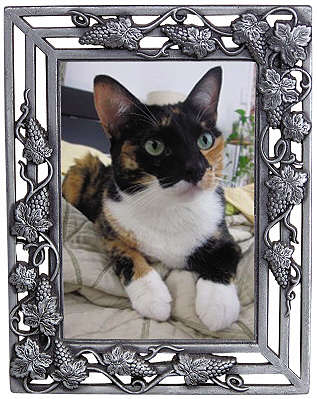 While I was growing up, we almost always had a dog (or two) in the house, and they always became treasured family members. You may have had the same experience, and you would not be alone if you have pets today that you consider to be your “children.” I know people who claim to prefer their kitties over their kiddies.
 Section 560:7-501 of the Hawai‘i Revised Statutes specifically allows you to create trusts “for the care of one or more domestic or pet animals.” You can even designate a human watchdog who will make sure that your intentions are carried out. In theory, there would be nothing to prevent your terrier’s trustee from making a quick stop at the local dog pound and then pocketing the trust assets that you had intended to be used for your poor pet. However, your
  watchdog could whisk the trustee in front of a judge and make sure the trustee is held accountable for failing to honor your wishes. Of course, if you choose the right caretaker in the first place, none of this will be an issue.
 But what if your two-legged children get jealous of your basset hound’s bequest? Is there a way for them to attack your trust? The short answer is “yes,” and if they can convince a judge that you have left “too much” for your toucan, the judge can reduce the amount in the trust to whatever amount is “enough” to provide adequately for the care, maintenance, health and appearance of the designated critter. In any event, if there is anything left when your pooch passes the pearly gates, you get to say where it goes.
 Some pets have very long lifespans, such as certain birds, reptiles and fish. Your pet trust will not be subject to the rules that limit the lifespans of conventional trusts, so you can be sure that, as long as the trust assets hold out, there will be provisions for your pet.