
Tag: National Kidney Foundation of Hawaii

  • Caring for Yourself: Kidney Disease Update

    Generations Magazine - Caring for Yourself: Kidney Disease Update - Image 01What would you do if you were told you might be sick, or might become sick, even though you feel fine, have no symptoms of which you are aware, and think that you are generally in “good health?” Would you bother to do anything at all under those circumstances? Would you tend to think that you will deal with a potential health problem if and when you begin to notice some symptoms? After all, we’re all generally pretty busy, and dealing with something that “might” become an issue could easily be filed in the “Someday, Maybe” file.


    A New Study is Published

    Unfortunately, for many Americans this scenario is, or will become, a reality — and many of us are unaware that a problem may exist. According to a new analysis published in the American Journal of Kidney Disease, nearly six of ten Americans will develop kidney disease in their lifetime. That’s not a misprint; a new study completed by a team of researchers at Johns Hopkins University determined that the lifetime risk of moderate kidney disease for Americans is 59.1 percent. That is substantially higher than the lifetime risk of having a heart attack, diabetes or invasive cancer (which are significant illnesses in their own right). According to the analysis, “Chronic kidney disease (CKD) is rising in prevalence, increasingly expensive, and associated with a high degree of morbidity and mortality.” (Am J Kidney Dis. 2013;62(2):245)

    For those of us living in Hawai‘i, the prospect of a similar lifetime risk is even more daunting. While the Johns Hopkins University study did not make a state-by-state breakdown, it is generally known that Hawai‘i has a higher incidence of Chronic Kidney Disease than is found on the Mainland. At least in part, that is because CKD is not an equal opportunity disease. For reasons that are not yet clear, certain ethnic groups have a higher incidence of the disease than do other ethnic groups, including (in no particular order) Hawaiians and other Pacific Islanders, Asians, including Filipinos, Japanese, Chinese and others, African Americans and Latinos. Given the ethnic composition of our local population, it is reasonable to expect that the lifetime risk of CKD for people living in the Islands will be even higher than reported for the nation as a whole as represented in the Johns Hopkins University study.

    The new analysis, the first of its kind for kidney disease, also called attention to the very high risk that women have of developing moderate kidney disease, in part because moderate kidney disease risk increases dramatically starting at age 60. Women have a tendency to outlive men, making kidney disease a particular concern of women who might expect a long life.

    Additionally, diabetes and high blood pressure are the leading causes and risk factors, yet many people don’t link these with kidney disease. Even those with diabetes and high blood pressure aren’t always tested for kidney disease. High blood pressure can cause kidney disease, and in turn kidney disease can cause high blood pressure, so there is a cyclical relationship.

    What You Can Do to Safeguard Your Kidney Health

    Clearly, Chronic Kidney Disease is a serious, high-risk problem. Fortunately, having a problem and dealing with a problem are not necessarily the same thing. In the case of Chronic Kidney Disease, for many people — even those who may be in the early stages of the disease—there are things that can be done to help.

    A good first step you may want to take is to learn whether or not you may have kidney disease, even if you “feel fine” and consider yourself to be “in good health.” According to the National Kidney Foundation, the awareness level of most people is really low. It is estimated that fewer than 50 percent of people with advanced kidney disease (stage 4) are aware of their disease. It’s safe to say that most of us who may be in the early stages of kidney disease are also unaware of our true health condition. As a result of this latest study, the foundation is now calling on healthcare professionals and adults at risk to take action. People at risk for kidney disease should have an annual screening. Those who are generally considered to be at risk include people with diabetes, high blood pressure, and those over 60 year of age or with a family history of kidney failure.

    Your family physician can order simple urine and blood tests to check for the disease. A urine test is for albumin — a protein — which indicates early kidney damage. The blood test measures kidney function. Filtration of less than 60 indicates kidney disease — less than half the filtration capacity of healthy adults.

    Early detection allows early intervention, which can help prevent progression of the disease and the risk of complications, such as heart disease and stroke. Early detection can also improve patient safety in terms of appropriate medication use for those with reduced kidney function.

    Other things an adult can do to reduce the risk of kidney disease include the following:

    • Control blood pressure and blood sugar
    • Maintain proper weight through healthy diet and regular exercise
    • Quit smoking
    • Avoid excessive use of pain medication that can harm the kidneys, such as ibuprofen.

    Once kidney disease is advanced — when urine tests for kidney damage show large amounts of protein in the urine and blood tests measuring kidney function are less than 30 — a nephrologist can provide the expert care that is needed.

    At this stage, diet is critical and the help of a clinical dietician is helpful.

    Be proactive. Don’t wait until you don’t feel quite right to take the tests. And, if you have any of the risk factors mentioned in this article, check with your family doctor. Early detection will enable you to have a better quality of life and hold the disease in check.

    Let Us Help You and Your Caregiver

    For all of us, having better awareness of our health and nutrition is key to living an enriching lifestyle. At the National Kidney Foundation of Hawai‘i we try to make this easy. Our website, Facebook page and eNewsletters are filled with information that will keep you up to date. We encourage people to join the Willie K. Challenge, which encourages us all to eat better and exercise. Our programs department regularly holds public health and kidney screening events that inform people and measure a person’s kidney-related health.

    If you are a patient, family member or a caregiver, we offer support groups to help you cope with the lifestyle surrounding kidney disease. Members meet to discuss important treatment issues, learn from the experience of others and become active in managing kidney disease.

    Caregivers and patients may also want to participate in our Peer Mentoring program, where those who have dealt with the challenges of chronic kidney disease address your questions and concerns.

    Our K.I.W.I. program is open to patients and caregivers who want to learn about lifestyle issues such as nutrition and exercise, how to shop for kidney-friendly foods and prepare meals for kidney patients.

    To join a program, become a volunteer or simply keep in touch, call Jeff at 589-5976 or email jeff@kidneyhi.org.

    For more information, visit the National Kidney Foundation of Hawai‘i at www.kidneyhi.org, or the national website at www.kidney.org.
    Generations Magazine - Caring for Yourself: Kidney Disease Update - Image 02

    What would you do if you were told you might be sick, or might become sick, even though you feel fine, have no symptoms of which you are aware, and think that you are generally in “good health?” Would you bother to do anything at all under those circumstances? Would you tend to think that…

  • NKFH: Create a Kidney-Friendly Kitchen

    Some 26 million Americans suffer from Chronic Kidney Disease (CDK), but experts predict this number will rise due to high obesity rates (approximately one-third of all adults) and high blood pressure. Both of these are risk factors for CKD. The aging of baby boomers will also increase this number because age over 60 is also a risk factor for CKD, making kidney disease a very important issue for seniors.

    Most people have no symptoms until CKD is advanced. If you wait until you have symptoms to be tested, you’ve waited too long. Therefore, taking care of overall health should not be postponed. Wise practices for seniors include exercising regularly, a low-salt diet, controlling weight, monitoring blood pressure, cholesterol and glucose levels, not smoking, drinking moderately, avoiding non-steroidal anti-inflammatory drugs (NSAIDs) and getting an annual physical.

    For spring cleaning, start in the kitchen to take steps toward kidney health. Get ready to clear out some common grocery items that could be wrecking your kidneys. The kidneys work 24/7 to clean out toxins in the body, so keep them healthy by cleaning out your kitchen. Now is the perfect time to trash the following:

    SALT SHAKER. Believe it or not, Americans today consume 50% more than the recommended daily amount of sodium. Diets high in sodium increase blood pressure levels and high blood pressure damages the kidneys over time. It’s 2,300 mg of sodium (or 1 teaspoon of salt) per day that should be the limit.

    RED MEAT. High protein diets, especially those containing large quantities of animal protein, may harm the kidneys. Red meat is also high in saturated fat—another no–no.

    SODA. Sugar-sweetened beverages, such as sodas are high calorie and contain no nutritious value. These beverages are linked to the presence of protein in the urine, one of the earliest signs of kidney disease. Colas also have phosphorus
    additives which can harm the kidneys.

    PROCESSED FOOD. Crackers, potato chips, deli meats, cheese spreads, instant potato mix are all examples of processed foods that are high in sodium and phosphorus additives — both which can have negative effects on the kidneys.

    SUGAR. An overdose of sugar can lead to health problems such as diabetes and obesity. As these are risk factors for kidney disease, eliminating or reducing sugar intake can reduce your kidney risk as well.

    With CKD, there are many dietary considerations and options. On the Internet, search for “kidney friendly recipes” to discover a wealth of helpful information. Start with our own Calabash Cookbook at www.kidneyhi.org/index.php?cid=16. Pay special attention to foods recommended for kidney patients and consult an expert if you are already diagnosed with CKD, because diets are especially critical for different stages of the disease.


    National Kidney Foundation of Hawaii
    1314 South King St., #304, Honolulu, Hawai‘i 96814
    808.589.5976 info@kidneyhi.org www.kidneyhi.org

    Some 26 million Americans suffer from Chronic Kidney Disease (CDK), but experts predict this number will rise due to high obesity rates (approximately one-third of all adults) and high blood pressure. Both of these are risk factors for CKD. The aging of baby boomers will also increase this number because age over 60 is also…

  • Uplifting Choices: Playing a Significant Role

    An Uplifting Story

    If you live long enough, you are likely to have an experience that is life-altering. Right now, there are two families living on the Big Island living out just such an experience; and it started out with a casual conversation between two mothers who are involved with their sons’ softball team.

    Angie Toma, a scorekeeper for her son’s team, and Leanne Hirata, the coach’s wife, were in the press box one day when Angie happened to mention to Leanne that she has had three kidneys from birth. As it turned out, Leanne’s husband, Gregg, has experienced a deteriorating kidney for 20 years. Although he looks healthy, Gregg is gravely ill with kidneys that are only functioning at 11%. He is in need of a kidney transplant.

    Angie thought it over and decided to donate one of her kidneys to Gregg (Leanne and Gregg’s father were ineligible to donate for a variety of reasons). Since following through on her initial decision, Angie learned that two of her kidneys had grown together, so she only has two kidneys, rather than three. Undeterred, Angie continued with the medical process and expects to donate her kidney when medical procedures are complete. For Gregg, Angie’s generosity means he will be there for his wife and three young boys, with a healthy kidney and a new lease on life.

    BEHIND THE STORY

    Not everyone is so fortunate. In Hawai‘i, approximately 400 people are on the waiting list for a new kidney. The supply of healthy kidneys is not sufficient to fill the need. And many patients pass away before a matching donor can be located. In the past decade, the number of patients waiting for a transplant has doubled, while the number of transplants has remained level. The need tends to increase because people are generally living longer, putting additional stress on their organs. Younger people, like Gregg, and children are also on the list. There have been approximately 1,200 transplants performed in Hawai‘i since 1988, most of them performed by the medical team currently residing at The Queens Medical Center.

    Organ transplantation in Hawai‘i has been a reality since 1969, when Dr. Livingston Wong performed Hawai‘i’s first kidney transplant. He put together a team of doctors who pioneered the procedure at St. Francis Transplant Center, and later Hawai‘i Medical Center. When the latter closed its doors about a year ago, Hawai‘i was left with no facility for transplantation until The Queen’s Medical Center came forward to fill the gap. The new center is home to physicians and staff with over 20 years of experience in transplantation, including Drs. Whitney Limm and Linda Wong (daughter of Livingston Wong).

    HELPING TO CREATE NEW STORIES

    The National Kidney Foundation of Hawai‘i’s mission includes improving the health and well-being of individuals and families affected by kidney and urinary tract diseases, and to increase the availability of all organs and tissue for transplantation in Hawai‘i. Among their programs is a mentoring program of one-on-one help for dialysis and transplant patients. Recently, we have assisted in the creation of a new Council of NKFH known as the Hawai‘i Organ Transplant (H.O.T.) Support Group, whose mission is to improve the support for, and education of, people who’ve had or who are in the process of organ transplantation procedure through educational events and mentorship programs. The support group consist of people who are organ donors, recipients and others who are interested in transplantation.

    Our hope is that organizations like NKFH and H.O.T. will help grow awareness of the need for healthy donors and encourage kidney patients who experience this life-giving process. Our hope is for even more stories like Gregg and Angie’s.

    If you are interested or have questions relating to organ transplantation, you can reach NKFH at 808-593-1515, H.O.T. at 808-589-5965, or The Queen’s Transplant Center at 808-691-8897.


    National Kidney Foundation of Hawaii
    1314 South King St., #304, Honolulu, Hawai‘i 96814
    808.589.5976 info@kidneyhi.org www.kidneyhi.org

    An Uplifting Story If you live long enough, you are likely to have an experience that is life-altering. Right now, there are two families living on the Big Island living out just such an experience; and it started out with a casual conversation between two mothers who are involved with their sons’ softball team. Angie…

  • The Perfect Match

    A living donor offers a two-for-one gift of life

    Nearly 15 years ago Andrea Lee’s youngest daughter Jenevieve was diagnosed with systemic lupus erythematosus (SLE), a long-term autoimmune disorder that may affect the skin, joints, kidneys, brain and other organs. Jenevieve was 15, an age where her main concern should have been friends and fun. Instead, she focused on staying out of the sun, away from those who were sick and eating bananas for potassium. By the time she was 25, her ravaged body needed drugs, surgeries and dialysis. Her kidneys were functioning at a dismal 7 percent.

    Jenevieve made many friends at the three-times-a-week dialysis treatments. She knew the nurses by first name, befriended the regulars, and made craft gifts for everyone. Outside of dialysis, except for a limp from osteoporosis of a hip joint, one would never guess that she was so sick with Chronic Kidney Disease (CKD). A life of dialysis seemed the answer until Jenevieve and Andrea were sent to a class about kidney transplantation.

    The transplant coordinator helped them navigate the world of organ donation. She scheduled tests and put Andrea in touch with organ donors and recipients. They had experience, tips and connections, plus they understood what Jenevieve and Andrea were going through.

    Jenevieve put her name onto a national list of patients who needed a kidney and then waited. While waiting, Andrea learned that one of the best organ donor candidates is a family member. She decided to undergo prescribed lab tests and passed every single test. After a few months, Andrea was cleared as a good donor match for Jenevieve.

    In August 2008, Jenevieve and Andrea spent a week in the hospital and the kidney transplant was a success.

    Once at home, Andrea allowed her body to heal. Soon she was back to normal— playing with grandkids, working, traveling, and other life activities that she enjoys. At the follow-up visit, her doctor told her that her lab results were so good that it looked like she still had two kidneys!

    Today, Jenevieve, who turned 30 this year, thrives. She is a full-time student studying radiology at Kapi‘olani Community College. She wants to give back to the medical community that helped her through her journey. She continues her jewelry craft and makes herself available to those who want to learn about kidney dialysis, transplant or SLE.

    Also, Andrea’s family volunteers for the newly established Hawai‘i Organ Transplant (H.O.T.) Support Group, a council of the National Kidney Foundation of Hawai‘i. Its mission is to support and educate people who have had, or are in the process of, an organ transplant. For more information, please visit www.hawaiiorgantransplant.wordpress.com.


    National Kidney Foundation of Hawaii
    1314 South King St., #304, Honolulu, Hawaii 96814
    808.589.5976
    info@kidneyhi.org
    www.kidneyhi.org

    A living donor offers a two-for-one gift of life Nearly 15 years ago Andrea Lee’s youngest daughter Jenevieve was diagnosed with systemic lupus erythematosus (SLE), a long-term autoimmune disorder that may affect the skin, joints, kidneys, brain and other organs. Jenevieve was 15, an age where her main concern should have been friends and fun.…

  • Time for Thanks!

    Join in on healthy, summer events

    Every once in a while an opportunity comes along to say, Thank you. We never grow too old to express our thanks, and we should graciously receive thanks from others. In truth, being thankful should be woven into the fabric of life. This is true for individuals and it is true for community organizations, such as the National Kidney Foundation of Hawai‘i (NKFH).

    This summer, with a weeklong series of free concerts, fairs and events, the NKFH would like to thank the community for its year-round support in the fight against kidney disease.

    The signature event occurs in late June when NKFH hosts the XVI International Congress on Nutrition and Metabolism in Renal Disease and First World Renal Nutrition Week, from June 26 – 30, 2012. The congress is a biannual gathering of doctors, nutritionists and medical researchers in renal disease and nutrition from around the world.


    Sixth Annual Peace on Earth Concert

    Hawai‘i Theatre – June 27, 6:45 p.m.

    Free admission; open to public

    This concert event, with Al Waterson as emcee, will feature some of Hawai‘i’s best performing artists from a variety of music genres. Among the performing artists is Ginai performing with Pierre Grill, the Thursday Night Jazz Band, the a cappella choral group known as the Samoan Gospel Heralds, Haw’n Boy Mike Ka‘awa and his band, and The Carmen Haugen Quartet.


    National Kidney Foundation of Hawai‘i Health and Craft Fair

    Hilton Hawaiian Village Hotel, Tapa Lounge – June 28, 10 a.m.– 2 p.m.

    Free admission; open to public

    The National Kidney Foundation of Hawai‘i Health and Craft Fair has two components, separately staged. The first component of the event is a craft fair featuring Hawaiian crafts made by local artisans.

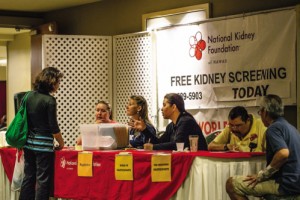
    The second component is a health fair that will offer various health screenings sponsored by WE, a “hui for health” program that provides health screenings throughout Hawai‘i in conjunction with other healthcare organizations. Screenings include spirometry, glucose, kidney, hepatitis and hearing tests. While anyone can contract kidney disease, people with high blood pressure and diabetes, as well as certain ethnic groups such as Filipinos, Native Hawaiians, Japanese and others of Asian background are most at risk. A free screening can lead to early detection and treatment.


    Quilted Memories Tour

    Hilton Hawaiian Village Hotel, Tapa Lounge – June 26–  30

    Free admission; open to public

    The Quilted Memories Tour will be on display throughout the week in the Tapa Ballroom area. This tour features quilts made by families of organ donors. Each 7 x 7-inch square fabric swatch includes a “life vignette” that portrays a part of a donor’s life. Once the swatches are sewn together into a quilt, it is a powerful testimony of the ultimate gift of life. The Quilted Memories Tour is an outgrowth of the bereavement support group of the Hawai‘i Donor Family Council and is supported by the NKFH.

    If you are a medical professional and want to attend the XVI International Congress on Nutrition and Metabolism in Renal Disease, or if you would like to attend the gala and silent auction on Friday evening, June 29, please contact jeff@kidneyhi.org.


    National Kidney Foundation of Hawai‘i

    589-5976 | www.kidneyhawaii.org

    Join in on healthy, summer events Every once in a while an opportunity comes along to say, Thank you. We never grow too old to express our thanks, and we should graciously receive thanks from others. In truth, being thankful should be woven into the fabric of life. This is true for individuals and it…

  • New Law for Life

    We all have choices to make in our lives, and if we are thoughtful about the opportunities and problems we face, some of our choices can be uplifting for our families and communities. The same can be said about our local institutions

    Organ Transplant Legislation

    Recently the Hawai‘i legislation was passed to allow organ transplantation in Hawai‘i. The new law paves the way for Queens Medical Center to open an organ transplant center in Honolulu. This choice is truly uplifting.

    The new law ensures that Hawai‘i patients and their families can get the care they need to fight kidney disease without the expense and hassle of getting on another state’s transplant list or scheduling Mainland medical trips.

    Gov. Abercrombie spoke of the legacy of local transplant care in Hawai‘i and the vision of early health care pioneers. In the tradition of caring for our ‘ohana, the Governor said, “This was a collaborative effort in which the Legislature, community members and health providers understood that lives were at stake. I’m grateful that we are able to make a positive difference.”

    National Kidney Foundation of Hawai‘i

    The NKFH is pleased to have advocated on behalf of kidney patients for an organ transplant center in Hawai‘i. It is estimated that 156,000 people in Hawai‘i have kidney disease, with another 100,000 at risk of incurring the disease. Some of these people will one day need a kidney transplant.

    To emphasize the importance of local organ transplantation, the NKFH invited a few kidney patients who are waiting for transplants to attend the legislative sessions and signing ceremony. Their stories reveal just how important the transplant center is for Hawai‘i’s residents.

    Patient Story

    Kidney patient, Fernando, attended the signing ceremony. He was diagnosed with chronic kidney disease (CKD) following a bout with pneumonia. He’s been on dialysis for nearly four years and has been on the transplant list for two years. He says that the disease has impacted his family because he has to stay away from the grandchildren when they get colds, out of concern that he will get sick and have pneumonia, which could lead to kidney related complications. Fernando walks regularly, follows a diet suitable for CKD patients, and has a good attitude about his dialysis treatments. With a twinkle in his eye, Fernando says that he considers the dialysis sessions as a “part-time job” that pays him with good health.

    We at the NKFH are grateful for the work done by our elected leaders, the inspiration of dedicated kidney patients, and the faithful help of friends and supporters who make the “uplifting choice” to help us accomplish of our mission. Mahalo.


    National Kidney Foundation of Hawai‘i
    589-5976 | www.kidneyhawaii.org

    We all have choices to make in our lives, and if we are thoughtful about the opportunities and problems we face, some of our choices can be uplifting for our families and communities. The same can be said about our local institutions Organ Transplant Legislation Recently the Hawai‘i legislation was passed to allow organ transplantation…

  • Uplifting Choices

    For many people end-of-year tax planning is a regular part of their lives. Given the com-plications that our tax system can engender, it is no wonder that taxes often impact personal goals and desires, especially during the holiday season when families are focused on relationships and gift giving.

    However, it is possible to use tax-favored strategies to make your holiday charitable giving go further. For example, if you are over age 70½, the federal government permits you to rollover up to $100,000 from your IRA to charity without increasing your taxable income or paying any additional tax. These tax-free rollover gifts could be $1,000, $10,000 or any amount up to $100,000 this year. The gift satisfies your required minimum distribution (RMD) for this year without adding any taxable income to your bottom line, and since most IRAs are funded with pretax dollars, such gifts are a smart way to give to charity.

    IRA Rollover: Simple, Easy Gift

    Consider this example. Grace was a registered nurse and a frequent charity volunteer. During her working years, Grace’s IRA had grown substantially. Since Grace’s income meets her needs, she decided to make a gift of $2,000 from her IRA. Grace called her custodian and requested a transfer of $2,000. It was easy for Grace to make her charitable gift and she liked the fact that she could help without increasing her taxes.

    Major IRA Gift: Smart Giving

    Perhaps you are considering your tax planning goals and would like to make a major gift to charity. Like many individuals, your IRA may be the largest asset in your estate. Your CPA may be looking for ways to save taxes. By making an IRA charitable rollover gift of up to $100,000, you can reach your goal of helping charity in a significant way and reducing taxable income by using an asset that may otherwise be taxed at high ordinary tax rates.

    Future IRA Gift Options: Helping Your Family and a Charity You Support

    While you have the opportunity to give through your IRA now, there are other options available for making future gifts from your individual retirement account to charity:

    Bequest of IRA: One option is to designate a charity as the beneficiary of your IRA. This permits you to continue to take withdrawals from your IRA during life and then leave the remaining value of your IRA to support a worthy program that is important to you.

    Testamentary IRA Gift Annuity: Another option is to make a future gift of your IRA to charity while providing life income to your heirs. Your family will receive fixed payments based on your age at rates that can be as high as 9.5%.

    Testamentary IRA Unitrust: An IRA could also be transferred to a special “Give It Twice” trust that usually provides income to children for a period of up to 20 years. After that time, the trust may pass to charity, creating a wonderful way for you to make a charitable gift.

    This holiday season if you would like to discuss charitable giving options available to you, please contact Jeffrey Sisemoore, JD, Director of Planned Giving and Major Gifts at the National Kidney Foundation of Hawai‘i at 589-5976 or visit www.kidneyhi.org.

    For many people end-of-year tax planning is a regular part of their lives. Given the com-plications that our tax system can engender, it is no wonder that taxes often impact personal goals and desires, especially during the holiday season when families are focused on relationships and gift giving. However, it is possible to use tax-favored…