Kānaka Maoli (Native Hawaiians) have welcomed immigrants from every corner of the globe for over 1,500 years, cultivating and perpetuating a tapestry of diverse cultures. In this second article in our series about the many cultures that comprise Hawai‘i, we will focus on how the Kānaka Maoli got here and from where, their culture and one event that epitomizes the Hawaiian culture, the Merrie Monarch Festival.
The Early Hawaiians
Sailing on wa‘a kaulua (double-hulled canoes), Polynesians primarily from the Marquesas Islands in the South Pacific navigated 2,000 miles, landing upon the shores of Hawai‘i over 1,500 years ago. The population was well-established when, about 800 years ago, Polynesians from the Society Islands arrived. Contact with southern Polynesia then ceased for about 400 years and a distinctive Hawaiian culture developed.
Culture and Tradition
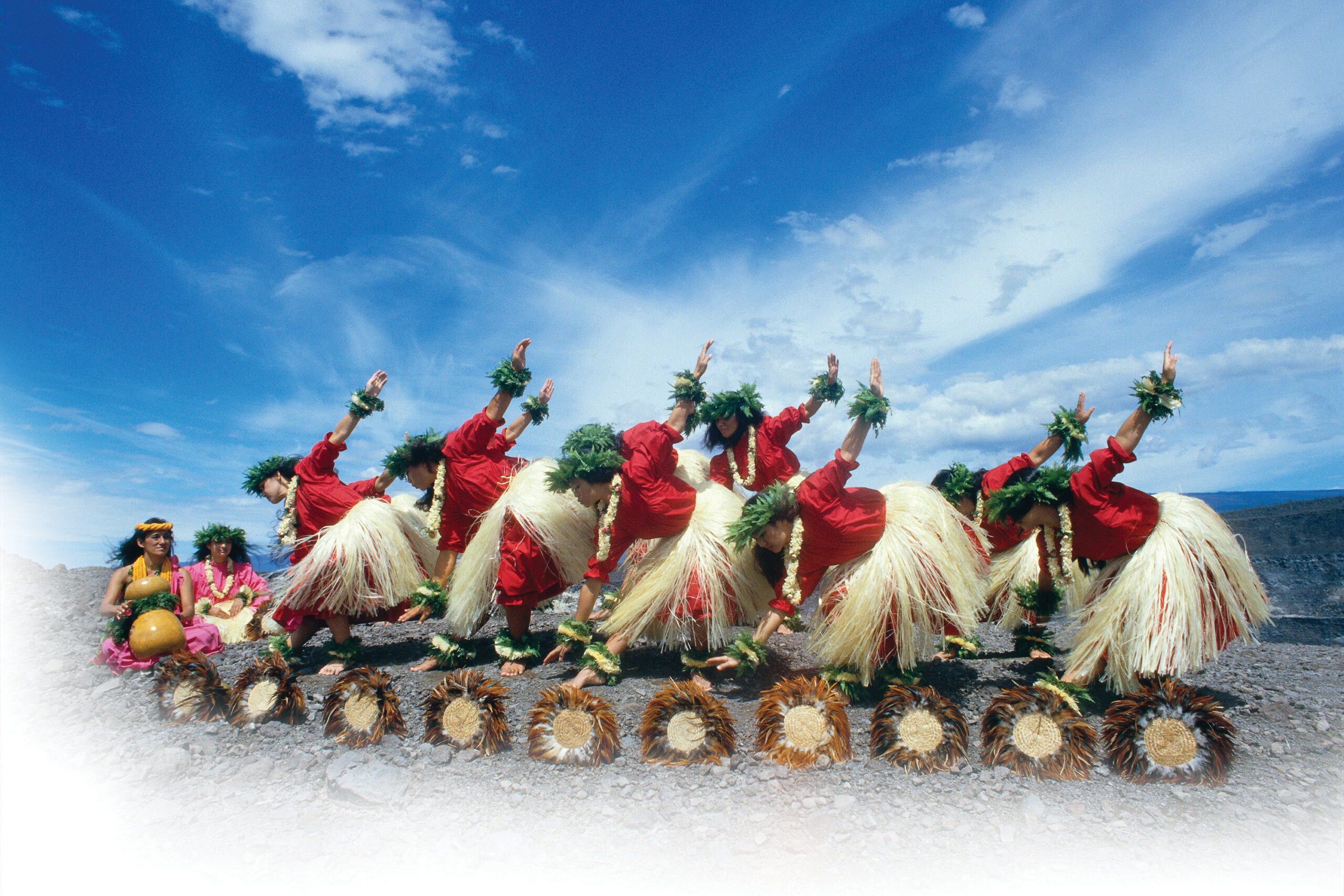
Kānaka Maoli worshipped akua (gods) such as Pele and Haumea and passed down historical mo‘olelo (stories). Mo‘olelo were told through mele (song), oli (chant) and hula (dance). Mo‘olelo are insights about how the world came to be, and how relationships between people and ‘āina (the land) should be honored. These traditions hold strong today. In the early to mid-20th century, Kānaka Maoli adopted the ‘ukulele and guitar from Portuguese, Spanish and Mexican settlers, creating their own unique musical styles and instruments — the ki¯ hō‘alu (slack-key guitar) and kīkākila (steel guitar). Kānaka Maoli communicate with the world through oli, stressing the significance of voice/community. Hula, originating in Hawai‘i, derives from Polynesian dance forms. The two forms of hula today are kahiko (traditional) and ‘auana (contemporary).
The Merrie Monarch Festival
The Merrie Monarch Festival (MMF), a weeklong celebration held every year in Hilo on Hawai‘i Island, honors the legacy of the Merrie Monarch, King David Kalākaua — his love for his people and his vision for perpetuation of all things Hawaiian.
The MMF was conceived in 1963 after the collapse of the sugar industry. George Na‘ope, Gene Wilhelm and Helene Hale organized the first MMF in 1964. This first incarnation included a King Kalākaua beard look-alike contest, a relay race and a ball. In 1968, when festival popularity was declining, Dottie Thompson became executive director and focused the MMF around hula. Three years later, Dottie and George hosted a hula competition. Events included Miss Aloha Hula, group hula kahiko and group hula ‘auana. Today, the Merrie Monarch Festival is internationally renowned for its historical and cultural significance. In 2025, it takes place from April 20 to 26.
The next article in this series will feature the influences of Japanese culture in the Aloha State.
Kānaka Maoli (Native Hawaiians) have welcomed immigrants from every corner of the globe for over 1,500 years, cultivating and perpetuating a tapestry of diverse cultures. In this second article in our series about the many cultures that comprise Hawai‘i, we will focus on how the Kānaka Maoli got here and from where, their culture and…
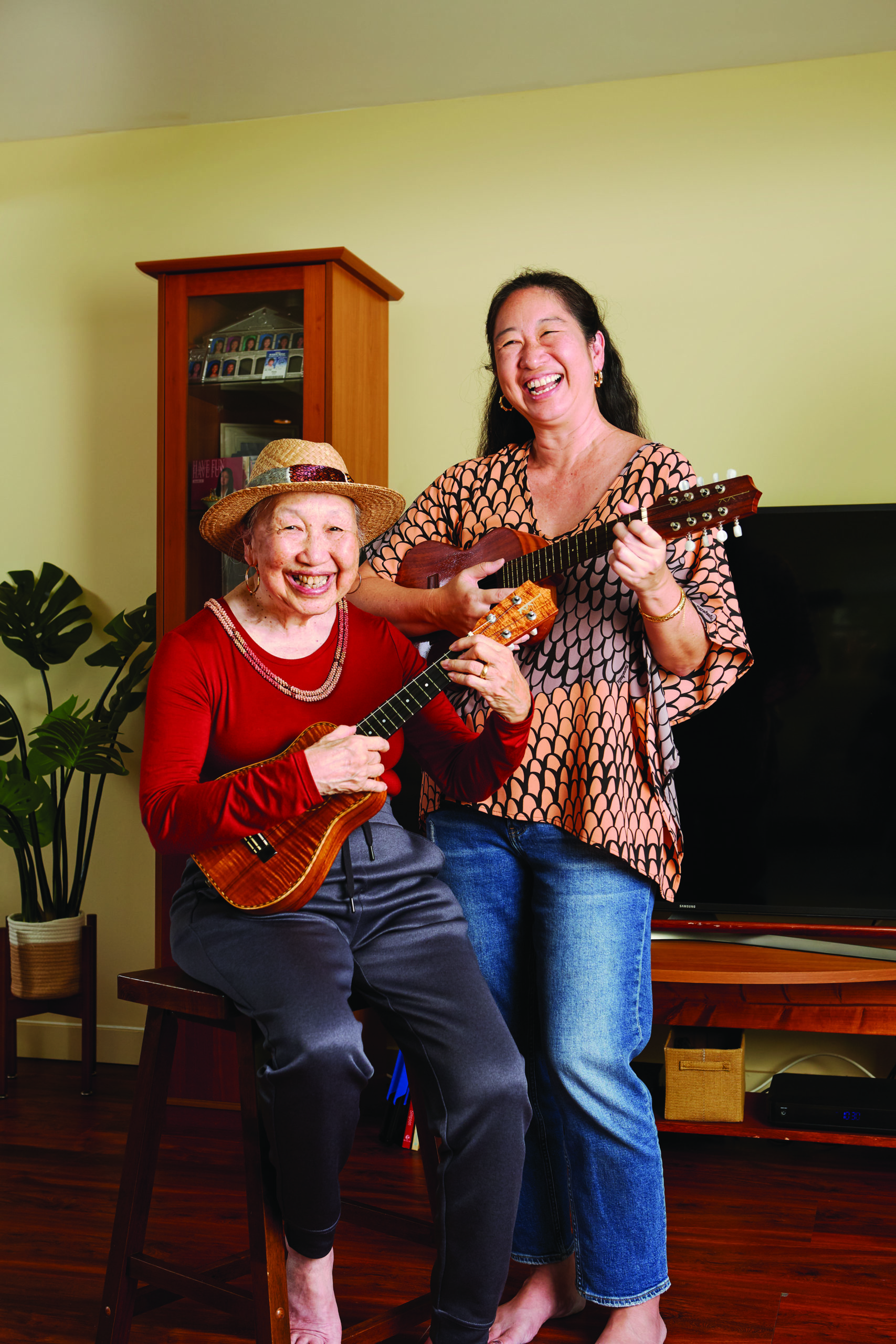
Carolee and daughter Robyn are delighted to share their aloha for the Hawaiian culture.
{Play}
For 53 years and counting, Carolee Nishi has taught Hawaiian Studies as a volunteer at the Nu‘uanu YMCA. For 41 ears, she worked at United Airlines, and for a while, took a part-time job at Liberty House. For more than 20 years, she taught Hawaiian Studies at Hawai‘i public schools. And yes, in case you’re counting, the multitasking 77-year-old has worked more than one job at a time.
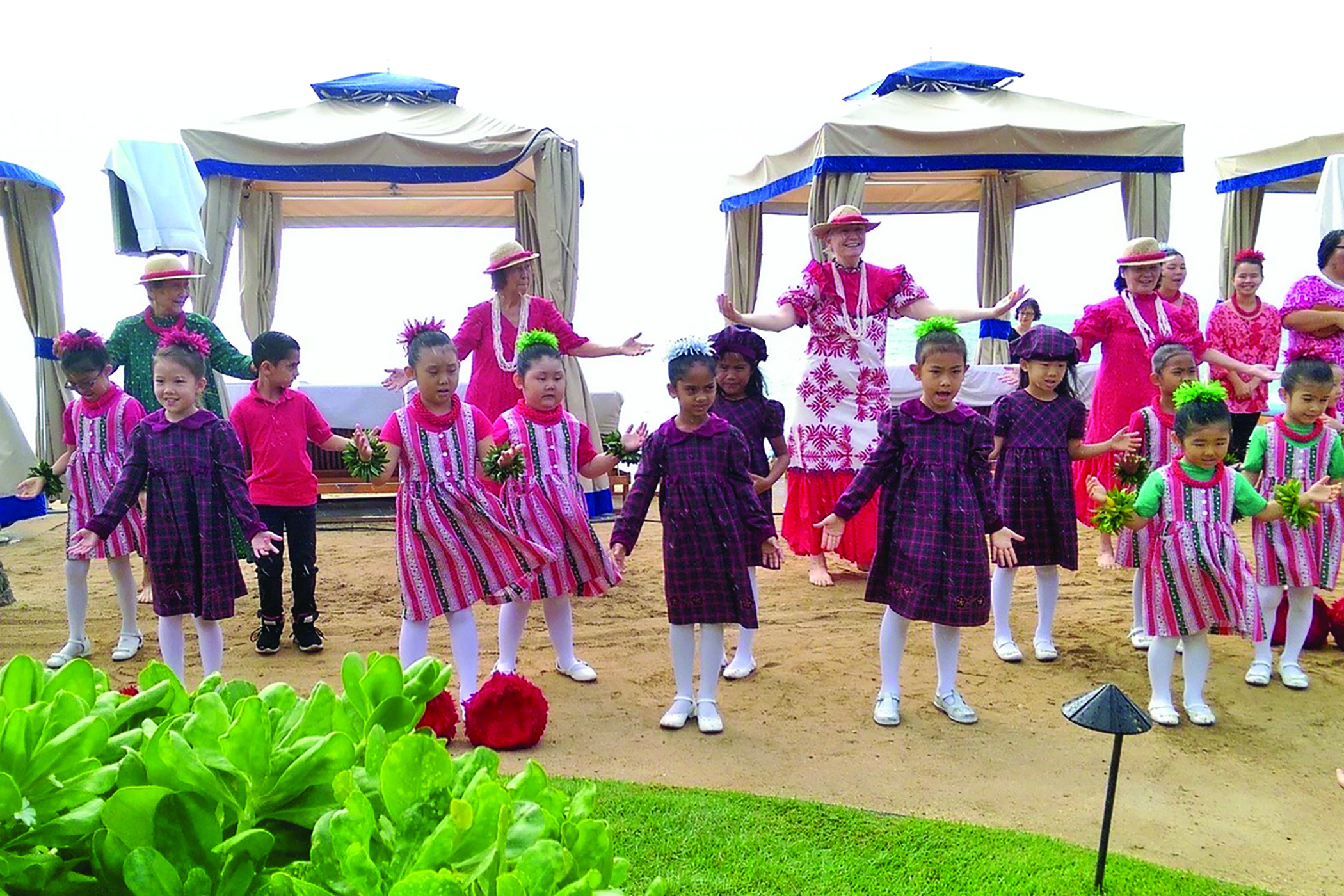
Keiki and kūpuna from Hula Hui o Kapunahala perform at dozens of events each year.
Hula Hui O Kapunahala
Carolee Nishi is best known as the kumu hula (hula teacher) of Hula Hui O Kapunahala (HHK) at the Nu‘uanu YMCA. For 53 years, HHK has delighted audiences on stages from Waikīkī to Waipahu, from City Hall to the Hawai‘i Theatre and from Disneyland to Expo ’70 (the World’s Fair in Osaka, Japan) with students aged 3 to 83, representing keiki to Kūpuna (children to seniors).
HHK isn’t a formal hālau hula (hula school), which is why it’s called a hui (club or group). And Carolee takes pride in saying that at HHK, every child is welcome. “We accept all ages; all nationalities; all personalities,” Carolee says with a chuckle. And when the group enters competitions, “We might not ever win,” she says. “And it’s okay. It’s okay not to win. Because life is not all about winning.”
The key lesson that Carolee imparts on all her students is to have an attitude of gratitude. “Aloha is everything. But gratitude is everything else. And gratitude is very important,” she says.
Auntie Carolee nurtures each of her students, builds up their self-confidence and finds a way to get the best out of them all. Many are leading successful lives and have returned with their own children.
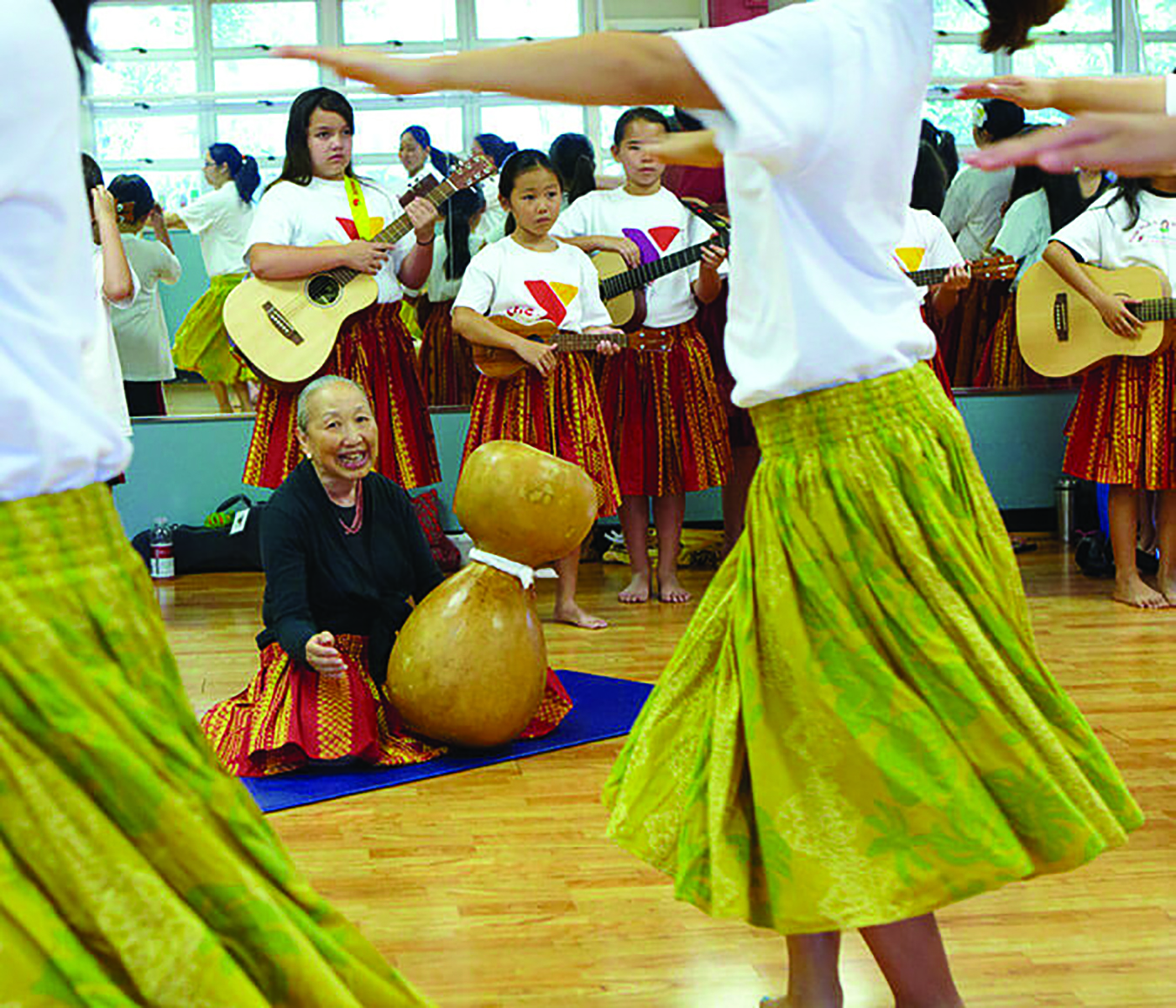
At HHK, students learn life lessons, along with Hawaiian language, music, dance and cultural values. Many of Carolee’s students have become kumu hula themselves. And many more have brought their children to Carolee’s classes. While she says she couldn’t begin to count how many students she’s taught over the years, it’s clear that she’s had an impact on generations of them.
Living Treasure
Lately, the community has been showing a lot of love to Carolee, both for her service to the community and for teaching and preserving Hawaiian culture. But for someone so petite and so humble, accepting these laurels hasn’t come easy. But Carolee has stood tall and received all this respect with characteristic grace and humility.
Auntie Carolee has taught Hawaiian Studies classes to students from ages 3 to 83 at the Nu‘uanu YMCA for 53 years.
In 2020, the Honpa Hongwanji Mission of Hawaii announced its 45th set of Living Treasures of Hawaii, including musician and Kumu Hula Robert Uluwehionapuaikawekiuokalani Cazimero; Hawaiian language champion Larry L. Kimura, PhD; Japanese brush painting master Sachie Saigusa; and volunteer and Kumu Hula Carolee Mei-Jen Kapuamae‘ole Nishi — four community leaders who have demonstrated “excellence and high achievement in their particular field of endeavor, and who, through continuous growth, learning, and sharing, have made significant contributions toward enriching our society.” An official announcement stated that, “Carolee Nishi’s selfless generosity of her time, knowledge and passion with the young and old for more than a half-century truly qualifies her as a living treasure.”
When Carolee accepted this tremendous honor, she insisted that she didn’t earn the recognition on her own. But that wasn’t the only time she’s been feted recently.
In 2019, the Kalihi-Pālama Culture & Arts Society used the stage at its annual Queen Lili‘uokalani Keiki Hula Competition to present Carolee with the Miriam Likelike Kekauluohi Achievement Award that is named for Princess Likelike, the mother of Princess Ka‘iulani and sister of Queen Lili‘uokalani.
Annette Endow, 82, loves learning new things from Carolee, like using technology to join in virtual ‘ukulele classes from home.
In 2018, Carolee was recognized by the YMCA of Honolulu – Nu‘uanu Branch for 51 years of volunteerism, for her dedication to teaching Hawaiian culture and hula, and for teaching discipline and core values to youth in the community.
On Oct. 17, 2013, Ron and Carolee were joined by 1,017 of their closest friends in celebrating their 50th wedding anniversary. This was one of the biggest, but certainly not the only honor that Carolee has graciously accepted recently.
For all the accolades heaped upon her, Carolee is adamant about sharing credit with others, like the kumu kōkua youth who volunteer to help teach hula to the children at the YMCA. She’s also fond of the Kūpuna volunteers, a group of about 30 seniors who, pre-quarantine, were getting together regularly to teach and dance hula with HHK.
To Annette Endow, Carolee is an inspiration. “She’s taught me so much, and I have so much more to learn from her,” says Annette, who could be considered an inspiration herself after working for 30 years as a special education teacher and nine years as a nurse. “And she has a heart of gold,” the 82-year old adds, describing one way that Carolee supports children and youth. “She writes tons of college recommendations,” Annette says with a smile, adding, “And they all get in.”
Work + Life = Balance
Carolee Nishi hasn’t always been a volunteer. She had a long and colorful career working for United Airlines from 1964 to 2005, starting in the data processing department in San Francisco, transferring to the Red Carpet Room in Honolulu and spending seven years in passenger service at the Lihue Airport on Kaua‘i.
Something that may seem surprising about Carolee is that she’s very computer-savvy. When she was first hired at United in 1964, she was doing statistics for the airline and learning to use computer programming languages like Fortran and COBOL. “I was a computer programmer,” she says. “But we didn’t call it that. It was performance operations analysis.”
A solid education at Roosevelt High School, the English standard school in Honolulu, helped to prepare Carolee for college and career. After she graduated with the class of 1961, she went on to earn a degree in sociology from the University of Hawai‘i, and also attended college in San Jose and Los Angeles while Ron was studying aeronautical science in California.
Ron’s first job upon graduating from college was as a mechanic for United Airlines. But in 1968, the US Army drafted Ron and shipped him off to Vietnam. After a five-year tour of duty, Ron headed back to college and earned a business degree
at UH. His career after that spanned multiple industries, and he retired as director of international sales and services at Hawaiian Tel. Ron and Carolee, friends since high school, have now been married for 57 years. And their family includes daughter Robyn Nishi Kuraoka and son Trevor Nishi (they were both born on the same day, two years apart), their spouses, and granddaughters Kaila Nishi and Kiralee Kuraoka (they’re both in high school and were born a few months apart).
Robyn celebrated her 50th birthday earlier this year and is proud to say that she’s grown up with HHK. She’s now following in Carolee’s footsteps — working full-time at Hawaii Medical Service Association (HMSA) while volunteering and teaching keiki hula classes at the YMCA. During the lockdown, she’s been teaching hula classes via Zoom. “I’m very proud of Robyn,” Carolee says, eager to share examples of the ways her daughter encourages young students and keeps organized behind the scenes. Robyn has learned well from a very good teacher.
“Hula is a way of life,” says Robyn. “Hula is our way of life.”
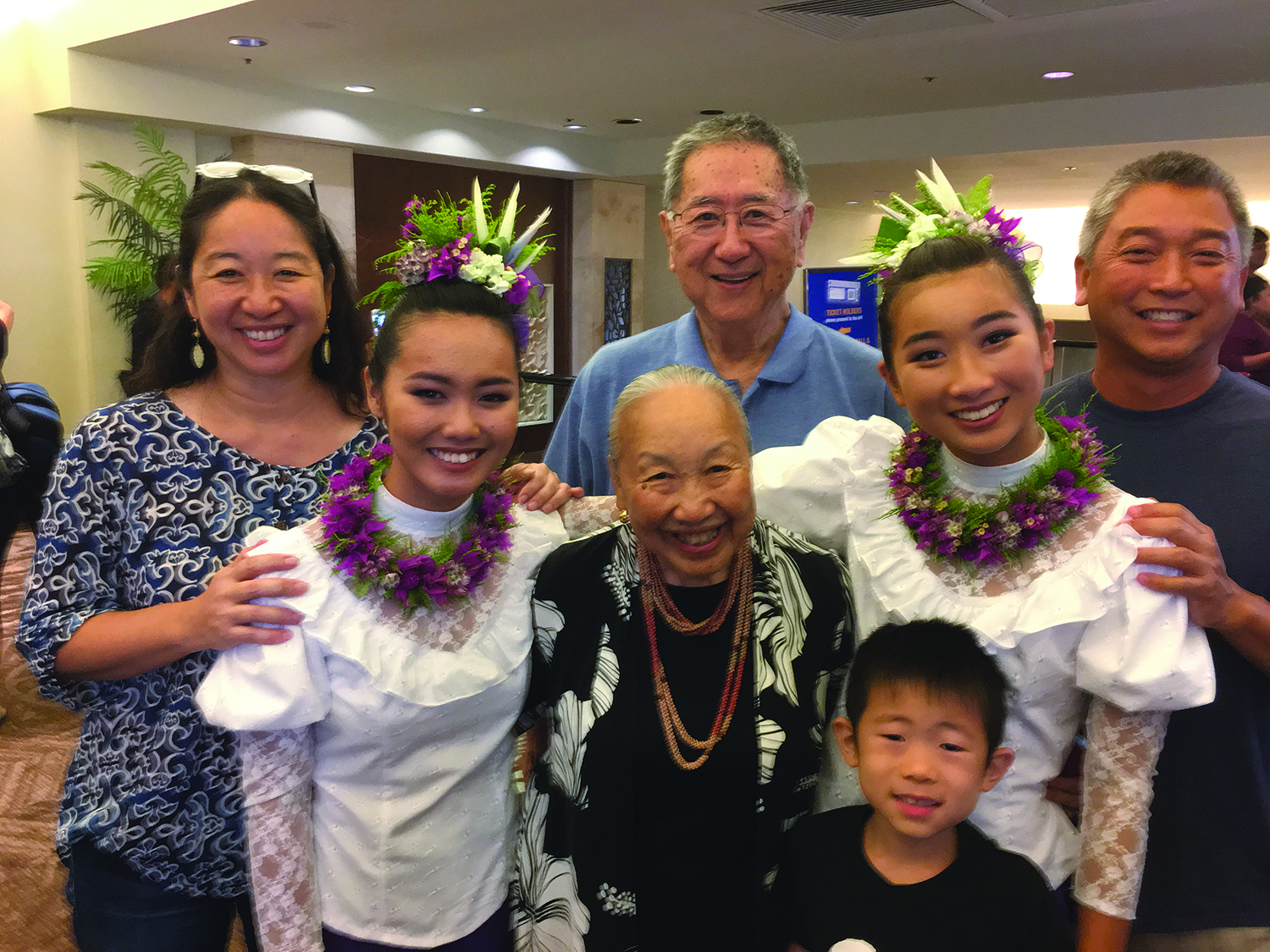
Carolee Nishi (center) with daughter Robyn Kuraoka, granddaughter Kaila Nishi (18), husband Ronald Nishi, granddaughter Kiralee Kuraoka (18), son-in-law Lance Kuraoka and grandson Kona Nishi (9).
Family Heritage
Born Carolee Mei-Jen Kapuamaeole Chung on Jan. 3, 1944, Carolee comes from a big Chinese family. “My father’s family is quite celebrated,” she says, describing how her father’s father came to Hawai‘i from China. “He was with the first wave of Chinese people that came here.” In contrast, her father’s mother was born in Ka‘ū on Hawai‘i Island and was “very local.” The pair married and had eight children. Robert Mon Gee Chung, Carolee’s father, was born in 1898, the seventh child. All five Chung brothers attended Punahou School. The eldest son graduated from Yale University and the next one from Harvard Medical School. The second brother’s daughter, Hawai‘i State Sen. Suzanne Chun Oakland, was the flower girl at Ron and Carolee’s wedding.
Many of the life lessons Carolee enjoys recounting are words of advice from her father. “He used to say: ‘If you’re gonna give, give. If someone asks you to do something, do it. Don’t ask what’s in it for me? Those are fighting words. Don’t ever think that way. If you’re going to give, you don’t tell people what to do with it. You just give it.’”
“The word ‘hā‘awi’ means ‘to give,’” says Carolee. “But there’s never a time that you give that you don’t receive.”
HAY: How Are You?
Another piece of advice from her father motivates Carolee daily. “My dad taught me that phone calls are important. When I was young, he used to tell me, ‘You better stay in touch if you want to be friends.’” And that’s the reason Carolee makes at least five phone calls to friends every day.
“I have a HAY list,” she says. It might sound like she’s saying, “Hey!” But she’s really saying, “HAY,” an acronym that Carolee made up for the phrase “How are you?” Sometimes the HAY calls are very brief. “I called Laura the other day and said, ‘How are you?’ She said, ‘I’m fine.’ And that’s it. I said, ‘Good talking to you.’ And that’s all we needed to say. Just called to touch bases.”
Making phone calls to friends is good for the soul. It’s good for both parties. And it’s a good practice for us all, especially at a time when we’re encouraged to follow social distancing guidelines.
It’s safer, for now, to use our phones to keep in touch. So it’s better then, to call and say “HAY.”
Longtime friend, 83-year old Charlie Ishii, enjoys getting calls from Carolee whom he calls an angel. When COVID-19 vaccines first became available for seniors 75 and over, Carolee helped Charlie register for his shots. “I gave her the information she asked for,” says Charlie. “Full name, date of birth, last four digits, you know,” adding quickly, “She hustles; she’s a hard worker.” Carolee even arranged for a young volunteer to take Charlie to the mass vaccination site. “I know he could drive himself,” Carolee says. “But isn’t it nice to have someone do the driving for you?”
Charlie Ishii, 83, learned to play the ‘ukulele and dance hula from Carolee. Now he’s an award-winning dancer who loves performing onstage.
Zooming Along
During the pandemic, Carolee hasn’t been quite as busy as before. But she’s still getting much done. In addition to helping friends register for vaccines, she also assembled a Zoom Crew of young volunteers to help seniors navigate technology. It’s an idea that might seem outside the box to some, but it was oh so obvious to Carolee: Mobilize people under the age of 30 to help people over the age of 70. It’s her own Genius Bar!
For the first several months of the quarantine lockdown, Carolee rarely left her house. But she really didn’t need to. She learned quickly to appreciate connecting to people and teaching classes via Zoom.
One benefit to teaching online, says Carolee, is that it forces her to be organized. She’s found that she needs to prepare lesson plans and have all her song sheets on hand before each class begins. But she isn’t complaining. Rather, she says, “It is the most wonderful way to get together. It really is.”
And the spry 77-year-old is continually innovating and reinventing herself. She started something new in 2021 — teaching virtual ‘ukulele classes to seniors. And it seems that everything about the remote ‘ukulele classes is a win-win for the teacher and her students. Classes began with the basics and have gotten progressively more advanced, which is a good challenge for their brains. Plus, it’s good for seniors to connect with others, to learn new skills, and to sing songs and play music in a group. And as an accidental bonus, the classes often become talk story sessions, which can also be a really good outlet for seniors’ mental health. “It’s really good to see them zooming along!” says Carolee.
Lifelong Learning, Learning for Life
It’s never too late to learn a new skill and you’re never too old to start. Just look at Carolee Nishi. She learned to dance hula as a child. But she didn’t learn to speak Hawaiian until she was an adult. Her first formal education in the Hawaiian language was from Dr. Larry Kimura at the University of Hawai‘i. And it wasn’t until she was about 30 that Carolee, along with her buddy Genoa Keawe, studied Hawaiian language, Hawaiian song and slack key under Auntie Alice Nāmakelua. Then, after the age of 35, Carolee began studying the Japanese language. And today, she’s using that skill when teaching another new program — virtual ‘ukulele classes for students in Japan, in Japanese.
“I don’t think I’ve, ever in my life, been bored,” says Carolee. “There is always so much to do. I mean, just tons of things.”
After state and CDC guidelines forced the YMCA to close and shut down in-person hula classes, Carolee found that she has more free time now than ever before. “I’m writing song books now and I’m getting people together, and I’m doing
a family reunion because I have all this time.”
At 77, Carolee Nishi is making good use of her free time while having the time of her life.
Kumu hula. Musician. Teacher. Cultural practitioner. Living treasure. True friend. These are some of the many ways that people have described Carolee Nishi. And hundreds (maybe even thousands) now her simply as Auntie Carolee. If you ask her, she’ll tell you she’s just a community volunteer. So don’t ask her, because everyone who knows Auntie…
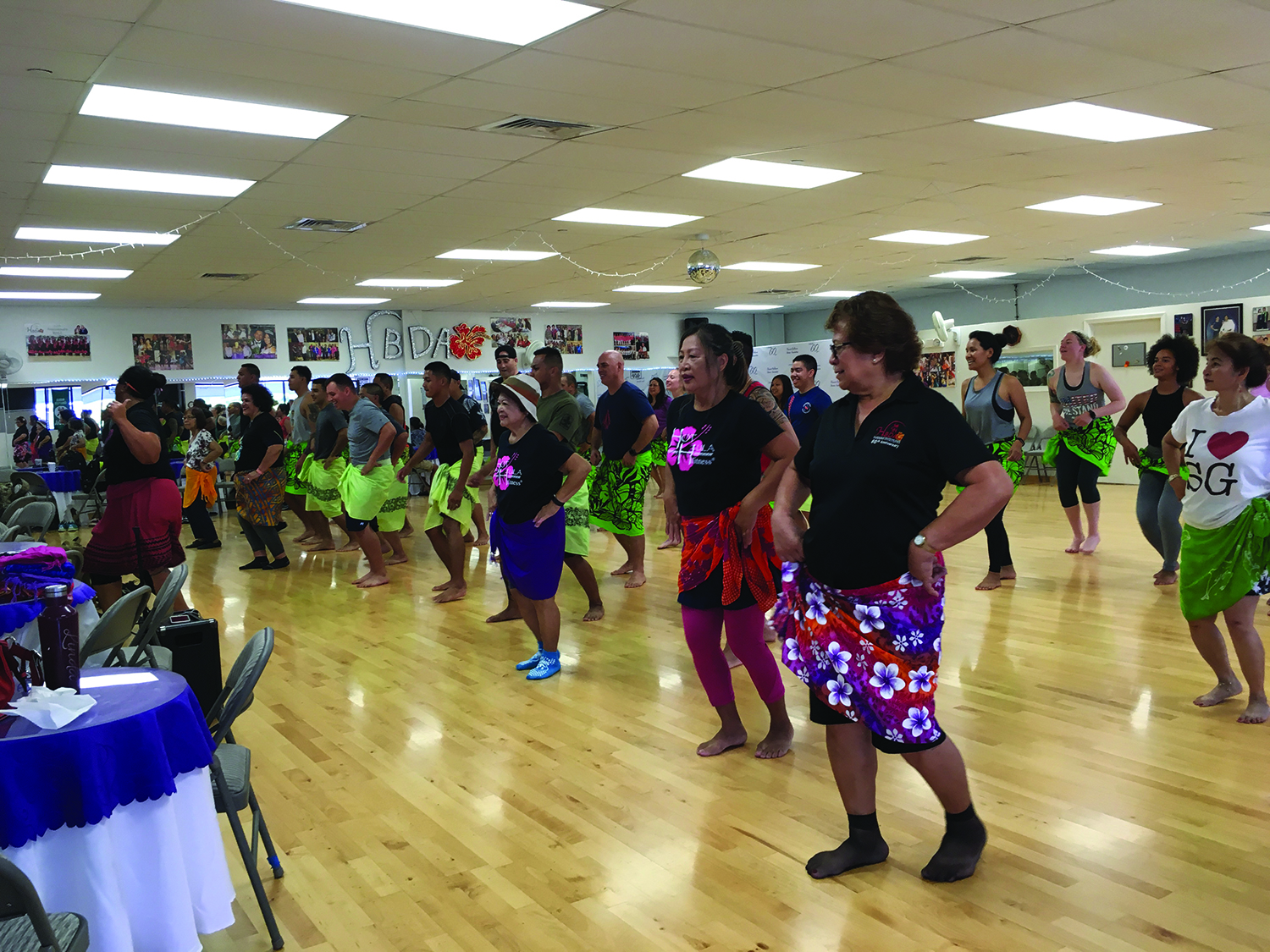
The HOT HULA fitness® Matua workout provides exhilarating exercise using Polynesian dance moves. Matua is a Māori word meaning elder or parent, so this fitness routine is geared to seniors, but can also be enjoyed by all age groups and fitness levels. Anyone who enjoys dancing and keeping fit can benefit from this exercise with a Polynesian flair.
HOT HULA fitness® Matua is a low-impact, yet heart-pumping cardio workout that targets larger muscle groups to increase strength and definition of your core (abs), glutes, quads and arms. This action-packed dance provides a 60-minute, total body workout.
HOT HULA fitness has four basic moves: 1) Tamau is hitting your hips side to side; 2) Ami is a circle movement; 3) Afata is a box movement by which you are drawing a box with your hips, hitting all four corners; and 4) Varu, a figure eight (the infinity symbol).
Inspired by the dances of the Pacific Islands, HOT HULA fitness® movements are set to the sounds of traditional Polynesian drumbeats fused with funky Reggae music. The instructor breaks down each choreographed siva (dance) into easy sections. The founder, Anna Rita Sloss, believed in helping her ‘aiga (family) as she searched for a program that would help move her people toward an active lifestyle.
“Our people can relate to drumbeats. When they hear it, they start moving and swaying their hips — enticed to get off their bums and move!” she says. Numerous studies show how dancing benefits benefits mind and body by getting your heart pumping and your blood flowing — a plus for joints, heart and brain. Dancing helps participants lose weight and manage stress. It also instills grace and exercises memory to help curb development of dementia.
Studies also show that dancing lifts the spirit, which is one of the many reasons I love teaching this format.
The exercise pace of HOT HULA fitness® Matua is slower and each move is specially modified for the matua. However, students may opt to execute either the full movements or the modified version. The health benefits are the same.
I encourage my HOT HULA fitness® Matua class to “move at your own pace and listen to your body. Keep moving your feet and make those big circles with your hips.”
HAWAII BALLROOM DANCE ASSOCIATION
98-019 Kamehameha Highway, Ste. 211A, Aiea, HI 96701 808-753-8673
The HOT HULA fitness® Matua workout provides exhilarating exercise using Polynesian dance moves. Matua is a Māori word meaning elder or parent, so this fitness routine is geared to seniors, but can also be enjoyed by all age groups and fitness levels. Anyone who enjoys dancing and keeping fit can benefit from this exercise with…
If hula is the heartbeat of the Hawaiian people, then get ready for some cardio, because the 42nd Annual Prince Lot Hula Festival is almost here!
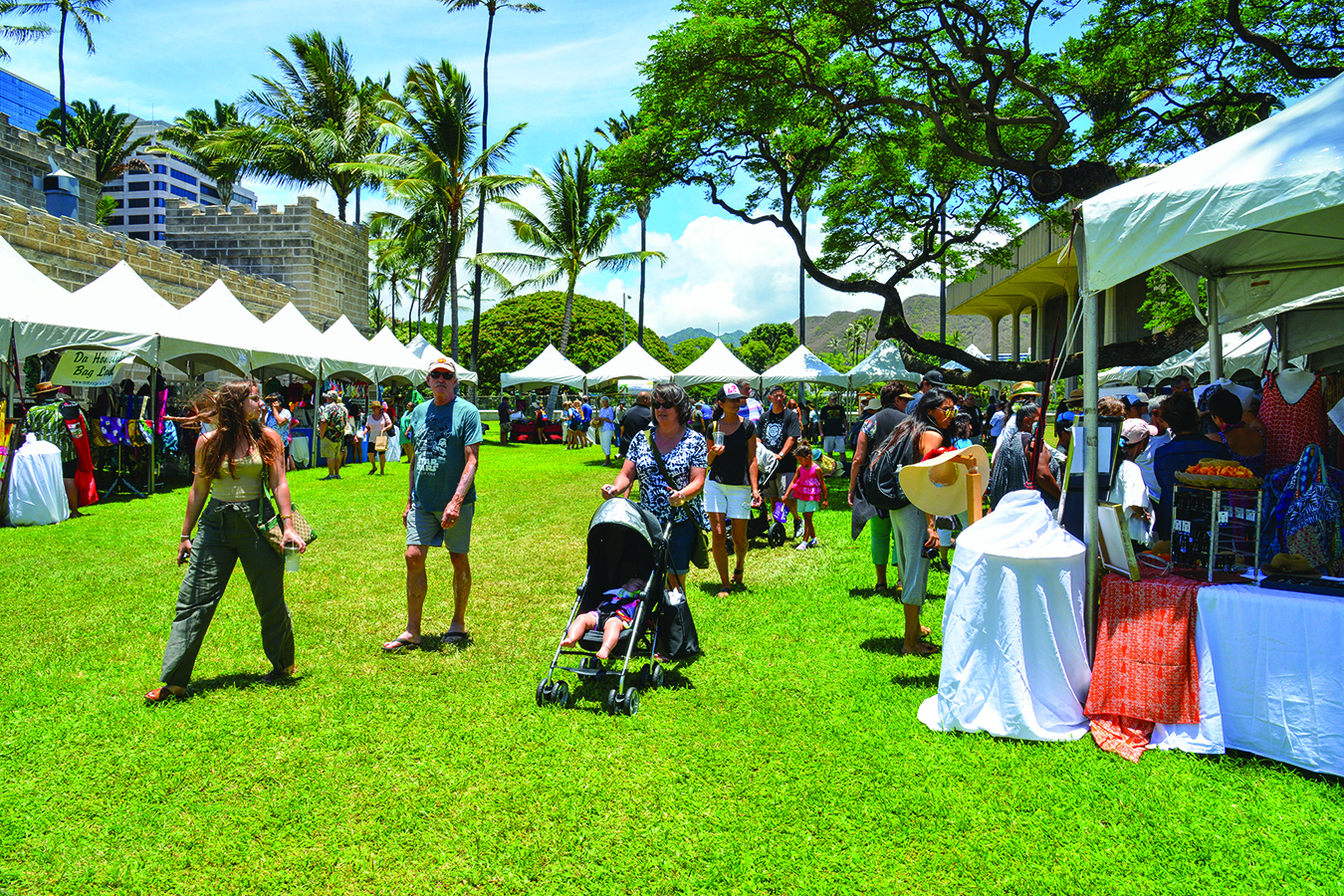
Featuring two days of hula, a Hawaiian-themed craft fair, cultural demonstrations and more, the largest non-competitive hula event in Hawai‘i returns for the third year.
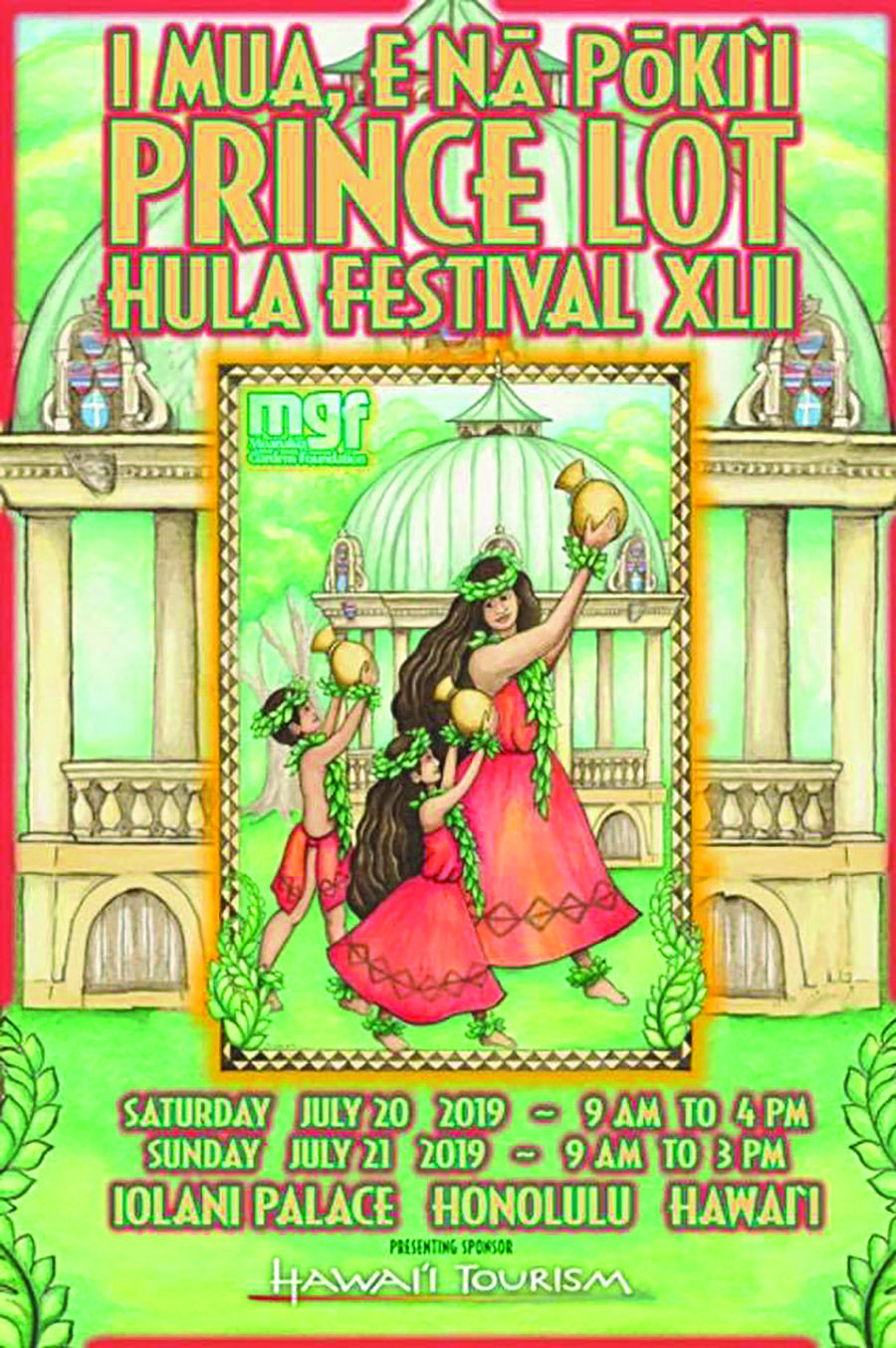
PRINCE LOT HULA FESTIVAL — ‘Iolani Palace Saturday & Sunday, July 20 – 21 at 9 am
Everyone is welcome to this free, family-friendly event, and is encouraged to bring a chair or mat and enjoy the show from the lawn.
This celebration honors Prince Lot Kapuāiwa, who helped revive Hawaiian culture. During his reign as Kamehameha V (1863 to 1872), he repealed laws that banned traditional practices such as hula. He also created the Royal Order of Kamehameha to honor his grandfather, Kamehameha the Great.
Aloha e komo mai. Come and join the festivities with the whole family. Make it an aloha day! Photos courtesy of Moanalua Gardens Foundation of the 2018 event.
Founded in 1978 by the Moanalua Garden Foundation (MGF), the festival invites hālau from every major island and attracts thousands of residents and visitors each year. This year’s theme is I Mua E Nā Pōki’i, Move Forward, O Youth and represents the passing of hula traditions to the next generation, the keepers of the culture.
Saturday’s opening ceremonies will include the Royal Order of Kamehameha, presentation of MGF’s Malia Kau Award to renown Kumu Hula Iris Naleialoha Napaepae-Kunewa of Hawai‘i Island, followed by an impressive lineup of premier hālau hula who will perform both kāhiko (ancient) and ‘auana (contemporary) hula.
As part of the opening program on Sunday, MGF will honor chanter Kamuela Chun from Hilo with its Namakahelu Oli Award. Local food and refreshments will be available for purchase and limited edition T-shirts and souvenir kōkua buttons will be for sale. So come down and enjoy the fun, food and festivities in the magnificent setting of ‘Iolani Palace.
For a complete schedule and hālau line-up, visit Moanalua Gardens Foundation online.
MOANALUA GARDENS FOUNDATION 808-839-5334 | www.moanaluagardensfoundation.org A nonprofit organization founded in 1970, Moanalua Gardens Foundation is committed to preserving and perpetuating the native culture and environment of Hawai‘i through education and stewardship of Kamananui (Moanalua) Valley and celebration of the Prince Lot Hula Festival at ‘Iolani Palace. MGF depends upon grants and donations to cover festival costs. To make a donation or become a member, visit the foundation online.
If hula is the heartbeat of the Hawaiian people, then get ready for some cardio, because the 42nd Annual Prince Lot Hula Festival is almost here! Featuring two days of hula, a Hawaiian-themed craft fair, cultural demonstrations and more, the largest non-competitive hula event in Hawai‘i returns for the third year on Saturday and Sunday,…