Tag: Estate planning

  • Grief & Bereavement — Part VI

    Businessman and lawyer discuss the contract document. Treaty of the law. Sign a contract business.While the attorney is an expert in the estate planning process, the client is the expert about their own life, grief and choices. The attorney, as counselor, helps clients find solutions and make choices as they compassionately facilitate the estate planning process.

    Holistic planning involves more than probate avoidance and tax minimization. It is person-centered, value-driven and process-oriented. The law historically prioritizes a different approach, viewing planning as document-centered, worth-driven and procedurally oriented. This approach is visible in the emphasis Congress, legislatures and estate planning attorneys place on the crafting of laws and drafting of documents.

    The binary nature of estate planning documents simply does not help clients. We must allow space for each client to express emotions and intentions if we are to craft a successful and complete plan.

    Statistical studies demonstrate the dismal success rate of estate planning and end-of-life planning. In Roy O. Williams and Amy A. Castoro’s Bridging Generations, they analyzed the success rate of more than 3,250 estate plans over a 52-year period and found a success rate of about 30%. The authors define success as “future generations retaining the family’s financial assets while remaining a unified family.”

    When dissecting the failure rate further, the study finds that 3% of the failures occurred due to bad drafting or tax planning. The remaining 97% of failures occurred because intentions were not honored, monetary legacies were misspent, lost or stolen and family relationships fractured.

    Professor Thomas Shaffer, in his article titled “Estate Planning Games” — a play on the book written by E. Berne, Games People Play — encourages attorneys to meet clients with curiosity.

    Attorneys are advised to consider the client’s needs rather than starting with the needs of the attorney. In other words, Shaffer affirms that we must start with the question: Why? Why are you here? Why is what you said important to you? Then, the process can organically grow from there.


    STEPHEN B. YIM, ATTORNEY AT LAW
    2054 S. Beretania St., Honolulu, HI 96826
    808-524-0251 | stephenyimestateplanning.com

    While the attorney is an expert in the estate planning process, the client is the expert about their own life, grief and choices. The attorney, as counselor, helps clients find solutions and make choices as they compassionately facilitate the estate planning process. Holistic planning involves more than probate avoidance and tax minimization. It is person-centered,…

  • Starting Your Estate Planning Journey

    The first steps in your estate planning journey are learning 1) how to stay in control of your stuff while you are able to be in control and 2) how to make sure your wishes are carried out when incapacity or the grim reaper catch up with you. Sorry to rub it in, but there is a 100% probability that at least one of these things is going to happen to you and a 70% probability that both of them will.

    Your estate plan should reflect your choices about such things as the kind of healthcare you will receive throughout your life, as well as who will enjoy your stuff when you are done with it. The only way to make effective choices about these things is to learn what your choices are.

    Choices, Changes & Flexibility

    This is a lifelong challenge, because your choices will change as your circumstances change. Your health is going to change — so will your assets, your comfort with your list of designated decision-makers and the laws that affect your estate plan. As things change, you will need to stay on top of the choices you can make in order to be confident that your wishes will be followed at every phase of your life — and beyond.

    The Sooner the Better

    Let’s say you are thinking about going on an adventure. Where do you want to go? How do you want to get there? Are there any better destinations you might want to consider? Is there a better means of getting you there than the one you originally chose?

    The only way to know the answers to these questions is to do some research, talk with people who have taken similar trips and better yet, talk with folks who have helped lots of people take all kinds of journeys. It’s kind of like asking for directions.

    While I have never regretted asking for directions, I have regretted waiting too long to do so. The sooner you learn about your estate planning options, the sooner you can implement ways to head off problems that are headed your way, even though you don’t know exactly what they are or when they will arrive.


    SCOTT MAKUAKANE, Counselor at Law
    Focusing exclusively on estate planning and trust law.
    808-587-8227 | maku@est8planning.com
    est8planning.com

    The first steps in your estate planning journey are learning 1) how to stay in control of your stuff while you are able to be in control and 2) how to make sure your wishes are carried out when incapacity or the grim reaper catch up with you. Sorry to rub it in, but there…

  • Getting Ahead of Incapacity

    Many of us go through life believing everything will go according to plan. However, as the saying goes, even the best-laid plans go astray. So, to avoid unnecessary interruptions later in life that can be both financially and emotionally costly, it is wise to plan now for the possibility of incapacity.

    Incapacity can come in several forms, and it can occur suddenly or gradually over a period of time. Some of the negative impacts of incapacity — especially dealing with finances and health-care decision-making — can be avoided by having your estate plans prepared in advance. Planning for incapacity can include things like having all the appropriate estate planning documents (e.g.,durable power of attorney, advance healthcare directive, will and/or trust) drafted and executed. However, each person is different, so you should consult with an estate planning attorney to provide guidance and explain the documents you will need to be best prepared in the event of incapacity.

    In addition to estate planning documents, it can be very helpful that you prepare others, such as family and friends, for the possibility of incapacity. Having a frank conservation with them about your wishes and directions can limit the emotional impact and provide clarity about your estate plan.


    CSI TRUST COMPANY (501(c) 3 nonprofit)
    1001 Bishop St., Ste. 2305, Honolulu, HI 96813
    808-538-0353 | csitrustcompany.org

    Many of us go through life believing everything will go according to plan. However, as the saying goes, even the best-laid plans go astray. So, to avoid unnecessary interruptions later in life that can be both financially and emotionally costly, it is wise to plan now for the possibility of incapacity.

  • Leaving a Legacy of Aloha

    Estate planning involves protecting what is important and then passing it on to our loved ones and future generations. Many concepts central to Hawaiian culture are applicable to estate planning. Starting with the concept of ‘ohana (an inclusive notion of family), all the way through lokahi (unity — especially appropriate at the passing of a loved one), estate planning and the culture of our islands can interweave to form a rich tapestry of aloha.

    Ha‘aha‘a describes an attitude of humility, which promotes family harmony at stressful times. Stress may arise in dealing with illness and death, and it may arise in dealing with the distribution of assets. It takes humility for family members to form closer bonds at these times.

    Sometimes, dealing with issues surrounding the disposition of a loved one’s remains, much less the disposition of assets, requires family members to talk out differences and come to consensus regarding what is the right, or pono, thing to do, as well as respecting the wishes of the deceased and the living. It is not uncommon for different family members to have different views of what a deceased person’s wishes were in various contexts. This may result in disagreements that can be both heated and destructive.

    Ho‘oponopono is an option at times of family disagreement. It is a delicate process that enables family members to express their views and come to understanding of alternative perspectives. Although ho‘oponopono may be employed after the fact in resolving disputes, it can also be used while the senior family member is still alive to head off disputes and instill unity in the family. A successful ho‘oponopono requires the sensitive leadership of a moderator who is not involved in the dispute and who can make sure that all perspectives are expressed and validated.

    Finally, the concept of mālama, or caring for and perpetuating one’s legacy, infuses and motivates Hawaiian-style estate planning. This extends from caring for one’s family to caring for one’s community through charitable giving.

    Remembering our root values helps us to leave a legacy of aloha.


    SCOTT MAKUAKANE, Counselor at Law
    Focusing exclusively on estate planning and trust law.
    www.est8planning.com
    808-587-8227 | maku@est8planning.com

    Estate planning involves protecting what is important and then passing it on to our loved ones and future generations. Many concepts central to Hawaiian culture are applicable to estate planning. Starting with the concept of ‘ohana, all the way through lokahi, estate planning and the culture of our islands can interweave to form a rich…

  • Grief and Bereavement — Part II

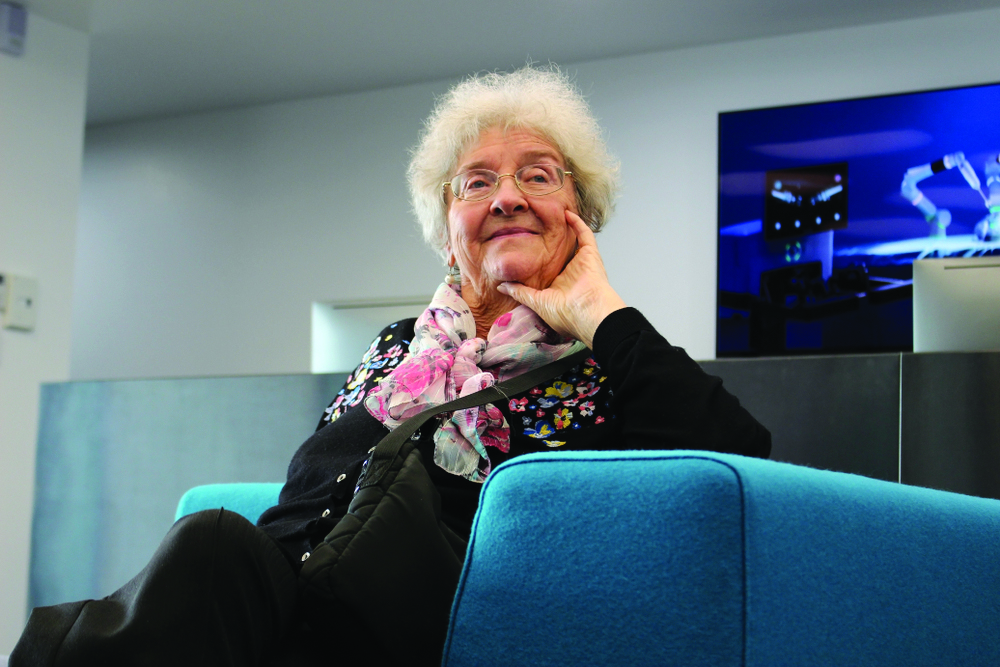
    A senior lady sits waiting in the reception area of a robotics company in Cambridge, a city renowned for being one of the top three technology hubs in the world.Continuing from my last article, I believe that clients really want the estate planning attorney to help them meet their needs so that they can reduce their fear, anxiety and anticipatory grief in light of their knowledge of their inevitable death.

    These needs include the desire 1) for the client to grow, develop and enjoy the most meaningful life possible; 2) not to burden friends and family; 3) to establish and build strong family/friend relationships, and to know these relationships will persevere after death; 4) to make the transition after death as easy as possible; and 5) to ensure that loved ones dependent on the client during their lifetime have security, sustenance and shelter.

    Avoiding probate and minimizing taxes are not ends in themselves, but doing these things helps the client minimize any burden placed on survivors and allows for more available resources for the surviving loved ones’ care. When we shift our perspective away from lineal matters, such as probate and taxes, and focus on the natural, often non-lineal, human emotions underlying the needs of each client when deciding to make an estate plan, we realize that we, as estate planning attorneys, must develop an additional skill set above and beyond technical tax and probate law, and utilize “the softer skills of counseling.”


    STEPHEN B. YIM, ATTORNEY AT LAW
    2054 S. Beretania St., Honolulu, HI 96826
    808-524-0251 | stephenyimestateplanning.com

    Continuing from my last article, I believe that clients really want the estate planning attorney to help them meet their needs so that they can reduce their fear, anxiety and anticipatory grief in light of their knowledge of their inevitable death.

  • Adequate, Equal, Equitable or Fair?

    Fair Share Equal Treatment Pay Portion Pie Chart 3d Illustration

    Parents often struggle with the concepts of equal, equitable, fairness and adequacy when it comes to the distribution of their assets among their children. Defining these terms will help us make the decision that  most closely reflects our intention.

    Adequate means the minimum amount of money needed for survival. The adequacy level has been met if our children are independent and not in need, and if we can be reasonably sure that they will not become dependent.

    Equal means giving the same dollar-amount to each child. This means that we change our focus as parents from meeting the individual needs of our children to simply and equally dividing of our assets among them, without consideration of their station in life.

    Equitable means having the same financial opportunity to reach a specific objective considering current personal conditions, but without regard to how those happened.

    Fair means having a non-discriminatory attitude regardless of personal conditions, but with regard to how it happened. If one child chooses not to work and is still living at home, and one child works and is living independently, leaving the house to the non-working child may be equitable (each having a place to live) but not fair, and in a way, penalizes the working child.


    STEPHEN B. YIM, ATTORNEY AT LAW
    2054 S. Beretania St., Honolulu, HI 96826
    808-524-0251 | www.stephenyimestateplanning.com

    Parents often struggle with the concepts of equal, equitable, fairness and adequacy when it comes to the distribution of their assets among their children. Defining these terms will help us make the decision that  most closely reflects our intention.

  • Estate of Mind

    Remember the classic Abbott and Costello comedy routine, “Who’s on First?” The longer they banter, the more their  frustration grows due to their seeming lack of understanding of the game they are discussing — and hilarity ensues.

    Similarly, the language of estate planning can give rise to problems for the uninitiated, but the problems that arise may not be funny at all. The vocabulary of estate planning is very precise and a seemingly innocuous slip of the tongue can make a world of difference.

    A good example is the term “estate.” Does it mean land, as in “real estate,” or what passes by way of your will, as in “probate estate,” or does it mean what is in your revocable living trust, as in “trust estate” or does it mean what is subjected to “estate” tax after you are gone? It can mean any of those things, depending on the context.

    An “estate” can be land or an interest in land. An example of an interest in land is a life estate, which gives the owner (the “life tenant” ) the right to use the land for his or her lifetime. The life estate terminates upon the life tenant’s death and the land then goes to the person who stands to inherit property (the “remainderman”).

    The term “life tenant” does not refer to somebody who pays rent, as we normally think of a “tenant,” but rather somebody who can use certain property for life without having to pay rent.

    Your probate estate is whatever you own at your death that will pass by way of your Last Will and Testament. It can include anything you own, such as land, bank accounts and jewelry.

    If you put your land, bank accounts and jewelry into your revocable living trust, those assets become what is called your “trust estate,” and they will no longer be part of your probate estate when you die. Your trust estate bypasses probate.

    But wait! “Doesn’t the estate tax hit not only a person’s probate estate, but also things that have nothing to do with the person’s probate estate — like life insurance policies, retirement accounts, jointly owned assets and trust assets?” Yes, because your estate for estate tax purposes includes just about everything you own or control at the moment of your death.

    Knowing the language of estate planning can be helpful in formulating your own estate plan, as well as understanding someone else’s plan that names you as a beneficiary. Having a well-informed estate planning vocabulary takes you a long way toward knowing “who’s on first” in the complicated subject of estate planning.


    SCOTT MAKUAKANE, Counselor at Law
    Focusing exclusively on estate planning and trust law.
    www.est8planning.com
    808-587-8227 | maku@est8planning.com

    Remember the classic Abbott and Costello comedy routine, “Who’s on First?” The longer they banter, the more their  frustration grows due to their seeming lack of understanding of the game they are discussing — and hilarity ensues. Similarly, the language of estate planning can give rise to problems for the uninitiated, but the problems that…

  • Estate Taxes: What’s Around the Corner?

    After spending a lifetime of earning, saving and investing — and paying income and capital gains taxes all the way along — you may wonder why our government feels entitled to tax the value of what’s left when you die. However, the IRS and the State of Hawai‘i both want a piece of your estate.

    As of 2021, each US citizen residing in Hawai‘i is allowed to pass on $5.49 million free of state estate tax and $11.7 million free of federal estate tax. I call these “coupon” amounts, because it is as if the government gives each of us a coupon to shelter our assets from estate tax. At the current coupon amounts, most of us do not have to worry about the government reaching into our family cookie jar when we die. But, major changes to the coupon amounts may be around the corner.

    Congress is talking about cutting the federal coupon approximately in half and Hawai‘i has been talking about reducing its coupon to $1 million. So there could be tax payable at your death if you own a house and have modest amounts of cash, life insurance, and retirement savings.

    Don’t wait until the law changes before you call your estate planning advisors to talk about how to address these possible changes. There may be things you can do to minimize the tax bite and maximize what you leave your family.


    SCOTT MAKUAKANE, Counselor at Law
    Focusing exclusively on estate planning and trust law.
    www.est8planning.com
    808-587-8227 | maku@est8planning.com

    After spending a lifetime of earning, saving and investing — and paying income and capital gains taxes all the way along — you may wonder why our government feels entitled to tax the value of what’s left when you die. However, the IRS and the State of Hawai‘i both want a piece of your estate.

  • Define Your Legacy’s Intentions

    According to the book, Preparing Heirs: Five Steps to a Successful Transition of Family Wealth and Values, “60 percent of transition failures were caused by a breakdown of communication and trust within the family unit.” With the aging demographic of baby boomers, the high cost of living in Hawai‘i and the increase in multigenerational homes, the potential influx in trust litigation is foreseeable. Where it is appropriate, I believe that encouraging clients to partake in difficult and potentially messy family discussions about their legacy and explaining “the why” behind their intentions is an integral part of preventing unwanted litigation. It may protect the overall health of the family. When willing clients feel the need for assistance in engaging in family discussions, a mediator may be effective in resolving any family disputes.

    I also recommend that clients further solidify their intentions by writing them down as the foundation of their estate plan. Those creating a trust should prepare written guidance as to its underlying intentions. Having a well-defined estate plan will help give you and your family more peace of mind and promote harmony. But please make sure that when you are working with your estate planning attorney that your intentions are clearly defined. It can make all the difference.


    STEPHEN B. YIM, ATTORNEY AT LAW
    2054 S. Beretania St., Honolulu, HI 96826
    808-524-0251 | www.stephenyimestateplanning.com

    According to the book, Preparing Heirs: Five Steps to a Successful Transition of Family Wealth and Values, “60 percent of transition failures were caused by a breakdown of communication and trust within the family unit.” With the aging demographic of baby boomers, the high cost of living in Hawai‘i and the increase in multigenerational homes,…

  • Estate Planning: Start With ‘Why’

    Trust beneficiaries are sometimes left to wonder why a decedent instructed that a trust distribution be made in a  particular way.

    The trust clearly identified who the beneficiaries were, what they were to receive and how they were to receive. But unfortunately, the trust was silent as to the “why” of the distribution — the underlying reason and purpose for creating the trust in the first place.

    Not clearly setting forth intention or purpose in one’s estate plan can lead to misunderstanding, confusion, hurt feelings, potential law suits and disruption of family relationships.

    In his book Start With Why, Simon Sinek explains it this way: The “what, when and how to do” come from our neocortex, the part of the brain that contains the language center. The intentional and emotional purpose-driven “why” comes from the limbic area of the brain, which deals with emotions and memory. That area of the brain has no capacity for language, which is why writing out the purpose, emotion and intention is difficult. Most of what we do is driven by clear intention and purpose, so it is important to put effort into writing out our intentions and purpose.

    Keep in mind that your estate plan is intended to be your last say, so the “why” must be expressed as the foundation for the plan.


    STEPHEN B. YIM, ATTORNEY AT LAW
    2054 S. Beretania St., Honolulu, HI 96826
    808-524-0251 | www.stephenyimestateplanning.com

    Trust beneficiaries are sometimes left to wonder why a decedent instructed that a trust distribution be made in a  particular way. The trust clearly identified who the beneficiaries were, what they were to receive and how they were to receive. But unfortunately, the trust was silent as to the “why” of the distribution — the…

  • Estate Planning Mirrors Life

    As a member of ACTEC, I am privileged to learn from and exchange ideas with some of the most skilled and dedicated trust and estate lawyers in Hawai‘i. I often wonder why most of our discussions focus on probate and litigation issues rather than on how we can help plan to mitigate family conflict and avoid probate.

    As professionals, we must continue to fight against the inclination to treat estate planning as “the preparation of documents.” Rather, we ought to consider ourselves more as  counselors of law” who guide their clients through a process that considers all factors — understanding  clients’ intentions and hopes, first and foremost — as well as convenience, probate avoidance, minimization of tax, family relationships, liability and fashioning a plan well-suited to their unique needs. This includes proper counseling and assistance in the funding of a trust, and engaging in meetings with family members and professionals to communicate intentions and the plan so that everyone — family, client and professional — are working together seamlessly with common goals.

    Estate planning is not a commodity of different pieces of documents put into a three-ring binder. Estate planning mirrors life, where change is constant and communication is key.


    STEPHEN B. YIM, ATTORNEY AT LAW
    2054 S. Beretania St., Honolulu, HI 96826
    808-524-0251 | www.stephenyimestateplanning.com

    As a member of ACTEC, I am privileged to learn from and exchange ideas with some of the most skilled and dedicated trust and estate lawyers in Hawai‘i. I often wonder why most of our discussions focus on probate and litigation issues rather than on how we can help plan to mitigate family conflict and…

  • The Time to Plan is NOW

    When I was in elementary school in the 1960s, my family’s set of encyclopedias claimed that I could expect to live to the ripe old age of 70. That seemed incredibly old to me. Fast-forward to 2020, and the current consensus is that I will live into my 80s, barring a catastrophic illness or an accident. Advances in medical science are probably the primary reason for this difference, but now, when 80 seems pretty young to me, I have to ask, is a longer life necessarily a good thing? It is not that difficult to think of compelling reasons in order to answer that question in the negative.

    Although science has stretched our lifespans, it has not yet perfected a way to keep us mentally and physically competent until the ends of our lives. The net result is that we live longer, but our quality of life in the extra years that science has granted us may not be what we would desire. In our grandparents’ day, senility was not unknown, but back then, most people died before they had a chance to plumb the depths of Alzheimer’s. Each person reading these words must recognize that he or she has about a 70 percent chance of being incapacitated to the point of needing long-term care for some period of time before the final bell.

    Planning for the likelihood of eventual incapacity can make our final years much more bearable for ourselves and our loved ones than will otherwise be the case. So each of us needs to include in our estate planning arsenals against the inevitable — not only clear instructions about passing on our things, but also clear chains of authority and clear instructions about how decisions will be made on our behalf if we lose the ability to make those decisions.

    Most of us would prefer not to think about these things and most of our children (the good ones, anyway) want to think about them even less. But that is a poor excuse for leaving our loved ones in a haze of difficult decisions that could have been considered, analyzed and planned for in advance. Seeing how our minds and bodies are unlikely to improve over time, a plan delayed may very well end up being a wishful thought and the source of deep regret.

    Gather your loved ones and your trusted advisors and document the path that you will follow if time and health take you where you do not want to go. This process requires honesty, courage and wise counsel. Ultimately, it will be a source of tremendous peace.


    SCOTT MAKUAKANE, Counselor at Law
    Focusing exclusively on estate planning and trust law.
    www.est8planning.com
    808-587-8227 | maku@est8planning.com

    When I was in elementary school in the 1960s, my family’s set of encyclopedias claimed that I could expect to live to the ripe old age of 70. That seemed incredibly old to me. Fast-forward to 2020, and the current consensus is that I will live into my 80s, barring a catastrophic illness or an…