
Tag: abs

  • Engage Your Abs for a Strong Core

    Whether your goal is to reduce low back pain or slim your waist, adding exercises to your workout that engage your core can make a significant difference.

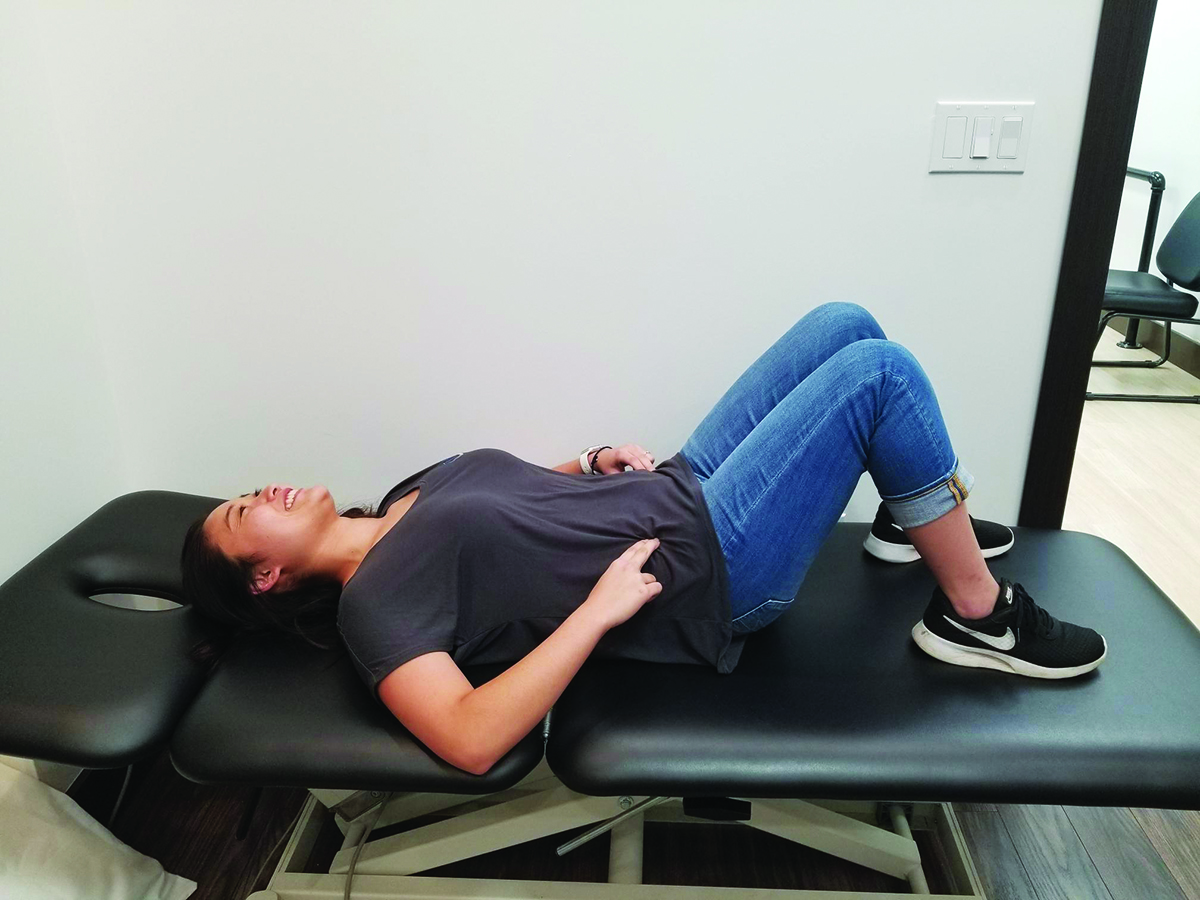
    The most important, yet often overlooked muscle that must be strengthened, is the transverse abdominis (TA) which is the deep, inner abdominal muscle that begins at the spine and wraps around your waist. This incredible muscle acts as a corset or internal brace stabilizing the spine and pelvis. It can reduce low back pain, prevent future back injuries and best of all, flatten your stomach.

    To find and activate your TA, lie on your back, maintaining the natural curve of your spine with knees bent. Place two fingers at the bony areas of your pelvis, then slide the fingers in about an inch and down about an inch. A little cough will engage the TA and you should feel it tighten under your fingers. Take a deep breath in and exhale slowly as you gently tighten the muscle under the belly button without moving the shoulders or hips, or rounding your back. Imagine pulling your zipper up to your belly button as you tighten the muscle. Practice while sitting, standing or lifting.

    Learning how to draw in your TA takes some practice, but once you master it, you will see the results — a stronger core, improved posture and a much tighter tummy.


    MOON PHYSICAL THERAPY, LLC
    320 Ward Ave., Ste. 107, Honolulu, HI 96814
    95-1057 Ainamakua Dr., F-11, Mililani HI 96789
    808-597-1005 | www.moonpt.com

    Whether your goal is to reduce low back pain or slim your waist, adding exercises to your workout that engage your core can make a significant difference. The most important, yet often overlooked muscle that must be strengthened, is the transverse abdominis (TA) which is the deep, inner abdominal muscle that begins at the spine…

  • Tighten Your ‘Internal Belt’

    Core training is one of the most popular concepts in the field of fitness and physical therapy. Core stability training is often associated with strengthening your abdominal muscles — the “abs.” The ab muscles play a very important role, but the core also includes multiple muscles in the mid-lower back, pelvic floor, hips and buttocks.

    This ring of muscles, or the “internal belt,” holds us up during the day, reducing falls, decreasing back pain and improving posture and even bladder control.

    Whether you are lifting your grandchild or playing your favorite sport, your core muscles help maintain the body in proper alignment to avoid injury.

    I often see patients who fall victim to the latest fitness trends that train the core improperly, leading to spine or leg injuries. Crunches, side-bends and rotational exercises with weights or kettlebells are not bad, but as we age, they often create more problems than benefits.

    Exercises that engage the muscles by bracing the entire trunk — as though you are wearing an internal belt rather than sucking the stomach in and flexing forward — are more effective in improving core stability.

    If you have poor posture and a weak core, try this simple, effective exercise to begin developing core control:

    • Start by finding an open wall.
    • Stand at the wall facing outward. Then place your heels about 6 inches away from bottom portion of the wall.
    • While keeping your foot planted, lean back against the wall with your back flush to the wall.
    • Pull your shoulders and arms back so they touch the wall.
    • Push your shoulders down with your palms facing out.
    • Tighten your abdominals so your lower back touches the wall — as if a force is sucking your back up against it.
    • Stand tall and breathe, hold
      for 30 seconds and then relax. Repeat 10 to 15 times.

    This simple exercise will tighten your internal belt and help you avoid injuries.


    Moon Physical Therapy LLC
    320 Ward Ave., Ste. 107, Honolulu HI 96814

    Aquatic, Land-Based and Manual Therapy, and
    Cardiopulmonary Rehab Programs

    808-597-1005 | www.moonpt.com
    Like me on Facebook: Moon Physical Therapy LLC


    Core training is one of the most popular concepts in the field of fitness and physical therapy. Core stability training is often associated with strengthening your abdominal muscles — the “abs.” The ab muscles play a very important role, but the core also includes multiple muscles in the mid-lower back, pelvic floor, hips and buttocks. This ring…