Category: Life & Pet

  • Help for Aging Pets & Devoted Owners

    Illness and/or old age and its associated maladies are a fact of life for us all — even our pets. And grief over the loss of a beloved pet may be as intense and as lengthy as when a significant person in our life dies. Those who have lost a pet know the full extent of this agonizing pain.

    As much as we’d love our pets to live forever, what we can do is support their well-being and quality of life for as long as possible. Kailua-based Arms of Aloha (AoA) believes in relieving the stress pet owners feel when their furry friend starts to succumb to the effects of old age or unrelenting illness. And they minimize the pet’s anxiety by coming to your home to assess your pet in his or her natural environment.

    During an in-home consultation, an AoA veterinarian will transcend medical facts by supporting your pet’s physical, emotional and social well-being. The vet will teach you what changes to expect as your pet’s condition progresses, how to manage symptoms, explain treatment options (pros and cons of each) and projected costs, and educate you about what to do in an emergency. When needed, AoA will set you up with a “crisis kit” of medications and instructions in case of sudden pain or distress.

    The decision to euthanize a suffering pet can also be agonizing for the pet owner, leaving him or her riddled with feelings of doubt and guilt. Taking the life of a pet too early would be tragic; letting a pet suffer even one day needlessly, equally so. For most pet owners, it is hard to know what to do. Well-meaning friends and family may say, “He’ll let you know when it’s time,” or “She’ll give you a sign.” But what if that sign never comes, or what if you can’t recognize the signs indicating when the balance has tipped and the bad outweighs the good?

    AoA can give you the tools to evaluate your pet’s quality of life and help you make a sensible decision. When you schedule a consultation, an AoA doctor comes to your home to assess your pet. AoA guides owners of seriously ill pets through the end-of-life journey, transforming a stressful experience into a peaceful, gentle and memorable one. Your pet will be surrounded by loved ones in their favorite place — comfortable and unburdened by pain or fear.

    During this stressful time, you don’t have to go it alone. AoA will help you and give you confidence to know you’re doing everything possible for your companion’s comfort.


    ARMS OF ALOHA
    808-435-3006 | 808-460-3119
    info@armsofaloha.com
    www.armsofaloha.com

    Illness and/or old age and its associated maladies are a fact of life for us all — even our pets. And grief over the loss of a beloved pet may be as intense and as lengthy as when a significant person in our life dies. Those who have lost a pet know the full extent…

  • Protect Your Pets During Hurricane Season

    There is no time like the present to prepare for another hurricane season. As our emergency agencies remind us every year, it is a matter of when, not if… Not only should families have an evacuation and shelter plan… that goes for your little dog, too! Being prepared for a disaster means also having a plan in place for your pets. Dorothy and Toto were sadly unprepared. Don’t be like Dorothy and Toto. Your plan should include knowing where your nearest pet-friendly shelter is and having a prepacked emergency pet kit ready to grab without delay.

    Luckily, here in Hawai‘i, we have much more time to prepare for an impending hurricane than the folks in Tornado Alley, Kansas. A hurricane warning is issued 36 hours in advance of the anticipated onset of tropical storm-force winds. But there is no reason not to prepare way in advance in order to reduce stress.

    In order to keep our people and pets safe during such disasters, each island has designated pet-friendly evacuation shelters.

    “On O‘ahu, all of our evacuation shelters are pet-friendly,” says Jessica Tronoski, communications manager for the Hawaiian Humane Society (HHS). “There are HHS volunteers stationed at only a select few shelters to assist pet owners. We do not provide pet supplies. During hurricane season, especially, we try to educate the community to have their pet preparedness kit containing all the things you would need to take care of your pet prepacked and ready for evacuation at a moment’s notice.”

    1. Update your pet’s microchip now. Make sure it contains your current contact information. Dogs or cats can be microchipped at your private veterinarian or by appointment at the HHS (https://app.waitwhile.com/book/hhsadmissions/service).

    2. Listen to the news. In the event of an impending disaster, listen to radio and television broadcasts to find out if your nearest shelter will be open. Based on the nature of the storm and other factors, some shelter locations may be closed and other facilities may be utilized at the last minute.

    3. Do not leave your pets behind. If it’s not safe for you, it’s not safe for your pet. Pets left behind can be injured, lost or killed.

    Although all O‘ahu evacuation shelters are designated as pet-friendly, The Humane Society of the United States (www.humanesociety.org/resources/make-disaster-plan-your-pets) advises pet owners to never assume they will be allowed to bring their pets to an emergency shelter or that shelters nearby will be able to accommodate everyone, with or without pets.

    So before a disaster strikes, check the website of your local emergency management office to see if you will be allowed to evacuate with your pets and verify that there will be shelters in your area that take pets and their people.


    Hawaiian Humane Society supply list:
    https://hawaiianhumane.org/disaster-ready
    Hawaiian Humane Society’s disaster preparedness brochure:
    https://www.hawaiicounty.gov/departments/civil-defense/active-civil-defense-alerts-and-maps
    Hawai‘i County Emergency Management Agency:
    https://www.hawaiicounty.gov/departments/civil-defense/active-civil-defense-alerts-and-maps
    Kauai Emergency Management Agency:
    https://www.kauai.gov/kema
    Maui County Emergency Management Agency (Maui, Lāna‘i, Moloka‘i):
    https://www.mauicounty.gov/70/Emergency-Management-Agency


    There is no time like the present to prepare for another hurricane season. As our emergency agencies remind us every year, it is a matter of when, not if… Not only should families have an evacuation and shelter plan… that goes for your little dog, too! Being prepared for a disaster means also having a…

  • The Healing Power of Dogs Helps Kūpuna

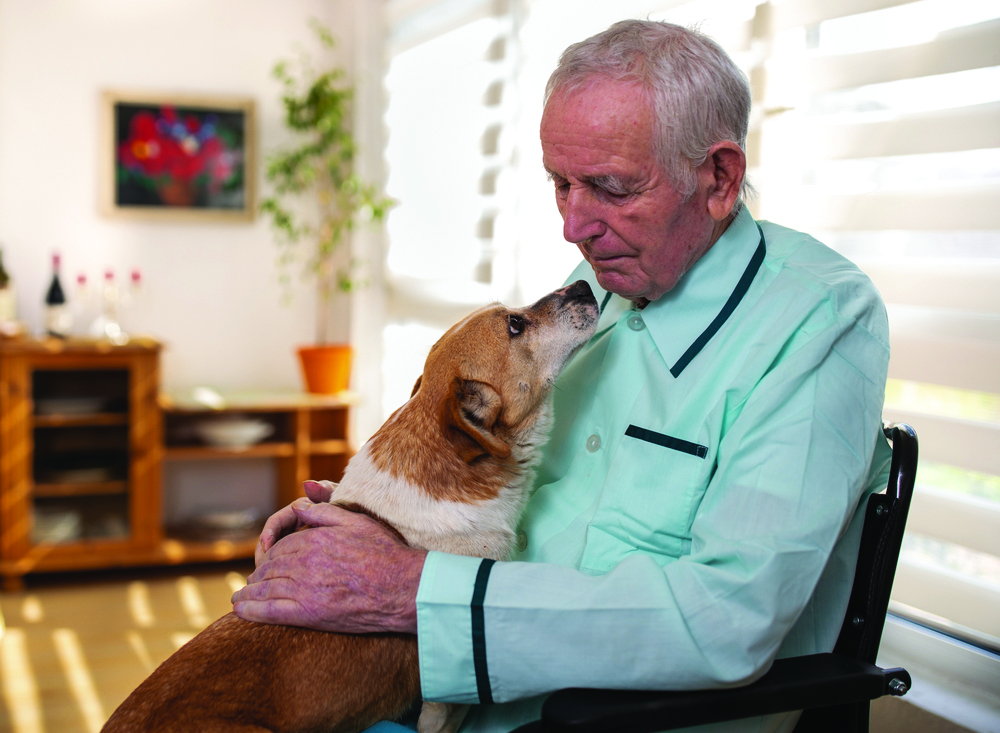
    Senior man with his dog sitting in chair beside window and sharing loveTherapy dogs and service dogs are invaluable to many people, especially kūpuna who suffer from physical disabilities, loneliness, depression or even dementia.

    What’s the difference between a therapy dog and a service dog?

    A service dog, as defined by the Americans With Disabilities Act (ADA), is a dog that is trained to perform specific tasks for people with disabilities who can’t do them for themselves. For example, a service dog might guide people who are visually or hearing-impaired or pull a wheelchair for a disabled person. They can even be trained to get life-saving medications if their owners become ill.

    A therapy dog is more of a companion, providing affection, emotional support, comfort and a sense of well-being to its owner or to many individuals. For example, a therapy dog might be employed by an assisted living facility or a hospital to help patients who are suffering from anxiety. The Queen’s Medical Center in Honolulu is one such facility that makes therapy dogs available to their patients. It has two therapy dogs: Yoda and Ipa, who are so popular that they’ve become stars among Queen’s staff and patients.

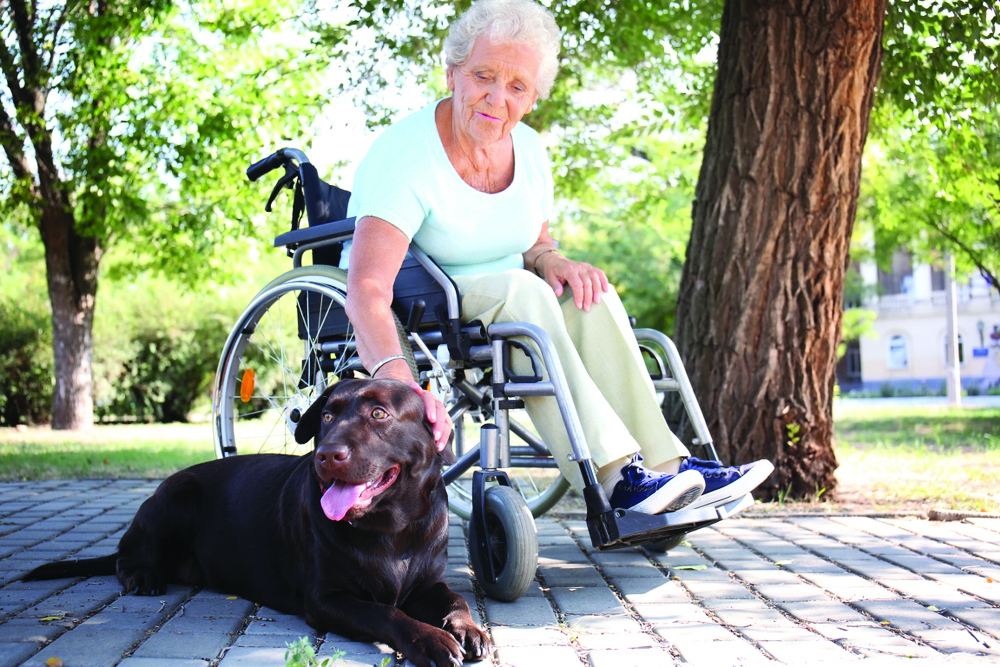
    Senior woman in wheelchair and her dog outdoorsWhat tasks can service dogs provide?

    Service dogs are able to perform tasks that are needed for a handler’s specific disabilities.
    Mobility service dogs are able to open and close doors, retrieve items, pull a manual wheelchair, find the phone, “brace” to balance the handler and turn light switches on and off.
    Psychiatric service dogs are trained to awaken handlers from PTSD nightmares and perform deep pressure therapy.
    Hearing service dogs respond to different sounds: knocking and doorbells, timers and alarm clocks, smoke alarms, telephones, baby cries and the handler’s name.
    Medical alert dogs are trained to alert the handler and others to conditions like seizures.

    What are the regulations regarding emotional support animals?

    An emotion support animal can be a dog, but could also be any other type of pet that an owner deems necessary for their well-being. Neither Hawai‘i law nor ADA regulations cover emotional support animals. Although they often have therapeutic benefits, they are not given the same rights as service and therapy dogs. Laws regarding emotional support dogs are tightening and it may no longer be possible to take your pet along on a trip — no matter how much support you say your furry friend brings.

    Service, therapy and emotional support dogs enhance quality of life, increase independence and offer therapeutic healing. If you’re considering a service dog, contact the qualified organizations listed below.


    ASSISTANCE DOGS OF HAWAII (501(c) 3 nonprofit)
    PO Box 1803, Makawao, HI 96768
    808-298-0167 | info@assistancedogshawaii.org
    www.assistancedogshawaii.org
    HAWAII FI-DO SERVICE DOGS (501(c) 3 nonprofit)
    PO Box 757, Kahuku, HI 96731
    808-638-0200 | info@hawaiifido.org
    www.hawaiifido.org

    Therapy dogs and service dogs are invaluable to many people, especially kūpuna who suffer from physical disabilities, loneliness, depression or even dementia. What’s the difference between a therapy dog and a service dog?