Category: Date

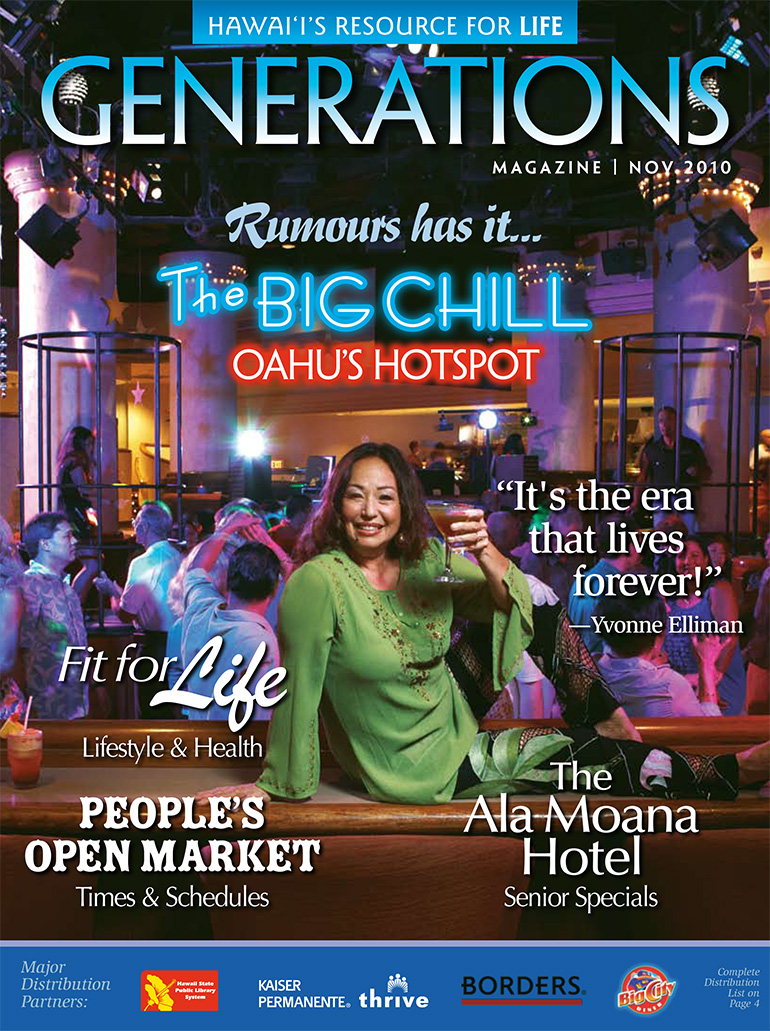
  • Peopleʻs Open Market

    Founded in 1973, the People’s Open Market (POM) was formed to accomplish three goals:

    1. Provide the opportunity to purchase fresh agricultural and aquacultural products and other food items at low cost.
    2. Support the economic viability of diversified agriculture and aquaculture in Hawai‘i by providing market sites for local farmers, fishermen or their representatives to sell their surplus and off-grade produce.
    3. Provide focal point areas for residents to socialize.

    More than 1 million people shop at the 25 market sites each year. Each market operates once a week and lasts about one hour. Prices are usually 35% lower than retail stores. The POM staff closely regulates the markets. The staff conducts weekly price surveys at various stores to determine a recommended price for the POM vendors to follow. Vendors may sell below, but not over, the recommended prices. The staff also supervises the arrival and departure of the POM vendors to ensure safety for both vendor and consumer. Each vendor is monitored to ensure that they comply with all city, state and federal government rules and regulations, ordinances and laws affecting their participation in the POM.

    TYPES OF PRODUCE

    At the POM, you will find many kinds of ethnic fruits, vegetables and other food items that are not ordinarily available in grocery stores. Depending on the ethnic make-up of the neighborhood, you’ll find a variety of foods associated with the different ethnic groups. Fresh ocean and pond fish, as well as farmed shrimps and prawns, are available—many sold live. In addition, a variety of Hawai‘i-grown flowers, such as ginger, orchids and anthuriums are for sale.

    HISTORY OF THE OPEN MARKETS The beginning of the open markets is attributed to Mrs. Joyce Fasi. After hearing concerns of women in a discussion group regarding the high cost living in Honolulu and in particular the high cost of food, she relayed these thoughts to her husband, then Mayor Frank F. Fasi. Hence, the People’s Open Market was started to assist farmers with selling their “off-grade,” “ungraded” and surplus produce while lowering food costs for the citizens of Honolulu.

    The first People’s Open Market (POM) was started at the Banyan Court Mall location in Kalihi in November, 1973. People in other communities began requesting their own POMs. Soon, a caravan of POM farmer/vendors was traveling to various sites to help the public purchase low-cost food items.

    The city requires all vendors to be authorized to accept food stamps to help those who are on fixed incomes.

    SHOPPING TIPS

    The People’s Open Market (POM) vendors are bound by a set of rules and regulations, which ensure that the POM operates smoothly and fairly for vendors and as well as customers. It is the vendors’ responsibility to see that their customers follow the rules and regulations. They are subject to citations and disciplinary action, including dismissal from the program for failure to comply with the rules and regulations.

    Please cooperate with the POM vendors. Here are some of the POM shopping tips:

    Plan ahead! There will be times that the market will start or end a little earlier or later than officially scheduled (5–10 minutes) due to certain conditions such as traffic, road conditions, school, weather, etc.

    Things to keep in mind:

    • Do NOT bag or ask vendor to reserve items before the start of the market (sound of an air Horn)!
    • Do NOT cut in lines that vendors have formed!
    • Do NOT shoplift!
    • Do NOT squeeze or mistreat fruits and vegetables (papayas, tomatoes, etc.)!
    • Do NOT bring animals (except seeing eye/ working dogs)!
    • Do NOT litter!
    • Do NOT ride bicycles through the shopping area. Park on the sides of the POM.
    • Do NOT park illegally, double park or block driveways!
    • Park in marked stalls ONLY!
    • Bring your own shopping bags, packages and cartons!
    • Be careful when the POM vendors’ trucks and vans are entering or leaving a POM site!
    • Be considerate of other shoppers!
    • Bring small bills and coins!

    More than 1 million people shop at the 25 market sites each year. Each market operates once a week and lasts about one hour. Prices are usually 35% lower than retail stores. The POM staff closely regulates the markets. The staff conducts weekly price surveys at various stores to determine a recommended price for the…

  • Rumours has it: The Big Chill

    Rumours has it: The Big Chill

    Remember watching the classic movie The Big Chill? Yes, it was the movie about a group of idealistic college buddies who had not seen each other for years. They reunite, reconnect and reminisce about the good ol’ days.

    The Big Chill, at Rumours Nightclub at the Ala Moana Hotel, was named after the classic movie. Malcolm Sur, the creator, original DJ and boogie man himself says he named the weekly event “The Big Chill” because he wanted a place where his friends could hang out, have a great time and party— something he felt Honolulu was lacking in the ‘80s.

    The Big Chill, home to the longest running nightclub in the state, is party central every Friday night. “Simply put, it’s all about the music,” Sur says.

    The passion for good music from “back in the day” still lives strong every Aloha Friday, from 5 p.m. to 9 p.m. For Friday-night regular, Jodi from Mililani, who has been coming to The Big Chill for more than 20 years, dancing is the greatest way to stay in good health and enjoy herself with good friends. “I’m with my girls, and no worries about work,” she says. “It’s Friday night!”

    Since 1984, Rumours Night Club has been a hotspot for company parties, class reunions and pau hana with friends. If you like to boogie down, it’s the place to go. The club has an extensive collection of hits from the ‘60s and ‘70s—from Motown and Marvin Gaye to The Temptations and Earth Wind & Fire. Then there are the “let’s get on the dance floor” songs by Rick James, Kool & The Gang and, of course, the King of Pop, Michael Jackson.

    According to Malcolm, there are people who have been coming to the club since day one. He calls them the “Original Chillers.” In fact, he heard of a story about an original chiller who recently passed away on the Mainland and in his obituary headline read, “Original Chiller is Gone.”

    Twenty-four years after opening, Malcom is starting to see some old familiar faces. The 20-somethings from the ‘80s are now empty nesters and are entering retirement. They have more free time … and they’re looking for a good time. Many of them are finding their way back to one of their favorite haunts, dancing the night away to the tunes of their times. Even Yvonne Elliman, a celebrated Hawai‘i recording artist from the ‘70s, still loves to come down to Rumours and groove to tunes like, “Play That Funky Music White Boy.”

    With new general manager Vince Depietro and assistant manager Pauline Keb, expect more to come in terms of parties. “Rumours Night Club and The Big Chill has withstood the test of time and the locals love our easy parking at the Ala Moana Center,” Keb says. She books parties in the club’s two private party rooms, which are always great for celebrating birthdays, class reunions, retirement parties and even yakudoshi.

    As the writer of this article, I’m also a regular patron of Rumours. I love the energy my fellow baby boomers still exhibit in their middle years. In fact, I celebrated my 50th yakudoshi at the Big Chill. What a party we had!

    The Big Chill, at Rumours Nightclub at the Ala Moana Hotel, was named after the classic movie. Malcolm Sur, the creator, original DJ and boogie man himself says he named the weekly event “The Big Chill” because he wanted a place where his friends could hang out, have a great time and party— something he…

  • The 26th Annual Senior Fair Was a Huge Success!

    The event had more than 22,000 attendees and 250 exhibit booths, including free seminars, craft demonstrations, valuable information on travel and leisure, financial advice, exercise equipment, home products, nutrition, seasonal flu shots, reverse mortgages, retirement communities, games and federal, state and city & county services.

    “With a myriad of lifestyles being represented for the 50-plus population of Hawai‘i, this special event has become a barometer of all the advances and improvements made for seniors,” says Mike Rossell, the show’s producer.

    A “Big Mahalo” goes out to this year’s Senior Fair Ambassador, Kirk Matthews, who spent hours signing the inaugural issue of Generations Magazine.

    The event had more than 22,000 attendees and 250 exhibit booths, including free seminars, craft demonstrations, valuable information on travel and leisure, financial advice, exercise equipment, home products, nutrition, seasonal flu shots, reverse mortgages, retirement communities, games and federal, state and city & county services.

  • Talk Story with Lisa

    Sonya Mendez, Entertainer, Founder of The Well of Hope How do you live your life? I live in the moment, because tomorrow is promised to no one. I approach my life and each project with energy and passion. When I helped bring clean water to 10,000 people in Ethiopia for generations to come, I felt that I’d finally made my rent on earth.

    Val Doctolero, Florist What keeps you youthful? I think its a positive attitude toward all things in life. I try to find the good in everything. And I have a great marriage, I have never had an argument with my wife Edith, we are always able to work things out. We laugh all the time, and laughter is the best preventive medicine.


    Lisa McVay is our on-the-road reporter — talking story with friends and neighbors, and sharing her many encounters. Mahalo to all that “Talk Story” with Lisa.

    Sonya Mendez, Entertainer, Founder of The Well of Hope How do you live your life? I live in the moment, because tomorrow is promised to no one. I approach my life and each project with energy and passion. When I helped bring clean water to 10,000 people in Ethiopia for generations to come, I felt…

  • Elderhood Project

    The late, great Groucho Marx once said, “If I had known I was going to live this long, I would have taken better care of myself.”

    It’s a funny line, but the fact is, we are all living much longer than the generations before us. In Hawai‘i, our life expectancy is 80 years old. It’s among the longest in the nation (and the world). Living longer is a good thing. However, it also places a new burden on each of us to stay healthy longer. It behooves us to take care of ourselves.

    Recently, on the Elderhood Project, we featured a story about a couple that spends more than $1,000 per month, which is a substantial portion of their budget, on medications. With fixed incomes, many seniors find themselves in a similar predicament. Needless to say, the fewer medications you need, the less money you will have to spend on them. That requires paying attention to your health year after year, during each stage of life.

    Exercise is one of the best ways to extend your quality of life into “elderhood.” If you can, exercise 30 minutes a day, even if it means just walking around the block a couple of times.

    Next, notice the little things—a twinge that wasn’t there before, a blemish that won’t go away, indigestion after every meal. Finally, see your doctor about these types of changes in your body. Also, don’t miss your annual check-ups. While you’re at the doctor’s office, request a preventative health screenings schedule. These screenings are often covered by your insurance and can save your life. The screenings detect diseases early— before you see or feel any symptoms.

    I’m not a doctor, but I know a lot of them. They all say the same thing. Hawai‘i has the reputation of being the healthiest state in the nation. There’s a reason for that. You are listening to your health care providers. Contrary to what Groucho said, it’s never too late to take better care of yourself.

    In Hawai‘i, our life expectancy is 80 years old. It’s among the longest in the nation (and the world). Living longer is a good thing. However, it also places a new burden on each of us to stay healthy longer. It behooves us to take care of ourselves.

  • Medicare Reform

    If you’re one of more than 193,000 Hawaii residents who depend on Medicare for stable, affordable health care, the new health reform package passed by Congress this year offers benefits you should know about.

    The Reform:

    • Improves access to primary care doctors. Your primary care doctor will receive bonuses for treating patients in Medicare, helping ensure that Hawaii beneficiaries have continued access to primary care services.
    • Closes the Medicare Part D coverage gap or “donut hole.” Skyrocketing drug costs are a particular problem for Hawaii residents. In 2007, 36 percent of Medicare beneficiaries in Hawaii fell into the coverage gap, which meant they had to pay the entire cost of medications and their premiums. Under health reform, if you reach the donut hole in 2010, you’ll receive a rebate for $250 to help pay for prescriptions. Beginning in 2011, if you reach the donut hole you’ll receive a 50 percent discount on your brand-name drugs. The coverage gap will be closed over the next 10 years.
    • Provides preventive care, free of charge. You’ll no longer have to pay out of pocket for preventive care services, such as screenings for cancer and diabetes. You’ll also be able to work with your doctor to develop your own plan to keep you as healthy as possible.
    • Improves the coordination of care for people with chronic conditions. In 2004, 17 percent of Hawaii Medicare beneficiaries discharged from the hospital were re-admitted within 30 days. The new law provides benefits to older residents to help you stay in your home and community.

    No one should be left to struggle with medical bills after a lifetime of hard work. By knowing what’s in the law and when the different benefits take effect, you can take advantage of the new provisions for yourself and your family.


    Check www.aarp.org/getthefacts for the latest information.

    If you’re one of more than 193,000 Hawaii residents who depend on Medicare for stable, affordable health care, the new health reform package passed by Congress this year offers benefits you should know about.

  • About Hypertension

    Blood pressure is a measure of the force of blood against the walls of your arteries. Blood pressure readings include two numbers, such as 120/80 (say “120 over 80”). The first number is the systolic pressure. This is the force of blood on the artery walls as the heart pumps. The second number is the diastolic pressure. This is the force of blood on the artery walls between heartbeats, when the heart is at rest.

    If your blood pressure is usually above 140/90, you have high blood pressure or hypertension. Despite what a lot of people think, high blood pressure usually does not cause headaches or make you feel dizzy or lightheaded. It usually has no symptoms, but it does increase your risk for heart attack, stroke, and kidney or eye damage. The higher your blood pressure, the more your risk increases.

    Treating high blood pressure may include changing your lifestyle, such as not smoking, staying at a healthy weight, exercising, and making healthier food choices. Your treatment may include medicines.


    From Kaiser Permanente’s High Blood Pressure Care Instructions booklet. For more information, visit kp.org/heart.

    Blood pressure is a measure of the force of blood against the walls of your arteries. Blood pressure readings include two numbers, such as 120/80 (say “120 over 80”). The first number is the systolic pressure. This is the force of blood on the artery walls as the heart pumps. The second number is the…

  • ADRC Hawaii : Aging and Disability Resource Center

    Access for Information on Aging, Health and Disability Resources

    The Hawaii Aging and Disability Resource Center (ADRC) includes a website and statewide single access phone number designed to make comprehensive information on aging, health and disability services readily available to seniors and disabled adults, as well as their caregivers. The State Executive Office on Aging has partnered with the Hawaii County Office of Aging, City and County of Honolulu Elderly Affairs Division, Maui County Office on Aging, County of Kauai Agency on Elderly Affairs, Hawaii Centers for Independent Living and the State Disability and Communication Access Board to establish the HawaiiADRC.org website and phone line at 643-2372 to offer comprehensive information to residents on every island.

    Made possible through a grant from the U.S. Department of Health and Human Services, Administration on Aging and the Centers for Medicare and Medicaid Services, plus state and county funds, the ADRC can simplify the way Hawaii’s seniors, disabled adults and caregivers learn about and access information and services to improve their daily lives.

    “These days many people are caring for their parents or loved ones while juggling work and family. We want to make a difference for Hawaii’s residents,” said Noemi Pendleton, Director of the State Executive Office on Aging. “Seniors, other adults with disabilities and those taking care of them are often frustrated by confusion and lack of information when they are making decisions about healthcare or other quality of life issues. Hawaii ADRC is unique in that it provides a central source for information and resources that can be trusted.”

    The site connects each visitor to the resources specific to the county of their interest. Perhaps someone is inquiring about services in their own community, or needs help for a loved one who lives on another island. The ADRC provides a variety of resources such as frequently asked questions, “Browse our Library” pages, a list of agencies that can help, a community events calendar, guidance on how to apply for several kinds of assistance that may benefit seniors, adults with disabilities and their family caregivers, and more.

    The statewide access phone line at 643-ADRC connects each caller to the ADRC’s operating agency in their own county. The TTY line is 643-0889.


    For more information on the Hawaii Aging and Disability Resource Center call 643-ADRC (643-2372) or go to www.HawaiiADRC.org.

    The Hawaii Aging and Disability Resource Center (ADRC) includes a website and statewide single access phone number designed to make comprehensive information on aging, health and disability services readily available to seniors and disabled adults, as well as their caregivers.

  • Elder Affairs Division, City and County of Honolulu

    The Elderly Affairs Division (EAD) is the designated Area Agency on Aging (AAA) and serves as the City and County of Honolulu’s focal point for older adults. The agency is part of a national network of 56 state units on aging created by the Older Americans Act of 1965. Each of Hawaii’s counties has a designated area agency on aging. All four agencies work closely with the State Executive Office on Aging, the State’s link to the federal Administration on Aging in the U.S Department of Health and Human Services.

    Serving Oahu, EAD’s mission is to develop systems of home and community based services that assist older persons in leading independent, meaningful, and dignified lives. These services enable older persons, who may be frail or have limited economic or social support systems, to live independently in the community for as long as possible. The division carries out a number of functions to accomplish its mission. These activities include:

    • Planning
    • Service development
    • Community education
    • Advocacy, coordination
    • Contracting for gap filling services
    • Senior volunteer recognition

    The Elderly Affairs Division provides a wide range of services to adults 60 years and older and to family caregivers. Delivery of services is made possible by leveraging federal, state, county, foundation and other private funds, and participant and volunteer contributions. Partnerships, utilization of local resources, and bottoms-up planning processes are important components of program development.

    EAD works in close collaboration with the State Executive Office on Aging and county Area Agencies on Aging in the development of strategies to implement the Administration on Aging’s national initiative to establish Aging and Disability Resource Centers in every state. EAD recently launched its “virtual” Aging and Disability Resource Center in the form of a website, allowing further expansion of information and assistance services to older adults, persons with disabilities 18 years and older and their caregivers.

    The ability to access information and services for older adults continues to be extremely critical as more family caregivers of all ages are called upon to provide care, both locally and long-distance.

    Kupuna Care Program

    The Kupuna Care Program, a collaboration of the State Executive Office on Aging and the county Area Agencies on Aging, provides assistance to frail older adults who cannot live at home without adequate help from family and/or formal services. Seven state-funded long-term care services were available in 2009 to help older adults avoid premature institutionalization. They include;

    • Information and Assistance
    • Attendant Care
    • Chore
    • Home Delivered Meals
    • Homemaker
    • Personal Care
    • Transportation

    To be eligible for Kupuna Care services, an older adult must: be a U.S. citizen or legal alien be 60 years of age or older not be covered by any comparable government or private home and community based services not reside in an institution such as an intermediate care facility (ICF), skilled nursing facility (SNF), adult residential care home (ARCH), hospital or foster family home have two or more ADLs or IADLs or significantly reduced mental capacity have at least one unmet need in performing an ADL or IADL


    For more information on any of these programs, please call the Elderly Affairs Division’s senior hotline at 768-7700

    The Elderly Affairs Division (EAD) is the designated Area Agency on Aging (AAA) and serves as the City and County of Honolulu’s focal point for older adults. The agency is part of a national network of 56 state units on aging created by the Older Americans Act of 1965.

  • Technology is Transforming Eldercare

    Technology has transformed our daily lives in so many ways — from the way we get our news, to the way we seek entertainment. Can technology also transform the way we take care of our elder loved ones? Here’s just a few ways technology is already doing so:

    ■ I’m worried I’m going to fall and won’t be found for hours :: Motion sensor systems placed in the home can discretely monitor activities without video and can detect when activities seem amiss and alert families via text, email or phone call. Accelerometer technology can be worn to detect a fall when a rapid change in positioning occurs and inform families without the senior needing to press any buttons.

    ■ Mom doesn’t remember to take her medications :: Medication management devices can dispense the correct medication at the correct dose at the correct time and even sound a reminder.

    ■ Dad doesn’t answer his phone because of his hearing :: Touchscreen technology specifically for seniors can make it easy to stay connected with family members without a senior needing to know how to use a computer. Phones can adjust to very high volumes; slow down messages and even light up when ringing.

    ■ Grandpa’s doctor wants him to watch his weight because of his heart condition :: Bluetooth monitoring devices like weight scales and blood pressure are used in the home and connect to databases to allow remote monitoring a senior from anywhere — work, the Mainland, while traveling, etc.

    New technology is emerging every day to help cope with the aging tsunami. Many will improve quality and reduce the cost of caregiving for families and those who love them. Stay tuned.

    Ho’okele Health Navigators — helping families navigate the complex health system including finding the right technology to meet your needs.

    Technology has transformed our daily lives in so many ways — from the way we get our news, to the way we seek entertainment. Can technology also transform the way we take care of our elder loved ones?

  • The Donut Hole

    On May 29, 2010 my husband and I were enjoying a vacation in the Pacific Northwest when we received a “frantic” call from my sister-in-law who was staying with my 92-year-old mother-in-law. We had ordered a refill of Mom’s medication through her Medicare Part D plan. The plan called to see if it was okay to put a $1,200 charge on my credit card. “But I thought Mom has Medicare Part D prescription drug coverage” my sister-in-law exclaimed.

    Mom does have a Part D plan but she had reached the “donut hole” or coverage gap in the plan. How did this happen?

    Under the basic plan (like the one Mom has), this year there is a $310 deductible, after that there is a $310–$2,830 co-share. The plan pays 75% and Mom pays 25% of the cost of the medication. Then, once she and the plan TOGETHER have paid $2,830, the Medicare plan stops paying for the next $3,610.

    In November Mom will reach “catastrophic coverage” where she will have spent a total of $4,550 out of pocket for her medications ($310 deductible, $630 co-share (her 25%) and the $3,610 during the donut hole or coverage gap). At this point the Medicare plan will pay 95% of the costs for the rest of the year.

    Anyone who reaches the “donut hole” will receive a $250 rebate check from Medicare approximately 2 months after hitting the donut hole. This check will automatically come to the address that Medicare and Social Security have on file. The Medicare beneficiary does not have to do anything to receive the payment. It is important that the Medicare community be aware of the potential for fraudulent scams to get personal information. They should be aware that neither Medicare nor Social Security will ask for personal information (like your bank account number) by phone and that the rebate is automatic.

    Is there relief in sight? Yes, eventually, by 2020 the donut hole will completely disappear and Medicare Part D plans will have continuous coverage. In 2011, when Mom once again will probably hit the donut hole, she will have a 50% savings on her name brand drugs.

    If you need more information on Medicare or Medicare Part D, you can call 1-800-Medicare (1-800-633-4227) or access their website at www.medicare.gov or you can call the Hawaii State Health Insurance Assistance Program (SHIP) — locally known as the Sage PLUS Program. It is a certified volunteer based program that provides unbiased counseling to individuals, their caregivers and family members on Medicare topics. Sage PLUS can be reached at 586-7299 and 1-888-875-9229, or online at www.hawaiiship.org. ■


    About the writer: Pamela Cunningham is coordinator for Hawaii SHIP (Sage Plus Program), and may be reached at the links above.

    On May 29, 2010 my husband and I were enjoying a vacation in the Pacific Northwest when we received a “frantic” call from my sister-in-law who was staying with my 92-year-old mother-in-law. We had ordered a refill of Mom’s medication through her Medicare Part D plan. The plan called to see if it was okay…

  • Social Security Q&A: Ask and Get it Clear

    Social Security can get a bit tricky, so we’ve brought in some help — Jane Yamamoto-Burigsay, a Social Security Public Affairs Specialist in Hawaii. Below are answers to a few FAQs:

    Q: When will I get my automatic Social Security Statement?

    A: If you are at least 25 years old and not yet receiving benefits, you should receive your annual Social Security Statement about three months before your birthday. If your automatic Statement has not arrived and you are within one month before the month of your birth or if you need a Statement sooner, you can request one at any time by going to www.socialsecurity.gov/statement. You can learn more about the Social Security Statement and how to use it at www.socialsecurity.gov/mystatement.

    Q: My neighbor, who is retired, told me that the income he receives from his part-time job at the local nursery gives him an increase in his Social Security benefits. If I go back to work will my benefits increase?

    A: If you return to work after you start receiving benefits, you may be able to receive a higher benefit based on those earnings. This is because Social Security automatically recomputes the benefit after crediting the additional earnings to the individual’s earnings record. If those earnings are higher than one of the years of earnings we used to compute your current benefit, your benefit may be increased. Learn more about how we calculate your retirement benefit by reading the publication Your Retirement Benefit: How It Is Figured, available at www.socialsecurity.gov/pubs/10070.html. If you are not already receiving benefits, you also may want to test out how changes in wages and retirement ages will affect your future benefit by using the Retirement Estimator at www.socialsecurity.gov/estimator.

    Q: Can I get both Supplemental Security Income (SSI) benefits and Social Security benefits at the same time?

    A: Many people eligible for SSI may also be entitled to Social Security benefits. In fact, the application for SSI also is an application for Social Security benefits. Eligibility for SSI depends on your income and resources, so if you receive a large Social Security check, you won’t be eligible for SSI. However, if your Social Security payment is low and your overall income and resources are low, you might be eligible to receive an SSI payment to supplement your Social Security benefits. To learn more about SSI, read the publication You May Be Able To Receive SSI at www.socialsecurity.gov/pubs/11069.html.

    Q: I lost my Social Security card, but I remember my number and I don’t plan to change careers anytime soon. Do I really need a new card?

    A: The only time you may need the card is when you apply for a job and your prospective employer asks to see it. If you do decide to get a new card or your old one turns up, don’t carry it with you. Keep your card somewhere safe, with your other important papers. You are limited to three replacement cards in a year and 10 during your lifetime. Legal name changes and other exceptions do not count toward these limits. For example, changes in marital status that might require card updates do not count toward these limits. Also, you may not be affected by these limits if you can prove you need the card to prevent a significant hardship. Learn more at www.socialsecurity.gov/ssnumber.

    Q: Why is there a five-month waiting period for Social Security disability benefits?

    A: By law, Social Security disability benefits can be paid only after a worker has been disabled continuously throughout a period of five full calendar months. The first benefit paid is for the sixth month of disability and is paid in the seventh month. This waiting period ensures that we pay benefits only to persons with long-term disabilities and avoid duplicating other income protection plans (such as employer sick-pay plans) during the early months of disability. To learn more, read our online publication, Disability Benefits at www.socialsecurity.gov/pubs/10029.html.

    Social Security can get a bit tricky, so we’ve brought in some help — Jane Yamamoto-Burigsay, a Social Security Public Affairs Specialist in Hawaii. Here are her answers to a few Frequently Asked Questions.