Category: Date

  • Nourishing Kūpuna: Body & Soul

    Lana grew up in Kalihi, where her exceptional voice was recognized early on. Her family often said, “You have a voice you can hear three blocks away!” This talent led her to study at the University of Hawai‘i and later at San Jose State University, where she earned a master’s degree in vocal performance and piano. Through the years, Lana became well-known for her operatic roles across California, New York, Canada and Hawai’i, enjoying a long career as a teacher, performer and music director.

    Many years after returning home to care for her mother, Lana faced unexpected challenges. Struggling with memory loss, she found it difficult to make ends meet, with many of her meals consisting of just bread, tuna and Vienna sausages. She reached out to Hawai’i Meals on Wheels and we delivered meals to her within a day.

    Lana and Keoki

    Because Lana is homebound, she really looks forward to visits from our meal delivery staff and volunteers. Recently, we made a special Saturday visit to Lana — bringing both lunch and music to share. We learned that she had once sung with the Royal Hawaiian Band. Even more remarkably, her meal delivery driver, Keoki, revealed that both he and his father had also performed in the band. It was a beautiful moment of connection!

    Lana cherishes these interactions. “Those who bring my meals are wonderful,” she says. “I look forward to their smiles, ‘good mornings’ and ‘how are yous.’ They are always uplifting. While I miss doing the things I used to do, the small interactions and time to talk story keep my most precious moments alive.”

    Home-delivered meals have brought Lana great relief, providing both nutritious food and a consistent source of comfort.

    “People ask, ‘Do you still cook?’ I say, ‘Are you kidding? I have Hawai’i Meals on Wheels!’ No need worry. I love the meals. They are perfect — healthy and just the right portions,” Lana said.

    Lana’s story is a testament to the power of community and connection. Through the simple act of delivering meals, Hawai’i Meals on Wheels ensures kūpuna like Lana are not only nourished but also reminded that they are cherished and never alone. These moments of shared humanity and care define what we do — and why it matters.

    For more information about the program, please contact Hawai‘i Meals on Wheels using the information provided below.

    HAWAI‘I MEALS ON WHEELS (501(c) 3 nonprofit)
    P.O. Box 236099, Honolulu, HI 96822
    808-988-6747 | hmow.org
    Lana grew up in Kalihi, where her exceptional voice was recognized early on. Her family often said, “You have a voice you can hear three blocks away!” This talent led her to study at the University of Hawai‘i and later at San Jose State University, where she earned a master’s degree in vocal performance and…

  • Independence & Senior Living

    Eleanor Katz used to drive to a gym for her exercise classes. When she wanted to dine with friends, she arranged it. When she volunteered (a passion since this New York native was living in Brooklyn), she left her home to do so. Now she does all those things at the senior living community where she resides on O‘ahu.

    So if you are hesitant about making the move to a senior living community because you fear it will decrease your independence, Eleanor says, don’t worry.

    “There are many things I like to do that I still do,” says Eleanor, an avid reader and walker. “I participate in exercise classes, for example. I volunteer at our thrift shop. I see my son and my daughter-in-law. I like to travel. I maintain my independence, but in a convenient way.” Her senior living community enables her to set aside time for the things she likes to do, like going out to visit friends and family.

    A senior living community can enhance your life by creating opportunities that support overall mind-body-spirit well-being and independence.

    “The entire staff — housekeeping, dining room and maintenance staff — all know us by name,” Eleanor says. “They’re all very professional, and they’re also very warm and caring.”

    GOOD SAMARITAN SOCIETY – POHAI NANI
    45-090 Namoku St., Kaneohe, HI 96744
    808-247-6211 | good-sam.com

    Eleanor Katz used to drive to a gym for her exercise classes. When she wanted to dine with friends, she arranged it. When she volunteered (a passion since this New York native was living in Brooklyn), she left her home to do so. Now she does all those things at the senior living community where…

  • Self-Care for Caregivers

    Caregivers are at a great risk of overwhelming stress and burnout due to the enormous responsibility put on them. But as the saying goes, “You can’t pour from an empty cup.” So what are some realistic ways to “refill your cup?”

    The first step is to create space and time to care for yourself. Think of hobbies you enjoy and make time for them. Staying active and getting quality sleep will also help you keep up the stamina you will need to continue providing good care to your loved ones. Your community can also offer tremendous support. Many support groups, both in person and online, can connect you with others going through the same struggles. They may provide resources like respite care, tips for caregiving and even counseling services.

    Lastly, be kind to yourself and give yourself grace. Caring for an aging parent can bring up a rainbow of emotions and letting yourself feel them without judgment can help you process them. The work you do is important and even if you feel alone, you are part of the roughly 154,000 caregivers in Hawai‘i. You are not alone in this. Don’t forget to fill your cup!

    MANOA COTTAGE KAIMUKI
    748 Olokele Ave., Honolulu, HI 96816
    808-800-4089 | info@manoacottage.com
    manoacottage.com
    University of Hawai‘i Center on Aging-Resources:
    manoa.hawaii.edu/aging/organizations
    Caregiver Connection of Hawai‘i:
    caregiverconnectionofhawaii.org/support-groups

    Caregivers are at a great risk of overwhelming stress and burnout due to the enormous responsibility put on them. But as the saying goes, “You can’t pour from an empty cup.” So what are some realistic ways to “refill your cup?” The first step is to create space and time to care for yourself. Think…

  • The Goodbye That Continues to Wave

    When I was growing up, it was a custom for my family to wave goodbye to those leaving after a visit. We waved at the door, the end of the driveway and the airport. We waved until we could no longer see them, their car or plane! With tears in our eyes, we waved. In our hearts we already longed to see them again!

    When we left for school or work, my mother would stand and wave until we were out of sight. There was something reassuring about seeing her, knowing she would be there when we returned. I guess that’s the power of the goodbye wave. It’s a physical confirmation of love.

    Now, in her final stage of dementia, my mother has been in and out of hospice four times. Each time was a goodbye and each time I waved goodbye — each time, with tears in my eyes. Each time, I relived the grief of losing her. Each time.

    Most days, I’m overcome with emotion, yet I cope, thanks to weekly support sessions. Please get the support you need and also remember that you are not alone.

    GIMME A BREAK
    808-754-3787 | gab808.org
    Online support sessions are held Tuesdays at 8pm:
    gab808.org/support-sessions

    When I was growing up, it was a custom for my family to wave goodbye to those leaving after a visit. We waved at the door, the end of the driveway and the airport. We waved until we could no longer see them, their car or plane! With tears in our eyes, we waved. In…

  • Make Oral Health a Family Tradition

    As we age, oral health becomes even more essential in order to maintain a healthy mouth, not just for ourselves, but also as an example for future generations. Passing down the tradition of good oral hygiene habits can have a lasting impact on your keiki and grandchildren.

    Just as traditions like family meals and shared stories strengthen bonds, teaching children the importance of brushing, flossing and regular dental visits help instill lifelong habits that help prevent serious oral health issues. These small yet powerful routines become part of who they are, ensuring their health for years to come.

    As role models, adults have the unique opportunity to demonstrate that oral care isn’t just a chore but a vital part of a healthy life. By brushing our teeth twice a day, flossing daily and regularly visiting the dentist as part of our routine, we show younger family members the importance of self-care and creating healthy habits.

    By embracing oral health as a tradition, we not only safeguard our own well-being but also pass down a legacy of care and self-respect. The example we set today will continue to shape the smiles and health of tomorrow. Let’s celebrate the simple act of oral care as a lasting gift for those we love!

    HAWAII DENTAL SERVICE
    Kahala Howser Pimentel, Wellness & Events Manager
    808-529-9391
    Kahala.Pimentel@HawaiiDentalService.com
    HawaiiDentalService.com

    As we age, oral health becomes even more essential in order to maintain a healthy mouth, not just for ourselves, but also as an example for future generations. Passing down the tradition of good oral hygiene habits can have a lasting impact on your keiki and grandchildren. Just as traditions like family meals and shared…

  • The YMCA: Your Second Home

    Many seniors first step into the Y because their doctor says they need to keep moving. Others stop in for a visit because their health plan includes a free membership. Some are nudged to give “the Y” a try by family members who want them to get out and stay engaged. But what happens next is something we see time and again — what starts as a single visit turns into a daily routine, a lifeline — a second home.

    It’s that first warm greeting when they check in — and every time after. It’s the welcoming class instructor, friendly potlucks, laughter over mahjong or the camaraderie of our Kupuna Food & Fun program, where seniors share meals, swap stories and enjoy activities. Some classes are staff-led, like crafting, bingo and gardening. Others are member-led, with seniors sharing skills in lei-making, cooking or ‘ukulele. Volunteers even teach seniors how to confidently and safely use iPhones and email.

    With seniors making up a third of Y members, there are endless opportunities to make new friends and reconnect with old ones. And it’s affordable — many health insurance plans include free Y memberships. We offer senior rates and financial aid. The Y isn’t just a gym. It’s a second home. It’s ‘ohana. Join today!

    YMCA OF HONOLULU (501(c) 3 nonprofit)
    1441 Pali Hwy., Honolulu, HI 96813
    808-678-4296 | info@ymcahonolulu.org
    ymcahonolulu.org

    Many seniors first step into the Y because their doctor says they need to keep moving. Others stop in for a visit because their health plan includes a free membership. Some are nudged to give “the Y” a try by family members who want them to get out and stay engaged. But what happens next…

  • 125th Anniversary of Okinawans in Hawai‘i

    This year, the Hawaii United Okinawa Association (HUOA) proudly celebrates the 125th anniversary of Okinawan immigration to Hawai‘i — a milestone that not only marks our history, but also acknowledges the resilience, achievements and cultural legacy of our ancestors. Since the arrival of the first 26 Okinawan immigrants in 1900, the community has grown into a vibrant and integral part of Hawai‘i’s diverse landscape. Through perseverance, hard work and an unbreakable spirit, generations of Uchinanchu have contributed to Hawai‘i’s society while preserving and sharing Okinawan culture. “Uchinanchu” is the term used by Okinawan immigrants and their descendants in Hawai‘i to identify themselves as an ethnic group distinct from the Yamatunchu of Japan’s four main islands. Okinawa is the southernmost and westernmost prefecture.

    Hawai‘i’s issei (first-generation immigrants) faced immense hardship, from discrimination to backbreaking labor on the plantations. Yet, they held fast to their identity, building families, businesses and communities that have thrived for over a century. Today, their legacy is evident in the Okinawan clubs, the annual Okinawan Festival and the cultural institutions that continue to educate and inspire new generations. The preservation of our language, music, dance and values speaks to the dedication of those who came before us and the commitment of those who carry the torch forward.

    Leading this year’s milestone celebration is HUOA President Frances Nakachi Kuba, whose theme, Miree Ya Kugani – Bright Hopeful Future, encourages us to honor our past while looking ahead with optimism. Under her leadership, HUOA continues to cultivate cultural programs, strengthen community connections and inspire the next generation of Okinawan leaders. Her vision recognizes that while we celebrate our heritage, we must also ensure its growth and relevance for future generations.

    As we reflect on this historic anniversary, we recognize that our community’s success is built upon the sacrifices and dreams of our ancestors. We honor them by continuing their work — preserving our culture, uplifting our people and embracing new opportunities. The journey of the Okinawan community in Hawai‘i is one of resilience and unity, and with Miree Ya Kugani as our guiding light, we look forward to a future as bright and hopeful as the one our ancestors envisioned. Ippee nifee deebiru — thank you to all who have contributed to this remarkable legacy.

    The celebration of 125 years of Okinawan immigration to Hawai‘i and emigration to the world is not a single event, but a yearlong series of commemorative activities and festivities. Each milestone and program reflects the legacy and enduring contributions of the Okinawan community in Hawai‘i. There will be many opportunities to celebrate this milestone year, and more information can be found at huoa.org/events.

    This year, the Hawaii United Okinawa Association (HUOA) proudly celebrates the 125th anniversary of Okinawan immigration to Hawai‘i — a milestone that not only marks our history, but also acknowledges the resilience, achievements and cultural legacy of our ancestors. Since the arrival of the first 26 Okinawan immigrants in 1900, the community has grown into…

  • Bonsai Made Easy for Beginners

    Bonsai (tray planting) is a Japanese art form that originated from the Chinese practice of “penjing” from the 6th century. Eventually it was redeveloped under the Japanese Zen Buddhism representing peace, harmony and strength.

    TOOLS
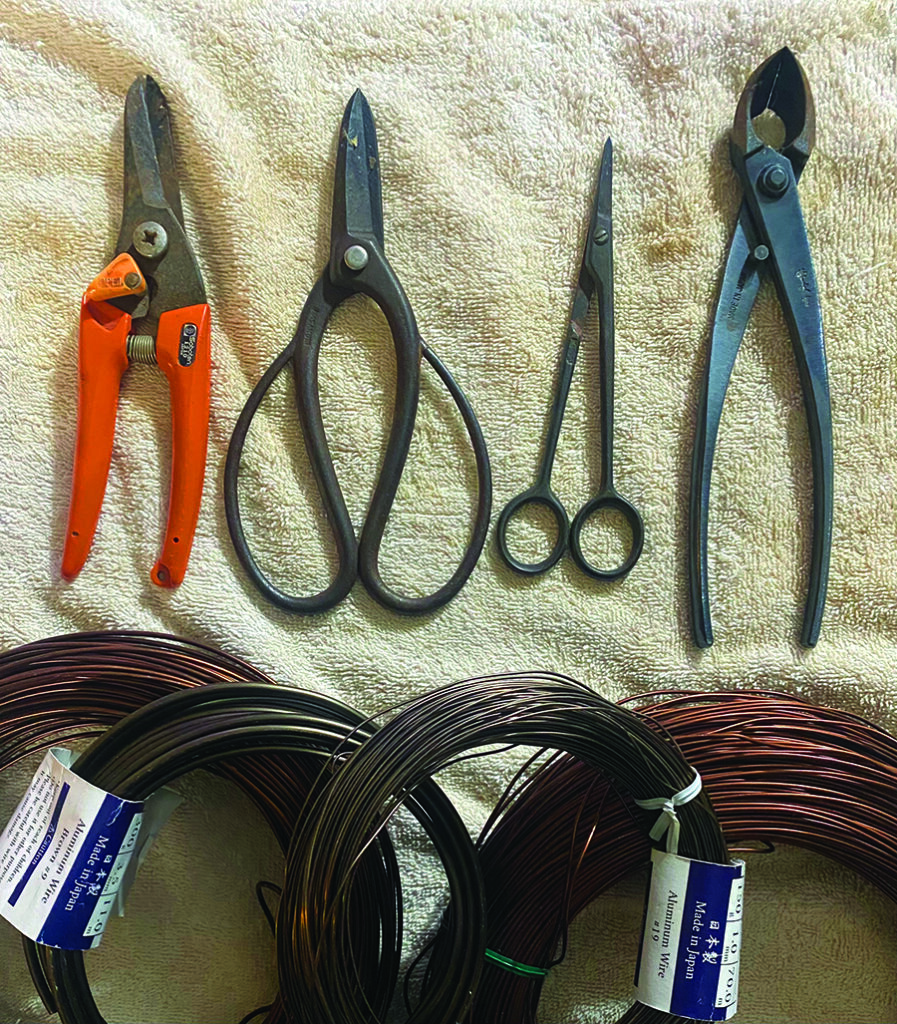
    The first things to consider as a beginner creating a bonsai are the basic tools: various types and sizes of shears and clippers for trimming, and an array of copper wire thicknesses.

    SELECTING A PLANT
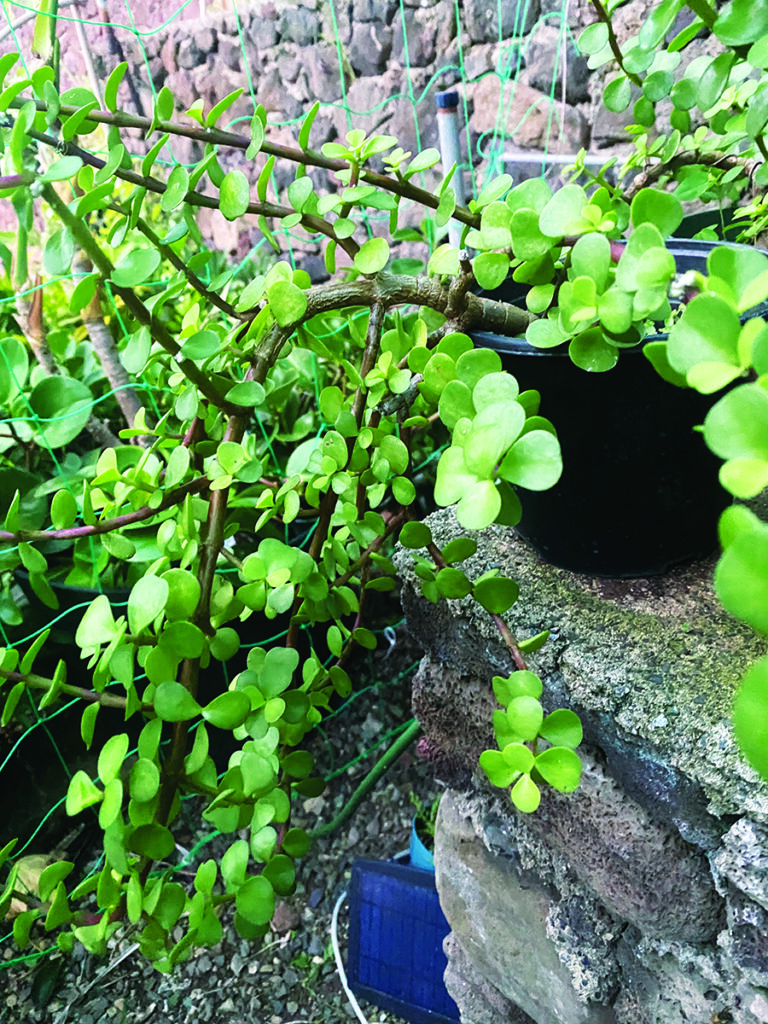
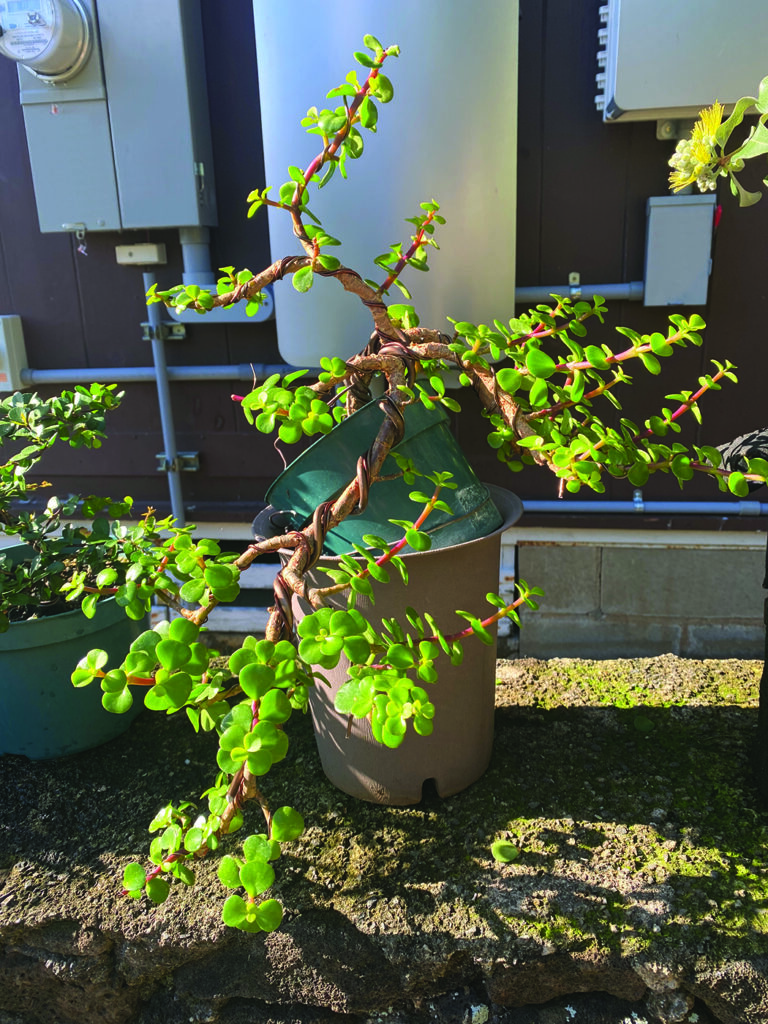
    Next is selecting a plant. For beginners, I suggest starting with a jade plant. They are durable and easy to work with. There are different types to choose from and they come in different forms. I usually let the plant dictate the style. Here, I found a plant that had potential because it overgrew its container. I saw how I could continue to direct that. So, I decided to create a cascade-style bonsai.

    SHAPING
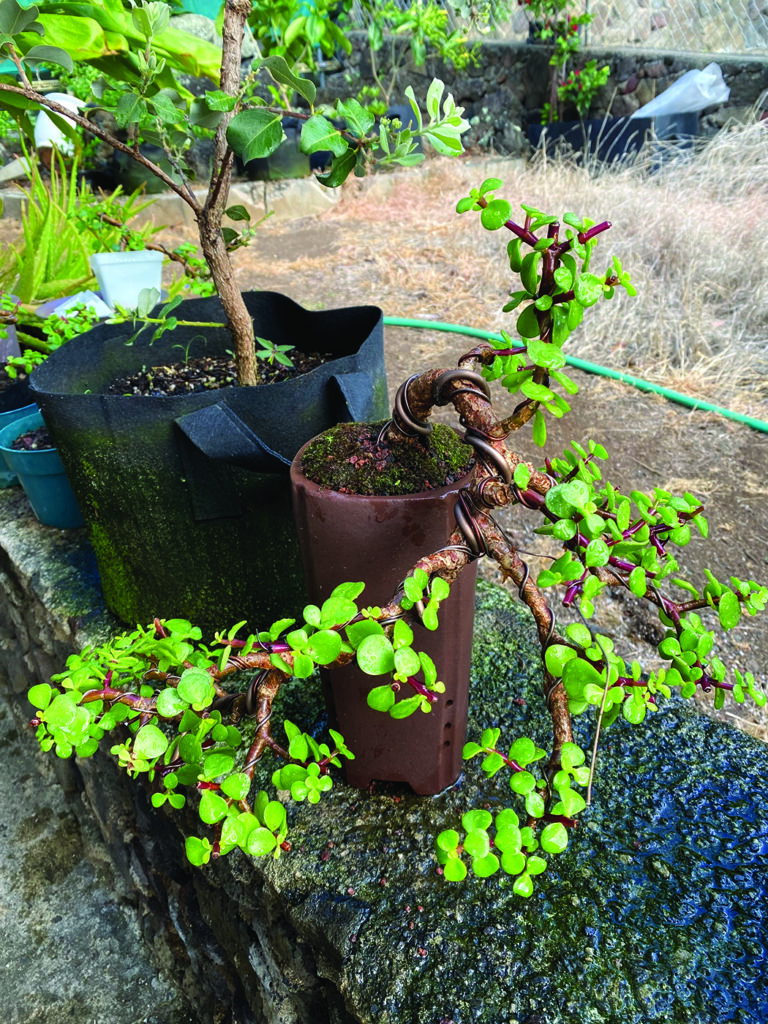
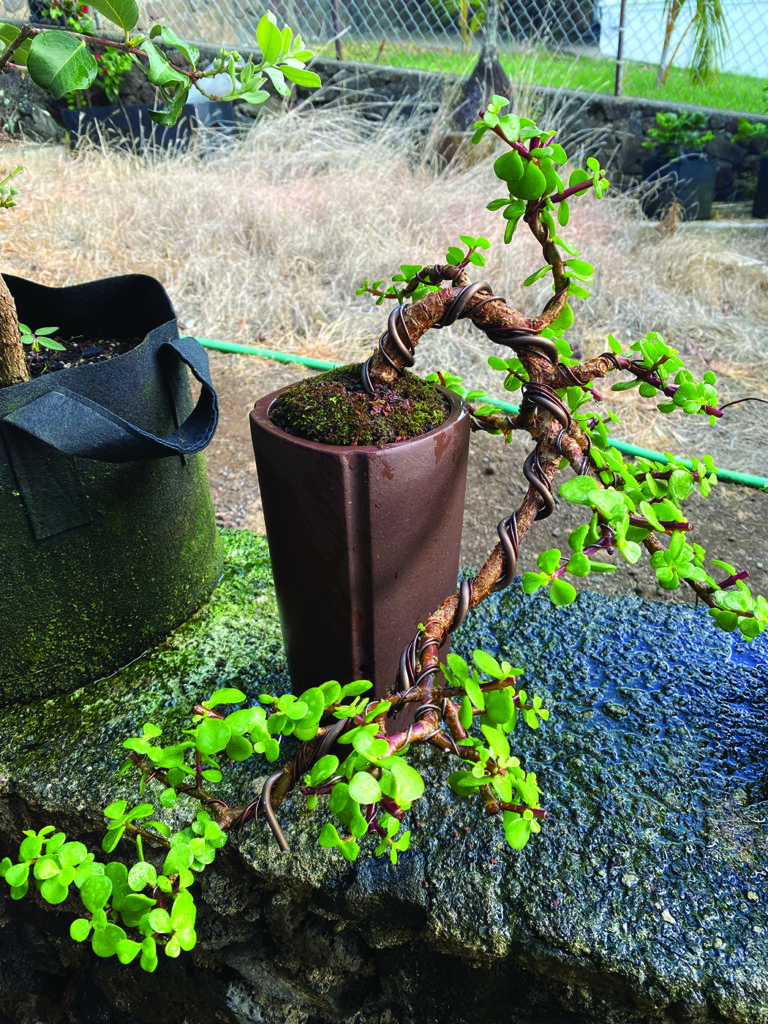
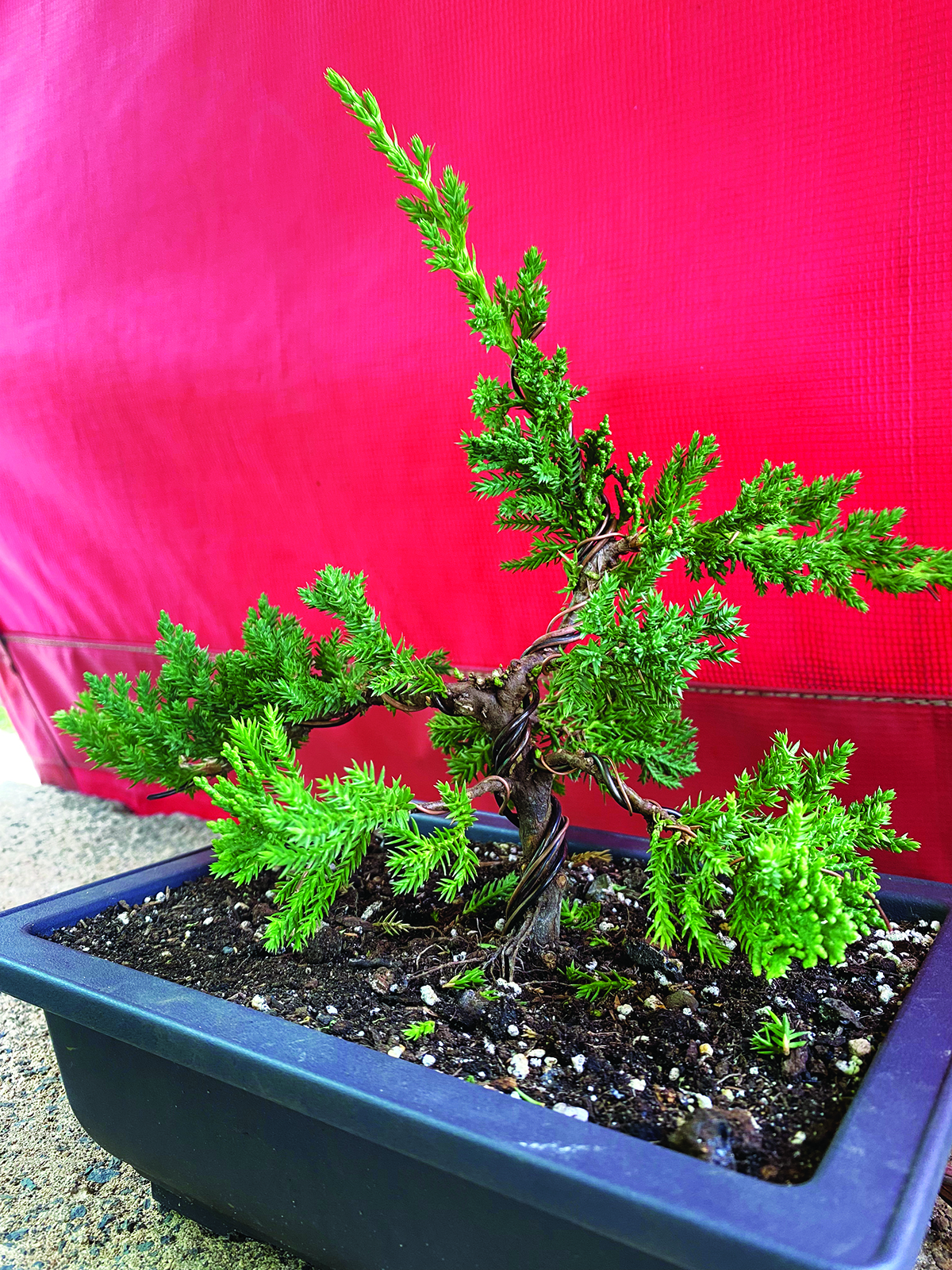
    Shaping the plant as envisioned, I use copper wires. Carefully curl them around its branches like a flexible cast to bend and hold them to the desired form. There
    are various thicknesses of wires depending on the thickness of each branch. During the next several months as the plant grows, methodically start pruning and shaping it, a little at a time, to the look you desire.

    POTTING
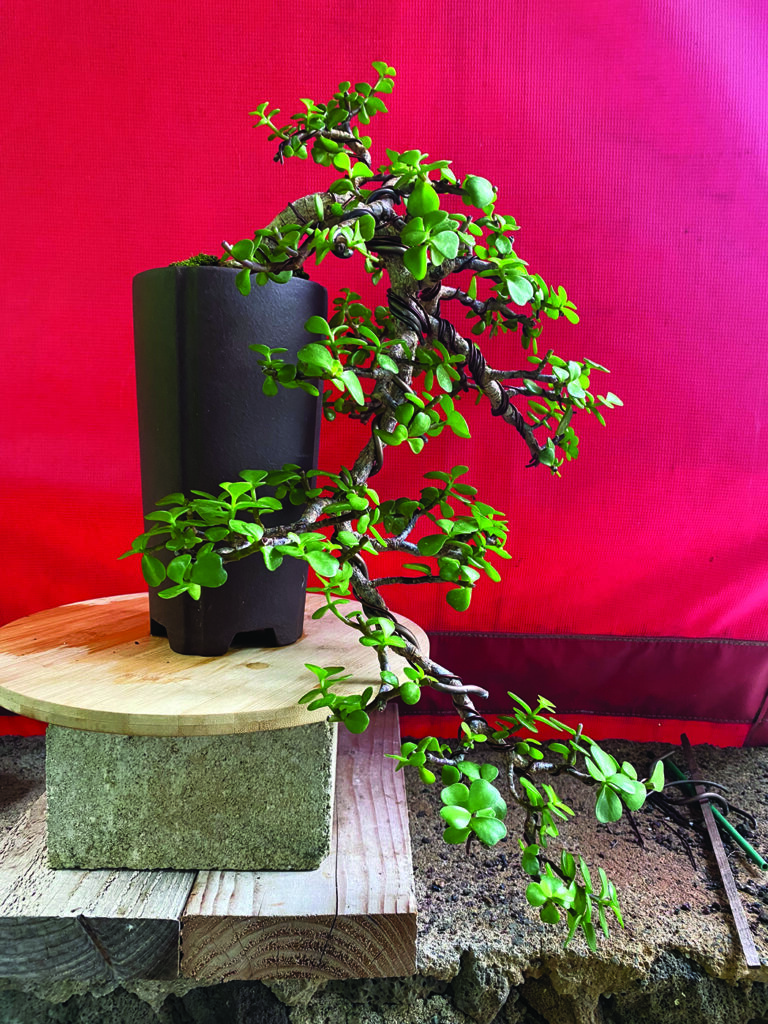
    When it’s beginning to take the shape of what you’ve envisioned, it’s time to select the pot that best enhances the style that you’ve chosen. Here, I chose a tall, narrow ceramic pot about 8 inches in height. I had to be sure it was tall enough for my cascading branches, and that it also complements the pot’s shape.

    TRIMMING
    Again, I am constantly reshaping the plant to blend with the pot. This is my jade plant after six months. As the plant continues to grow, you, too, must grow with it. Accept the natural changes the plant would offer. Sometimes a little bud might catch your attention and offers you another perspective. So trimming, shaping and maintaining the plant’s health is essential as it grows — as well as keeping an open mind.

    ENJOY
    Bonsai is an art form. It requires patience — after all, plants have their own natural time for growth — and vision, and heart. Creating a bonsai is a meditative
    process; a constant dance with nature. It really is not about control, rather, it’s about surrender. I find it relaxing and creative, producing these miniature forms. I hope you all find the same pleasure in bonsai as I do.

    Bonsai (tray planting) is a Japanese art form that originated from the Chinese practice of “penjing” from the 6th century. Eventually it was redeveloped under the Japanese Zen Buddhism representing peace, harmony and strength. TOOLSThe first things to consider as a beginner creating a bonsai are the basic tools: various types and sizes of shears…

  • Mom’s Chi Chi Dango

    Mochi was a rare treat when I was growing up, so I ate my fill of it at family gatherings on New Year’s Day: delicious homemade zenzai, nantu (Okinawan mochi), mochi filled with sweet bean paste and my favorite — soft, pillowy chi chi dango. This is my mother’s version.

    Ingredients

    16 oz. box of mochiko (sweet glutinous rice flour)
    2-2/3 cups water
    1/2 c evaporated milk
    1/2 c water
    2-1/2 cups sugar (or more) to taste
    kinako (roasted soybean flour) or potato starch
    for dusting

    Directions

    Combine mochiko and 2-2/3 cups water in a large bowl and steam 45 minutes to 1 hour until solid but still sticky.

    While the mochi is steaming, combine evaporated milk, 1/2 cup water and sugar in a small pot (add another 1/4 cup sugar if you like it sweeter). Bring to a boil. If you want colored mochi, stir in a few drops of food coloring.

    Add liquid gradually to bowl with steamed mochiko and stir.

    Butter a 9-by-13-inch glass pan and pour the mixture into it. Let it cool and set. Butter a plastic knife and cut the chi chi dango.

    Cut the 13-inch length of the pan in fourths and then cut rows approximately an inch wide. Dust pieces with kinako or potato starch; brush off excess.

    Prep time: about 1-1/2 hours

    Yield: 52 pieces, about 1-by-2-1/4 inches.

    Do you have a favorite recipe and story to share? For consideration in the next issue, include a photo and mail them to Generations Recipe, PO Box 4213, Honolulu, HI 96812, or email them to Cynthia@generations808.com.

    RECIPE NOTE: The Hawai‘i Book of Rice, Volume 2 by Cheryl Chee Tsutsumi features 101 rice recipes, including this one. The book is available for $22.95 at bookshawaii.net (free shipping on all Hawai‘i orders), Barnes & Noble, Walmart and other retail outlets statewide.

    Mochi was a rare treat when I was growing up, so I ate my fill of it at family gatherings on New Year’s Day: delicious homemade zenzai, nantu (Okinawan mochi), mochi filled with sweet bean paste and my favorite — soft, pillowy chi chi dango. This is my mother’s version. Ingredients 16 oz. box of…

  • Celebrating the Japanese Culture

    Since more than 1,500 years ago, Kānaka Maoli (Native Hawaiians) have welcomed immigrants from every corner of the globe, cultivating and perpetuating a tapestry of diverse cultures. In this third article in our series about the many cultures that comprise Hawai‘i, we will focus on the Japanese — how they arrived here, their culture and a few celebrated observances.

    Japanese Arrival in Hawai‘i

    PC: Mō‘ili‘ili Summer Festival Committee

    The earliest documented arrival of Japanese in Hawai‘i was in 1806, when survivors of a Japanese ship became stranded in the Pacific Ocean, then rescued by Capt. Cornelius Sole of an American ship. Upon docking in O‘ahu, the captain left the survivors in King Kamehameha I’s care. From 1869 to 1885, emigration from Japan was suspended. In 1881, King David Kalākaua visited and successfully strengthened relations between Hawai‘i and Japan, and emigration began again in 1885. Today, about 16% of Hawai‘i’s population is of Japanese ancestry.

    Culture and Tradition

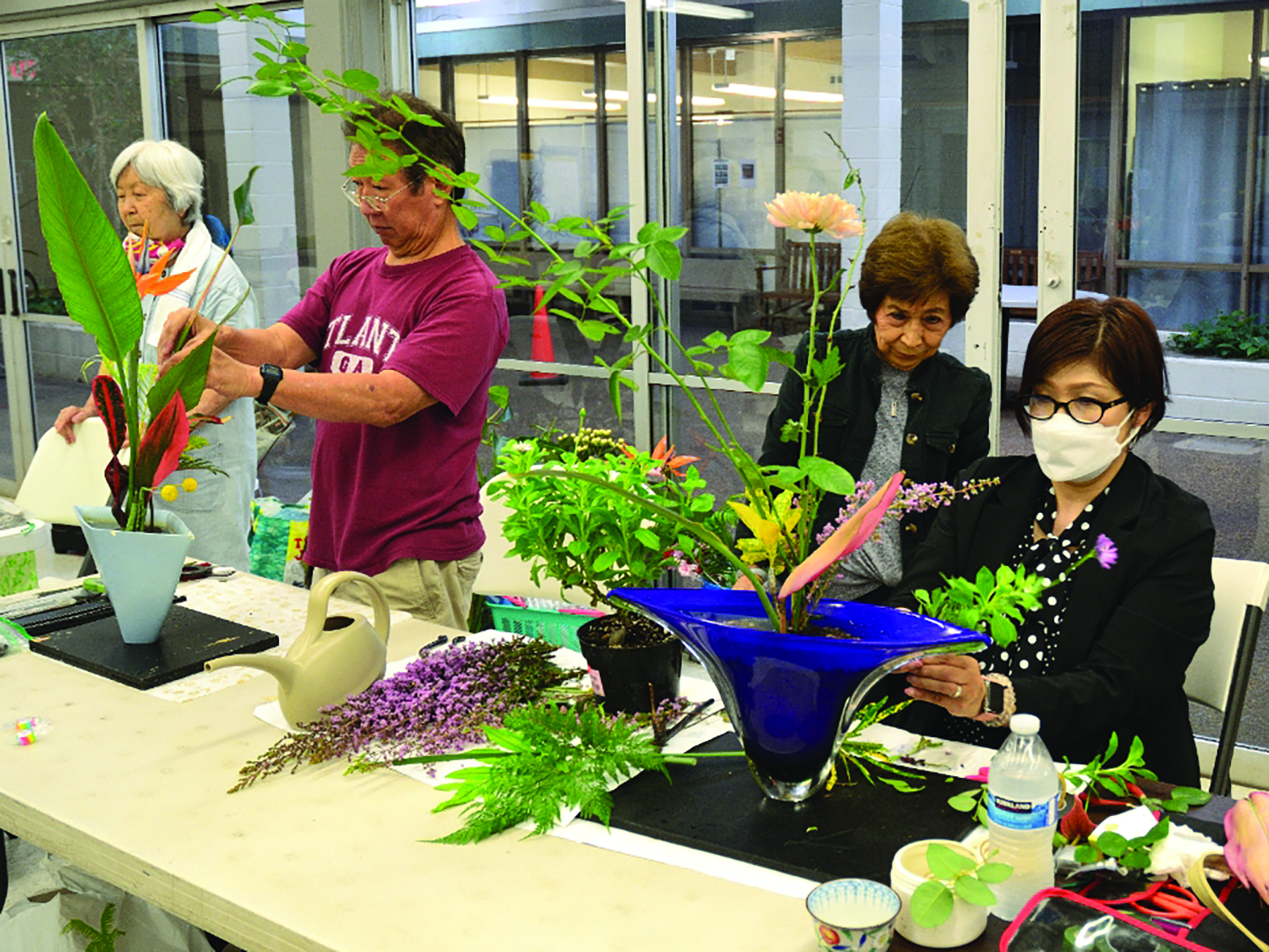
    Many aspects of Japanese culture are embedded in the local ways of life. For example, we played “jan-ken-pon” instead of “rock-paper-scissors” in our hanabata days. “Hanabata” (runny nose) is just one example of how Japanese words and phrases are infused in daily conversation. Japanese food — ramen, sashimi, bento, etc. — is also an integral part of local culture. Japanese art, such as ikebana (flower arranging) and gyotaku (fish printing) are popular in Hawai‘i. The Honolulu Museum of Art has over 10,000 Japanese ukiyo-e woodblock prints in its collection.

    Celebrations and Obon

    Many Japanese celebrations are enthusiastically honored each year in Hawai‘i. Families and friends get together for mochitsuki (mochi-pounding) during oshogatsu (Japanese New Year) and pound for peace, prosperity and good health. On Kodomo no Hi (Children’s Day) on May 5, families fly koinobori, carp-shaped windsocks. On Tanabata (Star Festival) on July 7, one writes a wish on tanzaku (colorful paper) and displays it.

    One of the most important events, the traditional, three-day Buddhist Obon festival, is celebrated each summer to honor ancestors. Obon was introduced to Hawai‘i in the late 1800s by Japanese plantation workers. On the first day, families clean ancestral graves, calling spirits home by hanging lanterns outside or lighting mukae-bi (welcoming fires). On the second day, bon odori (bon dance) is held. Unique to Hawai‘i is hatsubon — the first memorial service to honor those who passed since last Obon season. Finally, okuri-bon (to send off) is held on the third day, when families light toro nagashi (floating lanterns) to help guide ancestors back to their world. This year, Obon festivals will be held throughout the summer, from June to September.

    Visit the Japanese Cultural Center of Hawai‘i’s website (jcchawaii.org), and Generations Magazine’s Facebook page (facebook.com/genmag808) and calendar (generations808.com/calendar) for community events and opportunities.

    The next article in this series will feature the influences of Okinawan culture in Hawai‘i.

    Since more than 1,500 years ago, Kānaka Maoli (Native Hawaiians) have welcomed immigrants from every corner of the globe, cultivating and perpetuating a tapestry of diverse cultures. In this third article in our series about the many cultures that comprise Hawai‘i, we will focus on the Japanese — how they arrived here, their culture and…

  • Flying Solo

    You may now find yourself single or maybe you have been single for years. You’ve managed a home, raised children and worked 40-plus hours a week in a demanding, often stressful job.

    Leigh and Cathy at the
    2024 NYC PPA Tournament.

    I’ve been single for several years, so cooking for one and maintaining a home were things I had already conquered. Pat yourself on the back if you are single and have done this, as well!

    I looked forward to retirement and doing whatever I wanted. But I struggled to find something I enjoyed doing with my “extra” time. But then, I discovered pickleball and my days filled up quickly! I made many new friends and even won several medals in tournaments!

    I also started a card group. A friend goes on cruises with me. After downsizing and moving into my condo, a group of us started having happy hour on the beach, going to movies and attending theater performances. I have even served on my condo’s homeowners’ association board of directors.

    In 2023, I began working for Generations Magazine, helping my daughter-in-law, Cynthia Arnold. My “extra time” filled up quickly!

    So, find those fun activities — and more importantly, people you enjoy being with. Your life will be much more fulfilling doing things that bring you joy!

    You may now find yourself single or maybe you have been single for years. You’ve managed a home, raised children and worked 40-plus hours a week in a demanding, often stressful job. I’ve been single for several years, so cooking for one and maintaining a home were things I had already conquered. Pat yourself on…

  • Beware of Going-Out-of-Business Sales

    Seeing the big signs and online ads that say “Going Out of Business! Everything Must Go!” can be tempting, but these sales aren’t always what they seem.

    Fake “online sale” websites:

    Scammers create fake websites advertising clearance sales, pretending to be popular brands. You place an order, get a tracking number but nothing arrives. Others may send cheap knockoffs instead of advertised products.

    Misleading marketing:

    Not all these sales are scams, but even legitimate store closures don’t always offer the deals they promise. Many retailers hire third-party liquidators who mark up prices before discounting them or stretch out sales for months. Some businesses advertise closures indefinitely to pressure shoppers.

    Shop smart by looking up the business on BBB.org. Verify websites by checking URL spellings and look for “https://.” Use a credit card for fraud protection. Compare prices before buying to make sure the “deal” is real.

    These simple steps and Better Business Bureau insights can help you make better buying choices, keeping your money safe — even when the deal looks really good!

    BETTER BUSINESS BUREAU GREAT WEST + PACIFIC (nonprofit)
    800-460-0910 | info@thebbb.org | thebbb.org
    Ad or company clarification: bbb.org
    Report a scam: bbb.org/scamtracker
    File a complaint: bbb.org/file-a-complaint

    Seeing the big signs and online ads that say “Going Out of Business! Everything Must Go!” can be tempting, but these sales aren’t always what they seem. Fake “online sale” websites: Scammers create fake websites advertising clearance sales, pretending to be popular brands. You place an order, get a tracking number but nothing arrives. Others…