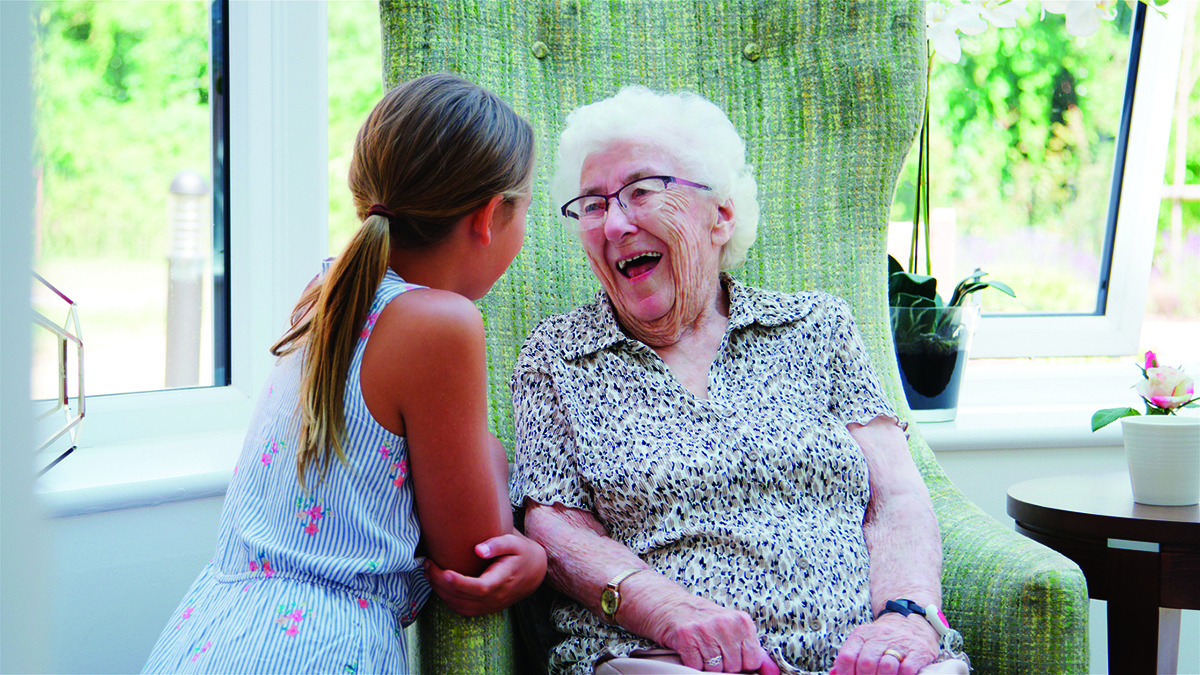
When we navigate grief or loss, we may find ourselves feeling guilty when we smile or have a good day. It’s common to get stuck in the darkness of this journey as you ride the waves of emotions and confusion that play out.
The purpose of humor in grief is not to diminish the seriousness of that loss, but rather, to allow us to experience a version of balance in grief as we feel sorrow and joy crashing together. Humor intersects with grief in a special way and can play an important role in healing.
When we laugh, smile or have positive thoughts, endorphins are released into our body that energize us and help us to feel good—even if for just a moment. These endorphins can help us navigate both the physical and the emotional elements of our grief.
When we share stories and memories with laughter and joy, we bring people together into more joyous shared spaces by reviving bits of a past that might be missed otherwise.
When humor enters grief in appropriate ways, it disrupts our darkness and helps us feel and see the whole spectrum. It allows pockets of light to peek through the dark clouds… and reminds us of love and hope, even in the storm.
When we navigate grief or loss, we may find ourselves feeling guilty when we smile or have a good day. It’s common to get stuck in the darkness of this journey as you ride the waves of emotions and confusion that play out. The purpose of humor in grief is not to diminish the seriousness…
Pickleball is not only a great game for seniors, but for all ages. For example, my daughter, Lexie, who is 13, and her partner, Chacha, have had a lot of fun playing in King Intermediate School tournaments.
My sister, Cat, who is 34, plays in the 5.0 division for both women’s and mixed doubles. She’s won many tournaments in Hawai‘i and on the mainland with a variety of partners. Most recently, Cat and her partner won pro-level bronze at Hawaii Pacific Health ESPN Honolulu Open at the Hawai‘i Convention Center. Her son, Tanner, 4, enjoys watching his mom and chasing balls!
Congratulations to my daughter and sister, and everyone who plays and enjoys this amazing sport, including some of our GM staff members!
GM senior editor Debra Lordan (73) brought home the gold in women’s 3.0 doubles at the Maui Pukaball Tournament in Lahaina with her partner, Nanna Brown (39). Debra and David Kamalani, 76, won silver in the 3.0, 70-plus division.
Battling rain delays and 30-degree temperatures, Leigh Dicks, 69, GM’s content coordinator, won the bronze medal in the women’s 3.5 doubles in the Pickleboo Halloween Tournament in Henrico, Va., with her partner, Cathy Broussard, 68.
Well, I don’t really want to toot my own horn but—my partner, Tia Fulks, and I won silver in the 2nd Annual Charity Walk Pickleball Tournament on Kaua‘i in the Women’s 3.5 division, ages 8 to 49. I didn’t expect a medal, but it was sweet when we got one! Give pickleball a try! So fun!
Pickleball is not only a great game for seniors, but for all ages. For example, my daughter, Lexie, who is 13, and her partner, Chacha, have had a lot of fun playing in King Intermediate School tournaments. My sister, Cat, who is 34, plays in the 5.0 division for both women’s and mixed doubles. She’s…
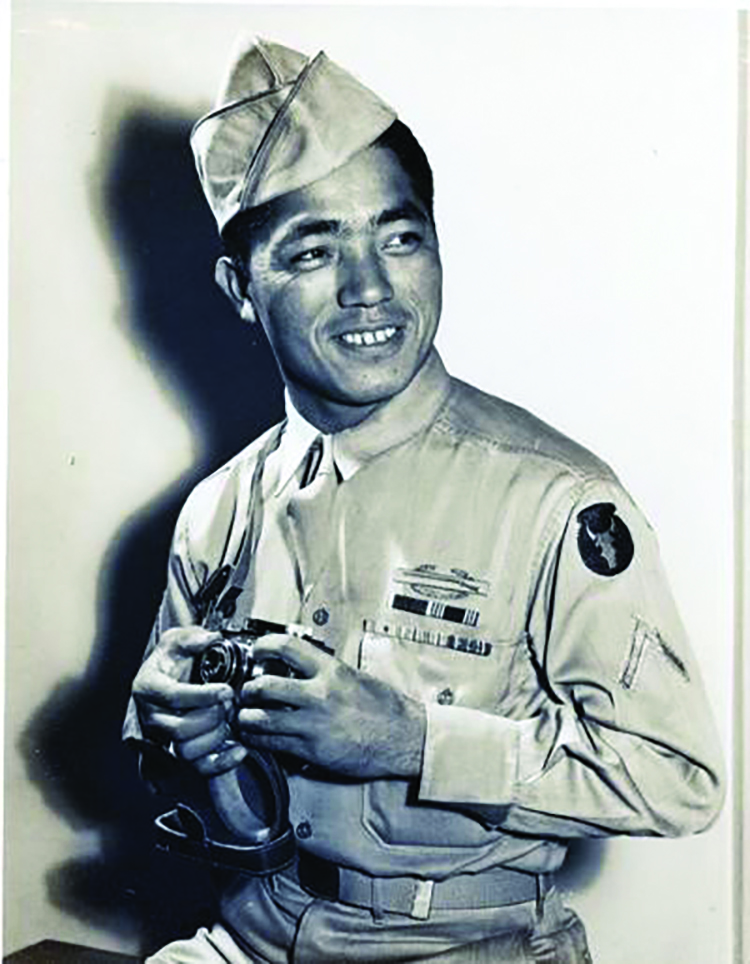
It is an honor to celebrate the 125th anniversary of Okinawan immigration to Hawai‘i with the inspiring story of Thomas Taro Higa, a 100th Infantry Battalion WWII Veteran of Okinawan descent (generations808.com/125th-anniversary-of-okinawans-in-hawaii).
Thomas was born in 1916 in Kahalu‘u, Hawai‘i, but was sent to Okinawa as a young child, where he gained a strong command of the Uchinaguchi, Japanese and English languages. While in Okinawa, his teacher inspired him to approach life like the gajumaru tree (Okinawa’s banyan tree) that endured the hardships of punishing typhoons and droughts, yet continued to grow bigger and stronger every year, happily giving shade and protection to the people.
Thomas returned to Hawai‘i in his teens and was drafted into the US Army to protect shorelines from enemy invasion while in his mid-20s. About six months after the Japanese attacked Pearl Harbor on Dec. 7, 1941, due to the hysteria of “looking like” the enemy, the Americans of Japanese ancestry (AJA) were segregated into a new unit called the 100th Infantry Battalion. They trained and fought hard to fight tyranny and prove their loyalty to America. In Italy and France, their combat performance and achievement changed America’s opinion and war correspondents started calling them the “Purple Heart Battalion.”
Thomas was wounded twice early in the battles in Italy. He returned to the US, where he used his language skills to share news from the European warfront with soldiers’ parents living in incarceration camps. Later, he saved countless lives by convincing Okinawans that Americans would treat them fairly so they felt it was safe to come out of the caves to surrender.
Like the gajumaru tree, Thomas and the AJA men of the 100th endured discrimination and suffered physically and mentally, yet became stronger. The 100th with the 442nd Regimental Combat Team would become the most decorated in US military history for size and length of service. Upon returning to Hawai‘i, Thomas became a leader in the post-war relief efforts to send food, clothing and breeding pigs to rebuild Okinawa.
Thank you, Thomas Taro Higa, a Hawai‘i-born veteran, who helped liberate Europe while spreading the seeds of aloha.
It is an honor to celebrate the 125th anniversary of Okinawan immigration to Hawai‘i with the inspiring story of Thomas Taro Higa, a 100th Infantry Battalion WWII Veteran of Okinawan descent (generations808.com/125th-anniversary-of-okinawans-in-hawaii). Thomas was born in 1916 in Kahalu‘u, Hawai‘i, but was sent to Okinawa as a young child, where he gained a strong command…
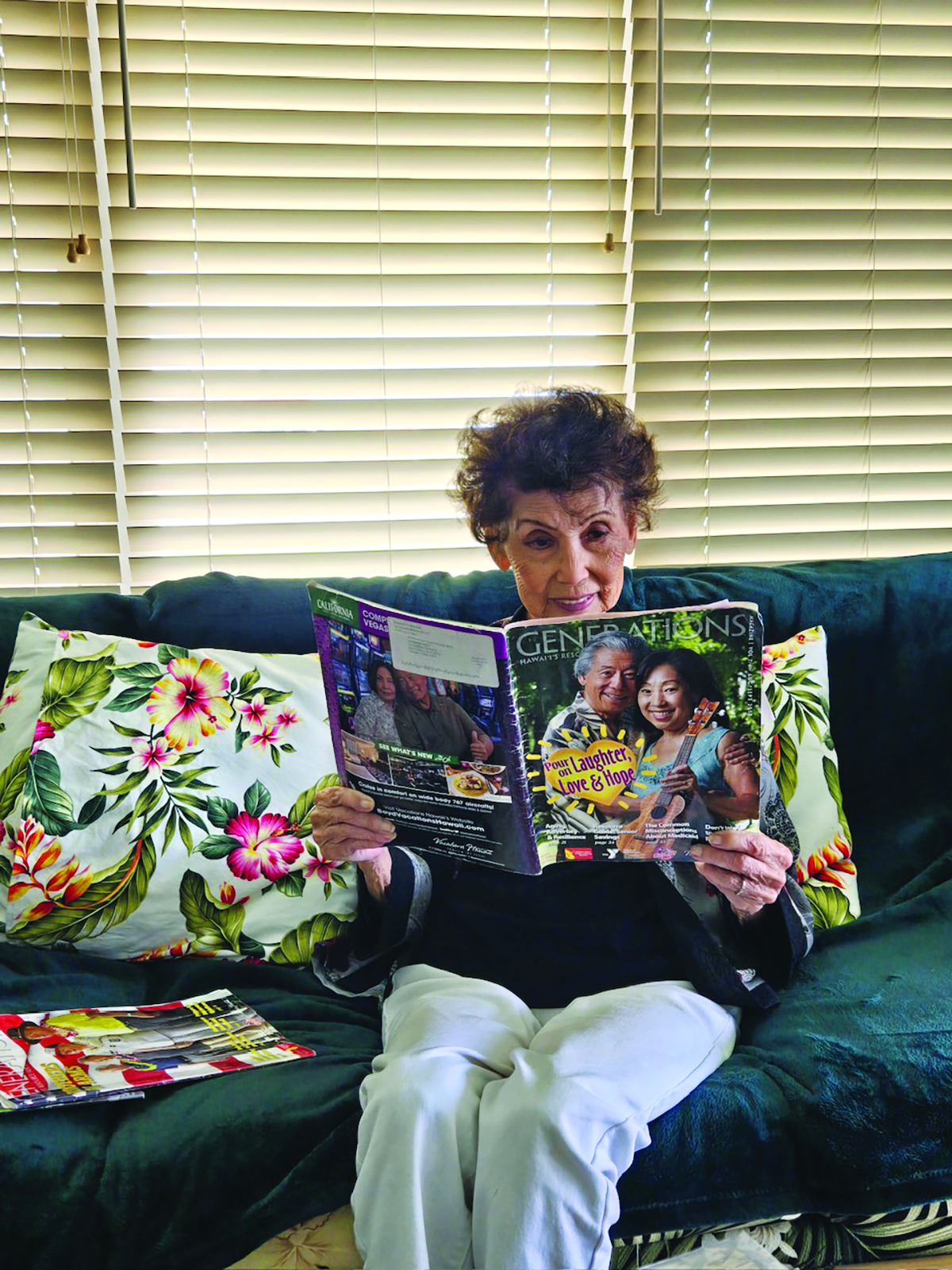
Setsuko “Bess” Matsuoka, age 92, has been a devoted Generations Magazine (GM) reader since the beginning. We at Generations have come to know her well from the many calls she’s made to us, and through her article and recipe submissions. She calls us with holiday greetings and never misses the opportunity to show her appreciation of each and every issue.
“I am very much a fan of Generations,” she told me over the phone. “I love everything about it. I think it is the perfect, perfect magazine. Every one is informative. I look forward to each issue!”
Bess lives independently in a townhouse in Wailuku, Maui. She was born on March 3, 1933, 3-3-33. Her affinity for numerology and appreciation of kismet are in complete harmony with her faith in God and His divine plan. Her spiritual side has always been very strong, she says.
“Everybody I have met, especially those connected with Generations, was orchestrated by divine power,” she says. “There are no coincidences; no accidents,” she says. “Everything happens for a reason.” That includes meeting former GM Editor Katherine Smith. “I was fortunate to become friends with her. Before she left Hawai‘i, she gave me her collection of Generations Magazines. “And I have the very first issue,” she said in a way that convinced me it was very dear to her. “I have read every article in every magazine and every one is precious, so I share them with others, so they can be blessed by reading them, too.”
The issue that really inspired her was “Brothers in Arms” written by Katherine. She said she had the good fortune to get to know Bo Mahoe, one of the subjects of the story. “I also became friends with Sherry Goya, the publisher’s mother. Even though I no longer have a subscription, Sherry sends me complimentary copies. I am thrilled to see them in my mailbox!”
She said she speaks often to GM Art Director Wilson Angel, who she just calls “Angel.” “She has positive comments about each issue,” he says.
Bess retired from the State of Hawai‘i Department of Social Services and now spends her time writing uplifting stories for seniors that capture the wisdom and humor of the old days.
Bess attended the Methodist church for 30 years. But recently, she felt compelled to “go out there with people.” So she began attending Maui Intersection Church, where she helps the unsheltered population by sharing her testimonies, saying “whatever the Lord puts in her heart.”
With appreciation and love, Bess continued to talk about her late husband, her family, and others, including the Generations staff. “The Generations staff puts us, the readers, at the top!”
“No wonder the staff talks about you all the time!” I tell her. “You are so kind!” Bess replies, “What you see in me is actually what is in your heart — like a mirror. I feel blessed to have the Generations staff in my journey through life.”
Setsuko “Bess” Matsuoka, GM’s No. 1 fan, is not just like family—she is family.
We, too, are blessed.
Setsuko “Bess” Matsuoka, age 92, has been a devoted Generations Magazine (GM) reader since the beginning. We at Generations have come to know her well from the many calls she’s made to us, and through her article and recipe submissions. She calls us with holiday greetings and never misses the opportunity to show her appreciation…
Every year, thousands of Hawai‘i residents come together to honor loved ones, caregivers and others who are impacted by Alzheimer’s disease or another form of dementia. The Walk to End Alzheimer’s is more than an event. It is a movement. And here in Hawai‘i, it is a reflection and reminder of who we are, a community that shows up!
In 2025, we invite you to join us on Kaua‘i, O‘ahu, Maui and Hawai‘i Island. Whether you are walking for a parent, grandparent, sibling, spouse, neighbor, friend or yourself, your participation matters, because behind every colorful flower in our Promise Garden is a story and behind every step is hope.
New treatments for Alzheimer’s are now available and offer hope for those in the early stages of the disease. That’s why early detection is critical. We have made progress and will continue to work hard to make it a statewide priority, so individuals can be screened, diagnosed early and given access to these promising treatments.
Across Hawai‘i, caregivers are also finding strength through support groups, education and connection with others. But there is still more to be done.
My grandfather lives with Alzheimer’s. As someone whose family has been touched by this disease, I know the burden, the fear and the deep desire to make a difference. The walk gives us that chance. It brings us together to fund the exciting science happening across the field, sustain and expand programs and remind those impacted that they are not alone.
So lace up, show up and walk with us until we can call our walk “the Walk That Ended Alzheimer’s!”
Every year, thousands of Hawai‘i residents come together to honor loved ones, caregivers and others who are impacted by Alzheimer’s disease or another form of dementia. The Walk to End Alzheimer’s is more than an event. It is a movement. And here in Hawai‘i, it is a reflection and reminder of who we are, a…
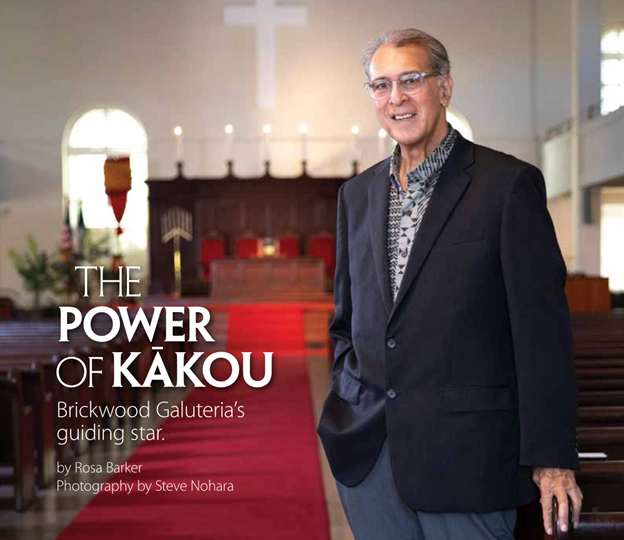
Grounded by what he learned in his neighborhood church, Brickwood Galuteria embodies a life of public service dedicated to nurturing the well-being of Kānaka Maoli (Native Hawaiians), kūpuna and those with special needs. When “Kūpuna Power”—his TV program created to educate and empower Hawai‘i’s elderly—was relaunched in 2020, Brickwood said in a Ka Wai Ola interview that “It’s a kākou thing.” “Kākou” is an all-inclusive pronoun, equivalent to the English we.” But it’s also all-inclusive in another sense: We’re all in this together and we need to be connected to our community, working together to make the world a better place in which we all can thrive. It is the guiding principle of his heart and life’s work.
At ease interacting with people of all ages from all backgrounds, Brickwood’s “kākou thing” includes serving the public as a senator and in his current role as an Office of Hawaiian Affairs (OHA) trustee. The skills he learned as a tour guide, musician, and radio and TV host underpin his roles as a kūpuna advocate and his success promoting mail-in voting for the Office of Elections. You may remember him as an entertainer, but he is much, much more than that.
A ‘mixed plate’ heritage
Brickwood was born and raised in the Kaka‘ako district of Honolulu. The family home was where Kaka‘ako Gateway Park is now, but back in the 1950s, it was an industrial area with housing behind it. Because of the plantation workers who had moved there in search of better jobs and housing, Kaka‘ako was comprised of various “camps.” The area where the Galuterias lived was known as Japanese Camp. Despite the name, it was a “mixed plate” kind of place where people from many different cultural backgrounds raised their families.
Brickwood’s father, Arnold Galuteria, was one of nine children born to Pedro Galuteria from the Philippines and Rose Galuteria Rodrigues—of Portuguese descent—from Maui.
Arnold married Juliette Kauhi from Kapahulu in back of Waikīkī Beach. Her parents, Joseph and Susie Nani Kauhi (nee Hussey), were from Hawai‘i Island. Their only other child—Brickwood’s uncle—was renowned musician Richard Kauhi, who introduced four-part harmony and jazz piano into Hawaiian music. Brickwood’s paternal grandma, Rose, raised him while his father worked at United Airlines and his mother worked for the City and County of Honolulu.
There’s an interesting story behind Brickwood’s unusual first name. His father served in the Army and was best buddies with fellow soldier Brickwood Cummins. They made a pact to name their first-born sons after each other. Even more interesting is the story behind Brickwood’s middle name. “On my birth certificate is Maikaaloa, but my mom or grandmother purposefully changed it to Malihinimaika‘āina‘e. ‘Malihini’ means ‘visitor or stranger;’ ‘mai ka ‘āina a’e’ means ‘from afar.’ You combine all the different nationalities—Hawaiian, Filipino, Portuguese, English—and it’s like ‘stranger from afar.’”
Church & school
As a child, Brickwood spent a lot of time at Kawaiaha‘o Church, which is right across from Honolulu City Hall. Established under Kuhina Nui (Queen-Regent) Ka‘ahumanu I in 1820, it is affectionately known as “the Mother Church” of Hawai‘i. “That church is basically where we grew up and hung out. My love of performing music came from there. Mom was in the church choir. My two grandpas were deacons at the church. I spent a lot of time there!”
Brickwood also appreciates what the church gave him culturally. “It kind of grounded my concept of kānaka. Even the political perspective— I learned so much on how to approach my politics through church politics. It got me ready, in a sense, for my service. There are different ways to serve. Ultimately, I was able to become a public servant and impact quality of life stuff by shaping policy when I was in the Senate.”
He attended Kamehameha School from kindergarten through high school, graduating in 1973. In an interview for a “Keep It Aloha” podcast in 2024, Brickwood says that “Kamehameha embedded in me the Native Hawaiian ethos, if you will, and informed my decision-making—and it still does.” His time there also led directly into his career as a musician. In high school, he was part of the Concert Glee Club and during his senior year they were recruited by Kalani Cockett, who worked for the O‘ahu Visitors Bureau producing shows promoting Hawai‘i.
Cockett organized the club’s tour of Canada and the continental United States, which gave Brickwood “a taste for the business of show.” When they returned, he and classmates Ken Makuakane, Chris Keliiaa, Miles Kahaloa and Wes Kitaoka formed a musical group called “Na Leo o Kamehameha.” It was during this time that he connected with Marlene Sai—the Grand Dame of Hawaiian music—who worked in administration at Kamehameha and was featured during the tour along with other wahine stars back in the day—Nina Keali‘iwahamana, Emma Veary, Penny Wells and others.
That led to his later becoming part of the orchestra for Marlene Sai’s show at the Monarch Room at the Royal Hawaiian Hotel. This set the “stage” for a musical career.
Radio & the evolution of Hawaiian music
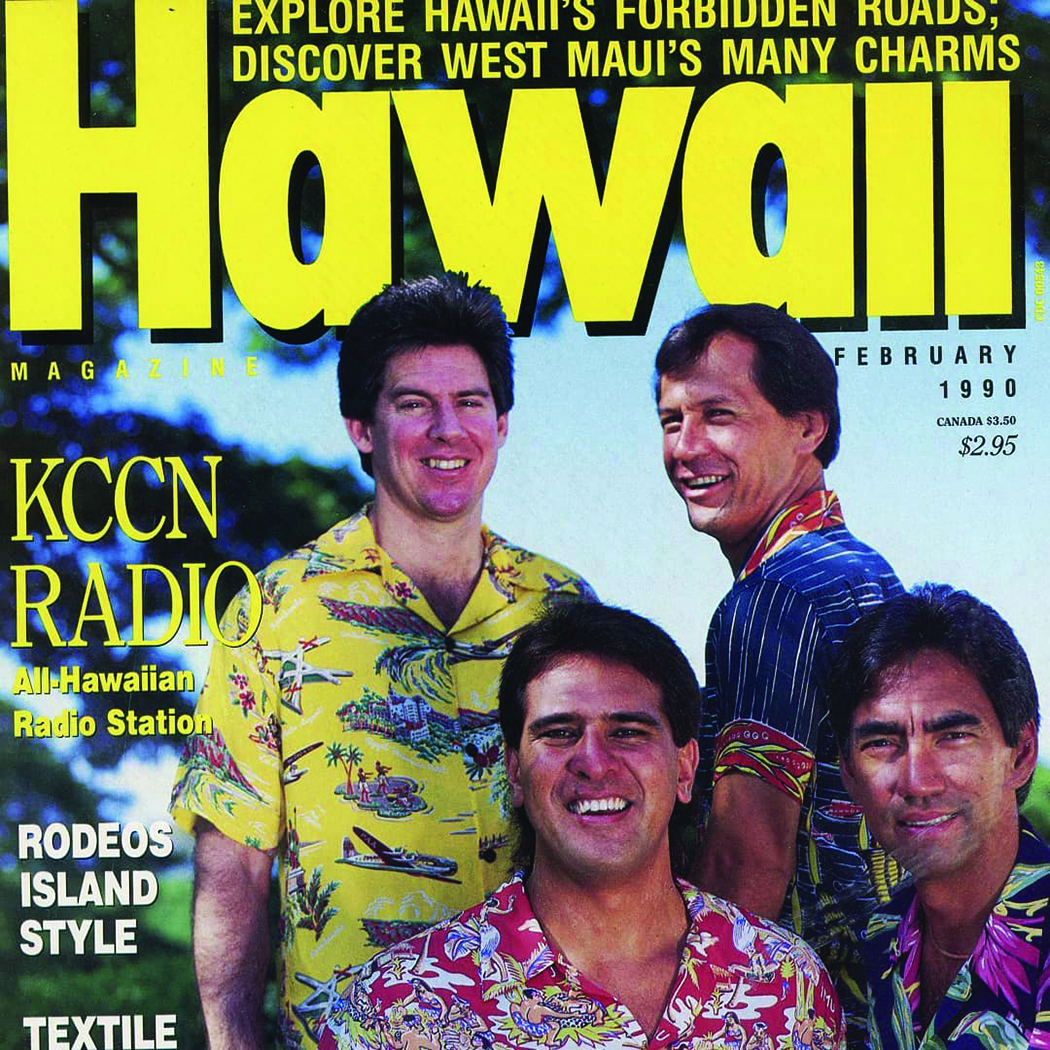
The Four Horsemen of Station ALOHA, 1420 AM KCCN: (clockwise) Harry B. Soria Jr., Kimo Kaho‘āno, Keaumiki Akui and Brickwood Galuteria. Kimo and Brickwood were the “Aloha Morning Show Boys,” while Harry and Keaumiki were known as the “Territorial Boys.”
After graduating from high school, Brickwood briefly attended Pacific University in Oregon but returned home and started a family. To support them, he worked as a tour director and played guitar in show bands. Brickwood met his wife, Lehua, when she was a hula dancer and he was playing in the band they performed with. “She knocked over my music stand during the performance—and that was the end of that! This was when Waikīkī was just really cooking! Don Ho, Danny Kaleikini, Al Harrington, Dick Jensen, Jimmy Borges and others we emulated all had showrooms. Tavana was at the Moana Hotel. Tihati’s Polynesian Revue was at the Beachcomber. Our aim as tour directors was to provide a memorable visitor experience and to just have some fun. That was the important thing.”
Brickwood’s transition into his career as a radio host stems from a specific moment in 1979. His band played on the top floor of the Oceania Floating Restaurant and Don Ho’s original backing band, The Aliis, played the showroom on the second floor. “I went down to listen to The Aliis and Sam Kapu, who worked with Don Ho and also had a show on-air, asked if I’d be interested in doing radio. I said, ‘I have no compelling need to be behind a microphone on radio, but yeah, sure.’”
The program director at KCCN1420AM was one of Brickwood’s schoolmates, Jackie Rossetti, the Honolulu Skylark. The station’s handle was “The Hawaiian Music Station” because it fore fronted local bands. He was given the traditional time slot for newbie DJs—10pm to 2am. He created a theater of the mind called “The Biggest Little Nightclub in Town.” “We had canned applause and I served as host: ‘Ladies and gentlemen, let’s go back to the stage with more music…’
“We were there when the music was really evolving into different spaces in the post-Don Ho era. As an example, you had The Sunday Manoa—Peter Moon and Robert and Roland Cazimero. They added really cool for-the-young-people kind of instrumental work and their appeal to the younger crowd stuck. There were more different forms evolving. Hawaiian music was really on the cutting edge with all these hybrid genres.”
One of those hybrid genres was a Hawaiian-style reggae that went on to have its own category in the Nā Hōkū Hanohano music awards: Jawaiian. “I was on the table the day that word was coined,” Brickwood says. “That just stuck with us and we took it to the maximum effect.”
It was during his 1980–90 stint as a KCCN radio host that Brickwood himself won two Nā Hōkū awards: Male Vocalist of the Year and Most Promising Artist in 1985. As part of his life of service, in 1990, Brickwood became a board member of the Hawaiian Academy of Recording Artists, which produces the Nā Hōkū awards. He served as its president from 1992 to 1995 and returned as a board member in 2022.
Connecting keiki & heritage
In May 1990, KCCN General Manager Michael Kelly launched a sister Hawaiian music station: KCCN-FM100. Brickwood co-hosted the “Aloha Morning Show” with Kimo Kaho‘āno on that channel and then on Hawaiian KINE-FM105. In 1992, this resourceful duo became part of the Pacific Voyaging Society’s (PVS) “Voyage for Education: No Nā Mamo, For the Children.”
As the PVS web page explains, the navigators and crew members “reached out to thousands of school children in Hawai‘i through a long-distance education program. During the voyage, students tracked the canoe on nautical charts, learned about their Pacific world and used the canoe and its limited supply of food, water and space to explore issues of survival, sustainability and teamwork” (archive.hokulea.com/holokai/1992/no_na_mamo.html).
The “Aloha Morning Show” was part of that effort, with live hook-ups between the studio and the Hōkūle‘a voyaging canoe to receive daily reports of weather conditions, coordinates, etc. Brickwood shared that “Prior to the sail, PVS secured a GPS system under the hull of the wa‘a, communicating its location directly to Hawai‘i, with no communication given to the members on deck above so as not to compromise the wayfinding. After the first leg from Hawai‘i to Tahiti was completed, I joined the crew in Tautira for the next leg to Rarotonga and resumed the daily radio reports with Kimo here at home.”
That leg of the journey lasted from Sept. 1 to Oct. 25. Three days later, in a TV studio at the University of Hawai‘i (UH) at Mānoa and using the UH Peace Satellite, Brickwood and teacher Patty Miller co-hosted a three-way conversation between the studio, the Hōkūle‘a and the space shuttle Columbia as it passed over the Hawaiian Islands. One of the shuttle astronauts, Charles Lacy Veach, was from Hawai‘i. The link-up was broadcast as a Department of Education Distance Learning Technology TV Special (link at the end of article). This was no mean technical feat and the video shows how adept Brickwood was at navigating the technical difficulties inherent in satellite communications.
It also demonstrates his ability to step back and allow others to hold the floor. As well as the co-hosts, in the studio were four school students, plus there were two open phone lines so that students could call in their questions from their schools on O‘ahu and neighbor islands. Brickwood acted as a facilitator of the dialogues between all the different participants, creating a bridge between land, sea and sky. This opportunity to enhance the cultural understanding of the upcoming generation resonated deeply with his commitment to Kānaka Maoli values.
Empowering through policy
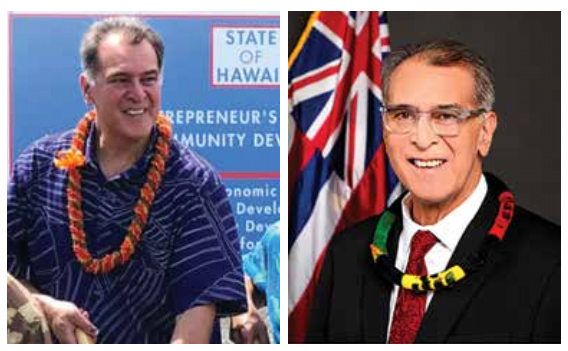
L: Sen. Galuteria at the groundbreaking for the Hawai‘i Techno- logy Development Corporation’s Entrepreneurs’ Sandbox in Kaka‘ako in 2018. R: As an OHA Trustee in 2025, Brickwood is chair of the Beneficiary Advocacy & Empowerment Committee.
Building upon his childhood introduction to politics in his church, Brickwood turned his attention to the political arena. He served as the state chairman of the Democratic Party of Hawai‘i from 2004 to 2006 and as the state senator for District 12 from 2008 to 2018, at one point serving as Senate majority leader. Brickwood’s ability as a bridge-builder was particularly useful when it came to his relationship with the Senate Minority Leader Sam Slom, aka “The Lone Ranger” because of his firm convictions, which didn’t necessarily jibe even with his own party members. Slom was the only Republican in the Senate in 2018.
The Office of Hawaiian Affairs
After leaving the Senate in 2018, Brickwood continued his service to the Native Hawaiian community as a member of the O‘ahu Island Burial Council. Then in 2022, he became an at-large trustee of the Office of Hawaiian Affairs, where he is currently chair of the Committee on Beneficiary Advocacy and Empowerment. it “focuses on OHA’s legislative and advocacy efforts, as well as programs that address issues relating to health, human services, economic stability, education, native rights, housing, land use, environment and natural resources.”
In April 2025, he wrote “Sustainability Through a Native Hawaiian Lens” for OHA’s newspaper, Ka Wai Ola: “Historically, Hawaiians exemplified sustainable living through the ahupua‘a system, a land division model extending from mountains to sea. This system ensured long-term abundance through collective responsibility.
Today, these principles remain relevant as Hawaiians navigate political, economic, social and environmental challenges.”
Voting by mail campaign
In 2020, he had received a call from the Hawai‘i State Office of Elections asking him to help “ensure a sense of confidence with kūpuna, who were more comfortable with going down to the ballot box in person. He created a network of partners by contacting all of the leaders of nonprofits and other entities that already had strong connections with that demographic. The turnout for the 2020 primary election was 51.2% of registered voters, 98% of the votes being cast by mail. In the General Election it was 69.6%, with 95% of those votes being cast by mail. Furthermore, 60% of those who voted were over the age of 50, including 32% aged 65-plus.
‘Kūpuna Power’ returns!
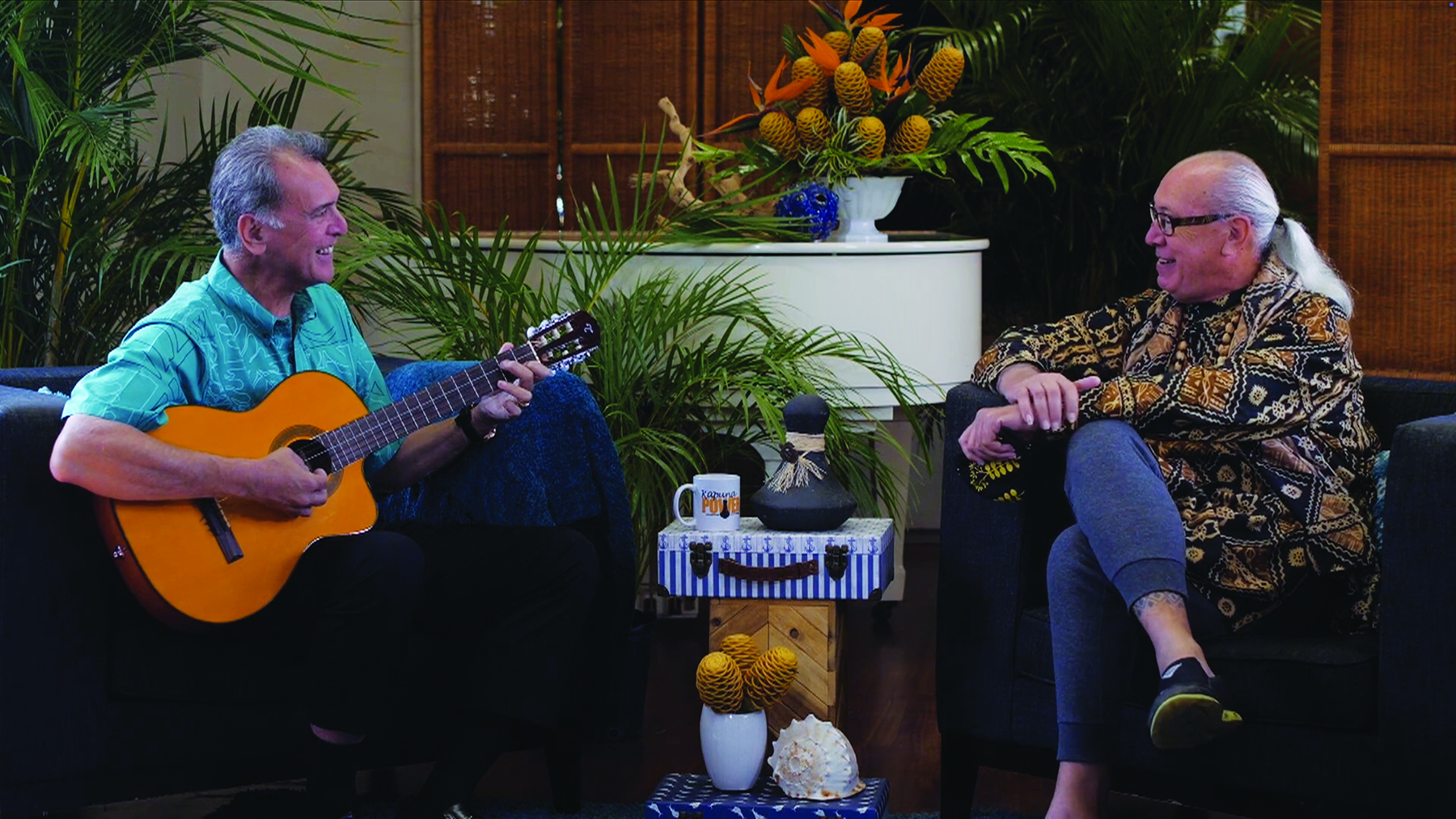
“Kūpuna Power” guest Kumu and Kahuna Kawaikapuokalani Frank Loea Lehua Hewett joins host Brickwood Galuteria in 2020, sharing stories of growing up and learning from his own kūpuna.
The principle of “collective responsibility” includes everyone who lives in Hawai‘i, not just Native Hawaiians. It also involves collective action in the form of advocating for change.
While serving in the Senate, Brickwood’s mom asked him to check on her best friend, one of his church aunties. He discovered that fraudsters accompanied her to the bank and drained her account. The immediate concern was that Aunty’s electricity had been cut off and she was using candles, which could have accidentally started a fire.
In his “Keep it Aloha” podcast interview, Brickwood explains how he went back to his office and said to his staff, “Let’s start something called ‘Kūpuna Power!’ What is kūpuna power? It’s a lively, meaningful way that celebrates Hawai‘i’s kūpuna. Kūpuna power is about empowerment and knowing the resources that help us make responsible decisions and become self-advocates. We started by doing a resource fair at the state capitol in April each year.” Each April, the conference committee of each legislative house considers the bills generated in the other house and decides if they progress to being enacted before the legislative session ends in May. Besides connecting kūpuna to resources and organizations that could help them with their needs at the fair, Brickwood and his staff would encourage them to go to their representative’s office to speak with them directly.
He also took the idea to ‘Ōlelo TV, a nonprofit community Public, Education and Government access provider created in 1989 “to empower the voice of the community.” Brickwood had previously been a moderator on ‘‘Ōlelo’s “In-Touch” show in the 1990s, and had also hosted or co-hosted shows on ESPN and KHON TV. From 2011 to 2014, Brickwood was the producer and host for “Kūpuna Power TV” on ‘Ōlelo. In 2020, following his exit from the Senate, he relaunched “Kūpuna Power” as a half-hour show on KGMB/KHNL/K5, but stopped when he was elected to OHA, unsure of what time commitment would be required.
“After about a year at OHA, I decided I couldn’t also produce a half-hour show once a week. It was too labor-intensive.” Instead, he, Mike Kelly (from his KCCN radio days) and some friends “went to bat” for a short-form version of “Kūpuna Power,” a five-minute segment in KITV’s “Island Life Live” show. It airs once a week on Thursdays at 4:30pm. Since early May of this year, KITV has also been airing “The Best of Kūpuna Power,” reruns of many of the earlier half-hour shows.
In addition, there will be some new one-off shows on specific topics like digital literacy and fall prevention and he plans to use footage he and Kimo have from the 1992 Hōkūle‘a voyage as “Kūpuna Power Remembers No Nā Mamo.” He’ll also revive the tradition of the Christmas special “Kūpuna Kalikimaka.” “The Best of Kūpuna Power” airs each Tuesday on KITV at 12:30pm with an encore each Wednesday at 12:30pm on KIKU, ”Hawaii’s Multi-Cultural TV Station.”
Brickwood and Kimo are also reigniting their co-hosting mojo with a weekly 35- to 45-minute video/radio podcast called “Hawaii Recalls.” “Podcasts are the new radio shows,” he says.
A family man at heart
The Galuteria family at Shawn’s 50th birthday celebration: (L–R, back row) Bric (son), Rebecca and husband Mana (son), Kawehi (daughter), Sommer (daughter),(front) Brickwood, Lehua (wife) and Shawn (son).
Brickwood’s time as a young person was lived largely in the public spotlight, as a musician, radio DJ and television personality. But he was also a family man. He and Lehua have five children and 10 grandchildren. “And for us, the diaspora is real, because three of our five children live on the continent. Five of our 10 grandchildren live on the continent, too. We can’t argue with them for wanting a better quality of life for their families, but we’d love to find a pathway back for them.”
One of their sons lives with them, or as Brickwood says, “We like to say we live with him. Shawn is our gift from God. He has Down syndrome. When he was born, we were told that kids like him had a length of life only into their 20s, especially as they have a propensity for heart conditions. He had to have major surgery for a hole in his heart at the age of three. We had a big celebration for him recently when he turned 50! He brings a centering to our lives that is just unconditional.”
Having Shawn in the family contributed to Brickwood’s decision to add the special needs community into his life of service as a board member for Hawai‘i Special Olympics and the Hawai‘i Association of Retarded Citizens, which is nowadays known simply as ARC. Although it is common to use the term “disability” and “special needs” when speaking of people like Shawn, Brickwood expresses the belief that he has “different abilities” and that we all have special needs. Those terms should not be used to exclude this community of people from the activities we all enjoy as part of our daily lives.
Grounded by what he learned in his neighborhood church, Brickwood Galuteria embodies a life of public service dedicated to nurturing the well-being of Kānaka Maoli (Native Hawaiians), kūpuna and those with special needs. When “Kūpuna Power”—his TV program created to educate and empower Hawai‘i’s elderly—was relaunched in 2020, Brickwood said in a Ka Wai Ola…
Social Security (SS) will celebrate its 90th anniversary this summer.
On Aug. 14, 1935, President Franklin D. Roosevelt signed it into law, and over the years it has arguably become the most successful and popular government program in history.
As we mark the anniversary of Social Security, we note that the program is experiencing problems with customer service and that Congress has still not addressed the looming deadline in 2035—when Social Security turns 100—the year when payments will be reduced by about 20% because the SS surplus runs out of money.
Let’s be clear that Social Security will continue past 2035 as long as working Americans pay into the system. But the surplus funds that Baby Boomers and others paid will run out as more Baby Boomers and Gen Xers retire and start collecting unless Congress acts and approves changes to increase revenues and/or change benefits.
AARP is urging Congress to act sooner rather than wait until the deadline so there are more options for solutions. We also want Congress to be transparent about the changes they are considering so the public can have input.
More immediately, Congress needs to provide oversight to the Social Security Administration (SSA) to prioritize improving customer service. In the last year, AARP has received thousands of calls and messages from ku¯ puna concerned about their Social Security, including complaints about website crashes and outages, and long waits at overwhelmed field offices.
The good news is that people are passionate about SS. A proposal to end phone service for benefit applications generated more than two million messages to Congress. The SSA listened and allowed phone service to continue. We paid into Social Security during our working lives. It’s our money and we must be able to access it in a timely manner without having to wait on hold, without having to make multiple calls, and without websites crashing and inconsistent service at field offices.
AARP Hawai‘i will give an update on Social Security at the Generations Magazine Aging in Place conference at the Ala Moana hotel on Aug. 2.
AARP Hawai‘i is also holding Social Security events across the state. You can also go online to learn more about what’s happening to Social Security and add your voice to the millions calling for improved customer service at aarp.org/socialsecurity.
One last note of caution—the confusion and changes at Social Security may lead to government imposter scams—callers who pretend to be from Social Security and prey on fear. They’ll try to get bank and other personal information. Don’t fall for it. The Social Security Administration will never call you first. They will never threaten you or pressure you. If action is needed on your account, you’ll receive an official letter in the mail from the Social Security Administration.
Social Security (SS) will celebrate its 90th anniversary this summer. On Aug. 14, 1935, President Franklin D. Roosevelt signed it into law, and over the years it has arguably become the most successful and popular government program in history. As we mark the anniversary of Social Security, we note that the program is experiencing problems…
Part 2 of this two-part series continues navigation of the challenges that can be found in the complex world of condominium law and how to pave the way for reform.
Governance Gone Wrong
Several recent incidents illustrate the challenges facing Hawai‘i’s community associations. On Hawai‘i Island, a condominium board began repairing common area la¯nai structures but later reclassified them as limited common elements, shifting the financial burden onto individual owners. This unexpected decision left residents scrambling to cover significant costs they had not anticipated. An arbitrator later determined the board was wrong, which cost the association a significant amount of attorneys fees.
In another case, a board amended rules to benefit a favored owner, leveraging access to voting data while excluding opposing voices. These actions created significant mistrust among residents and highlighted the potential for abuse of power within these associations.
Unauthorized contracts are another recurring issue. For example, a board president signed a multimillion-dollar construction contract without consulting other board members, just before being removed from office. This unilateral decision resulted in financial and legal complications for the entire community.
Additionally, critics of boards often face intimidation tactics, such as threats of legal fees, which discourage dissent and oversight. And unfortunately, many condominium attorneys who ought to know better than to engage in these bullying tactics nevertheless do so that they can remain as attorneys for the board.
These practices highlight urgent need for reform to ensure accountability and transparency.
Building a Better Future
Addressing these governance issues requires a multifaceted approach. Transparency should be a top priority. Clear guidelines for executive sessions and stricter rules for voting processes can prevent abuse and restore trust. Boards should be required to disclose meeting minutes and document and justify decisions made in private sessions. Ensuring that votes are conducted fairly and without undue influence is equally important to maintain the integrity of governance.
Financial responsibility must also be enforced more rigorously. Penalties for noncompliance with reserve fund requirements should be increased to deter negligence and protect owners from surprise assessments. Associations should be required to conduct regular, independent audits of their financial practices to ensure accountability and prevent mismanagement.
Equity and inclusion are equally important. Gender disparities must be addressed through education and advocacy, fostering an environment where all residents feel respected and empowered to participate in governance. Initiatives such as leadership training programs for all board members, especially underrepresented groups, can help diversify boards and promote more equitable decision-making processes.
By implementing these changes, Hawai‘i can establish a more efficient, equitable, and transparent system for managing its condominiums and community associations. These reforms will benefit residents and contribute to the long-term sustainability of these communities. In a state where shared housing plays such a vital role, creating fair and functional governance structures is essential for maintaining harmony and trust.
Proactive measures will ensure that these communities thrive, not just as living spaces, but as integral parts of the Aloha State’s social and economic fabric.
Part 2 of this two-part series continues navigation of the challenges that can be found in the complex world of condominium law and how to pave the way for reform. Governance Gone Wrong Several recent incidents illustrate the challenges facing Hawai‘i’s community associations. On Hawai‘i Island, a condominium board began repairing common area la¯nai structures…
Bringing a baby into this world is one of life’s greatest joys. Along with this joy comes responsibility and concern for the raising of this child. The preparation for having a child and raising a child is vast — finding a child seat for the car, diapers, interviewing pediatricians, childcare, safe-proofing the home and schooling, etc. And then late at night, the anxiety-inducing question comes up: “What if I’m not here for my child?”
Guardianship: Should you pass when your child is a minor, the person who will take over raising your child is called the guardian. A guardian can be appointed in your last will and testament. This person serves as guardian until your child reaches the age of majority, which is 18 in Hawai‘i. The guardian would not be in direct control over money and assets; rather, the guardian’s main purpose is to assume the role of parent to raise the child.
When choosing a guardian, you want to consider the following: Do you trust this person? Is this person available and able? Is this person willing? And is this person related to or married to someone who can negatively impact this person’s ability to raise your child?
Bringing a baby into this world is one of life’s greatest joys. Along with this joy comes responsibility and concern for the raising of this child. The preparation for having a child and raising a child is vast — finding a child seat for the car, diapers, interviewing pediatricians, childcare, safe-proofing the home and schooling,…
Should a married couple create one trust or two? To some extent, it comes down to a matter of preference. Some couples see their stuff as belonging to both of them, while others differentiate between one spouse’s stuff and the other’s. Differentiation might be important if one spouse has children from a prior marriage, and the preference is to have the stuff that one spouse brought into the marriage going to that spouse’s descendants. Another practical reason for using separate trusts is that the trust of the first spouse to die can be designed to provide heightened creditor protection for the surviving spouse.
If both spouses want the survivor spouse to have unlimited control over their combined assets after one of them dies, one trust will work. However, unlimited control means that the survivor can leave their combined assets to his or her next spouse, or the next spouse’s children (to the exclusion of the original couple’s children). This is not rare. But special rules can be built into their rule books to make sure that their stuff can be used for the two of them for as long as both live, and then for the survivor for his or her lifetime, and then each spouse’s stuff goes where he or she wants, irrespective of the wishes of the survivor.
Your trusted advisors can help you choose what will work best for you and your ‘ohana.
Should a married couple create one trust or two? To some extent, it comes down to a matter of preference. Some couples see their stuff as belonging to both of them, while others differentiate between one spouse’s stuff and the other’s. Differentiation might be important if one spouse has children from a prior marriage, and…
Two emotions are common for those who are nearing retirement — excitement and fear. Leaving the working world behind can feel empowering; however, apprehension about entering a new life stage may also creep in. If you’re nearing retirement, you’ve likely taken steps to prepare financially for the future. But there’s one important thing you might not have considered adding to your pre-retirement checklist — a practice run. Test driving aspects of your plan before you’re actually in retirement can help provide a sense of security.
What does your ideal retirement look like? Deciding how to spend your time (and your money) in retirement is not always an easy. As we age, our interests, hobbies and relationships change. What you may consider your “ideal” retirement when you’re 55 may not be the same as when you’re 65, which can make it hard to plan accurately for retirement. Consider sitting down with your spouse or family members to explore how aging and future milestones may alter your retirement. Your financial advisor can help you make a plan that aligns your ideal retirement with your financial situation.
Test drive your retirement lifestyle. Many people pledge a significant amount of savings towards a particular lifestyle in retirement — a home in another part of the country or an annual trip abroad. Problems can arise if you have made a financial commitment to a certain lifestyle but change your mind later. It’s better to understand the potential implications of altering your plan before you actually retire. For example, if your retirement plan includes a big move to a new location, you may benefit from a practice run before making the relocation permanent. Be prudent and build some flexibility into your plan to avoid unintended consequences.
Simulate your retirement expenses. The idea that your cash flow no longer comes from a reliable paycheck can come as a shock — even to those who are well prepared for this change.
One idea to accomplish a sense of financial security is to run two accounts for a certain period of time. Through one account, manage all of your household and lifestyle expenses that you expect during retirement — food, clothing, shelter, utilities, taxes and insurance — as well as “nice-to-have” items like dining out and traveling, etc. You may have to estimate or inflate your lifestyle expenses for retirement as they could rise when you have more free time.
Through the second account, manage all of your expenses that are expected to end in retirement — principal and interest on a mortgage payment (if your home will be paid off), car payments, college costs for your kids and contributions to retirement plans.
The best way to get a handle on these expenses is to experience them while you’re still working. Take that trip to Europe before retirement. If the cost is different than expected, make adjustments to your financial projections to reflect reality.
Perfecting life in retirement. A little practice can help ease emotional and financial concerns when making the jump into retirement. Consider working with a financial advisor who can help you determine a budget and a retirement income plan that fits your needs and desires.
Two emotions are common for those who are nearing retirement — excitement and fear. Leaving the working world behind can feel empowering; however, apprehension about entering a new life stage may also creep in. If you’re nearing retirement, you’ve likely taken steps to prepare financially for the future. But there’s one important thing you might…
Managing rental agreements can be challenging, especially when tenants face financial difficulties. When rent isn’t paid and communication breaks down, eviction often becomes the next step. However, there’s a way to address these issues before they escalate into legal proceedings. The Early Eviction Mediation (EEM) program is a neutral, solution-based approach whereby tenants and landlords can come together with the help of an impartial mediator to find mutually agreeable solutions that allow tenants to remain in their homes while enabling landlords to receive payment — without needing to go to court.
What to Expect from EEM
Mediation is straightforward and accessible. Sessions are conducted through Zoom. For those with no internet, The Mediation Center of the Pacific (MCP) provides in-person access at its office.
Both parties are required to sign a confidentiality agreement to protect the privacy of the discussions. The mediation session typically lasts about 1.5 hours, during which the mediator helps facilitate communication. Participants can also meet with the mediator separately.
In addition to the mediator’s guidance, participants can involve case managers, social workers or US Veterans Affairs Department case managers to ensure they have support and resources.
Mediations are scheduled quickly, typically within 48 hours, and can be resolved in three to five business days, depending on the availability of the parties involved. This quick turnaround time is especially important for senior tenants facing eviction and senior landlords who rely on rental income for their livelihood.
Benefits of EEM
The mediation program boasts an impressive93% agreement rate. Agreements can include payment plans, giving tenants a chance to catch up on overdue rent, or mutually agreed-upon move-out dates that allow sufficient time for tenants to secure new housing. Such solutions help foster greater housing stability, allowing tenants to stay housed longer and landlords to avoid costly, uncertain legal proceedings.
Mediation is cost-effective and efficient. It helps prevent the emotional and financial toll of eviction, improves communication, and strengthens trust between tenants and landlords. By addressing these issues early, both parties are empowered to find solutions that keep the housing market stable and reduce the risk of future disputes. Contact us for more information.
Managing rental agreements can be challenging, especially when tenants face financial difficulties. When rent isn’t paid and communication breaks down, eviction often becomes the next step. However, there’s a way to address these issues before they escalate into legal proceedings. The Early Eviction Mediation (EEM) program is a neutral, solution-based approach whereby tenants and landlords…