Category: Date

  • Grief & Bereavement — Part IV

    Portrait of depressed senior man crying during therapy session with female psychiatrist trying to console himAll grief starts as anticipatory grief. Dr. Daniel Miller defines the term “anticipatory grief” as the “process of grieving that starts prior to a loved one passing away.”

    Certainly, acute anticipatory grief comes into one’s consciousness upon the diagnosis of a terminal illness of oneself or of a loved one. A more chronic and less intense grief starts much earlier in life, when we realize at a young age that we and our loved ones will eventually die. This realization leads to a flood of  overwhelming emotions that leave us breathless for a moment — anticipatory grief. But this anticipatory grief allows the family to prepare for the inevitable loss of a loved one.

    Grief starts much earlier than a diagnosis of a terminal illness and inches, sometimes barely noticeably, throughout each person’s lifetime. And, of course, each person experiences grief differently.

    Our understanding and skill in the estate planning process intersects with the client’s fear of death and anticipatory grief. In no other area of the law is it more essential that estate planning attorneys understand their role as counselors. In order to assist the client in making meaningful and well thought-out decisions with respect to their estate plan, attorneys must continually refine their counseling skills.


    STEPHEN B. YIM, ATTORNEY AT LAW
    2054 S. Beretania St., Honolulu, HI 96826
    808-524-0251 | www.stephenyimestateplanning.com

    All grief starts as anticipatory grief. Dr. Daniel Miller defines the term “anticipatory grief” as the “process of grieving that starts prior to a loved one passing away.”

  • Beware of Romance Scams

    Data from the Federal Trade Commission show that more consumers than ever report falling prey to romance scamming, also called “catphishing.” The total reported lost over the past five years has now reached $1.3 billion.

    How Do They Do It?

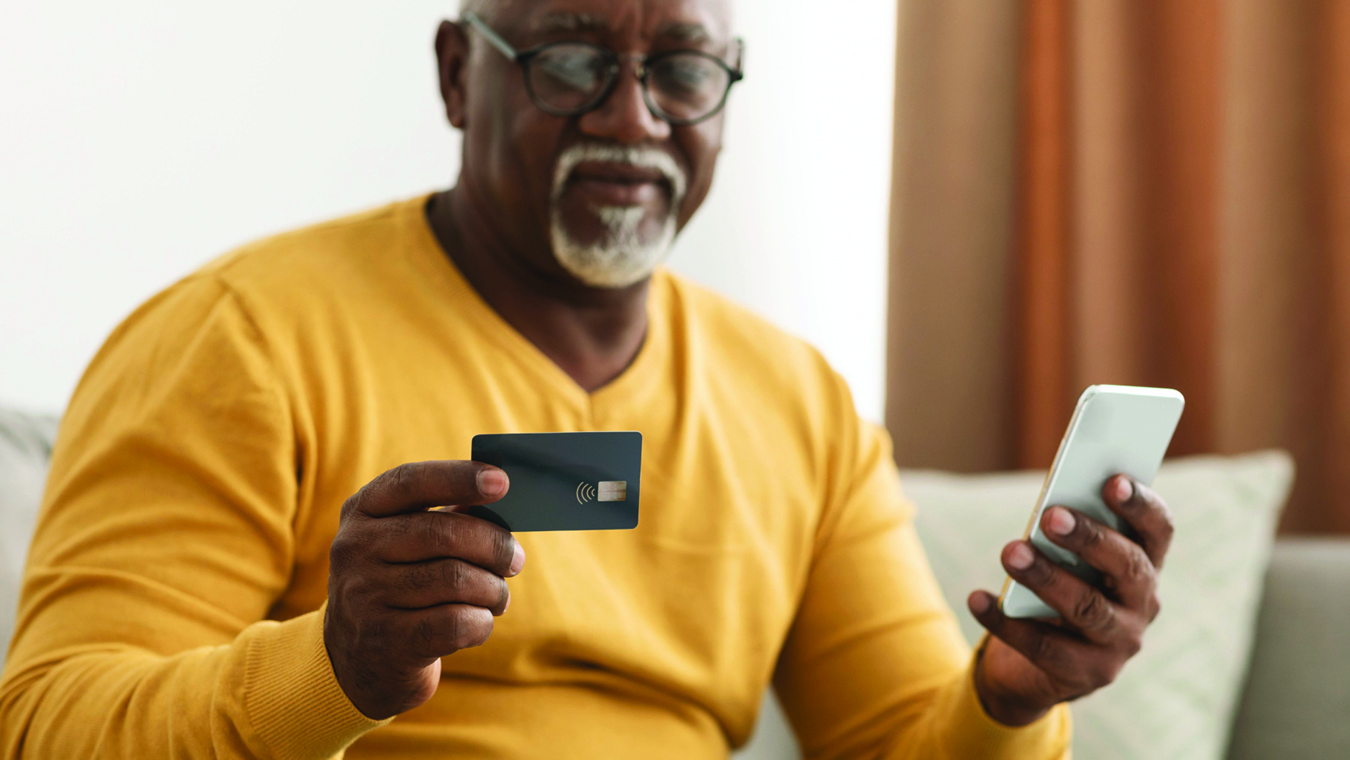
    Scammers create fake profiles on dating sites, apps and social media platforms in order to offer relationships and companionship to unsuspecting seniors. They may mention a common friend and/or the same interests or hobbies as you. They say they are lonely and seek companionship. Conversations will be brief and frequent.

    Once they feel they have good rapport with you, they will mention financial hardships or they will say they want to travel from afar to meet you, but don’t have the means to do so. They may even say they had been recently scammed online. They will not ask for assistance directly, but will wait for you to offer it.

    They will be reluctant at first, but will finally accept your assistance. They will instruct their target to wire money to a bank account, or via Western Union or an online payment service like PayPal. They may also ask for a cashier’s check. One very big red flag is if they ask for gift cards or prepaid credit cards.

    The amount they ask for is usually small at first, but soon they will make up some excuse for needing more funds. They will resist meeting in person or even video chatting. They may agree to a phone call, but it will be very brief and rare.

    They will continue their scam until the money runs out or until their mark says they are going to inform a family member or friend about the relationship. But by then it may be too late.

    Red Flags

    • Their profile seems too good to be true.
    • They contact you frequently and progress the relationship quickly.
    • They make professions of love far too early.
    • They live very far away.
    • They can’t visit, call, video call or send many pictures.
    • They ask for money.
    • They require specific payment methods.

    Prevention Tips
    • Remember that not everything you see online is true.
    • Talk about your online relationship with a family member or trusted friend.
    • Never give out personal or financial information to someone you have never met in person (email and home addresses, telephone numbers, account numbers and information).
    • Ask them to set up a video call, but be very wary of the link they send you. It might redirect you to a site where malware and/or spyware will infect your devices.
    • Never send money to someone you haven’t met in person.

    If you feel you are a victim of a romance scam, contact your local law enforcement agency immediately. Provide them with all the information you have about the scammer, including financial records showing your payments to him or her.

    Do not feel ashamed! Anyone can be affected by a romance scam, but sadly, scammers often target the elderly, who may be lonely or struggling to find emotional connection.


    Contact me with questions about online security.
    Christopher Duque | aikea808@gmail.com

    Data from the Federal Trade Commission show that more consumers than ever report falling prey to romance scamming, also called “catphishing.” The total reported lost over the past five years has now reached $1.3 billion. How Do They Do It?

  • Leaving a Legacy of Aloha

    Estate planning involves protecting what is important and then passing it on to our loved ones and future generations. Many concepts central to Hawaiian culture are applicable to estate planning. Starting with the concept of ‘ohana (an inclusive notion of family), all the way through lokahi (unity — especially appropriate at the passing of a loved one), estate planning and the culture of our islands can interweave to form a rich tapestry of aloha.

    Ha‘aha‘a describes an attitude of humility, which promotes family harmony at stressful times. Stress may arise in dealing with illness and death, and it may arise in dealing with the distribution of assets. It takes humility for family members to form closer bonds at these times.

    Sometimes, dealing with issues surrounding the disposition of a loved one’s remains, much less the disposition of assets, requires family members to talk out differences and come to consensus regarding what is the right, or pono, thing to do, as well as respecting the wishes of the deceased and the living. It is not uncommon for different family members to have different views of what a deceased person’s wishes were in various contexts. This may result in disagreements that can be both heated and destructive.

    Ho‘oponopono is an option at times of family disagreement. It is a delicate process that enables family members to express their views and come to understanding of alternative perspectives. Although ho‘oponopono may be employed after the fact in resolving disputes, it can also be used while the senior family member is still alive to head off disputes and instill unity in the family. A successful ho‘oponopono requires the sensitive leadership of a moderator who is not involved in the dispute and who can make sure that all perspectives are expressed and validated.

    Finally, the concept of mālama, or caring for and perpetuating one’s legacy, infuses and motivates Hawaiian-style estate planning. This extends from caring for one’s family to caring for one’s community through charitable giving.

    Remembering our root values helps us to leave a legacy of aloha.


    SCOTT MAKUAKANE, Counselor at Law
    Focusing exclusively on estate planning and trust law.
    www.est8planning.com
    808-587-8227 | maku@est8planning.com

    Estate planning involves protecting what is important and then passing it on to our loved ones and future generations. Many concepts central to Hawaiian culture are applicable to estate planning. Starting with the concept of ‘ohana, all the way through lokahi, estate planning and the culture of our islands can interweave to form a rich…

  • Money Management for Couples

    Life partners need to be on the same page about money.

    We all know couples who fight about money. You may even be in a relationship where finances are a source of tension. It’s no mystery why these kinds of conflicts are so common — money fuels our ability to take care of ourselves and our dependents. Managing it requires discipline and a plan, but often, couples don’t see eye-to-eye on what that means. When long-term committed partners share their finances, but not the same values and habits regarding money, friction often ensues. Fortunately, as with most things, clear and open communication can help. Here are four question to facilitate an honest and productive conversation with your spouse or partner about money.

    1) How are expenses managed?

    If you are soon to be married or living together, you need to determine how your money will be combined (joint checking and savings accounts or separate accounts) and who will be responsible for each household expense. If you’ve been together for some time, your primary focus is to make sure that you’re living within your means and that there is transparency about all money matters. To the extent you take on debt or make large purchases, it needs to be an amount both parties are comfortable with.

    2) What are today’s financial priorities?

    These can change from time to time, but it’s important for couples to frequently discuss what is important to them. For example, young couples may want to determine if they should set money aside for a down payment on a house. Some may want to prioritize spending on vacations. Later in life, couples need to think about how they plan to spend their time (and money) in retirement. These issues should be discussed frequently.

    3) What are your long-term goals?

    These tend to vary based on your age and are likely to change, to some extent, over the course of your lives. As a young couple, putting money aside for higher education (your own or your children’s) may be one of your priorities. Even though retirement may be a long way off, the sooner you begin saving for that goal, the better. Those who are older may be primarily focused on retirement and the disposition of their estate. Sitting down with a financial advisor can be beneficial regardless of your age. An advisor will gather input from both parties and craft a plan to help guide your long-term financial decision-making.

    4) Is proper paperwork in place?

    For couples who plan to get married, there might be reasons to consider a pre-nuptial agreement. It spells out how assets are to be divided in case of divorce. Most importantly, it limits costs related to litigation should divorce occur, as the parties agreed in advance on how assets will be split. For older couples, making sure estate documents are in place is important. The issues are trickier in cases of blended families. In both cases, seeking solid legal guidance is important.

    Bottom Line

    When it comes to money, communication is key, so talking about it regularly is important. For couples, limiting financial surprises , such as long-standing debt or large purchases, can go a long way to building a healthy, team-oriented approach to budgeting and managing money.


    MICHAEL W. K. YEE, CFP,® CFS,® CLTC, CRPC®
    1585 Kapiolani Blvd., Ste. 1100, Honolulu, HI 96814
    808-952-1240 | michael.w.yee@ampf.com
    www.ameripriseadvisors.com/michael.w.yee
    Michael W. K. Yee, CFP®, CFS®, CLTC, CRPC ®, is a Private Wealth Advisor, Certified Financial Planner ™ practitioner, with Ameriprise Financial Services, LLC. in Honolulu, HI. He specializes in fee-based financial planning and asset management strategies and has been in practice for 38 years.

    Investment advisory products and services are made available through Ameriprise Financial Services, LLC, a registered investment adviser.

    Investment products are not insured by the FDIC, NCUA or any federal agency, are not deposits or obligations of, or guaranteed by any financial institution, and involve investment risks including possible loss of principal and fluctuation in value.

    Ameriprise Financial Services, LLC. Member FINRA and SIPC.
    © 2022 Ameriprise Financial, Inc. All rights reserved.

    We all know couples who fight about money. You may even be in a relationship where finances are a source of tension. It’s no mystery why these kinds of conflicts are so common — money fuels our ability to take care of ourselves and our dependents. Managing it requires discipline and a plan, but often,…

  • Medicare Part B Start Date Changes

    Senior woman using smartphone at home after exercise. The use of technology by the elderly.Changes are coming in 2023 regarding when Medicare Part B coverage starts. Please forward this article to those who may need it.

    WHAT IS NOT CHANGING

    If you are eligible at age 65, your Initial Enrollment Period (IEP): Begins three months before your 65th birthday; includes the month of your 65th birthday; and ends three months after your 65th birthday. If you are automatically enrolled in Medicare Part B or if you sign up during the first three months of your IEP, your coverage will start the month you’re first eligible. If you sign up the month you turn 65, your coverage will start the first day of the following month.

    WHAT IS CHANGING

    • Starting Jan. 1, 2023, your Medicare Part B coverage starts the first day of the month after you sign up, if you sign up during the last three months of your IEP.
    • If you don’t sign up for Medicare Part B during your IEP, you have another chance each year during the General Enrollment Period (GEP), Jan. 1 through March 31. Starting Jan. 1, 2023, your coverage starts the first day of the month after you sign up.

    Learn more about these updates at www.ssa.gov/medicare and our Medicare publication at www.ssa.gov/pubs/EN-05-10043.pdf.


    For more information, visit www.socialsecurity.gov
    or call 1-800-772-1213 (TTY 1-800-325-0778).

    Changes are coming in 2023 regarding when Medicare Part B coverage starts. Please forward this article to those who may need it.

  • Lower Prescription Copays in 2023

    According to the Centers for Medicare & Medicaid Services, the number of Medicare beneficiaries in Hawai‘i has grown to 281,091. Seventy-two percent of  beneficiaries have prescription drug coverage through Medicare Parts C and D. Even so, prescriptions can be expensive. The Inflation Reduction Act of 2022 is intended to help lower copays for covered medications.

    close up of 100 dollar bill with pills on top of itStarting this year, all Part D-covered vaccinations will be free. For those who take a covered insulin, the maximum copay will now be $35 a month. Insulin used with a pump will cost $35 a month starting in July.

    Call or email Hawaii SHIP to request a free plan comparison. Plan comparison specialists will help you find the plan that best covers your medications for the lowest out-of-pocket cost. If you need help paying for your medication, counselors will screen for eligibility and help you to enroll in the Social Security Administration’s Extra Help program. All one-on-one counseling sessions are confidential and the information is unbiased — SHIP is not affiliated with any insurance company. To learn more about Medicare and to help others, volunteer today.


    HAWAII SHIP
    Free, local, one-on-one Medicare counseling provided by the Hawai‘i State Health Insurance Assistance Program.
    250 South Hotel St., Ste. 406, Honolulu, HI 96813
    Oahu: 808-586-7299 | Toll free: 888-875-9229
    www.hawaiiship.org

    According to the Centers for Medicare & Medicaid Services, the number of Medicare beneficiaries in Hawai‘i has grown to 281,091. Seventy-two percent of  beneficiaries have prescription drug coverage through Medicare Parts C and D. Even so, prescriptions can be expensive. The Inflation Reduction Act of 2022 is intended to help lower copays for covered medications.

  • Keep Good Health Insurance

    During my 12-plus years in the Medicare health insurance field, I have talked to many people aging into Medicare. In our discussions, I am consistently told that they never get sick and take few drugs, so they are just looking for the cheapest plan. I am always surprised, because I have noticed that health problems tend to manifest as seniors move into their 60s, 70s and beyond.

    However, a lot of progress has been made in the healthcare field. As we age, some body parts may show patterns of wear and tear and may need replacement. Other parts may be worn, but not excessively, and just need a tweak here and there for continued performance. With good healthcare, many serious conditions are resolved quickly and individuals with heart, back, knee, hip and joint issues may experience full restoration to health and good quality of life.

    In order to go the distance and perform optimally, you need to stay up to date with your preventive screenings. You may not be thrilled about getting your ears, nose and throat checked, blood draws, urine samples or that semi-annual dental cleaning — but just do it! Especially at 70, 80 and 90, your best quality of life may be just one medical exam away! So if you want to go the distance, keep good health insurance.


    GET2INSURANCE.COM FAMILY OFFICE
    1003 Bishop St., Ste. 2700, Honolulu, HI 96813
    800-226-3660 | martha@get2insurance.com
    www.Get2insurance.com

    During my 12-plus years in the Medicare health insurance field, I have talked to many people aging into Medicare. In our discussions, I am consistently told that they never get sick and take few drugs, so they are just looking for the cheapest plan. I am always surprised, because I have noticed that health problems…

  • Prevent Identify Theft

    Protect your identity and help prevent healthcare fraud by guarding your Medicare card like you would a credit card. Scammers are expanding their targets, especially kūpuna, and they can be very convincing. A fraudster recently contacted a Honolulu resident, stating the resident’s name and date of birth. The con artist then offered to replace the resident’s Medicare card if he would share his Social Security Number (SSN). Luckily, the resident did not cooperate with this scammer.

    As the new year unfolds, keep the following important reminders handy. Important steps to protect against identify theft that can lead to healthcare fraud include:

    ◆ Not sharing or confirming your Medicare or SSN with anyone who contacts you by telephone, email or in person, unless you have given them permission in advance. Unless you ask them to, Medicare will never contact you to ask for your Medicare number or other personal information or to send you a new card. Medicare already has your information.

    ◆ Do not let anyone borrow or pay to use your Medicare number.

    ◆ Review your Medicare Summary Notice (MSN) to be sure you and Medicare are only being charged for actual items and services received.

    Hawai‘i leads the 50 states and D.C. in life expectancy, so scammers will continue to tighten their grip on older adults here. So if you get a call offering you a new Medicare card in exchange for your personal information, just hang up. Then report it to Senior Medicare Patrol (SMP) Hawaii, a  federal-funded program managed by the Hawai‘i Department of Health’s Executive Office on Aging (DOH-EOA).

    The 54 SMP chapters throughout the US and territories of Guam, Puerto Rico and the Virgin Islands help beneficiaries, families and caregivers to prevent, detect and report healthcare fraud, errors and abuse through counseling, outreach and education, thanks to our trained volunteers. Since 1997, SMP has empowered and assisted people through its volunteer-based program — because we know it takes each of us, our entire state, to protect kūpuna.

    For more information on healthcare fraud prevention or how to help as a volunteer, contact SMP Hawaii using the information below.


    SENIOR MEDICARE PATROL (SMP) HAWAII
    Department of Health — Executive Office on Aging
    250 S. Hotel St., Ste. 406, Honolulu, HI 96813
    808-586-7281 | Toll Free: 1-800-296-9422
    info@smphawaii.org | smphawaii.org
    Facebook: smphawaii808
    This project was supported in part by grant number 90MPPG0053 from the US Administration for Community Living (ACL), Department of Health and Human Services, Washington, DC, 20201. Grantees undertaking projects under government sponsorship are encouraged to express freely their findings and conclusions. Points of view or opinions do not, therefore, necessarily represent official ACL policy. The Hawai‘i Department of Health – Executive Office on Aging has administered SMP Hawaii since 1997.

    Protect your identity and help prevent healthcare fraud by guarding your Medicare card like you would a credit card. Scammers are expanding their targets, especially kūpuna, and they can be very convincing. A fraudster recently contacted a Honolulu resident, stating the resident’s name and date of birth. The con artist then offered to replace the…

  • Get Into a Groove & Do the Move

    We’ve all heard the saying, “If you don’t have your health, you don’t have anything.” And while exercise is always at the top of the list of what you can do to stay healthy, it’s so easy to run out of time and defer it to tomorrow.

    That’s why at this year’s Aging in Place Workshop organized by Generations Magazine, I spoke about simple things we can all do to stay healthy and functional as we age. Researchers are now telling us that even if we don’t spend 30 minutes on an exercise bike or walking five times a week, we can still improve our health with “exercise snacks,” short bursts of activity that add up to an amount that is beneficial to our health.

    Make it a NEAT day

    Another term that’s surfaced is “NEAT” or non-exercise activity thermogenesis. NEAT refers to everyday activities like yard work, housework, walking or even fidgeting. About 2½ hours of standing and light walking around the house per day is perfect. And if that seems too much, just remember to move every half hour. The latest studies have found that sitting for longer than 30 minutes without moving can increase mortality rates.

    Some examples of EXERCISE SNACKS:

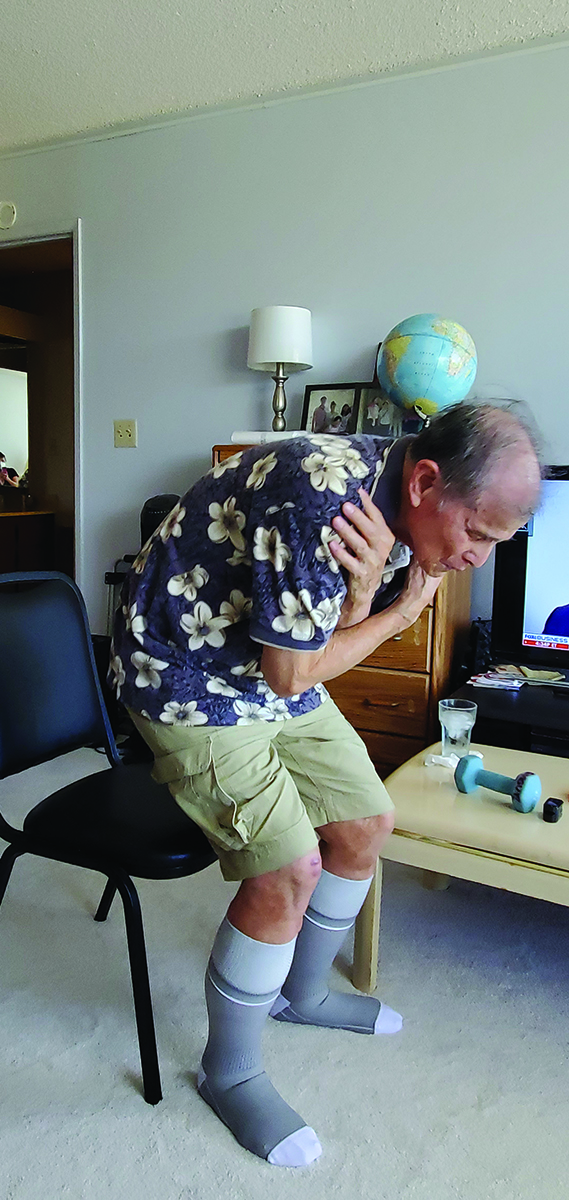
    CHAIR STANDS – go from sitting to standing at least five times whenever you go to sit down or stand up from a chair (without using your hands)

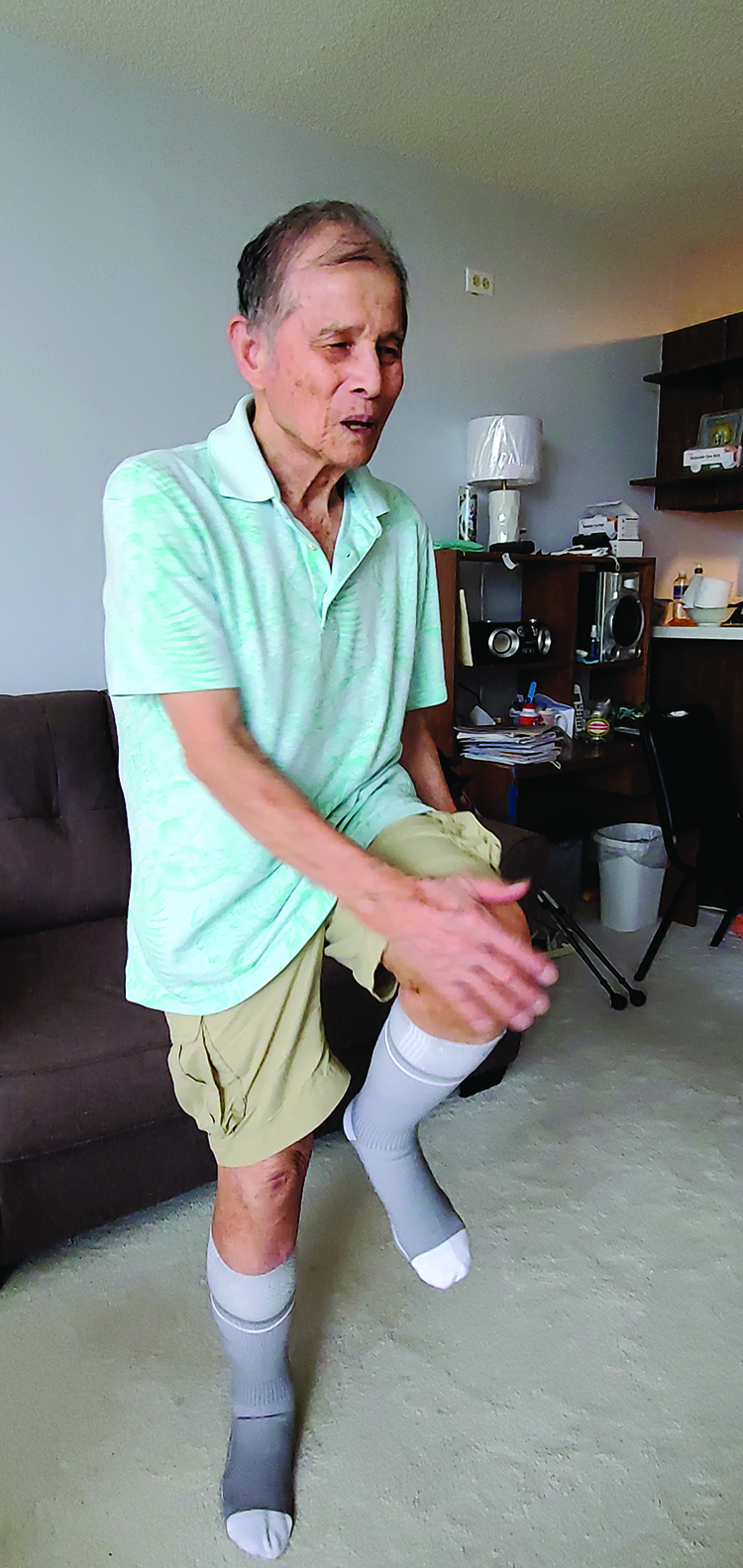
    HIGH KNEE TAPS – lift your leg until your thigh is parallel to the floor, then tap your knee with the palm of your opposite hand and continue marching (sustain through a commercial break)

    HEEL RAISES – while standing tall, raise your heels off the ground until you’re standing on the balls of your feet and repeat 10 times at the sink before and after you wash your hands

    SINGLE LEG STANDS – stand on one leg for 10 seconds whenever you’re near a counter (alternate, making sure you don’t lock the knee of your weight-bearing leg)

    And be sure to take advantage of NEAT. If you have stairs at home or places around your house to explore, take a few extra steps to get there.

    Most importantly, remember to MOVE!


    GYMGUYZ Urban Honolulu
    Home Personal Training & Mobile Fitness
    808-638-2525
    gymguyzurbanhonolulu@gymguyz.com
    www.gymguyz.com

    We’ve all heard the saying, “If you don’t have your health, you don’t have anything.” And while exercise is always at the top of the list of what you can do to stay healthy, it’s so easy to run out of time and defer it to tomorrow.

  • Wisdom of the Serving Spoon

    Eating together is good. Read “Eating Together” (www.generations808.com/eatingtogether) in our last issue. But Generations overlooked something in that article. One of the photos used to illustrate the article about Hawaii Food Bank programs shows a family sharing food, with members dipping into a communal bowl of noodles with their own chopsticks. We thought nothing of this time-honored way of dining until a Honolulu gastroenterologist pointed out that this culturally accepted convention may be hazardous to your health. “There are a lot of bacteria and viruses (mononucleosis; hepatitis A, B and C; H Pylori; herpes; HIV) in our saliva that can be transmitted to another diner.” And numerous observational, epidemiological data have suggested that the risk of COVID19 is related to shared meals or drinks. “The thing you need is a serving spoon or serving chopsticks.”

    He is not alone in this recommendation.

    A proposal by several Asian health organizations to use separate chopsticks and spoons for serving when people dine together was made at the height of the pandemic in 2020, suggesting diners avoid using their personal chopsticks to pick food from the same dishes, thereby reducing the chances of transmission of many diseases.

    Since people have been eating this way for generations, the proposal was met with some resistance. Using a serving spoon or set of chopsticks may send the signal of wanting to keep your distance — the total opposite of most Asian social and cultural conventions. But this simple change in etiquette is a small price to pay for staying safe — and just another example of how we must adapt to our changing world.


    Eating together is good. Read “Eating Together” (www.generations808.com/eatingtogether) in our last issue. But Generations overlooked something in that article.

  • Take Statins & Other Meds as Prescribed

    Medicine is an important part of treatment for many health conditions. For medications to be most effective and work safely, you need to take them exactly as  prescribed. If you experience problems, such as new symptoms or side effects, talk to your doctor immediately.

    Check with your doctor or pharmacist before starting any new medications

    Many seniors see multiple specialists to treat different conditions. Some drugs, including over-the-counter medicines that your doctor may not realize you’re taking, can interact with existing medication and potentially cause problems.

    Create a comprehensive list of all the medicines, vitamins, herbal remedies and supplements you take, and share it with your doctors. Having a clear picture of everything you’re putting into your body will help them provide safer and more effective care.

    Prescription refills

    It’s important to keep track of when you’ll run out of your medicine. Don’t wait until you have only a few pills left. Use a calendar to remind yourself to get refills. It may be dangerous to suddenly stop a medicine, so talk to your doctor or pharmacist about what to do if you miss a dose.

    If you were given a prescription during a hospital or emergency room visit, it may only be enough medicine until you can see your regular doctor. Ask the discharging physician about how long you should continue the new medicines.

    A bit about statins

    Statins are medicines that help with cholesterol, which is a fat-like substance in the blood. There is good and bad cholesterol. Having too much bad cholesterol in your blood vessels can raise your risk of heart disease, heart attack and stroke.  Many people with diabetes take statins because they’re at higher risk of heart attack and stroke. Statins must be taken regularly as prescribed to work well and lower your risk. If you stop, your risk for heart attack and stroke may go back up.

    Follow-up care

    A key part of your treatment and safety is to make and go to all appointments, and talk to your doctor if you experience problems.


    KAISER FOUNDATION HEALTH PLAN, INC.
    711 Kapiolani Blvd., Honolulu, Hawaii 96813
    808-432-5915 (TTY 711) | www.kp.org
    To learn more about this and other topics, visit www.kp.org/health and www.kp.org/seniorhealth. This article contains health and wellness or prevention information.

    Medicine is an important part of treatment for many health conditions. For medications to be most effective and work safely, you need to take them exactly as  prescribed. If you experience problems, such as new symptoms or side effects, talk to your doctor immediately.

  • Manual vs. Electric Toothbrushes

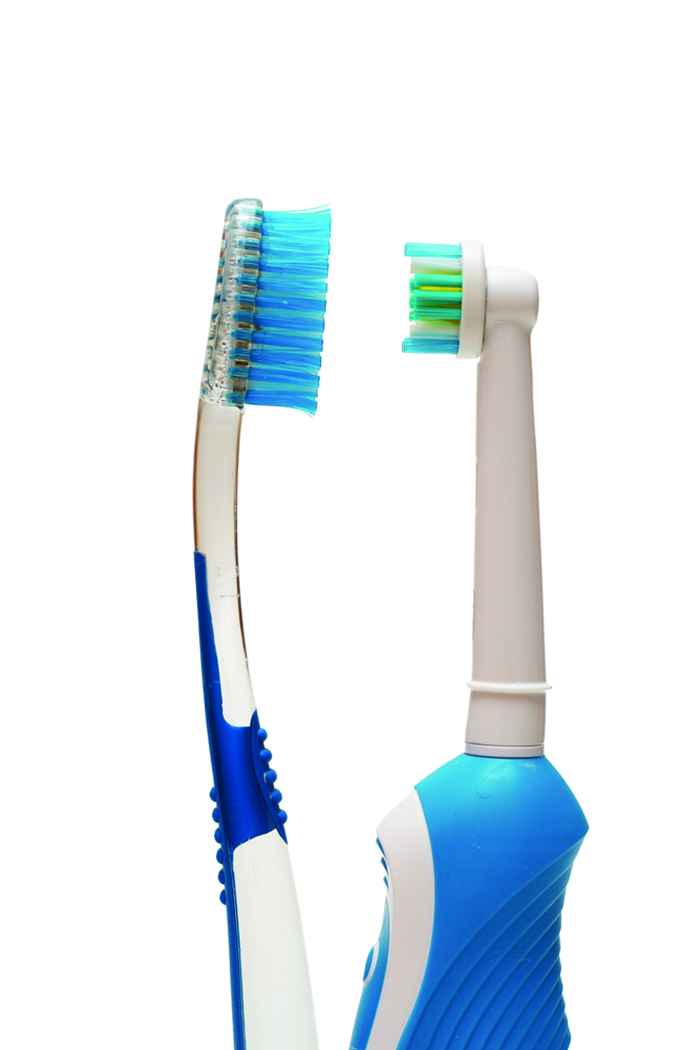
    Couple of toothbrushesA healthy smile requires everyone to commit to three simple actions: Brush twice a day, floss daily and see your dentist twice a year. You may have also considered new technology to make your oral hygiene routine a little easier and more efficient. New models of electric toothbrushes have prompted consumers to consider upgrading their manual toothbrushes to spinning brush heads that sometimes come with Bluetooth capabilities. So, which is better, manual or electric?

    Studies show powered toothbrushes are slightly better at reducing plaque and gum disease. If cost isn’t a factor, electric toothbrushes are found to be safe and effective. They can also connect to your smartphone and track how well and long you brush. Manual toothbrushes are affordable, simple and your local grocer or convenience store may carry models with different brush handles that give you a better grip so you can reach all tooth surfaces.

    All brushes, manual or electric, can be effective for removing plaque if used correctly — for at least two minutes at each brushing. All brushes will have to be replaced every three to four months. Choose a toothbrush that you like and will use properly with a fluoride toothpaste. Don’t forget to floss daily and see your dentist for an exam and cleaning twice a year so you can live well and smile more.


    HAWAII DENTAL SERVICE (501(c) 4 nonprofit)
    Mark Sweet, DDS, Dental Director
    808-521-1431 | mark.sweet@hawaiidentalservice.com
    www.HawaiiDentalService.com

    A healthy smile requires everyone to commit to three simple actions: Brush twice a day, floss daily and see your dentist twice a year. You may have also considered new technology to make your oral hygiene routine a little easier and more efficient. So, which is better, manual or electric?