Some things are universal to the human race. The night sky is one of them, for we can all look up and feel connected to the moon and stars. Perhaps we have even placed a lost loved one there in the firmament and look to them for guidance when times are tough.
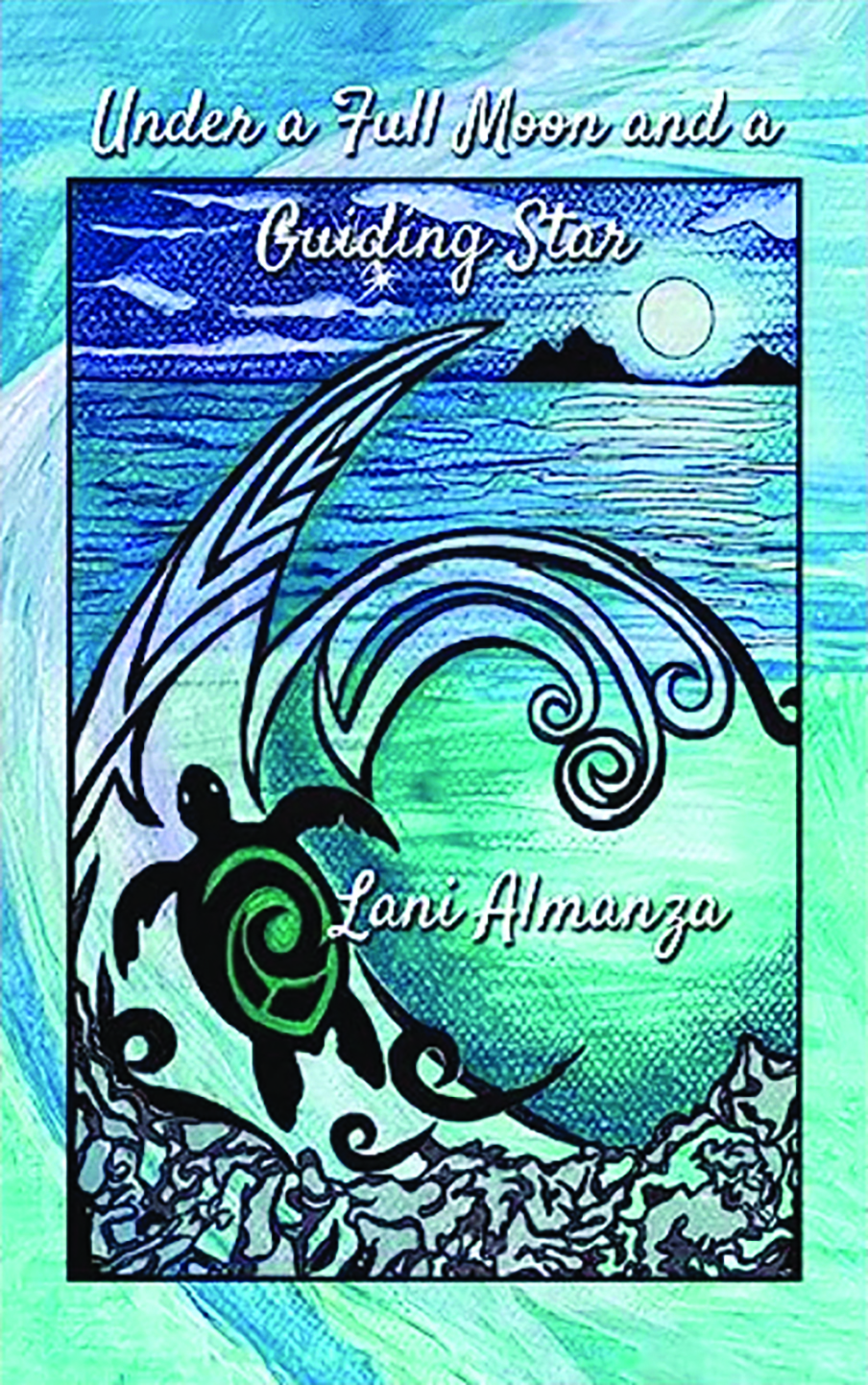
In her recent memoir, Under a Full Moon and a Guiding Star, Lani Almanza shares the wisdoms she learned while caring for her youngest son Jacob, who passed away in 2005, from cancer, at age 22. Drawing on her experiences from childhood on, she offers us ways to navigate pain and loss, sharing personal stories, images, meditations and lessons that enable caregivers to process their journey and live an “activated life.”
The book is divided into three parts: Doing and Being, Being and Becoming, and Alaka‘i Life Lessons. Alaka‘i is a Hawaiian word that signifies a leader or a guide and, as a verb, the act of doing that. The resources in Part III guide us towards transformative well-being so we can each live a healthier, happier life. Many can be practiced daily.
Wherever you are on life’s journey, this 166-page gem will inspire you to find balance and joy in your life.
UNDER A FULL MOON AND A GUIDING STAR
by Lani Almanza, is available in hardcover, paperback and Kindle formats from Amazon. alakaiassociates.com/book
Some things are universal to the human race. The night sky is one of them, for we can all look up and feel connected to the moon and stars. Perhaps we have even placed a lost loved one there in the firmament and look to them for guidance when times are tough. In her recent…
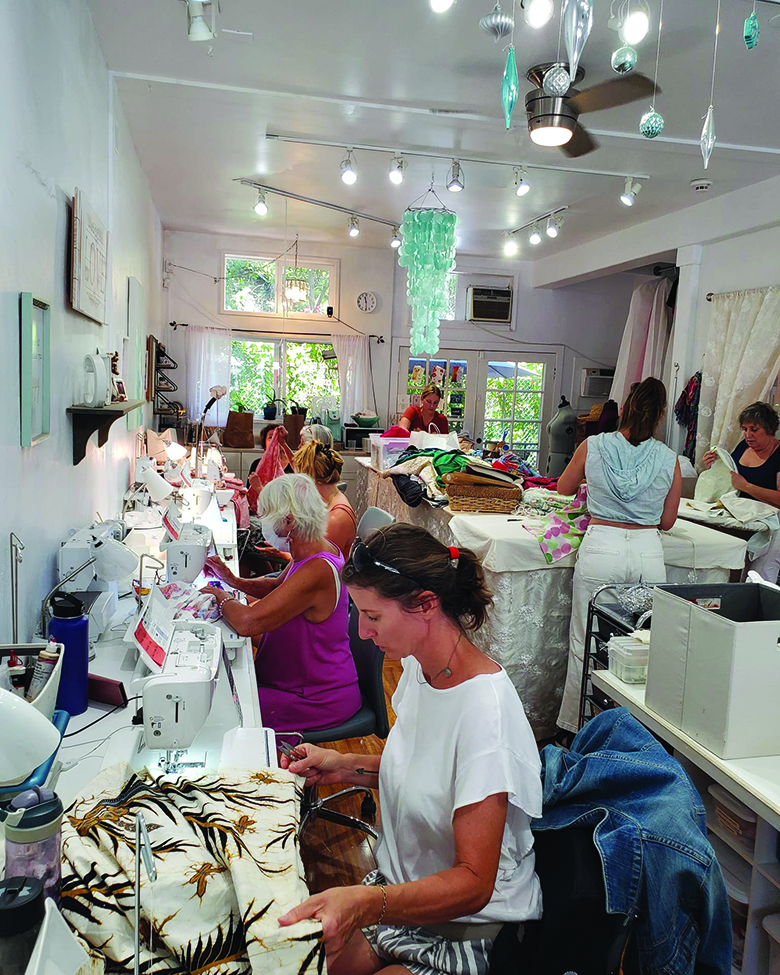
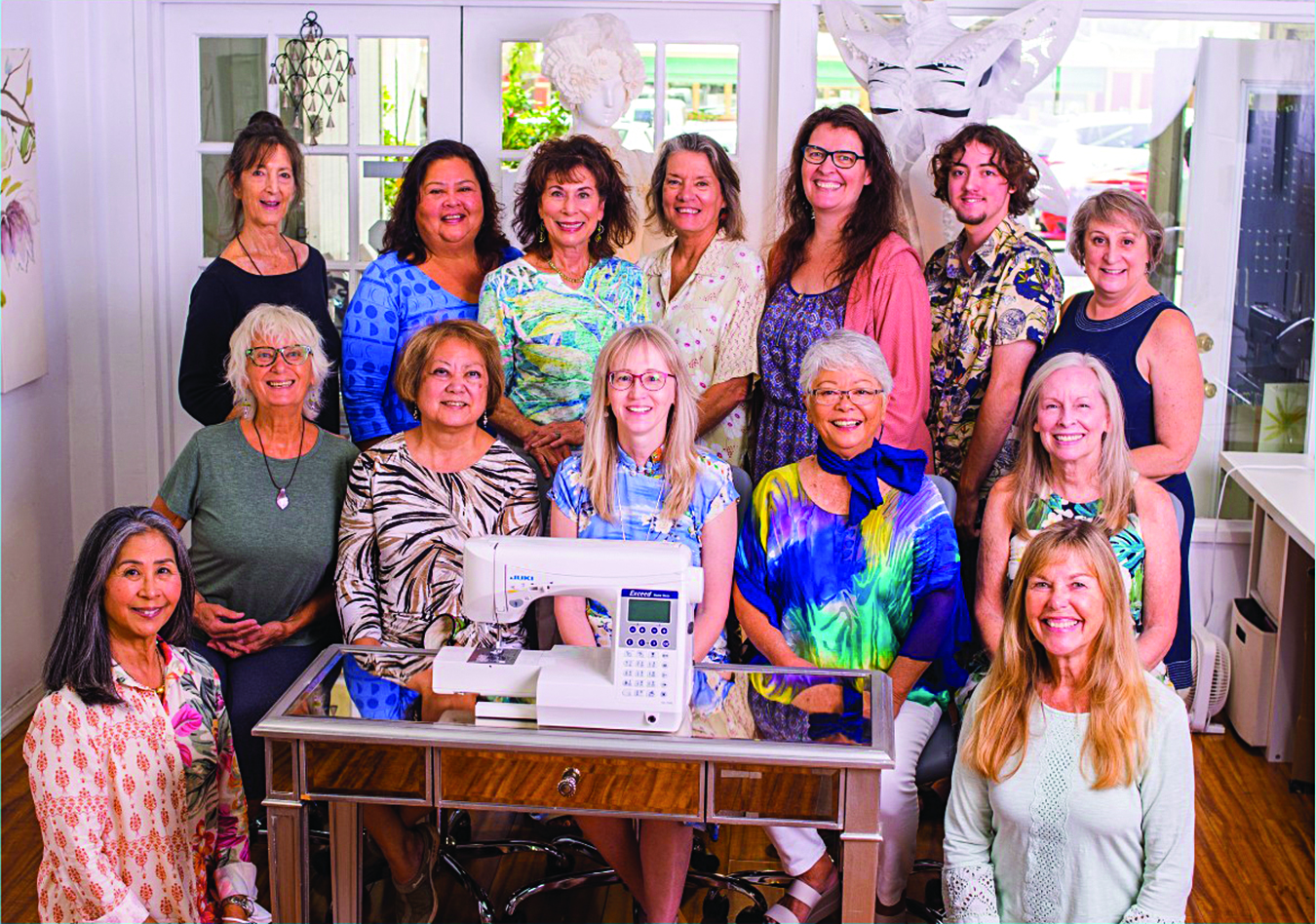
Nestled in the quiet paniolo town of Makawao in Upcountry Maui lies a powerhouse of volunteer sewists. Jennifer Oberg, a dressmaker who specializes in custom wedding gowns, opens her studio on a weekly basis for The Sewing Hui to gather, create, and talk story. On most Thursdays, you’ll find people from Upcountry, Kihei, Kahului, Lahaina and even visitors sewing together.
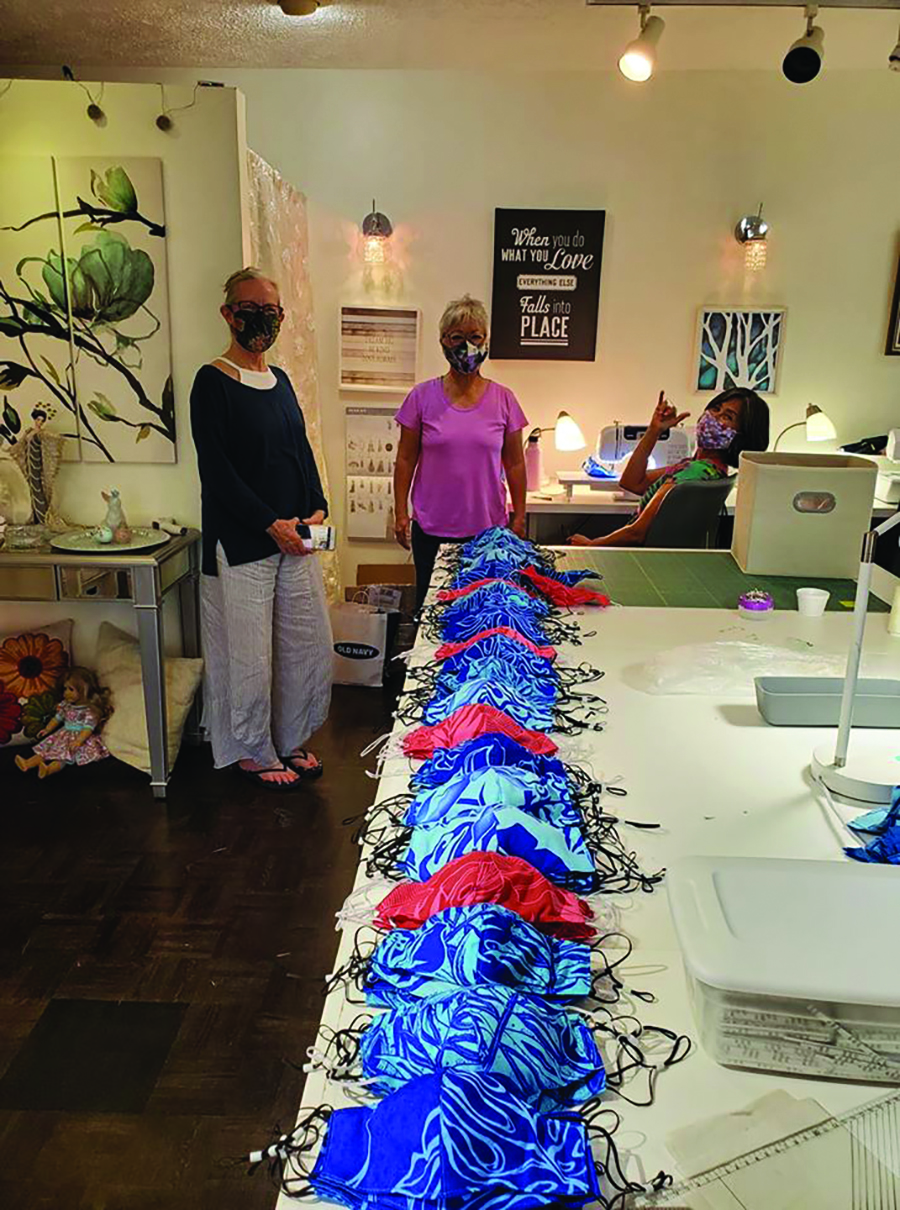
This group came together as the Maui Face Mask Project in the spring of 2020. The project was started to address the critical shortage of N-95 face masks on Maui. 10,411 high quality filter face masks were created for Maui’s healthcare providers. Since then, the volunteers wanted to continue sewing for the community, and became The Sewing Hui in June 2020. The Sewing Hui maintained a core group of volunteers, mostly retirees. Friendships have been formed and good work has been accomplished.
Past initiatives include 13,000 fabric masks for organizations and community members, fleece blankets for kūpuna in long term care facilities, shorts and bags for the unsheltered, costumes for local dance schools, garments for May Day celebrations, and walker bags for kūpuna. The next big project is costume design for the December 2023 production of The Nutcracker ballet by Alexander Academy of Performing Arts on Maui.
Current projects are helping those displaced by the recent fires. The studio is buzzing with people cutting and sewing pillowcases and walker/ wheelchair bags. We’ve put the word out to other sewing organizations around the world, and they have responded with donations and support. We appreciate all the love and concern everyone around the world has for Maui. Contact the hui for more information, to volunteer, or to make a supply or monetary donation to our cause.
Nestled in the quiet paniolo town of Makawao in Upcountry Maui lies a powerhouse of volunteer sewists. Jennifer Oberg, a dressmaker who specializes in custom wedding gowns, opens her studio on a weekly basis for The Sewing Hui to gather, create, and talk story. On most Thursdays, you’ll find people from Upcountry, Kihei, Kahului, Lahaina…
In Sherry Turkle’s book, Reclaiming Conversation: The Power of Talk In A Digital Age, she writes about the process of the virtuous circle of communication by discussing the poet, Henry David Thoreau’s moving to Waldon Pond to live more deliberately. Thoreau furnished his cabin with three chairs. One chair to represent solitude, where he could self-reflect on matters most important for him. Two chairs to engage in conversation where he could express his thoughts to another. During these conversations, he could process information and gain new insights that better prepared him for self-reflection. All three chairs were set for a conversation with the larger community to allow for a broader awareness heading back to self-reflection. Thus, the virtuous circle that allows us to define and redefine our thoughts.
Estate planners can provide guides for each client to sit in self-reflection and consider for themselves what is most important with respect to healthcare and quality-of-life choices, as well as how to plan their financial estate. Once the plan is established, the attorney can facilitate a family meeting where the client expresses feelings and introduces the plan to family members, who can express their thoughts. The client then can self-reflect in solitude with this additional information preparing them for a better, more meaningful family meeting. Eventually, the attorney will engage the client and family with professional advisors, including the accountant and financial advisor, so that everyone understands the client’s intentions. It is vital to include and involve the client’s trusted advisors in the conversation with family. My observation is that, while families disagree, they usually can come to mutual understanding and decision. If trusted advisors come to different conclusions without consulting with one another, clients do not know how to proceed, causing the client to doubt the entire plan. It is essential that the client’s professional trusted advisors communicate with one another and come to a settled unanimous path for the client to pursue.
This virtuous circle of communication continues until the client can no longer communicate their intentions. By that time, the client’s family members and trusted advisors know, understand and will honor the client’s wishes. This process is not only important for the client in gaining perspective over personal choices, it is equally as important for participating family members and trusted advisors because they get to know the client on a much deeper level. By using this approach, family members and professionals will be on the same page in honoring the client’s intentions.
In Sherry Turkle’s book, Reclaiming Conversation: The Power of Talk In A Digital Age, she writes about the process of the virtuous circle of communication by discussing the poet, Henry David Thoreau’s moving to Waldon Pond to live more deliberately. Thoreau furnished his cabin with three chairs. One chair to represent solitude, where he could…
The first step in the estate planning process is learning. What do you need to learn? I suggest this as your starting point: You need to discover how to stay in control of your stuff while you are able to be in control, as well as how to be sure that that your wishes will be carried out when incapacity or the grim reaper catch up with you. Sorry to rub it in, but at least one of those things is going to happen to you. Odds are that both of them will.
Certainly, you have views about the kind of healthcare you want to receive throughout your lifetime, and you have views about who should enjoy your stuff when you are done with it. The only way to make effective choices about those things is to know what your choices are. Learning about your choices is a lifelong process because your choices will change as your circumstances change. Your health is going to change. Your assets are going to change. Your comfort with your list of designated decision-makers is going to change. The laws that affect your estate plan are going to change. As those things change, you will need to stay on top of the choices you can make in order to be confident that your wishes will be followed at every phase of your life — and perhaps beyond your lifetime.
Let’s say you are thinking about going on an adventure. Where do you want to go? How do you want to get there? Are there any better destinations you might want to consider? Is there a better means of getting you there than the one you originally chose? The only way to know the answers to these questions is to do some research, talk with people who have taken similar trips and, better yet, talk with folks who have helped lots of people take all kinds of journeys. It’s kind of like asking for directions. While I have never regretted asking for them, I have regretted waiting too long to do so. Don’t make that mistake.
Your life is a journey. If you do not make your own choices about the path of your journey, someone else will make those choices for you, and you might not like where you end up. So, learning about estate planning is your key to ending your journey well. The sooner you learn about your estate planning options, the sooner you can implement ways to mitigate or head off problems that are headed your way, even though you don’t know exactly what they are or when they will arrive. Read what you can, talk with your trusted advisors, and put what you learn to work in building the estate plan that will take you to your chosen destination.
The first step in the estate planning process is learning. What do you need to learn? I suggest this as your starting point: You need to discover how to stay in control of your stuff while you are able to be in control, as well as how to be sure that that your wishes will…
Q: What is the average Social Security payment that a person receives each month?
A: The average monthly Social Security benefit for a retired worker in 2023 is $1,827.00. The average monthly Social Security benefit for a worker with a disability in 2023 is $1,483.00. To get an estimate of your current and future benefits, create a my Social Security account at ssa.gov/myaccount.
Q: How do I earn Social Security credits and how many do I need to qualify for benefits?
A: We use your total yearly earnings to figure your Social Security credits. The amount needed for a credit in 2023 is $1,640. You must earn $6,560 to get the maximum four credits for the year. The amount needed to earn 1 credit usually increases each year when average wages increase.
To qualify for Social Security benefits, you must earn a certain number of credits. The number of credits you need depends on your age when you apply and the type of benefit. No one needs more than 40 credits for any Social Security benefit. You can read more about credits in How You Earn Credits at ssa.gov/pubs/EN-05-10072.pdf.
For questions, online applications or to make an appointment to visit a SSA office, call from 7am–5pm, Mon–Fri: 1-800-772-1213 (toll free) | socialsecurity.gov
To qualify for Social Security benefits, you must earn a certain number of credits. The number of credits you need depends on your age when you apply and the type of benefit. No one needs more than 40 credits for any Social Security benefit.
According to the Centers for Medicare & Medicaid, more than 10,000 people are turning 65 every day and may qualify for Original Medicare insurance. Once an individual obtains the core parts of Medicare, other options may lower out-of-pocket costs. Some beneficiaries choose to get their coverage from Part C Medicare Advantage plans.
Each year, Medicare’s Annual Enrollment Period (from Oct. 15 to Dec. 7) allows current enrollees to look at options for the following year. They can decide whether to keep their plan or select a new one. If no changes are needed, beneficiaries do not need to do anything. If a beneficiary decides to change, the new plan becomes effective the first day of the new year.
In 2022, according to the Kaiser Family Foundation, 28 million Medicare beneficiaries were enrolled in Medicare Advantage plans. This Fall, millions of beneficiaries may be scrolling through insurance websites, watching TikTok videos and reading marketing materials. Licensed agents might also give Medicare 101 workshops at your local senior fair.
It’s time to take a closer look at your plans! If you are happy with your existing plan, just sit back, relax and enjoy your Medicare years.
According to the Centers for Medicare & Medicaid, more than 10,000 people are turning 65 every day and may qualify for Original Medicare insurance. Once an individual obtains the core parts of Medicare, other options may lower out-of-pocket costs. Some beneficiaries choose to get their coverage from Part C Medicare Advantage plans.
I find volunteering the most humbling and rewarding when it connects the young and the old.
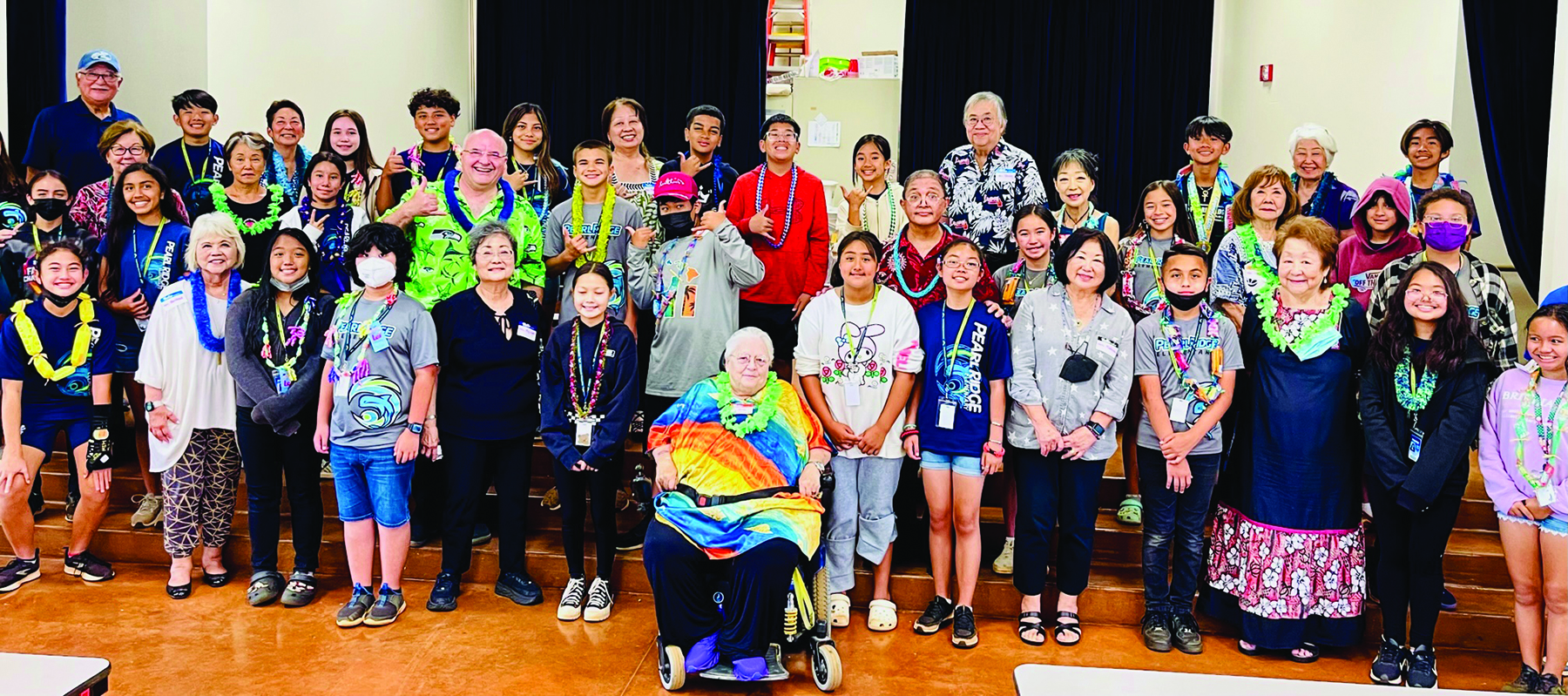
On May 23, the RSVP (Retired and Seniors Volunteer Program) wrapped up a third pen-pal year with a lunch meeting — for the first time — with their sixth grade Pearl Ridge Elementary pen pals. I was unprepared for the chicken-skin experience. I guess we had no idea how close we became during our school year’s expansive weekly letter writing exchange. Our RSVP pen-pal program started during the pandemic. The focus was to mitigate feelings of loneliness. You might be surprised to know: loneliness currently affects people of all ages. The US Attorney General recently stated, “Loneliness increases mental and physical issues, including dementia by 30%.” I feel having a pen pal helped us RSVP volunteers and sixth graders equally. There were hugs, some tears and heartfelt alohas as we met for the first time and then said our farewells.
If you’re 55 or older and would like to be a pen pal, please join us at RSVP. It is an incredibly fulfilling opportunity.
You think you are young at 40 years old, right? But what if your intended life-long job was terminated and you’re not ready to retire? What do you do when a door closes on you like that?
All good questions that I had to ask myself back in 1993, when my position with a small company was terminated due to the downward spiral of Hawai‘i’s real estate market. I interviewed with five companies, but it didn’t take long to realize I couldn’t see myself spending the rest of my life working for any of them. Instead, I serviced them as an independent contractor.
Working with my CPA, I followed his tax requirements to start my own company and also became an LLC (Limited Liability Company). I was quite excited at the prospect of being my own boss.
I soon had the opportunity to purchase outright the real estate referral company I co-founded that was connected to the franchise company that closed the door on me in 1993. My agents and I have connected clients to realtors throughout Hawai‘i, as well as on the mainland. Because I have held a real estate license since 1985, I am proud to consider this company as my legacy.
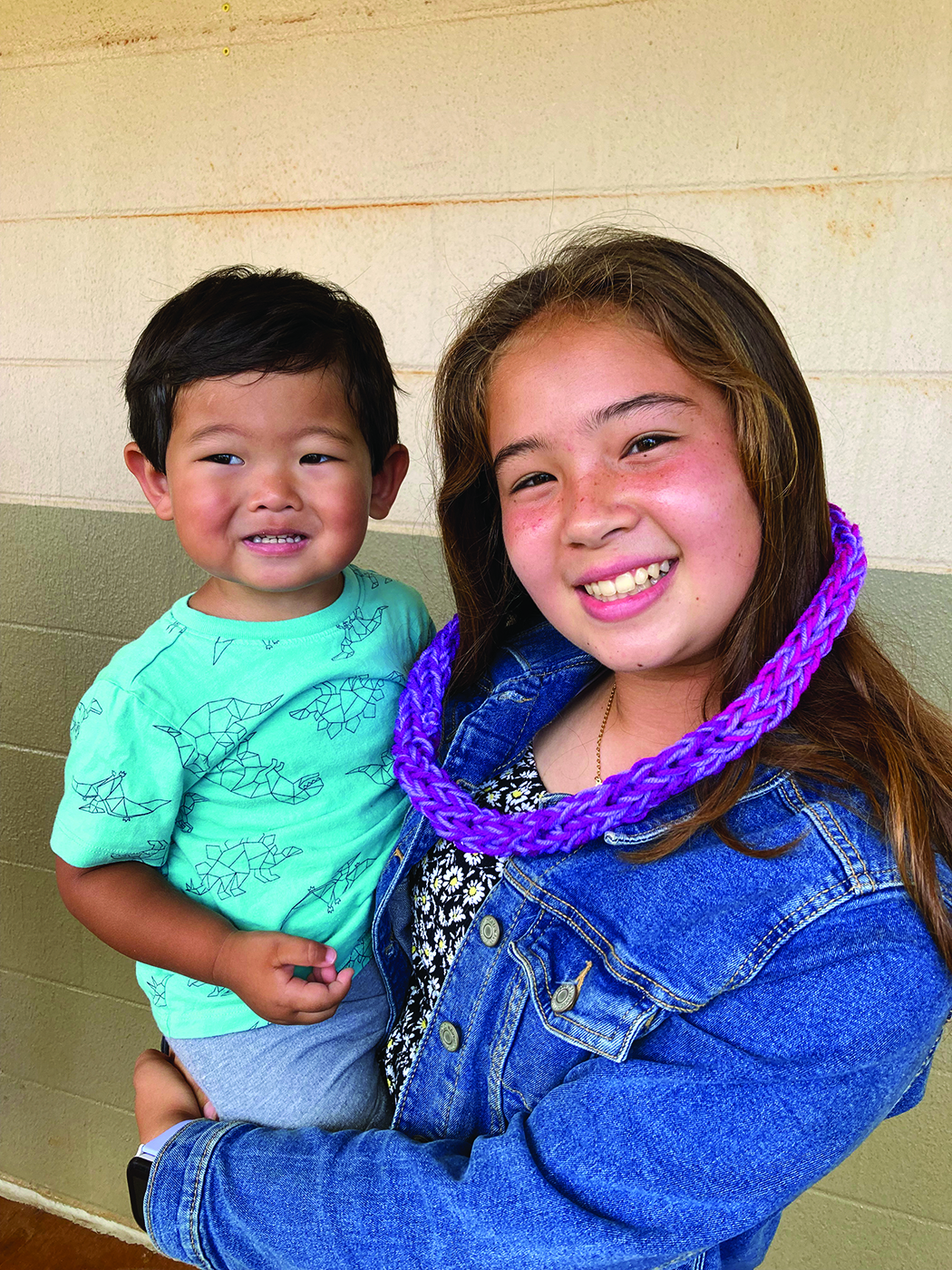
My grandchildren Tanner and Alexis, give me joy in my life.
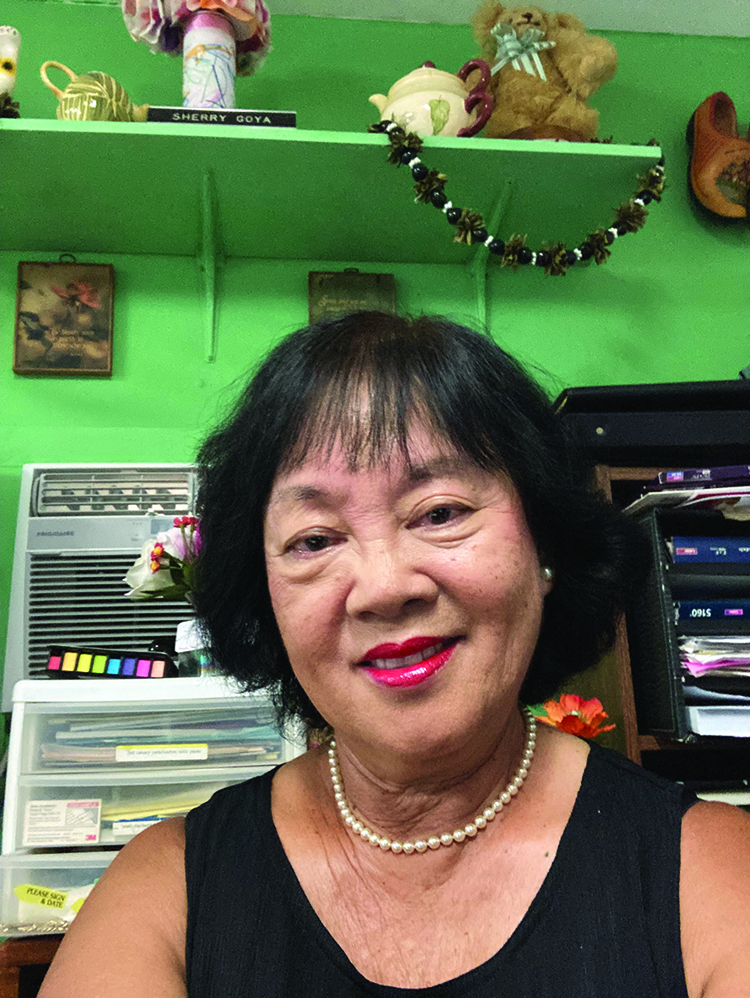
However, could I “be more” and do something meaningful? Using my business background, I am currently the executive director of three nonprofit associations. I also do the marketing for a small shopping center just outside of Waikiki, and service small companies who rely on me to consistently produce their newsletters, postcards, calendars or other marketing pieces. I love being helpful.
And this year, I am also very happy to be back with Generations Magazine, where I worked from 2010 to 2020.
The best part of being your own boss is that you can schedule your own work time, family time and fun time. When I started consulting, my daughters were in preschool and high school and my son was in elementary. I remember when I drove my son to school, he would ask “Mommy, what are you going to do today?” Wow! When I think back, he was the one person who made me account for my day!
For the past 30 years, I’ve gone all out to mix quality work time with quantity family and fun time. Because of my daughters’ love of tennis, I volunteered as an assistant coach at their school. They, too, became coaches, as well as my husband, making it a real family affair. Nowadays, I have two active grandchildren to have fun with!
Many people have tough decisions to make when it comes to work. My advice for when a door closes, is to see it as an invitation to open a window of opportunity into a fulfilling life you create on your own terms.
You think you are young at 40 years old, right? But what if your intended life-long job was terminated and you’re not ready to retire? What do you do when a door closes on you like that?
It’s been nearly four months now since my good friend Brian Suda passed away in May. It’s easy to feel his presence — we were workmates for about 13 years. But his work is ever-present whenever I’m working on this magazine. This is where we met. It started back in 2010. I just gotten back from a long career in Los Angeles.
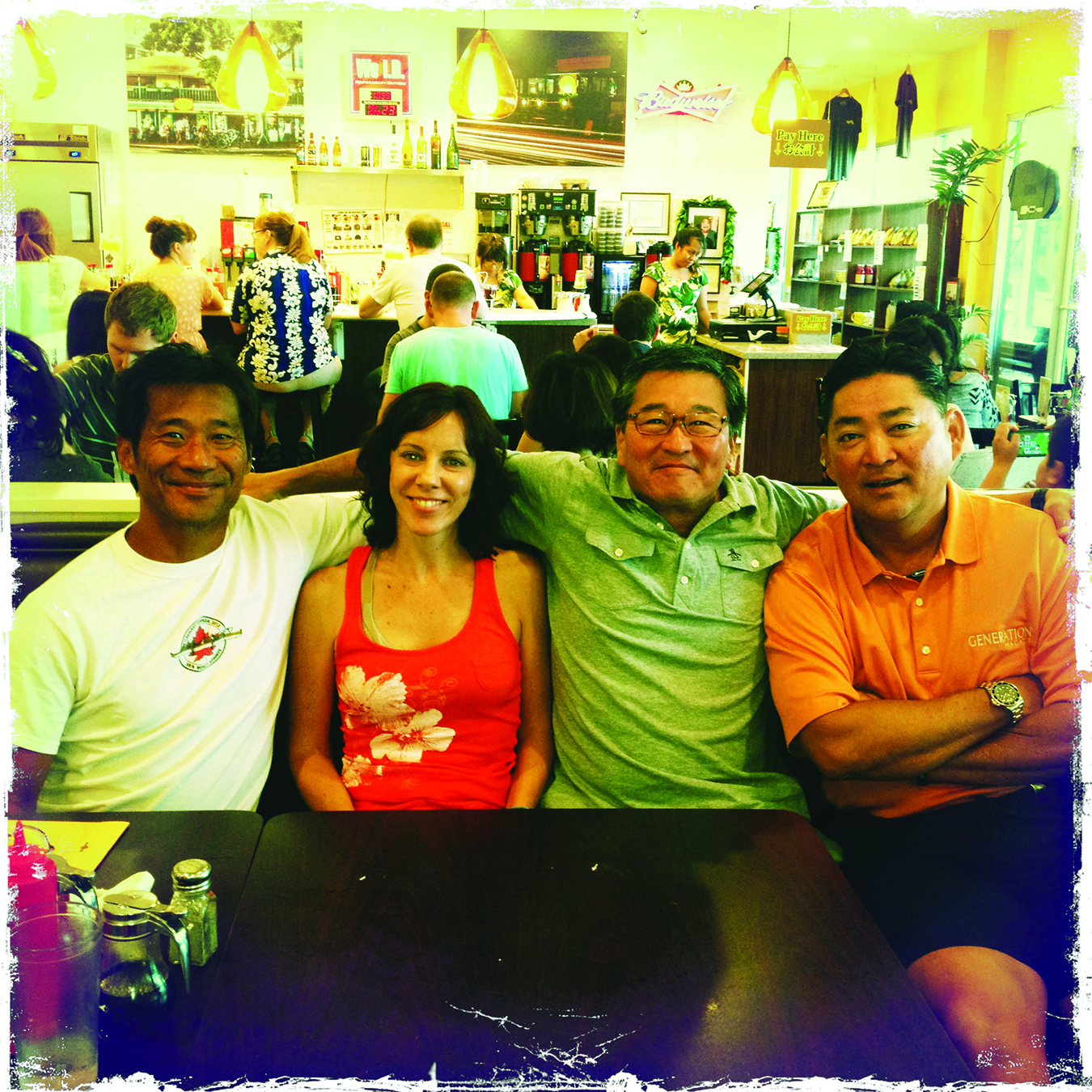
The original team in the early years. A breakfast meeting of sorts. (L–R) Wilson, Amy, Brian and Percy.
Our first issue was on Kirk Matthews and I needed a local photographer. It was by happenstance that Brian’s wife, Pamela, was one of the magazine’s early advisors. So naturally, she recommended her husband Brian.
My first communication with Brian was immediately friendly. He was very accommodating, which made it even easier to discuss directions with him. This was his greatest attribute as a professional and as a person: Brian was easygoing. Easily, friendship became the foundation of our relationship. We took it to heart; maintaining integrity of our work creatively with respect to each other’s craft. Always conscious of our own limitations, we often relied on each other to complete the visual goal. No matter the mundaneness of the subject or the parameters we had to work within, Brian always explored ways to elevate it to another level, even at his own expense — he was very talented and he was a perfectionist — which I’ve always admired. His easygoing attitude was also a plus for everyone working with him.
The process of a photoshoot always has a level of stress. Brian hardly showed it, but he could be a little bit of a worrywart — as he admitted to me one day. We knew we could never control every aspect of a photoshoot, and when certain wrenches get thrown in the mix, Brian always had a plan “B” and then would say “Let’s just have fun.” And that just sums it up on how we mainly rolled.
BRIAN HIROMI SUDA May 18, 1960 May 29, 2023
Of course, afterwards, we’d always revel over a few cocktails, his choices being as carefully planned as a connoisseur’s. “We did it again!,” we’d say with a good laugh. We like patting ourselves on the back. That’s what friends are for: To give each other kudos for even making it out alive. We’d laugh at the unnoticed mishaps. And Brian was always out for a good laugh. I could tell him the sorriest story or joke and I’d get a good belly-chuckle. There are so many wonderful stories I could tell.
In our profession, the joys we find are in the process — the camaraderie, the cheers over a beer. That’s what it’s all about. We love what we do. And we love the people we do it with. Through heartache and laughter, and rolling with the punches, we survive. That’s what we all do. Then, afterwards, we take it to the bar to swap stories — and give each other a round of pats on the back saying, “Good job, buddy. You’ve done well.” I miss you already, Brian. You’ve been an awesome photographer, colleague and friend.
It’s been nearly four months now since my good friend Brian Suda passed away in May. It’s easy to feel his presence — we were workmates for about 13 years. But his work is ever-present whenever I’m working on this magazine. This is where we met. It started back in 2010.
Generation’s Magazine’s 15th annual Aging in Place Workshop was held on Saturday, August 12 at the Ala Moana Hotel.
Thanks to everyone who attended and those who participated as volunteers and sponsors. Your help was greatly appreciated.
If you attended and would like to leave us a comment, please fill out our comment form by clicking on the QR below:
Generation’s Magazine’s 15th annual Aging in Place Workshop will take place on Saturday, August 12 at the Ala Moana Hotel. Everyone is invited – there’s no admission fee and no reservations are required. For details, call 808-234-3117.
Estate planning attorneys help their clients make sound, intentional decisions relating to their estate plans when they manage to help clients minimize guilt, conflict and anxiety. At the same time, survivors should be allowed experience the natural process of grief.
An estate planning attorney can achieve this balance by:
• Creating a safe, comfortable physical environment
• Utilizing good counseling skills
• Encouraging and facilitating open, transparent and respectful communication among family members and others involved in the estate.
Physical Environment
Facing one’s mortality, visiting with an attorney, worrying about costs and dealing with new terminology can cause clients to experience stress. No one can make sound decisions while under stress. In Janice Mucalov’s article entitled “Lawyers: Gatekeepers for Psychological Issues,” she outlines the precarious nature of this issue.
“Emotionally distressed clients pose greater risks than non-distressed clients,” she writes. “Because emotions cloud their thinking, you may fail to appreciate the nature of the client’s problems, or they may fail to understand your advice.”
Truly, the estate planner’s first effort should be in creating a safe, calm environment for the client. This will reduce stress.
Counseling
Attorneys will want to learn and apply good counseling skills in order to help clients make the best decisions regarding their estate plans. Carl Rogers introduces a particularly useful method of counseling for estate planning in his work On Becoming a Person. He proposes developing and applying three qualities of counseling:
• Meet and interact with each client in counseling with genuineness and congruence.
• Enter each relationship and treat each clientwith unconditional positive regard.
• Enter and engage each counseling session with empathic understanding.
Communication
Estate planning attorneys must emphasize that because life is fluid, a periodic review of the client’s estate plan is essential in order to ensure that the plan remains current. How often the client meets with the attorney depends on the client’s particular situation and need. The process, however, remains constant. Estate planners can provide guides for each client to sit in self-reflection and consider for themselves what is most important with respect to healthcare and quality of life choices, as well as how to plan their financial estate.
Estate planning attorneys help their clients make sound, intentional decisions relating to their estate plans when they manage to help clients minimize guilt, conflict and anxiety. At the same time, survivors should be allowed experience the natural process of grief.
They say that the only certainties in life are death and taxes. When your life comes to an end, your loved ones can be left facing both certainties at the same time. The good news is that to some extent, we can postpone both, and we can avoid (notice I did not say evade) taxes almost entirely. Postponing death is a matter of staying as healthy as we can through diet, exercise, meditation, having an emotional support system, and maintaining a positive state of mind. Of course, if we don’t look both ways before we cross the street, then all those vegan rice cakes, pickleball games and Ommm sessions go out the window. On the other hand, postponing or avoiding taxes takes a lot less work and can be almost as fun as staying healthy.
The taxes that could take a swipe at your loved ones after you die are mostly these: income tax, capital gains tax, estate tax, and generation-skipping transfer tax. Although the gift tax only applies to transfers made during your lifetime, your lifetime transfers may impact your ultimate estate tax liability. Other taxes may apply as well, but those are the big ones collected by the IRS. Each state also imposes and collects a variety of taxes. Hawai‘i does not officially have a gift tax, but it does collect the other taxes listed above. Hawai‘i’s estate tax takes into account lifetime gifts, so while there is no state gift tax during your lifetime, your estate may have to pay additional Hawai‘i estate taxes that more or less make up for the fact that you did not have to pay Hawai‘i gift tax during your lifetime.
But don’t despair. There are relatively painless ways to minimize or avoid all of these taxes, especially if you would prefer to support your favorite charity instead. When it comes down to it, estate tax can be completely avoided through a combination of taking advantage of the estate tax “coupon” (the amount that you can give away estate tax free) and the unlimited estate tax charitable deduction. If the value of your estate exceeds the coupon amount, you can give the coupon amount to your loved ones (so far, no tax) and any excess to your favorite charity, just like that, you have passed on significant wealth without giving any of it to the tax man.
Disinheriting both the IRS and the State of Hawai‘i means that some assets that could have gone to family will instead go to good causes that will benefit your community, possibly for years after you are gone. Not only that, you will have proven that taxes may not be a “certainty” after all. Your trusted advisors can show you the way.
They say that the only certainties in life are death and taxes. When your life comes to an end, your loved ones can be left facing both certainties at the same time. The good news is that to some extent, we can postpone both, and we can avoid (notice I did not say evade) taxes…

 Some things are universal to the human race. The night sky is one of them, for we can all look up and feel connected to the moon and stars. Perhaps we have even placed a lost loved one there in the firmament and look to them for guidance when times are tough.