Category: Nov – Dec 2023

  • Genius Tip: Designing Your Game Plan

    Albert Einstein famously said that an intellectual solves problems, while a genius avoids them. Here is an example of how you should employ this mindset when you put your estate plan in place. One of the most important things you will do is name your substitute decision-makers. These are the people who will step in upon your incapacity or death to make decisions about things like your healthcare, your living arrangements, how your assets will be managed, and where your assets will eventually go.

    Remember this about the successor trustees and other fiduciaries you name in your estate planning documents: Up until they take office, they are nominees, not appointees. Until you become incapacitated or die, your nominees are like the bench on a sports team. Players sitting on the bench are there to step into the game if called upon, but they do not actually participate in the game until the coach calls their numbers. The coaches on your estate planning team are your trusted advisors. They are on your sideline to advise you and your loved ones, but generally, your coaches will not enter the game themselves.

    When you become incapacitated or die, your nominees must decide whether to accept their nominations or not, and they have no legal obligation to “get off the bench.” For that reason, you should talk with your intended nominees before you nominate them, to make sure they are willing to “play ball,” and you should check in with them from time to time to confirm they are still on board with being integral members of the team who will advance your estate planning when you are no longer able to “be in the game.”

    Throughout the process of designing your estate plan, you should constantly ask yourself, “what can I do, and how should I plan to avoid the problems that will someday smack me and my ‘ohana in the face unless I provide a solution beforehand?” Only this way can you avoid the problems that the intellectuals in your family will have to solve upon your death or incapacity.


    SCOTT MAKUAKANE, COUNSELOR AT LAW
    Author of Est8Planning for Geniuses
    808-587-8227 | maku@est8planning.com
    est8planning.com


    Albert Einstein famously said that an intellectual solves problems, while a genius avoids them. Here is an example of how you should employ this mindset when you put your estate plan in place.

  • Grief & Bereavement — Part IX

    An adult hipster son comforting frustrated senior father indoors at home, eating light lunch.In the last article we introduced and discussed the process of the virtuous circle of communication. In this article we will discuss how to communicate in a family  meeting. Often conversations with family are well-intended, however the conversation can become caustic if approached with accusation and blame. Family members will tend to shut down and/or become defensive, thereby losing the opportunity to express themselves. This can further damage family relationships.

    Before beginning a family meeting, ground rules must be established. If at any time the meeting is not safe or productive, then the meeting should pause so that family members can take a time out. Once everyone is willing to adhere to the ground rules, the discussion can be resumed. Communicating is not an easy task, especially when discussing a highly emotional topic with family.

    In Marshall Rosenberg’s book, Nonviolent Communication, he offers a process where families engage in family meetings using four components: observation, feelings, needs, and requests.

    1) OBSERVATION. Rosenberg writes with respect to observation: “First, we observe what is actually happening in a situation: What are we observing others saying or doing that is either enriching or not enriching our lives? The trick is to be able to articulate the observation without introducing any judgment or evaluation.”

    2) FEELINGS. The second component is to express how one is feeling. At first glance, this may appear to be simple. However, most people can express only a limited number of feelings. The book’s author provides a helpful list of words that express feelings that can be used instead of comparable words that do not express feelings.

    3) NEEDS. Once we can clearly express our feelings, we want to express our needs. Rosenberg explains that, when we are expressing feelings such as hurt, sadness and anger, what it really means is that our needs are not being met. And, if we want to communicate clearly and deeply, we will want to determine what the unmet need is that is causing these feelings.

    4) REQUESTS. The final component of nonviolent communication is to make positive requests, meaning we ask for actions that might fulfill our needs. Rosenberg suggests making requests in a positive manner. Rather than saying “I don’t want you to … ,” say “I would like you to … .” Request specific actions rather than asking for a change in others’ general behavior.


    STEPHEN B. YIM, ATTORNEY AT LAW
    2054 S. Beretania St., Honolulu, HI 96826
    808-524-0251 | stephenyimestateplanning.com

    In the last article we introduced and discussed the process of the virtuous circle of communication. In this article we will discuss how to communicate in a family meeting.

  • No Kids? 5 Tips for Your Retirement

    Many people build their retirement and estate plans around their children and grandchildren. Everything from where they live, to how they spend their time and money, to the legacy they want to leave behind is considered through the prism of their role as parents and grandparents. For those without kids and grandkids, a different formula may apply as these individuals may have more financial freedom and flexibility as they enter retirement and beyond. But they still need to be as vigilant — if not more — about planning for their later years.

    Prioritize saving for retirement

    Since you’re not facing the costs for childcare and educational institutions, consider doubling-down on saving for retirement. Calculate what it will take for you to live the lifestyle you want in retirement and compare it to your current savings. Contribute as much as you can to your workplace savings plan and consider building up Roth IRA savings to help create a source of income that is potentially tax-free in retirement.

    Recognize your long-term care challenges

    Long-term care can be a challenge for anyone as they age, and there’s added complexity in situations where you may not be able to rely on family members to step in. Medical expenses continue to rise, so it’s important to have adequate savings and insurance coverage. Make it a priority to explore your options through Medicare and your current or former employer and consider if long-term care insurance would benefit you. Also research caregiving options and long-term care facilities in your area so you are familiar with the choices if you need them down the road.

    Prepare for medical care

    A significant medical event can happen at any time, so make sure to have an advanced directive, also known as a living will, in place. This document lets your spouse, extended family and friends know your preferences for treatment and gives you the opportunity to designate a healthcare power of attorney, who will be empowered
    to make decisions on your behalf if necessary. Have your financial decision-makers in place It’s also important to designate a spouse, friend, extended family member or professional to look out for your financial interests if you become incapacitated. Draw up documents to name a durable power of attorney to oversee your financial matters if you are unable to, including legal and tax matters. You do not have to share your full financial situation and account numbers; a common approach is to share enough information so that the contact can step in, if and where you need help making financial decisions.

    Plan your legacy

    With no direct heirs in line to inherit your estate, you will want to consider what you’d like your legacy to be. You may choose to leave your estate to any combination of family members, friends, charities, education institutions, or other causes that are important to you. Creating or updating your will is one of the best ways to articulate your wishes.

    Also consider using trusts, which sometimes allow more flexibility than a will, to help you meet specific legacy goals. Consult with a financial advisor, attorney and tax legal professional to develop a comprehensive legacy strategy that suits your ultimate goals.


    MICHAEL W. K. YEE, CFP,® CFS,® CLTC, CRPC®
    1585 Kapiolani Blvd., Ste. 1100, Honolulu, HI 96814
    808-952-1240 | michael.w.yee@ampf.com
    ameripriseadvisors.com/michael.w.yee

    Michael W. K. Yee, CFP®, CFS®, CLTC, CRPC ®, is a Private Wealth Advisor, Certified Financial Planner ™ practitioner, with Ameriprise Financial Services, LLC in Honolulu, HI. He specializes in fee-based financial planning and asset management strategies and has been in practice for 39 years. Ameriprise Financial, Inc. and its affiliates do not offer tax or legal advice. Consumers should consult with their tax advisor or attorney regarding their specific situation.

    Investment products are not insured by the FDIC, NCUA or any federal agency, are not deposits or obligations of, or guaranteed by any financial institution, and involve investment risks including possible loss of principal and fluctuation in value. Investment advisory products and services are made available through Ameriprise Financial Services, LLC, a registered investment adviser. Ameriprise Financial Services, LLC. Member FINRA and SIPC. © 2023 Ameriprise Financial, Inc. All rights reserved.


    Many people build their retirement and estate plans around their children and grandchildren. Everything from where they live, to how they spend their time and money, to the legacy they want to leave behind is considered through the prism of their role as parents and grandparents. For those without kids and grandkids, a different formula…

  • Nurturing Your Financial Freedom

    As we all get older, our needs in life change. That can happen in both large and small ways. But one thing we all need to consider is the journey of long-term financial planning. While that can seem like a huge task, by breaking it down into manageable steps, we can all work towards financial security in retirement. Here are some thought starters to consider.

    1. Craft a Thoughtful Spending Plan

    Continually reassess your budget. Prioritize necessities over luxuries, earmarking funds for essentials like healthcare, housing and day-to-day living expenses. A well-structured spending plan provides a roadmap for financial stability.

    2. Invest Strategically

    Diversify your investments to minimize risk and maintain a steady income throughout retirement. Explore options like stocks, bonds and retirement accounts, including IRAs and 401(k)s. A diversified portfolio is a financial safety net.

    3. Preserve Your Health and Wealth

    Healthcare expenses can significantly impact your finances during retirement. Ensure you have comprehensive health insurance coverage and consider long-term care insurance to safeguard your savings.

    4. Secure Your Legacy

    Protect your assets and legacy by establishing or updating your will and estate documents. This can help reduce estate taxes and guarantee your assets are distributed according to your wishes.

    5. Optimize Social Security

    Exploring strategies to maximize your Social Security benefits is essential. Delaying your benefits can lead to larger monthly payments, enhancing your financial security in the long term.

    6. Trim High-Interest Debts

    Prioritize paying off high-interest debts before retiring Reducing your debt load will free up more of your retirement income for daily expenses and leisure activities.

    7. Build an Emergency Fund

    Maintain an emergency fund to cover unexpected expenses. A financial cushion will prevent you from tapping into your retirement savings prematurely.

    At its core, the aloha spirit is all about helping each other. As we care for each other, we make our community stronger. Just remember, we never need be alone in making decisions to last a lifetime.


    GATHER FEDERAL CREDIT UNION
    (Lihue, Kapa’a, Koloa, ‘Ele‘ele and Waimea, Kaua’i)
    808-245-6791 | info@gatherfcu.org | gatherfcu.org

    As we all get older, our needs in life change. That can happen in both large and small ways. But one thing we all need to consider is the journey of long-term financial planning. While that can seem like a huge task, by breaking it down into manageable steps, we can all work towards financial…

  • Helping Dogs Help People

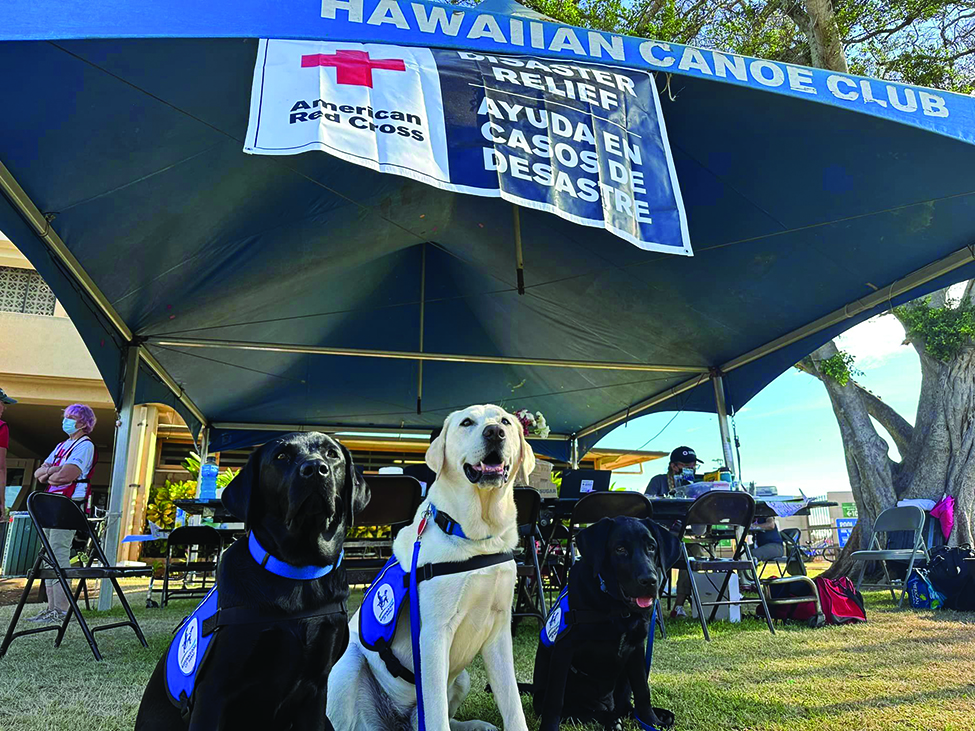
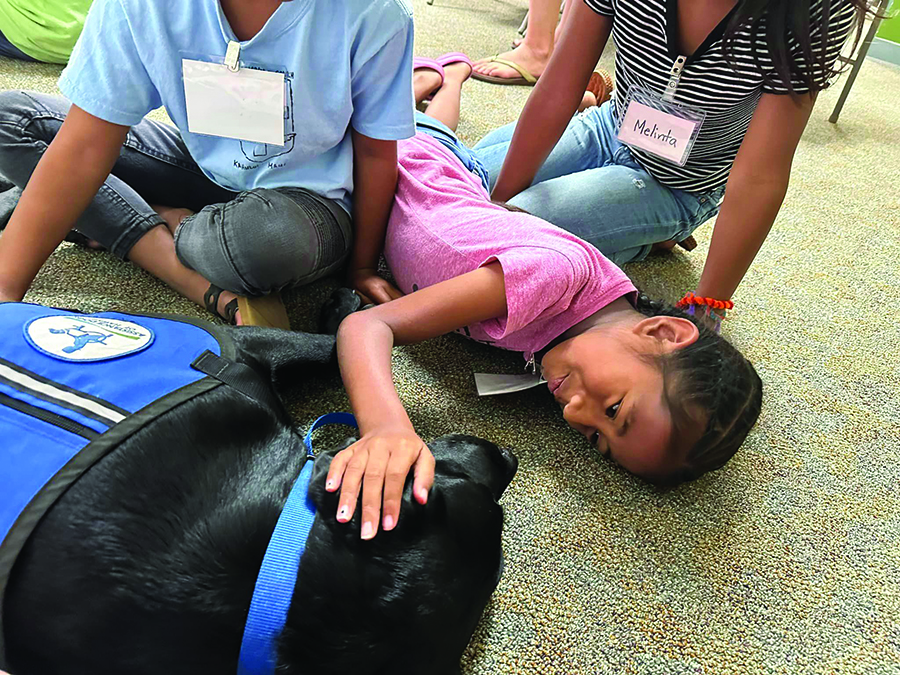
    Therapy Dog Teams startedvisiting emergency shelters, fire stations and police stations soon after the Maui fires. It’s wonderful to see people’s faces light up when they see the dogs.
    Therapy Dog Teams started visiting emergency shelters, fire stations and police stations soon after the Maui fires. It’s wonderful to see people’s faces light up when they see the dogs.

    Assistance Dogs of Hawaii (ADH) began in 2000 with a mission of training Service Dogs to assist people with limited mobility. The Maui based non-profit organization has grown over the last 23 years to provide dogs to a wide array of Hawai‘i residents with special needs.

    ADH has trained over 200 Assistance Dogs that have touched the lives of thousands of Hawai‘i residents. ADH provides Service Dogs for children and adults with disabilities and full-time Hospital Dogs that work at hospitals throughout Hawai‘i, including The Queens Medical Center, Kapiolani Medical Center, Rehab Hospital of the Pacific and Shriners Hospital for Children. ADH also provides Courthouse Dogs who help children who are victims of crime throughout the difficult legal system, and School Facility Dogs that help at local high schools. The ways that dogs can help people in need continues to grow. Assistance Dogs can help everyone from our keiki to our kūpuna.

    Assistance Dogs of Hawaii’s latest mission is providing Crisis Response for those affected by the wildfires on Maui. Therapy Dog Teams have been providing comfort to thousands of Maui residents at shelters and schools. ADH also provides support for first responders, including police and fire departments as well as FEMA and Red Cross workers. ADH adopted a puppy who was rescued from the fire in Lāhainā. She was named “Hope” and goes to school each day in West Maui, where she visits with students and comforts those who have also lost their homes.

    ADH provides all of its services free of charge and thanks to donations from individuals, businesses and foundations. To learn more about Assistance Dogs of Hawaii and how these special dogs have changed the lives of people in Hawai‘i, read Wonder Dogs: True Stories of Extraordinary Assistance Dogs.


    ASSISTANCE DOGS HAWAII (501(c) 3 nonprofit)
    P.O. Box 1803 Makawao, HI 96768
    808-298-0167 | info@assistancedogshawaii.org
    assistancedogshawaii.org
    The book is available at wonderdogsbook.com/

    Assistance Dogs of Hawaii (ADH) began in 2000 with a mission of training Service Dogs to assist people with limited mobility. The Maui based non-profit organization has grown over the last 23 years to provide dogs to a wide array of Hawai‘i residents with special needs.

  • Medicare Can Be A Slam Dunk!

    High five, fitness and senior women friends at beach with exercise, celebration and excited in nature. Sport, people and elderly females with hands in support of wellness, training or success at seaAccording to the dictionary a “slam dunk’ is a scoring shot in which a player jumps and forces a ball down through a basket for an effortless shot. Even though the player may be part of a team and has a coach — a “slam dunk” is an individual play.

    Getting set to enroll into Original Medicare is also accomplished on an individual basis. The first step is to reach out to the Social Security Administration to learn important rules that determine your eligibility and enrollment strategy.

    Coaching is available by viewing documents, blogs and videos on Medicare’s secure website at medicare.gov or by calling 1-800-MEDICARE. Many factors determine when you need to enroll and can be different from the timing for a spouse, relative or a friend. Timing is important to avoid missing your shot and incurring penalties.

    Next, you choose a strategy to secure Original Medicare. You can either register to access Social Security’s portal at ssa.gov to enroll online or contact them at 1-800-772-1213 to schedule a phone appointment. Once you submit your enrollment and follow-up to confirm acceptance, you have successfully joined the Medicare population of 63 million individuals.

    If you obey the rules, follow the basic steps and get coaching from the appropriate resources you too can hit a “slam dunk” and score Original Medicare easily and effortlessly for a winning Medicare season.


    GET2INSURANCE.COM FAMILY OFFICE
    1003 Bishop St., Ste. 2700, Honolulu, HI 96813
    800-226-3660 | martha@get2insurance.com
    Get2insurance.com

    According to the dictionary a “slam dunk’ is a scoring shot in which a player jumps and forces a ball down through a basket for an effortless shot. Even though the player may be part of a team and has a coach — a “slam dunk” is an individual play.

  • Volunteer to Protect Kūpuna

    Medicare fraud is big business for criminals. Medicare loses approximately $60 billion annually due to fraud, errors and abuse.

    When thieves steal from Medicare, there is less money for the healthcare we really need. We pay for things we may never get. We can get hurt when we receive tests, medicine or care we don’t need. Doctors, pharmacies and medical suppliers make mistakes; sometimes they straight-up steal from Medicare. Medicare is trying to crack down.

    Did You Know?

    • Hawai‘i leads the U.S. in average life expectancy at 83.1 years and kūpuna are vulnerable to scams.
    • Healthcare fraud, which includes illegal billing, is rampant and criminals are increasingly sophisticated.
    • Fraudsters want our personal identity, which threatens our safety, dignity and legacy.

    How Senior Medicare Patrol (SMP) Helps You

    Trained SMP volunteers assist beneficiaries in the first line of defense by:

    • Providing information needed to PROTECT from Medicare fraud, errors and abuse; DETECT potential fraud, errors and abuse; and they also REPORT concerns.
    • Assisting with questions, concerns or complaints and helping you understand your Medicare Summary Notice (MSN) or Explanation of Benefits (EOB).
    • Offering free group educational presentations, and one-on-one, confidential counseling.
    • Referring non-healthcare scam concerns (romance, tech support, imposter/online, gift cards, etc.) to the appropriate agency.

    Contact SMP Hawaii and learn how you can help our community protect itself from healthcare fraud, errors and abuse. We need volunteers who are caring, want to learn, can speak another language to reach as many people as possible, and understand that it takes our entire state to protect kūpuna.


    SENIOR MEDICARE PATROL (SMP) HAWAII
    Department of Health — Executive Office on Aging
    250 S. Hotel St., Ste. 406, Honolulu, HI 96813
    808-586-7281 | Toll Free: 1-800-296-9422
    info@smphawaii.org | smphawaii.org
    Facebook: smphawaii808

    This project was supported in part by grant number 90MPPG0053 from the US Administration for Community Living (ACL), Department of Health and Human Services, Washington, DC, 20201. Grantees undertaking projects under government sponsorship are encouraged to express freely their findings and conclusions. Points of view or opinions do not, therefore, necessarily represent official ACL policy. The Hawai‘i Department of Health – Executive Office on Aging has administered SMP Hawaii since 1997.

    Medicare fraud is big business for criminals. Medicare loses approximately $60 billion annually due to fraud, errors and abuse. When thieves steal from Medicare, there is less money for the healthcare we really need.

  • IRA Changes to Part D in 2024

    stethoscope on American tickets along with a boat of white pills

    The Inflation Reduction Act (IRA), which cut costs on some insulins and Part D vaccinations in 2023, continues to roll out more money-saving changes to prescription drugs in 2024. Medicare’s Open Enrollment Period (Oct. 15 to Dec.7) is the ideal time to consider how the following changes may affect your choice of healthcare insurance plan.

    No coinsurance on prescription drugs for beneficiaries who fall into the catastrophic phase of Part D coverage.
    6% limit on average premium increases across most Part D plans.
    Full financial help with cost-sharing and premiums may be possible for individuals who qualified for partial Extra Help in 2023 if they have limited assets and income less than 150% of the federal poverty level.

    Hawaii SHIP’s local, certified counselors provide unbiased information in one-on-one sessions and will screen income and assets for people with low incomes. SHIP specialists help clients submit Medicaid and Extra Help financial assistance forms and compare Medicare Advantage, Part D, and Medigap plans on their behalf. Contact Hawaii SHIP to learn more.


    HAWAII SHIP
    Free, local, one-on-one Medicare counseling is provided by the Hawai‘i State Health Insurance Assistance Program.
    250 South Hotel St., Ste. 406, Honolulu, HI 96813
    Oahu: 808-586-7299 | Toll free: 888-875-9229
    hawaiiship.org

    The Inflation Reduction Act (IRA), which cut costs on some insulins and Part D vaccinations in 2023, continues to roll out more money-saving changes to prescription drugs in 2024. Medicare’s Open Enrollment Period (Oct. 15 to Dec.7) is the ideal time to consider how the following changes may affect your choice of healthcare insurance plan.

  • Care & Self-Care Holiday Gifts

    Gearing up for the holidays often means thinking about gifts. Giving them and receiving them! Caregivers in general are givers. Most give of their time; many, of their own resources; and some give their entire personal purpose as they care for another. The Caregiver Foundation (TCF) works to support caregivers, kūpuna, and disabled adults. From managing finances, serving as conservator, acting as trust administrators, to providing complete care management and even end-of-life and estate distribution services, the overriding goal of TCF is to make life better.

    This holiday season, we wish for you and yours awareness that drives understanding. Understanding that results in compassion and compassion that spurs active support.

    Here are a few ideas for the holidays
    ✽ For sideline caregivers: Offer the gift of thanks to the main care provider and visit your loved one more often.
    ✽ For the care receiver: Give your caregiver the gift of recognition — a hand-written note or a drawing.
    ✽ For the primary caregiver: Give yourself a gift of support. Join a virtual or in-person support group.
    ✽ For everyone else: Notice the caregiving around you. Give the gift of awareness (and let that gift motivate you to find ways to support others).


    THE CAREGIVER FOUNDATION (501(c) 3 nonprofit)
    926 3rd St., Pearl City, HI 96782
    808-625-3782 | info@thecaregiverfoundation.org
    thecaregiverfoundation.org

    Gearing up for the holidays often means thinking about gifts. Giving them and receiving them! Caregivers in general are givers. Most give of their time; many, of their own resources; and some give their entire personal purpose as they care for another. The Caregiver Foundation (TCF) works to support caregivers, kūpuna, and disabled adults.

  • Dementia Care in Times of Crisis

    Caregiving for your loved one with dementia, especially during a crisis, can present special challenges. Those with dementia often do not do well with changes in their routine, making it difficult to care for them when the unexpected happens. Below are some ways you can minimize fear and confusion in a crisis:

    ✦ It is important to remain calm for both your and your loved one’s sake. Distress and chaos can add to an already stressful time. Try to incorporate as much of what is familiar to your loved one during this time. Pick up on cues your loved one may be overwhelmed, such as fidgeting and pacing.
    ✦ Stay vigilant and aware of your surroundings as they may be confusing for your loved one. Never leave them alone, as a crisis can cause them to wander and become agitated. Try to stay in a group as much as possible and share with others if you are caring for someone with dementia. This may allow you to have better control and extra pairs of eyes on your loved one.
    ✦ It is likely your loved one will become agitated as a crisis is happening. Speak to them in a calm, low-pitched tone. Limit loud noises as this may increase your loved one’s agitation and anxiety. Redirect their attention by going on walks and doing simple tasks.
    ✦ Try as much as possible to maintain their sleep schedule, medication schedule, if needed, and their regular daily activities to try and provide what is most routine for them. Extra assistance may be needed during times of crisis.
    ✦ Keep things easy for your loved one to understand. Avoid elaborate, detailed explanations and use simple concrete terms.
    ✦ Constantly reassure your loved one they are safe and in the right place, even though they are in a different environment.

    Most importantly, you must take care of yourself. Talk with others, if necessary, and share your thoughts and feelings, stay hydrated, and rest as much as possible. Pack important things such as
    medications, bottled water, weather-appropriate clothing, a cell phone charger, and a portable oxygen tank, if in use, ahead of time. Being adequately prepared for a crisis situation helps you provide a calm, less anxiety-ridden experience for your loved one with dementia.


    Support for Alzheimer’s disease or a related dementia:
    24/7 Helpline 800-272-3900 | 808-591-2771
    alohainfo@alz.org | alz.org/Hawaii
    Walk to End Alzheimer’s: alz.org/aloha

    Caregiving for your loved one with dementia, especially during a crisis, can present special challenges. Those with dementia often do not do well with changes in their routine, making it difficult to care for them when the unexpected happens.

  • Game On!

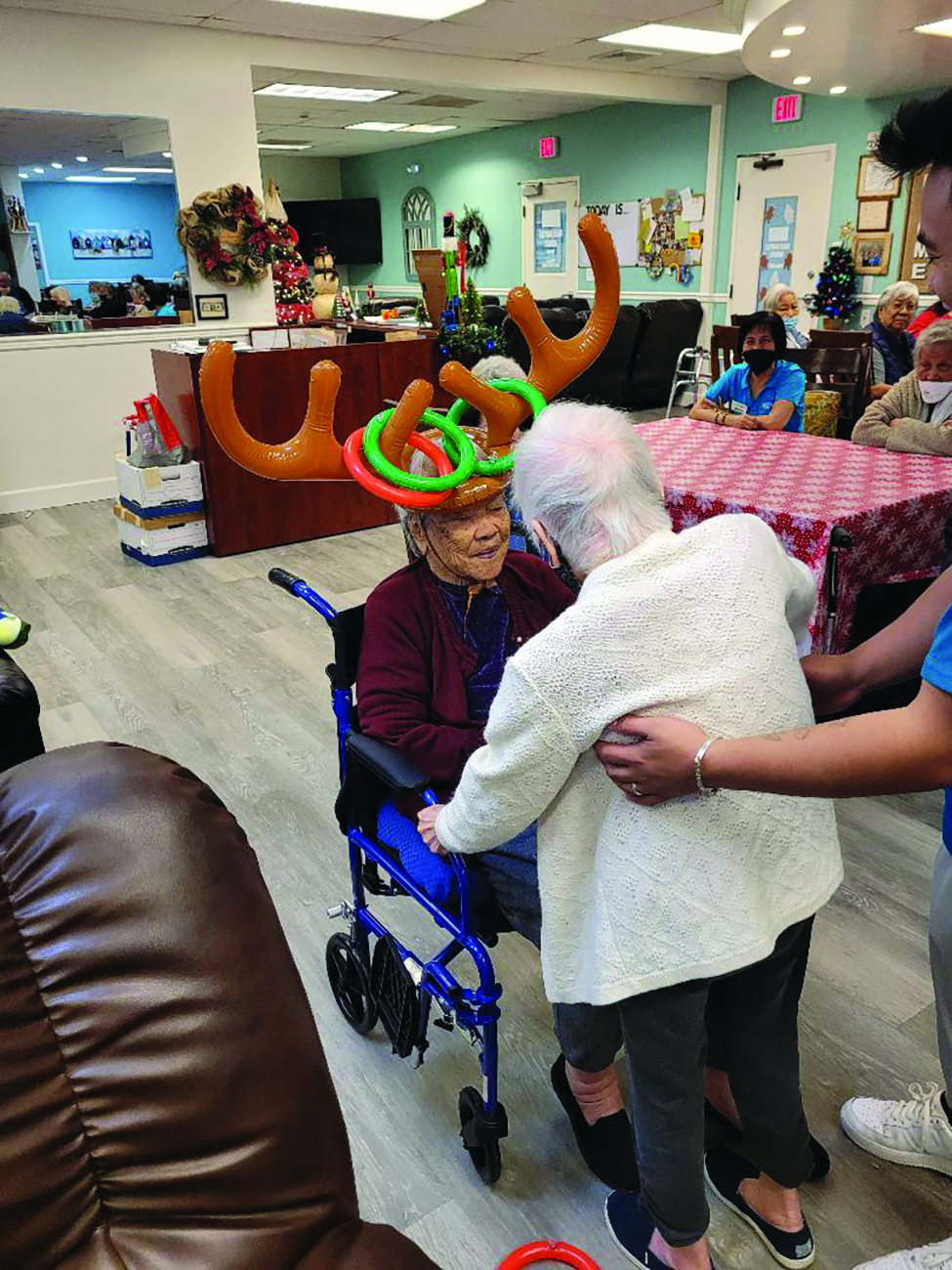
    Since this issue is focused on the Sports world, I thought it would be fun to show the “sporting events” that are held in adult day care centers!

    Adult day care center are important to persons living with dementia or disabilities, or for any senior who is living alone and needs to stay active. It is proven that keeping active, both mentally and physically, helps slow the progression of dementia. During the pandemic, many ku¯puna weren’t able to follow their “routine” of being social, exercising, being mentally stimulated, and having fun while apart from their caregivers. This, of course, was not the fault of family caregivers, who were also impacted by the shut-downs. Many noticed a severe decline in the physical and cognitive abilities of the loved ones they cared for, because of the lack of activities and socialization with their peers.

    “Sports” activities like batting (with balloons and swim noodles), Fishing, Corn Hole and Chair Hula are simple but fun ways to exercise, both physically and mentally, and make for a better quality of life as we age. And an Antler Ring Toss is a lot of fun at Christmas!


    HALE HAU‘OLI HAWAI‘I (501(c) 3 nonprofit)
    98-1247 Kaahumanu St., Ste. 207, Aiea, HI 96701
    808-292-4665 | kwyatt01@aol.com
    halehauolihawaii.org

    Since this issue is focused on the Sports world, I thought it would be fun to show the “sporting events” that are held in adult day care centers!