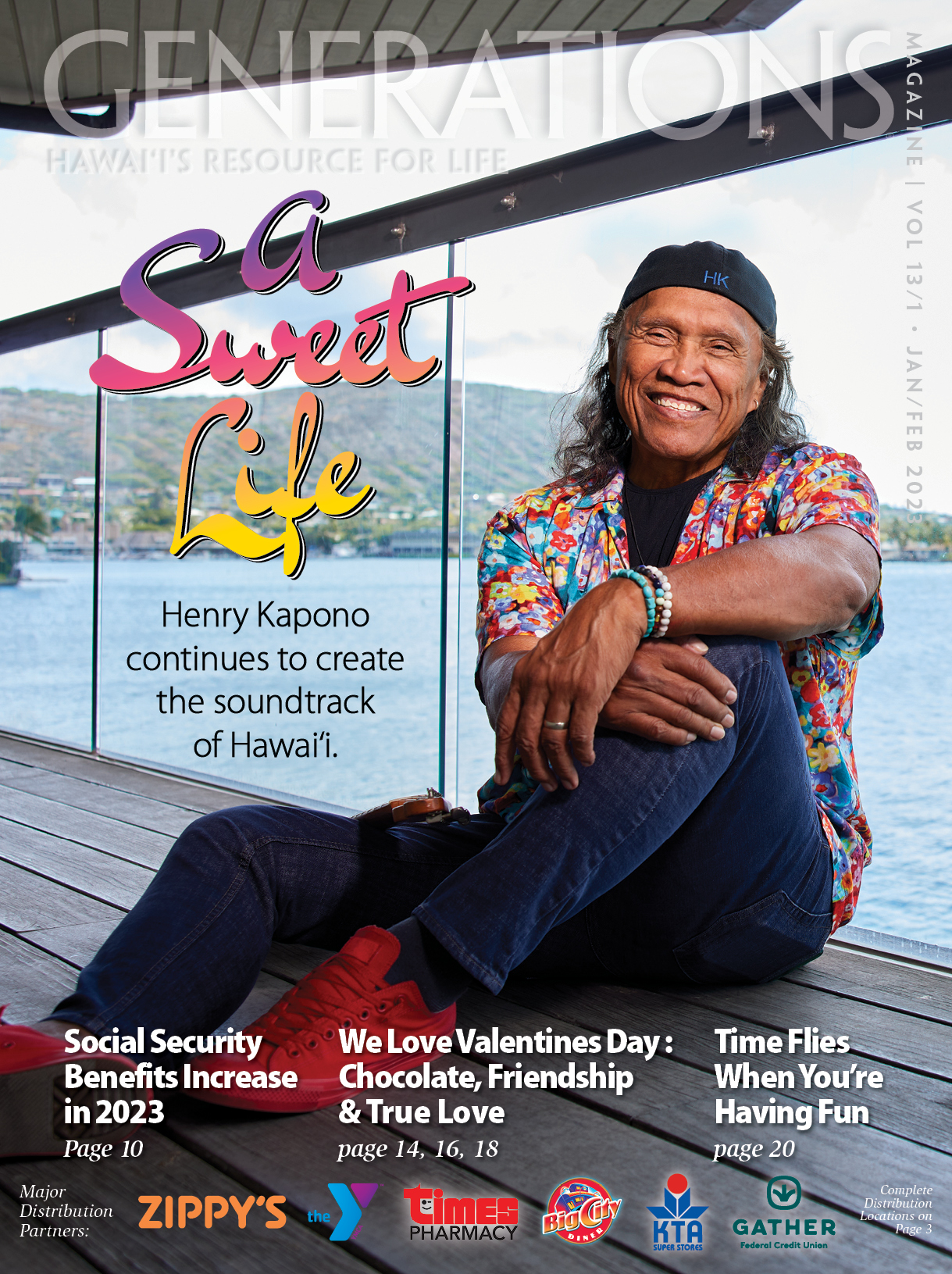
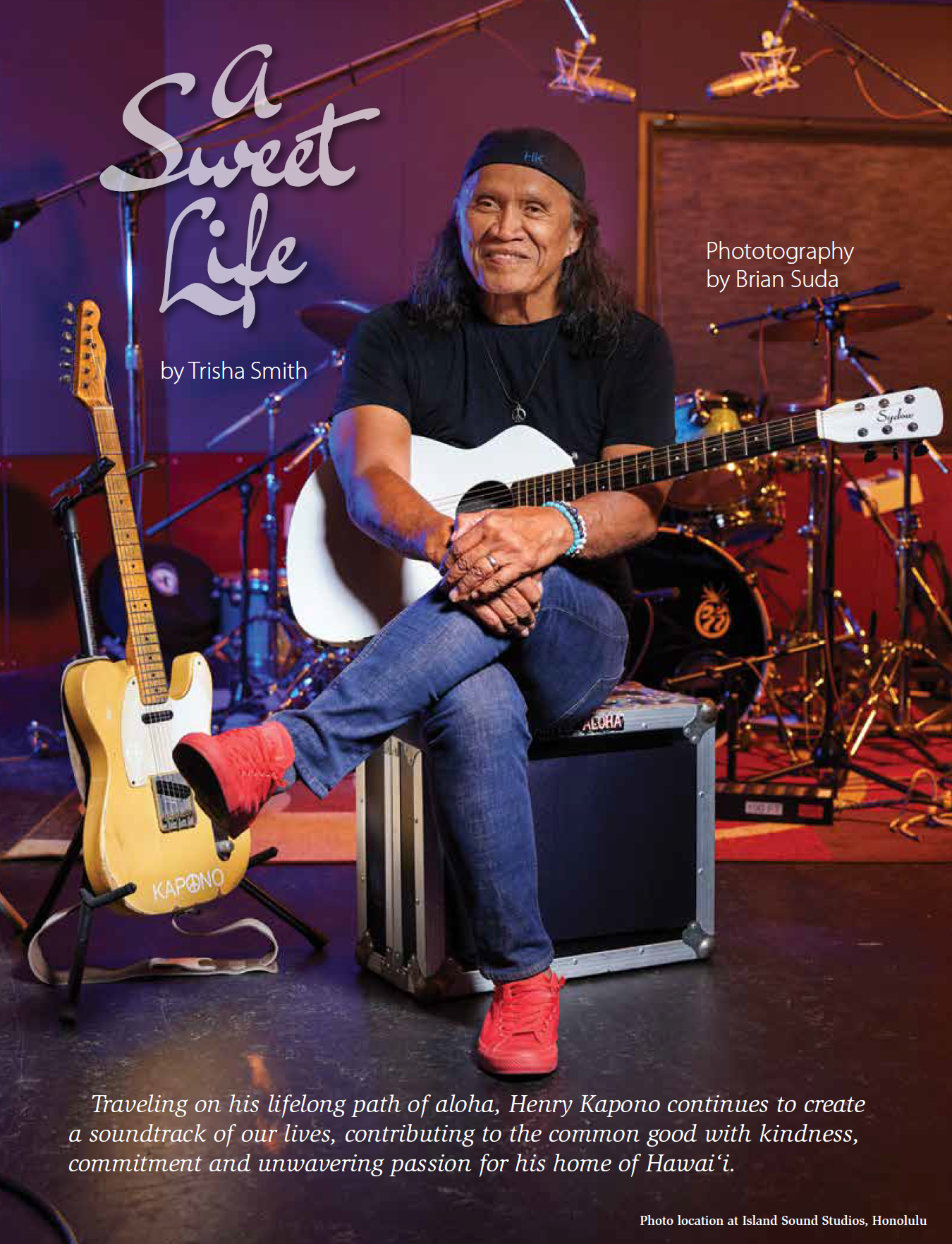
Many claim they are leaving a legacy, yet Henry Kapono Ka‘aihue lives his every day, instilling pure aloha into everything he does. In his alleged “Golden Years,” when most are retired or slowing down, this remarkable music man has no intention of doing any of that any time soon.
“I get to pick up my guitar and play every day — play for people and I stay happy,” says the Grammy-nominated Hawai‘i singer/songwriter. “I think retirement sometimes takes the ‘oomph’ out of life. What now, unless, you have a solid Plan B? I love staying in Plan A. It’s working.”
“Retirement” is not in his vocabulary and he doesn’t believe any artist should stop creating. “Every day is exciting to figure out who you are and what you are doing, and how you can be even better.”
The 74-year-old is happy, healthy and grateful for his “Sweet Life,” as his new song by the same name professes. He has no desire to pump the brakes on performing, and Henry will always be about sharing the stage with good friends, making music and giving back to the community, culture and the arts through kindness, commitment and unwavering passion.
“That was Plan A. And it’s been working, so we’re sticking to it,” Henry shares, with his famous smile. “I am grateful for the love and support I have had through the years and even more grateful I can give back to Hawai‘i and future generations. I’m truly blessed!”
The Essential Henry Kapono
Henry Kapono is an ambassador of aloha. He is a household name across the isles. He is a respected vocalist, guitarist, songwriter, composer, performer, actor, author and family man, and a friend to many around the world. Fans have followed Henry from Pakalolo to The Rough Riders (a collaboration of Brother Noland, John Cruz and Henry) to his best-selling solo days. Most recognize him as half of Cecilio & Kapono (C&K), the trailblazing band that will be forever connected to the history of Hawaiian music.
“If the music could just get beyond the reef, I knew it would cause something,” says Henry of the C&K heydays to his groundbreaking “Wild Hawaiian” solo album.
Henry is a Grammy-nominated singer/songwriter with 21 Nā Hōkū Hanohano Awards, a Grammy Museum honoree — the State of Hawai‘i even gave him his own day — June 3.
He’s earned accolades for his music, children’s book, performing and philanthropy. Henry is always energized and recently quite busy keeping up with his bustling gig schedule.
At the end of the day, though, he’s focused on his family, community, music and those sharing his journey, with a commitment to the future of music in Hawai‘i. He still thinks of himself as the dedicated athlete and free-spirited local boy born and raised in small town Kapahulu, just outside of Waikīkī, who must have a guitar in his hands and positive vibes surrounding him every day.
Reflections arise often, lately, he admits. He’s found a deeper appreciation for early inspiration and exploring moments that shaped his life. On the other hand, he’s writing songs with zeal, creating contemporary music and forever motivated. “Kapono,” his middle name and part of his stage name, means “righteous or good” in Hawaiian. He strives to embody that throughout his life in everything he does, especially music.
“Our kuleana is helping others navigate their musical paths and provide guidance,” he says.
The Road Not Taken
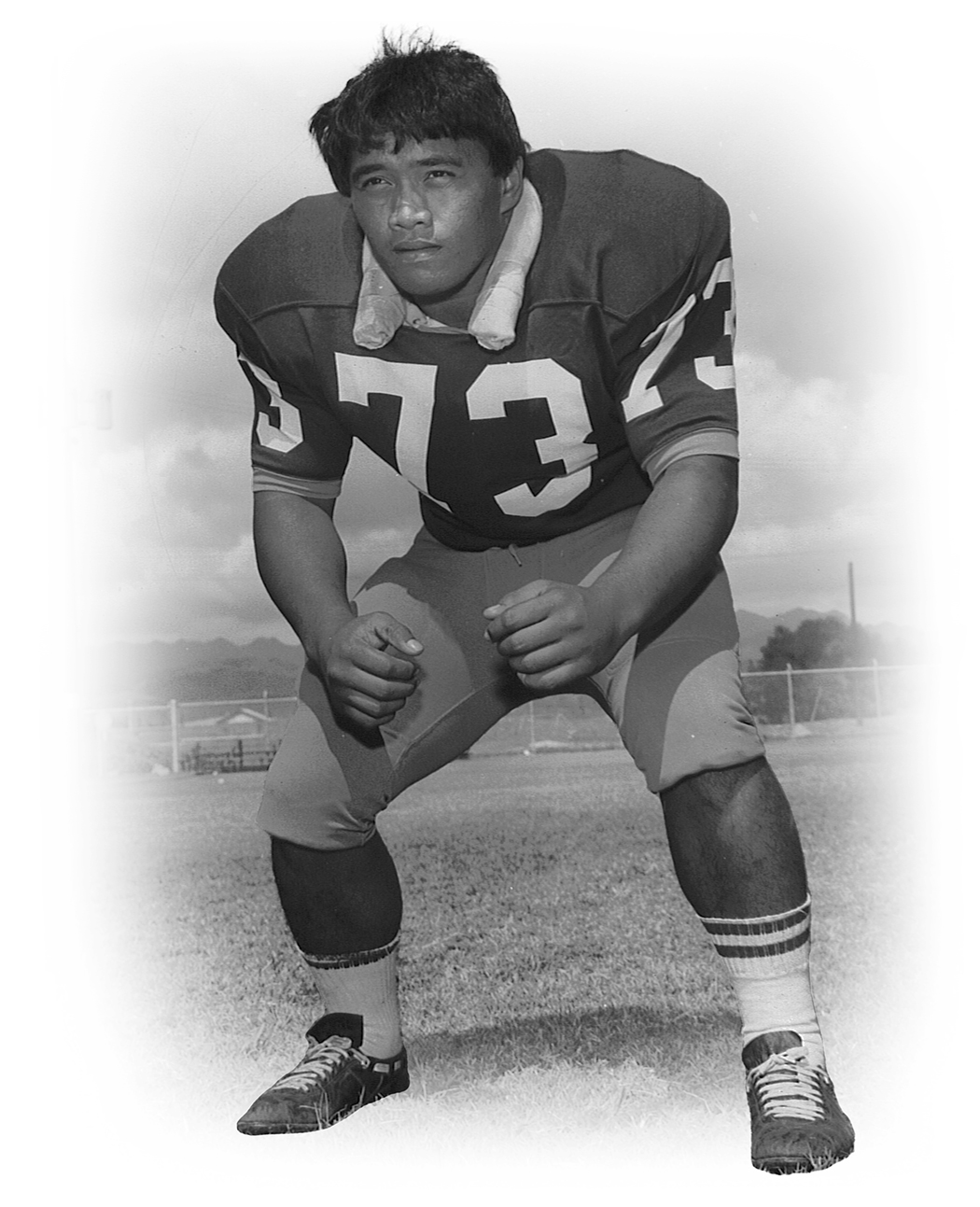
Henry was a “pure jock” who excelled in wrestling, track and most specifically, baseball and football. He received a baseball scholarship to Punahou Academy (the Honolulu college prep school is former President Barack Obama’s alma mater) and a football scholarship to the University of Hawai‘i (UH).
“Baseball was a very special time for me, mainly the Little League days when I made some really good friends who taught me a lot about teamwork,” says Henry. “I still carry those lessons with me to this day.”
“Today, my son has picked up a passion for football, and I am excited to support him and see where he takes it.”
Henry grew up surfing Waikīkī Beach, minutes from his family’s house. “That was my playground, but I’m not catching waves there anymore. It was a little less crowded in my day.”
“I have a good life, had a good life and still have a good life,” says Henry, with his ever-present, luminous grin.
Henry’s name could have been inscribed in sports halls of fame rather than musical history books. “My goal was to play in the NFL,” says Henry, a gifted defensive end. “I put 100 percent into every play and that got me far.”
Henry experienced a knee injury that eventually healed. Yet a sonic path chose him after a fateful musical tour in Vietnam.
He recalls when one of his coaches and lifelong mentor, Charlie Ane, pulled him aside and shared words of wisdom quite contrary to popular advice: “Sometimes you gotta do what your mind tells you and not what your heart tells you.”
He also has fond memories of his former UH football coach, Larry Price. “He taught me so much… so many life lessons,” Henry says. “My coaches taught me a lot — not just about sports, but about life.”
“There was a sign in the Punahou locker room that read, ‘A winner never quits and a quitter never wins.’ This is what I live my life by,” Henry says.
Family & Friends
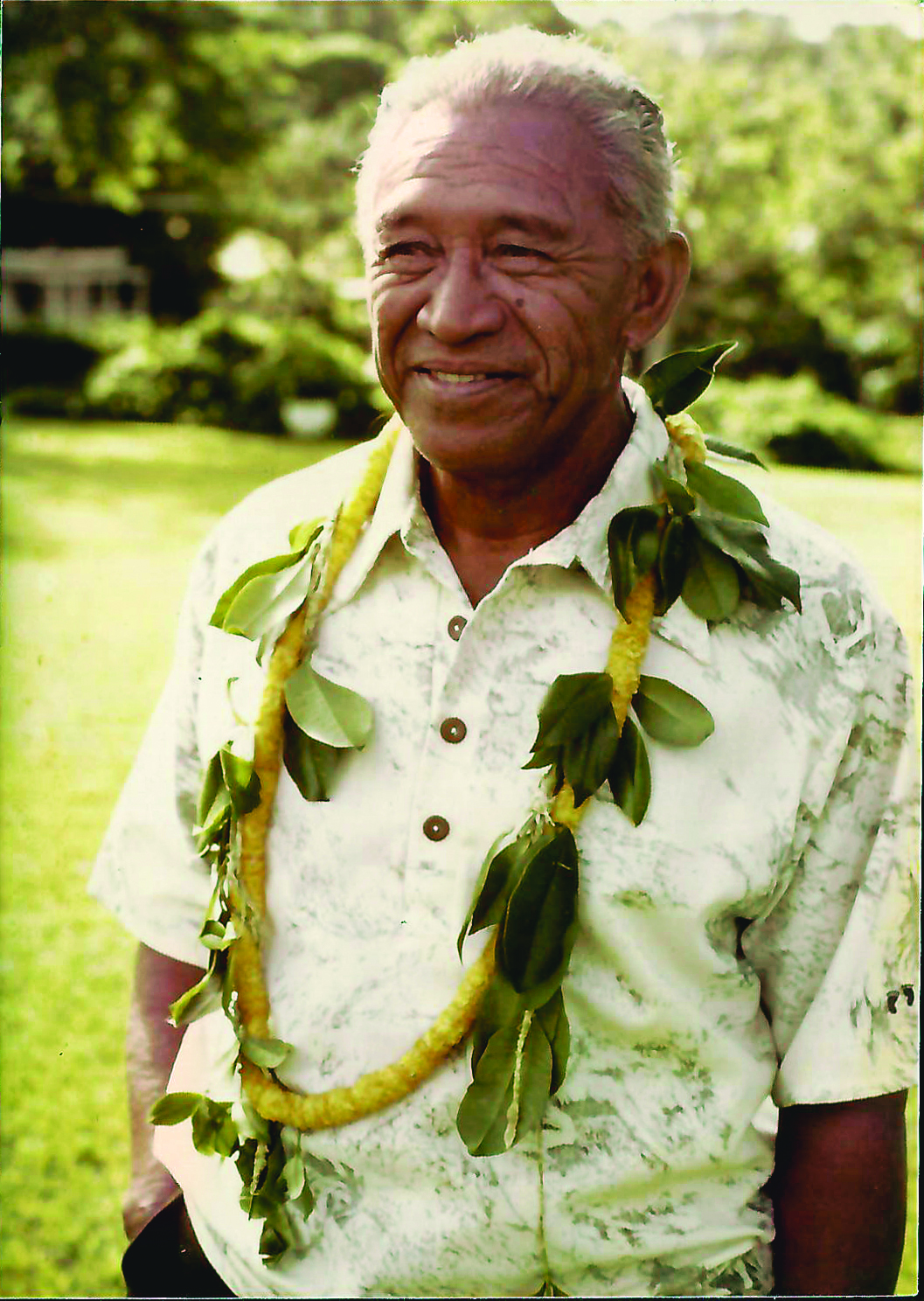
It’s no surprise Henry comes from a large, loving Hawaiian family. He’s blessed to say they were his biggest mentors in music growing up. “I was very fortunate to have my family support and inspire me in everything I did.”
Henry is one of eight siblings, with five sisters who kept him kind, in line and on his toes. “I was always amazed by my one sister, Nona, who could pick up anything and play it.”
Henry found choir at an early age, then learned guitar and ‘ukulele by listening. “My dad would come home from work every day and play his ‘ukulele and fall asleep in his chair, but every once in a while, he would teach me a song or two.”
Now, the world is teaching each other Henry Kapono songs as his music continues to transcend generations.
He’s also been reminiscing about early friendships and experiences. His father always said he would be lucky to count his good friends on one hand. “I’ve been thinking about it lately and realizing how many great friends I made, and how much they taught me about friendship. You always remember them. Those are good days,” says Henry.
“I make friends every day, but it made sense after a while… Think about the friends that really back you up and are there. I realized what he meant.”
“Henry Kapono is the absolute best,” says Keola Beamer, a Ki Ho‘alu Master celebrated for fusing Hawaiian roots with contemporary music, as one of the Beamer Brothers and the composer of “Honolulu City Lights.”
Keola and Henry are both dearly loved by Hawai‘i’s music community. They tour together as the show Legends and remain dear friends over the years. Henry admits it’s quite a thrill to realize they’re both still out there making music and spreading the goodness of aloha.
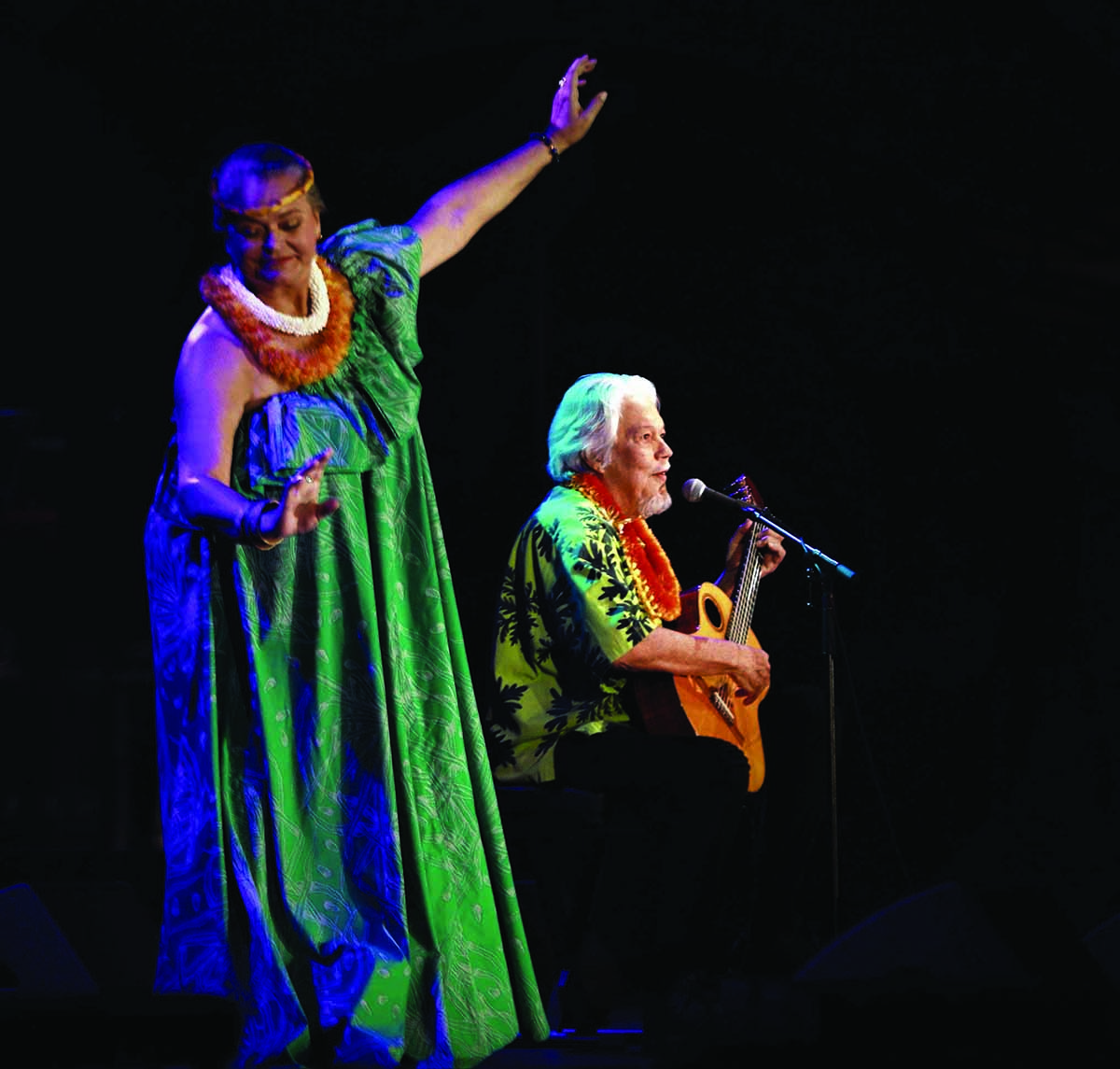
Amy Hānaiali‘i, Maui’s award-winning wahine with a famous falsetto, remains a close friend with Henry and his family; their keiki have been friends since birth. She often shares the stage with Henry and continues to be in awe of his inspiration. She knows he’ll be a part of the soundtrack of Hawai‘i — always.
“Henry is an icon with an amazing career still to this day,” says Amy, a six-time Grammy Award winner. “He’s kind, loving and loves his home and family.”
Initial Influences & Collaboration
Back in the late ’60s, Henry experienced one of his guitar heroes — Jimi Hendrix — live on O‘ahu during one of his few trips to the Aloha State.
Henry giddily recalls, “He came and played one night, and played about three songs, then stopped and said, ‘Keep your ticket stubs and come back Sunday.’ I guess the sound wasn’t happening or he was too stoned, but he came back and he played intensely for three hours Sunday… it totally blew me away!”
The 17-year-old Henry wouldn’t have believed it if he had not seen Hendrix “actually making those sounds” from his guitar. He definitely absorbed some raw Hendrix energy.
“In the ’70s, every artist had their own sound, their own vibe and thing they were putting out there — Jimi, Carlos Santana, Chicago, Janis Joplin, Linda Ronstadt, The Eagles… My favorites include The Young Rascals and Grand Funk,” Henry reminisces. “Those artists back then had magic, they gave it their all onstage and they inspired us all.”
Guitarist Cecilio Rodriguez was in the band Unicorn when Henry noticed his playing and energy. They had dinner together in 1972 and C&K was born that very night. “It was meant to be,” says Henry. “The first song we played — it was like we rehearsed. A light switched on. We looked at each other and went ‘whoa.’ By the third song, we agreed we needed to start something and that was it.”
In a matter of one day, they learned 30 songs together.
Their first performance was in Haleiwa on North Shore O‘ahu opening for a rock group. The following year, that same rock group was their opener at the Waikīkī Shell.
C&K hit fast fame opening for Boz Scaggs, Santana, America and Peter Frampton, to name a few. They were often compared to the legendary duo, Simon & Garfunkel. Henry grins the most, though, while sharing a story about the night C&K opened for Frank Zappa in 1973 at the Old Civic Auditorium. “I think it was our biggest stepping stone.”
“We did our 15 minutes and got off stage… people were roaring,” recalls Henry.
They left the stage quickly and were starting to pack up to go work when they were stopped by Zappa himself. “Where are you guys going?”
Frank said. “Well, they’re still cheering for you, so get back up there.” “Artists of that caliber never do that,” says Henry.
C&K soared during their hana hou, then headed to their club, Rainbow Villa, which had a line around the block. “The club was empty the first three months we were open… that night changed everything.”
This experience stayed with him throughout his career and he vowed to always share the stage with up-and-coming artists.
“Zappa’s exterior can be rough, but he is very intelligent and kind,” says Henry. “His music is way out there, but that’s who he is. I love that about music. Be you.”
History, Influence & Inspiration
C&K were leaders in forging a fresh sound of the ’70s in Hawai‘i, melding rock, pop and blues like never before. Yet, as the ‘ukulele, lap steel guitar and classic Don Ho covers were resonating throughout Waikīkī, C&K was sharing new guitar sounds with an island twist that shook the music industry from Hawai‘i to Hollywood.
He didn’t realize at the time what Cecilio and he were cultivating — a sound so powerful and a part of so many lives. “It just happened,” he admits. “I knew of Cecilio
before I left for Vietnam, but when I came back, our mutual dear friend, Johnny Isara, suggested we should get together. That dinner changed both of our lives.”
 That dinner of destiny almost didn’t happen. Prior to it, Henry had embarked on six-week tour in Asia in the late ’60s that turned into a two-year ordeal he luckily survived.
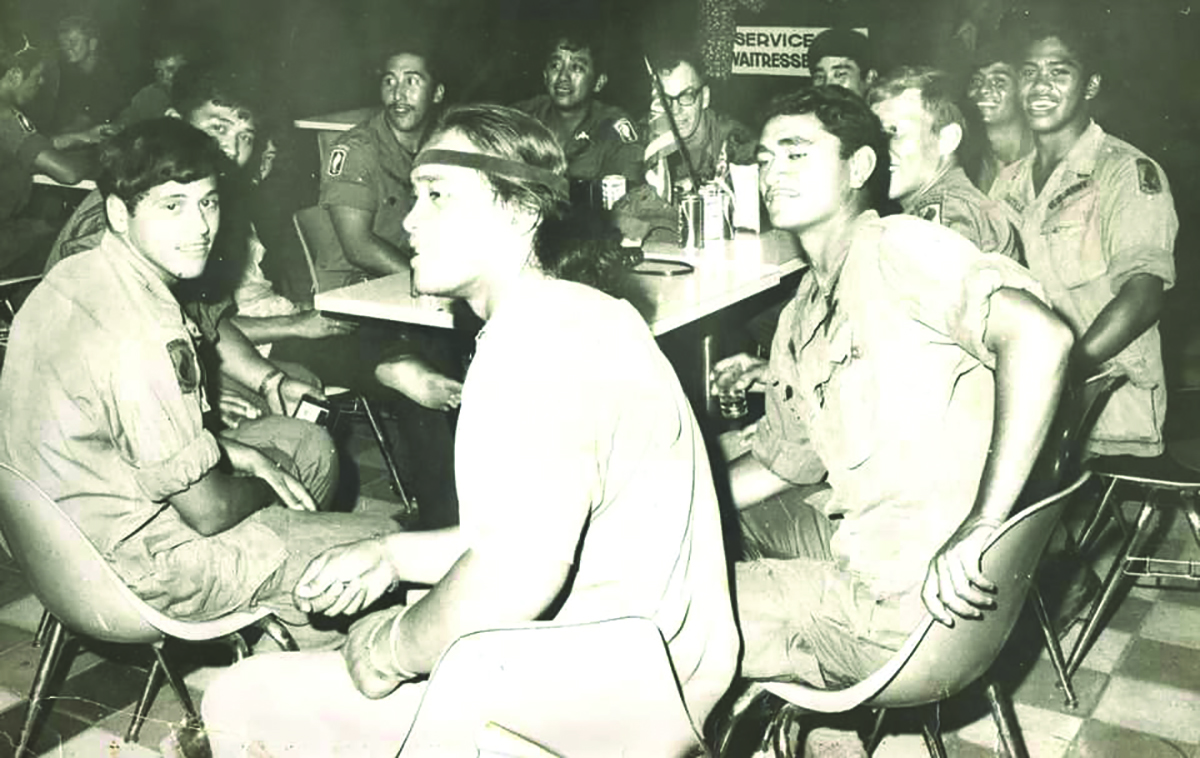
The 19-year-old Henry traveled with his power trio, Pakalolo, to Thailand with Chicago duo Twin Sisters for a month. “Then, just as we got to Vietnam, our management company closed up… it’s a long story, but ultimately, we were stuck.”
“It was spooky — war going on with cannons going off, blasts… the military is running around,” Henry recalls with an exhale. “We lived on rations, got paid $20 a month… but then we learned how to spend. We learned about life.”
 “I played my guitar eight hours a day — slept with it, ate with it… it helped me survive,” Henry says. There were a lot of close calls. “I felt a close relationship with God then… it was scary and made me realize how vulnerable we are.”
He played for the troops for a year in Vietnam and ended up back in Thailand for another year before earning enough to return to Hawai‘i. He came back with a whole new vision, drive and purpose. He committed to music his way and the universe delivered him a creative partner in Cecilio.
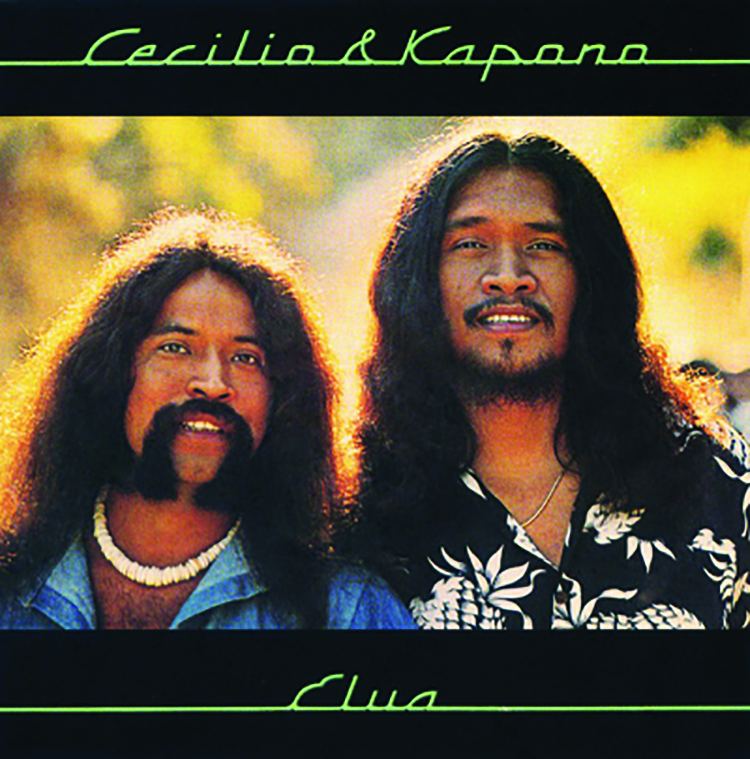
Henry and Cecilio billed themselves as Cecilio & Kapono, aka C&K. Within their first year together, Columbia Records signed the new duo to a three-album deal, a historic business deal for a Hawaiian group.
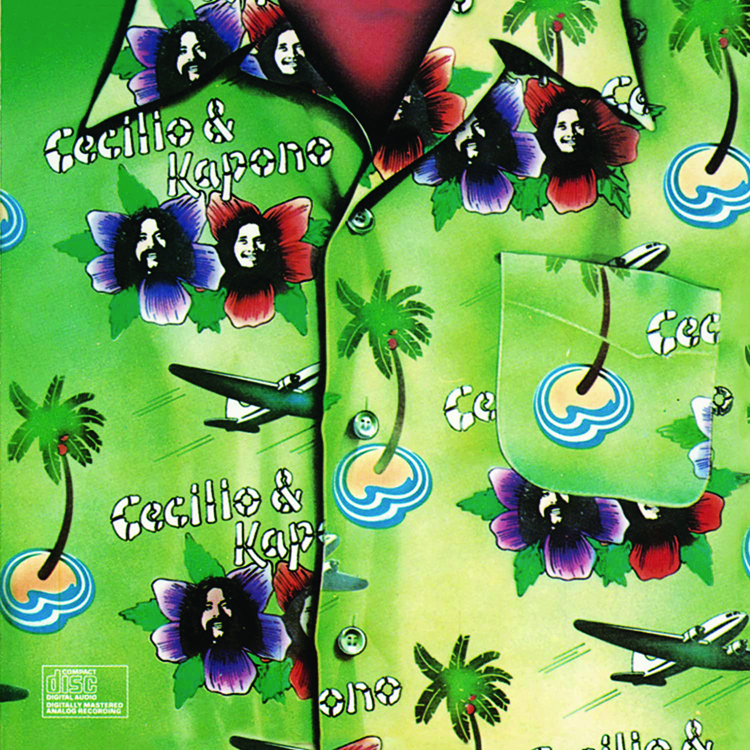
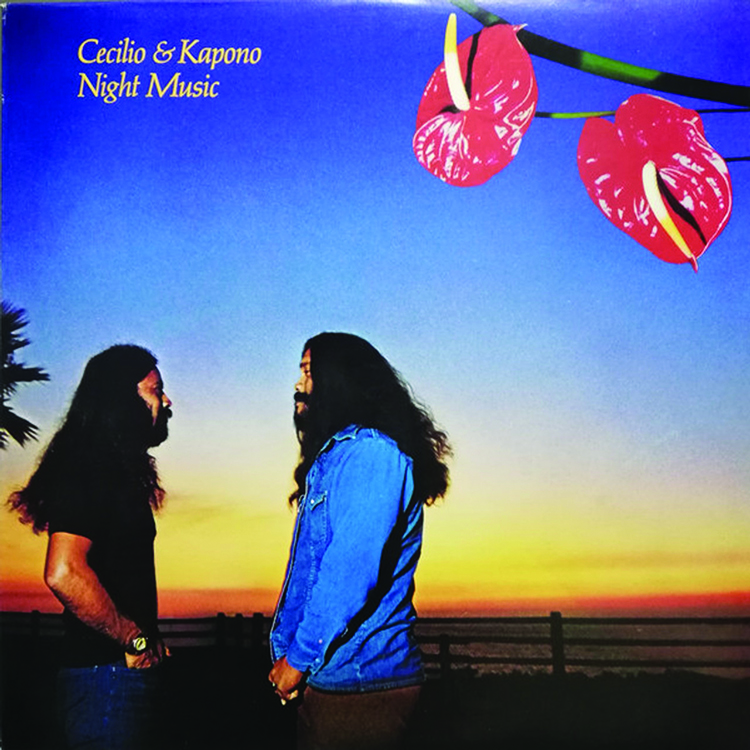 Before the duo parted ways, the collaboration would produce a total of eight albums, making an indelible mark in the history of Hawaiian music.
Henry keeps the spirit alive by performing The Songs of C&K shows, which O‘ahu and Maui fans enjoyed in December. “It’s fun to pay tribute to the songs people grew up with and loved and passed onto their children. Generations are still listening to it,” says Henry. “They’re still playing on the radio. Amazing.”
“I often tell Henry when I’m on stage with him that when it comes to the songs of C&K, one knows what perfume they were wearing and who their first love was,” shared Amy.
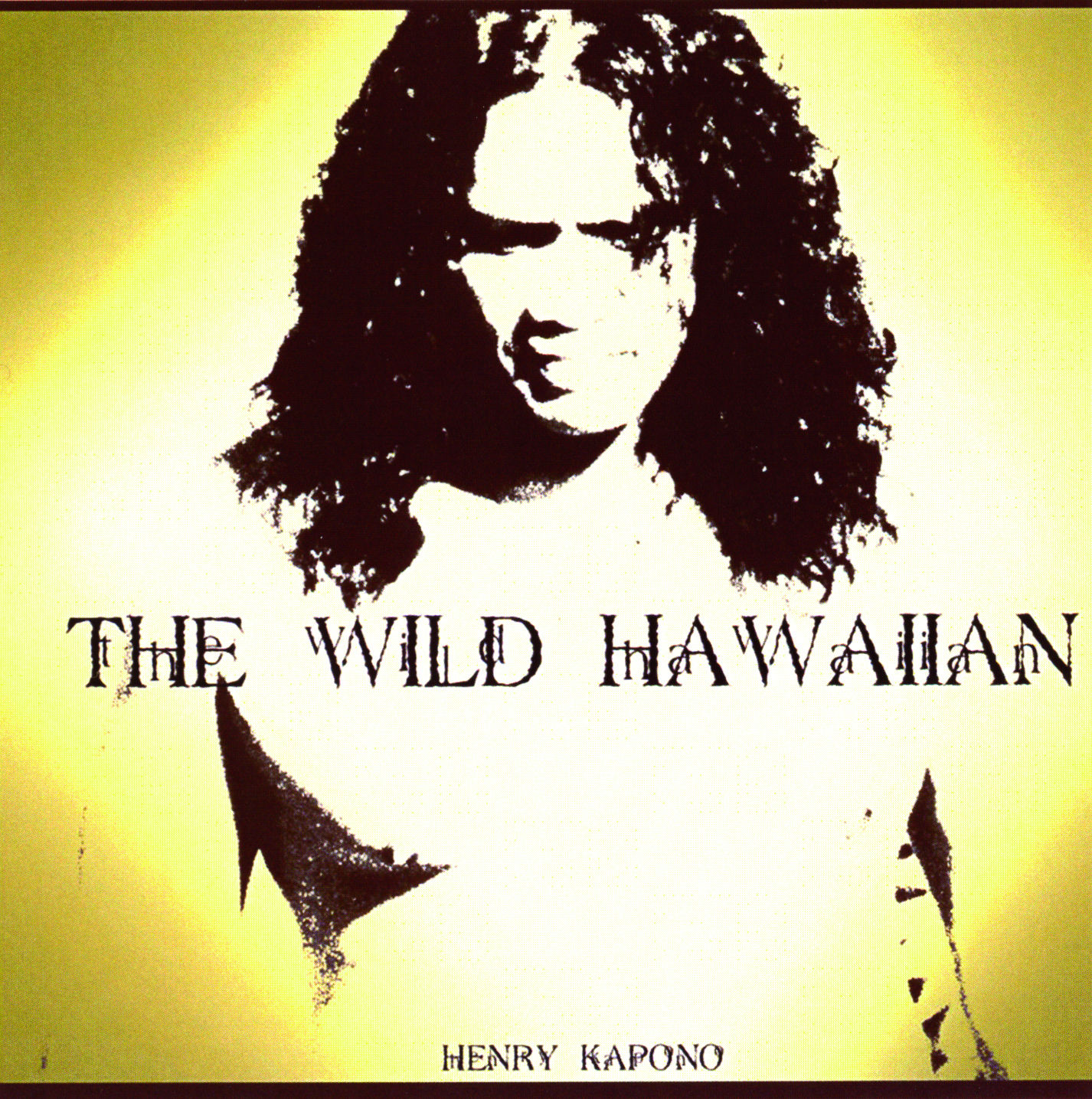 After C&K, Henry enjoyed solo fame with “Kapono: Stand in the Light” in 1981 and produced more than a dozen albums, including favorites such as “Duke’s On Sunday” and “Wild Hawaiian.”
The latter is the most critically acclaimed and was nominated for a Grammy in 2006, which sent Henry on another wave of stardom. He reminisces about his Hendrix experience and admits it was channeled into this album.
As a pure Hawaiian, Henry has been frequently asked why he doesn’t do a Hawaiian album. “I wasn’t raised in the Hawaiian language as many Hawaiian artists have been since,” shares Henry. “There are so many great Hawaiian musicians who live and breathe the Hawaiian language, and do such an amazing job with the music and culture. So when I decided to do a Hawaiian album, I decided I was going to do it my way. The ‘Wild Hawaiian’ name came about during a rehearsal, as we were jamming hard. My drummer exclaimed, ‘That’s wild!’ The rest is history.”
 Henry’s extraordinary prowess and versatility has guided generations of the impactful and courageous artists of Hawai‘i, including the late, great Willie K (Kahaiali‘i) of Maui and Tavana, the renowned one-man band from O‘ahu.
“Henry Kapono has had a tremendous impact on me as a musician,” Tavana says. “His kindness and acceptance of me and many other musicians has inspired me to be a better player and human.”
Henry is a hero, but also a comrade to many fantastic singer-songwriters.
“Henry has influenced every contemporary Hawaiian musician/singer, either directly or indirectly,” says John Cruz, beloved Grammy Award-winning artist and former bandmate of Henry’s. “For my generation, his songs were part of the soundtrack of our lives. What makes him particularly special for me is he continues to create beautiful songs that resonate today!”
“I appreciate them and love all of them,” says Henry. “I’m glad to be an inspiration and they are inspiring to me. They have a lot to give to music and they do with passion.”
Paving a Road for Future Generations
For a super star, his fans really appreciate Henry’s team attitude. The camaraderie and support of fellow creatives is something Henry is really proud of here in Hawai‘i. “There is no other place like this in the world.”
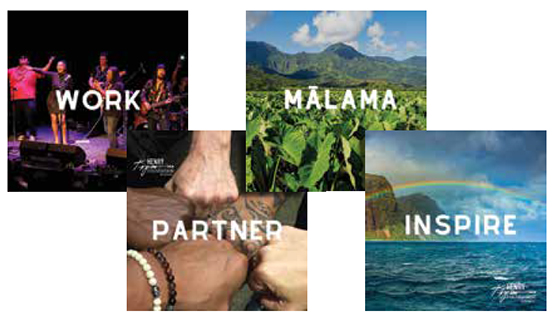
Henry continues to create paths which ensure future artists have support along the way. In 2018, the Henry Kapono Foundation (HKF) was founded by Henry and his wife, Lezlee, as an opportunity to give back and perpetuate his lifelong passions across his “Home in the Islands.” Henry is dedicated to keeping Hawai‘i’s music and culture thriving by providing education and assistance to the music community. HKF understands the challenges of the working artist, and strives to foster and guide Hawai‘i musicians with business education, digital resources, grants, scholarships and financial aid opportunities.
“The plan is to keep the music industry thriving here in Hawai’i by creating programs and resources to empower everybody,” says Henry.
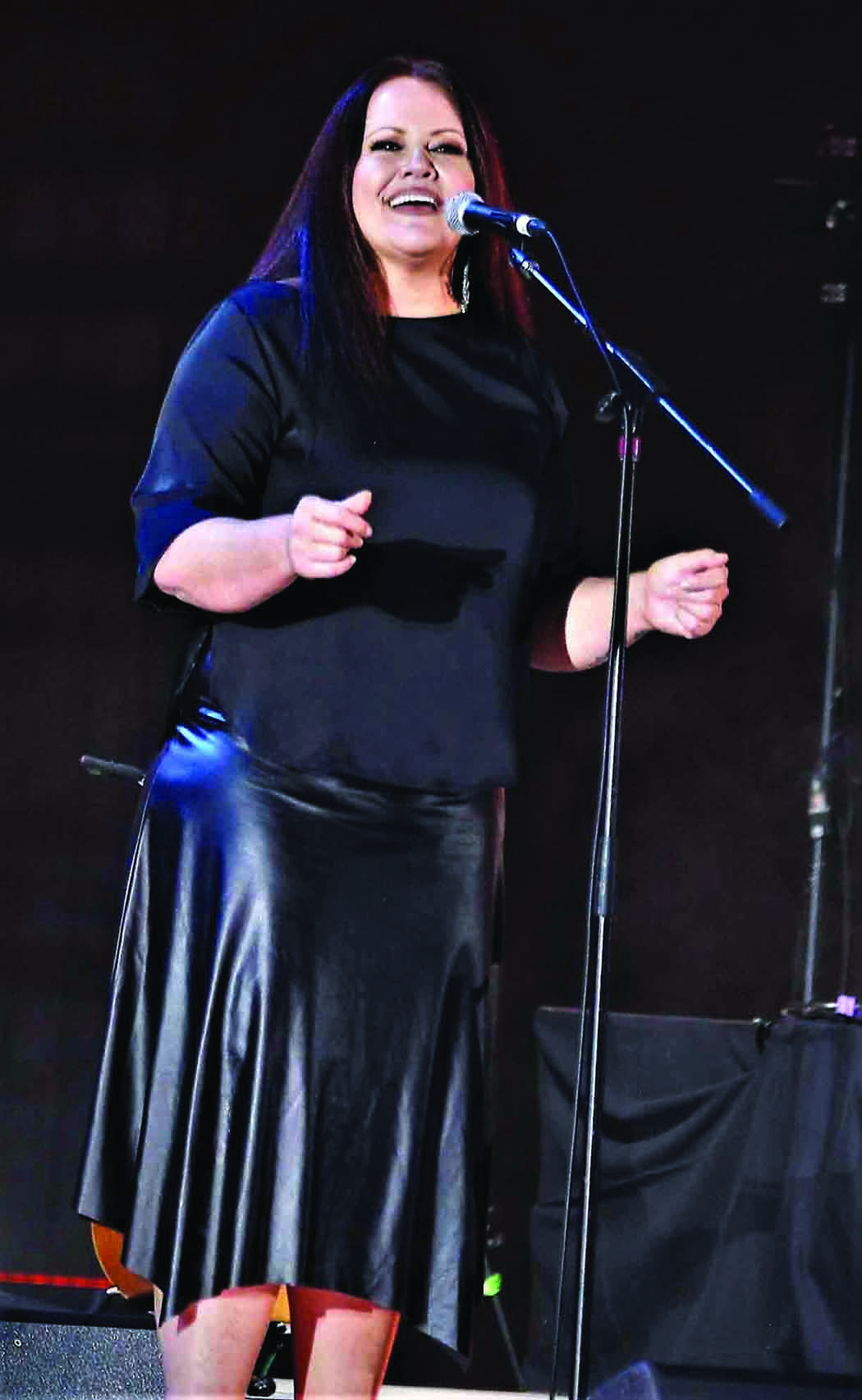
 “There is not an artist in Hawaiian music who doesn’t have immense respect for Henry Kapono,” says Kimié Miner, a celebrated singer-songwriter and loving wahine in the next generation of leaders.
As a native Hawaiian singer/songwriter/artist, she observes that “he demonstrates a high, yet humble standard for how to uphold our powerful, collective mele, while simultaneously upholding support and service to the community” through such programs as HKF.
“Together with his wife, Lezlee Ka‘aihue, they champion the importance of staying connected to the origins of our culture, language and lineage through music” she continues. “Henry is synonymous with kindness; he is a one of a kind… and a true friend.”
HKF shifted focus to musicians during the peak of the pandemic. HKF was able to gift $200,000 worth of Foodland cards to nearly 400 families of artists affected through HKF’s We Are Friends… COVID-19 Relief Program, in partnership with the Kawakami Family.
 Lezlee and he crafted this benevolent idea, feeling empathy for the community. “She does all of the bookings and had to wipe those calendars clear,” Henry says. “We got the $500 gifts cards out immediately, as everyone was in shock in the music industry. We wanted to help them eat, support their families; make positive moves forward.”
HKF (www.henrykaponofoundation.org) continues to support the music community after the stages started reopening with We Are Friends 2.0 and other programs, grants and scholarships. It’s exciting to ponder the possibilities this foundation will have on future generations.
 During the COVID shutdown, Henry served up regular doses of personal aloha with over 200 YouTube episodes of “Henry’s Positive World.” He would share virtue cards with positive messages and sing a song related to each. “It reached so many globally, helping a lot through a tough time. People are still coming up to my wife and I expressing gratitude. It feels amazing to be there for others.”
“I wouldn’t be able to do what I do without her,” says Henry. “I have a really good team that keeps me in touch and connected. Teamwork definitely makes the dreams work.”
There’s No Place Like Home
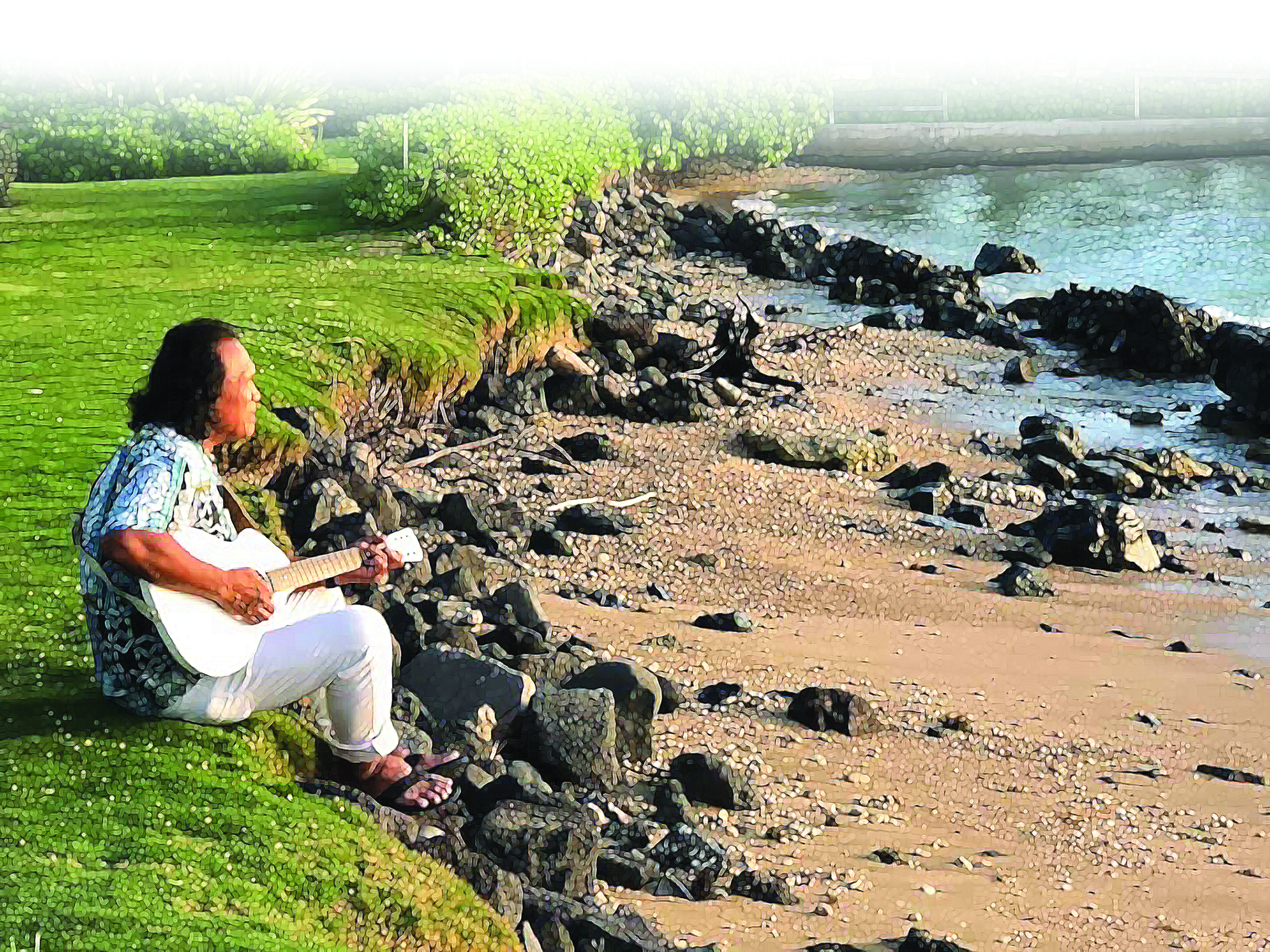
His grueling schedule kept him traveling for years, with six months of touring and two weeks home — repeat. While back in Hawai‘i on a break in 1977, he took a drive and soaked in an oceanside moment. He was overcome with the beauty of his home and felt calm for the first time in a while. He had an overwhelming sense to be here more. He thought, “What am I doing out there?! I’m coming home.”
He let his management know that he was going to base himself in Hawai‘i and would hit the road as needed from here. Henry sought to craft an extraordinary life, helping the world truly understand the meaning of aloha and supporting the music of Hawai‘i for many generations. That was over four decades and it’s all going to plan.
Coming back home and being in the spotlight here has always “been enough,” but Henry understands the plight of a local artist and those luminous dreams of stardom. “LA wasn’t for me.”
“We all grew up with those dreams and an idea of what we want in this life,” says Henry. “My advice is to be grateful for what you have right now. Talent only takes you so far. Work hard and understand good things will come if you really put in 100 percent of your heart and soul. There’s no less than that. Anything less, you’re not ready.”
While signed to Colombia Records, a manager shared this with him: “The music business is 80 percent business and 20 percent talent.” That was hard for him to swallow then. He soon realized business is the vehicle that helps you move forward so you can continue to stoke the fire.
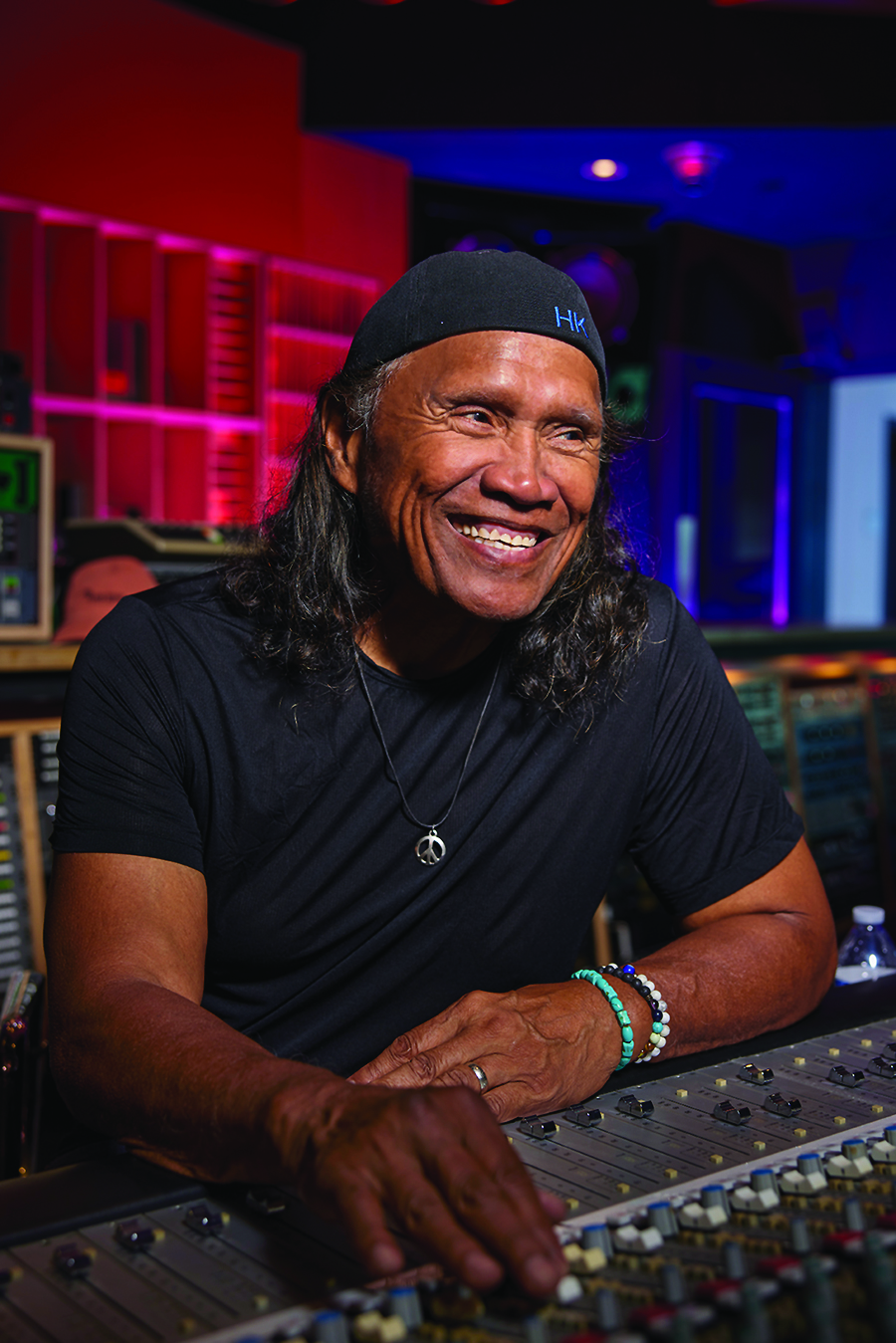
When he met his second wife, Lezlee, those realizations resurfaced. He was thrilled she offered to be his management.
“Behind every good man, there’s a great woman” and Henry realizes how blessed he was to meet his “White Rose,” as the anniversary song he wrote for her professes.
“How hard could it be?” she said about taking on managing a musician. “About a month later, she realized she didn’t like the business,” Henry shares with giggle. “Luckily, she stayed with it and understood it, and now we are a great team. We are connected and we make things happen. We know what we want out of what we do, and it’s a great partnership. A great life!”
He continues, “Our goal is to reach all levels… we are doing the best we can for not only us, but for everyone. We truly care about the music industry and the people in it. Our vision and goals all focus to keep the music thriving.”
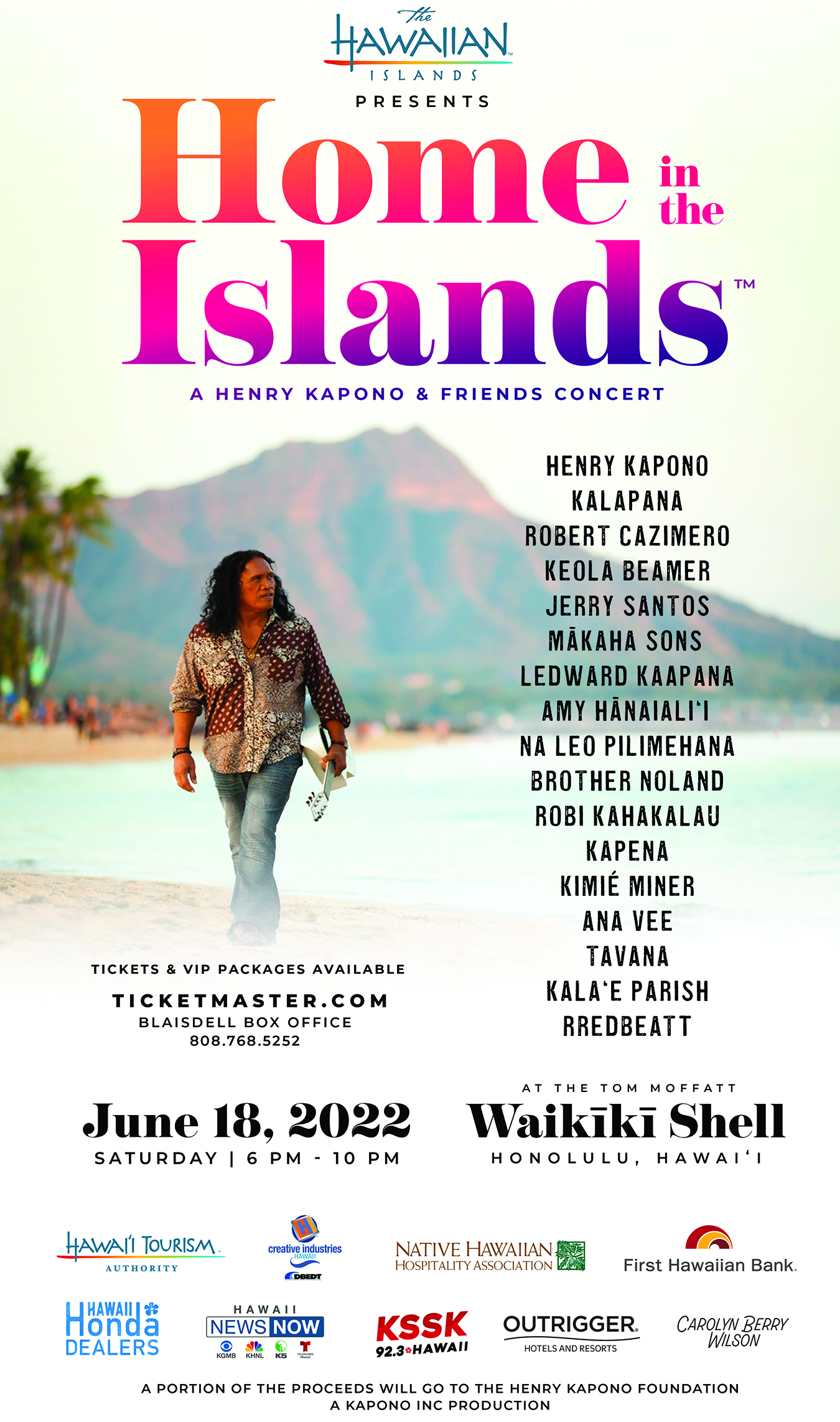
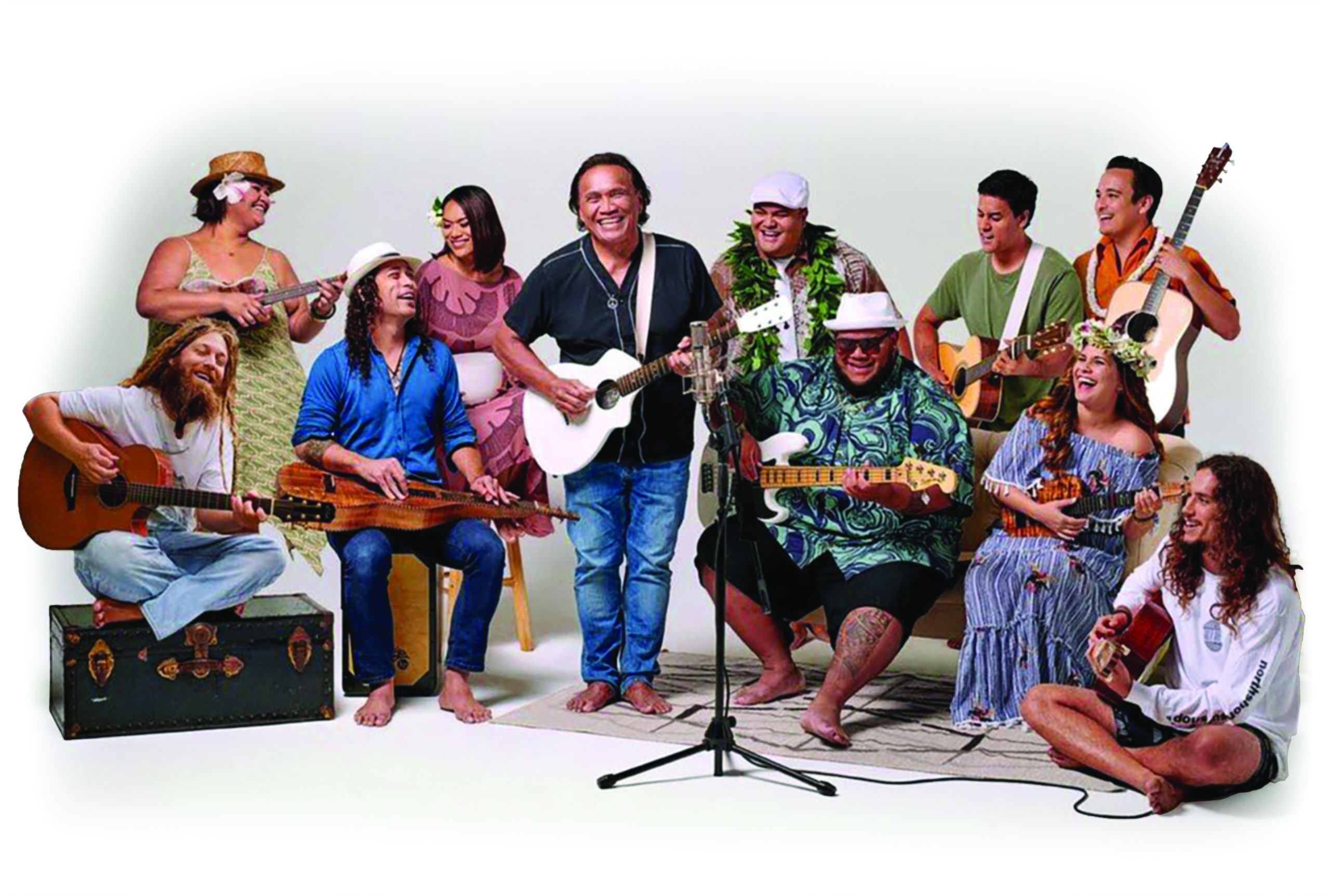
The Home in the Islands: A Henry Kapono & Friends Concert of iconic and emerging artists last summer was a huge boost, especially after stages had been dark throughout the pandemic.
“I think everyone was ready for something and we were ready to give it to them,” says Henry. “We highlighted musicians from the ’70s who mean a lot to Hawai‘i. Their music has transcended generations.”
Kalapana, Robert Cazimero, Ledward Kaapana, Mākaha Sons and Jerry Santos were among the iconic stars featured. “It was a big treat for us that we put it together and for the artists,” says Henry. “It was so nice have them be recognized for who they are and what they have accomplished for the love of their islands.”
His favorite part of the night was when “everyone was backstage having a good time and there was a whole concert before we had a chance to even get onstage… kanikapila style.”
“No egos… It’s a beautiful thing. You don’t see much of this at big concerts. They were all happy to be together, sharing such positive energy.”
Camaraderie is a main theme for Henry. “We all started as nobody and just trying to learn our talent or figure out if we had talents. We knew each other and hung out, but we didn’t realize at the time how far we’d come and that we’d still be sharing the stage today some 50 years later.”
The gig he feels most at home is Duke’s on Sunday, a landmark gathering of Henry Kapono and friends, coming up on 30 years. “Thanks to founder Rob Thibaut (TS Restaurants) who took me to lunch to share his vision… to be a part of the Duke’s family,” Henry says. “He had a vision of me playing in Waikīkī with Diamond Head in the background and folks traveling from across the world to experience it.”
Henry left for a tour after that lunch and seriously pondered what his vision was offering — a permanent place at home where he could be with fans regularly.
“When I returned from that particular tour, I realized this is where I should be,” says Henry. “I gave it a chance and 29 years later, I’m still there every Sunday, enjoying every minute of it.”
“Music really is the key to everything and the best way to communicate to the world powerfully.”
 Gratitude
Henry, with two daughters from a previous marriage, is now back to raising teenagers with Lezlee. They have twins; a boy and a girl. “I’m so proud of all of my children. Raising kids is amazing… They’re fascinating. You learn a lot and grow up yourself again in some ways.”
“My twins love me as a father. They don’t see a ‘big performer.’ The good part is I don’t push music onto them or push anything onto them,” says Henry. “We allow them to pursue and do what they want to do.”
With guitars strewn about their Honolulu home, it was only a matter of time before one of them got bitten by the music bug.
“Lately, they have been playing guitar in their room, I could hear them and was waiting for them to come out and express themselves,” says Henry with a chuckle. “No one has asked for a lesson yet.”
He’s thrilled they’re ripping chords from his days, paying homage to music which will never go out of style, like Led Zeppelin and The Beatles, plus an array of new songs. “I’m really enjoying it and they just blow my mind.”
Henry admits he is very competitive, but only with himself and doesn’t plan on getting out of the game.
“I have a lot to be grateful for, including still being a part of the music industry” says Henry. “I always challenge myself. I’m my biggest competitor. I’m all about always trying to keep in touch with everything, with the industry and the musicians, and getting an understanding of how everything moves forward and understanding how I move forward and keep positive.”
“Seeing how people react and respond to your music is really important,” says Henry. “You make that connection and people hold onto to you and you just give them the good stuff.”
The Hoku awards (aka “Hawai‘i’s Grammys”) from recent years are quite meaningful. In 2021, he was named “Favorite Entertainer of the Year” and won Contemporary Album of the Year” at the ceremony. His anthology album was honored in 2022. “It feels good to still be so loved, and fun to be honored for being contemporary and for an anthology. I still got something.”
The Rearview Mirror & Road Ahead
Spending time with Henry, you would never guess he’s approaching 75. He’s sharp, funny and cool in conversation. His signature wavy mane is still sprinkled with sea salt, and good conversations, music and humor grace his days. He regularly exercises physically, mentally and spiritually to stay in the game of life. “I think it’s so important to exercise in all these ways.”
In his home outside of Honolulu, he’s created an office space outdoors where he can hear the birds sing and finds this is the only way to work from home.
“I just don’t believe in thinking of being old… It’s just a number.”
He plans to be around to see the twins graduate college, hold his grandkids and be there for them in all ways. “I want to wake up every morning and feel good.”
Henry’s words of wisdom to aspiring artists is the hope they believe and trust in themselves, but heed feedback. “Listening to criticism, taking it as a lesson, whether it’s good or bad, and not discouraging yourself with all the noise that surrounds you,” he says. “Believe in yourself and trust that you know what you do. Really be passionate about it and be grateful you have that opportunity to live in a musical world.”
His father always told him to “be careful, but enjoy it,” when it came to any task or journey in life. As a young man, Henry didn’t fully understand. He does today.
Henry has added to this wisdom with advice he shares with artists, including dropping the ego and “focusing energy on making a difference for others, your family and generations to come. That’s where joy comes from.”
“My mom taught me to give selflessly, and by giving without expecting anything back, eventually something comes back… maybe not in what you gave, but in other forms,” he fondly recalls. “I believe in that. Something we should all do. Give from your heart and let it be.”
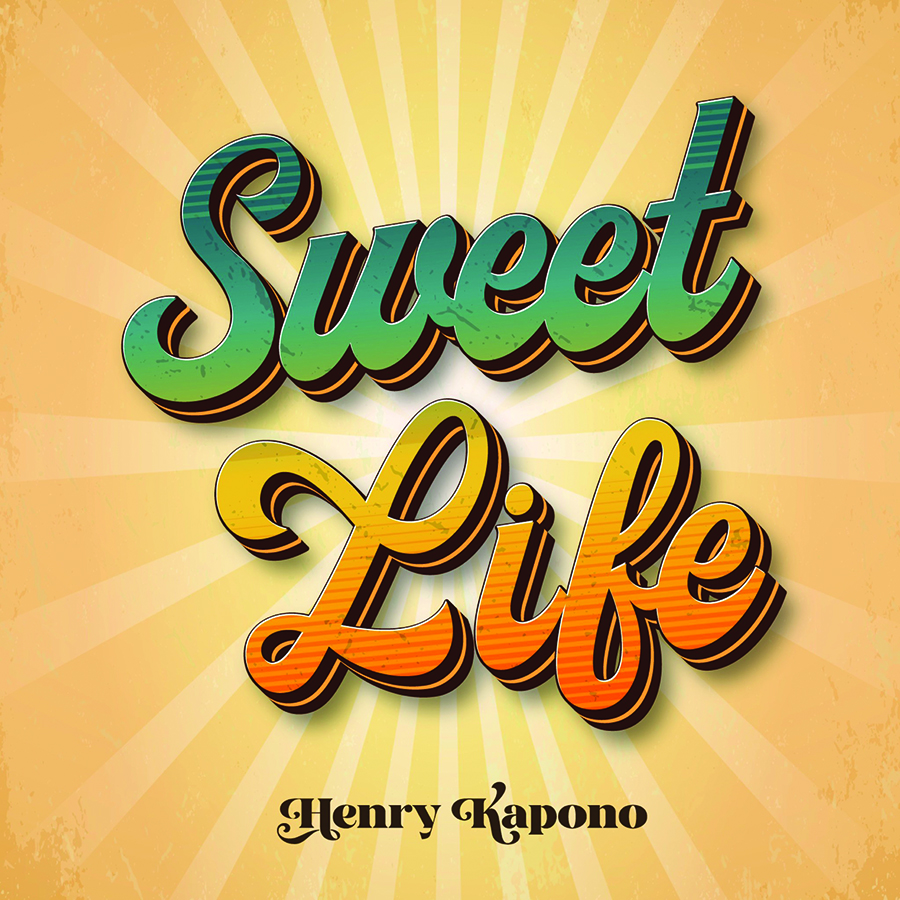
“I wrote the song ‘Sweet Life’ for my wife; it’s about being found by love after losing everything,” says Henry. “But it really applies to life in general. Through all the bumps, twists and turns of living life, I realized that it’s a test of either being a stronger person or giving up. A strong family, good friends and the opportunity to continue my musical passion while making people happy, is what I’m all about. I am grateful for it all. It’s a “Sweet Life.”
HENRY KAPONO FOUNDATION (501(c) 3 nonprofit)
To Support and Empower Hawai’i’s Music Industry to Thrive Through Programs, Grants, Education & Resources
www.henrykaponofoundation.org
www.henrykaponofoundation.org/donate
[/et_pb_text][/et_pb_column][/et_pb_row][/et_pb_section]