Category: Wisdoms

  • Some Final Considerations

    Donating your body to the local medical school is a way to both dispose of your remains and benefit your community. The most valuable resource for learning about a human body is, well, a human body. Many medical schools will have your body picked up (at no charge to your family) and delivered to the school to be used for educational purposes. After a time, your remains will be cremated and the ashes can be returned to your family for disposition.

    Yet another set of considerations is whether there will be some kind of public or private celebration of life or religious service after your demise. You can have some say in what those festivities might include. Of course, even if you direct that there be no observance of your death, that may not stop the people who love you from indulging in an event that will help them deal with their grief. If you want to be proactive, you can write your own funeral service, including such things as what musical selections will be shared, who will deliver your eulogy and whether you will ask for donations to your favorite charity in lieu of enriching a local florist. Frankly, most people leave all these details to their loved ones, but a funeral service planned and written by you might be one of the most loving things you can do for the people who will mourn your loss.

    EST8PLANNING COUNSEL LLLC
    Scott Makuakane, Counselor at Law
    808-587-8227 | maku@est8planning.com
    Est8planning.com

    Donating your body to the local medical school is a way to both dispose of your remains and benefit your community. The most valuable resource for learning about a human body is, well, a human body. Many medical schools will have your body picked up (at no charge to your family) and delivered to the…

  • Maximize Your Charitable Giving

    Many investors give back to their communities through traditional monetary gifts. But other gifting strategies may help maximize the value of your generosity and provide tax advantages. Four strategies that may be worth exploring:

    1. Gift highly appreciated stocks or other assets

      If you hold stocks or other investments for more than one year that have gained value, you may consider liquidating the asset to make a charitable donation with the proceeds. However, doing so may result in a taxable long-term capital gain. Giving appreciated stock directly to a qualified charity may be a more efficient way to maximize the value of your donation. Ensure that the charity accepts this type of donation before exploring it as a financial strategy.

    2. Establish a charitable trust

      Another way to consider gifting assets is to set up a charitable trust. Trusts can help you manage highly appreciated assets in a more tax-efficient manner, in some cases, allowing you to split assets among charitable and non-charitable beneficiaries. The timing of each gift and the flexibility you want dictates the type of trust that works best. With a Charitable Lead Trust, a charity is funded with income from assets placed in the trust for a specified time period. After that time, the remaining assets revert to other named beneficiaries. In a Charitable Remainder Trust, the reverse occurs. The trust makes regular payments back to you or another beneficiary. After a period of time specified in the trust, the remaining assets are directed to the named charities. A donor-advised fund allows you to make a large donation that may be immediately deductible from taxes, but gives you flexibility to recommend gifts to charities spread out over the years.

    3. Maximize donations through your employer

      Your employer may offer the convenience of making contributions through payroll deductions, allowing you to give systematically with each paycheck. In addition, your employer may match a certain donation amount, which can add to the impact your gift makes. Check to see if the charities you care about are eligible for this type of donation.

    4. Make a charitable individual retirement account (IRA) donation

      If you have reached the age at which you are required to take distributions from your traditional IRA each year, but you don’t need the money to meet your essential and lifestyle expenses, you may prefer to avoid the resulting tax bill. The Qualified Charitable Distribution rule allows you to transfer funds directly from your IRA to a qualified charitable organization. By doing so, you may avoid having to claim income (and subsequent tax liability) since you would not receive the required distribution. To determine when required distributions will start for you (based on your birth year), visit IRS.gov.

    As you consider these strategies, consult with your financial advisor and tax advisor, who can help you evaluate the choices to ensure the gifts you make are most effective for your goals and consistent with your overall financial plan.

    MICHAEL W. K. YEE, CFP,® CFS,® CLTC, CRPC®
    1585 Kapiolani Blvd., Ste. 1100, Honolulu, HI 96814
    808-952-1240 | michael.w.yee@ampf.com
    ameripriseadvisors.com/michael.w.yee
    Michael W. K. Yee, CFP®, CFS®, CLTC, CRPC®, is a Private Wealth Advisor, Certified Financial Planner™ practitioner, with Ameriprise Financial Services, LLC ,in Honolulu, HI. He specializes in fee-based financial planning and asset management strategies and has been in practice for 40 years. Certified Financial Planner Board of Standards, Inc. (CFP Board) owns the CFP® certification mark, the CERTIFIED FINANCIAL PLANNER™ certification mark, and the CFP® certification mark (with plaque design) logo in the United States, which it authorizes use of by individuals who successfully complete CFP Board’s initial and ongoing certification requirements. Ameriprise Financial, Inc. and its affiliates do not offer tax or legal advice. Consumers should consult with their tax advisor or attorney regarding their specific situation. Investment products are not insured by the FDIC, NCUA or any federal agency, are not deposits or obligations of, or guaranteed by any financial institution, and involve investment risks including possible loss of principal and fluctuation in value. Investment advisory products and services are made available through Ameriprise Financial Services, LLC, a registered investment adviser. Securities offered by Ameriprise Financial Services, LLC. Member FINRA and SIPC. ©2025 Ameriprise Financial, Inc. All rights reserved.

    Many investors give back to their communities through traditional monetary gifts. But other gifting strategies may help maximize the value of your generosity and provide tax advantages. Four strategies that may be worth exploring: As you consider these strategies, consult with your financial advisor and tax advisor, who can help you evaluate the choices to…

  • Prepare Today, Protect Tomorrow

    In our island community, where the bonds of family and tradition run deep, facing a long-term care event is one of the most challenging experiences we may encounter.

    Long-term care is important to
    the Ignacio-Yanger family.

    Such events can place emotional, physical and financial strains on even the strongest ‘ohana. Without a clear and thoughtful plan, families often find themselves making difficult decisions during a crisis, leading to stress, burnout and potential conflicts among loved ones.

    As a caregiver myself, I’ve experienced the profound impact this role can have. In our close-knit community, caregiving is seen as either a blessing or a curse, depending on one’s perspective and level of preparedness. I’ve chosen to view it as a blessing, embracing the opportunity to care for my loved ones as an honor. This positive outlook is possible because of a well-thought-out plan that relieves pressure and ensures everyone knows their role in supporting our beloved kūpuna.

    A well-crafted long-term care plan safeguards the future of those we care for and preserves the unity and well-being of the entire ‘ohana. It provides peace of mind, knowing that decisions have been made in advance, reducing the risk of family disputes and allowing us to focus on what truly matters — caring for one another with aloha.

    HAWAI‘I LONG-TERM CARE SOLUTIONS
    1555 Ala Puumalu St, Honolulu, HI 96818
    808-330-4691 | roger@hilongtermcaresolutions.com
    hawaiilongtermcaresolutions.com

    In our island community, where the bonds of family and tradition run deep, facing a long-term care event is one of the most challenging experiences we may encounter. Such events can place emotional, physical and financial strains on even the strongest ‘ohana. Without a clear and thoughtful plan, families often find themselves making difficult decisions…

  • Naughty or Nice?

    Your estate plan is the set of documents that you use to say who gets your stuff when you go. It is also where you can say who doesn’t get any of your stuff — with some important exceptions.

    In most states, you can disinherit everybody but your spouse. You can even disinherit the IRS. Louisiana requires you to leave something to each of your children. In every other state, you can cut out the kids, but not your spouse. Spouses traditionally had ongoing support rights expressed in a variety of ways.

    The bottom line is that if you want to leave nothing to your spouse, you will need to have him or her agree to that in a prenuptial agreement before the wedding. Of course, following up a marriage proposal with a request that your beloved sign a “prenup” is not the most romantic move. It has even been known to derail wedding plans. Some states also allow married couples to use postnuptial (after marriage) agreements to accomplish the same results as a prenup. Suggesting to your spouse that you enter into a postnup may not lead to good results, either, but at least you know that the option may be out there.

    So to exclude someone (other than your spouse), just say that so-and–so is being omitted deliberately. But use the person’s name — don’t call the person a “so-and-so” unless you want to invite a libel lawsuit against your estate.

    EST8PLANNING COUNSEL LLLC
    Scott Makuakane, Counselor at Law
    808-587-8227 | maku@est8planning.com
    Est8planning.com

    Your estate plan is the set of documents that you use to say who gets your stuff when you go. It is also where you can say who doesn’t get any of your stuff — with some important exceptions. In most states, you can disinherit everybody but your spouse. You can even disinherit the IRS.…

  • Is Travel on Your Retirement Agenda?

    One of the great benefits of retirement is having the freedom to pursue new interests and hobbies at your leisure. For many, travel is at the top of their retirement bucket list. The key question is how to make sure your retirement savings can keep up with your travel ambitions. The following considerations can help you determine your answer:

    Make travel a part of your retirement budget. Without the funds to pursue travel, you likely won’t get too far. As you plan for your living expenses, include travel as a line item in your retirement budget. Identify a portion of your monthly income to cover travel expenses before you hit the road.

    Consider travel timing. Most retirees plan their biggest travel excursions in the early years of retirement, when health challenges may be fewer and they have more stamina. Therefore, your travel budget may represent a larger portion of your overall expenses in the first years of retirement. If this aligns with your travel vision, factor it into your retirement budgeting strategy.

    Determine your travel style. To come up with a reasonable cost estimate, identify the types of traveling you plan to do. Are you more interested in short trips to nearby locations, mostly traveling by car? Do you plan to explore the country in an RV? Are you looking to visit foreign destinations on a regular basis? Your travel goals will tell you a lot about how much you are likely to spend, which should be reflected in your retirement plan.

    Find ways to cut costs. You’re likely to face “sticker shock” when you travel. Expenses such as food (usually eating out), lodging and transportation can add up quickly. If you plan to stay in one place for an extended period, look into renting a home or apartment rather than “hoteling” it. Try to eat like the locals by buying food at grocery stores and markets. Take the time to look for flight deals or make your automobile travel routes as efficient as possible. One of the perks of being retired is that you may have more flexibility than working people to lock in deals by traveling off-season or at other unpopular times.

    Don’t overlook insurance needs. Travel insurance may be appropriate in case you get sick or lose luggage on a trip. Keep in mind that Medicare is not accepted outside the US, and even within the US, you want to be sure your health insurance has you covered in states outside your own.

    Look for discounts and rewards. Seniors have a unique advantage in that costs for some activities are reduced. Even though the discounts may be modest, every dollar helps stretch your travel budget. Check to see what discounted options are available through clubs like AAA or AARP. Also pursue smart credit card strategies that help you earn rewards like free travel or cash back on your purchases.

    If travel is in your plans when you leave the workforce, it’s key to go beyond dreaming and do some significant preparation in advance. Use the time you have now to set specific goals and build savings that will help make your dreams a reality.

    MICHAEL W. K. YEE, CFP,® CFS,® CLTC, CRPC®
    1585 Kapiolani Blvd., Ste. 1100, Honolulu, HI 96814
    808-952-1240 | michael.w.yee@ampf.com
    ameripriseadvisors.com/michael.w.yee
    Michael W. K. Yee, CFP®, CFS®, CLTC, CRPC ®, is a Private Wealth Advisor, Certified Financial Planner ™ practitioner, with Ameriprise Financial Services, LLC in Honolulu, HI. He specializes in fee-based financial planning and asset management strategies and has been in practice for 40 years. Investment products are not insured by the FDIC, NCUA or any federal agency, are not deposits or obligations of, or guaranteed by any financial institution, and involve investment risks including possible loss of principal and fluctuation in value. Investment advisory products and services are made available through Ameriprise Financial Services, LLC, a registered investment adviser. Ameriprise Financial Services, LLC. Member FINRA and SIPC.
    © 2024 Ameriprise Financial, Inc. All rights reserved.

    One of the great benefits of retirement is having the freedom to pursue new interests and hobbies at your leisure. For many, travel is at the top of their retirement bucket list. The key question is how to make sure your retirement savings can keep up with your travel ambitions. The following considerations can help…

  • Doing Good While Doing Well

    Doing Good While Doing Well

    Enjoying a successful career or owning a profitable business can enable a person to give some wealth back to the community where it was generated. If this describes you, consider the following pointers:

    NEVER SELL APPRECIATED ASSETS IN ORDER TO MAKE CASH GIFTS
    If you sell an asset in order to generate cash to make a charitable gift, you may rob the charity of a bigger gift and yourself of a bigger income tax deduction. There is a better way.

    Let’s say you own property worth $100,000 that you inherited back in the ’70s when it was worth next to nothing. If you sell the property now because you want to make a big gift to your favorite charity, you may have to recognize a capital gain of $100,000 and pay $22,500 or so in tax on that gain. This will leave you with $77,500 to donate to the charity, for which you will get a deduction of $77,500.

    While the tax deduction is nice and the gift is generous, what if you gave the property to your favorite charity and then the charity sold it? In that case, the charity would receive the $100,000 sales proceeds, and you would get a charitable deduction of $100,000. That’s a great deal for your favorite charity and for you.

    There is an annual limit on how much you can deduct each year for gifts to charity, but you can carry forward the excess of what you gave over the amount you could deduct for up to five years. Even with the carry forward, if your gift is very generous, you might not be able to deduct the full amount of your gift.

    YOUR TRADITIONAL IRA MIGHT BE A CHARITABLE GIFT CASH MACHINE
    Once you reach a certain age (currently, 73, but this number may go up in the future), you have to take Required Minimum Distributions (RMDs) from your IRA so the IRS can collect some tax.

    However, if you direct your IRA trustee to send your RMD directly to one or more charities, you will not have to pay tax on the RMD, up to $100,000 worth of charitable gifts per year.

    Unfortunately, you will not get a deduction for your gift, but when you crunch the numbers, not having to recognize the RMD as income is usually a far better deal for you than being able to deduct your gift.

    As pointed out above, there is a limit on how much of your RMD can go to charity without you being taxed on it. Moreover, you cannot apply future years’ RMDs against a current gift of IRA assets in excess of $100,000.

    TALK WITH YOUR TRUSTED ADVISORS
    Meet with your trusted advisors to discuss the best way to benefit your favorite charities that will also reduce your income tax.

    There are lots of complicated rules to navigate, but making enhanced gifts to charity while reducing your income tax liability just might make the effort worthwhile.

    And please remember that there are many more ways to make charitable gifts. Your trusted advisors can help you to explore them.

    EST8PLANNING COUNSEL LLLC
    Scott Makuakane, Counselor at Law
    808-587-8227 | maku@est8planning.com
    Est8planning.com

    Enjoying a successful career or owning a profitable business can enable a person to give some wealth back to the community where it was generated. If this describes you, consider the following pointers: ■ NEVER SELL APPRECIATED ASSETS IN ORDER TO MAKE CASH GIFTSIf you sell an asset in order to generate cash to make…

  • Siblingship

    Siblingship

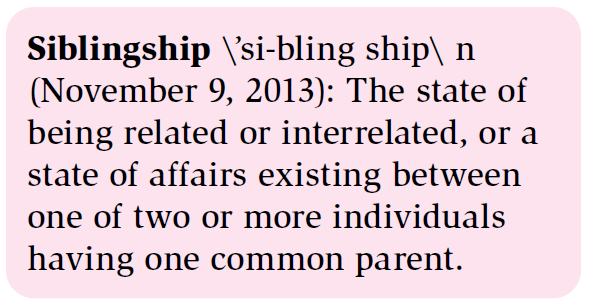
    Siblingship describes the unique relationship between siblings. Siblings begin their relationship at a young age, and if they are fortunate, they reach old age together. They experience joys and setbacks, they laugh and cry — and they fight. Through the fighting, they can learn conflict resolution. Spouses join us in our adult lives. Friends often come and go. But no other relationship is quite like a siblingship.

    When siblings fight as kids, it’s over property and fairness. Parents make sure property is divided up fairly — they are the ones to “divide up the pie,” so siblings don’t fight over things as much.

    When parents die, siblings are called home to “divide up the pie,” this time, without parental supervision. In my experience, adult siblings fight over the same things that they fought over when they were kids: property and fairness. However, the parents are no longer there to referee and help divide up the pie fairly.

    Estate planning can minimize the risk of fighting when parents die. If parents and the estate planning attorney don’t spend enough time anticipating and planning to minimize the risk of fighting, there exists a risk of fracturing, or worse, destroying this unique, wonderful relationship — the siblingship.

    STEPHEN B. YIM, ATTORNEY AT LAW
    2054 S. Beretania St., Honolulu, HI 96826
    808-524-0251 | stephenyimestateplanning.com

    Siblingship describes the unique relationship between siblings. Siblings begin their relationship at a young age, and if they are fortunate, they reach old age together. They experience joys and setbacks, they laugh and cry — and they fight. Through the fighting, they can learn conflict resolution. Spouses join us in our adult lives. Friends often…

  • Financial Success for Parents & Kids

    Financial Success for Parents & Kids

    According to a recent study published by Ameriprise Financial, individuals in their 30s and 40s have received significant financial help from family and expect additional assistance in the future. And over a quarter of those surveyed said they received $25,000 or more.(1)

    It’s admirable to see that parents want to go to such great lengths to help their children achieve financial success. Yet parents need to be mindful that they don’t inadvertently diminish their own success in doing so. As a financial advisor, here’s the advice I offer parents who want to give their adult children a financial head start without harming their own financial future:
    Prioritize saving for your own retirement. It takes many years to accumulate the savings you need to retire comfortably. Your children are likely just starting their careers, while your time remaining in the workforce may be limited to five, 10 or 15 years. Putting yourself first isn’t a selfish move. It’s about being wise with your money. If you make it a priority to have enough saved when you retire, your kids won’t have to worry about providing you with financial support later in life.
    Be strategic with your financial gifts. Like other monetary goals, it’s important to add gifts of cash to your overall financial plan. When you treat cash gifts separately, you shortchange other priorities such as retirement. What will it cost you to divert savings from your retirement plan? With a complete list of financial priorities, you can see how much you need to save to reach them all.
    Consider alternate approaches to helping your kids. There may be ways to help your kids other than by dipping into savings. Encourage them to take financial responsibility when they can do so. Your college-bound son or daughter may be able to take out student loans at a low interest rate, which will reduce or eliminate the amount you need to contribute for tuition. Instead of writing a check to help your child buy a car or house, you might co-sign a loan to help them lock in a lower interest rate or more favorable repayment terms.
    Have conversations about money. Your willingness to talk about your finances is a valuable example for your adult children. So, too, is your attention to your retirement savings. I encourage parents to invite their adult children to attend a financial planning session with a financial advisor. It’s a time to address money concerns and explore how actions today can affect your future finances.

    MICHAEL W. K. YEE, CFP,® CFS,® CLTC, CRPC®
    1585 Kapiolani Blvd., Ste. 1100, Honolulu, HI 96814
    808-952-1240 | michael.w.yee@ampf.com
    ameripriseadvisors.com/michael.w.yee

    Michael W. K. Yee, CFP®, CFS®, CLTC, CRPC ®, is a Private Wealth Advisor, Certified Financial Planner ™ practitioner, with Ameriprise Financial Services, LLC in Honolulu, HI. He specializes in fee-based financial planning and asset management strategies and has been in practice for 40 years. Investment products are not insured by the FDIC, NCUA or any federal agency, are not deposits or obligations of, or guaranteed by any financial institution, and involve investment risks including possible loss of principal and fluctuation in value. Investment advisory products and services are made available through Ameriprise Financial Services, LLC, a registered investment adviser. (1) The 2023 research was created by Ameriprise Financial Inc. and conducted online by Artemis Strategy Group from Jan. 19 to Feb. 14, 2023, among 3,518 Americans ages 27 to 77. Millennial respondents have $25,000 or more in investable assets, and Gen X and boomer respondents have $100,000 or more. The sample is weighted on region and by generation on age, gender, race/ethnicity, assets and income based on the Federal Reserve 2021 Survey of Household Economics and Decision making (SHED). To ensure sufficient response sizes for additional analysis, Ameriprise oversampled investors who identify as millennials. For further information and details about the study, including verification of data that may not be published as part of this report, please contact Ameriprise Financial or go to ameriprise.com/millennials. Ameriprise Financial Services, LLC. Member FINRA and SIPC. © 2024 Ameriprise Financial, Inc. All rights reserved.

    According to a recent study published by Ameriprise Financial, individuals in their 30s and 40s have received significant financial help from family and expect additional assistance in the future. And over a quarter of those surveyed said they received $25,000 or more.(1) It’s admirable to see that parents want to go to such great lengths…

  • SECURE Act 2.0

    According to a Federal Reserve System report on the Economic Well-Being of U.S. Households in 2022–May 2023 in 2023, “3/4 of non-retired adults had at least some retirement savings, about 28% did not have any. This share who did not report any retirement savings was up from 25% in 2021. While most non-retired adults had some type of retirement savings, only 31% of non-retirees thought their retirement savings were on track, down from 40% in 2021.”

    In 2019, the SECURE (Setting Every Community Up for Retirement Enhancement) Act was signed into law, and in 2022, SECURE Act 2.0 passed and amended its predecessor. The purpose of the SECURE Act was to assist Americans in saving for retirement by increasing access and encouraging contributions.

    How does the new law affect estate plans? Prior to 2019, most retirement plan beneficiaries had the option to stretch taxable distributions and allow the assets to grow tax-free over the beneficiary’s life. The SECURE Act 2.0 changed the stretch rules to apply to only a limited group — Eligible Designated Beneficiaries. So most beneficiaries will have to take distributions within 10 years.

    Contact your estate planning attorney and financial advisor to review your financial and estate planning goals, and to ensure your retirement accounts name the proper beneficiaries.

    STEPHEN B. YIM, ATTORNEY AT LAW
    2054 S. Beretania St., Honolulu, HI 96826
    808-524-0251 | stephenyimestateplanning.com

    According to a Federal Reserve System report on the Economic Well-Being of U.S. Households in 2022–May 2023 in 2023, “3/4 of non-retired adults had at least some retirement savings, about 28% did not have any. This share who did not report any retirement savings was up from 25% in 2021. While most non-retired adults had…

  • The Mom Who Ran Out of Time

    Having spent over 14 years handling elder issues, the one thing I have seen seniors do repeatedly is not plan for their passing because they think there will be time do it later. This naïve mindset causes so much frustration and anger that instead of leaving behind a legacy of love and fond memories, ill will, anxiety and stress become the fallout.

    Two months ago I met Lea, age 23. Her mother, Mary, died a couple of months prior. Mary was in poor health for years and did not think of what would happen to Lea after she passed. Mary was a single parent in her 60s with no other family. Although her home was mortgage-free, it was still in her deceased parents’ name. Mary’s only source of income was Social Security, which was directly deposited into her bank account for paying household bills, utilities and grocery delivery.

    Mary did not have any life insurance and only a few thousand dollars in savings. She did not make a will or any type of trust for her assets.

    Lea dropped out of high school, spending the next four years as Mary’s caregiver. Lea never had a paying job.

    When Mary passed away, Social Security stopped depositing money and the bank froze the account. Only Mary’s name was on it; Lea could not access it. Because utilities were paid from that account, notices from the utilities began arriving in the mail. Hospital bills and notices from collection agents also appeared. Additionally, the property taxes on the house Lea lived in that was in her grandparent’s name had to be paid. Lastly, her cell phone was disconnected.

    It was at this time that I met Lea. She was a young woman with nothing in her name, no job or other source of income, no access to her mother’s monies, no transportation, no telephone and living in a house that the state assumed still belonged to her grandparents.

    With no family and having lost contact with her friends from high school because of caring for her mother all these years, she was truly alone. She feared she would be homeless.

    During the course of helping Lea out of this abyss, one thought echoed in my mind: “If only Mary had taken a few hours to plan for the day she would leave Lea alone, this could have been avoided.” Now, instead of grieving for her mother, Lea was cast into a life of uncertainty and fear.

    It could be that Mary didn’t plan ahead because she was ill for years. But none of us should assume we will have sufficient time in the future to take care of our affairs and cause our loved ones to live the life of Lea. Do it now.

    HAWAI‘I STATE BAR ASSOCIATION
    Senior Counsel Division
    Alakea Corporate Tower, 1100 Alakea St., Ste. 1000
    Honolulu, HI 96813
    808-537-1868 | SCD@HSBA.org | HSBA.org

    Having spent over 14 years handling elder issues, the one thing I have seen seniors do repeatedly is not plan for their passing because they think there will be time do it later. This naïve mindset causes so much frustration and anger that instead of leaving behind a legacy of love and fond memories, ill…

  • It’s Your Funeral

    You own your body after you die and you can say what happens to it. If you say nothing, it will be up to your next of kin, such as your spouse, your children and then more distant relatives. By planning your funeral in advance, you can spare your loved ones stress and conflict.

    Your remains can be buried on your own land, but think about how that could affect the property value. The preparation for burial need not include embalming and may not require a casket. Many outside-the-box possibilities exist.

    Burial and cremation are not the only choices. Google “disposition of human remains” for ideas. Do you want your remains blasted into space or disposed of via alkaline hydrolysis? Do you want your ashes turned into diamonds for jewelry for your loved ones? The options might surprise you.

    Many people recoil at the idea of donating their bodies to the local medical school, but medical professionals will tell you that the most valuable resource for learning about a human body is, well, a human body. A medical student could learn a lesson from dissecting your body that would enable them to save one of your loved ones…

    Finally, will there be some kind of service or celebration of life for you? You can have a say in those festivities. A funeral service planned by you might be one of the most loving gifts you can give the people who will mourn your loss.

    EST8PLANNING COUNSEL LLLC
    Scott Makuakane, Counselor at Law
    808-587-8227 | maku@est8planning.com
    Est8planning.com

    You own your body after you die and you can say what happens to it. If you say nothing, it will be up to your next of kin, such as your spouse, your children and then more distant relatives. By planning your funeral in advance, you can spare your loved ones stress and conflict. Your…

  • Should I Downsize After Retirement?

    If you are approaching retirement or are already there, you may be considering downsizing your home. It’s a big decision, with ramifications for both your finances and your lifestyle. Here are some things to keep in mind:
    Decide if a move makes sense. Your needs and priorities may shift in retirement. Perhaps you won’t require as much square footage as you once did, or you may find that maintaining your home is now a challenge.

    It may be financially prudent and personally necessary to get out from under the costs and responsibilities of maintaining a larger property. Your location preference may shift, too. Commonly, retirees desire to live closer to family or in a warmer climate.

    Create a timeline for your move. Discuss the pros and cons of selling your family home now or in the future. External market factors can affect your next step. Timing the sale of your home and the purchase of a new one can be tricky. Be prepared in the event your home doesn’t sell quickly.

    Consult a real estate professional. A real estate professional can help you determine what needs to be done before putting your house up for sale. Your home may need repairs to meet code or maximize its list price. Get an appraisal of current market value and decide what you’ll be comfortable spending on a new, smaller home.

    Review your housing options. Once you decide to downsize, you can start looking for a new place that meets your needs and budget. If you’re considering a condo or townhome (two popular options for retirees) make sure to factor in any fees or assessments that are charged to residents when calculating the overall cost of ownership. If you’re in need of assisted living services, you’ll also want to get a handle on those costs — and whether they can be offset by any long-term care insurance you may have — so you can plan accordingly. In terms of location, you may want to think about the proximity of amenities and services including grocery stores, transportation and your doctor’s office.

    Be prepared for a multi-gen conversation. A change as impactful as selling your home may prompt conversations with family members on the topic of your estate. Downsizing usually requires whittling down the personal possessions you’ve acquired over the years. If you’re moving to a residence with managed maintenance, you won’t need the lawn mower, snowblower or other tools in your garage. If you’re thinking of giving items to family members, be prepared for the possibility of different generations having different interests and attachments to your home and belongings. It can be a good idea to establish how you want to explain to family members your lifestyle goals for retirement, so they can support you through the process.

    Review your finances carefully. Take the time to thoroughly review the financial implications of your situation. Just because you are downsizing does not necessarily mean you will suddenly have a cash windfall or establish enormous savings. Remember that HOA expenses, lifestyle changes and upgrades in construction quality can add to costs. Additionally, if you choose to move to a retirement area that has more built-in services, it can increase your cost of living, as well. Taking the time to explore the intricacies of your situation can prepare you for the next steps. And remember, you don’t have to do it alone. A qualified financial advisor can help you navigate this complex process with confidence.

    MICHAEL W. K. YEE, CFP,® CFS,® CLTC, CRPC®
    1585 Kapiolani Blvd., Ste. 1100, Honolulu, HI 96814
    808-952-1240 | michael.w.yee@ampf.com
    ameripriseadvisors.com/michael.w.yee

    Michael W. K. Yee, CFP®, CFS®, CLTC, CRPC ®, is a Private Wealth Advisor, Certified Financial Planner ™ practitioner, with Ameriprise Financial Services, LLC in Honolulu, HI. He specializes in fee-based financial planning and asset management strategies and has been in practice for 40 years. Investment products are not insured by the FDIC, NCUA or any federal agency, are not deposits or obligations of, or guaranteed by any financial institution, and involve investment risks including possible loss of principal and fluctuation in value. Investment advisory products and services are made available through Ameriprise Financial Services, LLC, a registered investment adviser. Ameriprise Financial Services, LLC. Member FINRA and SIPC. © 2023 Ameriprise Financial, Inc. All rights reserved.


    If you are approaching retirement or are already there, you may be considering downsizing your home. It’s a big decision, with ramifications for both your finances and your lifestyle. Here are some things to keep in mind:■ Decide if a move makes sense. Your needs and priorities may shift in retirement. Perhaps you won’t require…