Category: Programs & Services

  • Finding Funds for Long-Term Care

    Preparing for aging and care is not easy and many do not anticipate the costs associated with long-term care. Some of us assume that relatives will be able to provide care, however this doesn’t always pan out. Those who are not prepared for long-term care costs are left wondering how they will afford their care or the care of a loved one. Whether assisted living, in-home care or a nursing home is the type of long-term care needed, the costs can be overwhelming. Nursing homes on O‘ahu can charge $6,000 to $10,000 per month. This is why it is important for families to explore all of their options.

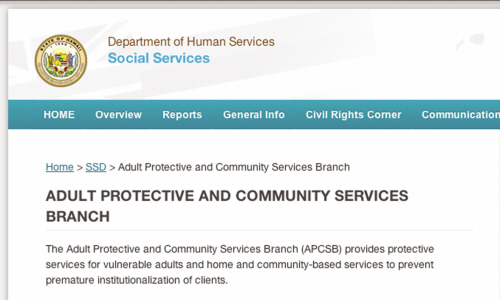
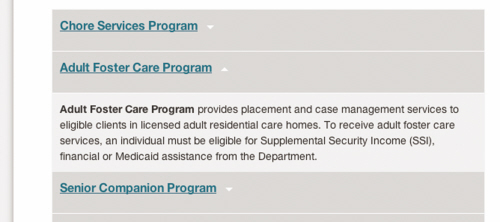
    For example, a program called the Community Care Foster Family Home Program under the State of Hawai‘i offers long-term care in licensed adult foster homes within the community. The cost for this program ranges from $3,000 to $5,500 per month. This is half the cost of a nursing home. Moreover, Medicaid covers the cost for care and services under the program for those who qualify.

    For more information, visit online at humanservices.hawaii.gov/ssd/home/adult-services, scroll down and click on the Adult Foster Care Program tab.


    Nightingale Case Management, Inc. has been a part of the CCFFH Program for over 12 years. For a free assessment and consultation, please contact: (808) 484-2205, nightingalecmi@hotmail.com, or visit www.nightingalecasemanagement.com.

    Generations Magazine - Finding Funds for Long-Term Care - Image 01

    Generations Magazine - Finding Funds for Long-Term Care - Image 02

    Preparing for aging and care is not easy and many do not anticipate the costs associated with long-term care. Some of us assume that relatives will be able to provide care, however this doesn’t always pan out. Those who are not prepared for long-term care costs are left wondering how they will afford their care…

  • Start a New Tradition with Social Security

    Generations Magazine - Start a New Tradition with Social Security - Image 01The holiday season has arrived — a time of year that is steeped in tradition. We’d like to suggest that you start a new tradition. It actually starts with breaking the old tradition of trudging to an office when you need to do business with Social Security.

    Sometimes traditions evolve. Many of the things your parents or grandparents did in a Social Security office you can now do online. For example, if you’re not yet receiving benefits, you can request your Social Security Statement or use the Retirement Estimator to get an accurate picture of what your future benefits will be. You can read or listen to our publications, find out whether you qualify for benefits — even apply for Social Security disability, retirement and spouses benefits online from the comfort of home.

    You also can go online to get a replacement Medicare card or appeal a medical decision made about your disability claim. You can do all this and more at www.socialsecurity.gov.

    Set up an online account to:

    • receive your benefit verification letter
    • review benefits
    • view earnings record
    • change your address or phone number
    • start or change your direct deposit
    • check your information

    Join the millions of people and start a new tradition: forego the holiday traffic to the office by going to www.socialsecurity.gov.


    For other information and locations near you:

    1-800-772-1213 (toll free) | 1-800-325-0778 (TTY)
    www.socialsecurity.gov

    The holiday season has arrived — a time of year that is steeped in tradition. We’d like to suggest that you start a new tradition. It actually starts with breaking the old tradition of trudging to an office when you need to do business with Social Security. Sometimes traditions evolve. Many of the things your…

  • 8 Things on My Medicare To-Do List

    Planning ahead for 2014, made me stop and ponder for a moment … what are the things that are really important to me? First thing that came to my mind was my family. Second was the health of my family and myself. This article is dedicated to Medicare recipients and their caregivers so that we can all have a healthy and happy New Year. Here are 8 easy things that can help you navigate the healthcare maze.

    1] Make an appointment for your Annual Wellness Visit. This is a Medicare benefit that provides you and your physician an opportunity to sit down and develop or update a personalized prevention plan to protect you against disease and disability, based on your health and risk factors. This is not an annual physical exam.

    2] Follow that prevention plan!

    3] Sit down with your loved ones and discuss your end-of-life wishes and complete an advanced health care directive form. Your medical team and family will use this document if you are ever unable to make your wishes known. Forms are available online at www.kokuamau.org and www.hawaiiship.org, or by calling the Sage PLUS Program at 1-888-875-9229.

    The advanced health care directive can be as detailed as you like. Be sure to discuss it with your family and give a copy to your physician. If you currently have an advanced healthcare directive, take a moment and make sure it is still in line with your wishes.

    4] Do you have a POLST (Physicians Orders for Life Sustaining Treatment) document on file? Printed on bright pink paper, and signed by both a doctor and patient, POLST helps give seriously ill patients more control over their end-of-life care. For more information, pick up the upcoming Feb/March issue of Generations Magazine.

    5] Medicare provides most preventive benefits with no co-pay. Take advantage of them to keep you on track toward good health.

    6] Do you have family members that help you with your health insurance? Health and drug plans offer a “authorized representative” form that enables that person to obtain information about your health coverage and billing on your behalf.

    7] VOLUNTEER! Volunteering is a great way to meet new people, help your community and keep you active. The Hawaii SHIP has several different volunteer opportunities.

    8] Do you belong to a community group that would like an educational Medicare presentation? Call or email Hawaii SHIP to request a speaker.

    The Hawaii SHIP (State Health Insurance Assistance Program) is a volunteer-based Medicare counseling program that is available statewide through a grant from the Centers for Medicare & Medicaid Services. For assistance, volunteer information or to request a Medicare speaker, contact us 1-888-875-9229 or help@hawaiiship.org.

    Generations Magazine - 8 Things on My Medicare To-Do List - Image 01

    Planning ahead for 2014, made me stop and ponder for a moment … what are the things that are really important to me? First thing that came to my mind was my family. Second was the health of my family and myself. This article is dedicated to Medicare recipients and their caregivers so that we…

  • Medicare: Making the Most of Your Health & Drug Plan

    Congratulations! You have made your decision of the Medicare Health and Drug Plan for 2013. For many, this might mean that you stayed with the plan that you had in 2012 and for some, you may have looked at the options available in your area and have enrolled with a new Medicare plan. The decision that you made is for the calendar year 2013: so let’s look at some ways that you can use the plan to your “advantage”— after all, they are called Medicare Advantage Health Plans.

    When you receive your health or drug plan packet that includes the evidence of coverage and other important information, make sure you and your caregiver take a moment to look at what the plan covers and how to access those services. Also, if you would like someone else to be able to ask questions of your plan on your behalf, take a moment and fill out the “authorized representative” form. This is always better done sooner rather than later.

    First, what should we NOT do? We should not assume that your neighbor, friend or family member has the same plan as you and ask them what providers to use. Plans have different rules and different providers. A health maintenance organization (HMO) works very different from a preferred provider organization (PPO). We have seen many a Medicare member be responsible for a medical bill because they went outside the allowable network.

    What should we do? Understanding what type of plan you have enrolled in is the first step; we have several different types of plans in Hawai‘i including HMOs (you must use the plan’s network or their contracted providers) PPOs (you can use both preferred providers (and pay less money out of pocket), PFFS (works with any provider who accepts the plan and agrees to treat you) and SNP (special needs plans that are available for those with Medicare and Medicaid), who are the providers and how can you save the most money.

    Still have questions, first call your health or drug plan (remember when possible it is best to call later in the afternoon in Hawai‘i and you will have less of a wait time), they are best able to answer the questions about your specific coverage. You can always find the phone number on your membership card.

    Are you new to Medicare in 2013? Join us on our “Welcome to Medicare” webinars that are held in February/April/June/August. To sign up for one, go to www.hawaiiship.org and look for the webinar box. Certified SHIP volunteers are also available to help you navigate the Medicare system. We can be reached at 1-888-875-9229. The Hawai‘i SHIP receives a federal grant from the Centers for Medicare & Medicaid Services to provide information and assistance to you regarding your Medicare benefits. The program is located under the Department of Health’s Executive Office on Aging.

    Congratulations! You have made your decision of the Medicare Health and Drug Plan for 2013. For many, this might mean that you stayed with the plan that you had in 2012 and for some, you may have looked at the options available in your area and have enrolled with a new Medicare plan. The decision…

  • Hawaii Connector Must Be Consumer Friendly, Accountable and Sustainable

    Beginning in January 2014, Hawai‘i residents who are without health insurance, small businesses, and those who are self-employed will be able to be covered by insurance purchased through an online marketplace known as the Hawaii Health Connector. The Connector was established by the state Legislature in 2011 to offer health plans to the public under the Affordable Care Act.

    After more than $200 million in federal dollars, the Hawaii Connector was last in the nation to provide plan information. It has a long way to go to become the reliable and consumer-friendly organization that Hawai‘i deserves. Equally important, it must be able to sustain operations without federal funds in 2015 — just 14 months away.

    AARP wants the Connector to succeed, but as of the beginning of November its website was minimally functional. Navigation is cumbersome and tools consumers need are lacking. To be consumer friendly, the website needs to add major features such as:

    • tools to assist in understanding plan choices
    • quality of care information, including quality ratings for hospitals, physicians and other providers
    • patient experience information that allows patients to rate their providers
    • complaint data

    Accountability and transparency are major concerns. The Connector was created by the Legislature as the only private, non-profit exchange in the nation. It allowed HMSA, Kaiser, and Hawaii Dental Service to have voting board members despite clear conflicts of interest. The concept was championed by Sen. Roz Baker of Maui. Arguments were that a private entity, freed of the restraints of government bureaucracy, would be more nimble and cost effective.

    But as a private entity, the Connector is not subject to the State Sunshine Law. In an attempt to remedy this lack of openness, Sen. Les Ihara introduced SB 830 that would have required the Connector to comply with open meeting and notice provisions. The bill was held in the Consumer Protection Committee, chaired by Sen. Baker, and it never saw the light of day.

    During the informational briefing to the Legislature on October 9, there were lots of outreach anecdotes. Consumer outreach and education is critical. The Connector Board should take the lead on a specific outreach plan to reach Hawai‘i’s 100,000 uninsured residents.

    The deadline for all exchanges in the nation to be self-sustaining is rapidly approaching. Sustainability is a federal mandate and the Connector needs to deal with it quickly. An early Connector estimate put its 2015 operating costs at nearly $16 million. It needs to identify revenue to match. The Connector Board needs to provide the direction and pull out all stops to become sustainable. There must not be any last-minute surprises. The Connector has to come through. After a huge investment in federal tax dollars, Hawai‘i’s taxpayers must not be asked to pay the difference in 2015 and beyond or — worse yet — bailout the Connector by making it a state agency.

    Generations Magazine - Hawaii Connector Must Be Consumer Friendly, Accountable and Sustainable - Image 01

    Beginning in January 2014, Hawai‘i residents who are without health insurance, small businesses, and those who are self-employed will be able to be covered by insurance purchased through an online marketplace known as the Hawaii Health Connector. The Connector was established by the state Legislature in 2011 to offer health plans to the public under…

  • All You Need is Love . . .

    What can brighten the day of a hospice patient with no one to visit them or a person going through chemotherapy? With a cold nose and furry smile, the Hawaiian Humane Society’s Joy Ambassadors help to spread cheer as part of the pet visitation program. Volunteers and their pets visit about 50 hospitals, care homes and rehabilitation centers to greet the residents.

    One of those special pets is Athena, who found a new family with long-time volunteer Ron. Now they are an active part of the Society’s Joy Ambassador team. Programs such as pet visitation help draw pet owners and their animals closer, while helping others enjoy the human-animal bond.

    For many people, the most endearing friends are their animal companions. Pets help with anxiety, lower blood pressure and improve a person’s mood. The touch of an animal can bring great comfort. In the last year, Joy Ambassadors teams touched the lives of more than 15,000 people.

    For information in becoming a pet visitation volunteer, call Jamie Langlois at 356-2222 or visit HawaiianHumane.org.

    Generations Magazine - All You Need is Love . . .- Image 03

    Generations Magazine - All You Need is Love . . .- Image 01

    Generations Magazine - All You Need is Love . . .- Image 02

    What can brighten the day of a hospice patient with no one to visit them or a person going through chemotherapy? With a cold nose and furry smile, the Hawaiian Humane Society’s Joy Ambassadors help to spread cheer as part of the pet visitation program. Volunteers and their pets visit about 50 hospitals, care homes…

  • Caregiving & Medicare

    As the air cools and the mango trees produce the last of their fruit, we approach the fall season and the Medicare Open Enrollment Period. November is also National Caregivers Month. These are both very important times for individuals with Medicare and our unsung heroes — caregivers.

    Medicare’s Open Enrollment Period is from October 15 – December 7. This is an opportunity to change, drop or enroll in a Medicare health or drug plan.

    The staff and volunteers at the Hawaii SHIP/Sage PLUS Program would like to encourage everyone to do a Medicare Plan Check Up before Thanksgiving. This check up involves some simple questions that you can ask yourself or about the person you are taking care of.

    □ What is my current coverage?

    □ Does it cover my medications?

    □ Does my physician and other providers work with my plan?

    □ Do I have Medicare?

    □ Do I have a former employer’ retirement plan?

    □ Could that insurance be impacted (possibly canceled) if I enroll in a Medicare Health or Drug plan?

    □ Do I have coverage from the Veterans Administration or TriCare for Life?

    □ Does my insurance include drug coverage?

    □ Is my current plan/coverage meeting my needs?

    □ Is my plan still affordable- including premiums and co-pays/co-insurances

    □ Are there any new Medicare Advantage options available that include a benefit that I need (vision, dental, health club membership) and is not covered by Original/Traditional Medicare?

    The Hawaii SHIP will be providing Medicare Screenings across the state during October and November. To see when we will be in your area, visit www.hawaiiship.org, email help@hawaiiship.org or call 1-888-875-9229.

    We also provide assistance from a Certified Counselor who can help you look at your Medicare health options.

    We would also like to highlight some information that is available for caregivers from Medicare. For A Caregiver’s Resource Kit with helpful videos, pamphlets and other information, visit www.medicare.gov/campaigns/caregiver-resource-kit.html.

    Can’t afford your prescription drug costs or your Medicare Part B premium? Call the Hawaii SHIP/Sage PLUS Program for a free screening and assistance completing the applications. Would you like to help your community? Call for our volunteer experiences at 888-875-9229.

    Generations Magazine - Caregiving & Medicare - Image 01

    As the air cools and the mango trees produce the last of their fruit, we approach the fall season and the Medicare Open Enrollment Period. November is also National Caregivers Month. These are both very important times for individuals with Medicare and our unsung heroes — caregivers. Medicare’s Open Enrollment Period is from October 15…

  • Share a Tip with Your Favorite Senior

    While the Baby Boom era is behind us, its effects live on. The number of people reaching the autumn season of life is higher than ever. In fact, the World Health Organization reports that there are around 600 million people aged 60 and older living in the world today. That number is expected to double by 2025 — a short 12 years from now — and is expected to reach about 2 billion by 2050.

    In the United States, 10,000 people reach retirement age every single day.

    Younger people often turn to their elders for advice, as older people have the life experience and reflection that younger people lack. But given the fast-paced changes the world now experiences, with new technologies becoming outdated in a matter of years or even months, there may be some helpful insights you can share with your elders.

    For example, if you know someone who is nearing retirement age, tell them about www.socialsecurity.gov. They may not be aware of the helpful and easy-to-use tools available to them. It’s no exaggeration to say that even someone who does not use the Internet on a regular basis can easily plan their retirement or even complete their retirement application online in a matter of minutes — much less time than it would take to drive to a local Social Security office.

    The best starting place for anyone thinking about retirement is Social Security’s Retirement Estimator. Use it to get an instant, personalized estimate of future retirement benefits in a matter of minutes. Spend a few more minutes plugging in different information, such as different projected future wages and different retirement dates, to help make a wise decision on the best retirement date. The Retirement Estimator is available at www.socialsecurity.gov/estimator.

    Then there’s the online retirement benefit application. In as little as 15 minutes, a person can apply for Social Security benefits and submit their application online. In most cases, once one submits the application, there is nothing more to do but wait for the first payment. It’s really that simple. And, if one decides they’d like to doublecheck some information before submitting the application, that’s fine too. The application can be paused and then restarted at any time during the process. It’s all available at www.socialsecurity.gov/applyonline.

    It makes sense to go to our elders for advice and guidance. But in this technology-driven world, we may be able to offer a little advice to the sages as well. A good bet is to tell the older adults in your life about www.socialsecurity.gov.


    For other information and locations near you:

    1-800-772-1213 (toll free) | 1-800-325-0778 (TTY)
    www.socialsecurity.gov

    Generations Magazine -Share a Tip with Your Favorite Senior - Image 01

    While the Baby Boom era is behind us, its effects live on. The number of people reaching the autumn season of life is higher than ever. In fact, the World Health Organization reports that there are around 600 million people aged 60 and older living in the world today. That number is expected to double…

  • Caregiver Burnout

    In a 2012, 15 percent of Hawai‘i’s population was 65 years and older. This statistic continues to increase; and as part of our culture in Hawai‘I to care for our loved ones, many families have assumed the role of caregiver. Being a caregiver can include providing supervision, assisting in meal preparation, doctor’s visits, medications, and more. It is common for those providing care to struggle with managing a full-time job, raising a family and the demands of being a caregiver.

    The term “caregiver burnout” refers to the physical, emotional and mental exhaustion frequently experienced by caregivers. According the American Heart Association, signs and symptoms of caregiver burnout can include:

    • depression
    • changes in appetite
    • change in sleep patterns
    • difficulty concentrating

    It is important to recognize these symptoms and take the necessary steps to seek help from family, friends or a medical professional.

    Families may also want to consider exploring alternative options for care. For instance, The Community Care Foster Home Program is a long-term care program where qualified adults can receive medical care and supervision in licensed Adult Foster Homes without the excessive cost. For more information about the Adult Foster Home Program, please visit www.humanservices.hawaii.gov.


    Nightingale Case Management, Inc. has been a part of the CCFFH Program for over 12 years. For a free assessment and consultation, please contact: (808) 484-2205, nightingalecmi@hotmail.com, or visit www.nightingalecasemanagement.com.

    In a 2012, 15 percent of Hawai‘i’s population was 65 years and older. This statistic continues to increase; and as part of our culture in Hawai‘I to care for our loved ones, many families have assumed the role of caregiver. Being a caregiver can include providing supervision, assisting in meal preparation, doctor’s visits, medications, and…

  • Caring for Yourself: Kidney Disease Update

    Generations Magazine - Caring for Yourself: Kidney Disease Update - Image 01What would you do if you were told you might be sick, or might become sick, even though you feel fine, have no symptoms of which you are aware, and think that you are generally in “good health?” Would you bother to do anything at all under those circumstances? Would you tend to think that you will deal with a potential health problem if and when you begin to notice some symptoms? After all, we’re all generally pretty busy, and dealing with something that “might” become an issue could easily be filed in the “Someday, Maybe” file.


    A New Study is Published

    Unfortunately, for many Americans this scenario is, or will become, a reality — and many of us are unaware that a problem may exist. According to a new analysis published in the American Journal of Kidney Disease, nearly six of ten Americans will develop kidney disease in their lifetime. That’s not a misprint; a new study completed by a team of researchers at Johns Hopkins University determined that the lifetime risk of moderate kidney disease for Americans is 59.1 percent. That is substantially higher than the lifetime risk of having a heart attack, diabetes or invasive cancer (which are significant illnesses in their own right). According to the analysis, “Chronic kidney disease (CKD) is rising in prevalence, increasingly expensive, and associated with a high degree of morbidity and mortality.” (Am J Kidney Dis. 2013;62(2):245)

    For those of us living in Hawai‘i, the prospect of a similar lifetime risk is even more daunting. While the Johns Hopkins University study did not make a state-by-state breakdown, it is generally known that Hawai‘i has a higher incidence of Chronic Kidney Disease than is found on the Mainland. At least in part, that is because CKD is not an equal opportunity disease. For reasons that are not yet clear, certain ethnic groups have a higher incidence of the disease than do other ethnic groups, including (in no particular order) Hawaiians and other Pacific Islanders, Asians, including Filipinos, Japanese, Chinese and others, African Americans and Latinos. Given the ethnic composition of our local population, it is reasonable to expect that the lifetime risk of CKD for people living in the Islands will be even higher than reported for the nation as a whole as represented in the Johns Hopkins University study.

    The new analysis, the first of its kind for kidney disease, also called attention to the very high risk that women have of developing moderate kidney disease, in part because moderate kidney disease risk increases dramatically starting at age 60. Women have a tendency to outlive men, making kidney disease a particular concern of women who might expect a long life.

    Additionally, diabetes and high blood pressure are the leading causes and risk factors, yet many people don’t link these with kidney disease. Even those with diabetes and high blood pressure aren’t always tested for kidney disease. High blood pressure can cause kidney disease, and in turn kidney disease can cause high blood pressure, so there is a cyclical relationship.

    What You Can Do to Safeguard Your Kidney Health

    Clearly, Chronic Kidney Disease is a serious, high-risk problem. Fortunately, having a problem and dealing with a problem are not necessarily the same thing. In the case of Chronic Kidney Disease, for many people — even those who may be in the early stages of the disease—there are things that can be done to help.

    A good first step you may want to take is to learn whether or not you may have kidney disease, even if you “feel fine” and consider yourself to be “in good health.” According to the National Kidney Foundation, the awareness level of most people is really low. It is estimated that fewer than 50 percent of people with advanced kidney disease (stage 4) are aware of their disease. It’s safe to say that most of us who may be in the early stages of kidney disease are also unaware of our true health condition. As a result of this latest study, the foundation is now calling on healthcare professionals and adults at risk to take action. People at risk for kidney disease should have an annual screening. Those who are generally considered to be at risk include people with diabetes, high blood pressure, and those over 60 year of age or with a family history of kidney failure.

    Your family physician can order simple urine and blood tests to check for the disease. A urine test is for albumin — a protein — which indicates early kidney damage. The blood test measures kidney function. Filtration of less than 60 indicates kidney disease — less than half the filtration capacity of healthy adults.

    Early detection allows early intervention, which can help prevent progression of the disease and the risk of complications, such as heart disease and stroke. Early detection can also improve patient safety in terms of appropriate medication use for those with reduced kidney function.

    Other things an adult can do to reduce the risk of kidney disease include the following:

    • Control blood pressure and blood sugar
    • Maintain proper weight through healthy diet and regular exercise
    • Quit smoking
    • Avoid excessive use of pain medication that can harm the kidneys, such as ibuprofen.

    Once kidney disease is advanced — when urine tests for kidney damage show large amounts of protein in the urine and blood tests measuring kidney function are less than 30 — a nephrologist can provide the expert care that is needed.

    At this stage, diet is critical and the help of a clinical dietician is helpful.

    Be proactive. Don’t wait until you don’t feel quite right to take the tests. And, if you have any of the risk factors mentioned in this article, check with your family doctor. Early detection will enable you to have a better quality of life and hold the disease in check.

    Let Us Help You and Your Caregiver

    For all of us, having better awareness of our health and nutrition is key to living an enriching lifestyle. At the National Kidney Foundation of Hawai‘i we try to make this easy. Our website, Facebook page and eNewsletters are filled with information that will keep you up to date. We encourage people to join the Willie K. Challenge, which encourages us all to eat better and exercise. Our programs department regularly holds public health and kidney screening events that inform people and measure a person’s kidney-related health.

    If you are a patient, family member or a caregiver, we offer support groups to help you cope with the lifestyle surrounding kidney disease. Members meet to discuss important treatment issues, learn from the experience of others and become active in managing kidney disease.

    Caregivers and patients may also want to participate in our Peer Mentoring program, where those who have dealt with the challenges of chronic kidney disease address your questions and concerns.

    Our K.I.W.I. program is open to patients and caregivers who want to learn about lifestyle issues such as nutrition and exercise, how to shop for kidney-friendly foods and prepare meals for kidney patients.

    To join a program, become a volunteer or simply keep in touch, call Jeff at 589-5976 or email jeff@kidneyhi.org.

    For more information, visit the National Kidney Foundation of Hawai‘i at www.kidneyhi.org, or the national website at www.kidney.org.


    Generations Magazine - Caring for Yourself: Kidney Disease Update - Image 02

    What would you do if you were told you might be sick, or might become sick, even though you feel fine, have no symptoms of which you are aware, and think that you are generally in “good health?” Would you bother to do anything at all under those circumstances? Would you tend to think that…

  • Spouses Have a Significant Benefit

    Social Security can be an important financial asset for married couples when the time comes to apply for retirement benefits. In many cases, one spouse may have earned significantly more than the other, or have worked for a longer span of time. Or it could be that one spouse stayed home to raise the children or care for elderly family members while the other focused on a career.

    Regardless of your situation, Social Security will look at all possibilities to make sure both spouses receive the maximum benefit possible.

    Even if you have not paid Social Security taxes, it’s likely you’ll be eligible to receive benefits on your spouse’s record. If you did work and pay into Social Security, we will check eligibility based on your work record and your spouse’s to see which amount is higher.

    You can apply for spouses benefits the same way that you apply for benefits on your own record. You can apply for reduced benefits as early as age 62, or for 100 percent of your full retirement benefits at your “full retirement age.” You can find your full retirement age, based on your birth year, at www.socialsecurity.gov/pubs/ageincrease.htm.

    The benefit amount you can receive as a spouse, if you have reached your full retirement age, can be as much as one half of your spouse’s full benefit. If you opt for early retirement, your benefit may be as little as a third of your spouse’s full benefit amount.

    Generations - 2013-08-09 - Social Security - Image 01If your spouse has already reached full retirement age but continues to work, your spouse can apply for retirement benefits and request to have the payments suspended until as late as age 70. This would allow the worker to earn delayed retirement credits that will mean higher payments later, but would allow you to receive your spouse’s benefit.


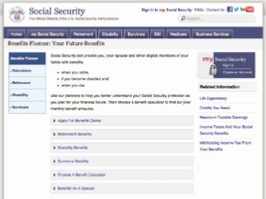
    You can also apply for spouse benefits based on the earnings record of an ex-spouse or deceased spouse if you were married for at least 10 years. Spouses can consider a number of options and variables. We make it easier to navigate them. A good place to start is by visiting our benefits planner at www.socialsecurity.gov/planners. Take note of the “Benefits As A Spouse” section.

    If you are ready to apply for benefits, the fastest, easiest and most convenient way is to apply online. You can do so at www.socialsecurity.gov/applyonline.

    Whether you receive benefits on a spouse’s record or your own, rest assured we will make sure you get the highest benefit we can pay you. Learn more at www.socialsecurity.gov.


    For other information and locations near you:

    www.socialsecurity.gov
    1-800-772-1213 (toll free) | 1-800-325-0778 (TTY)

    Generations - 2013-08-09 - Social Security - Image 02

    Social Security can be an important financial asset for married couples when the time comes to apply for retirement benefits. In many cases, one spouse may have earned significantly more than the other, or have worked for a longer span of time. Or it could be that one spouse stayed home to raise the children…

  • Medicares’ National Mail-Order Program

    On July 1, 2013, Medicare was scheduled to implement a national mail-order program for diabetic testing supplies. The program was designed to offer patients quality supplies at a discounted rate. Rather than having an approved amount of $78 for 100 test strips and lancets, Medicare’s approved amount is around $22 — and your co-pay will go from $15 to under $5. In order to save money under this program, you’ll need to use a Medicare national mail-order contract supplier. The national mail-order program includes all 50 states, the District of Columbia, Puerto Rico, the U.S. Virgin Islands, Guam and American Samoa.

    Who are the mail-order contract suppliers?

    For a list of contract suppliers, visit Medicare.gov/supplier. Enter your zip code, select “Mail-Order Diabetic Supplies” and hit the search button. You can also obtain a list of contract suppliers by calling 1-800-MEDICARE (1-800-633-4227). If your current supplier is not included in the list, you will have to select a new contract supplier for Medicare to help pay for diabetic testing supplies that you have delivered to your home.

    How else can I get supplies?

    If you don’t want diabetic testing supplies delivered to your home, you can go to any local store enrolled with Medicare and buy them there. You can receive the same savings by purchasing diabetic testing supplies in the store as you would by having them delivered to your home — as long as the store accepts assignment, which means they accept the Medicare-approved amount as payment in full. If the store does not accept assignment, they can charge you more. So it’s important to check with the store about assignment if you want to take advantage of the new prices.

    Questions?

    Medicare has resources to help you understand the new program, including Medicare.gov and 1-800-MEDICARE (1-800-633-4227). TTY users should call 1-877-486-2048. You can also call your local State Health Insurance Assistance Program (SHIP). In Hawai‘i, this is the Sage PLUS Program and we can be reached at 1-888-875-9229.

    This program applies to people with Original/ Traditional Medicare. If you’re in a Medicare Advantage Plan (Akamai Advantage, AlohaCare, Humana, Kaiser Sr. Advantage, Ohana Healthplan or UnitedHealthcare Medicare Complete), your plan will notify you if your supplier is changing. If you have a retirement health plan and are not sure, please call the Hawai‘i SHIP/Sage PLUS Program or your retirement administrator for more information.

    The Hawai‘i SHIP/Sage PLUS Program is a volunteer based, federally-funded, Medicare counseling program. And provides individual counseling and community presentations.

    Generations - 2013-08-09 - Medicare - Image 01

    On July 1, 2013, Medicare was scheduled to implement a national mail-order program for diabetic testing supplies. The program was designed to offer patients quality supplies at a discounted rate. Rather than having an approved amount of $78 for 100 test strips and lancets, Medicare’s approved amount is around $22 — and your co-pay will…