Grief hurts. It hurts to witness our loved ones hurt. So a typical response to someone who is grieving is to try to comfort them and make them feel better.
There is nothing wrong with trying to comfort the bereaved, but making them feel better is not possible. A grieving person simply wants their grief to be acknowledged and witnessed, not fixed. They have permission to be sad, angry, distracted and confused.
There are phrases used commonly in an effort to comfort a bereaved person, but even with the best of intentions, these words can be hurtful, as they inadvertently minimize and diminish the griever’s feelings.
WHAT NOT TO SAY
They are in a better place.
They lived a long life.
At least they are no longer suffering.
Be strong.
Don’t cry.
You’ll get over it.
Shouldn’t you be over it by now?
I know exactly how you feel.
I understand.
ALSO NOT HELPFUL
You should be over this by now.
Time heals all wounds.
If you’re not crying, you’re not really grieving.
Real men shouldn’t cry.
WHAT TO SAY
I’m sorry that you are having to navigate this.
My condolences for your loss.
I care.
I love you.
I don’t know what to say except I’m here for you.
How do you want me to support you?
There are many commonly held myths and misunderstandings about grief, which can present significant barriers to someone who is grieving. But when we understand the needs of those who are experiencing this painful but inescapable unbinding of the heart, we will likely be more mindful with our words.
As much as words are important, know that your mere presence in the midst of their sorrow can be just the comfort they need.
Grief hurts. It hurts to witness our loved ones hurt. So a typical response to someone who is grieving is to try to comfort them and make them feel better. There is nothing wrong with trying to comfort the bereaved, but making them feel better is not possible. A grieving person simply wants their grief…
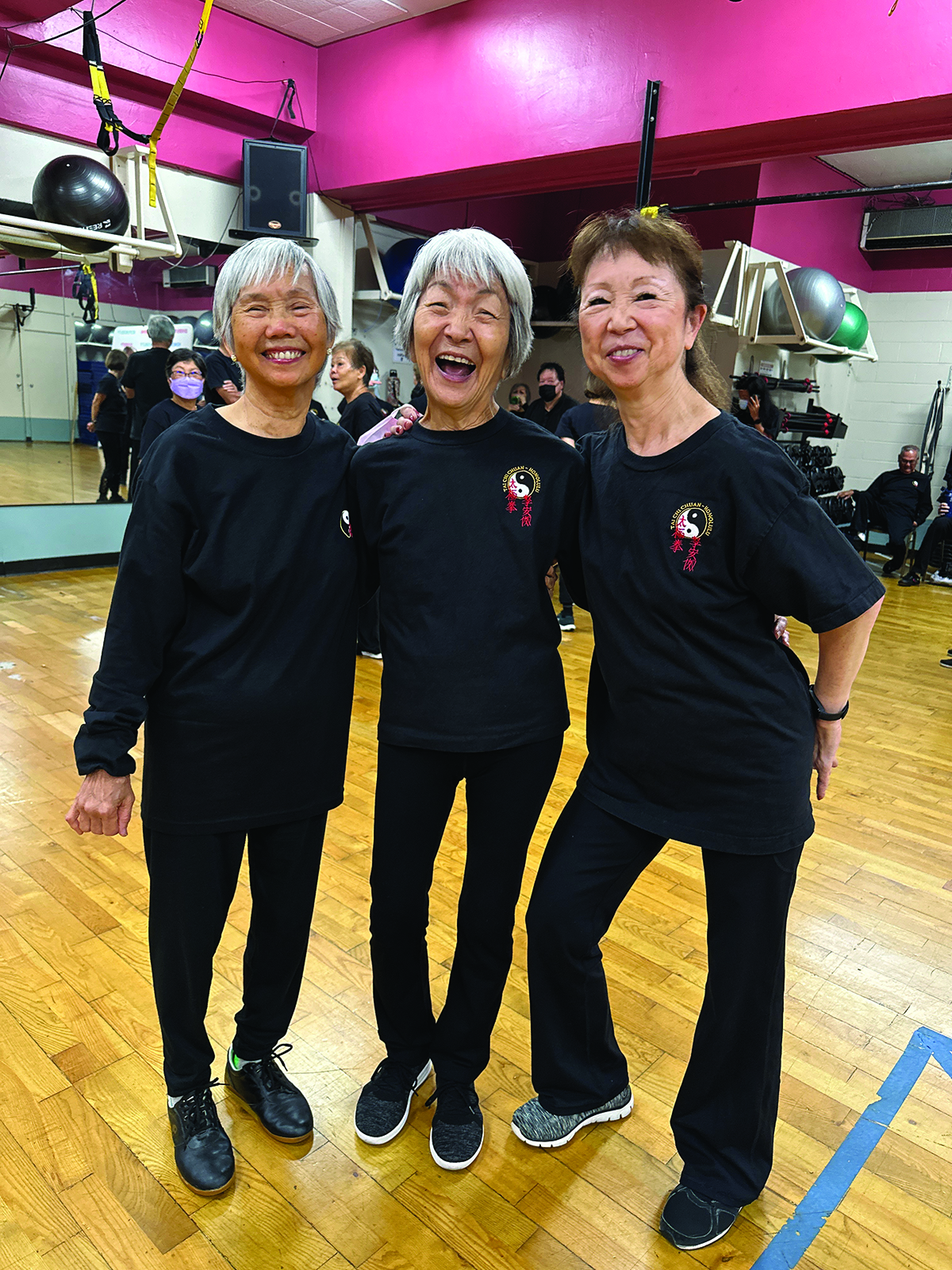
(L–R) Cecilia, Gail and Donna enjoy exercising together at the Y. PC: YMCA
For new exercisers, the gym can be a daunting place. They may not be sure what to do or how to get started. That holds true even more so for kūpuna, who perhaps have not been to a gym in a long time — maybe not ever.
• The YMCA is an excellent place for new exercisers! In fact, 73% of YMCA of Honolulu members identified as health seekers, meaning they want to get healthy but struggled with how to do so and chose the Y for help.
Feeling good isn’t just about your physical well-being but also includes your spirit and mind. The Y helps kūpuna achieve this perfect balance by offering a large and varied selection of classes, activities and programs to promote overall wellbeing, so staying healthy is fun and never boring!
• The Y is here to guide and support. All new Y members get a free guided workout in order to make them feel more comfortable and confident using the equipment. Support continues with our fitness floor staff, who are always available to help members and answer any questions.
• Studies show that people who enjoy physical activity participate more frequently and consistently. There are hundreds of classes and activities to choose from at the Y. Y staff can recommend classes or activities that fit your interests and schedule so that you’re doing something you enjoy at a convenient time.
• Find a buddy! When you work with a partner, you’re more likely to feel motivated, try new things and stay consistent.
You can make friends at the Y through fitness classes, clubs, activities, or social sports such as pickleball or basketball. These are great ways to meet people with similar interests and goals who can support you on your journey to well-being.
Got a green thumb? The Y’s Garden Club at Mililani is great for sharing your gardening talents.
Love to craft? Play games? Participate in the Y’s Kupuna Food & Fun program, a recreational dining program that includes potlucks, lei making, painting and more!
• The Y is affordable. Many kupuna members get a free or reduced membership through their health plans. And thanks to generous donors, the Y also offers financial aid.
For new exercisers, the gym can be a daunting place. They may not be sure what to do or how to get started. That holds true even more so for kūpuna, who perhaps have not been to a gym in a long time — maybe not ever. • The YMCA is an excellent place for…
Nearly one in five adults aged 65 or older has lost all of their teeth, impacting their quality of life. While some assume that tooth loss is an inevitable consequence of aging, proactive dental care can preserve both your teeth and overall health throughout your entire life.
Maintaining good oral health is crucial for kūpuna, extending beyond mere aesthetics. When kūpuna experience tooth loss, it can hinder their ability to eat properly and obtain essential nutrition. In some cases, to avoid becoming a burden on their families, they might refrain from expressing hunger or discomfort. Additionally, seniors with medical conditions like diabetes are at a higher risk of developing gum diseases. They may also experience dry mouth due to taking certain medications.
To ensure kūpuna maintain good oral and overall health, they must make it a habit to see their dentist at least twice a year, practice good oral hygiene and maintain a healthy diet. These preventive measures against tooth loss, gum disease and other issues will help seniors maintain their overall health, enjoy a higher quality of life and continue to lead active and fulfilling lives well into their golden years. So the answer to the question is: Yes, you can keep all your teeth as you age as long as you take the necessary preventive measures to live well and smile more.
Nearly one in five adults aged 65 or older has lost all of their teeth, impacting their quality of life. While some assume that tooth loss is an inevitable consequence of aging, proactive dental care can preserve both your teeth and overall health throughout your entire life. Maintaining good oral health is crucial for kūpuna,…
Striving to ensure safety and fear of falls consistently top the list of concerns for kūpuna. Unfortunately, fear itself can become a risk factor, leading to anxiety, hesitancy and overcautiousness. Being cautious is natural during activities that involve risk. However, being overly careful out of fear can result in moving less, avoiding activities that require balance skills and reliance on external objects for stability.
Everyone has witnessed the signs:
• Shortened steps and/or increased shuffling
• Stiffening of the trunk with no rotation or turning of the body
• Becoming more robot-like when moving
• Reaching for a chair or wall for stability
• Choosing to sit instead of standing
• Increased difficulty standing up after sitting
As the pattern progresses, kūpuna become even more wary and immobile, resulting in a downward spiral, so using good judgment is critical. Balancing the pros and cons of being too cautious in each situation is imperative.
Being sedentary leads to weakness and loss of range of motion and coordination. We all need to “use it or lose it,” and keep moving to maintain our muscle strength and balance. By being “safe,” good intentions may actually contribute to an increased risk for falls. Therefore risk assessments become critical in determining whether an activity is actually beneficial or dangerous.
A home assessment and modifications are a good place to start in order to fall-proof your home. An activity assessment and modifications are also needed. When a loss of balance is observed during an activity, note whether the body is able to compensate adequately and get re-centered and stable again without falling.
Although we tend to overreact when observing unsteadiness, having the ability to recover from a loss of balance is an important activity that requires coordination, core stability and strength. These skills must be retained.
So the next time you feel anxious about the safety of someone doing an activity, carefully observe the person and conduct a risk assessment and assess if there is a modification that could be made to make it safer before eliminating the activity altogether. Every activity has inherent risks at every age. Just be aware that inactivity poses even greater health risks.
Striving to ensure safety and fear of falls consistently top the list of concerns for kūpuna. Unfortunately, fear itself can become a risk factor, leading to anxiety, hesitancy and overcautiousness. Being cautious is natural during activities that involve risk. However, being overly careful out of fear can result in moving less, avoiding activities that require…
Ensuring our elderly loved ones’ well-being during their transition into care homes is crucial. This emotional and often stressful journey demands a meticulous approach to prevent transfer trauma, which can result from frequent relocations and adjustments to new environments and care teams. Utilizing a seasoned nurse consultant, particularly one knowledgeable in disease processes, becomes vital.
An experienced nurse consultant doesn’t just facilitate a smooth transition, but also anticipates potential future challenges, thereby mitigating the risk of subsequent transfers. Their profound understanding of disease trajectories enables them to foresee possible complications, ensuring that the chosen care home is equipped to manage the evolving needs of the senior individual. This foresight is crucial in stabilizing the emotional and physical health of the elderly, providing them with a consistent and familiar environment that is pivotal for their well-being.
A registered nurse and certified senior advisor also bridges the gap between medical jargon and practical understanding, ensuring families make informed decisions. The role of an experienced nurse consultant secures a health-optimized future for our seniors, minimizing disruptions and maximizing quality of life.
NURSING HOME PARTNERS
828 Ailuna St., Honolulu, HI 96821 808-468-9112 | Info@Nursinghomepartners.com
Nursinghomepartners.com
Ensuring our elderly loved ones’ well-being during their transition into care homes is crucial. This emotional and often stressful journey demands a meticulous approach to prevent transfer trauma, which can result from frequent relocations and adjustments to new environments and care teams. Utilizing a seasoned nurse consultant, particularly one knowledgeable in disease processes, becomes vital.…
Caregiving has been part of mankind’s existence from the beginning. We’ve all had caregivers — usually known as Mom and Dad. Many of us have been caregivers of our own children. And as needs changed, parents adjusted their caregiving duties. That is the very first reality of caregiving…
■ Caregiving changes with time. For caregivers of aging parents, it may be a gradual shift from picking up the groceries to checking medications and then to providing help with physical needs. For some, their entry into caregiving is more dramatic as the result of a fall or illness. Caregiving tasks change from that point and often become increasingly complex and difficult.
■ Caregiving is physically demanding. As caregivers, we fill a critical role in the lives of those for whom we care. Our ability to provide compassionate and effective care is linked directly to our own physical, spiritual and emotional health.
■ Caregiving requires support. While we are caregiving, accessing the experience, knowledge and understanding other caregivers can offer makes our journey a little easier. Being part of a support group or having a close connection with another caregiver is essential. Understanding and making use of community resources can make caregiving a little easier, as well.
■ Every aspect of caregiving has challenges. All kinds of emotions can arise, from anger to love. It forces us to face our own mortality but also allows us an opportunity to undertake the highest level of good that humankind can offer — caring for someone else.
■ Caregiving can be rewarding. As difficult as caregiving can be, if approached in a healthy and realistic manner, it can also be very rewarding.
■ Caregiving has an end. This is one reality that is missed by almost every caregiver. It is a reality that we try to avoid, put off, hide from and deny, but the truth is most caregiving has an end — and that end is death. We must be careful to not become so focused on preserving life that we lose sight of quality-of-life.
The Caregiver Foundation would like to serve as your resource for information about becoming a caregiver for a loved one. Our online How-To series provides some of the information you may also receive in our various workshops. If you are a new caregiver, we encourage you to attend one of our workshops or caregiving training classes and join a Caregiver Support Group to learn from and communicate with other caregivers.
Caregiving has been part of mankind’s existence from the beginning. We’ve all had caregivers — usually known as Mom and Dad. Many of us have been caregivers of our own children. And as needs changed, parents adjusted their caregiving duties. That is the very first reality of caregiving… ■ Caregiving changes with time. For caregivers…
During Sam C. Dobbs’ time, the early 20th-century, advertising promised consumers various outcomes; however, the claims weren’t based on any facts. This inspired him as the head of Coca-Cola to create a group of businesses to monitor each other’s advertising. The Better Business Bureau (BBB) began.
Fast forward to 2023. If you have used gaming apps or social media recently, you have seen ads that promise you will lose weight fast or product offers that are too good to be true. The ads look authentic and the offer is so enticing that many consumers click the buy button. However, many customers are dissatisfied with their purchase after receiving the order because the product wasn’t as advertised or they never received it.
While ethical businesses follow advertising codes, the market is filled with fraudulent companies exploiting consumers. How do consumers know if the ad is false and if it is, who can they report it to?
BBB Tips for spotting false advertising and avoiding fraud are:
• Too good to be true offer. Resist the temptation to click the purchase button. Remind yourself of the laws of supply and demand. If supply is low, demand is high and the cost will be increased.
• Don’t believe everything you read. Can the product deliver the results promised? For example, it’s easy to be deceived by quick weight loss promises. Evaluate the product and the promise to see if it is feasible.
• Vet the company. There is a plethora of websites and many are fake. Before purchasing from a company you don’t know, check the business’s BBB profile at BBB.org. Also, search for the company’s name with the words “complaints, reviews and scams.”
Use your brain and not your heart. Before purchasing, ask yourself if you are thinking rationally or emotionally. When it comes to money, decisions should be made rationally.
• Look closely at the domain name to avoid impersonated websites. Is the domain name spelled correctly?
During Sam C. Dobbs’ time, the early 20th-century, advertising promised consumers various outcomes; however, the claims weren’t based on any facts. This inspired him as the head of Coca-Cola to create a group of businesses to monitor each other’s advertising. The Better Business Bureau (BBB) began. Fast forward to 2023. If you have used gaming…
Digital person-to-person payment services and mobile payment apps have become part of everyday life for millions of people. Mobile payment services and apps such as PayPal, Venmo, Zelle, Apple Pay and Google Pay let you send money to people without having to write a check, swipe a card or hand them cash. These services have become increasingly popular among young and old alike for splitting the cost of a meal or donating to a charity, etc.
We all must be aware that these electronic payment services come with their own sets of risks that scammers, fraudsters and identity thieves utilize to victimize the public.
It is important to note that most if not all these mobile payment apps have a website counterpart that has similar features that allow the the use of a computer to conduct transactions. Features may differ between the mobile app and its website version, but their basic tasks (sending and receiving funds) are the same. And though the focus of this article is on mobile apps, the risks and security precautions applies to both app and website versions.
How do they work?
Mobile payment apps enable you to send money to someone who banks somewhere different than you. Your bank may even offer one of the apps as part of its service. Some services require both the sender and recipient to have an account with the same mobile payment app/service. Each app has its own easy-to-follow, step-by-step instructions. Most start with enrollment using your email or mobile number. To send funds, enter the email address or mobile number of the recipient
who has a bank account. Enter the amount. Your recipient gets a notification explaining how to complete the payment.
A word about passwords
Create a separate and unique password for the service you have chosen to use that’s different from any other accounts and services you use. For example, use a different password for your email and PayPal accounts.
Are they safe?
The greatest risk is losing your mobile device or having it stolen. It not only contains the mobile payment app you use but all your other apps, including social media and email apps. Also at risk are the entire contents of the device, such as your contacts and other important personal data.
And like any computing device, it can also be infected by malware and carry out various kinds of malicious activities, such as stealing passwords and other sensitive personal information and transmitting them to cybercriminals. Furthermore, fake apps masquerading as legitimate apps — including mobile payment apps — can compromise the data stored on your devices.
In addition, cybercriminals also rely on traditional scams and fraudulent schemes to trick unsuspecting users to send them money using mobile payment apps. For example, fraudsters are known for “spoofing” legitimate companies like Amazon to trick users into purchasing items they will never get, or sending donations to a fake charity organization that is nonexistent.
How do I protect myself from scams & theft?
The first line of defense is protecting your device. Do not leave it unattended. Do not let strangers use it unless you can see what they are using if for. Enable your device’s screen lock when not in use or even power it off.
Most importantly, ensure the app you installed is from a legitimate source. Then consider using security software. Most fully featured security products have protections for your banking and payment applications.
Most mobile payment apps allow you to set up a passcode, PIN or fingerprint that you can use to authenticate yourself before making a payment. Setting up this feature helps to prevent someone else from making unauthorized transactions from your account. Use a strong password which contains a combination of uppercase letters, numerals and control characters (%, ^ , !).
If your mobile phone is lost or stolen, notify your bank and payment provider. If stolen, report it to law enforcement and obtain a police report number, which may be required to prevent you from being responsible for any financial loss.
Most payment apps have additional security features such as two-factor authentication (2FA). Activate it so before a transaction is authorized, a code is sent to you via text message or email that you’ll need to input to complete the transaction.
When you are not using the app or web service, log out and ensure that your mobile device and computer are locked when they are not being used.
Use a credit card with a low credit line or open a bank account designated for the payment app/service. Do not use accounts associated with any income (pension, SS benefits).
One of the most common risks when using mobile payment apps is human error. Always double check the amount you entered and the person you selected to pay. Also, pause a bit to confirm the transaction went through before tapping again. Again, contact your bank or payment provider if you make an error.
Ultimately, mobile payment apps and web services make our lives easier, but we don’t want to make it easy for scammers, fraudsters and hackers to victimize us. Stay vigilant and stay safe.
Contact Christopher with questions about online security.
Christopher Duque | aikea808@gmail.com
Digital person-to-person payment services and mobile payment apps have become part of everyday life for millions of people. Mobile payment services and apps such as PayPal, Venmo, Zelle, Apple Pay and Google Pay let you send money to people without having to write a check, swipe a card or hand them cash. These services have…
The 2024 Chinese New Year — the Year of the Dragon — begins on Feb. 10 and ends on Jan. 28, 2025, when the Year of the Snake begins. Marking the end of winter and the beginning of the spring season, observances traditionally take place starting on Chinese New Year’s Eve (Feb. 9).
Chinese New Year, also called “Lunar New Year,” is an annual 15-day festival in China and Chinese communities around the world, including Hawai‘i. The first day of Chinese New Year begins on the new moon that appears between Jan. 21 and Feb. 20. Festivities continue until the following full moon, which is Feb. 24, this year.
The Chinese zodiac starts with the Year of the Rat and cycles continuously through 12 signs. The dragon is the fifth of 12 animals in the Chinese zodiac, which is based on a 12-year cycle. So if you were born in 1952, 1964, 1976, 1988, 2000, 2012 or this year, then your Chinese zodiac sign is Dragon. The dragon, a revered symbol in Chinese culture, is one of its most important mythological creatures, symbolizing strength, wisdom, honesty, benevolence, good fortune, power and prosperity.
Traditions Immigrate
Traditional dragon and lion dances are indispensable parts of community celebrations during every Chinese New Year. One of the most prominent origination theories suggests that the dragon dance began during the Han Dynasty (206 BCE–220 CE); the lion dance has its roots in the Tang Dynasty (618–907 CE).
Chinese immigrants brought their traditions to the Kingdom of Hawai‘i near the end of the 18 century. Records show that the Chinese people welcomed the Year of the Dog on Feb. 4, 1886, when the United Chinese Society of Hawai‘i held a blessing to open its King Street Hall. Princess Lili‘uokalani and other royalty attended the festivities.
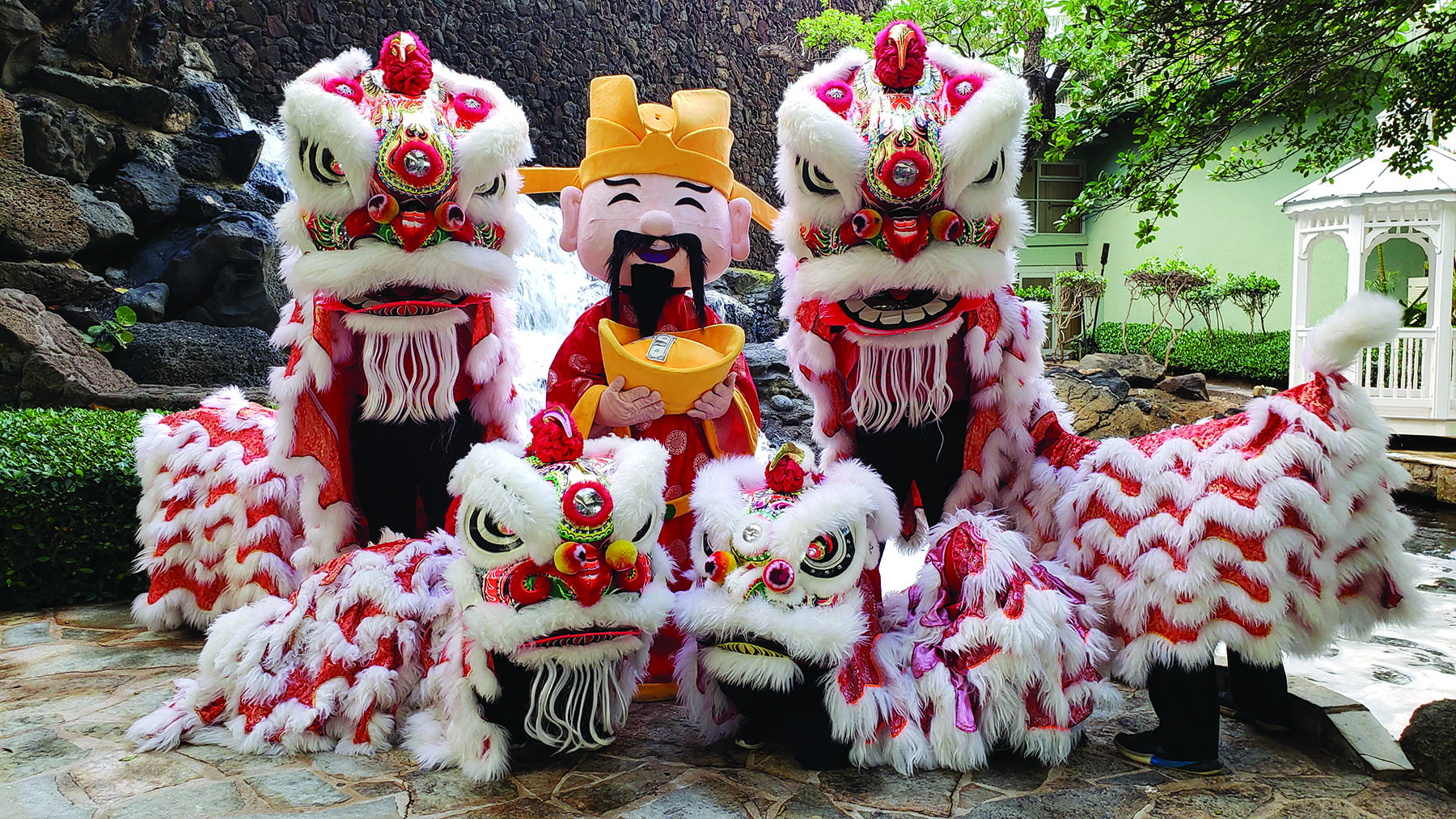
Chinese Southern Fo Shan lions with Caishen (God of Prosperity). PC: Majestic Culture and the Arts Association
Lion & Dragon Dances
Lions are considered symbols of protection in Chinese culture. Lion dances are often performed at important occasions, especially Chinese New Year celebrations, to bring good fortune and ward off evil spirits.
There are many stories about the origins of the Chinese lion dance. The most popular one involves a beast named “Nian” (“year”) that terrorized the villagers at the beginning of each new year. The monster was afraid of loud noises, bright lights and the color red, so those were the things villagers utilized to chase the beast away. Celebrations to usher out the old year and bring forth the luck and prosperity of the new one incorporated a cacophony of noise and often included firecrackers, fireworks, and red clothing and decorations. Dancers dressed as lions, the protectors of the weak, bearers of righteousness and bringers of blessings.
There are several distinctions between lion and dragon dances. Both dances are accompanied by a percussion team that plays drums, gongs and cymbals. Other instruments may be added to the musical ensemble, such as flutes, wind instruments or stringed instruments.
The lion dance is executed by two performers portraying the lion; one manipulates the head and the other moves the tail.
The dragon dance utilizes an uneven number of performers, most often, more than nine. In synchrony, dancers maneuver a long, colorful serpentine body held aloft on poles with a dragon head and tail at either end. Many dancers are needed to control the dragon’s long, undulating body, which can extend to 30 yards in length. The dragon’s body is made from thin bamboo strips covered in cloth and painted with scales. Dancing dragons are frequently led by someone holding a large sphere — either a white pearl representing immortality and the pursuit of wisdom, or a red sun representing the hope for a good harvest. Dragons most often dance during the Chinese New Year and other auspicious events that offer them a large performance area.
Miss Chinatown Hawaii Court 2020 with Chinese Southern Fo Shan Lions and the Three Stars — Blessings, Wealth and Longevity. PC: Miss Chinatown Hawaii
In Hawai‘i, lion dances are performed throughout the year at a variety of festive occasions, such as grand openings, birthday parties and weddings. During the Chinese New Year period, which spans two weeks prior to and after New Year’s Day, lion dances are performed in Chinatown and elsewhere throughout the island chain at businesses, malls and restaurants.
Unique to Hawai‘i, spectators will often feed money to the lion to receive blessings of health, wealth and prosperity. Sometimes the money is placed in a red envelope called “lai see,” meaning good fortune (Cantonese), or “hong bao,” meaning red packet (Mandarin).
The last event held during the Chinese New Year is the Lantern Festival, which honors deceased ancestors, during which glowing lanterns are floated in waterways, hung in temples or carried during a nighttime parade. A dragon dance procession through the streets highlights many Lantern Festival celebrations.
Kung hei fat choi (Cantonese)! Wishing you happiness and prosperity.
The 2024 Chinese New Year — the Year of the Dragon — begins on Feb. 10 and ends on Jan. 28, 2025, when the Year of the Snake begins. Marking the end of winter and the beginning of the spring season, observances traditionally take place starting on Chinese New Year’s Eve (Feb. 9). Chinese New…
As we welcome the New Year, a key goal for many revolves around health and vitality. Good nutrition, what you eat to “fuel” your body, combined with physical activity, are key.
Many conditions (heart disease, high blood pressure, diabetes, obesity, osteoporosis) can be prevented or controlled with dietary changes and exercise. A healthy diet also provides vitamins and minerals your body needs. And water, along with fiber, helps your digestive system.
What is healthy eating?
Healthy eating is about balance, variety and moderation. It means you eat enough, but not too much, and eat a variety of colorful foods that provide nutrients needed to stay healthy. All foods eaten in moderation can be a part of healthy eating. Five or more servings of fruits and veggies daily provides fiber and energy to help you live a healthy life. Create power-packed easy meals by adding spinach or kale to a morning fruit smoothie, vegetables to scrambled eggs, vegetables to your whole grain sandwich, roasted veggies to soup, salads or grains.
How to roast vegetables
It’s quick and easy to roast vegetables, usually taking less than 45 minutes. Choose various vegetables, such as potatoes, beets, carrots, Brussels sprouts and broccoli, and chick peas for extra protein. Experiment with fresh herbs, citrus and seasonings such as rosemary, thyme, garlic and lemon to decrease sodium intake.
ROASTED BELL PEPPER MEDLEY
Servings: 2 to 3
Prep time: 15 minutes
Ingredients
4 large bell peppers (use a mix of green,
yellow and red)
2 Tbsp. olive oil
2 Tbsp. dried or fresh chopped herbs
pinch (to taste) kosher salt and pepper
Directions
1. Preheat oven to 425 degrees.
2. Wash peppers, cut them in half, remove top and seeds.
3. Slice peppers into strips.
4. Mix/toss slices in a bowl with olive oil, salt and pepper.
5. Spread sliced peppers on baking sheet and sprinkle with herbs.
6. Roast for 30 minutes or until tender.
KAISER FOUNDATION HEALTH PLAN, INC.
711 Kapiolani Blvd., Honolulu, HI 96813 808-432-5915 (TTY 711) | kp.org This article contains health and wellness or prevention information.
As we welcome the New Year, a key goal for many revolves around health and vitality. Good nutrition, what you eat to “fuel” your body, combined with physical activity, are key. Many conditions (heart disease, high blood pressure, diabetes, obesity, osteoporosis) can be prevented or controlled with dietary changes and exercise. A healthy diet also…
In the former location of taro patches and rice paddies, Lanakila Multi-Purpose Senior Center (LMPSC) managed by Catholic Charities Hawai‘i, nestled in Liliha in the heart of Honolulu, offers camaraderie, education, recreation, exercise, health promotion, volunteer opportunities and more for kūpuna 60 years of age and older from diverse ethnic, cultural and career backgrounds.
LMPSC, the oldest and largest senior center in Hawai‘i, was created by the state in 1969 as part of Hawai‘i’s comprehensive response to the passage of the Older Americans Act of the 1960s. Devoted elected officials and other community leaders supported and funded this much-used gathering place.
There is no membership fee. Those who are able to participate safely on their own without supervision are welcome to visit and observe the activities of the senior center twice. If they feel comfortable, make an appointment with the LMPSC’s membership specialist (see below).
Currently, there are about 2,000 members participating in over 50 classes a week, including pickleball, ping pong, yoga, cultural dances, ‘ukulele and guitar, language and calligraphy classes, technology training, arts and crafts, line dancing, stretching and toning, tai chi, fitness fusion, American Sign Language, board games, singing and performing arts, and much more.
LMPSC members attend hundreds of educational presentations and workshops, excursions, and social and volunteer activities throughout the year. LMPSC has demonstrated for over five decades the importance of social engagement, sharing talents and knowledge for the betterment of the community, recreation and lifelong learning opportunities to keep older adults happy, healthy, and living independent and productive lives.
CCH CEO Rob Van Tassell emphasized that “the annual cost of two nursing home patients equates to the operating costs associated with this senior center. Public and private sector support for senior centers throughout Hawai‘i would be a very good investment for the state.”
Long-time Lanakila member Mary Sueda was touched every day by the caring and kindness that members and staff shared with one another. She is happy that her mom was able to enjoy such wonderful times with friends at Lanakila, too.
Sen. Carol Fukunaga believes that the center “can serve as a role model that can be incorporated into future community developments and redevelopments, because it encourages healthy aging and effectively keeps our kūpuna active and independent!”
LANAKILA SENIOR CENTER managed by CATHOLIC CHARITIES HAWAI‘I (501(c) 3 nonprofit)
1640 Lanakila Ave., Honolulu, HI 96817
Membership Specialist Iris Hiramoto: 808-847-1322 suzanne.oakland@catholiccharitieshawaii.org catholiccharitieshawaii.org
Check online for Catholic Charities Hawaii offices on the Neighbor Islands: Hawai‘i Island, Maui and Kaua‘i.
In the former location of taro patches and rice paddies, Lanakila Multi-Purpose Senior Center (LMPSC) managed by Catholic Charities Hawai‘i, nestled in Liliha in the heart of Honolulu, offers camaraderie, education, recreation, exercise, health promotion, volunteer opportunities and more for kūpuna 60 years of age and older from diverse ethnic, cultural and career backgrounds. LMPSC,…
The November/December 2023 “Ask a Kupuna” column posed this question: “Do you have a favorite Valentine’s Day story to share?”
Marlene wrote, “After a disappointing experience the year before at an upscale downtown restaurant, we decided to never go out to dinner again on a popular occasion. Instead, we had a nice quiet candlelit dinner at home on Valentine’s Day in 2014.
“We purchased lobster tails and side dishes at our local market and enjoyed a delicious dinner in the comfort, quiet and convenience of our little rental cottage on a cattle ranch in California.”
Marlene and her husband have returned to Hawai‘i and enjoy all our local foods. They are also looking forward to attending this year’s Annual Senior Valentine’s dance. “See you there.”
The November/December 2023 “Ask a Kupuna” column posed this question: “Do you have a favorite Valentine’s Day story to share?” Marlene wrote, “After a disappointing experience the year before at an upscale downtown restaurant, we decided to never go out to dinner again on a popular occasion. Instead, we had a nice quiet candlelit dinner…

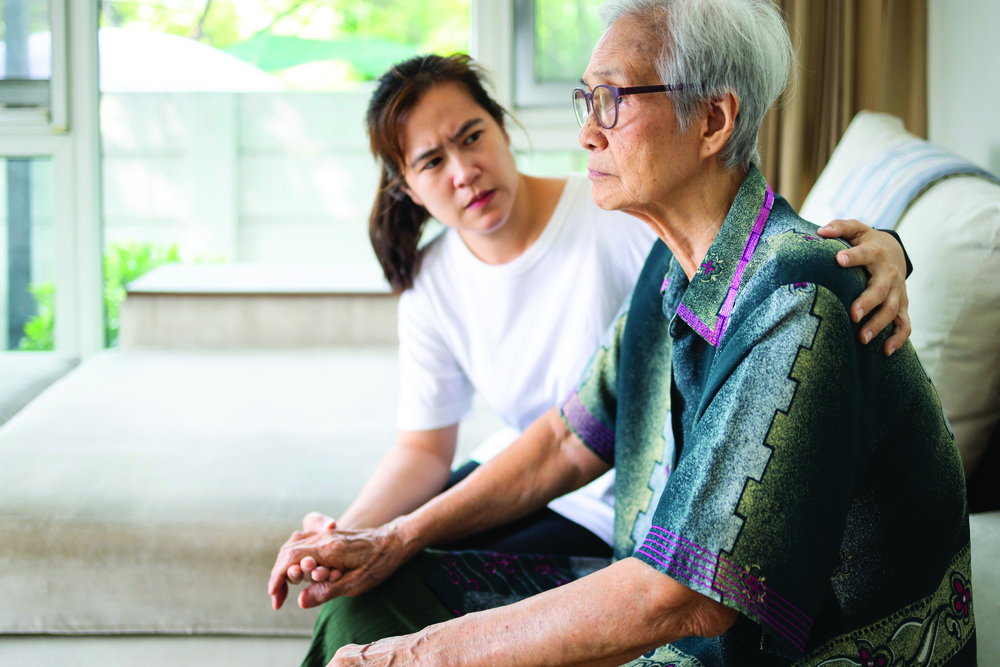 Grief hurts. It hurts to witness our loved ones hurt. So a typical response to someone who is grieving is to try to comfort them and make them feel better.