Category: Articles

  • Hawai‘i Lawyers Helping Seniors

    Fifteen years ago, the Hawai‘i State Bar Association created the Senior Counsel Division (SCD). Its members are Hawai‘i attorneys who are 50 years of age or older (which is over half the Hawai‘i State Bar), and number in the thousands.

    The OWLs (older, wiser lawyers) who make up the SCD are the most experienced and knowledgeable attorneys in the state. We have a responsibility to share this expertise with others in our profession and with the kupuna in our island home. Therefore, the purpose of SCD is to help older lawyers practicing in Hawai‘i and our kūpuna in the community, as well.

    This help has ranged from providing legal information to the public to participating in community service projects.

    For example, SCD has organized and recruited volunteers to help the Hawai‘i Foodbank with its Senior Food Box Packing Program—a critical service for low-income seniors. Thousands of boxes have been packed for seniors on O‘ahu and the neighboring islands.

    SCD has also hosted legal clinics and staffed ask-a-lawyer type information tables at various senior fairs and events around the state. SCD has appeared at the Palolo Learning Center and the Hawai‘i Agricultural Conference at the Hawai‘i Convention Center. Recently, SCD joined Generations Magazine and over 20 other senior service providers at Windward Mall for the Generations Senior Fair in February.

    One of SCD’s major activities is its monthly Coffee Hours. During these events, experts from various sectors of senior interests share valuable knowledge and experiences in their respective fields of expertise. The topics that have been addressed in past Coffee Hours have included Blue Zone diet cooking, treating Alzheimer’s, asset protection planning, Medicare and how missing deadlines can drain your savings, financial elder abuse, economics of aging in Hawai‘i, preventing
    cognitive decline, and senior residential living facilities and when to place a loved one there.

    This year, topics will include condominium law, HOAs and rights of residents; Social Security; Grey Divorce (issues surrounding divorcing later in life); Honolulu Prosecutor’s efforts to keep our island safe and caregiving mediation.

    These presentations are open to the public and can be attended either in person at our offices in downtown Honolulu, or can be watched live on Zoom (call or email for a link). Past shows are also available on YouTube.


    HAWAI‘I STATE BAR ASSOCIATION
    Senior Counsel Division
    Alakea Corporate Tower, 1100 Alakea St., Ste. 1000
    Honolulu, HI 96813
    808-537-1868 | SCD@HSBA.org | HSBA.org

    Fifteen years ago, the Hawai‘i State Bar Association created the Senior Counsel Division (SCD). Its members are Hawai‘i attorneys who are 50 years of age or older (which is over half the Hawai‘i State Bar), and number in the thousands.

  • Covering Your Assets

    Think of asset protection planning as a game. Follow the rules and you may avoid detours through lawyers’ offices and courtrooms.

    Rule 1: What you can touch, your creditors can touch. A creditor might be a business partner, someone you clipped with your car or an ex-spouse. The planning response to Rule 1 is to limit your own access to your stuff just enough to keep your creditors’ mitts off of it, while allowing you pretty much full use and enjoyment of it.

    Rule 2: Liability exposure flows two ways—toward your stuff and away from your stuff. Liability flowing toward your stuff: Somebody sues you because you creamed them with your car, so he or she gets a court order compelling the sale of your beautiful beach house in order to pay down the judgment against you.

    An example of liability flowing away from your stuff: Somebody rents your beach house and is injured falling through the floorboards because you didn’t maintain the structure properly. Your tenant sues you, gets a $1 million judgment, takes your $450,000 beach house, and then wants to force a sale of your home or your business to pay off the rest of the judgment.

    So the planning response to Rule 2 is to build walls between your assets and not let any of your assets slosh over them. Building the right walls is the essence of asset protection planning.


    EST8PLANNING COUNSEL LLLC
    Scott Makuakane, Counselor at Law
    808-587-8227 | maku@est8planning.com
    Est8planning.com

    Think of asset protection planning as a game. Follow the rules and you may avoid detours through lawyers’ offices and courtrooms.

  • Insurance You May Not Realize You Need

    Insurance is a product for the what-ifs in life. A good insurance policy can reduce the financial impact of an adverse event, mitigate financial losses, provide stability and offer some peace of mind during difficult times. Some insurance coverage is deemed so important, it’s mandated by law. But there is also lesser-known insurance coverage worth exploring. Consider these optional coverages to trade uncertainty for financial protection.

    Homeowner riders. If you have a mortgage, homeowner insurance is required. A basic homeowner policy provides standard reimbursement after a deductible for approved claims due to theft or damage to your property, dwelling, personal possessions and liability. Such coverage, however, may not be sufficient. If you have valuable art or jewelry in your home, a rider can ensure appropriate reimbursement if these items are stolen or damaged. Consider a rider to offset the liability of owning a swimming pool or trampoline, for example. Other common riders cover water damage, identity restoration and business assets (if you conduct business in your home).

    Renters insurance. If your personal property is stolen or damaged at a rented house or apartment, you may be out of luck unless you carry your own renters insurance. Look for a policy that includes liability coverage, which provides financial protection in case someone gets hurt at your rented residence.

    Travel insurance. You may want to explore travel insurance before an international trip. A policy that covers unexpected cancellations is reassuring when planning an expensive vacation with non-refundable reservations. A policy that provides international medical coverage can be a real lifesaver since most US health insurance plans do not reimburse for care provided outside the country. The most comprehensive travel policies include reimbursement for medical evacuation and repatriation of remains.

    Appliance insurance. Many utility companies offer affordable insurance plans to cover needed appliance maintenance and repairs. Coverage is usually available for major appliances, including your refrigerator, stove, dishwasher, furnace, water heater, washer, dryer and air conditioner.

    Pet insurance. Veterinary care can be expensive. A pet insurance policy can help pet owners manage the cost of owning a pet. Most policies do not cover wellness care but do cover all or part of the expense for emergency procedures and major medical interventions.

    Life insurance riders. Basic life insurance pays out for death from natural causes and most accidents. There are exceptions, however. Insurance companies generally exclude coverage for risky activities. If you participate in extreme sports or own a private plane, you may want to purchase a life insurance rider.

    Review your insurance coverages annually or when you experience a life-changing event. Be sure to comparison shop as insurance policies can vary widely in coverage and cost. A trusted financial advisor can be a great resource to help you determine if you carry sufficient levels of insurance or if additional coverage is warranted.


    MICHAEL W. K. YEE, CFP,® CFS,® CLTC, CRPC®
    1585 Kapiolani Blvd., Ste. 1100, Honolulu, HI 96814
    808-952-1240 | michael.w.yee@ampf.com
    ameripriseadvisors.com/michael.w.yee
    Michael W. K. Yee, CFP®, CFS®, CLTC, CRPC ®, is a Private Wealth Advisor, Certified Financial Planner ™ practitioner, with Ameriprise Financial Services, LLC in Honolulu, HI. He specializes in fee-based financial planning and asset management strategies and has been in practice for 40 years. Investment products are not insured by the FDIC, NCUA or any federal agency, are not deposits or obligations of, or guaranteed by any financial institution, and involve investment risks including possible loss of principal and fluctuation in value. Investment advisory products and services are made available through Ameriprise Financial Services, LLC, a registered investment adviser. Ameriprise Financial Services, LLC. Member FINRA and SIPC.
    © 2023 Ameriprise Financial, Inc. All rights reserved.

    Insurance is a product for the what-ifs in life. A good insurance policy can reduce the financial impact of an adverse event, mitigate financial losses, provide stability and offer some peace of mind during difficult times. Some insurance coverage is deemed so important, it’s mandated by law. But there is also lesser-known insurance coverage worth…

  • ‘We Never Talked About It’

    The patient is in a coma. The doctor at the hospital is asking, “What kind of care would your dad have wanted if he could speak?” Too often, the answer is “I wish I knew. We never talked about it.”

    Medical technology is extending our lives. But many people are dying in ways they would not choose, and many survivors are left feeling guilty and uncertain whether they made the right decisions for their loved ones. However, it doesn’t need to be this way.

    The Big Island’s Community First Hawai‘i nonprofit strives to change this scenario by holding free workshops every other month via Zoom and in person to help folks complete their Advance Health Care Directive (AHCD), a legal document that allows you to choose someone to speak for you and documents your end-of-life care choices.

    For those who already have a Living Will, Health Care Power of Attorney or an AHCD, the workshop helps in reviewing their document to ensure it meets their current needs.


    COMMUNITY FIRST HAWAI‘I (nonprofit)
    PO Box 7158, Hilo, HI 96720
    Call or email for a link to workshop recordings.
    808-756-9637 | info@communityfirsthawaii.org
    communityfirsthawaii.org/advance-health-care-directive

    The patient is in a coma. The doctor at the hospital is asking, “What kind of care would your dad have wanted if he could speak?” Too often, the answer is “I wish I knew. We never talked about it.”

  • Smiling Faces at Moloka‘i’s Friendly Places

    Senior programs on Moloka‘i are provided by a wide range of nonprofits. There is no designated “senior center,” but a number of facilities welcome program providers. The Moloka‘i Rural Health Community Association (MRHCA) is one such provider. Its Kūpuna Program was established post-COVID with funding from Maui County’s Office of Economic Development and Office on Aging to promote overall health and wellness. Program Manager Ku‘ulei Arce describes MRHCA as a “one-stop place that aims to help kūpuna live a well-rounded life.”

    The programs offered include computer classes at the Moloka‘i Education Center twice a month, weekly stretching and hula classes held at Home Pumehana, and sewing classes held at the Office of Hawaiian Affairs. Other offerings include pickleball, ‘ukulele and origami, healthy eating workshops, excursions and one-off events such as Christmas with Melveen Leed, which was held at the Moloka‘i Community Health Center.

    Socialization and fun

    One program that MRCHA supports is the Kupuna Fun Night put on by Hōkūlani Children’s Theatre of Molokai (HCTOM). Held once a month at Home Pumehana, it provides socialization, a congregate meal, and activities designed to “keep kūpuna engaged and provide them with tools to help them live better—like listening and remembering,” says HCTOM Founder Vicki Boswell. The participants also work on joint projects with the keiki, creating costumes, building and painting sets, and performing together for the public.

    A recent Keiki and Kūpuna Comedy Variety Show featured stand-up and mime by both age groups.

    Small but mighty

    Another nonprofit that focuses on kūpuna health and wellbeing is Mālama Molokai Wellness. Tai chi classes are held twice a week in an adjacent outdoor space. Other options include low-impact interval training and “kūpuna strong” classes. The exercise class designed to strengthen the body’s core muscles aims to aid balance, which helps prevent falls.

    Music, smiles and laughter abound, making a mighty impact in participants’ lives!


    MOLOKA‘I RURAL HEALTH COMMUNITY ASSOCIATION
    808-774-8991
    HCTOM KUPUNA FUN NIGHT
    808-658-0869
    instagram.com/hokulanictom
    MĀLAMA MOLOKAI WELLNESS
    808-460-7411
    facebook.com/malama.mkk.wellness

    Senior programs on Moloka‘i are provided by a wide range of nonprofits. There is no designated “senior center,” but a number of facilities welcome program providers. The Moloka‘i Rural Health Community Association (MRHCA) is one such provider. Its Kupuna Program was established post-COVID with funding from Maui County’s Office of Economic Development and Office on…

  • Preventing & Reporting Healthcare Fraud

    Close-up of mixed race attractive confident adult woman in headset, sitting in office, working as operator of call center or support service, looking directly at the camera and smiling friendlyPrevention education is the best defense in the fight against healthcare fraud and abuse. When there is malicious intent to commit fraud, the Senior Medicare Patrol (SMP) gets involved and works with state and federal partners to report cases for investigation.

    SMP Hawaii Volunteer Coordinator Jeff Woodland cites one recent case involving the son of an elderly couple who called the program’s helpline. An imposter had convinced his parents that their bank was under investigation and advised them to transfer their money to a Hong Kong account for safekeeping.

    SMP told him to immediately call the police and make a report. Once the case was filed, SMP worked with the family, police and bank officials to freeze the funds. Thankfully, they were able to recover almost all of the money.

    Hawai‘i leads the nation in life expectancy at 80.7 years. As this population continues to increase, fraudsters will continue to prey upon our vulnerable older adults with scams that are becoming very sophisticated, ultimately impacting the overall health of older adults.

    Volunteer with SMP Hawaii today to help protect our kūpuna! Roles include administrative support, information distribution, counselors, presenters and exhibitors.


    SENIOR MEDICARE PATROL (SMP) HAWAII
    800-296-9422 | info@smphawaii.org
    smphawaii.org | Facebook: smphawaii808

    Prevention education is the best defense in the fight against healthcare fraud and abuse. When there is malicious intent to commit fraud, the Senior Medicare Patrol (SMP) gets involved and works with state and federal partners to report cases for investigation.

  • Increase Your Independence

    When people hear the word “technology”, they often think of complex machines that are difficult to use. However, “AT” is a term used for any item, piece of equipment or product system, whether acquired commercially off the shelf, modified or customized, that is used to increase, maintain or improve functional capabilities.

    AT includes high-tech items, such as speech generating devices and smart home controls, and low-tech devices, such as jar openers, large grip utensils and magnifying glasses.

    Find more information about AT at the Assistive Technology Resource Centers of Hawaii, the State of Hawai‘i’s designated Assistive Technology Act agency helping all age groups problem solve for increased independence.


    ASSISTIVE TECHNOLOGY RESOURCE CENTERS OF HAWAII (nonprofit)
    200 N. Vineyard Blvd, Ste 430, Honolulu, HI 96817
    808-532-7111 | office@atrc.org | atrc.org
    ATRC does not sell products, but recommends vendors. Device demonstration and lending programs give individuals and groups the opportunity to make an informed choice about an AT device prior to acquiring one.

    Do you ever find yourself having difficulty with routine tasks that you used to be able to do with ease? Making lunch? Brushing your hair? Reading a novel? Hearing the television? Assistive technology (AT) can help with all of these and more. AT can help with a variety of challenges: hearing, vision, communication, computer/phone access,…

  • The Importance of Senior Living

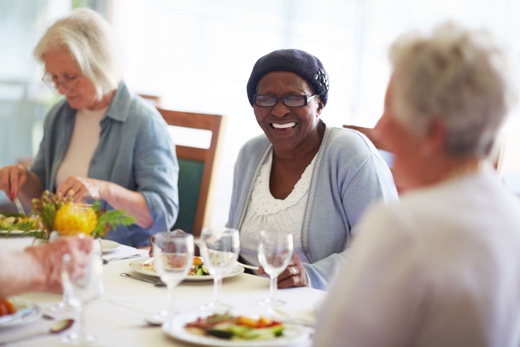
    Seniors may feel hesitant about making the move to a senior living community and believe the transition will come with a decrease in independence and quality of life.

    But that couldn’t be further from the truth.

    Senior living communities help older adults lead healthier, happier lives thanks to quality care and services.

    If you are considering a move to senior living, here are some things to consider.

    • Does the environment feel welcoming?
    • What are the apartment and community amenities?
    • Are there common areas where you can connect with fellow residents?
    • Will there be help with housekeeping and maintenance?
    • Are there meal options?
    • Is transportation offered?
    • Are there recreational, spiritual and entertainment options available?

    Senior living communities should be a place of kindness, openness, empowerment, love and respect. Staff members should be available to provide support when needed. There should also be emotional, social and spiritual wellness opportunities.

    Choose a senior living community that fits your wants and needs and allows you more time to focus on the things you desire.


    GOOD SAMARITAN SOCIETY—POHAI NANI
    45-090 Namoku St., Kaneohe, HI 96744
    808-247-6211 | good-sam.com

    Seniors may feel hesitant about making the move to a senior living community and believe the transition will come with a decrease in independence and quality of life. But that couldn’t be further from the truth.

  • Eat Superfoods to Feed Your Brain

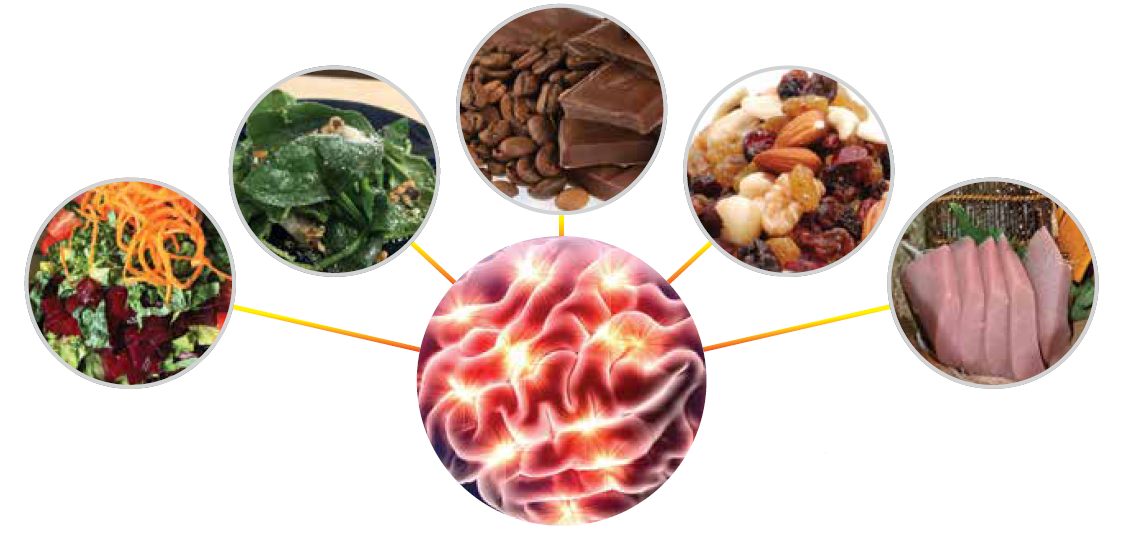
    It turns out you can feed your mind with food in addition to knowledge. Researchers have found superfoods for the brain that are part of what’s known as the MIND diet—Mediterranean-DASH Diet Intervention for Neurodegenerative Delay.

    These foods are similar to what you would eat in the Mediterranean and DASH (Dietary Approaches to Stop Hypertension) diets. Both diets have been shown to benefit brain and heart health. The basic advice is to eat more vegetables, fish, nuts and berries and reduce red meat, sweets, cheese, butter and margarine, and fried foods.

    Top superfoods for brain health:

    • Olive oil, green tea and leafy greens (broccoli, spinach and kale) contain antioxidants to fight inflammation.
    • Beets, tomatoes, kale, spinach and broccoli are rich in flavanols, the chemicals responsible for the bright colors in fruits and vegetables.
    • Tree nuts seem to guard against memory loss and enhance mental abilities.
    • Berries are rich in antioxidants and contain phytonutrients that play a role in improving communication between brain cells.
    • Fish, blueberries, grapes, coffee and dark chocolate increase the level of brain-derived  neurotrophic factor (BDNF), a protein that supports the growth of new neurons.
    • Black beans contain significant amounts of B9 vitamins.

    To learn more, go to aarp.org/brainhealth.


    AARP HAWAI‘I (nonprofit)
    1001 Bishop St., #625, Honolulu, HI 96813
    808-545-6000 | hiaarp@aarp.org | aarp.org/hi
    AARP is a non-partisan organization dedicated to empowering Americans 50 and older to choose how they live as they age.

    It turns out you can feed your mind with food in addition to knowledge. Researchers have found superfoods for the brain that are part of what’s known as the MIND diet—Mediterranean-DASH Diet Intervention for Neurodegenerative Delay.

  • The Key Ingredient for a Sweet Smile

    Sweets can be irresistible. We can easily succumb to scoops of ice cream, indulging in chocolates or falling for delectable cookies.

    There’s a simple recipe that will help maintain your healthy smile. The key ingredient is limiting the time sugary confections interact with your teeth. Sugar feeds bacteria that create erosive acids on your enamel, leading to tooth decay.

    So how can you have a dazzling smile and eat your cake, too? Here are some morsels of advice:

    • Make smart sweet choices. Avoid hard candies that take a long time to dissolve or sticky candies that can cling to your teeth. Extended time in your mouth increases tooth decay risk. Even sugar-free candies can produce high levels of acids that may damage your teeth.

    Rinse your mouth with water. Water dilutes the acid that bacteria produce in your mouth after eating sweets.

    Don’t end your meal with sweets. After finishing your meal, drink a cup of water and brush your teeth to deter yourself from reaching for dessert.

    Always return to the basics of good oral hygiene. Floss your teeth to remove harmful bacteria between your teeth, brush twice daily with a fluoride toothpaste and visit a dentist regularly to maintain a strong, cavity-free smile!


    HAWAII DENTAL SERVICE (nonprofit)
    Kahala Howser, Wellness & Events Manager
    808-529-9391
    Kahala.Howser@hawaiidentalservice.com
    HawaiiDentalService.com

    Sweets can be irresistible. We can easily succumb to scoops of ice cream, indulging in chocolates or falling for delectable cookies.

  • Diabetes’ Impact on Eye Health

    In the US, a staggering 34.2 million grapple with diabetes, marking a critical public health concern, particularly for older adults. This chronic condition impacting blood sugar levels significantly threatens seniors’ eye health. Elevated blood sugar can damage delicate retinal blood vessels, leading to diabetic retinopathy—a condition that, if left untreated, can result in vision impairment and possible blindness.

    Beyond the retina, seniors with diabetes often face vision fluctuations due to the impact on the eye’s lens, causing temporary blurriness or focusing difficulties, adding an extra layer of challenge to daily activities. Diabetes also heightens the risk of other ocular complications that commonly develop as we age, including cataracts and glaucoma, further exacerbating visual challenges.

    Regular eye examinations are not merely recommended but are a critical aspect of comprehensive healthcare for seniors with diabetes or prediabetes. Early detection through these exams enables timely management, potentially preventing or minimizing the progression of debilitating eye conditions brought on by the condition. Prioritizing proper diabetes management and proactive eye care measures becomes paramount for preserving the well-being and independence of seniors, ensuring a fulfilling life with optimal health and vision.


    HAWAIIAN EYE CENTER
    606 Kilani Ave., Wahiawa, HI 96786
    808-621-8448 | Hawaiianeye.com

    In the US, a staggering 34.2 million grapple with diabetes, marking a critical public health concern, particularly for older adults. This chronic condition impacting blood sugar levels significantly threatens seniors’ eye health. Elevated blood sugar can damage delicate retinal blood vessels, leading to diabetic retinopathy—a condition that, if left untreated, can result in vision impairment…