In this new era for Alzheimer’s disease and related dementias, we have hope. This hope is fueled by scientific evidence that is stronger than ever and a collective movement that is driving positive change. In this new era, we can reduce risk for developing dementia and offer disease modifying treatments that can slow decline.
Nearly half of dementia cases could be reduced or delayed by addressing modifiable lifestyle risk factors (2024 Lancet Commission). These risk factors include things like managing heart health, protecting your brain, exercising regularly, eating a heart healthy diet, getting restorative sleep and staying social. It is never too early or too late to boost brain health.
We have disease modifying treatments available for people with early-stage Alzheimer’s disease This is not a cure, but an opportunity to slow the progression of the disease so that patients have more good days to make cherished memories with loved ones. Of course, these treatments come with side effects, they are expensive and they’re not for everyone. But now, we have options.
With these new developments on a global scale reaching our shores, we are building momentum in the islands to ensure that it benefits all of us. Now more than ever, our resolve is strong as we journey forward in this new era of hope. Visit alzhopehawaii.org.
In this new era for Alzheimer’s disease and related dementias, we have hope. This hope is fueled by scientific evidence that is stronger than ever and a collective movement that is driving positive change. In this new era, we can reduce risk for developing dementia and offer disease modifying treatments that can slow decline. Nearly…
Holistic medicine offers seniors a natural, gentle approach to wellness. By focusing on the balance of mind, body and spirit, holistic practices address the root causes of health concerns, helping seniors to feel their best every day.
Holistic medicine combines natural therapies with traditional care to support your body’s healing abilities. Gentle treatments like acupuncture, chiropractic care, meditation, light therapy patches and herbal supplements can ease chronic pain, reduce stress and improve flexibility and mobility. Light therapy patches use innovative technology to promote cellular repair and improve energy levels, offering a convenient and non-invasive option. Stretching or strengthening exercises can also enhance balance, help prevent falls and keep your mind sharp.
Good nutrition is essential! Choosing organic and foods rich in nutrients gives you more energy and strengthens your immune system. Staying socially active — whether it’s joining a senior club, going to church or enjoying pickleball or golf — can brighten your outlook on life and create deeper social connections.
Holistic medicine empowers you to stay independent, energetic and vibrant by embracing a lifestyle that supports your well-being, helping you enjoy your golden years with vitality.
LIFEWAVE 808-554-9710 (text only, no calls) About Lightwave: startx39now.com
Holistic medicine offers seniors a natural, gentle approach to wellness. By focusing on the balance of mind, body and spirit, holistic practices address the root causes of health concerns, helping seniors to feel their best every day. Holistic medicine combines natural therapies with traditional care to support your body’s healing abilities. Gentle treatments like acupuncture,…
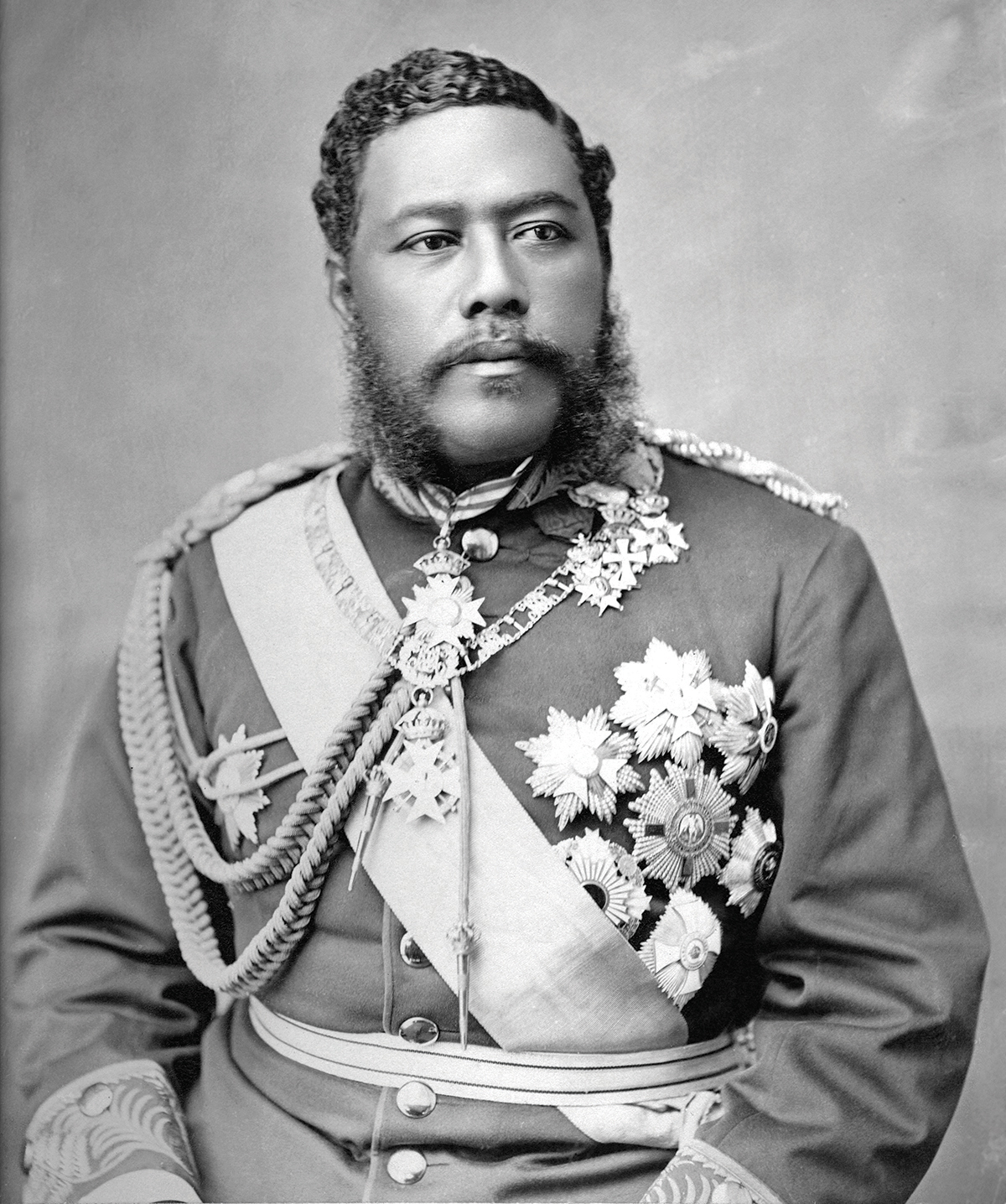
The heartbeat of the Hawaiian people has re-emerged, reverberating through the centuries with fullness, clarity and strength since once being banned. Kumu hula and hālau hula had gone into hiding at one point in history, practicing in secret. Then, when David Kalākaua became king in the late 1800s, he initiated a resurgence of Hawaiian arts and culture known as the First Hawaiian Renaissance.
Hawaiians say ‘haweo’ to refer to a glow of light that makes things visible. It is in the light of knowledge that the darkness and confusion of the past are now being destroyed and the heroic deeds of our ancestors are being revealed. The responsibility is now ours to carry on where they left off. From resistance to affirmation, we are who we were.”
Ku‘ualoha Ho‘omanawanui, Hawaiian scholar, aloha ‘āina advocate and poet, wrote this in reference to Kānaka Maoli (Native Hawaiian) activist Kau’i Goodhue and the call for resistance.
In the 1800s, when the missionaries first sailed to Hawai‘i, they arrived with puritanical Calvinist values drastically countering those found in traditional Hawaiian society. Hula was banned as too erotic and worshiping Hawaiian gods was condemned. Hula is an important part of religion and that’s why it was chosen to be annihilated. Many teachers went into hiding.
When writing about Kānaka Maoli empowerment, Ho‘omanawanui is empathic. “Branded ‘lewd and lascivious’ by Calvinist missionaries, hula was officially banned as a cultural practice in the 1830s. Yet many hālau (hula schools) continued to practice and perpetuate hula in secret, despite missionary protests.”
Hula is and always has been an important storytelling vehicle for Hawaiian mo‘olelo (stories), she continues. “In the 19th century, Ali‘i (King) David Kalākaua proclaimed it ‘the heartbeat of the Hawaiian people.’”
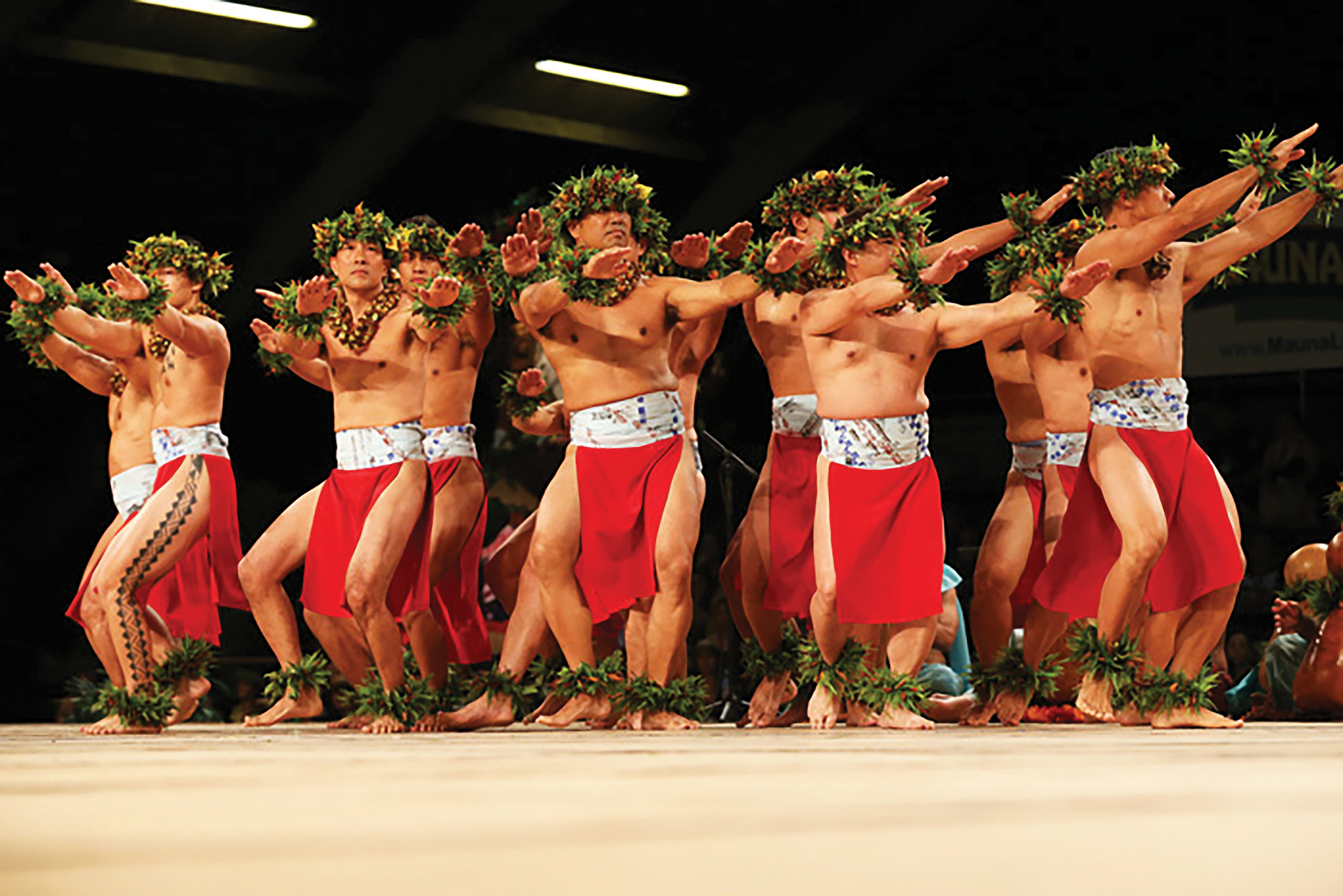
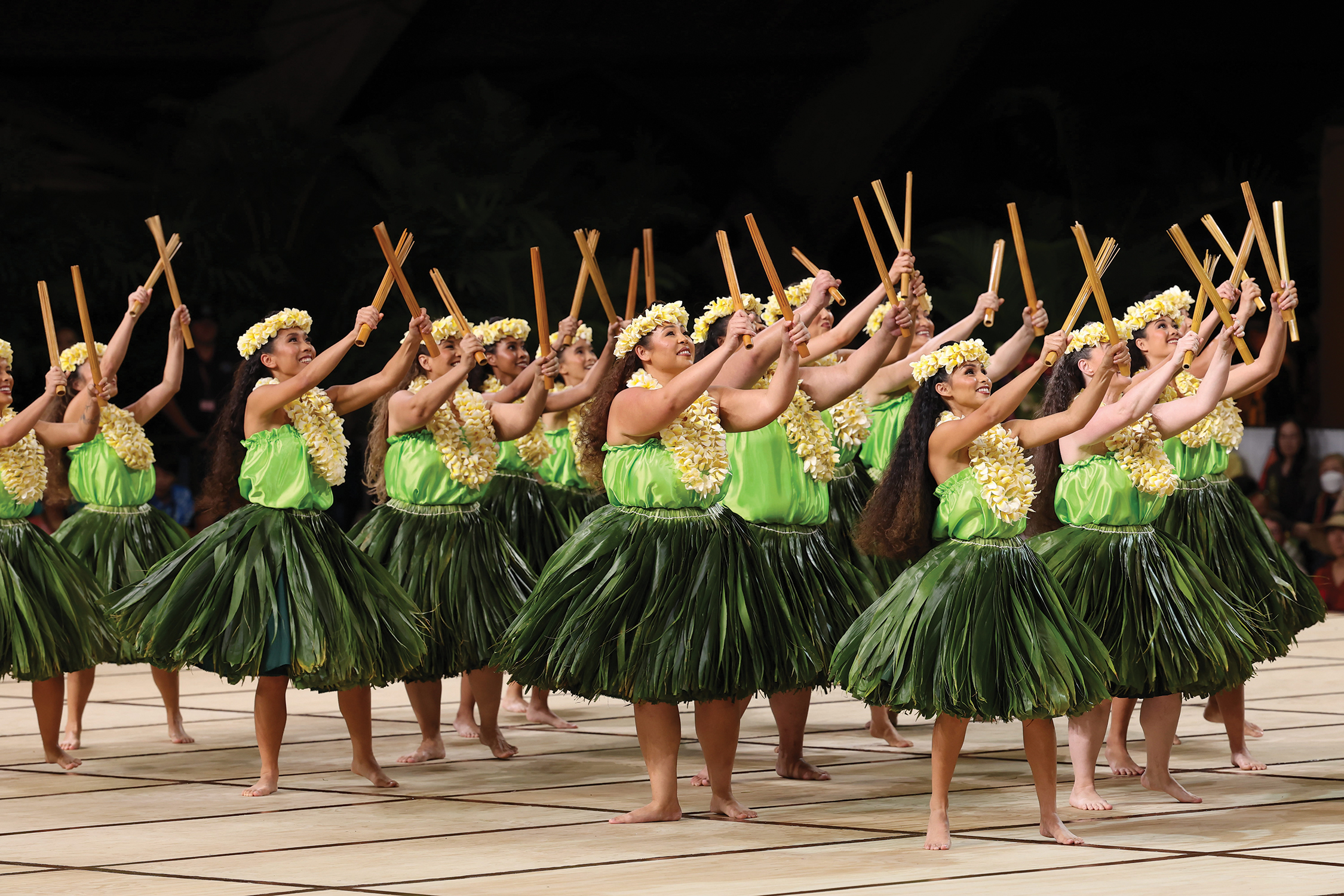
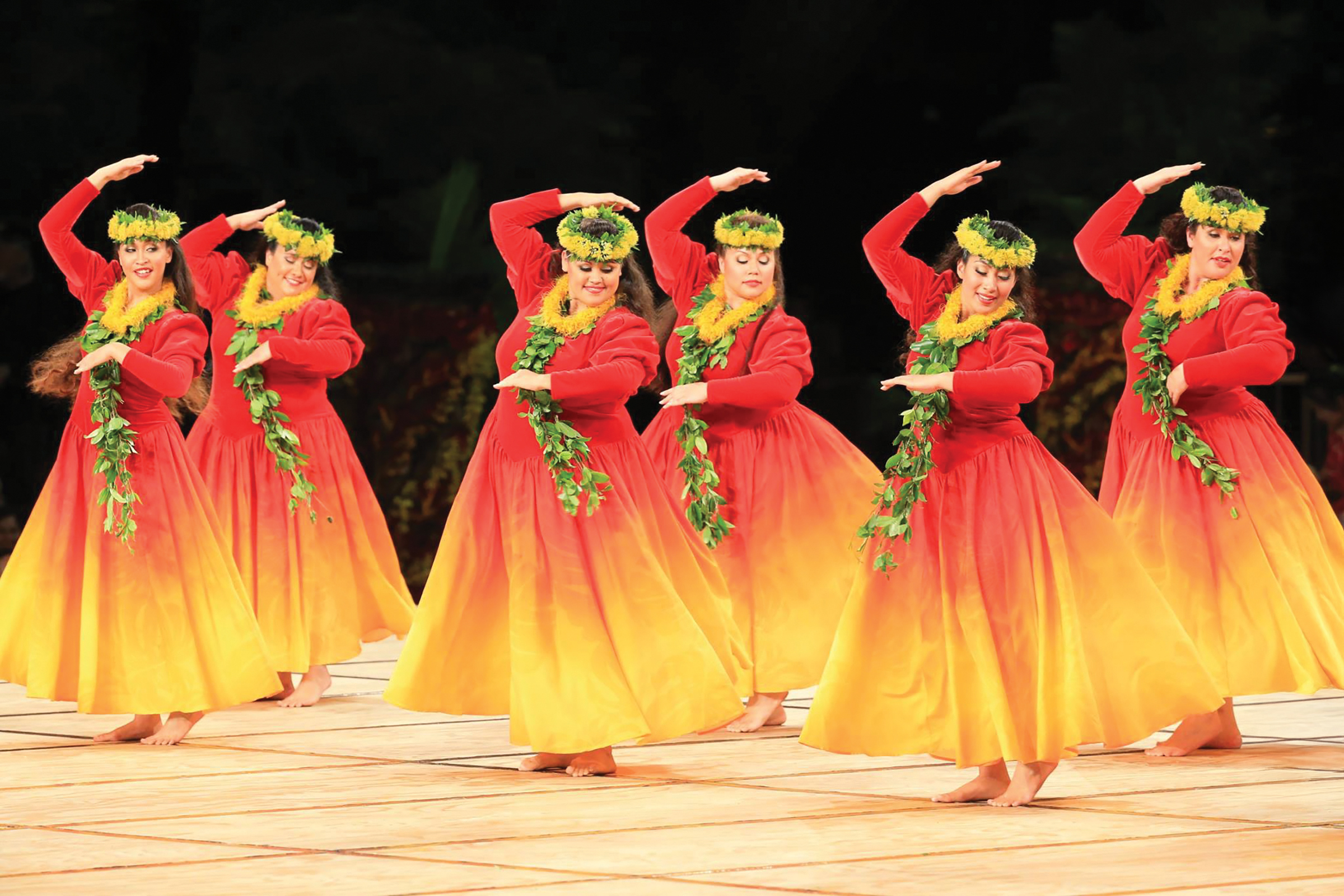
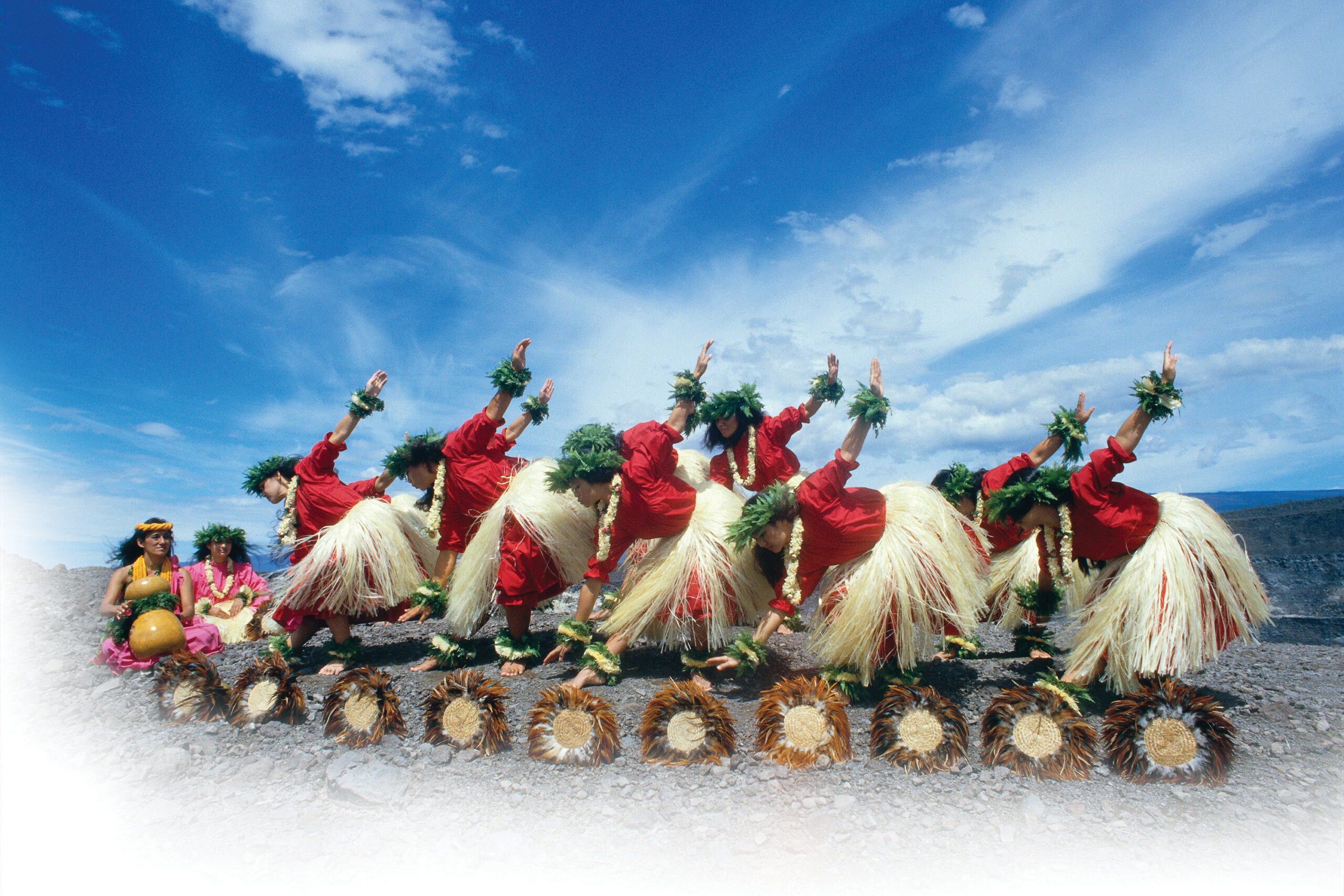
Hālau Nā Kamalei O Līlīlehua at the 2015 Merrie Monarch Festival. PC: Merrie Monarch Festival
When he became king, Kalākaua brought the heartbeat back and this movement became known as the First Hawaiian Renaissance, when Hawaiian arts and culture thrived. But after the monarchy was overthrown in 1893, hula went underground until the Second Hawaiian Renaissance of the 1970s, which marked a renewed interest in everything Hawaiian. The new aloha had finally begun — the hiding was over.
Today, among many, there are three kumu hula (teachers) and hālau that have personified the art of the dance — Robert Cazimero and Hālau Nā Kamalei, Vicky Holt Takamine and Pua Ali‘i ‘Ilima, and Michael Pili Pang and Hālau Hula Ka No‘eau. All three were taught and mentored by legendary hula master Aunty Ma‘iki Aiu Lake, and they have continued the legacy of one generation inspiring another. A fourth kumu hula, Keolalaulai Dalire and Keolalaulani Hālau Olapa O Laka, was inspired and taught by her mother, the first Miss Aloha Hula at the Merrie Monarch Festival in 1971— Aloha Dalire.
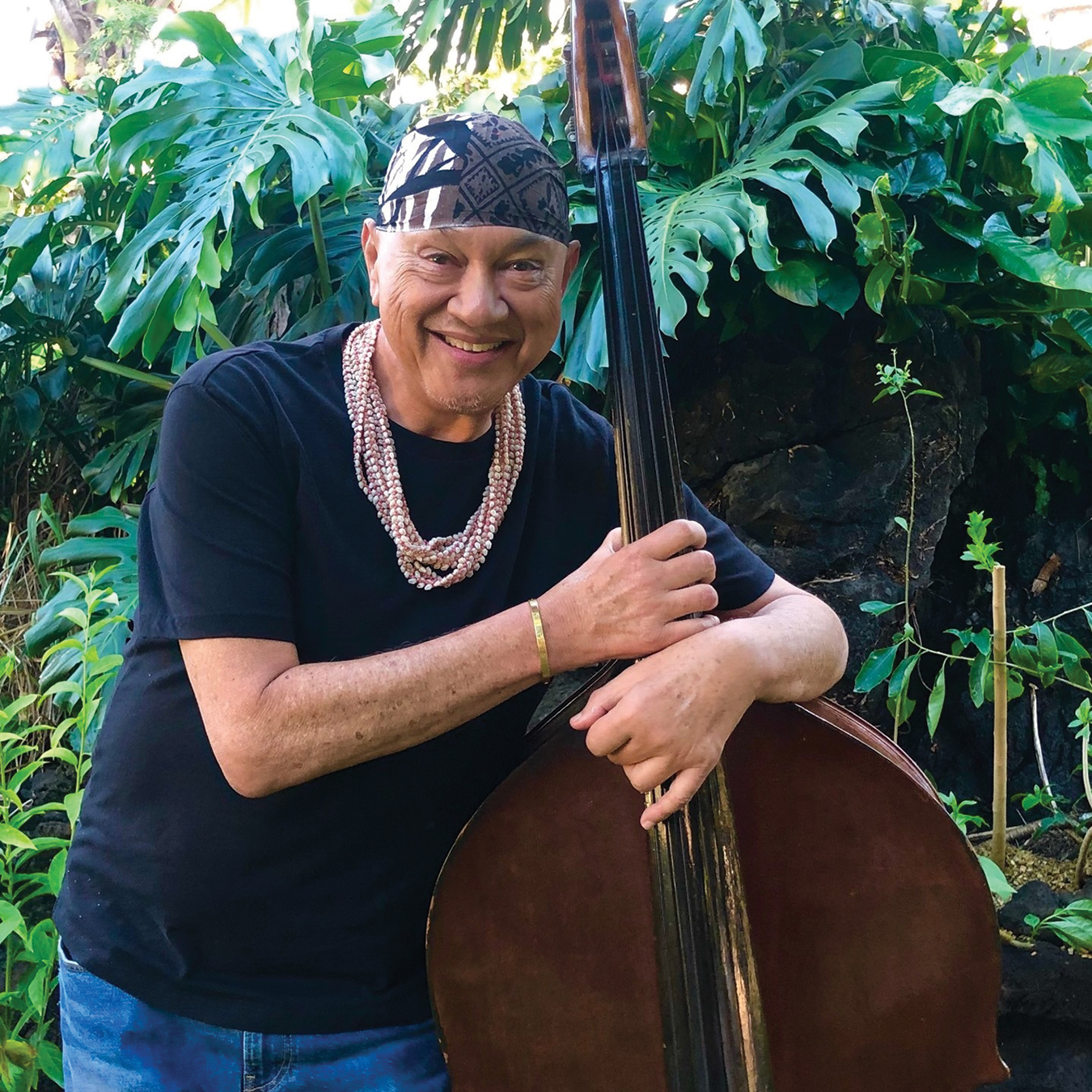
Robert Cazimero and Hālau Nā Kamalei
For many, there is a defining moment when the voyage of discovery leads you back to yourself. For Robert Cazimero, it occurred in 1966, the year he was introduced to Aunty Ma‘iki Aiu Lake, a kumu who would teach him the ways of hula. Robert says nothing happens by accident. He was meant to be taught by Ma‘iki and believes what she believed: We can all be made better for daring to dance.
A statement like that can be construed as a challenge, and for Robert, that’s exactly what it was. Nā Kamalei was her dream, he says, and it was Ma‘iki who asked him, her student at the time, to open a hālau for male dancers.
“I loved her so much,” he says, “I would have done anything she told me.” In 1975, with six young high school students, he founded Hālau Nā Kamalei.
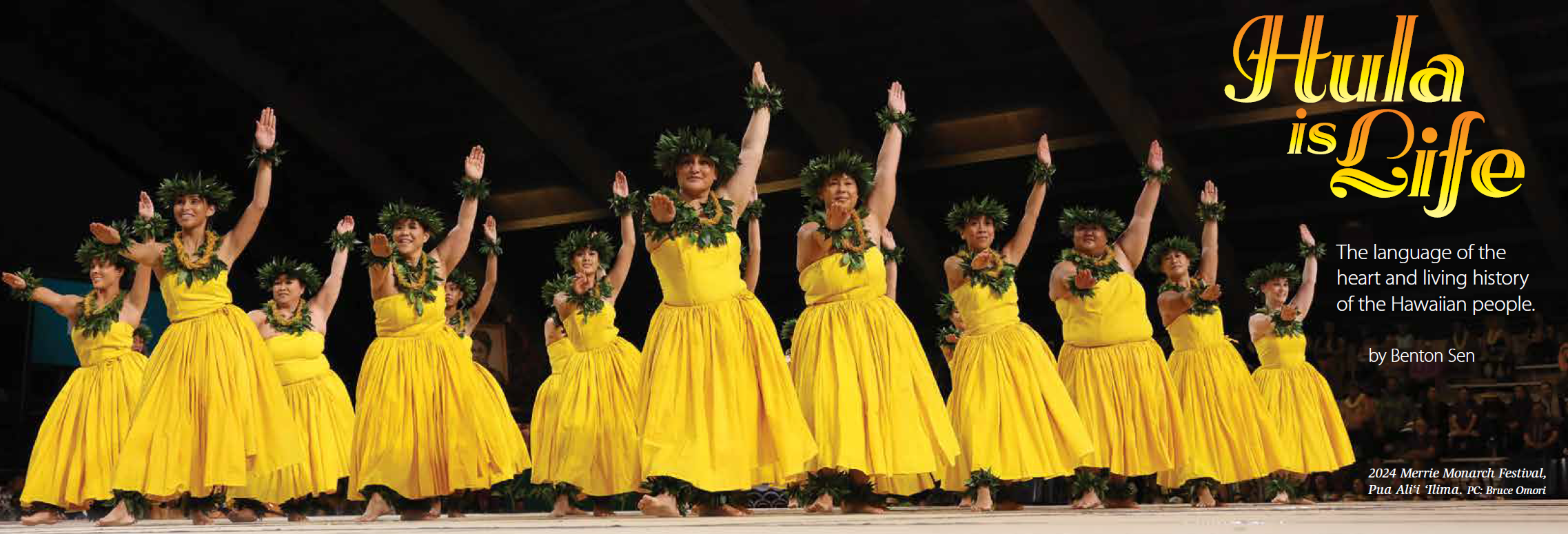
Today, Robert Cazimero is considered one of the most respected kumu of Hawaiian dance. The men of Nā Kamalei perform around the world, and for nearly half a century, have carried on the tradition of male hula. They have won most major hula competitions, including the prestigious Merrie Monarch Festival on Hawai‘i Island. As an explanation for the hālau’s success, Cazimero says, “Hula is life.”
Nā Kamalei’s enduring strength comes from adherence to one steadfast creed: Dare to hula and leave your shame at home. “There are times when I don’t want to get up and dance, but, sometimes, you just have to leave old thoughts behind and just do it,” Robert says. “You have to leave the shame behind, to forget what others are thinking about my dancing.”
Legendary Kumu Hula Aunty Ma‘iki Aiu Lake.
In ancient times, hula was a sacred practice in which music, dance and poetry encompassed the genealogy and legends of Hawai‘i’s people. While the first mention of hula in recorded Hawaiian history is of a woman, it was men who performed the ritual dances. Through talk story, Hawai‘i’s oral tradition, stories about the gods were passed on through nā mele (songs) and nā hula (dances), and regarded as the highest form of spiritual and artistic expression.
Al Makahinu Barcarse, hula master of Ka Ua Kilihune, says, “At one time in our history, nothing was written down. There was no written language and everything had to be memorized. Hula keeps our history and our people alive, and without it one cannot truly identify oneself as being Hawaiian.”
“I studied hula because of language,” says Holoua Stender, Hawaiian dance instructor at Kamehameha Schools. “I could see the beauty of the poetry and beauty of the Hawaiian language through dance and chant. That’s what made me interested in hula, because hula demonstrated the beautiful soul of the Hawaiian language.”
The island spirit isn’t only measured by words, but by actions, and for Robert, his encompasses both. He is most at home when blending the motions of lasting gestures into a oneness that celebrates life’s dance.
In 2005, at the internationally renowned Merrie Monarch Hula Festival, his efforts led directly to the winner’s circle. Nā Kamalei won the kane kahiko (traditional) chant, kane ‘auana (contemporary) song and overall festival awards. Although they expected to place well in the kane (men’s) division, it’s unusual for a men’s hālau to be chosen the overall winner.
About the multiple win, he says, “I am so proud of my students. I really only came back for them,” referring to breaking his own rule of entering Merrie Monarch every 10 years. He wanted to give his students the chance to celebrate the hālau’s 30th anniversary there, especially since two were from the original 1975 group. What made the 2005 win so poignant was that Robert and his men won the festival’s kane award in 1976, one year after the hālau was formed.
When Nā Kamalei members received their trophies in front of the judges, his hālau peers and a screaming crowd of several thousand, Robert announced, “In a lot of things in life, you work hard and don’t get a nod. This is more than a nod. It’s humbling; it’s outstanding.” Then he looked out into the audience and tipped his cap.
Robert has a rule that the hālau travels to Hilo to compete in Merrie Monarch every 10 years. In 2015, they won the kāne division and overall winner. And this upcoming festival in 2025, Hālau Nā Kamalei is preparing to return again.
The hālau was founded in 1975 and in 2025, they will celebrate their 50th anniversary.
As a musician and kumu hula, Robert has this to say: “The best thing Hawai‘i can do is let the world know that we have a dance form. What the world can do is let Hawai‘i know that dance is universal. People are drawn to hula, not just the hālau. That’s the way art is — it’s inviting; it’s enticing.”
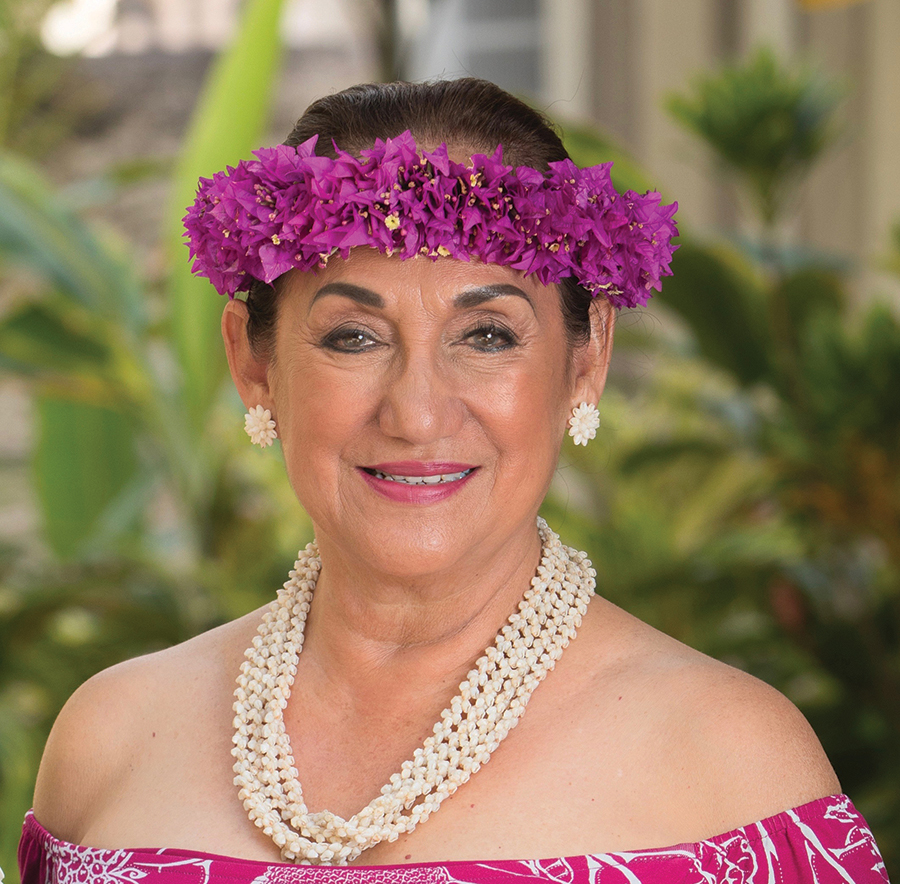
Vicky Holt Takamine and Pua Ali‘i ‘Ilima
In a 1995 interview, Vicky Holt Takamine described her own history in hula and her philosophy for teaching. “I started dancing at a very young age by watching television and watching my mother dance. She used to dance with the Alama sisters. I took formal lessons with Ma‘iki Aiu at about the age 15…”
“I knew I was going to be a teacher when I started dancing with Aunty Ma‘iki,” she says. “I had a love for the hula and Hawaiian culture, and I knew that’s what I wanted to do.” In 1975, Vicky graduated as ‘ōlapa (dancer), ho‘opa‘a (chanter) and kumu hula. Because Aunty Ma‘iki was her only teacher, she didn’t think that she could diverge from her style of dance. “Of course, you develop your own ways, but the basic foundation that she’s laid for me will always be there. I think I pretty much carry on her style of dancing.”
Back in 1977, Vicky founded her own hālau hula — Pua Ali‘i ‘Ilima (Royal ‘Ilima Blossom). The school’s mission is to preserve and perpetuate Native Hawaiian arts and culture traditions for future generations.
About her own hālau and haumana (students), Vicky says, “When students come to me, the first thing I tell them is that I might not be the right teacher for them. So if they don’t care for the way I’m teaching or if they’re not getting anything out of my classes, I don’t feel badly if they want to move on. If they come and they want to adapt to my style, then the first thing we do is train in kahiko.
“I also teach them the text of a song because the important thing about the dance is not just the movements, it’s the text,” she says. “Just teaching feet and hands has no meaning. It is not Hawaiian. I teach them a song right away to get them moving and get them involved. I want them to feel that they can accomplish a chant or a song in a short period of time. I want to start getting them to feel very confident in their own ability.”
Pua Ali‘i ‘Ilima at the 2024 Merrie Monarch Festival. PC: Bruce Omori
She enjoys sharing different experiences with her students — seeing them get involved and watching them develop as a dancer, and develop self-confidence and grace. “It’s satisfying to nurture somebody who will want more of the Hawaiian culture and the language instead of just the movements to the dance.”
Vicky: Ola Ka ‘Ilima Artspace
Since her humble beginnings, Vicky has become a kumu hula, social activist and community leader, seeking creative solutions that would rectify the many wrongs her people and native artists have endured. She is executive director of the Pa‘i Foundation. Its mission is to preserve and perpetuate Native Hawaiian cultural traditions for future generations.
In 2020, she expressed her mana‘o (thoughts) about “huliau” — a time of change. As we navigate the next few years, she wonders what lies ahead. “What kind of society will we be? Who will survive? Will we be more compassionate, loving, caring to one another? Will there be justice for all?
“We have a lot of challenges in the Native Hawaiian community,” she explains, citing hotels built in sacred locations and her people’s overall invisibility in their homeland. “For artists, those challenges also include getting their work seen, being included in exhibitions, experiencing critiques,” she says.
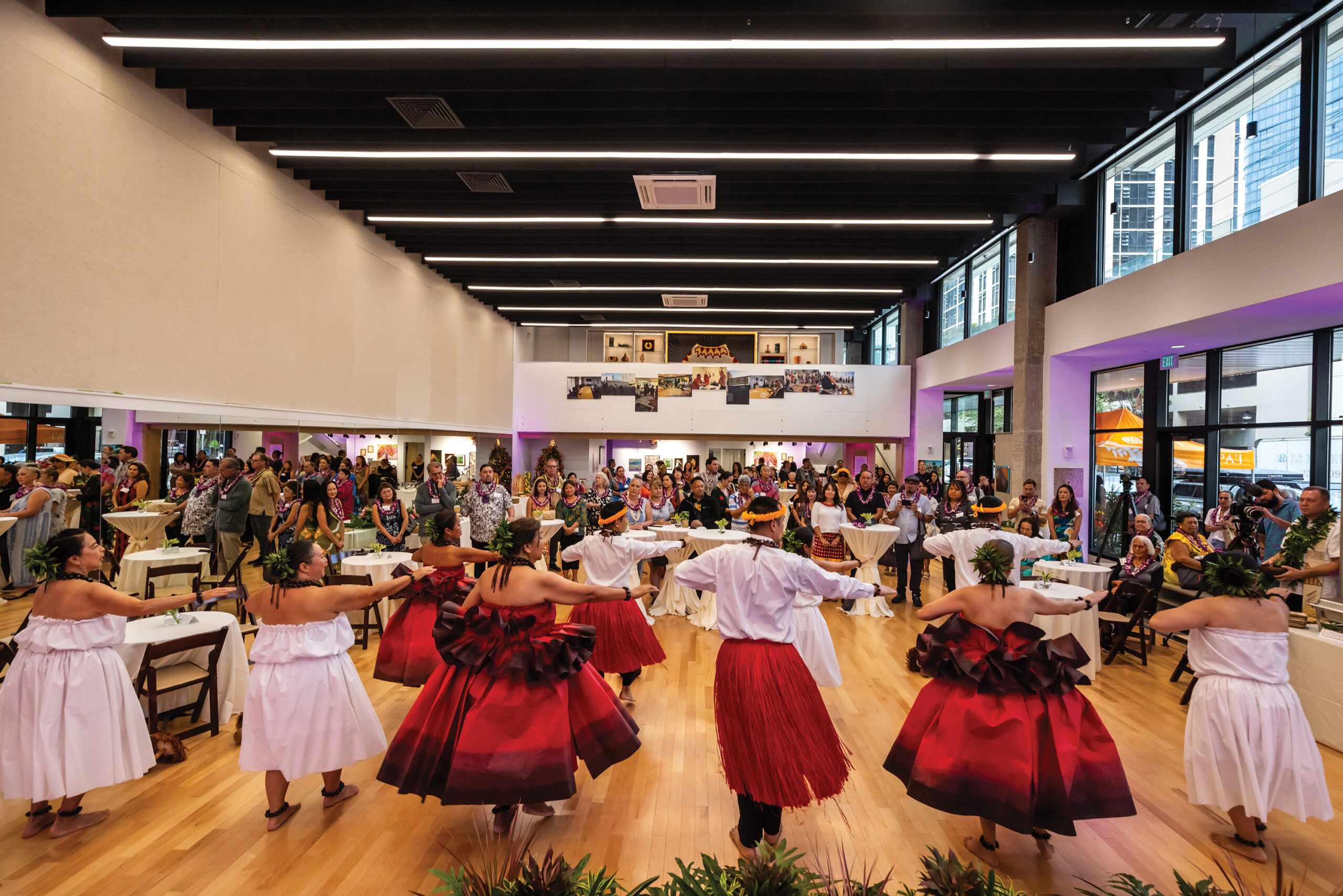
In 2017, Vicky got her wish for change when Ola Ka ‘Ilima Artspace Lofts in Honolulu broke ground. The new, mixed-use arts development — created with support from the Ford Foundation, the National Endowment for the Arts and ArtPlace and with local developer Hui Kauhale Inc. — is located in the Kaka‘ako neighborhood of Honolulu, a transitional area between downtown and Waikiki Beach.
“We are excited and thrilled to partner with Artspace,” she says. “This is exactly what we need in Honolulu to help boost our economy by providing affordable live and work space for our local community of artists.”
Vicky: Shangri La
In 2024, Shangri La Museum of Islamic Art, Culture & Design in Honolulu chose Vicky as the center’s Native Hawaiian cultural advisor. “Shangri La exists because of Doris Duke’s deep and abiding passion for Hawai‘i, its people and its culture,” said Sam Gill, president and CEO of the Doris Duke Foundation. “I can think of no one better than a revered Kanaka ‘O¯ iwi (Native Hawaiian) like Kumu Vicky to enrich Doris Duke Foundation’s essential connection to our community and its proud traditions.”
“I continue to be inspired by Shangri La, its history and dedication to Islamic art and culture,” Vicky says. “It is a privilege for me to work alongside the Shangri La staff to be able to share the rich cultural traditions, mo‘olelo (stories) and the history of Hawai‘i to develop a stronger pilina (connection) between Shangri La, the ‘āina (land) and the people of Hawai‘i.”
Vicky: Gish Prize
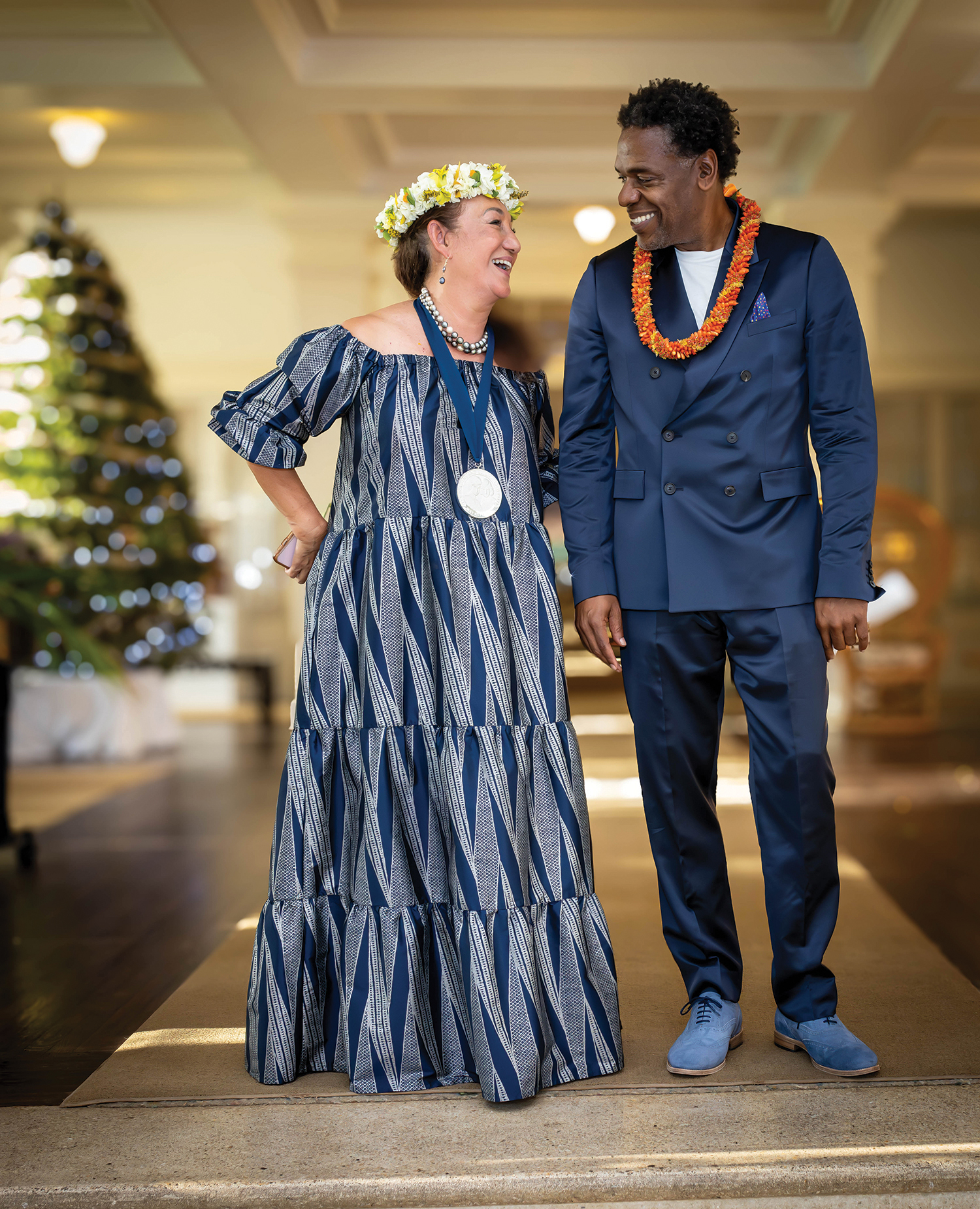
Last year, for her work with Hawaiian arts and culture, Vicky was awarded the 31st annual Dorothy and Lillian Gish Prize from the Gish Prize Trust. The award is given each year to a “highly accomplished figure” who has “pushed the boundaries of an art form, contributed to social change and paved the way for the next generation.” In the words of Lillian Gish, a pioneer film actress, the annual prize is intended for an artist or arts advocate “who has made an outstanding contribution to the beauty of the world and to [humankind’s] understanding and enjoyment of life.”
Terrance McKnight, the chair of the selection committee, said, “The recipient of the Gish Prize needs to be both a creator and an instigator — someone who has enhanced beauty in the world and worked to make society more whole, someone who is highly accomplished and yet remains an agent of change. This year, the selection committee rose to the challenge by lifting its eyes across the horizon and unanimously choosing Vicky Holt Takamine. It is an honor to present the Gish Prize to her, helping to bring her contributions to culture the recognition it so richly deserves.”
“What an honor for my people and my community and for Hawai‘i and for the art of hula, which never really gets this kind of recognition.”
Hula, she said, is often seen as a form of entertainment for tourists, but for her, it is a way to safeguard indigenous culture — how we preserve our culture, our stories and the Hawaiian language, she says. “Hula is a form of resistance,” she says. “This has been my life’s work. I don’t think about it. I just do it. And to be recognized in this manner for me is like validation and credibility.” I hope it brings awareness to my people and my culture, she says.
Michael Pili Pang and Hālau Hula Ka No‘eau
For Michael Pili Pang, hula has been a lifelong experience. One day in school when he was being kolohe (mischievous), his teacher, who was also a social worker, took him to a hula class. “Her sister was teaching the class and I learned hula from her through grade school,” he says. “When I went to high school, she said I can’t do anything more for you, and told me to call Aunty Ma‘iki.”
“The three of us come from different stages in hula,” says Michael. “Vicky is first as a child in the 1960s, then Robert in the 1970s, and I come in the end of the 1970s and ’80s. There’s a good 20-year span between the three of us and each of us had a different time with Aunty Ma‘iki.”
Michael has worked with her for many years. When he went to college at Puget Sound University, he joined the Hawaiian Club. Aunty Ma‘iki told him to start teaching hula. He ended up teaching hula, organizing the club’s lū‘au.
“When I came home from Puget Sound, she said, ‘Now, finish your hula training.’” She was going to Japan, and when she came back, they planned to talk about hula… everything. “But when she returned, she died. I thought my future died; hula is pau (finished). But I continued to work because I thought it was important to continue her legacy.”
Michael firmly believes in huliau — to look back in order to move forward. “Hula is an indigenous art form,” he says. “It is not something that has to be kept on a shelf. It evolves.”
He says his styling mirrors Ma‘iki’s. In the 1800s, Hawaiians spoke poetry and understood the innuendos of poetry. A flower wasn’t just a flower; a lei not a lei. It was a lover. Certain words have many meanings. Aunty Ma‘iki conveyed that in her dances. “You can’t just mimic music or show off the words. You have to interpret words and present them as if you understand them. Her philosophy comes from idea that hula is everything you see, hear, taste, touch and feel.”
Hālau Hula Ka No‘eau. PC: Michael Pili Pang
In 1986 Michael opened Hālau Hula Ka No‘eau on Hawai‘i Island, and later in 2002, he added a second hālau in Honolulu. He explores both the traditional styles of his hula genealogy and creates new hula based on Hawaiian tradition. They have taught hula classes in Waimea, Honoka‘a, Hilo, Kona, Waikoloa and in Chicago. Since 1994, they have performed throughout North America, Korea, Japan and Taiwan.
Michael became a senior staff member for then-Mayor Mufi Hannemann’s administration. As executive director in the Office of Culture and the Arts, he created granting programs, built the arts administration (a staff of five, all practicing artists), fostered partnerships and collaborated on cultural and capacity-building programs.
“To this day, we are recognized as the keepers of Aunty Ma‘iki’s tradition,” Michael says. When he dances, he says, he still sees her in front of him, showing him what to do, “The feelings you express in the dance are the most important.”
To further hula’s reach in Honolulu, Michael offers hula classes for anyone interested in learning to dance. “I run an ad two times a year. I want new students to learn my styling that was passed down to us. They start from ground zero. I want them to learn how to hula my way. People would say that my dances are like Aunty Ma‘iki’s, but that was not my intention. I ended up maintaining her teachings. It never was my intention. It just happened that way.”
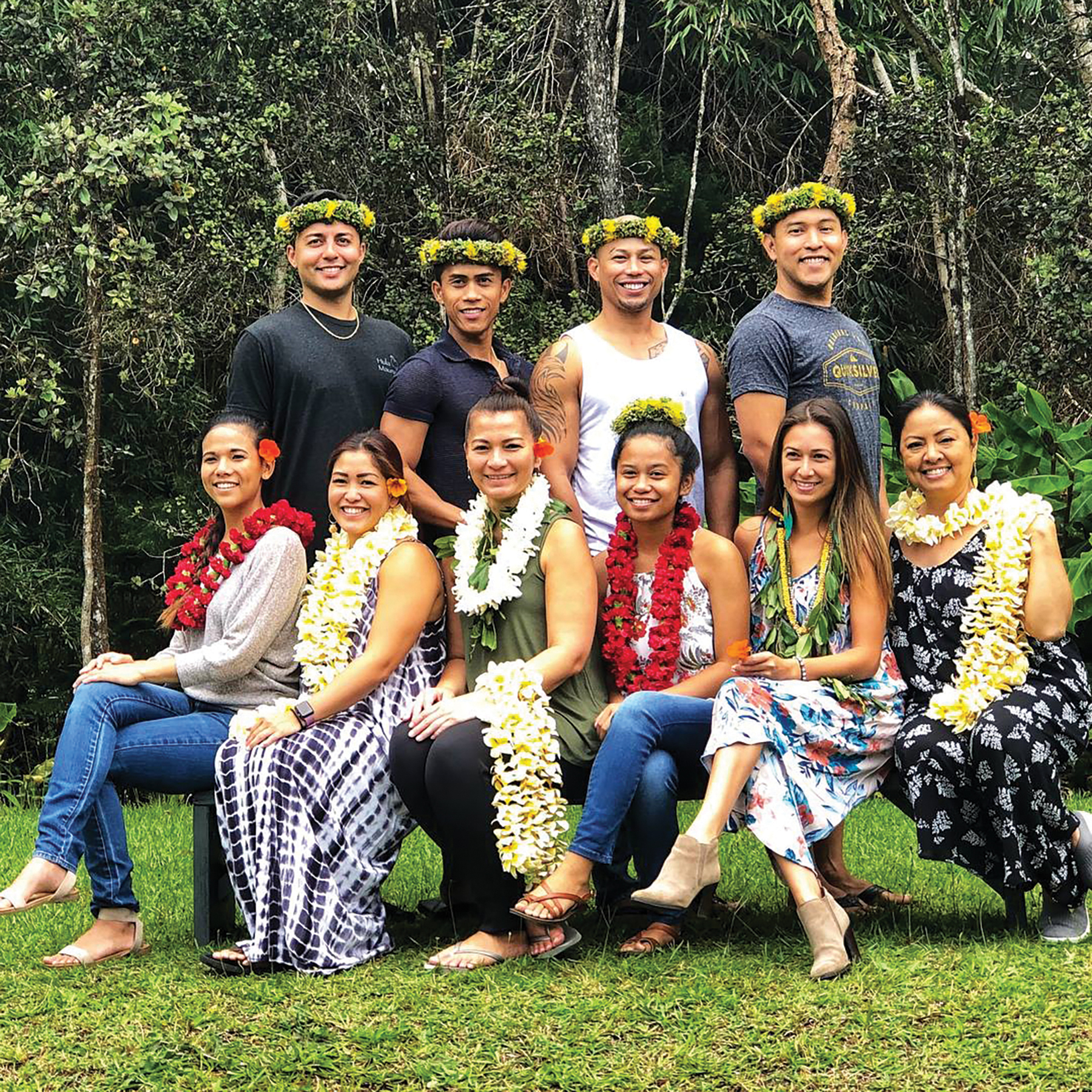
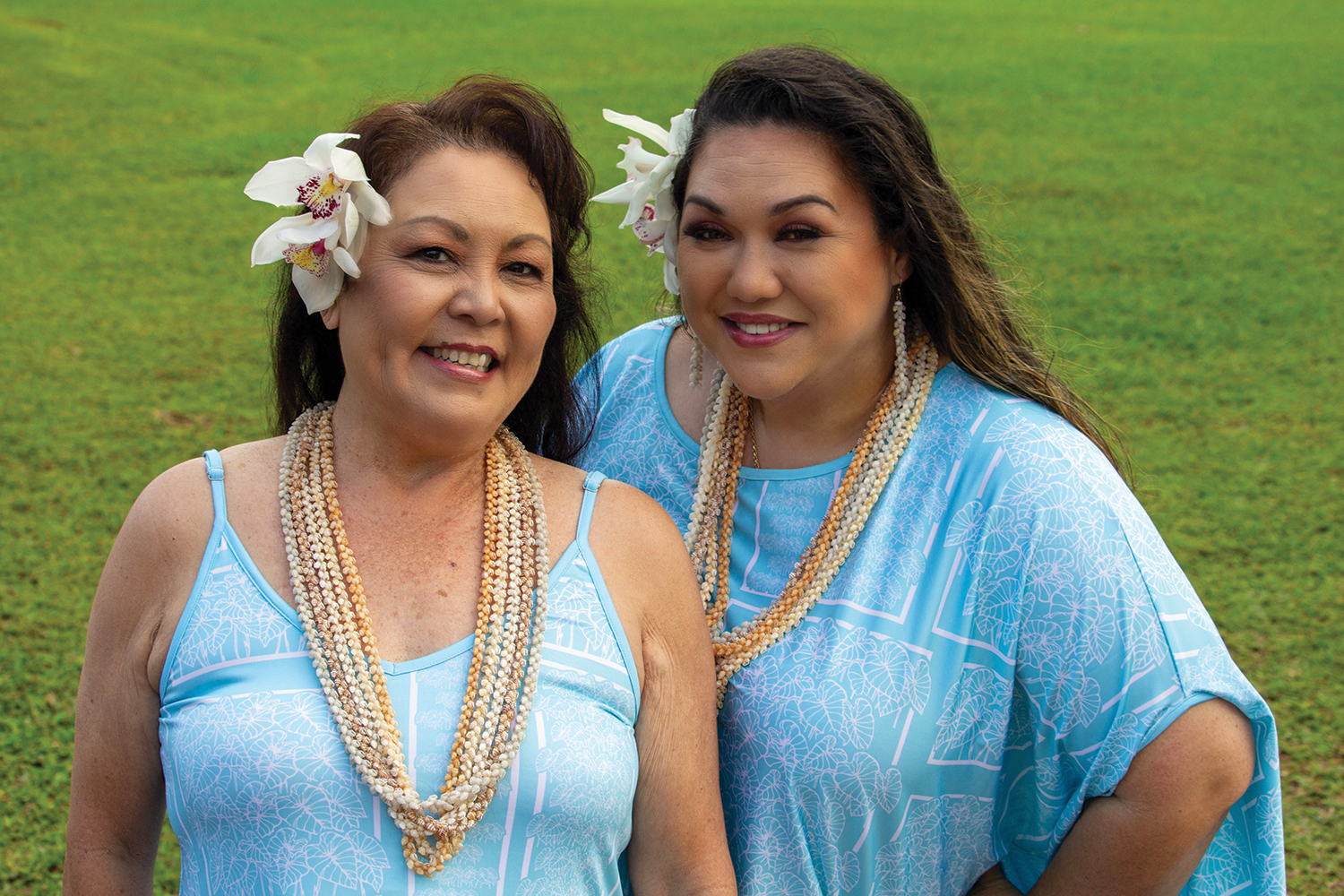
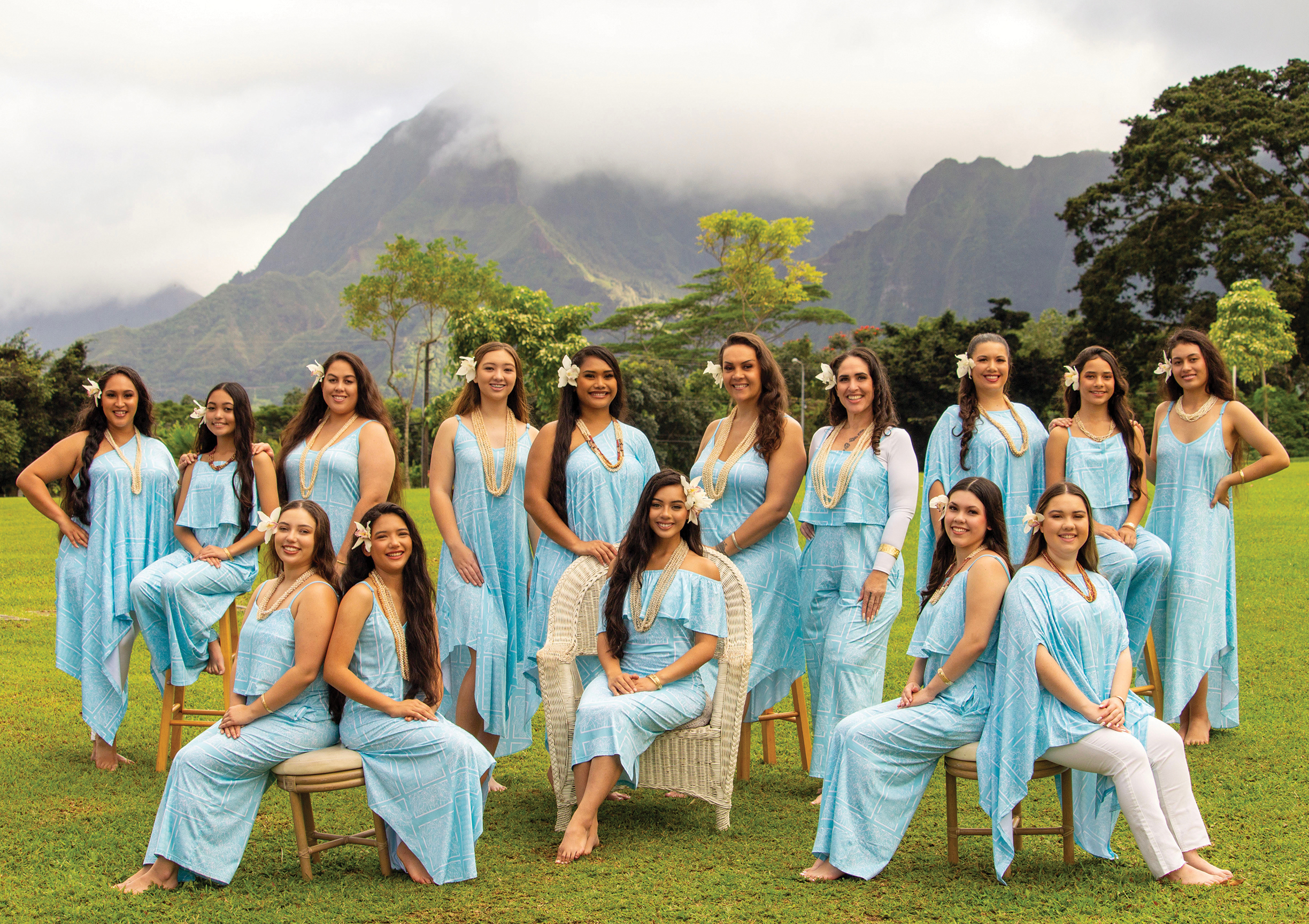
Keola Dalire and Keolalaulani Hālau ‘Olapa O Laka
Hula is about tradition and passing the torch to future generations. No one knows that better than kumu hula Keola Dalire.
“For a long time, hula was just a dance to me (entertainment or cultural preservation) but my mom instilled in us that hula is expression of our innermost feelings,” says Keola. “It helped me realize that hula can help you express grief, anger, joy, happiness and love. When you come to hālau, leave everything at the door and come in with an open mind and allow yourself to just feel. Hālau is her safe space and security,” she says.
Keola said that her mother, Aloha, was the first hula dancer to win the coveted Miss Aloha title at the Merrie Monarch Hula Festival the year the festival launched its hula competition in 1971. Keola said that her two sisters succeeded their mother by winning the title — Kapualokeokalaniakea Dalire as 1991 Miss Aloha Hula; Kau‘imaiokalaniakea Dalire in 1992.
In 1999, Keola, the third and youngest daughter, also won the title. “This was not only an honor,” she says, “but a privilege for me to join the long line of women who have become Miss Aloha Hula.” She said it’s even sweeter knowing that her mother was the first to win the honor more than a half-century ago.
In 2013, her hālau celebrated its 50th anniversary. When interviewed by “Ka Wai Ola” back in 2013, Aloha was asked what her mother would say about her hālau’s legacy stretching five decades. “Honestly, I think she would be really proud and she would say ‘Hula is alive and well, and it is the koko (lifeblood) of our family.’”
Keolalaulani Hālau ‘Olapa O Laka
Hula became a choice. “I chose to be here. My mother said she never forced us to dance hula, but that’s all she exposed us to. Sometimes I like to tell myself I chose hula, but if I be honest, hula chose me. It’s an honor for me to dance and perpetuate my culture and the lessons learned and continue to learn with my haumana.”
When asked about the emotional impact of hula, she refers to “kaona”—“hidden meaning.” Two years ago, her hālau performed a mele at Merrie Monarch about electricity arriving in Kane‘ohe, which it could have been, but when you think about kaona, it’s a love story.
“You compare electricity going on and off with being in a relationship,” she says. “This song had a hidden meaning. It’s a story about electricity coming over mountains to Kane‘ohe, but the original words of this song is a love song, a story between two people and how they had that ‘aha moment,’ and they get married. Everyone thinks it’s electricity, but it’s about types of electricity — not the just the kind going through to a lightbulb.”
Keola says that she opens up her hālau for hula classes. Everyone is welcome. People of all ages come to learn to dance hula, and we also offer classes for kūpuna — for exercise, to keep moving and have fun. Our classes are offered Mondays, Wednesdays, and Thursdays from 4 to 9pm.
Keola says what she values are the teachings and sentiments of her mother. “Hula is the expression of one’s innermost feelings,” she says. And that brings us back full circle to Kumu Robert Cazimero and his firm belief that hula is life.
The halau’s 2015 performance at the Merrie Monarch Festival. PC: Bruce Omori
To Conquer the Darkness, Shine Your Brightest
When asked what lesson he’d like to impart, Robert Cazimero says this about his voice in hula and mele: in an interview with the Keep It Aloha podcast, Robert says that when he sings, he goes someplace. “It’s like a perfect singing storm. It could be the lighting, the people, but mostly it’s me. It has to do with the farthest light that I can see wherever I am — whether it’s a star or a pin light… the farthest light away from where I am.
“I sing to that spot because I think that’s where all the people I know are who are around me. That’s where they come from. I feel like I’m singing to them — it’s when my voice is the sweetest, happy, grateful, sad, emotional singing.”
“No matter how much time I have left,” he says, “it’s important to do the best you can, for our people, to be strong, to love who you are, and love others for who they are. It’s easy to say, but hard to get there, but once you get there, you wonder what took you so long.”
For more information on joining a hula class, contact: Michael Pili Pang and Hālau Hula Ka No‘eau: halauhkn@aol.com Keola Dalire and Keolalaulani Hālau Olapa O Laka: khoolhula@gmail.com
Hawaiians say ‘haweo’ to refer to a glow of light that makes things visible. It is in the light of knowledge that the darkness and confusion of the past are now being destroyed and the heroic deeds of our ancestors are being revealed. The responsibility is now ours to carry on where they left off.…
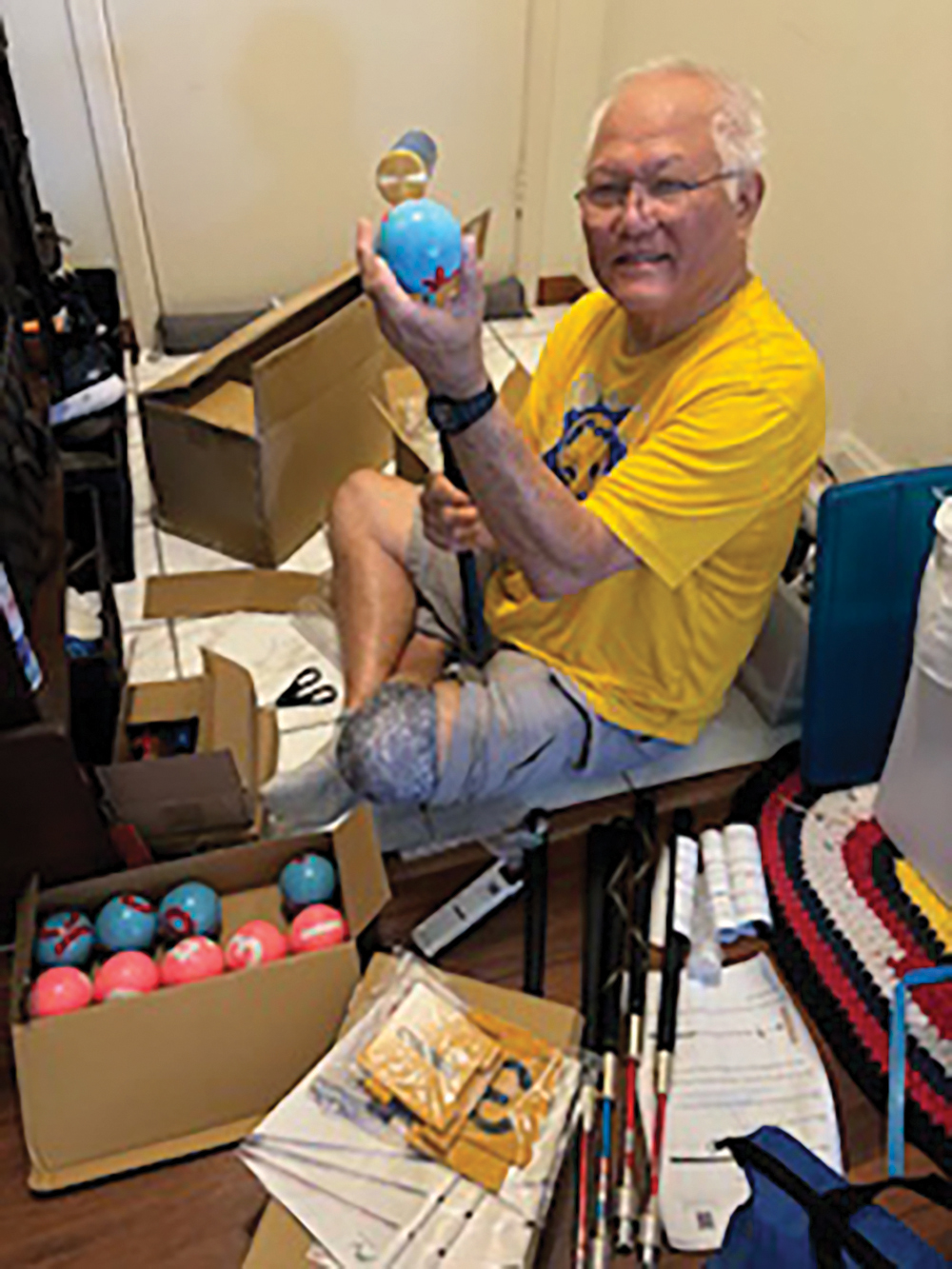
Having completed 80 orbits around the sun, I was part of a tour to the Blue Zone Village, Ogimi, Okinawa, last spring. Researchers have found that Blue Zone areas share nine lifestyle habits that contribute to extraordinarily long lifespans. But when we asked the village elders about the secret to their well-known longevity, they replied with only one word: gateball. They play daily.
Although gateball was on our schedule, we were rained out. We researched the game and learned it was invented in Japan in 1947 and is now played by 8 million gateballers in 15 countries. It was very popular in Hawai‘i with the first and second generations (of mostly Japanese descent), with hundreds of players on all the islands. The state even hosted the world championship at Ala Moana Park in 1998, with a thousand players from all over the globe. But there are far fewer players in the state today.
I found a small group on O‘ahu that plays Sundays at Ala Moana Park. Gateball only requires a flat grassy space. Startup costs are very low using mallets and balls in two colors — five odd-numbered red ones and five even-numbered white ones — three gates and one goal pole. Two teams with five players on each team compete against each other. Each team is assigned to play with either red or white balls. A ball through each gate is awarded one point; striking the goal pole earns two points. Defense can be played to “spark” balls off the field.
Friends and others soon joined me and the Lanakila Senior Center started its own program. During several months of gateball, I have played with men and women — some in their 90s.
Gateball is a highly strategic sport, similar to playing chess. Winning is only possible when players work cooperatively. It is an intergenerational sport and fun for the whole family, with grandparents, parents and even children playing on the same — or opposing — teams.
Having completed 80 orbits around the sun, I was part of a tour to the Blue Zone Village, Ogimi, Okinawa, last spring. Researchers have found that Blue Zone areas share nine lifestyle habits that contribute to extraordinarily long lifespans. But when we asked the village elders about the secret to their well-known longevity, they replied…
One of the most treasured traditions in Hawai‘i is “talking story.” This Pidgin phrase can refer to something as simple as chatting about life events and the news of the day, or as complex as passing on generational wisdom and sharing concerns and hopes for the future.
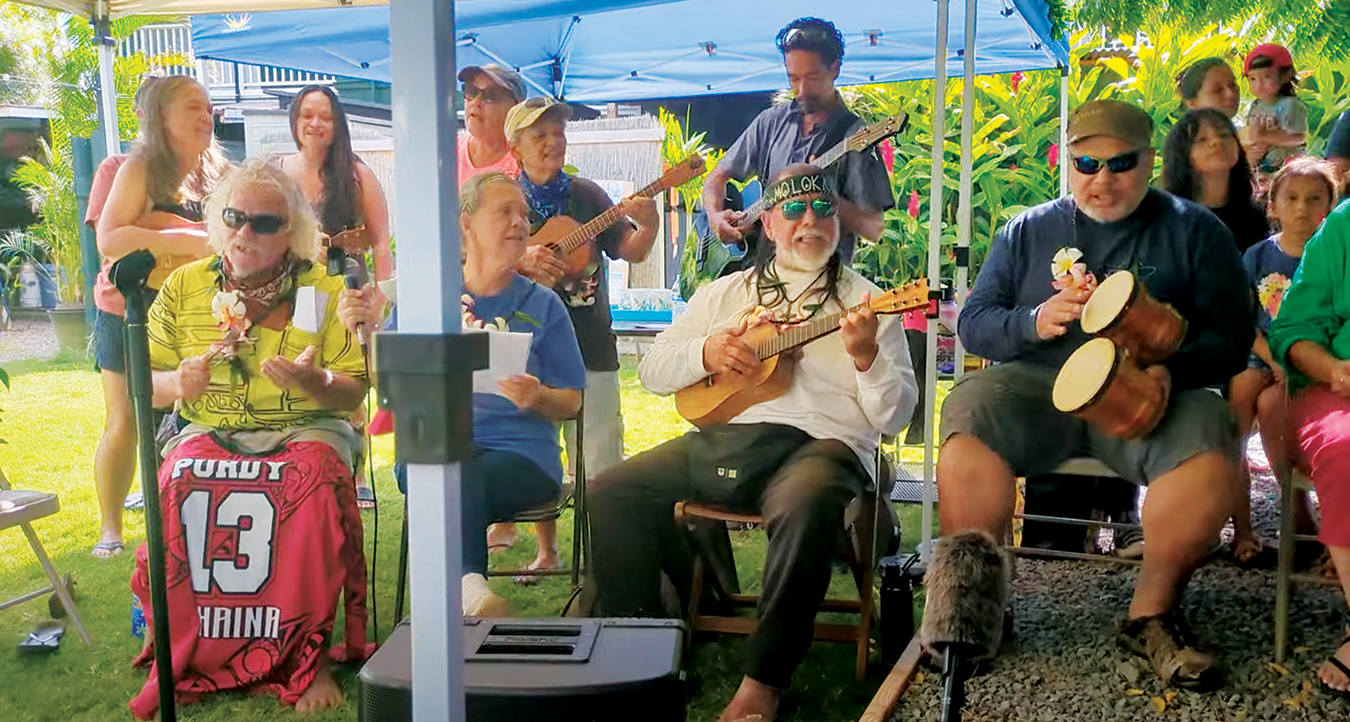
The Purdy family shares a favorite mele in the garden of the Molokai History Project. PC: Rosa Barker
The Molokai History Project (MHP) has held several Talk Story events since its opening in October 2023. Besides sharing local and Hawaiian history, these events foster a great sense of community. Housed in a storefront in Kaunakakai, MHP was envisioned by its founders — Judy Mertens and Nora Espaniola — as a place for locals to recall and reconnect with the people and places that make the Friendly Isle so special.
‘Inherited Legacy’
In November last year, six generations of the Purdy ‘ohana gathered in the garden behind the MHP storefront to present “Inherited Legacy”— a talk story about their family’s history. The award of Hawaiian Homestead lands brought Emma (Lindsey) Purdy and her husband, Harry Purdy Sr., to Moloka‘i from Waimea in 1924. The Lindsey and Purdy families worked for Parker Ranch on Hawai‘i Island as paniolo (Hawaiian cowboys).
The fun event was enlivened by family reminiscences linked to the mele that Frank Sr.’s grandchildren performed. Several tales were about the misunderstandings that arose because Frank Sr. spoke only ‘Ōlelo Hawai‘i, which they didn’t understand. They also didn’t realize that the “weeds” in his yard were used for his calling as a practitioner of lā‘au lapa‘au (Hawaiian medicine One time, the two oldest, Waipa and Fay, cleaned up his yard by pulling them all out!
Many of his descendants actively promote the learning of Hawaiian language and traditions. As his great-granddaughter, Wailana, said, “Hearing the stories, when we get older we understand that we gotta go back to the roots. All the Hawaiian ‘ike, that’s how we were raised. And from generation to generation, we try to gather all the time.”
What a wonderful gathering the Purdy ‘ohana shared — full of laughter and song and love.
One of the most treasured traditions in Hawai‘i is “talking story.” This Pidgin phrase can refer to something as simple as chatting about life events and the news of the day, or as complex as passing on generational wisdom and sharing concerns and hopes for the future. The Molokai History Project (MHP) has held several…
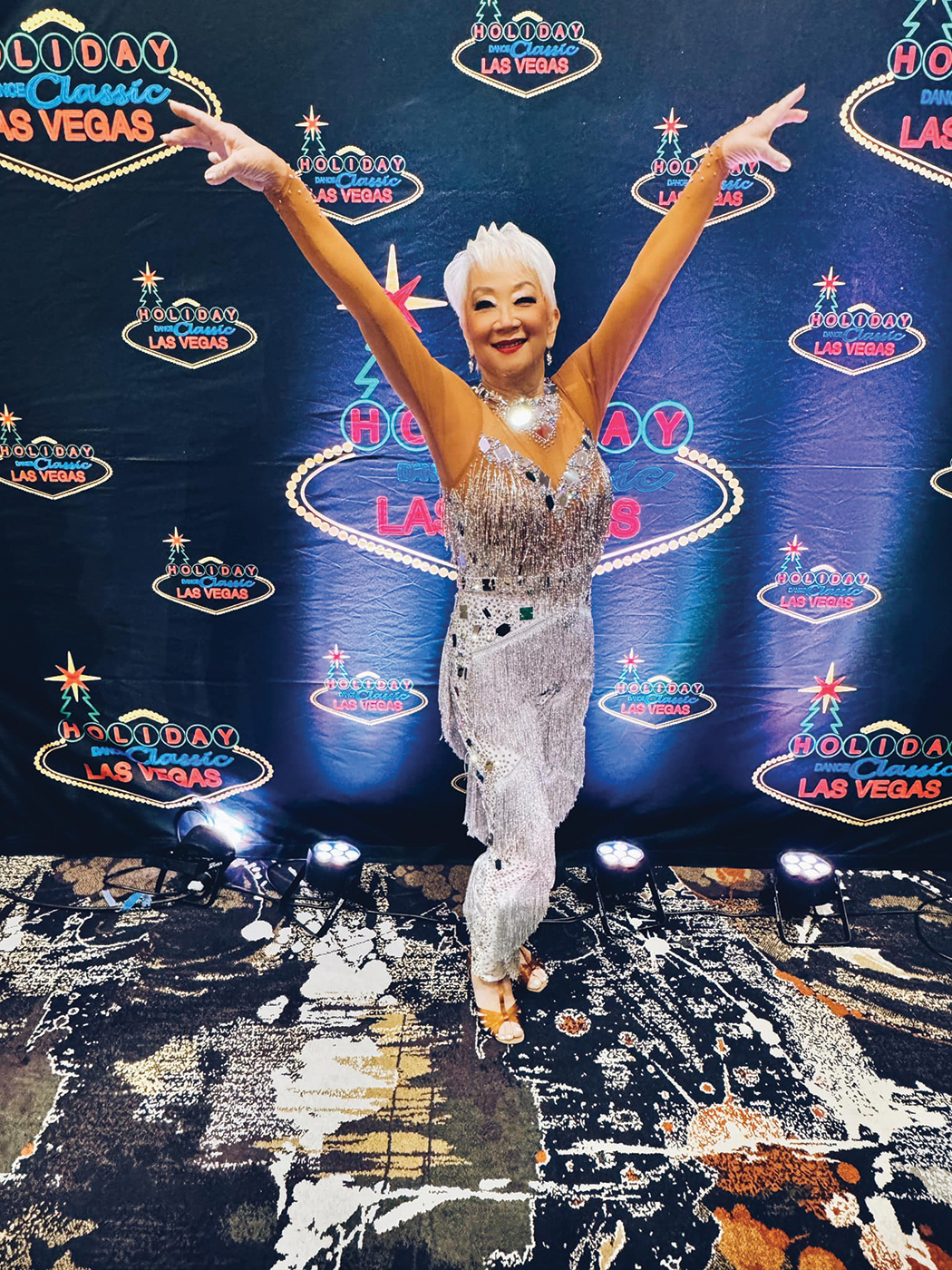
“You are the dancing queen, young and sweet, only 17,” say the lyrics of ABBA’s signature hit of the ’70s. Claire Groom, a 75-year old student at Aloha Ballroom Company, has rewritten those lyrics by dancing her way to victory at the Holiday Dance Classic, a prestigious national ballroom dance competition held at the Luxor Hotel & Casino in Las Vegas in mid-December of last year. Competing against hundreds of dancers from across the country, Claire’s win is an inspiring testament to the joy of lifelong learning, passion and perseverance.
Claire, a resident of Moanalua Valley, dazzled the Holiday Dance Classic judges with her poise, technique and infectious love for dance. Her hard work and dedication in preparing for the competition paid off, earning her top honors among a field of talented dancers.
She and her partner, Keith Michael, age 40, swept the competition, earning first place in cha-cha, rumba and swing.
Reflecting on the experience, Claire shared that she was indeed, “having the time of her life.” “I had many memorable and first-time experiences at Holiday Dance Classic,” she says. “It was a blast! Aloha Ballroom Company has taught and guided me in the true art of dancing, and I am totally grateful for that. It was a wonderful experience to be with other dancers from all over the country and hear about their background.”
The annual Holiday Dance Classic is one of the largest and most competitive ballroom dance events in the country, attracting participants of all levels and styles. Claire’s remarkable success is not only a personal triumph but also a shining example of how ballroom dance can enrich lives at any stage.
Claire’s journey also underscores the health benefits of dancing at any age. “Dancing at any age elevates your flexibility, balance, mood and mental acuity,” says Claire. “I would recommend anyone even with two left feet to give dancing a try!”
Study after study — including research from Stanford University — has shown that dancing is the only physical activity proven to significantly lower the risk of dementia. Beyond its mental acuity benefits, ballroom dance strengthens the body, promotes coordination and creates meaningful social connections, all while bringing immense joy.
Aloha Ballroom Company is proud to celebrate her outstanding achievement. “Claire’s achievement is truly inspirational,” says Keith Michael, Claire’s Aloha Ballroom Company dance instructor. “Her energy, dedication and enthusiasm for dance remind us all that it’s never too late to pursue your passions. We’re thrilled to be a part of her journey and celebrate this well-deserved victory.”
“Keith is an excellent teacher — warm, kind, patient and knowledgeable — with a great sense of humor!” says Claire. “And being coached by Tony Meredith was icing on the cake!”
Aloha Ballroom Company continues to empower students of all ages and abilities to experience the artistry and beauty of ballroom dancing by promoting connection, confidence and community through movement.
Aloha Ballroom Company is a ballroom dance company founded in January 2024 by world-renowned choreographer Tony Meredith.
Aloha Ballroom Company provides certified professional dance instructors to teach students a variety of dances including waltz, tango, foxtrot, merengue, swing, salsa, cha-cha and much more.
To learn more about Aloha Ballroom Company and how to begin ballroom dancing, visit alohaballroomcompany.com, email info@alohaballroomcompany.com or call 808-282-6819. The dance studio is located at 770 Kapiolani Blvd. in Honolulu. Hours of operation are by appointment, Monday through Friday.
“You are the dancing queen, young and sweet, only 17,” say the lyrics of ABBA’s signature hit of the ’70s. Claire Groom, a 75-year old student at Aloha Ballroom Company, has rewritten those lyrics by dancing her way to victory at the Holiday Dance Classic, a prestigious national ballroom dance competition held at the Luxor…
I “invented” this kalo (taro) chowder during the COVID shutdown, a time when we were trying to support the local farmers who were struggling to move their produce. My daughter knows a farmer who gave us a lot of his kalo. At one point, we had so much, I had to find a creative way to use it all!
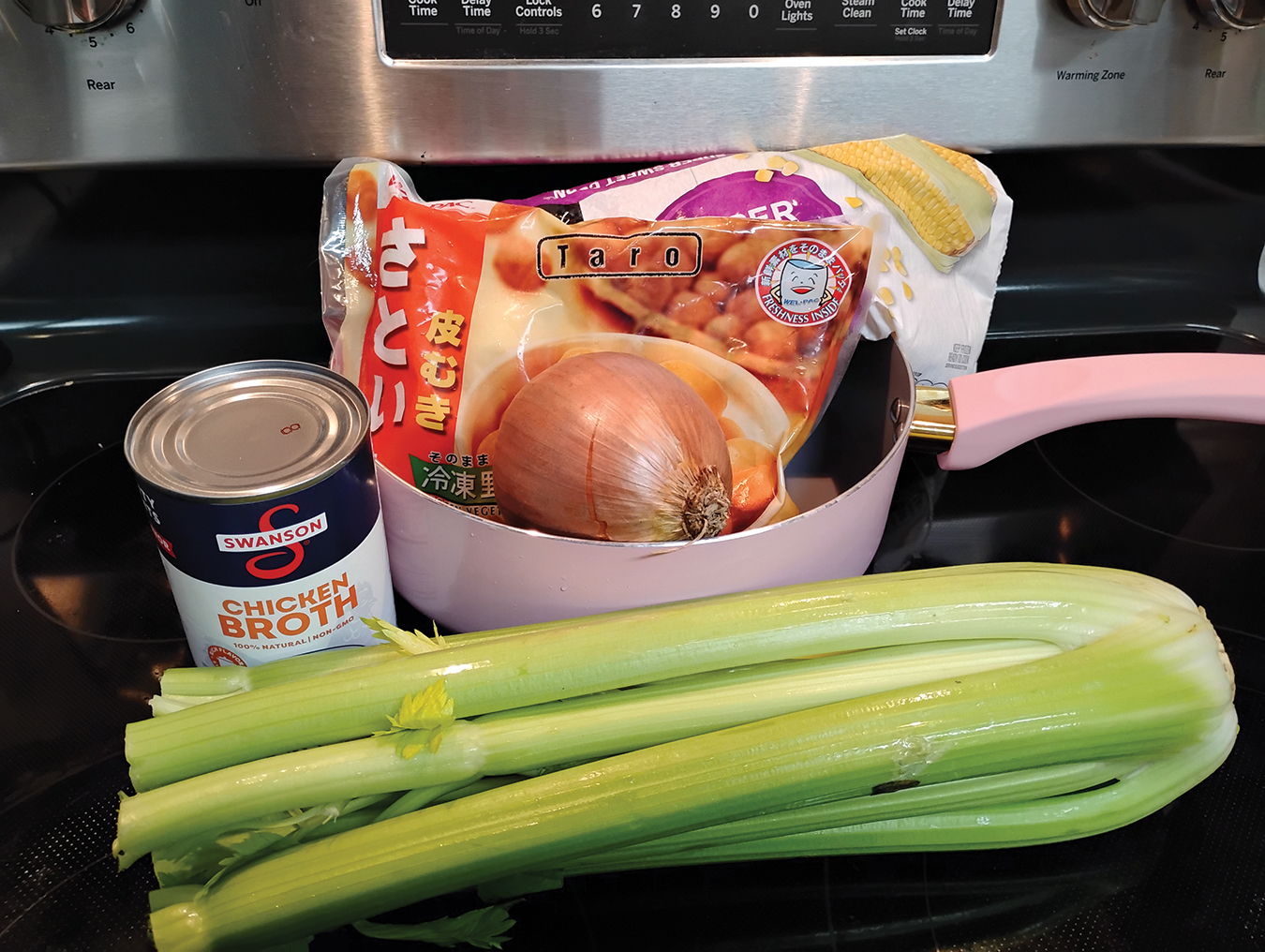
I found a corn-potato chowder recipe and substituted kalo in place of the potato. All the veggies can be locally sourced at your local farmers’ market. Get two raw kalo (taro) roots about the size of your fist. Pressure cook them for 45 minutes, then peel off the skin when the kalo is cool enough to handle. Or, you can find kalo in supermarkets in the frozen food section packaged in 12-ounce bags (pictured above), already cooked, cleaned and ready to use.
I experimented using different amounts of salt and spices… a little of this and a little of that. I think this final recipe is the best. It’s a great chowder for those cold Hawai‘i winter days!
Ingredients 1 small/med. yellow onion (chopped fine) 1 celery stalk (chopped) 1 clove garlic (diced) ½ Tbsp. olive oil ½ tsp. table salt or Hawaiian salt ½ tsp. ground thyme ¼ tsp. coarse ground pepper 2 cups chicken broth 2 cups corn, fresh or canned 1-1/2 cups kalo root (chopped in small cubes) 3/4 cup milk 2 Tbsp. corn starch
Directions In in a large soup pot, sauté the onion and celery in the olive oil. Stir in the garlic but don’t brown it. Add the spices and stir constantly while adding the broth. Bring to a slow simmer, then add the corn and kalo cubes. Simmer for 20 minutes. Mix cornstarch and milk until smooth, then add it to the corn and kalo pot. Continue simmering for 20 minutes or until thickened. Prep and cooking time: under one hour. Serves: 4
Do you have a favorite recipe and story to share? For consideration in the next issue, include a photo and mail them to Generations Recipe, PO Box 4213, Honolulu, HI96812, or email them to Cynthia@generations808.com.
KALO CHOWDER RECIPE NOTE: Make it vegan by using vegetable broth instead of chicken broth and almond milk instead of milk.
I “invented” this kalo (taro) chowder during the COVID shutdown, a time when we were trying to support the local farmers who were struggling to move their produce. My daughter knows a farmer who gave us a lot of his kalo. At one point, we had so much, I had to find a creative way…
Kānaka Maoli (Native Hawaiians) have welcomed immigrants from every corner of the globe for over 1,500 years, cultivating and perpetuating a tapestry of diverse cultures. In this second article in our series about the many cultures that comprise Hawai‘i, we will focus on how the Kānaka Maoli got here and from where, their culture and one event that epitomizes the Hawaiian culture, the Merrie Monarch Festival.
The Early Hawaiians
Sailing on wa‘a kaulua (double-hulled canoes), Polynesians primarily from the Marquesas Islands in the South Pacific navigated 2,000 miles, landing upon the shores of Hawai‘i over 1,500 years ago. The population was well-established when, about 800 years ago, Polynesians from the Society Islands arrived. Contact with southern Polynesia then ceased for about 400 years and a distinctive Hawaiian culture developed.
Culture and Tradition
Kānaka Maoli worshipped akua (gods) such as Pele and Haumea and passed down historical mo‘olelo (stories). Mo‘olelo were told through mele (song), oli (chant) and hula (dance). Mo‘olelo are insights about how the world came to be, and how relationships between people and ‘āina (the land) should be honored. These traditions hold strong today. In the early to mid-20th century, Kānaka Maoli adopted the ‘ukulele and guitar from Portuguese, Spanish and Mexican settlers, creating their own unique musical styles and instruments — the ki¯ hō‘alu (slack-key guitar) and kīkākila (steel guitar). Kānaka Maoli communicate with the world through oli, stressing the significance of voice/community. Hula, originating in Hawai‘i, derives from Polynesian dance forms. The two forms of hula today are kahiko (traditional) and ‘auana (contemporary).
The Merrie Monarch Festival
The Merrie Monarch Festival (MMF), a weeklong celebration held every year in Hilo on Hawai‘i Island, honors the legacy of the Merrie Monarch, King David Kalākaua — his love for his people and his vision for perpetuation of all things Hawaiian.
The MMF was conceived in 1963 after the collapse of the sugar industry. George Na‘ope, Gene Wilhelm and Helene Hale organized the first MMF in 1964. This first incarnation included a King Kalākaua beard look-alike contest, a relay race and a ball. In 1968, when festival popularity was declining, Dottie Thompson became executive director and focused the MMF around hula. Three years later, Dottie and George hosted a hula competition. Events included Miss Aloha Hula, group hula kahiko and group hula ‘auana. Today, the Merrie Monarch Festival is internationally renowned for its historical and cultural significance. In 2025, it takes place from April 20 to 26.
The next article in this series will feature the influences of Japanese culture in the Aloha State.
Kānaka Maoli (Native Hawaiians) have welcomed immigrants from every corner of the globe for over 1,500 years, cultivating and perpetuating a tapestry of diverse cultures. In this second article in our series about the many cultures that comprise Hawai‘i, we will focus on how the Kānaka Maoli got here and from where, their culture and…
I’m honored to write a column about “veterans,” a word that brings tears to my eyes. My brother, Capt. Edwin Hayashi, was killed in a C-130 plane crash during the Vietnam era. He didn’t make it back to be a “veteran.” Veterans are survivors.
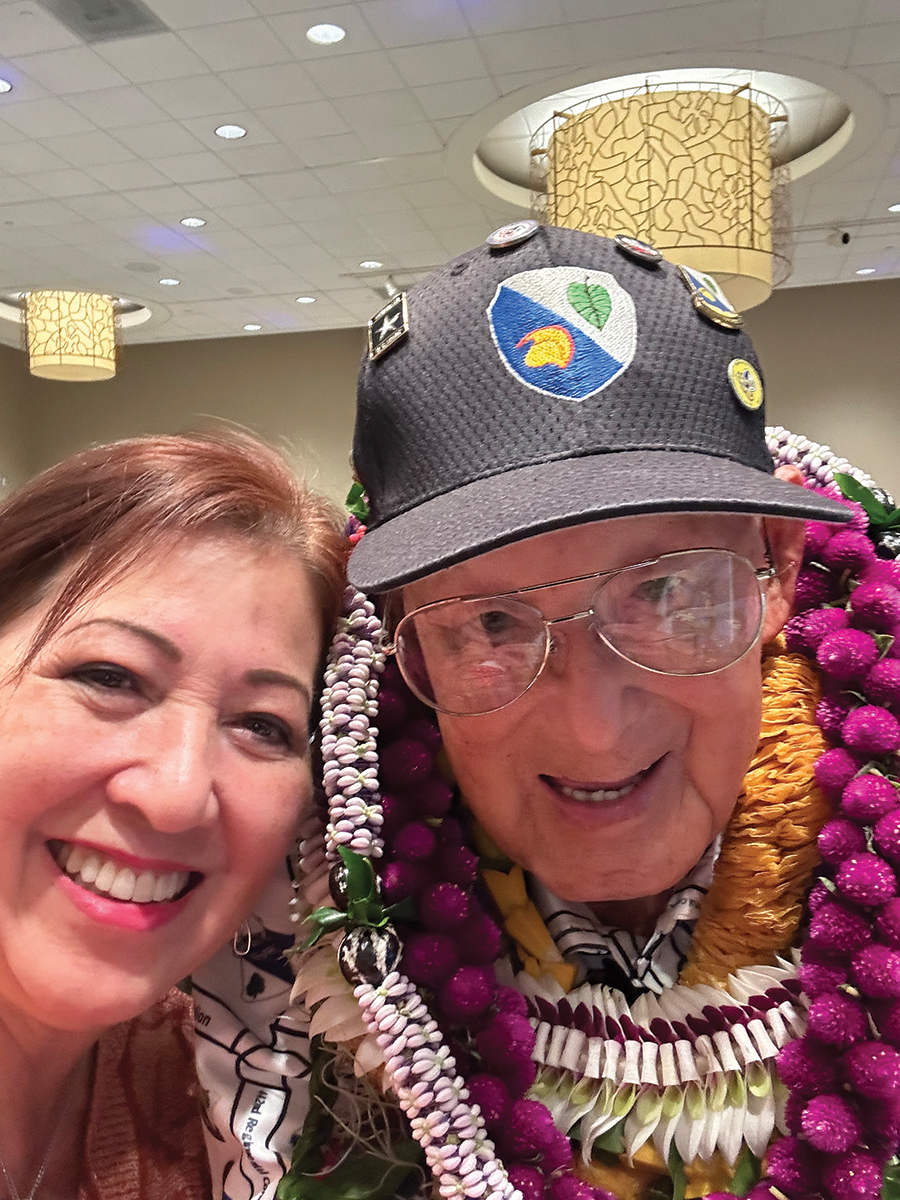
Kathleen Hayashi and Dr. Takashi Manago, a WWII veteran, celebrated his 101st birthday.
When I spoke to the Vietnam Veterans of America – Chapter 858 recently, they sobbed as I shared how villagers in Italy and France still remember, after more than 80 years, how the Japanese American units of the 100th Infantry Battalion/442nd Regimental Combat Team liberated them during WWII. These heroes were a segregated army unit comprised of second-generation Japanese Americans, mostly from Hawai‘i.
Vietnam veterans say all they want is to be remembered with honor, as well. Veterans from every war ask to be remembered for the sacrifices they made — for themselves, and for those left behind.
My father was a member of the 100th Infantry Battalion Veterans from Hawai‘i. It’s our organization’s mission to keep their legacy alive and honor the few still living — like 101-year-old Dr. Takashi Manago, one of only six known living veterans of the 100th Infantry Battalion. My next column will honor him.
I’m honored to write a column about “veterans,” a word that brings tears to my eyes. My brother, Capt. Edwin Hayashi, was killed in a C-130 plane crash during the Vietnam era. He didn’t make it back to be a “veteran.” Veterans are survivors. When I spoke to the Vietnam Veterans of America – Chapter…
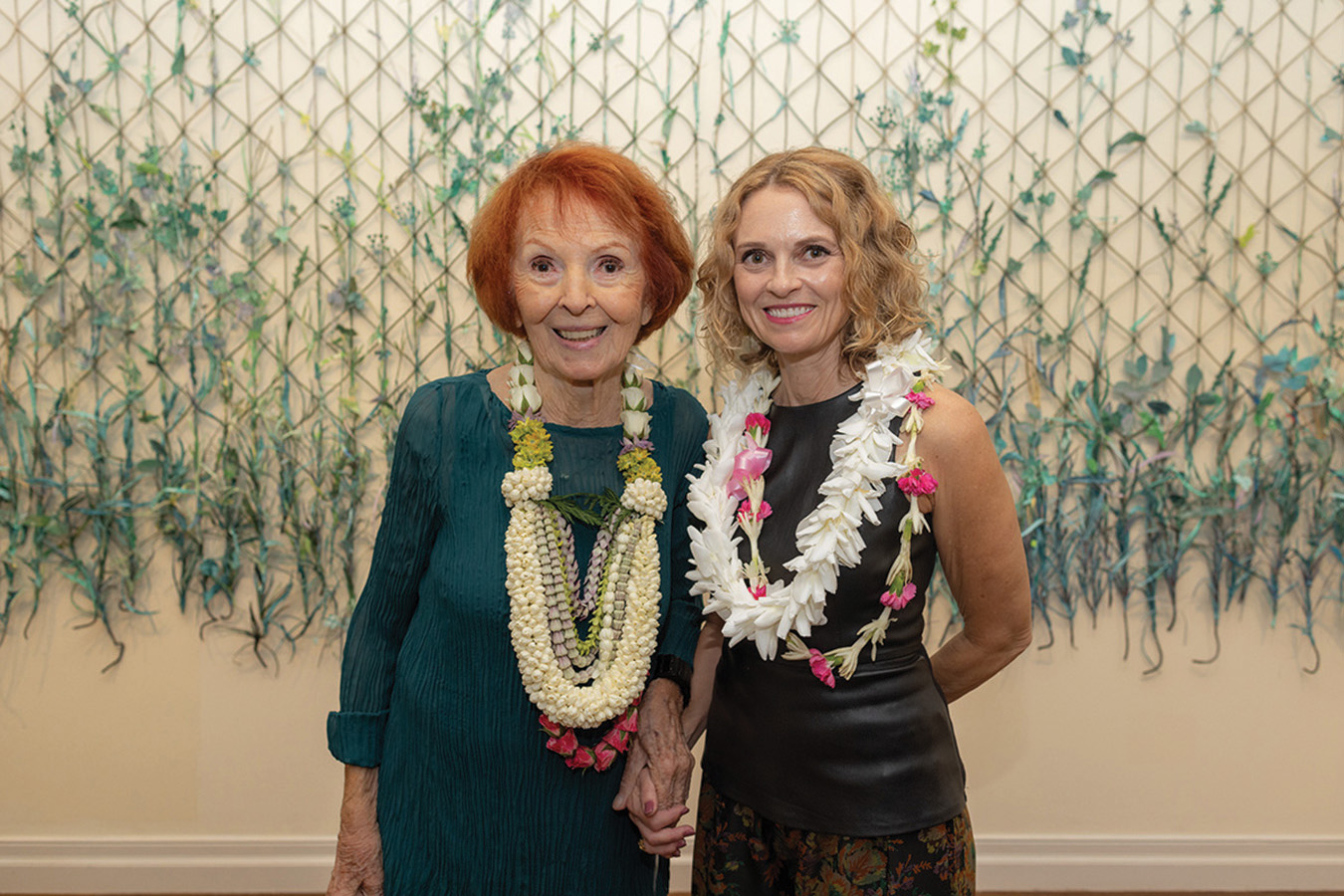
Artist Allyn Bromley met with Honolulu Museum of Art Curator Katherine Love at the opening of her Allyn Bromley: At the Edge of Forever exhibition in January. The exhibition is on view at HoMA through June 15, 2025.
Artist Allyn Bromley is an inspiration. At 96, she continues to go to her Nu‘uanu studio to create every week. An influential figure in Hawai‘i arts, she taught generations of students at Leeward Community College and at the University of Hawai‘i at Mānoa, where she was director of the printmaking department. She retired in 2000 as professor emeritus.
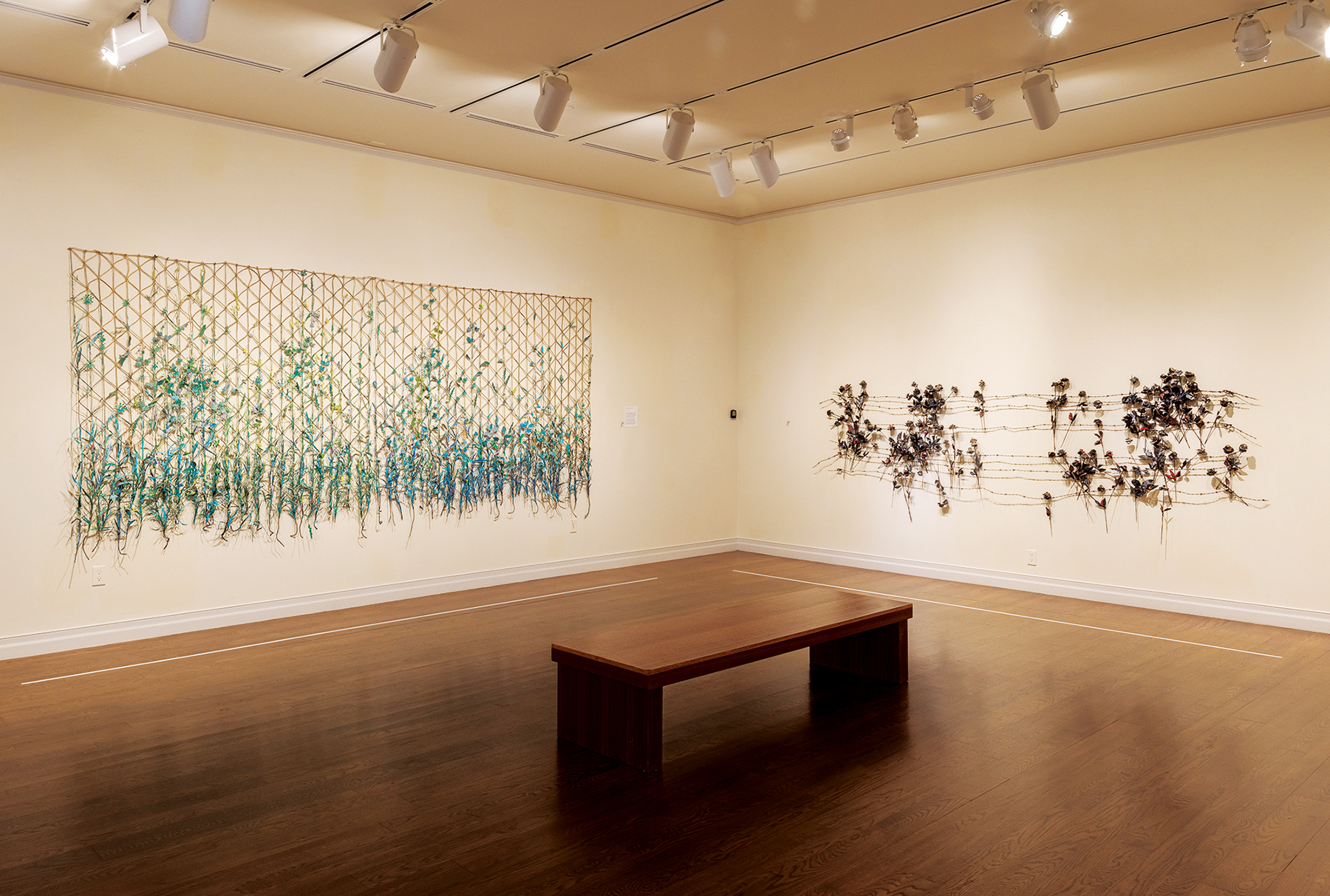
Now on view at the Honolulu Museum of Art through June 15 is work she created over the past eight years. The exhibition, Allyn Bromley: At the Edge of Forever, features mixed-media print-based works that are intricately assembled from hundreds of hand-printed paper elements (many were torn down or cut from previous prints), as well as components such as plastic boxes, wire, wood and cord. These works explore themes such as memory, loss and the environment. The show also includes a work comprised of charred pieces of wood fencing, a grim reminder of the power of natural forces as well as the hope that resilience brings.
Just as Bromley gives new life to used materials, she is also inspired to find fresh meaning in familiar subjects. “I like to see if I can take something as trite as a flower and turn it into a provocative, more universal or larger idea,” she says.
She is also a great supporter of the arts community. She recently used some of her assets to create an endowment for a visiting artist program at the Honolulu Museum of Art. In the 1970s, she attended workshops at the museum with two well-known visiting printmakers. The experience was so gratifying and impactful that she wanted to make a gift that would enable future generations of Hawai‘i artists to have similar opportunities.
Artist Allyn Bromley is an inspiration. At 96, she continues to go to her Nu‘uanu studio to create every week. An influential figure in Hawai‘i arts, she taught generations of students at Leeward Community College and at the University of Hawai‘i at Mānoa, where she was director of the printmaking department. She retired in2000 as…
When we talk with family and friends, we often think back when we were younger! It’s not too hard for our immediate family to keep in touch; but it is my hope that friendships with those you met in school are still alive and vibrant. In my November/December 2024 issue, I wrote about my Tennis Ohana, sharing a photo of the women.
My college girlfriends of over 50 years have spent birthdays with a dinner and movie three times a year. When we were younger, we would play games at Dave & Buster’s, have fun at Glow Putt, go shopping in a mall, and we even shared a hotel room to celebrate one of our milestones. When there wasn’t a good movie playing, we just spent hours eating, talking and laughing. I’m sure many Generations’ readers can remember their “Happy Days” with classmates too.
After a dinner and movie last September, we were walking back to our cars when one of my girlfriends forgot that we didn’t take a picture. She took out her phone and tried to take a selfie of the three of us. We just kept laughing while trying to get a good photo. A group of young women stopped to help us take a photo; and I said “stay together so when you’re 71, you’ll have as much fun as us!”
If you have a story you’d like to share or a topic you’d like to read, contact Sherry Goya. 808-722-8487 | sgoyallc@aol.com
When we talk with family and friends, we often think back when we were younger! It’s not too hard for our immediate family to keep in touch; but it is my hope that friendships with those you met in school are still alive and vibrant. In my November/December 2024 issue, I wrote about my Tennis…
Hau‘oli Makahiki Hou! We hope 2025 is filled with prosperity, vitality and good health for you and your loved ones!
If Congress doesn’t act, the federal lifetime estate tax and gift tax exemption is due to sunset at the end of 2025 and will revert back to the 2017 exemption amount of approximately $5.6 million per individual, adjusted for inflation. This would result in a significant increase in the number of estates subject to federal estate tax and a higher estate tax liability for estates already subject to the tax.
Currently per person, the Hawai‘i estate and gift tax exemption is $5.49 million and the federal lifetime estate and gift tax exemption is $13.61 million (or $27.22 million per married couple). If you are married, under the current estate tax exemption and have separate trusts, it may be a good time to explore a joint trust. A joint trust can significantly reduce or even eliminate capital gains tax for your children, should they sell inherited real estate or other appreciating assets.
If you are hedging up to the current estate tax exemption or you exceed the estate tax exemption, contact your estate planning attorney to see how possible changes to the estate and gift tax exemption may affect you.
Hau‘oli Makahiki Hou! We hope 2025 is filled with prosperity, vitality and good health for you and your loved ones! If Congress doesn’t act, the federal lifetime estate tax and gift tax exemption is due to sunset at the end of 2025 and will revert back to the 2017 exemption amount of approximately $5.6 million…