Social Security (SS) benefits and Supplemental Security Income (SSI) payments for more than 72.5 million Americans will increase 2.5% in 2025. On average, Social Security retirement benefits will increase by about $50 per month for single recipients, $75 for couples.
Nearly 68 million SS beneficiaries will see the 2.5% Cost of Living Adjustment (COLA) increase beginning in January 2025. Increased payments to nearly 7.5 million people receiving SSI began on Dec. 31, 2024 (some receive both SS and SSI).
Other adjustments that take effect in January of each year are based on the increase in average wages. Based on that increase, the maximum amount of earnings subject to the Social Security tax (taxable maximum) is slated to increase from $168,600 to $176,100.
“Social Security benefits and SSI payments will increase in 2025, helping tens of millions of people keep up with expenses even as inflation has started to cool,” says Social Security Commissioner Martin O’Malley.
Over the last decade, the COLA increase has averaged about 2.6%. The COLA was 3.2% in 2024 and at a record high at 8.7% in 2023, due to high inflation following the pandemic.
Annual inflation rose 3.2% in October 2024 (when the Bureau of Labor Statistics calculates the Consumer Price Index (CPI) — actually, a subset CPI called the consumer price index for urban wage earners and clerical workers (CPI-W), which measures the price changes for a particular set of goods, which is used to calculate the COLA.
Although the COLA is designed to keep payments in line with inflation, Medicare costs are not included in the CPI-W used to determine the COLA. Therefore, Medicare Part B premiums have been rising faster than COLA for years, including 2025, according to the Centers for Medicare and Medicaid Services, with premiums outpacing both the Social Security COLA and inflation. From 2005 to 2024, Part B premiums increased by an average of 5.5% per year, while COLAs averaged less than half that rate at just 2.6%.
In 2025, the monthly Part B premium for enrollees will rise by $10.30 (a 5.9% increase), while the COLA adjustment increase is only 2.5%, eroding away a part of the $50 SS increase. This conundrum continues to affect seniors who are concerned about how they’ll survive if SS continues to fail to keep up with the cost of living.
For more SSA information, call 7am–5pm, Mon–Fri: 1-800-772-1213 (toll free) | socialsecurity.gov Your COLA Notice Individuals who have a personal my Social Security account can view their COLA notice online, which is secure and faster than receiving a letter in the mail. Users can also receive text or email alerts when there is a new message waiting for them, including a COLA notice. Set up a my Social Security account at ssa.gov/myaccount.
Social Security (SS) benefits and Supplemental Security Income (SSI) payments for more than 72.5 million Americans will increase 2.5% in 2025. On average, Social Security retirement benefits will increase by about $50 per month for single recipients, $75 for couples. Nearly 68 million SS beneficiaries will see the 2.5% Cost of Living Adjustment (COLA) increase…
Appointment-based services at local Social Security offices are expanding, the Social Security Administration (SSA) announced on Nov. 14, 2024. In the SSA’s ongoing commitment to serve the public more efficiently, it aims to reduce wait times, streamline service delivery, and improve the overall customer experience by scheduling appointments.
Nearly 400 field offices have already moved to appointment-based service this year. These offices have seen significant improvements in wait times due to more efficient and helpful visitor experiences and increases in the number of customers able to complete their business online.
Implementation of appointment-based services will be developed nationwide in two phases. The first phase is a transition period now through Jan. 5, 2025. The purpose of this transition period is to educate SSA’s customers about needing to schedule an appointment for SSA services. As a reminder, many of SSA’s services can be provided via phone with an appointment and do not require a customer to walk into an office for service.
Effective Jan. 6, 2025, SSA will require customers to schedule an appointment for service in its field offices, including requests for Social Security cards. SSA encourages customers to become accustomed to its online services (ssa.gov/onlineservices), where many transactions can be completed conveniently and securely, and automated services (ssa.gov/agency/contact/phone.html) available by calling 1-800-772-1213 (SSA’s national 800 number).
Customers who are not able to conduct their business online or with the automated options may call their local Social Security office or its national 800 number to schedule an appointment. Find your local Social Security office at secure.ssa.gov/ICON/main.jsp. The Honolulu office is located in the Federal Building at 300 Ala Moana Boulevard.
Those who are unable to make an appointment or do not want to make an appointment will not be turned away for service. For example, members of vulnerable populations, military personnel, people with terminal illnesses and individuals with other situations requiring immediate or specialized attention may still walk in for service at their local field office. Some SSA offices also have minimal to no wait times, and they will still serve customers who walk in.
Appointment-based services at local Social Security offices are expanding, the Social Security Administration (SSA) announced on Nov. 14, 2024. In the SSA’s ongoing commitment to serve the public more efficiently, it aims to reduce wait times, streamline service delivery, and improve the overall customer experience by scheduling appointments. Nearly 400 field offices have already moved…
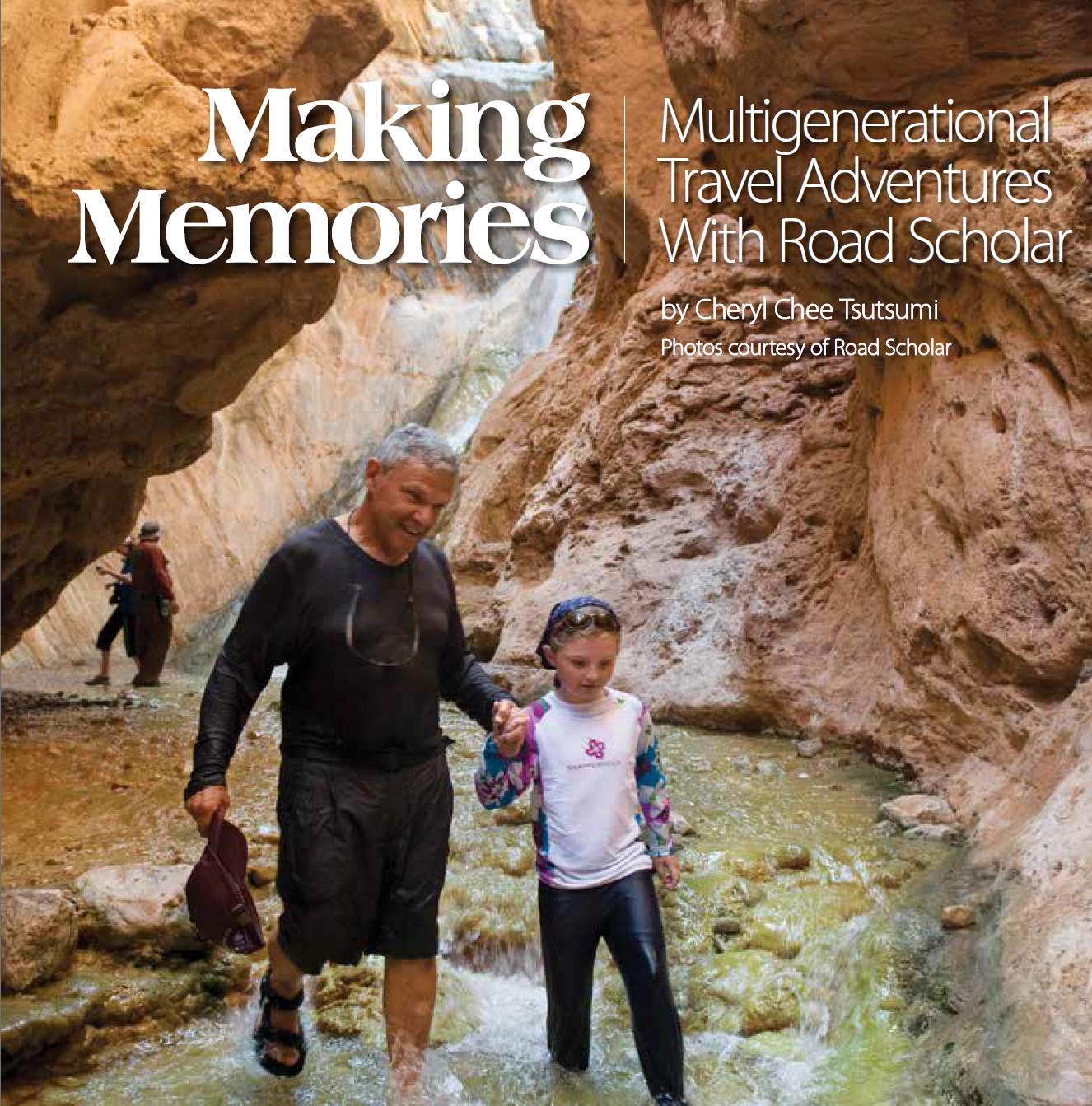
Multigenerational Travel Adventures with Road Scholar
What began as an educational program led by five New England universities with a few hundred senior participants has grown dramatically since the 1970s. Today, 80,000 to 100,000 people of all ages enroll each year in Road Scholar’s 665 learning adventures in 42 US states, 91 countries and aboard ships on rivers and oceans worldwide. Although Road Scholar is geared to those aged 50 and older, its multigenerational programs are increasing in popularity, retaining education as a key component of the organization’s mission.
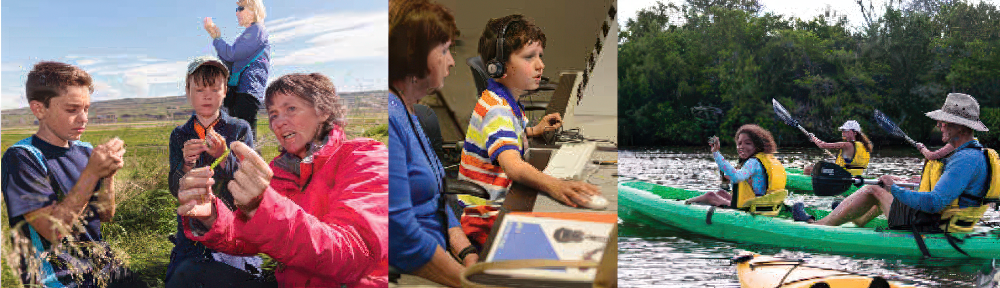
Road Scholar offered its first grandparents-grandchildren programs in 1985, and they have grown by leaps and bounds since then. Activities are engaging and age appropriate (children’s age ranges are specified for each program). Friendly, energetic group leaders are great at helping youngsters foster friendships.
The Journey Begins
Flashback: 1974. Educator Marty Knowlton had just returned from a four-year backpacking trip across Europe that included stays in youth hostels and visits to “folk schools,” which started in Scandinavia in the early 19th century to serve rural workers who had neither the time nor the money to attend college. Instead, the schools offered an alternative form of education focused on skills and experiences instead of the usual classroom instruction. Students lived in the same community as their teachers, learning about the area’s history and customs through books, songs, crafts, traditional foods, explorations of their surroundings and more. No grades or tests were given, and frequent social gatherings cultivated a strong sense of camaraderie.
Knowlton shared story after inspiring story with his longtime friend, David Bianco, the University of New Hampshire’s director of residential life. From their animated conversations came a novel idea. UNH was looking at ways its facilities could generate income during summer breaks. So why couldn’t empty dorms be used to house adults attending folk school-based classes akin to those that Knowlton had seen on his trip? The two visionaries won support from UNH administrators, and Knowlton was hired as the director of the new American Youth Hostel program.
A Fork in the Road
One day, Bianco spotted a white-bearded buddy sitting beneath a “Youth Hostel” sign. “This campus ought not to be having a youth hostel,” Bianco reportedly told Knowlton. “It ought to be having an elder hostel.”
Thus was born Elderhostel and its mission to offer quality non-credit educational programs and modest, affordable accommodations to older adults. The concept provided a new income stream for the university and learning opportunities for active seniors still hungry for knowledge.
In the summer of 1975, 220 people attended Elderhostel’s first programs, which were led by faculty at five New England colleges, including UNH. Elderhostel became a nonprofit 501(c)(3) organization in 1977 and grew dramatically in subsequent years. To more accurately reflect its evolution, Elderhostel was rebranded as Road Scholar in 2010.
Multigenerational Travel Programs
“From our earliest days, we have strived to create innovative experiences for participants of all ages, and our multigenerational programming reflects that,” says Meghan Flynn, Road Scholar’s associate vice president of programs. “Grandparents think it’s important to pass on their love of learning and adventure to the young ones, and the programs are just as meaningful for kids. We’ve received feedback saying children decided to make a topic their focus in college because of a Road Scholar trip they took with their grandparents.
“We frequently hear that the grandparents and children love having time together on their own, not with the parents,” says Flynn. “It deepens their relationships, especially when both generations are trying new things and sometimes even getting out of their comfort zones. Those are the kinds of memories that last a lifetime.”
Grandparent-grandchildren programs are offered during the months of June, July and August. Over a typical summer, Road Scholar hosts about 5,000 participants on those trips. More than 60 options are available in 2025 (see Just for Grandparents and Grandchildren sidebar on page 26–27), including several new offerings.
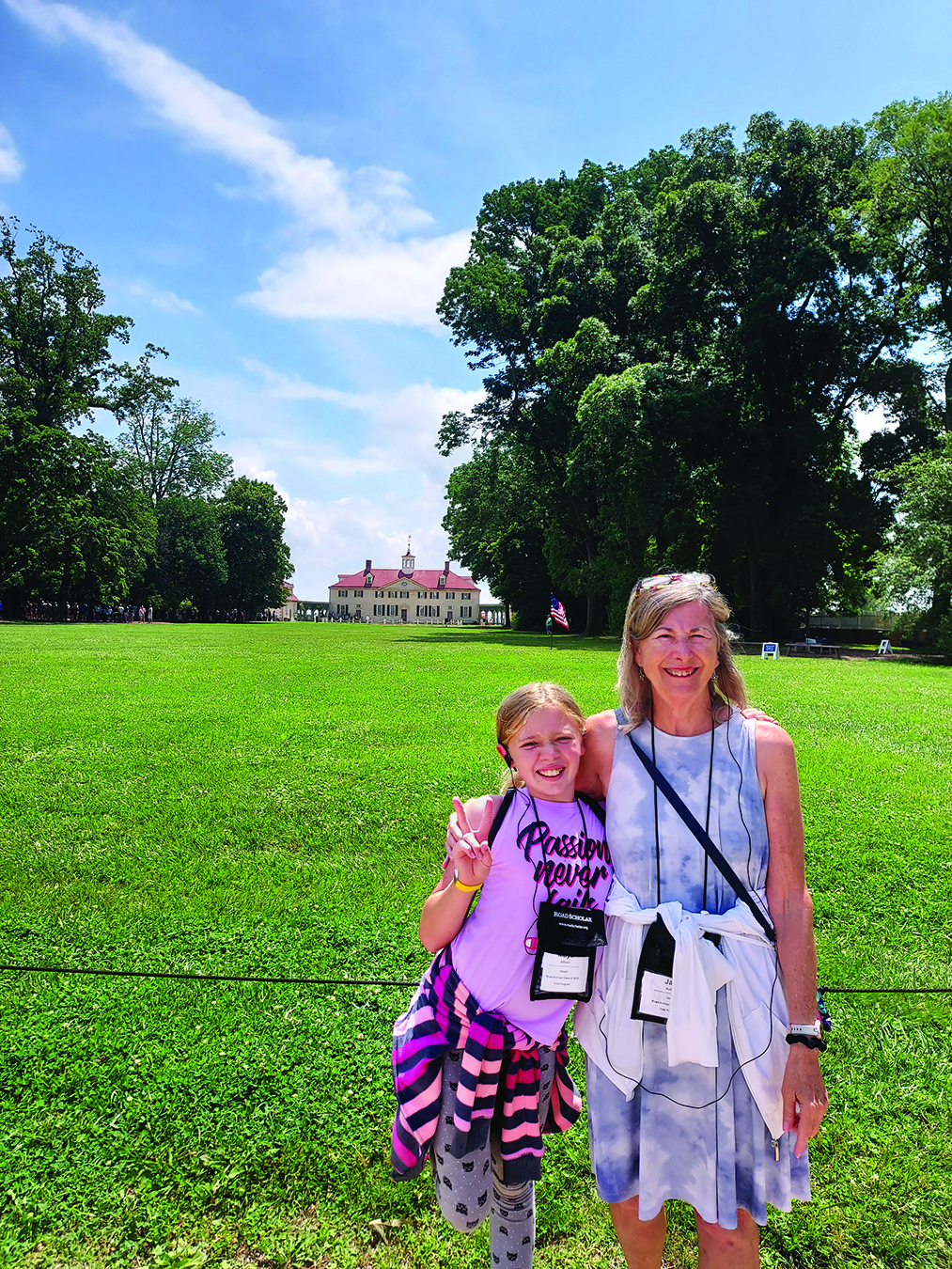
Jane and Maya on the grounds of George Washington’s Mount Vernon.
Travels With Jane & Maya
For the past six years, Kailua resident Jane Austgen has lived around the corner, just 250 steps from her 12-year-old granddaughter, Maya Arfman (yes, she actually counted them). Before that, Jane was an even closer neighbor: She occupied the ‘ohana unit behind her daughter and son-in-law’s home.
“Because of that, I’ve been lucky—I’ve been able to help Maya’s parents, who are both busy professionals, care for her since she was an infant,” says Jane. “I take her to activities, get her ready for school and am there when she gets home in the afternoon. But she’s getting older, and I know the time will come when she won’t need me as much.”
A retired nurse, Jane, 77, keeps busy with pickleball, mahjong, travel and other activities, but she’s committed to nurturing the bond she has developed with Maya. In 2022, an acquaintance told her about Road Scholar programs geared specifically to grandparents and their grandchildren. Although Jane had never taken a trip with the nonprofit organization, she had known for years that it specialized in educational travel for adults 50 and older. Further inquiries led her to other seniors who had taken intergenerational tours with Road Scholar and thoroughly enjoyed them. It sounded like a great thing for her and Maya to do.
“We started looking at Road Scholar’s website to see what programs were available in Maya’s age range,” says Jane. “I had lived in Virginia, right outside Washington, DC, for nine years. In addition to being held in a place that was familiar to me, the itinerary for Spy Kids: Sleuths & Secrets with Your Grandchild sounded really interesting to us, so that’s what we did in July last year. At the time, Maya was going on 11 and an incoming fifth grader at ‘Aikahi Elementary School.”
Spy Kids is a six-day program for children aged 10 through 14. It was Maya’s first trip to DC. She says, “Being in a big city was very different from Hawai‘i, and I loved it! My favorite part was the International Spy Museum [ISM], where our tour group was divided into three teams. Our mission was to find the scientist who was giving classified information to the Russians, using clues we got by putting keycards into kiosks.”
ISM is the only museum in the US that’s dedicated solely to espionage. Ample time was allowed for Road Scholars young and old to peruse exhibits on their own, including the world’s largest collection of spy artifacts on public view. Among the fascinating pieces: pistols doubling as a flashlight and a lipstick holder; cameras concealed in a watch, fountain pen, cigarette lighter, even a bra; and the sleek silver Aston Martin DB5 sportscar that James Bond (Sean Connery) drove in the 1964 blockbuster “Goldfinger.”
Maya poses for a snapshot at the International Spy Museum.
Jane and Maya also learned about famous covert operations, both successes and failures, among them, the true story that inspired the movie “Argo.” Ben Affleck starred as CIA officer Tony Mendez, who helped six American diplomats escape Tehran in 1980, at the height of the Iran hostage crisis.
The highlight for Jane was Mount Vernon, the home of George Washington, America’s first president. “When I lived in Virginia, it was about a 30-minute drive from my house,” she says. “When friends and family visited, I always took them there because it’s one of my favorite attractions. Thanks to the Road Scholar trip, though, I looked at Mount Vernon totally differently; I didn’t know about its spy activities before.”
Washington authorized the formation of America’s first spy network, which operated on Long Island and in and around New York from 1778 to 1783 during the Revolutionary War. It was comprised of eight primary agents, including farmer Abraham Woodhull, whose code name was Samuel Culper. “The Culper Spy Ring” gathered valuable intelligence about British military campaigns and reported its findings to Washington. The secret group played an instrumental role in the American colonists’ victory over British forces.
“When I visited Mount Vernon previously, the focus was on George and Martha Washington’s family and their lives,” says Jane. “I had taken the regular tour of the mansion and grounds many times, but our visit with Spy Kids was longer and more informative.”
She and Maya appreciated unique experiences not available on other tours, including a presentation by a former CIA agent; figuring out how to crack a code during a cryptology session; and using wigs, clothing and makeup to explore the art of disguise.
Maya was happy to find her grandmother was a compatible, laid-back travel companion. “She let me be more independent, which I liked,” she says. “It was fun doing and learning new things together and meeting people from all over.”
They went with the flow, says Jane, and relished their time together. “This was our first trip as grandmother and granddaughter, and our priority was to relax and have fun.
“Road Scholar makes everything so easy,” says Jane. “All you have to do is book your flights; they handle everything else. The night before, your guide will tell you where you’ll be going and what you’ll be doing the next day, the time and place you should meet, what you need to bring and how you should dress.”
Tips for ‘Smooth Sailing’
Although trip planning is a snap with Road Scholar, some independent thought is required to ensure a smooth trip when traveling with your grandchild. Jane offers these suggestions:
Consider your health and mobility. “One woman in our ‘Spy Kids’ group had a walker,” says Jane. “She and her husband brought three teen-aged grandchildren on the trip. If she thought an activity would be too hard for her, she didn’t go. Road Scholar accommodated her well, and I think she did just about everything even though sometimes she was a little behind. Look at itineraries closely, and be honest about your abilities. You’ll want to participate as much as possible because every activity is a chance to strengthen your relationship with your grandchild.”
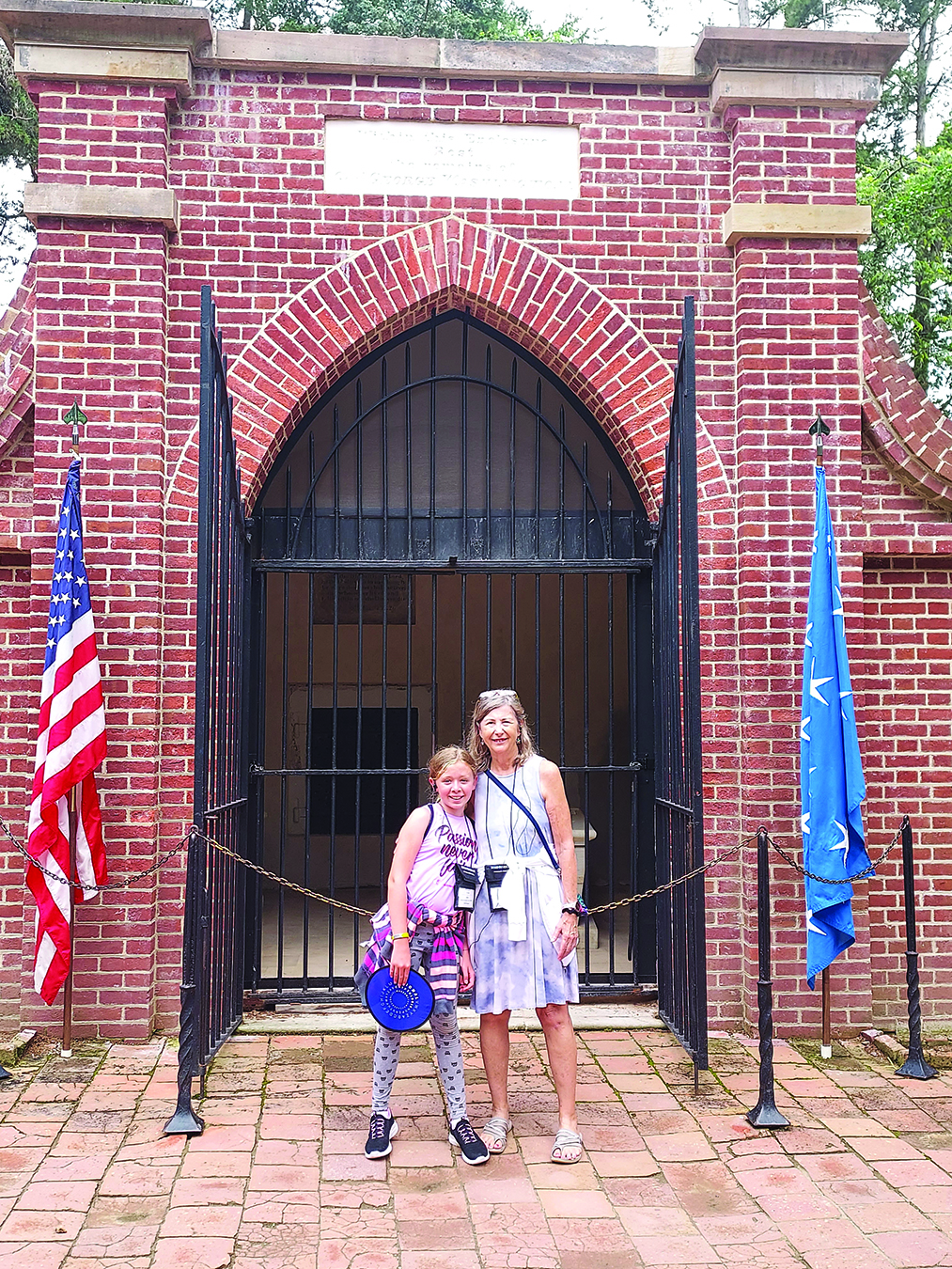
Jane and Maya in front of George and Martha Washington’s tomb at Mount Vernon.
Choose a destination together. For their Road Scholar vacation this year, Jane and Maya chose the Music, Magic & Nature: The Great Smokies program in Pigeon Forge, Tenn. “Maya and I talked a lot about where we wanted to go this year, and we thought this trip would be a perfect fit.
“Maya takes piano lessons, and she loves singing and all kinds of music. She was happy to find out that learning Appalachian folk songs and building a musical instrument are on the itinerary. I love Dolly Parton, who grew up in the Great Smoky Mountains area. Music, Magic & Nature goes to Dollywood, a theme park that honors her, and I’m sure that’s going to be a highlight for me.”
Do some pre-trip reading. “Road Scholar has a recommended book list for each of its programs. To get in the right frame of mind for Spy Kids, Maya read ‘Spy Science: 40 Secret-Sleuthing, Code-Cracking, Spy-Catching Activities for Kids.’ It got her excited about things we were going to see and do on the trip.”
Pay attention to programs’ age ranges. “Even a few years makes a noticeable difference. The range for Spy Kids is 10 to 14. Maya was almost 11 when we went, and some of the activities were a bit advanced for her. She understood everything, but the older kids caught on to concepts quicker. Some of them were almost 15; four years (11 to 15) is a big gap. The range for our Great Smokies trip is 8 to 12, so Maya is at the upper end of the spectrum for that.”
For East Coast programs, arrive a day early. “It’s a long flight from Hawai‘i, so doing that will give you time to rest and adjust to the time zone change. Don’t go straight from the airport to the orientation, which begins in the late afternoon, or you’ll be exhausted from the get-go!”
Set ground rules in advance. “I limited screen time except on flights. Our itinerary was packed and there wasn’t much downtime anyway. At the most, I think Maya might have had 20 or 30 minutes on her iPad in the evening. Also, be sure you know where your grandchild is and who he or she is with at all times.”
Bedtime is non-negotiable. “You will be sharing a room. It’s important for both of you to get enough sleep because you’ll be on the go from morning to evening every day.”
Be flexible and agree there will be no arguing. “When you travel, things don’t always go exactly as planned. It’s important to hang loose and maintain a sense of humor.
“The goal is to have a good time and enjoy each other’s company. This is a great opportunity to connect with your grandchild and make wonderful memories together.”
Jane and Maya are already planning to enroll in Road Scholar’s American Mosaic: An NYC Exploration in 2025.
JUST FOR GRANDPARENTS AND GRANDCHILDREN
Road Scholar has planned more than 60 Grandparents/Grandchildren programs in 2025, all scheduled during schools’ summer break in June, July and August. These programs run from four to 14 days, and per-person costs start at $749 for kids aged 5 through 18 and $1,149 for their grandparents.
Following is a sampling of next year’s offerings. Visit roadscholar.org/grandparent for details, including descriptions of the destinations, available dates, prices, accommodations, itineraries, maps, suggested pre-trip reading and activity level (for example, how much daily walking is expected).
Exploring & Rafting the Western Grand Canyon
✿ 6 days | ages 9–13 In addition to hiking and whitewater rafting, you’ll spend a morning with a cowboy who has ranched for 40-plus years. He’ll talk about riding gear, roping techniques and the importance of cattle in the Old West. (Program 2519)
STEM Kansas: Aviation & Space Exploration
✿ 5 days | ages 10–14 Operate a shuttle simulator, take flight in a single-engine plane and discover how rockets work. Meet retired NASA astronaut Don Thomas before your training begins for a mission to orbit Earth. (Program 14914)
Culinary Curiosities: Vermont’s Farmlands ✿ 6 days | ages 11–14 You and your grandchild will enjoy harvesting fresh farm ingredients to prepare delicious meals. Also have fun making pasta, visiting an apple orchard and seeing how cheese and maple sugar are made. (Program 23093)
And… Action! New York’s Theater, Film & TV ✿ 6 days | ages 13–16 Gain insights into the fascinating entertainment world from theater, movie and TV professionals. Attend a Broadway show and a private screening of In the Heights, then visit locations where the movie was filmed. (Program 23137)
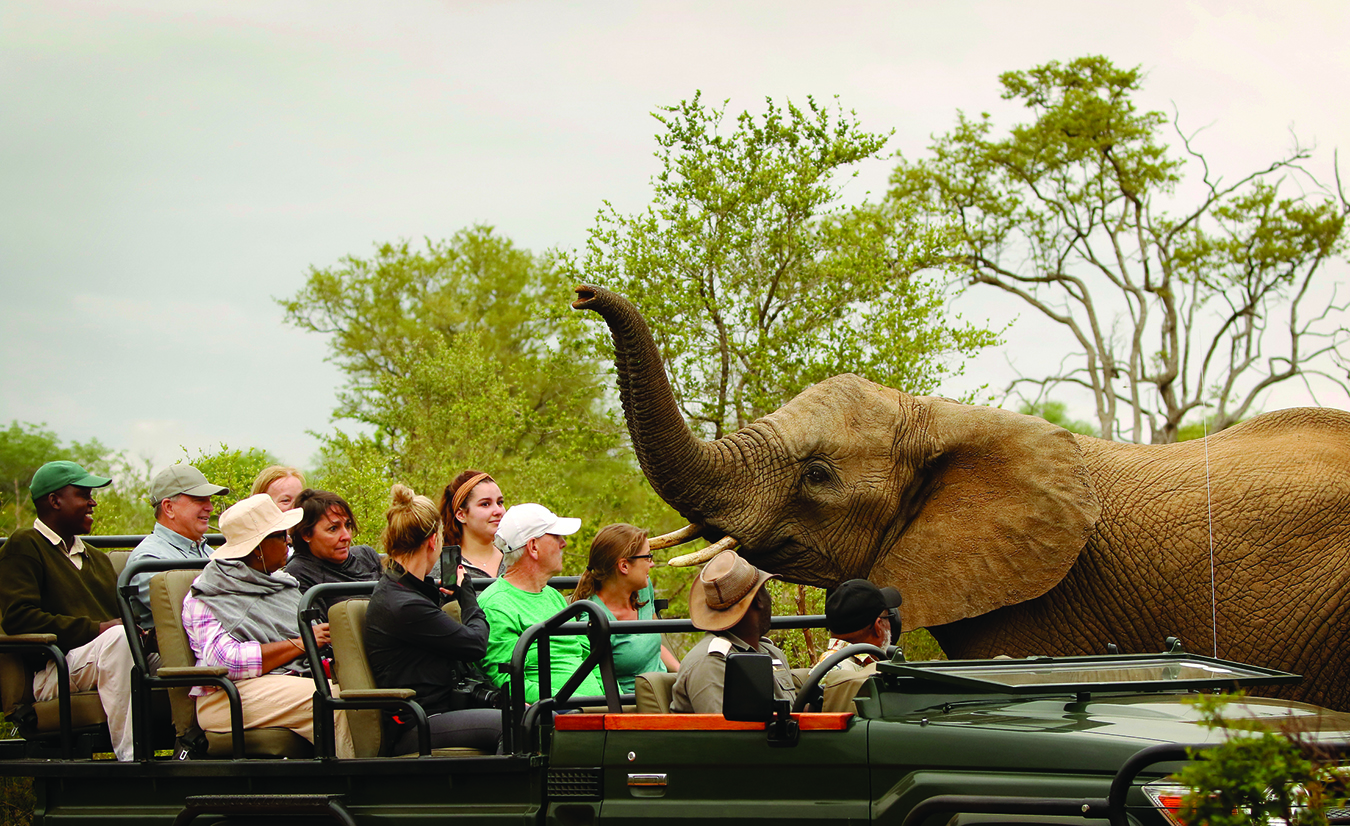
Lions, Hippos & Zebras, Oh My! Africa Safari ✿ 14 days | ages 10–17 Scenes straight from “The Lion King” unfold in Botswana, Zambia and South Africa. Among the highlights: Make a bead bracelet, get up-close with elephants and learn basic skills to survive in the bush. (Program 14302)
Rainforest Explorers: The Best of Panama ✿ 10 days | ages 9–17 Keep your eyes peeled for sloths, iguanas, monkeys and other amazing animals in a rainforest. Travel via motorized dugout canoe to the village of an indigenous tribe to learn firsthand about their way of life. (Program 23614)
Hike, Bike & Snorkel the Galapagos Islands ✿ 10 days | ages 8–15 This archipelago boasts 13 active volcanoes, 400 species of fish and the world’s only swimming lizards. Snap photos of all manner of wildlife as you hike, bike, snorkel, kayak and paddleboard in these beautiful islands. (Program 21986)
Kids in Paris: The City of Light ✿ 9 days | ages 9–13 Explore icons, including the Louvre, Notre Dame and the Eiffel Tower. You’ll also make chocolate, cruise the Seine, have your portrait drawn by a Montmartre artist and parle un peu francais at dinner with a local family. (Program 21308)
BECOME A ROAD SCHOLAR
Trip Lengths & Price Ranges Trips in 2025 range from four days to four months; per-person prices from $799 to $95,999. All programs include experienced escorts, accommodations, most meals, activities, lectures, performances, field trips, tips, taxes and round-the-clock emergency assistance. Participants will enjoy unique, behind-the-scenes experiences not found on a commercial tour or be able to arrange on their own. Visit roadscholar.org for details.
Scholarships Road Scholar awards scholarships year-round to eligible lifelong learners who wouldn’t otherwise have the financial means to enroll (roadscholar.org/financialaid).Applicants must be 50 or older, live in the US, meet the financial requirements, not have participated in a Road Scholar program in the last two years and not be currently enrolled in one.
Caregiver Grants Road Scholar offers respite for adults who are caregivers for ill or disabled relatives. In addition to the requirements mentioned above, you can apply for a caregiver grant if:
You are the primary unpaid caregiver providing daily care and support for an ill or disabled family member (i.e., spouse, parent, adult child, partner or sibling).
Your loved one may be in an adult day care, memory care, a nursing home or comparable or related facility.
Adventures Online Scholarships Scholarships are also available for three- to five-day Adventures Online programming, which provide learning experiences from the comfort of participants’ home. All you need is a computer and reliable internet connection.
Experts in their fields present 45- to 60-minute Power Point lectures via Zoom followed by lively discussions. Virtual field trips and live musical performances are part of some offerings. Online programs qualify for scholarships. Awardees pay $50 and Road Scholar covers the rest, so scholarships range from $299 to $449. Visit road scholar .org/about/financial-assistance.
PEAR Scholarships The Professional Educator’s Assistance and Recognition (PEAR) Scholarship is geared specifically for active and retired educators who aren’t able to participate in a Road Scholar program because of financial concerns. Visit road scholar .org/about/financial-assistance/aid-for-educators.
More Economical Experiences Every month, one-hour Zoom lectures provide armchair travelers with additional learning opportunities. Some presentations are free; most cost just $25.
On Dec. 12 at 9 a.m. Hawai‘i time, Dr. Spencer Jones, senior lecturer in armed forces and war studies at the University of Wolverhampton in England, will discuss Day of Infamy: The Attack on Pearl Harbor & Its Enduring Legacy. There is no charge for Jones’ talk about that tragic event, which catapulted the United States into World War II. Enrollees will receive access to a video of it, which they can watch within two weeks of the live lecture. Visit roadscholar.org/collections/online-lectures.
Road Scholar, originally founded as Elderhostel in the 1970s, offers educational travel programs for adults aged 50 and older, with a growing focus on multigenerational trips for grandparents and grandchildren. These programs foster bonding through shared learning experiences. Jane Austgen and her granddaughter Maya participated in the “Spy Kids” program, exploring Washington, D.C., and deepening…
In our island community, where the bonds of family and tradition run deep, facing a long-term care event is one of the most challenging experiences we may encounter.
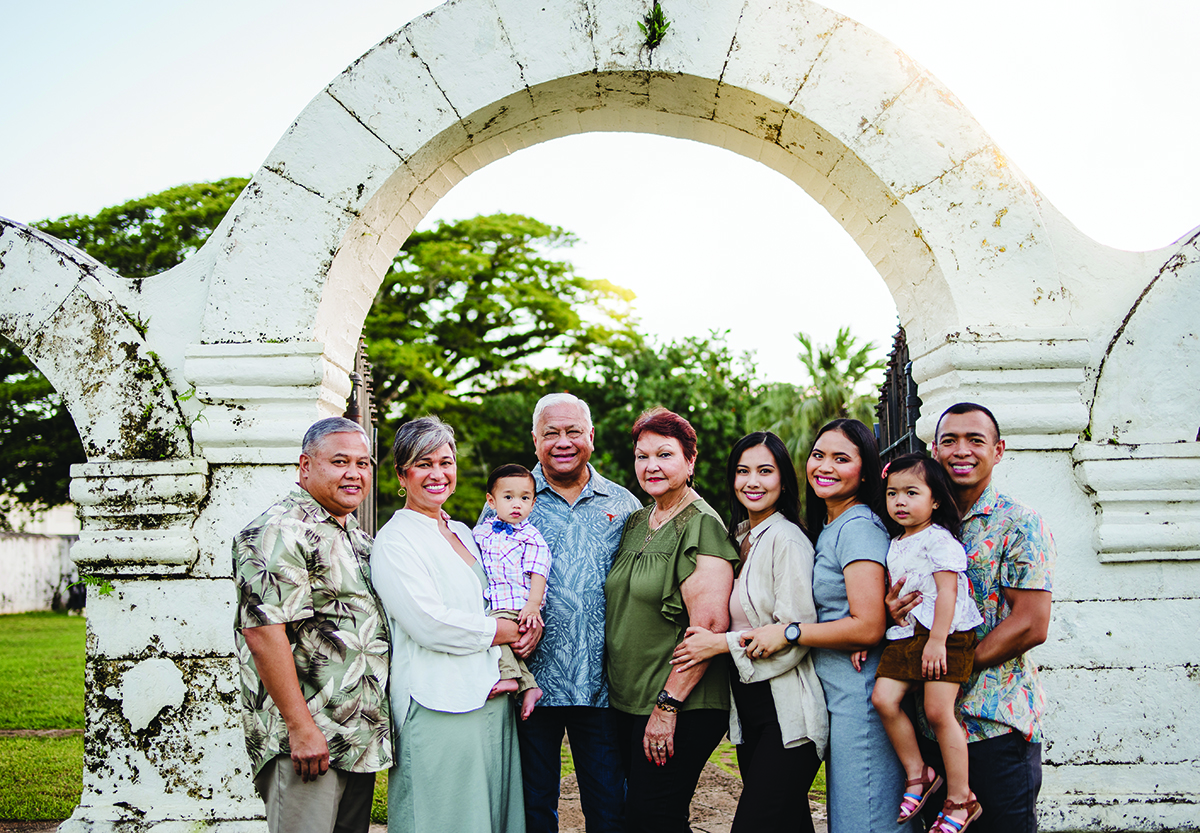
Long-term care is important to the Ignacio-Yanger family.
Such events can place emotional, physical and financial strains on even the strongest ‘ohana. Without a clear and thoughtful plan, families often find themselves making difficult decisions during a crisis, leading to stress, burnout and potential conflicts among loved ones.
As a caregiver myself, I’ve experienced the profound impact this role can have. In our close-knit community, caregiving is seen as either a blessing or a curse, depending on one’s perspective and level of preparedness. I’ve chosen to view it as a blessing, embracing the opportunity to care for my loved ones as an honor. This positive outlook is possible because of a well-thought-out plan that relieves pressure and ensures everyone knows their role in supporting our beloved kūpuna.
A well-crafted long-term care plan safeguards the future of those we care for and preserves the unity and well-being of the entire ‘ohana. It provides peace of mind, knowing that decisions have been made in advance, reducing the risk of family disputes and allowing us to focus on what truly matters — caring for one another with aloha.
In our island community, where the bonds of family and tradition run deep, facing a long-term care event is one of the most challenging experiences we may encounter. Such events can place emotional, physical and financial strains on even the strongest ‘ohana. Without a clear and thoughtful plan, families often find themselves making difficult decisions…
Your estate plan is the set of documents that you use to say who gets your stuff when you go. It is also where you can say who doesn’t get any of your stuff — with some important exceptions.
In most states, you can disinherit everybody but your spouse. You can even disinherit the IRS. Louisiana requires you to leave something to each of your children. In every other state, you can cut out the kids, but not your spouse. Spouses traditionally had ongoing support rights expressed in a variety of ways.
The bottom line is that if you want to leave nothing to your spouse, you will need to have him or her agree to that in a prenuptial agreement before the wedding. Of course, following up a marriage proposal with a request that your beloved sign a “prenup” is not the most romantic move. It has even been known to derail wedding plans. Some states also allow married couples to use postnuptial (after marriage) agreements to accomplish the same results as a prenup. Suggesting to your spouse that you enter into a postnup may not lead to good results, either, but at least you know that the option may be out there.
So to exclude someone (other than your spouse), just say that so-and–so is being omitted deliberately. But use the person’s name — don’t call the person a “so-and-so” unless you want to invite a libel lawsuit against your estate.
Your estate plan is the set of documents that you use to say who gets your stuff when you go. It is also where you can say who doesn’t get any of your stuff — with some important exceptions. In most states, you can disinherit everybody but your spouse. You can even disinherit the IRS.…
One of the great benefits of retirement is having the freedom to pursue new interests and hobbies at your leisure. For many, travel is at the top of their retirement bucket list. The key question is how to make sure your retirement savings can keep up with your travel ambitions. The following considerations can help you determine your answer:
◆ Make travel a part of your retirement budget.Without the funds to pursue travel, you likely won’t get too far. As you plan for your living expenses, include travel as a line item in your retirement budget. Identify a portion of your monthly income to cover travel expenses before you hit the road.
◆ Consider travel timing. Most retirees plan their biggest travel excursions in the early years of retirement, when health challenges may be fewer and they have more stamina. Therefore, your travel budget may represent a larger portion of your overall expenses in the first years of retirement. If this aligns with your travel vision, factor it into your retirement budgeting strategy.
◆ Determine your travel style. To come up with a reasonable cost estimate, identify the types of traveling you plan to do. Are you more interested in short trips to nearby locations, mostly traveling by car? Do you plan to explore the country in an RV? Are you looking to visit foreign destinations on a regular basis? Your travel goals will tell you a lot about how much you are likely to spend, which should be reflected in your retirement plan.
◆ Find ways to cut costs. You’re likely to face “sticker shock” when you travel. Expenses such as food (usually eating out), lodging and transportation can add up quickly. If you plan to stay in one place for an extended period, look into renting a home or apartment rather than “hoteling” it. Try to eat like the locals by buying food at grocery stores and markets. Take the time to look for flight deals or make your automobile travel routes as efficient as possible. One of the perks of being retired is that you may have more flexibility than working people to lock in deals by traveling off-season or at other unpopular times.
◆ Don’t overlook insurance needs. Travel insurance may be appropriate in case you get sick or lose luggage on a trip. Keep in mind that Medicare is not accepted outside the US, and even within the US, you want to be sure your health insurance has you covered in states outside your own.
◆ Look for discounts and rewards. Seniors have a unique advantage in that costs for some activities are reduced. Even though the discounts may be modest, every dollar helps stretch your travel budget. Check to see what discounted options are available through clubs like AAA or AARP. Also pursue smart credit card strategies that help you earn rewards like free travel or cash back on your purchases.
If travel is in your plans when you leave the workforce, it’s key to go beyond dreaming and do some significant preparation in advance. Use the time you have now to set specific goals and build savings that will help make your dreams a reality.
One of the great benefits of retirement is having the freedom to pursue new interests and hobbies at your leisure. For many, travel is at the top of their retirement bucket list. The key question is how to make sure your retirement savings can keep up with your travel ambitions. The following considerations can help…
Maui resident Susan Baylosis and her mother both use Medicare Part D insurance to pay for their medicines.
So far, their co-payments have been manageable. They haven’t had to take expensive brand-name prescription drugs.
But Susan, an advocate for caregivers, knows that a catastrophic illness like cancer could be financially devastating even with insurance.
“The everyday person doesn’t want to think about it,” she says. “If I had to pay for expensive medications, I would have to find ways to cut down on other expenses, like food or gas. The average person doesn’t make that kind of money.”
Starting next year, a new law will cap Medicare prescription drug plan out-of-pocket expenses at $2,000. Hawai‘i’s 167,422 Part D Medicare beneficiaries will have the peace of mind of knowing that they won’t be forced to choose between paying for food and medicine or not taking medicines because of the high cost of prescription drugs.
A recent AARP study estimates that 3.2 million older Americans, including more than one in 10 Hawai‘i kūpuna with Medicare drug plans, will see lower drug costs next year because of the cap. The average savings next year will be roughly $1,500 for kūpuna who hit the drug cap.
By 2029, about 4.1 million people, roughly 9.6% of Medicare beneficiaries, will see savings. In Hawai’i the savings will help an estimated 24,437 kūpuna, or 13% of those with Part D drug plans who do not qualify for subsidies.
Prior to the passing of this law, Part D plans did not have a limit on out-of-pocket spending.
“AARP was instrumental in Congress passing the prescription drug law of 2022 to lower prices and out-of-pocket costs for Medicare enrollees,” AARP CEO Jo Ann Jenkins says. “As we approach January 2025, we want every senior in America to know that, thanks to the new annual cap which limits their out-of-pocket costs, they will have more money to invest in their families, spend on their broader health needs or simply save to achieve greater financial stability.”
Since Medicare Open Enrollment is in effect until Dec. 7, Medicare beneficiaries should review their Part D drug plans for changes resulting from the new law and shop around.
The Hawai‘i State Health Insurance Assistance Program (SHIP) is a free service that can help answer questions about Medicare enrollment. Go to hawaiiship.org, or call the Hawai‘i SHIP Helpline at 808-586-7299 or toll-free at 1-888-875-9229.
AARP HAWAII (nonprofit) 1001 Bishop St., #625, Honolulu, HI 96813 808-545-6000 | hiaarp@aarp.org | aarp.org/hi AARP is a non-partisan organization dedicated to empowering Americans 50 and older to choose how they live as they age.
Maui resident Susan Baylosis and her mother both use Medicare Part D insurance to pay for their medicines. So far, their co-payments have been manageable. They haven’t had to take expensive brand-name prescription drugs. But Susan, an advocate for caregivers, knows that a catastrophic illness like cancer could be financially devastating even with insurance. “The…
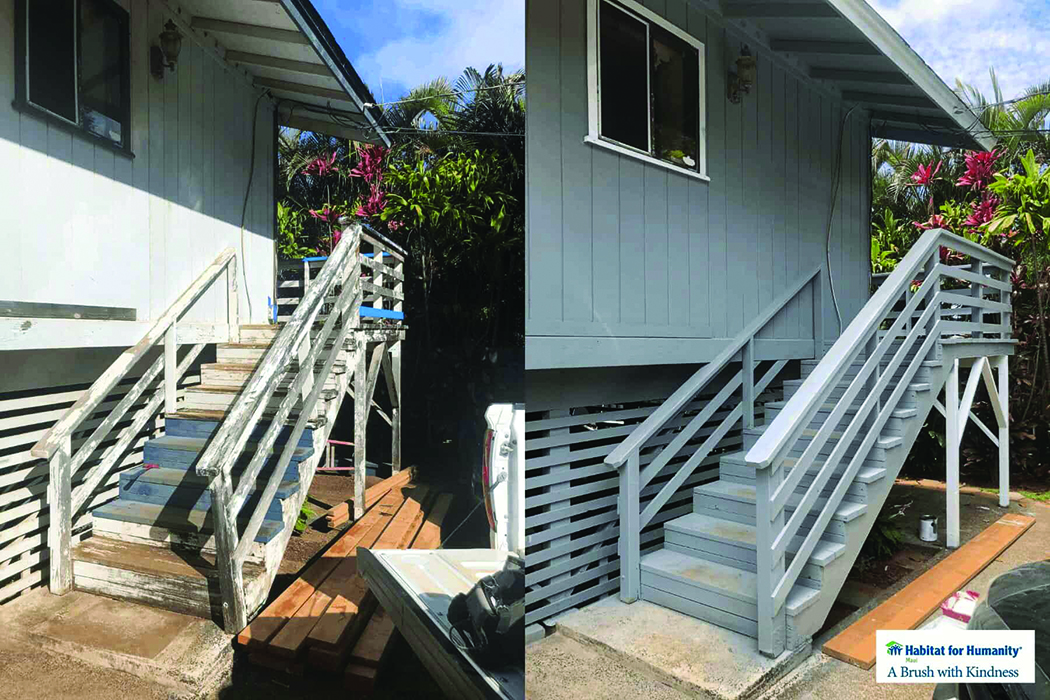
Aging is a natural part of life, but it often comes with challenges, especially for our kūpuna who wish to remain in their own homes. Maintaining a safe and comfortable living environment can become increasingly difficult with age, but programs like “A Brush with Kindness” are stepping in to provide invaluable support.
This Habitat for Humanity Maui initiative focuses on home preservation and aims to assist low-income homeowners with essential home repairs, maintenance and improvements at no cost.
The program offers more than just home repair. It’s a lifeline for many kūpuna who might otherwise struggle to remain in their homes. By addressing critical home maintenance needs, the program helps prevent accidents, reduce the risk of illness and enhance overall well-being. Additionally, having a safe and well-maintained home means more than just physical security. It’s about dignity, independence and peace of mind, ensuring they can age in a safe and supportive environment.
As we look toward the future, it’s essential to continue supporting such initiatives. We need to remember the profound impact that a helping hand can have on all of our lives — but especially the lives of our beloved kūpuna. For them, your impact is priceless.
Aging is a natural part of life, but it often comes with challenges, especially for our kūpuna who wish to remain in their own homes. Maintaining a safe and comfortable living environment can become increasingly difficult with age, but programs like “A Brush with Kindness” are stepping in to provide invaluable support. This Habitat for…
The COVID-19 pandemic wreaked havoc in countless ways. Businesses closed, including services for kūpuna and their family caregivers. Unfortunately, many of these businesses did not reopen as the rest of the state began recovery from the pandemic and began to rebuild.
Adult day care services are important to kūpuna who need supervision and socialization during the day while their caregivers work or carry out other personal chores.
Due to the pandemic, Kāne‘ohe had been without these services for over three years.
As the need in this area became apparent, Hale Hau‘oli Hawai‘i, a nonprofit organization with two established adult day care centers in ‘Aiea, began looking for an appropriate location in the Kāne‘ohe area for an additional adult day care center.
After many months of delays, Hale Hau‘oli Hawai‘i was finally able to open a new center in the Windward City Shopping Center, 45-480 Kāne‘ohe Bay Drive, on Aug. 1, 2024.
The interest in this adult day care center location has been overwhelming, showing the dire need for this type of service in this underserved community. Hale Hau‘oli Hawai‘i is honored and excited to bring this assistance to the windward side of O‘ahu.
The COVID-19 pandemic wreaked havoc in countless ways. Businesses closed, including services for kūpuna and their family caregivers. Unfortunately, many of these businesses did not reopen as the rest of the state began recovery from the pandemic and began to rebuild. Adult day care services are important to kūpuna who need supervision and socialization during…
Since 1894, The Salvation Army, Hawaiian and Pacific Islands Division, has focused its efforts on providing support, a sense of community and, most importantly, hope to those in need. For the past 130 years, their hallmark programs, such as the Red Kettle campaign and Angel Tree Giving, have played a pivotal role in ensuring that the holiday spirit reaches everyone, especially those facing financial or personal hardships.
The Red Kettle campaign, a familiar sight during the holiday season, involves volunteers — from keiki to kūpuna — stationed outside stores, ringing bells and collecting donations. This tradition, dating back over a century, raises critical funds that support The Salvation Army’s numerous programs — emergency assistance, at-risk youth, food insecurity, substance use disorders, houselessness and more.
Senior volunteers bring their time and energy, and a deep commitment to serving the community. Many have been involved for years, finding purpose and connection through their work. The Salvation Army welcomes individuals of all ages to join this effort, offering an opportunity to give back during the holidays while impacting families year-round.
“I love The Salvation Army at Christmastime because it gives me a joy to help people,” said Matthew Kailihou, a Red Kettle veteran who has been ringing for nearly five decades. “I would encourage all of you volunteers to come out so we can help people who need it at this time.”
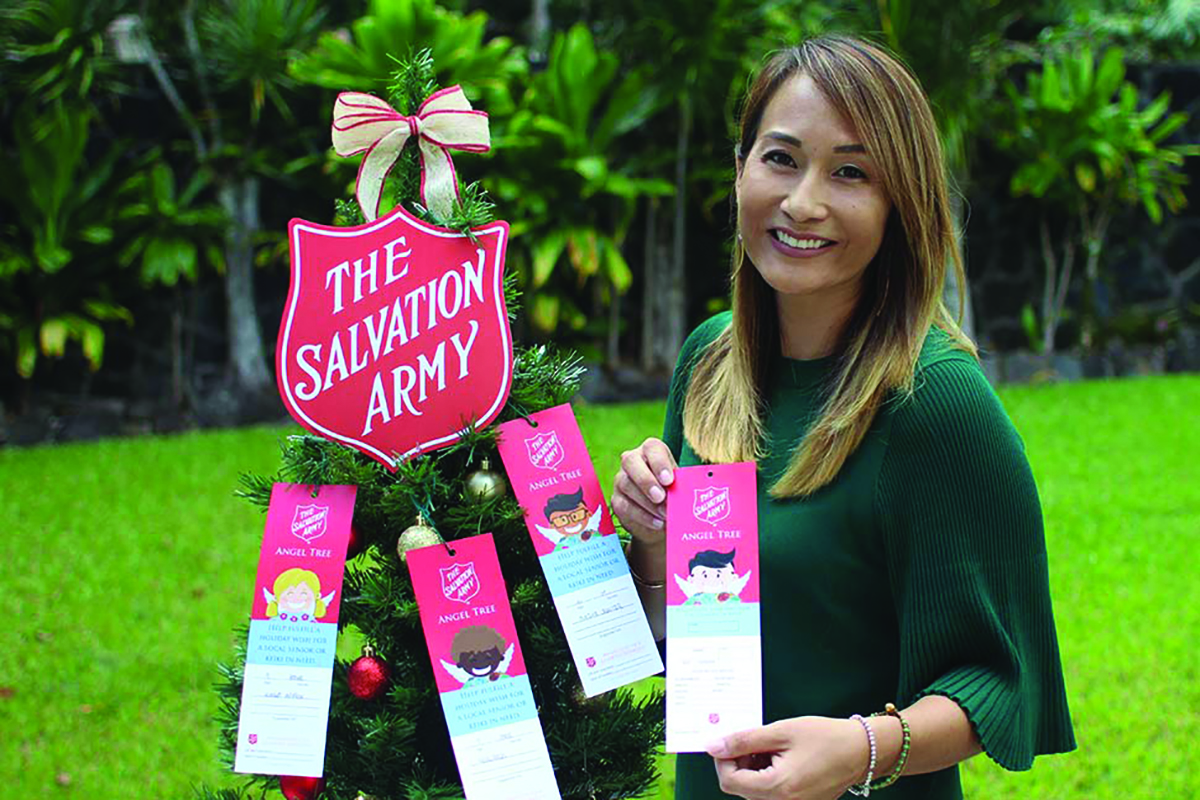
The Angel Tree Giving program is another cornerstone of The Salvation Army’s holiday initiatives. This program brings joy to children and families who may not receive gifts during the holiday season for various reasons. Community members select tags from Angel Trees, each representing a specific child or family, and purchase items to fulfill their wish lists. The impact of this program goes beyond material gifts; it shows families that they are not alone — even during the most challenging times. Volunteers play a crucial role in organizing and distributing these gifts, making sure that every child’s wish is granted.
Beyond these holiday-specific programs, The Salvation Army is deeply committed to supporting the community throughout the entire year.
If disaster strikes in the community or at home, The Salvation Army is one of the first organizations to respond and often one of the last to leave. Through specialized training, the organization is able to make a difference when it matters most.
“The truth is, it takes an army to do the work that we do every single day,” says The Salvation Army Divisional Director of Development Charmaine Hauanio-Kuewa. “Because of our donors, staff and volunteers, we have the opportunity to ensure that anybody who may be without food, a house or parents will never be without hope.”
The Kroc Center Hawaii in Ewa Beach is one example of a Salvation Army owned-and-operated facility where people of all ages have opportunities to learn, grow, acquire new skills and build confidence. As the state’s largest community center of its kind, the Kroc Center offers a wide range of programs designed to foster connection and support development.
The Mixed Plate program, for example, brings people together over shared meals and activities. This initiative creates a friendly environment where everyone is welcome and encouraged to connect, share stories and build lasting relationships.
The Salvation Army’s work in Hawai‘i and across the greater Pacific is a testament to the power of collective effort and the spirit of giving and aloha. Its programs bring people together and provide much-needed assistance to some of the most vulnerable populations within our community.
Volunteer opportunities: You can be an important part of this impactful work by volunteering, donating or simply spreading the word.
Every contribution — no matter how big or small — helps to continue The Salvation Army’s continuing legacy of aloha in action.
For more information on how to support The Salvation Army, Hawaiian and Pacific Islands Division, please see the donation and volunteer contact information below.
Since 1894, The Salvation Army, Hawaiian and Pacific Islands Division, has focused its efforts on providing support, a sense of community and, most importantly, hope to those in need. For the past 130 years, their hallmark programs, such as the Red Kettle campaign and Angel Tree Giving, have played a pivotal role in ensuring that…
Case management plays a critical role by providing comprehensive support and assistance to caregivers and care recipients alike.
Case management in caregiving involves coordinating services and resources to meet care recipients’ unique needs. It encompasses the assessment, planning, implementation, coordination, and monitoring of options and services to meet their health and human service needs. From organizing medical appointments, managing medications or ensuring the overall well-being of the recipient, case management aims to streamline the process and alleviate the burden on caregivers.
One of the key aspects of case management in caregiving is providing personalized support tailored to the individual’s specific needs. This involves assessments to identify the care recipient’s physical, emotional and social needs, as well as evaluating the caregiver’s capabilities and challenges. By gaining a comprehensive understanding of the care dynamic, case managers can develop appropriate, personalized care plans.
Case managers also play a vital role in connecting caregivers and care recipients with relevant support services and resources. This may include assistance with accessing home care services, coordinating with healthcare providers, or providing information on financial and legal support options. By serving as a central point of contact and information, case managers can help caregivers navigate the complex network of resources, ultimately enhancing quality of care.
Case management also involves ongoing monitoring and reassessment of the care recipient’s needs and the caregiver’s well-being. This proactive approach allows case managers to identify potential challenges or changes in the care dynamic and make necessary adjustments to the care plan for appropriate and effective support.
For caregivers, access to professional case management services can offer invaluable support and relief, allowing them to focus on providing quality care without feeling overwhelmed or isolated. Through regular communication and collaboration, case managers can provide emotional support, guidance and advocacy to empower caregivers in their role.
Case management serves as a vital tool in promoting a positive caregiving experience for all parties involved. By addressing their unique needs and facilitating access to essential services and resources, case managers can enhance the well-being of both the caregiver and care recipient.
ALOHA COMPLEX CARE LLC 808-269-5463 | alohacomplexcare@outlook.com alohacomplexcare.com Aloha Complex Care LLC is a case-management and care company, networking island wide, servicing all levels and stages of care, from the initial stages and on through hospice and bereavement.
Case management plays a critical role by providing comprehensive support and assistance to caregivers and care recipients alike. Case management in caregiving involves coordinating services and resources to meet care recipients’ unique needs. It encompasses the assessment, planning, implementation, coordination, and monitoring of options and services to meet their health and human service needs. From…
Staying physically active as you age is crucial for maintaining overall health and well-being. Regular activity can help improve mobility, sleep and mental health, while reducing the risk of falls and injuries.
Here are some beneficial activities:
Walking together: Simple and effective, walking around safely with a friend inside or out can boost cardiovascular health.
Stretching first: Gentle stretching exercises before you start moving can improve flexibility and reduce muscle stiffness throughout the day.
Taking breaks: Where you rest is just as important as when you rest. Plan on taking short breaks where you can get in and out of a seated position easily.
Keep moving: Enjoy music by singing, clapping or even shuffling your feet while seated to get your heart pumping.
While these activities are beneficial, a fully licensed senior care community offers a safe and supportive environment in which kūpuna can stay safe and active. Senior care communities may offer structured programs, professional supervision and social opportunities, ensuring that seniors can enjoy a level of physical activity that can help them maintain their independence.
Staying physically active as you age is crucial for maintaining overall health and well-being. Regular activity can help improve mobility, sleep and mental health, while reducing the risk of falls and injuries. Here are some beneficial activities: Walking together: Simple and effective, walking around safely with a friend inside or out can boost cardiovascular health.…