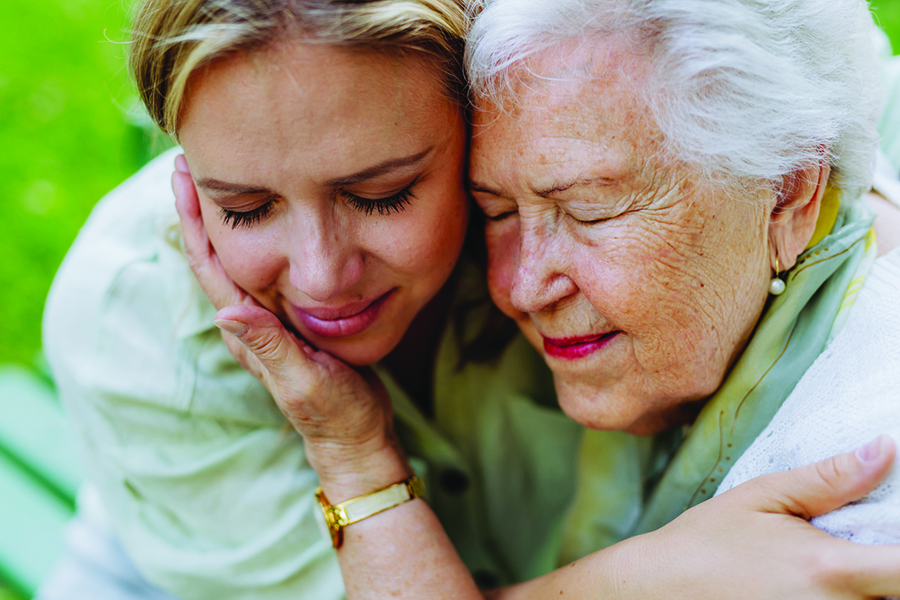
Caring for a family member is a deeply rewarding experience, but it can also bring challenges that may feel overwhelming. Even the most devoted caregivers might reach a point where seeking professional guidance is necessary to ensure their loved one receives the best care possible.
The first sign of caregiver burnout is physical or emotional exhaustion. If caregiving is starting to take a toll on your own health, it’s crucial to recognize that your own well-being is just as important. Another indicator is when the needs of your loved one surpass your ability to manage them safely, such as with advanced medical conditions, frequent falls or increasing confusion.
Additionally, if caregiving starts to impact your ability to balance other responsibilities — work, family or personal time — it might be time to explore outside help. Professional caregivers and experienced nurse advisors can provide expertise in managing complex medical conditions and ensure that your loved one receives the appropriate level of care, while giving you peace of mind.
Remember, asking for help is not a sign of failure, but a step toward ensuring the best care for your loved one. Knowing when to seek professional advice can make a significant difference in both your life and theirs.
Caring for a family member is a deeply rewarding experience, but it can also bring challenges that may feel overwhelming. Even the most devoted caregivers might reach a point where seeking professional guidance is necessary to ensure their loved one receives the best care possible. The first sign of caregiver burnout is physical or emotional…
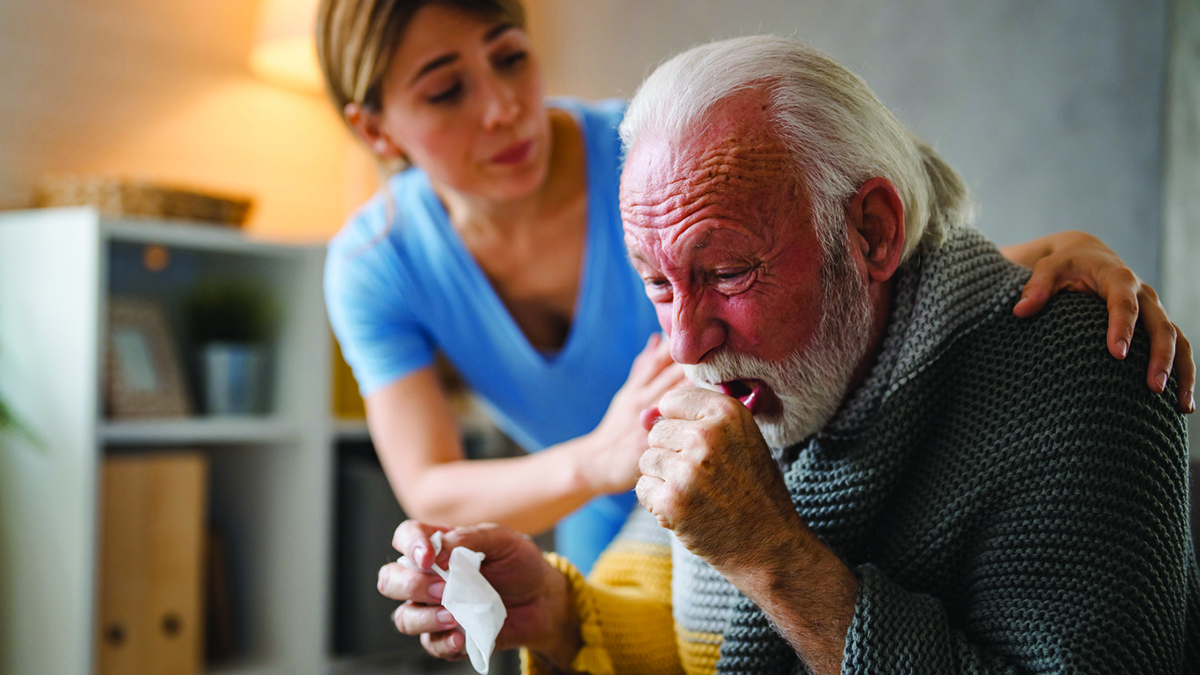
Respiratory Syncytial Virus (RSV) is a widespread infection that can affect anyone. But the virus poses a heightened threat to infants, young children, seniors and those with compromised immune systems. The virus tends to circulate more frequently during fall and winter. Gaining awareness of the virus’ symptoms, risk factors and available vaccines can help safeguard vulnerable individuals.
What is RSV?
RSV is a highly infectious virus that impacts the respiratory system, particularly the lungs and airways. While most cases result in mild symptoms resembling a cold, some individuals may develop more severe respiratory illnesses, such as bronchiolitis and pneumonia. These more serious cases often occur in infants and the elderly. The virus spreads through droplets when an infected person coughs or sneezes and can also be contracted by touching contaminated surfaces. Due to its ease of transmission, it frequently spreads in schools, daycare facilities and nursing homes.
Symptoms of RSV
Symptoms of RSV usually begin to manifest within four to six days after exposure. The severity of symptoms can vary, influenced by factors such as age and pre-existing health conditions. Common signs include runny nose, persistent coughing, sneezing, fever, wheezing, loss of appetite, and in severe cases, difficulty breathing.
Older individuals with chronic lung or heart conditions may experience more significant respiratory issues, such as pneumonia, which may necessitate hospitalization.
High-Risk Groups ■ Infants, particularly those born prematurely or with health complications. ■ Children under the age of 2 who have chronic lung or congenital heart disease. ■ Adults over 65, especially those with weakened immune systems or chronic respiratory conditions like COPD or asthma. ■ Immunocompromised individuals of all ages.
Preventive Measures and Vaccines
For many years, RSV prevention was limited, as no specific vaccines existed. However, recent medical advancements have led to vaccines and treatments that provide greater protection for high-risk groups.
Vaccination for Older Adults
In 2023, the FDA approved a vaccine known as Arexvy, designed for adults aged 60 and over. This vaccine aims to reduce the risk of severe illness caused by RSV, particularly for seniors who are at an elevated risk for hospitalization. The vaccine is administered in a single dose to help protect against serious respiratory complications — ideally, before RSV season begins.
RSV, though common, can lead to serious health risks for certain individuals. Recognizing its symptoms and the current availability of new vaccines offer hope in reducing severe cases, particularly among those most at risk. With proper preventive measures, we can significantly reduce both the spread and the impact of RSV.
Respiratory Syncytial Virus (RSV) is a widespread infection that can affect anyone. But the virus poses a heightened threat to infants, young children, seniors and those with compromised immune systems. The virus tends to circulate more frequently during fall and winter. Gaining awareness of the virus’ symptoms, risk factors and available vaccines can help safeguard…
Incorporating fitness into your schedule doesn’t have to feel like a chore or an obligation you struggle to find time for. Adding physical activity — focusing on strength, balance and flexibility — can easily fit into your day.
Start Your Day with Gentle Movement
Before getting out of bed, awaken your muscles and joints. Begin with deep breathing and heel slides. Slide one leg up and down on the bed, lengthening and bending it. After a few reps, hug your knee to your chest and hold. Straighten your leg and repeat these motions with the other leg. With the soles of your feet touching, let your knees fall open like a butterfly to stretch your hips and thighs. A low trunk rotation is a good stretch for increasing your back’s range of motion. Allow your knees to fall to one side of your body at a time and take a breath.
Incorporate More Movement
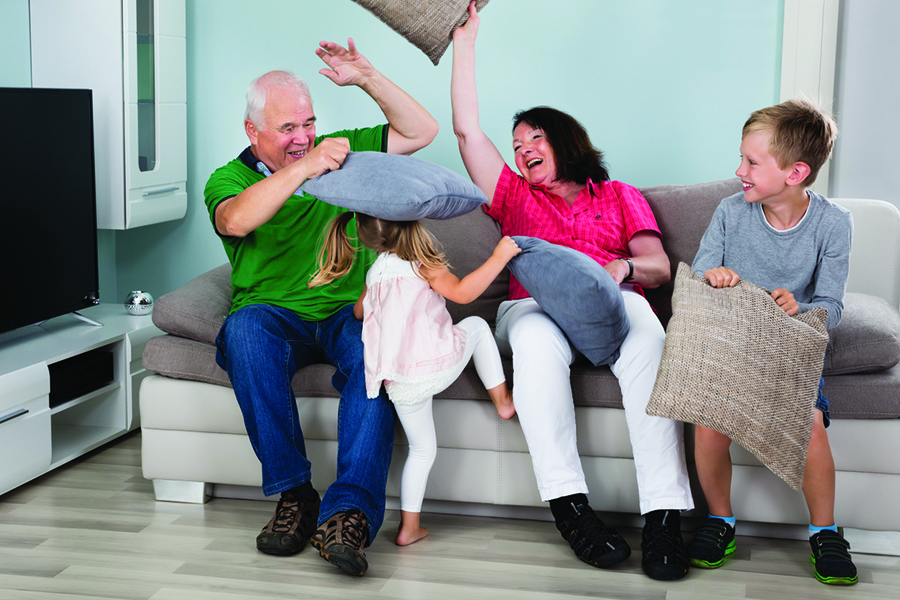
Throughout your day, add simple exercises. For example, try two to three sit-to-stands before you walk to your task. While enjoying your favorite show, do leg kicks during commercials or move pillows from one side of the sofa to the other to increase your torso’s range of motion. Daily outdoor walks are great, but consider adding a few laps around the grocery store or doctor’s office to boost your step count. When your grandkids visit, engage them in a game of catch using a ball or socks. Sit to catch and stand to throw. Get a small basketball hoop that attaches to a door and shoot while seated or standing, or play a game of HORSE. If bowling is more your style, mini sets can be used on the floor or tabletop. All of these offer fun, total body workouts that allow you to focus on balance, strength and flexibility.
End With a Breath and a Stretch
At the end of your day take a moment to focus on breathing and posture. Seated or lying, lengthen your neck, and relax your shoulders as you inhale through your nose and exhale through your mouth. Imagine sniffing flowers and blowing out candles. Initially, you may feel muscle soreness from exercise, but remember that soreness doesn’t always indicate something is wrong. The right amount of work can increase muscle strength and flexibility. Gradually incorporating more activity as your body allows is an effective way to cultivate a more active lifestyle, helping you stay functionally fit and engaged in your daily life.
Incorporating fitness into your schedule doesn’t have to feel like a chore or an obligation you struggle to find time for. Adding physical activity — focusing on strength, balance and flexibility — can easily fit into your day. Start Your Day with Gentle Movement Before getting out of bed, awaken your muscles and joints. Begin…
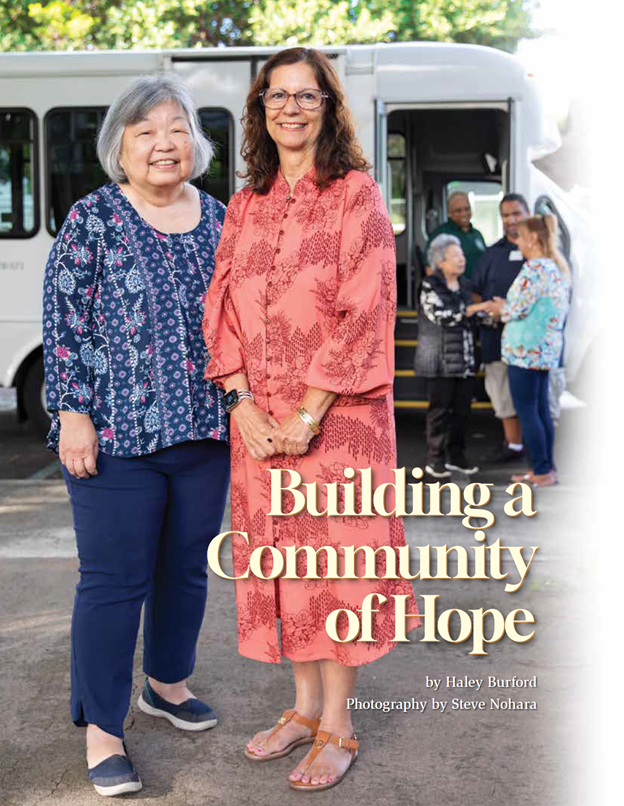
Catholic Charities Hawai‘i (CCH) may not be new — in fact, the nonprofit has been serving people of all faiths and cultures in Hawai‘i since 1947. But there are many aspects of the organization and services available that go well beyond what one might associate with its name. From transportation to veterans’ services, housing and more, CCH provides much-needed programs statewide as part of the largest private network of social service organizations in the US, serving around 40,000 people every year. Because of the wide breadth of services CCH provides, we spoke with some of the principal staff members who make a difference in our communities.
Strengthening Families, Then and Now
After World War II, communities in Hawai‘i were devastated and families were broken apart. In 1947, Sister Victoria Frances Lamour of the Maryknoll Sisters came from New York with several other sisters trained in social work and founded CCH. Their initial work was strengthening and reuniting families, and placing children who were separated from their families following one of the largest and deadliest conflict in history.
“Over time, CCH continued to respond to community needs,” says President and CEO Tina Andrade, “and there are now over 50 different programs and services statewide, with about 335 team members.”
Because CCH serves people of all ages, their work is organized into four divisions: Family and Therapeutic Services Division which provides counseling and child welfare services; Youth Enrichment Services Division which provides behavioral services for youth; Housing and Referral Programs Division which provides housing and veteran services; and Community and Senior Services Division which provides community-based services for older adults and legal immigration services.
“Primarily, all of these deal with reunifying, strengthening and building familial bonds,” says Tina.
Tina herself has been involved with CCH for over 21 years. A graduate of Chaminade University, initially she worked as a director focusing on the agency’s mission and history. She also was a Catholic school teacher, helping youth stay grounded in their values and encouraging them to understand how their values relate to their life choices. “That’s been my work over a lifetime,” says Tina. “I like to describe my work as removing barriers, opening doors and creating conversations to help us reflect on our mission and values. That approach to work is always from a perspective of strengthening people.” Although a lot of Tina’s day-to-day tasks involve meetings and organizing schedules, “the value-centered approach brings people together with important conversations based on our values.”
Overseeing the Community and Senior Services Division is Diane Terada, whose time with CCH totals 30 years. She has been involved in aging programs for the duration of her professional career, with a license in social work and a diploma from the University of Hawai‘i. An example of CCH’s mission to serve people of all cultures and faith, Diane is one of the non-Catholics who works for CCH. “There are many of us who are not necessarily Catholic. And we do not, of course, only serve Catholic people. We believe in our mission to serve those in need.” Diane attests to the fact that what CCH seeks in potential team members is their ability to embody and support the mission to serve.
As Division Administrator, Diane manages the senior-specific programs which aim to help seniors remain independent in the community for as long as possible. Their community/senior services’ goal is to ensure people stay out of institutional settings whenever possible. Emphasizing the importance of advocacy for their clients, the various staff who represent CCH’s services in all four divisions have one common goal: to carry out their work with dignity, compassion, social justice and a commitment to excellence.
SENIOR SERVICES
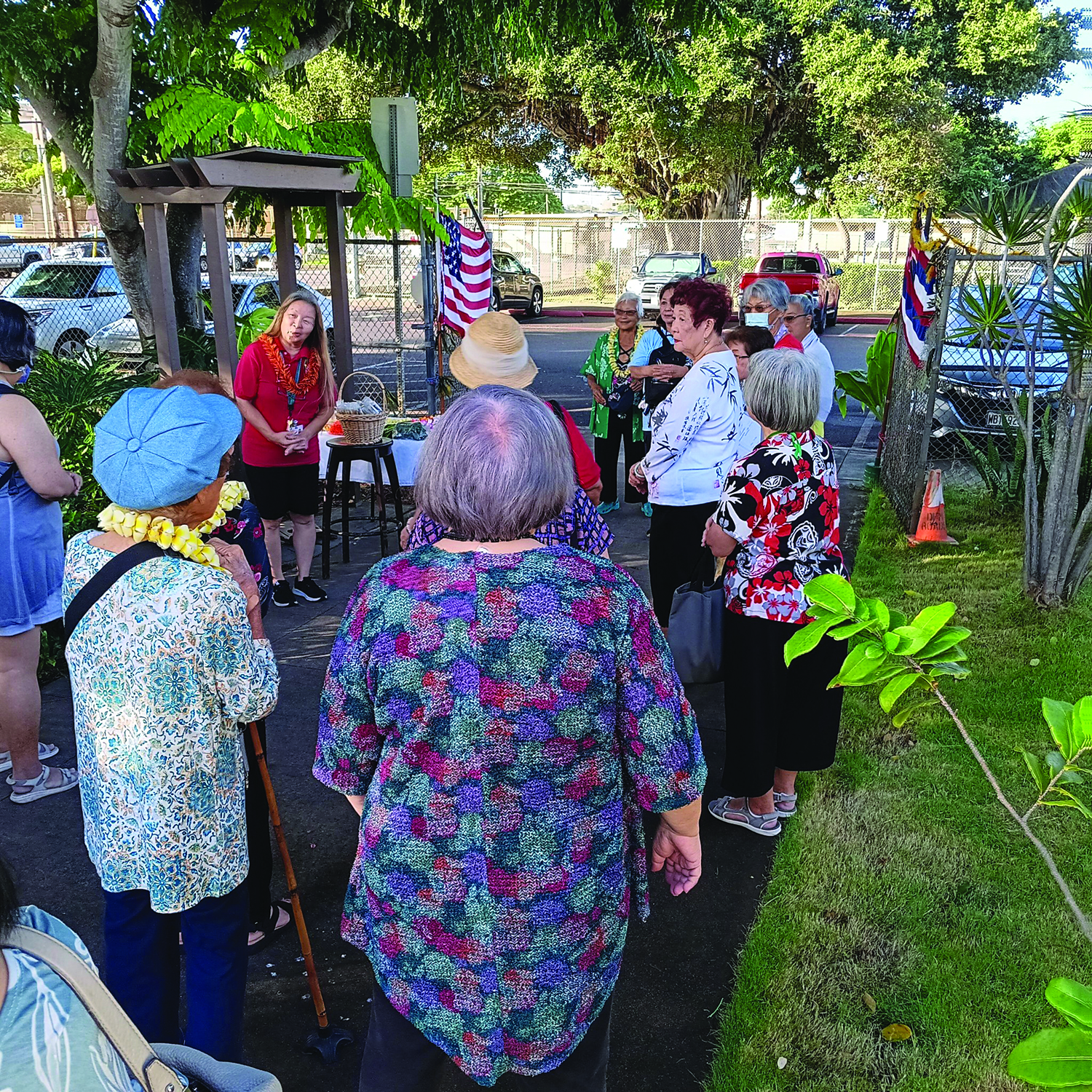
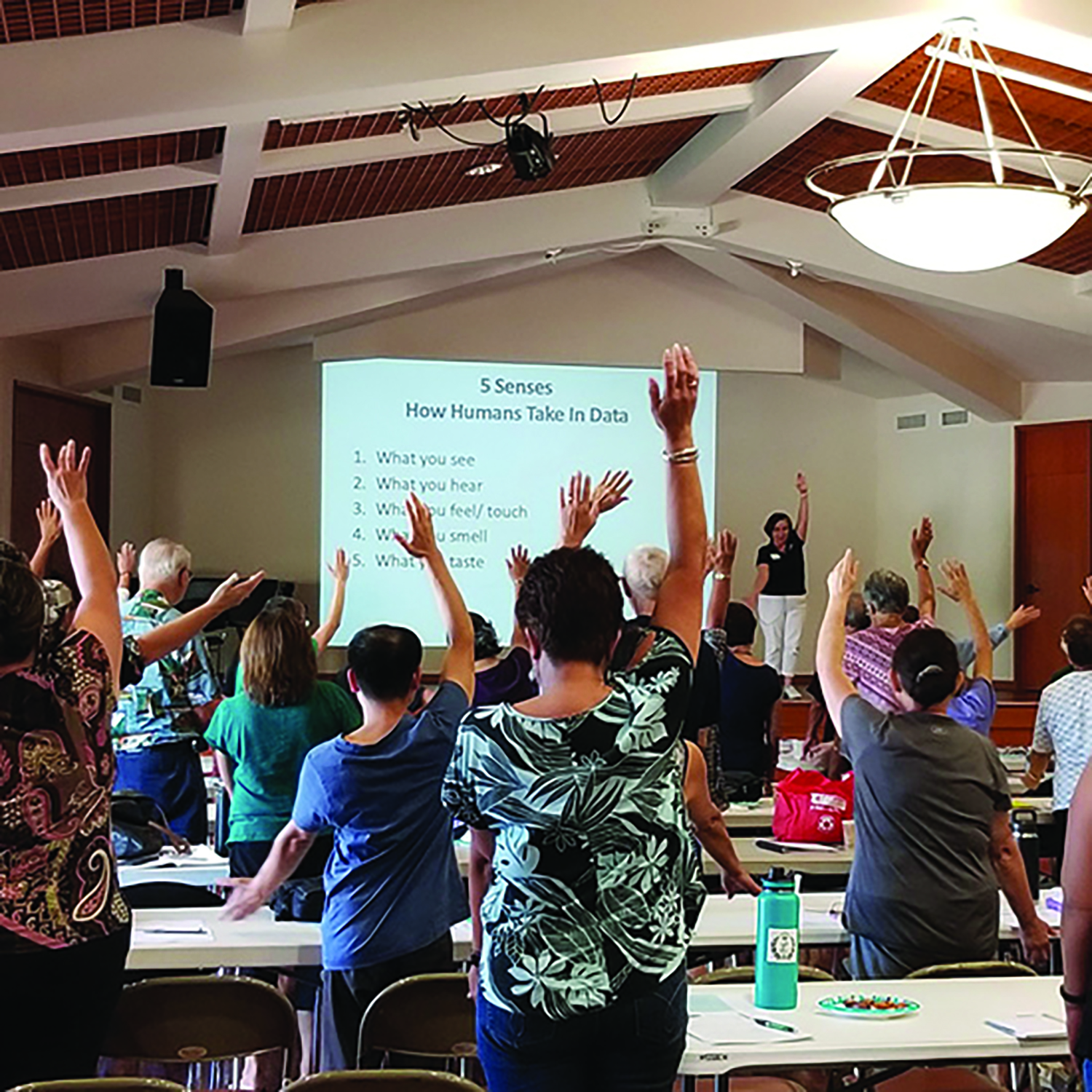
Susie Chun-Oakland speaks with Lanakila seniors as they prepare for a blessing to commemorate LMPSC’s 55 years of service as Hawai‘i’s first multipurpose senior center.
Lanakila Multi-Purpose Senior Center
The Lanakila Multi-Purpose Senior Center (LMPSC) is the largest and oldest senior center in Hawai‘i, created by the State of Hawai‘i in 1969 as the Hawai‘i State Senior Center and operated by Honolulu Community College until 1981. The state then asked CCH to operate the center, which became the Lanakila Multi-Purpose Senior Center. The LMPSC serves seniors aged 60 and older, promoting health and independence while organizing over 4,000 activities each year. Cultural club activities, special events, excursions, educational workshops, presentations and service projects are a part of this mix. The center offers over 60 classes every week — pickleball, ping pong, tai chi, yoga, hula, line dancing, stretch and tone, tap dancing, calligraphy, ukulele, guitar, online and more. Program Director Susie Chun Oakland adds, “Our senior center members are truly enjoying themselves. They feel valued. They have so much life experience, knowledge and a lot to contribute to our community. We are so fortunate to have such great people at our center.”
Lanakila’s staff of five employees and over 700 volunteers are the heart of this program. Many ideas for activities are a collaborative effort between staff and seniors. “Our center members feel comfortable making suggestions for new activities or improving existing programs. When I came to the senior center, I also really wanted this to be a food, flower and fern hub, not only for seniors, but for the community,” says Susie. For over seven years, every part of the LMPSC campus has flourished with flowers, fruit and vegetables to be used for activities that senior members can utilize. Susie stresses the importance of food sustainability and self-sufficiency. “When our center sees a community need, the members and staff make a wholehearted effort to address it.”
In a heartwarming example, she tells the story of how the City and County of Honolulu was short about 10,000 lei for veterans’ gravesites at Punchbowl. “The seniors made 4,000 ti leaf lei two years ago in partnership with the city’s Department of Parks and Recreation and made over 10,000 lei last year to honor our veterans.” The folks at LMPSC are committed to seniors’ health, wellbeing and independence for all.
Case Management Program
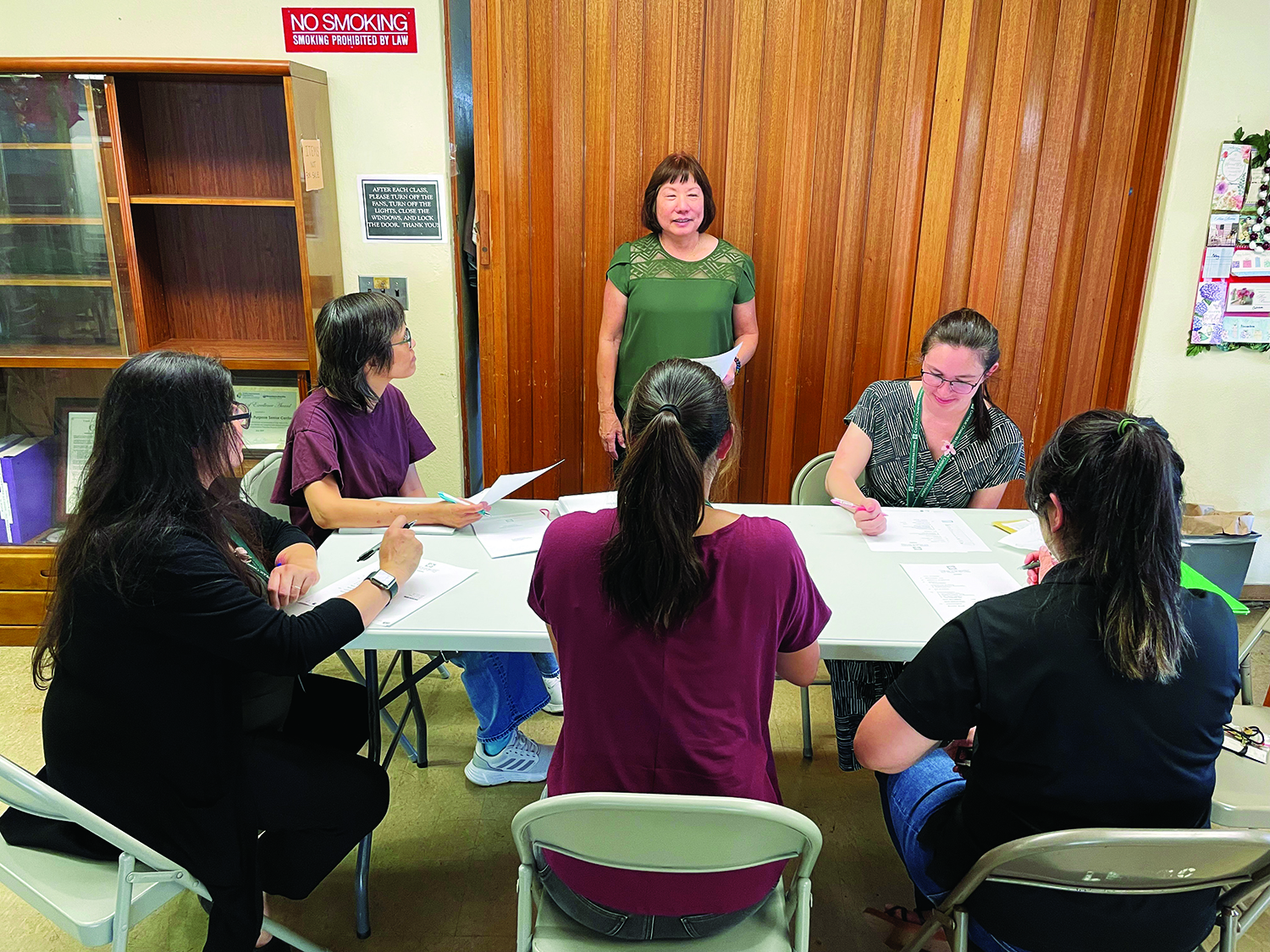
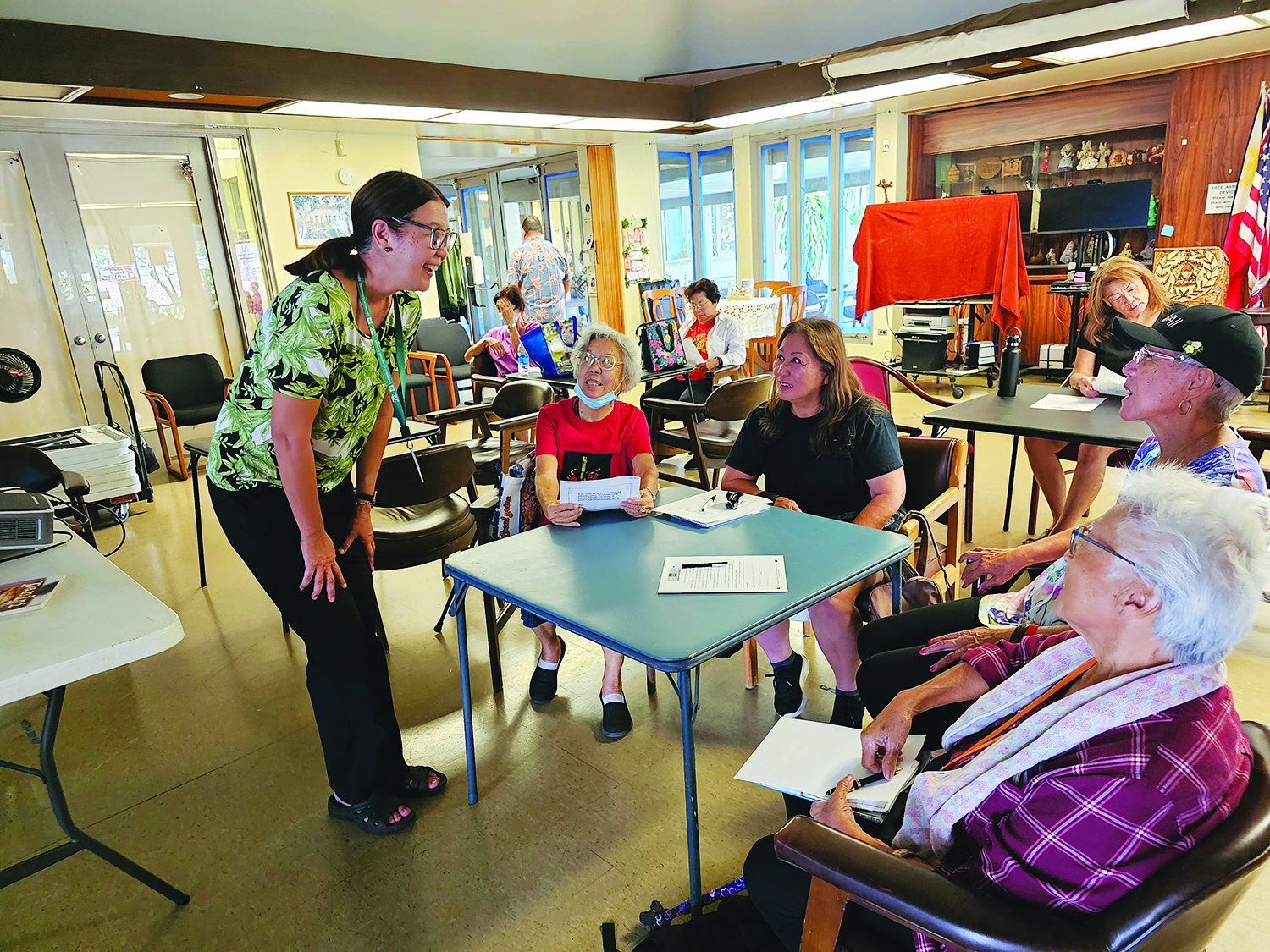
Judy Taketa, program director of CCH’s Case Management Program for the Elderly, leads a discussion with her team of case managers.
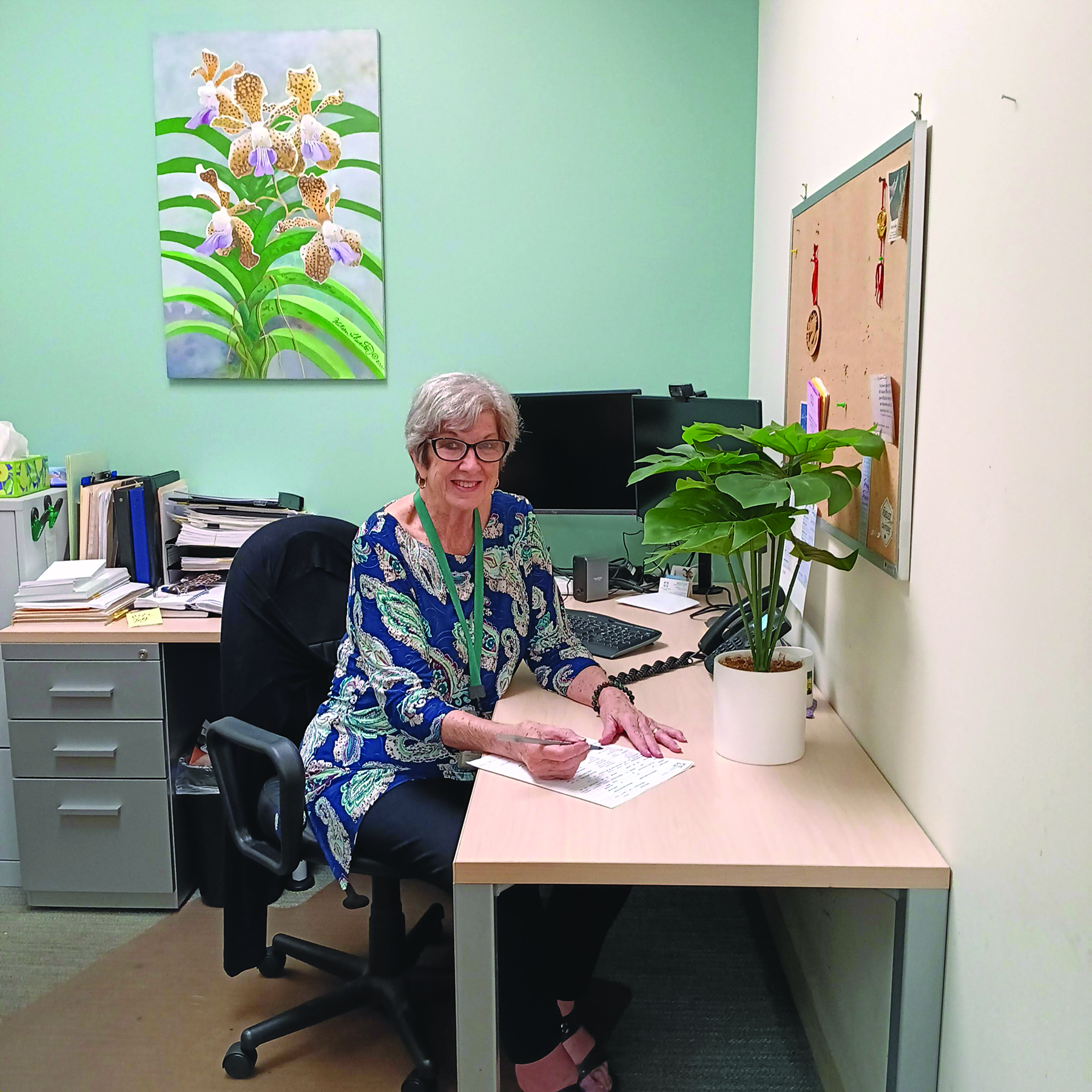
Judy Taketa is the program director of CCH’s Case Management Program for the Elderly, which assists elders in stabilizing their home and introduces any services that may be of assistance. The purpose of this program is to enable living a quality life free from fear of being homeless and/ or losing independence, learning options of what one can do about their health concerns. The case managers provide for client needs and matters of health and advocacy. “Sometimes,” Judy says, “when a doctor asks how they’re doing, they’ll first say, ‘I’m fine.’ However, there is so much that the senior does not say. They don’t know what or how to share with others, or are fearful that they would be considered senile or incapable of caring for themselves. We are the in-between to ensure we inform anyone of the issues on their behalf and what help they might need.” The program also offers linkages to home-delivered meals, transportation, health insurance and assistance in the home — all to ensure independence.
The program also works with families and caregivers of elderly clients, as support is crucial in caring for their loved ones. Caregivers and families often don’t know what options exist nor how to access them to care for their loved ones. Meetings with clients are one-on-one to suit a person’s unique situation and needs. CCH’s website has training videos and webinars that anyone can access. In addition, Judy’s team members are all master-level social workers. “Every day brings different challenges and different questions. My team is pretty good at maneuvering that as we try to be the connection between housing management, community, and resources.” Judy has worked with the elderly for about 30 years and enjoys working with them because, in her own words, “I’ve learned so much about who they are and what the future may hold. People shouldn’t be afraid of getting older. The future is bright. It’s all about how people visualize themselves.”
Benefits Enrollment Center
With a 2019 grant from the National Council on Aging, the Benefits Enrollment Center is a one-stop place to receive assistance through a variety of benefits, including help preparing for tax season by collecting information and documents; healthcare programs under Medicaid; obtaining coupons to access healthy food; and prescription drug discount programs (part of Medicare and SNAP). Peter Reyes, program director of the center, has been with CCH for 30 years. When Peter left the Army, he didn’t know where to start, so he began working with CCH. “I started as an intaker. My original plan was to stay with the agency for six months tops. Thirty years later, I’m still here. When people ask me why, I say I believe in the services we provide and how we make a difference in the lives of those we serve.”
Program Director Peter Reyes attended the National Council on Aging conference in Arlington, Va. He represented CCH’s Benefits Enrollment Center, gaining valuable insights on improving access to benefits for the community.
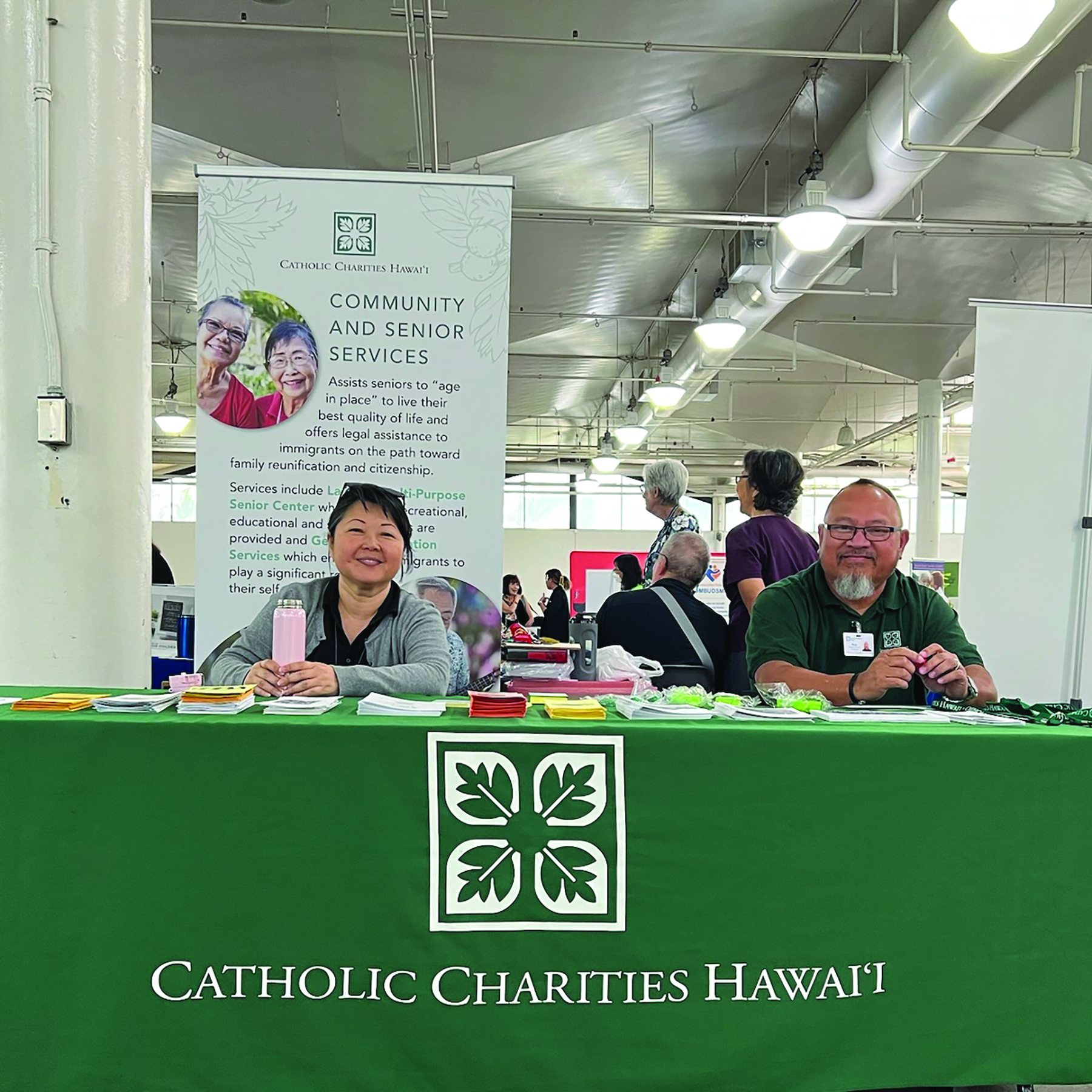
Peter and his staff collaborate with other entities, such as the Walmart Foundation grants through Catholic Charities USA, which helps with funding for outreach for SNAP education. “The outreach is significant,” says Peter. “It’s all about maximizing the benefits to help our kūpuna afford to live here.” Peter and his staff represent the center by having tables and booths at various conventions and events; doing in-service presentations to other service providers; and handing out flyers and informational brochures at food distribution events at various Hawai‘i Food Bank food pantries.
Transportation Services
Peter is also the program director of the transportation services that CCH offers. The two main programs are Transportation Friends for Kūpuna (TFK), a volunteer-driven privately funded service that offers one-on-one assistance to seniors, and their Transportation Service Program (TSP), which is a contracted service with the City and County of Honolulu’s Elderly Affairs Division. The services provide the state-funded Kūpuna Care Transportation service for individual frail seniors as well as the federally funded Title III Transportation Service that provides group grocery shopping and excursions. TFK complements their regular transportation service by having TFK volunteers available weekends and holidays when the regular transportation services may be closed. Peter calls TFK door-through-door service as opposed to door-to-door because volunteers assist clients from within the home to within their destinations.
CCH’s regular transportation service has been ongoing since 1975, with qualified drivers and a fleet of vehicles from walk-on vans with wheelchair lifts to minivans and sedans. Eligibility for both services differs: TFK’s clients are usually elders who are more frail and require individualized careful attention while regular service is more for individual and group rides. Clients must be 60 and older to qualify for both services. Peter notes that while there are other rideshare services on the market today, CCH provides programs designed for kūpuna — the staff is vetted, reliable and trained. “Being that Honolulu is one of those areas where there’s lots of kūpuna, the need for specialized senior transportation will continue. That’s what we do. We take our kūpuna safely to wherever they need to go to make sure they remain safe, healthy and can continue to live independently.”
Catholic Charities Hawai‘i offers dementia patient caregiver trainings and workshops.
Housing Assistance Program
As program coordinator for the Housing Assistance Program, Crystal Kalima-Gascon has been working with seniors for seven-and-a-half years. The program helps seniors in need of affordable housing and helps them with matters of eligibility, how to apply, affordability and how long they will be on a waitlist, as waitlists for affordable housing usually span a year or two. The program serves seniors aged 60 and older, providing them with application help and CCH’s O‘ahu Housing Guide (OHG), an annually updated list of affordable senior housing including information regarding rent, utilities, waitlist times and amenities. Because many seniors are low-income, the program staff helps them determine which places they qualify for. Crystal and the program also manage the three Small Group Homes (SGH), which are living spaces sharing common areas and house responsibilities for seniors aged 62 and older. The SGH is one solution to the program’s waitlist. Rent is on a sliding scale basis. While some seniors choose to live there indefinitely, others live in SGH in the interim while waiting for affordable housing availability.
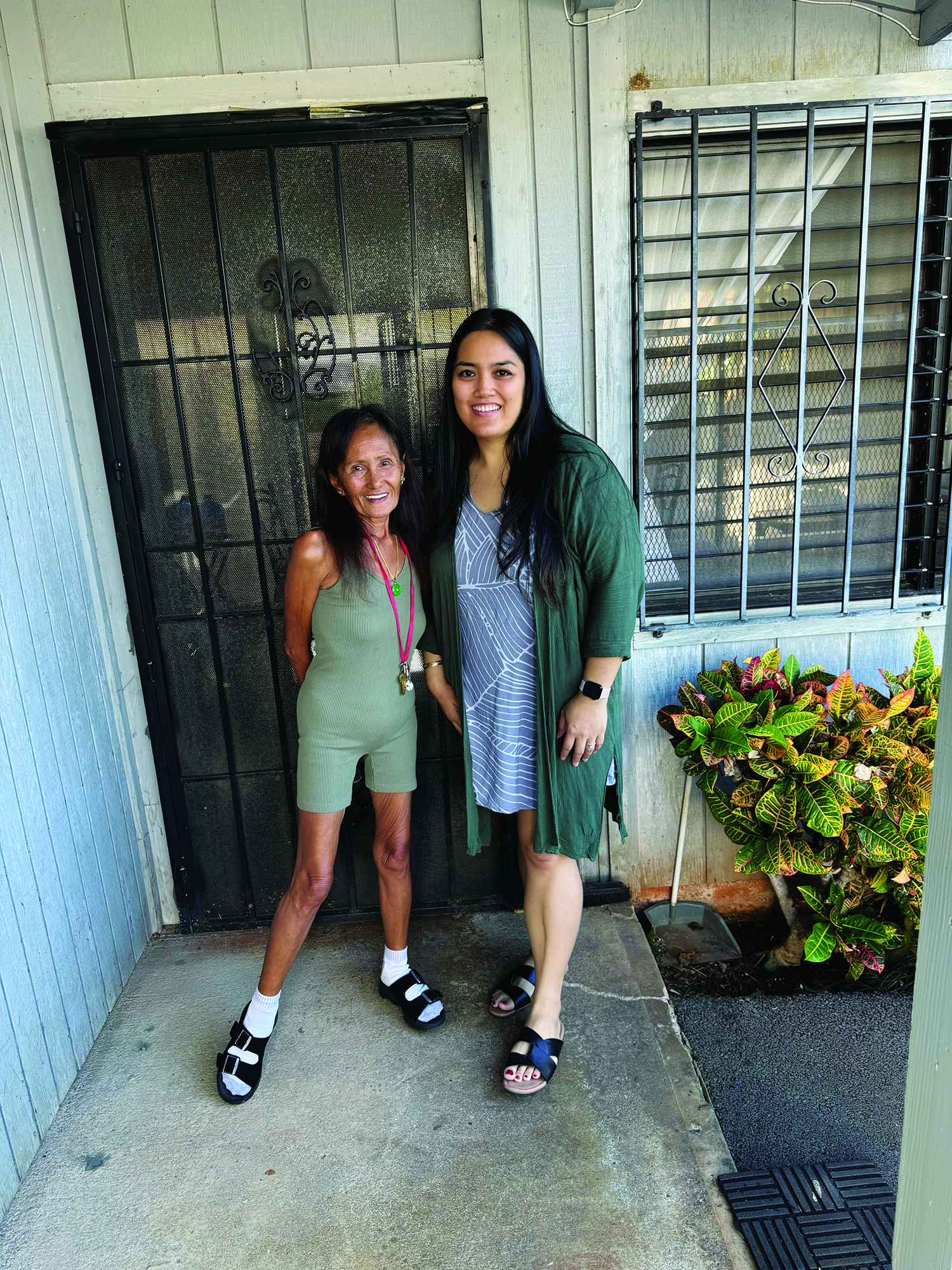
May Alcaide, a 74-year-old resident of the SGH, is living her best life as she waits for affordable housing to open up. May has endured hardship. So her sister helped her apply for housing. “I told them of the situation and Crystal was the coordinator. She helped me with all of that.” When asked how she felt about co-ed living, May was a bit skeptical at first. “I said, okay, I’ll go check it out. That’s the chance you take in life, yeah?” When asked about her routine while living in the SGH, May says, “Me, I get plenty hobbies. I crochet, I read, I watch videos and then I go out and get fresh air because we have a park and a pond. I talk with my neighbors. I keep myself mentally and physically busy, and on days when I feel not good, I stay indoors and check our household and what needs to be done.” May sets an example in encouraging her age group, other ku¯puna, to take advantage of every opportunity. “Chance it. Just chance, ‘cause you may never get to again.”
Hawai‘i Circle of Care for Dementia
Jody Mishan is subcontracted by CCH to coordinate the agency’s federal dementia grant, the second grant they have received to advocate for elders with dementia and their caregivers. In 1999, Jody was taking care of her father, who had a combination of Alzheimer’s disease and Lewy body dementia. She brought her father back with her from Florida and was his primary caregiver for eight years until he passed. In that time, she noted that services were low-quality or not available. “I started advocating here and there for caregivers at the legislature,” she says. Jody was then hired by the Executive Office on Aging to coordinate the first state plan on Alzheimer’s and related dementias. That work is continuing today.
CCH’s Hawai‘i Circle of Care for Dementia continues to ensure that Hawai‘i’s unpaid dementia caregivers have access to training for a better understanding of behavioral challenges related to dementia. The project targets persons with dementia who live alone, and those living with intellectual/developmental disabilities who are at higher risk of developing Alzheimer’s. The project wants to bring awareness to the ways that dementia affects the individual and their families, and develops resources for folks both enduring dementia/early symptoms and their families and caregivers. The Circle of Care works with Queen’s Geriatric Services to provide additional support, emphasizing the importance of working closely with specialists who can accurately screen for symptoms and prognoses.
Catholic Charities Hawai‘i offers dementia patient caregiver trainings and workshops.
Some of the available resources include the SHARE and REACH programs. The SHARE (Support, Health, Activities, Resources, Education) program is evidence-based and works with persons with dementia who are at the early stage, and their care partners. REACH Community is another evidence-based program which provides one-on-one coaching for caregivers. CCH is also working with the Alzheimer’s Association to develop a support group for those with early symptoms. “You need to know you’re not alone in this,” says Jody, noting that staying connected is paramount to a sustainable life.
VOLUNTEER SERVICES
Phone-A-Friend
Lyn Moku is the program volunteer coordinator for CCH’s Memory Mentor and Phone-A-Friend programs of the senior services division. Lyn has been with CCH for five years, but has been with nonprofits for over 30 years. Phone-A-Friend is a program for seniors aged 65 and older who are living alone with little to no caregiver support, who also have health problems that prevent them from socializing. Volunteers call clients and have friendly conversations with them. “And hopefully,” says Lyn, “in the process, they develop trusting friendships. Most of our volunteers who have been matched with a senior have stayed with the same senior for as long as they’ve been in the program.” Lyn and the volunteers look forward to expanding their services and connecting more kūpuna with volunteers — friends who care.
Memory Mentor
Lyn is also the volunteer coordinator of the Memory Mentor program, a service for those living alone or with little to no caregiver support, who may show symptoms of memory loss, confusion or dementia or have a diagnosis of dementia. A volunteer will go to a client’s home for a friendly visit. Clients may be totally homebound or may leave home infrequently. Volunteers may also provide shopping services and help the client assess their mail, keeping bills and important items and disposing of junk mail and possible fraud material. Volunteers also help with reminders, such as medication schedules, doctor appointments and birthdays.
Lyn Moku recruits volunteers for Phone- A-Friend and Memory Mentor programs.
Another benefit of both the Memory Mentor and Phone-A-Friend programs is that they give caregivers respite “even if it’s just a phone call or a visit,” and provide wellness checks.
Both the Memory Mentor and Phone-A-Friend programs receive many referrals through public health nurses, discharge planners at hospitals, geriatricians and nonprofits, as well from Aloha United Way and VolunteerMatch.
Looking at the future of the programs, Lyn expresses a desire to expand services island-wide. “There are quite a few people who live out of Honolulu proper, but we don’t have volunteers who live in those outlying areas, so being able to recruit those volunteers to service the rest of the island will only help us grow the program and meet the needs of the people.”
Transportation Friends for Kūpuna (TFK)
Julie Chang is the program volunteer coordinator for Transportation Friends for Ku¯puna. The program’s clients are ku¯puna aged 60 and older, who are unable to drive. When the program started, volunteers driving their own cars primarily took clients to medical and dental appointments, but services have now grown to include grocery shopping and other types of errands. When clients want to request a driver, Julie suggests they call her at least two weeks in advance, in order to give her adequate time to find an available volunteer. Drivers sometimes also chaperone/escort clients who need assistance into the doctor’s office or store, as TFK emphasizes door-through-door service versus simply door to-door.
TFK Volunteer Coordinator Julie Chang discusses the program with potential volunteers and clients.
Julie, like Lyn, wants to expand their services island-wide, especially in areas like Waianae and the west side of O‘ahu, where volunteers may be less available than they are in more populated areas. “I’m just so happy with the volunteers that I want to brag about them a little bit.” She goes on to tell the story of a couple giving a client a ride to the dentist. When the client let the volunteers know she was not feeling well, they encouraged her to seek medical attention when she was hesitant. She ended up being admitted to the hospital for two days and was immensely grateful that the volunteers were able to advocate on her behalf. That same client ended up needing a variety of radiation treatments, so other volunteers stepped up to transport her. Julie recalls being moved at how “the volunteers cared and made the time to be there for her.”
One stellar volunteer driver is Lori Harrison, who started driving for TFK at the beginning of last year after going through CCH’s orientation. Lori feels she is making a difference for someone every time she provides a ride. This care and attention is the most fulfilling part for Lori. Whether it’s a ride, a phone call or a visit, what Julie, Lyn and the volunteers champion is that meaningful connection with our island kūpuna.
SERVICES FOR ALL AGES
Counseling Center
CCH’s Counseling Center features various programs. The largest is general counseling, where anyone can get therapy at a price they can afford. Program Director Chiyo Churchill is a licensed marriage and family therapist. After leaving CCH to start her own practice, she returned because she feels at home at CCH. She’s been with CCH for 15 years total. Much of the center team’s work is keeping up with funding sources for the program and creating new programs to reach more people. They interface with the community and other CCH programs, always ensuring that they are working toward the same goal: ensuring their clients have somewhere and someone to turn to.
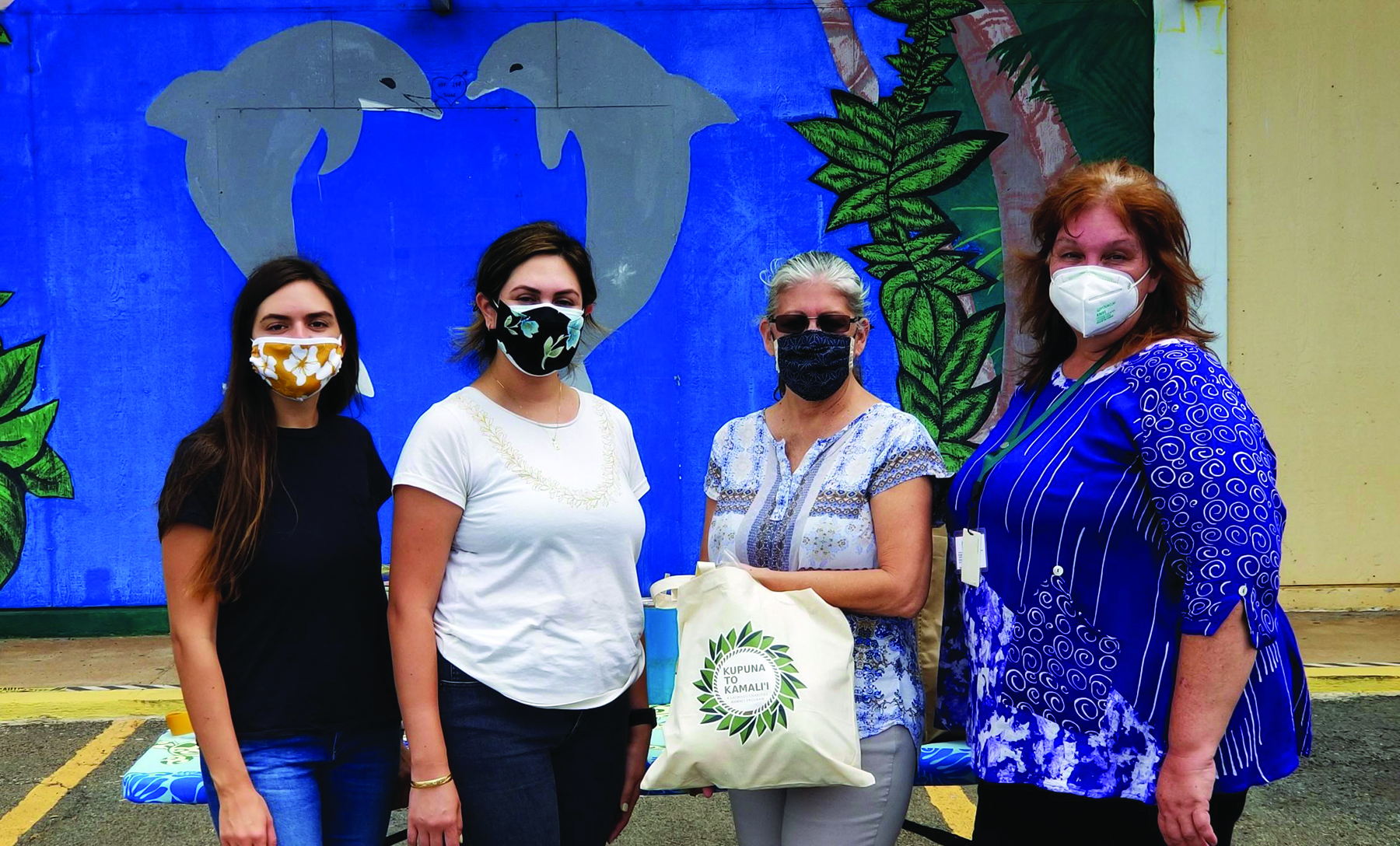
Counseling Center Program Director Chiyo Churchill (holding bag) and Kūpuna to Kamali‘i staff.
Chiyo also sees clients to stay in touch with the therapeutic world. “It’s very rewarding,” she says. Chiyo and the other center therapists balance learning from the latest research and applying their learning through providing trauma-informed care, while understanding that “real life happens, too.” When clients miss sessions, Chiyo emphasizes empathy and patience. “We want them to know we’re not going anywhere. We’ll be here for them whenever they’re ready.”
A newer center program is Kūpuna to Kamali‘i, based in Waianae and now also growing on Maui. The program’s foundations are based in being culturally appropriate, and recognizing their clients’ generational or cultural trauma, “from Kūpuna to the kamali‘i, the children. Recognizing how important family is for us islanders, especially the Native Hawaiian community, is why we focused on the west side,” Chiyo says. She and her team want to give people the opportunity to experience therapy in a way that feels more like talking story. “It’s important for people to feel safe in their community, and it’s hard to do when people are still dealing with so much.” In striving to be a vital resource and a place of acceptance, Counseling Center staff exemplify care and aloha.
Veterans Services
Dianne Lim-Tam is CCH’s program administrator of the Service Members, Veterans and their Families (SMVF) unit. Its three main programs are Supportive Services for Veteran Families (SSVF), the SSG Fox Suicide Prevention Grant Program (SPG) and Legal Services for Veterans (LSV). SSVF staff help with housing searches, landlord mediation, temporary financial assistance, emergency housing and assistance in accessing US Department of Veterans Affairs (VA) health benefits toward gaining and maintaining permanent housing. SPG is unique. The program is not only for veterans, even though it is funded by the VA, but also for active service members who need resources and suicide prevention services, which include peer support, transportation assistance, child care assistance, healthcare navigation, financial literacy education and access to mental health and substance abuse treatment options. LSV is the newest program of the three and helps veterans who are homeless or are at risk of homelessness with legal issues. After determining eligibility, CCH connects the veteran with attorneys to help them with military discharge upgrades, divorce, custody, landlord-tenant issues, foreclosures and more. The program can also pay the client’s attorney fees. Dianne emphasizes sustainability as one of the program’s goals. Consistency is vital in helping veterans and their families sustain independent living.
SMVF’s Dianne Lim-Tam and Benefits Enrollment Center Program Director Peter Reyes at a senior fair.
Dianne has been with CCH for over seven years. She began on Hawai‘i Island, working in a transitional housing program. She returned home to O‘ahu and eventually rejoined CCH, serving in an administrative role. She feels that she is right where she belongs, serving those who served our country.
Dianne and her team also do a lot of outreach. “We go out to the Daniel K. Akaka Clinic in Kapolei once a month, at least, and when veterans are coming in for their appointments, they stop by our booth and ask questions about the kind of services they may need.” For Dianne, this outreach is instrumental in expanding their services and ensuring the community knows about these programs and the benefits that they offer.
The passion and expertise of CCH’s staff are reflected in the smiles of their clients, young and old. For Tina, what motivates her every day when facing challenges in her work is the care demonstrated by the staff and the way that they serve each client with personal, thoughtful attention. “They see people as individuals with dignity,” she says. “They embody our mission.”
Tina and Diane are hopeful about expanding CCH’s services to neighbor islands. Regardless of age, faith or culture, CCH has embodied their mission to achieve social justice with a commitment to excellence for 78 years and beyond.
Catholic Charities Hawai‘i (CCH) may not be new — in fact, the nonprofit has been serving people of all faiths and cultures in Hawai‘i since 1947. But there are many aspects of the organization and services available that go well beyond what one might associate with its name. From transportation to veterans’ services, housing and…
Donating to charities can be a profoundly impactful and rewarding experience, but not all charities use donated funds responsibly. So here are three quick and easy tips to ensure your future contributions make a meaningful impact:
◆ Vet the charity: Quickly research the charities you plan to donate to. What is the charity’s BBB rating and community reputation? Does it have the necessary government registration with state authorities? If you plan to use the donation for a tax deduction, ensure the charity you’re considering qualifies; they usually need to be a 501(c)(3) organization.
◆ Ask questions: Ask the charity about its intended use of donations. How much of the funds collected are going to the intended recipients and how much does the charity or fundraising organization keep for itself?
◆ Watch for look-alikes: Impostors commonly mimic well-known charities. Carefully check URLs, logos and spelling, and educate yourself on the other telltale signs of an impostor scam.
Maximizing the impact of your charitable giving can be quick and easy. Guard against impostors. Ask questions. Do your research.
Donating to charities can be a profoundly impactful and rewarding experience, but not all charities use donated funds responsibly. So here are three quick and easy tips to ensure your future contributions make a meaningful impact: ◆ Vet the charity: Quickly research the charities you plan to donate to. What is the charity’s BBB rating…
Decluttering can bring a sense of peace, especially for seniors seeking to simplify their lives. The S.O.R.T method — Sell, Offer, Retain, Toss — provides an easy, step-by-step approach. Starting with less-used areas like storage rooms and guestrooms helps maintain momentum and make visible progress.
Step 1: Sell
Items like vintage pieces or furniture can be sold locally. Platforms such as Craigslist, Facebook Marketplace or consignment stores allow seniors to pass items to others without needing to ship them, which reduces environmental impact.
Step 2: Offer
Friends, family or community members may appreciate items with sentimental or practical value. Passing items on is a meaningful way to preserve memories and share family traditions.
Step 3: Retain
Keeping only the essentials or items with true sentimental value helps create a home focused on functionality and joy.
Step 4: Toss
Some items simply need to go! The City and County of Honolulu provides disposal options through Opala.org, including monthly bulky item pickup. O‘ahu’s Waimanalo Gulch Landfill and similar sites on other islands handle larger items, although fees may apply.
Donation Resources
Helping Hands Hawai‘i: This organization accepts a variety of gently used household goods, benefiting programs for local families.
Goodwill Hawaii and Salvation Army: Both organizations have locations across the islands and accept many items, from clothing to small furniture.
Local Churches:Many churches hold thrift sales to support community projects. Donating items to these sales aids their charitable work and supports those in need.
Decluttering with S.O.R.T. not only creates a more organized and safer living environment for seniors, but also supports Hawai‘i’s community through donations and recycling. With a step-by-step approach, seniors can enjoy a cleaner, more serene and secure home that fosters clarity, calm and peace of mind.
Decluttering can bring a sense of peace, especially for seniors seeking to simplify their lives. The S.O.R.T method — Sell, Offer, Retain, Toss — provides an easy, step-by-step approach. Starting with less-used areas like storage rooms and guestrooms helps maintain momentum and make visible progress. Step 1: Sell Items like vintage pieces or furniture can…
China is the top rice-producing country in the world; it accounts for more than 144 million metric tons of the grain annually or 28% of the global output. The per-capita consumption of rice there is estimated to be a whopping 220 pounds per year, compared to 27 pounds for the average American and 100 pounds for Kama’aina (the most in the United States).
The Cantonese word “fan” means “meal” as well as “rice,” underscoring its importance. Here are three other tidbits that reveal the cultural and historical significance of rice to the Chinese people.
Nian Gao
Nian gao (gau), a steamed or baked Chinese New Year treat, is made of three basic ingredients — glutinous rice flour, brown sugar and water. Nian means “year,” and gao means “cake.” A homonym for gao is defined as “tall” or “high.” Thus, there’s a metaphorical association: Eating nian gao comes with the hope of personal growth, career promotions and financial success in the new year. Another translation for nian is “sticky;” the cake’s gummy texture and round shape symbolize familial harmony and unity.
One tradition related to nian gao concerns the Kitchen God, who watches over every Chinese household. At the end of every year, it is his duty to review each family’s conduct and report to the Jade Emperor, ruler of Heaven. Before New Year’s Day, families place nian gao on their home altars, next to images of the Kitchen God. They believe that when he eats that sticky, sugary offering, he will say only sweet things about them or his lips will be sealed, preventing him from divulging anything negative.
Rice-Fish Farming
Rice-fish farming is not unique to China, but scholars believe that’s where it began some 1,700 years ago to optimize land use by cultivating two types of food at the same time.
This sustainable, symbiotic ecological practice yields numerous benefits. The movement of fish through flooded fields increases the water’s oxygen level. Fish excrement adds nutrients to the soil, so fertilizer is not necessary (in particular nitrogen-based products, which release greenhouse gases). In return, rice fields provide fish with a cool, shady environment; protection from predatory birds; and plenty of food, including weeds, worms, plankton, insects and decaying leaves. This diet not only keeps the fish well fed, it reduces the risk of disease and the need for pesticides and herbicides.
About 1.5 million hectares (3.7 million acres) are being used for rice-fish farming in China, primarily in mountainous southeastern and southwestern regions, which are far from coastal fishing areas and have few bodies of water suitable for conventional aquaculture. Because of the steep terrain, rice can be grown only in small terraces, resulting in limited harvests. Concurrently farming fish in those terraces generates additional income.
The Great Wall of China
Hailed as one of the Seven Wonders of the World, the Great Wall of China spans 13,170 miles across the country’s northern border; that’s more than half of the 24,901-mile circumference of the equator. It was designated a UNESCO World Heritage Site in 1987 as “an outstanding example of the superb military architecture, technology and art of ancient China.” And literally holding a large part of it together is rice.
Construction on the wall began around 220 BC by order of Qin Shi Huang, who unified seven warring kingdoms to establish the Qin dynasty and become the first emperor of China. His vision was to connect previous bulwarks and build new sections to create a massive barrier winding over plains, deserts, grasslands, mountains and plateaus to stave off invasions from the north. Work on the wall — which also includes barracks, bastions and watchtowers — continued until the Ming dynasty (1368–1644).
The most extensive and best-preserved segment of the wall — stretching 5,500 miles in Badaling, 43 miles northwest of Beijing — was erected during the Ming empire. This is the section that’s seen and photographed by more than 10 million visitors annually.
It has stood the test of time thanks to a mortar of glutinous rice paste and calcium hydroxide powder, which scientists call one of the greatest innovations of that period. Amylopectin, a type of complex carbohydrate that makes glutinous rice sticky, made the ancient mortar as strong, durable and water-resistant as concrete. This adhesive’s seal has remained so tight over 500-plus years, weeds reputedly have not grown between the Great Wall’s bricks and stone blocks.
The Hawai‘i Book of Rice Volume Two ($22.95, hardcover and spiral-bound) is available at bookstores and other retail outlets throughout the islands. It can also be purchased on amazon.com and Watermark Publishing’s website, bookshawaii.net. Watermark provides free shipping to all Hawai‘i addresses and to the mainland US for orders over $50. For more information, peruse bookshawaii.net or call 808-587-7766 or toll-free 866-900-BOOK from the neighbor islands.
China is the top rice-producing country in the world; it accounts for more than 144 million metric tons of the grain annually or 28% of the global output. The per-capita consumption of rice there is estimated to be a whopping 220 pounds per year, compared to 27 pounds for the average American and 100 pounds…
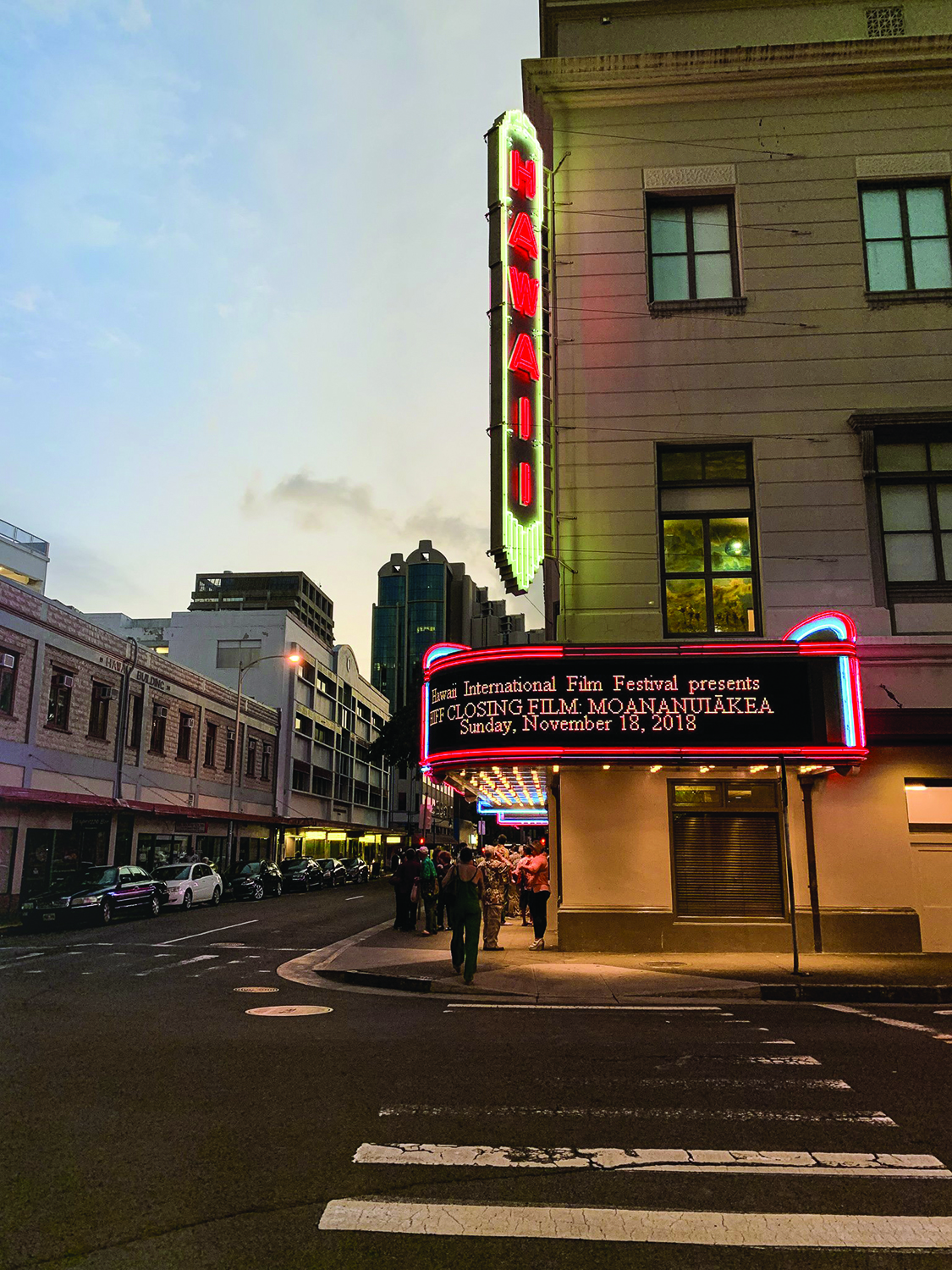
In May 2024, Hawaii Theatre Center launched a partnership with the Hawai‘i LGBT Legacy Foundation to host Kūpuna Movie Mornings, a monthly “pay what you can” film series created to provide seniors, the LGBT community and cinema lovers in general the opportunity to socialize and watch a classic movie in a safe, welcoming environment at little to no cost.
The movies are chosen by our patrons, who fill out ballots at every screening. “Some Like It Hot,” “Vertigo,” “Casablanca,” The Rocky Horror Picture Show” and “The Wizard of Oz” are a few of the films we’ve shown based on audience input.
Kūpuna Movie Mornings are usually held on the second Tuesday of the month. The lobby opens at 10:30 am. Complimentary, sponsored coffee and pastries are provided so attendees have a chance to enjoy a snack and talk story time before the 11:30 am showtime.
Despite the name, Kupuna Movie Mornings attract film lovers of all ages. At our most recent show, the youngest attendee was 23; the oldest, 94.
We would love for you to join us for our next Kūpuna Movie Morning! Please visit our website (below) and click on the “Join Our Mailing List” link to learn about future shows.
In May 2024, Hawaii Theatre Center launched a partnership with the Hawai‘i LGBT Legacy Foundation to host Kūpuna Movie Mornings, a monthly “pay what you can” film series created to provide seniors, the LGBT community and cinema lovers in general the opportunity to socialize and watch a classic movie in a safe, welcoming environment at…
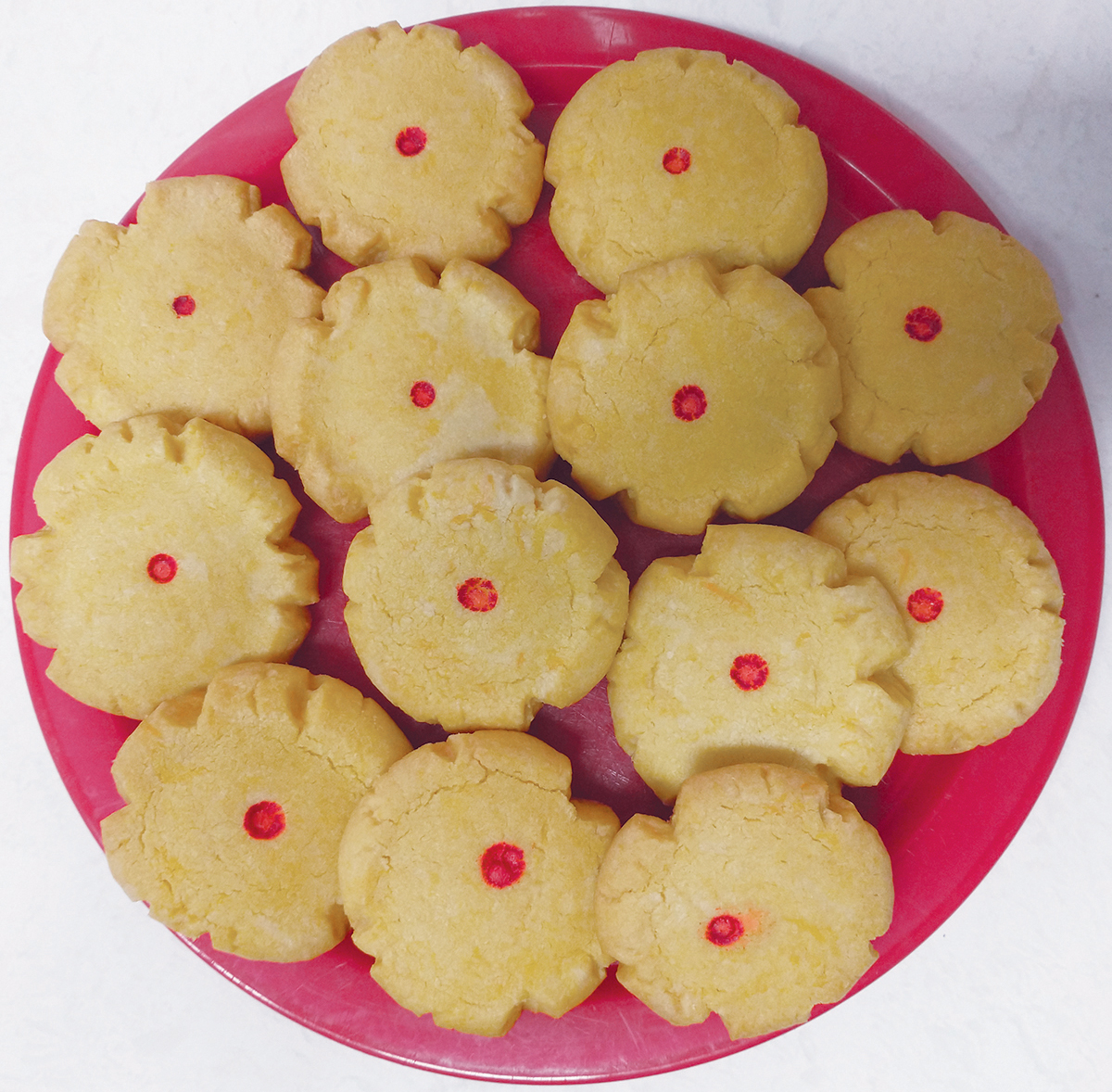
While delicious at any time of year, Chinese almond cookies are often made and shared during the Lunar New Year celebration. Symbolism plays an important role in the foods enjoyed during Chinese holidays; these round cookies are thought to resemble coins and signify wealth. Popo (grandma) made her Chinese almond cookies during other special occasions, as well, including Christmas. She passed them out to her friends and family and everyone enjoyed them. Third and fourth generation members of the family carry on her tradition to this day.
Ingredients 1-1/2 cup Crisco 1 cup sugar 1 egg 1-1/2 tsp. almond extract 3 cups all-purpose flour 1/2 tsp. salt 1 tsp. baking soda 1 tsp. red food coloring for decorating tops of cookies
Optional: 3–4 tsp. yellow food coloring added to the Crisco mixture
Directions Cream Crisco, sugar, egg and yellow food coloring together in a bowl. Then add the flour, almond extract, salt and baking soda to the Crisco mixture by hand.
Roll dough into 1-inch balls, place on cookie sheet, then press with a cup to flatten.
Using a chopstick, dot the center of each cookie with red food coloring.
Bake at 350 degrees for 15 to 20 minutes.
Prep time: 15 minutes Makes: about 40 cookies
Do you have a favorite recipe and story to share? For consideration in the next issue, include a photo and mail them to Generations Recipe, PO Box 4213, Honolulu, HI 96812, or email them to Cynthia@generations808.com.
COOKIE RECIPE NOTE: While recipes made with Crisco are usually very crispy, butter may be substituted, yielding a soft inside with a crisp exterior. Placing a slivered almond into the center of each cookie instead of a dot of red food coloring is another popular option.
While delicious at any time of year, Chinese almond cookies are often made and shared during the Lunar New Year celebration. Symbolism plays an important role in the foods enjoyed during Chinese holidays; these round cookies are thought to resemble coins and signify wealth. Popo (grandma) made her Chinese almond cookies during other special occasions,…
People from all over the globe have made their homes in Hawai‘i. The first to migrate and settle here were the Polynesians from the Marquesas Islands and Tahiti about 1,500 years ago. Since then, Hawai‘i has continuously welcomed immigrants from every corner of the globe, cultivating and perpetuating a tapestry of diverse cultures.
In this first issue of the new year, Generations Magazine will begin to explore the myriad of cultures that make up our island ‘ohana, binding us together with a single strong thread of aloha.
This issue will focus on Hawai‘i’s Chinese population, and their cultural festivals and food.
From China to Hawai‘i
The first documented arrival of Chinese people to Hawai‘i was in the 1700s when Chinese sailors arrived with Capt. James Cook in 1789 and several more on two fur trading ships in 1789. Though the ships and their sailors came and went, Chinese people were already settled and living in Hawai‘i throughout the 1700s. From 1792 through the mid-1800s, Hawai‘i became an exporter of sandalwood to China, earning the name “Tan Heung Shan” or “Fragrant Sandalwood Hills.” Then in 1852, the first Chinese from Cantonese-speaking Southern China immigrated to Hawai‘i to work on sugar plantations. Upon their work contracts expiring, many decided to stay in Hawai‘i, pursuing education and opening businesses in areas like Chinatown. Over the course of 50 years, in 1900 the Chinese population in Hawai‘i grew to over 25,000.
Overall, the Chinese in Hawai’i constitute about 4.7% of the state’s population. This number does not include people of mixed Chinese and Hawaiian descent — if the Chinese-Hawaiians are included, they make up about one-third of Hawai‘i’s population. Without a doubt, Chinese people in the Hawaiian Islands have made and continue to make their mark on broader Hawaiian local culture. Rich with vibrant color, an accomplished history and cherished cultural heritage, the presence and influence of the Chinese culture in Hawai‘i continues with integrity and enthusiasm.
Festivals and Traditions
For Chinese families all over the world, several festivals and celebrations occur every year without fail. These festivals are for the most part largely known, even in non-Chinese circles. These celebrations include the Lunar New Year (or Chinese New Year), Ching Ming/Qingming Festival and the Mid-Autumn Festival and celebrations.
Lunar New Year
Of these three major festivals, Lunar New Year is arguably the most well-known. As the event follows a lunisolar calendar, Lunar New Year occurs on the second new moon after the winter solstice. Usually, this means late January or early February. The celebration ushers in the coming of spring and new beginnings.
Certain traditions are honored during this celebration, too. Lai see, red envelopes containing cash, are given to younger folks for good luck and to ward off evil spirits. Gao, sweet rice cakes made from rice flour and brown sugar, are usually brought by families or given as gifts and eaten with others during Lunar New Year celebrations. These rice cakes symbolize growth and progress for the coming year. Fai chun are traditional decorative red banners hung in doorways or on walls with written phrases communicating prosperity and good luck.
Whether it’s giving (or receiving) lai see, picking up gao in Chinatown or hanging up fai chun with family, Lunar New Year gives everyone a cause for celebration.
This year, Lunar New Year will take place on Wednesday, Jan. 29. The Cantonese greeting “gong hei fat choy” at this time of year means “wishing you prosperity.”
Narcissus Queen Pageant
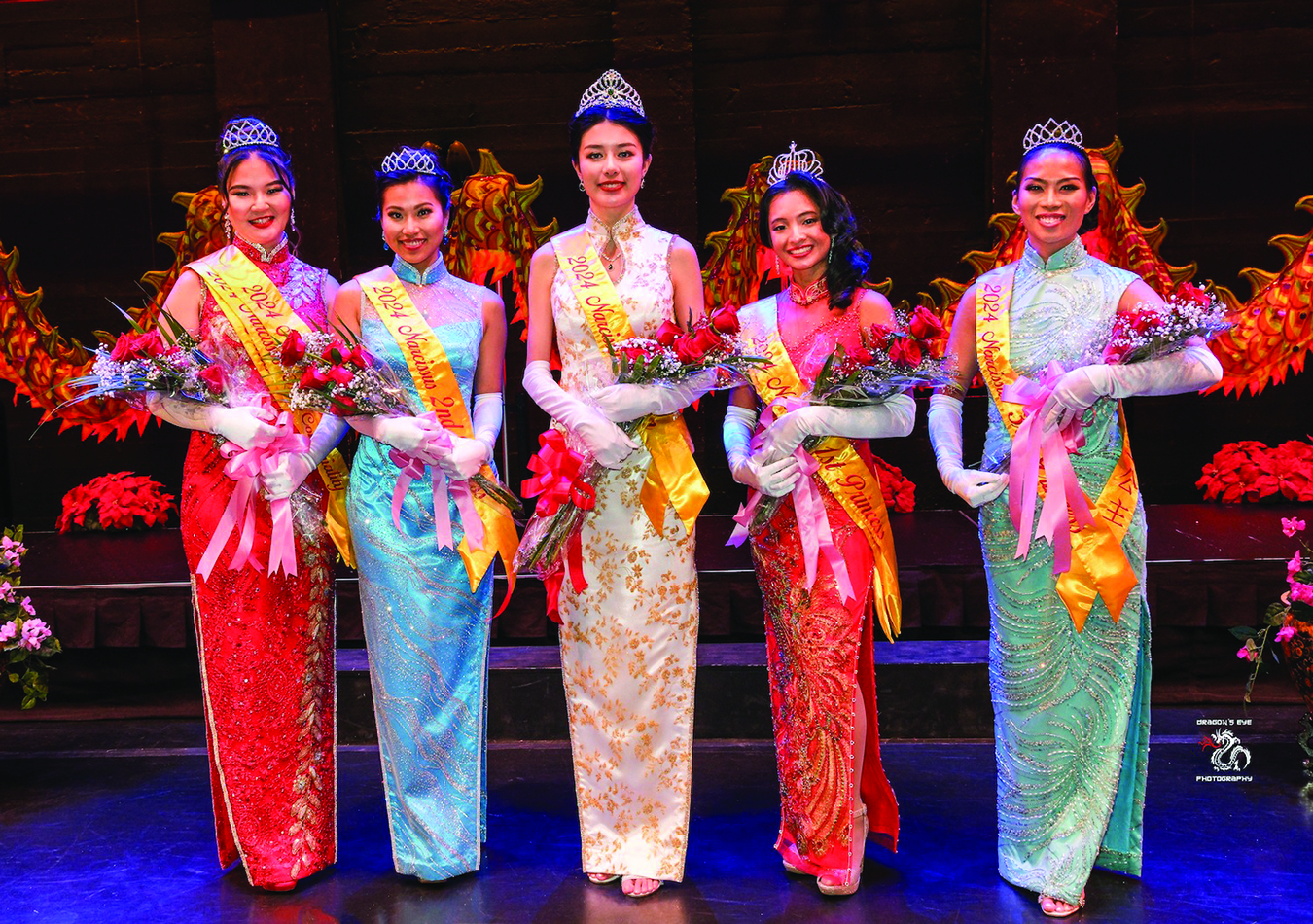
Although Hawai‘i celebrates these three main festivals with gusto, there is one Chinese festival unique to the islands: the Narcissus Queen Pageant in Chinatown. According to the Chinese Chamber of Commerce, a plan was devised to revitalize trade and the public image of Chinese people in Hawai‘i.
As the narcissus flower symbolizes fortune and rebirth, the Narcissus Festival originally was connected to Lunar New Year celebrations, but has since grown into a spring-season-long celebration showcasing banquets, fashion shows, community celebrations and more. The event culminates with the selected queen and her court touring mainland China as cultural ambassadors from Hawai‘i, demonstrating their intelligence, poise and pride.
The pageant will be held on Saturday, Jan. 4.
Ching Ming Festival
The Ching Ming Festival occurs during the third lunar month (usually in early April). During Ching Ming (Tomb-Sweeping Day), Chinese families visit the graves of loved ones, cleaning their spaces and making ritual offerings to honor their ancestors. The Chinese Chamber of Commerce of Hawai‘i will host an event on March 30 at Manoa Chinese Cemetery entitled “Significance of Ching Ming” sharing the history of Ching Ming and burial and funeral customs. This year, Ching Ming is set for Friday, Apr. 4.
Mid-Autumn Festival
The Mid-Autumn Festival, an event celebrating a plentiful harvest, is held on the 15th day of the eighth lunar month. Families and friends munch on mooncakes, float lanterns and give dollars to the dancing lions under the watch of a full moon. Local nonprofit Chinatown808 will host a festival celebration at the Chinese Cultural Plaza on Oct. 6.
The next article in this series will feature Hawaiian culture, highlighting the world-famous Merrie Monarch Festival.
People from all over the globe have made their homes in Hawai‘i. The first to migrate and settle here were the Polynesians from the Marquesas Islands and Tahiti about 1,500 years ago. Since then, Hawai‘i has continuously welcomed immigrants from every corner of the globe, cultivating and perpetuating a tapestry of diverse cultures. In this…
As a teen, I had a dream. It might seem common to some, yet not to others. It seemed so vivid. I was a bride, standing in a long wedding gown and there he was, a tall young man standing next to me. All I could see were our backs.
While at college at the age of 20, I met someone unexpectedly. A young man, tall, dark-haired and handsome, with beautiful blue eyes. I wondered to myself, “Is he the guy I’m going to marry?”
We talked, dated for six months, and then he proposed to me on notebook paper as we sat inside his car in front of my home. We eloped and went to Vegas. We have been married for over four decades. My dream came true.
Linda Warne was born and raised in California and attended Cerritos Community College before falling in love and marrying Joseph. At age 38, she returned to the same community college to study Early Childhood Education. She worked temporarily as a preschool teacher’s aide but found her niche as a private elementary school-age tutor. Joseph and Linda, now seniors, moved to O‘ahu in 2001. She currently leads paper crafts at two assisted living facilities: Ilima at Leihano in Kapolei and The Plaza in Pearl City. Writing poetry has been a meaningful way of self-expression since she was a teenager. She picks up her copy of Generations Magazine at Longs. If you have a poem, thoughts or a story to share, email the editor: debra@generations808.com. It may be published in Generations Magazine, Facebook or our website.
A poem by Linda Warne As a teen, I had a dream.It might seem common to some,yet not to others.It seemed so vivid.I was a bride,standing in a long wedding gownand there he was,a tall young man standing next to me.All I could see were our backs. While at college at the age of 20,I…
Lenore from Kāne‘ohe fears that one day she must choose between caring for her mother and her job and financial security. “There will come a time when Mom needs more care and supervision and it is costly to hire help,” she told us.
Unfortunately, this is a corner that many Hawai‘i residents are backed into. That’s why AARP Hawai‘i is fighting to improve paid family leave policies in our state.
Older voters overwhelmingly support paid family leave. An AARP Hawai‘i poll found 88% of voters 50 and older support paid family leave and more than half would vote for a candidate who supported paid family leave.
The poll also found strong support for other programs to help family caregivers: 56% do not believe government is doing enough to help family caregivers; 84% support increased funding for home-and-community-based services to help families keep loved ones at home as they age; and 89% support a limited state income tax credit to offset the expenses of family caregivers.
Family caregivers are the front line of defense in keeping their older loved ones living at home — where most seniors want to be — and not in costly nursing homes.
Across Hawai‘i, unpaid family caregivers provide critical assistance to help their older parents, spouses and other loved ones live independently in their homes. Most of these caregivers also juggle full- or part-time jobs.
Paid family leave not only benefits those who take care of kūpuna, but also benefits parents caring for keiki and a growing segment of the population who care for both children and parents. Those “sandwich generation” caregivers are under enough stress without the fear of losing their job or their wages.
An estimated 154,000 family caregivers in Hawai‘i contribute more than 144 million hours of unpaid care each year, valued at approximately $2.6 billion. They help older loved ones with medications and medical care, bathing and dressing, meals, chores and much more, saving the state and taxpayers in Medicaid expenditures if loved ones were in expensive nursing homes.
Paid family leave would also benefit employers because it increases employee loyalty and retention, and saves money by avoiding the cost of separation, recruiting, hiring and training. AARP Hawai‘i and other pro-family organizations are pushing for paid family leave and other bills to help caregivers.
If you want to lend your voice to help, contact AARP Hawai‘i Advocacy Director Audrey Suga-Nakagawa at asuganakagawa@aarp.org.
AARP HAWAI‘I (nonprofit) 1001 Bishop St., #625, Honolulu, HI 96813 808-545-6000 | hiaarp@aarp.org | aarp.org/hi AARP is a non-partisan organization dedicated to empowering Americans 50 and older to choose how they live as they age.
Lenore from Kāne‘ohe fears that one day she must choose between caring for her mother and her job and financial security. “There will come a time when Mom needs more care and supervision and it is costly to hire help,” she told us. Unfortunately, this is a corner that many Hawai‘i residents are backed into.…