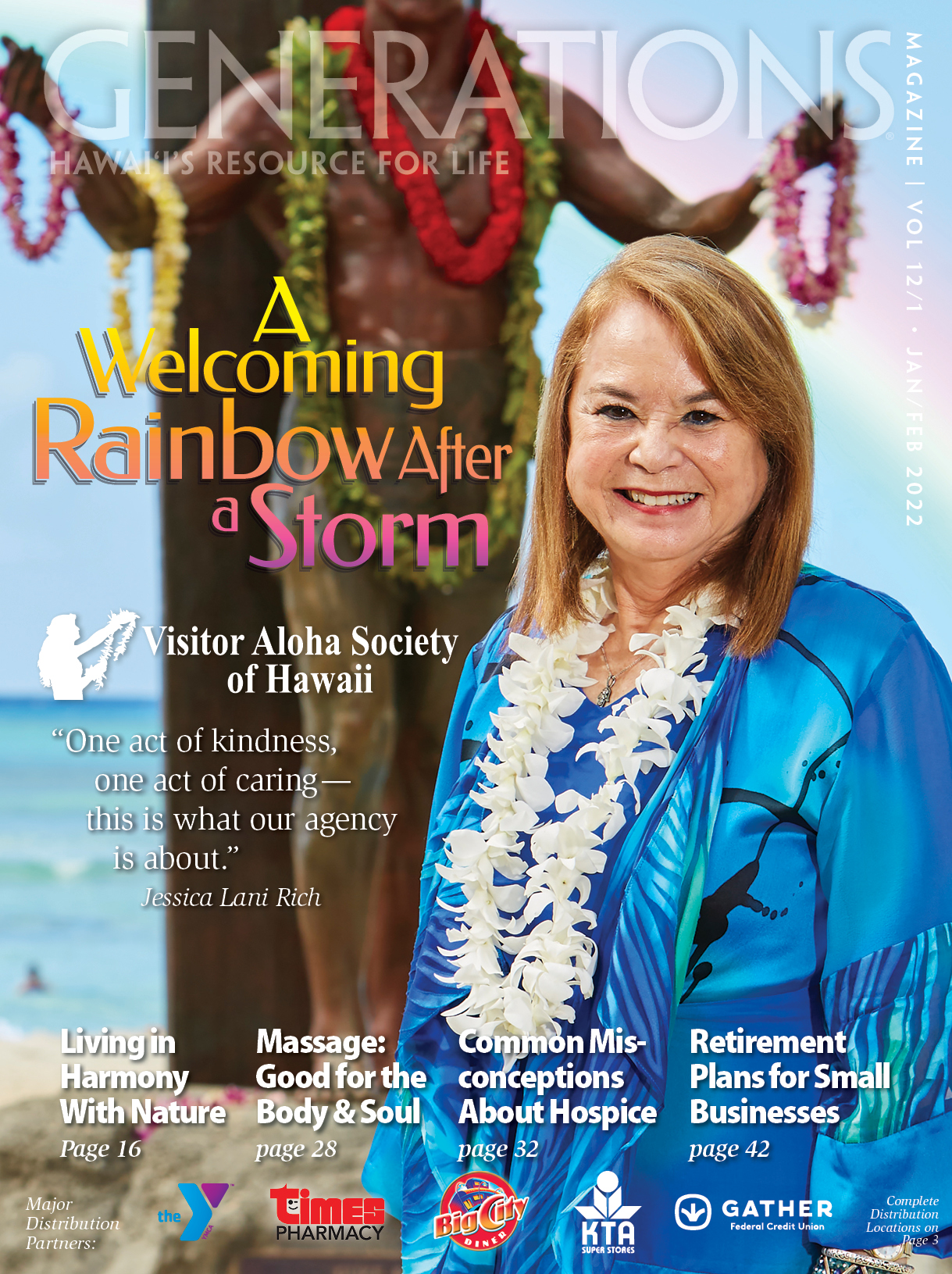
Category: Cover Story

  • A Welcoming Rainbow After a Storm

    A Welcoming Rainbow After a Storm

    When the phone rings at Jessica Lani Rich’s office, it can be a really bad thing. And her phone rings a lot. Sometimes, the police call to tell her about a crime or a tragic accident. Other times, a social worker will call about an illness, an injury or even a death. And each time she answers the phone, Jessica answers the call. As president and CEO of the Visitor Aloha Society of Hawai‘i (VASH), Jessica leads a team of trained volunteers who provide comfort and support to visitors who have been victims of a crime or other adversity, and help them create a positive memory of their stay in our islands.
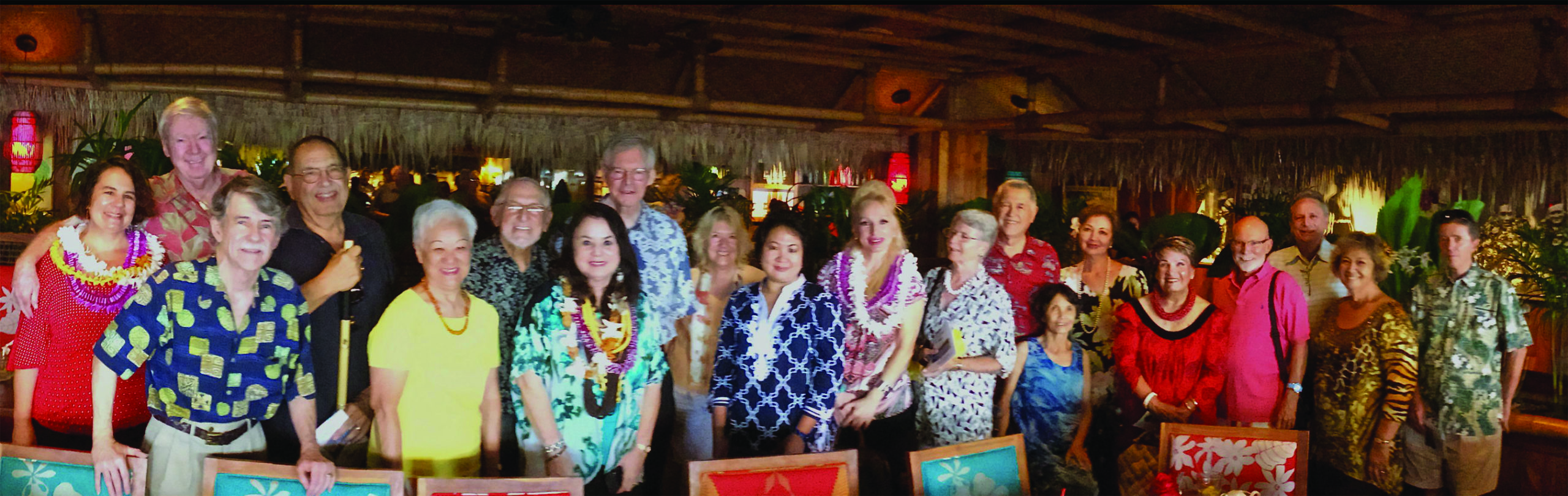
    VASH has a dedicated cohort of trained volunteers. Most are lifelong Hawai‘i residents, several speak more than one language, many are seniors and each one finds the work to be very rewarding (2014 photo).
    VASH has a dedicated cohort of trained volunteers. Most are lifelong Hawai‘i residents, several speak more than one language, many are seniors and each one finds the work to be very rewarding (2014 photo).

    E Komo Mai: Welcome

    Born in Hawai‘i and part Native Hawaiian, Jessica Lani Rich has devoted her life to helping others. For more than 20 years, she’s come to the aid of travelers who’ve found themselves in crisis thousands of miles from home — serving as chairman of the board at VASH for three years before becoming president and CEO.

    “I care about our visitors,” says Jessica. “They’re hard-working people who save their money all year to visit Hawai‘i.” And the last thing they should expect is to be involved in a crime or an accident. But when something bad happens, the staff and volunteers at VASH do their best to make the travelers feel comforted, cared for and welcomed.

    In 2019, the Visitor Aloha Society of Hawai‘i was called on to assist 1,897 visitors for incidents of theft, robbery, car break-ins, medical emergencies, drownings, near-drownings, deaths and more. “At first, people are angry or crying or distraught,” Jessica says. “You know, when they take your wallet and you’re on vacation, you feel violated. And when you feel violated, if someone shows up and takes care of you, makes sure that you’re alright, and walks you through the pain and the process, and makes you feel loved and cared for, you leave here with a different attitude.” And that’s really the bottom line.

    “When we take one bad experience and turn it to good,” says Jessica, “the majority leave here feeling the aloha spirit.”
    Tragedy Strikes

    Scary Hawaiian Skies

    One of the most memorable stories began with a fatal plane crash.

    A 12-year old girl and  her father, visiting from Seattle, were passengers onboard a glider that got caught in a wind and flew into the side of a mountain. While Ashley Streich and her dad were strapped in, upside down, unable to move for hours, the pilot died of his injuries.

    As soon as Jessica got the call, she drove Ashley’s mom to The Queen’s Medical Center. “We didn’t know what condition they’d be in,” Jessica says. “Her heart was pounding. My heart was pounding, because we didn’t know.”
    On His Last Leg

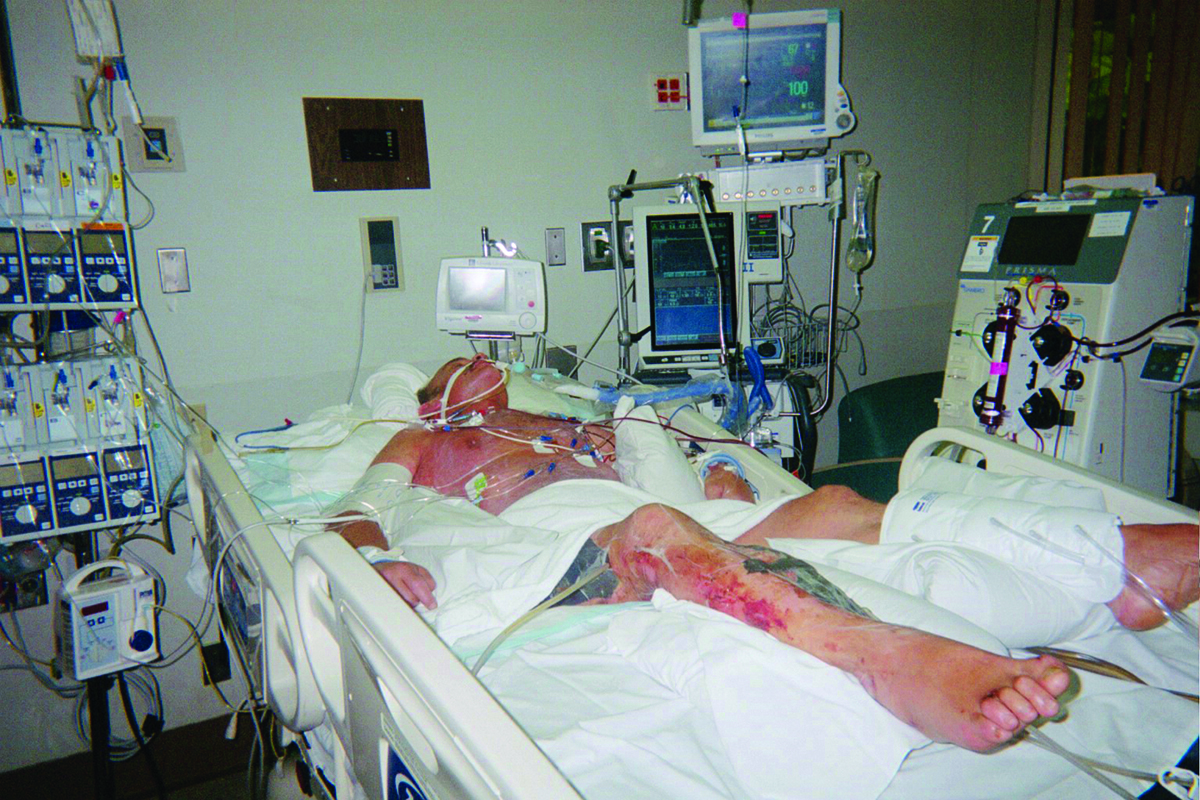
    By the time Jessica met Gary Aguiar, he was near death and had been in a coma for weeks. His body was succumbing to the ravages of a flesh-eating disease. He had developed sepsis and was on dialysis. Suffering from multiple organ failure, the doctors had discussed amputating one of his legs. Yet, before all this, Gary was in top physical shape, even completing 43 marathons.

    “He wasn’t expected to live,” Jessica recalls. “And we got called in to basically help the family.”

    Against all odds, Gary survived that ordeal. And when he woke up at Kaiser Medical Center, he learned that he had been medevacked from Kaua‘i to O‘ahu, had spent 42 days in the ICU at three different hospitals, and at one point, had been read his last rites.
    A Moment of Misery

    The first time that Gizelle D’Souza met Jessica Lani Rich was a “moment of truth,” according to Gizelle’s husband, Chris. A few hours earlier, Gizelle had been brutally assaulted and robbed by an inmate who had escaped from the Waiawa Correctional Facility. The beating left Gizelle with a fractured jaw and eye socket that five years later, have still not completely healed.

    “We were in an emotional turmoil,” says Chris.

    Jessica Lani Rich: Her Life’s Calling

    The empathy that Jessica Lani Rich feels for  travelers and their loved ones comes from her own experience. “I know,” she says, “because it happened to me personally.”

    Tragedy struck while Jessica’s father was honeymooning in El Salvador. She learned that her father had passed away, out of the US, thousands of miles from home, and realized there was very little she could do. “I couldn’t get a lot of information,” she recalls. “It was really a lonely feeling.”

    After that experience, Jessica joined VASH and sought professional training in emergency response. “Specifically, my area of expertise is travelers; things that happen to travelers when they’re far away from home. They want someone to communicate with them, comfort them and let them know what’s going on.”
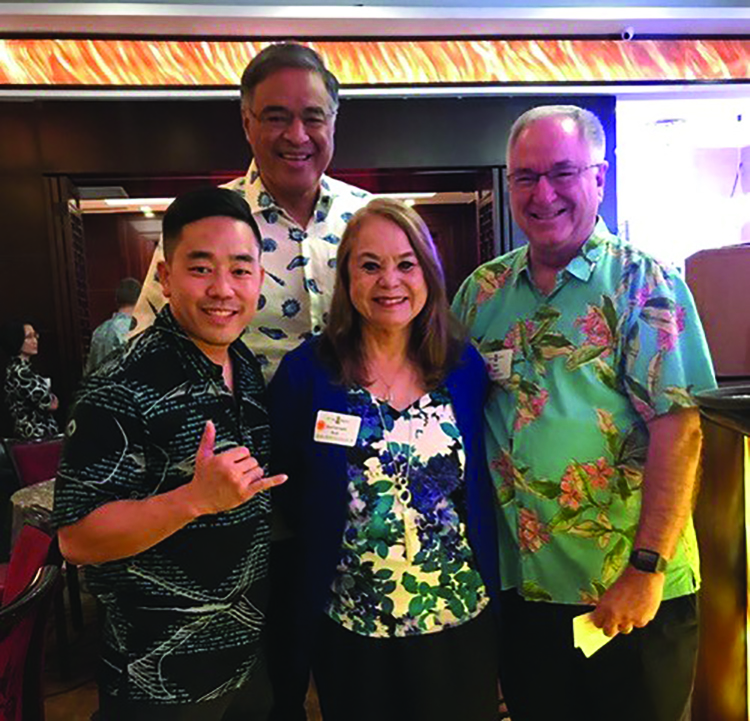
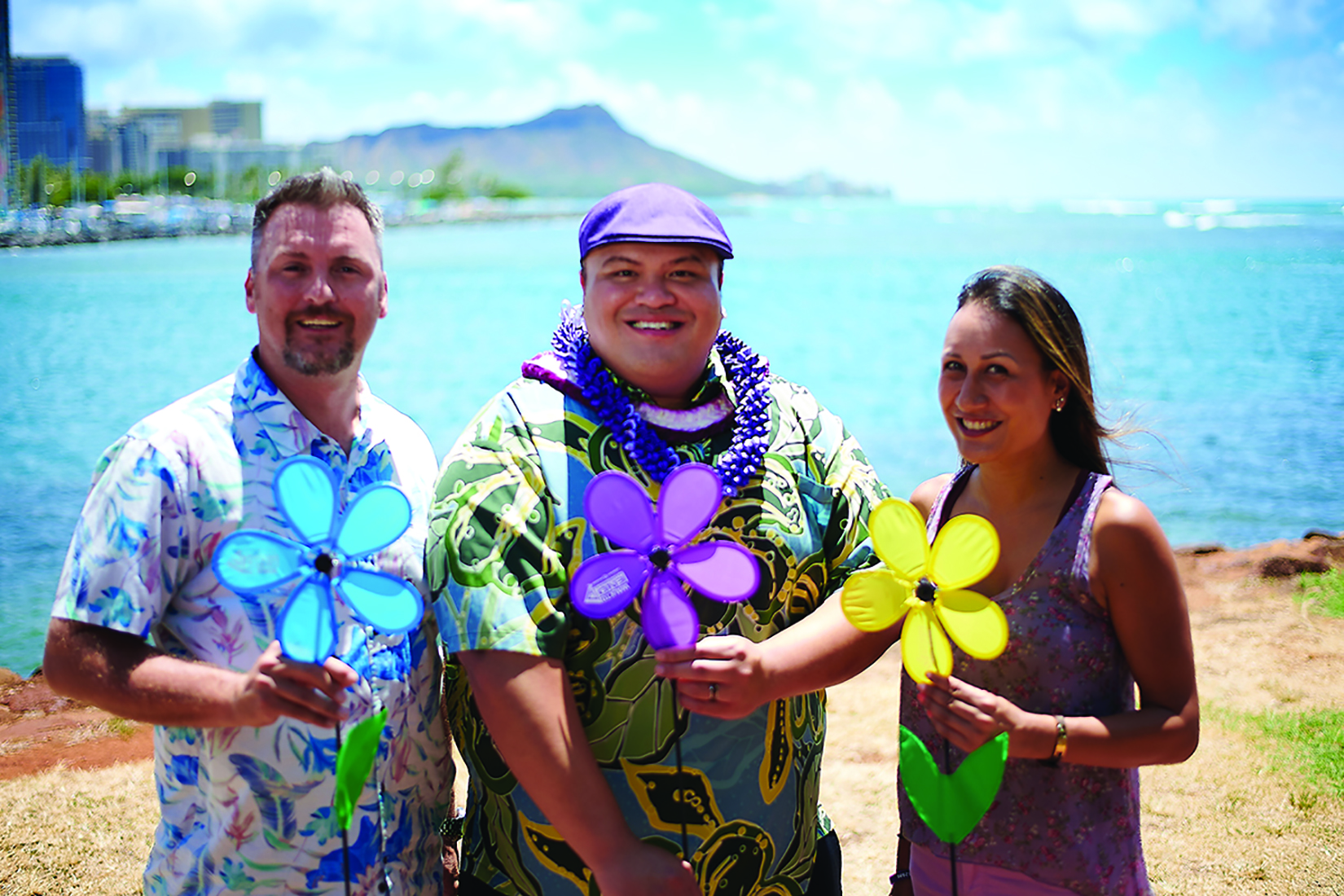
    Jessica Lani Rich with Mufi Hannemann (Hawai‘i Lodging & Tourism Association president), Jared Higashi (HLTA director of Government and Community Affairs, and VASH board member), and Rick Egged (Waikiki Improvement Association president and VASH board member).
    Jessica Lani Rich with Mufi Hannemann (Hawai‘i Lodging & Tourism Association president), Jared Higashi (HLTA director of Government and Community Affairs, and VASH board member), and Rick Egged (Waikiki Improvement Association president and VASH board member).

    Jessica became certified in Critical Incident Stress Management by the International Critical Incident Stress Foundation, the leading organization in training emergency responders from all over the world in crisis intervention and disaster response. She also received training as a Stephen minister, which helps her comfort people in need. “Part of that training is to put your feelings aside and remember that your main purpose there is to do as much as you can for that visitor,” Jessica points out, adding that, “The professional training I received really is helpful. And I work with the most tragic situations.”

    In many cases, the victim isn’t the one who needs support. “Sometimes the loved one becomes a secondary trauma victim,” Jessica notes, recalling an emotional time she accompanied the friend of a 22-year-old murder victim to the Medical Examiner’s Office to identify his friend’s body so it could be released to the grief-stricken family in California.
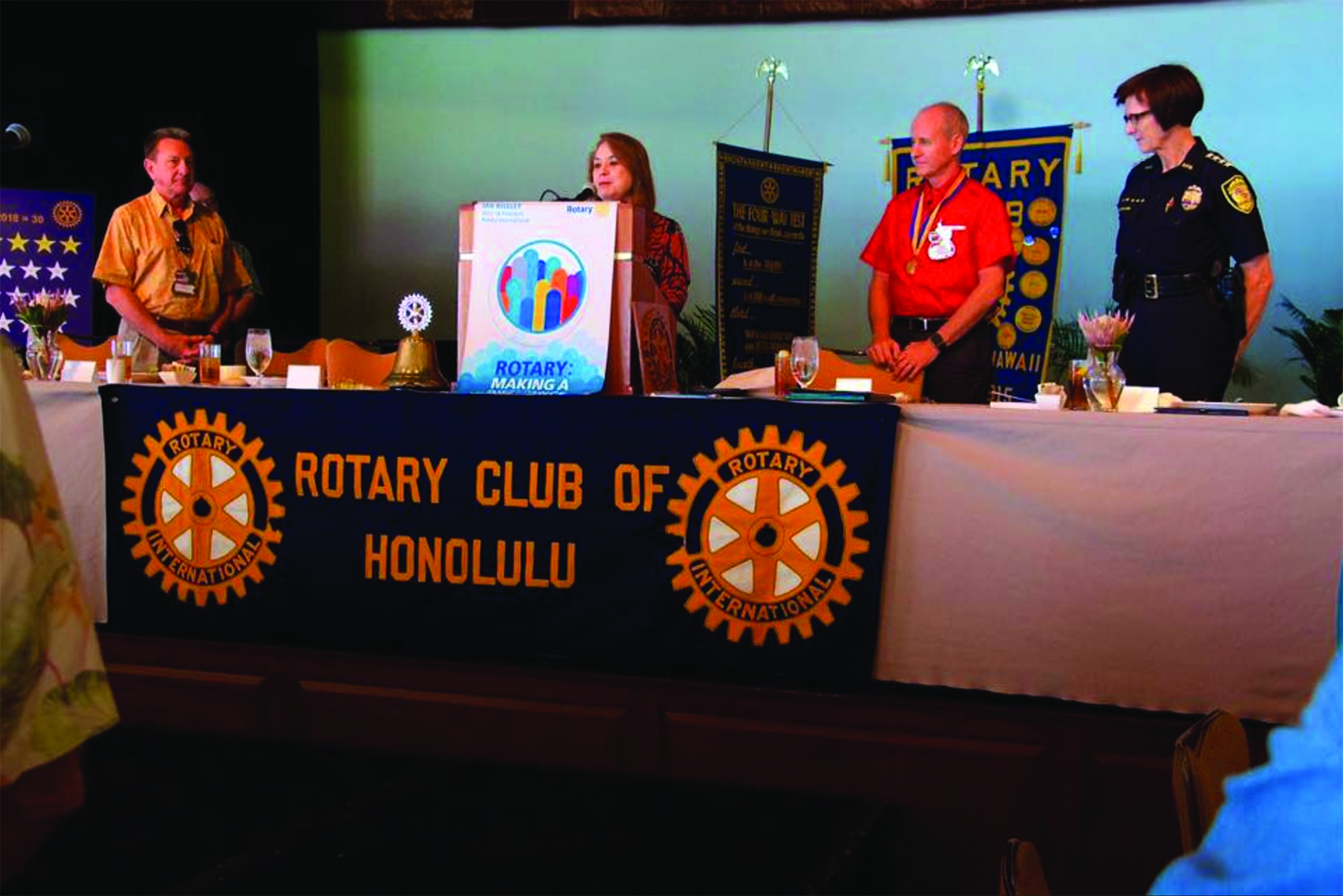
    Jessica speaking to the Rotary Club of Honolulu.
    Jessica speaking to the Rotary Club of Honolulu.

    Professional critical incident training has also been valuable in other cases, such as the time Jessica waited on the shore with a new bride while firefighters retrieved the body of her husband, who had drowned on the first day of their  honeymoon. “You never get used to seeing someone in pain,” Jessica says softly. “What you do get used to is: I’m here to comfort them, I’m here to do all I can to show our visitors that I’m going to help them through this.”

    “It’s not easy,” she admits. But fortunately for our visitors, Jessica and the volunteers at VASH are trained and ready for any number of incidents. Yet, if you look at Jessica’s background, you won’t see a straight line that brought her to the position she’s in now.
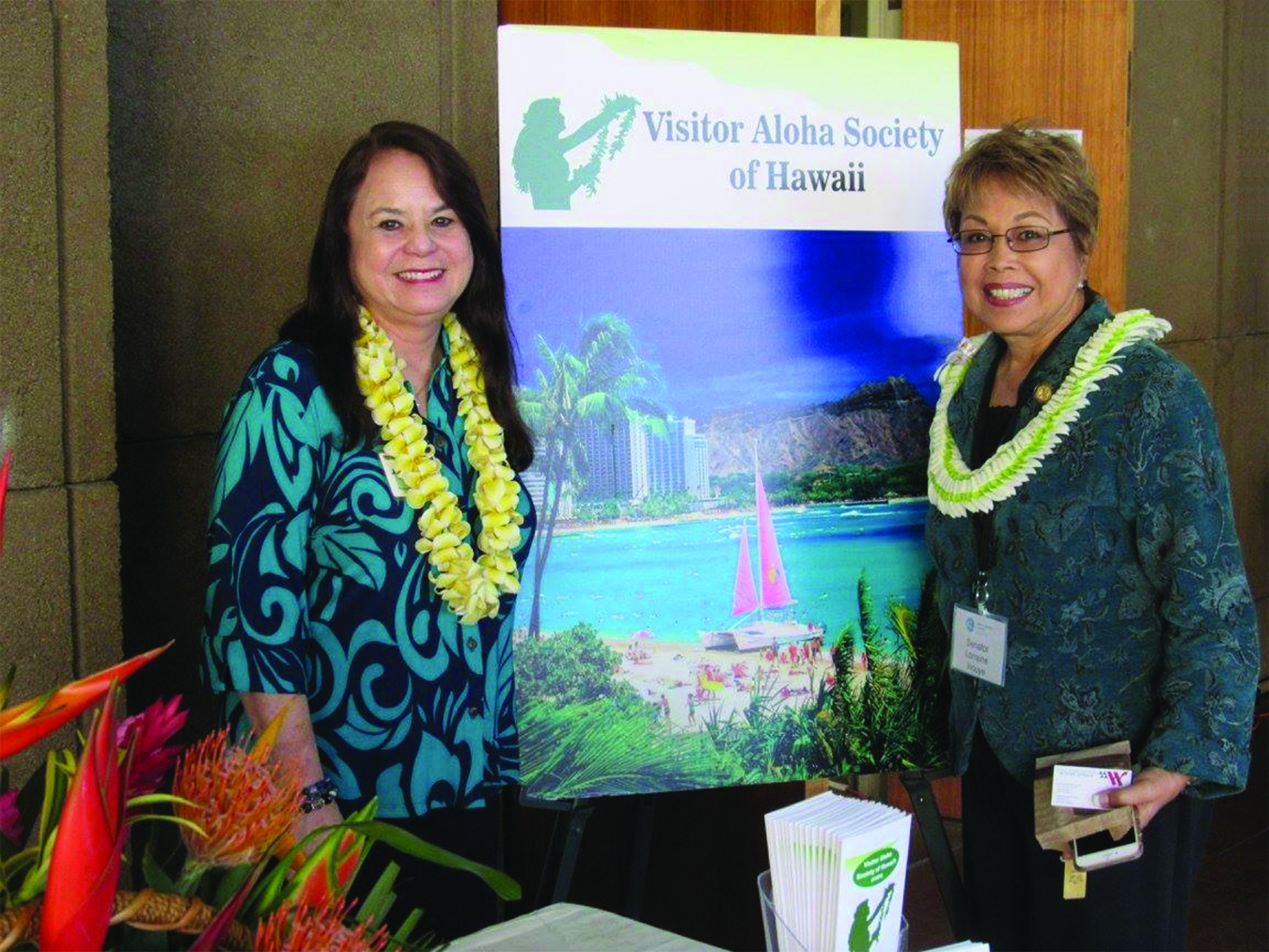
    Jessica with Sen. Lorraine Inouye at the Hawai‘i State Capitol.
    Jessica with Sen. Lorraine Inouye at the Hawai‘i State Capitol.

    You might not expect Jessica’s career path to include radio announcer and news director, which she was for seven years at KUMU Radio. And you might not guess that she worked in public relations at Bishop Museum and the Honolulu Academy of Arts (now the Honolulu Museum of Art). But it’s those experiences and the skills she learned, and the people she met that have prepared Jessica Lani Rich for her role today.

    “There isn’t a month goes by when somebody doesn’t say, ‘Oh, I wouldn’t have your job for anything,’” Jessica says. “And I have two responses to that. One is: Somebody needs to be there when visitors are away from home without the support of their family and friends. And the second is: Yes, it’s hard work.”

    But Jessica says this is her life’s calling, “to help people in their darkest hour; to let them know that I may be a stranger, but I care. And that’s one of the things people need when facing a crisis — just to have someone there.”

    Community Matters

    When Jessica Lani Rich isn’t taking care of others,  she’s often busy with community affairs. She proudly serves as the Pacific region representative for Travelers Aid International. She’s one of the area directors for the local Toastmasters International. She’s been on boards for the Waikiki Community Center, Rotary Club of Honolulu, American Diabetes Association and Ukulele Festival Hawaii. And she loves playing the ‘ukulele and singing with the Mele Rotarians.

    Jessica is also proud of her son, the head women’s basketball coach at Mission College in California, and her husband, who’s a retired editor at McGraw-Hill and part-time English teacher at McKinley High School. Raised in California, Jessica received her Bachelor of Arts degree in communications from San Francisco State University and did her MA graduate work at the University of Hawai‘i at Mānoa.

    As a passion project, Jessica produces and hosts a weekly television show that highlights people who are making a difference in the world. “I realized that life is short and I wondered what it is that I wanted to do. And I want to do something for our residents,” Jessica explains. Through the program, she’s featured more than 200 people and helped more than 60 nonprofits.

    You can watch “Inspire You & Me” on the Family Broadcasting Corporation (KWHE TV-14, Spectrum Channel 11 at 8pm on Sundays) and on YouTube. “I feel that is my way of giving back to the community,” says Jessica.

    After the Storm

    Blue Hawaiian Skies

    “We can’t take that negative experience away,”  says Jessica. “It happened,” she says, referring to Ashley Streich’s plane crash.

    A few days later—with no injuries beyond bruises — Ashley turned 13. When Jessica learned that the teen was a big Elvis fan, VASH threw an Elvis-themed birthday party. And filled with gratitude, the Streichs decided to continue their vacation instead of rushing back to Seattle.

    When they did return home, Ashley hosted a swim-a-thon fundraiser for VASH. “I wanted to give back in some way that I could,” Ashley says. “They had just been so helpful for myself and my family.” Jessica says she was astonished by that. “A lot of times that we help people, they don’t even say thank you and you never see them again. Here, you have a teenage girl, and she was so grateful. I generally don’t see that kind of gratitude from adults.”

    Today, Ashley is still an Elvis fan and still grateful to Jessica and VASH for giving her family a happy ending to their tragic visit. “She took me from crisis and trauma to feeling like I wanted to come back,” says Ashley who’s returned a number of times. Ashley’s boyfriend proposed to her here, and the two even had a Hawai‘i-themed wedding.

    “Knowing that VASH was there for us was a huge comfort,” Ashley says. “In all honesty, you never want to meet them. But to know that they’re there makes it a thousand times better.” And for Jessica, “What’s emotional for me about this particular story is that on that day, “They had just been so helpful for myself
    and my family.”

    Ashley Streich could have died,” she says. “One act of kindness, one act of caring in a life-and-death situation — this is what our agency is about.”

    Back on His Feet

    Gary Aguiar would need to spend several more weeks in the hospital recovering from the ravages of a flesh-eating disease that almost took his life. When Gary’s wife and kids returned to the San Francisco Bay Area, Jessica arranged for volunteers to keep him company and lift his spirits. “That was great,” Gary remembers with a smile. “When I woke up, these VASH people were around. And the best part was “just having someone to talk to. It was kind of great, you know? Couple times a day, I had somebody showing up.”

    “When I woke up, these VASH people
    were around. And the best part
    was just having someone to talk to.
    It was kind of great, you know?”

    In addition to VASH volunteers who kept Gary company for weeks, Jessica also coordinated daily visits from members of the Rotary Club of Honolulu. Gary is a Rotarian in Northern California and Jessica’s a member in Honolulu. The Rotary Club of Honolulu, the oldest and largest of these clubs in Hawai‘i, gave VASH its start in 1997, in cooperation with the Honolulu Police Department.
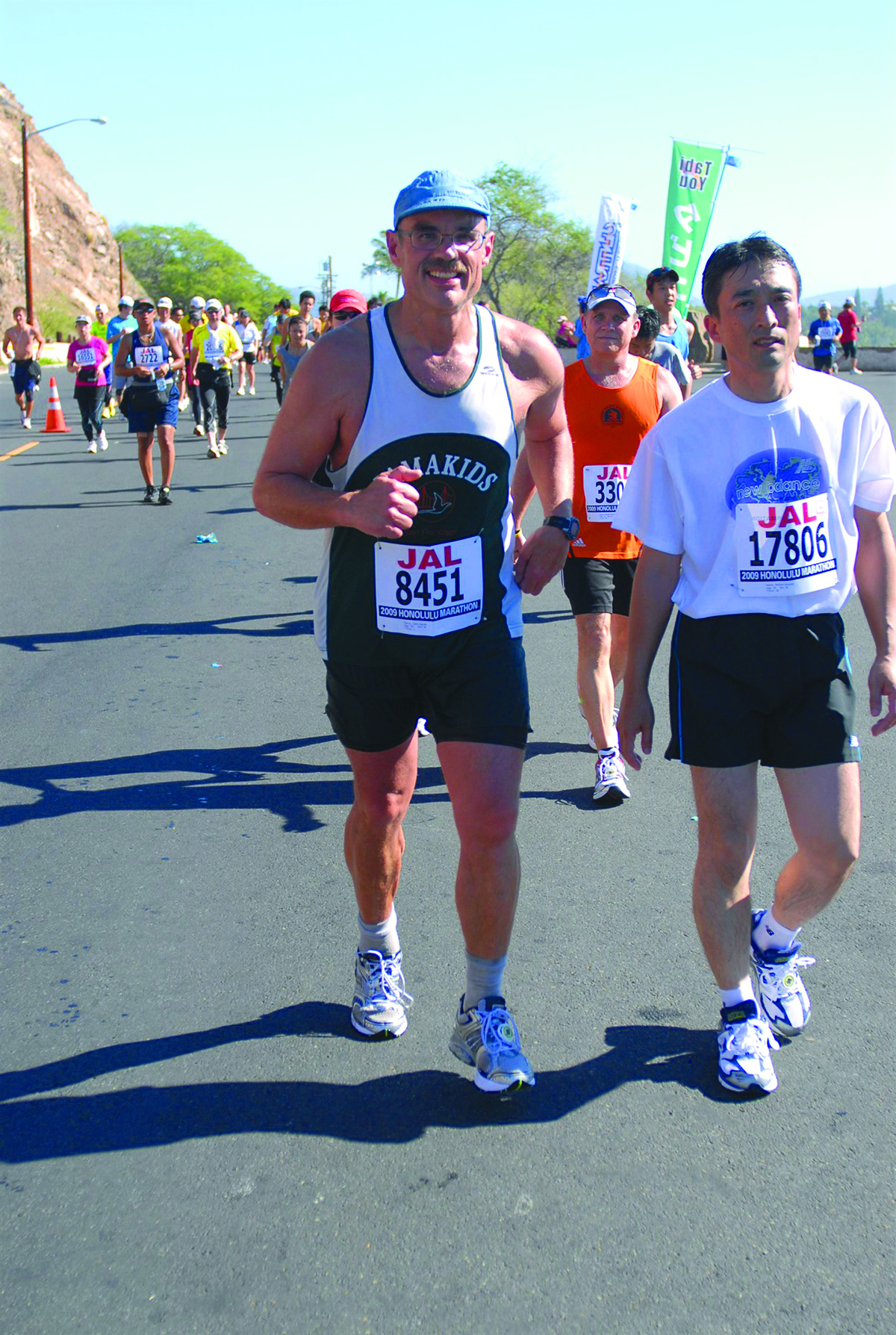
    Those daily visits helped Gary Aguiar overcome extreme adversity and made him want to return some day. “I really like Hawai‘i,” he says with a smile. “I feel connected.”

    Remarkably, within two years of nearly losing his leg — and his life — to a flesh-eating disease, Gary returned to Hawai‘i and actually completed the Honolulu Marathon.

    A Moment of Magic

    “Every time a business comes in touch with a customer is a moment of truth,” explains Chris D’Souza, who writes and teaches about business concepts. “That can be a good moment of truth or a bad moment of truth, or even a moment of misery. The moments of misery are the most dangerous for a business as this misery is contagious and can spread like a virus,” he cautions. “How the business handles a customer who, unfortunately, has a bad experience is important in this process.”

    Gizelle D’Souza experienced a moment of misery when she was assaulted outside a restroom at Kailua Beach Park. Her husband, Chris, describes the scene as, “chaotic, miserable and uncertain.”

    Fortunately for the couple from Australia, a social worker at Castle Medical Center called VASH and Jessica followed up with comfort and support. She arranged for Gizelle to consult with top medical specialists after Chris expressed concerns about possible long-term effects of the injuries. And Jessica also gave the couple tickets to spend a day at the Polynesian Cultural Center.

    Gizelle and Chris are grateful that Jessica was there for them — not just on the day they first met, but again a year later, when they returned to Honolulu to testify in criminal court.

    “We really appreciate all that Jessica has done for us,” says Chris, adding, “She was our rainbow after the storm.”

    “I would describe Jessica as an angel in my time of need,” says Gizelle.
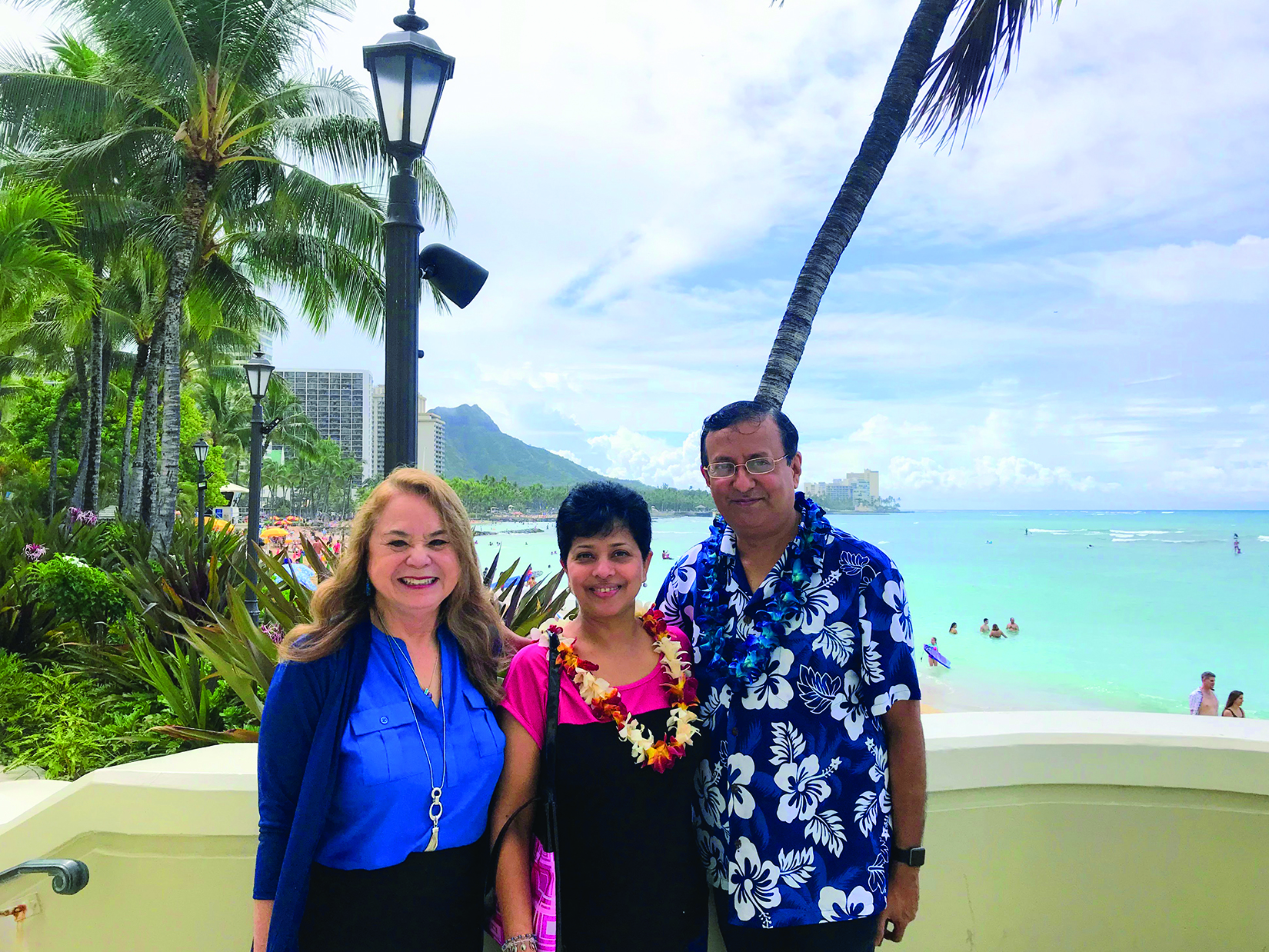
    “Sometimes I help people who say they hate Hawai‘i and never want to come back,” says Jessica. And after the incident, the couple’s adult children encouraged them to return home. But they stayed and enjoyed their visits to Kaua‘i, Hawai‘i Island and Maui, as well as O‘ahu.

    “Thanks mainly to Jessica and the resilience of Gizelle, who did not want to let adversity win, we decided to continue our holiday,” says Chris. “And we are glad we did. In this decision, Jessica played a big role, and we saw how remaining in Hawai‘i would help in our healing process.”

    This is an example of how, “a moment of misery can be turned into a moment of magic,” he says. “A terrible tragic incident like the one we faced was mitigated to some extent by the healing aloha magic of Jessica and VASH. Our feelings toward Hawai‘i are so much better now.”

    Gizelle agrees, saying that, “Jessica showed us the beautiful and kind side of Hawai‘i.”

    “We really appreciate all that Jessica
    has done for us. She was our rainbow
    after the storm.”

    For VASH, stories of success can often be stories of resilience and overcoming adversity. And for Jessica Lani Rich, the true measure of success is in the gratitude that people share in return, as well as their desire to return to Hawai‘i, even
    after they experience a crisis here. Sometimes, Jessica adds gratefully, “They even look at me and our volunteers as forever friends.”


    VISITOR ALOHA SOCIETY OF HAWAI‘I – O‘AHU
    808-926-8274 | JRich.vash@gmail.com
    www.visitoralohasocietyofhawaii.org
    Hrs.: Monday–Friday (except holidays): 9am–5pm
    After-hour emergency number: 808-926-8274

    KAUA‘I VASH
    24-hour: 808-482-0111 | daphne.therese@yahoo.com
    www.visitoralohasociety.org
    MAUI COUNTY VASH
    808-244-3530 | janet@mauivb.com
    www.hawaii.com/travel/visitor-aloha-society
    BIG ISLAND VASH
    Kona, West Hawai‘i: 808-756-0785
    Hilo, East Hawai‘i: 808-935-3130
    www.vashbigisland.org

    DONATIONS: The Visitor Aloha Society of Hawai‘i is a private, 501(c)(3) nonprofit organization funded by the Hawai‘i Tourism Authority. VASH is grateful to receive charitable donations from individuals, businesses and community organizations.

    VOLUNTEERS: If you’d like to volunteer with VASH, call 808-926-8274 or complete an online volunteer application
    at visitoralohasocietyofhawaii.org/volunteer-program.
     

    When the phone rings at Jessica Lani Rich’s office, it can be a really bad thing. And her phone rings a lot. Sometimes, the police call to tell her about a crime or a tragic accident. Other times, a social worker will call about an illness, an injury or even a death. And each time…

  • Lei of Aloha

    Lei of Aloha

    In Hawai‘i, any occasion can be made more special by the giving of a lei. Whether it’s for love, a celebration or to honor someone, you can choose the one that symbolizes the sentiment you want to convey or select the one that suits your taste. All represent the rich heritage of the lei.

    Lei Day, May 1, is dedicated to the Hawaiian tradition of making and giving lei. But some may not know the the tradition entails much more than the officially dedicated day. The traditions that surround lei make them appropriate for many occasions. Hawaiian tradition also offers particular lei for celebrations and seasonal events.

    Giving a lei symbolizes friendship, love, respect and honor. It is a gift for greeting someone warmly. It represents the spirit of aloha. Its beauty and meaning flow from the heart of the giver.

    A Hawaiian Tradition

    The tradition of adorning themselves with wreaths of local vines and flowers to honor their gods came to Hawai‘i with the Polynesians who settled here long ago. They brought with them many of the plants they needed for daily life — plants for medicinal use, plants for food and plants that they brought for their sweet scent for use as a personal embellishment.

    In their new island home, lei came to signify royalty, rank, status and wealth. The geography of the area, the religion of its people and the tradition of the hula were all associated with the lei they wore. As time passed, they developed their own unique culture and traditions.

    The new Native Hawaiians found many other items, including hala and maile, that could be fashioned into adornments. In Old Hawai‘i, lei were created with the lush flowers, vines and leaf stems of every kind from every island — even seaweed from the rich Hawaiian waters. Lei were also made with ivory, bone, seeds, kukui nuts, hair, teeth, shells and feathers.

    The pupu lei was made from shells and the hulu manu lei was made from feathers. Niho palaoa lei were made of the bones of the walrus and whale held together by human hair, which were passed down through generations.

    Other plants and materials were introduced later, such as the carnation, orchid and plumeria.

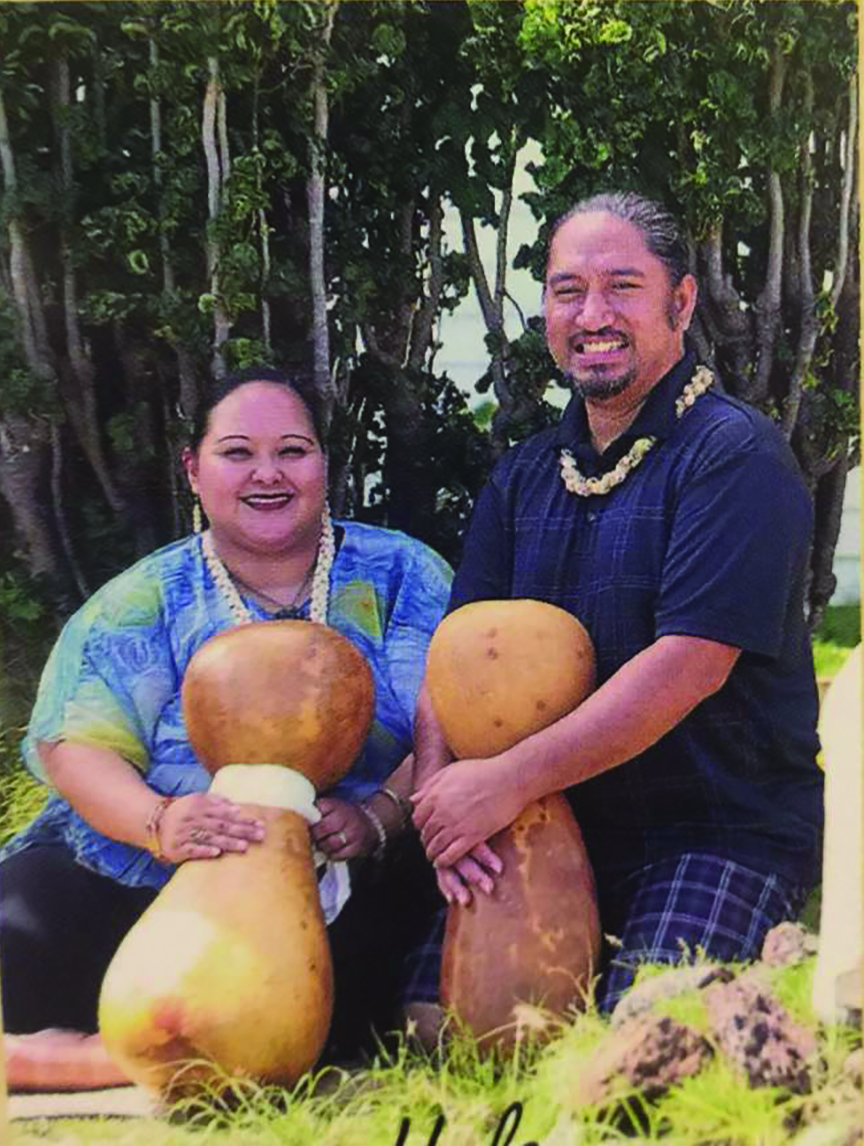
    Kapono Kamaunu learned about Hawaiian culture, hula, chanting and more from Kumu Hula Keli‘i Tau‘ā.
    Kapono Kamaunu learned about Hawaiian culture, hula, chanting and more from Kumu Hula Keli‘i Tau‘ā.

    Lei and Hula

    What Kapono Kamaunu knows about lei and Hawaiian culture, he didn’t learn growing up. He was raised on O‘ahu, where his childhood activities and interests mostly revolved around Waikīkī Beach and sports. When he moved to Maui in 1993, he met Kumu Hula Keli‘i Tau‘ā, a teacher at Baldwin High School. As a freshman, he not only learned about hula and chanting, but other aspects of the Hawaiian culture, as well.

    Kapono and his wife, Priscilla, became kumu hula 10 years later, offering training for hālau hula on Zoom since the pandemic began. They own and run a home-based hula implement-making business called “Na Kani O Hula.” Kapono works as a cultural advisor at the Fairmont Kealani and performs at the Old Lāhainā Lū‘au, as well.

    “Through hula, we learned about lei-making, Hawaiian history and culture,” he says.

    In Old Hawai‘i, the major types of lei were each related to different spirits and used for different reasons. Many were related to Hawaiian myths and religious customs, Kapono says.

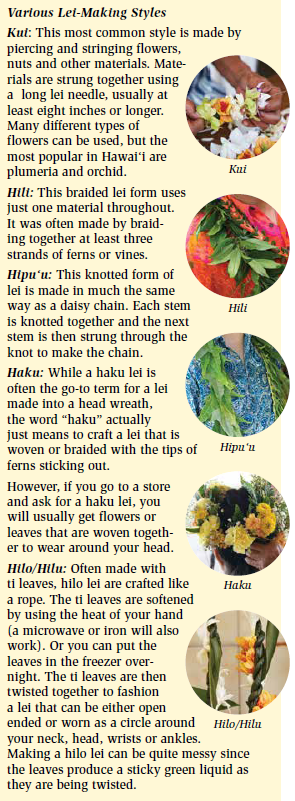
    Brief descriptions of lei-making styles“It goes back to hula,” says Kapono. “For most of the year, the lives of the Hawaiian people were strictly governed by a set of laws called ‘kapu.’ Everything they did was directed by these kapu, including hula. But during the Makahiki season (October or November through February or March), the ancient Hawaiian New Year festival in honor of Lono, many kapu were suspended. This time of year, kane (men) were allowed to perform hula on heiau, traditional religious temples. Makahiki was a time of peace, gathering and hula performances without restriction. For ceremonial purposes, hula dancers would wear lei.”

    Kapono and his wife Priscilla own and run a home-based hula implement making business.
    Kapono and his wife Priscilla own and run a home-based hula implement-making business.

    Traditionally, hula dancers wear specific lei to reflect the dance they are performing, especially in a competition setting. Dancers tie in the story — the chant or mo‘ōlelo — its setting and the flowers, ferns and other materials found in the location relevant to the story, says Kapono.

    “In hula, we say kinolau — the divine is everywhere, and everything is the divine. It is the physical embodiment of the many Hawaiian gods and goddesses.”

    “After asking permission from Laka first, hula dancers would gather ferns, such as palapalai, laua‘e ferns and maile, for their adornments in ceremonial performances and other practices as well,” says Kapono. “The gathered vines, leaves or flowers were placed on the kuahu hula (hula altar) dedicated to Laka.”

    “Whatever is in the song, we aim for the closest possible representation.”

    “For example, Pele and her sister Hi‘iaka are represented by the red flowers of the ‘ohi‘a lehua brought to the islands by the Polynesians settlers. So when you do a dance about Pele, you would wear a haku (braided) lei or a lei po‘o made of ‘ohi‘a lehua, as well as a lei a‘i (a neck lei).”

    For centuries, lei made from the fragrant leaves of maile have been used to communicate love, respect, blessing, enduring devotion, reverence, friendship and a desire for peace.
    For centuries, lei made from the fragrant leaves of maile have been used to communicate love, respect, blessing, enduring devotion, reverence, friendship and a desire for peace.

    Traditional Meanings and Uses of Lei

    One of the most popular of all the lei varieties was the maile lei, made from a leaf-covered vine with a sweet and spicy scent. This vine was worn around the neck, draping freely down to the waist. The maile lei was related to the spirit of the hula dance and represented Laka, the goddess of hula, as well as other sacred spirits.

    For chieftains and members of royalty, the ilima was preferred. The full, lush lei was made from hundreds of delicate orange blossoms.

    The ti plant has a long tradition of being planted outside homes to keep evil spirits away. Ti stalks were used to proclaim peace and to call a truce. A lei was made by tying ti leaves together. The open lei was worn by physicians and priests.

    Limu kala, a type of seaweed, was gathered and used in many different ways — for religious purposes, as medicine, for consumption or as a lei. Traditionally, limu kala was gathering, fashioned into a lei and worn by a person suffering from an illness. The ill person or a kahuna would then pray to Kanaloa. When prayers were completed, the wearer of the lei would fully immerse him or herself in the ocean. In time, the lei would be swept into the sea as an offering to Kanaloa, in hopes of cleansing the wearer of the aliment.

    Lei Traditions of Yesterday and Today

    By fusing their island lifestyle with their  sacred rituals and the natural elements around them, Hawaiians created lei that began to be worn for virtually every occasion by both commoners (maka‘ainānā) and chiefs (ali‘i) alike.

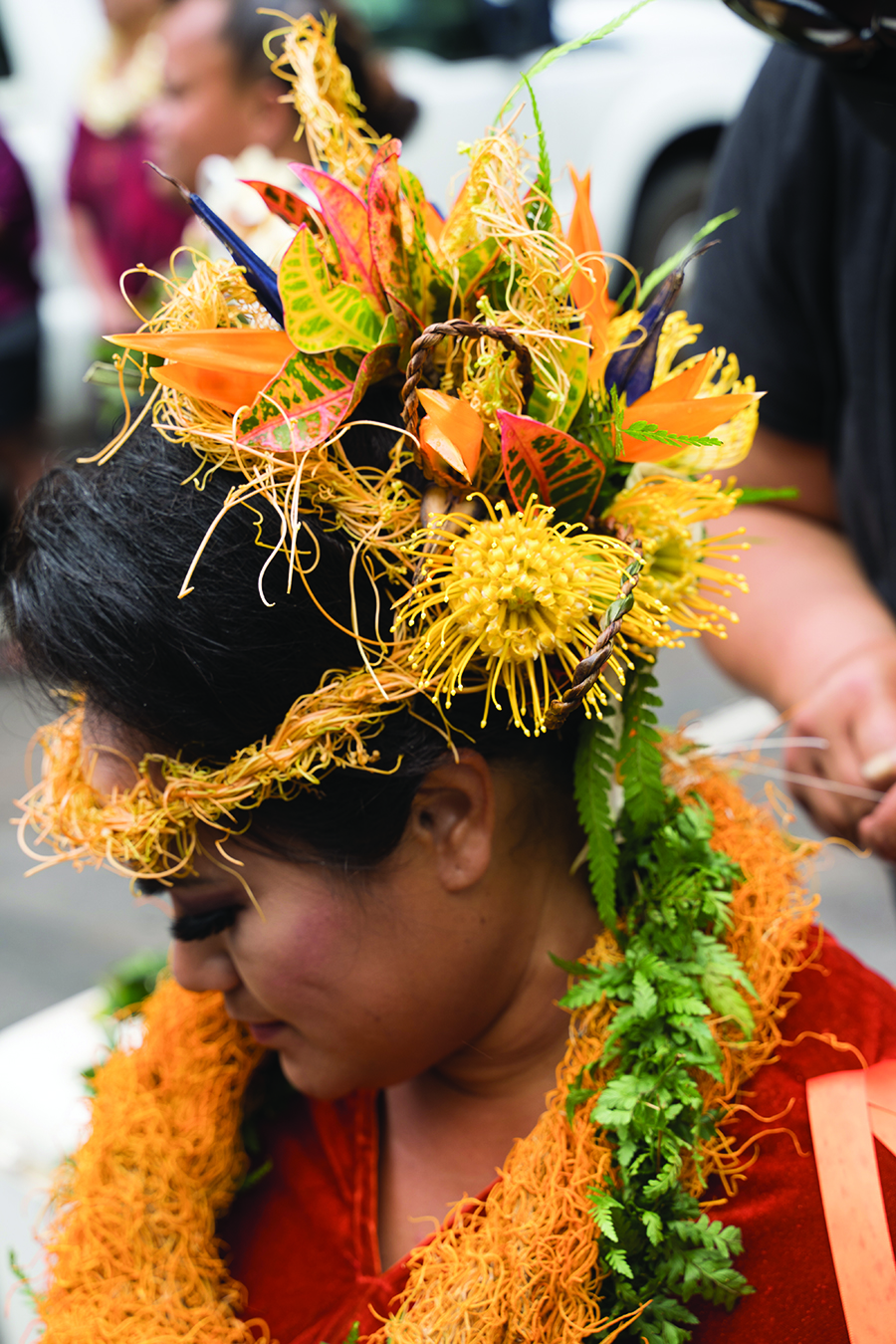
    A lei po‘o is any lei that is worn around the head. What is often referred to as a haku lei is actually a lei po‘o crafted in the haku style.
    A lei po‘o is any lei that is worn around the head. What is often referred to as a haku lei is actually a lei po‘o crafted in the haku style.

    “Today, lei are used for an array of occasions and it is widely accepted throughout Hawai‘i Nei that any type of lei can be worn by anyone and everyone,” says Kapono. “One thing that hasn’t changed is that the giving of a lei symbolizes giving your mana to someone else.”

    Mana is a supernatural force that may be ascribed to persons, spirits or inanimate objects. It may be good or evil; beneficial or dangerous.

    “When we are making lei, we want to ensure that we are putting the best of our spiritual energy into the lei,” says Kapono, “so when we give it to someone, we are giving them good energy, connection and love. Lei are the quintessential symbol
    of love; of aloha.”

    The type of flower made into a lei and gifted to a loved one has more to do with personal preference and seasonal availability than symbolism, says Kapono.

    Although the lei of today are much like those worn in Old Hawai‘i when the first Polynesians settled the islands, their meaning and presentation has changed over the years.

    Lei in Old Hawai‘i symbolized the status of the wearer and were presented by bowing and holding out the lei for the recipient to take.

    “Traditionally, it was disrespectful to drape a lei over a person’s head, particularly when that someone was royalty,” says Kapono. “You do not want someone to interfere with your connection to Akua by having them cut off your mana.” This presentation method gave the recipient the option of taking it and putting it on themselves, giving it away, putting it on an altar or taking it to the ocean. “Because, just as lei are made and presented with love, they can also have bad intentions.”

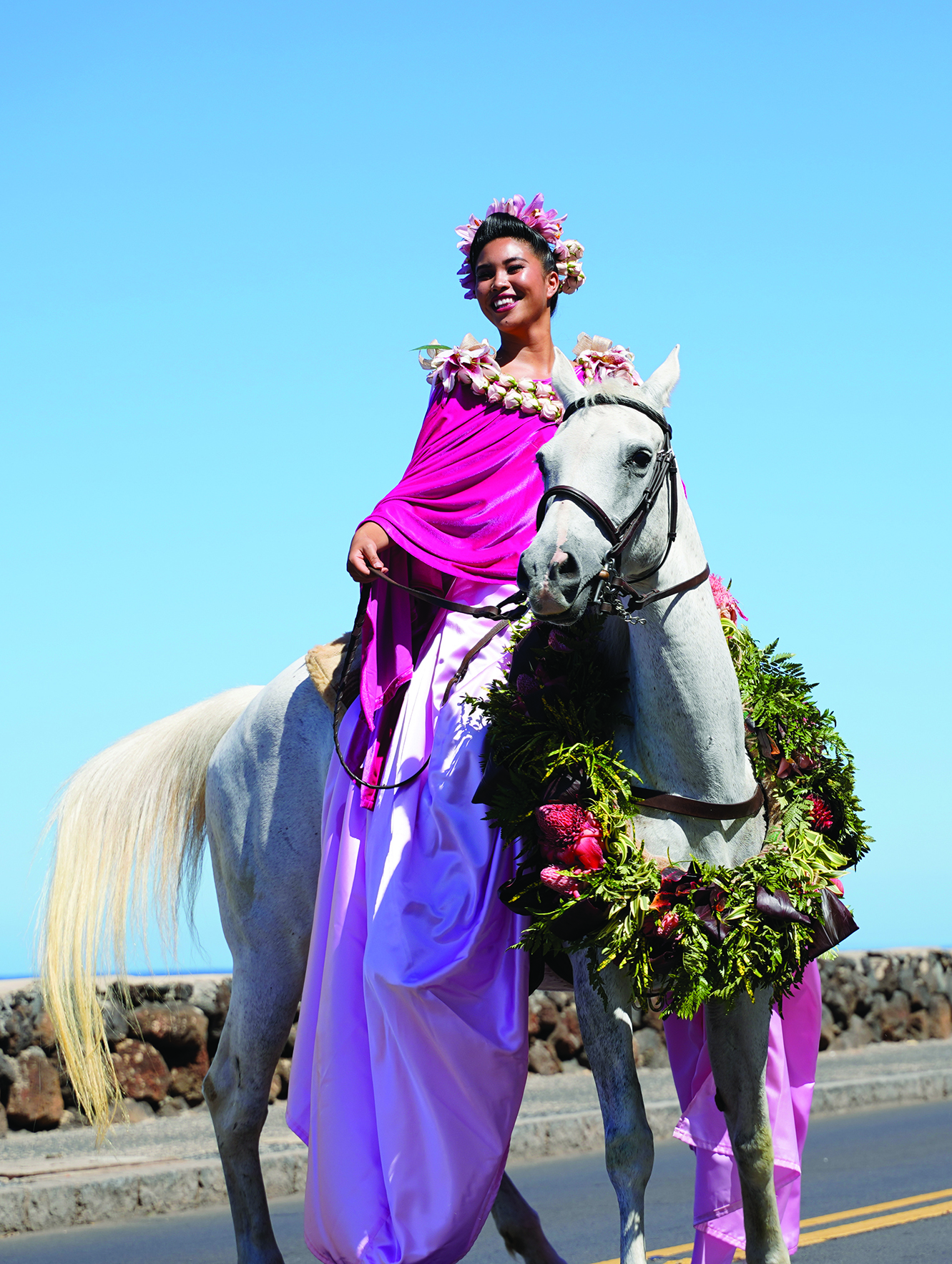
    Adorned with a bounty of colorful lei, the regal pa‘u riders and their horses are the highlight of every parade
    Adorned with a bounty of colorful lei, the regal pa‘u riders and their horses are the highlight of every parade

    Around the 1840s, when Steamer Days or Boat Days began at Aloha Tower and Honolulu Harbor, visitors were greeted with armloads of lei. It may have been at this time that lei began to be placed over the heads of those arriving or departing, accompanied by a kiss on the cheek. That particular tradition came to a halt with the arrival of jet planes in the 1950s. To accommodate visitors, Daniel K. Inouye International Airport’s lei stands are located in the area.

    Although most islanders believe that anyone can wear any type of lei for any occasion, Hawaiian tradition dictates the use of specific lei that are symbolic of the occasion, related to the season and dependent on the time of year the flower is in bloom. Worn at other times, it can bring the wearer bad luck.

    For example, a lei made from the yellow, orange and red keys of the pineapple-like hala fruit interlaced with maile leaf or laua‘e fern can be worn at the beginning of Makahiki season, the Hawaiian New Year. Worn at this time, the hala lei invites good luck, pushes bad luck aside and prompts the wearer to forgive past grudges. However, worn at other times of the year, it can bring the wearer bad luck. The lei is associated with death and is often worn at funerals.

    Although there is significant meaning associated with the giving of a lei, it is open to different interpretations by the maker, seller, giver or recipient. But it may be wise to be aware of certain traditional details.

    “Some people still believe that it is inappropriate to give a pregnant woman a closed lei,” says Kapono. “An open lei may be given, as it symbolizes that the baby will be unencumbered and unharmed by the umbilical cord, ensuring it will not be tangled around its neck in the womb.”

    Lei are often referenced as being created in a circle to symbolize love and the family circle. “Lei, like many of our nāmea Hawai‘i (Hawaiian arts), have grown and evolved into priceless artifacts that are shared around the world. Whether it’s an heirloom feather lei, a lei pupu that is passed down from generation to generation, or lei made from fragrant flowers and beautiful ferns, the joy of gifting and receiving a lei filled with the aloha spirit can brighten anyone’s day — even during the darkest of times.”

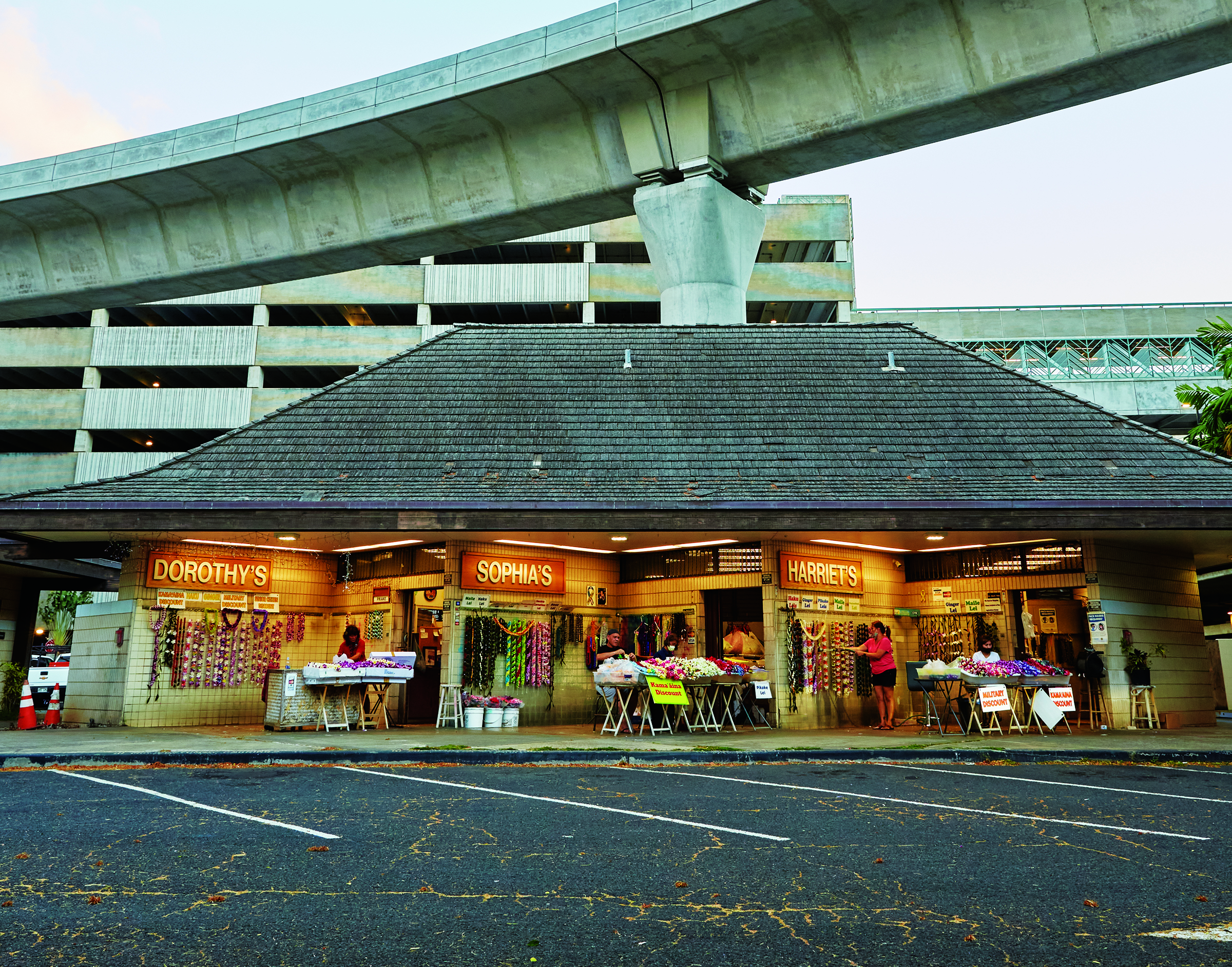
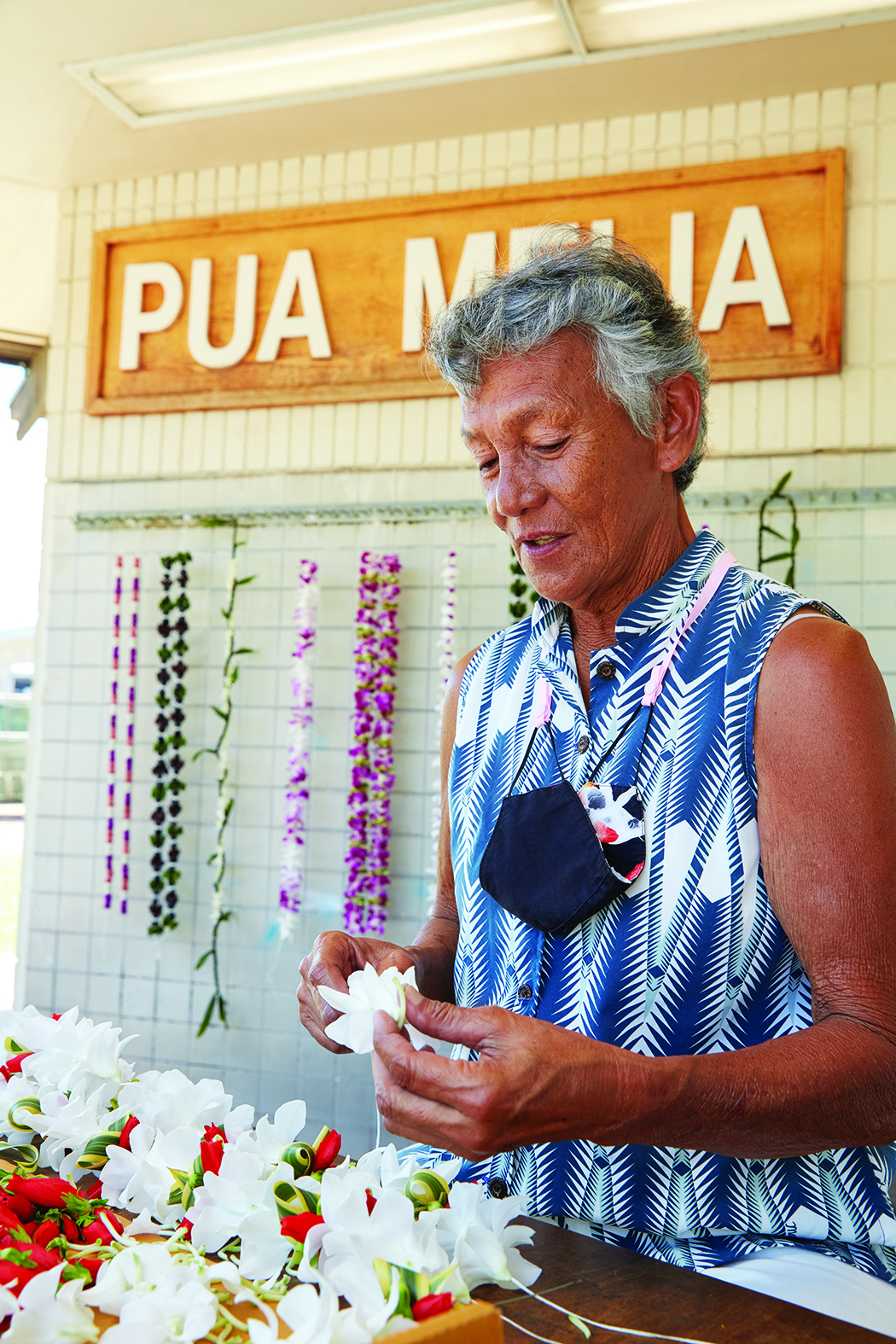
    Ku‘ulei Ka‘ae makes and sells lei from Pua Melia, her stand near Daniel K. Inouye International Airport. Ku‘ulei’s family began selling lei four generations ago, beginning with her great-grandparents. The other women selling lei here are also descendants of the original Native Hawaiian airport lei sellers.
    Ku‘ulei Ka‘ae makes and sells lei from Pua Melia, her stand near Daniel K. Inouye International Airport. Ku‘ulei’s family began selling lei four generations ago, beginning with her great-grandparents. The other women selling lei here are also descendants of the original Native Hawaiian airport lei sellers.
    Ku‘ulei Ka‘ae
    Ku‘ulei Ka‘ae

    A Family Tradition: Love From the Lei-Sellers

    “That is what we have to offer in this pandemic — love. I know that when people receive lei, they feel the love we put into them,” says Ku‘ulei Ka‘ae, who makes and sells lei from her stand near Daniel K. Inouye International Airport. “I don’t think a lot of people realize what a lei can do for a person. The type of lei you give is a personal choice. Whether it is pikake, plumeria, ginger, pakalana or double tuberose, the giver must love the flower as it is a symbol and extension of their love for the recipient.”

    Ku‘ulei’s family began selling lei four generations ago, beginning with her great-grandparents. They sold in different locations, such as Chinatown and Aloha Tower. Their daughter, Sophia Ventura, Ku‘ulei’s grandmother, had a 1932 Ford truck that her husband equipped with hooks for displaying the lei. She also sold lei at Fort DeRussy — the only lei seller there. She was later invited to set up shop near the access road of the then Aeronautics Aviation Airport.

    Ku‘ulei was around 9 when the stands moved to Lagoon Drive in 1963. “My mother and I were the first ones to open our doors in this new building.” In the early 1990s, they were relocated to the concrete building they now occupy.

    The women selling lei at this location are descendants of the original Native Hawaiian airport lei sellers. Since Ku‘ulei is the only daughter in her family, her mother gave her Pua Melia, the Airport Lei Stand she operates to this day.

    “The only time I ever got a lei growing up was  when my mom brought home a plumeria lei for May Day. I wondered, why a plumeria? I asked my mom why I couldn’t have a double carnation lei or pikake. She said, ‘Because the plumeria is the most beautiful flower. One day you will understand.’ The point was, when you get a lei, it is from the heart. It is aloha; it is love. When you are younger, you don’t really understand the depth and meaning.”

    “Then when I was in ninth grade, she brought me a double carnation. I was so thrilled! When I went to school, I put it on. I took it off about a half-hour later and gave it to a friend because I realized it didn’t mean anything to me. It wasn’t from my mother’s heart. She only got it for me because I asked for it. Oh how I wished I had that plumeria lei — it meant the world to me! I realized what my mother was saying. The most beautiful lei comes from the heart.”

    “I will wear your love as a lei,” Ku‘ulei recited in Hawaiian.”

    Hawai‘i’s lei have become revered all over the world for their beauty and fragrance. “Today, many lei or hula practitioners teach the traditional art and practices of lei, continuing to strengthen our heritage through our younger generation, visitors and practitioners abroad so we can wrap a lei of peace and aloha around the entire world,” says Kapono.


    Lei Day, May 1, is dedicated to the Hawaiian tradition of making and giving lei. But some may not know the the tradition entails much more than the officially dedicated day. The traditions that surround lei make them appropriate for many occasions. Hawaiian tradition also offers particular lei for celebrations and seasonal events.

  • Living with Diabetes: It’s a Family Affair

    Living with Diabetes: It’s a Family Affair

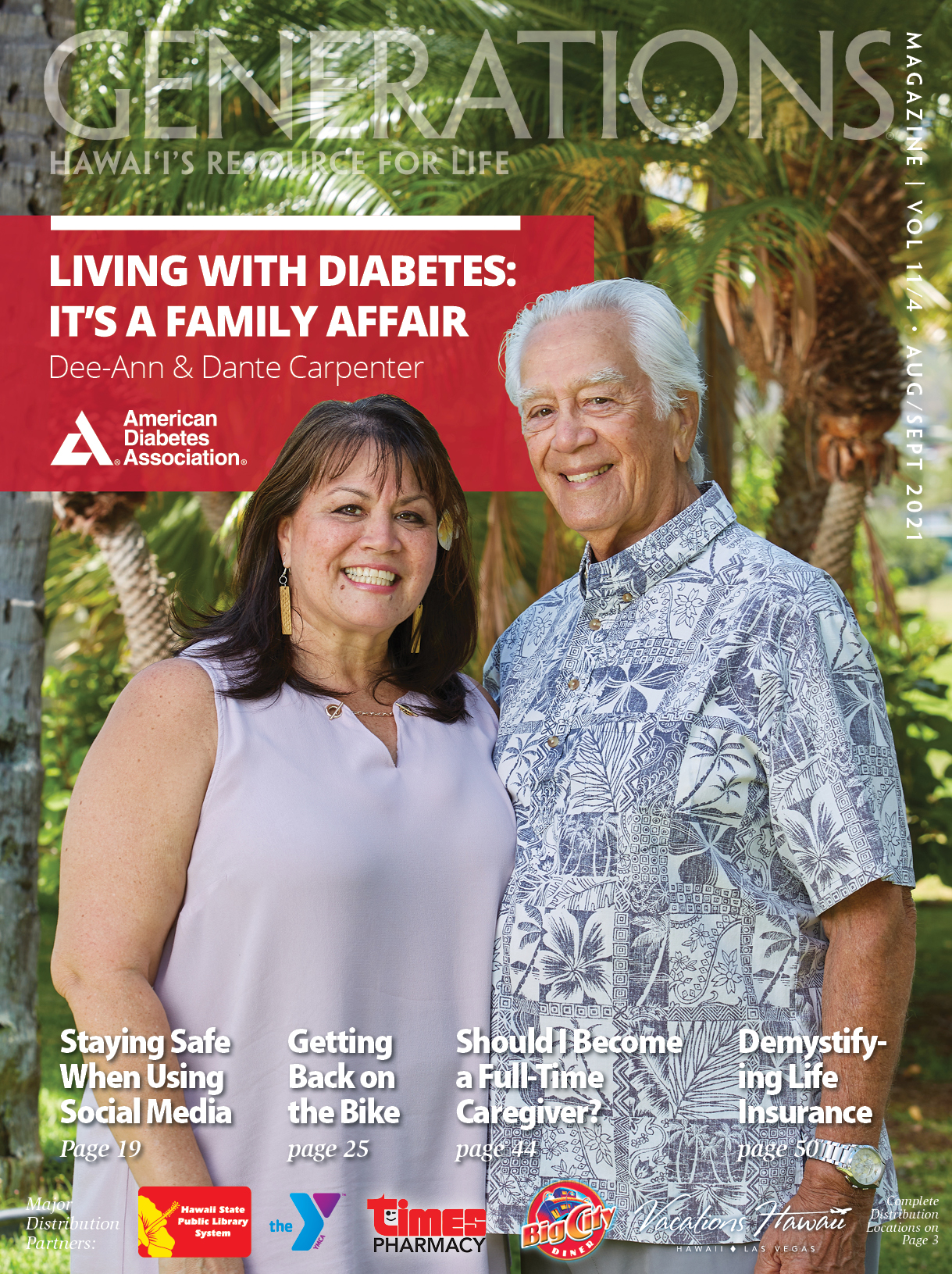
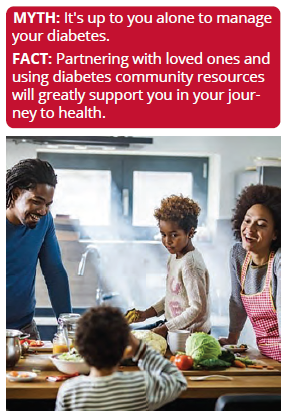
    Living With Diabetes, it's a family affairFamily plays a key role in the well-being of a loved one diagnosed with diabetes or prediabetes. While such a diagnosis might seem overwhelming, it is the small things we do daily that determine how the condition will progress. Family members can help and encourage their loved one by becoming part of their healthcare team.

    Twenty-five years ago, when Dante Carpenter’s wife, Olan, learned her husband had been  diagnosed with diabetes, she threw out every food in the house that might tempt him and worsen his condition. Her concerns and actions helped set Dante on the path to managing his diabetes through lifestyle changes.

    Dante has been actively involved with the American Diabetes Association Hawaii (ADA Hawaii) for many years. That relationship led to him twice being a conference speaker for Taking Control of Your Diabetes, a nonprofit that works to educate and motivate people with diabetes to take a more active role in their condition. It is a perfect fit with the ADA’s own goals. Dante and Olan’s daughter, Dr. Dee-Ann Carpenter, MD, associate professor at the John A. Burns School of Medicine, is also c committed to sharing knowledge that helps people manage their diabetes through the nonprofit University Health Partners of Hawai‘i. She also is the immediate past president of the ADA Hawaii Community Leadership Board.

    What is diabetes?

    The food and drinks that provide your body with energy contain varying amounts of glucose (sugar) that enter your bloodstream. Insulin, a hormone produced by the pancreas, helps this blood sugar get into your body’s cells, where it can be used for energy. In Type 1 diabetes (T1), which affects mainly children and young adults, the pancreas doesn’t make any insulin at all. In Type 2 diabetes (T2) and prediabetes — which together affect half of Hawai‘i’s adults — the glucose stays in your blood and doesn’t reach your cells. That happens because your body either doesn’t make enough insulin or doesn’t use it well.

    Diabetes and prediabetes have serious health consequences. Diabetic comas are a dramatic example, but the everyday effects of the disease include problems with eye and dental health, heart and kidney problems, and the loss of blood flow to infected or injured body tissue, which may result in gangrene and amputation.

    It’s all about choices

    One of the predictors determining who is at risk for diabetes is family medical history. You have absolutely no choice in that, of course, but how you choose to react to a diabetes diagnosis is a huge factor in how little or how much your own health will be affected by the disease.

    Dante’s mother had T2 diabetes, predisposing him to it. His brother, Monte, was also diagnosed with T2, but found it difficult to make the lifestyle changes necessary to control its effects.

    “He never shared his ailments,” Dante says, “He just kind of lived with it.”

    Because Monte lived on the mainland, Dee-Ann adds, her family didn’t find out how serious his health problems were until near the end of his life.

    “He had kidney disease and had been on dialysis,” she said. He had lost his vision because of  diabetes and had several amputations. Monte’s wife was a dialysis nurse and tried to steer him toward healthier choices. But Monte was “pa‘akikī — hardheaded,” Dante says, and wouldn’t give up the chocolates and other sugary treats he loved.

    Dialysis, eyesight loss and limb loss are common complications of diabetes, but typically don’t occur until 10 or 20 years down the road. By making healthy choices, Dante has staved off those  complications for 25 years plus the years prior to that when he had undiagnosed prediabetes. Because the early symptoms of diabetes can go unnoticed, the sooner you start making healthy choices, the better. That is why the ADA strongly emphasizes prevention.

    Find out your risk early

    The ADA offers a free Risk Test to all its corporate sponsors via QR codes on flyers that are posted in lunchrooms and also through outreach to the general public at, for example, community health centers and community events. The list on pg. 35 has a link to the online version of the test.

    “When you do the test, you receive a low or high score along with a list of resources available in your area,” says ADA Hawaii Executive Director Lorraine Leslie. “Being overweight or obese, inactivity, family history, ethnicity and age are a few of the risk factors.”

    Native Hawaiians, Pacific Islanders, Filipinos and others of Asian descent are particularly susceptible to developing diabetes. In response, some of ADA Hawaii’s resources have been translated into 13 languages as public service announcements.

    The questions asked in the test — which take only a minute to complete — are based on those risk factors. What is your age? Your gender? (Women are asked if they have had gestational diabetes — diabetes while pregnant.) Family history? Do you have high blood pressure? Are you physically active? What race or ethnicity best describes you? What is your body mass index (BMI), which is calculated by entering your height and weight?

    The ADA belongs to a coalition created by the National Council of Asian Pacific Islander Physicians (NCAPIP) to promote a healthcare initiative called “Screen at 23.” BMI is a measure of body fat. A BMI score of 25 is usually the point at which healthcare providers refer their patients for diabetes or prediabetes screening. Since Asian Americans are at high risk of having those conditions but tend to have less body fat, it is recommended that they be screened at a BMI of 23.

    It is easy to see, just from the Risk Test questions themselves, that there are areas in which we can all be proactive in preventing diabetes, even if we get a low score on the risk test. We can’t change our age, gender or ethnicity, but we can do something about avoiding high blood pressure, exercising regularly and keeping our weight down in order to lower our BMI. And, since “family history” includes the environmental and lifestyle factors that family members share, we can do something about those, too.

    Gain access to good nutrition

    Nanosecond by nanosecond, 24 hours a day, a multitude of different types of cells in your body are busy enabling all the functions you take for granted in day-to-day living. Without good, balanced nutrition, some bodily processes falter and may even shut down altogether.

    But we’re busy, too, right? Preparing healthy, nutritious meals can be time-consuming and, especially in Hawai‘i, the ingredients are often expensive. Dr. Dee-Ann notes the many fast food restaurants lining the road to Wai‘anae and the West Side of O‘ahu, which has a high proportion of Native Hawaiian residents.

    “You’ve just finished work at your second job,” she says. “You’re just going to get something quick and easy because you’re tired and it’s cheaper than going to MA‘O Farms to get the fresh food that you really want to feed your family. It’s hard… it’s really hard.”

    The ADA understands these economic pressures. In March, May and June 2021, they partnered with the Native Hawaiian healthcare organization Ke Ola Mamo to distribute 300 boxes of healthy foods to those who pre-registered, and met income and other requirements. The event was “definitely created out of a need when COVID hit,” explains Lorraine. They already have additional food distributions planned for the balance of the year.

    The food box distribution was also an opportunity for the ADA to create awareness regarding other resources that are available to them. As cars were waiting in line to receive boxes of food, ADA volunteers approached them holding signs saying “Take the test. Scan here.” Those who scanned the QR code and took the Risk Test received their scores instantly and those with high scores (over 5) were advised to take them to their healthcare provider for follow-up. Or they could discuss them

    Share your diabetes diagnosis

    Sharing your diabetes diagnosis with family, work associates and classmates is of vital importance, Lorraine explains, “because you never know when you’re going to have a sugar high or a sugar low.” Sharing also helps avoid any misunderstandings about why you are injecting yourself. As part of its advocacy role, ADA Hawaii worked with a young man to assist with reinstating his job. A co-worker had seen him self-injecting and reported it to their supervisor, who fired the young man on the spot because he thought he was a drug user. Had the young man told his employer about his medical needs after he was hired, the misunderstanding would not have occurred. And if the co-worker and supervisor had been more aware of what self-treatment for diabetes might entail, they might not have acted so hastily.

    The ADA has been advocating at a national level for a zero-dollar co-pay for insulin during the COVID-19 emergency and pushing state and federal efforts to ensure insulin is affordable and accessible. Since COVID, says Lorraine, the No. 1 reason for people calling ADA has been to find out about resources, especially for help with paying for medications and food. She recommends using Community Connection because it narrows the search down by ZIP Code and includes resources specific to your locality.

    Dr. Dee-Ann also suggests asking your healthcare provider for assistance in applying for free medications if the pharmaceutical company making your medicine provides that option and you qualify based on income. Some stores, such as Walmart, allow for lower costs of medication if you are uninsured. Medicare covers the cost of lab tests if your doctor determines you’re at risk, and some Medicare Advantage Plans participate in a senior savings plan that limits the cost of a month’s supply of insulin to $35 if you meet the criteria.

    For the children

    Family is at the heart of everything we are as individuals. It is a source of our values, our joys, our sorrows, and can be the wellspring of our motivation to do better — not just for ourselves, but for other family members and the wider community we live in.

    Your keiki can be an important part of your healthcare team. One of the major healthy living motivators for elders with diabetes is to continue sharing the joy of interacting with their grandchildren.

    A story Dante shares at Taking Control of Your Diabetes events is how his grandkids scold him when he slips up. When he does, they say “We’ll pull the plug on your wheelchair!” When he first got his diabetes diagnosis, Dante asked Olan why she was throwing out all his favorite foods, she replied: “Look, I am not going to push you in a wheelchair!” His mo‘opuna say that to him, too, when he strays. Dante then replies that he will get an electric one, then. That’s when they threaten to pull the plug…

    Dr. Dee-Ann adds that kūpuna can also model healthy lifestyle choices for their grandkids. About 17 percent of children and adolescents in the US are obese, exposing them to having an increased risk of developing T2 diabetes. So instead of giving them candies, she says, share an apple with them. Take them along when you go to exercise in the pool or go for a walk. Have a fun day with them at the beach.

    For children who have received a diabetes diagnosis, the ADA offers two virtual programs. Project Power, for kids ages 5 to 12, is a free at-home virtual after-school experience that takes place for an hour twice a week. It will begin again in October. The ADA’s virtual summer camp is held in June and July each year.

    Understanding & moderation

    “Understanding” is a word that has many meanings. As we each consider the role that diabetes might play or is currently playing in our lives, all of its nuances come into play. By taking the Risk Test, we come to understand what risk factors we need to address. Even if our score on the test is low, it is wise to take preventive measures. Make the effort to understand what your healthcare provider is asking of you in order to attain a healthy lifestyle. Pay attention to what is going on with your health on a daily basis, so that you can help your doctor understand how best to address your healthcare needs. Share your diabetes journey with loved ones so that you can come to an understanding — mutual agreement — about what changes need to be made in order to achieve your healthcare goals.

    But also be understanding — accepting of yourself and others. As a person with diabetes or prediabetes, don’t blame yourself if you occasionally have slip-ups. If you are caring for or know a person with diabetes or prediabetes, don’t blame them for their condition. Encourage and help them in any way you can. Be patient with yourself and others. Stress is one of the factors that can worsen the health of those with diabetes, so it’s best to come to terms with it instead of becoming anxious. As Lorraine says, “You can have diabetes and still have an active, healthy life. The key is moderation.”

    The work of ADA Hawaii is critical with over 442,000 adults in Hawaii affected by prediabetes or diabetes. ADA Hawaii provides access to a hotline, assistance acquiring insulin and many other resources.

    ADA RESOURCES
     Hotline 1-800-DIABETES (1-800-342-2383)
     COVID-19 Website
    www.diabetes.org/coronavirus
     Assistance Accessing Insulin
    www.insulinhelp.org
     Community Connection
    www.adacommunityconnection.org
     Diabetes Risk Test
    www.diabetes.org/risk-test
     Living with Type 2 Diabetes
    https://bit.ly/LivingWithType2
     Diabetes Food Hub
    www.diabetesfoodhub.org
     Diabetes Plate Method
    https://bit.ly/DiabetesPlateMethod
     Fitness
    https://www.diabetes.org/healthy-living/fitness
     Heart Disease and Stroke
    https://www.knowdiabetesbyheart.org
     Ask the Experts
    https://diabetes.org/ask-the-experts
     Project Power
    www.diabetes.org/community/project-power
     Diabetes Camp
    www.diabetes.org/community/camp
     Safe at School
    https://bit.ly/DiabetesRightsAtSchool
     Advocacy
    www.diabetes.org/advocacy

    OTHER RESOURCES
     Taking Control of Your Diabetes https://tcoyd.org
     Ke Ola Mamo www.keolamamo.org/ada
     Screen at 23 https://screenat23.org
     Medicare Diabetes Screening Coverage
    www.medicare.gov/coverage/diabetes-screenings
     Timeline of Insulin Discovery
    https://bit.ly/Insulin100TheDiscovery


    AMERICAN DIABETES ASSOCIATION
    800-342-2383 | www.diabetes.org
    P.O. Box 7023, Merrifield, VA 22116-7023
    Hawaii Local Office
    ADAHawaii@diabetes.org
    808-947-5979 | Facebook: @ADAHawaii

    Family plays a key role in the well-being of a loved one diagnosed with diabetes or prediabetes. While such a diagnosis might seem overwhelming, it is the small things we do daily that determine how the condition will progress. Family members can help and encourage their loved one by becoming part of their healthcare team.

  • The Coach’s Playbook

    The Coach’s Playbook

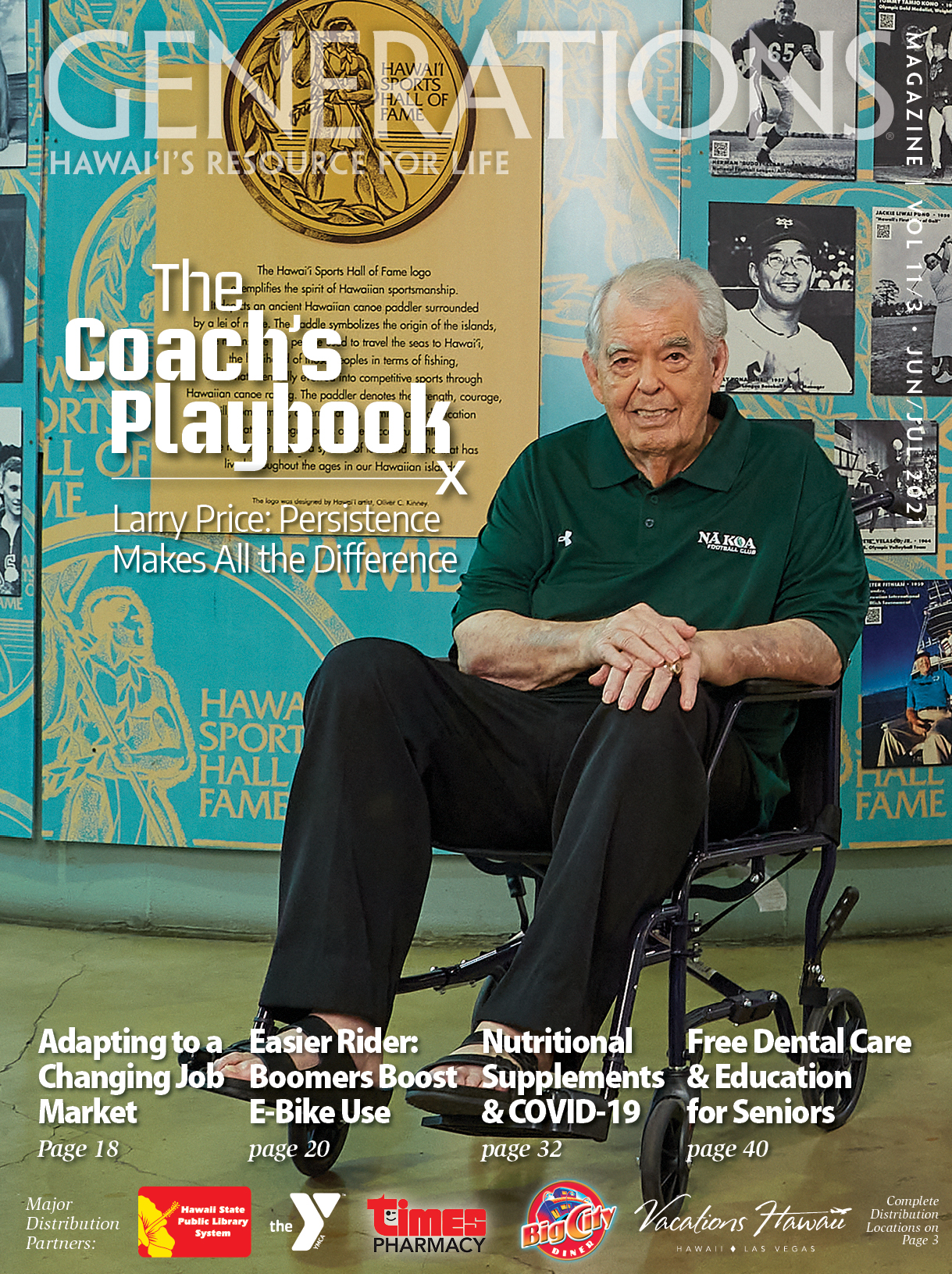
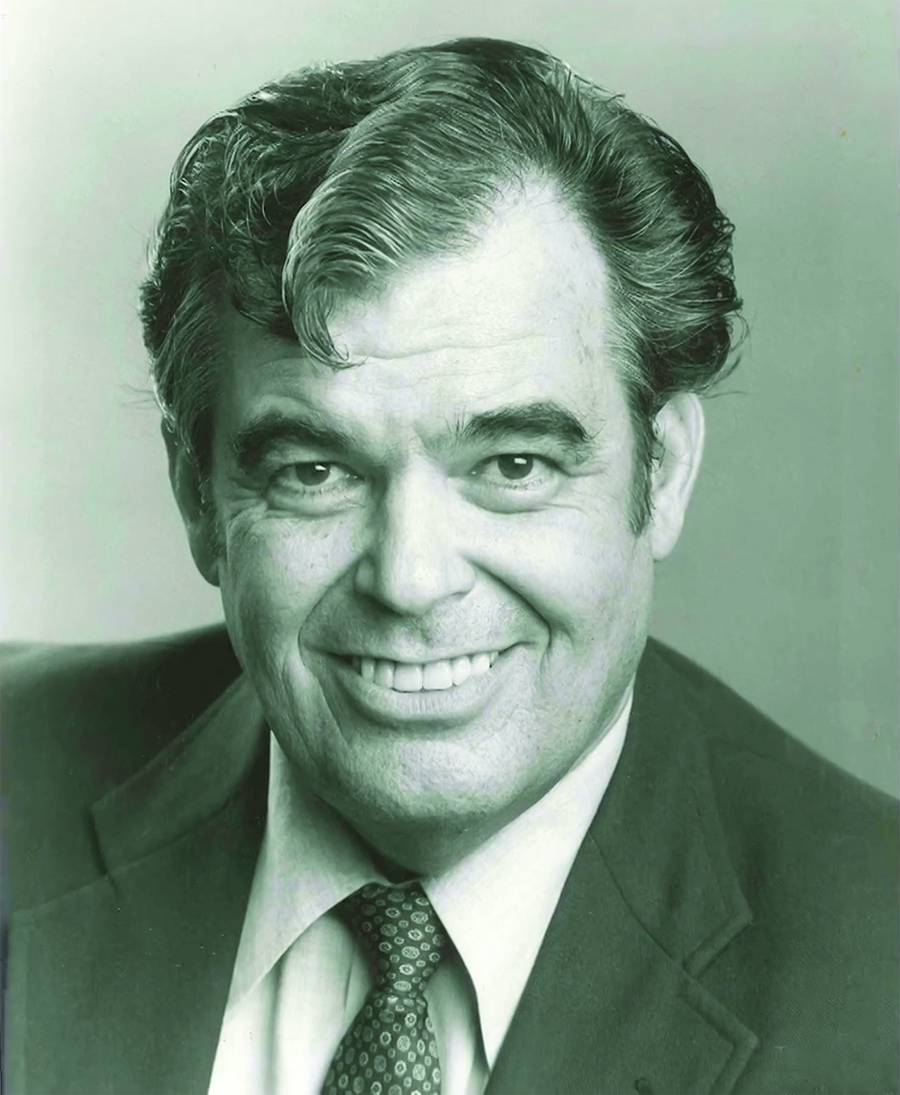
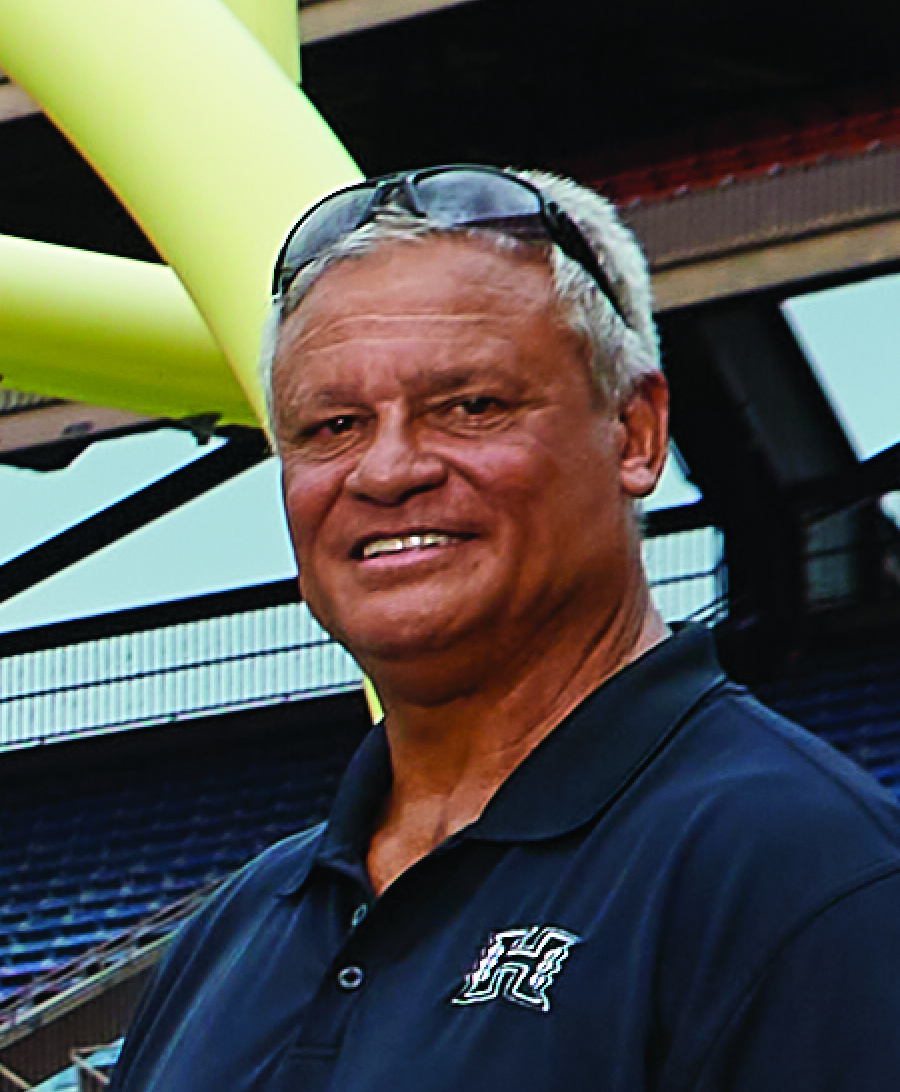
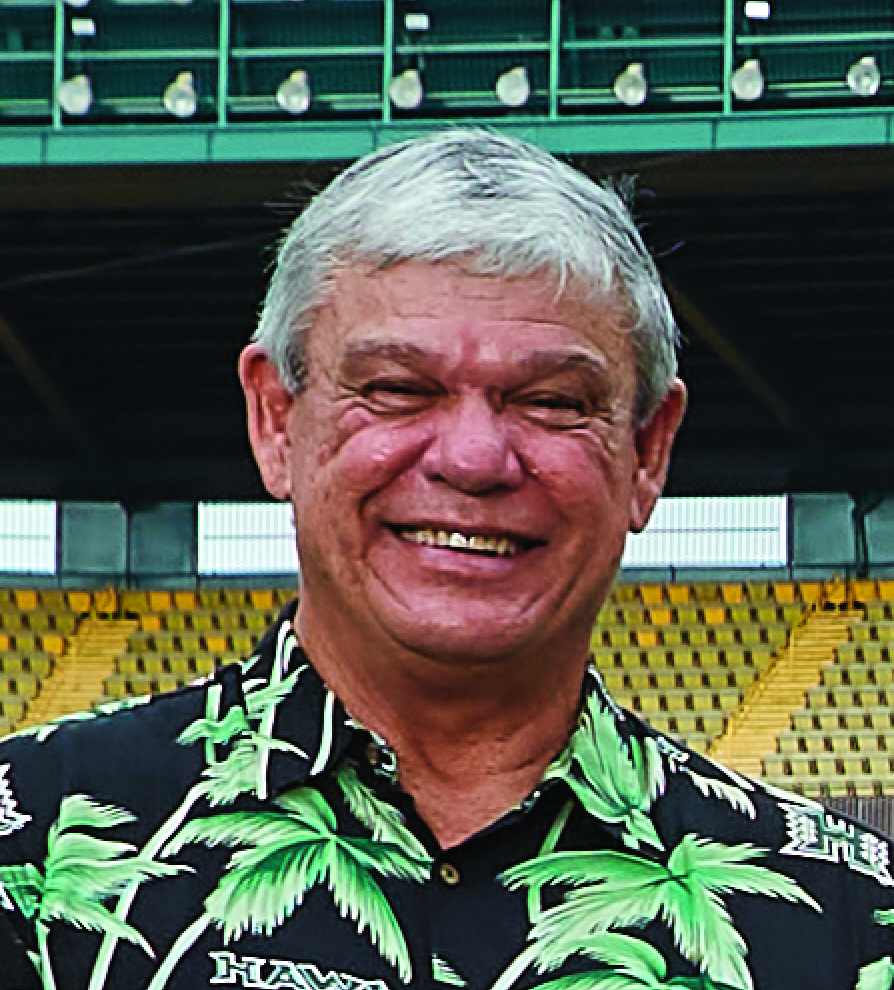
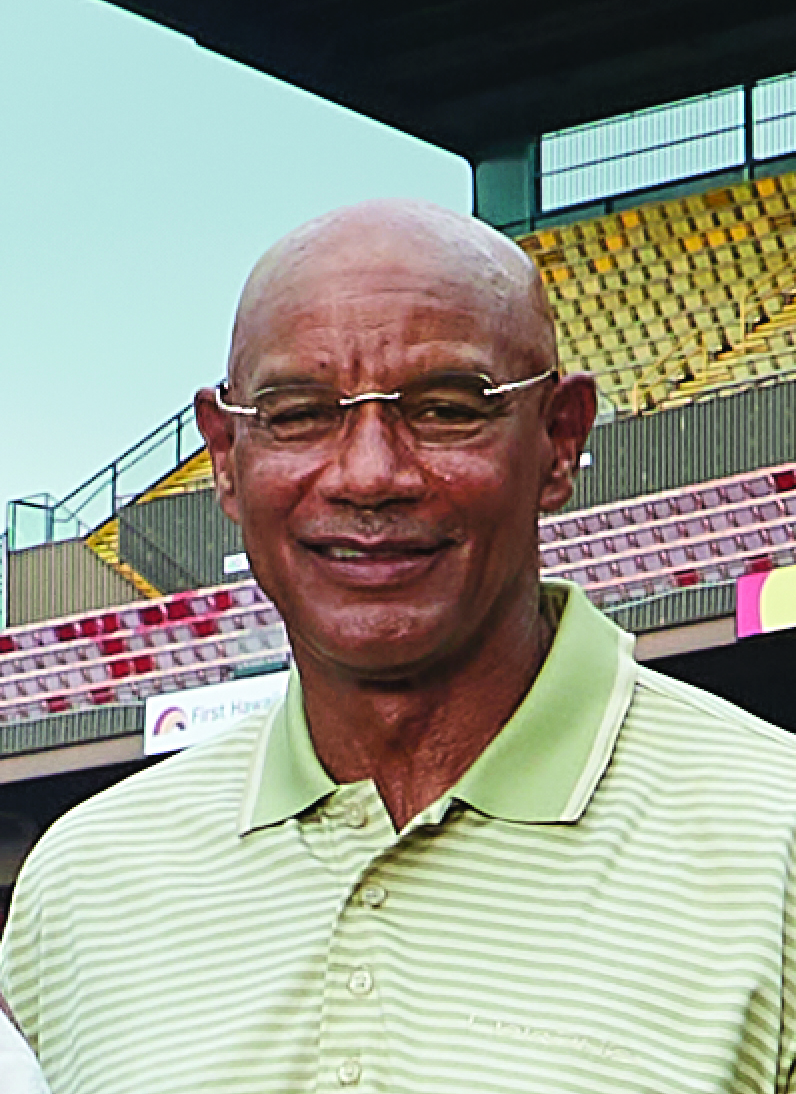
    His handsome face and brilliant smile are instantly recognizable. Larry Price, Hawai‘i’s longtime radio and TV personality, and celebrated scholar-athlete, is a legendary icon — one of the islands’ treasured human resources. He is a quiet man who means what he says and says what he means — a multidimensional man with a passion for encouraging others to find their power and attain success through education and hard work.

    He has earned multiple advanced degrees. He also found success in many sports, as a player, coach, mentor and advocate. He studied martial arts, earning black belts in a number of disciplines. He was also an award-winning boxer during his eight-year stint in the Army. But his vast oeuvre includes much more than sports. He is also an accomplished musician, published author, college professor, political columnist, government administrator, small business management program director, sought-after motivational speaker, generous philanthropist and valued advisor.

    But without hesitation, Coach Price says his most beloved career was coaching football at the University of Hawai‘i, first as a defensive coordinator and then as head coach of the Rainbow Warriors from 1974 to ’76.

    Although the popular Hawai‘i broadcaster may be best known to many as a media personality, the depths of his knowledge, experience and many talents warrant exposition. A cursory internet search will reveal a vast amount of information about his many achievements. But what his former players and assistant coaches say about him here may give us more insight into his character. The mere  mention of his name opened a floodgate of memories from the players and coaches who will forever hold him in high esteem.

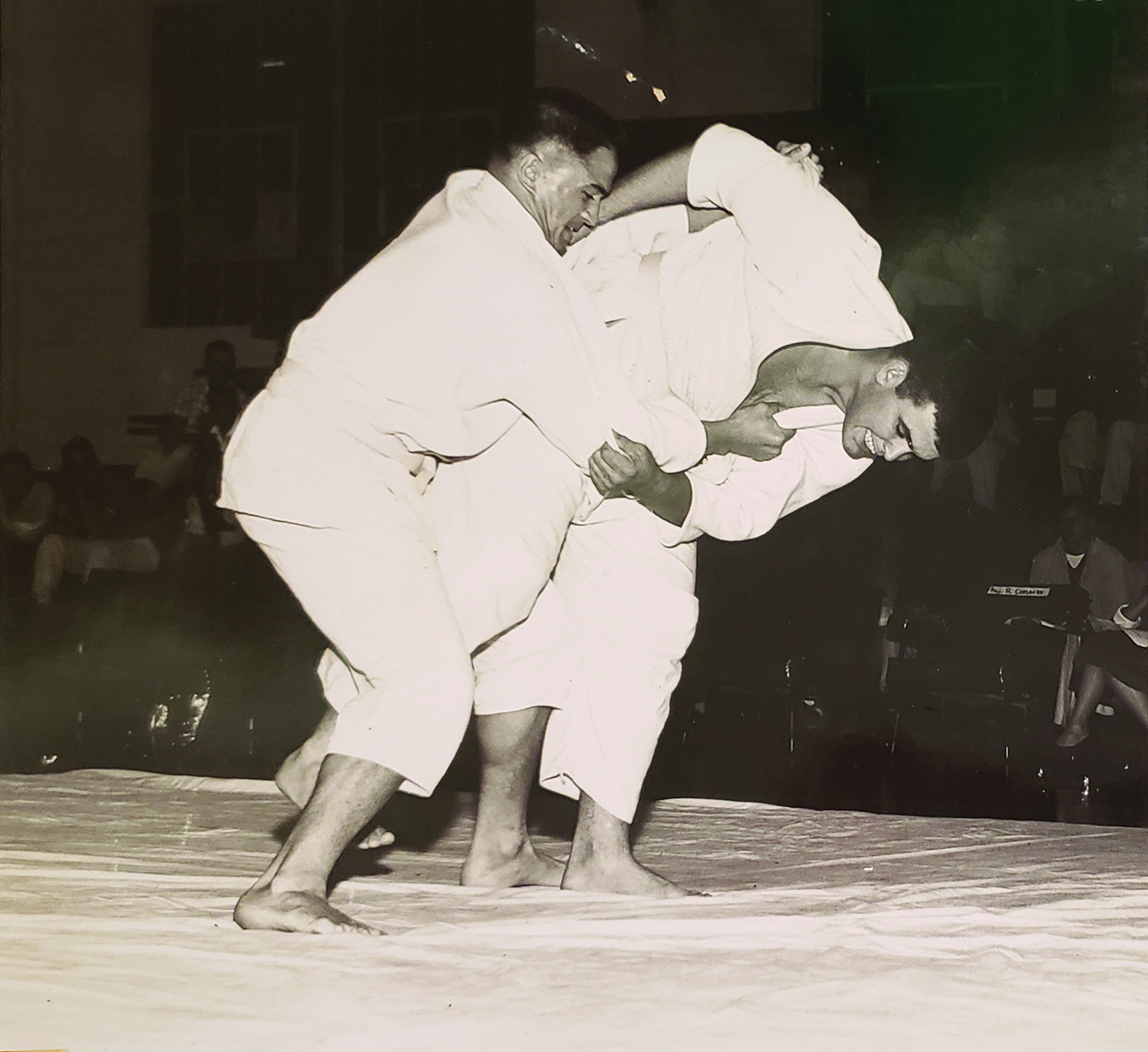
    Larry Price was an All Army Judo Champion, an outstanding player for the Army’s Cacti football team, the winner of the All Army Talent Contest on ‘ukulele...
    Larry Price was an All Army Judo Champion, an outstanding player for the Army’s Cacti football team, the winner of the All Army Talent Contest on ‘ukulele…

    ‘Many are called; few are chosen.’

    If diamonds are made by applying pressure to coal, Coach Price’s football players are the crown jewels of UH football. Coach whipped his players into top shape each week with a brutal training regime, leading his aggressive Warriors onto the gridiron each weekend.

    “It’s important for a coach to select the right guy to perform certain tasks,” says Coach. Coach Price used his own innate abilities to recognize and identify each player’s gifts, potential, possibilities and contributions, enabling them to tap into their own personal driving force that came from their hearts. His strong leadership pulled players toward a deep belief in themselves.

    His team was a meritocracy, where meeting high standards with hard work paid off. Although Coach Price’s expectations were high, the rewards were great, both on and off the field.

    “Saying the right thing at the right time is an art,” said Coach Price, who often used idioms and proverbs to motivate his team. For those who responded both physically, mentally and spiritually, “Many are called; few are chosen” had a life-changing impact. They were members of the traveling team — the chosen.

    ‘We’re going to battle tonight.’

    Coach Price says he viewed the football field as a battlefield. His Warriors prided themselves on  winning the physical side of the game.

    Cliff LaBoy, a Farrington High School graduate, played football at Washington State for one year before returning to Hawai‘i. Coach Price called him “out of the blue.” Cliff became the left defensive end from 1972 to ’75, when Coach Price was a defensive line coach, then head coach.

    “Coach was very straightforward and serious — a no-nonsense kind of guy,” says Cliff. “You either listened or you paid for it. He made sure we focused on our grades and he worked us very hard to get us to be the best we could be. His style of play was speed, physical and being technically sound at all positions. Back in the day, UH had the best defensive team than you can imagine. We beat a lot of big schools because of the strength of our defense.”

    Even if they lost, UH prided themselves on winning the physical side of the game. “We worked so hard and we were in such great shape that we wouldn’t even be tired at the end of the game. Coach Price made sure of that.”

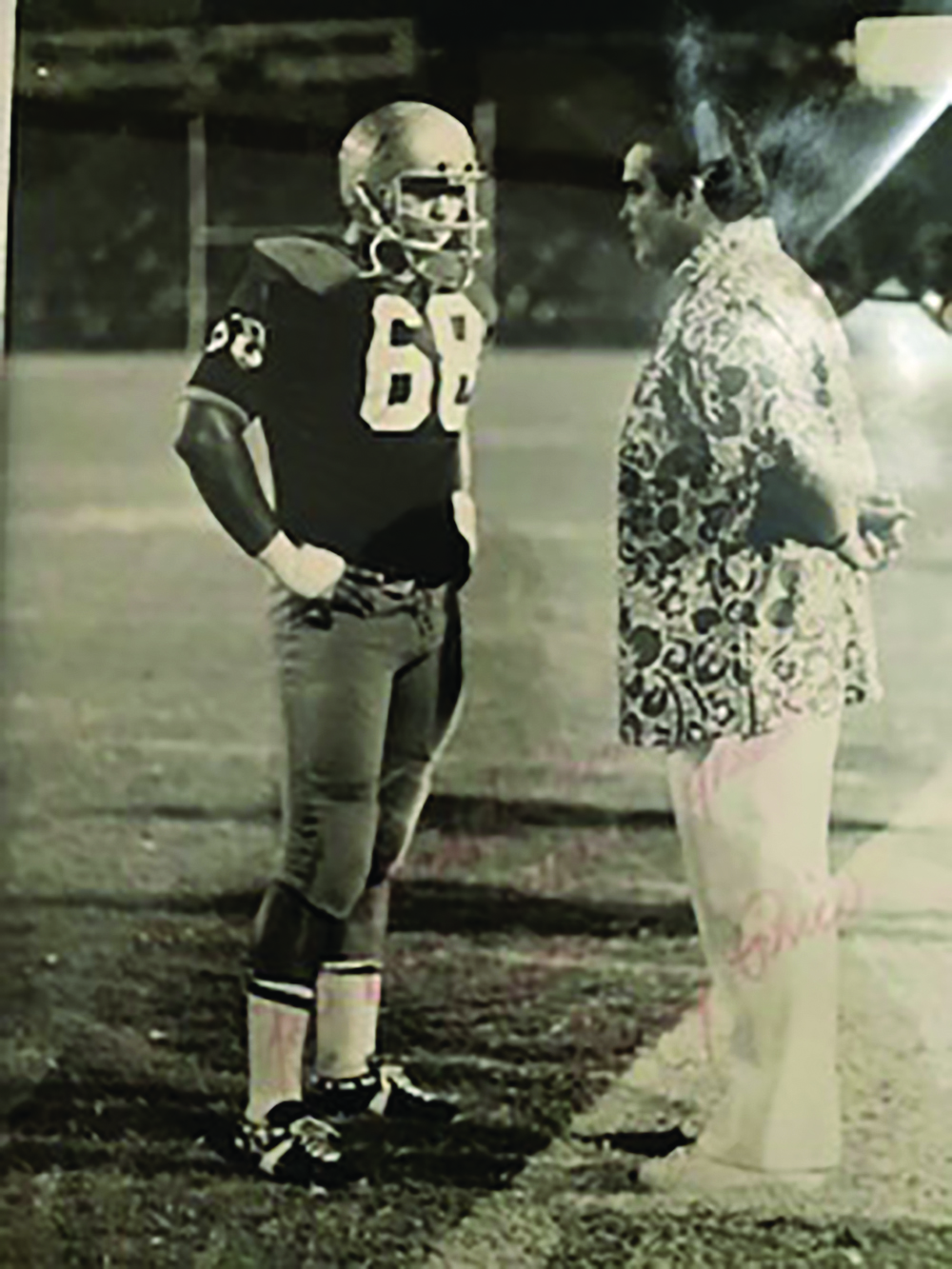
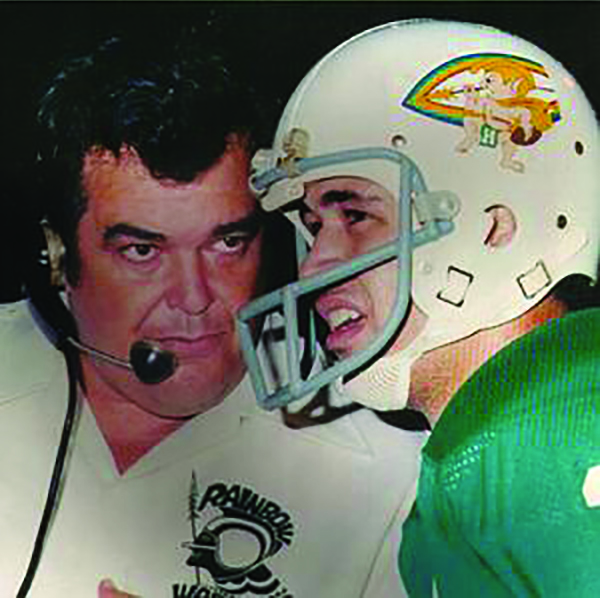
    Coach Price and Dexter Gomes discuss defensive strategies on the sideline.
    Coach Price and Dexter Gomes discuss defensive strategies on the sideline

    “He was an excellent defensive coach. He could take an ordinary player and get him to play at a higher level. He gets so deep inside of your head, that he can tell you what’s in there. He could see the potential in us all even though we were so kolohe.”

    “But when he started chewing on that cigar tip, with that big smile of his… you knew you were in trouble. ‘OK, today Richardson and LaBoy are going to donate their bodies for the team.’ We had to do 1,000-yard bear crawls. It was an impossible task, but we always finished.”

    There were a lot of Richardsons and LaBoys on the team. “But he knew when Saturday night came, all he had to do was turn us loose and we would perform for him.”

    “‘We’re going to battle tonight. We take no prisoners. Whatever is in front of you, destroy it on your way to the ball,’ Coach would say. He would get you so pumped. We loved it.”

    “He taught us to be strong and positive, and never give up. He taught us to work hard toward our goals and everything will fall in place. The things he instilled in us really helped me in my life. He changed us kolohe players into good human beings who contribute to our communities. We all respect that man so much.”

    ‘I will take you to a place where you’ve never been before.’

    Practice and play with Coach Price included the whole player — body, mind and spirit — as he propelled them to “a place where they had never been before.”


    Coach was the head coach when Mike Perkins started as a free safety in 1974. “I was only 5-foot-8 and 150 pounds. Coach Price gave me the opportunity to play for UH and prove to him and myself that I belonged on the field. I was never going to disappoint him,” says Mike.

    Coach Price’s own coach at Roosevelt High School, Kato Chung, also gave Larry “a place in the game,” despite his small size at that time. Coach passed that forward, giving players with identifiable potential the opportunity to prove themselves.

    “I will always remember Coach Price saying, ‘I will take you to a place where you’ve never been before.’ I didn’t understand that until I started playing for him,” says Mike. “‘There is no way I can do this,’ I used to think. But when you are going through the grueling drills he made us do, he would take you to a place where you had never been before. It made all of us physically and mentally tough.”

    “Although he recruited mainland players, he wanted the local boys to do well. He would have high expectations of you. And nobody wanted to disappoint Coach Price. He was a guy that you sometimes hated, because he put you through so much. But you couldn’t play for anybody better. He got us to believe in ourselves and what we could do. I would go to war for the guy. That’s the kind of impact he had on his players. To this day, we would do anything for him.”

    “I took those lessons and applied them in life after football. They are things I will never forget — the harder you work, the greater your success and the greater the benefits.”

    ‘The greatest motivational factors are love and fear.’

    Coach Price had a gift for motivating his players, driving them to exceed normal expectations both on the field and off.


    Dexter Gomes played for Coach Price as a middle linebacker between 1970 and ’75.

    “What I remember best is when he said, ‘The greatest motivational factors are love and fear,’” a phrase he adopted from the Bible. “If you could scare your players into playing for you, you might be able to motivate them, but it worked the other way, too. We gave the last drop of our blood to perform for him because we loved him that much — for all he did for us,” says Dexter.

    “Back in the old days, coaches used to berate their players. They all thought they had to be so hard. The greatest thing I learned from Coach Price is that all you have to do is treat people with respect to get them to want to perform for you. It doesn’t just apply to coaching; it applies to everyday life. It all boils down to respect and treating people how you want them to treat you.”

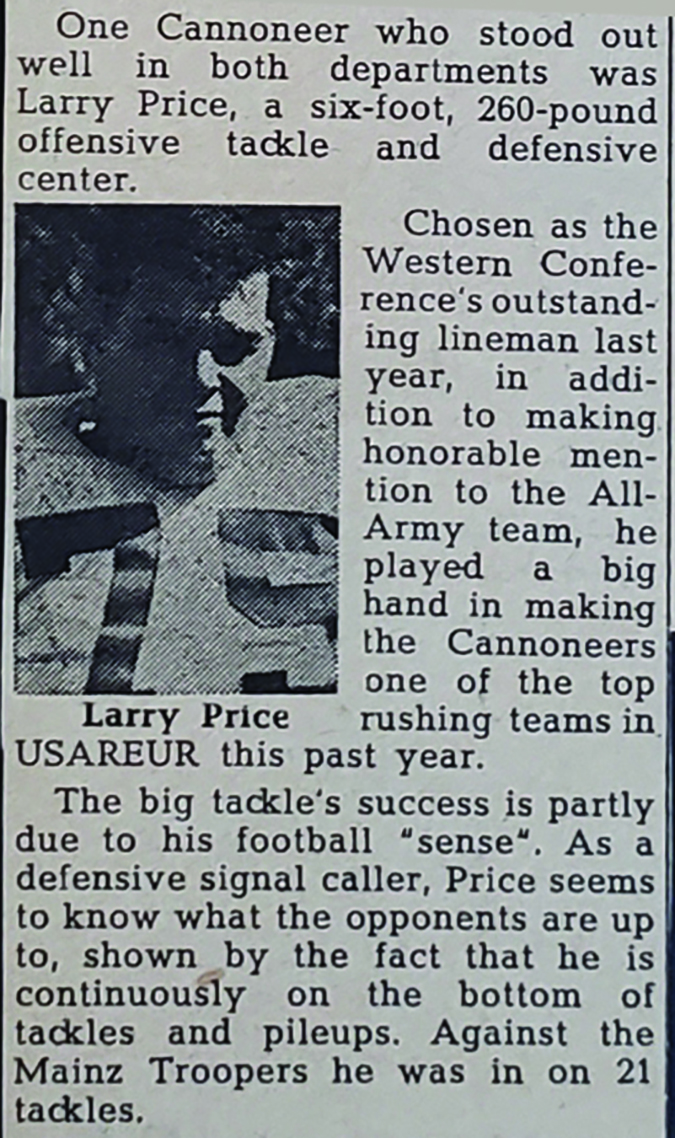
    Larry Price became a member of the Cacti football coaching staff in 1959, after a stellar performance as a lineman for the All Army team
    Larry Price became a member of the Cacti football coaching staff in 1959, after a stellar performance as a lineman for the All Army team

    “Back in the days when we played, it wasn’t like today. It was physical. Everything back then was three yards and a cloud of dust — everything was done in the trenches. When you got into the third and fourth quarter, if you weren’t in shape, the other team could take advantage.” Coach Price made sure the team could go the distance… and then some.

    “He had a saying, especially when we didn’t live up to his expectations: ‘Today you are going to run to the horizon. The horizon is as far as you can see, but you will never reach it. Get on the line!’ We ran until guys were falling on the ground. ‘Jump over them!’ Coach Price ordered.

    It was not punishment; it was for the betterment of each of us and for the team.” “But I’ll tell you this, when the offense across from us was sucking wind, that’s when we knocked them out and dragged  them into the deeper waters. When we pulled off some big games, we’d see that everything Coach Price said worked. We believed and trusted him.”

    “There were a lot of life lessons. That is what he was all about. A lot of times I reflect on what he used to say and do.”

    ‘Don’t you ever quit on me.’

    Coach Price kept his players in line by making football fun, using his dry wit to “keep it interesting.”


    Former UH defensive end Pat Richardson was a member of the 1973 Rainbow Warriors team that beat Washington 10-7 in an epic competition.

    “Coach Price made football fun. He made practice fun. You would never know what he was going to say. He made everything interesting. He would give you that look of death, but he’d be smiling at the same time with his nice bright white smile and stogie in his teeth,” says Pat. “He did things that would make everybody laugh.

    “I motivated the players by putting everything in the form of a challenge,” says Coach.

    “The better shape you are in, the less your chance of getting seriously injured,” Pat says about the coach’s rigorous practices.

    Disciplinary action also involved conditioning. When Pat accidentally stepped on Coach’s stogie that he had put on the ground for safe keeping, Coach said, ‘Run.’ “How long?” Pat asked. “Until I tell you to stop,” Coach replied. “Although I was suffering, Coach would say, ‘Don’t you ever quit on me.’ And we never would.”

    “Local boys from Waianae, Makaha, Nanakuli, Aiea and Farrington played for him… they didn’t have a lot of money, but they gave us a good education, took us to the mainland, gave us good uniforms and a beautiful stadium — and all because of him — because Coach Price had a dream about Rainbow football.”

    “He took all us local boys to another level. When we would mess around, we would pay the price more than the mainland players, because we should know better,” Pat says. “He expected more from his local players. He was hard on us when we deserved it — hard and fair.”

    “If you did your job and came to practice in shape with a good attitude, you had no problem with him. But he would take nonsense from nobody. I knew I was one of his favorites because he was always getting after me. So I always tried to do better for him. The time went by so fast under him because he made it so much fun. I’ll always remember that guy.”

    ‘Physical superiority cancels out all theories.’

    Practices with Coach Price were so hard and so brutal that the games were easy by comparison.


    Simeon Alo, a Kamehameha Schools graduate, anchored the Hawai‘i defensive line as a defensive end from 1969 to ’70 and 1972 to ’73.

    He got a scholarship through Coach Price to play football at UH in 1969, and as a freshman rookie, made the travel squad as a versatile player on a variety of vital defensive teams.

    “Levi Stanley, a Waianae High School graduate, and I made every mainland trip,” says Simeon. “It was an honor because we were only freshmen.” Simeon and Levi were unable to play in 1971, but returned in 1972.

    “Levi and I really enjoyed ourselves out there. What we managed to accomplish is a tribute to Coach Price. He really got us in shape.”

    “Among Coach Price’s many pearls of wisdom, I remember he used to say, ‘Physical superiority cancels out all theory.’ In other words, if you are physically and mentally superior to who you are playing against, the game became easy,” says Simeon. “He made practices so hard that the games seemed easy!”

    “Before you can play Division I, you’ve got to think Division I,” Coach explains. “In the early days, prior to Division I taking hold, the majority of the people we played were physically superior. UH was viewed as inferior to Division I opponents. Sports writers and newscasters used to laugh at us. So when people tell you that you are inferior, you got to prove them wrong. The first order of business was to convince them we were not inferior to anybody. This equated to hard practices.” The strategy paid off, making Price the UH’s first NCAA Division I head coach.

    “I’ll never forget playing Grambling State University [La.]. The whole team was huge,” says Simeon. “The left tackle was 8 inches taller and weighed over 100 pounds more than I did,” recalls Simeon. Although the Warriors lost, Simeon’s opponent shook his hand after the game and said, “Bro, good game!” “It was out of respect. ‘Ask no quarter, none given.’ That’s how we played.”

    “I will be forever grateful to Coach for giving me the opportunity to play Division 1 football,” says Simeon. “He helped shape me into the man I am today.” “And I wouldn’t be here if it wasn’t for Coach Price,” Levi added. “I owe him my life.”

    ‘Come out and prove yourself.’

    Coach Price’s influence and support indirectly impacted the course of Hawai‘i politics.


    In 1965, Rick Blangiardi wrote a letter to UH inquiring if it had a football program. His father was being  transferred to Pearl Harbor and he wanted to ensure he could play college football.
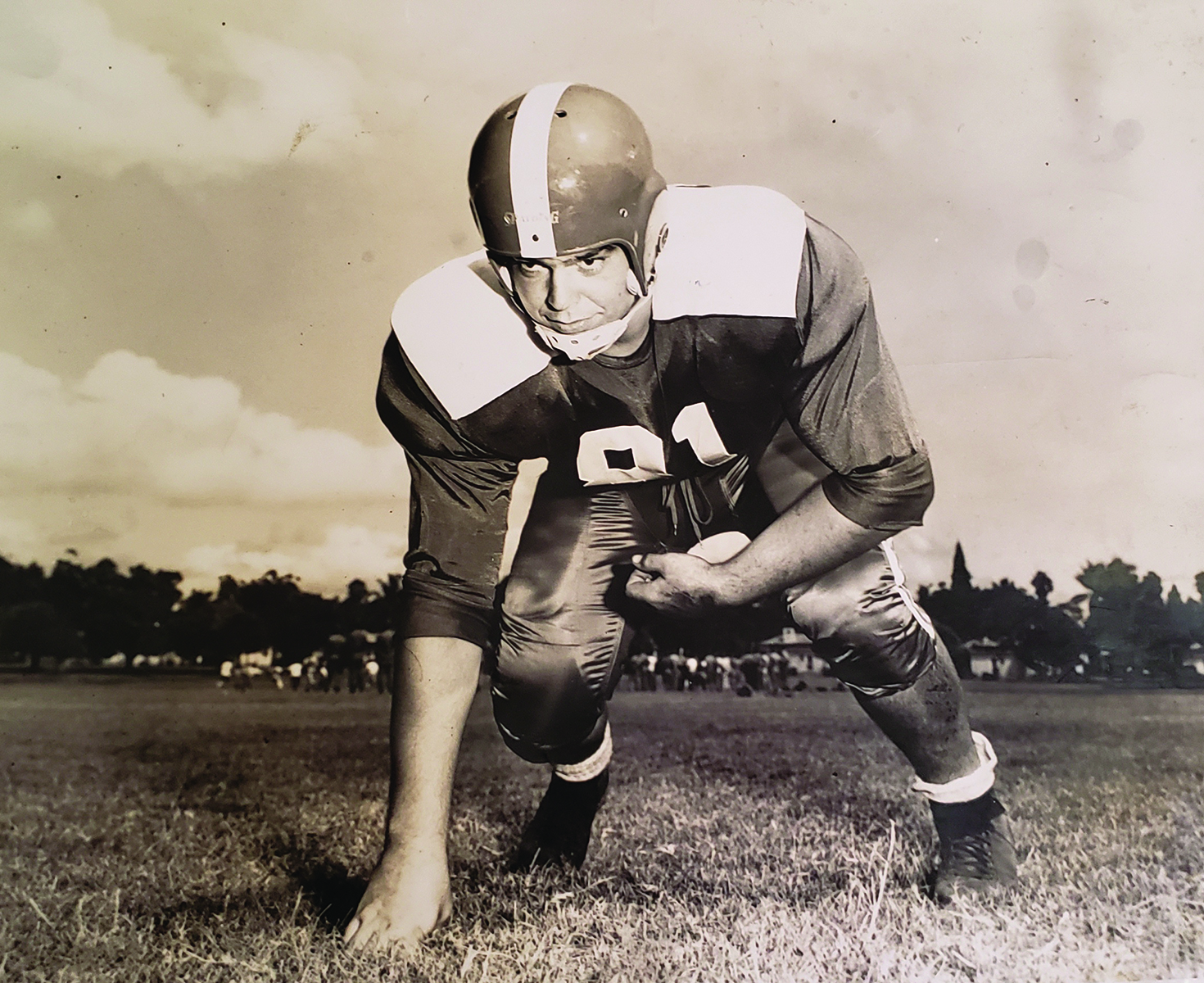
    “If you want a scholarship to play football here, you are going to have to come out and prove yourself,” said Coach.

    “My relationship with him started with that challenge,” says Rick. “The day that I met Coach Price was the day that changed my life forever. He had just finished playing football. He was a physical force of nature and a fearsome creature.”

    Although Rick did prove himself, he returned to Massachusetts in 1966 when his mother became ill. He stayed, graduated and started his coaching career at the University of Connecticut. Then he got a letter from Coach offering him the opportunity to coach varsity linebackers .

    “I made the decision to return to UH predicated on Coach Price, my relationship with him and my complete confidence and respect for him.”

    After Rick got his master’s degree, he was offered a full-time job by Coach Dave Holmes. When Larry became head coach, he promoted Rick to associate head coach and defensive coordinator — Larry’s former job.

    “Him influencing me to come back to Hawai‘i and giving me the opportunity, promotions and titles all tremendously shaped my life.”

    Married and with a baby on the way, Rick’s coaching salary didn’t go far. At age 30, with Coach’s counsel, instead of accepting a higher-paying coaching position on the mainland, he accepted a sales position at KGMB TV. Ultimately, his love of Hawai‘i kept him here. “I knew I would never coach with anybody better than Coach Price, which lessened the pain of leaving coaching.”

    “It all goes back to how Coach perceived, supported and believed in me. That has continued throughout my entire career. He is a powerful force; he was my mentor. I have a reverence for him. I learned so much from him that has served as guiding principles in business and in life. He helped me lock in my belief systems that have carried forward throughout my life. To this day, I can’t call him Larry… it’s always Coach Price.”

    Now 74, Rick is the current mayor of the City and County of Honolulu. “I wouldn’t be here today if it wasn’t for him,” says the mayor.

    ‘If you cut me, I bleed green and white.’

    Coach attained an amazing level of excellence at everything he did. From the outside, it did not look like a pursuit — it was simply an acquisition.


    George Lumpkin was a defensive back in 1970 and ’71, when Coach was the defensive coordinator. After his player eligibility came to an end, George became a graduate assistant. When Coach became head coach in 1974, he made George a full-time coach.

    “He was a great disciplinarian, but at the same time, he had a soft heart. The players just loved him because of who he was as a person. The harder he disciplined them, the more they loved him. They knew the drills were for their own good. They loved him because they knew that he cared about them as people, not just players. He was an outstanding coach, but probably an even better person. If a player needed help outside of football, he was there for them. He would give you the shirt off his back.”

    “He was very good at everything he touched — chess, martial arts, slack key guitar and much more — not only football. He seemed just naturally exceptional at it all. But he has always been a humble guy, not talking about himself or patting himself on the back.”

    “He was always moving forward — always thinking outside the box. ‘Nothing is as dead as yesterday’s football hero,’ he said. ‘You have to always stay on top of your game. People are quick to forget what you have accomplished.’”

    “He’s an amazing person. The players are also really great people with good hearts who ended up doing good things. I think Coach Price had a lot to do with that. Many of his former players credit him for their successes in life.”

    “We would do anything for Coach and he would do anything for us. We knew that without a doubt. ‘If you cut me, I bleed green and white,’ he used to say.”

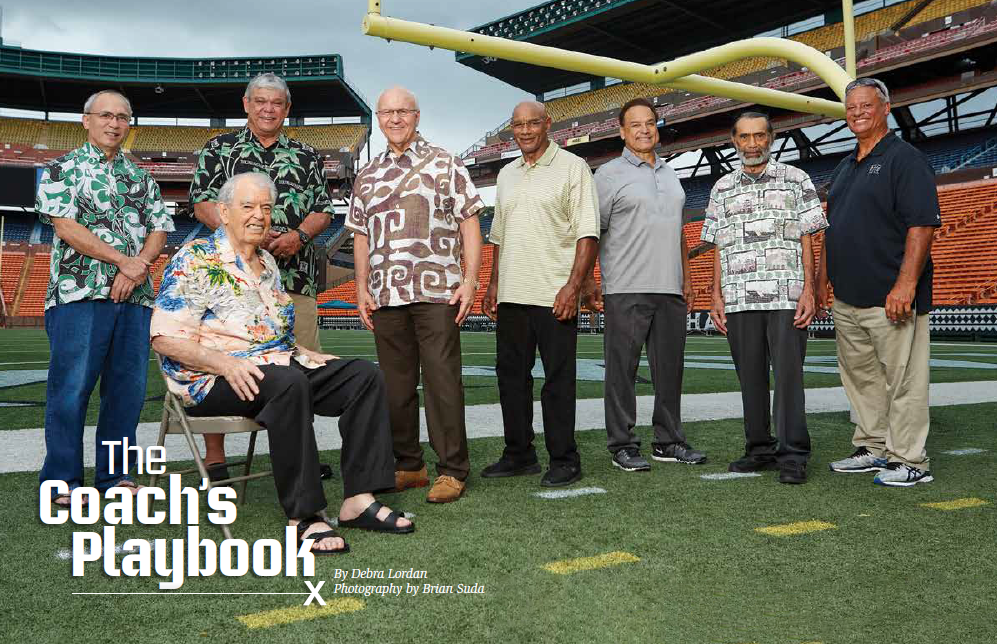
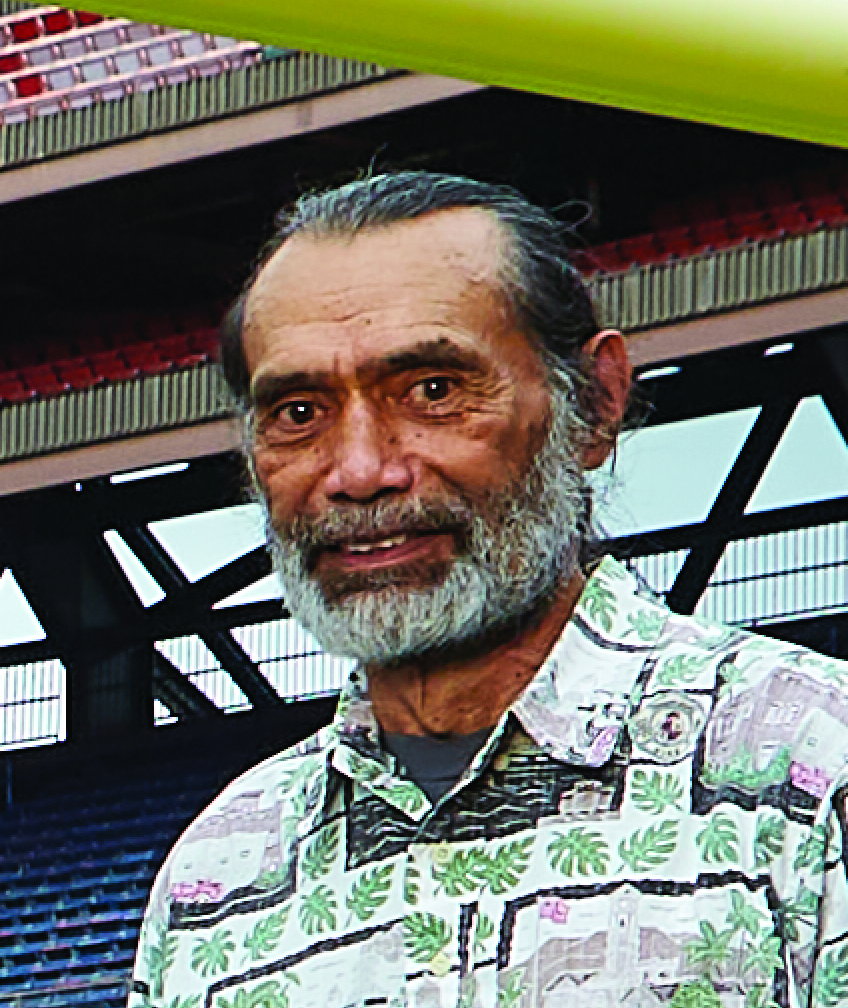
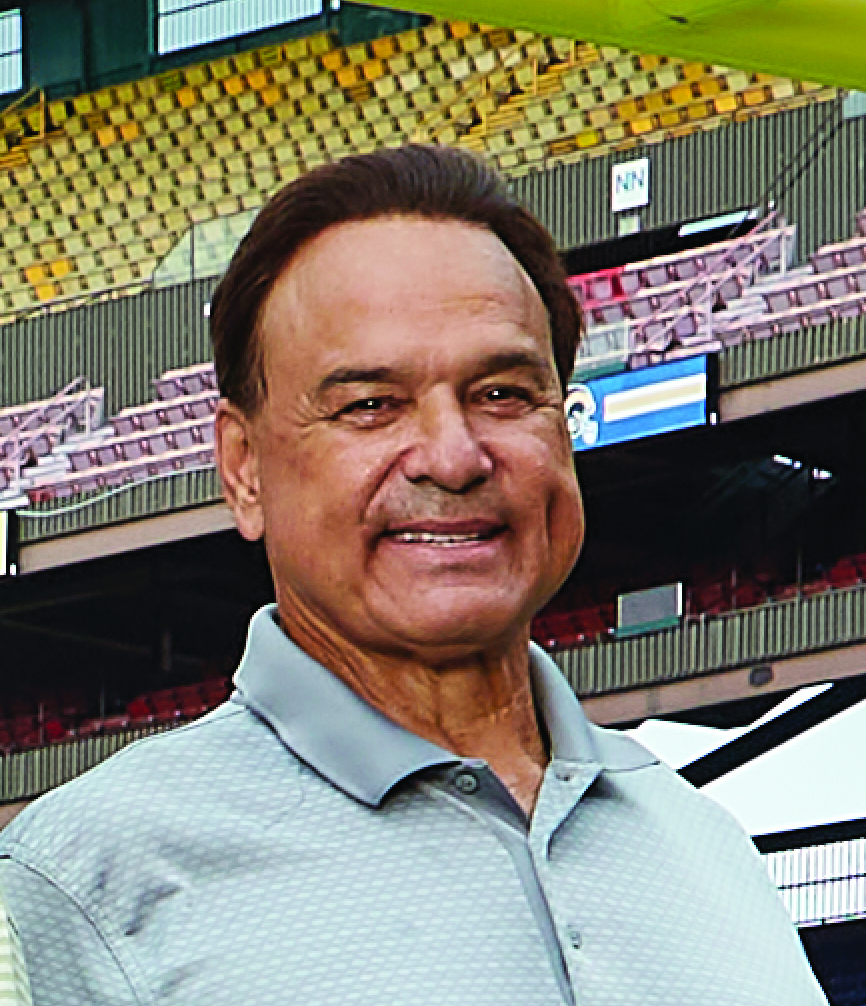
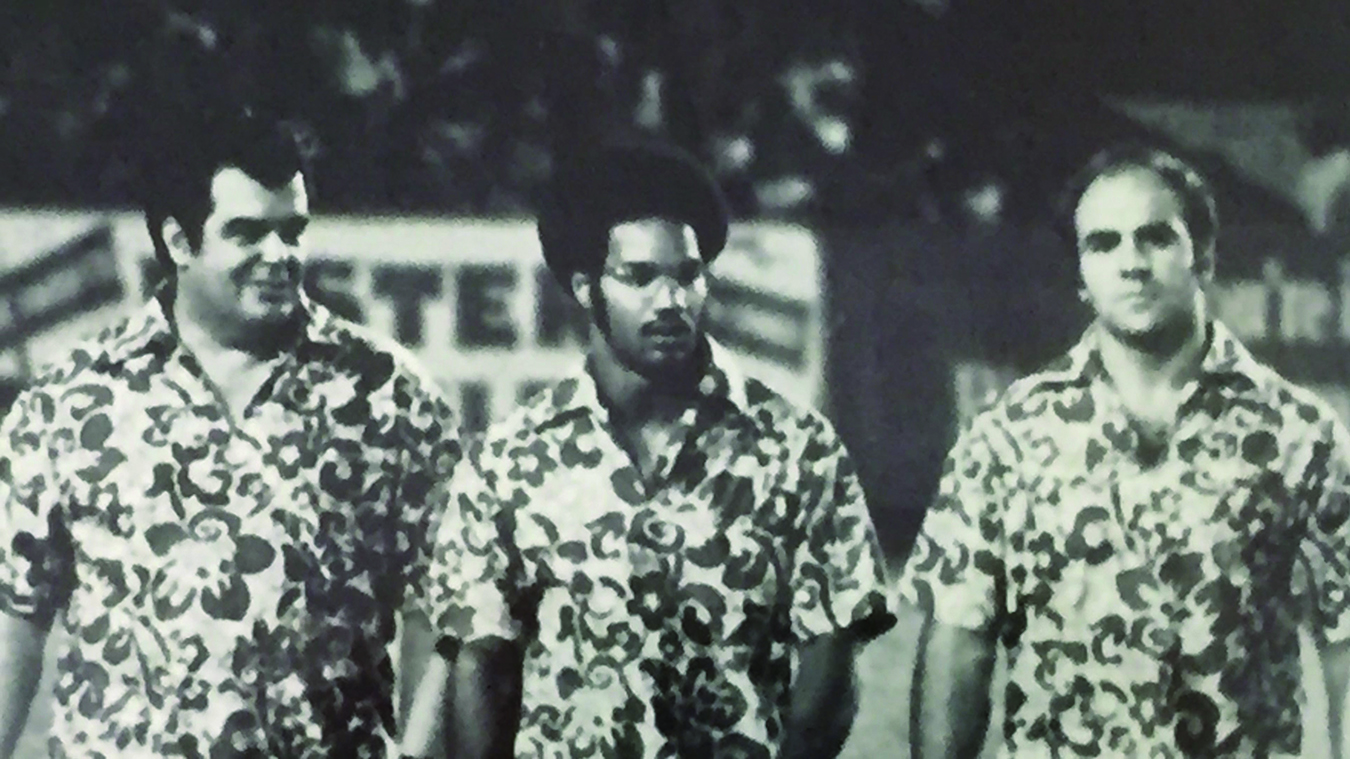
    (Above, L–R) Coaches Larry Price, George Lumpkin and Rick Blangiardi provided a framework that guided their players along the path to success — both on and off the football field.
    (Above, L–R) Coaches Larry Price, George Lumpkin and Rick Blangiardi provided a framework that guided their players along the path to success — both on and off the football field

    The Coach’s Playbook

    A good coach tells you what you don’t want to hear and shows you what you don’t want to see, so you can be who you have always known you could be. A great coach makes you do what you don’t want to do — what you think is impossible — and makes you into someone better than you ever dreamt you could be.

    Coach Price, who extolled the virtues of hard work and its rewards, influenced others through the example of his own hard work. He loved and respected his players and coaches. “They all worked hard and were willing to put in what was needed to accomplish the mission,” says Coach.

    “Knowing I played for Los Angeles Rams must have helped convince them they could get to that level, too.” After completing two degrees, Coach became a free agent, multi-position player for the team. He was also sought-after as a coach, but Coach Price would not leave his beloved Hawai‘i.

    He has left an indelible mark on the hearts, minds and lives of those who knew him. As Dexter said, Coach Price and Assistant Coach Rick Blangiardi provided his players with “a book of everything we needed to be successful in life.” Coach’s former football players and staff will continue to turn to the pages of his playbook for success for the rest of their lives.

    Coach enjoys an occasional round of golf at Waialae Country Club, where many of his former players meet with him.

    Coach Price continues to champion up-and-coming athletes to “give them a place in the game” through the Oahu Interscholastic Association, and brings revitalized recognition to the state’s accomplished athletes through the Hawai‘i Sports Hall of Fame.

    Larry Price at the Hawaii Sports Hall of Fame at Aloha Stadium

    HAWAII SPORTS HALL OF FAME

    The first HSHOF inductee was swimmer and surfer Duke Kahanamoku. Class of 2020 inductees include Ben Aipa, surfing; Egan Inoue, racquetball; and Roland Leong, auto racing.
    The first HSHOF inductee was swimmer and surfer Duke Kahanamoku. Class of 2020 inductees (below) include Ben Aipa, surfing; Egan Inoue, racquetball; and Roland Leong, auto racing.

    As with his football meritocracy, Coach Price felt meeting high standards with hard work, excellence and integrity should be rewarded and recognized, so he set out to rejuvenate the Hawai‘i Sports Hall of Fame.

    “Because Hawai‘i is so remote, our athletes had not gotten the attention they deserve,” says Coach. “Hawai‘i has produced many young talented athletes and Olympian-level athletes who have gotten no recognition,” Coach said to the group. “We have enough to warrant honoring them and holding them up as role models for future generations of athletes.”

    Although a hall of fame was already in place, it was not being used to its full potential. Coach breathed life back into the HSHOF, which now serves as “an educational repository to honor athletes, pioneers and contributors of Hawai‘i’s rich sports history and to serve as role models for our youth, encouraging them to emulate the same characteristics of devotion, dedication, pursuit of athletic excellence, steadfast and moral character.”

    The first year was spent catching up by adding about 30 athletes who should have been included, starting with Duke Kahanamoku. A huge banquet was held to honor the overdue inductees. After the first five catch-up years, three or four athletes have been inducted per year.

    Those inducted last year bring the total number of Hawai‘i Sports Hall of Fame members to 158. Coach says, “The 2020 inductees span a wide variety of pursuits, exemplifying Hawai‘i’s unique and profound impact on the sports world. It is no small thing to be accepted into this elite group. Criteria for induction is strictly adhered to.” Selection is made with due process — a what-you-do process. The selection committee is made up of sports media members. “They write stories about these athletes, so they know who is who,” says Coach.

    “My message to young athletes is just to keep on going,” says Coach. “If you come up against a hurdle, overcome it and go on to the next hurdle until you don’t have any hurdles left.”

    Coach Price, a constant presence as chairman of the board, is transitioning the management of the organization to new leadership who will continue to solicit new inductees and ensure they meet the HSHOF’s stringent qualifications. Hawai‘i’s world-class Aloha Stadium houses a public displays of Inductee photographs and profiles. The Bernice Pauahi Bishop Museum is home to the flagship exhibition for the hall, and includes inductee photographs, profiles and memorabilia.

    In addition to the permanent display venues, the HSHOF also maintains portable display screens with a full complement of the inductee photographs and profiles. This “traveling” hall of fame is used at events such as the Annual Induction Banquet and the Hall of Fame Golf Tournament. Arrange a tour of the  HSHOF by calling the Aloha Stadium Office.


    HAWAI‘I SPORTS HALL OF FAME
    To arrange a tour, contact the Aloha Stadium office:
    808-483-2500, Mon–Fri, 8am–4pm
    alohastadium@hawaii.gov
    For HSHOF nomination and donation information:
    www.hawaiisportshalloffame.com
    Executive Committee President Calvin Nomiyama:
    admin@hawaiisportshalloffame.com


    Larry David Price prefers to be known as a coach and educator, rather than a media personality. Although those who know of his many accomplishments, talents, awards and accolades may entertain the descriptor Renaissance man, he’ll always be remembered simply and reverently as “Coach” to those whose hearts and lives he has touched.

  • Virtually No Boundaries For Auntie Carolee

    Virtually No Boundaries For Auntie Carolee

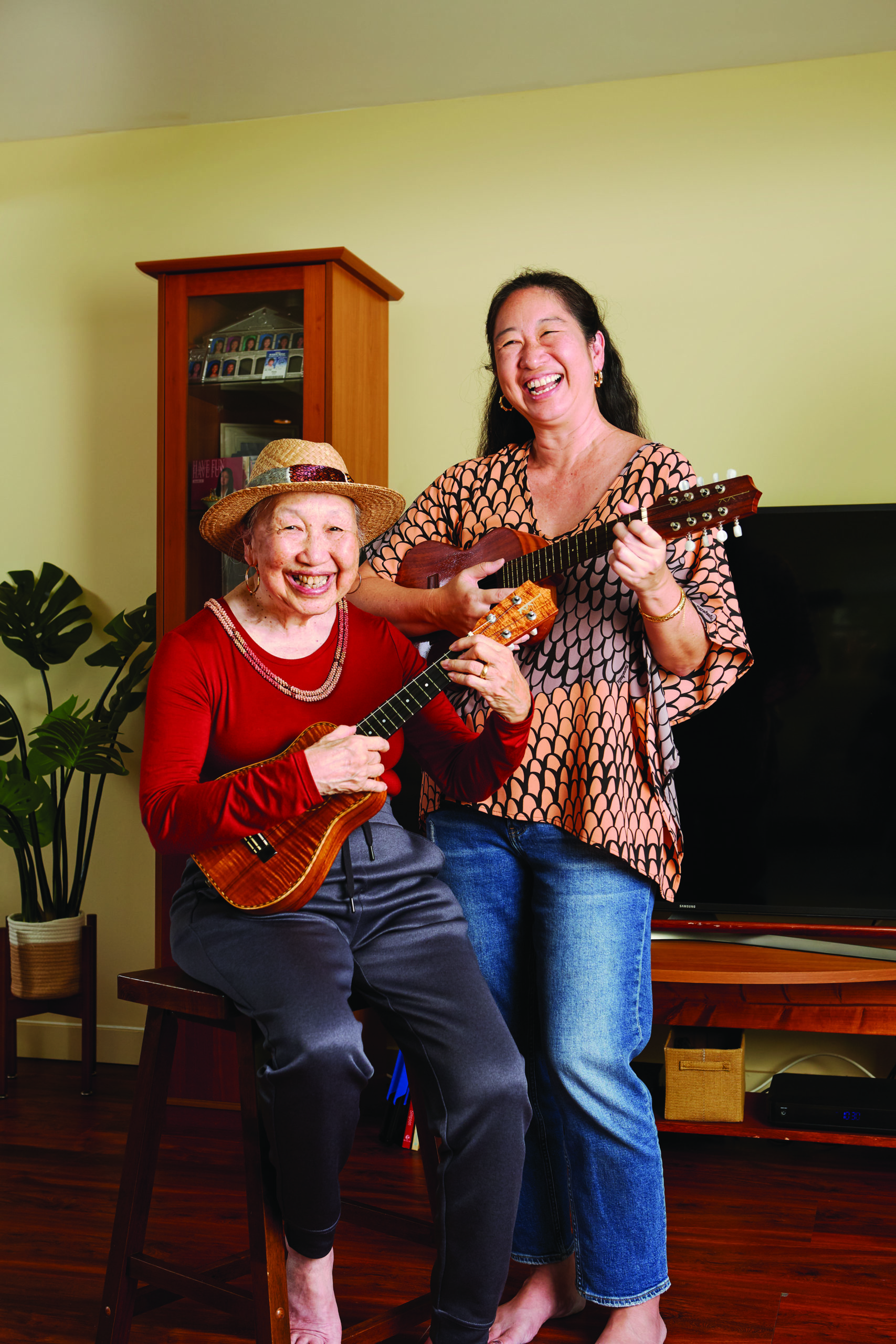
    Carolee and daughter Robyn are delighted to share their aloha for the Hawaiian culture.
    Carolee and daughter Robyn are delighted to share their aloha for the Hawaiian culture.

    {Play}

    For 53 years and counting, Carolee Nishi has taught Hawaiian Studies as a volunteer at the Nu‘uanu YMCA. For 41  ears, she worked at United Airlines, and for a while, took a part-time job at Liberty House. For more than 20 years, she taught Hawaiian Studies at Hawai‘i public schools. And yes, in case you’re counting, the multitasking 77-year-old has worked more than one job at a time.

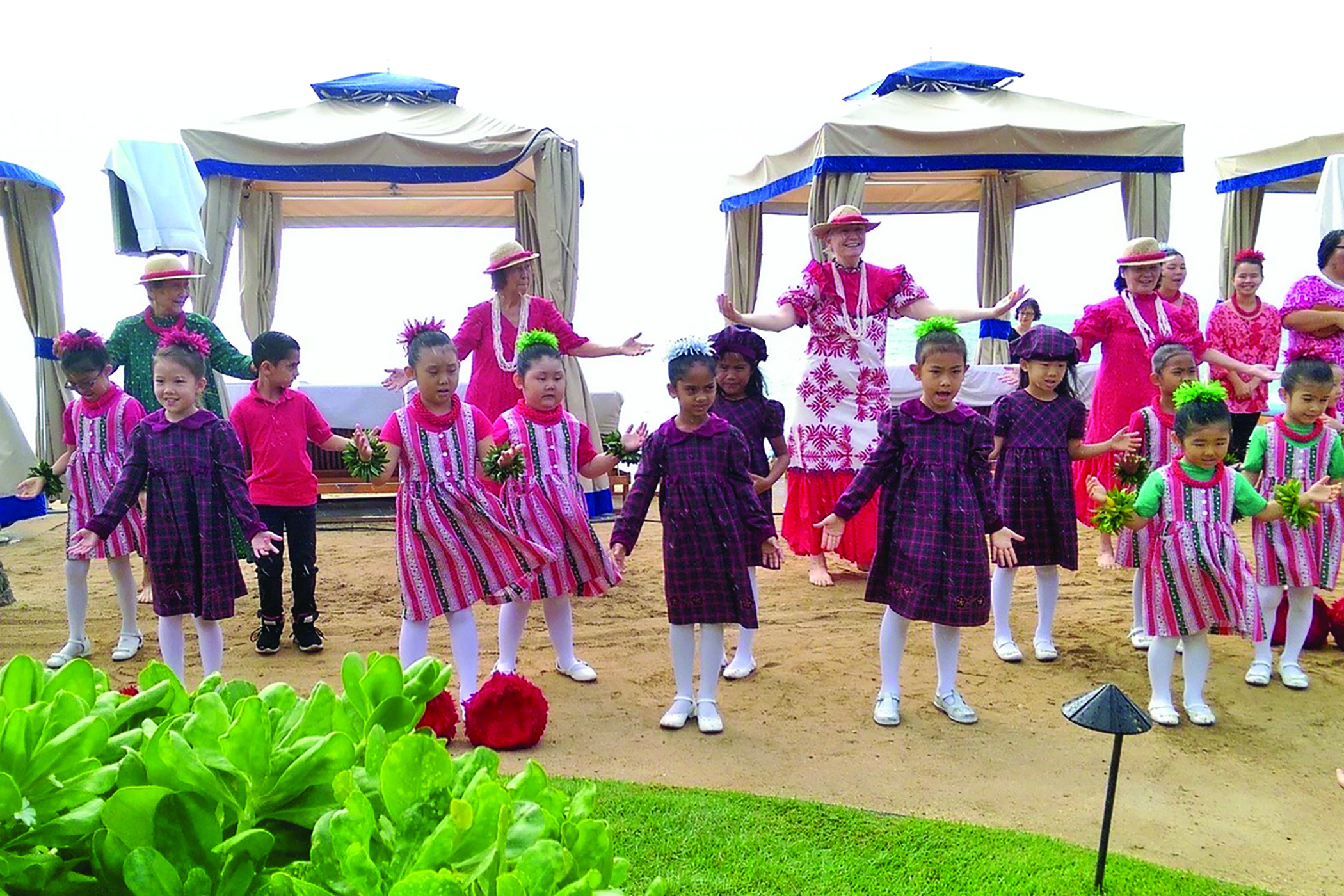
    Keiki and kūpuna from Hula Hui o Kapunahala perform at dozens of events each year.
    Keiki and kūpuna from Hula Hui o Kapunahala perform at dozens of events each year.

    Hula Hui O Kapunahala

    Carolee Nishi is best known as the kumu hula (hula teacher) of Hula Hui O Kapunahala (HHK) at the Nu‘uanu YMCA. For 53 years, HHK has delighted audiences on stages from Waikīkī to Waipahu, from City Hall to the Hawai‘i Theatre and  from Disneyland to Expo ’70 (the World’s Fair in Osaka, Japan) with students aged 3 to 83, representing keiki to Kūpuna (children to seniors).

    HHK isn’t a formal hālau hula (hula school), which is why it’s called a hui (club or group). And Carolee takes pride in  saying that at HHK, every child is welcome. “We accept all ages; all nationalities; all personalities,” Carolee says with a chuckle. And when the group enters competitions, “We might not ever win,” she says. “And it’s okay. It’s okay not to win. Because life is not all about winning.”

    The key lesson that Carolee imparts on all her students is to have an attitude of gratitude. “Aloha is everything. But  gratitude is everything else. And gratitude is very important,” she says.

    Auntie Carolee nurtures each of her students, builds up their self-confidence and finds a way to get the best out of them all. Many are leading successful lives and have returned with their own children.
    Auntie Carolee nurtures each of her students, builds up their self-confidence and finds a way to get the best out of them all. Many are leading successful lives and have returned with their own children.

    At HHK, students learn life lessons, along with Hawaiian language, music, dance and cultural values. Many of Carolee’s students have become kumu hula themselves. And many more have brought their children to Carolee’s classes. While she says she couldn’t begin to count how many students she’s taught over the years, it’s clear that she’s had an impact on generations of them.

    Living Treasure

    Lately, the community has been showing a lot of love to Carolee, both for her service to the community and for teaching and preserving Hawaiian culture. But for someone so petite and so humble, accepting these laurels hasn’t come easy. But Carolee has stood tall and received all this respect with characteristic grace and humility.

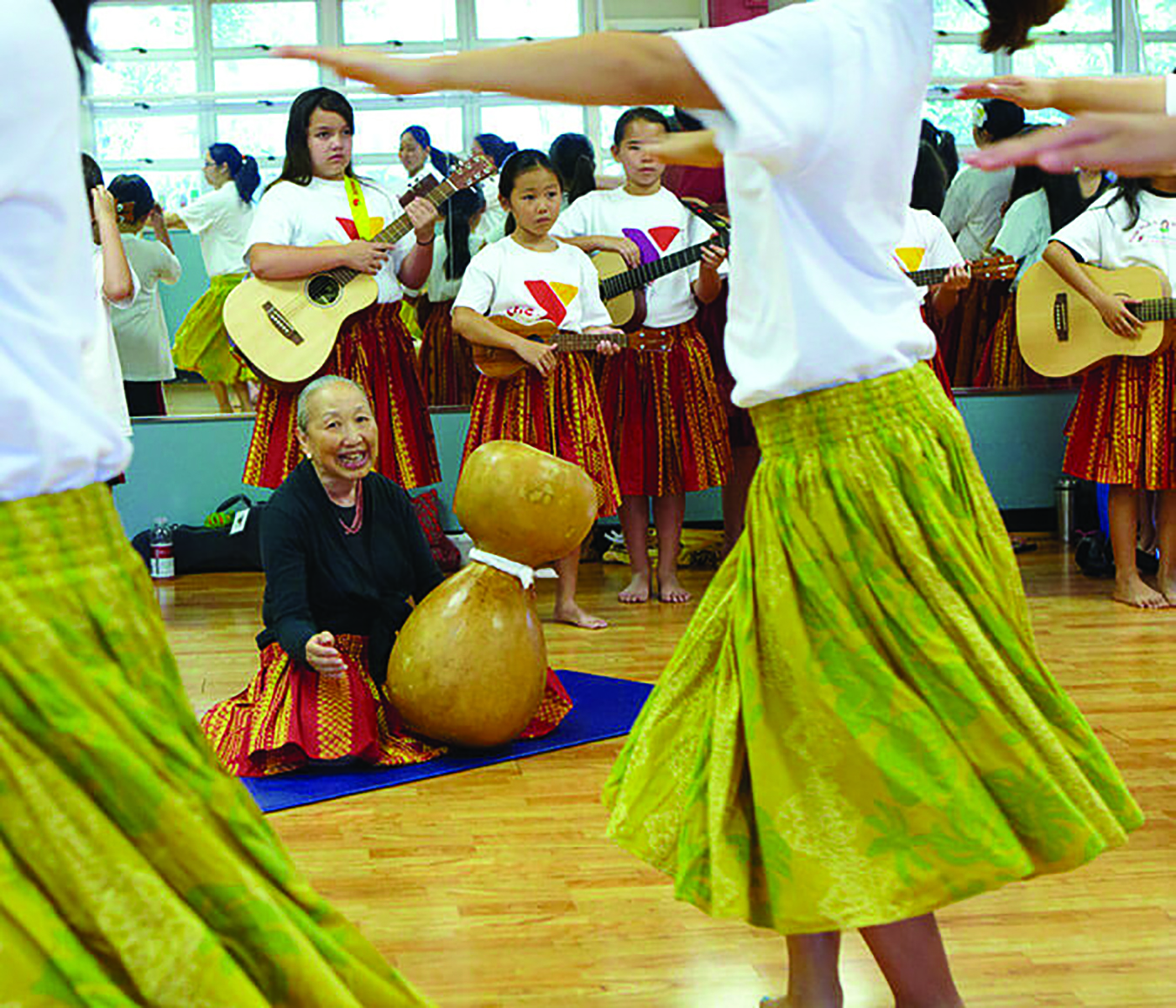
    Auntie Carolee has taught Hawaiian Studies classes to students from ages 3 to 83 at the Nu‘uanu YMCA for 53 years.
    Auntie Carolee has taught Hawaiian Studies classes to students from ages 3 to 83 at the Nu‘uanu YMCA for 53 years.

    In 2020, the Honpa Hongwanji Mission of Hawaii announced its 45th set of Living Treasures of Hawaii, including musician and Kumu Hula Robert Uluwehionapuaikawekiuokalani Cazimero; Hawaiian language champion Larry L. Kimura, PhD; Japanese brush painting master Sachie Saigusa; and volunteer and Kumu Hula Carolee Mei-Jen Kapuamae‘ole Nishi — four community leaders who have demonstrated “excellence and high achievement in their particular field of endeavor, and who, through continuous growth, learning, and sharing, have made significant contributions toward enriching our society.” An official announcement stated that, “Carolee Nishi’s selfless generosity of her time, knowledge and passion with the young and old for more than a half-century truly qualifies her as a living treasure.”

    When Carolee accepted this tremendous honor, she insisted that she didn’t earn the recognition on her own. But that wasn’t the only time she’s been feted recently.

    In 2019, the Kalihi-Pālama Culture & Arts Society used the stage at its annual Queen Lili‘uokalani Keiki Hula Competition to present Carolee with the Miriam Likelike Kekauluohi Achievement Award that is named for Princess Likelike, the mother of Princess Ka‘iulani and sister of Queen Lili‘uokalani.

    Annette Endow, 82, loves learning new things from Carolee, like using technology to join in virtual ‘ukulele classes from home.
    Annette Endow, 82, loves learning new things from Carolee, like using technology to join in virtual ‘ukulele classes from home.

    In 2018, Carolee was recognized by the YMCA of Honolulu – Nu‘uanu Branch for 51 years of volunteerism, for her dedication to teaching Hawaiian culture and hula, and for teaching discipline and core values to youth in the community.

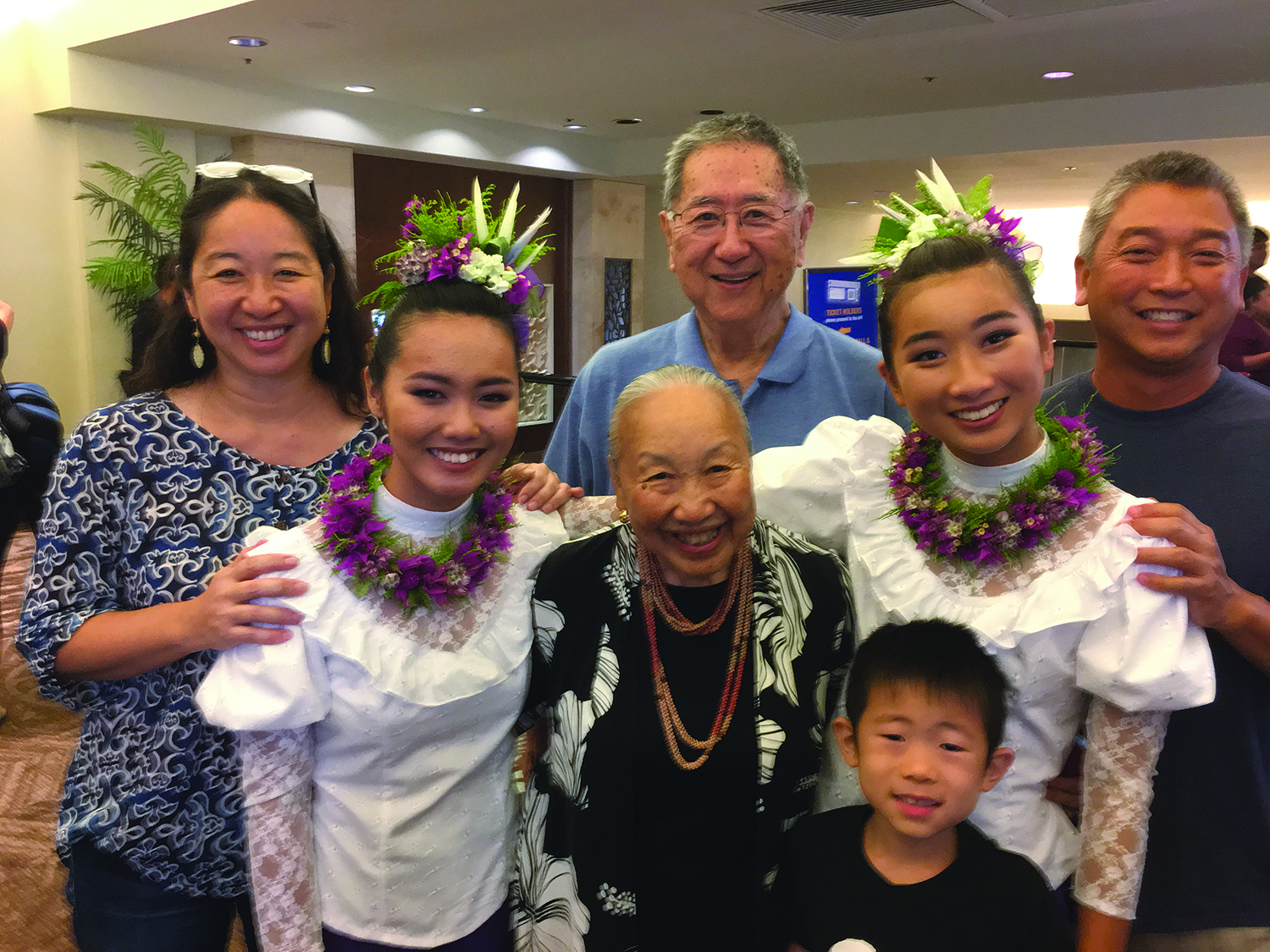
    On Oct. 17, 2013, Ron and Carolee were joined by 1,017 of their closest friends in celebrating their 50th wedding anniversary. This was one of the biggest, but certainly not the only honor that Carolee has graciously accepted recently.

    For all the accolades heaped upon her, Carolee is adamant about sharing credit with others, like the kumu kōkua youth who volunteer to help teach hula to the children at the YMCA. She’s also fond of the Kūpuna volunteers, a group of about 30 seniors who, pre-quarantine, were getting together regularly to teach and dance hula with HHK.

    To Annette Endow, Carolee is an inspiration. “She’s taught me so much, and I have so much more to learn from her,” says Annette, who could be considered an inspiration herself after working for 30 years as a special education teacher and nine years as a nurse. “And she has a heart of gold,” the 82-year old adds, describing one way that Carolee supports children and youth. “She writes tons of college recommendations,” Annette says with a smile, adding, “And they all get in.”

    Work + Life = Balance

    Carolee Nishi hasn’t always been a volunteer. She had a long and colorful career working for United Airlines from 1964 to 2005, starting in the data processing department in San Francisco, transferring to the Red Carpet Room in Honolulu and spending seven years in passenger service at the Lihue Airport on Kaua‘i.

    Something that may seem surprising about Carolee is that she’s very computer-savvy. When she was first hired at United in 1964, she was doing statistics for the airline and learning to use computer programming languages like Fortran and COBOL. “I was a computer programmer,” she says. “But we didn’t call it that. It was performance operations analysis.”

    A solid education at Roosevelt High School, the English standard school in Honolulu, helped to prepare Carolee for college and career. After she graduated with the class of 1961, she went on to earn a degree in sociology from the University of Hawai‘i, and also attended college in San Jose and Los Angeles while Ron was studying aeronautical science in California.

    Ron’s first job upon graduating from college was as a mechanic for United Airlines. But in 1968, the US Army drafted Ron and shipped him off to Vietnam. After a five-year tour of duty, Ron headed back to college and earned a business degree
    at UH. His career after that spanned multiple industries, and he retired as director of international sales and services at Hawaiian Tel. Ron and Carolee, friends since high school, have now been married for 57 years. And their family includes daughter Robyn Nishi Kuraoka and son Trevor Nishi (they were both born on the same day, two years apart), their  spouses, and granddaughters Kaila Nishi and Kiralee Kuraoka (they’re both in high school and were born a few months apart).

    Robyn celebrated her 50th birthday earlier this year and is proud to say that she’s grown up with HHK. She’s now following in Carolee’s footsteps — working full-time at Hawaii Medical Service Association (HMSA) while volunteering and teaching keiki hula classes at the YMCA. During the lockdown, she’s been teaching hula classes via Zoom. “I’m very proud of Robyn,” Carolee says, eager to share examples of the ways her daughter encourages young students and keeps organized behind the scenes. Robyn has learned well from a very good teacher.

    “Hula is a way of life,” says Robyn. “Hula is our way of life.”

    Carolee Nishi (center) with daughter Robyn Kuraoka, granddaughter Kaila Nishi (18), husband Ronald Nishi, granddaughter Kiralee Kuraoka (18), son-in-law Lance Kuraoka and grandson Kona Nishi (9).
    Carolee Nishi (center) with daughter Robyn Kuraoka, granddaughter Kaila Nishi (18), husband Ronald Nishi, granddaughter Kiralee Kuraoka (18), son-in-law Lance Kuraoka and grandson Kona Nishi (9).

    Family Heritage

    Born Carolee Mei-Jen Kapuamaeole Chung on Jan. 3, 1944, Carolee comes from a big Chinese family. “My father’s family is quite celebrated,” she says, describing how her father’s father came to Hawai‘i from China. “He was with the first wave of Chinese people that came here.” In contrast, her father’s mother was born in Ka‘ū on Hawai‘i Island and was “very local.” The pair married and had eight children. Robert Mon Gee Chung, Carolee’s father, was born in 1898, the seventh child. All five Chung brothers attended Punahou School. The eldest son graduated from Yale University and the next one from Harvard Medical School. The second brother’s daughter, Hawai‘i State Sen. Suzanne Chun Oakland, was the flower girl at Ron and Carolee’s wedding.

    Many of the life lessons Carolee enjoys recounting are words of advice from her father. “He used to say: ‘If you’re gonna give, give. If someone asks you to do something, do it. Don’t ask what’s in it for me? Those are fighting words. Don’t ever think that way. If you’re going to give, you don’t tell people what to do with it. You just give it.’”

    “The word ‘hā‘awi’ means ‘to give,’” says Carolee. “But there’s never a time that you give that you don’t receive.”

    HAY: How Are You?

    Another piece of advice from her father motivates Carolee daily. “My dad taught me that phone calls are important. When I was young, he used to tell me, ‘You better stay in touch if you want to be friends.’” And that’s the reason Carolee makes at least five phone calls to friends every day.

    “I have a HAY list,” she says. It might sound like she’s saying, “Hey!” But she’s really saying, “HAY,” an acronym that Carolee made up for the phrase “How are you?” Sometimes the HAY calls are very brief. “I called Laura the other day and said, ‘How are you?’ She said, ‘I’m fine.’ And that’s it. I said, ‘Good talking to you.’ And that’s all we needed to say. Just called to touch bases.”

    Making phone calls to friends is good for the soul. It’s good for both parties. And it’s a good practice for us all, especially at a time when we’re encouraged to follow social distancing guidelines.

    It’s safer, for now, to use our phones to keep in touch. So it’s better then, to call and say “HAY.”

    Longtime friend, 83-year old Charlie Ishii, enjoys getting calls from Carolee whom he calls an angel. When COVID-19 vaccines first became available for seniors 75 and over, Carolee helped Charlie register for his shots. “I gave her the information she asked for,” says Charlie. “Full name, date of birth, last four digits, you know,” adding quickly, “She hustles; she’s a hard worker.” Carolee even arranged for a young volunteer to take Charlie to the mass vaccination site. “I know he could drive himself,” Carolee says. “But isn’t it nice to have someone do the driving for you?”

    Charlie Ishii, 83, learned to play the ‘ukulele and dance hula from Carolee. Now he’s an award-winning dancer who loves performing onstage.
    Charlie Ishii, 83, learned to play the ‘ukulele and dance hula from Carolee. Now he’s an award-winning dancer who loves performing onstage.

    Zooming Along

    During the pandemic, Carolee hasn’t been quite as busy as before. But she’s still getting much done. In addition to helping friends register for vaccines, she also assembled a Zoom Crew of young volunteers to help seniors navigate technology. It’s an idea that might seem outside the box to some, but it was oh so obvious to Carolee: Mobilize people under the age of 30 to help people over the age of 70. It’s her own Genius Bar!

    For the first several months of the quarantine lockdown, Carolee rarely left her house. But she really didn’t need to. She learned quickly to appreciate connecting to people and teaching classes via Zoom.

    One benefit to teaching online, says Carolee, is that it forces her to be organized. She’s found that she needs to prepare lesson plans and have all her song sheets on hand before each class begins. But she isn’t complaining. Rather, she says, “It is the most wonderful way to get together. It really is.”

    And the spry 77-year-old is continually innovating and reinventing herself. She started something new in 2021 — teaching virtual ‘ukulele classes to seniors. And it seems that everything about the remote ‘ukulele classes is a win-win for the teacher and her students. Classes began with the basics and have gotten progressively more advanced, which is a good challenge for their brains. Plus, it’s good for seniors to connect with others, to learn new skills, and to sing songs and play music in a group. And as an accidental bonus, the classes often become talk story sessions, which can also be a really good outlet for seniors’ mental health. “It’s really good to see them zooming along!” says Carolee.

    Lifelong Learning, Learning for Life

    It’s never too late to learn a new skill and you’re never too old to start. Just look at Carolee Nishi. She learned to dance hula as a child. But she didn’t learn to speak Hawaiian until she was an adult. Her first formal education in the Hawaiian language was from Dr. Larry Kimura at the University of Hawai‘i. And it wasn’t until she was about 30 that Carolee, along with her buddy Genoa Keawe, studied Hawaiian language, Hawaiian song and slack key under Auntie Alice Nāmakelua. Then, after the age of 35, Carolee began studying the Japanese language. And today, she’s using that skill when teaching another new  program — virtual ‘ukulele classes for students in Japan, in Japanese.

    “I don’t think I’ve, ever in my life, been bored,” says Carolee. “There is always so much to do. I mean, just tons of things.”

    After state and CDC guidelines forced the YMCA to close and shut down in-person hula classes, Carolee found that she has more free time now than ever before. “I’m writing song books now and I’m getting people together, and I’m doing
    a family reunion because I have all this time.”

    At 77, Carolee Nishi is making good use of her free time while having the time of her life.

    Kumu hula. Musician. Teacher. Cultural practitioner. Living treasure. True friend. These are some of the many ways that people have described Carolee Nishi. And hundreds (maybe even thousands)  now her simply as Auntie Carolee. If you ask her, she’ll tell you she’s just a community volunteer. So don’t ask her,  because everyone who knows Auntie…

  • KTA Super Stores: Beyond the Bottom Line

    KTA Super Stores: Beyond the Bottom Line

    The traditional Japanese concept of kaizen — “continuous improvement”  or “changing for the better”— has carried KTA Super Stores beyond its centennial anniversary as a family-owned business. The founders’ focus was not solely on the bottom line. For over 100 years, KTA Super Stores has been committed to its founders’ philosophy: to humbly serve and do what is right for the community.

    KTA Super Stores began and continues to operate by honoring the partnerships built by previous generations. These principles and values continue today from the founders as the basis of the development and growth of KTA’s business model and its relationships with its partners, customers, staff and each other.

    KTA President and COO Toby Taniguchi’s great-grandparents, Koichi and Taniyo Taniguchi, moved to Hawai‘i inadvertently. During his emigration from Japan, Koichi had stopped in Hawai‘i on his way to California, where he had planned to settle. Early 20th century immigration controls stranded him in Honolulu, where he was visting a cousin. Eventually, he made his way to Hilo, where he enrolled in the Hilo Boarding School and learned bookkeeping. On his own and with no family on the island, he found work with a wholesaler and eventually sent for Taniyo. Former KTA President Barry Taniguchi’s father, Yukiwo, was born in 1916. The story goes that his grandfather told his grandmother that with another mouth to feed, they’d need more income. The store was created to provide income to support Yukiwo. Koichi figured Taniyo could watch the store and care for baby Yukiwo — and their eight children that followed.

    They founded the company later that year. Their first operation was a modest, 500-squarefoot grocery and dry good store in Waiakea (Hilo) that served sugar plantation workers. Their simple mission was to help family and friends obtain necessary grocery and household items as the sugar-based economy began to decline.

    Early on, Koichi delivered the much-needed merchandise by bicycle. In time, the couple built their pickup-and-delivery business to the point where they were able to afford a “real” store.

    Executive Vice President Derek Kurisu says that when the sugar plantations were going under, Koichi and Taniyo’s son, Tony, who eventually succeeded founder Koichi, said he felt it was his obligation to help the agricultural community.

    Also growing up in the Big Island plantation culture, Derek thought, “I also have got to do something to help. In crisis is opportunity.”

    Derek has worked with four generations of KTA Super Stores presidents: Toby is the fourth.

    By 1940, a branch store was established in Downtown Hilo. This proved to be fortuitous when the original structure was destroyed by the 1946 tsunami. This Downtown branch, converted into a supermarket in 1953, was followed by the opening of the Kailua-Kona store in 1959 (relocated to its present location in 1975). Seven years later in 1966, the flagship Puainako store was opened, followed by Keauhou in 1984 and the Waimea store (located in Kamuela) in 1989.

    In 1984, then CEO Tony, his nephew Barry (Toby’s father) and Derek developed Mountain Apple Brand partnerships to create more employment and support a “buy local, take care of local” dynamic. The private-label promotes products grown or manufactured in Hawai‘i.

    In 1990, a sixth location, was opened to serve the growing community of Waikoloa Village, and in 2018, KTA Express Kealakekua opened.


    The KTA Principals, Past & Present
    Koichi and Taniyo Taniguchi
    Original owners, Toby’s great-grandparents
    Yukiwo Taniguchi, called “Mr. Y”
    Barry’s father, Toby’s grandfather
    Tony Taniguchi
    Former CEO, Barry’s uncle, Toby’s great-uncle
    Barry Taniguchi
    KTA chairman and CEO, Toby’s father
    Toby Taniguchi
    Fourth-generation president and COO
    Executive Vice President Derek Kurisu


    Employee Number 11

    KTA’s No. 1 man is actually employee No. 11 in the roster of the thousands of people who have worked at the company over the last 104 years.

    At age 16, while still in high school, Derek worked part-time for the Taniguchis at the first KTA in Hilo. He said he had to carry a 100-pound bag of rice for a distance to get hired as a bag boy.

    Koichi and Taniyo’s son Tony eventually succeeded founder Koichi. Another son, Yukiwo, aka “Mr. Y, ” also worked at the store. He was the father of former KTA President Barry Taniguchi, Toby’s father.

    Derek worked with them all — four generations of Taniguchi leaders at KTA.

    Every day, Koichi, would sweep the sidewalks in front of the store, Derek says. “People who would see him thought he was the custodian.”

    “I can still totally recall the first lecture I ever received from Mr. Taniguchi,” he said. “One day, I went to open a 50-pound rice bag with my case cutter. Mr. Taniguchi told me, no, open it with the string. Rice was a sacred thing 50 or 60 years ago. That is when I realized what KTA was about.”

    “The values we use in our store to this day, — taking care of the products, the people, the employees, the customers — keep passing down from generation to generation,” says Derek.

    “We continue to grab the old and blend it with the new and move forward,” says Derek. “I am blessed to be able to share the old-fashioned values I learned working at KTA.”

    Change for the Better

    Toby did not always envision a future with KTA. He went to college at the University of Portland and wasn’t sure he was going to come back to Hawai‘i at all. He had a girlfriend there and wanted to “hang around,” he says. But as fate would have it, they eventually broke up.

    “Everything happens for a reason, I guess,” says Toby. He contemplated his next move.

    When Barry went to Oregon to attend his daughter’s graduation from another university, he asked Toby about his plans for the future.

    “I’m not sure,” Toby replied. “I had a job working for a wholesale printer and they were going to pay for me to continue my education. Then the breakup came. So I wrote dad a letter and asked him if there might be a place for me — because I wanted to come home.”

    “Barry must have been super-relieved that Toby decided to come back and work,” says Derek. “But Toby didn’t just come back to work to stay upstairs in the office,” says Derek. “He’s downstairs bagging groceries and doing all the jobs.”

    “The Japanese saying, okage sama de, means ‘I am what I am because of you.’” says Toby. “For me, the ‘you’ is Derek, and my uncles, aunts, and business associates who have a lot more experience than I do. You can’t get these things from a book. And I am still learning. I strive to hold onto the values of the past while looking toward the future. That’s what the business philosophy kaizen is — changing for the better.”

    Hirako Farms VP Jeffrey and his son Justin.
    Hirako Farms VP Jeffrey and his son Justin.
    Justin’s grandfather, Kiyotsugu, and his Uncle Roger.
    Justin’s grandfather, Kiyotsugu, and his Uncle Roger.

    KTA Partner: Hirako Farms Justin Hirako, age 28, aims to carry on his family legacy as a member of the fourth generation to run Hirako Farms.


    Justin’s great-grandfather, Seijiro Hirako, left Japan and came to Hawai‘i as a plantation worker. In 1928, he started Hirako Farms. Due to illness, Seijiro was unable to continue running the farm, so the task fell on his son Kiyotsugu’s shoulders at age 17. He was a teenager, still in high school.


    Kiyotsugu later married Shizuko and they had four children. Three worked in the family business — Roger, Norman and Justin’s dad Jeffrey.


    ustin’s great-grandmother, Kuma Hirako, with (L–R) Roger, Norman and Jeffrey
    Justin’s great-grandmother, Kuma Hirako, with (L–R) Roger, Norman and Jeffrey

    The farm has expanded from 20 to 100 acres across Waimea and employs six family members. Justin’s Uncle Roger serves as president of the company; Uncle Norman is the secretary; Justin’s father is the vice president. Justin’s mother Elaine and Uncle Roger’s wife Deborah manage the greenhouse. Justin is the only member of the family’s fourth generation to continue on at the farm.


    Justin’s plan to take over the family business was the catalyst for his academic pursuits. He is well-qualified to take on the responsibility, earning an accounting degree at the University of Hawai‘i at Hilo and an MBA from Hawaii Pacific University on O‘ahu.


    “It was a pragmatic choice,” says Justin. “I always wanted to keep the option open for helping with the family business but I also wanted to have a background in something else just in case. I grew up on the farm and I grew to love Waimea so much. I’ve been very fortunate to have gone around the world, but there is really no where else like Waimea. That’s what drew me back here.”


    Justin’s great-grandfather, Seijiro, and wife Kuma. Seijiro is holding Justin’s Aunty Sharon.
    Justin’s great-grandfather, Seijiro, and wife Kuma. Seijiro is holding Justin’s Aunty Sharon.

    “The farm is a very dynamic operation, so my degrees tie in well with marketing, accounting, finance and all the moving parts that need to be tied together,” Justin says. “You must have a really good understanding of everything that makes the overall machine work.”


    “We have been working with KTA for over 50 years now — dating back to my grandfather’s time,” says Justin.


    Their relationship actually predates KTA’s Mountain Apple Brand, according to KTA Executive VP Derek Kurisu. “We have been very fortunate to be partnered with KTA. They have been willing to support local businesses like us. Without them, we wouldn’t have been able to be where we are today.”


    Gladys and her sisters, Bea Iwata and Betsy Uyematsu, in their home kitchen in 2007.
    Gladys and her sisters, Bea Iwata and Betsy Uyematsu, in their home kitchen in 2007.

    KTA Partner: The Happy Mochi Maker
    At one time, Gladys Sakoda Harada was a very successful hairdresser. She had a salon in Hilo. When her mother needed care as she aged, she moved the salon to the basement of the family home. Eventually, care became more demanding and Gladys gave up her appointment driven hairdressing work.


    “My mom always used to make mochi to give away to friends,” says Gladys. “I decided I needed to learn the art before the teacher was gone. I wanted her to see her products in the markets before she left.”


    In their home kitchen in 2007
    In their home kitchen in 2007

    Gladys contacted KTA VP Derek Kurisu and asked him if he could sell her mochi. So in 1998, her basement kitchen became her certified mochi factory. Her mom, a second-generation emigrant from Japan, was her teacher. Gladys’ mother had gained her knowledge, not from her mother, but from working in a mochi factory in Hilo.


    “The mochi just happened,” she says. “Everything fell right into place for me.”


    Gladys learned how to make ohagi, sekihan and zenzai, among others. Her big sellers are chi chi mochi and peanut butter mochi — originally a
    special request from Derek.


    Mochi holds a special place in Japanese celebrations as well as those of other Asian countries.


    “My son-in-law brought ohagi to work one day and gave some to his boss,” says Gladys. “It really touched my heart when his boss took his first taste and a tear welled up in his eye because it reminded him of his grandma. She used to always make ohagi for his birthday. My mother would always make that for my birthday, too.”


    Derek says her mochi is special. “It is the old fashioned Japanese kind that you wouldn’t find anywhere else. She has a special touch. As soon as she brings it, it is gone from the shelf!”


    Gladys has been delivering her mochi to the Puainako KTA Super Stores location every day for the last 22 years. But the art might end with Gladys, she says, as her children are educators — “not the kitchen type. I am kind of thinking it will die when I die, but I hope not.”


    Her teacher-mother passed away 12 years ago. Gladys will be 79 in April.


    “I am thankful and happy to be a part of KTA’s Mountain Apple Brand,” says Gladys.


    “Question is, how long am I going to keep doing this?” Gladys asks. “I feel it would be selfish of me to stop making mochi if I’m still healthy and my hands can still move. If health can keep up with me, I’ll keep making my customers happy. Don’t you think that’s the best way to live life — making people happy?”

    “We’re trying to improve ourselves, whether it’s the use technology or the leveraging of technology, or innovate ways to improve safety, customer satisfaction and employee moral. It has been super-impactful to KTA,” says Toby.

    Toby’s beloved mentor, his father Barry, passed away in September 2019.

    “When I was cleaning up his office over the next several months after he died, I found my letter in one of his desk drawers… it’s my drawer now, but…” Toby took a moment as he recalled memories of his dynamic dad.

    The letter that asked if Barry had a place for his son at KTA signified a pivotal point in the Taniguchi family’s business and Big Island history.

    It’s All About Relationships

    “There are part-timers, full-timers and life timers at KTA,” says Toby. “The company is very fortunate that we have dedicated and loyal family-like members like Derek. He is talented, dedicated and loyal. I think Derek is a perfect example of an individual who invests in building relationships.”

    “Whether it is through our purveyors, farmers, ranchers, fisherman — I think he has demonstrated though his actions that relationships, at the end of the day, are super-important,” says Toby. They help build trust. They help build win-win situations and scenarios, whether it is a farmer growing tomatoes or anyone else we work with.”

    “I think it is important to just be humble and realize that you are never better than anyone. By the same token, no one is ever better than you. Be humble; be respectful; treat people the way you want to be treated. I think that maybe helps.”

    “I think people don’t care how much you know until they know how much you care,” says Toby.

    “Derek shows that in his relationships with everyone, including our partners. I try to show that to my team members — the associates — as well. Just be honest and authentic.”

    “We try to keep our associates in the game because they are frontline essential workers, like a nurse or doctor at the hospital,” says Toby. “They are essentially feeding our community. So the question we now ask is what can we do to ensure that they are safe and feeling appreciated. We want them to know that we appreciate them. We know that they have choices in where they work and we’re grateful they choose to work at KTA.”

    Toby and Derek both expressed their appreciation for multi-generations of customers.

    “The senior customers bring their children and now they are bringing their children’s children, so we see generations of people in the store,” says Derek. “It makes you feel really good to have multi-generations shopping in our stores. We are so fortunate and so humbled and so happy that, you know, really, I think we have the best customers in the world.”

    KTA Partner: Kulana Foods 
    Kulana Foods Ltd., which began in 1937 in Hilo, is the island’s only full-service slaughterhouse. The family-owned company has supplied wholesale meat to KTA for three generations. “We buy all our local pork and beef from the Yagi family, who owns Kulana,” says KTA Executive VP Derek Kurisu. “They do a lot of value-added processing, like Portuguese sausage, pipikaula and other things. We have had a very close relationship for three generations.”


    Mountain Apple Blossoms
    As one of the few surviving large family-owned businesses on Hawai‘i Island, KTA leaders are passionate about championing other local businesses. Derek led the development of the company’s Mountain Apple Brand beginning in 1984. The private label consists of products grown, processed or manufactured in Hawai‘i. Long-time suppliers have become like family to the KTA organization.

    It started at the beginning of the decline of the sugar industry during Tony and Mr. Y’s time.

    “We were able to get about 40 different partnerships, everybody working together, to actually create more employment and make sure people had jobs,” says Derek. “That was a very important time. The whole philosophy was to support local, buy local, take care of the locals. We went all out to take care of the local community. Tony, Barry and Toby really embraced that.”

    “There are many suppliers on our island that we have worked with for at least three generations, including Hirako Farms, Kulana Foods and others” says Derek.

    “I actually worked with the founders of these companies,” Derek says. “We have a long history of working together. We grew together. They grew, we grew. We grew, they grew. Together, we are all still here. Over 100 years and we are all still here doing business. We are keeping the economy going on our island. I feel so proud to work for this company. We stuck with other companies like family. Now their grandchildren are taking over the business.” Derek says they sometimes express concerns about who will carry on multi-generations business. “Hopefully, they will for many more generations.”

    To date under this brand, over 50 local vendors supply more than 200 products, including milk, meat, juice, eggs, coffee and desserts.

    That’s Show Biz

    Not many retail and grocery businesses also have their own TV show. But in keeping with the “KTA way,” it makes perfect sense. KTA President Barry gave Derek the green light on “People Living in Paradise” in 1995.

    “Twenty-five years ago, a lot of negative news was being circulated about the island via the media,” says Derek. “Teachers were on strike at that time. I was already going to the schools then because Barry wanted me to go out and help the community and be part of it. I also spent a lot of time in the schools because I knew they would be our next generation of customers and the next generation of people we would hire.”

    So an idea emerged to create a cable show that would feature only the shiny side of the tarnished Big Island coin.

    “The show was based on the same concept and philosophy as the Mountain Apple Brand concept; people working together to promote the positive things about this island,” says Derek. “What we did for products and people through Mountain Apple, we did for people of all ages, from all walks of life, in our TV shows.”

    “We started off with ‘People Living in Paradise,’ then broke off with ‘Seniors Living in Paradise’ to highlight the importance of the senior population. At one time, there was a big disconnect,” says Derek. “My goal was to have both a seniors’ show and a family show so that both generations could understand each other. I wanted the younger people to understand the values of the seniors and the seniors to understand the younger kids.

    “That’s still what it is about today; a lot of lessons about understanding each other; all positive; all good; all local; promoting the positive about being local and making our island a better place.”

    Along with cohost George Yoshida, Derek fostered relationships with seniors across the island. After George passed away in April 2019, Derek took over the show.

    “This was so disconnected from what we do as a supermarket,” says Derek. “But it’s part of the Taniguchi family to go beyond the walls of our company and make our island a better place.”

    The show started on Oceanic Cable, which has now been switched to Spectrum.

    The two one-hour shows, which change content once a month, are on every day on Spectrum Cable Channel 129. “People Living in Paradise” is on daily from 7:30 to 8:30 pm and midnight to 1am. “Seniors Living in Paradise” shows daily from 6:30 to 7:30 pm, as well as Monday through Friday from 6 to 7am.

    Moving Forward

    “Derek’s innovations and creativity in bringing products consumers will appreciate and helping organizations and institutions has set us apart from the competition,” Toby says. “Our close relationships with our customers keeps us apprised of relevancy and their needs. I think that’s what helps us stay relevant in this world of large conglomerates. We try new and different products and services; if they don’t work, we stop. We constantly try to improve and innovate.”

    “We have a lot of the big boys in Hilo… the Walmarts, the Targets, the Safeways,” says Toby. “The programs Derek brings to market reflect KTA values. These are not programs that the national chains create. I give all the credit to Derek.”

    Derek, who has worked at KTA for over 50 years now, says he tries to give 110 percent. “My words and actions represent over 800 employees and all of our buyers,” he says. “It’s very tough but it keeps you straight and keeps you motivated to try your best and move the company forward.”

    Although they are continually working to appeal to a new generation, it is equally important to them to maintain the core values and service that his great-grandparents established.

    “As my dad said, the company has never been solely based on the bottom line,” says Toby. “It’s based on what’s right for the community, our partners and our associates.”

    “We’re at a crossroads now,” says Toby. “My siblings, cousins and I have children, but none have expressed interest in the business yet. Some of them are still young. We are fortunate with our associates and individuals like Derek who have been with our organization for a lifetime. But we are at a point where we need to start really having some serious conversations with regard to a fifth generation who will continue the KTA way.”


    KTA Super Stores began and continues to operate by honoring the partnerships built by previous generations. These principles and values continue today from the founders as the basis of the development and growth of KTA’s business model and its relationships with its partners, customers, staff and each other.

  • Character. Duty. Honor.

    Character. Duty. Honor.

    They didn’t fight for fame or recognition, but because it was the right thing to do. Now in their 90s, events beyond their control are still shaping the lives of the Chinese American veterans of World War II. A global pandemic has now extended the delay of national and local ceremonies honoring their military service. But at long last, they will soon be recognized for their patriotism.

    In December 2018, Congress honored 20,000 Chinese American veterans with the Congressional Gold Medal, the highest honor the US legislature awards. The Congressional Gold Medal has been awarded to groups such as the Tuskegee Airmen, Navajo Code Talkers and the Japanese American Nisei veterans who served in the 100th Infantry Battalion or 442nd Regimental Combat Team in the Second World War.

    The Congressional Gold Medal acknowledges sacrifices Chinese American veterans made despite economic and psychological struggles their families experienced under the 1882 Chinese Exclusion Act. Repealed in 1943 only because more bodies were needed for the war effort, this first legal action to limit immigration from a particular country stopped the emigration of laborers from China, limited return travel from visits to China and subjected anyone with a Chinese background to discriminatory practices.

    Unlike other Congressional Gold Medal honorees, the Chinese Americans veterans have not yet received their medals. National and regional award ceremonies were due to be held in the spring and summer of 2019. Concerns about the coronavirus caused them to be postponed. The clock is still ticking, with 2,000 or so veterans still living. Approximately 50 veterans living in Hawai‘i are still waiting to be recognized as soon as House Speaker
    Nancy Pelosi gives the green light.

    The gold medal is awarded after two-thirds of the House of Representatives and two-thirds of the members of the Senate sign off. Signatures must be collected during a single legislative session; sessions last two years. Retired Army Maj. Gen. Robert Lee, a Hawai‘i resident, assisted the committee seeking the Congressional Gold Medal for the Chinese Americans.

    Maj. Gen. Lee had worked on the campaign to see the Nisei awarded the Gold Medal and was able to draw upon that experience to assist the committee working to gain recognition for the Chinese Americans. His strategy for gaining signatures was to query the military officers or other US Department of Defense personnel serving as advisors on each congressman’s staff.

    “Then the next hardest part was to design the actual medal,” Maj. Gen. Lee said. “That’s when a bunch of us met with the US Mint. We had to testify in front of the Fine Arts Commission and Citizens Coinage Advisory Committee to show why our design was worthy.”

    Three of the Chinese American veterans on O‘ahu were among the guests of honor at the recent commemoration of the Sept. 2, 1945, surrender of the Japanese aboard the USS Missouri. The lives of each of these men — and those of their families — were directly impacted by their experiences of the Pearl Harbor attack, military service and post-war opportunities.

    Under Attack

    On the morning of Dec. 7, 1941, Joe Young and his father, Young Fong, were catching ‘opae in Kuapā Pond. The elder Young loved fishing and had leased the pond in 1937, moving his family to Hawaii Kai to run what was then the largest fishpond in Hawai‘i. Fong had previously worked as a delivery man for the Chinatown grocery he and his two brothers opened once their sugar cane cutting contract ended. The trio had emigrated together from Sun Ming Ting village near Zhongshan city in the early 1900s.

    Up early that Sunday morning, 16-year-old Joe looked up from catching the ‘opae he typically sold fisherman as bait when he heard planes overhead. He saw five planes. His initial thought was that they belonged to the US Air Corps.

    “My father said, ‘No, no, no, no, that’s Japanese planes,’” he remembers. He asked his father how he knew the Mitsubishi Zeros were Japanese. “‘By the rising sun and they fly in formation.’”

    “What they flying for?” I asked him. “‘I think they going to Kāne‘ohe base; they gonna bomb the place,’ my father said.”

    Over in Mānoa, Arthur Shak was waking in the student dormitory room he shared with his older brother. Arthur had graduated in June ’41 from Kaua‘i High School. He told his parents he would follow in his older brother’s footsteps and enroll at the University of Hawai‘i. Arthur’s father was a second-generation Chinese American and the No. 2 man at Hawaiian Canneries pineapple company on Kaua‘i. All his children worked at the factory during their youth.

    Once the 18-year-old Arthur reached Honolulu after graduation, he decided to work for a year before hitting the books. More of his friends were working, anyway. So he got a job as a stock clerk in the Contractors Pacific Naval Air Bases at Pearl Harbor (CPNAB) delivering mail.

    That sunny Sunday morning, the students heard the planes fly over. Like Joe Young, they assumed the planes were part of the US Air Corps. Radio broadcasts announced the bombing. Soon, Arthur and one of the stockroom supervisors drove to Pearl Harbor to see what had happened.

    Walter Ching had a higher vantage point of the destruction on Dec. 7 atop the Old Pali Highway on his way home to Punalu‘u after working an overnight shift as a certified welder at Hickam Field. He’d finished work at 7am and had driven himself to Honolulu for breakfast. Then he and a friend started the drive over the Pali.

    Walter had also graduated from a public high school in June ’41. Completing 12th grade wasn’t a given for Walter, whose family lived on the windward side of the island ever since his grandfather, who immigrated to Hawai‘i in the middle of the 19th century to work on a sugar plantation, took a job working for a Punalu‘u rice farmer.

    Walter’s father, Yan Quong Ching, had opened the first store in Punalu‘u, a grocery and gas station, in 1935. Walter was the oldest son at home then, helping his mother in the store from 6 am to 10 pm, with breaks to walk three miles to attend Hau‘ula School until he finished eighth grade.

    Not having the funds to stay in town and attend McKinley High School, Walter wasn’t expecting to continue his education. But thanks to Thomas GS Walker, a new manager at the Kahuku Sugar Plantation, Walter managed to continue his education at Kahuku High School.

    After his workers took him to the field in the morning, he send the truck to Chinaman’s Hat in Kualoa to pick up students wanting to go Kahuku. “So we continued our education,” says Walter. “I didn’t want my education be over. That’s the only opportunity we had.”

    After high school, Walter got a job as an electrician’s helper at Kāne‘ohe Naval Air Station, working for 60 cents an hour. Each night after work, he went home for dinner and then attended welding courses at Benjamin Parker School from 5 to 10pm. After three months, he passed the welding certification exam and took a job for 90 cents an hour building gas tanks with a private contractor at Bellows Airfield in Waimanalo. His crew was soon requested to do the same at Hickam.

    “It was quite a critical job,” he said.

    Joe Young was lead into the armed services through a series of happenstance events. Although he left high school when he was a junior to join the war effort, when WWII ended, he returned to school, earning a bachelor’s degree and graduating from dental school. He opened his own practice after returning home to Hawai‘i.
    Joe Young was lead into the armed services through a series of happenstance events. Although he left high school when he was a junior to join the war effort, when WWII ended, he returned to school, earning a bachelor’s degree and graduating from dental school. He opened his own practice after returning home to Hawai‘i.

    Aftermath

    As non-English speakers, Joe Young’s parents didn’t learn about the attacks until Dec. 8, when they got their hands on a newspaper. Their children fought over radio access, so they had an inkling about what had happened.

    Joe had begun his high school career at ‘Iolani, having struggled to follow his two older brothers into Saint Louis High School. He’d initially been denied admission to the Catholic school, to the great disappointment of his mother — who had no problem letting her son know she was embarrassed to go into Chinatown and face questions about the achievements of her third-eldest son. Later, his  brother helped him gain admittance into Saint Louis High, but the school was converted to a hospital after the war began. He took classes at McKinley, where the Saint Louis students shared classrooms for a few months. But in his junior year, Joe left school to get a job at Pearl Harbor; he’d heard there was a dire need for workers.

    “So there I was, a non-high school graduate. They tell me, ‘You’re going to be a custodian.’ I thought custodian was something big,” he remembers, chuckling softly. “But in simple language, it’s a janitor. I didn’t know. They gave me a broom and a rubbish picker.”

    Joe cleared the metal still littering the airfield from the planes bombed on Dec. 7. Reclamation was hard work. He soon tested his way into an apprenticeship and got work in a machine shop.

    “In those days, they had to make everything by hand… all the instruments,” he said.

    Joe was earning about $100 a month. He gave $80 to his mother, lessening the sting of his earlier educational shortcomings in her eyes.

    Arthur Shak clearly remembers seeing the battleships in Pearl Harbor sinking and on fire near Ford Island.

    “It was really terrible,” he said. “That was the most spectacular thing I’d seen at that time and ever since.”

    It wasn’t until later in his life that he realized how significant it was for him to witness the aftermath of the attack firsthand — especially as an 18-year-old civilian.

    “There were a lot of guards around. You have to be careful where you go and what you do. In those days, a lot of things were classified and when they said ‘classified,’ they meant it. You don’t poke your nose in places where you’re not supposed to go.”

    Art Shak (bottom, L) arrived in Italy in March 1944. He and his Guardian Angel bomber crew completed 51 missions that year, narrowly escaping death after two of the plane’s engines were destroyed and gas lines were severed by enemy fire, and with a 500-pound bomb stuck in the bomb bay.
    Art Shak (bottom, L) arrived in Italy in March 1944. He and his Guardian Angel bomber crew completed 51 missions that year, narrowly escaping death after two of the plane’s engines were destroyed and gas lines were severed by enemy fire, and with a 500-pound bomb stuck in the bomb bay.

    So Arthur carried on his work in the mailroom, sorting letters and ensuring base correspondence reached Honolulu and beyond. Soon, a Korean friend approached him and suggested he enlist.

    “‘Hey Art,’” he said. “‘The US Air Corps is looking for aviation cadets to join.’” And he wanted to join up. “And he said, ‘Why don’t you sign up and join up, too.’ So I said, ‘OK, I’ll sign up.’”

    That was in September 1942. Arthur was soon ferried to Santa Ana, Calif., where he began preflight training. It was his first experience of the mainland. He wasn’t at all homesick, he said, and liked the idea of becoming a pilot. Still, he didn’t argue when he was told the Air Corps assessments suggested he would make a better navigator or bombardier than a pilot. By then, he knew pilots had the highest fatality rates.

    It would take him a year and four stops to complete his training, which he did in 1943. He earned bombardier wings, navigator wings and a second lieutenant’s commission.

    Walter Ching (top, R) spent most of 1944 building key military infrastructure across the Territory of Hawai‘i as a member of the Army Corps of Engineeres. Then he was drafted, joining the Navy Seabees. He was presented with the Arizona Memorial flag upon his retirement after 33 years of federal service.
    Walter Ching (top, R) spent most of 1944 building key military infrastructure across the Territory of Hawai‘i as a member of the Army Corps of Engineers. Then he was drafted, joining the Navy Seabees. He was presented with the Arizona Memorial flag upon his retirement after 33 years of federal service.

    When Walter Ching saw explosions and oil burning at Kāne‘ohe Air Base from his vantage point atop the Pali, his friend suggested that the smoke was coming from a planned training maneuver or a demonstration. Unsure, but in need of rest before another night shift, Walter went home. He mentioned the fires to his family, washed his car and went to bed.

    He woke up to find the US was at war; his family heard reports of the Japanese attack over the radio. There was no work for Walter that night.

    A few days after the attack, he got a call to meet at Punahou School, where the US Army Corps of Engineers was gathering able-bodied men to help with the cleanup. Walter went along, and six days after the Japanese attack, found himself cleaning up bombed out airplane hangars at Hickam Field.

    During the cleanup, roofers dropped a piece of sheet metal that landed directly on Walter as he was cleaning up below. He wound up in the hospital, laid up for three weeks.

    Once he recovered, though, it was right back to work. As a welder, he began repairing the gas storage tanks at Hickam and Wheeler Fields.

    “Then they send me up Molokai,” Walter said. “They were building the airfield up there. We were building gasoline tanks for the airfield.”

    He worked on airfields across the islands, including at Kualoa, Haleiwa, Kahuku and Dillingham. He helped build 10 oil fuel tanks at Waikakalaua Gulch that could hold a million gallons, as well as the Kunia Tunnel, a three-story underground building in a pineapple field.

    In the Army Now

    When Joe Young registered for the draft, he was instructed to remain in his job at the machine shop, aiding the war effort there.

    Joe’s military service began after the war’s formal conclusion, in 1945. He was drafted and sent to Schofield Barracks for two weeks of basic training. Together with pals from around Pearl Harbor and Hickam, he boarded a Liberty ship for an 18-month deployment to the Philippines.

    Joe was stationed at Nichols Field, near Manila. After about six weeks, a sergeant asked him if he’d like to be a flight engineer. The job came with a $40-a-month pay raise for Joe, then a corporal, so it seemed like a good idea.

    On his time off, Joe and his friends wandered into Manila. The city was poor and damaged by the war. In his civilian clothes, Joe was mistaken for a Chinese citizen rather than an American. He recalls being surrounded by angry Filipinos taunting him: “Intsik baboy,” or Chinese pig.

    “I put my hands up and said, ‘No, no,’” Young remembers. He learned a few words of local dialect and lied, in pidgin, to calm the situation. “They ask me what I am. I say ‘I’m half Filipino, but I speak  Chinese because my mother is Chinese. My father is Filipino.’ They believed me.”

    Joe didn’t venture off base out of uniform again.

    A few months later, he had a another tense moment of mistaken identity in Japan, where he and his C-46 air crew traveled to ferry Japanese military officers back to Manila to stand trial for war crimes, such as the Bataan Death March. At the airport, Young was riding in a military truck with his fellow uniformed airmen when they passed a US military police officer. The MP pointed at Joe. “‘What’s that Jap doing in the truck?’” Joe recalls. “Because I’m the only oriental, understand.”

    The pilot of his aircraft took the MP aside, seeming to clarify the situation.

    “After that, the MP saluted and said, ‘Thank you, sir.’”

    After Art Shak’s training on the mainland, he was assigned to a small base near Foggia, Italy, where he served in the 49th wing of the 15th Air Force as a navigator aboard a B-24 Liberator, a four-engine, heavy bomber aircraft. His plane, fortuitously enough, was named the “Guardian Angel.”

    Arthur arrived in Italy in March 1944. He and the B-24 crew joined a major American air campaign to destroy a large oil refinery and oil storage facilities in Ploesti, Romania. Ploesti supplied more than half of the Third Reich’s crude oil.

    Arthur and his 10-man crew had a day or two off between flights over the Adriatic and Yugoslavian mountains — time to write their sweethearts or exercise, he said. He shared a tent with the crew’s pilot, co-pilot and the bombardier. On mission days, they’d wake around 4am, gather their gear and pile into a truck to drive to group headquarters. There, the team sat in a briefing room with a large map pinned to the wall while intelligence officers described the mission of the day: which route to fly, where to expect heavy flak, how to avoid it, where to drop your load of bombs.

    “The briefing was always a little different — whatever had changed since the last time, even if the target can be the same,” Art recalls. “Ploesti was the target that had the heaviest flak; antiaircraft fire.”

    After the half-hour briefing, the crew was taken by Jeep to the airfield where the Guardian Angel sat waiting. They waited in the plane until the air traffic controller gave the signal for takeoff. Missions were about four hours out; four hours back.

    “It’s scary. I wouldn’t say I was nervous, but I wasn’t falling asleep. If I may say — you’re holding your ass,” Art said. “You can see somebody get hit. You can hear things hitting against your plane. When it’s not that bad, it’s like somebody throwing rocks against your car. But when it’s a direct hit like that — boom — it’s a loud sound.”

    After one flight, Art counted some 60 holes in the Guardian Angel. Another flight ended on an island in the Adriatic.

    He wrote in a recent memoir: “Over Ploesti, the plane was hit by flak, severing gas lines and damaging two engines so that the plane continued on only two good engines. In addition, one 500-pound bomb, stuck in its shackles, had to be released manually, bomb bay doors had to be kept open to lessen fuel fumes concentrations from the severed gas lines, and more flak was encountered while flying low. Pilot Davis took evasive action, avoided the additional flak, and with very skillful piloting, managed to reach the coast of Yugoslavia and landed, on one pass with no second chance, on a British-held, short airstrip on the Island of Vis. The fuel tanks were inspected after landing and found to be dry.”

    Walter Ching spent most of 1944 building key military infrastructure across the Territory of Hawai‘i. Despite lingering knee pain from the injury he sustained while cleaning up after the Pearl Harbor attack, he was drafted in status 1-A. He joined the Navy Seabees.

    “My brother was drafted and sent to Guadalcanal,” he said. “I said, no way I’m gonna go in the Army and fight in the mud out there.”

    He was stationed with the Seabees at Moanalua Ridge and worked at Pearl Harbor before he and about 2,000 other Seabees were sent via a troop ship to Samar Island. The trip to Samar took about 19 days. One of Walter’s first concerns aboard the ship was to secure a good sleeping place.

    “So they got about 200 of us in each hold. Your bunks are all hanging up. I took the top bunk. That was the worst thing that happened in my life. The hot air came up,” Walter chuckles. “I cannot sleep. Every night I take my blanket and I go up on the cargo hold cover where we sleep.”

    Saltwater showers and long lines for chow didn’t make life easier. Reaching Samar and starting construction work on an airfield and hospital there was a welcome change, even if the men did do most of their work in sweltering heat.

    Bad luck struck Walter again. This time, a crane knocked him off a building, fracturing his skull. He lost some of his hearing and the use of his right wrist. He wound up in the same hospital he helped to build the previous nine weeks.

    Once he recovered, he was sent to Tsingtao, China, to complete two additional months of service and earn enough points to return home to Honolulu. His job was to help escort Japanese officers to ships that would sail back to Japan. As Walter remembers, this wasn’t a particularly difficult task.

    “They know they lost the war already,” he said. “They were happy to go home.”

    So was Walter; he arrived back in Honolulu via Guam and mustered out (was discharged) after a physical at the Navy hospital.

    Life Moves On

    After his tour in the Philippines ended and his military service was complete, Joe Young found himself still missing a high school education. Local schools weren’t interested in military veterans.

    “I couldn’t get into high school because at Saint Louis High School, they’re not accepting any veterans because they had a lot of trouble with them. I ask them, ‘What do you mean?’ ‘Oh, we experience behavior problems. They drink beer — not on the campus but right off the campus and we can’t do a thing about it. And they smoke cigarettes.’”

    So instead, Joe passed a GED test. Then, an 80-year-old advisor at the US Department of Veteran’s Affairs office guided Joe through the process of using the GI Bill to fund his college education. After two years studying sociology and zoology at University of Hawai‘i, Young transferred to Washington University in St. Louis, Mo.

    There he found his way to dentistry, completing his bachelor’s degree and dental schooling. He lived frugally. One summer he made bullets for $2 an hour at a munitions factory, helping the Korean War effort.

    After graduating from dental school, Young returned home and began his own dental practice.

    Art Shak was welcomed home as a hero, his father throwing him a lū‘au party when he returned on leave. He completed his military service with the 316th Troop Carrier Squadron out of Bellows Field, for which he flew as a navigator aboard the C-47. One of his last flights took off from the Tinian airfield  n the Northern Mariana Islands in early August of 1945. Within 24 hours, on Aug. 6, the Enola Gay began it’s historic flight from the same field.

    “Somehow I can say, ‘Hey, I was there at the start and I was there at the end in some way,’” Arthur said. “That’s my remembrance. That’s what I remember forever.”

    In addition to several other decorations, Arthur received the Distinguished Flying Cross.

    Once his service ended, though, he was just another vet looking for a place to use his GI Bill. Helpfully, older brother Clarence helped him decide where to attend university: Clarence had just filled out an application to Purdue University, but had been called up in the draft. So he asked his younger brother if he’d like to use the application.

    “‘Yeah, OK, why not?,’” Art said. “So I put my name in instead of his and I got accepted. That’s how I got to Purdue.”

    He studied civil engineering there, earning a bachelor’s and master’s degree before returning to Honolulu, where he held engineering jobs in the public and private sector.

    Owing to the two injuries he sustained during the war, Walter Ching was on disability following his military service.

    After a brief stint as a gas station owner back in Punalu‘u, Walter returned to his job as a welder at Pearl Harbor. But his injuries made it difficult for him to walk long distances around the dry docks. His muscles would sometimes lock up when he knelt in small spaces to weld. So he took a 50-cent-per-hour pay cut to work as a handyman on the submarine base. He worked there for six years before working as a diesel mechanic on 72-foot subs for about 17 years.

    When he retired, Walter had completed 33 years of federal service.

    “So when I retired, the thing I cherish the most is that they gave me the flag from the Arizona Memorial,” Walter said. “I retired on the 10th. On the ninth, the flag went up the mast. At 11 a.m., they took it down fold it up they presented me on the 10th. I have it hanging up on my wall now. I really cherish that flag.”

    Perseverance

    These men are their Chinese ancestor’s wildest dreams and an inspiration to grandchildren eager to listen to their stories.

    Their individual lives are like others of the Greatest Generation. Like their peers, they put aside their own plans to give whatever military service the country demanded.

    Then they simply returned to Hawai‘i and went back to their lives. They made a living from a trade or utilized the GI Bill to gain the college education their parents dreamed of.

    Yet because of their Chinese heritage, they served while wondering, “Why am I the only oriental in my unit,” as Art Shak did.

    They had grandparents who were never able to return from visits back to China, like Walter Ching. Like Joe Young, their parents were immigrants who loudly demanded their children get an education — without themselves having the local knowledge or language skills to assist in the pursuit of it.

    These men persisted, overcoming the discriminatory practices and challenges woven into the fabric of their everyday lives. Each of these veterans has children who graduated not only from university, but also graduate school. In retirement, each veteran served the island in his own way, fundraising with benevolent societies and advising planning commissions.

    Now in their 90s, they persist still, leading their families forward with humility and honor.

    CAPT. FRANCIS BROWN WAI: THE FIRST CHINESE AMERICAN AWARDED THE MEDAL OF HONOR

    The first Chinese American awarded the Medal of Honor was dead for 56 years before his family received his medal.

    Capt. Francis Brown Wai was born in Honolulu, growing up playing any and all sports, from surfing to basketball and football. A graduate of Punahou School, he was a four-sport athlete at UCLA. After graduation, Wai enlisted in the Territorial Guard and was sent to Officer Candidate School in Georgia. He was commissioned as an Army officer 1941.

    After the attack on Pearl Harbor, Wai focused on getting himself into the fight against the Japanese in the Pacific Theater. On Oct. 20, 1944, he and his division were part of Gen. Douglas MacArthur’s attack on the island of Leyte in the Philippines. The assault on Red Beach, where Wai came ashore, was carried out under heavy fire with enemies shooting from palm groves behind rice paddies.

    Wai was part of the fifth wave of the attack. Wading onto the beach, he found all American leaders from earlier waves already killed. So he immediately took command and began issuing orders. He charged forward, moving inland through the rice paddies just as he’d once juked his way downfield at UCLA. To locate the enemy’s position, he exposed himself to draw fire; thus, the Americans could aim their return fire as they established dominance on the beachhead. Inspired by Wai’s brave example, the US troops rallied and advanced. Tragically, Wai was shot by the Japanese in the final remaining pillbox in the area.

    Wai was posthumously awarded the Distinguished Service Cross. But in 2000, then President Bill Clinton upgraded Wai’s medal to the Medal of Honor — 56 years after his death — finding that racism had stood in the way of earlier consideration of Wai’s bold, selfless actions for the country’s highest decoration for military valor.


    To read more about the outstanding Chinese American veterans of WWII, visit www.caww2.org/profiles.
    For information about Hawai‘i veterans, visit www.caww2hawaii.org/profile1.
    Families of Chinese American World War II wartime veterans from Hawai‘i are urged to register to receive the Congressional Gold Medal at www.CAWW2hawaii.org.

    They didn’t fight for fame or recognition, but because it was the right thing to do. Now in their 90s, events beyond their control are still shaping the lives of the Chinese American veterans of World War II. A global pandemic has now extended the delay of national and local ceremonies honoring their military service.…

  • ʻO Ke Aloha Ka ʻOi Aʻe – Love is Unconditional

    ʻO Ke Aloha Ka ʻOi Aʻe – Love is Unconditional

    Caregivers Kalani Pe‘a & mom, Pua

    Caring for a loved one with Alzheimer’s disease requires patience, compassion, understanding and endless, unconditional love. In the following pages, Kalani Pe‘a and his mother, Pua, share the story of Lu Kahunani; Pua’s mother, Kalani’s grandmother. “I saw her slipping away. I knew I was going to lose her one day…”

    She was a dynamo; a no-nonsense force of nature; a feisty fireball. She was a wise woman with a huge heart. But she did not mince words. She passed her pragmatic knowledge and deep-rooted values to her seven children. “Be good to people,” she would tell them. “And stop crying so much,” Lu Kahunani would tell her grandson, Kalani Pe‘a.

    Music lovers in Hawai‘i and beyond know Kalani as a gifted, Nā Hōkū Hanohano and Grammy Award-winning singer and composer. It’s in his blood. He comes from a long line of musicians — his kūpuna. But he said he began to cry often when he saw his grandmother, who he calls “Mama.” “I love her so much and she is slipping away,” he said. He knew one day she’d be gone.

    About 10 years ago, when her husband was still alive, Lu Kahunani began to lose her words. She started to misplace things. Sometimes she didn’t know where she was. Her husband noticed and asked their youngest daughter, Pua, to keep an eye on her.

    Daughter Pua provided respite for her mother, caring for her father as he endured cancer and treatments. Before dying in his daughter’s arms later that year, he asked her to take care of his beloved wife. Pua then turned all of her attention to her mother, who was exhibiting signs of advancing Alzheimer’s disease.

    Mama

    Lu Kahunani will turn 90 in November. She was a model in her younger days, with the beauty of a queen. Later, she raised a family and worked at hotels, restaurants and at KTA Super Stores in Hilo. “My Mama never complained,” says Kalani. “She was the matriarch of the family. She was  very steadfast and strong-willed; always vigilant and industrious. If ever we complained about a problem she would say, ‘Get over it. Figure it out.’” Kalani admits to being a crybaby when he visited Mama, even before Alzheimer’s started to steal her body, mind and memories.

    She would ask, “Why are you such a crybaby?” Kalani replied, “‘Because I love you so much.’ But in my head, I knew time was flying. I knew time was precious. I knew I would not have her forever. I saw her small hands become more frail and thin. I cried not just because I was a crybaby; I cried because I knew I was going to lose her one day.”

    However, Kalani seldom saw his stoic Mama shed a tear. The first time was when he was 18, when his mother and grandmother took him to get settled in college in Colorado. It was their first time leaving the islands. “She cried because she said she was going to miss me.” But through her tears, she said a prayer that her grandson would do well in his college endeavors.

    The second time he saw Mama cry was after Kalani’s mom, Pua, became her caretaker. “She realized she was forgetting things,” says Kalani. “She became aware of the state that she was in and how her condition might affect her family.” Kalani shed more tears as he witnessed his Mama break down.

    During the first stages of her dementia, Mama was asked to retire from her job at KTA. She did not want to retire, but she had to.

    “It was in 2009 that she started wandering; forgetting her place; forgetting where she left things,” said Pua.

    “She started to catch herself. She was aware of what was happening to her. She began to  experience what is called sundowners… dementia, agitation, forgetting where she was,” says Pua. She was assessed for Alzheimer’s in 2010.

    For those with dementia, sunset can be a time of increased confusion, frustration and agitation. Sundowning is a symptom of mid-stage to advanced Alzheimer’s.

    Pua says, “She asked me to do three things: ‘When I forget to speak for myself, be my voice. When I forget to think for myself, will you think for me? Will you please be me?’ So I became her.” Pua learned to put herself in her mother’ place in order to understand her and her needs and mālama her. Social workers would frequently call on her for advice, because, they said, “You know your mother.”

    Because of her mother’s Alzheimer’s assessment, Pua was able to educate herself about the disease in order to best understand what was happening to her mother and how she could help her most effectively.

    “I had to understand this disease,” Pua said. “It’s not curable. It worsens as time goes by. And you see that. I saw all that. So you really have to understand this disease so you can help. This was my job now.”

    Parent as Child, Child as Parent

    “When you’re a child, your parents think for you, speak for you, guide you, teach you and protect you. So now, she was like my child,” says Pua. “She looked at me as her mother. There were times when she called me mama. They went through difficulties raising us. Now it is our turn to care for them.”

    Pua is the youngest of seven. While trying to provide the best care and create the optimal treatment plan for her mother, family discord erupted at an already stressful time. Pua’s “perfect, no-brainer plan” to involve her six siblings in her mother’s care (seven siblings, each caretaking one day a week) did not come to fruition as she had hoped, leaving her as the sole caregiver for her ailing mother. Full-time caregiving takes an emotional toll, as she learned firsthand.

    “My mother became the sole caretaker,” says Kalani. “She put her marriage on hold. She literally put her life on hold.” Caregiving tasks also took a physical toll. “My grandmother is a short, petite little lady, but the effects of Alzheimer’s took away her mobility. I watched her deteriorate. She cannot stand on her own or talk any longer.” She was dead weight as Pua tried to take care of her physical needs of daily living and support her mother in every way possible, as she promised her father she would.

    Pua and Kalani at one of their many visits with Mama. “She loves every minute of it, whether she remembers who we are... or not. She knows she is loved.”
    Pua and Kalani at one of their many visits with Mama. “She loves every minute of it, whether she remembers who we are… or not. She knows she is loved.”

    Long-Distance Caregiving

    Lu now lives at the Life Care Center in Hilo. Pua and Kalani visited her often in person before the COVID-19 pandemic exerted its overpowering grip on the world. Now, the families of those in long-term medical facilities must comply with health mandates for the safety of all concerned. Families now provide long-distance caregiving by communicating with their loved ones through internet meeting programs on tablets, computers and smartphones.

    “We used to bring her flowers and candy and chocolate ice cream,” says Kalani. “Oh how that tiny Filipino- Hawaiian woman loves her sweets! My mom also dropped off my albums. Caregivers at the center play them for her and I could see in the videos they sent us that she would wander. Since she can not articulate, her eyes tell the story. As she connects with the music, her eyes tell me that she loves me and she is proud of me.”

    In 2013, Kalani and his partner moved to Maui. Pua came to live with them years later. Kalani transferred from the Big Island as a teacher and Hawaiian resource coordinator at Kamehameha Schools. He left that position after 10 years to pursue his dreams full-time as a musician and  educator. He conducts workshops on Hawaiian music composition and songwriting while he is touring. He donates a portion of his concert proceeds to the Alzheimer’s Association to honor his grandmother.

    After years of solo caregiving, fighting feelings of failure and defeat, Pua moved to beautiful Maui to live with Kalani and his partner. Mama was moved to the Life Care Center.

    “I want to emphasize that caregivers should take care of themselves,” says Kalani. “Mālama their piko — all of their temples — and spiritually heal. Ask for help for a good hour or two a day so you can take care of yourself and find time to heal so you can take care of others, as well. You can’t do it all.”

    “Mom didn’t get that,” says Kalani. So he told his mother, “Come holomua in Maui. Come and heal. I will take care of you. If you are not going to take care of yourself, I’m going to lose you first before I lose my grandma.”

    “It was a fight for me with my siblings,” Pua says. “But my mother taught me the meaning of the word forgiveness. With that, you allow reopening of a new chapter in your life. You allow acceptance because God is going to take care of you. My mother is a woman of faith. She is my light. She lights the way when I feel I am in darkness.”

    “So I kissed Mama goodbye, telling her I have to leave,” says Pua. “And although she could not articulate her thoughts and feelings, the look in her eyes told me ‘All is well.’”

    “Mama continues to shine even over this distance that separates us,” says Pua. They often connect through internet video. “As soon as she is able to tell where the voices are coming from, she looks right at the screen — right at us.” Pua also sends regular care packages. The social workers at the center are very helpful maintaining whatever connection is possible with her mother. “God is ensuring I connect with her no matter what.”

    “I just came back from visiting her before the quarantine. Hurricane Douglas had just passed. I told myself I just had to go,” says Pua. “Mama is on the third floor of the facility. They sit her next to the window and I talk to her outside from the ground floor. She hears my voice and looks right at me. Our spirits connect.”

    “I think Mama wants us to accept the fact that she is going to go,” says Kalani. “We are okay with her going to leave, but she is such a strong woman… to have this horrendous disease for 10 years when many last only five or six years before they succumb to the disease.”

    “She is fighting it, but I think she wants our family to ho‘oponopono,” the Hawaiian practice of reconciliation and forgiveness, “and holomua” [improve],” says Kalani.

    “Values play such an important role in our ‘ohana, …understanding the values of forgiveness and having the trait of being a good person who is good to people,” says Kalani.

    The Alzheimer’s Stigma

    Kalani spoke of friends who were very secretive and ashamed regarding their loved ones with dementia and Alzheimer’s. Kalani’s advice: “Don’t be ashamed to talk about it. People will talk about their loved ones with cancer or diabetes or whatever, but this particular disease —  Alzheimer’s — is also something to talk about. It’s okay to talk about your mom forgetting things. It’s okay to talk about your mom forgetting your name. It’s okay to talk about her hitting you during sundowners because she can’t control her anger. Just don’t be hard on her or him… Love them, hold them, tell them it’s okay. Just understand that they can’t control their behavior. They can’t control their delusions.”

    He reports that those friends who took his advice are very grateful that he shared his own experiences with them.

    “There is a stigma,” says Kalani. “People are afraid and ashamed. So it is helpful for us to create and share this dialogue and diary with other people who are new to this. It’s okay to talk about the issues to help educate other caregivers and to let them know they are not alone.”

    Music Sparks a Connection

    Before COVID, Kalani would whisper in his Mama’s ear, continually reminding her of how much he loves her. He would also sing to her. “I brought her flowers and chocolates on her birthday,” says Kalani. “She did not recognize me for a while until I sang to her and told her who I was. I was able to connect with her through my music for a split second. I sang her favorite song, Blue Darling. My grandfather would sing that song to her when they would argue. She sang along with me. And then she kissed me. ‘I love you, Ara,’” she said. “She calls me Ara for short.”

    A video of this bittersweet exchange went viral last November.

    “She always supported my educational endeavors,” says Kalani. “She was always in the front row watching me perform. She was at the forefront of all my performances.” Now she rarely recognizes Ara. “That breaks my heart,” he says.

    “But that moment, at that time… I had her… for less that a minute, but I had her,” he said. “She knew exactly who I was. That was a moment I had her, vividly, looking at me in my eye. I could see in her eyes how much she loved me.” Kalani touched his heart and inhaled deeply at the  recollection of that precious moment.

    “I didn’t know she would totally remember a song and remember me through song,” says Kalani. “And I realized how music brings healing to the heart and the soul and to the mind. Music is so essential; it plays such an important role. I think music is among our antidotes and medicines for the elderly. Whether there are workshops through the Alzheimer’s Association or through caregivers out there, music and dance should be imbedded in a system for our kūpuna. Music allows you reflect on the past and allows our elderly to really connect with their loved ones.”

    “I still cry every time I visit her because I know she is deteriorating,” says Kalani. “I know I am losing her verbally, mentally… all of that. But the music allows me to link with her spiritually. I knew that was the strongest medicine I could have given her. And at that specific time and place of deep connection, you can’t replace that moment.”

    Kalani also said that despite her forgetfulness, Lu was able to recite her prayers without hesitation, underscoring her strong spiritual connection.

    While there’s no cure for Alzheimer’s, music has been shown to have emotional and behavioral benefits for those living with the disease. Kalani and Mama continue to have rare instances of connection through his music, but the frequency has dissipated over time as the disease progresses.

    A Musical Heritage

    “My whole family sings,” says Kalani. “My paternal grandfather, John Pe‘a, who passed away from Alzheimer’s, was an opera singer. My dad plays the bass. My mom’s family were musicians, too. I come from a line of musicians but I was the first to record an actual album that talks about people I love, places I love in Hawai‘i, people who have affected me my whole life… and that is all through songwriting and personal experiences. I didn’t win accolades overnight… I prepared and trained. The accolades do not define who I am. It is my parents — my mom — who taught me to be proud of who I am as a kanaka and to be good to people. My grandmother always taught us that being good to people is the best trait you could have.

    Kalani says he owes his musical career to his mother and his ancestors. He shared that he stuttered as a keiki and what helped him overcome the impediment was music. “My parents put me in choirs, music theory classes, ear training, and piano and guitar lessons.”

    He said his mom put him in oversized suits and encouraged him to sing at weddings and charity events. “But I never thought I would do music full-time because full-time musicians don’t make any money at all,” Kalani says. “I’m not becoming a teacher either, flying chalk at kids. But I became a teacher, creating Hawaiian culture curriculum, and using my music skills and proficiencies, I have created STEM curricula.”

    Music Curriculum for Kūpuna

    “I have talked to Alzheimer’s Association Executive Director LJ Duenas and the team at the Aloha Chapter about building a curriculum for our kūpuna,” says Kalani. “I want to contribute that because I believe that music plays a role with our kūpuna. I believe that music should be  implemented in their care programs and I am there to assist. The Alzheimer’s Association is my number one charity because of my kūpuna.”

    Kalani’s late paternal grandparents also suffered from this disease. “This disease truly runs through  he veins of my family.”

    The Water of Life

    Waiwai means value, wealth or knowledge. Wai means water; water is wealth. “Water is a medicine that keeps us alive and well,” says Kalani.

    Na Wai Eha in West Maui — The Four Great Waters, a place of Nā Akua — is a system of fresh water streams that sustained thriving Hawaiian communities since time immemorial. Part of the system includes Wailuku Stream (‘Īao Stream).

    (L–R) An Alzheimer’s Association volunteer, Kalani and Dr. Poki‘i Balaz, DNP. Follow Kalani’s musical journey and his work with the AAAC at kalanipeamusic.com and @kalanipeamusic
    (L–R) An Alzheimer’s Association volunteer, Kalani and Dr. Poki‘i Balaz, DNP. Follow Kalani’s musical journey and his work with the AAAC at kalanipeamusic.com and @kalanipeamusic

    “The stream symbolizes the cycle of energy and life,” Kalani says. “Similarly, our kūpuna and those before them had this wealth of knowledge and wisdom that they bestowed upon us to  continue their legacies and our heritage, whether we speak the language, dance hula, or learn our history and genealogy. They teach us to be comfortable with our identity and ourselves and  remember who we are and where we come from.”

    “That stream talks about the connectivity of life,” says Kalani. “If we are going through trials and tribulations, we are rejuvenating ourselves with water given by God so we grow and be strong and be good people. And we all need to be good people of compassion, especially now.”

    It is one of the places we have a spiritual connection with our ancestors,” says Kalani. “The water of life flows through us from our kūpuna. The stream that flows consistently from mountain to ocean is symbolic and metaphoric of this human cycle. As water is our waiwai, our kūpuna are our waiwai.”

    “I often wake up and wish this was just a terrible nightmare and I could just pick up my phone and call her and tell her how much I love her,” says Kalani. “I wish I could fly to the house she once owned and see her purple orchids… I wish I could just grab her and tell her how much I love her. It is really hard to understand this disease. I wish I could be in the shoes of a person with Alzheimer’s and feel what they feel… what is holding them back, what they are thinking.” Kalani sighs. “I miss her so much. I do.”

    The Color Purple

    When Kalani would perform Kahunani No ‘Ō la‘a, the song he wrote for his grandmother that was recorded on his Grammy Award-winning sophomore album, No ‘Ane‘i, some audience members would make the connection to their loved ones who have faced Alzheimer’s or who have passed away from the disease. Kalani and his mother, Pua, were honored to share their experiences. And ultimately after his performances, they would ask him about his signature purple clothing. He expresses his deep connection to his ancestors through symbolism in both song and color. Kalani means “the heavenly skies.” He is named after his father, Arthur Kalani Pe‘a. “The sky is blue. The koko, the blood of God, Jesus Christ, is red. When you combine both colors, you have purple! It is my connection to the spiritual world and reconnecting with my kūpuna. It is they who paved the path for me. They have nurtured me and raised me to be the man I am today.” Kalani Pe‘a embodies the understated confidence of one who knows he is much loved. He is very good to people.

    Caring for a loved one with Alzheimer’s disease requires patience, compassion, understanding and endless, unconditional love. In the following pages, Kalani Pe‘a and his mother, Pua, share the story of Lu Kahunani; Pua’s mother, Kalani’s grandmother. “I saw her slipping away. I knew I was going to lose her one day…”

  • A Great First Lady Cares

    A Great First Lady Cares

    Hawai‘i’s first lady, Dawn Amano-Ige, is a wife (married to Gov. David Ige), a mother of three, a sister and a daughter. Dawn’s mother, Mitsue Amano, provided childcare for the Ige kids when Dawn was a young, working mother and David was a new legislator. Today, at 94 years old, Mitsue is no longer the family’s caregiver. That’s now Dawn’s role.

    Mitsue has Alzheimer’s disease.

    When Dawn first learned of her mother’s diagnosis, she had very little idea of exactly what she and her family would face as caregivers. She recalls being given a fact sheet from the  Alzheimer’s Association and learning that she was one of 65,000 in Hawai‘i caring for more than 29,000 people living with Alzheimer’s disease and other dementia.

    Nearly 5 percent of Hawai‘i’s residents care for someone living with Alzheimer’s disease. And since the start of the COVID-19 pandemic, that number has increased. In March 2020, all adult day care services closed, and many residential facilities sent patients home to their families to allow for increased social distancing and reduced staffing. People who weren’t already full-time caregivers suddenly found themselves in exactly that position.

    “My mother has no short-term memory and she knows that,” says Dawn. “I always greet her by saying, ‘Hi Mom — do you know who I am?’ as I hope the first two words will serve as the enduring clue as to who I am.”

    ‘Hi Mom — do you know who I am?’

    Five years ago, Dawn began noticing slight changes in her mother. Mitsue repeated herself often, started walking with a shuffle and displayed memory issues. Over time, the family noted more changes. “For me,” Dawn says, “my mother refused to do anything. She said she was tired and refused to self-care.”

    And sadly, Dawn says, “I think she was recognizing that her disease was changing her, and change is scary and unacceptable when it affects your memory.” Dawn was told that this was a phase and there would be a time when her mother wouldn’t complain at all; but she found that hard to believe.

    The family cared lovingly for Mitsue in her home, as she wished. But at one of the most challenging times for the governor’s family, just weeks after the missile alert crisis, Mitsue took a hard fall and was whisked to the emergency room, admitted to the hospital and transported to a nursing home that provided 24-hour care. She never moved back home. And now, she’s at that phase — she rarely complains.

    “I learned that my story is not uncommon, but experienced by many,” Dawn says. “Each of our journeys is different, but some of the struggles are the same and heartbreaking.”

    “As a caregiver, there are two things I hold on to,” says Dawn. “First, despite the mental deterioration caused by the disease, my mother’s core self remains. And that’s important to me. Despite the memory loss and changes in personality, I believe she will always be who she is in her heart and ours. That is never lost or forgotten.”

    “The second is to enjoy the moments.  because of her short-term memory, good moments also repeat themselves. I enjoy seeing the surprise on her face when I tell her again that her son-in-law is governor of Hawai‘i.” Mitsue also takes pride in hearing news of her grandchildren because she provided much of their care in their early years. Dawn is delighted to share that her children come home each year to celebrate their grandmother’s birthday — but not for her own birthday or her husband’s.

    A family portrait: (L–R) Gov. David Y. Ige, Mitsue Amano, Byron Amano, First Lady Dawn Amano-Ige.
    A family portrait: (L–R) Gov. David Y. Ige, Mitsue Amano, Byron Amano, First Lady Dawn Amano-Ige.

    Walk the Walk to End Alzheimer’s Disease

    When Dawn and her brother became the primary caregivers for their mother, she reached out to the Alzheimer’s Association in Hawai‘i for information about the disease and tips for caregivers. She also attended the Walk to End Alzheimer’s, where she met many other caregivers and people living with the disease.

    “Alzheimer’s is not an easy disease to deal with. You see parts of their personality leave them, or they leave them temporarily, and they forget who different people are in their family. I think that’s really where it hits the heart.”

    “When my mother was first diagnosed, I attended a walk because I thought the cause was so important. And to see so many people affected by Alzheimer’s is quite eye-opening,” she says.

    The first lady felt such a strong connection to the cause and the people she met at the event that she offered to serve as the statewide honorary chair for the 2020 Walk to End Alzheimer’s on O‘ahu, Maui, Kaua‘i and Hawai‘i Island.

    A Product of Her Community

    In her role as first lady, Dawn draws on her experience as an educator and businesswoman to support causes she’s passionate about: education, literacy, healthcare and youth.

    Dawn is a product of the Ewa Plantation. Like her father, she was actually born in Ewa at the plantation hospital and attended Ewa Elementary, ‘Ilima Intermediate and Campbell High School.

    Among the first in her family to graduate from college, Dawn has a bachelor’s degree in journalism and a professional diploma in elementary education from the University of Hawai‘i at Mānoa, and a master’s degree in business from Chaminade University of Honolulu.

    And like her mother, Dawn worked for many years in the Hawai‘i Department of Education (HIDOE) as a third grade teacher at Waiau and Waimalu Elementary Schools, and vice principal of Kanoelani Elementary and Moanalua High School. Before that, she served as the marketing director of Kapi‘olani healthcare system and an account executive at the public relations firm of Stryker Weiner Associates. Her resume shows an authentic belief in the causes she continues to support in the community today.

    Jump Start Breakfast in Schools

    One of the causes Dawn feels most passionate about is feeding Hawai‘i’s children and making sure they start each day with a nutritious breakfast. She recently partnered with Hawai‘i’s public schools and community nonprofit organizations to help kids “Jump Start Breakfast” in schools. And of course, the inspiration for supporting this program comes from her mother, who was once a school cafeteria baker.

    “Eating breakfast is important to helping our keiki grow up strong, healthy and academically successful,” Dawn said in an op-ed co-written with HIDOE Superintendent Christina Kishimoto and others.

    Hawai‘i ranks last in the nation in school breakfast participation, but kids who eat breakfast have better attendance, can achieve 17.5 percent higher scores in math and are 20 percent more likely to graduate from high school.

    Last fall, the program piloted a Grab ’n Go model where kids could pick up free breakfast in the cafeteria and eat it outside or even in  the classroom. Dawn is proud that this Grab ’n Go model was used for school meal distribution during the COVID-19 pandemic and may continue to be used in the new school year.

    The First Lady reads aloud in a weekly Facebook podcast, “Storytime with Dawn.”
    The First Lady reads aloud in a weekly Facebook podcast, “Storytime with Dawn.”

    ‘Ohana Readers Promoting Literacy

    Dawn is also passionate about early education, and is proud of the ‘Ohana Readers literacy program that puts books in the hands of children and encourages families to read together. It’s a partnership with several nonprofit organizations, including the Hawai‘i State Library System, the Friends of the Library of Hawai‘i, Hawai‘i Department of Human Services and Dolly Parton’s Imagination Library.

    “Research shows that children are ready to learn in their earliest years,” she points out. “And this program provides no-cost opportunities for learning from birth through age 4. ‘Ohana Readers encourages family read-aloud time, an activity that increases the vocabulary and language skills of our children, and contributes to their growing knowledge of the world.”

    Expansion of the program begun on Moloka‘i and Lāna‘i, is on hold during the ongoing pandemic. But the first lady continues to promote literacy by reading books aloud to children through her Facebook page.

    Fading Memories

    Mitsue Fukuda was born in 1925 in the small town of Hōnaunau on the Island of Hawai‘i and raised on a small coffee farm in Kealakekua, south of Kona. Memories from her youth have begun to fade away.

    After World War II, Mitsue married Sakuji Amano. They lived on O‘ahu, working and raising a family on the Ewa Sugar Plantation. Sakuji was born in Honolulu, raised on the plantation and educated through the seventh grade at Ewa Elementary School.

    Mitsue’s grandchildren, (L–R) Matthew, Amy and Lauren, helped care for her.
    Mitsue’s grandchildren, (L–R) Matthew, Amy and Lauren, helped care for her.

    Back at the plantation, Sakuji worked as a crane operator and Mitsue worked nearby as a baker in the Campbell High School cafeteria. Both their jobs were demanding, with long hours. Mitsue’s shift began early in the mornings so she could begin preparing school lunches for hundreds of hungry high school students. In her small plantation community, Mitsue was known as a good cook who enjoyed gardening, and often shared baked goods with friends and family. And together with Sakuji, she raised their children to value hard work and education. Sakuji died in 1989 at the age of 69, leaving his family with fond memories, except for his wartime stories that he never shared.

    Mitsue and Sakuji have a son, a daughter and several grandchildren. One grandchild lives in Washington, DC; two live in Washington State; and their daughter lives at Washington Place.

    Dawn Amano-Ige and David Ige, Mitsue and Sakuji’s daughter and son-in-law, have lived at the official residence of Hawai‘i’s governors as first lady and governor since 2014. Until 1917, Washington Place had been the private home of Queen Lili‘uokalani, who lived there with her husband. And today, First Lady Dawn Amano-Ige is leading efforts to make the historic executive mansion more accessible to visitors through new technologies and educational experiences such as virtual tours and iPad apps.

    Now in the year 2020, it’s clear to see that Mitsue has collected a lifetime of memories — through her own experiences and those of her late husband, their children and grandchildren. But with hindsight that is 20/20, it has also become clear that Mitsue’s memories have faded away and most are completely gone.

    Gov. David Ige and First Lady Dawn Amano-Ige are proud of both their fathers: Tokio Ige (L) and Sakuji Amano (R) who served with the 442nd Regimental Combat Team during WWII.
    Gov. David Ige and First Lady Dawn Amano-Ige are proud of both their fathers: Tokio Ige (L) and Sakuji Amano (R) who served with the 442nd Regimental Combat Team during WWII.

    Holding On

    “I remember going out to my grandfather’s home in Kona when he was alive,” recalls Dawn. “Our relatives would get together there during the summer. My Mom showed me how she picked  coffee very much the old-fashioned way — by hand. She could go down a branch of coffee beans and just pick the red ones and leave the green ones behind. It was amazing that she could do it so quickly. It’s a vivid memory for me.”

    These are the memories that Dawn holds onto.

    “My grandfather came to Hawai‘i to look for a better life and the promise of prosperity,” says Dawn. When Mitsue had a family of her own, she enjoyed telling stories about her small kid times in the small town of Kealakekua.

    Dawn has even fewer memories from her father and regrets that she knows little of his WWII experiences. He served with the 100th Infantry Battalion, Company C, which was part of the 442nd Regimental Combat Team, the most decorated unit for its size and length of service in US military history.

    “My father spoke little of war and its hardships. David and I speak about this quite often because the strength our fathers carried were so important to our history, and serves as an inspiration to us.”

    “We are living through difficult times now. I often think about my parents and how their generation also lived through difficult times — they endured and were never bitter about it. Growing up, they stressed to us the value of working hard, doing well and overcoming challenges without complaining. I admire that about my parents and their parents,” Dawn says.

    “I know we’ll be able to get through these difficult times. We have to stay focused, work together as a community and forge ahead. So that’s how I look at their experiences — as an inspiration for me.”

    Adjusting to ‘A New Normal’

    Dawn and her husband haven’t seen Dawn’s mother since mid-March, due to safety precautions in the face of COVID-19.

    “We can’t go into the nursing home. And of course, we don’t want to put anyone at risk. We need to keep the residents and the employees safe,” says Dawn.

    “An Alzheimer’s patient in a nursing home has to adjust because he or she is missing the physical touch and close proximity of family, which I think are so important. It’s a natural human instinct to want and need those things. And right now, that’s all on hold. We have to look for different ways of communicating. So what can we do instead? We can use technology for virtual visits. Writing letters or having our young ones draw pictures are simple but meaningful ways to connect. Music is also another source of  comfort. And I am so appreciative of the caregivers and nurses in my mother’s nursing home, as they are providing the extra care and attention patients need during this time.

    Looking Toward a Better Future

    “Alzheimer’s and dementia affect so many people we love — and it seems that everyone knows someone affected by Alzheimer’s,” says Dawn. “And we want to do all we can to help them on their journey through this.”

    “One way I deal with it is to remember that it’s the disease and not the person, when difficult times occur. And that’s helped me a lot — knowing that it’s a disease where you treat the symptoms like you would in any other disease. And that way, it’s much easier to cope with.”

    Admittedly, navigating the healthcare system is daunting, says Dawn. “Many of us take our loved ones through homecare, emergency room, hospital and nursing home. Each of these organizations have decision-making structures that seem mysterious and I’ve simply had to muddle through it all,” she adds. “There are a lot of nice brochures out there. But often, the information must be put in proper context.” Dawn suggests turning to healthcare workers, social workers, care coordinators, support groups, publications like Generations Magazine and organizations like the Alzheimer’s Association for help and resources.

    “It’s important to connect; to interact; to know that you’re not alone in this situation,” she adds. “And it’s comforting to know, when you’re met with challenging times, that other people have gone through it — that they have solutions to the same problems. And many have ideas that can make it work. I think those things are important.”

    And what’s truly important, Dawn says, is coming together and sharing resources. “Finding the cure is a priority. Together, let’s do all we can to help create a future without this disease and make the place we live a little better.”

    Hawai‘i’s first lady, Dawn Amano-Ige, is a wife (married to Gov. David Ige), a mother of three, a sister and a daughter. Dawn’s mother, Mitsue Amano, provided childcare for the Ige kids when Dawn was a young, working mother and David was a new legislator. Today, at 94 years old, Mitsue is no longer the…

  • Heavyweight Volunteer: Stuart Ho

    Heavyweight Volunteer: Stuart Ho

    The men in Stuart Ho’s family have been heavy weights in business for three generations. His father, legendary developer Chinn Ho, turned the ‘Ilikai into the state’s first high-rise luxury resort in the 1960s. Stuart served on the boards of such notable companies as Aloha Airlines, Gannett Co., and Pacific Resources in a long and successful career as state legislator, attorney and executive. Today, son Peter Ho is continuing the family tradition of business stewardship as president and CEO of Bank of Hawai‘i.

    At 75, Stuart is busier than ever in retirement. “There was a time when retirement meant the beginning of declining health and slower pace. Nowadays, when your reach the age of 50 you’re just beginning the second half of your life and hitting your stride,” he grins. “The 50s, 60s and 70s are a chance to reinvent yourself, whether you want to keep working, change careers, spend time with family or search for a new adventure. But good health and financial security are the keys.”

    Stuart practices what he preaches. He hits the gym six times a week, plays golf regularly and remains one of Hawai‘i’s most influential community leaders. And he’s dedicated to making Hawai‘i a better place by taking up important social causes such as making health care and long-term care reform more affordable and accessible. As volunteer State President of AARP Hawai‘i, the non-profit member organization for people age 50-plus, he’s in a good position to do just that.

    GM: Your father started his business in Hawai‘i more than a half century ago. What can you tell us about that time?

    SH: The center of town was Fort and King, and the flying time to San Francisco was a long 9-1/2 hours. Doctors made house calls. We ate dinner at 5 o’clock, and didn’t lock our front door at night. No one dreamt tourism would replace sugar and pineapple. The Boeing 707 changed all that, of course. You could say the 707 and the GI Bill changed everything.

    GM: The name Chinn Ho is iconic in Hawai‘i. How did your father influence your career direction?

    SH: By providing my siblings and me the best education he could afford. We really didn’t see much of him. He worked 24/7. But I was able to absorb what was going on around him: what he was thinking; whose advice he valued; and eventually the odd realization that some of the best help and advice he got was from people on the Mainland who had scarcely heard of Hawai‘i let alone dealt with a Chinese-American who spoke fractured English.

    GM: How did growing up the son of Chinn Ho influence your view of tourism’s growth and the future of Hawai‘i?

    SH: Dad was a very early believer that Hawai‘i’s future lay with tourism. He sensed from the start what the jet plane could do for Hawai‘i. But one piece of wisdom that has stuck with me all these years actually came from the late Henry Walker. Henry was chairman of Amfac and a big sugar guy. I remember him saying, “The best asset Hawai‘i has is its good weather.” You have to travel to a lot of places to realize how true that is—and how much people are willing to pay for what we take for granted. Our good weather has made tourism the cornerstone of our economy. Despite a lot of wishful thinking to the contrary, I think tourism is the only practical means we have of growing our economy—if we have the good sense to allow that to happen.

    GM: Looking back at your career as a legislator, an attorney and a businessman, is there a single accomplishment you’re proudest of?

    SH: A lot of people will disagree with me on this, but I’m proudest of leading the floor fight in the State House on the abortion bill in 1970. The bill easily passed the Senate, but passage was really in doubt in the House. I felt very strongly that we had to have such a law. I deeply admired Gov. John A. Burns, a devout Catholic, for leaving his private views out of it, and I was grateful to Speaker Tadao Beppu for his steady support. But as the majority floor leader I had the problem of stitching the votes together, one-by-one. It was very close, but we did it.

    GM: You could do anything you want in retirement. Why did you take on the role of AARP Hawai‘i’s top volunteer?

    SH: A few years ago my aunt appointed me as her guardian, and that introduced me to the world of long-term care. Frankly, I was appalled by what she had to experience. At the time I was the CEO of Rehabilitation Hospital of the Pacific, and while Rehab was not a long-term care provider, it somewhat familiarized me with the problems in health care … my aunt’s experience brought it all home. One day AARP’s Hawai‘i Director Barbara Kim Stanton dropped by after visiting a patient upstairs. Barbara was up to her eyeballs in long-term care policy challenges. We commiserated about our problems, and she suddenly popped the question: Would I be interested in being the volunteer state president of AARP? After learning more about AARP I realized that with its 150,000 members in Hawai‘i and more than 38 million members nationally, the position could be a tremendous opportunity to promote positive social change. So I enlisted.

    GM: What kinds of changes are needed and why?

    SH: To answer that question we have to look at the challenges and opportunities related to longevity. A child born in 2000 will live about 30 years longer than one born a century ago. That’s great, but in order to live your best life you need to be both healthy and financially secure, and many Hawai‘i residents need help in both areas.

    GM: Let’s start with health. Why are health care changes needed?

    SH: Because the rising cost of health care threatens the financial security of individuals, families and businesses. That’s why AARP supported the health reform law Congress passed last year. It provides important health benefits that will improve health care for older Americans—and reduces the federal deficit by $143 billion over the next 10 years. It protects Medicare’s guaranteed benefits, and it stops insurance companies from denying coverage to people if they’re sick.

    GM: Can you cite an example of the impact of the law in Hawai‘i?

    SH: In 2009 about 16,500 Hawai‘i seniors with Medicare prescription drug coverage fell into the coverage gap known as the “doughnut hole” where out-of-pocket expenses skyrocket. This year, the new law gives these beneficiaries a 50% discount on brand-name prescription drugs. The law eventually eliminates the coverage gap entirely. That will provide financial relief to a lot of seniors.

    GM: Let’s take a closer look at financial security. How important is Social Security to Hawai‘i seniors?

    SH: Protecting Social Security is critical. There are more than 220,000 Social Security beneficiaries in Hawai‘i, about 160,000 of whom are retirees receiving an average monthly benefit of about $1,080 a month. Social Security accounts for a whopping 90% of the family income of 15% of our residents age 65 and older. It makes up more than half of the income for 30% of older residents.

    GM: Is Social Security in danger of going broke?

    SH: No. Even if no changes are made, Social Security can pay out full benefits until 2037 and nearly three-quarters of promised benefits after that. As a national leader on Social Security, AARP will continue to work in a non-partisan way to ensure reform of the program to achieve long-term solvency. Future generations can count on it being there for them.

    GM: Does AARP support raising the retirement age?

    SH: We listen carefully to our members on all issues, and AARP members have serious reservations about proposals to raise the retirement age, now or in the future. In part, that’s because they know how difficult it is for older Americans to find and keep jobs into their mid and late 60s.

    GM: In addition to your volunteer work with AARP, you’re also chairman of the Hawai‘i Long Term Care Commission. What is the Commission working on?

    SH: In 2008, the Long Term Care Commission was created to review Hawai‘i’s current system of long-term care and make recommendations for improvement to the state Legislature. It’s a complex challenge rooted in the rapid growth of our elderly population and the absence of affordable care options. Statistics show that about two-thirds of people age 65 and older will need some form of care assistance in their lifetimes. The trouble is, we pay among the highest private nursing home rates in the country and our care facilities are at full capacity. That’s putting tremendous pressure on Hawai‘i families, including family caregivers who provide unpaid care to loved ones at great physical, emotional and financial cost to themselves.

    GM: What are the possible solutions?

    SH: The Commission will make its recommendations to the state Legislature in 2012, and it would be unfair of me to speculate what they will be at this point. AARP Hawai‘i is advocating at the Legislature to support programs like Kupuna Care, which provides personal grooming, chore services, hot meals and other services to Hawai‘i seniors in their homes. Evidence suggests that it’s cheaper to care for people in their homes than in institutions. Besides, home is where most people want to be as they get older.

    GM: As you mentioned earlier, at age 50 many of us are just hitting our stride … the kids are grown, our careers are set. How would you recommend capitalizing on this time of life?

    SH: We all have a lot to offer our community— regardless of age. For example, I’m volunteering with AARP to advocate for important causes and help people live their best lives after age 50. I encourage anyone interested in staying healthy to stay engaged in our community by volunteering in some way. Such as with AARP’s upcoming Annual March for Meals and Kupuna Care Rally on March 29. We welcome the public, including your readers!

    The men in Stuart Ho’s family have been heavy weights in business for three generations. His father, legendary developer Chinn Ho, turned the ‘Ilikai into the state’s first high-rise luxury resort in the 1960s. Stuart served on the boards of such notable companies as Aloha Airlines, Gannett Co., and Pacific Resources in a long and…

  • Emmet White at the Arcadia… life care without walls

    Emmet White at the Arcadia… life care without walls

    Emmet White—local attorney turned retirement community CEO—offers us insight into the business of aging in Hawai‘i. At Arcadia Retirement Residence he sees firsthand the costs and benefits of senior care.

    You may know Emmet White from his previous life as a local attorney, board member of Central Union Church or Colonel in the Hawai‘i Army Reserves; however, most know him for his work as President and CEO of Arcadia Community Services, the holding company for Arcadia Retirement Residence, Craigside Retirement Residence, The Arcadia Foundation, Arcadia Edler Services and Arcadia Home Health Services.

    Emmet explains The Arcadia Family of Companies’ approach to senior care, including its future plans for “life care without walls”—or homebased care—a concept that combines services so that residents can age in place at home.

    In addition to what retirement communities such as Arcadia are doing to serve seniors, Emmet says that ‘seniorhood’ as a whole needs to be reshaped. Times are changing. The demand for senior care is exceeding supply, and the effects of Health Care Reform are yet to be known. He says that smart use of technology, medical care and education are critical for successful health care in Hawai‘i. However, he cautions, on a personal level, each of us needs a shift in attitude about saving for our senior years. It’s up to all of us to bear the cost of our own senior care, as best we are able, to ensure quality of life in our later years.

    GM: With your family on the East coast, why did you decide to move out to Hawai‘i? Having been here for 40 years, are you here to stay?

    EW: I had roomed for a year in college with a fellow from Hawai‘i, and gorgeous warm weather all year round was very appealing to me. In 1971, I talked with my wife of 1½ years, Betty, about going to Hawai‘i and seeking jobs. With some hesitation and misgivings she said, Okay. When we arrived in Hawai‘i in late 1971, my former college roommate’s family was very welcoming and supportive to Betty and me. As fate would have it, I passed the Hawai‘i bar exam and was hired by a small law firm. Betty was initially hired as a parttime history teacher at Sacred Hearts Academy (she is now the Head of School). We haven’t had anytime to look back since!

    GM: What do you love most about Hawai‘i?

    EW: I love the beauty of Hawai‘i’s weather and the people who live here, as well as the opportunity to raise a family and work all these years with Betty at my side.

    GM: What is something people don’t know about you?

    EW: For 10 years, in my youth, I was a drummer in a summer community band on the New Jersey shore, which gave weekly concerts on the boardwalk. I enjoyed this “gig” very much!

    GM: What is your favorite restaurant? EW: Betty and I have three favorites: Paesano’s in Ma¯noa when we have a yearn for Italian; Ruth’s Chris at Restaurant Row when I have a yearn for a good steak; and, Panya at Ala Moana Center when we’re alone, hungry and worried about eating too much!

    GM: You and your wife Betty White of Sacred Hearts Academy must have very busy lives. What do you guys do for fun?

    EW: Betty and I like to be quiet together when we’re not on the go—we both enjoy reading, or a special trip with just the two of us! I also enjoy an occasional round of golf. We enjoy entertaining—I do the food shopping and Betty does the cooking. Much of our free time is spent with three grandsons, all under the age of 3 years old.

    GM: What is a good day for just you?

    EW: Our Arcadia companies are devoted to providing quality care and services for our seniors. During the day I see a cheerful outlook and many little acts of love and kindness by, between and among our staff, residents and our families and friends. As I reflect on the day, usually during my drive home, I say a short prayer of thanks, and believe that life is good!

    GM: Any hobbies other than work?

    EW: For years I enjoyed playing softball in the lawyer’s league on Saturdays (I’m long retired), and, for now, keeping an eye on our young grandboys when their parents are busy is the hobby of choice!

    GM: What motivated you to go from the legal field to working with seniors, and how was the transition?

    EW: In 1995, Arcadia, on which I had served as a board member from 1983, was at a crossroads needing new leadership and direction. Based on discussions with the Directors, and after conversations with my family, I decided to give this leadership role a try. The small law firm of which I was a member, was disappointed, but was supportive of my move from the active practice of law to my working at Arcadia. The transition from law practice to a leadership role in senior living and health care services was quick and with no regrets or second-guessing. Over the last 15 years we have honed our senior care skills and developed six related companies to provide vital services for our kuˉpuna.

    GM: What have you learned from your residents that inspires you?

    EW: I have found that when you sit quietly, listen and ask good questions, you will find in each senior resident, participant or client a unique past with wonderful experiences, insights and a special brand of wisdom that produces volumes of valuable and enjoyable knowledge for you and your fellow workers. I am also inspired daily by the great devotion to each other I witness in the couples that reside at Arcadia.

    GM: Any favorite stories or residents that you can share?

    EW: Indeed, there are volumes of stories, but one that is emblazoned in my memory is that of a beautiful, very petite, 95-year-old resident, whom I had known for years. She had finally agreed to be with us in our Health Care Center. Cancer was taking its toll. When I came to visit with her a few days after her move, she informed me that she had only $50,000 left. Taken back by her direct comment, I remember asking, “What, Marge, do you want to take it with you?” We both had a hardy laugh, and I told her that we would not speak of money again. Then, with her piercing wide and deep blue eyes, looking up at me with a look that at once combined wonderment and joy, she asked, “Emmet, what do you think Heaven will be like?” A host of thoughts cascaded through my mind, as I knew Marge, a wonderful person and friend, would soon be embarking on her journey beyond. I remember saying to her, “All I know, Marge, is that if St. Peter gives you any trouble, I’m doomed to purgatory forever.” A couple of months later Marge passed. But, her query always flashes before me when death is addressed, and her expression, as the start of her journey neared, has always been an inspiration to me for what awaits us beyond our life on Earth.

    GM: What do your residents love most about Arcadia?

    EW: There are many reasons that seniors reside at Arcadia. I believe one of the initial reasons people chose to reside at Arcadia is the promise of lifetime care, including long-term assistance, should the need ever arise. But, I think that what most residents come to love about Arcadia is being a part of a caring community where dignity, companionship and the environment bring joy and good quality to life everyday

    GM: Are you planning to, or could you see yourself, living in Arcadia later on in life?

    EW: With the average age of entry for Arcadia at 80 years of age, in a nutshell, if I live that long and Betty sees the value at the time, Arcadia (and 15 Craigside)—if affordable for us—are very attractive options for Emmet’s and Betty’s “very” senior years!

    GM: Do you see more retirement communities like Arcadia coming in the future?

    EW: No doubt. On the Mainland, there will be more retirement communities similar to Arcadia in the future. And, while the metrics suggest that Hawai‘i needs more senior living facilities, the cost, as well as the government permit and development processes in Hawai‘i, may be too prohibitive for the design, planning, construction and operation of a new Continuing Care Retirement Community (CCRC), especially for that amorphous middle class of Hawai‘i seniors who are too poor to be rich, and too rich to be poor.

    GM: What is your opinion on the new Medicare reforms?

    EW: The 2010 Medicare reforms come with a substantial price tag:

    ■ higher/new taxes on the well-to-do

    ■ taxes on annual health insurance plan premiums that are more than $10,200 per individual (e.g. 40% of that cost)

    ■ new fees on the health care industry (supposedly because they’re getting new customers)

    ■ cuts in Medicare spending

    While these reforms promise better coverage, the “redistribution” of benefits may not produce overall satisfactory results.

    Of course, change and adjustments in senior health care and services are inevitable. I do think that people need to adjust ambivalent attitudes about devoting personal wealth and assets to one’s care in their senior years. We also need to embrace the smart use of technology, medications and clinical care. Adjusting attitudes will have a lot to do with the future success of our huge and expensive health care system.

    GM: What is your vision for health care in Hawai‘i?

    EW: The smart use of technology, medications, and medical and clinical care are critical to future successful health care in Hawai‘i, as is consistent and continued education on health care programs and services for seniors and their families. There needs to be a major change in consumer attitudes regarding the responsibility for personally bearing much greater costs for our own senior care and long-term care. Senior long-term care and services are not and cannot be a government entitlement program.

    GM: Obviously not everyone will be able to live in Arcadia even if they wanted to as there are not enough beds. In your opinion what is our future look like for long-term care?

    EW: Statistically, long-term care is a possible factor in every senior’s future. But, no one knows, and the data is unable to tell us specifically, who will need it and for how long it will be required. Private enterprise and government must work in close collaboration with each other to maintain a strong safety net for those less fortunate. Nursing facilities are, and will be, needed to deal with the more intense sub-acute care required for indigent nursing home residents, as well as private pay nursing home residents, which home- and community-based programs cannot reasonably and responsibly handle.

    GM: Home-based care is where most families have the challenge to care for their loved ones, is there any easy fix?

    EW: There is no “easy fix” for home-based senior care. The Arcadia Family of Companies’ approach to senior care and senior services in the greater community has been evolving. We are pursuing the concept of “life care without walls.” This business concept involves the need to develop the right combination of the following elements for residents who are aging in place in their homes and apartments:

    (1) a reasonable financial posture

    (2) a reasonable and comprehensive cost schedule

    (3) a care coordinator

    (4) home/apartment inspections with appropriate maintenance for a senior’s safety and convenience

    (5) at least, personal annual geriatric assessments and acceptable health planning and focus

    (6) an emergency response system

    (7) appropriate in-home assistance with one’s activities of daily living

    (8) transportation, as needed

    (9) meals, as needed

    (10) access to a location with social and wellness programs, including programs and therapies at Arcadia and 15 Craigside

    (11) companions, as needed and as planned

    (12) referral to sub-acute facilities, as may be required.

    Another part of the “fix” is the recognition that one has to assume personal responsibility for the cost of a better quality of life in one’s senior years. The government may provide some help, but, generally, the lion’s share for senior care and services should, and must be borne by the senior.

    GM: Do you plan or want to live to 100?

    EW: It isn’t my call on reaching 100! If I am given the privilege of a longer life (at 64, I think I’ve just embarked on “those senior years”), I hope my quality of life will be good, so I prepare for the future by trying to adhere to the sound and popular core values we share at the Arcadia companies, as well as saving some money for the “senior costs” Betty and I might face!

    GM: Thank you for this wonderful interview. How would you like to sign off to this?

    EW: Thank you, Percy, and Generations Magazine for the opportunity to talk about thinking, learning, and planning with our families and loved ones for our anticipated walk into an exciting and rewarding “senior” future.

    Emmet White—local attorney turned retirement community CEO—offers us insight into the business of aging in Hawai‘i. At Arcadia Retirement Residence he sees firsthand the costs and benefits of senior care.

  • Dr. Rio Banner, MD: Health Visionary

    Dr. Rio Banner, MD: Health Visionary

    In Hawaii, we live an average of 81 years— longer than almost anywhere else in the world. But when it comes to successful aging, the key is to not only live longer, but to live longer as a healthy individual. The way to better health is taking care of ourselves as we age, which helps prevent the decline of our physical and mental abilities. And although any doctor would agree with that, the health care industry has traditionally emphasized treatment over prevention. But things are changing. A new model of health care is emerging—the Medical Home. It focuses on preventive, patient-centered care and has been gradually taking shape nationwide. Dr. Rio Banner, medical director at AlohaCare, tells us about this fundamental shift in our health care system and how it may contribute to a healthier you. As a preventive health specialist, he also gives us a rundown of ways to stay healthier, including cutting-edge therapies that some believe may help to restore a more youthful health.

    GM: Can you begin by telling us a little bit about your background in the medical field?

    RB: Of course. I received my medical degree in 1970 and have a master’s degree in public health, which I earned from the University of Hawai‘i at Mānoa. My interest in medicine was inspired by my cousin, who was a medical missionary in India while I was in high school. After my training, I chose to study public health in Hawai‘i because of its cultural diversity. My 16 years at Wai‘anae Coast Comprehensive Health Center (WCCHC)— first as a staff physician, then additionally as medical director—were so exciting because I was helping everyone from Native Hawaiians to immigrant Southeast Asian families. What a great experience.

    GM: Now you’re the medical director at AlohaCare. How did that come about?

    RB: Back in 1994, the state decided to take bids for the managed care of QUEST, which is Hawai‘i’s Medicaid care for low-income families. At WCCHC, which serves a majority of QUEST recipients, we were concerned that our patients’ care would be diminished, depending on who won the bid. So, we decided to partner with several Hawai‘i community health centers and individual health care providers to create a self-governed, island-wide, non-profit, managed health care plan called AlohaCare that would serve this population best. I left WCCHC at that point to be medical director of AlohaCare and have been here ever since. I’m also an internal medicine consultant at Kahi Mohala Behavioral Health Psychiatric Hospital.

    GM: Can you explain to us what’s happening in health care today? Seems preventive care is a major component of the paradigm shift.

    RB: That’s right—it is. You know, we take preventive measures in other aspects of our lives all the time without thinking about it. For example, most of us understand that changing our car oil periodically will help our car run better and longer. And, it can cost less than fixing the problems that could otherwise develop. Same with people! So this is the direction health care is heading. The recent Health Care Reform is said to be based on the philosophy of prevention.

    GM: Can you outline the foundations of this new health care model?

    RB: It’s called the Medical Home model, and it’s been developing since at least the 1960s—in fact, Hawai‘i’s community health centers have been using core aspects of it for years. In a nutshell, it’s a fully interactive, team-based approach to care.

    Who’s on the team? To begin with, you are. You are the center of the team. You know yourself best, and you are the only person who can make healthy lifestyle choices for yourself. Supporting you are health care providers, such as a primary care provider, nurses, specialists and insurers; other experts, such as behavioral health specialists, dietitians and outreach workers; and, if you choose, your family members. Your team works together, creating a web of health care knowledge about you and supporting your optimal health, both when you’re well and when you’re not.
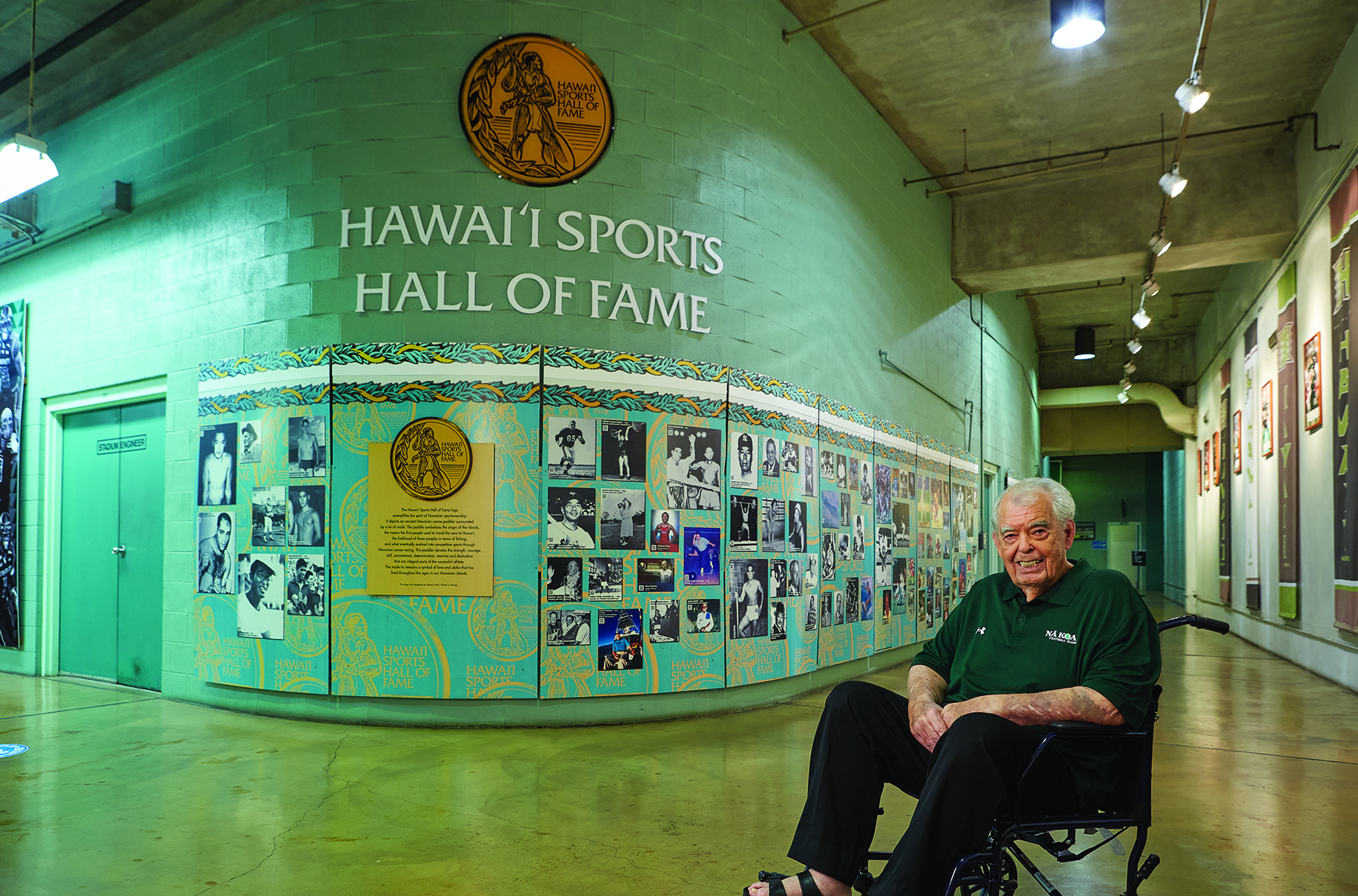
    GM: What do you mean when you say “your team works together”?

    RB: First of all, a major component to teamwork is sharing information. Organizations are going electronic with health records, enabling providers to pull up a patient’s medical history, including pharmaceuticals, on the spot. That means your entire Medical Home team—including you—will be able to easily review your complete medical records and make better health care decisions because of it.

    Second, the way we interact with our doctors is going to change. You’ll still have a “home” doctor, or primary care provider. But instead of just seeing one doctor at a time, as we typically do today, you may sometimes see several providers—say, for example, your primary care provider, a nurse practitioner and a specialist—all together in the same room during your appointment to talk about your care. G

    GM: For those of us in our older years, how’s this new model of care going to be a benefit?

    RB: Seniors will find this team-oriented health care approach helpful for many reasons. According to the U.S. Census, about 80 percent of older Americans have at least one chronic health condition, and 50 percent have two or more. Naturally, then, they tend to spend more time at the doctor and take more medications than younger folks. It becomes increasingly difficult to navigate the health care system and track prescriptions, follow-up appointments, test results, etc. But the new system keeps dots connected and you at the center of the action. The result? Better care and ultimately better health.

    GM: Intuitively speaking, this sounds really great. But what’s it going to cost us?

    RB: What’s expensive is fixing a car after it breaks down, instead of taking better care of it in the first place. That’s what the U.S. is doing now, and costs are through the roof. Of course, that’s a simple answer to a complex question. Sometimes this kind of care may cost a bit more, depending on a patient’s situation. Other times it may cost far less, especially when preventive care is embraced. Numerous studies and pilot programs have been done on the Mainland, even by private employers such as Boeing, with overall results showing a huge cost savings.

    GM: In the meantime, what can we “older folks” start doing to improve healthy longevity?

    RB: I want to say this loud and clear: It’s never too late to improve your health. I hope your readers take this to heart and really start living these suggestions today. Eat nutritious, diverse foods. Exercise every day and maintain a healthy weight. Control your cholesterol level. Take calcium. Drink plenty of water. Always use sunscreen. Get medical screenings on time, such as for prostate cancer, colorectal cancer and glaucoma. Wear your seatbelt. Set up your household to be free of things you can trip over, slip on or fall from.
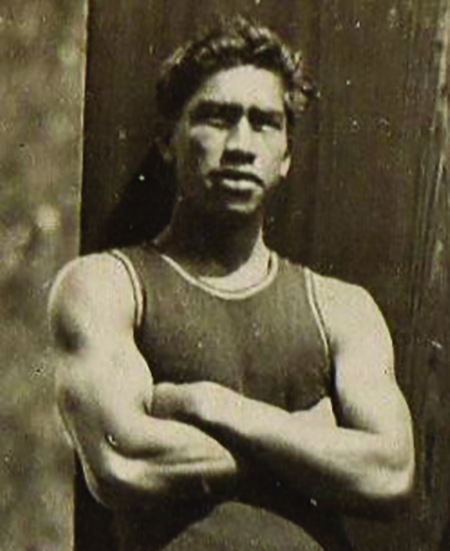
    GM: Will do. And you promised you’d have something “revolutionary” in the area of anti-aging. What is that?

    RB: That’s right. I’m the father of 13-year-old twin girls, so I have good reason to want to be at my best for as many years as possible. As AlohaCare’s medical director, one of my roles is to research innovative solutions for better health care. And I’ve become very excited about two emerging preventive care opportunities that may soon revolutionize not only the way we think about aging, but literally how we age.

    The first is the explosion of knowledge about our genes—the “information” packets found within the center of each cell in our body. Since the chemical structures of the human chromosome were discovered about 60 years ago, scientists are finding not only the molecular causes of disease, but also the specific treatments for them. Because each person’s genetic code is unique, we’re on the verge of understanding a specific personal prevention, prescription or treatment for each of us to best face age-old challenges such as diabetes, arthritis or cancer. This will be truly personalized care.

    A second opportunity is optional hormone replacement therapy. I’m not referring to certain controversial name-brand hormones currently prescribed for menopause. Rather, they are natural hormones that are exact matches to our body’s hormones, not synthetic molecules. As men and women age, the levels of our natural hormones, such as estrogen, progesterone, testosterone, melatonin, thyroid and Vitamin D, gradually decrease. The more they drop, the more they result in bodily deterioration, which includes anything from fatigue and loss of skin tone to depression, osteoporosis and cancer. By boosting our hormone levels to our younger levels, we can actually improve our immunity and nervous system, and slow deterioration, thereby helping prevent injury and illness.

    GM: Wow. As you continue your research on these subjects, we hope you’ll drop by Generations Magazine again and tell us more.

    RB: I certainly will!


    About AlohaCare – AlohaCare was founded in 1994 by local community health centers to provide managed health care for Hawaii’s most needy and under-served individuals. The non-profit organization has since grown to Hawai‘i’s third largest health care insurer, providing Medicaid (QUEST) and Medicare coverage for more than 75,000 members across the state. AlohaCare contributes to the health of Hawai‘i’s communities by improving access to health care; promoting quality care and disease prevention; and supporting health partnerships, projects and education.

    In Hawaii, we live an average of 81 years— longer than almost anywhere else in the world. But when it comes to successful aging, the key is to not only live longer, but to live longer as a healthy individual. The way to better health is taking care of ourselves as we age, which helps…