Category: Cover Story

  • A Hāna Tradition of ʻOhana & Integrity

    Four generations sharing their community’s values

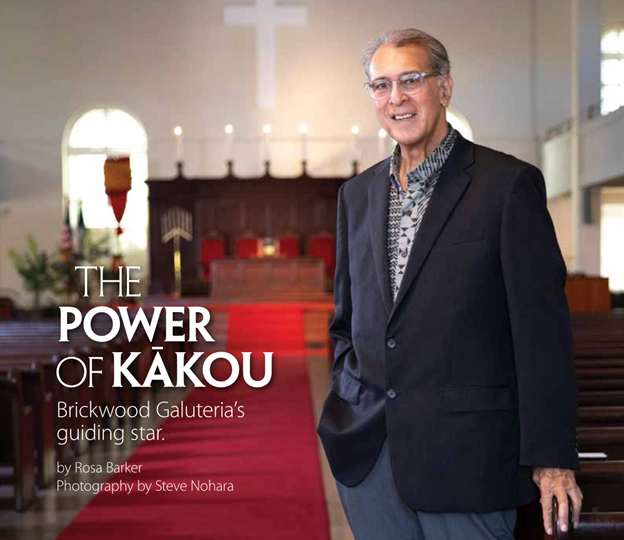
    When brothers Shoichi and Saburo Hasegawa opened their general store in Hāna in 1910, there was no legendary Road to Hāna. Goods and people traveled by boat to the wharf in Hāna Bay. The bustling sugar plantation town was just one of several on the east coast of Maui, from Ke‘anae to Kīpahulu, each with a sugar mill, stores, churches and recreational amenities such as movie theaters and pool halls. Travel from one end of the district to the other could take days by horse or mule. A lot has changed since then, but fourth-generation general store operator Neil Hasegawa continues his family’s tradition of serving both locals and tourists with grace, humor and a strong sense of deep-rooted responsibility a small-town business fosters that helps the surrounding community retain its character, prosper and thrive.
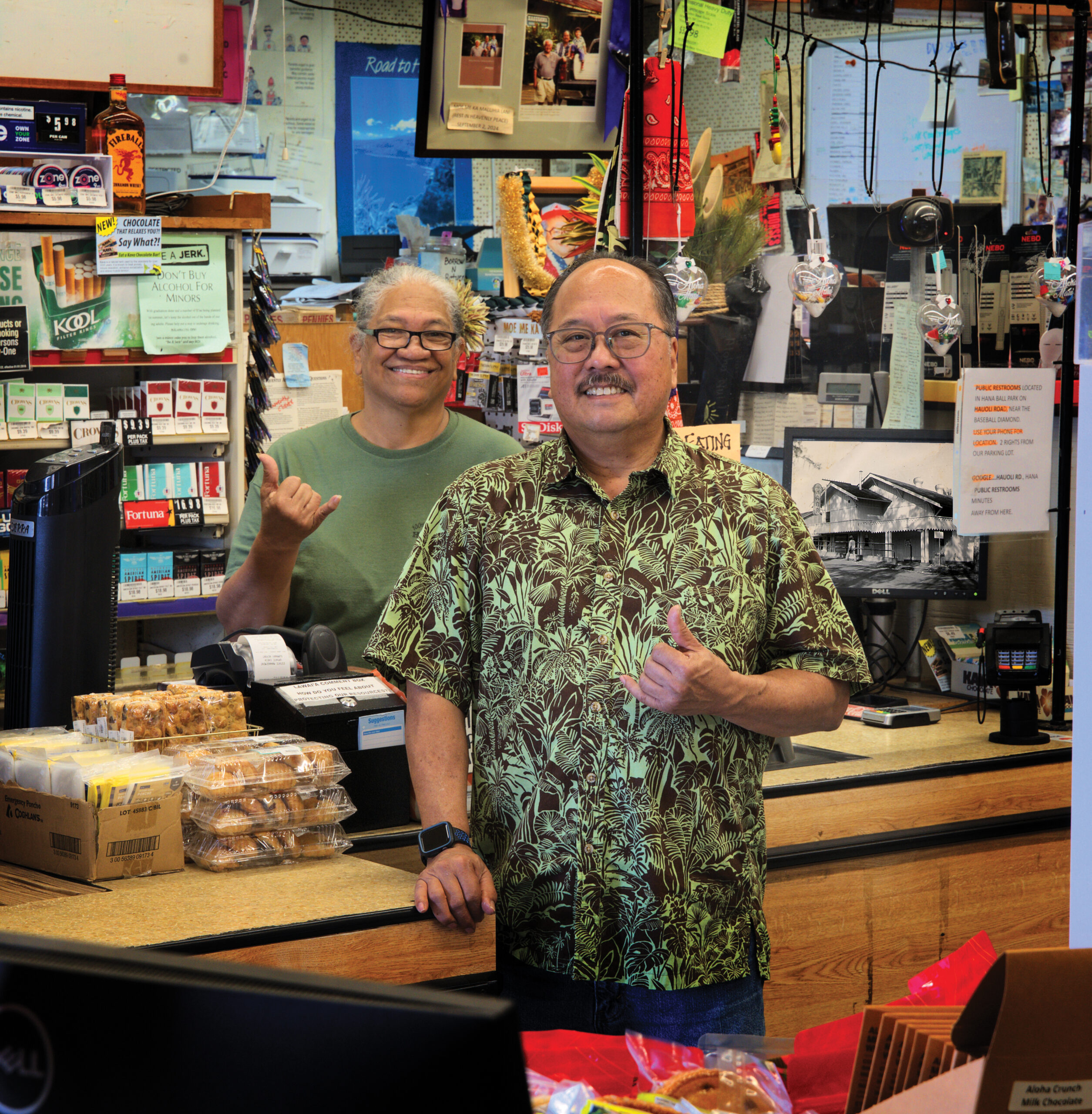
    Carol Oliveira, seen here with Neil Hasegawa, was born and raised in Hāna and has lived there all her life. She’s worked at the store going on 16 years. “It’s a good job. I like it. I cashier and sometimes stock the shelves in the store. The atmosphere is good; everybody gets along.” She enjoys interacting with customers, both locals and tourists.

    Shoichi and Saburo Open Original Store

    In 1886, representatives of His Majesty the King of the Hawaiian Islands and His Majesty the Emperor of Japan signed a convention that stipulated that a representative from Hawai‘i be based in Yokohama to facilitate the signing of work contracts no more than three years in length. The immigrants would also be granted “free steerage passage, including proper food, from Yokohama to Honolulu in first-class passenger steamers.” This is likely how the Hasegawa brothers arrived, voyaging on from Honolulu to Hāna Bay.

    The Hāna District had a population of 3,241 when Shoichi and Saburo opened their store in 1910. It was a family affair, with the children helping out from a very young age. Toshimasa was born that same year to Shoichi and Kiku, but in 1919, they took him and their other children back to Japan, leaving Saburo’s family to run the business. Then, in 1926, Saburo and his oldest son Kengo, went to Japan to ask Toshimasa if he would come back and help them with the store.
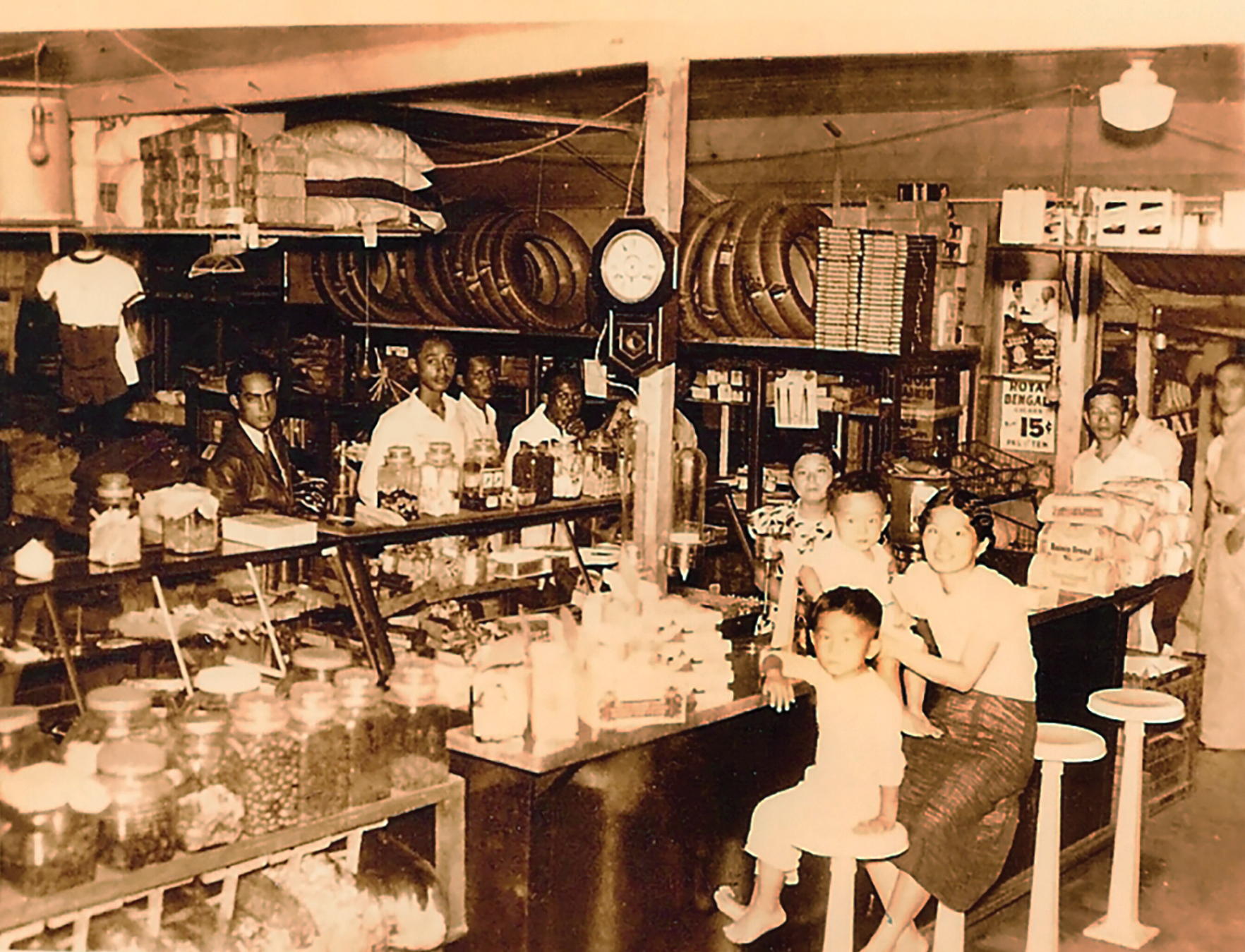
    Toshimasa photographed the original Hasegawa General Store in 1938. In the foreground is Harry
    and his mother, Shizuko. His brother, Ed, is seated on the counter, and a cashier stands behind him. The sugar plantation era in Hāna lasted from 1849 until 1947. All the district’s freight came via Hāna Bay wharf during that time, and bagged sugar left that way. The wharf and its facilities were destroyed by the 1946 tsunami. The last East Maui sugar mill ceased operations that same year. The road to Hāna wasn’t completely paved until 1962.

    Photos taken by Toshimasa in 1938 illustrate the store’s extensive and eclectic range of goods. Although the road from Kahului to Hāna had been completed a decade before the photos were taken, it was extremely rugged, necessitating a huge inventory of tires. The interior featured a long lunch counter, cabinets with various household items and hardware, and food staples like rice.

    Toshimasa and Shizuko Take Charge

    Toshimasa wed Shizuko Hirose in 1932 and they took over store operations when his uncle Saburo returned to Japan in 1933. With the winding down of the plantation era from the 1920s onwards, population numbers declined by 1950 to about 1,000 still living in the Hāna District. Those remaining people still needed the necessities of life and the Hasegawa family continued to provide them through long hours of work. Improvements to the road linking the town to Kahului, a major arrival hub for tourists, as well as the area’s natural beauty, brought transient customers to the store. It was within this context that Toshimasa built a new brick store with gas pumps in 1958. Toshimasa, an avid photographer, also added a photo developing studio.

    Toshimasa and Shizuko had a house behind that store. Neil has fond memories of his grandparents’ home. As children, he and his two sisters spent the most time with them—his cousins lived on O‘ahu and in Southern California, so he and his siblings had them all to themselves. “I had a really good relationship. I’m the first-born grandchild and I’m a man. In Japanese culture, that’s a double whammy!” He and his sisters had chores in the store, weeded around the house and helped Shizuko in the hothouse behind the walk-in freezer at the back of the store. “She was really smart. She’d make friends with some of the hotel guests that would come on a regular basis and she would give them anthuriums, orchids, flowers and so forth. I think that was her way of marketing—a frequent-shopper kind of program!”

    Toshimasa and Shizuko retired to a new home in Kahului, where he took up painting and pottery, and she continued nurturing plants with her green thumbs. He passed away at age 90 in 2000 and Shizuko followed him in 2009 at age 95.
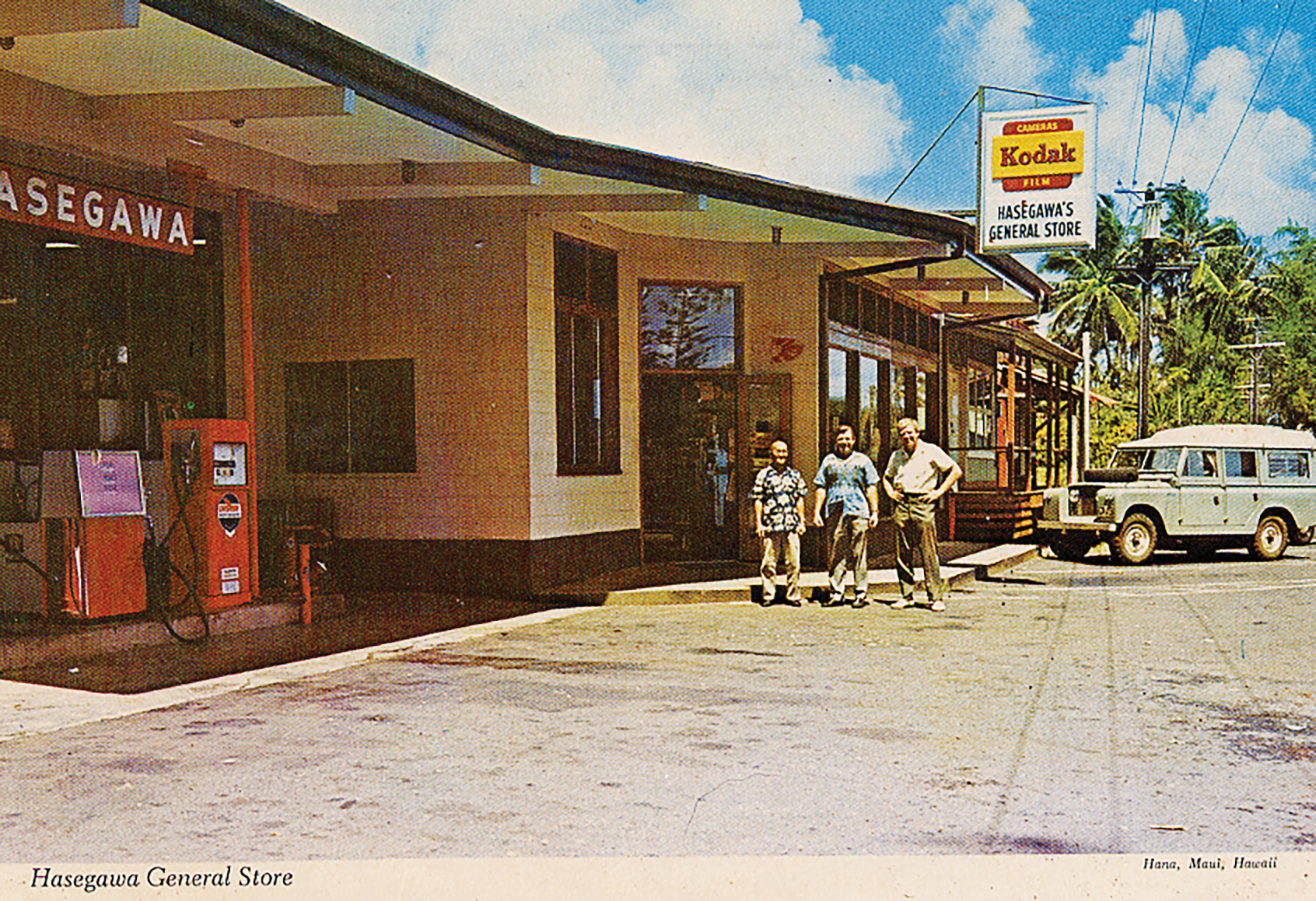
    [L–R] In this image of a 1970s promotional travel agency postcard, Toshimasa Hasegawa, visiting radio personality Arthur Godfrey and local marine biologist Tad Pryor stand in front of the general store built in 1958.

    Harry Takes the Reins

    During the 1970s, their first-born son, Harry, took over running the store. His parents ensured he got a good education by sending him to Mid-Pacific Institute in Honolulu for high school and the University of Colorado in Boulder, where he majored in accounting. In the 1950s, he completed his military service, working in the accounting department at Tripler Army Medical Center. He and his wife, Nita, made their home in Hāna after their marriage in 1962 and they both worked in the store, taking it over when his parents retired.

    In 1961, Paul Weston wrote “The Hasegawa General Store,” a song about the huge variety of goods available there. It became popular when Pua Alameida sang it on the radio show Hawaii Calls and was later recorded by many different artists. Capitalizing on the publicity the song brought, Harry and Nita began selling Hasegawa General Store T-shirts and related merchandise. And each year, they would go to a trade show on the continental US to help ensure the hardware inventory was the latest and best they could provide their No. 1 customer—Hāna locals.
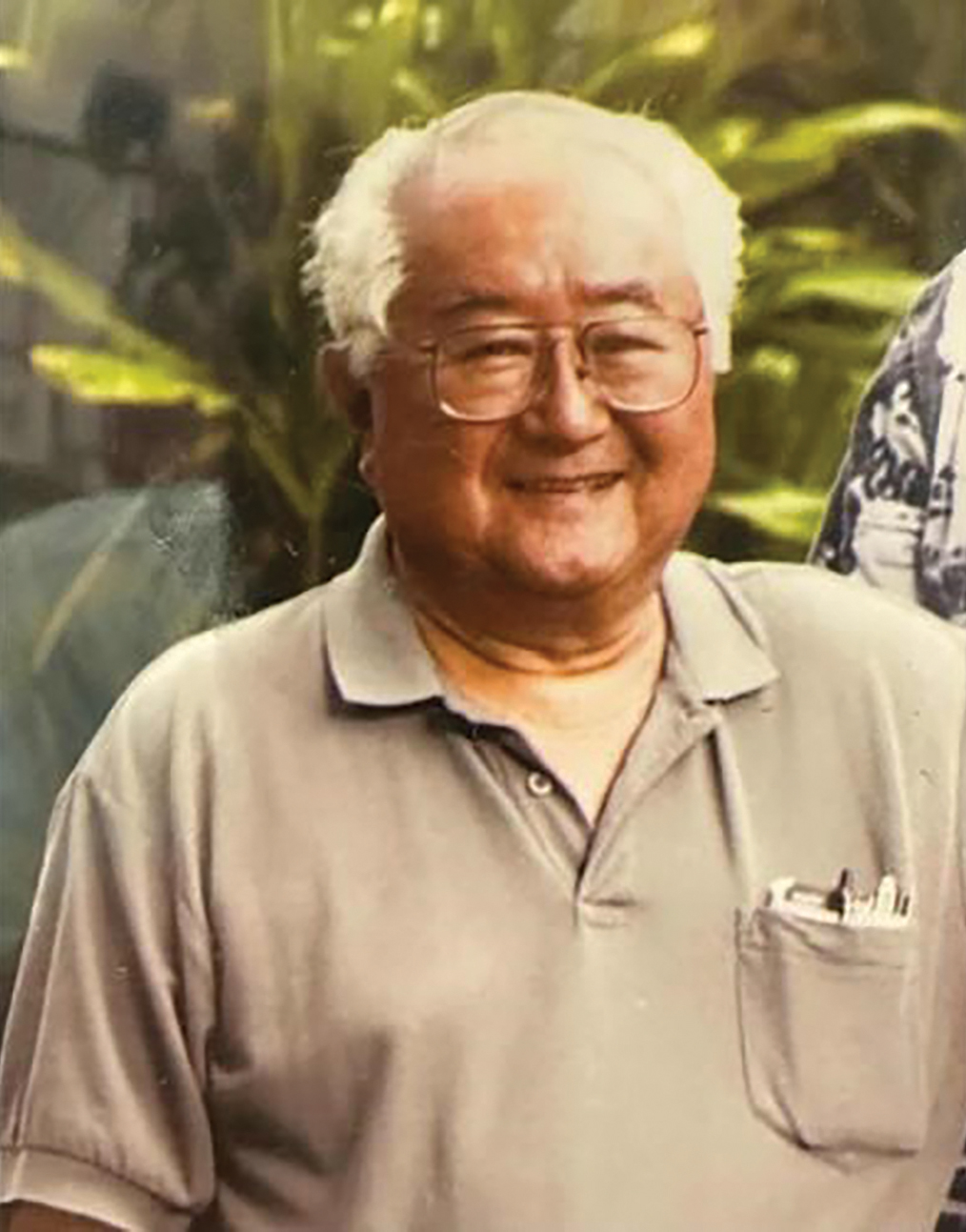
    Harry Hasegawa

    This customer-centered ethos passed on to Harry by his parents is also exemplified perfectly in an anecdote told by one of the store’s visitors. He and his wife had neglected to fill their car with gas before embarking on the road to Hāna on a sight-seeing day trip. They didn’t have enough gas to get back to Kahului and they also didn’t have enough money to pay for a night’s accommodation in Hāna. When they told their tale of woe to the waiter at the restaurant where they were having dinner, he re-told it to Harry, who was dining there with his family. So Harry opened up the gas station and even provided them with some snacks for the long drive back.

    Had they needed a document notarized, Harry could have done that, too. He became a notary public when he realized the community didn’t have one. He also served on planning boards and the Hāna Maui Trust, providing scholarships to local students and grants to help community members from 1970 to 2018. During his 20-plus years as president, the trust’s outreach to the Hāna community grew exponentially. In a 1988 KHET TV documentary about Hāna, Harry shared his feelings about the town: “I think of Hāna as a very rural Hawaiian place and I’d rather live in that type of setting, so I’d like to set my life in those terms. I think everybody has that in mind when they come to Hāna. As the other parts of the island build and become more like a city, Hāna can remain as it is—rural and not over-developed. I think our value is increased and I think that is what we should be looking for.”
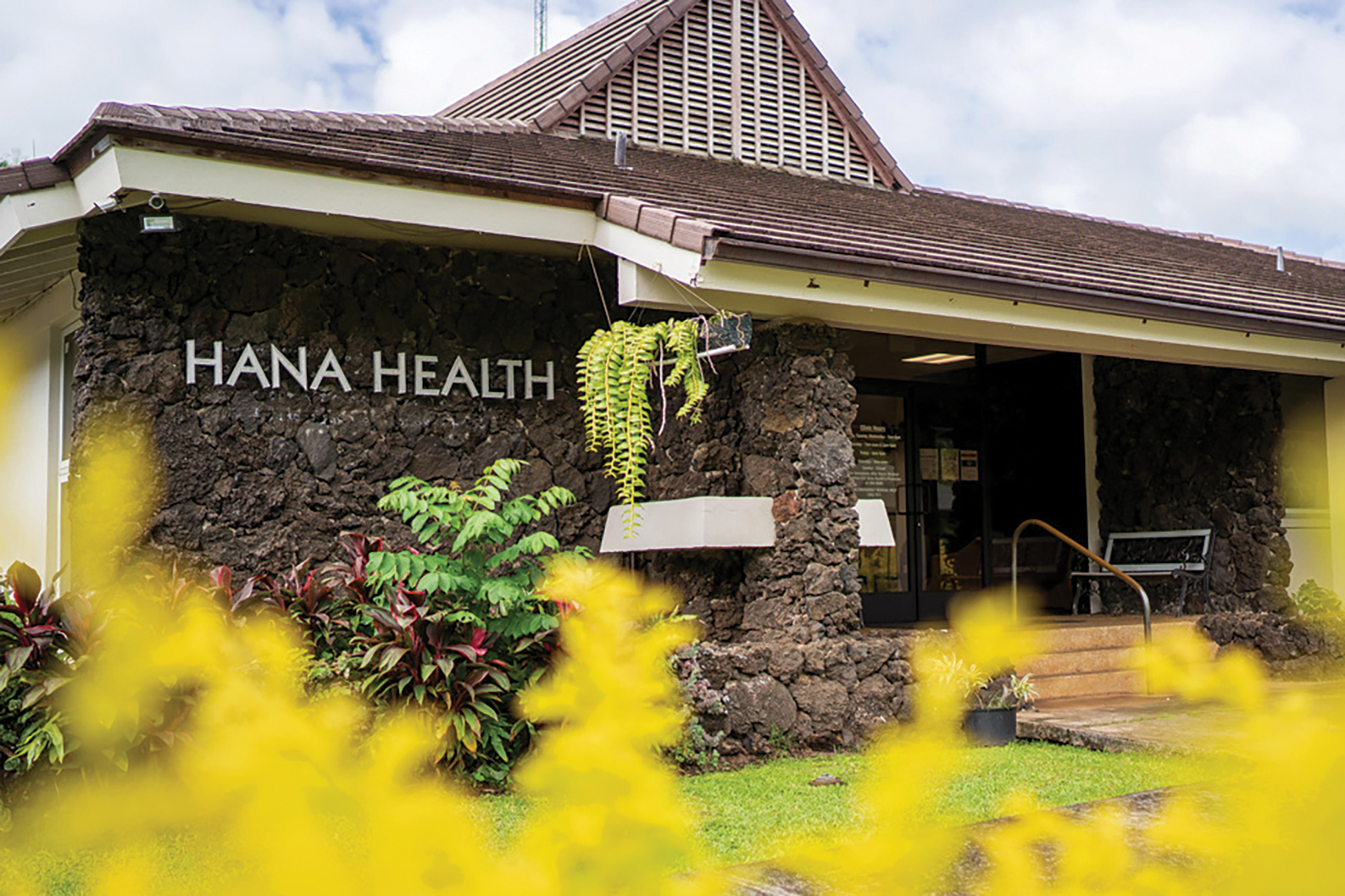
    Hāna Health, the only healthcare provider
    in the Hāna District, serves the primary
    healthcare needs of residents and visitors
    alike. Harry Hasegawa was a key
    figure in establishing the center when
    the state closed its clinic there.
    Providing a full range of primary healthcare,
    Hāna Health emphasizes preventive care.
    The Hāna Fresh Farm behind the center
    sells its produce, herbs and traditional
    Hawaiian medicinal crops from a
    nearby farm stand.
    Photo courtesy of Hana Health

    Harry passed in September 2024 at age 90 in an assisted living home in Kahului. For about three years “my Mom and I would go there every Thursday, spend the night, have lunch with him Fridays and then return,” says Neil. He lives next door to his mother and is her caregiver, making sure she’s comfortable and has all she needs.

    Neil Returns

    Like his father, Neil went to college on the mainland, studying business administration, marketing and management at the University of Redlands in Southern California. Upon graduating in 1988, Neil returned to Hāna to live with his parents and help run what he now calls the “old store.” That’s because, in August of 1990, the Hasegawa General Store was set ablaze. There was minor damage to the gas pump area, but everything inside the store was lost. Harry and Neil said a friend came to Harry’s home in Hāmoa at 4:30am to tell them the store was on fire. By the time they got there, it was completely gone. Fire investigators concluded it was arson, but the culprits were never found. “I felt really hurt that someone would do this to us,” said Neil.

    What happened next is proof that the Hasegawa family’s sense of responsibility to their community is no one-way bridge. “When the store burnt down, several people in the community—and this was before GoFundMe—started soliciting donations for us and for our employees,” says Neil. “I thought that was a great gesture, especially coming out of that situation where I was so bitter. I had a really negative feeling about human nature at that point. Then the realization hit me, ‘You know what, if you’re gonna be that sour the rest of your life, that’s not going to be a good life. That negativity surrounds you. Let the police handle the investigation and all of that stuff. How can we continue in a good way?’”

    They were able to get the gas station running again and built a film studio in part of the old building so they could develop pictures as well. Keola-Hana Maui, owners of Hāna Ranch at that time, offered the family the use of Hāna Ranch Theatre. Its last movie showing was in 1979. “A lot of our guys helped renovate the theatre,” says Neil. “We had a general contractor who came in and we were his crew. It made a lot of sense doing it that way.” All their staff remained employed and the new store opened for business in August, 1991. You can still see the holes for the projectors high up on the back wall. In 2008, plans to rebuild on the old site fell through, so it is now used as a food truck lot by local entrepreneurs.

    Neil and his wife, Mitzi, have two adult children, Brayden and Caelyn. Caelyn worked in the store as a cashier one summer, but when Neil wanted to give his 15-year-old son a job there, he wasn’t able to because the minimum age to get a liquor card is 16. He laughs when recounting his conversation with the liquor commission when he said that he’d been working in the store since he was 10. “They go, ‘Mr. Hasegawa, that was a long time ago!’” Brayden and his wife, Sydney, both graduates of the University of Nevada, Las Vegas, live and work there. “They’re living their life up there. If they feel like they want to come back and run the store, that’s their decision. I don’t want to force anybody.” Caelyn is majoring in kinesiology at Missouri Southern State University.

    Community Needs Remain the Priority

    It’s easy to take for granted the items we see on store shelves in urban and less isolated rural areas. “Normally, product merchandisers for companies like Meadow Gold come in and stock up, pull expired product, give credits and so on. We do everything on our own,” says Neil. He places the orders and a private trucker based in Hāna goes to Kahului to pick them up. Redo Trucking & Hauling is another multi-generational business. It was started by Valentine Redo as Redo Express in 1973 and is now run by his grandson, Sam Aina. Neil remembers Valentine “dropping stuff off at the old store to my dad and grandpa.”

    An example of how local businesses put the needs of the community ahead of dollars and cents comes from when the Maui Nui Venison company began giving out free ground venison in 2024. They called Neil and asked if he wanted to be part of the giveaway and Neil called Sam to see if he would bring it down for free: “Yeah, no problem.” Maui Nui drops off cartons of the 1-pound packs of venison at VIP, a family-owned food distribution company in Kahului that provides chilled and frozen products to restaurants and businesses. “They accept the Maui Nui venison, put it on the pallet, Sam comes by, picks it up every other Thursday, brings it to us and then we put it in our freezer. People will just come and pick up. Maui Nui told me it’s two per family, per day, so use your discretion. It is such a big help to the community.” Previously, Hasegawa General Store had acted as a distribution point for free produce brought to them by a produce house “on the other side. People could just pick up the boxes and we’d keep track of the names. We did it for three or four months and then the grant ran out.”

    When Hāna locals speak of “the other side,” they’re referring to the other side of Haleakalā, the dormant volcano. Its lower slopes cradle the 52-mile road to Hāna, with its 620 curves—some of them hairpin bends—and 59 bridges, most of them one-way. The drive can take from two to four hours. Extreme weather events, wildfires or road and bridge repairs can mean it’s closed altogether. If the electricity grid gets shut down, as well, Hāna has several emergency generators for the community. Nowadays, of course, electricity is vital for store operations. Harry had the vision to computerize the store’s paper-based systems and replace the manual cash registers with electronic equipment. “It saved him time,” Neil explains—time that Harry could allocate to serving the community.

    A Rising Tide Lifts All Boats

    Hāna Health is a private, nonprofit, federally qualified health center. Neil explains: “That was Harry’s baby. We’re a small community. We just weren’t getting the attention that we need. Especially in healthcare, you can’t be ‘the leftovers.’ He was the one who created a committee, got funding and brought in an executive director to help organize everything.” In 1995, the state-run Hāna Medical Center was on the verge of closure. Harry spearheaded the advocacy for Act 263, which was passed in 1996. It provided for the transfer of the state-run medical center to the new nonprofit organization. Harry was a board member and president for several decades. Hāna Health offers primary medical, dental and behavioral healthcare, and 24-hour urgent care to all Hāna District residents, regardless of their economic circumstances.

    Neil recalls how his father was very involved in the community. “We all are. He instilled in me, ‘the rising tide lifts all boats. The more you can do for Hāna, the better Hāna will become.’ Whether it be volunteering… just making it better.”

    Neil’s “baby” is the Festivals of Aloha. “Festivals of Aloha was called ‘Aloha Week’ back in the ’60s. There’s a lull in tourism in October and O‘ahu businessmen wanted to create a destination event that would share Hawaiian culture with tourists.” The event spread to all the islands, but over the years was reduced to three days or a weekend. Hāna is the only community in the entire state that still has a weeklong festival.
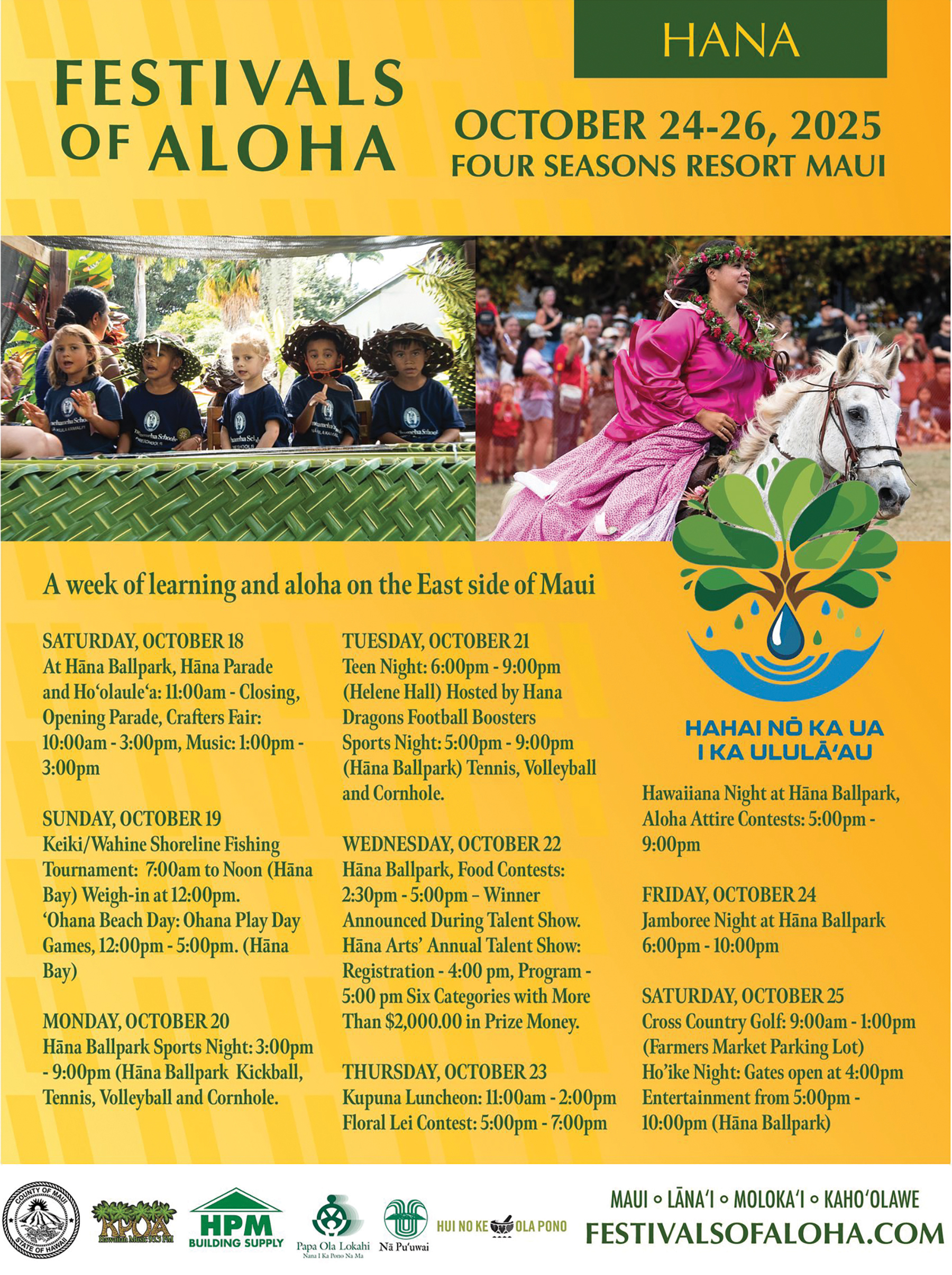
    The whole community gets involved, with individuals volunteering their time to help out at the events and small businesses donating and providing certificates and cash prizes. The festivities kick off with a parade on Saturday and end with Ho‘ike Night lū‘au with entertainment and food.

    “We’re trying to work with the hotel to create a destination event for Hāna,” says Neil. “Fill up the hotel, fill up the vacation rentals, have tourists come, spend a week with us and get that there’s a strong Hawaiian culture presence.”

    Hawaiian culture isn’t just lū‘au, lei and aloha. There’s also the wave. When Neil’s cousin, Mark Hasegawa, retired to Hāna from Maryland, he bought Harry’s truck. “Small town, everybody knows everybody’s vehicles. They’ll wave. Just wave back,” Neil advised. “So tourist cars, any car… he’s just waving!” Mark grew up in Southern California and visited over the summer as a teenager.

    That’s a typical pattern, not just for the Hawaiian diaspora, but also for families living on other islands. Most of Neil’s employees were born and raised in Hāna, a lot of them coming from large families that have spread out across the state. When visitors come into the store and say they know a Hāna local, staff and visitors often find family connections.

    Kukui Nuts, Cold Cuts, Surfer Pants and Papaya Plants

    Paul Weston’s lyrics in the song that made the Hasegawa General Store famous (youtube.com/watch?v=-dqbGR3Gkbwg) are no less true today than they were back in 1961, when it was first recorded. “You just name it, they’ve got it there.”

    “I’m pretty much the specialist… I do the orders for hardware, fishing, liquor and beer,” says Neil. His office manager takes care of accounts payable. Several other people take care of buying. One of his assistant managers does the buying for different areas in the store, like health and beauty aids. “We have a lot of part-timers working as cashiers. We have a small crew… maybe 10 people.” Neil tries to source fresh produce locally so that he is both supporting the community and keeping prices down. The store also acts as a pickup point for FedEx and UPS customers. “It’s in line with what we do: try to service the community wherever we feel we can be of help.”

    A Reflection of the Community

    In 2008, the Small Business Association’s Family-Owned Small Business Award for the County of Maui went to Neil. “Despite a fire that destroyed the store in 1990,” the award said, he has shown “resilience and determination by reopening the store in the old Hāna Theatre with new services and an improved mix of products that contributes to its continued growth, and remains Hāna’s one-stop shop.” In 2010, the store’s 100th anniversary year, Harry and Neil received the Mayor’s Lifetime Achievement Award for small businesses.

    “The key to owning a business in Hāna, or any small town, is the relationship you have with the community and the decisions you make,” says Neil. “A lot of times, ours are not dollars-and-cents decisions. There’s an underlying responsibility we have so we can best serve our community.”
    Four generations sharing their community’s values When brothers Shoichi and Saburo Hasegawa opened their general store in Hāna in 1910, there was no legendary Road to Hāna. Goods and people traveled by boat to the wharf in Hāna Bay. The bustling sugar plantation town was just one of several on the east coast of Maui,…

  • Cultivating Care in the Memory Garden

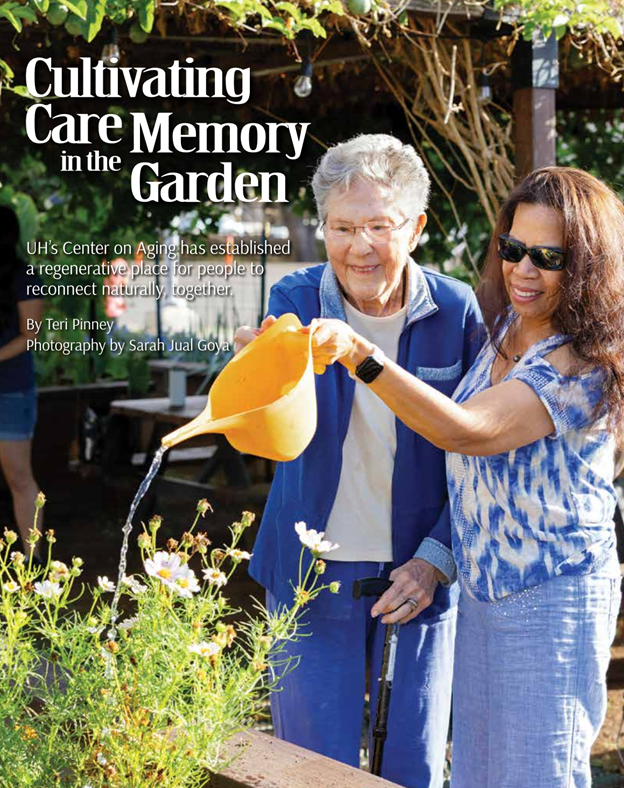
    Tucked between campus classrooms near the College of Education, the leafy paths of the University of Hawai‘i’s (UH) Ho‘ōla ‘Āina Pilipili garden come alive every third Thursday afternoon. Soft laughter blends with the rustling of leaves and the hum of gentle conversation. Under the shelter of liliko‘i shade tents, a kūpuna presses seeds into the soil, a caregiver smiles from across the table and a UH student leads a memory-based activity. It’s a quiet, powerful moment when generations meet, stories resurface and healing takes root. This is the Memory Café and its garden in action. But it’s much more than a soothing gathering place. It’s what the UH Center on Aging (COA) was created to do — bring research, community and compassion into one space.

    A Vision Grows into a Vital Hub

    The UH COA was formally established in July 1988 after years of planning by educators and community advocates who saw Hawai‘i’s shifting demographics as both a challenge and an opportunity. By the late 1980s, the islands were already home to one of the fastest-growing senior populations in the nation.

    About 311,000 seniors (aged 65 and over) live in Hawai‘i today—roughly 21.5% of the state’s 1.4 million residents, according to Hawai‘i Department of Business, Economic Development & Tourism’s summary of the US Census 2024 population characteristics.

    Since its founding, COA shifted through reorganizational umbrellas and now finds its current home within the Thompson School of Social Work & Public Health at UH Mānoa. This signaled a larger vision. Aging isn’t just about health. It is social, emotional, environmental and deeply human.

    Its mission remains steady: to enhance the well-being of older adults through collaboration, applied research, education and service.

    In addition to measuring success by journal citations, the center quantifies its accomplishments in smiles, independence and community strength.

    COA has become a hub for interdisciplinary research and hands-on community engagement that touches nearly every aspect of aging in Hawai‘i. Today, it supports dozens of projects that address issues such as dementia awareness, caregiver education, intergenerational connection and public policy for elder care. COA’s faculty and students collaborate with health systems, schools, state agencies and nonprofits to turn research into action, improving how Hawai‘i understands and supports its kūpuna.

    Right now, the UH Center on Aging is behind some remarkable efforts to make life better for Hawai‘i’s older adults. Through Age-Friendly Honolulu and the Kūpuna Collective, a statewide network co-founded by the Hawai‘i Public Health Institute, they’re shaping how our cities grow—pushing for engaged and inclusive communities that welcome everyone. And with the CARE Registry (Collaborative Approach for Asian Americans, Native Hawaiians and Pacific Islanders Research and Education), they’re helping ensure that island and Pacific voices are finally represented in national studies on aging and dementia.

    COA helps ensure that local voices and cultural perspectives are included in studies that shape future healthcare policies. The center also partners with the state’s Executive Office on Aging, the City and County of Honolulu’s Elderly Affairs Division and supports the Pacific Islands Geriatric Workforce Enhancement Program’s efforts to train healthcare and social service professionals across the state.

    Together, these efforts reflect COA’s mission—to not just study aging, but to improve what aging looks and feels like in the islands.

    Hawai‘i residents were living longer, often healthier lives, and the cultural tradition of multi-generational homes meant new kinds of caregiving needs were emerging. Families wanted to keep their elders close to home and not necessarily in institutions. COA became a bridge, linking university research to real families and real challenges.

    Early COA projects explored caregiving education, senior employment and aging-in-place initiatives. As the population aged, the center expanded to address Alzheimer’s disease, dementia, and the emotional well-being of kūpuna and their families. That early foundation has grown into today’s blend of community programming, applied science and hands-on service.

    Nurturing Lives Touched by Dementia

    More than 30,000 people in Hawai‘i live with dementia today. It’s a group of symptoms. The most familiar and common is memory loss, which is caused by brain disease. Alzheimer’s disease is one type of dementia and accounts for approximately 60% to 80% of dementia cases.

    “A dementia diagnosis is scary and overwhelming,” says Christy Nishita, PhD, a gerontologist at UH COA and the Memory Café program lead. “Unfortunately, there is a lot of stigma regarding dementia. It can make people afraid or embarrassed to go outside and engage in our community.”
    Life with dementia calls for more than medical care. It thrives on connection. Both those experiencing memory loss and their caregivers benefit from strong circles of support that keep each day meaningful and full of purpose.

    Staying socially active, moving the body and keeping the mind engaged through activities like conversation, gardening, music or puzzles can help lift the spirit and preserve a sense of joy, even as memory and thinking evolve.

    Recently, the Alzheimer’s Association reported that Hawai‘i faces one of the most rapid increases in the number of dementia cases in the nation. With people living longer and kūpuna making up a growing share of the population, families across the islands are feeling the impact of Alzheimer’s disease and other types of dementia. Apparently, tens of thousands of Hawai‘i residents are currently living with dementia and nearly twice that number serve as unpaid caregivers.

    The challenge isn’t just medical; it’s emotional, cultural and social. Many caregivers juggle full-time jobs while tending to loved ones, and families often struggle to find culturally appropriate resources that fit local ways of living and caring.

    That’s where UH’s COA plays a vital role. Through community-based programs, caregiver training and research partnerships, COA helps families navigate the complexities of dementia with compassion and knowledge.

    The center is also a partner in the Hawai‘i Dementia Initiative (HDI), which promotes public awareness, professional training and memory support services statewide. And through projects like the Memory Café and garden, COA offers a model of social connection that restores dignity and joy to those living with memory loss.

    Together, these efforts help make Hawai‘i not just a place where people live longer, but where they can live better, surrounded by care, understanding and aloha.

    Ground Preparation: Establishing Partnerships With Purpose

    COA is built on connection. Faculty, students and local leaders work hand-in-hand with city agencies, nonprofits and health systems. Their goal is simple but profound—to make Hawai‘i a place where aging feels supported, not feared.

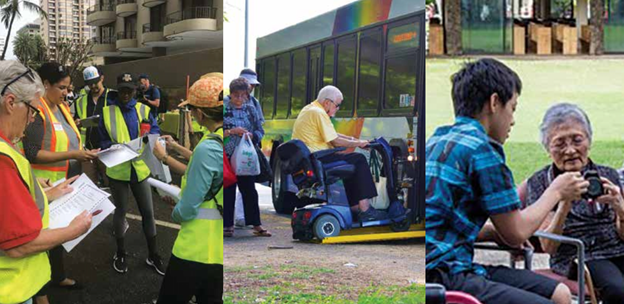
    One of the most impactful collaborations is with Age-Friendly Honolulu, a long-term partnership with the City and County of Honolulu that reimagines how the city supports residents as they grow older. This initiative brings together City and County of Honolulu departments and community organizations to create neighborhoods where seniors can stay active, connected and independent.

    Through surveys, walk audits and community trainings, the project has promoted more accessible spaces and engagement of kūpuna in community life. What began as a pilot has now become part of Honolulu’s citywide strategy for livable, age-friendly communities, shaping how the islands plan for accessibility and inclusion for years to come.

    Age-Friendly Honolulu’s mission is to change mindsets about aging by empowering kūpuna, promoting intergenerational engagement, and supporting accessibility and inclusion for all. It’s a community endeavor.

    Planting a Dementia-Friendly Garden

    The dementia-friendly garden and Memory Cafe are UH COA initiatives. Research by Melody Halzel, PhD candidate in Public Health, under the direction of Dr. Nishita, complements these initiatives by examining how outdoor spaces like the Ho‘ōla ‘Āina Pilipili Garden at UH Mānoa—can be designed to support people living with dementia and their caregivers. Melody’s research evaluates how accessible, safe and engaging these environments are, aiming to create practical guidelines for developing dementia-friendly gardens that nurture memory, comfort and social connection across Hawai‘i’s diverse communities.

    Dementia Friends Hawai‘i is part of the Age-Friendly Honolulu initiative, which is also coordinated by UH COA in partnership with the state’s Executive Office on Aging and other community organizations. The center trains volunteers and community partners—healthcare workers, students, local businesses and faith groups—to host Dementia Friends Hawai‘i sessions across the islands.

    The Retired and Senior Volunteer Program (RSVP) plays a meaningful role in extending the reach of UH COA’s community work. RSVP volunteers—many of them kūpuna themselves—bring decades of experience, empathy and local knowledge to the center’s initiatives. They assist with events like the Memory Café and garden, and support outreach activities that connect older adults and caregivers with resources.

    Their participation adds a powerful layer of peer-to-peer connection. When RSVP volunteers share their time and stories, it helps build trust and encourages other seniors to stay active, engaged and informed.

    For COA, it’s a win-win. The program gains capable, community-minded helpers, and volunteers gain renewed purpose by giving back in ways that directly improve the lives of fellow kūpuna across Hawai‘i.

    Another key initiative is the CARE Registry, which invites Asian American, Native Hawaiian and Pacific Islander residents to participate in national aging studies. Historically, these groups have been underrepresented in research. CARE 2.0 helps close that gap and ensures local families see themselves reflected in data and solutions.

    The COA is involved in dozens of projects and partnerships—too many to list or fully explain here—all designed to improve the lives of Hawai‘i’s seniors and their caregivers. From statewide policy work to neighborhood-based initiatives, each effort reflects the center’s deep commitment to community well-being.

    Among its many programs, one in particular has captured the heart of that mission—the Memory Café and garden, where connection, compassion and learning come together in the most down-to-earth way.

    Research Meets Heart at the Memory Café & Garden

    A dementia-friendly garden, situated on an underutilized space within the UH campus off Metcalf Street, now flourishes with plants like mamaki (a Native Hawaiian tea plant), kalo, ‘ōlena, rosemary, liliko‘i, cherry tomatoes, basil and more. It features elevated planter boxes, resting areas and wide pathways, all designed with accessibility in mind.

    Monthly gatherings at the garden welcome people of all ages and abilities, including those living with dementia, along with their caregivers and friends. Supported by COA staff and student volunteers, participants connect through shared, nature-based activities that nurture both body and spirit. The space is thoughtfully designed for comfort and inclusion, featuring shaded seating, raised garden beds and nearby restrooms—ensuring everyone can take part and feel at ease.

    “ ‘ Ho‘ōla ‘Āina Pilipili’ translates as ‘restore/regenerate, to bring life back,’ to ‘āina—the land which feeds,” says Melody, the garden’s co-founder and Memory Café program coordinator. “And ‘pilipili’ refers to the name of the smaller land division (ili), where the garden is located. Together, it means ‘to restore and bring life back to the land.’ ‘Pili,’ such as ‘pilina,’ is for close relationship between people and connection to nature.”

    Often called the person with “the heart behind the project,” Melody finds it deeply rewarding to see how much it’s grown. “It’s wonderful to bring back to life and regenerate unused land,” Melody says. “The garden has become a place for people to reconnect—with nature, with each other and sometimes with themselves.”

    Last April, the garden and its caretakers welcomed dozens of visitors who helped pilot a new Dementia-Friendly Garden Checklist, developed by Melody as part of her dissertation research. The project evaluated how outdoor spaces could better support people of all ages and abilities.

    The garden also serves as a living classroom for ‘āina-based learning and community connection.

    Summer Maunakea, garden co-founder and associate professor of curriculum studies in the College of Education, incorporates it into ‘āina-based education courses, while the COA continues to guide its growth as a model that supports engagement of older adults, particularly persons with memory loss and caregivers.

    The Memory Café and garden have grown into the living heart of the UH COA’s mission—where research meets compassion. “The program has a lot more engagement now… digging right in and maturing nicely,” says regular garden visitor Gary Simon, state volunteer president of AARP Hawai‘i. The garden’s steady growth mirrors the café itself—vibrant, welcoming and deeply rooted in community connection.

    It’s not therapy in the traditional sense, but it is healing. Under shaded tents, laughter drifts through the air as kūpuna and students plant seedlings, paint stones or simply talk story. On one recent afternoon, 100-year-old Doris Inouye attended her first session with her 77-year-old daughter, Kathy Umemura. “They enjoyed being outdoors and intermingling with other people of all ages,” a volunteer shared. Moments like these show that joy and connection don’t fade with age, they just take new forms.

    The garden itself was designed for inclusion. Wide paths, shaded seating and adaptive tools make it easy for anyone to join. Everything is provided, from gloves to refreshments, so participants can simply show up and fellowship together. Each session ends with quiet reflection and feedback that helps COA keep improving what matters most—that human connection.

    “The café is like a family gathering,” one participant said. “We come, we talk, we plant and we leave feeling lighter.”

    Ongoing discussions regarding how Honolulu can be more age- and dementia-friendly that began years ago resulted in the creation of UH COA’s Memory Café. The project is just one example of many efforts to improve quality of life for island kūpuna.

    Planting the Next Generation

    If the seniors are the roots, the youth are new shoots. At the COA, youth involvement is guided in part by Kevin Y. Kawamoto, PhD, a gerontological social worker, whose work bridges students and kūpuna through shared learning and service. Dr. Kawamoto describes COA as giving young people a chance to learn by doing—to sit beside elders, listen and serve with empathy.

    Students who volunteer at the Memory Café and garden gain firsthand experience working with older adults and caregivers. Through conversation, gardening and shared laughter, they build the kind of intergenerational understanding that strengthens both community and workplace relationships. These connections go beyond volunteer hours—they nurture compassion and respect across generations.

    Among those students is Brayden Jadulang, an 18-year-old UH biology major. “I’m interested in healthcare and sustainability,” he says, crediting his parents for inspiring his volunteerism. Students like Brayden show up at the garden to volunteer and cultivate not only plants, but empathy, the kind of insight that will shape Hawai‘i’s future caregiving workforce. And he does this without any expectation of college credit.

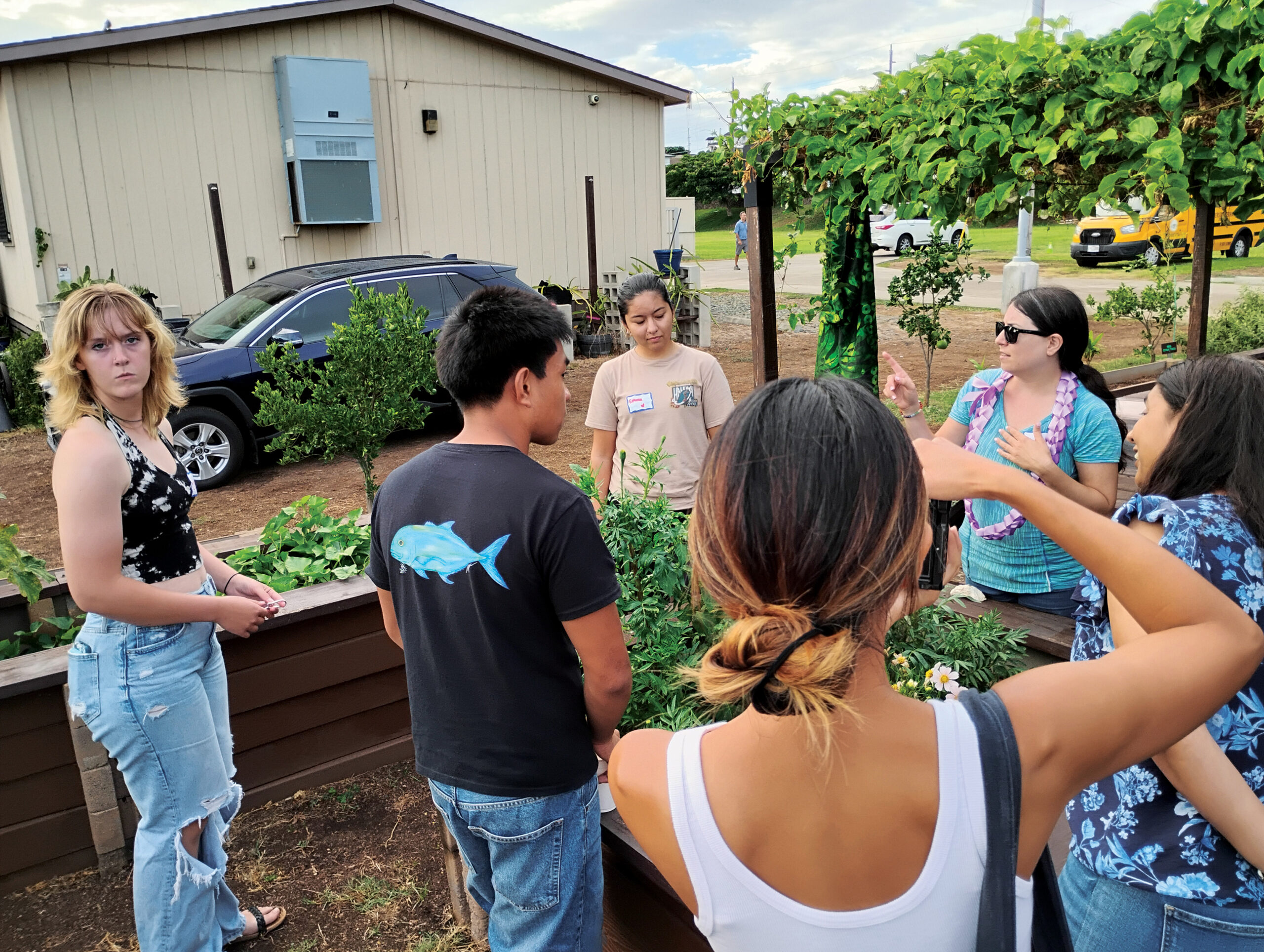
    Melody Halzel (with lei) and student volunteers evaluate how accessible, safe and engaging dementia-friendly gardens and environments such as UH COA’s Memory Café are. Supported by COA staff and student volunteers, participants connect through shared, nature-based activities that nurture both body and spirit.

    “Many students volunteer simply to help kūpuna, but its also a wonderful educational opportunity that will ideally drive more students to careers in aging.” She goes on to state that the café thrives because of the sincerity of those volunteer youth who show up. Their kindness turns research into relationships and classrooms into communities. “Our youth need to learn about aging,” she adds. “When generations connect, they build bridges of understanding and find common ground.”

    Through the CARE Registry, students also serve as ambassadors, helping to recruit participants and share information across island communities. Others lend their voices to social media campaigns promoting brain health or storytelling projects that connect generations. To promote careers in eldercare, Dr. Nishita has partnered with ‘Iolani School and other public high schools to promote awareness, foster empathy and provide intergenerational programming. This approach reflects one of COA’s long-held goals, which is to develop a workforce that values and understands aging. The Memory Café is where that vision takes root—students learning the human side of healthcare, while seniors rediscover purpose through mentorship and friendship.

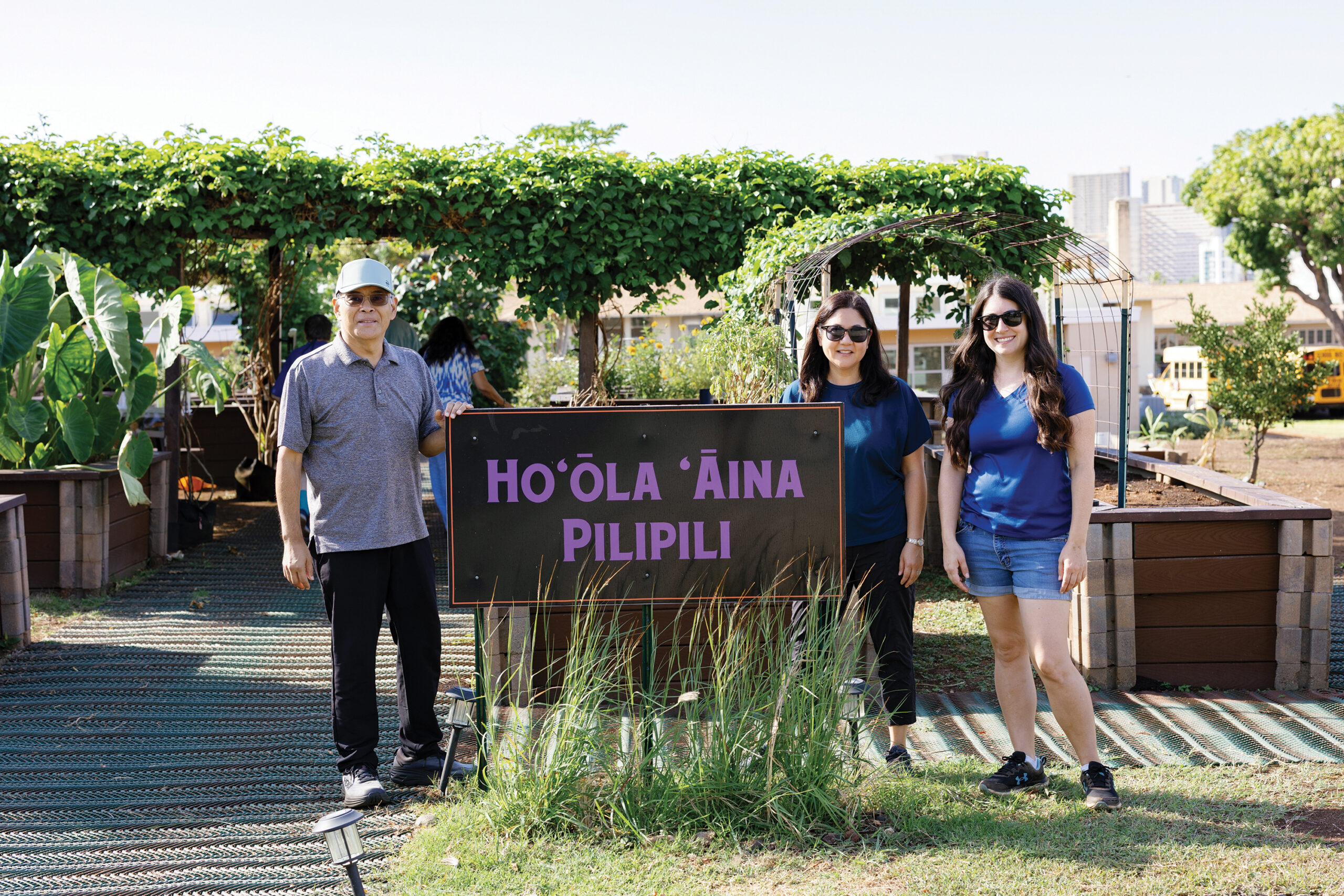
    The Memory Café and garden at Ho‘ōla ‘Āina Pilipili. Under the guidance of (L–R) Kevin Y. Kawamoto, PhD, a gerontological social worker; Christy Nishita, PhD, UH COA project lead; and Memory Garden cofounder Melody Halzel, a PhD student in Public Health; young people are given the opportunity to learn by doing and build inter-generational understanding by sitting beside elders, listening with full attention and serving them with empathy.

    Deepening Community Roots

    What happens when a university research center steps off campus and into the heart of neighborhoods? For the COA, it means transformation on both sides. The university learns from lived experience and the community gains access to knowledge, tools and relationships once tucked away in academic buildings.

    Because the center is based in Hawai‘i, it naturally embraces the islands’ cultural mix—Native Hawaiian, Asian, Pacific Islander and immigrant families—all with a deep respect for elders. That cultural awareness makes every project more personal, more local and more grounded in aloha. From neighborhood workshops to ‘āina-based gatherings, COA’s work reaches people where they live, work and talk story.

    Programs like Dementia Friends Hawai‘i and the CARE Registry open doors to understanding and inclusion, helping residents learn how to better support those living with memory loss, while encouraging participation in research that reflects Hawai‘i’s diverse voices. The CARE Registry, in particular, helps researchers across the nation understand how culture, language and community shape the aging experience—insights that may one day influence how healthcare, caregiving and mental wellness are approached across the Pacific.

    These community partnerships don’t just educate—they strengthen ‘ohana connections and restore confidence in aging with grace. They give kūpuna opportunities to share wisdom and remind younger generations what compassion and continuity look like in everyday life.

    But numbers and studies tell only part of the story. At the heart of it all is something that can’t be measured—dignity. Whether through an awareness session, a volunteer’s kind word or a quiet chat in the garden, the goal is always to remind seniors that they matter, that their stories still shape Hawai‘i’s future and how every generation has something to give and something to gain.

    Cultivating a Successful Future

    While the laughter in the garden is real and immediate, COA’s leaders are also thinking about the future. The center hopes to expand Memory Café gatherings to neighboring islands and to develop partnerships with local hospitals and nonprofits to reach more caregivers. There’s also talk of blending technology with tradition—perhaps introducing virtual garden sessions for those unable to travel.

    Dr. Nishita envisions Hawai‘i becoming a model for aging in place—where kūpuna can live independently, surrounded by support, culture and community. “Aging is something we all share,” she often says. “It’s a journey we take together.”

    COA’s ongoing research on dementia-friendly design is another seed for the future. As cities across the Pacific look for ways to make public spaces more inclusive, UH’s work may help guide how communities everywhere design for dignity.

    The story of the UH COA isn’t about numbers or programs. It’s about people. It’s about kūpuna like Doris, students like Brayden and visionaries like Melody, who see potential where others see wilderness. It’s about finding joy in the soil and meaning in the shared act of caring.

    Growing Together for a Bountiful Harvest

    As a kūpuna myself, I visited the garden and spoke with those who gathered there. What I witnessed was more than a program—I saw and experienced a sense of belonging.

    Students laughed alongside elders, caregivers shared stories and the simple acts of planting and conversation bloomed into connection. For this kūpuna-writer, it was a reminder that aging is not about slowing down. It’s about staying rooted in purpose, community and aloha.

    Each seed planted in the garden reflects the center’s larger mission, to cultivate a community where learning, service and compassion thrive side by side. Here, research blossoms into relationships and the wisdom of one generation nurtures the promise of the next.

    In every way, UH COA continues to prove that the best kind of growth happens when generations work together—listening, laughing and helping life take root in the spirit of aloha.

    If you would like more information about the University of Hawai‘i Center on Aging, the Memory Café and garden or for inquiries about volunteering, visit manoa.hawaii.edu/aging.

    Tucked between campus classrooms near the College of Education, the leafy paths of the University of Hawai‘i’s (UH) Ho‘ōla ‘Āina Pilipili garden come alive every third Thursday afternoon. Soft laughter blends with the rustling of leaves and the hum of gentle conversation. Under the shelter of liliko‘i shade tents, a kūpuna presses seeds into the…

  • Hope for the Future

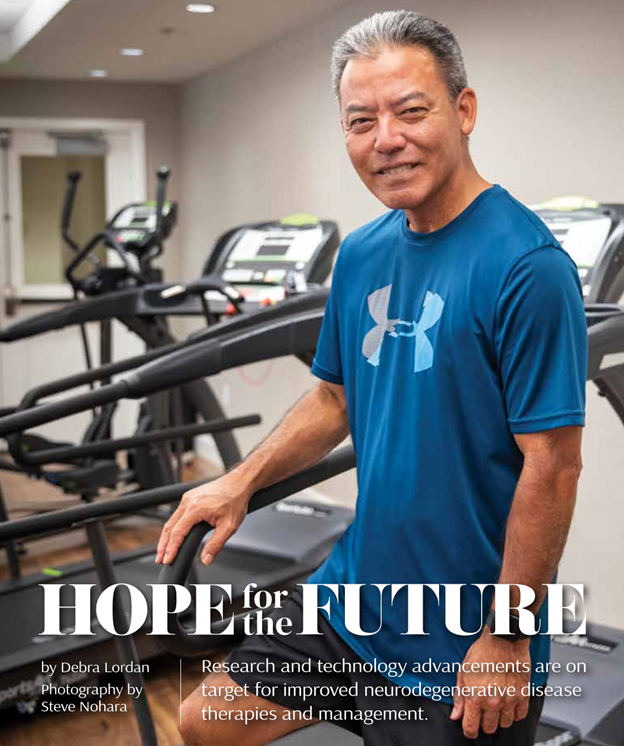
    Glen Higa of Kalihi has much in common with Michael J. Fox. Like the “Back to the Future” star, he faces his challenges with gratitude and optimism, focusing on finding meaning in the face of adversity. Like Michael, he emphasizes that challenges don’t define a person—their actions do. He believes in the power of acceptance and the importance of making the best of a difficult situation. Like Michael, he has dedicated himself to making a profound difference in the lives of those affected by a debilitating condition.

    In 1998, Michael J. Fox stunned the world by announcing he had been diagnosed with young-onset Parkinson’s disease (PD), also called early-onset Parkinson’s—a degenerative neurological condition. He was diagnosed in 1991 at age 29, but had kept it a secret for seven years.

    His memoirs chronicle his Parkinson’s journey and his advocacy work. “Lucky Man,” “Always Looking Up,” “No Time Like the Future” and “A Funny Thing Happened on the Way to the Future” describe what it’s like to be a 30-year-old who has been told he has an 80-year-old’s disease. He shares an inspiring account of his experiences and the lessons he has learned.

    Before his diagnosis, the aspiring young actor envisioned a future centered on a flourishing career and family life. PD prompted a paradigm shift, leading him to prioritize the here and now. He established the Michael J. Fox Foundation (MFF) for Parkinson’s Research in 2000, which has become the axis around which his life revolves. The foundation is the driving force and primary focus of his existence and aspirations for the future.

    Glen’s Life Transformation

    “I was diagnosed seven years ago in 2018 at the age of 48, though looking back, I had developed symptoms over five years before,” says Glen, now 55. “Six months after my diagnosis, I left my longtime career as a sales and marketing executive to focus on my health.”

    Glen’s proactive attitude is key to successfully managing PD. “I started working with a personal trainer a year after I was diagnosed and it transformed my life,” says Glen. “I did so well with my exercise therapy that I resumed playing softball.” Since being diagnosed, he has participated in the Los Angeles Dodgers Adult Baseball Camp and continues to play competitive softball.

    Ultimately, Glen turned his own therapy into a new career by becoming a personal trainer three years after being diagnosed, working exclusively with people who have Parkinson’s.

    What is Parkinson’s Disease?

    PD is the fastest growing neurodegenerative disease in the world. Nearly 1 million people in the US and more than 6 million people worldwide are affected. PD occurs when brain cells that make dopamine, a chemical that coordinates movement, stop working or die, according to michaeljfox.org, an informational website Glen recommends highly. This “movement disorder” can cause tremor, slowness, stiffness, and walking and balance problems. Constipation, depression, memory problems and other non-movement symptoms can also surface as symptoms.

    PD is a lifelong progressive disease—symptoms slowly worsen over time. But the experience of living with PD is unique to each person. As symptoms and progression vary from person to person, neither you nor your doctor can predict which symptoms you will get, when you will get them or how severe they will be. Even though similarities are observed among individuals with PD as the disease progresses, there is no guarantee you will experience what you see in others.

    What is Early-Onset PD?

    According to Fox’s website, about 10% to 20% of people with PD experience symptoms before age 50. While treatments are the same for early-onset Parkinson’s disease (EOPD), younger people may experience the disease differently.

    People with EOPD may have a longer journey to diagnosis, sometimes seeing multiple doctors and undergoing several tests before reaching a correct conclusion. As with PD diagnosed later in life, EOPD is diagnosed based on a person’s medical history and physical examination.

    When younger people and their clinicians are not expecting PD, the diagnosis may be missed or delayed. It’s not uncommon for arm or shoulder stiffness to be attributed to arthritis or even a sports injury before PD is eventually diagnosed. Scientists are working to understand the causes of early-onset Parkinson’s.

    What is Wrong With Me?

    Glen describes his initial suspicions and symptoms that led him to seek medical intervention.

    “My girlfriend and I would walk daily around Diamond Head after work and she noticed I stopped swinging my arms and that I shuffled my feet while walking,” says Glen. “My legs started to feel heavy. Soon after, I started experiencing shoulder and neck stiffness and a tremor in my left hand. But an official diagnosis wouldn’t come until more than two years later.”

    “My first thought after the EOPD diagnosis was a sense of relief,” says Glen. “Honestly! I didn’t know what was going on in my head—if I had a stroke, tumor, aneurysm or something else!

    “I was seeing a physical therapist who told me I was showing symptoms of Parkinson’s, but I guess I didn’t take his comments seriously at first. But when my neurologist told me I could still live a good life with Parkinson’s, she eased my mind and I was ready to do what I had to do to achieve that good life.”

    “Most of my friends, family and coworkers noticed something was not right before I was diagnosed,” Glen adds. “So I told everyone about it and didn’t try to hide it from anyone. Almost everyone reacted positively and said they were ready to help when needed. Being supportive and showing empathy— but not sympathy— go a
    long way.”

    ‘You can live your best life.’

    Glen first became involved with Hawai‘i Parkinson’s Association (HPA) in 2019, serving in a marketing and administrative support role. HPA, established in 1996, is a nonprofit volunteer group comprised of people with PD, caregivers, family members, healthcare professionals, educators and leaders in the business community. HPA aims to positively impact the lives of people affected by Parkinson’s through support, programs, education and other valuable services.

    “The reason why I ran for president was to show those diagnosed with EOPD and those who are living with PD to not be afraid of the condition,” says Glen. “I wanted to spread the message that you can live your best life with PD and dispel the myths believed by people who are not familiar with Parkinson’s. It is not terminal. I also want to show everyone that people with Parkinson’s are abled and not disabled. While there is no cure and it is not a fun existence, you can still live a good life and do things that others do.”

    Glen’s focus as the current president is to continue engaging the Parkinson’s community through his position as a “local boy” with Parkinson’s and encourage others there is HOPE—Healthy Overcomes Parkinson’s Everyday.

    “As president of HPA, I focus on reducing the perceived stigma of PD,” says Glen. “While there is more awareness and people are more open about their diagnosis, there are still too many unwilling to disclose their condition out of fear, shame or guilt… Especially difficult to reach groups are those with EOPD, Asians (particularly males), Native Hawaiians, Polynesians and those who are economically disadvantaged.”

    As an EOPD patient and HPA president, Glen offers recommendations for those who are diagnosed with PD.

    “The first step is to join a support group,” he says. “We consider that the first line of defense against PD. Even if you haven’t accepted your diagnosis, support groups provide the opportunity to learn and share best practices with others who are also battling the condition. The second step is exercise—which is the only therapy scientifically proven to slow down or even delay the progression of Parkinson’s. While there are many theories on what type of exercise is best, my advice as a personal trainer is to find the exercise you enjoy most so that you will do it every day.”

    ‘Why me?’

    Who gets PD and why remains unknown, however, the risk of developing PD is higher for individuals with a family history of the disease, those exposed to certain environmental toxins and those with specific genetic mutations.

    “Unfortunately, the science has not determined yet exactly what causes Parkinson’s aside from genetics and has not developed a cure, either,” says Glen. “There isn’t any confirmed information on PD prevention. Some thought has been given to getting regular exercise and eating a well-balanced diet, especially the Mediterranean diet, which has been linked to lower rates of PD. There’s also thought about limiting exposure to environmental toxins like pesticides, herbicides and air pollution to prevent PD.”

    According to michaeljfox.org, in most cases, the cause of PD is unknown. “Better understanding of the complex genetic, environmental, aging and other factors that lead to Parkinson’s would be game-changing in our pursuit of preventive and therapeutic treatment options,” the site says.

    However, the site goes on to detail possible factors. Although for most people, the cause of PD is unknown (idiopathic), researchers believe that PD is caused by a combination of factors.

    With genetic causes at one end and environmental causes at the other, people with PD fall at many different points along the continuum, with some cases due more to genetics, while others are more influenced by environmental factors.

    “Scientists are working hard to understand the triggers and the cascade of cellular changes that lead to Parkinson’s. Knowing more about the cause could help researchers develop treatments to stop or even prevent the disease.”

    ■ Genetics: About 30% of PD risk is explained by genetics. Less than 10% of this risk has been explained by known genetic links, so more PD genes have yet to be discovered. A handful of causal PD genes have been identified in the past 10 years, where genetic mutations greatly increase risk. But not everyone who carries these mutations will get PD, so other factors must play a role.

    ■ Environment: Head injury and exposure to pesticides have also been identified as factors. Several studies have linked smoking and caffeine consumption to lower rates of PD. “While we do not recommend smoking to prevent PD, understanding these connections can help guide research into the mechanisms and treatment…,” the MFF site says.

    ■ Aging: Age is the greatest risk factor because our cells may be more susceptible to damage as they age. Researchers project the number of people with PD will double by 2040. In addition, the expression of our genes may change over time, which could set off a chain of cellular events that lead to PD.

    ■ Combination of Factors: Genetics, environment and aging interact to cause disease. Not everyone with a genetic mutation linked to PD will develop the disease. Similarly, not everyone exposed to a pesticide will be diagnosed. Research into these different triggers continues aggressively every day, including biological/cellular changes.

    Hope for the Future

    There is significant hope for the future for people with neurodegenerative conditions such as PD. Research is advancing on several fronts. And although there is no simple solution in dealing with a life-changing PD diagnosis, the good news is that most people find acceptance and quality of life after an initial adjustment period.

    “I’m more aware of the future now,” says Glen. “Previously, I lived in the moment, thinking only about the present. Now, I think about the future and how my actions now will impact my future. For instance, my personal goal is to never use a mobility device. To accomplish this, I need to consistently exercise and take care of my body and mind. I am living my best life with Parkinson’s by adhering to these simple rules: 1) Be on the right medication plan, which means being open and upfront with my neurologist. 2) You need to exercise. The best exercise is one that you enjoy and will do daily. 3) Finally, having a positive attitude is everything, but if you don’t feel good mentally and physically, it’s hard to have a positive attitude. That’s why being on the right medication plan and daily exercise is so important.”

    Glen is a certified fitness professional, working with patients with Parkinson’s as a way to help others live their best lives. He offers Make It Happen Personal Training.

    Contact Glen at
    808-348-2767, makeithappen@glenhiga.com or
    parkinsonshawaii.org/exercise-classes.

    For an in-depth guide to navigating PD and living well as the disease progresses, check out the Michael Fox Foundation’s Parkinson’s 360 toolkit at michaeljfox.org/parkinsons-360.


    COMMON SYMPTOMS OF PD

    Tremors, bradykinesia (slow movements), muscle rigidity and a history of falling or losing your balance are among the most common symptoms. According to the Michael J. Fox Foundation, PD symptoms are different for different people and are difficult for even doctors to detect. Others are obvious, even to an untrained eye.

    Motor Symptoms

    Motor or movement symptoms seen “from the outside” are used by doctors to make a diagnosis. The three “cardinal” motor symptoms are:

    1) Muscle stiffness: rigidity
    2) Bradykinesia: a decrease in spontaneous and voluntary movement, such as slower walking, less arm swinging while walking, or decreased blinking or facial expression
    3) Resting tremor: a rhythmic, involuntary shaking that occurs in a finger, hand or limb when it’s relaxed, but not during voluntary movement

    Not everyone with PD experiences all three motor symptoms, but slowness always is present. And although tremor is the most common symptom, not everyone with PD experiences tremor.

    Other Motor Symptoms

    Walking, balance and coordination problems may occur any time in the course of PD, but are more likely as the disease advances.

    Non-Motor Symptoms

    Non-movement symptoms are invisible. You can’t see them from the outside. These common symptoms can affect almost every body system, occur any time in the course of disease (even before motor symptoms or diagnosis) and differ in severity per individual. Non-movement symptoms can significantly impact quality of life:

    Autonomic dysfunction: PD can affect the automatic/involuntary functions that our bodies perform: constipation, low blood pressure, sexual problems, sweating problems and urine problems.

    Mood and cognitive changes: PD can impact how you feel and think, causing apathy, memoryor thinking (cognitive) problems, mood disturbances, and hallucinations and delusions.

    Other physical changes: PD can cause drooling, excessive daytime sleepiness or fatigue, pain, skin changes, sleep problems, smell loss, speech problems, swallowing problems, vision changes and weight changes.

    The Fox website (michaeljfox.org) recommends visiting a movement disorder specialist if you think you’re experiencing PD symptoms. Talk to your doctor, especially if what you are experiencing is interfering with activities you want or need to do.

    For example, slowness of movement might make exercise more challenging or fatigue might make your workday less productive. Keep in mind that even if you have symptoms common among people with PD, they may be brought on by a completely different condition altogether.


    HOPE THROUGH SCIENCE

    Advanced & Emerging Treatments

    There is hope for people with neurodegenerative conditions such as PD and Alzheimer’s disease (AD), the most common form of dementia. Research is advancing on several fronts:

    Deep Brain Stimulation: DBS has long been used for movement problems associated with PD. Newer advancements, such as adaptive DBS, adjust electrical pulses in real-time based on brain signals, providing personalized and potentially more effective symptom control, including non-motor symptoms like mood and sleep dysfunction.

    Stem cell therapies: Aim to repair or replace damaged brain cells in PD and AD, with therapies showing promise in clinical trials.

    Gene therapies: Reprogram cells to stay healthy and function better, with therapies like AB-1005 (for PD) focusing on stimulating growth factors to minimize dopamine loss.

    Drug repurposing: Medications for other conditions, like epilepsy and diabetes, are being investigated for potential AD and PD treatment.

    Early Detection & Diagnosis

    Biomarkers: Advancements in identifying biomarkers for both PD and AD allow for earlier and more accurate diagnoses.

    Advanced imaging: PET scans and other imaging techniques are crucial for visualizing amyloid and tau deposits in the brain, aiding in both diagnosis and treatment monitoring.

    AI predictive models: New AI models can forecast brain aging, helping to identify subtle changes indicative of early neurodegenerative disease onset years before conventional methods.

    Disease Understanding & Prevention

    Genetic factors: Research into genetic variations helps identify individuals at higher risk and explore potential prevention and treatment strategies.

    Lifestyle interventions: Studies on lifestyle factors like exercise, diet (e.g., MIND and Mediterranean diets), and management of chronic conditions reveal potential to delay or prevent symptoms.

    Improved Care & Support

    Personalized medicine: Tailoring treatments based on an individual’s genetic profile and biomarkers holds promise for improving outcomes and minimizing side effects.

    Caregiver support: Research focuses on developing strategies to support caregivers and improve the quality of life for those with dementia. While significant challenges remain, particularly in halting disease progression, these developments, ongoing research, advanced diagnostic tools and emerging treatments hold promise for better care, improved quality of life and potentially slowing the diseases’ advancement for individuals living with PD and AD.

    This information was extracted and summarized from three 2025 research articles: “This New Treatment Can Adjust to Parkinson’s Symptoms in Real Time,” “Research on Alzheimer’s Disease and Related Dementias” and “Advancements in the treatment of Alzheimer’s disease: a comprehensive review.”


    The Power is Yours

    The Hawai‘i Parkinson Association (HPA) is a nonprofit, all-volunteer group comprised of people living with Parkinson’s disease (PD), caregivers, family members, healthcare professionals, educators and leaders in the business community. You, too, can become part of the solution through your volunteerism and/or donations. Donations directly benefit those living with PD and their caregivers in our island community.

    VOLUNTEER
    Go to parkinsonshawaii.org/get-involved and fill out a form to indicate your volunteer interests.

    DONATE
    As an independent nonprofit, all funds raised in Hawai‘i stay in Hawai‘i. Donations are accepted online at parkinsonshawaii.org/donate or donate by mail. Checks are payable to Hawai’i Parkinson Association and can be mailed to the address below. Donations are fully tax-deductible. Hawai‘i Parkinson Association Resource Center 2228 Liliha St., Ste. 206 | Honolulu, HI 96817

    HPA RESOURCE CENTER
    The HPA Resource Center is available to everyone in the community looking for information about Parkinson’s disease. HPA has information on doctors, clinical trials and support groups on O‘ahu, the Big Island, Maui and Kaua‘i.

    Medical specialists: parkinsonshawaii.org/medical-specialists
    Local clinical trials: hawaiineuroscience.com, 808-261-4476
    Online and in-person seminars: Experts offer information on many different topics. If you have a topic you’d like to suggest, contact HPA.
    Peer-to-peer connect: Whether you’re newly diagnosed, have had PD for a while, or are a caregiver or family member, HPA can connect you via phone or email to one of its volunteers.
    Support groups: parkinsonshawaii.org/support-groups: Support groups are a great way to make connections with other people with PD and their caregivers/partners and share experiences on living well with Parkinson’s.
    Books, brochures & flyers are available from various PD organizations with information about symptom management, medical and complementary therapies, and adaptive equipment.
    Lending library: The center houses a growing library of books to borrow at no cost. Stop by or contact HPA for a list of available books. Reserve a book for pickup or donate a book that you’d like to share with others.
    Exercise classes: parkinsonshawaii.org/exercise-classes: Exercising is a very important part of managing PD. HPA can give you information about the people and places who can modify their classes for PD. From yoga to boxing, there is something available for you.
    Assistive technology:
    – Soderholm Mobility: soderholmmobility.com, denise@soderholmbus.com, 808-834-1417
    – Assistive Technology Resource Centers of Hawaii: atrc.org, 808 -532-7112
    – Complementary therapies: parkinsonshawaii.org/complementary-therapies


    HAWAI‘I PARKINSON ASSOCIATION (nonprofit)
    Glen M. Higa, President
    808-348-2767 | president@parkinsonshawaii.org
    Resource Center:
    808-762-0600 | info@parkinsonshawaii.org
    parkinsonshawaii.org
    The medical information contained in this article is for general information purposes only. The Michael J. Fox Foundation for Parkinson’s Research has a policy of refraining from advocating, endorsing or promoting any drug therapy, course of treatment, or specific company or institution. It is crucial that care and treatment decisions related to Parkinson’s disease and any other medical condition be made in consultation with a physician or other qualified medical professional.

    Glen Higa of Kalihi has much in common with Michael J. Fox. Like the “Back to the Future” star, he faces his challenges with gratitude and optimism, focusing on finding meaning in the face of adversity. Like Michael, he emphasizes that challenges don’t define a person—their actions do. He believes in the power of acceptance…

  • A Life by Design: Momi Cazimero

    In an open circle, a Hawaiian woman wearing a lei holds a resting baby, her hand protecting the child and inviting the viewer to join in the gift of comfort and healing. Behind the woman are the faces of a man and child, her hair cascading around them. This iconic image—the logo of the Kapi‘olani Medical Center (KMC)—was designed by Momi Cazimero to recognize the hospital’s expansion of services to the entire ‘ohana. Among her many achievements, Momi, now-retired, has created and participated in art exhibitions, served on boards and organizations and is credited with establishing Graphic House, the first woman-owned graphic design firm in Hawai‘i, in 1972. While Momi’s many accomplishments are common knowledge in the graphic arts world, if you ask her, she’ll shine the spotlight not on herself, but on the precious people throughout her life who inspired her to become the woman she is today.

    To Elevate Hawai‘i

    While working as a graphic designer, Momi’s mission was to “elevate the images and icons of Hawai‘i and Hawaiians,” a feat she achieved through her years of dedication. “It began when I became conscious of the fact that the only thing that had a Hawaiian face on it was the Hawai‘i Visitors Bureau poster,” she says. “The motivation was to bring Hawaiian culture into a contemporary setting, so we’re not always looking for things in a museum.” One significant way in which she accomplished this lies in her designs—for example, for KMC and the Year of the Hawaiian in 2018.

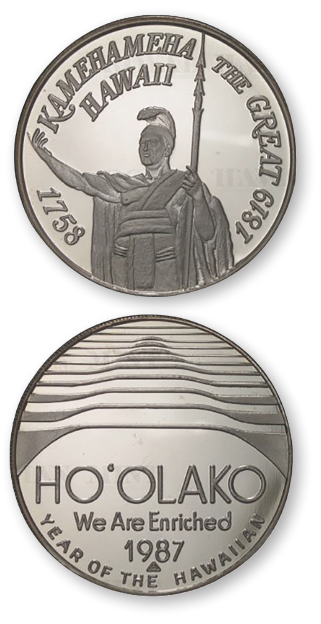
    A 1987 issue of Ka Wai Ola O OHA by the Office of Hawaiian Affairs states that the goal of the program called the “Year of the Hawaiian” sought to “Celebrate the Hawaiian, instill pride in being Hawaiian, identify Hawaiian values, lokahi (unity), raise the consciousness and awareness of the Hawaiian core of our society,” enacting an islands-wide series of events and activities focusing on the values, history and culture of the Hawaiian people. “So,” says Momi, “I created something that would represent Papa—Earth Mother—and Wakea—Sky Father. It’s their union that creates the Hawaiian Islands.”

    A previous logo depicted a woman literally giving birth to the islands. “In graphic design, we change the literal to the conceptual.” Momi’s iconic design instead alludes to the vast, intricate layers of Hawaiian history and culture, the formation of the islands, and the unity of Papa and Wakea—all with graceful simplicity.

    The logo for KMC also reflects the shift from literal to conceptual. Upon explaining her thinking behind the design, Momi emphasizes the hand in the circle. “It’s what you hold—what you give—it’s all associated with the hand. To me, the hand could not break the circle because it brings the viewer in.”

    As a graphic designer, Momi stresses the importance of communicating everything in a design: “You must capture who and what it represents—graphic design interprets reality into an image.”

    Loving One’s Life

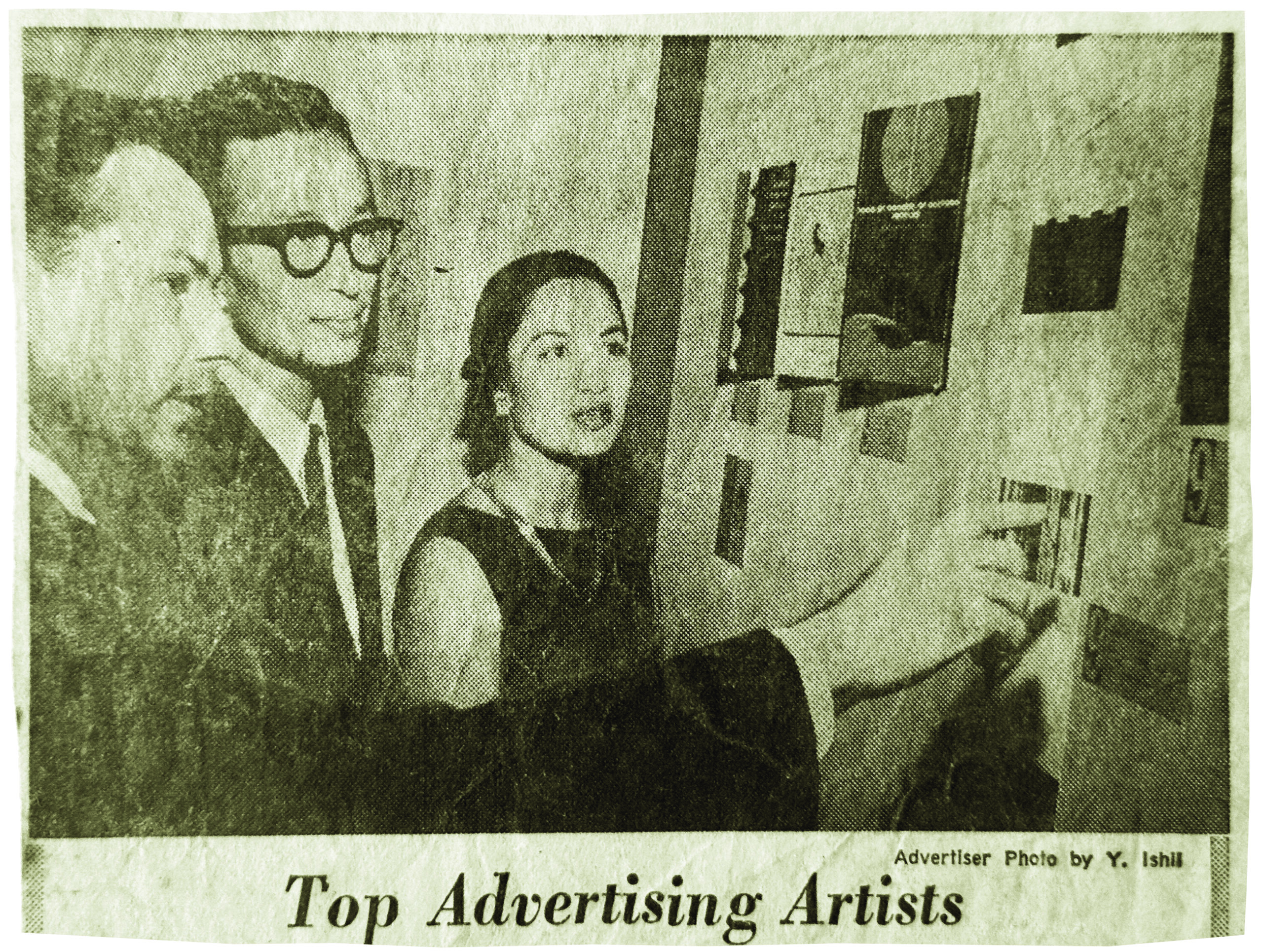
    For nine years, Momi worked with Tom Lee of Tom Lee Design, who actually launched graphic design as a business in Hawai‘i. “He and I were responsible for starting and fortifying an organization that advocated for graphic designers. We wanted to create art exhibits to elevate the people’s consciousness of graphic design and the way you do that is by doing something publicly.”

    After Tom’s passing and Momi had her own business, she remembers when a group of artists got together and decided to make the showings “more Hawai‘i.” They were going to have an award and name it the Pele Award.

    Reviewing a design with a colleague, Momi (right)
    worked with Tom Lee (center) until his passing.

    “If you know anything about the Big Island, you know how we feel about Pele,” she says. Momi suggested they change the name, but the group was adamant simply because “‘it was easier to say.’ They were taking the name of a Hawaiian goddess who represents volcanology. They still had to respect the Hawaiian culture. But they went ahead and did it, and I boycotted them.” Momi’s steadfastness affixes her as a figure of Hawaiian pride, leadership and intelligence.

    When Tom died of cancer, the Cancer Society called Momi and asked if she could create an exhibit at Ala Moana Center. “So I did. The theme that a friend of mine came up with was ‘Love Your Life.’ I designed the logo and talked to different artists to illustrate their love of life in a pictorial image.” In remembering her dear mentor, Momi also realized something about herself through this exhibit: she wasn’t done yet. “I said to myself, ‘I know what I’m going to do to keep from disappearing. I’m going to do community service.’” Through serving on various boards, committees and organizations, she maintained her public presence, honoring those who came before her and working for those who will come after.

    These days, 92-year-old Momi is retired, but still keeps busy with her own creative projects, and recalls her career and loved ones fondly in telling her story. “This morning, I was watching something on TV about The Joy Luck Club,” she says, “and they were talking about how important it is to interpret their culture. The way to lift people up is to give them an opportunity to identify with success. As a Hawaiian, this matters to me because there was an absence of things Hawaiian. Every culture thrives on its understanding and appreciation and relationship to itself. That’s where understanding comes from.” With words from the heart about her creative vision, and the love she has for her art and beloved people throughout her life, Momi Cazimero has paved the way for herself and the many she undoubtedly has inspired to be their best selves.

    With all of these acclamations, commendations and encouragement cutting a path to the vanguard, she takes us on a journey down memory lane—back to where it all began.

    If You Like, You Can

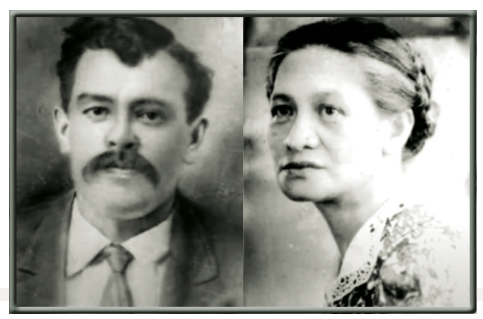
    Momi grew up in rural Pepe‘ekeo on Hawai‘i Island with her grandparents. She was very close with her grandfather, especially. “He was so very positive and supportive, and he spoiled me.” She recalls going to work with him sometimes when he was a highway overseer and remembers fondly when, as she was falling asleep on drives home, he would purposely drive over a certain bump near her favorite bakery to sneakily wake her up— “Tūtū Man, stop!”—so she could ask him to get a slice of her favorite coconut pie. “’Til today, I love it,” she says, “And he did it on purpose all the time. That’s the kind of relationship we had.”

    After her grandfather passed away, Momi moved in with her mother, father and siblings per the advice of her Aunty Esther. Instead of the happy, warm days with her grandfather, Momi went to a home environment where she was made to think less of herself because she was a girl. “You can imagine, when I moved into that home, having been raised as the baby,” Momi adds, “how I felt. Before, I even fell asleep on my grandfather.” Laughing, she says, “Okay, I must tell you. He would put me to sleep, and he was a big man. Naturally, when he would put me to sleep, I would roll over on the bed into his side and my head was buried under his arm. My grandmother, I was told, would tear up when she carried me, because my head smelled like his armpit. I was constantly at his side and loved being with him.” When her home environment felt oppressive and she felt hopeless, Momi often turned to memories of her grandfather to keep her going.

    The words that Momi’s grandfather spoke to her have maintained their impact many years later. As she grew up speaking pidgin, she mentions how saying “I like” meant “I want.” She says, “It almost suggested that it was something I wanted to do. And whenever it implied that, he would always say, ‘If you like, you can.’ Think of that—the encouragement of it.” Later, when he had already passed and Momi was attending Kamehameha Schools, she still felt his presence. “When I was having a stressful time, I would sit on the edge of my bed and say, ‘Tūtū Man, come get me.’ I always leaned on him. When he didn’t come, I would say to myself, ‘If it was really bad, he would come for me.’ This carried me through everything.” In her senior year of high school, she had a serious discussion with herself: “‘You are always depending on your Tūtū Man.’ I wasn’t going to do that anymore, because I had to do it on my own.” The love and motivation Momi’s grandfather shared with her taught her that nothing is impossible, which propelled her to pursue—and achieve—her dream of becoming an educated and resilient woman.

    “Tūtū Man” John Waihee and “Tūtū Lady” Annie
    raised Momi from infancy to nine years of age.

    Never Stop at the Minimum

    Towards the end of her senior year of high school, Momi had a meeting with the principal at the time, Dr. Frederick, whose mentorship reminded her of her fourth grade art teacher. Momi says that her desire to become an artist came from this teacher, whose words made a difference. “But,” she states, “I was not studious. In my beginning years, I did not want to go to school, because going to school meant walking miles, barefoot on a stony road. But, it led me to where I am today.”

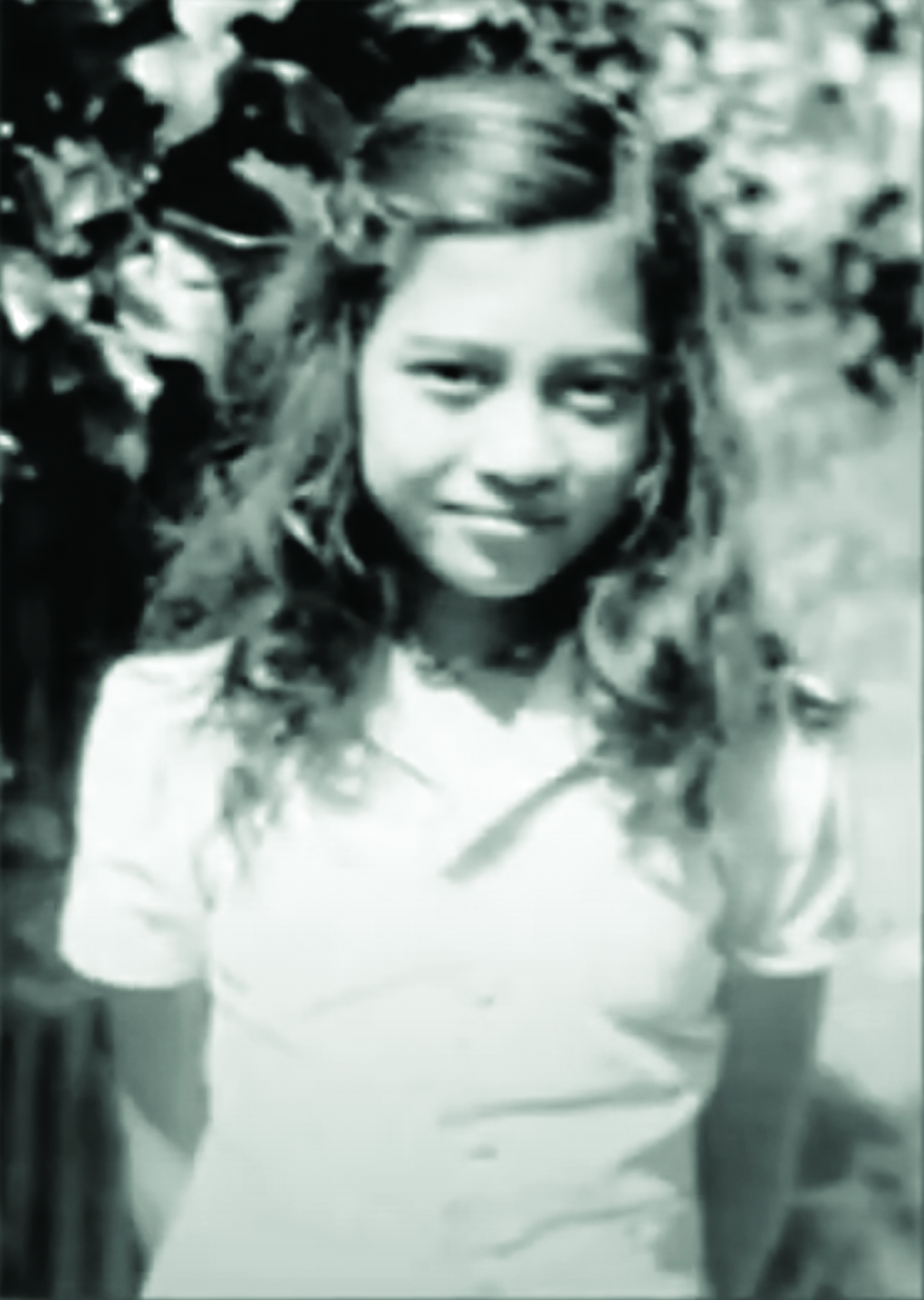
    Praised by her teacher, Momi,
    unknowingly talented, was
    developing into an artist.

    In the fourth grade, one of her assignments for art class was to draw “the most unusual thing.” One day, on her way to Japanese school, Momi saw an oddly shaped hibiscus plant. “I always looked at that with fascination, because it was so different. That was my subject.” When the teacher was reviewing the classes’ projects, she said that she was saving Momi’s for last. “I thought I was going to be insulted,” Momi adds, “I held my breath.” She finally reached Momi’s piece and her teacher said, “Momi drew this hibiscus and it’s nice. But she did not stop at the minimum.”

    After class, when she went to pick up her assignment, Momi’s teacher drew her aside and told her things that Momi carries in her heart to this day: “‘You’re a very good artist. I respect the fact that you had the initiative to do as much as you did. ʻNever stop at the minimum.’ That became a statement that I live with for the rest of my life. In the time that she’s giving me this confidence, what I’m resting on is what my grandfather always said, ‘If you like, you can.’ Here was a teacher who gave me something else to aspire to.” Momi makes note of the fact that these are words that carried her through very bitter years in her upbringing. “The reason I say what pulled me through is because of the things I faced along the way.” With the beautiful and profound statements that these key figures in her life gave to her, it becomes evident how Momi turned the adversity she dealt with into a force that made her unstoppable.

    I Wanted You to Grow

    Looking back to her childhood, Momi reminisces on her relationship with her Aunty Esther. She mentions how, during the time she was living with her parents, she figured out that the reason her aunt did not face the treatment Momi received was because she had a profession and a college education. At this point, Momi adds, “You know where this story is going already,” referring to this realization being integral to her wanting to create a career for herself. Going against her father’s limiting views of women as bound to the home, Momi decided to work hard and pay for her own schooling. “I’m determined,” she says, and she knew that because she went against her father that she could never go back home —“So, I had to be like Aunty Esther. I had to get a college education.”

    Her Aunty Esther was the person who encouraged Momi to take the test to get into Kamehameha Schools, which she passed. Though this was a cause for celebration, it only brought strife to her parents, specifically her father. He insulted her intelligence and dismissed her acceptance into the school, asserting that he wasn’t going to contribute a penny to her education. So, Momi, with the support of her mother and aunt, applied and earned a working scholarship and worked her way through school. After successfully completing her high school education at Kamehameha Schools, Momi spent a brief time in college on the path to teaching art, but decided she didn’t want to do that. “That gets to be a long story, but I’m going to cut to the chase. I wanted to do art, not teach art.” So, she transferred to learning the arts at the University of Hawai‘i at Mānoa. “My mother was distraught. ‘You know, artists starve.’ That’s all she could say to me. She talked to my aunt, who never ever changed my mind. If anybody could have, she could have. But she didn’t say a word to me.” Momi is who she is today because her aunt believed in her.

    Momi aspired to be like her aunt, Esther Waihee
    McClellan, an independent and educated woman.

    Years later, Momi found out that her aunt felt responsible for the mistreatment she received in her youth because she is the one who recommended that Momi be raised with her siblings. Like with her grandfather, she and her aunt were very close: “This aunt was also like my surrogate mom. She helped to raise me. When I was in seventh grade, going through college or in my marriage, she was the one I consulted all the time.” The pair were so close that her aunt’s son, Momi’s cousin, even asked if Momi was his older sister. As her aunt got older, she was diagnosed with Alzheimer’s disease. Following the diagnosis, Momi found that her Aunty Esther had become more forthcoming. “She was a typical teacher—always said the right thing, always did the right thing, but here she was. The things she said ranged from funny to serious.” Significantly, one day, Momi was visiting her Aunty Esther and she asked if she was the one who decided that Momi should leave her grandparents’ home all those years ago. Her aunt said yes. “I asked, ‘Why?’ and she said, ‘I wanted you to grow up knowing your siblings.’ When she said this, Momi wanted to say something to her aunt, but she felt she couldn’t, because she didn’t want to cry in front of her. “I felt I had to be strong, but I should have told her what a blessing it was that she made that decision, because I’m sure it haunted her.”

    For someone who endured such hardship in her home life to say that it was instead a blessing shows the depths of Momi’s maturity and grace throughout her life, as well as the love and appreciation she feels for her aunt. “I love my Aunty Esther because of who she was and what she was to me. I always wanted to be like her—she motivated me to go to college.”

    Never Let the Least of Them Diminish the Best in You

    Momi had to work her way through college, too, with a part-time job at Sears. In her senior year of university, she began working for a Swedish artist. “One of the things she loved to do was entertain people in different art fields. My job was to clean up,” says Momi, “and I was never a good cook, so I served food, waited on tables and cleaned the house.”

    One night, the artist says to Momi, “I want you to join us for dinner. I have a professor; his name is Kenneth Kingery. He’ll be joining us tonight and I think you’re going to enjoy him.” “Did I ever!” After that dinner, Professor Kingery invited Momi to his office and the teacher-student pair grew close from there. He is the
    person who introduced Momi to the world of graphic design and, Momi adds, “how it was changing the landscape of commercial art.”

    The encouragement and belief of
    Professor Kenneth Kingery made
    an indelible impression on Momi
    Cazimero, a budding designer.

    At the time, there was an ongoing transition from commercial art to graphic art, where instead of the artist being responsible for only an art piece for a design, graphic artists had to take into account typesets, fonts and colors in addition to being responsible for the art or logo.

    Momi relays a story very significant to her development as a budding graphic artist and as a person that took place in her senior year of college. Professor Kingery had assigned her as the school yearbook editor, so she had to design and work with the production crew who printed the yearbook. “That year, I chose to use Chinese calligraphy in the design. I had created all these different designs and colors, and took the bus to discuss what I would be needing. One day, I get there, and the manager looks at it, and he takes it to a light table. He slaps the table, hollers and—this man had the loudest voice you ever heard—calls the other guys over. Those days, only men worked in a print shop.” Momi remembers how all the men gathered around the light table and ridiculed her and her work, laughing all
    the while. “‘Look at this thing she brings me,’ he said. I wanted to dig a hole in the concrete and go through it. My heart was just torn. I went to college to develop a profession so that I would have a respectful position, but now I was thinking that
    I didn’t want to be a graphic designer.”

    Momi remained courteous in the moment and on the bus ride back to Professor Kingery’s office, but when she arrived, he could tell something was wrong. As soon as he asked, Momi burst into tears and told him all that had happened at the print
    shop. All Professor Kingery said at that moment was, “You come with me right now.” They drove back to the print shop. “This man spoke in a quiet tone; he was very reserved,” Momi recalls. But, once they arrived, the professor pointed to the manager and said he needed to talk with all of them. Momi remembers verbatim what he said to the men at the light table: “She’s a student at the University of Hawai‘i. You’re grown men, supposedly with a profession. But I don’t think you demonstrated that—not to this student.”

    On their way out, he spoke directly to the manager in her defense: “One day, she will amount to more than you ever will.” This moment set a benchmark for Momi. “I was not a confident person, but I had enough people giving me some backbone; my grandfather, for example. Professor Kingery told this man, who was a plant manager, that I would amount to more. You don’t think I had to live up to that? On the way back to the car, he said to me, ‘Never let the least of them diminish the best in you.’ That stays with me—it comforts me and drives me. Every single one of these markers in my life, they both comfort and they drive. And that’s how I got to where I am today.”

    Amy Tan, renowned author of The Joy Luck Club, writes, “We dream to give ourselves hope. To stop dreaming—well, that’s like saying you can never change your fate.” Through times when hope was almost lost, Momi designed her fate, never forgetting the people who encouraged her to dream. Momi and her story remind us to choose to love and dream, time and time again.

    To Elevate Hawai‘i While working as a graphic designer, Momi’s mission was to “elevate the images and icons of Hawai‘i and Hawaiians,” a feat she achieved through her years of dedication. “It began when I became conscious of the fact that the only thing that had a Hawaiian face on it was the Hawai‘i Visitors…

  • The Power of Kākou

    Grounded by what he learned in his neighborhood church, Brickwood Galuteria embodies a life of public service dedicated to nurturing the well-being of Kānaka Maoli (Native Hawaiians), kūpuna and those with special needs. When “Kūpuna Power”—his TV program created to educate and empower Hawai‘i’s elderly—was relaunched in 2020, Brickwood said in a Ka Wai Ola interview that “It’s a kākou thing.” “Kākou” is an all-inclusive pronoun, equivalent to the English we.” But it’s also all-inclusive in another sense: We’re all in this together and we need to be connected to our community, working together to make the world a better place in which we all can thrive. It is the guiding principle of his heart and life’s work.

    At ease interacting with people of all ages from all backgrounds, Brickwood’s “kākou thing” includes serving the public as a senator and in his current role as an Office of Hawaiian Affairs (OHA) trustee. The skills he learned as a tour guide, musician, and radio and TV host underpin his roles as a kūpuna advocate and his success promoting mail-in voting for the Office of Elections. You may remember him as an entertainer, but he is much, much more than that.

    A ‘mixed plate’ heritage

    Brickwood was born and raised in the Kaka‘ako district of Honolulu. The family home was where Kaka‘ako Gateway Park is now, but back in the 1950s, it was an industrial area with housing behind it. Because of the plantation workers who had moved there in search of better jobs and housing, Kaka‘ako was comprised of various “camps.” The area where the Galuterias lived was known as Japanese Camp. Despite the name, it was a “mixed plate” kind of place where people from many different cultural backgrounds raised their families.

    Brickwood’s father, Arnold Galuteria, was one of nine children born to Pedro Galuteria from the Philippines and Rose Galuteria Rodrigues—of Portuguese descent—from Maui.

    Arnold married Juliette Kauhi from Kapahulu in back of Waikīkī Beach. Her parents, Joseph and Susie Nani Kauhi (nee Hussey), were from Hawai‘i Island. Their only other child—Brickwood’s uncle—was renowned musician Richard Kauhi, who introduced four-part harmony and jazz piano into Hawaiian music. Brickwood’s paternal grandma, Rose, raised him while his father worked at United Airlines and his mother worked for the City and County of Honolulu.

    There’s an interesting story behind Brickwood’s unusual first name. His father served in the Army and was best buddies with fellow soldier Brickwood Cummins. They made a pact to name their first-born sons after each other. Even more interesting is the story behind Brickwood’s middle name. “On my birth certificate is Maikaaloa, but my mom or grandmother purposefully changed it to Malihinimaika‘āina‘e. ‘Malihini’ means ‘visitor or stranger;’ ‘mai ka ‘āina a’e’ means ‘from afar.’ You combine all the different nationalities—Hawaiian, Filipino, Portuguese, English—and it’s like ‘stranger from afar.’”

    Church & school

    As a child, Brickwood spent a lot of time at Kawaiaha‘o Church, which is right across from Honolulu City Hall. Established under Kuhina Nui (Queen-Regent) Ka‘ahumanu I in 1820, it is affectionately known as “the Mother Church” of Hawai‘i. “That church is basically where we grew up and hung out. My love of performing music came from there. Mom was in the church choir. My two grandpas were deacons at the church. I spent a lot of time there!”

    Brickwood also appreciates what the church gave him culturally. “It kind of grounded my concept of kānaka. Even the political perspective— I learned so much on how to approach my politics through church politics. It got me ready, in a sense, for my service. There are different ways to serve. Ultimately, I was able to become a public servant and impact quality of life stuff by shaping policy when I was in the Senate.”

    He attended Kamehameha School from kindergarten through high school, graduating in 1973. In an interview for a “Keep It Aloha” podcast in 2024, Brickwood says that “Kamehameha embedded in me the Native Hawaiian ethos, if you will, and informed my decision-making—and it still does.” His time there also led directly into his career as a musician. In high school, he was part of the Concert Glee Club and during his senior year they were recruited by Kalani Cockett, who worked for the O‘ahu Visitors Bureau producing shows promoting Hawai‘i.

    Cockett organized the club’s tour of Canada and the continental United States, which gave Brickwood “a taste for the business of show.” When they returned, he and classmates Ken Makuakane, Chris Keliiaa, Miles Kahaloa and Wes Kitaoka formed a musical group called “Na Leo o Kamehameha.” It was during this time that he connected with Marlene Sai—the Grand Dame of Hawaiian music—who worked in administration at Kamehameha and was featured during the tour along with other wahine stars back in the day—Nina Keali‘iwahamana, Emma Veary, Penny Wells and others.

    That led to his later becoming part of the orchestra for Marlene Sai’s show at the Monarch Room at the Royal Hawaiian Hotel. This set the “stage” for a musical career.

    Radio & the evolution of Hawaiian music

    The Four Horsemen of Station ALOHA,
    1420 AM KCCN: (clockwise) Harry B.
    Soria Jr., Kimo Kaho‘āno, Keaumiki
    Akui and Brickwood Galuteria. Kimo
    and Brickwood were the “Aloha Morning
    Show Boys,” while Harry and Keaumiki
    were known as the “Territorial Boys.”

    After graduating from high school, Brickwood briefly attended Pacific University in Oregon but returned home and started a family. To support them, he worked as a tour director and played guitar in show bands. Brickwood met his wife, Lehua, when she was a hula dancer and he was playing in the band they performed with. “She knocked over my music stand during the performance—and that was the end of that! This was when Waikīkī was just really cooking! Don Ho, Danny Kaleikini, Al Harrington, Dick Jensen, Jimmy Borges and others we emulated all had showrooms. Tavana was at the Moana Hotel. Tihati’s Polynesian Revue was at the Beachcomber. Our aim as tour directors was to provide a memorable visitor experience and to just have some fun. That was the important thing.”

    Brickwood’s transition into his career as a radio host stems from a specific moment in 1979. His band played on the top floor of the Oceania Floating Restaurant and Don Ho’s original backing band, The Aliis, played the showroom on the second floor. “I went down to listen to The Aliis and Sam Kapu, who worked with Don Ho and also had a show on-air, asked if I’d be interested in doing radio. I said, ‘I have no compelling need to be behind a microphone on radio, but yeah, sure.’”

    The program director at KCCN1420AM was one of Brickwood’s schoolmates, Jackie Rossetti, the Honolulu Skylark. The station’s handle was “The Hawaiian Music Station” because it fore fronted local bands. He was given the traditional time slot for newbie DJs—10pm to 2am. He created a theater of the mind called “The Biggest Little Nightclub in Town.” “We had canned applause and I served as host: ‘Ladies and gentlemen, let’s go back to the stage with more music…’

    “We were there when the music was really evolving into different spaces in the post-Don Ho era. As an example, you had The Sunday Manoa—Peter Moon and Robert and Roland Cazimero. They added really cool for-the-young-people kind of instrumental work and their appeal to the younger crowd stuck. There were more different forms evolving. Hawaiian music was really on the cutting edge with all these hybrid genres.”

    One of those hybrid genres was a Hawaiian-style reggae that went on to have its own category in the Nā Hōkū Hanohano music awards: Jawaiian. “I was on the table the day that word was coined,” Brickwood says. “That just stuck with us and we took it to the maximum effect.”

    It was during his 1980–90 stint as a KCCN radio host that Brickwood himself won two Nā Hōkū awards: Male Vocalist of the Year and Most Promising Artist in 1985. As part of his life of service, in 1990, Brickwood became a board member of the Hawaiian Academy of Recording Artists, which produces the Nā Hōkū awards. He served as its president from 1992 to 1995 and returned as a board member in 2022.

    Connecting keiki & heritage

    In May 1990, KCCN General Manager Michael Kelly launched a sister Hawaiian music station: KCCN-FM100. Brickwood co-hosted the “Aloha Morning Show” with Kimo Kaho‘āno on that channel and then on Hawaiian KINE-FM105. In 1992, this resourceful duo became part of the Pacific Voyaging Society’s (PVS) “Voyage for Education: No Nā Mamo, For the Children.”

    As the PVS web page explains, the navigators and crew members “reached out to thousands of school children in Hawai‘i through a long-distance education program. During the voyage, students tracked the canoe on nautical charts, learned about their Pacific world and used the canoe and its limited supply of food, water and space to explore issues of survival, sustainability and teamwork” (archive.hokulea.com/holokai/1992/no_na_mamo.html).

    The “Aloha Morning Show” was part of that effort, with live hook-ups between the studio and the Hōkūle‘a voyaging canoe to receive daily reports of weather conditions, coordinates, etc. Brickwood shared that “Prior to the sail, PVS secured a GPS system under the hull of the wa‘a, communicating its location directly to Hawai‘i, with no communication given to the members on deck above so as not to compromise the wayfinding. After the first leg from Hawai‘i to Tahiti was completed, I joined the crew in Tautira for the next leg to Rarotonga and resumed the daily radio reports with Kimo here at home.”

    That leg of the journey lasted from Sept. 1 to Oct. 25. Three days later, in a TV studio at the University of Hawai‘i (UH) at Mānoa and using the UH Peace Satellite, Brickwood and teacher Patty Miller co-hosted a three-way conversation between the studio, the Hōkūle‘a and the space shuttle Columbia as it passed over the Hawaiian Islands. One of the shuttle astronauts, Charles Lacy Veach, was from Hawai‘i. The link-up was broadcast as a Department of Education Distance Learning Technology TV Special (link at the end of article). This was no mean technical feat and the video shows how adept Brickwood was at navigating the technical difficulties inherent in satellite communications.

    It also demonstrates his ability to step back and allow others to hold the floor. As well as the co-hosts, in the studio were four school students, plus there were two open phone lines so that students could call in their questions from their schools on O‘ahu and neighbor islands. Brickwood acted as a facilitator of the dialogues between all the different participants, creating a bridge between land, sea and sky. This opportunity to enhance the cultural understanding of the upcoming generation resonated deeply with his commitment to Kānaka Maoli values.

    Empowering through policy

    L: Sen. Galuteria at the groundbreaking for the Hawai‘i Techno-
    logy Development Corporation’s Entrepreneurs’ Sandbox in
    Kaka‘ako in 2018. R: As an OHA Trustee in 2025, Brickwood is
    chair of the Beneficiary Advocacy & Empowerment Committee.

    Building upon his childhood introduction to politics in his church, Brickwood turned his attention to the political arena. He served as the state chairman of the Democratic Party of Hawai‘i from 2004 to 2006 and as the state senator for District 12 from 2008 to 2018, at one point serving as Senate majority leader. Brickwood’s ability as a bridge-builder was particularly useful when it came to his relationship with the Senate Minority Leader Sam Slom, aka “The Lone Ranger” because of his firm convictions, which didn’t necessarily jibe even with his own party members. Slom was the only Republican in the Senate in 2018.

    The Office of Hawaiian Affairs

    After leaving the Senate in 2018, Brickwood continued his service to the Native Hawaiian community as a member of the O‘ahu Island Burial Council. Then in 2022, he became an at-large trustee of the Office of Hawaiian Affairs, where he is currently chair of the Committee on Beneficiary Advocacy and Empowerment. it “focuses on OHA’s legislative and advocacy efforts, as well as programs that address issues relating to health, human services, economic stability, education, native rights, housing, land use, environment and natural resources.”

    In April 2025, he wrote “Sustainability Through a Native Hawaiian Lens” for OHA’s newspaper, Ka Wai Ola: “Historically, Hawaiians exemplified sustainable living through the ahupua‘a system, a land division model extending from mountains to sea. This system ensured long-term abundance through collective responsibility.

    Today, these principles remain relevant as Hawaiians navigate political, economic, social and environmental challenges.”

    Voting by mail campaign

    In 2020, he had received a call from the Hawai‘i State Office of Elections asking him to help “ensure a sense of confidence with kūpuna, who were more comfortable with going down to the ballot box in person. He created a network of partners by contacting all of the leaders of nonprofits and other entities that already had strong connections with that demographic. The turnout for the 2020 primary election was 51.2% of registered voters, 98% of the votes being cast by mail. In the General Election it was 69.6%, with 95% of those votes being cast by mail. Furthermore, 60% of those who voted were over the age of 50, including 32% aged 65-plus.

    ‘Kūpuna Power’ returns!

    “Kūpuna Power” guest Kumu and Kahuna Kawaikapuokalani Frank
    Loea Lehua Hewett joins host Brickwood Galuteria in 2020, sharing
    stories of growing up and learning from his own kūpuna.

    The principle of “collective responsibility” includes everyone who lives in Hawai‘i, not just Native Hawaiians. It also involves collective action in the form of advocating for change.

    While serving in the Senate, Brickwood’s mom asked him to check on her best friend, one of his church aunties. He discovered that fraudsters accompanied her to the bank and drained her account. The immediate concern was that Aunty’s electricity had been cut off and she was using candles, which could have accidentally started a fire.

    In his “Keep it Aloha” podcast interview, Brickwood explains how he went back to his office and said to his staff, “Let’s start something called ‘Kūpuna Power!’ What is kūpuna power? It’s a lively, meaningful way that celebrates Hawai‘i’s kūpuna. Kūpuna power is about empowerment and knowing the resources that help us make responsible decisions and become self-advocates. We started by doing a resource fair at the state capitol in April each year.” Each April, the conference committee of each legislative house considers the bills generated in the other house and decides if they progress to being enacted before the legislative session ends in May. Besides connecting kūpuna to resources and organizations that could help them with their needs at the fair, Brickwood and his staff would encourage them to go to their representative’s office to speak with them directly.

    He also took the idea to ‘Ōlelo TV, a nonprofit community Public, Education and Government access provider created in 1989 “to empower the voice of the community.” Brickwood had previously been a moderator on ‘‘Ōlelo’s “In-Touch” show in the 1990s, and had also hosted or co-hosted shows on ESPN and KHON TV. From 2011 to 2014, Brickwood was the producer and host for “Kūpuna Power TV” on ‘Ōlelo. In 2020, following his exit from the Senate, he relaunched “Kūpuna
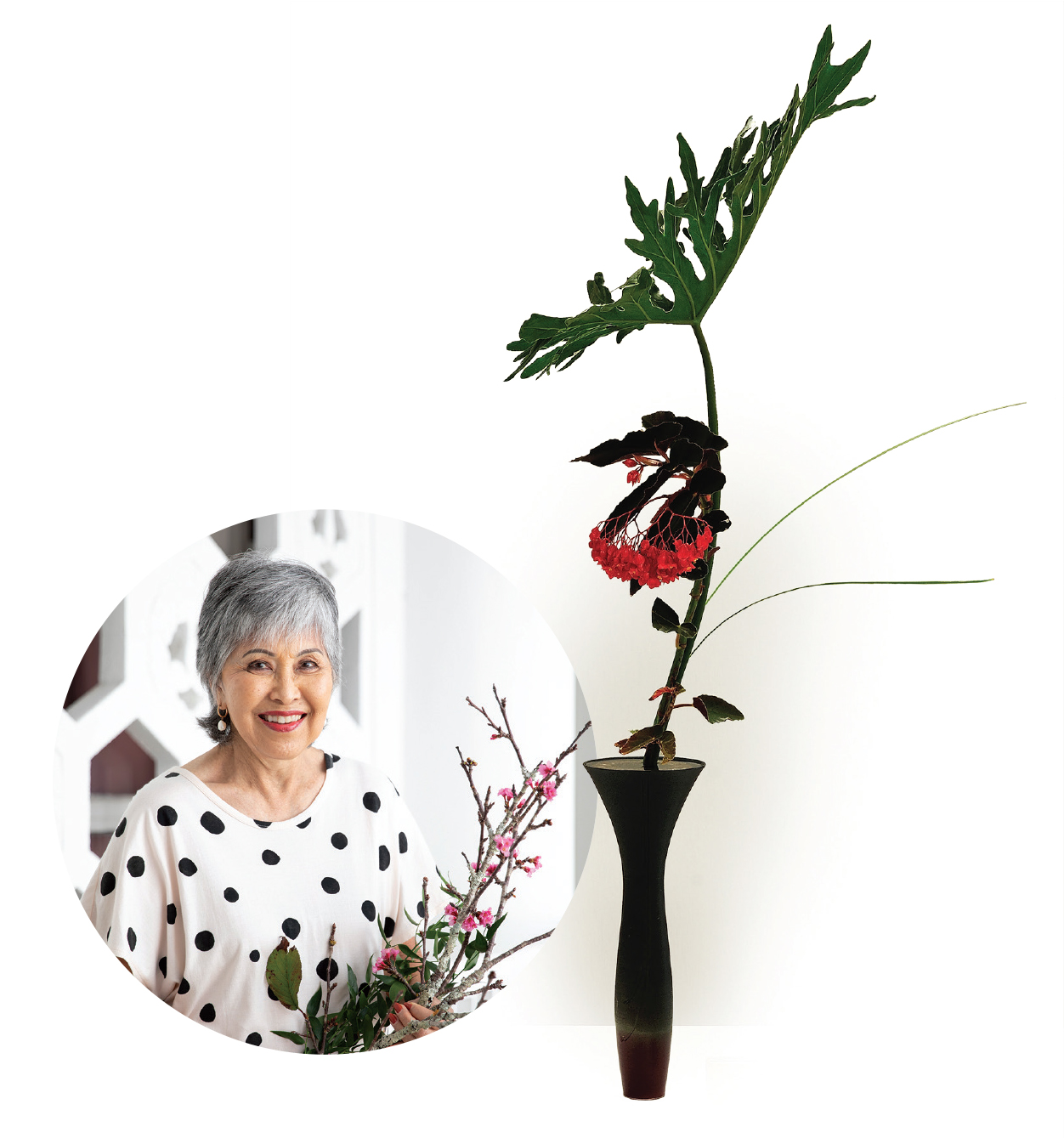
    Power” as a half-hour show on KGMB/KHNL/K5, but stopped when he was elected to OHA, unsure of what time commitment would be required.

    “After about a year at OHA, I decided I couldn’t also produce a half-hour show once a week. It was too labor-intensive.” Instead, he, Mike Kelly (from his KCCN radio days) and some friends “went to bat” for a short-form version of “Kūpuna Power,” a five-minute segment in KITV’s “Island Life Live” show. It airs once a week on Thursdays at 4:30pm. Since early May of this year, KITV has also been airing “The Best of Kūpuna Power,” reruns of many of the earlier half-hour shows.

    In addition, there will be some new one-off shows on specific topics like digital literacy and fall prevention and he plans to use footage he and Kimo have from the 1992 Hōkūle‘a voyage as “Kūpuna Power Remembers No Nā Mamo.” He’ll also revive the tradition of the Christmas special “Kūpuna Kalikimaka.” “The Best of Kūpuna Power” airs each Tuesday on KITV at 12:30pm with an encore each Wednesday at 12:30pm on KIKU, ”Hawaii’s Multi-Cultural TV Station.”

    Brickwood and Kimo are also reigniting their co-hosting mojo with a weekly 35- to 45-minute video/radio podcast called “Hawaii Recalls.” “Podcasts are the new radio shows,” he says.

    A family man at heart

    The Galuteria family at Shawn’s 50th birthday celebration: (L–R, back row) Bric (son), Rebecca and husband Mana (son), Kawehi (daughter), Sommer (daughter),(front) Brickwood, Lehua (wife) and Shawn (son).

    Brickwood’s time as a young person was lived largely in the public spotlight, as a musician, radio DJ and television personality. But he was also a family man. He and Lehua have five children and 10 grandchildren. “And for us, the diaspora is real, because three of our five children live on the continent. Five of our 10 grandchildren live on the continent, too. We can’t argue with them for wanting a better quality of life for their families, but we’d love to find a pathway back for them.”

    One of their sons lives with them, or as Brickwood says, “We like to say we live with him. Shawn is our gift from God. He has Down syndrome. When he was born, we were told that kids like him had a length of life only into their 20s, especially as they have a propensity for heart conditions. He had to have major surgery for a hole in his heart at the age of three. We had a big celebration for him recently when he turned 50! He brings a centering to our lives that is just unconditional.”

    Having Shawn in the family contributed to Brickwood’s decision to add the special needs community into his life of service as a board member for Hawai‘i Special Olympics and the Hawai‘i Association of Retarded Citizens, which is nowadays known simply as ARC. Although it is common to use the term “disability” and “special needs” when speaking of people like Shawn, Brickwood expresses the belief that he has “different abilities” and that we all have special needs. Those terms should not be used to exclude this community of people from the activities we all enjoy as part of our daily lives.

    It’s a kākou thing…

    KŪPUNA POWER
    info@wearekupuna.com | wearekupuna.com
    “Kūpuna Power” 5 min. segments
    KITV “Island Life Live”: Thursdays, 4:40pm

    “The Best of Kūpuna Power” (replays of TV shows)
    KITV: Tuesdays, 12:30–1pm
    KIKU: Wednesdays, 12:30–1pm

    Youtube videos:
    Hokūle‘a Talks to Space Shuttle Columbia
    bit.ly/HokuleaTalksToShuttle
    Hawaii Recalls
    bit.ly/KupunaPower-HawaiiRecalls
    Keep it Aloha podcast, Brickwood Galuteria: From entertainment to politics, and empowering Kūpuna
    bit.ly/KupunaPower-KeepItAlohaGaluteria

    Grounded by what he learned in his neighborhood church, Brickwood Galuteria embodies a life of public service dedicated to nurturing the well-being of Kānaka Maoli (Native Hawaiians), kūpuna and those with special needs. When “Kūpuna Power”—his TV program created to educate and empower Hawai‘i’s elderly—was relaunched in 2020, Brickwood said in a Ka Wai Ola…

  • Ikebana – A Conversation With Nature

    By Rosa Barker
    Photos courtesy of Barbara & Roger Tinius

    Kida-Sensei’s Rikka Shimputai

    Ikebana is instantly recognizable as a Japanese style of floral art, no matter where in the world it is created. One thing that sets it apart as a style is that the arrangement is simple and uncluttered. But that simplicity is full of deeper meaning, dating back many centuries, when an Ikenobo priest taught that “With a spray of flowers, a bit of water, one evokes the vastness of rivers and mountains.”

    Ikenobo Ikebana
    Ikenobo Ikebana is the original school of ikebana in Japan. The school’s headquarters are in Kyoto, close to the art’s origins at the Rokkakudo Temple, which was founded nearly 1,400 years ago. Priests who made floral offerings at the temple’s Buddhist altar lived near a pond (ike) in a small hut (bo). The priests became known as “ikenobo,” and people came to watch and learn from them. The Buddhist name “Senkei Ikenobo” first appeared in historic records as “master of flower arranging” in 1462.

    In the mid-16th century, Senno Ikenobo established the philosophy of ikebana, completing a compilation of Ikenobo teachings called “Senno Kuden.” He taught that “Not only beautiful flowers but also buds and withered flowers have life, and each has its own beauty. By arranging flowers with reverence, one refines oneself.” As the Ikenobo Ikebana Japan website explains, the spirit of Ikenobo Ikebana is embodied in the idea that “arranging flowers and finding beauty in them is linked to a heart that values nature and cares for other people.” Flowers are not only beautiful but they can reflect the passing of time and the feelings in the heart of those who arrange them.

    Ikenobo Ikebana Styles
    Ikenobo Ikebana has three main styles: shoka, rikka and jiyuka (Free Style). The first two have both traditional (shofutai) and more modern (shimputai) variations. The modern variations and the jiyuka style were all introduced during the current Kyoto headmaster’s term. He based these “new” styles on old scrolls showing materials being used in a simpler manner.

    SHOKA uses no more than three kinds of floral materials and is the most dignified flower style among the three, created originally during the mid-Edo era (18th century) for placement in the tokonoma (alcove) of a traditional Japanese tatami room. It has only three main components that can represent past, present and future, or heaven, man and earth. This style expresses the longing for nature.

    Shoka Shimputai by Claire Sakauye

    RIKKA is the most classical ikebana style, having been handed down since the 16th century, during the Muromachi Era (approximately 1336 to 1573). Because it represents “a harmony of a wide variety of plants in the natural world,” this style is more elaborate and more challenging to create than shoka. It expresses grace of tradition and magnificent landscape and has nine main components with optional additional parts to fill in or round out the arrangement.

    JIYUKA has no specific pattern or set of rules but falls into two basic categories: naturalistic and designed, in which materials are used in a less natural manner. The creator has complete freedom to express their personal inspiration. The finished arrangement might hang on a wall like a picture or be suspended from the ceiling like a lamp. Very few modern homes have an alcove or a tatami room, and this style was introduced in response to that architectural change.

    Sunanomono by Jean Marutani
    Jiyuka by Kay Hanano

    From Kyoto to Hawai‘i Kai
    Beryl Ono and Diana Salansky are both long-time members of the Ikenobo Ikebana Society Honolulu Hawaii Chapter, one of 41 chapters worldwide. For both of them, the relationship between the teacher (sensei) and the student is key to what kept them wanting to learn more. Diana’s sensei here in Hawai‘i always told her, “You can do it!”

    Her sensei’s method of teaching was to have the student first watch her create an arrangement from the materials she supplied. The student would then be left to study it. “I would draw it and list the main, secondary and filler material,” Diana says. Then the sensei would take it apart and Diana would remake it. It’s a one-on-one process with the sensei explaining what is required for the style being created, and the particular characteristics of the materials she has chosen to use and how the material itself has precedence: “You might want to show the sunny side of a branch but the material might have opposite ideas. It’s about becoming aware of what is the essence. After about six lessons, you can create the arrangement first but sensei gives you instructions to follow.”

    Beryl Ono Stapleton and
    her Shoka Shimputai
    arrangement
    PC: Steve Nohara

    Beryl concurs, saying, “When you first get into ikebana, they teach the basics first.” She enjoys classes because, in a world of multitasking and deadlines, “it’s just me and my flowers and my materials for the two hours I’m there. I feel a sense of satisfaction, not so much about my arrangement, but something like others might feel at the end of an exercise class.” Beryl is the contact point for those wanting to find out more and join classes. (Visit ikenobohonolulu.org for class details.) There are eight Ikenobo Ikebana teachers on O‘ahu and classes are held at a number of different venues, twice a month. Barbara Tinius, one of those teachers, explains that students first learn a generic form of Free Style, then graduate to shoka. “In starting with Free Style, you are learning classroom protocol and how to hold your scissors and look at how the material grows without being burdened by too many rules.” Barbara and Diana, both certificated “Senior Professors of Ikebana” by Kyoto headquarters, are available for private lessons and ikebana demonstrations.

    Minimal But Meaningful
    The choice of materials used in an arrangement is key to the art’s appeal. Once the novice has gained enough knowledge to choose materials, the student takes great pleasure in finding material that expresses what they want to say in the arrangement — or they might simply let the material itself speak to them. Beryl explains: “It’s not just grabbing different materials and throwing them together. I would spend an hour at the florist looking at all the materials. You are looking for something that just grabs you. You’re talking to your material. Eventually, you start planting things that you can use. You don’t just put ornamentals in your yard.” Material can also be gathered from nature. It need not be “perfect.” A shriveled bud has a story to tell that’s as meaningful as a branch of perfect blossoms. As Sen’ei Ikenobo, the current 45th Headmaster of Ikenobo, wrote in the Ikenobo Society of Floral Art’s magazine: “What is important is to look at plants as they are with an unconstrained mind, without reflecting our own desire.”

    Diana Salansky and her Rikka Shofutai arrangement

    Zen and Wabi-Sabi
    When Yasunari Kawabata was awarded the Nobel Prize in Literature in 1968, he used the occasion of his Nobel Prize lecture to bring the attention of a global audience to the finer points of Japanese cultural expression and the practice of Zen. Ikenobo Ikebana was one of the examples he used to illustrate this. “The ancients arranged flowers and pursued enlightenment.” he said. “Here we see awakening to the heart of the Japanese spirit, under the influence of Zen.”

    Another manifestation of the Japanese spirit is the concept of wabi-sabi. It is an aesthetic that can be found in many forms of art, honoring the beauty of things that are imperfect, impermanent and incomplete in nature. Asymmetry, humility and simplicity characterize the wabi-sabi aesthetic and those qualities are integral to ikebana arrangements. In modern Japan, wabi-sabi is often understood
    as “wisdom in natural simplicity.”

    Globalizing an Ancient Tradition
    In the second half of the 20th century, ikebana floral arranging began to blossom around the world. The presence of US military personnel based in Japan provided a nurturing soil in which to plant the seeds of global growth as ikebana teachers provided classes for military wives.

    Barbara Tinius and her Rikka Shofutai Suna no mono arrangement

    Ikebana International, an organization that is present in more than 60 countries and encompasses many different schools of ikebana, was founded in 1956 by Ellen Gordon Allen, wife of a US general stationed in Japan. Her purpose in creating this organization was “to unite people of the world through their mutual love of nature and the enjoyment of ikebana.” The organization’s motto is “Friendship Through Flowers.”

    When her husband was posted in Rome (1954 to 1956), Ellen saw an opportunity to promote the art she had learned in Tokyo to a global audience. Her fascinating scrapbooks documenting her ikebana journey are digitally archived on the Ikebana International Washington DC Chapter 1 website (iichapter1.com/archives-2).

    Diana’s journey with ikebana began when her husband was stationed in Japan. For 18 months, she studied with a sensei who came to the base, and who asked her to join Ikebana International (ikebana-hawaii.org). Back in Hawai‘i, she was introduced to Sensei Keiko Fukuda of Ikenobo School. Diana was president of Ikebana International Headquarters in Tokyo from 2017 to 2019.

    The organization’s active ikebana schools in Honolulu regularly hold demonstrations and workshops. Schools, senior centers and care facilities, Japanese clubs, the University of Hawai‘i at Mānoa’s Department of East Asian Languages & Literatures, the Japanese Consulate and the Japanese Culture Center of Hawai‘i (JCCH) have all been venues, sometimes as part of a fundraising campaign for a local charity. Each week, volunteers from the Sogetsu, Ohara and Ikenobo schools provide seasonal arrangements for the lobby of the administrative office at JCCH.

    Exhibitions
    Ikenobo Ikebana is not competitive. It acknowledges progressive levels of achievement based on a set sequence of classes and workshops by awarding certificates. The number of lessons is not the only determining factor for certificates. Students also need to demonstrate an understanding of the knowledge and principles inherent to that level of achievement.

    Students get the opportunity to display their arrangements at exhibitions. “An exhibition is the stage for members to celebrate their work,” according to Sen’ei Ikenobo. “By preparing the exhibition, students can be motivated to face each leaf and flower with sincerity and work on their performance.” The exhibition that will be held in the Garden Lanai Room at the Ala Moana Hotel as part of the Ikenobo Ikebana Society of Honolulu’s 45th Anniversary Celebration is called “Creating Harmony.” The webpage for the event explains: “We chose this theme as that is exactly what we’re doing when we arrange three or more diverse materials into a cohesive artistic display.” (See the “45th Anniversary Celebration” sidebar.)

    Attendance at exhibitions is best undertaken with an open mind and an open heart. To fully appreciate an ikebana arrangement, Beryl advises that the viewer should realize they are looking at something that has come from the arranger’s heart. “There’s a three-way conversation going on between the materials, the arranger and the viewer. It’s all about feelings and the place a person happens to be in life at that time.”

    21st Century Ikenobo Ikebana
    While never forgetting its centuries-old roots as a religious ceremony, Ikenobo Ikebana warmly embraces new technologies and societal changes. Besides introducing modern forms of the two traditional styles and adding Free Style, Sen’ei Ikenobo, the current 45th Headmaster of Ikenobo, has encouraged the development of outreach efforts to Japan’s young people. Enter the Ikenoboys! About seven years ago, a group of junior professors at the Kyoto school formed the equivalent of a boy band. Either individually or as a group, they give demonstrations at schools and public events, and make TV appearances. On the “Ikebana’s Evangelist Ikenoboys” website at ikenoboys.com, you can find links to their videos and their Instagram account.

    The school also collaborates with other arts. The Kyoto Ballet Company has added ikebana to its curriculum and in January 2023 included an ikebana performance in unison with dancers as part of a welcoming event for Japan’s Agency for Cultural Affairs. “Each dancer held a flower in their hand and passed the flowers to us at the center of the stage while dancing. Receiving the flowers from the dancers, we observed each flower to find the best direction and angle to maximize its appeal, and improvised an arrangement, which conveyed the passing of the seasons,” wrote Miyuki Koike, who teaches ikebana at the Kyoto Ballet Academy, in the Ikebana Floral Arts Society newsletter.

    Of all the changes that the current headmaster has made, the most far-reaching has been naming his daughter, Senko Ikenobo, as 46th Headmaster-Designate of Ikenobo Ikebana. It is the first time in the school’s history that a headmaster has named a woman as his successor. She was appointed headmaster-designate in 2015. On her Ikenobo Ikebana webpage, she writes: “To the best of my ability, I hope to promote ikebana, one of the representative aspects of Japanese traditional culture, to the next generation.”

    Senko is also active as a Japanese cultural ambassador around the globe and for international events held in Japan. She was a member of the organizing committee for the 2020 Summer Olympics and Paralympics (which were postponed until 2021 because of the pandemic), performed a floral offering ceremony at the United Nations Headquarters in New York and created ikebana arrangements for the 42nd G7 Summit in Japan. In 2024, Senko took part in a traditional maritime ceremony launching the Mitsui Ocean Fuji cruise ship in Tokyo Bay. By christening the new vessel, she has added “godmother” to her many roles. When she is here for the 45th anniversary celebration in June, Senko will be demonstrating the creation of Ikenobo Ikebana pieces at the Ala Moana Hotel.

    The event will be a wonderful opportunity for ikebana enthusiasts and those curious about this Japanese cultural practice to engage with the values at the heart of Ikenobo teachings: “We create with branches, leaves and flowers a new form which holds our impression of a plant’s beauty as well as the mark of our own spirit.”

    45th Anniversary Celebration
    Ikenobo Ikebana Society of Honolulu, Hawai‘i Chapter
    “Creating Harmony” Ikebana Exhibition
    Free to the Public
    June 14–15, 2025, 10am–3pm
    (Opening Ceremony at 10am, June 14)
    Ala Moana Hotel, 2nd Floor, Garden Lanai Room
    — Special Luncheon & Demo —
    For Registrants & Guests:
    The closing date to register and pay for the luncheon and the workshops is May 15.
    Registration & Information:
    ikenobohonolulu.org/45th-anniversary-1

    • Saturday, June 14
    • 11am: Hibiscus Ballroom opens for seating
    • 11:30am: Buffet luncheon followed by a demonstration by the Headmaster-Designate, Senko Ikenobo and a Reishiki-ike ceremony
      — Special Workshops —
      Taught by Prof. Manabu Noba
      Susannah Wesley Community Center
      1117 Kaili St., #3432, Honolulu
      (For Members and Students only)
    • Sunday, June 15
    • 9am–3pm: Shoka & Jiyuka Workshops
    • 9–11:45am: Shoka Workshop
    • 12:15–3pm: Jiyuka Workshop
      Monday, June 16
    • 9am–3pm: Rikka Shofutai Workshop

    IKENOBO IKEBANA SOCIETY of HONOLULU (nonprofit)
    ikenobohonolulu@gmail.com
    ikenobohonolulu.org
    facebook.com/IkenoboHonolulu
    IKENOBO JAPAN
    ikenobo.jp | ikenobo.jp/english/
    IKEBANA INTERNATIONAL HONOLULU
    ikebana-hawaii.org

    By Rosa BarkerPhotos courtesy of Barbara & Roger Tinius Ikebana is instantly recognizable as a Japanese style of floral art, no matter where in the world it is created. One thing that sets it apart as a style is that the arrangement is simple and uncluttered. But that simplicity is full of deeper meaning, dating…

  • Hula is Life

    The heartbeat of the Hawaiian people has re-emerged, reverberating through the centuries with fullness, clarity and strength since once being banned. Kumu hula and hālau hula had gone into hiding at one point in history, practicing in secret. Then, when David Kalākaua became king in the late 1800s, he initiated a resurgence of Hawaiian arts and culture known as the First Hawaiian Renaissance.

    Hawaiians say ‘haweo’ to refer to a glow of light that makes things visible. It is in the light of knowledge that the darkness and confusion of the past are now being destroyed and the heroic deeds of our ancestors are being revealed. The responsibility is now ours to carry on where they left off. From resistance to affirmation, we are who we were.”

    Ku‘ualoha Ho‘omanawanui, Hawaiian scholar, aloha ‘āina advocate and poet, wrote this in reference to Kānaka Maoli (Native Hawaiian) activist Kau’i Goodhue and the call for resistance.

    In the 1800s, when the missionaries first sailed to Hawai‘i, they arrived with puritanical Calvinist values drastically countering those found in traditional Hawaiian society. Hula was banned as too erotic and worshiping Hawaiian gods was condemned. Hula is an important part of religion and that’s why it was chosen to be annihilated. Many teachers went into hiding.

    When writing about Kānaka Maoli empowerment, Ho‘omanawanui is empathic. “Branded ‘lewd and lascivious’ by Calvinist missionaries, hula was officially banned as a cultural practice in the 1830s. Yet many hālau (hula schools) continued to practice and perpetuate hula in secret, despite missionary protests.”

    Hula is and always has been an important storytelling vehicle for Hawaiian mo‘olelo (stories), she continues. “In the 19th century, Ali‘i (King) David Kalākaua proclaimed it ‘the heartbeat of the Hawaiian people.’”

    Hālau Nā Kamalei O Līlīlehua at the 2015 Merrie Monarch Festival.
    PC: Merrie Monarch Festival

    When he became king, Kalākaua brought the heartbeat back and this movement became known as the First Hawaiian Renaissance, when Hawaiian arts and culture thrived. But after the monarchy was overthrown in 1893, hula went underground until the Second Hawaiian Renaissance of the 1970s, which marked a renewed interest in everything Hawaiian. The new aloha had finally begun — the hiding was over.

    Today, among many, there are three kumu hula (teachers) and hālau that have personified the art of the dance — Robert Cazimero and Hālau Nā Kamalei, Vicky Holt Takamine and Pua Ali‘i ‘Ilima, and Michael Pili Pang and Hālau Hula Ka No‘eau. All three were taught and mentored by legendary hula master Aunty Ma‘iki Aiu Lake, and they have continued the legacy of one generation inspiring another. A fourth kumu hula, Keolalaulai Dalire and Keolalaulani Hālau Olapa O Laka, was inspired and taught by her mother, the first Miss Aloha Hula at the Merrie Monarch Festival in 1971— Aloha Dalire.

    Robert Cazimero and Hālau Nā Kamalei

    For many, there is a defining moment when the voyage of discovery leads you back to yourself. For Robert Cazimero, it occurred in 1966, the year he was introduced to Aunty Ma‘iki Aiu Lake, a kumu who would teach him the ways of hula. Robert says nothing happens by accident. He was meant to be taught by Ma‘iki and believes what she believed: We can all be made better for daring to dance.

    A statement like that can be construed as a challenge, and for Robert, that’s exactly what it was. Nā Kamalei was her dream, he says, and it was Ma‘iki who asked him, her student at the time, to open a hālau for male dancers.

    “I loved her so much,” he says, “I would have done anything she told me.” In 1975, with six young high school students, he founded Hālau Nā Kamalei.

    Today, Robert Cazimero is considered one of the most respected kumu of Hawaiian dance. The men of Nā Kamalei perform around the world, and for nearly half a century, have carried on the tradition of male hula. They have won most major hula competitions, including the prestigious Merrie Monarch Festival on Hawai‘i Island. As an explanation for the hālau’s success, Cazimero says, “Hula is life.”

    Nā Kamalei’s enduring strength comes from adherence to one steadfast creed: Dare to hula and leave your shame at home. “There are times when I don’t want to get up and dance, but, sometimes, you just have to leave old thoughts behind and just do it,” Robert says. “You have to leave the shame behind, to forget what
    others are thinking about my dancing.”

    Legendary Kumu Hula
    Aunty Ma‘iki Aiu Lake.

    In ancient times, hula was a sacred practice in which music, dance and poetry encompassed the genealogy and legends of Hawai‘i’s people. While the first mention of hula in recorded Hawaiian history is of a woman, it was men who performed the ritual dances. Through talk story, Hawai‘i’s oral tradition, stories about the gods were passed on through nā mele (songs) and nā hula (dances), and regarded as the highest form of spiritual and artistic expression.

    Al Makahinu Barcarse, hula master of Ka Ua Kilihune, says, “At one time in our history, nothing was written down. There was no written language and everything had to be memorized. Hula keeps our history and our people alive, and without it one cannot truly identify oneself as being Hawaiian.”

    “I studied hula because of language,” says Holoua Stender, Hawaiian dance instructor at Kamehameha Schools. “I could see the beauty of the poetry and beauty of the Hawaiian language through dance and chant. That’s what made me interested in hula, because hula demonstrated the beautiful soul of the Hawaiian language.”

    The island spirit isn’t only measured by words, but by actions, and for Robert, his encompasses both. He is most at home when blending the motions of lasting gestures into a oneness that celebrates life’s dance.

    In 2005, at the internationally renowned Merrie Monarch Hula Festival, his efforts led directly to the winner’s circle. Nā Kamalei won the kane kahiko (traditional) chant, kane ‘auana (contemporary) song and overall festival awards. Although they expected to place well in the kane (men’s) division, it’s unusual for a men’s hālau to be chosen the overall winner.

    About the multiple win, he says, “I am so proud of my students. I really only came back for them,” referring to breaking his own rule of entering Merrie Monarch every 10 years. He wanted to give his students the chance to celebrate the hālau’s 30th anniversary there, especially since two were from the original 1975 group. What made the 2005 win so poignant was that Robert and his men won the festival’s kane award in 1976, one year after the hālau was formed.

    When Nā Kamalei members received their trophies in front of the judges, his hālau peers and a screaming crowd of several thousand, Robert announced, “In a lot of things in life, you work hard and don’t get a nod. This is more than a nod. It’s humbling; it’s outstanding.” Then he looked out into the audience and tipped his cap.

    Robert has a rule that the hālau travels to Hilo to compete in Merrie Monarch every 10 years. In 2015, they won the kāne division and overall winner. And this upcoming festival in 2025, Hālau Nā Kamalei is preparing to return again.

    The hālau was founded in 1975 and in 2025, they will celebrate their 50th anniversary.

    As a musician and kumu hula, Robert has this to say: “The best thing Hawai‘i can do is let the world know that we have a dance form. What the world can do is let Hawai‘i know that dance is universal. People are drawn to hula, not just the hālau. That’s the way art is — it’s inviting; it’s enticing.”

    Vicky Holt Takamine and Pua Ali‘i ‘Ilima

    In a 1995 interview, Vicky Holt Takamine described her own history in hula and her philosophy for teaching. “I started dancing at a very young age by watching television and watching my mother dance. She used to dance with the Alama sisters. I took formal lessons with Ma‘iki Aiu at about the age 15…”

    “I knew I was going to be a teacher when I started dancing with Aunty Ma‘iki,” she says. “I had a love for the hula and Hawaiian culture, and I knew that’s what I wanted to do.” In 1975, Vicky graduated as ‘ōlapa (dancer), ho‘opa‘a (chanter) and kumu hula. Because Aunty Ma‘iki was her only teacher, she didn’t think that she could diverge from her style of dance. “Of course, you develop your own ways, but the basic foundation that she’s laid for me will always be there. I think I pretty much carry on her style of dancing.”

    Back in 1977, Vicky founded her own hālau hula — Pua Ali‘i ‘Ilima (Royal ‘Ilima Blossom). The school’s mission is to preserve and perpetuate Native Hawaiian arts and culture traditions for future generations.

    About her own hālau and haumana (students), Vicky says, “When students come to me, the first thing I tell them is that I might not be the right teacher for them. So if they don’t care for the way I’m teaching or if they’re not getting anything out of my classes, I don’t feel badly if they want to move on. If they come and they want to adapt to my style, then the first thing we do is train in kahiko.

    “I also teach them the text of a song because the important thing about the dance is not just the movements, it’s the text,” she says. “Just teaching feet and hands has no meaning. It is not Hawaiian. I teach them a song right away to get them moving and get them involved. I want them to feel that they can accomplish a chant or a song in a short period of time. I want to start getting them to feel very confident in their own ability.”

    Pua Ali‘i ‘Ilima at the 2024 Merrie Monarch Festival.
    PC: Bruce Omori

    She enjoys sharing different experiences with her students — seeing them get involved and watching them develop as a dancer, and develop self-confidence and grace. “It’s satisfying to nurture somebody who will want more of the Hawaiian culture and the language instead of just the movements to the dance.”

    Vicky: Ola Ka ‘Ilima Artspace

    Since her humble beginnings, Vicky has become a kumu hula, social activist and community leader, seeking creative solutions that would rectify the many wrongs her people and native artists have endured. She is executive director of the Pa‘i Foundation. Its mission is to preserve and perpetuate Native Hawaiian cultural traditions for future generations.

    In 2020, she expressed her mana‘o (thoughts) about “huliau” — a time of change. As we navigate the next few years, she wonders what lies ahead. “What kind of society will we be? Who will survive? Will we be more compassionate, loving, caring to one another? Will there be justice for all?

    “We have a lot of challenges in the Native Hawaiian community,” she explains, citing hotels built in sacred locations and her people’s overall invisibility in their homeland. “For artists, those challenges also include getting their work seen, being included in exhibitions, experiencing critiques,” she says.

    In 2017, Vicky got her wish for change when Ola Ka ‘Ilima Artspace Lofts in Honolulu broke ground. The new, mixed-use arts development — created with support from the Ford Foundation, the National Endowment for the Arts and ArtPlace and with local developer Hui Kauhale Inc. — is located in the Kaka‘ako neighborhood of Honolulu, a transitional area between downtown and Waikiki Beach.

    “We are excited and thrilled to partner with Artspace,” she says. “This is exactly what we need in Honolulu to help boost our economy by providing affordable live and work space for our local community of artists.”

    Vicky: Shangri La

    In 2024, Shangri La Museum of Islamic Art, Culture & Design in Honolulu chose Vicky as the center’s Native Hawaiian cultural advisor. “Shangri La exists because of Doris Duke’s deep and abiding passion for Hawai‘i, its people and its culture,” said Sam Gill, president and CEO of the Doris Duke Foundation. “I can think of no one better than a revered Kanaka ‘O¯ iwi (Native Hawaiian) like Kumu Vicky to enrich Doris Duke Foundation’s essential connection to our community and its proud traditions.”

    “I continue to be inspired by Shangri La, its history and dedication to Islamic art and culture,” Vicky says. “It is a privilege for me to work alongside the Shangri La staff to be able to share the rich cultural traditions, mo‘olelo (stories) and the history of Hawai‘i to develop a stronger pilina (connection) between Shangri La, the ‘āina (land) and the people of Hawai‘i.”

    Vicky: Gish Prize

    Last year, for her work with Hawaiian arts and culture, Vicky was awarded the 31st annual Dorothy and Lillian Gish Prize from the Gish Prize Trust. The award is given each year to a “highly accomplished figure” who has “pushed the boundaries of an art form, contributed to social change and paved the way for the next generation.” In the words of Lillian Gish, a pioneer film actress, the annual prize is intended for an artist or arts advocate “who has made an outstanding contribution to the beauty of the world and to [humankind’s] understanding and enjoyment of life.”

    Terrance McKnight, the chair of the selection committee, said, “The recipient of the Gish Prize needs to be both a creator and an instigator — someone who has enhanced beauty in the world and worked to make society more whole, someone who is highly accomplished and yet remains an agent of change. This year, the selection committee rose to the challenge by lifting its eyes across the horizon and unanimously choosing Vicky Holt Takamine. It is an honor to present the Gish Prize to her, helping to bring her contributions to culture the recognition it so richly deserves.”

    “What an honor for my people and my community and for Hawai‘i and for the art of hula, which never really gets this kind of recognition.”

    Hula, she said, is often seen as a form of entertainment for tourists, but for her, it is a way to safeguard indigenous culture — how we preserve our culture, our stories and the Hawaiian language, she says. “Hula is a form of resistance,” she says. “This has been my life’s work. I don’t think about it. I just do it. And to be recognized in this manner for me is like validation and credibility.” I hope it brings awareness to my people and my culture, she says.

    Michael Pili Pang and Hālau Hula Ka No‘eau

    For Michael Pili Pang, hula has been a lifelong experience. One day in school when he was being kolohe (mischievous), his teacher, who was also a social worker, took him to a hula class. “Her sister was teaching the class and I learned hula from her through grade school,” he says. “When I went to high school, she said I can’t do anything more for you, and told me to call Aunty Ma‘iki.”

    “The three of us come from different stages in hula,” says Michael. “Vicky is first as a child in the 1960s, then Robert in the 1970s, and I come in the end of the 1970s and ’80s. There’s a good 20-year span between the three of us and each of us had a different time with Aunty Ma‘iki.”

    Michael has worked with her for many years. When he went to college at Puget Sound University, he joined the Hawaiian Club. Aunty Ma‘iki told him to start teaching hula. He ended up teaching hula, organizing the club’s lū‘au.

    “When I came home from Puget Sound, she said, ‘Now, finish your hula training.’” She was going to Japan, and when she came back, they planned to talk about hula… everything. “But when she returned, she died. I thought my future died; hula is pau (finished). But I continued to work because I thought it was important to continue her legacy.”

    Michael firmly believes in huliau — to look back in order to move forward. “Hula is an indigenous art form,” he says. “It is not something that has to be kept on a shelf. It evolves.”

    He says his styling mirrors Ma‘iki’s. In the 1800s, Hawaiians spoke poetry and understood the innuendos of poetry. A flower wasn’t just a flower; a lei not a lei. It was a lover. Certain words have many meanings. Aunty Ma‘iki conveyed that in her dances. “You can’t just mimic music or show off the words. You have to interpret words and present them as if you understand them. Her philosophy comes from idea that hula is everything you see, hear, taste, touch and feel.”

    Hālau Hula Ka No‘eau.
    PC: Michael Pili Pang

    In 1986 Michael opened Hālau Hula Ka No‘eau on Hawai‘i Island, and later in 2002, he added a second hālau in Honolulu. He explores both the traditional styles of his hula genealogy and creates new hula based on Hawaiian tradition. They have taught hula classes in Waimea, Honoka‘a, Hilo, Kona, Waikoloa and in Chicago. Since 1994, they have performed throughout North America, Korea, Japan and Taiwan.

    Michael became a senior staff member for then-Mayor Mufi Hannemann’s administration. As executive director in the Office of Culture and the Arts, he created granting programs, built the arts administration (a staff of five, all practicing artists), fostered partnerships and collaborated on cultural and capacity-building programs.

    “To this day, we are recognized as the keepers of Aunty Ma‘iki’s tradition,” Michael says. When he dances, he says, he still sees her in front of him, showing him what to do, “The feelings you express in the dance are the most important.”

    To further hula’s reach in Honolulu, Michael offers hula classes for anyone interested in learning to dance. “I run an ad two times a year. I want new students to learn my styling that was passed down to us. They start from ground zero. I want them to learn how to hula my way. People would say that my dances are like Aunty Ma‘iki’s, but that was not my intention. I ended up maintaining her teachings. It never was my intention. It just happened that way.”

    Keola Dalire and Keolalaulani Hālau ‘Olapa O Laka

    Hula is about tradition and passing the torch to future generations. No one knows that better than kumu hula Keola Dalire.

    “For a long time, hula was just a dance to me (entertainment or cultural preservation) but my mom instilled in us that hula is expression of our innermost feelings,” says Keola. “It helped me realize that hula can help you express grief, anger, joy, happiness and love. When you come to hālau, leave everything at the door and come in with an open mind and allow yourself to just feel. Hālau is her safe space and security,” she says.

    Keola said that her mother, Aloha, was the first hula dancer to win the coveted Miss Aloha title at the Merrie Monarch Hula Festival the year the festival launched its hula competition in 1971. Keola said that her two sisters succeeded their mother by winning the title — Kapualokeokalaniakea Dalire as 1991 Miss Aloha Hula; Kau‘imaiokalaniakea Dalire in 1992.

    In 1999, Keola, the third and youngest daughter, also won the title. “This was not only an honor,” she says, “but a privilege for me to join the long line of women who have become Miss Aloha Hula.” She said it’s even sweeter knowing that her mother was the first to win the honor more than a half-century ago.

    In 2013, her hālau celebrated its 50th anniversary. When interviewed by “Ka Wai Ola” back in 2013, Aloha was asked what her mother would say about her hālau’s legacy stretching five decades. “Honestly, I think she would be really proud and she would say ‘Hula is alive and well, and it is the koko (lifeblood) of our family.’”

    Keolalaulani Hālau ‘Olapa O Laka

    Hula became a choice. “I chose to be here. My mother said she never forced us to dance hula, but that’s all she exposed us to. Sometimes I like to tell myself I chose hula, but if I be honest, hula chose me. It’s an honor for me to dance and perpetuate my culture and the lessons learned and continue to learn with my haumana.”

    When asked about the emotional impact of hula, she refers to “kaona”—“hidden meaning.” Two years ago, her hālau performed a mele at Merrie Monarch about electricity arriving in Kane‘ohe, which it could have been, but when you think about kaona, it’s a love story.

    “You compare electricity going on and off with being in a relationship,” she says. “This song had a hidden meaning. It’s a story about electricity coming over mountains to Kane‘ohe, but the original words of this song is a love song, a story between two people and how they had that ‘aha moment,’ and they get married. Everyone thinks it’s electricity, but it’s about types of electricity — not the just the kind going through to a lightbulb.”

    Keola says that she opens up her hālau for hula classes. Everyone is welcome. People of all ages come to learn to dance hula, and we also offer classes for kūpuna — for exercise, to keep moving and have fun. Our classes are offered Mondays, Wednesdays, and Thursdays from 4 to 9pm.

    Keola says what she values are the teachings and sentiments of her mother. “Hula is the expression of one’s innermost feelings,” she says. And that brings us back full circle to Kumu Robert Cazimero and his firm belief that hula is life.

    The halau’s 2015 performance at the Merrie Monarch Festival.
    PC: Bruce Omori

    To Conquer the Darkness, Shine Your Brightest

    When asked what lesson he’d like to impart, Robert Cazimero says this about his voice in hula and mele: in an interview with the Keep It Aloha podcast, Robert says that when he sings, he goes someplace. “It’s like a perfect singing storm. It could be the lighting, the people, but mostly it’s me. It has to do with the farthest light that I can see wherever I am — whether it’s a star or a pin light… the farthest light away from where I am.

    “I sing to that spot because I think that’s where all the people I know are who are around me. That’s where they come from. I feel like I’m singing to them — it’s when my voice is the sweetest, happy, grateful, sad, emotional singing.”

    “No matter how much time I have left,” he says, “it’s important to do the best you can, for our people, to be strong, to love who you are, and love others for who they are. It’s easy to say, but hard to get there, but once you get there, you wonder what took you so long.”

    For more information on joining a hula class, contact:
    Michael Pili Pang and Hālau Hula Ka No‘eau:
    halauhkn@aol.com
    Keola Dalire and Keolalaulani Hālau Olapa O Laka:
    khoolhula@gmail.com

    Hawaiians say ‘haweo’ to refer to a glow of light that makes things visible. It is in the light of knowledge that the darkness and confusion of the past are now being destroyed and the heroic deeds of our ancestors are being revealed. The responsibility is now ours to carry on where they left off.…

  • Building a Community of Hope

    Catholic Charities Hawai‘i (CCH) may not be new — in fact, the nonprofit has been serving people of all faiths and cultures in Hawai‘i since 1947. But there are many aspects of the organization and services available that go well beyond what one might associate with its name. From transportation to veterans’ services, housing and more, CCH provides much-needed programs statewide as part of the largest private network of social service organizations in the US, serving around 40,000 people every year. Because of the wide breadth of services CCH provides, we spoke with some of the principal staff members who make a difference in our communities.

    Strengthening Families, Then and Now

    After World War II, communities in Hawai‘i were devastated and families were broken apart. In 1947, Sister Victoria Frances Lamour of the Maryknoll Sisters came from New York with several other sisters trained in social work and founded CCH. Their initial work was strengthening and reuniting families, and placing children who were separated from their families following one of the largest and deadliest conflict in history.

    “Over time, CCH continued to respond to community needs,” says President and CEO Tina Andrade, “and there are now over 50 different programs and services statewide, with about 335 team members.”

    Because CCH serves people of all ages, their work is organized into four divisions: Family and Therapeutic Services Division which provides counseling and child welfare services; Youth Enrichment Services Division which provides behavioral services for youth; Housing and Referral Programs Division which provides housing and veteran services; and Community and Senior Services Division which provides community-based services for older adults and legal immigration services.

    “Primarily, all of these deal with reunifying, strengthening and building familial bonds,” says Tina.

    Tina herself has been involved with CCH for over 21 years. A graduate of Chaminade University, initially she worked as a director focusing on the agency’s mission and history. She also was a Catholic school teacher, helping youth stay grounded in their values and encouraging them to understand how their values relate to their life choices. “That’s been my work over a lifetime,” says Tina. “I like to describe my work as removing barriers, opening doors and creating conversations to help us reflect on our mission and values. That approach to work is always from a perspective of strengthening people.” Although a lot of Tina’s day-to-day tasks involve meetings and organizing schedules, “the value-centered approach brings people together with important conversations based on our values.”

    Overseeing the Community and Senior Services Division is Diane Terada, whose time with CCH totals 30 years. She has been involved in aging programs for the duration of her professional career, with a license in social work and a diploma from the University of Hawai‘i. An example of CCH’s mission to serve people of all cultures and faith, Diane is one of the non-Catholics who works for CCH. “There are many of us who
    are not necessarily Catholic. And we do not, of course, only serve Catholic people. We believe in our mission to serve those in need.” Diane attests to the fact that what CCH seeks in potential team members is their ability to embody and support the mission to serve.

    As Division Administrator, Diane manages the senior-specific programs which aim to help seniors remain independent in the community for as long as possible. Their community/senior services’ goal is to ensure people stay out of institutional settings whenever possible. Emphasizing the importance of advocacy for their clients, the various staff who represent CCH’s services in all four divisions have one common goal: to carry out their work with dignity, compassion, social justice and a commitment to excellence.

    SENIOR SERVICES

    Susie Chun-Oakland speaks with Lanakila seniors as they
prepare for a blessing to commemorate LMPSC’s 55 years
of service as Hawai‘i’s first multipurpose senior center.
    Susie Chun-Oakland speaks with Lanakila seniors as they prepare for a blessing to commemorate LMPSC’s 55 years of service as Hawai‘i’s first multipurpose senior center.

    Lanakila Multi-Purpose Senior Center

    The Lanakila Multi-Purpose Senior Center (LMPSC) is the largest and oldest senior center in Hawai‘i, created by the State of Hawai‘i in 1969 as the Hawai‘i State Senior Center and operated by Honolulu Community College until 1981. The state then asked CCH to operate the center, which became the Lanakila Multi-Purpose Senior Center. The LMPSC serves seniors aged 60 and older, promoting health and independence while organizing over 4,000 activities each year. Cultural club activities, special events, excursions, educational workshops, presentations and service projects are a part of this mix. The center offers over 60 classes every week — pickleball, ping pong, tai chi, yoga, hula, line dancing, stretch and tone, tap dancing, calligraphy, ukulele, guitar, online and more. Program Director Susie Chun Oakland adds, “Our senior center members are truly enjoying themselves. They feel valued. They have so much life experience, knowledge and a lot to contribute to our community. We are so fortunate to have such great people at our center.”

    Lanakila’s staff of five employees and over 700 volunteers are the heart of this program. Many ideas for activities are a collaborative effort between staff and seniors. “Our center members feel comfortable making suggestions for new activities or improving existing programs. When I came to the senior center, I also really wanted this to be a food, flower and fern hub, not only for seniors, but for the community,” says Susie. For over seven years, every part of the LMPSC campus has flourished with flowers, fruit and vegetables to be used for activities that senior members can utilize. Susie stresses the importance of food sustainability and self-sufficiency. “When our center sees a community need, the members and staff make a wholehearted effort to address it.”

    In a heartwarming example, she tells the story of how the City and County of Honolulu was short about 10,000 lei for veterans’ gravesites at Punchbowl. “The seniors made 4,000 ti leaf lei two years ago in partnership with the city’s Department of Parks and Recreation and made over 10,000 lei last year to honor our veterans.” The folks at LMPSC are committed to seniors’ health, wellbeing and independence for all.

    Case Management Program

    Judy Taketa, program director of CCH’s Case Management
Program for the Elderly, leads a discussion with
her team of case managers.
    Judy Taketa, program director of CCH’s Case Management
    Program for the Elderly, leads a discussion with
    her team of case managers.

    Judy Taketa is the program director of CCH’s Case Management Program for the Elderly, which assists elders in stabilizing their home and introduces any services that may be of assistance. The purpose of this program is to enable living a quality life free from fear of being homeless and/ or losing independence, learning options of what one can do about their health concerns. The case managers provide for client needs and matters of health and advocacy. “Sometimes,” Judy says, “when a doctor asks how they’re doing, they’ll first say, ‘I’m fine.’ However, there is so much that the senior does not say. They don’t know what or how to share with others, or are fearful that they would be considered senile or incapable of caring for themselves. We are the in-between to ensure we inform anyone of the issues on their behalf and what help they might need.” The program also offers linkages to home-delivered meals, transportation, health insurance and assistance in the home — all to ensure independence.

    The program also works with families and caregivers of elderly clients, as support is crucial in caring for their loved ones. Caregivers and families often don’t know what options exist nor how to access them to care for their loved ones. Meetings with clients are one-on-one to suit a person’s unique situation and needs. CCH’s website has training videos and webinars that anyone can access. In addition, Judy’s team members are all master-level social workers. “Every day brings different challenges and different questions. My team is pretty good at maneuvering that as we try to be the connection between housing management, community, and resources.” Judy has worked with the elderly for about 30 years and enjoys working with them because, in her own words, “I’ve learned so much about who they are and what the future may hold. People shouldn’t be afraid of getting older. The future is bright. It’s all about how people visualize themselves.”

    Benefits Enrollment Center

    With a 2019 grant from the National Council on Aging, the Benefits Enrollment Center is a one-stop place to receive assistance through a variety of benefits, including help preparing for tax season by collecting information and documents; healthcare programs under Medicaid; obtaining coupons to access healthy food; and prescription drug discount programs (part of Medicare and SNAP). Peter Reyes, program director of the center, has been with CCH for 30 years. When Peter left the Army, he didn’t know where to start, so he began working with CCH. “I started as an intaker. My original plan was to stay with the agency for six months tops. Thirty years later, I’m still here. When people ask me why, I say I believe in the services we provide and how we make a difference in the lives of those we serve.”

    Program Director Peter Reyes attended the
    National Council on Aging conference in
    Arlington, Va. He represented CCH’s
    Benefits Enrollment Center, gaining valuable insights
    on improving access to benefits for the community.

    Peter and his staff collaborate with other entities, such as the Walmart Foundation grants through Catholic Charities USA, which helps with funding for outreach for SNAP education. “The outreach is significant,” says Peter. “It’s all about maximizing the benefits to help our kūpuna afford to live here.” Peter and his staff represent the center by having tables and booths at various conventions and events; doing in-service presentations to other service providers; and handing out flyers and informational brochures at food distribution events at various Hawai‘i Food Bank food pantries.

    Transportation Services

    Peter is also the program director of the transportation services that CCH offers. The two main programs are Transportation Friends for Kūpuna (TFK), a volunteer-driven privately funded service that offers one-on-one assistance to seniors, and their Transportation Service Program (TSP), which is a contracted service with the City and County of Honolulu’s Elderly Affairs Division. The services provide the state-funded Kūpuna Care Transportation service for individual frail seniors as well as the federally funded Title III Transportation Service that provides group grocery shopping and excursions. TFK complements their regular transportation service by having TFK volunteers available weekends and holidays when the regular transportation services may be closed. Peter calls TFK door-through-door service as opposed to door-to-door because volunteers assist clients from within the home to within their destinations.

    CCH’s regular transportation service has been ongoing since 1975, with qualified drivers and a fleet of vehicles from walk-on vans with wheelchair lifts to minivans and sedans. Eligibility for both services differs: TFK’s clients are usually elders who are more frail and require individualized careful attention while regular service is more for individual and group rides. Clients must be 60 and older to qualify for both services. Peter notes that while there are other rideshare services on the market today, CCH provides programs designed for kūpuna — the staff is vetted, reliable and trained. “Being that Honolulu is one of those areas where there’s lots of kūpuna, the need for specialized senior transportation will continue. That’s what we do. We take our kūpuna safely to wherever they need to go to make sure they remain safe, healthy and can continue to live independently.”

    Catholic Charities Hawai‘i offers dementia patient
    caregiver trainings and workshops.

    Housing Assistance Program

    As program coordinator for the Housing Assistance Program, Crystal Kalima-Gascon has been working with seniors for seven-and-a-half years. The program helps seniors in need of affordable housing and helps them with matters of eligibility, how to apply, affordability and how long they will be on a waitlist, as waitlists for affordable housing usually span a year or two. The program serves seniors aged 60 and older, providing them with application help and CCH’s O‘ahu Housing Guide (OHG), an annually updated list of affordable senior housing including information regarding rent, utilities, waitlist times and amenities. Because many seniors are low-income, the program staff helps them determine which places they qualify for. Crystal and the program also manage the three Small Group Homes (SGH), which are living spaces sharing common areas and house responsibilities for seniors aged 62 and older. The SGH is one solution to the program’s waitlist. Rent is on a sliding scale basis. While some seniors choose to live there indefinitely, others live in SGH in the interim while waiting for affordable housing availability.

    May Alcaide, a 74-year-old resident of the SGH, is living her best life as she waits for affordable housing to open up. May has endured hardship. So her sister helped her apply for housing. “I told them of the situation and Crystal was the coordinator. She helped me with all of that.” When asked how she felt about co-ed living, May was a bit skeptical at first. “I said, okay, I’ll go check it out. That’s the chance you take in life, yeah?” When asked about her routine while living in the SGH, May says, “Me, I get plenty hobbies. I crochet, I read, I watch videos and then I go out and get fresh air because we have a park and a pond. I talk with my neighbors. I keep myself mentally and physically busy, and on days when I feel not good, I stay indoors and check our household and what needs to be done.” May sets an example in encouraging her age group, other ku¯puna, to take advantage of every opportunity. “Chance it. Just chance, ‘cause you may never get to again.”

    Hawai‘i Circle of Care for Dementia

    Jody Mishan is subcontracted by CCH to coordinate the agency’s federal dementia grant, the second grant they have received to advocate for elders with dementia and their caregivers. In 1999, Jody was taking care of her father, who had a combination of Alzheimer’s disease and Lewy body dementia. She brought her father back with her from Florida and was his primary caregiver for eight years until he passed. In that time, she noted that services were low-quality or not available. “I started advocating here and there for caregivers at the legislature,” she says. Jody was then hired by the Executive Office on Aging to coordinate the first state plan on Alzheimer’s and related dementias. That work is continuing today.

    CCH’s Hawai‘i Circle of Care for Dementia continues to ensure that Hawai‘i’s unpaid dementia caregivers have access to training for a better understanding of behavioral challenges related to dementia. The project targets persons with dementia who live alone, and those living with intellectual/developmental disabilities who are at higher risk of developing Alzheimer’s. The project wants to bring awareness to the
    ways that dementia affects the individual and their families, and develops resources for folks both enduring dementia/early symptoms and their families and caregivers. The Circle of Care works with Queen’s Geriatric Services to provide additional support, emphasizing the importance of working closely with specialists who can accurately screen for symptoms and prognoses.

    Catholic Charities Hawai‘i offers dementia patient caregiver
    trainings and workshops.

    Some of the available resources include the SHARE and REACH programs. The SHARE (Support, Health, Activities, Resources, Education) program is evidence-based and works with persons with dementia who are at the early stage, and their care partners. REACH Community is another evidence-based program which provides one-on-one coaching for caregivers. CCH is also working with the Alzheimer’s Association to develop a support group for those with early symptoms. “You need to know you’re not alone in this,” says Jody, noting that staying connected is paramount to a sustainable life.

    VOLUNTEER SERVICES

    Phone-A-Friend

    Lyn Moku is the program volunteer coordinator for CCH’s Memory Mentor and Phone-A-Friend programs of the senior services division. Lyn has been with CCH for five years, but has been with nonprofits for over 30 years. Phone-A-Friend is a program for seniors aged 65 and older who are living alone with little to no caregiver support, who also have health problems that prevent them from socializing. Volunteers call clients and have friendly conversations with them. “And hopefully,” says Lyn, “in the process, they develop trusting friendships. Most of our volunteers who have been matched with a senior have stayed with the same senior for as long as they’ve been in the program.” Lyn and the volunteers look forward to expanding their services and connecting more kūpuna with volunteers — friends who care.

    Memory Mentor

    Lyn is also the volunteer coordinator of the Memory Mentor program, a service for those living alone or with little to no caregiver support, who may show symptoms of memory loss, confusion or dementia or have a diagnosis of dementia. A volunteer will go to a client’s home for a friendly visit. Clients may be totally homebound or may leave home infrequently. Volunteers may also provide shopping services and help the client assess their mail, keeping bills and important items and disposing of junk mail and possible fraud material. Volunteers also help with reminders, such as medication schedules, doctor appointments and birthdays.

    Lyn Moku recruits volunteers for Phone-
    A-Friend and Memory Mentor programs.

    Another benefit of both the Memory Mentor and Phone-A-Friend programs is that they give caregivers respite “even if it’s just a phone call or a visit,” and provide wellness checks.

    Both the Memory Mentor and Phone-A-Friend programs receive many referrals through public health nurses, discharge planners at hospitals, geriatricians and nonprofits, as well from Aloha United Way and VolunteerMatch.

    Looking at the future of the programs, Lyn expresses a desire to expand services island-wide. “There are quite a few people who live out of Honolulu proper, but we don’t have volunteers who live in those outlying areas, so being able to recruit those volunteers to service the rest of the island will only help us grow the program and meet the needs of the people.”

    Transportation Friends for Kūpuna (TFK)

    Julie Chang is the program volunteer coordinator for Transportation Friends for Ku¯puna. The program’s clients are ku¯puna aged 60 and older, who are unable to drive. When the program started, volunteers driving their own cars primarily took clients to medical and dental appointments, but services have now grown to include grocery shopping and other types of errands. When clients want to request a driver, Julie suggests they call her at least two weeks in advance, in order to give her adequate time to find an available volunteer. Drivers sometimes also chaperone/escort clients who need assistance into the doctor’s office or store, as TFK emphasizes door-through-door service versus simply door to-door.

    TFK Volunteer Coordinator Julie Chang discusses the
    program with potential volunteers and clients.

    Julie, like Lyn, wants to expand their services island-wide, especially in areas like Waianae and the west side of O‘ahu, where volunteers may be less available than they are in more populated areas. “I’m just so happy with the volunteers that I want to brag about them a little bit.” She goes on to tell the story of a couple giving a client a ride to the dentist. When the client let the volunteers know she was not feeling well, they encouraged her to seek medical attention when she was hesitant. She ended up being admitted to the hospital for two days and was immensely grateful that the volunteers were able to advocate on her behalf. That same client ended up needing a variety of radiation treatments, so other volunteers stepped up to transport her. Julie recalls being moved at how “the volunteers cared and made the time to be there for her.”

    One stellar volunteer driver is Lori Harrison, who started driving for TFK at the beginning of last year after going through CCH’s orientation. Lori feels she is making a difference for someone every time she provides a ride. This care and attention is the most fulfilling part for Lori. Whether it’s a ride, a phone call or a visit, what Julie, Lyn and the volunteers champion is that meaningful connection with our island kūpuna.

    SERVICES FOR ALL AGES

    Counseling Center

    CCH’s Counseling Center features various programs. The largest is general counseling, where anyone can get therapy at a price they can afford. Program Director Chiyo Churchill is a licensed marriage and family therapist. After leaving CCH to start her own practice, she returned because she feels at home at CCH. She’s been with CCH for 15 years total. Much of the center team’s work is keeping up with funding sources for the program and creating new programs to reach more people. They interface with the community and other CCH programs, always ensuring that they are working toward the same goal: ensuring their clients have somewhere and someone to turn to.

    Counseling Center Program Director Chiyo Churchill
    (holding bag) and Kūpuna to Kamali‘i staff.

    Chiyo also sees clients to stay in touch with the therapeutic world. “It’s very rewarding,” she says. Chiyo and the other center therapists balance learning from the latest research and applying their learning through providing trauma-informed care, while understanding that “real life happens, too.” When clients miss sessions, Chiyo emphasizes empathy and patience. “We want them to know we’re not going anywhere. We’ll be here for them whenever they’re ready.”

    A newer center program is Kūpuna to Kamali‘i, based in Waianae and now also growing on Maui. The program’s foundations are based in being culturally appropriate, and recognizing their clients’ generational or cultural trauma, “from Kūpuna to the kamali‘i, the children. Recognizing how important family is for us islanders, especially the Native Hawaiian community, is why we focused on the west side,” Chiyo says. She and her team want to give people the opportunity to experience therapy in a way that feels more like talking story. “It’s important for people to feel safe in their community, and it’s hard to do when people are still dealing with so much.” In striving to be a vital resource and a place of acceptance, Counseling Center staff exemplify care and aloha.

    Veterans Services

    Dianne Lim-Tam is CCH’s program administrator of the Service Members, Veterans and their Families (SMVF) unit. Its three main programs are Supportive Services for Veteran Families (SSVF), the SSG Fox Suicide Prevention Grant Program (SPG) and Legal Services for Veterans (LSV). SSVF staff help with housing searches, landlord mediation, temporary financial assistance, emergency housing and assistance in accessing US Department of Veterans Affairs (VA) health benefits toward gaining and maintaining permanent housing. SPG is unique. The program is not only for veterans, even though it is funded by the VA, but also for active service members who need resources and suicide prevention services, which include peer support, transportation assistance, child care assistance, healthcare navigation, financial literacy education and access to mental health and substance abuse treatment options. LSV is the newest program of the three and helps veterans who are homeless or are at risk of homelessness with legal issues. After determining eligibility, CCH connects the veteran with attorneys to help them with military discharge upgrades, divorce, custody, landlord-tenant issues, foreclosures and more. The program can also pay the client’s attorney fees. Dianne emphasizes sustainability as one of the program’s goals. Consistency is vital in helping veterans and their families sustain independent living.

    SMVF’s Dianne Lim-Tam and Benefits Enrollment
    Center Program Director Peter Reyes at a senior fair.

    Dianne has been with CCH for over seven years. She began on Hawai‘i Island, working in a transitional housing program. She returned home to O‘ahu and eventually rejoined CCH, serving in an administrative role. She feels that she is right where she belongs, serving those who served our country.

    Dianne and her team also do a lot of outreach. “We go out to the Daniel K. Akaka Clinic in Kapolei once a month, at least, and when veterans are coming in for their appointments, they stop by our booth and ask questions about the kind of services they may need.” For Dianne, this outreach is instrumental in expanding their services and ensuring the community knows about these programs and the benefits that they offer.

    The passion and expertise of CCH’s staff are reflected in the smiles of their clients, young and old. For Tina, what motivates her every day when facing challenges in her work is the care demonstrated by the staff and the way that they serve each client with personal, thoughtful attention. “They see people as individuals with dignity,” she says. “They embody our mission.”

    Tina and Diane are hopeful about expanding CCH’s services to neighbor islands. Regardless of age, faith or culture, CCH has embodied their mission to achieve social justice with a commitment to excellence for 78 years and beyond.

    For information about programs, donations and volunteering, visit catholiccharitieshawaii.org. Call the Senior Intake Line at 808-527-4777 or the Main Help Line at 808-521-4357.

    Catholic Charities Hawai‘i (CCH) may not be new — in fact, the nonprofit has been serving people of all faiths and cultures in Hawai‘i since 1947. But there are many aspects of the organization and services available that go well beyond what one might associate with its name. From transportation to veterans’ services, housing and…

  • Making Memories

    Making Memories

    Multigenerational Travel Adventures with Road Scholar

    What began as an educational program led by five New England universities with a few hundred senior participants has grown dramatically since the 1970s. Today, 80,000 to 100,000 people of all ages enroll each year in Road Scholar’s 665 learning adventures in 42 US states, 91 countries and aboard ships on rivers and oceans worldwide. Although Road Scholar is geared to those aged 50 and older, its multigenerational programs are increasing in popularity, retaining education as a key component of the organization’s mission.

    Road Scholar offered its first grandparents-grandchildren programs in 1985, and they have grown by leaps and bounds since then. Activities are engaging and age appropriate (children’s age ranges are specified for each program). Friendly, energetic group leaders are great at helping youngsters foster friendships.

    The Journey Begins

    Flashback: 1974. Educator Marty Knowlton had just returned from a four-year backpacking trip across Europe that included stays in youth hostels and visits to “folk schools,” which started in Scandinavia in the early 19th century to serve rural workers who had neither the time nor the money to attend college. Instead, the schools offered an alternative form of education focused on skills and experiences instead of the usual classroom instruction. Students lived in the same community as their teachers, learning about the area’s history and customs through books, songs, crafts, traditional foods, explorations of their surroundings and more. No grades or tests were given, and frequent social gatherings cultivated a strong sense of camaraderie.

    Knowlton shared story after inspiring story with his longtime friend, David Bianco, the University of New Hampshire’s director of residential life. From their animated conversations came a novel idea. UNH was looking at ways its facilities could generate income during summer breaks. So why couldn’t empty dorms be used to house adults attending folk school-based classes akin to those that Knowlton had seen on his trip? The two visionaries won support from UNH administrators, and Knowlton was hired as the director of the new American Youth Hostel program.

    A Fork in the Road

    One day, Bianco spotted a white-bearded buddy sitting beneath a “Youth Hostel” sign. “This campus ought not to be having a youth hostel,” Bianco reportedly told Knowlton. “It ought to be having an elder hostel.”

    Thus was born Elderhostel and its mission to offer quality non-credit educational programs and modest, affordable accommodations to older adults. The concept provided a new income stream for the university and learning opportunities for active seniors still hungry for knowledge.

    In the summer of 1975, 220 people attended Elderhostel’s first programs, which were led by faculty at five New England colleges, including UNH. Elderhostel became a nonprofit 501(c)(3) organization in 1977 and grew dramatically in subsequent years. To more accurately reflect its evolution, Elderhostel was rebranded as Road Scholar in 2010.

    Multigenerational Travel Programs

    “From our earliest days, we have strived to create innovative experiences for participants of all ages, and our multigenerational programming reflects that,” says Meghan Flynn, Road Scholar’s associate vice president of programs. “Grandparents think it’s important to pass on their love of learning and adventure to the young ones, and the programs are just as meaningful for kids. We’ve received feedback saying children decided to make a topic their focus in college because of a Road Scholar trip they took with their grandparents.

    “We frequently hear that the grandparents and children love having time together on their own, not with the parents,” says Flynn. “It deepens their relationships, especially when both generations are trying new things and sometimes even getting out of their comfort zones. Those are the kinds of memories that last a lifetime.”

    Grandparent-grandchildren programs are offered during the months of June, July and August. Over a typical summer, Road Scholar hosts about 5,000 participants on those trips. More than 60 options are available in 2025 (see Just for Grandparents and Grandchildren sidebar on page 26–27), including several new offerings.

    Jane and Maya on the grounds
    of George Washington’s
    Mount Vernon.

    Travels With Jane & Maya

    For the past six years, Kailua resident Jane Austgen has lived around the corner, just 250 steps from her 12-year-old granddaughter, Maya Arfman (yes, she actually counted them). Before that, Jane was an even closer neighbor: She occupied the ‘ohana unit behind her daughter and son-in-law’s home.

    “Because of that, I’ve been lucky—I’ve been able to help Maya’s parents, who are both busy professionals, care for her since she was an infant,” says Jane. “I take her to activities, get her ready for school and am there when she gets home in the afternoon. But she’s getting older, and I know the time will come when she won’t need me as much.”

    A retired nurse, Jane, 77, keeps busy with pickleball, mahjong, travel and other activities, but she’s committed to nurturing the bond she has developed with Maya. In 2022, an acquaintance told her about Road Scholar programs geared specifically to grandparents and their grandchildren. Although Jane had never taken a trip with the nonprofit organization, she had known for years that it specialized in educational travel for adults 50 and older. Further inquiries led her to other seniors who had taken intergenerational tours with Road Scholar and thoroughly enjoyed them. It sounded like a great thing for her and Maya to do.

    “We started looking at Road Scholar’s website to see what programs were available in Maya’s age range,” says Jane. “I had lived in Virginia, right outside Washington, DC, for nine years. In addition to being held in a place that was familiar to me, the itinerary for Spy Kids: Sleuths & Secrets with Your Grandchild sounded really interesting to us, so that’s what we did in July last year. At the time, Maya was going on 11 and an incoming fifth grader at ‘Aikahi Elementary School.”

    Spy Kids is a six-day program for children aged 10 through 14. It was Maya’s first trip to DC. She says, “Being in a big city was very different from Hawai‘i, and I loved it! My favorite part was the International Spy Museum [ISM], where our tour group was divided into three teams. Our mission was to find the scientist who was giving classified information to the Russians, using clues we got by putting keycards into kiosks.”

    ISM is the only museum in the US that’s dedicated solely to espionage. Ample time was allowed for Road Scholars young and old to peruse exhibits on their own, including the world’s largest collection of spy artifacts on public view. Among the fascinating pieces: pistols doubling as a flashlight and a lipstick holder; cameras concealed in a watch, fountain pen, cigarette lighter, even a bra; and the sleek silver Aston Martin DB5 sportscar that James Bond (Sean Connery) drove in the 1964 blockbuster “Goldfinger.”

    Maya poses for a snapshot at the
    International Spy Museum.

    Jane and Maya also learned about famous covert operations, both successes and failures, among them, the true story that inspired the movie “Argo.” Ben Affleck starred as CIA officer Tony Mendez, who helped six American diplomats escape Tehran in 1980, at the height of the Iran hostage crisis.

    The highlight for Jane was Mount Vernon, the home of George Washington, America’s first president. “When I lived in Virginia, it was about a 30-minute drive from my house,” she says. “When friends and family visited, I always took them there because it’s one of my favorite attractions. Thanks to the Road Scholar trip, though, I looked at Mount Vernon totally differently; I didn’t know about its spy activities before.”

    Washington authorized the formation of America’s first spy network, which operated on Long Island and in and around New York from 1778 to 1783 during the Revolutionary War. It was comprised of eight primary agents, including farmer Abraham Woodhull, whose code name was Samuel Culper. “The Culper Spy Ring” gathered valuable intelligence about British military campaigns and reported its findings to Washington. The secret group played an instrumental role in the American colonists’ victory over British forces.

    “When I visited Mount Vernon previously, the focus was on George and Martha Washington’s family and their lives,” says Jane. “I had taken the regular tour of the mansion and grounds many times, but our visit with Spy Kids was longer and more informative.”

    She and Maya appreciated unique experiences not available on other tours, including a presentation by a former CIA agent; figuring out how to crack a code during a cryptology session; and using wigs, clothing and makeup to explore the art of disguise.

    Maya was happy to find her grandmother was a compatible, laid-back travel companion. “She let me be more independent, which I liked,” she says. “It was fun doing and learning new things together and meeting people from all over.”

    They went with the flow, says Jane, and relished their time together. “This was our first trip as grandmother and granddaughter, and our priority was to relax and have fun.

    “Road Scholar makes everything so easy,” says Jane. “All you have to do is book your flights; they handle everything else. The night before, your guide will tell you where you’ll be going and what you’ll be doing the next day, the time and place you should meet, what you need to bring and how you should dress.”

    Tips for ‘Smooth Sailing’

    Although trip planning is a snap with Road Scholar, some independent thought is required to ensure a smooth trip when traveling with your grandchild. Jane offers these suggestions:

    Consider your health and mobility. “One woman in our ‘Spy Kids’ group had a walker,” says Jane. “She and her husband brought three teen-aged grandchildren on the trip. If she thought an activity would be too hard for her, she didn’t go. Road Scholar accommodated her well, and I think she did just about everything even though sometimes she was a little behind. Look at itineraries closely, and be honest about your abilities. You’ll want to participate as much as possible because every activity is a chance to strengthen your relationship with your grandchild.”

    Jane and Maya in front of George
    and Martha Washington’s tomb
    at Mount Vernon.

    Choose a destination together. For their Road Scholar vacation this year, Jane and Maya chose the Music, Magic & Nature: The Great Smokies program in Pigeon Forge, Tenn. “Maya and I talked a lot about where we wanted to go this year, and we thought this trip would be a perfect fit.

    “Maya takes piano lessons, and she loves singing and all kinds of music. She was happy to find out that learning Appalachian folk songs and building a musical instrument are on the itinerary. I love Dolly Parton, who grew up in the Great Smoky Mountains area. Music, Magic & Nature goes to Dollywood, a theme park that honors her, and I’m sure that’s going to be a highlight for me.”

    Do some pre-trip reading. “Road Scholar has a recommended book list for each of its programs. To get in the right frame of mind for Spy Kids, Maya read ‘Spy Science: 40 Secret-Sleuthing, Code-Cracking, Spy-Catching Activities for Kids.’ It got her excited about things we were going to see and do on the trip.”

    Pay attention to programs’ age ranges. “Even a few years makes a noticeable difference. The range for Spy Kids is 10 to 14. Maya was almost 11 when we went, and some of the activities were a bit advanced for her. She understood everything, but the older kids caught on to concepts quicker. Some of them were almost 15; four years (11 to 15) is a big gap. The range for our Great Smokies trip is 8 to 12, so Maya is at the upper end of the spectrum for that.”

    For East Coast programs, arrive a day early. “It’s a long flight from Hawai‘i, so doing that will give you time to rest and adjust to the time zone change. Don’t go straight from the airport to the orientation, which begins in the late afternoon, or you’ll be exhausted from the get-go!”

    Set ground rules in advance. “I limited screen time except on flights. Our itinerary was packed and there wasn’t much downtime anyway. At the most, I think Maya might have had 20 or 30 minutes on her iPad in the evening. Also, be sure you know where your grandchild is and who he or she is with at all times.”

    Bedtime is non-negotiable. “You will be sharing a room. It’s important for both of you to get enough sleep because you’ll be on the go from morning to evening every day.”

    Be flexible and agree there will be no arguing. “When you travel, things don’t always go exactly as planned. It’s important to hang loose and maintain a sense of humor.

    “The goal is to have a good time and enjoy each other’s company. This is a great opportunity to connect with your grandchild and make wonderful memories together.”

    Jane and Maya are already planning to enroll in Road Scholar’s American Mosaic: An NYC Exploration in 2025.

    JUST FOR GRANDPARENTS AND GRANDCHILDREN

    Road Scholar has planned more than 60 Grandparents/Grandchildren programs in 2025, all scheduled during schools’ summer break in June, July and August. These programs run from four to 14 days, and per-person costs start at $749 for kids aged 5 through 18 and $1,149 for their grandparents.

    Following is a sampling of next year’s offerings. Visit roadscholar.org/grandparent for details, including descriptions of the destinations, available dates, prices, accommodations, itineraries, maps, suggested pre-trip reading and activity level (for example, how much daily walking is expected).

    Exploring & Rafting the Western Grand Canyon

    6 days | ages 9–13
    In addition to hiking and whitewater rafting, you’ll spend a morning with a cowboy who has ranched for 40-plus years. He’ll talk about riding gear, roping techniques and the importance of cattle in the Old West. (Program 2519)

    STEM Kansas: Aviation & Space Exploration

    5 days | ages 10–14
    Operate a shuttle simulator, take flight in a single-engine plane and discover how rockets work. Meet retired NASA astronaut Don Thomas before your training begins for a mission to orbit Earth. (Program 14914)

    Culinary Curiosities: Vermont’s Farmlands
    ✿ 6 days | ages 11–14
    You and your grandchild will enjoy harvesting fresh farm ingredients to prepare delicious meals. Also have fun making pasta, visiting an apple orchard and seeing how cheese and maple sugar are made. (Program 23093)

    And… Action! New York’s Theater, Film & TV
    ✿ 6 days | ages 13–16
    Gain insights into the fascinating entertainment world from theater, movie and TV professionals. Attend a Broadway show and a private screening of In the Heights, then visit locations where the movie was filmed. (Program 23137)

    Lions, Hippos & Zebras, Oh My! Africa Safari
    ✿ 14 days | ages 10–17
    Scenes straight from “The Lion King” unfold in Botswana, Zambia and South Africa. Among the highlights: Make a bead bracelet, get up-close with elephants and learn basic skills to survive in the bush. (Program 14302)

    Rainforest Explorers: The Best of Panama
    ✿ 10 days | ages 9–17
    Keep your eyes peeled for sloths, iguanas, monkeys and other amazing animals in a rainforest. Travel via motorized dugout canoe to the village of an indigenous tribe to learn firsthand about their way of life. (Program 23614)

    Hike, Bike & Snorkel the Galapagos Islands
    ✿ 10 days | ages 8–15
    This archipelago boasts 13 active volcanoes, 400 species of fish and the world’s only swimming lizards. Snap photos of all manner of wildlife as you hike, bike, snorkel, kayak and paddleboard in these beautiful islands. (Program 21986)

    Kids in Paris: The City of Light
    ✿ 9 days | ages 9–13
    Explore icons, including the Louvre, Notre Dame and the Eiffel Tower. You’ll also make chocolate, cruise the Seine, have your portrait drawn by a Montmartre artist and parle un peu francais at dinner with a local family. (Program 21308)

    BECOME A ROAD SCHOLAR

    Trip Lengths & Price Ranges
    Trips in 2025 range from four days to four months; per-person prices from $799 to $95,999. All programs include experienced escorts, accommodations, most meals, activities, lectures, performances, field trips, tips, taxes and round-the-clock emergency assistance. Participants will enjoy unique, behind-the-scenes experiences not found on a commercial tour or be able to arrange on their own. Visit roadscholar.org for details.

    Scholarships
    Road Scholar awards scholarships year-round to eligible lifelong learners who wouldn’t otherwise have the financial means to enroll (roadscholar.org/financialaid).Applicants must be 50 or older, live in the US, meet the financial requirements, not have participated in a Road Scholar program in the last two years and not be currently enrolled in one.

    Caregiver Grants
    Road Scholar offers respite for adults who are caregivers for ill or disabled relatives. In addition to the requirements mentioned above, you can apply for a caregiver grant if:

    • You are the primary unpaid caregiver providing daily care and support for an ill or disabled family member (i.e., spouse, parent, adult child, partner or sibling).
    • Your loved one may be in an adult day care, memory care, a nursing home or comparable or related facility.
    • You have lost a loved one within the past two years who was in any of the above situations. For more details, visit roadscholar.org/about/financial-assistance/caregiver-grants.

    Adventures Online Scholarships
    Scholarships are also available for three- to five-day Adventures Online programming, which provide learning experiences from the comfort of participants’ home. All you need is a computer and reliable internet connection.

    Experts in their fields present 45- to 60-minute Power Point lectures via Zoom followed by lively discussions. Virtual field trips and live musical performances are part of some offerings. Online programs qualify for scholarships. Awardees pay $50 and Road Scholar covers the rest, so scholarships range from $299 to $449. Visit road scholar .org/about/financial-assistance.

    PEAR Scholarships
    The Professional Educator’s Assistance and Recognition (PEAR) Scholarship is geared specifically for active and retired educators who aren’t able to participate in a Road Scholar program because of financial concerns. Visit road scholar .org/about/financial-assistance/aid-for-educators.

    More Economical Experiences
    Every month, one-hour Zoom lectures provide armchair travelers with additional learning opportunities. Some presentations are free; most cost just $25.

    On Dec. 12 at 9 a.m. Hawai‘i time, Dr. Spencer Jones, senior lecturer in armed forces and war studies at the University of Wolverhampton in England, will discuss Day of Infamy: The Attack on Pearl Harbor & Its Enduring Legacy. There is no charge for Jones’ talk about that tragic event, which catapulted the United States into World War II. Enrollees will receive access to a video of it, which they can watch within two weeks of the live lecture. Visit roadscholar.org/collections/online-lectures.

    Road Scholar, originally founded as Elderhostel in the 1970s, offers educational travel programs for adults aged 50 and older, with a growing focus on multigenerational trips for grandparents and grandchildren. These programs foster bonding through shared learning experiences. Jane Austgen and her granddaughter Maya participated in the “Spy Kids” program, exploring Washington, D.C., and deepening…

  • Banking, Family-Style

    Banking, Family-Style

    Story by Haley Burford
    Photography by Steve Nohara

    The words “family” and “business” are not mutually exclusive to Hawaii National Bank’s owners and operators. HNB is at once a “business family” and a “family business.” For the last 64 years, the Luke family has supported small businesses, family businesses and each other with their intrinsic knowledge and practical experience. They know what it takes to run a family business because they are a family business. But a name plaque on a desk at the bank is not assured simply for being a family member alone. A member of the Luke family must earn that honor by having the aptitude, talent and passion for the banking business.

    The Luke family’s community bank has thrived, as have their clients, utilizing a business model that assesses intangibles, prioritizes Hawai‘i’s people and incorporates integrity, philanthropy and responsibility as its core values.

    The family’s principles, policies and values govern the way the bank engages in business, establishing a code of conduct that drives employee behavior at all levels and builds trust between the bank and its customers. These foundational family standards guide the company’s actions, influence its culture and determine how the bank interacts with customers, employees and the community. They serve as a compass for decision-making and help align the goals and vision of the company with the behaviors of its workforce.

    Big bang beginnings

    Hawaii National Bank (HNB) celebrated its grand opening with a bang and the pop of 10,000 firecrackers in Honolulu’s Chinatown on Sept. 19, By the end of that very first day, the bank had received about $6.25 million in deposits, setting a national record for first-day bank deposits in the United States. From that point onward, HNB has maintained its status as a top-tier financial institution in Hawai‘i.

    Hawaii National Bank prides itself on being locally owned and operated. It is through their highly personalized and intimate philosophy that HNB has garnered and retains a clientele that consists of not only individual account holders, but families and small businesses, too. Brought into being by KJ Luke and a group of local businessmen in 1960 as a publicly owned bank, upheld by Warren Luke and now headed by the third generation, Bryan Luke, HNB and its nine branches continue to grow with our ever-evolving Hawai‘i, maintaining its well-deserved reputation every step of the way. HNB is a community bank, with all decisions made locally, and they are traditional in the sense that both commercial and retail banking services are provided to customers. HNB aims to lead us down the path of financial literacy, security and relationship-building they feel we all deserve.

    An upward trajectory

    KJ Luke began his work life at his father’s general store on the Big Island. Years later, he graduated from the University of Hawai‘i with a degree in accounting. While applying for a job at a local bank, he ran into his accounting professor, who encouraged him to pursue an advanced degree instead of a job. Luke responded by saying, “I will send in an application, but if I don’t get accepted, I want you to help me get this job.” Luke was accepted to Harvard Business School, earning an MBA (Master of Business Administration). He was later awarded the school’s highest honor, the Alumni Achievement Award, becoming the very first Chinese-American to earn such an accolade.

    KJ Luke went on to become one of Hawai‘i’s most successful businessmen and real estate investors. Among his many achievements in the realm of his business ventures was his idea of building a new bank to make the most of Hawai‘i’s booming economy at the time. He wanted to prioritize building strong interpersonal relationships and taking care of Hawai‘i’s diverse local population.

    Taking on the responsibilities of president and chairman of this new project, Luke applied and then was approved for a federal charter to open the only national bank in Hawai‘i.

    Thus, HNB came into being, and was (and still is) highly regarded among the state’s people. Priding itself on being the “Home of Warm-Hearted Bankers,” through three generations of leadership, Hawaii National Bank strives to be there for the people, throughout all stages of their lives.

    A legacy of excellence

    After KJ Luke came his son, Warren. Warren Luke is the current chairman of HNB. Like his father, Warren attended Harvard Business School after obtaining his undergraduate degree at Babson College in Massachusetts. Championing the value of education for Hawai‘i’s (and the world’s) youth, Warren also involves himself in various nonprofits and boards, including Harvard Business School’s Asia Pacific Advisory Board and through supporting the Harvard Center Shanghai.

    The third generation of Luke family legacy of excellence is Warren’s son, Bryan, the current president and CEO of HNB. Like his father and his father before him, Bryan also attended Harvard Business School and advocates for strengthening Hawai‘i’s economy, environment, education and entrepreneurship. He serves on multiple local and national boards, including Hawaii Community Reinvestment Corporation, the Pacific and Asian Affairs Council and the Rehabilitation Hospital of the Pacific.

    The achievements of these men are not few. Their desire for change and capacity for compassion are not small.

    Of course, all of these accolades and accomplishments are impressive, but to the Luke family, what they really celebrate are the close relationships they have built and kept with their clientele, and the family businesses and individuals they have worked with.

    The family business

    One of the core messages that Hawaii National Bank wants the people and small/family businesses of Hawai‘i to be aware of and understand is that they know what it takes to run a family business — because they are a family business.

    Bryan spent time in the Bay Area and shared how he disliked being removed from a hands-on work environment. “I’d value businesses and intangible assets,” says Bryan. “I’d consider a lot of things you can’t see, touch or feel.”

    After returning to Hawai‘i and working at the bank, Bryan realized he was right where he belonged. “Coming back home and working with local families and really seeing what we do and how we help our customers and businesses — and therefore, their families and the overall community — just made things way more tangible.”

    Bryan feels that working at HNB is much more rewarding because the help provided to their customers can actually be seen making a palpable difference in their lives.

    Warren interjects some insight regarding the evolving nature of banking and services today: “Banking is changing now because of IT [information technology] systems and what’s available online. So we have a lot of younger customers say, ‘Why do I need a banking relationship?’”

    “There will be some time in your life when you’re going to need a relationship for a loan or understanding what you want to do — if you want to acquire a business or buy a house, you will need to go in and talk to a banking officer, or relationship officer,” says Bryan.

    “That’s what we really concentrate on: relationships.” Bryan adds that HNB may be compared to the private banking group of a larger bank, as they offer more personalized service and opportunities to build a relationship with your banker.

    Consistency, constancy & continuing change

    When Warren began at the bank, he assessed the situation and realized that many of HNB’s senior officers were on the verge of retirement. He looked to the board about hiring a consultant. Bryan had worked for a consulting company, so the board hired him to do a project during the summer. He proved himself. They liked what he did, and the bank hired him.

    “All of a sudden, I replaced my senior officers with officers in their 30s — it was a big change,” says Warren. With this change came the need to also update their IT systems, and it was a work-in-progress then just like it is today, especially with the rise of AI (artificial intelligence). He jokes, “So, working with the young people is fine.”

    HNB has undoubtedly undergone changes in the 64 years it has been in existence. Bryan’s challenge was keeping the good parts of what the bank excels at but also evolving for the future.

    “When I came onboard 18 or 19 years ago, we were about a $300-million bank in asset size,” says Bryan. “We’re at about $800 million now. One of the things we did really well when I first started was the relationship — the close contact that we had with a lot of our longtime customers. We were going through a generational transition and a lot of our customers were, as well, so the question became, how do we adapt for the next generation of leaders?”

    To Bryan, figuring out how to maintain that close contact HNB prioritizes was paramount. “The fear that you have is twofold: one, not being able to keep up in terms of technology, but, two, maintaining that personal touch you have with your customers,” says Bryan. “You have to use a combination of both things and we spend a lot of time working on that.”

    The business of family

    The other thing Warren feels strongly about is upholding family. “I’ve been lucky because I’ve worked a lot in education. I was in a group to help with input on the family business practice at Harvard Business School. Now, there are a lot of schools that have family business sections that concentrate on family businesses. At Harvard, we concentrate more on the business family, because you have to work with a family to keep it together to make sure that the business can survive. If the family stays together, the business can survive a lot of different things. If the family doesn’t stay together, it’s very difficult.”

    Why do Warren and Bryan feel so strongly about finding a balance between being a family and being a business? When asked to what extent it is important for HNB to be family-owned and operated with regard to their clientele, Warren answers, “We really wanted to take care of local businesses. Helping local business is our business.” Many local businesses in Hawai‘i are family-owned and locally owned, so HNB feels a duty to take care of them. “We wanted to be a community bank — a smaller bank. We have a lot of big banks in town and they cater to the bigger businesses, many of which are owned by companies headquartered on the mainland. As a community bank, in the long run, if you want to build your banking practice, I felt that it was easier to operate as a family-owned or private company than a public one. We started as a public company, but when you go through tough times in the economic sense, we had to ensure that we kept some of the equity to handle our growth and yet still take care of the local ownership, so that’s why the decision was made to go private.”

    “Like my dad said, our market is locally owned, closely held companies, and because we are also one, we are better able to relate to our customers.”

    The Luke family and HNB look at the “business family” as opposed to the “family business.” “When the next generation comes in and wants to make changes, the older generation doesn’t agree,” says Warren. “The business climate changes; what’s happening in town changes. You have to go with the flow and do it properly.”

    Spanning the generation gap

    The generational road of HNB’s leadership, transitioning from father to son, older to younger, is not without bumps along the way. When asked about the sorts of challenges that can come up when operating a generational, locally owned family business, Warren says, “It’s kind of separate. When you have a family-owned business, you must still look at the qualifications of the people running the business. The question is always, what’s more important: running the business like you run a family, or running it like a corporation? We have to do both. We must have qualified people coming in, so we have to make sure that the family members are qualified.”

    “The other thing is generations change and their outlooks change.” Warren adds. “So, when it’s time for older generations to step aside and turn over the business to the younger, you must first make sure they’re qualified, then, you have to let them work with your current customers, because customers think differently now and expect different things.” With a laugh, he finally says, “Sometimes, the older generation has to learn to bite their tongue. Let the younger ones make mistakes, ‘cause they learn from their mistakes.”

    Bryan finds it interesting how generational change will often bring with it a completely different way of thinking and operating a business: “I think we were pretty careful in that we want to make sure we keep the core of who we are, and then supplement it with — whether it’s new technology or whatnot — changing the company to move it into the future.” Bryan likes to say that half of his job is moving the company forward and the other half is not messing things up. “I think the benefit of that, too, is the fact that I am the third generation at the bank. When my dad came in and worked for his father, I got to see all the good and bad things, so it was a little bit easier for me to come in, since he already experienced that once before.”

    When Bryan first started at the bank, he was often asked how parents can get their kids to come back and work for them — “the way you work for your dad?” He pondered these questions, assessing the benefits and drawbacks one should consider regarding staying at a mainland job or coming back home to work — a decision he had to make, and feels he made correctly.

    The currency of philanthropy

    HNB and the Luke family work with various nonprofits in the spirit of charity.

    Bryan says, “I think a lot of that stems originally from my grandfather and a lot of what he did. My dad also does a ton of things — locally and internationally.” Warren has served on the local and national boards of the Red Cross and the United Way of America, as a trustee of Punahou Schools and Babson College, the Federal Reserve Board of San Francisco, the Pacific Basin Economic Council headquartered in Hong Kong, and is currently on the Asia Pacific Advisory Board for Harvard Business School. He is chairman of the Pacific and Asian Affairs Council, where Bryan is currently a board member. Bryan is on the board of Hawaii Community Reinvestment Corporation, among other organizations.

    His auntie Loretta Yajima founded the Children’s Discovery Center in 1989, and his auntie Janice Loo is president of the Takitani Foundation and a director of Rehab Hospital of the Pacific.

    “Really, it’s about starting from an early age through your whole life.” Warren found by serving on the boards, many problems and topics are similar. Bryan connects this philosophy to the life cycle of a bank customer. The life cycles of people involved in the community carry over, crossing boundaries and overcoming challenges to cultivate a more learned, cohesive Hawai‘i.

    A future you can bank on

    As for plans for the future of HNB, Bryan and Warren outline some things that have changed and will change, but also things that will remain the same. “At the heart of the whole thing is that we are a community bank, and we intend to remain a community bank.”

    Bryan feels that it is their duty to be a part of this community in Hawai‘i and remaining so. “It’s not just about growth, it’s about helping build the local community.”
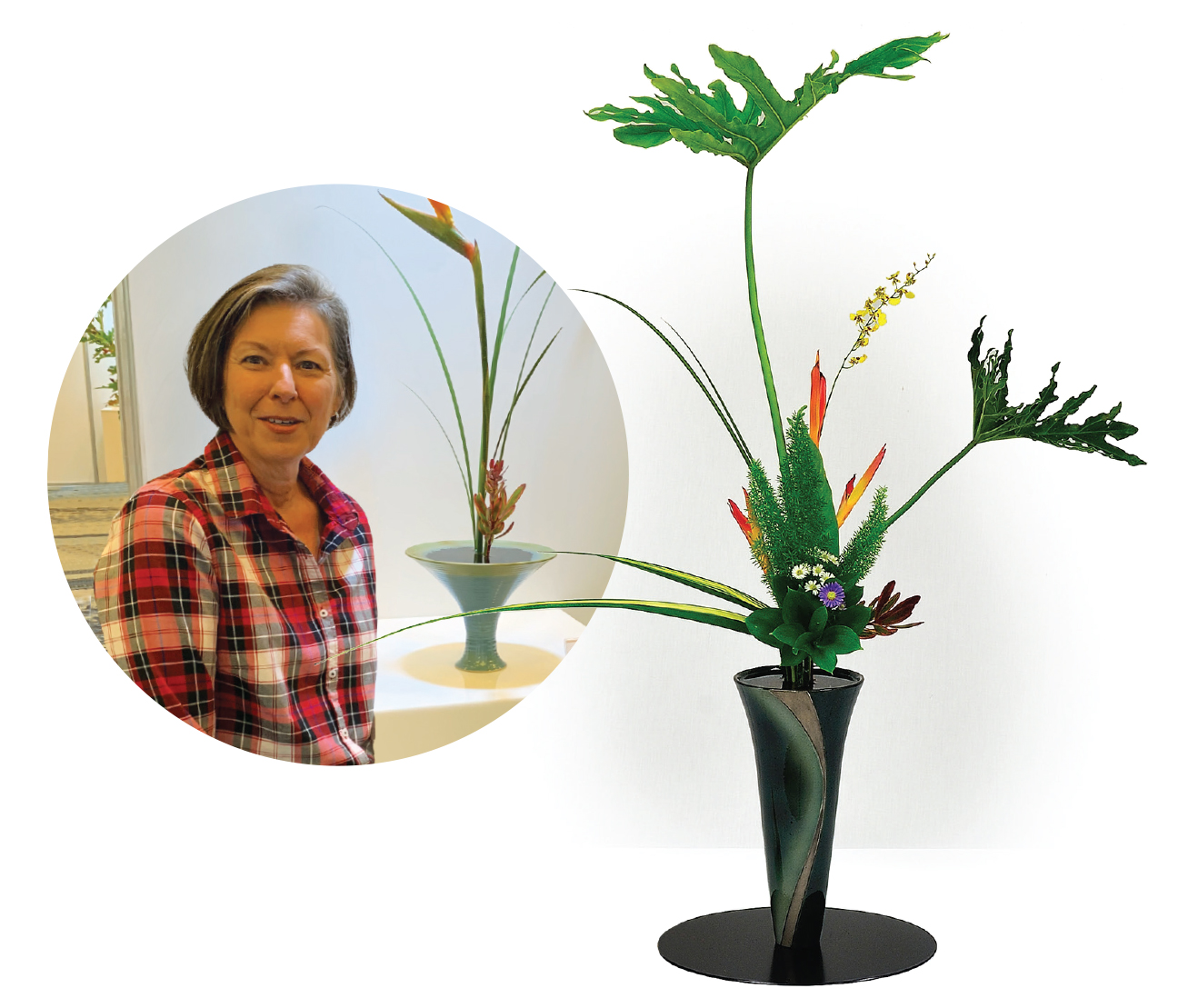
    As a person in a unique position — learning from his father and now teaching his son, Warren has seen both sides as the bank has grown. “I just think that for Hawai‘i, locally owned businesses and family businesses are instrumental in helping the development of the economy and making sure the local people get taken care of.”

    While times change, HNB’s integrity, philanthropy, responsibility and advocacy for Hawai‘i’s people and businesses won’t. Warren and Bryan Luke continue working to fulfill their mission of helping their customers achieve their goals.

    Figuring out what is best for the people of Hawai‘i remains their priority — the “numbers” are just one side of that. For almost 65 years, Hawaii National Bank has been whole-heartedly here for the people — and so will it be for generations to come. You can bank on it.

    The words “family” and “business” are not mutually exclusive to Hawaii National Bank’s owners and operators. HNB is at once a “business family” and a “family business.” For the last 64 years, the Luke family has supported small businesses, family businesses and each other with their intrinsic knowledge and practical experience. They know what it…

  • Melveen Leed – From My Heart to Yours

    Melveen Leed – From My Heart to Yours

    Every Sunday from 11am until 1pm HST, viewers from across the islands, the nation and the world join Melveen Leed’s Facebook livestream. Leaving their daily cares behind, they are uplifted by the singer’s distinctive voice and her words of wisdom, spiced up with humor and “Moloka‘i Tita” sass.

    By casting her throw net worldwide, Melveen offers the opportunity to recall earlier, simpler times; or the glamorous era of hotel and Matson cruise ship showbands, revues and show rooms, and the beginnings of Hawaii Five-0, where she appeared regularly as guest. Younger generations get the chance to see and hear the artist whose albums their parents and grandparents cherish.

    All are caught up in the magic, fun and — most importantly — the healing power of music.

    Standing on a rock

    Melveen learned how to make, mend and throw nets from her maternal grandfather on Moloka‘i. To this day, she packs her shorts and a net she made herself on visits to the Friendly Isle. The strong foundation in life that her grandparents gave her is the rock she has stood upon through good times and bad, with her eyes on a sea of possibilities stretching to the horizon and beyond.

    Melvina, as she was named by her grandmother, was born in 1943. Because my mother was only 17 years old and too young to raise me, my grandmother arranged a marriage for her to give me a name. He was from Tacoma, Wash., in the Navy, but she didn’t love him.” Hazel (“Didi”) was hiding herself and her child at different family member’s homes in Honolulu, “so my grandparents came and took me off her bed and straight to Moloka‘i and raised me. And I’m glad they did that, because if I were living with my mother, I would have lived a different life. Very different. She was too young to raise a child.”

    Her grandparents, William and Dora Place, lived at the East End of Moloka‘i and had 11 children. William was the breadwinner, working for Maui County as a mechanic. He was self-taught, but considered one of the top mechanics on the island. Dora was a homemaker. “She taught me housekeeping. She taught me how to cook. She taught me how to be neat. She taught me how to fend for myself. My grandfather taught me how to fend for myself, too. He taught me how to clean yard; how to garden.” Melveen’s aunts and uncles were like siblings to her. Aunt Rhoda became especially pivotal in her life.

    Childhood on the Friendly Isle

    Melveen grew up in a time when children were expected to do chores. But in their free time “we went outside a lot to play, ride bikes, run with friends, and play hide and seek and chase master. We climbed trees like monkeys with ease,” she wrote in a recent Facebook post. They played marbles, tic tac toe, steal the flag, hopscotch and even “stuck cans to our feet with glue that was a sticky bean from a bush.”

    Melveen graduated from Kilohana School in 1959. “I had an award — American Legion Award, which is a very high award. I was an A-student. And I was valedictorian for my graduating class.” Her time at Kilohana was another formative experience in her life because it provided opportunities to perform for people other than her family and the friends who visited her grandparents.

    She had been entertaining them since the age of three, when William made her a “tiny little ‘ukulele,” says Melveen. “He played the key of C. I looked at his hands, he passed me the ‘ukulele; I played C. He played G7, then put my little, tiny fingers on my uke and I played G7. Then I started singing. That’s how it all started.” By ear, Melveen taught herself how to play piano on the one at the school. To this day, she favors the key that her grandfather first taught her — the key of C.

    In a 1984 interview archived on the Hawaiian Music Heritage Series website, she recounts the advice given her by Mr. James Lee, the principal of Kilohana School: “Melvina, if it’s from the heart, it reaches the heart.” That advice still resonates as she does her Facebook livestream. “I like music. That’s why on my show I do music that is pleasing to the ear; that is healing to the heart. That is why I’m doing this.”

    Adrift in Honolulu

    Melveen’s grandparents always sent her to Honolulu to spend holidays and summers with her mother and stepfather. She lived with them while attending Radford High. It was an unhappy time — so much so, that she couldn’t study and got bad grades. “I barely made it. However, I did graduate. The only thing I had good grades in was shorthand and English class.”

    When she turned 18, Melveen moved out of their house and went to live with her aunt in Honolulu for a short while. Then she returned to Moloka’i, adrift in a sea of low self-esteem and not knowing what to do next. Her grandfather would have none of that attitude. “I didn’t raise you to be like that. You better know what you’re gonna do, he told me, because it’s your future. You’re going to get a good job, so you need a good education. I’m sending you to Honolulu to stay with your Aunt Rhoda and you’re going to go to Honolulu Business College (HBC) and take accounting. You can do it; I know you can.”

    The singing secretary

    At HBC, she did well in typing and shorthand. “And they liked me because I sang for their programs,” says Melveen. When her uncle and aunt moved to Maui, she transferred to Maui Technical School — the predecessor of the University of Hawai‘i Maui College. She sang and entertained at college events, got a student council award and graduated with an associate’s degree in secretarial science.

    Due to her top-notch skills, strong work ethic and effervescent personality, she had no trouble getting work as an executive secretary at enterprises as diverse as the pineapple canning industry on Maui and the newly opened Kahala Hotel (which celebrates its 60th anniversary this year) and the developer Jimmy Wong at Paradise Park on O‘ahu. While working for him, she also began singing with the Berne’ Hal-Mann Dance Band at the Hilton Hawaiian Village Garden Bar.

    Able to support herself from her Garden Bar gig, Melveen quit her day job. Toki Anzai, who owned Makaha Records, soon took notice of her. Makaha released “Melveen Leed at the Garden Bar” in 1966, “Give Me Tomorrow” (1968) and “Melveen Leed Sings Today’s Hits” (1969). Billboard said she was “strictly pop, with tunes like ‘Yesterday’ and ‘The Shadow of Your Smile’,” but that Anzai was also developing “Hawaiian songs with a modern beat to appeal to local patrons. Melveen Leed has great promise… as she is a strong performer who works well with chart songs and native material.”

    “The Hawaiian Country Girl”

    By the mid-’70s, she was working with Bud Dant, a former producer for Decca-Coral Records, who had succeeded Webley Edwards as host of the radio show “Hawaii Calls.” Through his connections with Owen Bradley, legendary Nashville producer for singers like Patsy Cline and Brenda Lee, Melveen made 12 albums on the Lehua label with Bradley’s famed session musicians, the Super Pickers. She was the first Hawaiian to perform at the Grand Ole Opry in Nashville. “I like to be different,” Melveen chuckles. The liner notes for “Melveen: The Hawaiian Country Girl,” released in 1976, describe her as “a beautiful, intelligent and witty entertainer” and “one of Hawaii’s hottest recording artists.”

    The stand-out song from her time with Lehua, “Morning Dew,” has a fascinating backstory — and it includes shorthand! Eddie and Myrna Kamae asked her if she would include their expanded English-language version of Larry Kimura’s Hawaiian-only lyrics for “E Ku‘u Morning Dew” on the album she was about to record in Nashville. She’d left the song sheet at home, so she quickly transcribed in shorthand the lyrics from the cassette recording Eddie had given her. In her 1984 interview on the Hawaiian Music Heritage Series website, Melveen recounts, “I read it off of my shorthand notes and it was a one-take. At that time, I was so homesick, so I sang it with all my heart and soul. You could hear a pin drop after. All the guys said together, ‘Beautiful!’” At the inaugural Nā Hōkū Hanohano Awards in 1978, “Melveen: The Hawaiian Country Girl” album and “E Ku‘u Morning Dew” won Best Female Vocalist, Best Hapa-Haole Album, Best Single and Best Song. Melveen’s other albums include three recorded in Tahiti and two recorded with Hawai‘i’s Local Divas. In 2012, she released “I Wish You Love” on her own label, ML Records. It was her first jazz album and won the Nā Hōkū Hanohano Award for Best Jazz Album of the Year.

    Pacific voyager

    In 1995, Melveen was living in Tahiti. She was married to the boss of a pearl farm and lived on Aratika atoll in the Tuamotu Islands. Skills she’d been taught by her uncles on Moloka‘i came into play once again, as she free dived and spearfished. The breath control she’d built up as a singer enabled her to dive 60 feet. Her sheer determination to prove her husband wrong — he thought she wouldn’t be able to do it — helped!

    During the 1980s, Melveen had started making jewelry to give as gifts, and Tahitian shells remain a key part of her artistry. The necklace she wore on the day of our interview “is a history of my life,” she said. Pointing to each component, Melveen explained, “This is from Moloka‘i and this is from Tahiti. I went to Samoa and Tonga — the Philippines. These all mean a lot to me.” Besides her Native Hawaiian and German ancestry, Melveen has identified Portuguese, Korean, Japanese, Tahitian and Marquesan forebears in her genealogy.

    In 2018, the Pan Pacific & South East Asia Women’s Association of Hawai‘i honored her with a Lifetime Achievement Award. “Leed has made her marks in myriad of ways in education, television, entertainment, indigenous issues; her philanthropic charity work in the past 50 years; as well as being a positive role model for young people in the Pacific and the USA.”

    Other horizons

    Melveen’s favorite performance venue isn’t one of the big ones, like the Grand Ole Opry, Carnegie Hall or the Mariinksky Theatre in St. Petersburg, but a small community theatre in Hastings, A¯ otearoa/New Zealand. The Hawkes Bay Opera House was originally built in 1915 but was newly restored in 2006 when Melveen performed there. A “lyric theatre” in a mix of Spanish Mission and Art Nouveau architectural and decorative styles, it has perfect acoustics. “It’s a beautiful theatre,” Melveen says. “I made a whole pageantry there in honor of my very close friend Tommy Taurima.” She brought with her Waipahu’s Ha¯lau Hula ‘O Hokulani. “I had the dancers chant and dance with sticks and spears. They were very good.”

    The much-beloved Ma¯ori composer Tommy Taurima had a long association with the Polynesian Cultural Center on O‘ahu, beginning in 1963. His most famous show, “Horizons: Where the sea meets the sky,” ran from 1995 until the end of the 2009 season. For her 2006 show, Melveen wrote a song for him in Ma¯ori. “It’s a song about saying goodbye. Don’t go away. Just stay. I had this book of all the different composers of Ma¯ori music. So I got a line from him and a line from her, and I put the whole song together. It’s a beautiful song called “E Noho Ra.” I had him sit on stage and I sang it to him.” In 2013, Taurima was presented with The Lei Pulama Aloha Living Treasure Award by the PCC. Sadly, he passed away in 2019.

    Going with the ‘current’

    In 1973, when The Congress of the Hawaiian People and Don Ho produced a concert designed to develop new talent in music and dance, Melveen presented young Little Anthony, as Tony Conjugacion was then known. The recording of their duet, “Iesu¯ Me Ke Kanaka Waiwai,” was one of KCNN1420 radio’s most loved songs through the ’70s and ’80s. Five years earlier, Conjugacion’s mother had brought her 8-year-old to one of Melveen’s rehearsals at the Queen Kapi‘olani Hotel and asked if she would hear him sing. “I invited him to my show that night and featured him to give him a start. The rest is history!”

    James Dela Cruz, who formed his Na Opio O Ko‘olau hula ha¯lau in 1981, is another mentee. He sometimes joins her on her Sunday livestream. “He’s like a son to me — calls me ‘Mama Melveen.’ He teaches the tu¯ tu¯ and the young ones at his studio in Ka¯ne‘ohe, and he also has a studio in Japan. In his show at the ‘Alohilani hotel, he teaches the history of Hawai’i.”

    The 1973 concert was during the height of the “Hawaiian Renaissance,” a time of controversy about traditional vs. modern forms of Hawaiian performing arts. Asked about today’s music, Melveen says, “One thing I know is you cannot stop progress. Every generation has their own music. Now we have different instruments. The sound is enhanced because of changes to the instruments . I can play slack key on my keyboard!”

    The idea to use Facebook Live came to her in 2016, when she was thinking of cutting back on live performances. “If I go on Facebook, I can go worldwide.” She’s been doing her Sunday livestream ever since, and those who join in are indeed from all over the world. The enthusiasm with which she has embraced new technology is no surprise. Enthusiastically adapting to what is available in her current environment, Melveen has transitioned to modern technology both musically and as an artist.

    Her living room is a showcase of her wonderfully crafted decorative
    shell art, but she has also created many drawings and watercolor paintings on her iPad. All of them display a love of detail and balance, color, light and shade that would be at home in an art gallery anywhere in the world. “I cannot keep still,” Melveen says.

    Healing in the key of M

    In her tiny home-based studio on Sundays, Melveen uses her keyboard and voice for one purpose: “I don’t do it for stardom. I do it because I know there’s so many people out there who need it. Music is healing.” In her living room is a special area where she lights a candle and prays for people who are sick. Her prayer garden just outside her front door is filled with small, smooth rocks that she decorates with colored felt-tip pens. On each rock, she writes the name of the person she is praying for.

    During her 12-year residency performing at the Ala Moana Hotel, Melveen had a phone installed on stage so she could sing to terminally ill patients. Every morning, she would call hospitals to find patients to sing to at that night’s show. The next morning, she’d visit the patient and bring them an autographed copy of “I Love You Hawai‘i.” “I would leave in a shambles knowing I’d never see them again,” Melveen says. Now she takes calls from caregivers and performs their request in her home studio so they can share it with their loved one. Melveen is a Christian, deeply grateful for all the blessings Ke Akua has given her and for the healing that He brings. She believes He has given her this healing mission.

    No stranger to health issues, herself, as a teenager, she had rheumatic fever and her Aunt Rhoda watched over her as she lay in a bed of ice. Melveen was diagnosed with leukemia several years ago. “I’ve never experienced anything that brutal in all my life. My poor husband! He took good care of me.” Her illness is not something she shares with her Facebook audience. “I’m not here to tell them about my woes. I want them to heal.” Melveen has been married to Miguel “Mike” Reyes, Jr. for 13 years. “I knew him when I was 15.

    He’s a real gentleman and very good looking!” Mike manages many aspects of Melveen Leed Productions, including the YouTube channel, her keyboard and studio equipment, and merchandise.

    Closing the circle

    Turning 81 in July, Melveen is pulling in her net full of wonderful memories. “Now I just want to relax and enjoy my life — do what I want to do. We stay at home and watch TV or travel. I do an event once in a while. I do my jewelry, and draw and paint. I love to cook. I’ve been married six times, so I learned different recipes from all the mothers.” In turn, she’s taught her daughter and two granddaughters to cook, starting them off the same way her grandmother did when she was a baby — sitting her on the kitchen countertop with her feet in the sink, washing a pot of rice.

    Facebook: facebook.com/melveenleed
    YouTube: youtube.com/@melveenleedproductions8819/videos
    Nā Mele 25 Rewind, PBS, 2024:
    youtube.com/watch?v=seRuDIqHXQ0
    Click on “Album History” to find a list of her 28 albums:
    melveenleed.com
    Hawaiian Music Heritage Series, 1984:
    http://hawaiianmusicheritageseries.com/leed.html

    Every Sunday from 11am until 1pm HST, viewers from across the islands, the nation and the world join Melveen Leed’s Facebook livestream. Leaving their daily cares behind, they are uplifted by the singer’s distinctive voice and her words of wisdom, spiced up with humor and “Moloka‘i Tita” sass. By casting her throw net worldwide, Melveen…

  • Driven by Legacy, Crafted with Aloha

    Driven by Legacy, Crafted with Aloha

    Did Manuel Nobriga know when he began crafting ice cream from scratch at Maui Soda & Ice Works in Wailuku in 1932 that he would be leaving an enduring legacy that would be perpetuated and celebrated for many generations?

    Well, as it turns out, Manuel’s ideas, formulas and methods have become the blueprint for a cherished family recipe that would expand to more than 70 flavors over time. “Roselani” was to become a household name on Maui and their family’s delicious dessert would become an integral part of special occasions across the islands for nearly a century. Through four generations of hard work, consistency, integrity and heart, Maui Soda & Ice Works, LTD, remains a truly remarkable family  business.

    A Rose by Any Other Name

    Strolling the frozen food aisle of your local grocer, you can’t miss the iconic, bright pink Lokelani Rose on the carton of Roselani Ice Cream. The Lokelani Rose, or “heavenly rose,” is the official flower of Maui. “Roselani” is the combination of “Lokelani” and “Rose.”

    “It honors my grandfather’s and my father’s identity,” said Catherine Nobriga Kim—or Auntie Cathy, as many called her— the late company leader and beloved granddaughter of Manuel,  when receiving Honolulu Magazine’s Hale ‘Aina Award.

    It remains a premier accolade in Hawai‘i’s food industry and one among many honors this family business holds dear. Cathy, her four brothers and her cousins ran and expanded this division of Maui Soda & Ice Works after her father and respected business pioneer, David “Buddy” Nobriga, retired in 2000.

    “A rose is the best you can give for every special occasion,” said Cathy. “It’s the queen of perfection.”

    The Nobrigas continue to create their recipe for success through time-honored traditions, quality ingredients, loyal relationships and local revenues.

    Manuel Nobriga laid the foundation for his family’s legacy.
    Manuel Nobriga laid the foundation for his family’s legacy

    A Family Tradition of Excellence Begins

    Loyal fans of this sweet staple will find comfort in knowing this is a true local business, crafted with aloha on Maui, right on Lower Main Street in Wailuku, with radiant ‘Īao Valley as a backdrop. The family has spent millions of dollars on renovations, including a facelift and expansion of the factory and grounds where rice paddies existed over 100 years ago.

    The foundation of the business was built with blocks of ice 140 years ago. Iceboxes were our first refrigerators. The blocks of ice that filled them were big business in the tropics. Kahului was the portal through which this revolutionary good was delivered throughout the middle of the Pacific. Maui Soda & Ice Works was birthed from a business model focusing on being the ice company, delivering blocks by horse and cart from what is now Kahului Harbor.

    Manuel started working at Maui Soda & Ice Works in 1922, and over the next decade, he would plant the seeds that his family would grow over the next century. Maui Ice Cream leased space at Maui Soda in 1931 when Manuel was working there. Maui Soda & Ice Works bought it the following year.

    “The Wadsworth family brought refrigeration to Maui and it was a total gamechanger,” says Cathy’s brother, James Nobriga, vice president of distribution and
    facilities at Maui Soda & Ice Works.

    The Nobriga family acquired the Maui Soda & Ice Works company and property from the revered Wadsworth Family in 1946. The Wailuku headquarters continues to grow successfully under their careful watch.

    “We fortunately got their equipment for making ice cream and were able to keep it going,” says James.

    David “Buddy” Nobriga expanded business and connected with the community.
    David “Buddy” Nobriga expanded business and connected with the community.

    Manuel and son David, James and Cathy’s father, researched ice cream and experimented for many years, but it was Auntie Cathy who was known as the Nobriga with the best hand at ice cream making and tastebuds for creating flavors. In 1972, they introduced the Roselani Ice Cream brand name, using the same methods and base recipe Manuel crafted in that facility 40 years prior.

    Their commitment to excellence and tradition, along with being in the right place at the right time, has provided tasty opportunities for the Nobrigas.

    The Maui Soda & Ice Works of today is comprised of three divisions: ready-to-drink beverages, food service beverages and frozen fare. Locally owned and operated since 1884, the company just commemorated 140 years on Maui and a century with Coca-Cola.

    The ice cream division is in its 92nd year. Presently, Maui Soda & Ice Works distributes 463 items, including 42 flavors of Roselani’s premium ice cream and sherbet.

    Maui Soda Works Logo

    Coca-Cola Connection & Centennial

    If you have enjoyed a fountain Coca-Cola on Maui, say mahalo to Maui Soda & Ice. But without its relationship to Coca-Cola for the last century, the “Coca-Cola True, Roselani Proud!” company’s ice cream may have not been widely distributed.

    Coca-Cola came to town via the harbor during WWI and WWII. Maui Soda & Ice Works was its official bottling manufacturer from 1924 until the end of the 1980s. Since then, the business model with Coca-Cola has been both manufacturing and distribution. The Nobrigas are responsible for keeping the bubbly beverage flowing across Maui.

    Inside the facility are display cases full of Coca-Cola artifacts, plaques and ribbons.
    Inside the facility are display cases full of Coca-Cola artifacts, plaques and ribbons.

    Buddy James Makana Aloha Nobriga, aka, “Buddy,” James’s son, is the fourth generation to steer the ship, serving as operations manager of Roselani, and the director of sales and marketing for Maui Soda & Ice Works, so he oversees Coca-Cola distribution, as well.

    The key to growth is in its retail and foodservice business while maintaining the authenticity of their original ice cream. Ice cream is not as big of a business as soda and beverage distribution, and Buddy shared how difficult it can be to find refrigeration and frozen storage on Maui. “It makes business sense, so we also store and distribute bigger brand names since we are already delivering,” he explains.

    “We’re looking forward to a gala this year for our 100 years with Coke, which will be held on Nov. 16, with Coca-Cola presenting us with a 100 Years plaque,” says Buddy.

    Steered by Stewardship

    The Nobrigas believe in taking care of its people and the community that supports them. Those cherry-red refrigeration trucks with the classic Coca-Cola logo cruising the Valley Isle are integral to Maui Soda & Ice Works. They rolled right into action following the tragic fires in Lahaina in August 2023, delivering cold goods and donations, doing what they could at hubs distributing food and supplies for those affected.

    Before that, during the struggles of COVID, the company donated products and gave back to the community in any way it could, even while dealing with supply and workforce issues of its own.

    “Growing up, my grandfather really instilled in us community stewardship,” said Buddy. “We understand we wouldn’t be here without those people in the community that support us. We take it seriously in our company culture and family culture. Giving back isn’t in question—it is part of our framework.”

    Everyone in the family extends their aloha— from serving the community to sitting on school boards. Buddy served as board chair for the County of Maui Department of Water Supply. He took his shot at a Maui County Council seat a few years ago, but in reality, there may not have been enough hours in the day to accomplish that goal. He focuses on family and business operations, and of course, being the head taste tester at Roselani. “I got ice cream to test,” he says.

    Generations of Goodness

    Roselani Ice Cream, a family business founded on flavor, celebrations and history, has a motto that is printed on each carton of ice cream: “Driven by legacy, crafted with Aloha, one batch at a time.” For 92 years, powered by four generations, the Nobriga family continues to create  “Maui’s Own Ice Cream,” slow-cooked to perfection in their historic plant, utilizing Manuel’s template for making a one-of-a-kind ice cream with velvety texture and rich flavor.

    Catherine Nobriga Kim remains the heart and soul of Roselani
    Catherine Nobriga Kim remains the heart and soul of Roselani

    Manuel’s flavor formulas were so well received on Maui from 1932 onward, that he continued to create his recipes for ice cream parlors and wholesale alike until he retired in 1971. He passed the apron onto his son David “Buddy” Nobriga, who assumed the leadership roles of running the cattle ranch and the trucking company. He worked tirelessly to make his dad’s ice cream more accessible. By the mid-1980s, Roselani’s ice cream was being produced in half-gallon “bricks” to be sold in mom-and-pop grocery stores on Maui.

    David later appointed his daughter (Catherine Nobriga Kim, Auntie Cathy) as vice president of the company and operations manager of Roselani. She elevated and diversified Roselani during her time, including developing the renowned Roselani Tropics line in 1989 and starting neighbor island distribution in 1999 with O‘ahu. In 2019, she helped lead the introduction of a new retail carton for the Tropics line, a 48-ounce carton more compliant with industry standards and a more practical size for consumers.

    She appointed Buddy, her godson and eldest nephew, as operations manager in 2017, and he remains the driving force, taking Roselani into a new era for the next generation.

    Never sacrificing quality by cutting corners is one of the reasons Roselani is also known as “Maui’s Best Ice Cream,” as evidenced by the array of accolades gracing their headquarter walls and spilling across tabletops.

    Buddy James Nobriga keeps the recipes safe for the next generation
    Buddy James Nobriga keeps the recipes safe for the next generation

    One of their many awards is the prominent 2015 TASTE Award, the Governor’s Lifetime Achievement Award from Hawai‘i Food Manufacturers Association for Roselani Ice Cream’s history of distinguished service, industry inspiration and lasting contributions.

    “In a world of corporate consolidation, it’s pretty tough to keep going, but we do,” says Buddy. “As my grandfather said, ‘For the Portuguese, sometimes that stubbornness works out.’”

    Keeping It Local

    Although the notion of mom-and-pop business gets thrown around a lot across the Aloha State, year after year, more of them are either disappearing or expanding so rapidly that they lose their essence by forfeiting control.

    The Nobrigas are committed to keeping local families and individuals employed for many years. Maui Soda & Ice Works employs just under 80 employees, all on Maui and Lāna‘i, with 40% employed 25 years or more.

    “For me personally, it has been a family standard in all our businesses,” says Buddy. “I take great pride in being a locally owned business with all of our staff from here or living here, and the revenue generated staying here. That’s so important. In these unprecedented times of transition and rebuilding, we owe it to one another, but moreover, to those who worked so hard. We have an opportunity to keep making this magic happen on Maui.”

    Maintaining relationships with suppliers is also part of their model, but it has been challenging at times. COVID and the recent fires have closed a variety of small businesses, including one they worked with for over 35 years. “It’s really tough. Our hearts go out to the businesses and the people whose lives were forever changed. We need to be here for them and stand strong—onipa‘a. All will be better as we honomua—move forward together as one Maui Strong for all generations.”

    “We source locally as much as possible, but sometimes that can get you into trouble,” said Buddy. They honor the recipe and ingredients as true to the original as possible. “If I can’t get the exact same ingredients, our customers will notice. They will call and hold you accountable.”

    “We are very ingredient sensitive, and our customers will let us know if there is even a slight difference,” said Buddy. “Our customers have always had a voice, and we listen… I think it’s one of the reasons we stay successful.”

    Buddy is not only the main ice cream taste tester, he also tends multiple email inboxes of customer inquiries and answers phone calls. “I’m never afraid to talk to a customer… we’re the kind of business where they talk to the source.”

    Three cartons of Roselani Ice Cream
    Three cartons of Roselani Ice Cream

    Family Matters

    From the 1970s through the early 2000s, multiple siblings from multiple Nobriga families worked at Maui Soda & Ice Works at the same time, plus in-laws. “They laid the foundation for what we have today,” says Buddy.

    “Half of our company have been here over 20 years, and some people I work with now—my aunties and uncles— have been here 40-plus years,” says Buddy. “They knew me when I rode my bicycle around the Wailuku site. This was our playground.”

    James and his siblings also grew up there. Nobriga keiki were always part of the business.

    Today, Buddy’s father, James, has an office across the hall from him. Buddy’s cousin and brother also work within the company.

    And now, Buddy’s keiki are running around the lot and completing homework onsite. Buddy fell for an O‘ahu girl and they have four beautiful keiki under the age of 12 who consider themselves “official taste tasters” for Roselani Ice Cream.

    Although his children are still young, he hopes they will eventually continue the family legacy. The future of its growth will be in their hands.

    A Godmother’s Legacy

    Auntie Cathy
    Auntie Cathy

    Auntie Cathy diligently studied how to make their ice cream. She created their Tropics line— a go-to for residents and visitors alike. Favorites include the Banana Mac Crunch, Chocolate Mac Nut, Kona Mud Pie and the most sought-after flavor, Haupia, a coconut pudding creation.

    Buddy took the reins of the ice cream division “by default and choice” in 2017. His godmother, Auntie Cathy, had to take on a bigger role in the company. “She took me under her wing,” said Buddy. “She’s still the heartbeat of the business.”

    Cathy worked at the plant since she was 15, later leading as president and general manager. Brian Fevella, who has been with the company for 46 years, took over after Auntie Cathy suddenly passed away from cancer in 2020. The Nobrigas are forever grateful for Brian and the ‘ohana who dedicate themselves to this business.

    Lokelani Rose bushes bloom outside the Wailuku home of Roselani Ice Cream, and Auntie Cathy’s bright spirit and incredible work continue. One of their latest and most special flavors honors her with a pink rose lei gracing the cartons, in support of breast cancer awareness. Aloha Cherry Truffle is black cherry ice cream with fudge swirl and black cherries—a fantastic flavor developed by Cathy. The lei honors their company angel, whose spirit can still be felt within the walls of the team’s historic plant on Lower Main Street.

    “My grandfathers and aunt shine down on us,” says Buddy. “She is missed, but it is a privilege to carry on. It’s much more than pride—the word ‘pride’ is not enough.”

    Auntie Cathy created many of the recipes, so Buddy is now in charge of them. He works hard to keep each and every flavor as true as possible to the original.

    His first creation was ube, purple sweet potato goodness, which has been going over well.

    The Nobriga family has crafted something so special and shared it with so many, their customers and supporters develop a sense of pride and appreciate its dependable consistency.

    The variety of flavors offered by Roselani
    The variety of flavors offered by Roselani

    What’s the Scoop? Modern Moves & Future Plans

    Buddy’s idea of the pint line was a welcome addition to the company, attracting a whole new group of fans. COVID had halted its release in 2020, but Roselani was able to launch pints in May 2023, after four members of the Nobriga family from Buddy’s generation collaborated with designers to give the packaging a fresh facelift.

    “It was a drastic change from the original packaging, but we made it through,” says Buddy. “I swing for the fences. I don’t have time to bunt.”

    The company completely overhauled its production facility to make it a reality. The pint allows a new group to taste the flavors they normally wouldn’t, as many were only available through wholesale outlets.

    As with any artisanal, quality product made from scratch on Maui, the price point is higher than many mainstream brands.

    “We could definitely bring down the price by making it on the mainland, but it wouldn’t be the same,” says Buddy. “Not everything is about the dollar, but rather, keeping quality.”
    Roselani is distributed statewide for now, with a dream of going national. They are always exploring opportunities and vowing to never sacrifice taste.

    A Recipe for Success

    With a goal to be Hawai‘i’s best ice cream for generations to come, it’s vital to protect precious recipes.

    “We hold our recipe secrets close, including our traditional process for creating the ice cream,” says Buddy. “I like to say we make it just how great-grandfather made
    it 92 years ago.”
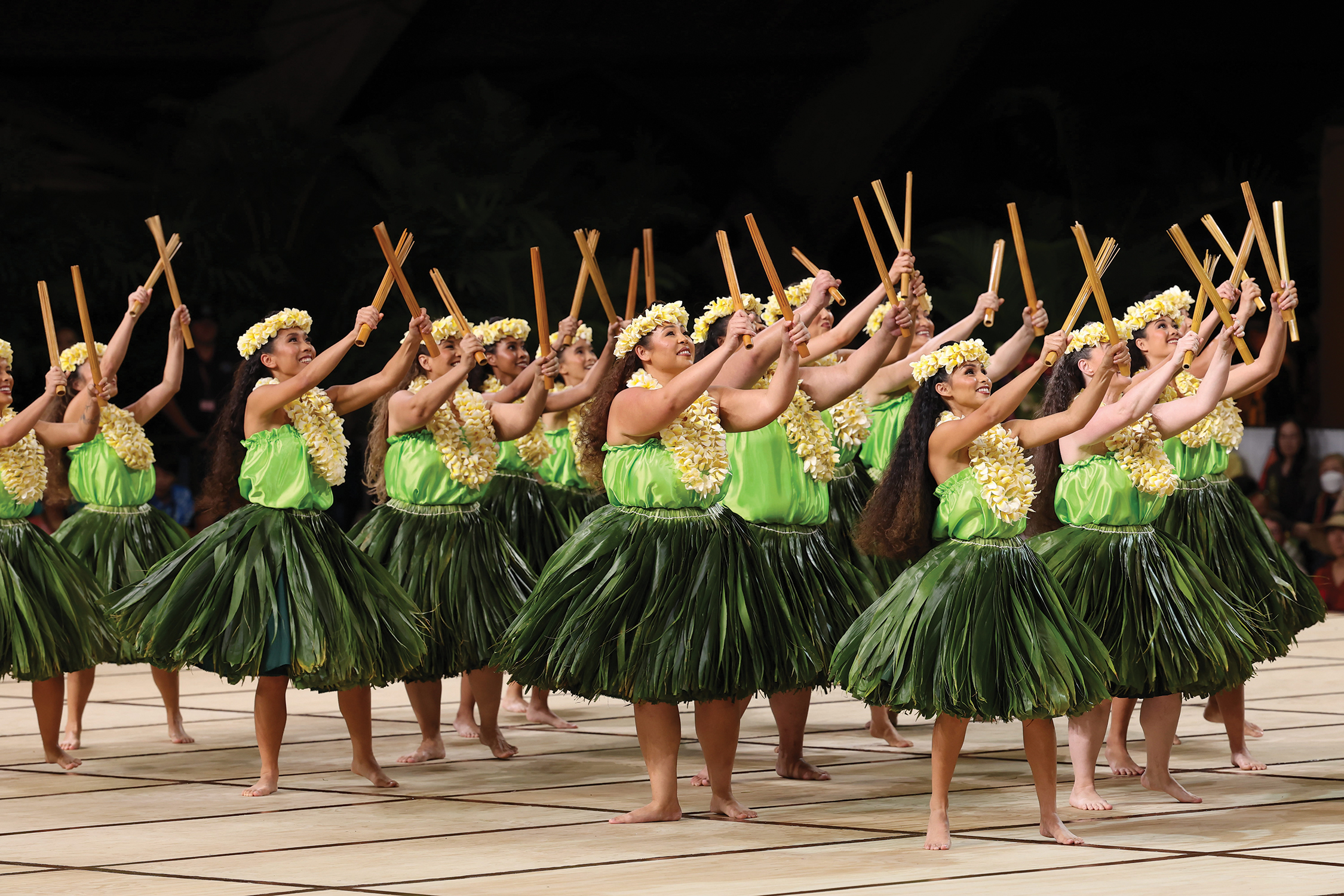
    They honor the game plan, maintain the great taste and keep the same high standards since the beginning. Three generations of their family have studied physics. Crafting Maui’s favorite ice cream for over 90 years takes brilliance.

    It’s the unique way that the butterfat is crafted that gives Roselani its silky texture and smooth finish. Because of the butterfat content, it is best to place your carton in the refrigerator for a half-an-hour before scooping— or pop it in the microwave for 30 seconds, the Nobrigas advise.

    Whatever you are craving, Roselani can satisfy. With this rainbow of flavors, you may think Buddy would have an exotic favorite, but he is in love with Gourmet  vanilla. Buddy was taught everything starts with how a good vanilla is made. “As a fourth-generation ice cream maker, I have to have that palate,” he says.
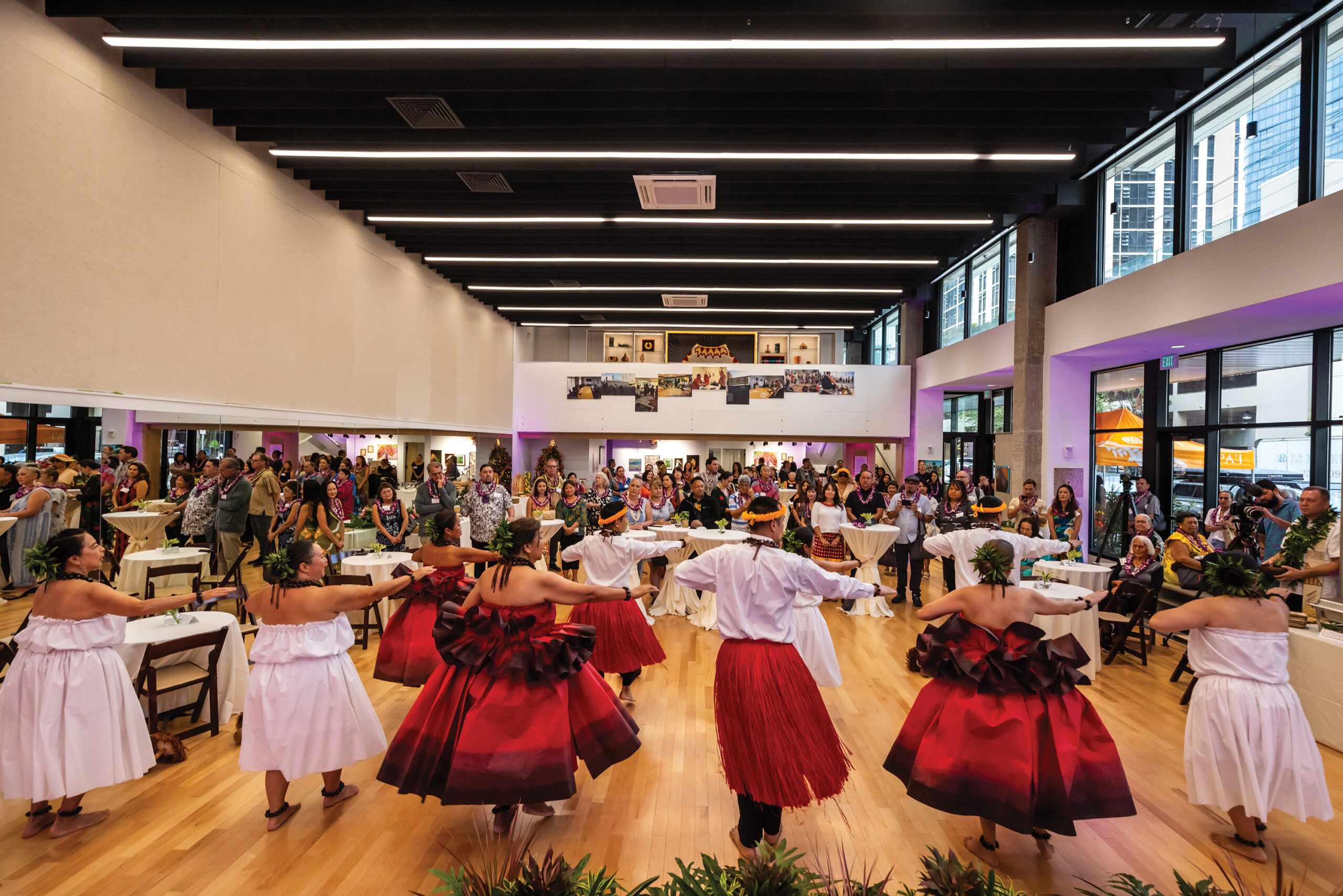
    Hawaiian Vanilla Bean is his other favorite. The vanilla has come from a family farm on Hawai‘i Island for the last 20 years. The farm’s orchids, the source of the vanilla beans, is so vital to the recipe, that Roselani cannot produce the flavor without them. Thankfully, this iconic flavor is available via retail sales.

    Maui’s Ice Cream

    Roselani Ice Cream is not just about a dessert. The stories of celebrations are what it’s all about for the Nobriga ‘ohana.

    “It is a part of their lives… that’s what it is to me,” Buddy shares with emotion. “Yeah, it’s an ice cream, but also a part of their fondest memories.”

    James Nobriga (Cathy’s brother and Buddy’s dad) is a strong but mild-mannered man who serves as vice president of distribution and facilities. “People allow us to be a part of their celebrations, inviting us to being a part of their lives and their children’s lives,” he says. “It’s humbling.”

    Destiny

    Buddy played seven sports growing up, doing his best to keep busy so he “didn’t have to work” at the plant in Wailuku. “I tried really hard to avoid it when I was younger, and came back here after attending business school on the mainland,” he says. “Now, I’m in the right place.”

    Buddy realizes the pressure of heading operations of a company, but also says that in a family business, job titles don’t mean anything. He understands what “has to be done, has to be done and this is a team effort on every level.”

    “It’s my job to steward this, so the next generation has the opportunity,” says Buddy. “It’s not mine, I didn’t start it, I can only add to it, make it better and make sure it’s there for whoever is willing to take it forward.”

    Ice, soda and ice cream stand the test of time within the ebb and flow of small business, and the Nobrigas have achieved a historic level of success by walking their talk, staying true to their ancestors and leaders before them, and running a company with ingenuity, a strong work ethic and true aloha.

    Buddy loves to be a part of the process. He walks the entire property once a day he when he is not traveling.

    “For me, I was raised that kuleana is not a responsibility; it is a gift,” Buddy says, while tearing up. “When things get tough here, I just remember it is a gift. It is special.”


    Find markets across the Aloha State that carry Roselani Ice Cream by visiting roselani.com.

    Did Manuel Nobriga know when he began crafting ice cream from scratch at Maui Soda & Ice Works in Wailuku in 1932 that he would be leaving an enduring legacy that would be perpetuated and celebrated for many generations? Well, as it turns out, Manuel’s ideas, formulas and methods have become the blueprint for a…