
Scott A. Makuakane, Counselor at Law, Est8Planning Counsel LLLC

  • A Hui Hou

    All good things must come to an end, or so they say. This is the last article by this author that will appear in this publication. I wish the Generations team and readers all the best in every way.

    I hope that over the past 15 years, you have gleaned from this column how important it is to have a clear, comprehensive estate plan—or, as I prefer to write it, “est8plan”. There are so many things that are beyond our control, and our est8plans can help us and our loved ones when inevitable bad things, such as death and disability, happen down the line.

    Please know and live the reality that through estate planning, you can create better, if not objectively good, outcomes for yourself and your loved ones as you transition through the stages of life. Your imagination and your collaboration with competent and creative advisors will give rise to an est8plan that will help you sleep at night. You will rest easy in the knowledge that you have done everything you can to put yourself and your loved ones in the best possible position to face the future. “May the road rise to meet you” as you embark on your own estate planning adventure, and remember: an intellectual solves problems… but a genius avoids them. Your est8plan can help you and your ‘ohana avoid the problems that must be solved when people fail to plan.

    Aloha pumehana, Scott Makuakane


    EST8PLANNING COUNSEL LLLC
    Scott Makuakane, Counselor at Law
    808-587-8227 | maku@est8planning.com
    Est8planning.com

    All good things must come to an end, or so they say. This is the last article by this author that will appear in this publication. I wish the Generations team and readers all the best in every way. I hope that over the past 15 years, you have gleaned from this column how important…

  • Will a Will Do What You Think It Will?

    Most people think of a last will and testament as the cornerstone of an estate plan. For most of us, however, it’s a lousy cornerstone. Your will is often simply a safety net that helps make sure your overall estate plan is going to work as it was designed.

    Your will is like the spare tire in the trunk of your car. Hopefully, you will never need to use it because your assets are either in your revocable living trust or you have used other means to direct your assets to your beneficiaries so that the assets will avoid probate. But if you experience a flat along your journey, your family will be awfully glad you had the spare. Having a will provides added assurance that your wishes are going to be carried out.

    A more formal name for a will is “last will and testament.” The “last” part refers to the fact that you can sign as many wills as you like during your lifetime, but only the last one you signed before your death counts. A document called a “codicil” can amend one or more provisions of your will without completely replacing it. In the age of computers, codicils are still valid, but more often, we just do a whole new will. Why use two or more documents with conflicting provisions when you can simplify and use only one?

    EST8PLANNING COUNSEL LLLC
    Scott Makuakane, Counselor at Law
    808-587-8227 | maku@est8planning.com
    Est8planning.com

    Most people think of a last will and testament as the cornerstone of an estate plan. For most of us, however, it’s a lousy cornerstone. Your will is often simply a safety net that helps make sure your overall estate plan is going to work as it was designed. Your will is like the spare…

  • DIY Estate Planning

    The problem with do-it-yourself estate plans is they often don’t work in the real world. An effective plan involves far more than a set of documents—even very well-drawn documents that would stand up in any court in the land, as they say in the commercials. But why would you want your estate plan to have to stand up in court? Wouldn’t it be better to have a plan that will keep you and your family out of court?

    You should start by learning what you need to know in order to get your plan right, create and implement your plan and then make sure that it stays right. What I mean by “stays right” is that it continues to work according to your wishes in light of changes in your health, your stuff, the law and the list of people you like and trust. If you think a self-help computer program will accomplish that, then you may be one of those people P.T. Barnum said was born every minute.

    Bottom line: There is a lot of really good information on the internet. There is also a lot of misinformation. Do you have the training and background to tell one from the other when it comes to putting your estate plan in order? If so, then knock yourself out, professor. If not, there is something to be said for working with live professionals instead of an impersonal website that cares more about your credit card authorization than about what happens to you, your family and your stuff when you become incapacitated or die.

    EST8PLANNING COUNSEL LLLC
    Scott Makuakane, Counselor at Law
    808-587-8227 | maku@est8planning.com
    Est8planning.com

    The problem with do-it-yourself estate plans is they often don’t work in the real world. An effective plan involves far more than a set of documents—even very well-drawn documents that would stand up in any court in the land, as they say in the commercials. But why would you want your estate plan to have…

  • One Trust or Two?

    Should a married couple create one trust or two? To some extent, it comes down to a matter of preference. Some couples see their stuff as belonging to both of them, while others differentiate between one spouse’s stuff and the other’s. Differentiation might be important if one spouse has children from a prior marriage, and the preference is to have the stuff that one spouse brought into the marriage going to that spouse’s descendants. Another practical reason for using separate trusts is that the trust of the first spouse to die can be designed to provide heightened creditor protection for the surviving spouse.

    If both spouses want the survivor spouse to have unlimited control over their combined assets after one of them dies, one trust will work. However, unlimited control means that the survivor can leave their combined assets to his or her next spouse, or the next spouse’s children (to the exclusion of the original couple’s children). This is not rare. But special rules can be built into their rule books to make sure that their stuff can be used for the two of them for as long as both live, and then for the survivor for his or her lifetime, and then each spouse’s stuff goes where he or she wants, irrespective of the wishes of the survivor.

    Your trusted advisors can help you choose what will work best for you and your ‘ohana.

    EST8PLANNING COUNSEL LLLC
    Scott Makuakane, Counselor at Law
    808-587-8227 | maku@est8planning.com
    Est8planning.com

    Should a married couple create one trust or two? To some extent, it comes down to a matter of preference. Some couples see their stuff as belonging to both of them, while others differentiate between one spouse’s stuff and the other’s. Differentiation might be important if one spouse has children from a prior marriage, and…

  • The Importance of Funding Your Trust

    Your revocable living trust (RLT) is a vehicle to deliver your assets to your beneficiaries — including you, if you become incapacitated. Think of your RLT as a little red wagon. In order for your wagon to do its job, you must load it up with your stuff. Anything you do not put into your wagon may not reach your intended beneficiaries without being subjected to an expensive, time-consuming public court proceeding.

    If the proceeding is required in order to allow your assets to be spent on you while you are incapacitated, it is called a “conservatorship.” If the proceeding is required in order to allow your loved ones to receive their inheritances, it is called a “probate.” Either way, going to court can be costly and take a long time. Court proceedings can also draw unwanted attention.

    You can spare yourself and your loved ones from having to go to court by transferring (called “funding”) all of your stuff into your RLT.

    There are a few assets (most notably, life insurance policies, annuities and retirement plans), that do not need to be transferred into your RLT during your lifetime. Often, the most effective way of transferring these kinds of assets is through beneficiary designations. Another item you might not want to put into your RLT is your automobile, but you should discuss it with your attorney.

    EST8PLANNING COUNSEL LLLC
    Scott Makuakane, Counselor at Law
    808-587-8227 | maku@est8planning.com
    Est8planning.com

    Your revocable living trust (RLT) is a vehicle to deliver your assets to your beneficiaries — including you, if you become incapacitated. Think of your RLT as a little red wagon. In order for your wagon to do its job, you must load it up with your stuff. Anything you do not put into your…

  • Some Final Considerations

    Donating your body to the local medical school is a way to both dispose of your remains and benefit your community. The most valuable resource for learning about a human body is, well, a human body. Many medical schools will have your body picked up (at no charge to your family) and delivered to the school to be used for educational purposes. After a time, your remains will be cremated and the ashes can be returned to your family for disposition.

    Yet another set of considerations is whether there will be some kind of public or private celebration of life or religious service after your demise. You can have some say in what those festivities might include. Of course, even if you direct that there be no observance of your death, that may not stop the people who love you from indulging in an event that will help them deal with their grief. If you want to be proactive, you can write your own funeral service, including such things as what musical selections will be shared, who will deliver your eulogy and whether you will ask for donations to your favorite charity in lieu of enriching a local florist. Frankly, most people leave all these details to their loved ones, but a funeral service planned and written by you might be one of the most loving things you can do for the people who will mourn your loss.

    EST8PLANNING COUNSEL LLLC
    Scott Makuakane, Counselor at Law
    808-587-8227 | maku@est8planning.com
    Est8planning.com
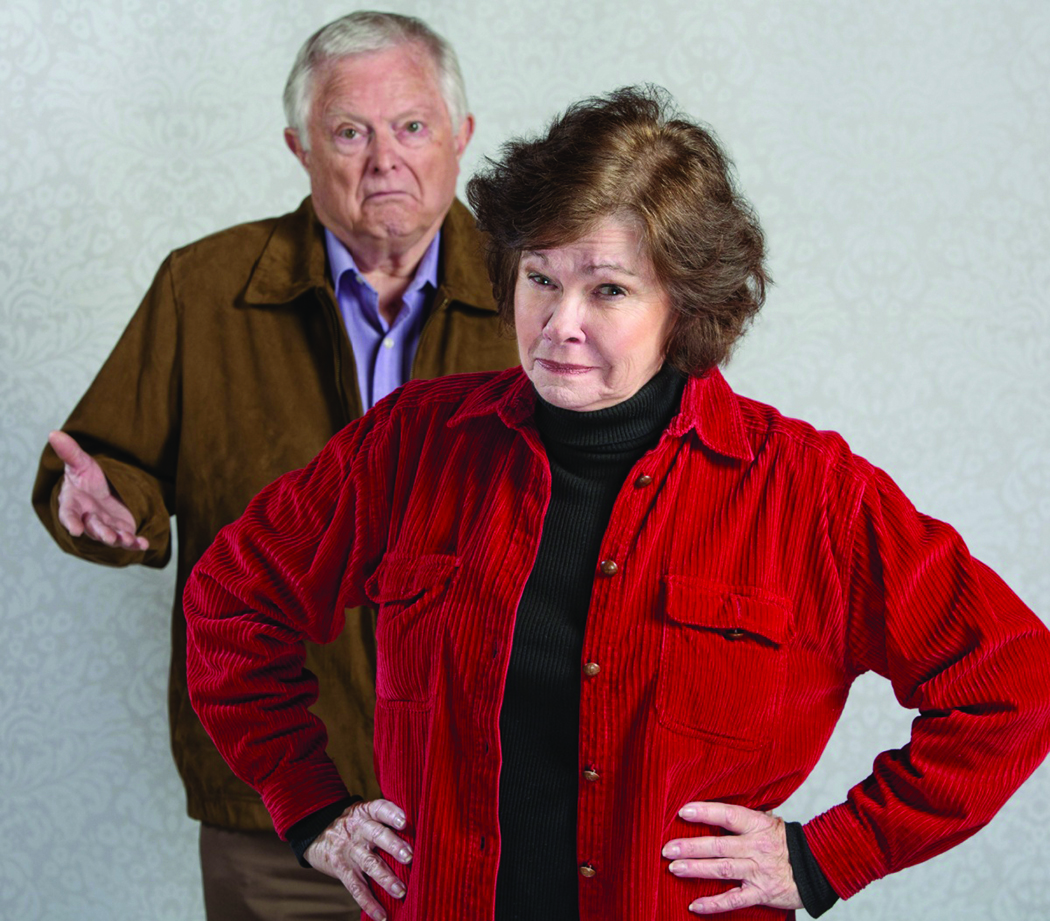
    Donating your body to the local medical school is a way to both dispose of your remains and benefit your community. The most valuable resource for learning about a human body is, well, a human body. Many medical schools will have your body picked up (at no charge to your family) and delivered to the…

  • Naughty or Nice?

    Your estate plan is the set of documents that you use to say who gets your stuff when you go. It is also where you can say who doesn’t get any of your stuff — with some important exceptions.

    In most states, you can disinherit everybody but your spouse. You can even disinherit the IRS. Louisiana requires you to leave something to each of your children. In every other state, you can cut out the kids, but not your spouse. Spouses traditionally had ongoing support rights expressed in a variety of ways.

    The bottom line is that if you want to leave nothing to your spouse, you will need to have him or her agree to that in a prenuptial agreement before the wedding. Of course, following up a marriage proposal with a request that your beloved sign a “prenup” is not the most romantic move. It has even been known to derail wedding plans. Some states also allow married couples to use postnuptial (after marriage) agreements to accomplish the same results as a prenup. Suggesting to your spouse that you enter into a postnup may not lead to good results, either, but at least you know that the option may be out there.

    So to exclude someone (other than your spouse), just say that so-and–so is being omitted deliberately. But use the person’s name — don’t call the person a “so-and-so” unless you want to invite a libel lawsuit against your estate.

    EST8PLANNING COUNSEL LLLC
    Scott Makuakane, Counselor at Law
    808-587-8227 | maku@est8planning.com
    Est8planning.com

    Your estate plan is the set of documents that you use to say who gets your stuff when you go. It is also where you can say who doesn’t get any of your stuff — with some important exceptions. In most states, you can disinherit everybody but your spouse. You can even disinherit the IRS.…

  • Doing Good While Doing Well

    Doing Good While Doing Well

    Enjoying a successful career or owning a profitable business can enable a person to give some wealth back to the community where it was generated. If this describes you, consider the following pointers:

    NEVER SELL APPRECIATED ASSETS IN ORDER TO MAKE CASH GIFTS
    If you sell an asset in order to generate cash to make a charitable gift, you may rob the charity of a bigger gift and yourself of a bigger income tax deduction. There is a better way.

    Let’s say you own property worth $100,000 that you inherited back in the ’70s when it was worth next to nothing. If you sell the property now because you want to make a big gift to your favorite charity, you may have to recognize a capital gain of $100,000 and pay $22,500 or so in tax on that gain. This will leave you with $77,500 to donate to the charity, for which you will get a deduction of $77,500.

    While the tax deduction is nice and the gift is generous, what if you gave the property to your favorite charity and then the charity sold it? In that case, the charity would receive the $100,000 sales proceeds, and you would get a charitable deduction of $100,000. That’s a great deal for your favorite charity and for you.

    There is an annual limit on how much you can deduct each year for gifts to charity, but you can carry forward the excess of what you gave over the amount you could deduct for up to five years. Even with the carry forward, if your gift is very generous, you might not be able to deduct the full amount of your gift.

    YOUR TRADITIONAL IRA MIGHT BE A CHARITABLE GIFT CASH MACHINE
    Once you reach a certain age (currently, 73, but this number may go up in the future), you have to take Required Minimum Distributions (RMDs) from your IRA so the IRS can collect some tax.

    However, if you direct your IRA trustee to send your RMD directly to one or more charities, you will not have to pay tax on the RMD, up to $100,000 worth of charitable gifts per year.

    Unfortunately, you will not get a deduction for your gift, but when you crunch the numbers, not having to recognize the RMD as income is usually a far better deal for you than being able to deduct your gift.

    As pointed out above, there is a limit on how much of your RMD can go to charity without you being taxed on it. Moreover, you cannot apply future years’ RMDs against a current gift of IRA assets in excess of $100,000.

    TALK WITH YOUR TRUSTED ADVISORS
    Meet with your trusted advisors to discuss the best way to benefit your favorite charities that will also reduce your income tax.

    There are lots of complicated rules to navigate, but making enhanced gifts to charity while reducing your income tax liability just might make the effort worthwhile.

    And please remember that there are many more ways to make charitable gifts. Your trusted advisors can help you to explore them.

    EST8PLANNING COUNSEL LLLC
    Scott Makuakane, Counselor at Law
    808-587-8227 | maku@est8planning.com
    Est8planning.com

    Enjoying a successful career or owning a profitable business can enable a person to give some wealth back to the community where it was generated. If this describes you, consider the following pointers: ■ NEVER SELL APPRECIATED ASSETS IN ORDER TO MAKE CASH GIFTSIf you sell an asset in order to generate cash to make…