

Four generations sharing their community’s values
When brothers Shoichi and Saburo Hasegawa opened their general store in Hāna in 1910, there was no legendary Road to Hāna. Goods and people traveled by boat to the wharf in Hāna Bay. The bustling sugar plantation town was just one of several on the east coast of Maui, from Ke‘anae to Kīpahulu, each with a sugar mill, stores, churches and recreational amenities such as movie theaters and pool halls. Travel from one end of the district to the other could take days by horse or mule. A lot has changed since then, but fourth-generation general store operator Neil Hasegawa continues his family’s tradition of serving both locals and tourists with grace, humor and a strong sense of deep-rooted responsibility a small-town business fosters that helps the surrounding community retain its character, prosper and thrive.
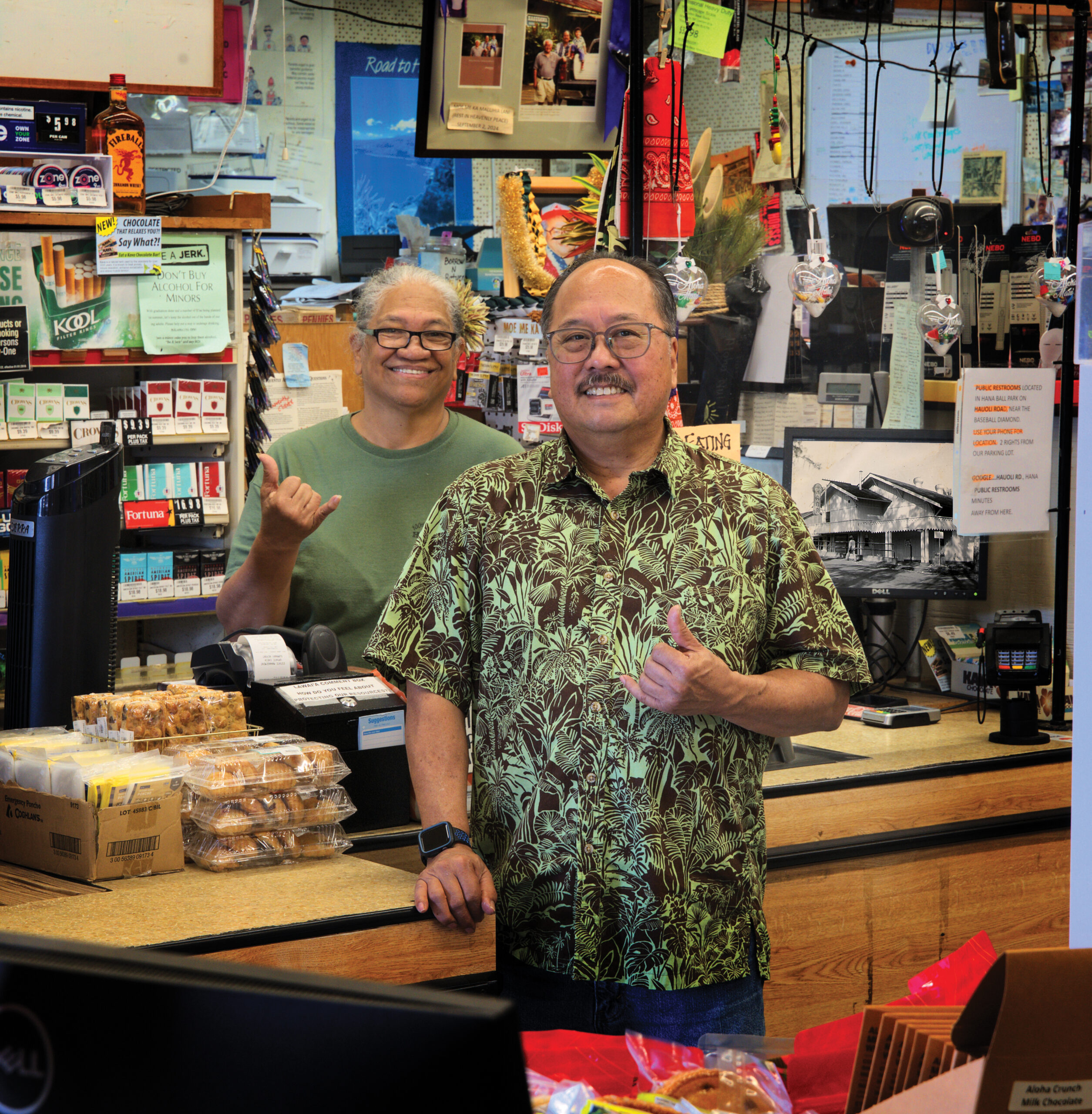
Shoichi and Saburo Open Original Store
In 1886, representatives of His Majesty the King of the Hawaiian Islands and His Majesty the Emperor of Japan signed a convention that stipulated that a representative from Hawai‘i be based in Yokohama to facilitate the signing of work contracts no more than three years in length. The immigrants would also be granted “free steerage passage, including proper food, from Yokohama to Honolulu in first-class passenger steamers.” This is likely how the Hasegawa brothers arrived, voyaging on from Honolulu to Hāna Bay.
The Hāna District had a population of 3,241 when Shoichi and Saburo opened their store in 1910. It was a family affair, with the children helping out from a very young age. Toshimasa was born that same year to Shoichi and Kiku, but in 1919, they took him and their other children back to Japan, leaving Saburo’s family to run the business. Then, in 1926, Saburo and his oldest son Kengo, went to Japan to ask Toshimasa if he would come back and help them with the store.
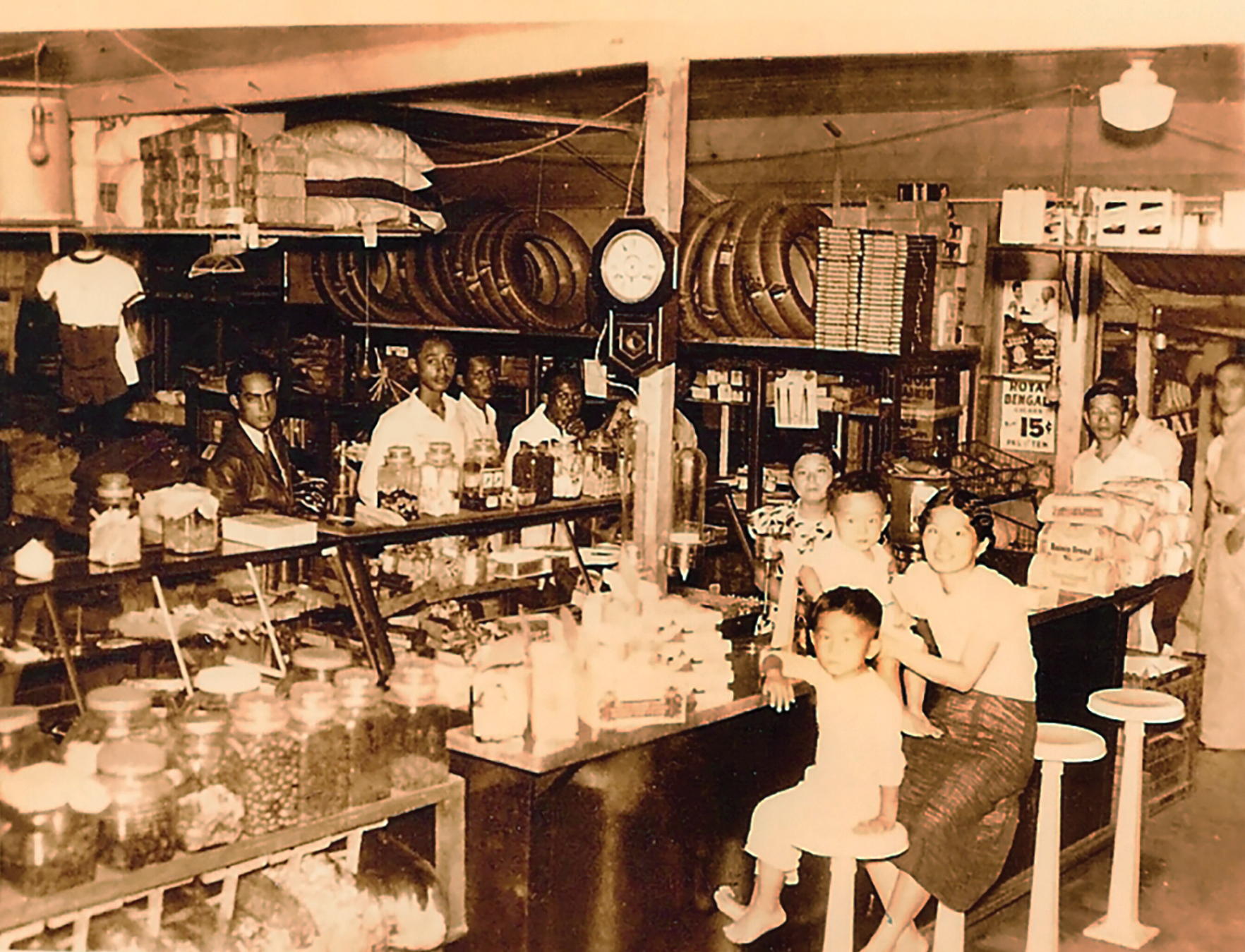
and his mother, Shizuko. His brother, Ed, is seated on the counter, and a cashier stands behind him. The sugar plantation era in Hāna lasted from 1849 until 1947. All the district’s freight came via Hāna Bay wharf during that time, and bagged sugar left that way. The wharf and its facilities were destroyed by the 1946 tsunami. The last East Maui sugar mill ceased operations that same year. The road to Hāna wasn’t completely paved until 1962.
Photos taken by Toshimasa in 1938 illustrate the store’s extensive and eclectic range of goods. Although the road from Kahului to Hāna had been completed a decade before the photos were taken, it was extremely rugged, necessitating a huge inventory of tires. The interior featured a long lunch counter, cabinets with various household items and hardware, and food staples like rice.
Toshimasa and Shizuko Take Charge
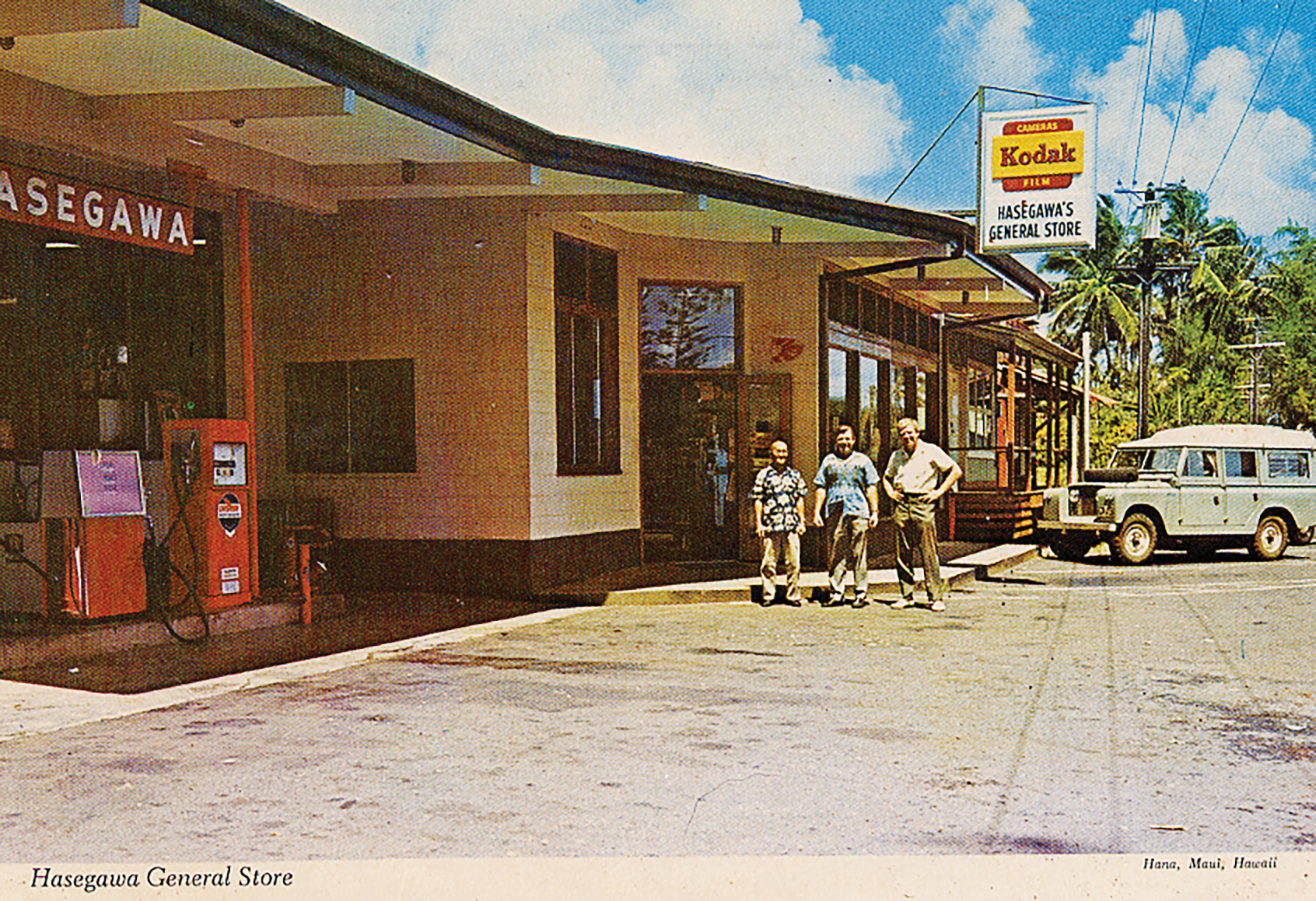
Toshimasa wed Shizuko Hirose in 1932 and they took over store operations when his uncle Saburo returned to Japan in 1933. With the winding down of the plantation era from the 1920s onwards, population numbers declined by 1950 to about 1,000 still living in the Hāna District. Those remaining people still needed the necessities of life and the Hasegawa family continued to provide them through long hours of work. Improvements to the road linking the town to Kahului, a major arrival hub for tourists, as well as the area’s natural beauty, brought transient customers to the store. It was within this context that Toshimasa built a new brick store with gas pumps in 1958. Toshimasa, an avid photographer, also added a photo developing studio.
Toshimasa and Shizuko had a house behind that store. Neil has fond memories of his grandparents’ home. As children, he and his two sisters spent the most time with them—his cousins lived on O‘ahu and in Southern California, so he and his siblings had them all to themselves. “I had a really good relationship. I’m the first-born grandchild and I’m a man. In Japanese culture, that’s a double whammy!” He and his sisters had chores in the store, weeded around the house and helped Shizuko in the hothouse behind the walk-in freezer at the back of the store. “She was really smart. She’d make friends with some of the hotel guests that would come on a regular basis and she would give them anthuriums, orchids, flowers and so forth. I think that was her way of marketing—a frequent-shopper kind of program!”
Toshimasa and Shizuko retired to a new home in Kahului, where he took up painting and pottery, and she continued nurturing plants with her green thumbs. He passed away at age 90 in 2000 and Shizuko followed him in 2009 at age 95.
Harry Takes the Reins
During the 1970s, their first-born son, Harry, took over running the store. His parents ensured he got a good education by sending him to Mid-Pacific Institute in Honolulu for high school and the University of Colorado in Boulder, where he majored in accounting. In the 1950s, he completed his military service, working in the accounting department at Tripler Army Medical Center. He and his wife, Nita, made their home in Hāna after their marriage in 1962 and they both worked in the store, taking it over when his parents retired.
In 1961, Paul Weston wrote “The Hasegawa General Store,” a song about the huge variety of goods available there. It became popular when Pua Alameida sang it on the radio show Hawaii Calls and was later recorded by many different artists. Capitalizing on the publicity the song brought, Harry and Nita began selling Hasegawa General Store T-shirts and related merchandise. And each year, they would go to a trade show on the continental US to help ensure the hardware inventory was the latest and best they could provide their No. 1 customer—Hāna locals.
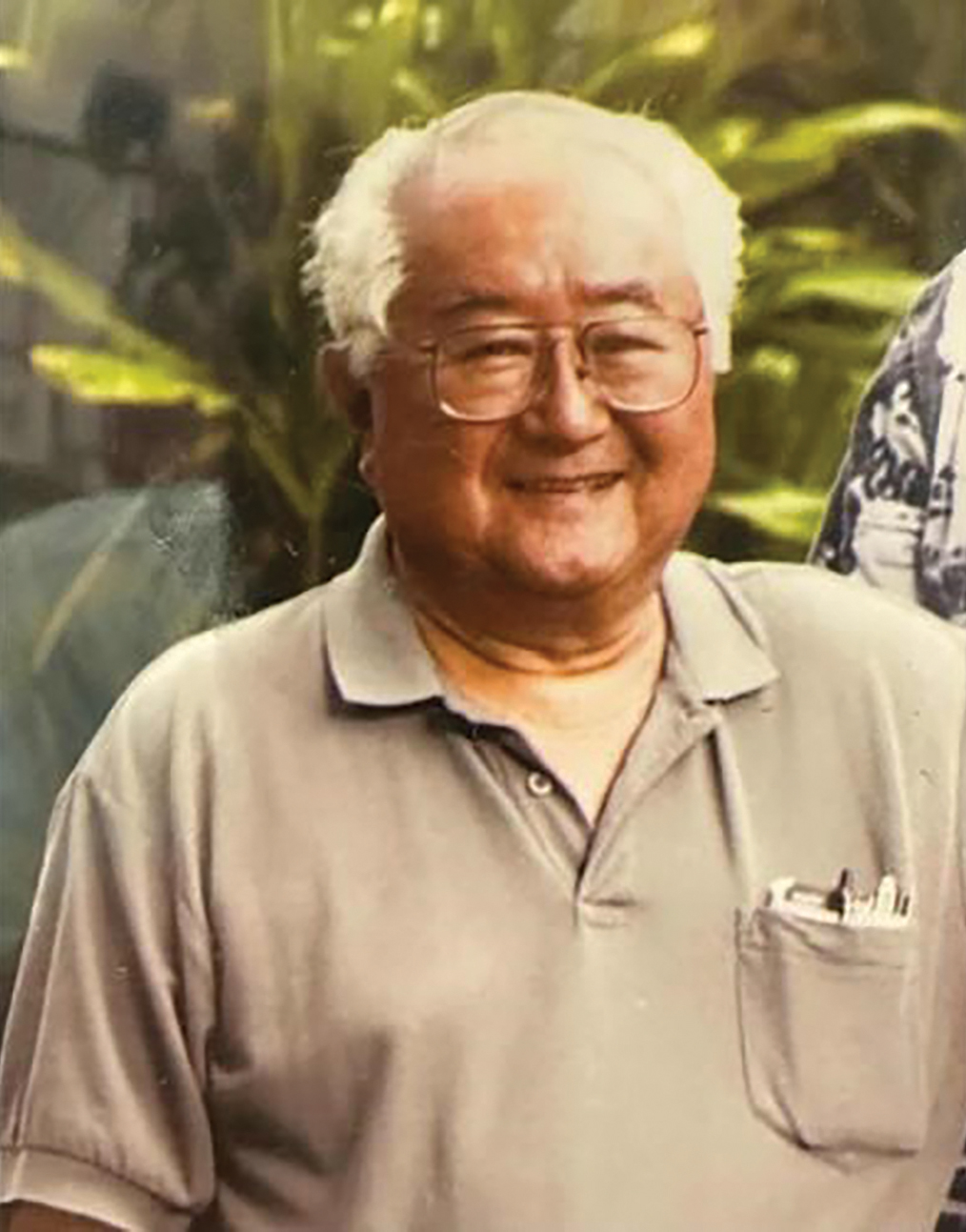
This customer-centered ethos passed on to Harry by his parents is also exemplified perfectly in an anecdote told by one of the store’s visitors. He and his wife had neglected to fill their car with gas before embarking on the road to Hāna on a sight-seeing day trip. They didn’t have enough gas to get back to Kahului and they also didn’t have enough money to pay for a night’s accommodation in Hāna. When they told their tale of woe to the waiter at the restaurant where they were having dinner, he re-told it to Harry, who was dining there with his family. So Harry opened up the gas station and even provided them with some snacks for the long drive back.
Had they needed a document notarized, Harry could have done that, too. He became a notary public when he realized the community didn’t have one. He also served on planning boards and the Hāna Maui Trust, providing scholarships to local students and grants to help community members from 1970 to 2018. During his 20-plus years as president, the trust’s outreach to the Hāna community grew exponentially. In a 1988 KHET TV documentary about Hāna, Harry shared his feelings about the town: “I think of Hāna as a very rural Hawaiian place and I’d rather live in that type of setting, so I’d like to set my life in those terms. I think everybody has that in mind when they come to Hāna. As the other parts of the island build and become more like a city, Hāna can remain as it is—rural and not over-developed. I think our value is increased and I think that is what we should be looking for.”

in the Hāna District, serves the primary
healthcare needs of residents and visitors
alike. Harry Hasegawa was a key
figure in establishing the center when
the state closed its clinic there.
Providing a full range of primary healthcare,
Hāna Health emphasizes preventive care.
The Hāna Fresh Farm behind the center
sells its produce, herbs and traditional
Hawaiian medicinal crops from a
nearby farm stand.
Photo courtesy of Hana Health
Harry passed in September 2024 at age 90 in an assisted living home in Kahului. For about three years “my Mom and I would go there every Thursday, spend the night, have lunch with him Fridays and then return,” says Neil. He lives next door to his mother and is her caregiver, making sure she’s comfortable and has all she needs.
Neil Returns
Like his father, Neil went to college on the mainland, studying business administration, marketing and management at the University of Redlands in Southern California. Upon graduating in 1988, Neil returned to Hāna to live with his parents and help run what he now calls the “old store.” That’s because, in August of 1990, the Hasegawa General Store was set ablaze. There was minor damage to the gas pump area, but everything inside the store was lost. Harry and Neil said a friend came to Harry’s home in Hāmoa at 4:30am to tell them the store was on fire. By the time they got there, it was completely gone. Fire investigators concluded it was arson, but the culprits were never found. “I felt really hurt that someone would do this to us,” said Neil.
What happened next is proof that the Hasegawa family’s sense of responsibility to their community is no one-way bridge. “When the store burnt down, several people in the community—and this was before GoFundMe—started soliciting donations for us and for our employees,” says Neil. “I thought that was a great gesture, especially coming out of that situation where I was so bitter. I had a really negative feeling about human nature at that point. Then the realization hit me, ‘You know what, if you’re gonna be that sour the rest of your life, that’s not going to be a good life. That negativity surrounds you. Let the police handle the investigation and all of that stuff. How can we continue in a good way?’”
They were able to get the gas station running again and built a film studio in part of the old building so they could develop pictures as well. Keola-Hana Maui, owners of Hāna Ranch at that time, offered the family the use of Hāna Ranch Theatre. Its last movie showing was in 1979. “A lot of our guys helped renovate the theatre,” says Neil. “We had a general contractor who came in and we were his crew. It made a lot of sense doing it that way.” All their staff remained employed and the new store opened for business in August, 1991. You can still see the holes for the projectors high up on the back wall. In 2008, plans to rebuild on the old site fell through, so it is now used as a food truck lot by local entrepreneurs.
Neil and his wife, Mitzi, have two adult children, Brayden and Caelyn. Caelyn worked in the store as a cashier one summer, but when Neil wanted to give his 15-year-old son a job there, he wasn’t able to because the minimum age to get a liquor card is 16. He laughs when recounting his conversation with the liquor commission when he said that he’d been working in the store since he was 10. “They go, ‘Mr. Hasegawa, that was a long time ago!’” Brayden and his wife, Sydney, both graduates of the University of Nevada, Las Vegas, live and work there. “They’re living their life up there. If they feel like they want to come back and run the store, that’s their decision. I don’t want to force anybody.” Caelyn is majoring in kinesiology at Missouri Southern State University.
Community Needs Remain the Priority
It’s easy to take for granted the items we see on store shelves in urban and less isolated rural areas. “Normally, product merchandisers for companies like Meadow Gold come in and stock up, pull expired product, give credits and so on. We do everything on our own,” says Neil. He places the orders and a private trucker based in Hāna goes to Kahului to pick them up. Redo Trucking & Hauling is another multi-generational business. It was started by Valentine Redo as Redo Express in 1973 and is now run by his grandson, Sam Aina. Neil remembers Valentine “dropping stuff off at the old store to my dad and grandpa.”
An example of how local businesses put the needs of the community ahead of dollars and cents comes from when the Maui Nui Venison company began giving out free ground venison in 2024. They called Neil and asked if he wanted to be part of the giveaway and Neil called Sam to see if he would bring it down for free: “Yeah, no problem.” Maui Nui drops off cartons of the 1-pound packs of venison at VIP, a family-owned food distribution company in Kahului that provides chilled and frozen products to restaurants and businesses. “They accept the Maui Nui venison, put it on the pallet, Sam comes by, picks it up every other Thursday, brings it to us and then we put it in our freezer. People will just come and pick up. Maui Nui told me it’s two per family, per day, so use your discretion. It is such a big help to the community.” Previously, Hasegawa General Store had acted as a distribution point for free produce brought to them by a produce house “on the other side. People could just pick up the boxes and we’d keep track of the names. We did it for three or four months and then the grant ran out.”
When Hāna locals speak of “the other side,” they’re referring to the other side of Haleakalā, the dormant volcano. Its lower slopes cradle the 52-mile road to Hāna, with its 620 curves—some of them hairpin bends—and 59 bridges, most of them one-way. The drive can take from two to four hours. Extreme weather events, wildfires or road and bridge repairs can mean it’s closed altogether. If the electricity grid gets shut down, as well, Hāna has several emergency generators for the community. Nowadays, of course, electricity is vital for store operations. Harry had the vision to computerize the store’s paper-based systems and replace the manual cash registers with electronic equipment. “It saved him time,” Neil explains—time that Harry could allocate to serving the community.
A Rising Tide Lifts All Boats
Hāna Health is a private, nonprofit, federally qualified health center. Neil explains: “That was Harry’s baby. We’re a small community. We just weren’t getting the attention that we need. Especially in healthcare, you can’t be ‘the leftovers.’ He was the one who created a committee, got funding and brought in an executive director to help organize everything.” In 1995, the state-run Hāna Medical Center was on the verge of closure. Harry spearheaded the advocacy for Act 263, which was passed in 1996. It provided for the transfer of the state-run medical center to the new nonprofit organization. Harry was a board member and president for several decades. Hāna Health offers primary medical, dental and behavioral healthcare, and 24-hour urgent care to all Hāna District residents, regardless of their economic circumstances.
Neil recalls how his father was very involved in the community. “We all are. He instilled in me, ‘the rising tide lifts all boats. The more you can do for Hāna, the better Hāna will become.’ Whether it be volunteering… just making it better.”
Neil’s “baby” is the Festivals of Aloha. “Festivals of Aloha was called ‘Aloha Week’ back in the ’60s. There’s a lull in tourism in October and O‘ahu businessmen wanted to create a destination event that would share Hawaiian culture with tourists.” The event spread to all the islands, but over the years was reduced to three days or a weekend. Hāna is the only community in the entire state that still has a weeklong festival.
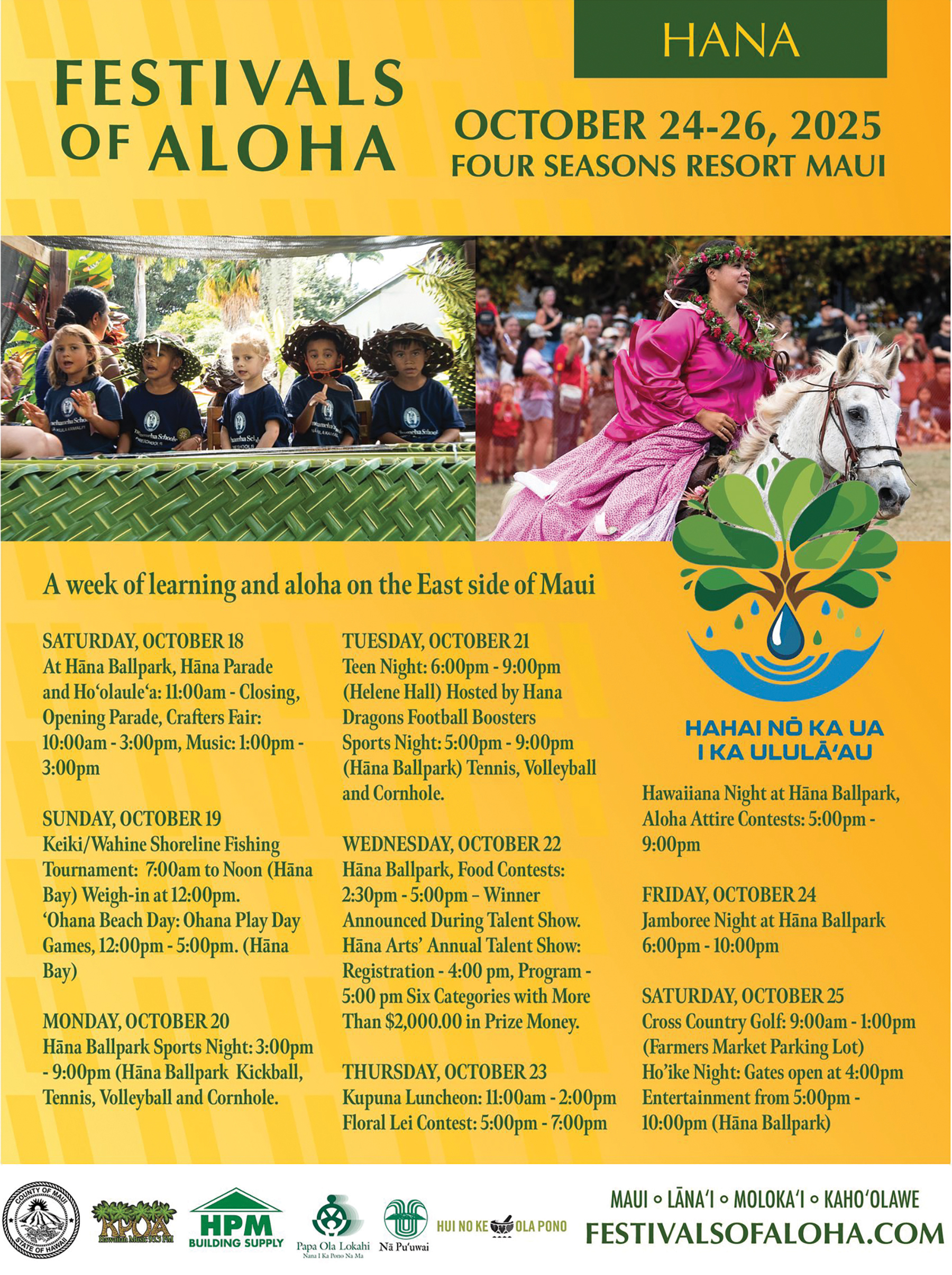
The whole community gets involved, with individuals volunteering their time to help out at the events and small businesses donating and providing certificates and cash prizes. The festivities kick off with a parade on Saturday and end with Ho‘ike Night lū‘au with entertainment and food.
“We’re trying to work with the hotel to create a destination event for Hāna,” says Neil. “Fill up the hotel, fill up the vacation rentals, have tourists come, spend a week with us and get that there’s a strong Hawaiian culture presence.”
Hawaiian culture isn’t just lū‘au, lei and aloha. There’s also the wave. When Neil’s cousin, Mark Hasegawa, retired to Hāna from Maryland, he bought Harry’s truck. “Small town, everybody knows everybody’s vehicles. They’ll wave. Just wave back,” Neil advised. “So tourist cars, any car… he’s just waving!” Mark grew up in Southern California and visited over the summer as a teenager.
That’s a typical pattern, not just for the Hawaiian diaspora, but also for families living on other islands. Most of Neil’s employees were born and raised in Hāna, a lot of them coming from large families that have spread out across the state. When visitors come into the store and say they know a Hāna local, staff and visitors often find family connections.
Kukui Nuts, Cold Cuts, Surfer Pants and Papaya Plants
Paul Weston’s lyrics in the song that made the Hasegawa General Store famous (youtube.com/watch?v=-dqbGR3Gkbwg) are no less true today than they were back in 1961, when it was first recorded. “You just name it, they’ve got it there.”
“I’m pretty much the specialist… I do the orders for hardware, fishing, liquor and beer,” says Neil. His office manager takes care of accounts payable. Several other people take care of buying. One of his assistant managers does the buying for different areas in the store, like health and beauty aids. “We have a lot of part-timers working as cashiers. We have a small crew… maybe 10 people.” Neil tries to source fresh produce locally so that he is both supporting the community and keeping prices down. The store also acts as a pickup point for FedEx and UPS customers. “It’s in line with what we do: try to service the community wherever we feel we can be of help.”
A Reflection of the Community
In 2008, the Small Business Association’s Family-Owned Small Business Award for the County of Maui went to Neil. “Despite a fire that destroyed the store in 1990,” the award said, he has shown “resilience and determination by reopening the store in the old Hāna Theatre with new services and an improved mix of products that contributes to its continued growth, and remains Hāna’s one-stop shop.” In 2010, the store’s 100th anniversary year, Harry and Neil received the Mayor’s Lifetime Achievement Award for small businesses.
“The key to owning a business in Hāna, or any small town, is the relationship you have with the community and the decisions you make,” says Neil. “A lot of times, ours are not dollars-and-cents decisions. There’s an underlying responsibility we have so we can best serve our community.”

Leave a Reply